 English
 简体中文
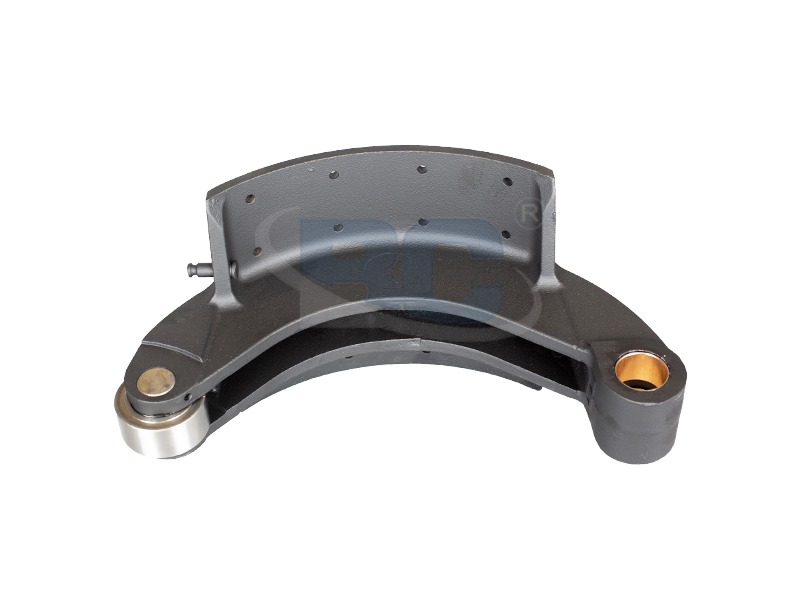
简体中文In heavy-duty transportation, braking components are not merely replaceable parts; they are safety-critical elements that influence vehicle control, fleet uptime, operating costs, and driver confidence. The 1104544 Casted Brake Shoe, Part No. SCA203, is engineered for demanding commercial vehicle braking applications where durability, dimensional reliability, and stable friction support are essential. With an OEM reference of 1104544, a size of 413x203mm, 16 riveting holes, and application suitability for SCANIA vehicles, this casted brake shoe is designed to serve heavy truck and commercial fleet requirements with consistency and dependability.
Zhejiang Bangchi Auto Parts Co., Ltd. focuses on heavy-duty brake parts and heavy truck brakes, providing OEM brake parts that follow the global FMSI numbering system. The company’s product categories include Steel Brake Shoe, Casted Brake Shoe, Brake Lining, Lined Brake Shoe, Brake Shoe Repair Kits, and Lined Brake Shoe Kits. This wide product range allows customers to source related braking components from one specialized manufacturer, improving procurement efficiency and supporting stable after-sales service.
The 1104544 Casted Brake Shoe is positioned for customers who require a robust brake shoe foundation for heavy-duty drum brake systems. Unlike lightweight or loosely controlled alternatives, a well-produced casted brake shoe must provide strength, accurate geometry, stable lining support, reliable riveting compatibility, and resistance to deformation under heat and load. For fleet operators, distributors, repair workshops, and OEM-related replacement channels, these qualities directly translate into easier installation, better service life, safer braking response, and reduced risk of premature replacement.
Product Overview
The 1104544 Casted Brake Shoe is a cast brake shoe designed according to the specifications required for heavy commercial vehicle braking systems. The product information identifies the key parameters clearly: Part No. SCA203, OEM No. 1104544, size 413x203mm, 16 riveting holes, and application for SCANIA. These details are essential because brake shoes are fitment-sensitive parts. Even small dimensional deviations may affect drum contact, lining position, installation time, brake balance, and service stability.
A casted brake shoe differs from some fabricated or steel-formed brake shoe designs because the shoe body is created through a casting process. Casting allows the brake shoe to achieve a strong integrated structure with controlled shape, mass distribution, and load-bearing areas. For heavy-duty applications, this can offer advantages in rigidity and resistance to distortion when braking loads are repeated over long service intervals.
The size of 413x203mm indicates that the shoe is intended for a large drum brake system where significant friction surface area is required. Heavy trucks carry high loads and often operate in challenging conditions such as long-distance freight, mountainous roads, construction sites, logistics yards, and stop-and-go distribution routes. In these environments, a brake shoe must support consistent lining contact and stable braking torque. The 16 riveting holes are also important because they provide a structured interface for attaching the brake lining securely and evenly.
For customers purchasing replacement parts, a clearly defined OEM number is one of the most practical advantages. The OEM No. 1104544 helps distributors and service technicians confirm compatibility, reduce ordering errors, and streamline inventory management. When combined with Part No. SCA203, the product can be easily referenced within a catalog or procurement system.
Key Product Specifications
| Item | Specification | Practical Value |
|---|---|---|
| Product Name | 1104544 Casted Brake Shoe | Identifies the brake shoe for heavy-duty replacement and OEM-related supply |
| Part Number | SCA203 | Supports catalog management and purchasing accuracy |
| OEM Number | 1104544 | Helps match the correct replacement part for compatible vehicle applications |
| Size | 413x203mm | Provides the correct dimensional basis for drum brake fitment |
| Riveting Holes | 16 | Enables secure and evenly distributed brake lining attachment |
| Application | SCANIA | Designed for specified heavy-duty vehicle use |
| Product Category | Casted Brake Shoe | Indicates a rigid cast shoe body suitable for demanding braking conditions |
Why Casted Brake Shoe Design Matters
In a drum brake assembly, the brake shoe serves as the support structure for the brake lining. When the driver applies the brake, the shoe moves outward and presses the lining against the inner surface of the brake drum. The resulting friction slows the wheel. Although the friction material often receives much attention, the brake shoe body is equally important because it carries mechanical loads, maintains lining shape, and supports the geometry required for predictable braking.
A casted brake shoe can provide a strong and stable platform for the lining. Heavy-duty drum brake systems generate large forces, especially during emergency braking, downhill braking, or repeated braking under cargo load. If the shoe body is weak, uneven, or dimensionally unstable, the lining may not contact the drum correctly. This can cause uneven wear, noise, vibration, reduced braking efficiency, and increased maintenance costs.
The 1104544 Casted Brake Shoe is designed to help address these challenges through a robust casted structure and accurate specification control. The 413x203mm size must correspond to the drum brake system, while the 16 riveting holes must align properly with the lining. When hole locations are consistent, the lining can be fastened securely and uniformly. This reduces the likelihood of loose lining sections, uneven pressure distribution, and early failure around rivet areas.
Compared with lower-grade competitors that may focus primarily on price, a quality casted brake shoe offers long-term value. Brake shoe replacement requires labor, vehicle downtime, and inspection. If a cheaper part causes premature wear or installation issues, the apparent purchase savings can be lost quickly. A correctly engineered casted brake shoe supports longer maintenance intervals, smoother workshop installation, and greater confidence for fleet managers.
Product Advantages Over Common Competitors
The market for heavy-duty brake shoes includes many options, but not every brake shoe provides the same level of manufacturing consistency or application reliability. The 1104544 Casted Brake Shoe offers several competitive advantages that are particularly relevant for commercial vehicle operators and parts distributors.
Accurate Fitment for Heavy-Duty Brake Systems
Fitment accuracy is one of the most important measures of brake shoe quality. A brake shoe must match the brake drum system in overall size, curvature, web position, anchor areas, roller contact zones, and lining attachment points. The 413x203mm specification and 16-hole riveting pattern are central to this product’s fitment reliability. Compared with competitors using inconsistent tooling or broad-tolerance production, a carefully controlled brake shoe reduces rework during installation and supports proper brake function after assembly.
Strong Casted Structure
A casted shoe body provides the structural foundation needed for repeated braking loads. Heavy trucks are exposed to high kinetic energy, and each braking event transfers force through the shoe. A strong casted structure helps resist bending and deformation. In contrast, poorly controlled or underbuilt alternatives may be more vulnerable to distortion, especially under high temperature cycles or frequent heavy braking.
Stable Riveting Performance
The 16 riveting holes are not simple openings; they are critical connection points between the shoe and lining. Accurate hole diameter, clean edges, and consistent spacing support reliable lining attachment. Better riveting quality helps avoid lining movement and helps maintain even lining-to-drum contact. This advantage is especially important for workshops that reline brake shoes or assemble lined brake shoe kits.
Compatibility with Related Brake Product Programs
Zhejiang Bangchi Auto Parts Co., Ltd. manufactures and supplies multiple heavy-duty brake product categories, including brake linings, lined brake shoes, brake shoe repair kits, and lined brake shoe kits. This product ecosystem is advantageous because customers can source complementary parts from a specialized supplier. Compared with suppliers offering only one isolated component, a broader product program supports better matching, simpler purchasing, and improved after-sales support.
OEM-Oriented Manufacturing Philosophy
The company provides OEM brake parts following the global FMSI numbering system. For international buyers, numbering consistency is important because it simplifies identification across markets and reduces confusion among part numbers. A supplier familiar with OEM-style requirements is better positioned to control dimensions, production documentation, batch consistency, and packaging standards.
Balanced Value Rather Than Short-Term Cost Cutting
Many competitors compete only on low price, but heavy-duty brake parts should be assessed by total value. A brake shoe that installs correctly, supports stable braking, and reduces premature service events can be more economical over its operating life. The 1104544 Casted Brake Shoe is suitable for customers who evaluate product value by safety, reliability, inventory accuracy, and customer satisfaction rather than only the initial purchase price.
Manufacturing Strength Behind the Product
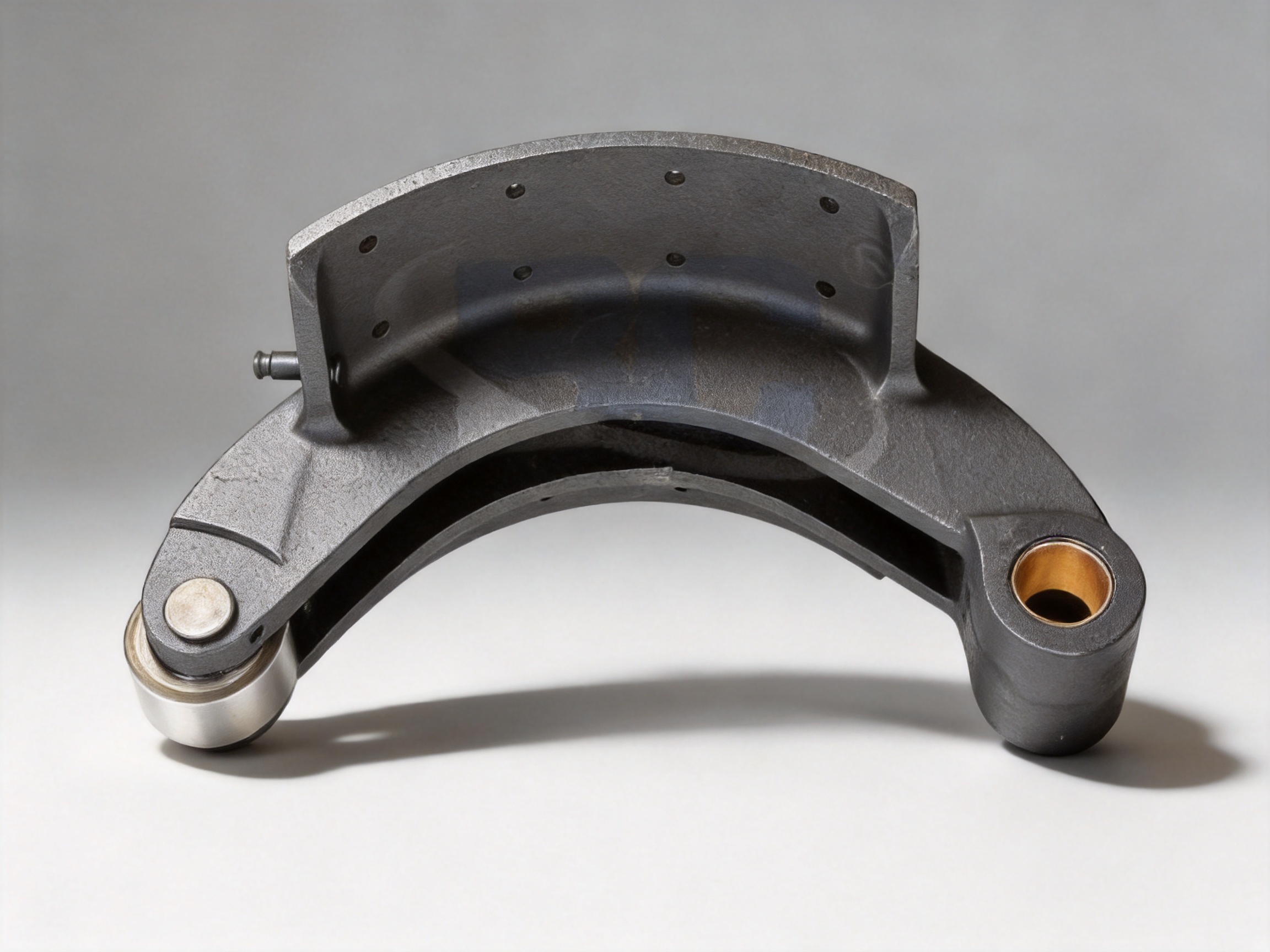
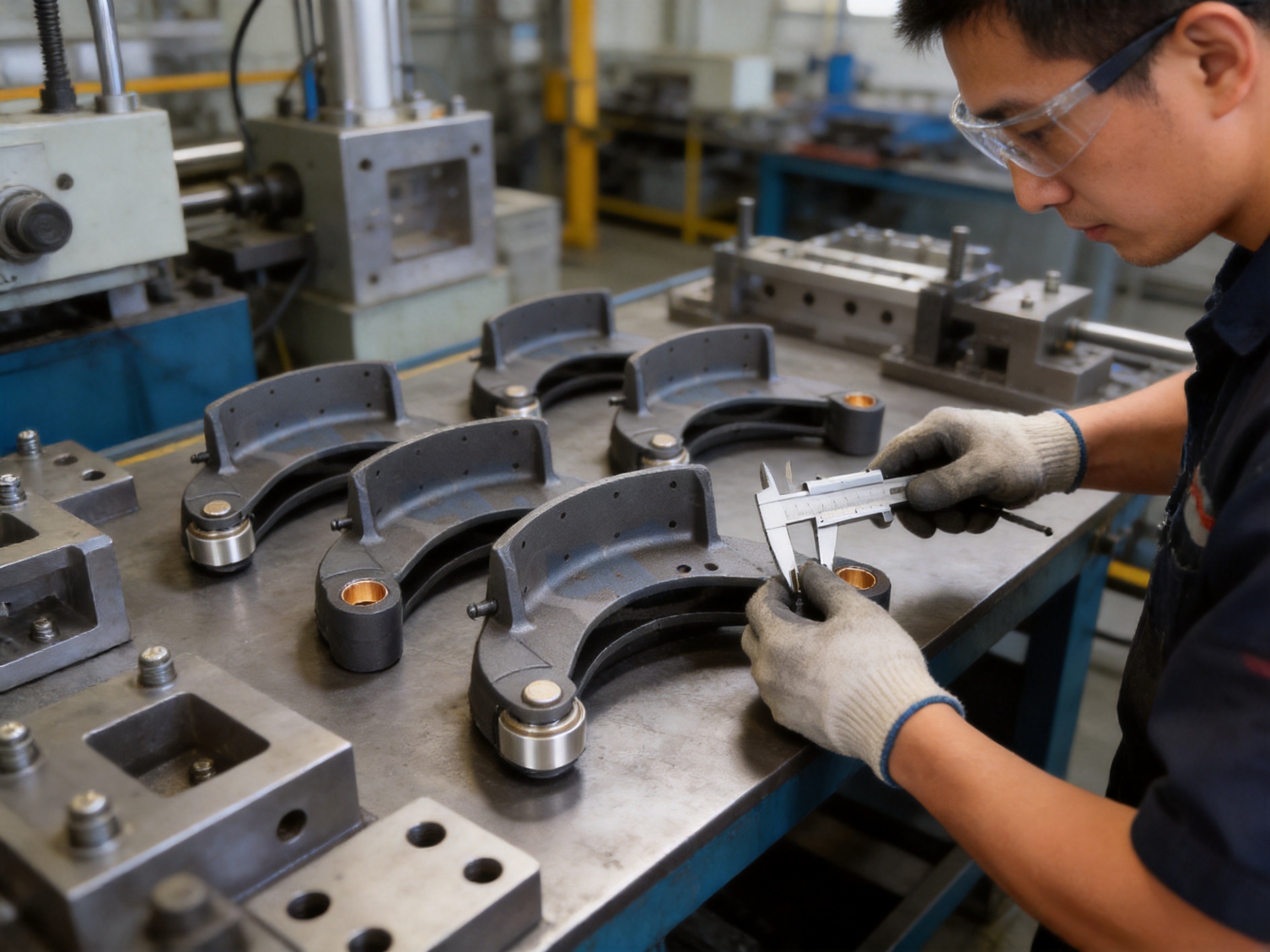
A high-quality casted brake shoe depends on disciplined manufacturing from raw material selection to final inspection. Zhejiang Bangchi Auto Parts Co., Ltd. is located in Haining, Zhejiang, China, and serves the heavy-duty brake parts market with a focus on truck braking components. The company’s product range demonstrates a specialized understanding of brake shoe systems, not just general metal parts manufacturing.
The production of a casted brake shoe usually begins with material control. The metal used for the shoe body must provide strength, structural stability, and suitable casting performance. If material composition is unstable, the finished shoe may suffer from inconsistent hardness, internal defects, or poor mechanical behavior. A competent manufacturer therefore manages incoming materials carefully and maintains production traceability to support repeatable product quality.
Tooling and mold control are also essential. The brake shoe’s geometry is defined during casting, and later machining or finishing can only correct certain features. If the mold is worn, misaligned, or poorly designed, the final shoe may deviate from required size. Advanced manufacturing strength includes maintaining tooling accuracy, checking mold condition, and controlling the process parameters that influence shrinkage, surface quality, and dimensional consistency.
After casting, the shoe must be cleaned, finished, inspected, and prepared for lining attachment or shipment. Riveting holes must be accurately positioned and free from harmful defects. The shoe surface must be suitable for further assembly. Contact areas, anchor points, and critical dimensions must be controlled to ensure that the part performs correctly inside the brake system.
For international distributors, manufacturing consistency is often more important than one excellent sample. Buyers need every batch to remain stable so that inventory can be sold with confidence. A strong manufacturing process provides repeatability through documented procedures, quality checks, trained operators, and continuous improvement. This is where an experienced heavy-duty brake parts factory can differentiate itself from smaller or less specialized competitors.
Advanced Process Control in Casted Brake Shoe Production
The performance of the 1104544 Casted Brake Shoe is supported by process control at multiple manufacturing stages. Each stage contributes to the final quality of the component. When these steps are performed carefully, the result is a brake shoe that offers dependable fit, stable strength, and reliable lining support.
Material Preparation
Material preparation influences casting quality and long-term product reliability. The manufacturer must select suitable metal material and control its composition. In brake shoe manufacturing, the material should provide mechanical integrity and the ability to hold precise shape after casting and cooling. Proper material preparation reduces the risk of casting defects and helps ensure consistent strength across production batches.
Casting and Mold Management
The casting process forms the brake shoe body. The mold must reproduce the required shape accurately, including the curved profile, web structure, and areas that later interact with other brake components. Mold maintenance is crucial because gradual wear can cause dimensional drift. Advanced production management includes regular mold inspection, process parameter monitoring, and corrective action when dimensions approach tolerance limits.
Cooling and Stress Considerations
After casting, the component must cool in a controlled manner. Uneven cooling can contribute to internal stress or dimensional inconsistency. For a brake shoe, stable shape is vital because the lining must sit correctly against the drum. Careful cooling and handling help preserve geometry and reduce the likelihood of later distortion.
Cleaning and Surface Preparation
Casted components require cleaning to remove residual casting materials and surface irregularities. Surface preparation is not only cosmetic; it supports inspection, finishing, and later lining assembly. Clean surfaces help technicians identify defects and ensure that the part is ready for subsequent processes.
Hole Processing and Riveting Interface Control
The 1104544 Casted Brake Shoe uses 16 riveting holes. These holes must be processed with attention to diameter, alignment, and edge quality. If holes are misplaced or rough, rivets may not seat correctly, and lining attachment may be compromised. Reliable hole processing improves assembly efficiency and enhances the connection between shoe and lining.
Dimensional Inspection
Dimensional inspection verifies that the brake shoe corresponds to the intended specification. Critical dimensions include overall size, curvature, hole position, web alignment, and functional contact areas. This inspection stage is a key advantage over competitors that may rely only on visual checking. Dimensional control reduces customer complaints and helps ensure reliable installation in compatible brake systems.
Batch Quality Management
Heavy-duty brake parts buyers often purchase in volume. Batch quality management ensures that products remain consistent from one shipment to the next. This includes production records, inspection sampling, packaging checks, and traceability. When batch quality is stable, distributors can build stronger reputations in their markets and reduce after-sales disputes.
Application Value for SCANIA Heavy-Duty Vehicles
The 1104544 Casted Brake Shoe is specified for SCANIA applications. Heavy-duty vehicles in this class require braking components capable of supporting high-mileage operation, significant load variation, and demanding road environments. A properly matched brake shoe contributes to stable braking force and predictable maintenance planning.
Commercial fleets often measure component value through operational efficiency. A truck that is out of service for brake repair creates cost beyond the replacement part itself. There may be lost delivery time, driver waiting time, workshop labor, and customer service disruption. A dependable brake shoe helps reduce avoidable downtime by supporting reliable installation and consistent service performance.
For service workshops, accurate fitment reduces the time needed to complete brake repairs. Technicians prefer parts that align correctly with existing assemblies and do not require adjustment beyond standard procedure. The 16-hole riveting design also supports clear lining attachment. This is especially useful in markets where relining is common and brake shoe cores are maintained as part of fleet repair practice.
For parts distributors, the OEM No. 1104544 and Part No. SCA203 provide clear catalog identity. Brake parts distribution depends on correct cross-reference information. A product with well-defined numbers and specifications is easier to promote, stock, and sell. It also helps counter the risk of incorrect part selection, which can create returns and customer dissatisfaction.
The Role of Brake Shoe Geometry in Safety
Brake shoe geometry affects safety because it determines how the lining contacts the drum. Ideal contact supports stable friction and predictable braking response. Poor geometry can create high spots, uneven wear, reduced contact area, or overheating. In severe cases, it can contribute to brake fade or mechanical damage.
The 413x203mm dimension reflects the brake shoe’s required size envelope. The shoe must fit the drum radius and width properly. If the shoe is too wide, too narrow, or incorrectly curved, the lining cannot work as intended. If the web or contact points are inaccurate, the brake mechanism may not transfer force evenly.
Accurate riveting hole placement also contributes to safety. The brake lining must remain firmly attached during repeated braking cycles. Rivets experience vibration, heat, and mechanical force. Properly aligned holes allow uniform rivet installation, reducing stress concentration and helping the lining remain secure. Competitors with inconsistent hole processing may create assembly weaknesses that only become visible after service use.
Heavy-duty braking is a system function. The drum, lining, shoe, springs, rollers, camshaft, and adjustment mechanism all interact. A stable casted brake shoe supports this system by holding the friction material in the intended position. This is why the shoe body should never be treated as a simple commodity. Precision and strength directly influence real-world braking reliability.
Integration with Brake Linings and Lined Brake Shoe Kits
Because Zhejiang Bangchi Auto Parts Co., Ltd. also offers brake linings, lined brake shoes, brake shoe repair kits, and lined brake shoe kits, the 1104544 Casted Brake Shoe can be considered part of a broader brake maintenance solution. Some customers purchase bare brake shoes for relining or assembly, while others prefer ready-to-install lined brake shoe kits. Offering both approaches helps meet different market needs.
In markets with established relining workshops, a bare casted brake shoe is valuable because customers can pair it with selected lining materials according to operating requirements. For example, vehicles used in long-distance highway transport may have different friction needs from vehicles used in urban stop-and-go routes. A reliable shoe body provides the foundation for these lining choices.
In markets where repair speed is most important, lined brake shoe kits may be preferred. A factory-assembled lined brake shoe can reduce workshop labor and help standardize assembly quality. The same manufacturing knowledge used in producing a quality bare shoe supports the production of lined brake shoe solutions.
The availability of repair kits further strengthens the product ecosystem. Brake shoe replacement often involves related hardware, and worn small components can reduce the effectiveness of a new shoe or lining. A supplier that understands the whole brake shoe assembly can provide better support than a supplier offering only individual parts without system awareness.
Quality Control and Inspection Philosophy
Quality control for a heavy-duty brake shoe must be practical, systematic, and repeatable. It should not rely only on final appearance. The 1104544 Casted Brake Shoe requires attention to material, casting integrity, surface finish, hole position, dimensional accuracy, and packaging condition.
Visual inspection can identify surface defects, incomplete casting, cracks, or finishing problems. However, visual inspection alone is not sufficient. Dimensional measurement is necessary to confirm that the shoe will fit the intended brake system. Hole gauges, templates, measuring tools, and controlled inspection procedures all support product reliability.
Functional thinking is also important. A brake shoe is not judged only by whether it looks acceptable on a shelf. It must install correctly, hold the lining securely, operate under load, and maintain its structure through repeated use. Quality control should therefore focus on the features that matter most in service.
Packaging inspection is another practical area. Heavy brake parts can be damaged during storage or transport if packaging is weak. Proper packing helps protect dimensions, surfaces, and product identification. For exporters, packaging also supports warehouse efficiency and customer satisfaction after long-distance shipping.
Traceability strengthens confidence. When production batches are documented, manufacturers can investigate issues, improve processes, and provide better customer service. For professional buyers, traceability is a sign that the supplier is committed to industrial discipline rather than short-term trading.
Advantages for OEM Manufacturers, Exporters, and Distributors
The 1104544 Casted Brake Shoe is suitable for several customer groups, including OEM-oriented buyers, exporters, wholesalers, and aftermarket distributors. Each group values the product in a slightly different way.
OEM manufacturers or OEM-related buyers often emphasize consistent specification and stable supply. They need parts that can be integrated into production or service programs without frequent variation. The company’s focus on OEM brake parts and FMSI-based numbering supports this requirement.
Exporters need products that can serve diverse markets with clear identification and dependable quality. The OEM No. 1104544 and Part No. SCA203 make the product easier to communicate across borders. Clear specifications reduce misunderstandings in quotation, ordering, and customs-related documentation.
Aftermarket distributors need parts that customers can trust. A distributor’s reputation depends on the performance of the products it sells. If brake shoes fit poorly or fail prematurely, the distributor faces returns and loss of confidence. A well-manufactured casted brake shoe helps distributors maintain market credibility.
Repair workshops need parts that save time. Accurate hole placement, proper geometry, and consistent finish can reduce installation problems. Workshop customers appreciate parts that allow repairs to be completed without unnecessary delays. This advantage can encourage repeat purchasing through the distribution chain.
Cost Efficiency Through Reliability
Heavy-duty brake parts should be evaluated through total cost of ownership. The lowest purchase price does not always produce the lowest operating cost. If a brake shoe causes installation difficulty, uneven lining wear, vibration, or early replacement, the total cost rises quickly.
The 1104544 Casted Brake Shoe contributes to cost efficiency by supporting correct fitment and stable service. A strong casted body helps reduce the risk of deformation. Accurate riveting holes support lining security. Clear part identification reduces ordering mistakes. Together, these advantages reduce hidden costs.
Fleet managers understand that maintenance is not only a technical activity but also a scheduling challenge. Brake service must be planned around vehicle availability. Parts that perform consistently help fleets plan maintenance intervals more confidently. This can improve vehicle utilization and reduce emergency repair events.
For distributors, reliable parts reduce warranty pressure and customer complaints. Every return consumes time, transportation, inspection, and administrative effort. A quality brake shoe may therefore improve profitability even if its unit price is not the lowest in the market.
How the Product Supports Safer Fleet Operation
Safety is the primary purpose of any brake component. The 1104544 Casted Brake Shoe supports safety by providing a reliable structural base for friction material in a heavy-duty drum brake system. When the shoe body maintains proper shape and supports lining attachment, the brake system can deliver more predictable performance.
Commercial vehicles often operate under conditions that test braking systems severely. A fully loaded truck descending a grade converts enormous kinetic energy into heat. Repeated braking in city routes creates frequent thermal cycles. Construction and regional distribution vehicles may encounter dust, water, and uneven roads. In these conditions, the brake shoe must remain stable and dependable.
Accurate fitment also contributes to balanced braking across axles. If one shoe does not contact correctly, braking force can become uneven. This may affect vehicle stability, tire wear, drum wear, and stopping distance. While the brake shoe is only one part of the system, its precision is essential to the overall result.
Professional fleet maintenance programs rely on predictable replacement parts. A product such as the 1104544 Casted Brake Shoe helps maintenance teams uphold safety standards when used correctly with compatible linings, drums, and hardware. It is a practical component for fleets that treat brake maintenance as a core safety responsibility.
Company Manufacturing Strengths
Zhejiang Bangchi Auto Parts Co., Ltd. is a China-based manufacturer specializing in heavy-duty brake parts and heavy truck brakes. The company provides OEM brake parts following the global FMSI numbering system, which is valuable for international customers requiring consistent references and organized product matching.
The company’s product categories cover multiple braking components, including Steel Brake Shoe, Casted Brake Shoe, Brake Lining, Lined Brake Shoe, Brake Shoe Repair Kits, and Lined Brake Shoe Kits. This specialization shows that the company is not simply producing miscellaneous automotive parts. Instead, it focuses on the brake shoe and brake lining field, where knowledge of materials, dimensions, friction systems, and heavy-duty applications is essential.
Advanced manufacturing strength is reflected in the ability to control different product formats. Producing a bare casted brake shoe requires casting and machining control. Producing a brake lining requires friction material knowledge. Producing a lined brake shoe requires assembly accuracy and riveting quality. Producing kits requires component matching and packaging organization. A company that manages all these areas can better understand the complete brake maintenance process.
For global buyers, supplier strength also includes communication, documentation, customization, and export capability. The company offers custom 1104544 Casted Brake Shoe solutions for specified applications. Customization may include product specification confirmation, packing requirements, labeling, and market-oriented supply arrangements. This flexibility helps distributors and OEM-related customers adapt products to local market expectations.
Why Professional Buyers Choose a Specialized Brake Parts Factory
Professional buyers often compare suppliers based on price, quality, lead time, product range, and after-sales support. A specialized brake parts factory offers several advantages over general trading companies or non-specialized metal part producers.
First, a specialized factory understands application requirements. Brake shoes are safety parts, and their dimensions are not arbitrary. A supplier familiar with heavy-duty brake systems is better prepared to manage compatibility and answer technical questions.
Second, a specialized factory can maintain tooling and production knowledge for multiple brake shoe types. This matters when buyers need a stable supply over time. Tooling control, production records, and experienced operators all contribute to repeatability.
Third, a specialized factory can support related product sourcing. If a buyer needs brake linings, lined shoes, or repair kits in addition to casted shoes, working with one specialized source simplifies procurement. It can also improve component matching.
Fourth, a factory with OEM-oriented thinking is better positioned to serve international standards. The use of global FMSI numbering reflects an organized approach to part identification. For buyers managing many part numbers, this reduces confusion and supports efficient catalog development.
Comparison with Lower-Quality Alternatives
Lower-quality brake shoes may appear similar from a distance, but differences become clear during installation and service. Common issues include inaccurate curvature, poor hole alignment, weak casting, rough surface finish, dimensional inconsistency, and unreliable packaging. These problems can create serious consequences for workshops and fleets.
Inaccurate curvature can prevent the lining from contacting the drum evenly. This may cause poor braking performance during the bedding-in period and uneven wear over time. Poor hole alignment can make riveting difficult and may weaken lining retention. Weak casting can deform under load or develop cracks. Rough surface finish can interfere with assembly and inspection. Dimensional inconsistency can create unpredictable fitment from one batch to another.
The 1104544 Casted Brake Shoe is presented as a product for customers who value stable quality and manufacturing discipline. Its defined specification, casted structure, 16-hole design, and OEM reference provide the foundation for professional use. When produced under controlled processes, it offers advantages that cannot be judged by appearance alone.
Price-only purchasing can be risky in the brake parts market. If a low-cost shoe causes returns, customer complaints, or safety concerns, the business cost is far greater than the initial saving. Professional buyers therefore look for suppliers that provide consistent quality, clear specifications, and long-term cooperation.
Maintenance and Installation Considerations
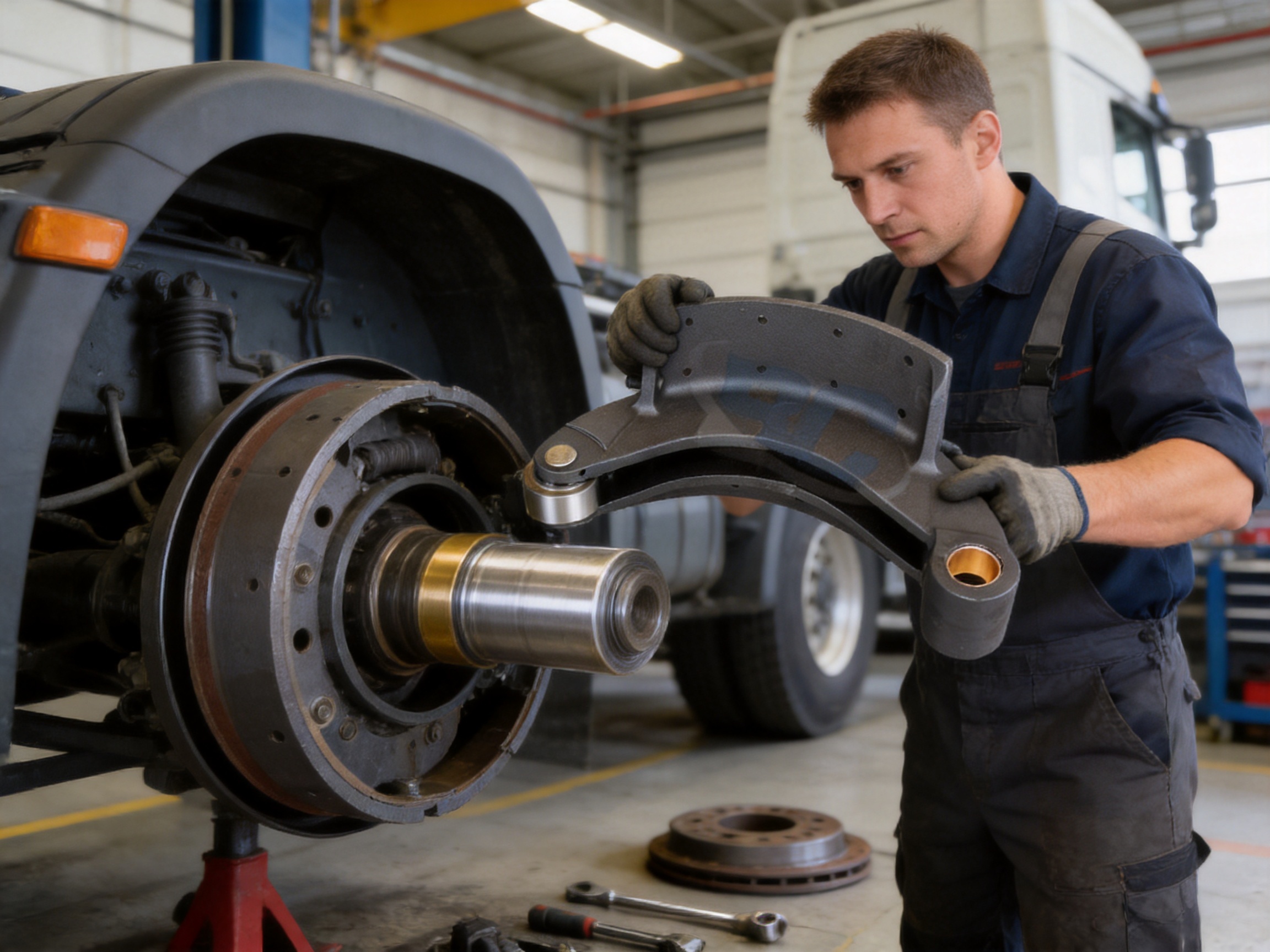
To achieve reliable performance, the 1104544 Casted Brake Shoe should be installed as part of a complete brake system inspection. Technicians should confirm that the brake drum is within service limits, the lining is appropriate, the hardware is in good condition, and the adjustment mechanism operates correctly. Even a high-quality brake shoe cannot compensate for severely worn drums, damaged springs, or incorrect installation.
Before installation, the brake shoe should be checked for correct part number, dimensional compatibility, and surface condition. Riveting holes should be clean and aligned with the selected lining. During lining attachment, rivets should be installed according to suitable procedures to ensure firm retention without damaging the lining or shoe.
After installation, the brake system should be adjusted correctly. Improper adjustment can cause overheating, dragging, poor braking, or uneven wear. Bedding-in procedures may also be required depending on the lining material and service practice. Fleet maintenance teams should follow established workshop standards and vehicle service recommendations.
Periodic inspection remains important after installation. Brake components operate in harsh environments, and regular checks help identify wear before it becomes a safety issue. The brake shoe should be inspected together with lining thickness, drum condition, return springs, rollers, and related hardware.
Supply and Customization Benefits
Zhejiang Bangchi Auto Parts Co., Ltd. offers custom 1104544 Casted Brake Shoe solutions for SCANIA applications. Customization is valuable for customers with specific market requirements, packaging standards, labeling preferences, or purchasing programs. In international trade, flexible supply support can make cooperation smoother and more efficient.
For wholesalers, customized packaging and clear part labeling can improve warehouse management. For importers, stable product identification helps create accurate catalogs. For fleet supply programs, consistent specifications and repeatable quality support scheduled maintenance planning. For repair kit suppliers, the casted brake shoe can be integrated into broader brake service packages.
The company’s address in Haining, Zhejiang, China, places it within an active manufacturing region with access to industrial resources and export logistics. Communication channels including telephone, fax, and email support buyer inquiries and order coordination. For professional customers, direct factory communication can be helpful when confirming technical specifications, shipment details, and custom requirements.
Q&A Section
Q1: What is the product name and part number?
The product is the 1104544 Casted Brake Shoe, and its part number is SCA203.
Q2: What is the OEM number for this brake shoe?
The OEM number is 1104544. This number helps buyers, distributors, and technicians identify the correct replacement part.
Q3: What is the size of the 1104544 Casted Brake Shoe?
The size is 413x203mm, which is an important fitment specification for the compatible drum brake system.
Q4: How many riveting holes does this brake shoe have?
The brake shoe has 16 riveting holes. These holes support secure and evenly distributed brake lining attachment.
Q5: What vehicle application is listed for this product?
The listed application is SCANIA heavy-duty vehicle use.
Q6: Why choose a casted brake shoe instead of a lower-cost alternative?
A quality casted brake shoe provides a strong and stable structure, accurate geometry, reliable lining support, and better resistance to deformation. Lower-cost alternatives may appear similar but can create installation problems, uneven wear, or shorter service life.
Q7: What advantages does Zhejiang Bangchi Auto Parts Co., Ltd. offer as a supplier?
The company specializes in heavy-duty brake parts and heavy truck brakes, offers several related product categories, follows the global FMSI numbering system, and supports OEM-oriented supply and customization.
Q8: Can this brake shoe be used with brake linings and repair kits?
Yes. The brake shoe can be used as part of brake lining assembly or broader brake service solutions. The company also offers brake linings, lined brake shoes, brake shoe repair kits, and lined brake shoe kits.
Q9: What should technicians check during installation?
Technicians should confirm part compatibility, inspect the brake drum, check hardware condition, ensure proper riveting, adjust the brake system correctly, and follow professional workshop procedures.
Q10: Why is the 16-hole riveting pattern important?
The 16-hole pattern helps distribute attachment points evenly across the lining. Accurate hole placement supports secure riveting, stable lining retention, and consistent braking performance.
Conclusion
The 1104544 Casted Brake Shoe, Part No. SCA203, is a heavy-duty braking component designed around practical performance requirements: accurate fitment, strong casted construction, reliable lining attachment, and clear OEM identification. With a size of 413x203mm, 16 riveting holes, and application for SCANIA vehicles, it offers the dimensional and structural foundation needed for demanding drum brake systems.
Its advantages over common competitors come from more than one feature. The product combines casted rigidity, controlled geometry, secure riveting design, and compatibility with broader brake maintenance programs. For fleets, this can support safer operation and reduced downtime. For workshops, it can simplify installation and relining. For distributors and exporters, it offers clear identification and marketable reliability.
Zhejiang Bangchi Auto Parts Co., Ltd. strengthens the value of the product through specialization in heavy-duty brake parts, OEM-oriented manufacturing, global FMSI numbering awareness, and a broad product range that includes steel brake shoes, casted brake shoes, brake linings, lined brake shoes, repair kits, and lined brake shoe kits. These capabilities make the company a practical partner for buyers seeking stable quality, supply flexibility, and long-term cooperation in the heavy truck brake parts market.
For professional customers, the correct brake shoe is not simply a replacement item; it is a safety-related investment. The 1104544 Casted Brake Shoe is designed to meet that expectation by providing a dependable foundation for heavy-duty braking performance.
References
1. Limpert, Rudolf. Brake Design and Safety. SAE International.
2. Society of Automotive Engineers. Commercial Vehicle Brake Systems Technical Publications.
3. Federal Motor Vehicle Safety Standards. Air Brake Systems and Heavy Vehicle Brake Performance Documentation.
4. FMSI Brake Part Numbering and Identification Reference Materials.
5. Heavy-Duty Truck Maintenance Manuals and Drum Brake Service Guidelines.
6. Automotive Friction Materials and Brake Lining Engineering References.