 English
 简体中文
简体中文Heavy-duty braking systems operate under demanding conditions that passenger-car components rarely experience. Commercial vehicles may carry substantial loads, travel long distances, descend steep grades, and perform repeated braking cycles in traffic, construction areas, ports, distribution centers, and regional freight routes. In these applications, the brake shoe is a critical structural and friction-support component. Its ability to maintain shape, support the brake lining, and work consistently inside the drum directly influences braking stability, maintenance planning, vehicle uptime, and operating cost.
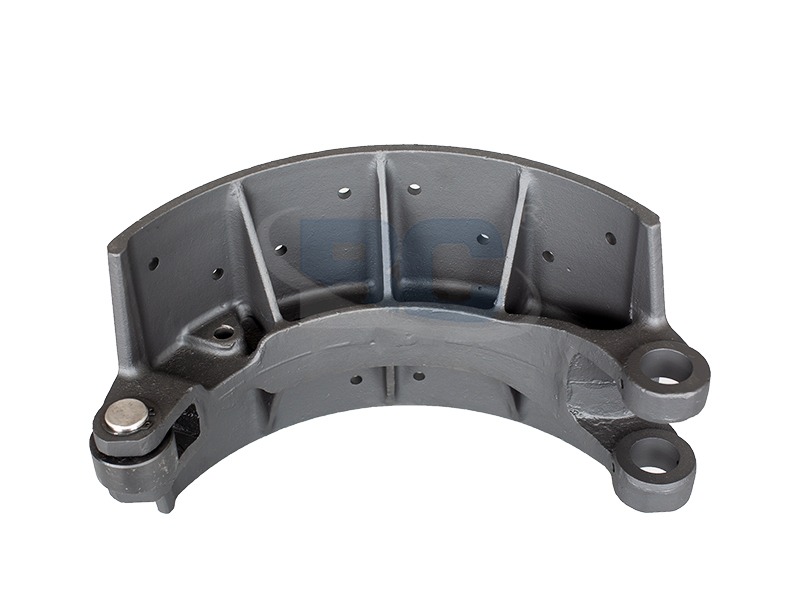
The RENU200 Casted Brake Shoe is designed for heavy-duty drum brake applications associated with Renault vehicle systems. Its catalog information identifies the product as RENU200 and lists Renault references 5010098948 and 5010525775. The available dimensions include 419 x 200 mm and 419 x 220 mm, with a catalog value of 16 included in the product data. These references and measurements provide a useful starting point for component selection, although final fitment should always be confirmed against the vehicle model, axle configuration, brake assembly, drum specifications, and the original component.
A casted brake shoe is more than a simple curved metal support. It must preserve its geometry under load, provide a reliable base for the lining, accommodate the action of the brake cam or actuator, and remain compatible with the return springs, rollers, pins, adjusters, and backing plate used in the complete brake assembly. The RENU200 design is therefore best evaluated as part of a complete braking system rather than as an isolated replacement item.
RENU200 Casted Brake Shoe
Product Identity and Application Scope
The RENU200 Casted Brake Shoe belongs to the casted brake shoe category. In the supplied product catalog, it is associated with Renault applications and is identified by the reference numbers 5010098948 and 5010525775. The dimensional entries are listed as 419 x 200 mm and 419 x 220 mm. The presence of two dimensional configurations indicates that careful selection is important, especially when vehicles within the same general brand family use different drum, lining, axle, or braking arrangements.
The product name itself communicates two important characteristics. “RENU200” provides the model designation used for catalog organization, while “Casted Brake Shoe” identifies the manufacturing form of the shoe body. A casted shoe is produced by forming molten metal into a controlled mold cavity and then carrying out subsequent machining, finishing, and inspection operations. This process differs from a shoe made exclusively by bending or stamping sheet material.
For fleet managers and distributors, clear product identification reduces the risk of ordering an apparently similar component that does not match the intended brake assembly. Reference numbers should be checked together with the overall shoe length, width, mounting features, lining position, cam contact area, return-spring locations, and drum compatibility. A reference number alone is valuable, but it should not replace a complete fitment review.
The RENU200 is particularly relevant to replacement programs in which the original brake shoe body is worn, damaged, distorted, corroded, or no longer suitable for relining. It may also be considered by commercial vehicle repairers that need a consistent casted shoe platform for brake lining installation. In all cases, the replacement decision should consider the condition of the brake drum and the suitability of the lining material selected for the vehicle’s operating environment.
Catalog Information
| Item | Catalog Information |
|---|---|
| Product name | RENU200 Casted Brake Shoe |
| Product category | Casted Brake Shoe |
| Vehicle application | Renault heavy-duty brake systems |
| Listed reference | 5010098948 |
| Additional listed reference | 5010525775 |
| Listed dimensional option | 419 x 200 mm |
| Additional dimensional option | 419 x 220 mm |
| Catalog value | 16 |
| Component form | Casted brake shoe body for drum brake service |
The catalog value of 16 is retained as supplied because its exact meaning is not defined in the available product information. Depending on the catalog structure, such a value may represent a quantity, package specification, application code, or another internal classification. Buyers should request confirmation before using it for purchasing, packaging, or installation decisions.
Why the Brake Shoe Body Matters
In a drum brake, the brake shoe transfers the force generated by the actuator to the friction lining. The lining then presses against the inner surface of the rotating drum. This action converts vehicle motion into heat through friction. Although the lining is the direct friction material, the shoe body provides the mechanical support that allows the lining to work correctly.
The shoe must maintain its designed curvature so that the lining contacts the drum progressively and evenly. If the shoe is distorted, poorly machined, improperly assembled, or weakened by corrosion, the lining may contact the drum unevenly. Uneven contact can reduce effective braking area, create local hot spots, increase lining wear, and contribute to noise or vibration. A well-produced shoe body helps the complete brake assembly achieve more predictable behavior.
The shoe also contains or supports important functional areas. These may include the actuator contact surface, pivot or anchor locations, spring holes, lining attachment points, and other features that vary according to the brake design. Dimensional accuracy at these locations is essential. Even a component with the correct general size may not operate properly if the holes, edges, contact surfaces, or offsets are not correctly positioned.
For heavy commercial vehicles, mechanical strength is particularly important. Brake shoes are subjected to repeated force cycles, thermal exposure, vibration, and environmental contamination. A suitable casted structure can provide a robust foundation for these conditions when the alloy, casting quality, heat treatment, machining, and inspection procedures are properly controlled.
Advantages of a Casted Construction
Casted construction offers several potential advantages for heavy-duty brake shoe production. The first is design flexibility. A mold can create integrated structural forms, reinforced sections, curved surfaces, and functional bosses that may be difficult or impractical to produce through simple sheet-metal forming. This flexibility allows the shoe body to be shaped around the requirements of the brake mechanism.
The second advantage is structural consistency. A properly engineered casting distributes material through the body according to expected load paths. Reinforced areas can be incorporated where actuator forces, anchor reactions, or lining loads are concentrated. The result is a component designed around the behavior of the brake assembly rather than merely formed into a curved outline.
The third advantage is suitability for repeat production. Once the mold, process parameters, and machining procedures are established, the manufacturer can produce a consistent series of parts. Repeatability is important for distributors and fleet operators because replacement components should maintain comparable geometry from one production batch to another.
Casted construction can also support long service life when the material and process are controlled correctly. The shoe must not only be strong when new; it must resist cracking, distortion, excessive wear at contact areas, and deterioration caused by heat and road contamination. The performance of the final part depends on the complete production chain, including material preparation, mold control, cooling, fettling, machining, surface treatment, and final inspection.
These advantages should not be interpreted as a guarantee that every casted shoe is automatically superior to every alternative. Product quality depends on engineering discipline and process control. A carefully manufactured casted brake shoe can provide significant value, while a poorly controlled casting can create defects. The important consideration is not the word “casted” alone, but the quality system behind the finished component.
Material and Casting Process Considerations
The manufacturing process begins with material selection. A brake shoe body requires a metal alloy that can provide adequate strength, dimensional stability, thermal tolerance, and resistance to service-related fatigue. The selected material must also be compatible with the casting method and subsequent machining operations.
Before melting, production personnel should control the identity and condition of the charge materials. Clean material preparation helps reduce unwanted inclusions and supports stable chemical composition. Furnace temperature, holding time, melt treatment, and pouring conditions must be managed according to the approved process specification. Variations in these stages can influence the internal structure and mechanical properties of the casting.
Mold preparation is another important stage. The mold must reproduce the shoe geometry accurately and provide suitable filling and cooling behavior. Poor mold alignment can affect critical dimensions, while unsuitable gating or venting may contribute to porosity, incomplete filling, or surface defects. A controlled mold maintenance program helps preserve repeatability over multiple production cycles.
During pouring, the metal must fill the cavity without excessive turbulence or premature solidification. The temperature window needs to be controlled carefully. Metal that is too cold may not fill thin or complex sections correctly, while metal that is too hot may increase oxidation, shrinkage, or mold-related problems. Controlled pouring practices are therefore central to reliable casting quality.
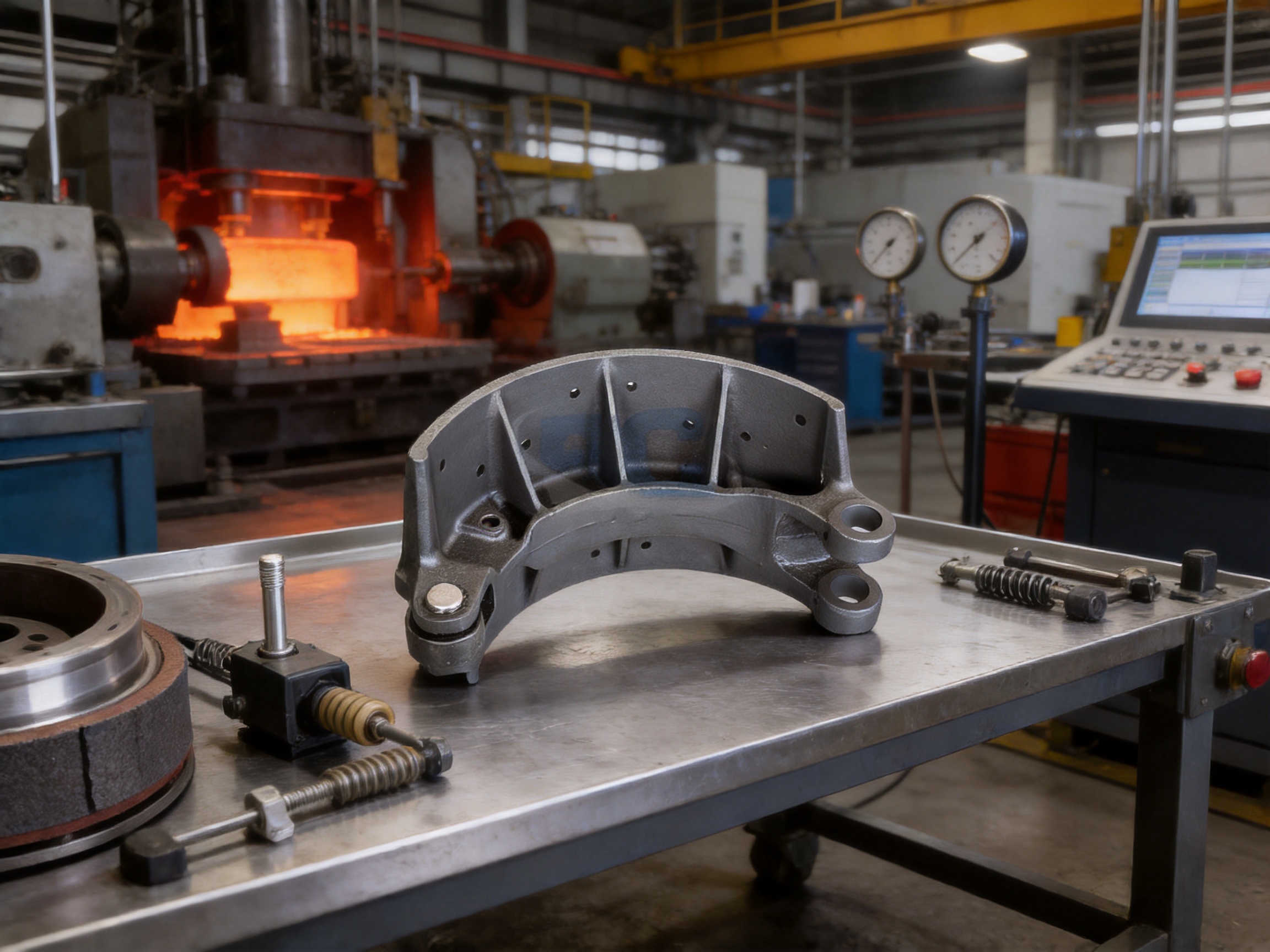
Cooling and solidification also affect the final part. Uneven cooling may lead to internal stress or dimensional variation. Appropriate process design helps guide solidification and reduces the risk of shrinkage-related defects. After the casting has cooled, gates, risers, flash, and other excess material are removed. The shoe body is then cleaned so that visual inspection and machining can be performed accurately.
For a professional manufacturer, casting is not a single operation but a sequence of controlled activities. The advantages of the RENU200 platform depend on maintaining stable conditions through each stage. This process-oriented approach is one of the main ways a specialized brake parts factory can distinguish its products from low-control or inconsistent alternatives.
Machining and Dimensional Control
Raw castings normally require finishing and machining before they are ready for brake assembly. Machining establishes the dimensions and surfaces needed for consistent installation. It may include work on mounting areas, actuator contact surfaces, spring locations, lining seats, holes, edges, and other application-specific features.
Dimensional control is especially important for the RENU200 because the catalog identifies more than one dimensional configuration. The 419 x 200 mm and 419 x 220 mm entries should not be treated as interchangeable without confirmation. A small difference in width or related geometry can influence lining placement, drum clearance, actuator travel, and overall brake adjustment.
Accurate machining improves the relationship between the shoe body and the brake lining. When lining attachment surfaces are properly prepared, the lining can be positioned more consistently. Correct hole locations support reliable installation of rivets or other approved attachment systems. Correct contact geometry helps the actuator apply force in the intended direction.
Modern production may use dedicated fixtures, gauges, coordinate measurement equipment, and controlled machining centers. Dedicated fixtures help position each casting in a repeatable manner. Gauges provide rapid checks for high-volume production, while coordinate measurement equipment can verify complex dimensions during process validation or quality audits.
Surface finish is also relevant. Rough or irregular surfaces at functional contact points can accelerate wear or interfere with assembly. At the same time, not every surface requires the same finish level. Effective manufacturing assigns appropriate tolerances and finish requirements to each area rather than applying an unsuitable standard uniformly.
Process capability should be reviewed over time, not only during the first approval sample. Tool wear, fixture wear, machine adjustment, operator variation, and changes in raw materials can affect results. A strong manufacturer monitors production data and updates controls when trends show that a dimension is moving toward its limit.
Quality Checks for a Finished Shoe
A finished casted brake shoe should pass several categories of inspection before release. Visual inspection can identify cracks, incomplete filling, excessive porosity at exposed areas, sharp edges, flash, poor cleaning, and surface damage. Visual inspection is useful but should be supported by dimensional and process checks.
Dimensional inspection verifies the overall profile and critical application features. The inspector may check length, width, curvature, hole position, contact surfaces, lining seat geometry, and other values defined by the product drawing. Application-specific gauges can make these checks efficient and repeatable.
Material and casting controls may include chemical composition review, hardness testing, metallurgical examination, or other tests selected according to the product specification. Non-destructive inspection may be used when required to examine areas that are difficult to evaluate visually. The exact inspection plan depends on the manufacturer’s engineering standards, customer requirements, and application risk.
Traceability strengthens the quality process. Batch records can connect the finished shoe to material information, casting conditions, machining records, inspection results, and packaging data. If a question arises later, traceability helps the factory investigate the affected production range instead of relying on assumptions.
Packaging inspection is also practical. Brake shoes should be protected from impact, moisture, and contamination during storage and transport. Correct labeling should identify the product designation, reference, dimensional option, batch information where applicable, and quantity. Good packaging reduces the chance that a correct component will be damaged or misidentified before installation.
Comparison with Competing Brake Shoe Options
Fleet buyers often compare a casted brake shoe with several alternatives: a low-cost generic shoe, a stamped or fabricated shoe, a reconditioned original shoe, or a product supplied without strong application documentation. Each option may have a place in the market, but the decision should consider more than purchase price.
Compared with an unverified generic component, a cataloged RENU200 shoe offers a clearer identification path. The listed product designation, Renault references, and dimensional options give buyers information for cross-checking. This can reduce the risk of selecting a part based only on visual similarity. Accurate identification is particularly valuable when a vehicle fleet contains several axle types or brake configurations.
Compared with a basic fabricated shoe, a casted design may provide greater freedom to incorporate reinforced geometry and application-specific features. The benefit is strongest when the casting is engineered and produced with appropriate process controls. A fabricated shoe can also perform effectively when properly designed, but its suitability must be evaluated using the same criteria: strength, geometry, fitment, durability, and inspection evidence.
Compared with a reconditioned shoe, a new casted shoe offers a fresh structural base. Reconditioning may involve cleaning, inspection, repair, and relining of an existing body. This can be economical when the original shoe remains within acceptable limits. However, a shoe with hidden cracking, distortion, excessive wear at contact points, or corrosion may not be a reliable foundation for reuse. A new component avoids dependence on the previous service history of the old body.
Compared with products supplied with limited technical information, a component supported by clear catalog data is easier to manage in a professional purchasing system. This matters for inventory control, workshop planning, and repeat ordering. The more accurately a part can be identified, the less time technicians spend resolving uncertain fitment issues.
Price remains important, but the total cost of ownership is often more meaningful. A brake shoe that fits correctly, supports consistent lining installation, and reduces rework may provide greater value than a cheaper part that creates installation delays or premature service requirements. Fleet operators should consider labor, vehicle downtime, emergency freight, inspection time, and the consequences of an incorrect component.
The most responsible comparison is therefore evidence-based. Buyers should request drawings, specifications, inspection information, and application confirmation when required. Claims of superiority should be supported by measurable characteristics rather than marketing language alone.
Advantages for Fleet Maintenance
Fleet maintenance departments need replacement parts that can be identified, ordered, stored, and installed efficiently. The RENU200 catalog structure supports these activities by associating the product with a model designation, Renault application, reference numbers, and dimensional information. A clear catalog entry can help standardize purchasing across multiple workshops.
Standardization reduces inventory complexity. If the fleet uses a known brake configuration, the maintenance team can establish approved part numbers and replenishment levels. This makes it easier to forecast demand, identify slow-moving stock, and avoid storing multiple visually similar components without clear application records.
A robust casted shoe can also support predictable repair planning. When the shoe body is dimensionally consistent, technicians can focus on the condition of the lining, drum, springs, rollers, adjuster, and actuator rather than correcting unexpected component variation. Predictability is especially valuable when a vehicle must return to service within a limited maintenance window.
The product may be used in conjunction with suitable brake linings and repair kits. The supplied category list includes brake linings, lined brake shoes, brake shoe repair kits, and lined brake shoe kits. This broader product structure suggests that buyers may obtain either the shoe body alone or a more complete service solution, depending on workshop capability and purchasing requirements.
When purchasing a bare shoe for relining, the workshop should use an approved lining material and follow the lining supplier’s installation instructions. Rivet type, rivet spacing, countersinking, bonding method, and curing requirements must be appropriate for the brake assembly. The shoe body should be checked before lining installation, and the completed assembly should be inspected after installation.
When purchasing a lined shoe or repair kit, the buyer should verify the lining specification, attachment method, shoe orientation, and intended axle position. A complete kit can simplify procurement, but it does not eliminate the need for application verification. The assembled component must still match the vehicle’s brake design and operating requirements.
Fitment Verification Before Ordering
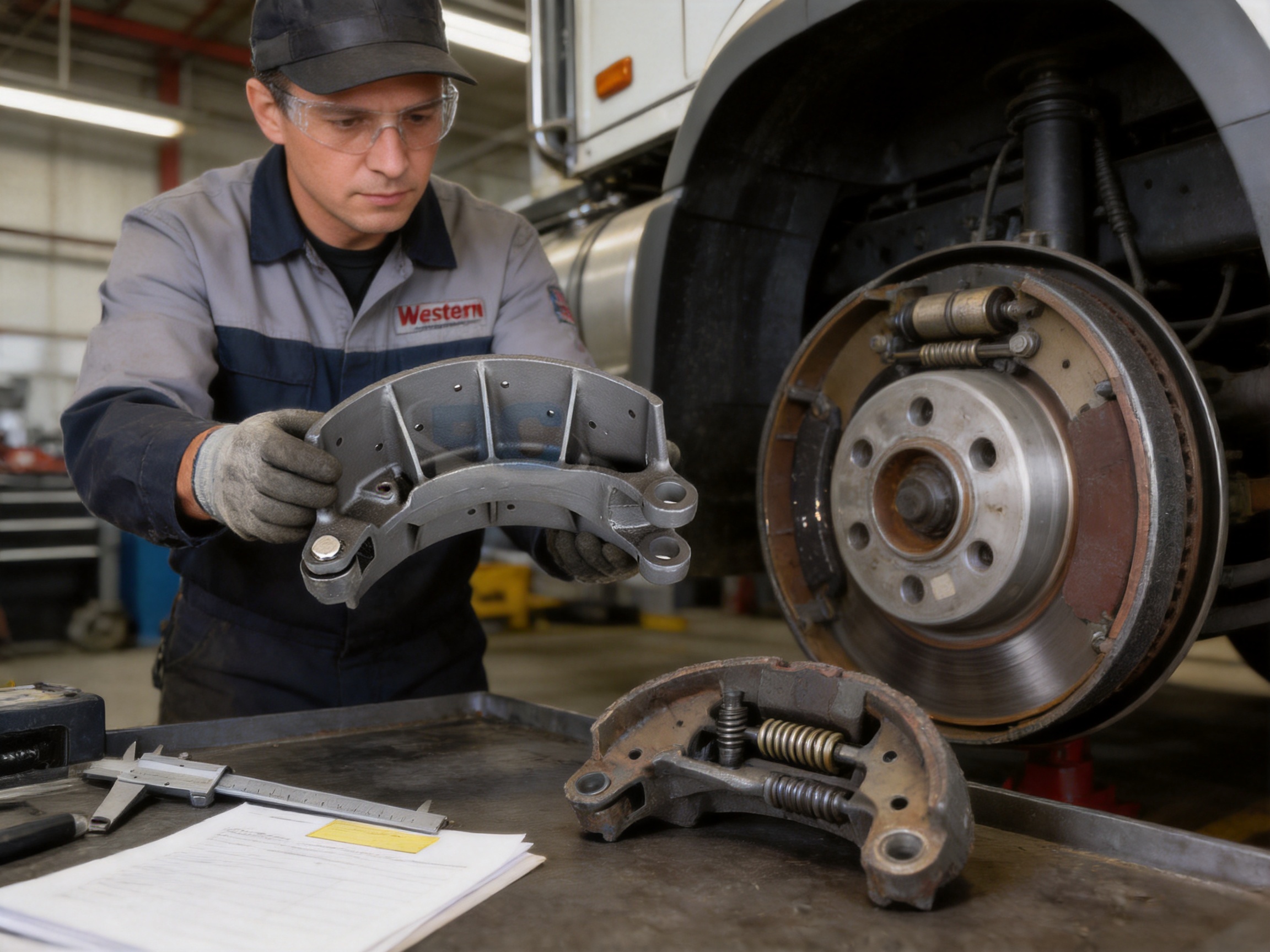
Fitment verification is one of the most important steps in selecting the RENU200. The listed Renault reference 5010098948 should be checked against the vehicle documentation, existing part, supplier catalog, or approved cross-reference information. The additional reference 5010525775 should be treated as a separate confirmation point rather than assumed to represent exactly the same configuration in every vehicle.
The dimensional listings of 419 x 200 mm and 419 x 220 mm require special attention. Buyers should determine which value corresponds to the intended brake position and whether the dimension represents overall shoe length, shoe width, lining width, or another catalog measurement. Product dimensions should be interpreted according to the manufacturer’s technical drawing or application guide.
The physical inspection should include the overall shape, left-hand or right-hand orientation where relevant, anchor and actuator arrangements, spring holes, lining attachment points, and any identification marks. The existing shoe can be used for comparison, but it should not be copied blindly if it has been distorted or damaged.
The brake drum should also be inspected. A new shoe cannot compensate for a drum that is cracked, excessively worn, out of round, beyond its service diameter, or heavily scored. Drum condition affects lining contact and braking performance. If the drum is replaced or machined, the shoe and lining installation should be reviewed together.
Vehicle operating conditions should be considered as well. A truck used for urban delivery may experience frequent stops and heat cycles, while a vehicle working in mountainous areas may encounter long downhill braking events. Construction and off-road vehicles may be exposed to dust, water, mud, and impact. The lining selection and maintenance interval should reflect these conditions.
When any detail is uncertain, the safest procedure is to consult Zhejiang Bangchi Auto Parts Co., Ltd. with the vehicle model, axle information, existing reference, measurements, photographs, and intended quantity. The company’s listed contact information includes sfp@zjbangchi.com and telephone numbers +86-133 7230 7977 and +86-0573-87960600. A technical confirmation before shipment can prevent avoidable ordering errors.
Installation and Workshop Practices
Installation should be performed by qualified personnel using the vehicle manufacturer’s service procedures and applicable workshop safety practices. Brake components are safety-critical. The vehicle must be securely supported, the wheel and drum removed safely, and stored energy in springs or actuators controlled with suitable tools.
Before fitting the shoe, the technician should compare it with the removed component and verify the application marking. The new shoe should be free from impact damage, corrosion, oil, grease, and contamination. Functional holes and contact points should be checked for blockage or burrs. Any uncertainty should be resolved before assembly.
If the RENU200 is being relined, the shoe body should be cleaned and inspected before the lining is attached. The lining must be positioned correctly and secured using the approved method. Riveted linings should be installed with appropriate equipment so that the rivets are properly seated without cracking the lining or distorting the shoe. Bonded linings require controlled surface preparation, adhesive handling, pressure, and curing.
All related hardware should be assessed. Return springs can lose tension, rollers can develop flat spots, pins can wear, and adjusters can seize. Installing a new shoe while retaining defective hardware may compromise the result. This is why brake shoe repair kits can be useful in a planned service operation.
After assembly, the brake drum should rotate without unacceptable interference, and the brake should be adjusted according to the approved procedure. The technician should check actuator travel, shoe return, lining contact, and system operation. If the drum or lining is new, an appropriate bedding-in process may be required. Heavy braking should be avoided until the friction surfaces have achieved suitable contact, unless the vehicle manufacturer specifies another procedure.
Post-installation inspection should include fastener security, spring placement, clearance, brake adjustment, wheel installation, and a controlled functional test. Any abnormal noise, pull, drag, vibration, or excessive pedal or actuator travel should be investigated immediately.
Maintenance, Inspection, and Service Life
The service life of a brake shoe depends on many factors. Vehicle mass, loading patterns, road gradients, driving style, brake balance, drum condition, lining material, adjustment condition, environmental contamination, and maintenance quality all influence wear. No responsible product assessment should promise a fixed service life without considering these variables.
Regular inspections should look for lining wear, loose or damaged attachments, cracks, corrosion, heat damage, abnormal contact patterns, and deformation. The shoe body should be examined whenever the drum is removed. Inspection intervals should follow the vehicle manufacturer’s recommendations and may need to be shortened for severe-duty operation.
Uneven lining wear can provide useful diagnostic information. Wear concentrated at one end may indicate incorrect geometry, a problem with the actuator or anchor, a worn roller, or an issue with the drum. Tapered wear may point to misalignment or incomplete contact. Cracks, glazing, oil contamination, or burning should be investigated rather than corrected by simply replacing the lining.
Brake adjustment is another essential factor. Excessive clearance can increase actuator travel and reduce braking response, while insufficient clearance can cause drag and heat buildup. Automatic and manual adjustment systems must be maintained according to their specific requirements. The shoe body, lining, adjuster, and actuator work as a system, so maintenance should address the complete assembly.
Storage conditions also influence product quality before installation. Brake shoes should be kept in a dry, clean environment, protected from water, corrosive chemicals, excessive humidity, and heavy impacts. Components should remain in their original protective packaging where practical. Stock rotation helps prevent prolonged storage and makes batch control easier.
Manufacturing Strengths and Supplier Capability
Zhejiang Bangchi Auto Parts Co., Ltd. presents itself as a manufacturer and supplier of heavy-duty brake parts, including casted brake shoes, steel brake shoes, brake linings, lined brake shoes, repair kits, and lined shoe kits. This product range is relevant because commercial brake service often requires coordinated components rather than a single isolated part.
A specialized manufacturer can develop greater process knowledge than a general metalworking supplier. Brake components require attention to curvature, fitment, actuator interaction, lining attachment, thermal exposure, and service inspection. Experience across these related products can help the manufacturer understand how the shoe body functions in the broader brake system.
The company’s supplied SEO information states that it provides OEM brake parts following the global FMSI numbering system. This statement indicates an emphasis on structured product identification and international catalog compatibility. Buyers should still request the specific cross-reference and technical documentation needed for each order, but a numbering-oriented approach can improve communication between manufacturers, distributors, and repair organizations.
Manufacturing strength is not defined only by machinery. It also includes product drawings, controlled work instructions, trained personnel, inspection standards, corrective-action procedures, supplier management, and customer feedback systems. These elements work together to turn a design into a repeatable product.
Production location and logistics can also influence supply performance. The company lists its address as No. 9 Building, No. 11 Qiyi Road, Chang’an Town, Haining, Zhejiang, China. Its available contact channels allow distributors and fleet purchasers to discuss specifications, packaging, availability, and application requirements directly with the supplier.
For international customers, effective communication is particularly valuable. A technically complete inquiry should include the required reference, dimensional option, vehicle application, expected order volume, packaging preference, destination, and any inspection or documentation requirements. Clear information at the quotation stage reduces misunderstandings later in production and shipping.
Quality Assurance and Continuous Improvement
A reliable brake parts program should use continuous improvement rather than treating quality as a final inspection activity only. If a dimensional deviation is found, the manufacturer should determine whether the cause relates to mold wear, fixture positioning, machining setup, raw material variation, operator method, or another factor. Corrective action should address the underlying cause.
Customer feedback can contribute to this process. Reports about fitment, installation, lining attachment, packaging, or field behavior should be recorded and reviewed. Patterns may reveal opportunities to improve drawings, labels, fixtures, inspection points, or installation instructions.
Supplier quality is also important. Material providers, packaging suppliers, machining partners, and treatment providers can affect the final product. A controlled supplier approval and review process helps maintain consistency throughout the supply chain.
Documentation supports confidence. Depending on the order and market, buyers may request product drawings, material information, dimensional inspection records, batch traceability, packaging specifications, or declarations related to applicable requirements. The exact documents should be agreed before production begins.
For the RENU200, the most useful quality approach is one that connects the catalog identity to the physical product. The marking, packaging, dimensional option, and inspection record should all point to the same application. This connection is especially important when a distributor stocks several related brake shoe models.
Purchasing Guidance for Distributors and Fleets
Distributors should establish a clear product master record for the RENU200. The record can include the model designation, Renault references, dimensional options, category, package quantity once confirmed, gross and net weight, carton dimensions, country of origin, and any agreed technical documents. A well-structured product record improves online listings, warehouse identification, and customer service.
Before placing a production order, the buyer should confirm whether the required item is an unlined casted shoe, a lined shoe, or a repair kit. These products may look related in a catalog but require different purchasing and installation procedures. The order should state the exact reference and dimensional configuration.
For fleet customers, demand planning should consider preventive maintenance schedules, seasonal workload, vehicle population, and average replacement rates. Holding a reasonable stock of approved components can reduce downtime, but excessive inventory should be avoided when multiple dimensional versions exist.
Packaging should be discussed for the intended distribution channel. Bulk packaging may be appropriate for a large workshop, while individually labeled packaging may be better for aftermarket distribution. Protective separation should prevent shoes from striking one another during transport. Labels should remain legible after handling.
Commercial terms are important, but technical clarity should come first. A low unit price cannot compensate for an incorrectly specified part. Buyers should request confirmation of the reference, dimensions, expected production lead time, inspection procedure, and shipment quantity before final approval.
Environmental and Operational Considerations
Heavy-duty brake components are exposed to road salt, water, mud, dust, oil mist, and temperature changes. A suitable protective finish and appropriate storage can help preserve the shoe before installation. During service, however, environmental contamination should be addressed through routine cleaning and inspection rather than relying on surface treatment alone.
Brake dust and removed friction material should be handled according to applicable workplace and environmental requirements. Technicians should use suitable cleaning methods and personal protective equipment. Compressed air should not be used in a way that unnecessarily disperses dust into the work area.
Material efficiency is another consideration in casting. Controlled mold design and process planning can reduce unnecessary material use and improve yield. Scrap metal generated during production may be managed through approved recycling channels, subject to the manufacturer’s material-control procedures.
Longer component service intervals can also support environmental efficiency by reducing replacement frequency, transport demand, packaging use, and workshop consumption. Durability must always be achieved without compromising safety, fitment, or inspection requirements.
Why the RENU200 Can Be a Practical Replacement Choice
The RENU200 combines several characteristics that are useful in heavy-duty aftermarket service. It is identified as a casted brake shoe, is associated with Renault applications, and is listed with two reference numbers and two dimensional configurations. This information gives buyers a foundation for controlled selection rather than relying on appearance alone.
Its casted construction is suitable for a component that must support repeated mechanical and thermal loading. When produced through controlled material preparation, molding, machining, and inspection, the shoe body can provide a stable base for lining installation and brake assembly.
The product is also part of a broader heavy-duty brake parts range. This can simplify sourcing when a customer needs brake linings, lined shoes, or repair kits together with the shoe body. A supplier that understands the relationship between these products may be better positioned to support complete maintenance requirements.
Compared with an unidentified low-cost alternative, the RENU200 offers a more structured route to verification through its listed designation, references, dimensions, and application category. Compared with reusing an excessively worn shoe, it provides a new structural platform. Compared with a component produced without clear process control, its value depends on the manufacturer’s ability to maintain repeatable casting and inspection standards.
The strongest purchasing decision will combine these product advantages with proper fitment verification, compatible lining selection, sound installation, and regular maintenance. No brake component should be evaluated separately from the system in which it operates.
Recommended Evaluation Checklist
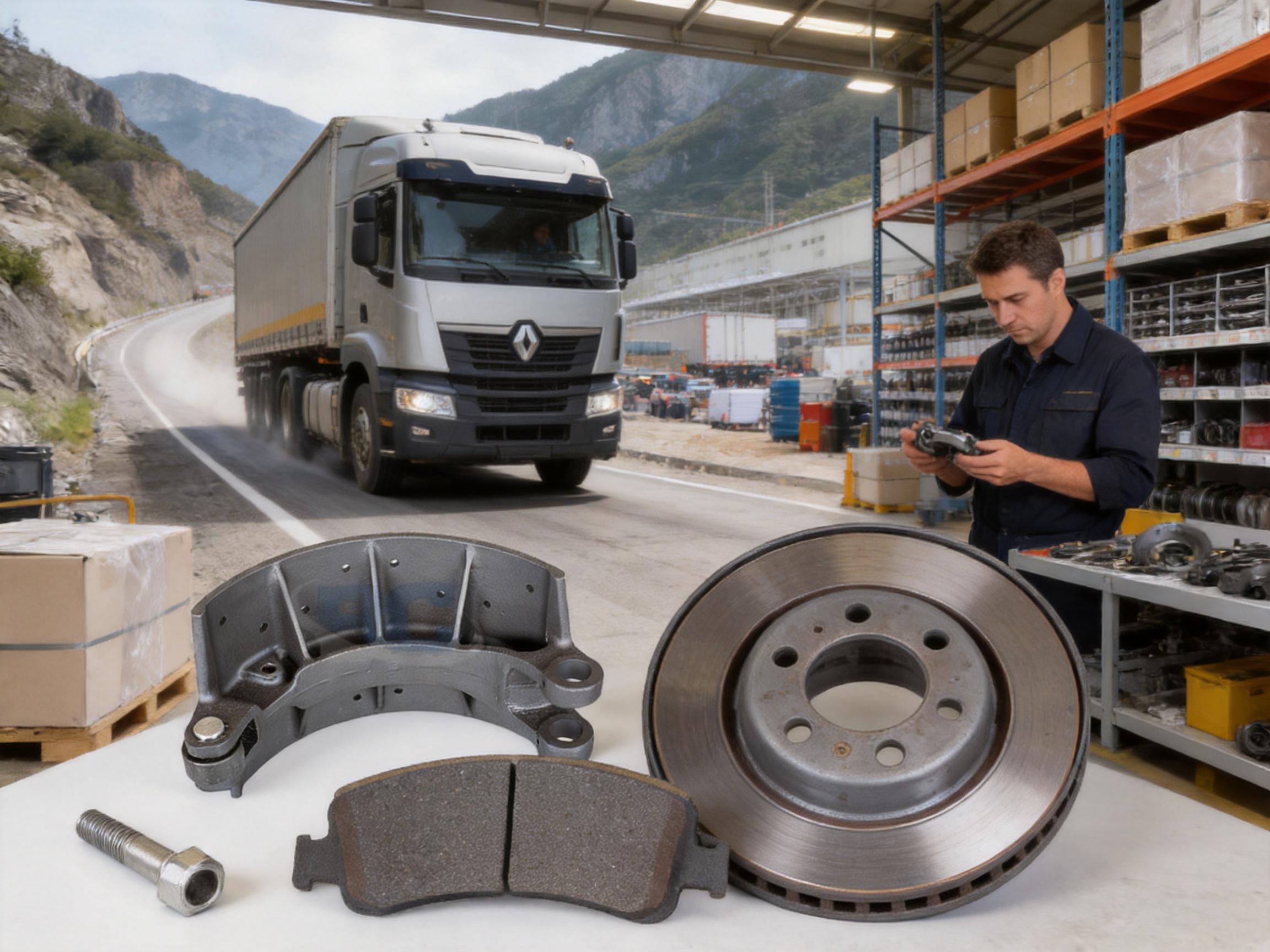
Before ordering the RENU200, confirm the vehicle and axle application. Identify the existing reference number and compare it with 5010098948 or 5010525775 as appropriate. Confirm whether the required dimension is 419 x 200 mm or 419 x 220 mm, and ask the supplier to explain the catalog measurement if its meaning is not clear.
Confirm whether the order is for a bare casted shoe, a lined shoe, or a repair kit. Ask whether the product is supplied individually or in a defined package quantity. The catalog includes the value 16, but its meaning should be verified before it is used for purchasing or stock planning.
Review the intended lining specification and attachment method. Confirm that the brake drum is within service limits and that the related springs, rollers, pins, adjuster, and actuator are suitable for reuse. If the vehicle operates under severe conditions, discuss the appropriate lining and inspection schedule with a qualified brake specialist.
For larger orders, agree on marking, packaging, inspection documentation, batch identification, and delivery requirements in advance. Request a pre-production or first-article sample when the application is critical or the product is being introduced into a new market.
On receipt, inspect the packaging and product before placing the parts into inventory. Check for damage, corrosion, incorrect labels, dimensional mismatch, or missing components. Record the batch and supplier information so that any future service question can be traced efficiently.
Q&A
What is the RENU200 Casted Brake Shoe?
The RENU200 is a casted brake shoe designed for heavy-duty drum brake applications associated with Renault systems. It provides the structural base that supports the brake lining and transfers actuator force into the drum brake assembly.
Which references are listed for this product?
The supplied catalog lists 5010098948 and 5010525775. These references should be checked against the vehicle, axle, existing component, and technical documentation before ordering.
What dimensions are available?
The product information lists 419 x 200 mm and 419 x 220 mm. Because the catalog does not define the precise measurement method, the buyer should confirm the dimensional interpretation and intended application with the supplier.
Is the RENU200 supplied with brake lining?
The supplied product entry identifies it as a casted brake shoe, so it should not automatically be assumed to include a lining. The catalog also includes separate categories for brake linings, lined brake shoes, brake shoe repair kits, and lined brake shoe kits. Confirm the exact supply form before placing an order.
Why choose a casted shoe instead of a generic replacement?
A casted shoe can provide application-specific geometry, a robust structural form, and a repeatable platform for lining installation when it is manufactured under controlled conditions. The listed references and dimensions also support more systematic fitment verification than a product identified only by appearance.
Can the RENU200 be relined?
A casted shoe may be used as a platform for lining installation when the product specification and workshop procedure permit it. The approved lining material, attachment method, rivet or bonding process, and inspection requirements must be followed by qualified personnel.
Should the old brake drum be replaced at the same time?
Not necessarily, but the drum must be inspected. Cracks, excessive wear, excessive diameter, severe scoring, distortion, or poor contact can reduce the performance of a new shoe and lining. The drum should be serviced or replaced when it is outside the applicable limits.
What should be checked before installation?
Check the product marking, reference, dimensions, orientation, casting condition, mounting features, spring locations, actuator contact areas, and lining attachment surfaces. Also inspect the related brake hardware and verify that the shoe matches the intended axle and brake assembly.
What information should a buyer provide when requesting a quotation?
The buyer should provide the vehicle and axle application, existing reference number, required dimensional option, quantity, product form, lining requirements if applicable, packaging preference, destination, and any documentation or inspection requirements.
How can the supplier be contacted?
The supplied company information lists the email address sfp@zjbangchi.com, telephone number +86-133 7230 7977, and office telephone number +86-0573-87960600. Buyers can use these channels to confirm application, dimensions, packaging, availability, and technical details.
Does the catalog value of 16 indicate the package quantity?
The available product data includes the value 16, but it does not explain what the value represents. It may be a package quantity or an internal catalog field. Buyers should obtain confirmation before using it for purchasing or inventory calculations.
What makes the manufacturer relevant to heavy-duty brake parts?
Zhejiang Bangchi Auto Parts Co., Ltd. supplies a range of heavy-duty brake components, including casted brake shoes, steel brake shoes, brake linings, lined shoes, and repair kits. Its stated focus on OEM brake parts and FMSI-based numbering supports structured aftermarket identification, although product-specific documentation should still be requested for each application.
Conclusion
The RENU200 Casted Brake Shoe is a purpose-oriented component for Renault-related heavy-duty drum brake applications. Its listed references, 419 x 200 mm and 419 x 220 mm dimensional options, and casted construction make it a practical candidate for replacement and relining programs when the application is correctly verified.
The principal advantages of the product are connected to its structural form, catalog identification, application-focused dimensions, and availability within a wider heavy-duty brake parts range. A casted shoe can provide a strong and stable foundation for the brake lining, but its actual value depends on controlled materials, accurate casting, precise machining, effective inspection, correct packaging, and proper installation.
Zhejiang Bangchi Auto Parts Co., Ltd. offers manufacturing and supply capabilities for commercial brake components and provides direct contact channels for technical and purchasing discussions. This supplier relationship can be useful for distributors, fleet operators, and repair organizations that require consistent identification and repeatable sourcing.
The best results come from a complete system approach. Confirm the reference and dimensions, inspect the drum and related hardware, select a compatible lining, follow approved installation procedures, and maintain the brake assembly according to operating conditions. When these steps are followed, the RENU200 can contribute to dependable repair planning, improved component consistency, and controlled heavy-duty vehicle maintenance.
References
1. Product catalog information for the RENU200 Casted Brake Shoe, including listed Renault references, dimensional options, and category classification.
2. Heavy-duty drum brake service principles covering brake shoe geometry, lining contact, actuator force transfer, drum interaction, and maintenance inspection.
3. General foundry engineering practices for alloy preparation, mold control, pouring, solidification, casting cleaning, and defect prevention.
4. General machining and dimensional inspection practices for safety-critical automotive components.
5. Commercial vehicle brake maintenance principles concerning lining installation, drum inspection, brake adjustment, bedding-in, and related hardware replacement.
6. Supplier information provided for Zhejiang Bangchi Auto Parts Co., Ltd., including product categories, manufacturing location, contact details, and stated FMSI numbering approach.
7. General fleet maintenance management practices for parts identification, inventory control, traceability, packaging, and preventive service planning.