 English
 简体中文
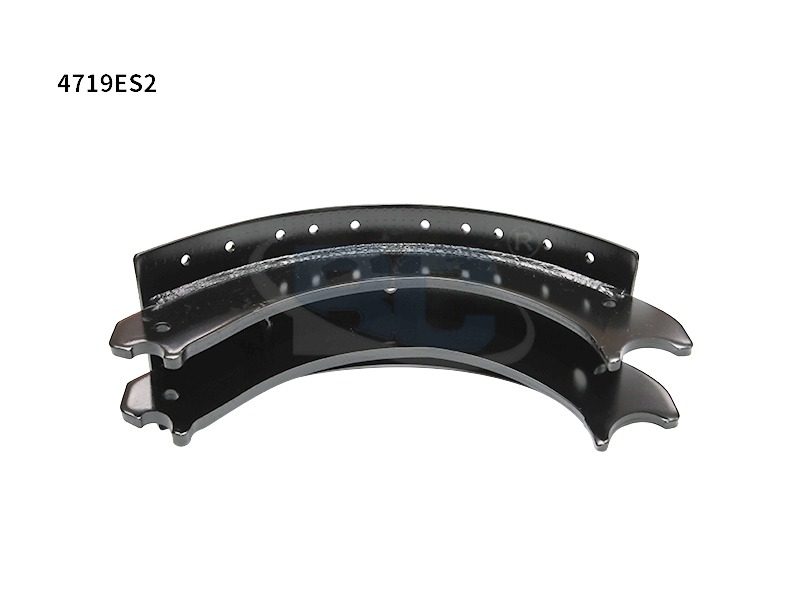
Heavy-duty braking systems depend on components that can withstand repeated mechanical loading, friction, heat, vibration, and demanding operating conditions. Within a drum brake assembly, the brake shoe is a structural and functional component that transfers braking force to the friction lining and ultimately to the brake drum. A brake shoe that is accurately formed, correctly drilled, properly matched to the application, and consistently manufactured can contribute to dependable braking performance and more efficient maintenance.
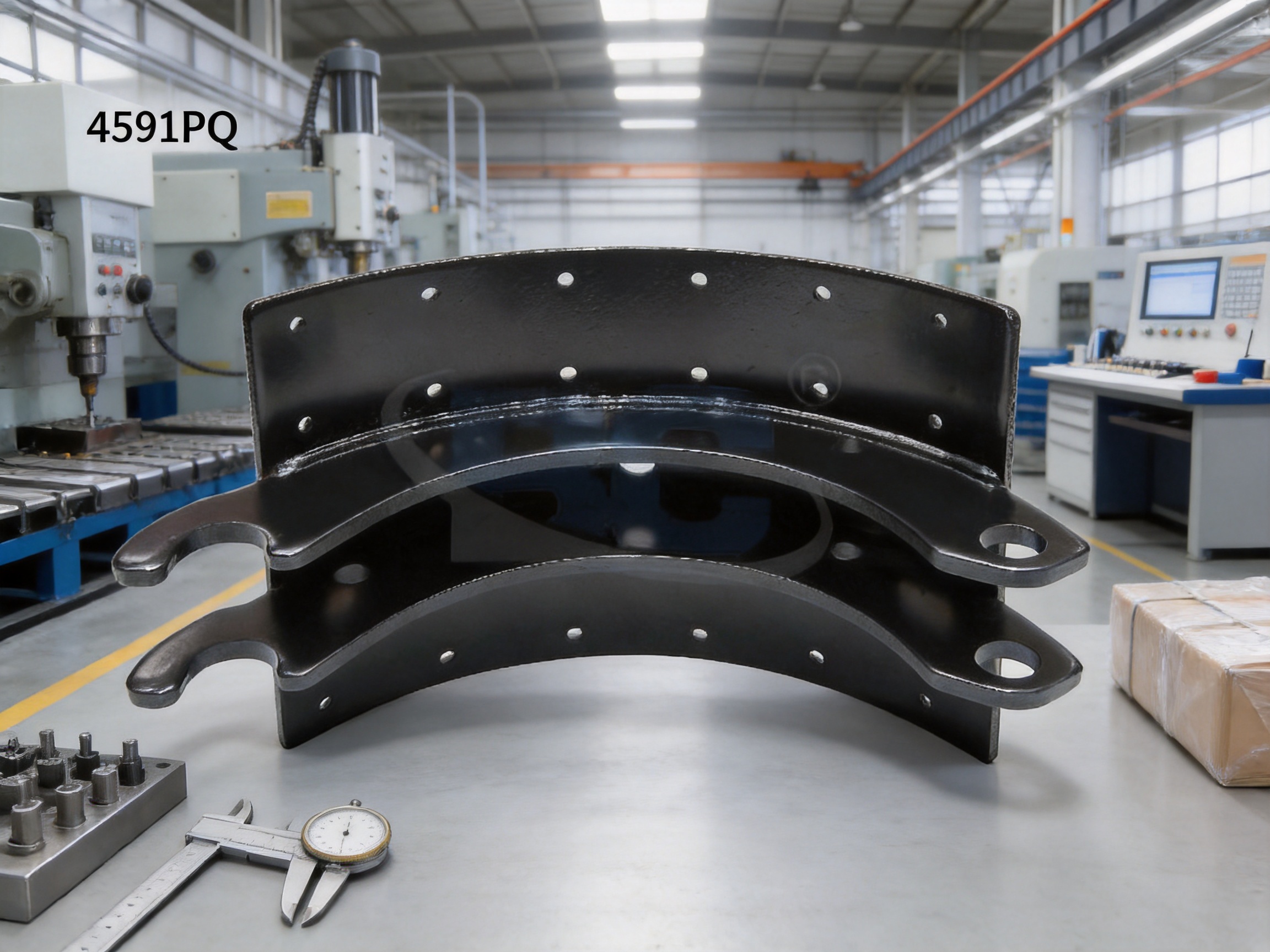
The 4591PQ Brake Shoe is a steel brake shoe designed for heavy-duty brake service applications. It is identified by part number 4591PQ and is associated with OE number R700031. The product has a listed size of 12.25 inches by 7.5 inches, with the source specification presenting the dimensional notation as “12.25*7.5 mm.” Because the stated unit format combines inch symbols with millimeter notation, buyers and installers should confirm the final dimensional drawing or physical measurement before ordering large quantities.
The shoe is manufactured with 24 rivet holes. This hole pattern is an important identification and installation feature because the number, placement, and spacing of rivet holes must correspond with the selected brake lining and the intended brake assembly. Correct matching helps reduce installation problems, supports even lining attachment, and allows maintenance personnel to use a suitable replacement without unnecessary modification.
This article explains the product’s role, design characteristics, application value, manufacturing considerations, quality expectations, and purchasing advantages. It also describes how a professional heavy-duty brake parts manufacturer can support customers through product categorization, OE cross-reference information, FMSI-based identification, production consistency, and technical communication.
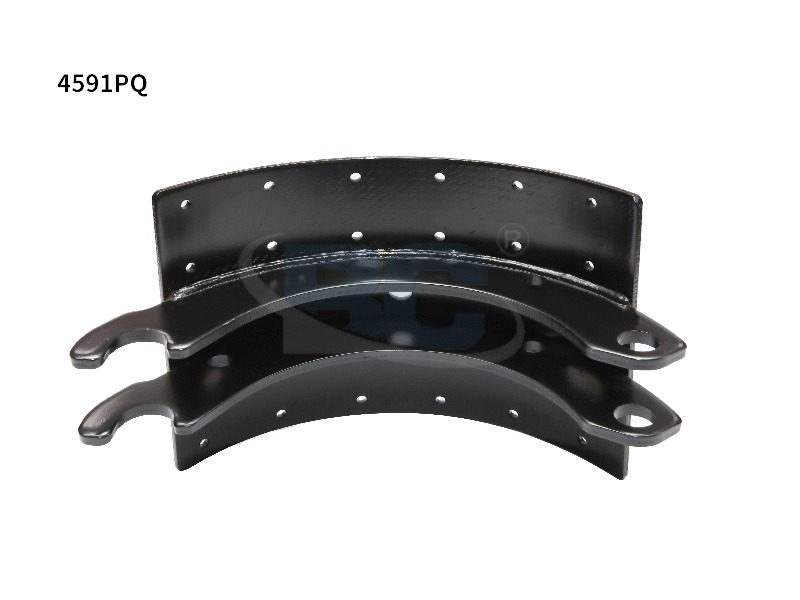
4591PQ Brake Shoe
Product Overview
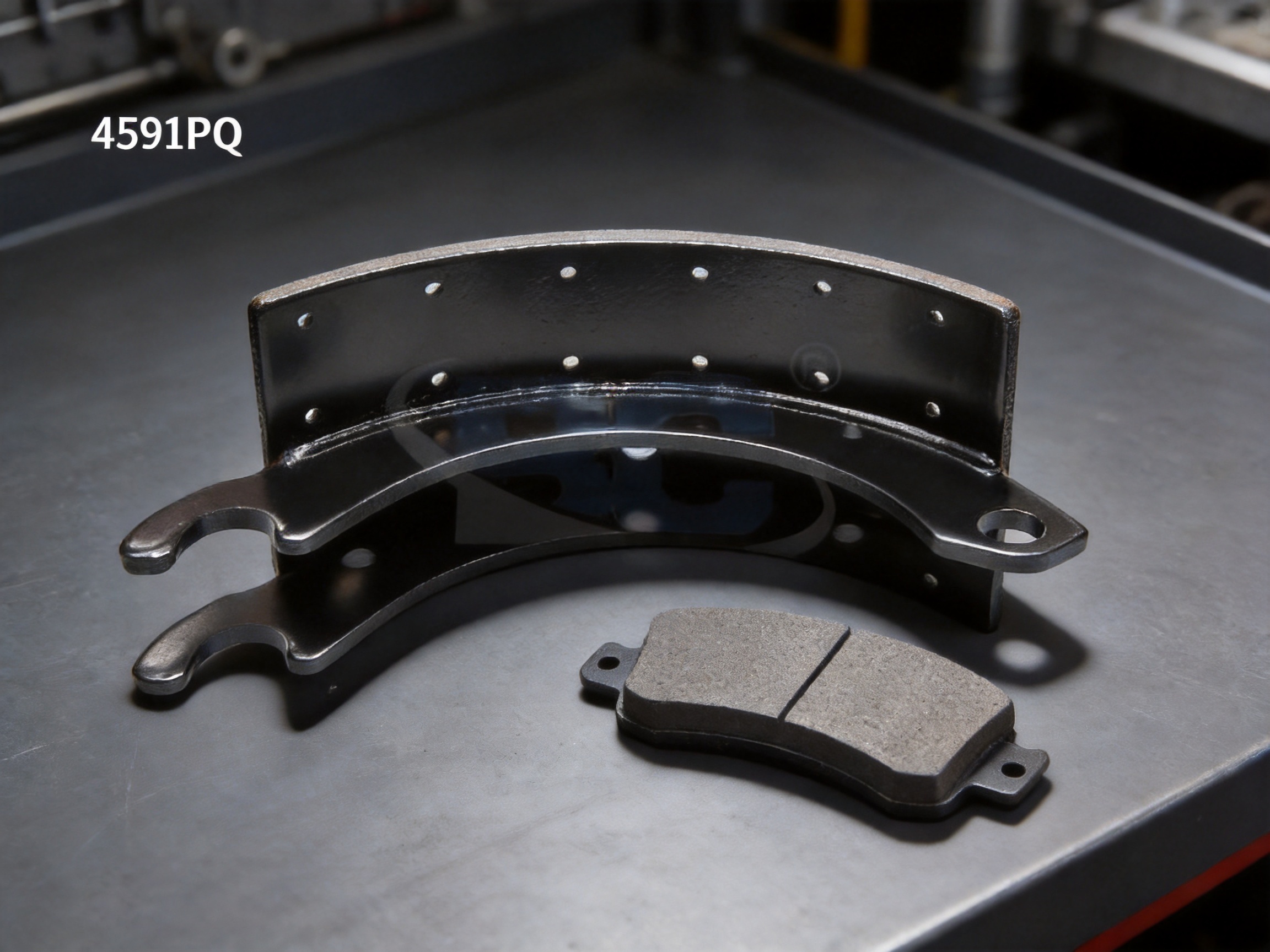
The 4591PQ Brake Shoe belongs to the steel brake shoe category. Unlike a complete lined brake shoe, a steel brake shoe is generally supplied as the formed metal foundation to which a compatible friction lining can be attached. This format is useful for brake repair specialists, fleet maintenance departments, distributors, and customers who need to select a lining according to a particular vehicle, axle, brake drum, duty cycle, or operating environment.
The principal product data supplied for the 4591PQ model is summarized below.
| Specification | Product Information |
|---|---|
| Product name | 4591PQ Brake Shoe |
| Product category | Steel Brake Shoe |
| Part number | 4591PQ |
| OE reference number | R700031 |
| Listed size | 12.25 inches by 7.5 inches; unit notation should be confirmed before purchase |
| Number of rivet holes | 24 |
| Related product categories | Casted Brake Shoe, Brake Lining, Lined Brake Shoe, Brake Shoe Repair Kits, and Lined Brake Shoe Kits |
Part numbers and OE reference numbers are central to heavy-duty brake component selection. A visual resemblance is not sufficient to prove interchangeability. Brake shoes with similar overall shapes may differ in width, arc, offset, flange geometry, rivet pattern, web thickness, or drum compatibility. For this reason, the 4591PQ identification and R700031 OE reference should be used together with application data, dimensional confirmation, and the requirements of the braking system.
Why the Brake Shoe Structure Matters
A brake shoe serves as the load-bearing foundation of a drum brake friction assembly. When the brake actuator moves the shoe outward, the shoe presses its attached lining against the inner surface of the rotating drum. The shoe must distribute the applied force across the lining while maintaining its shape under repeated cycles. It must also tolerate the forces generated when the vehicle is loaded, traveling downhill, stopping frequently, or operating in severe weather.
The steel foundation therefore has several responsibilities. It must provide sufficient rigidity to support the lining, maintain dimensional stability during service, accept rivets or other approved lining fasteners, and fit correctly against the backing plate and associated hardware. A shoe that is not properly formed can create uneven contact, premature lining wear, noise, or difficulty during installation.
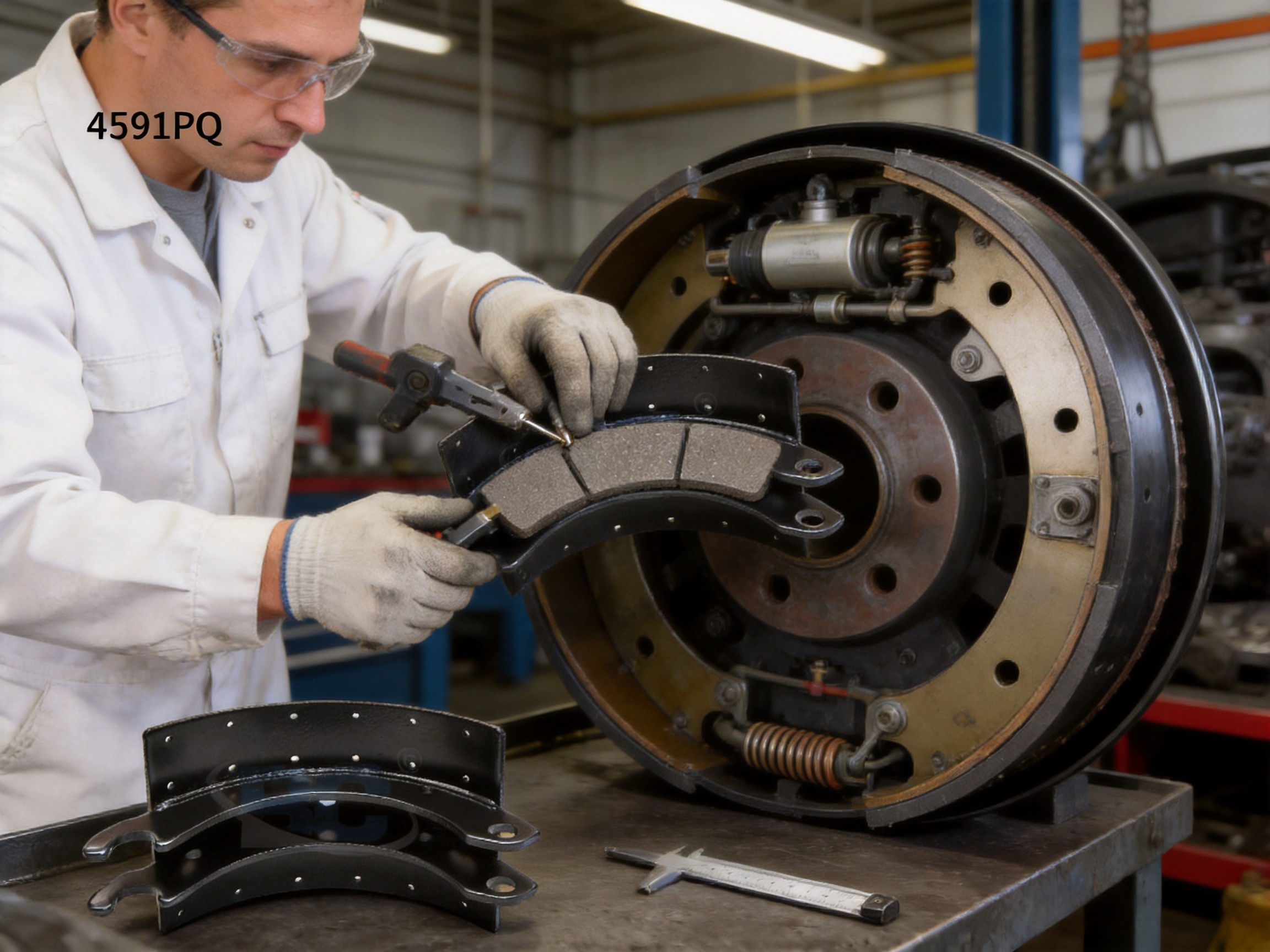
The 4591PQ model’s 24-hole rivet pattern is especially relevant to repair operations. Rivet holes are not merely cosmetic openings. Their locations affect how the lining is supported along the shoe. A properly matched lining spreads the attachment points across the working surface and helps prevent localized movement. During relining, technicians should use lining material and rivets approved for the specific brake system and should follow the recommended riveting sequence and tooling practices.
Advantages of a Steel Brake Shoe Format
Flexible Repair and Relining Options
A bare steel brake shoe gives professional repairers greater flexibility than a preassembled product in certain service situations. A workshop may already have a preferred friction material, a specific lining compound, or a fleet maintenance standard. By purchasing the steel foundation separately, the workshop can combine the shoe with an appropriate lining rather than replacing the complete assembly every time.
This format can also be useful when a customer needs a replacement foundation for a relining program. In heavy-duty fleets, maintenance practices may involve inspecting shoes, replacing worn or contaminated linings, and restoring serviceable components. A correctly matched steel shoe supports this kind of controlled repair process while allowing the technician to evaluate the condition of the complete brake assembly.
Application-Specific Matching
The product is identified through a dedicated part number and an OE reference. This improves ordering clarity compared with purchasing an unspecified shoe based only on appearance. Clear identification helps distributors organize inventory and helps maintenance personnel compare replacement requirements against service records.
The 4591PQ number, the R700031 reference, the listed size, and the 24-rivet-hole configuration provide several points of verification. Using multiple identification points lowers the risk of selecting a visually similar but technically unsuitable component.
Support for Heavy-Duty Maintenance
Heavy-duty vehicles often experience more demanding braking conditions than light passenger vehicles. They may carry heavy loads, operate over long distances, travel on steep routes, or make frequent stops in urban and industrial environments. A robust steel shoe design is intended to support these service conditions when correctly matched with the brake drum, lining, hardware, and actuator.
The value of the component is not based on the metal foundation alone. Performance depends on the entire braking system, including the friction material, drum condition, cam or actuator movement, return springs, anchor points, bushings, adjustment mechanisms, and installation quality. The 4591PQ shoe is therefore best understood as a precision replacement foundation within a complete heavy-duty drum brake system.
Manufacturing Strengths Behind the Product
A reliable brake shoe begins with controlled production rather than final inspection alone. The manufacturing process must maintain repeatability from raw material preparation through forming, hole creation, finishing, inspection, packaging, and shipment. For an international supplier, process discipline is also important because products may be manufactured in batches and distributed through different markets with different maintenance practices.
The manufacturer’s product portfolio includes steel brake shoes, casted brake shoes, brake linings, lined brake shoes, brake shoe repair kits, and lined brake shoe kits. This category coverage indicates an ability to work across multiple brake component formats instead of focusing on only one finished product type. Such a product structure can help customers coordinate related components and simplify sourcing for different repair requirements.
Material and Component Preparation
The first manufacturing consideration is the selection and preparation of suitable steel for the shoe foundation. The material must be appropriate for forming and must provide a balanced combination of strength, stiffness, durability, and processability. Consistent material preparation supports stable results during stamping, pressing, machining, and subsequent finishing operations.
Material control also contributes to dimensional consistency. Variations in thickness, flatness, or mechanical behavior can affect the forming process and the final geometry. A controlled production system should therefore verify incoming materials and maintain records that allow manufacturing personnel to associate finished batches with their source materials.
Controlled Forming and Shaping
The curved body of a brake shoe must correspond to the intended brake drum geometry. Forming tools and production fixtures are used to create a repeatable arc, web profile, flange relationship, and attachment surface. Stable tooling is important because even small changes in curvature or offset can affect contact between the lining and drum.
For the 4591PQ product, accurate forming is particularly important because the 24-hole pattern must remain correctly positioned on the shaped shoe. If forming and drilling are not coordinated, the holes may shift relative to the working surface. A professional process therefore treats the shoe as a complete geometric component rather than as a flat plate with holes added at random stages.
Accurate Rivet-Hole Production
The rivet holes are a defining feature of this model. Production should control hole count, position, diameter, spacing, edge distance, and cleanliness. Burrs, distorted openings, or inconsistent hole locations can interfere with rivet seating and may create stress concentrations in the lining or shoe.
Using dedicated tooling or controlled fixtures can help keep the 24-hole configuration consistent across a production batch. Inspection may include visual checks, gauge verification, dimensional measurement, and comparison against approved drawings or samples. These controls are valuable for both the bare shoe and any lined version using the same foundation.
Finishing and Corrosion Protection
Steel components require suitable surface treatment and storage protection to reduce the risk of corrosion during transportation and warehouse storage. The appropriate finish depends on the component design, production requirements, and customer specification. A clean and consistent surface also makes it easier to identify damage, contamination, or defects before installation.
Packaging is part of product protection. Brake shoes should be packed so that the curved surfaces, edges, rivet holes, and mounting areas are not damaged by impact or uncontrolled movement. Clear labels showing the part number, quantity, batch information, and relevant reference details can further reduce warehouse errors.
Inspection and Traceability
Quality assurance for heavy-duty brake shoes should include more than a final appearance check. Useful controls may include dimensional inspection, hole-pattern verification, forming checks, surface examination, and batch identification. The exact inspection plan depends on the product drawing, customer requirements, and applicable quality procedures.
Traceability helps connect a shipment with its production information. If a customer raises a technical question, the part number and batch details can help the manufacturer investigate the issue more efficiently. For distributors and fleet operators, traceable packaging also supports inventory management and maintenance documentation.
How the Product Can Compare Favorably with Generic Alternatives
Comparison with competitors should be based on verifiable criteria rather than broad claims. The 4591PQ Brake Shoe can offer practical advantages over unidentified or poorly matched alternatives because it is supplied with a defined part number, an OE reference, a stated rivet-hole count, and a listed size. These details make the component easier to check before installation.
An unmarked replacement may appear similar but provide insufficient information about its origin, intended application, or hole pattern. This creates additional risk for distributors and technicians. A clearly identified component supports better purchasing decisions, especially when several brake shoes share similar visual characteristics.
The product range is another potential advantage. Because the supplier provides steel shoes alongside casted shoes, brake linings, lined shoes, repair kits, and lined shoe kits, customers can discuss related requirements with one source. This may simplify sourcing for wholesalers, repair networks, and fleets that use more than one brake service format.
Another advantage is compatibility with OEM-style identification practices. The use of the R700031 OE reference gives customers a recognized comparison point during procurement. OE cross-reference information does not automatically guarantee interchangeability in every vehicle, but it provides a useful starting point for technical verification.
The product may also be advantageous where relining is part of the maintenance strategy. A bare steel foundation allows the customer to select a suitable lining rather than accepting a fixed friction material. This can support different operating conditions, provided the selected lining, rivets, and installation procedure are approved for the application.
Finally, manufacturing consistency can be more valuable than a low initial purchase price. A shoe that repeatedly meets its intended dimensions and hole configuration can reduce sorting, rework, installation delays, and incorrect shipments. For commercial vehicle maintenance, these indirect costs can be significant.
Installation and Service Considerations
Before installation, technicians should compare the replacement shoe with the removed component and the applicable service information. Confirm the part number, OE reference, overall dimensions, arc, offset, web shape, and rivet-hole pattern. The brake drum should also be inspected because a correct shoe cannot compensate for a damaged, excessively worn, cracked, or incorrectly machined drum.
If the 4591PQ shoe is supplied as a bare steel component, the lining must be selected and installed by a qualified brake technician. The lining should match the shoe dimensions and hole arrangement. Rivet material, rivet length, head style, and riveting force should be suitable for the lining and brake application.
During relining, the shoe should be cleaned and checked for cracks, distortion, excessive wear, corrosion, damaged holes, or deformation around the mounting areas. A component that does not meet the service criteria should not be returned to use merely because the old lining has been removed.
The lining should be positioned so that its edges, curvature, and hole pattern correspond precisely with the shoe. Rivets should be installed using appropriate equipment and in a sequence that prevents the lining from lifting or shifting. Excessive riveting force may damage the lining or distort the shoe, while insufficient force may allow movement during service.
After assembly, the technician should check that the lining is secure, the shoe moves correctly on the backing plate, and all contact points are properly lubricated where the service procedure permits lubrication. Friction surfaces must remain free from grease, oil, paint, and other contamination.
The completed brake assembly should be adjusted according to the vehicle and brake-system requirements. Automatic or manual adjustment systems must be inspected for correct operation. Return springs, retainers, anchor components, bushings, camshafts, and other hardware should be replaced or serviced when worn.
Brake testing should be carried out in a controlled and safe manner. The vehicle should not return to normal heavy-duty operation until the braking system has been inspected and confirmed to function correctly. Any bedding or burnishing procedure required by the selected lining manufacturer should be followed.
Purchasing and Inventory Benefits
For distributors, product identification is essential to efficient stock control. The 4591PQ part number gives warehouse staff a concise reference for receiving, labeling, picking, and replenishment. The R700031 OE number can be included in catalog records to help customers locate the component through different search methods.
Inventory teams should store brake shoes in a dry, clean environment and protect them from impact and excessive humidity. Heavy components should be stacked securely to prevent deformation. Packaging labels should remain readable, and similar-looking parts should be separated when their dimensional or hole-pattern differences could cause confusion.
For fleet operators, maintaining a record of installed part numbers can make future purchasing more efficient. Service records may include the brake position, axle, vehicle type, drum information, lining material, installation date, mileage, and inspection results. This information helps the maintenance team evaluate service performance and identify the correct replacement more quickly.
Bulk purchasers may also benefit from discussing packaging quantities, labeling formats, inspection documents, and production scheduling with the supplier. These arrangements can reduce administrative effort and help align deliveries with planned maintenance programs.
Technical Communication and Customer Support
Heavy-duty brake components require accurate communication between the manufacturer, distributor, technician, and end user. A supplier should provide clear product identifiers and should encourage customers to confirm application details before ordering. This is particularly important when the source specification contains a mixed unit notation, as it does for the listed 12.25-inch by 7.5-inch size.
Customers should request a dimensional drawing or confirmation if the application is unfamiliar, if the shoe will be installed in a critical fleet, or if the available reference information is incomplete. A professional manufacturer can help clarify whether the component is supplied as a bare shoe, a lined shoe, a kit, or another configuration.
The manufacturer’s stated focus on OEM brake parts following the global FMSI numbering system is relevant to catalog organization and product identification. Numbering systems help connect products with established industry references, although application verification remains necessary. A numbering reference should support, not replace, technical checking.
The company operates from Haining, Zhejiang, China, and provides contact channels for product inquiries, purchasing communication, and technical questions. International customers can use the available telephone, fax, and email details to request quotations, product information, drawings, packaging details, or order support.
Applications and Service Environments
The 4591PQ Brake Shoe is positioned for heavy-duty brake parts applications. Potential service environments may include commercial vehicles, fleet vehicles, trailers, industrial transport equipment, and other systems using a compatible drum brake arrangement. The exact application should always be verified using the vehicle, axle, brake manufacturer, drum dimensions, and service documentation.
Operating conditions influence brake component life. Vehicles that carry high loads or operate on steep roads may place greater thermal and mechanical demands on the friction assembly. Frequent stop-and-go driving can increase temperature cycling, while dusty or corrosive environments may accelerate wear or surface deterioration. These conditions make inspection and correct component matching especially important.
A steel brake shoe is only one part of a serviceable brake system. Even a precisely manufactured shoe may perform poorly if the drum is out of round, the lining is unsuitable, the actuator is sticking, the adjustment is incorrect, or the hardware is worn. The product should therefore be installed as part of a complete maintenance process rather than treated as an isolated replacement.
Quality-Focused Manufacturing as a Competitive Strength
Advanced manufacturing does not simply mean using sophisticated equipment. It also means organizing production around repeatability, measurement, process control, and continuous improvement. For brake shoes, these principles apply to material preparation, forming, drilling, finishing, inspection, packaging, and customer feedback.
A capable manufacturer can use product family knowledge to improve efficiency and consistency across steel shoes, casted shoes, lined products, and repair kits. Shared expertise in brake geometry, lining attachment, and heavy-duty service requirements can help support product development and customer-specific requests.
Production flexibility is another strength. Customers may require different product categories, packaging quantities, labels, or combinations of bare and lined components. A supplier with a broad heavy-duty brake portfolio is better positioned to discuss these needs than a company that only supplies one generic shoe type.
Consistency is especially important for international distribution. Products may be handled by several organizations before reaching the final workshop. Clear identification and stable dimensions reduce the chance of errors at each stage. This can produce practical savings through fewer returns, less rework, and better maintenance scheduling.
Recommended Verification Checklist
Before purchasing the 4591PQ Brake Shoe, confirm the part number 4591PQ and compare it with the required service component. Check the OE reference R700031 and verify that it corresponds to the intended vehicle or brake assembly.
Confirm the listed size and resolve the unit notation before placing an order. The provided specification states 12.25 inches by 7.5 inches while ending with “mm.” A drawing, sample comparison, or written dimensional confirmation should be obtained where precision is important.
Verify the 24-rivet-hole pattern, including hole spacing and diameter if a lining will be installed. Confirm whether the purchase is for a bare steel shoe, a lined brake shoe, a repair kit, or another product configuration.
Inspect the brake drum and related hardware. Confirm that the drum, backing plate, actuator, anchor points, adjuster, springs, and bushings are suitable for continued service. Replace any worn or damaged parts in accordance with the vehicle or brake-system maintenance instructions.
Finally, confirm packaging, quantity, lead time, documentation, and delivery requirements with the supplier. Clear communication before shipment is more efficient than correcting an application error after the parts arrive.
Q&A
What is the 4591PQ Brake Shoe?
The 4591PQ Brake Shoe is a steel brake shoe identified by part number 4591PQ. It is associated with OE reference number R700031 and has a listed 24-rivet-hole configuration. It is intended for use in a compatible heavy-duty drum brake system.
Is the 4591PQ a complete lined brake shoe?
The supplied product information places the 4591PQ in the Steel Brake Shoe category. This normally indicates a steel foundation rather than a complete lined assembly. Customers should confirm the exact supplied configuration before ordering, especially when they require a ready-to-install lined brake shoe.
What is the size of the product?
The supplied specification lists the size as 12.25 inches by 7.5 inches and presents the unit notation as “12.25*7.5 mm.” Because the notation is inconsistent, the final dimensions should be confirmed through a technical drawing, written supplier confirmation, or direct comparison with the original component.
How many rivet holes does the shoe have?
The 4591PQ Brake Shoe has 24 rivet holes according to the supplied product information. Hole count alone is not enough for interchangeability, so hole spacing, diameter, lining dimensions, and shoe geometry should also be checked.
What does the R700031 number mean?
R700031 is listed as the product’s OE reference number. It can be used as a cross-reference during product research and purchasing. It should still be checked against the exact vehicle, axle, drum, and brake application before installation.
What are the benefits of buying a steel shoe instead of a lined shoe?
A steel shoe can provide flexibility for repair shops and fleets that select their own lining material. It may be useful for relining programs or applications with specific friction-material requirements. However, lining selection and riveting should be completed by qualified personnel using approved materials and procedures.
Can the shoe be used with any brake lining?
No. The lining must match the shoe’s dimensions, curvature, rivet pattern, and intended brake application. The technician should also confirm that the lining compound and fasteners are appropriate for the brake system and operating conditions.
Why is the 24-hole pattern important?
The rivet-hole pattern determines how the lining attaches to the shoe. Correct hole placement supports secure fastening and helps distribute attachment forces. An incorrect pattern can create installation difficulty, poor lining support, or unsafe service conditions.
What should be inspected before installing the product?
The technician should inspect the shoe, lining, brake drum, backing plate, actuator, adjuster, springs, anchor components, bushings, and related hardware. The shoe should be checked for cracks, distortion, corrosion, damaged holes, and other defects before it is put into service.
How can customers avoid ordering the wrong brake shoe?
Customers should compare the part number, OE reference, dimensions, arc, offset, hole pattern, and brake application. They should also clarify whether the product is bare or lined. If the product dimensions are presented with unclear units, a drawing or written confirmation should be requested before purchase.
What manufacturing features are important for this type of product?
Important features include controlled material preparation, repeatable forming, accurate hole production, consistent surface finishing, dimensional inspection, secure packaging, and product traceability. These controls help support reliable fit and reduce variation between production batches.
What product categories are available from the manufacturer?
The supplied information identifies Steel Brake Shoe, Casted Brake Shoe, Brake Lining, Lined Brake Shoe, Brake Shoe Repair Kits, and Lined Brake Shoe Kits as product categories. This range can help customers source different brake repair formats from one heavy-duty brake parts supplier.
Where can customers request additional information?
Customers can contact Zhejiang Bangchi Auto Parts Co., Ltd. through the telephone and email details provided in the product information. They may request application confirmation, dimensions, packaging information, quotations, and other purchasing or technical details.
Conclusion
The 4591PQ Brake Shoe is a clearly identified steel brake shoe with part number 4591PQ, OE reference R700031, a listed size of 12.25 inches by 7.5 inches, and 24 rivet holes. Its value lies in providing a defined replacement foundation for compatible heavy-duty drum brake applications, particularly where professional relining or component-level repair is preferred.
Compared with unidentified or poorly documented alternatives, the product offers practical purchasing advantages through its part number, OE reference, hole-count information, and connection to a broader heavy-duty brake product range. These details can improve cataloging, application checking, inventory control, and maintenance planning.
The manufacturing strength behind a brake shoe depends on controlled forming, precise hole production, suitable surface protection, inspection, traceability, and careful packaging. A manufacturer that supplies steel shoes, casted shoes, linings, lined shoes, and repair kits can also provide broader support for different brake service strategies.
Before installation, buyers and technicians should verify the dimensions, resolve the mixed unit notation, confirm the lining and rivet requirements, and inspect the complete brake system. When correctly matched and professionally installed, the 4591PQ Brake Shoe can serve as a dependable component in a structured heavy-duty brake maintenance program.
References
1. Product specification supplied for the 4591PQ Brake Shoe, including part number, listed dimensions, rivet-hole count, and OE reference.
2. Manufacturer product category information covering steel brake shoes, casted brake shoes, brake linings, lined brake shoes, brake shoe repair kits, and lined brake shoe kits.
3. Global FMSI numbering system principles for automotive friction-product identification and catalog organization.
4. General heavy-duty drum brake service practices concerning shoe inspection, lining attachment, drum condition, adjustment, and component replacement.
5. General engineering principles for formed steel brake components, riveted friction linings, dimensional control, surface protection, and manufacturing traceability.