 English
 简体中文
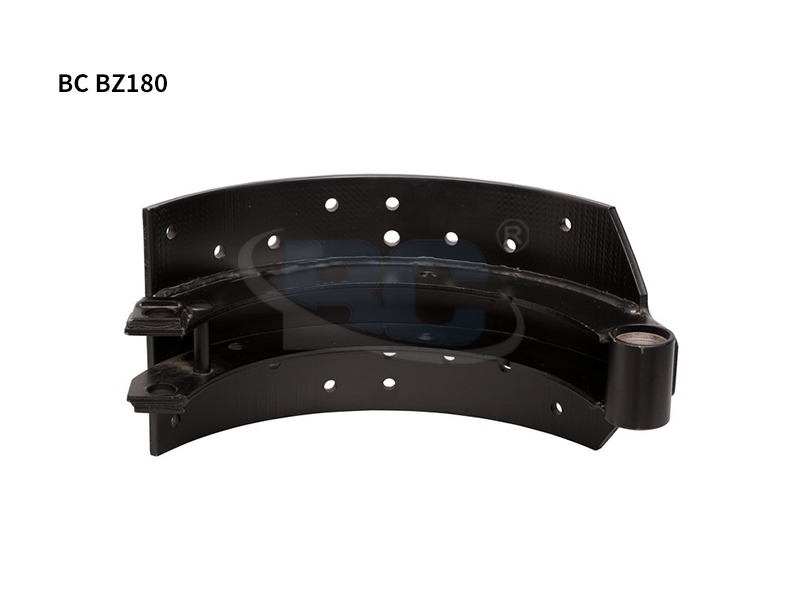
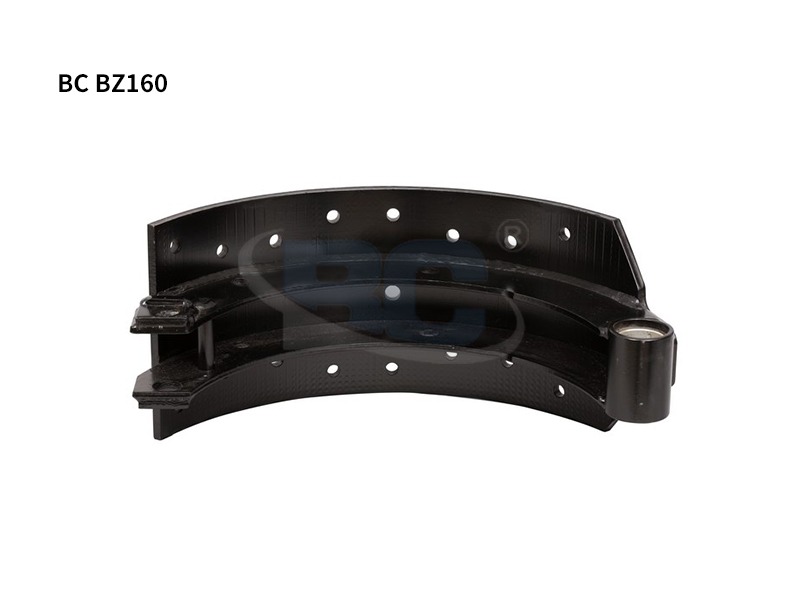
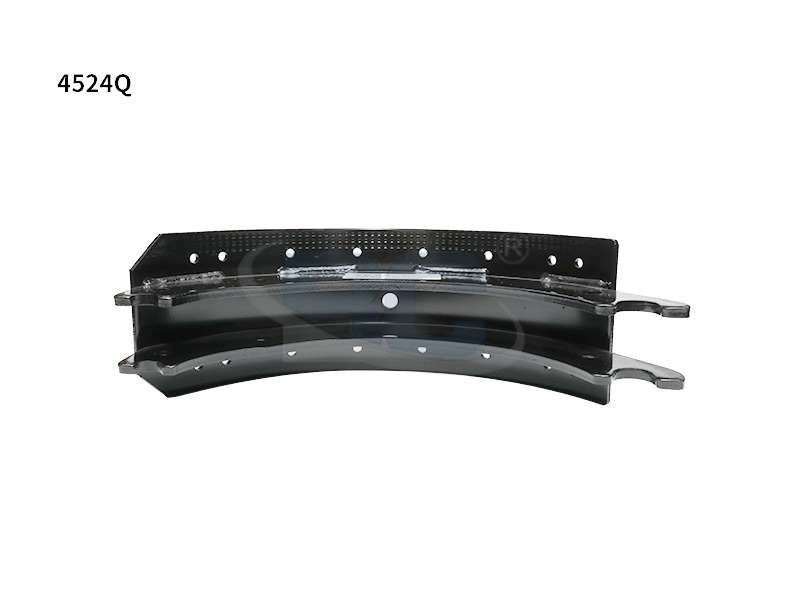
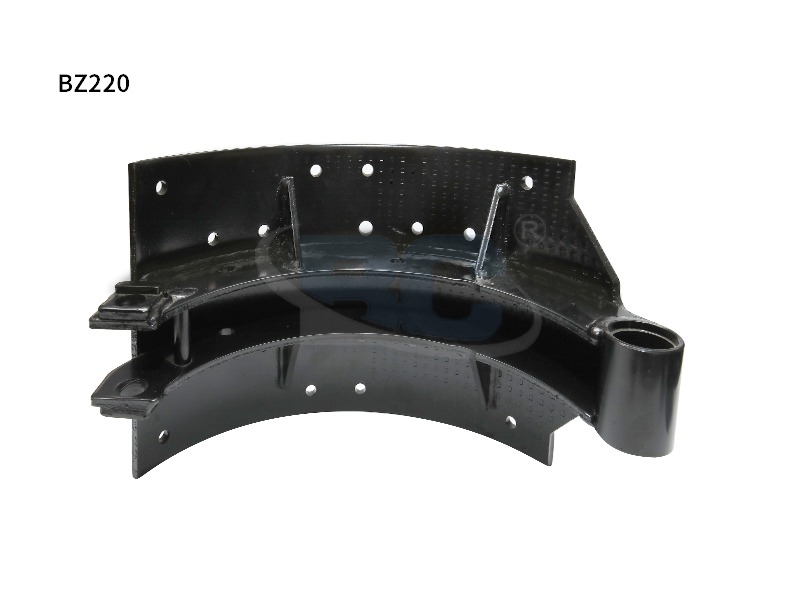
In heavy-duty commercial vehicles, the brake shoe is a fundamental component of the drum-brake assembly. It supports the friction lining, transfers braking force to the inner surface of the brake drum, and contributes directly to vehicle control, stopping stability, and operational safety. The A6204200519 brake shoe, identified by the manufacturer as BZ220, is a steel brake shoe designed for Mercedes-Benz applications or customized heavy-duty braking systems.
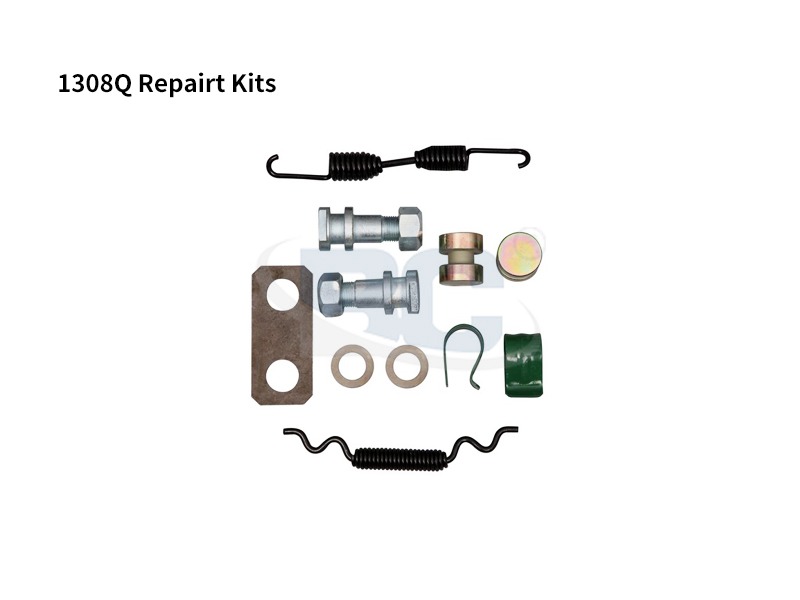
With a listed product size of 410 by 220 millimeters, 16 rivet holes, and an original equipment reference number of A 620 420 0519, this brake shoe is intended for demanding commercial-vehicle environments. It is manufactured by Zhejiang Bangchi Auto Parts Co., Ltd., a Chinese supplier specializing in steel brake shoes, casted brake shoes, brake linings, lined brake shoes, brake shoe repair kits, and lined brake shoe kits.
The product combines a robust steel foundation with a configuration suitable for professional relining and brake-system maintenance. Its design is particularly relevant to distributors, fleet-maintenance companies, commercial-vehicle workshops, brake specialists, and international buyers seeking replacement components that follow recognized heavy-duty brake identification practices.
A6204200519 Brake shoe
Product Overview
The A6204200519 brake shoe is supplied as a steel brake shoe. Unlike a complete lined brake shoe, a steel brake shoe normally provides the structural shoe body without an already bonded or riveted friction lining. This format gives professional users flexibility. They can select a friction material according to the vehicle’s operating conditions, axle requirements, regional regulations, and workshop procedures.
The product reference BZ220 helps identify the specific configuration within a broader product range. The OE reference A 620 420 0519 provides an additional identification method for customers comparing replacement requirements with original-equipment service information. OE numbers are useful for product matching, but they should always be checked together with dimensions, hole pattern, drum specifications, and vehicle application data.
The basic product information supplied for this model is as follows:
| Item | Specification |
|---|---|
| Product type | Steel brake shoe |
| Product reference | BZ220 |
| OE reference | A 620 420 0519 |
| Listed product size | 410 by 220 millimeters |
| Rivet-hole quantity | 16 |
| Application | Mercedes-Benz or customized heavy-duty brake systems |
| Manufacturer | Zhejiang Bangchi Auto Parts Co., Ltd. |
Some catalog references may describe closely related dimensions using a slightly different width notation. For this reason, buyers should confirm whether the required measurement is 410 by 220 millimeters, 410 by 200 millimeters, or another application-specific dimension before ordering. The manufacturer can use drawings, samples, technical specifications, and customer data to support final confirmation.
Why the Steel Brake Shoe Matters
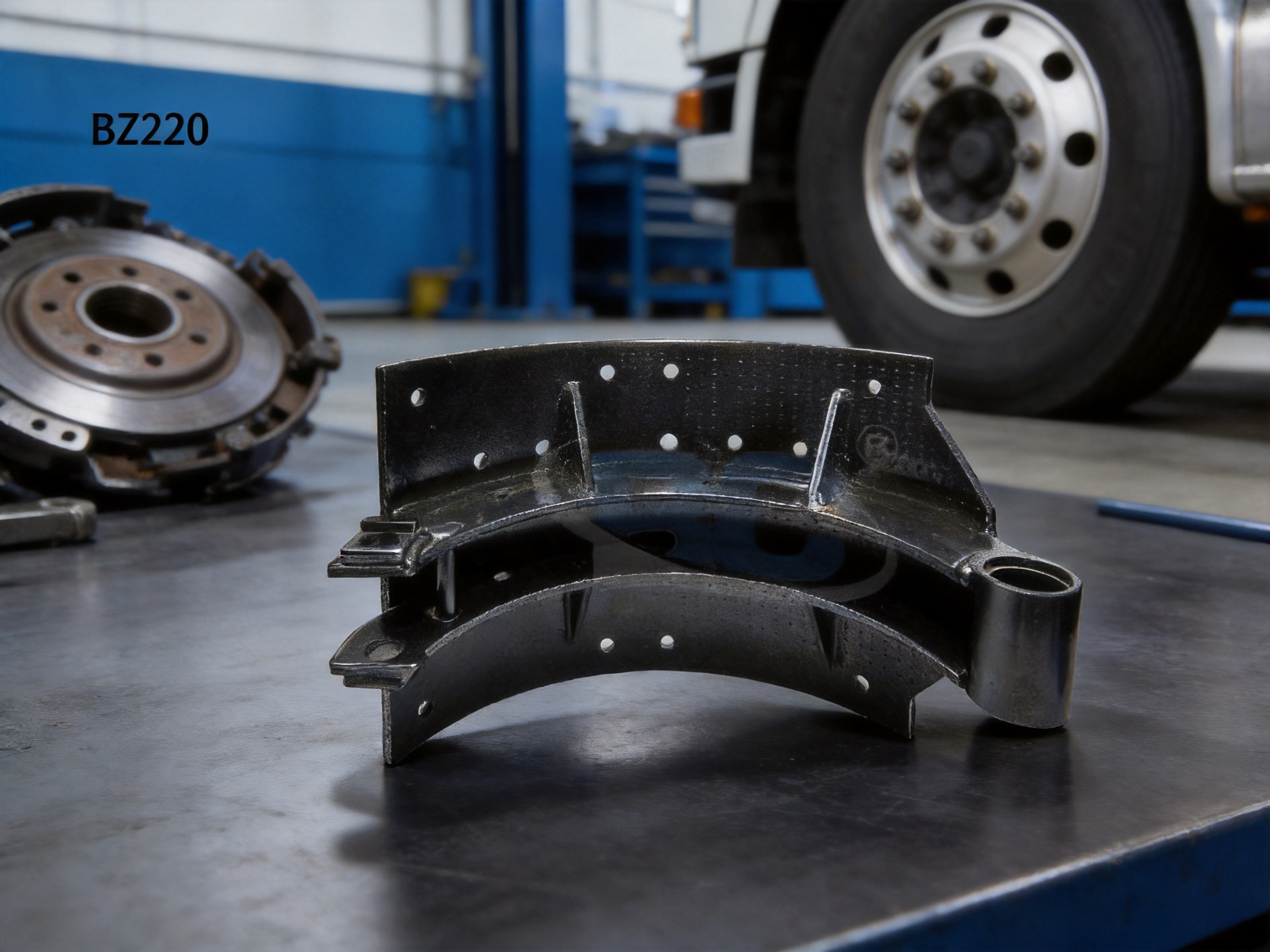
A brake shoe is more than a simple curved metal support. It is a load-bearing part of a drum-brake system. During braking, the wheel-cylinder mechanism, cam mechanism, or other actuation device applies force to the shoe. The shoe then moves outward and presses the friction lining against the rotating brake drum. This process creates friction and converts vehicle motion into heat.
The shoe must therefore withstand repeated mechanical loading, vibration, thermal cycling, and the forces generated by heavy vehicles. If the shoe body is weak, distorted, poorly formed, or inaccurately drilled, the lining may not contact the drum evenly. Uneven contact can cause accelerated lining wear, localized hot spots, noise, reduced braking effectiveness, and additional maintenance requirements.
A properly manufactured steel brake shoe provides several essential functions:
It maintains the correct foundation for the friction lining.
It transfers actuation force across the shoe structure.
It supports consistent lining contact with the drum.
It preserves the geometry required for correct brake adjustment.
It helps the brake assembly withstand repeated braking cycles.
It enables professional workshops to rebuild or repair brake assemblies using selected lining materials.
For heavy trucks and commercial vehicles, these functions are especially important because the brake system may operate under high gross vehicle weight, frequent loading changes, long downhill conditions, urban stop-and-go traffic, and severe environmental exposure.
Design Characteristics of the BZ220 Configuration
Steel Structural Foundation
The BZ220 is designed as a steel brake shoe body. Steel is widely used in heavy-duty brake shoes because it offers a practical balance of strength, formability, durability, and manufacturability. The material can be shaped into the required curved profile while retaining sufficient rigidity for service loading.
A stable steel foundation is important for maintaining the intended arc of the shoe. The curved shape must correspond closely with the working diameter of the brake drum and the selected lining. If the shoe profile is inconsistent, the friction material may initially contact only a small area of the drum. Proper forming and inspection help reduce this risk.
Sixteen Rivet Holes
The specified 16 rivet holes provide a clear feature for identification and lining installation. In a relining operation, rivets pass through the lining and the shoe body to secure the friction material. The number, position, spacing, and diameter of these holes must correspond to the selected lining and the workshop’s approved installation method.
A correctly produced hole pattern helps distribute fastening loads along the lining. It can also support uniform attachment and reduce the possibility of localized movement. Buyers should verify not only the hole count but also the hole diameter, center-to-center spacing, edge distance, countersink or counterbore requirements, and the orientation of the pattern.
Heavy-Duty Application Orientation
The A6204200519 reference is associated with Mercedes-Benz applications or customized applications based on customer requirements. The product’s heavy-duty positioning makes it relevant to commercial-vehicle replacement markets where reliable component matching and repeatable supply are essential.
Application suitability is determined by more than a single reference number. Brake-drum diameter, shoe width, shoe length, cam or actuator location, return-spring arrangement, anchor design, lining thickness, and mounting geometry can all affect compatibility. A responsible purchasing process therefore combines OE-reference checking with dimensional and technical verification.
Advantages Compared with Generic Replacement Brake Shoes
Many replacement brake shoes may appear similar when viewed from a distance. However, small differences in curvature, hole position, material thickness, or anchor geometry can affect installation and service performance. The A6204200519 brake shoe offers several practical advantages when compared with unverified generic alternatives.
More Precise Product Identification
The use of the BZ220 product reference and A 620 420 0519 OE reference gives distributors and workshops two important identification points. This can simplify purchasing, warehouse organization, technical communication, and replacement matching.
Generic components without a clear reference system may create uncertainty during procurement. Buyers may receive parts that have similar overall dimensions but different hole patterns or mounting features. Clear identification supports better ordering discipline and lowers the risk of unnecessary returns.
Suitable for Professional Relining
Because the product is supplied as a steel shoe, it can be paired with a suitable friction lining selected for a specific application. A fleet operating in mountainous regions may require different friction characteristics from a vehicle working primarily on level highways. A municipal vehicle with frequent stops may have different requirements from a long-distance tractor-trailer.
This flexibility is an advantage over a one-size-fits-all pre-lined component. The workshop or brake specialist can select an appropriate lining grade, thickness, and fastening method while using the steel shoe as the structural base.
Defined Rivet-Hole Configuration
The 16-hole configuration supports systematic relining. When the hole pattern is documented and consistently produced, workshops can prepare compatible lining materials and establish repeatable installation procedures. This can improve productivity for commercial users that service multiple vehicles or maintain a recurring inventory of brake components.
Support for Customized Supply
The product is listed as suitable for Mercedes-Benz or customized applications. This is useful for customers who need more than a standard catalog part. Custom supply may involve dimensional adjustments, revised hole layouts, special packaging, private labeling, or production based on an approved drawing.
Customization should be controlled through technical documentation. A customer-provided sample, drawing, or approved first article can help establish the exact production target. This process is more dependable than relying only on informal descriptions such as “similar to” or “same as the old part.”
Heavy-Duty Replacement Orientation
A product developed for heavy-duty brake-part markets is generally evaluated with commercial-vehicle service conditions in mind. Such conditions require attention to structural consistency, repeatability, corrosion protection, packaging, and traceability. These considerations distinguish a professional replacement component from an undifferentiated low-cost item.
Manufacturing Strengths and Production Approach
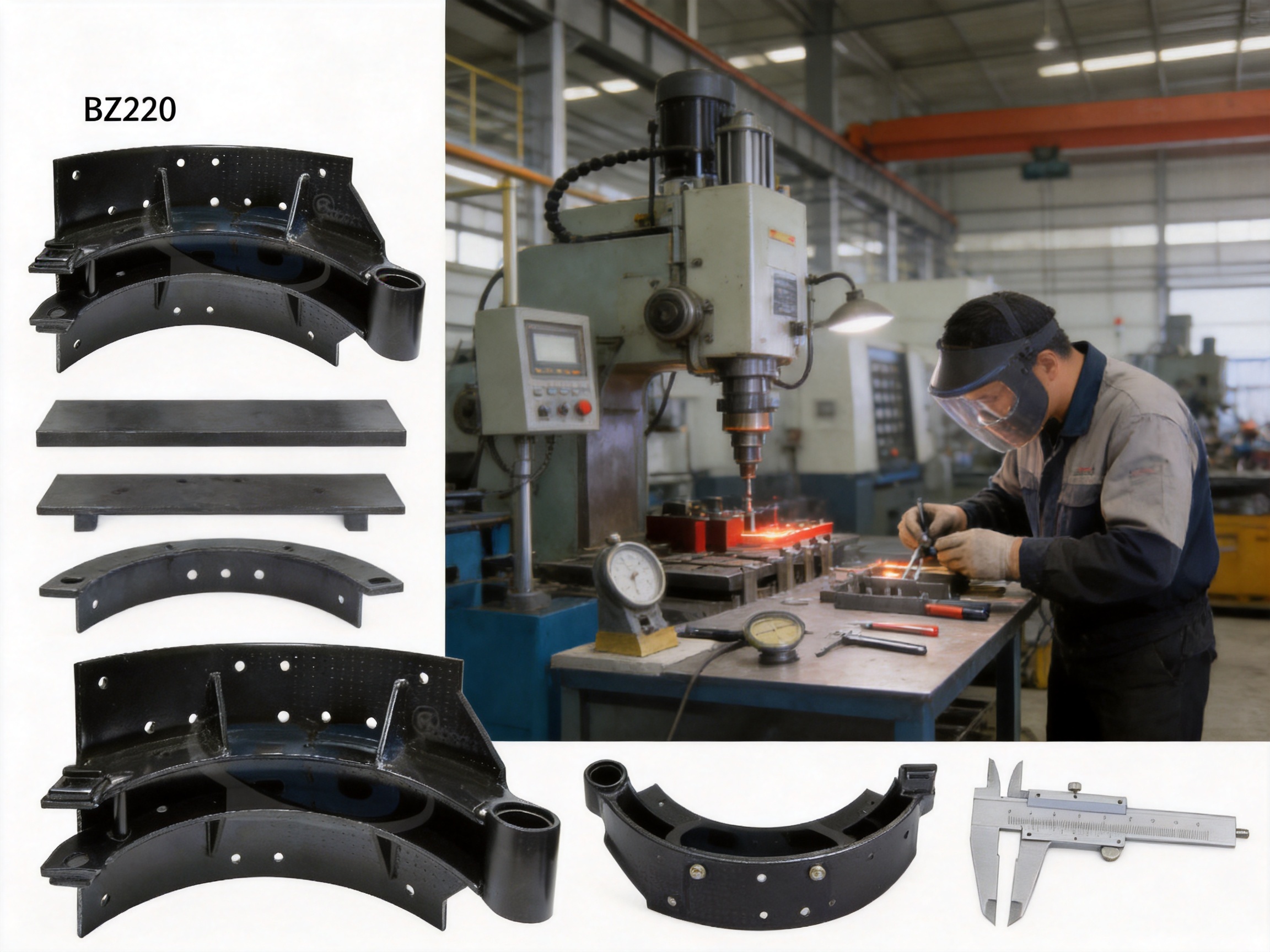
Zhejiang Bangchi Auto Parts Co., Ltd. focuses on brake components for heavy-duty vehicles. Its product category includes steel brake shoes, casted brake shoes, brake linings, lined brake shoes, brake shoe repair kits, and lined brake shoe kits. This range allows the company to address multiple stages of brake maintenance, from replacement of the metal shoe body to complete lining and repair solutions.
A broad product range can support more efficient technical coordination. For example, a customer requiring a steel shoe may later need compatible linings or repair kits. A supplier with knowledge of the complete brake assembly can provide more consistent information than a company that sells only one isolated component.
Tooling and Forming Control
The production of a steel brake shoe begins with material preparation and forming. Sheet steel or an appropriate steel blank must be cut to the required shape before it is formed into the curved shoe profile. Tooling accuracy is important because the shoe geometry affects lining contact and brake-drum compatibility.
Forming operations should be controlled to limit excessive deformation, cracking, edge damage, and springback. Springback occurs when metal partially returns toward its original shape after forming. If it is not accounted for, the finished curvature may differ from the intended profile. Suitable tooling, process settings, and inspection procedures help maintain dimensional consistency.
Hole-Making Accuracy
The 16 rivet holes are functional features rather than decorative details. Their positions must be controlled so that the lining can be installed without forcing, misalignment, or excessive edge loading. Hole-making may involve punching, drilling, or other controlled methods, depending on the production design.
After hole formation, the manufacturer should check for burrs, deformation, blocked openings, and inconsistent dimensions. Burr removal is particularly important because sharp or raised material can interfere with lining seating and may damage the lining during installation.
Welding and Component Assembly
Depending on the brake-shoe design, individual structural pieces may require welding or mechanical joining. Any welded section must maintain sufficient strength and dimensional stability. Welding quality can be influenced by joint preparation, heat input, fixture control, electrode or wire selection, and post-weld inspection.
Well-controlled fixtures help maintain the relationship between the shoe body, anchor areas, spring features, and other structural elements. The purpose of these controls is to ensure that the finished component can be assembled correctly and operates predictably within the brake system.
Surface Treatment and Corrosion Protection
Steel brake shoes may be exposed to humidity, road spray, salt, dust, and storage conditions before installation. Surface preparation and corrosion protection can help preserve the part during transport and inventory storage. The exact coating or treatment should be selected so that it does not interfere with lining attachment, dimensional requirements, or later workshop operations.
Good packaging also contributes to product protection. Brake shoes should be separated or secured to prevent impact damage, distortion, and surface abrasion. Export packaging should account for handling, container loading, moisture exposure, and long-distance transportation.
Inspection and Traceability
Manufacturing strength depends not only on machinery but also on inspection discipline. A professional production system may include incoming-material checks, first-piece inspection, in-process dimensional checks, final appearance inspection, and packing verification.
Traceability can connect a finished product to a production order, material batch, tooling setup, inspection record, or customer specification. This is valuable when customers require repeat orders or when a technical question arises after delivery.
Quality Considerations for the A6204200519 Brake Shoe
Quality evaluation should consider the complete product rather than one isolated measurement. A brake shoe may have the correct nominal length but still be unsuitable if the curvature, hole positions, mounting points, or material thickness are incorrect.
Important quality checkpoints include:
Verification of the product reference and OE reference.
Confirmation of the overall length, width, and relevant arc dimensions.
Inspection of steel thickness and structural condition.
Measurement of the 16 rivet-hole positions and diameters.
Checking for cracks, sharp edges, excessive burrs, dents, or deformation.
Inspection of welded areas and attachment points where applicable.
Confirmation that the shoe is symmetrical or correctly handed according to the application.
Verification of surface condition and protective treatment.
Confirmation that packaging prevents movement and impact during shipping.
For a commercial-vehicle buyer, these checks can be incorporated into a receiving-inspection plan. Sampling frequency may depend on order size, supplier history, application criticality, and internal quality procedures.
Application and Compatibility Guidance
The A6204200519 brake shoe is identified for Mercedes-Benz or customized applications. Before installation, the purchaser or qualified technician should compare the replacement shoe with the removed component or approved technical drawing.
Key compatibility questions include:
Does the OE reference correspond to the intended axle and brake assembly?
Are the shoe length and width correct for the brake drum?
Does the shoe curvature match the drum and lining profile?
Are the 16 rivet holes positioned correctly for the selected lining?
Are the anchor, cam, spring, and actuator features compatible?
Is the shoe intended for the left side, right side, or either side?
Does the lining thickness correspond to the available drum clearance?
Are the brake-drum dimensions within service limits?
Has the complete brake assembly been inspected for wear or damage?
Correct compatibility checking protects against a common purchasing error: assuming that a similar-looking brake shoe is interchangeable. Heavy-duty brake assemblies often use closely related designs with important dimensional differences. A small mismatch can lead to difficult installation, uneven wear, or improper brake adjustment.
When ordering, customers should provide the OE number, product reference, vehicle information, axle information, photographs, dimensions, and any available sample or drawing. If the requested size is described differently in different documents, the discrepancy should be resolved before production or shipment.
Benefits for Distributors and Fleet Operators
Inventory Organization
Distributors benefit from clear product references and defined application information. The BZ220 reference and A6204200519 OE number can be used in warehouse systems, quotations, invoices, product labels, and technical catalogs. This helps reduce confusion among similar brake-shoe models.
For larger inventories, the distributor can organize stock by product type, vehicle application, dimensions, hole count, and lining status. Separating steel shoes from lined shoes and repair kits is especially important because these products serve different customer requirements.
Reduced Procurement Risk
A documented product specification gives purchasing teams a stronger basis for comparison. Instead of evaluating offers only by price, buyers can compare reference accuracy, dimensions, material, hole pattern, packaging, quality procedures, and customization capability.
This approach may reduce the hidden costs associated with incorrect parts. Such costs can include freight for returns, workshop delays, emergency purchases, vehicle downtime, and customer dissatisfaction.
Flexible Service Options
Fleet operators with in-house brake workshops may prefer steel shoes because they can perform relining according to their established procedures. They may maintain several approved lining materials for different vehicles or operating conditions.
Customers without relining facilities may combine steel-shoe purchasing with lining or repair-kit procurement. The manufacturer’s broader product range can support these alternative purchasing models.
Support for International Markets
Heavy-duty replacement components are distributed across many regions, each with different fleet types, road conditions, maintenance customs, and product-labeling practices. A supplier able to handle standard references and customized specifications can serve both catalog-based and project-based orders.
International buyers should discuss packaging marks, documentation, inspection requirements, pallet configuration, export paperwork, and communication procedures before shipment. Clear requirements at the quotation stage help create a smoother supply process.
Relining and Workshop Considerations
A steel brake shoe is normally used with a compatible friction lining. Relining should be carried out by trained personnel using suitable equipment and approved procedures. The lining must fit the shoe curvature and match the rivet-hole pattern. Rivets should be installed correctly, with sufficient seating and without cracking or crushing the friction material.
Before relining, the shoe should be inspected for distortion, corrosion, cracks, worn anchor areas, damaged holes, and other defects. Reusing a structurally compromised shoe can create a safety risk even if a new lining is installed.
The brake drum should also be checked. A drum with excessive wear, scoring, cracking, heat damage, or an unsuitable internal diameter may prevent proper bedding of the new lining. Replacing or servicing the shoe without evaluating the drum can result in poor contact and inconsistent braking.
After assembly, the brake system should be adjusted according to the vehicle manufacturer’s service procedure. The technician should verify clearance, return action, actuator movement, spring installation, and overall brake operation. Where applicable, the completed brake assembly should undergo a controlled bedding-in process.
Manufacturing and Customization Capability
The product information states that the A6204200519 brake shoe is suitable for Mercedes-Benz or customized applications. Customization can be valuable when a customer needs a replacement for an older vehicle, a regional brake configuration, or a nonstandard fleet design.
Typical customization subjects may include:
Overall shoe dimensions.
Arc radius and forming profile.
Steel thickness or material specification.
Rivet-hole quantity, diameter, and spacing.
Anchor and actuator geometry.
Left-hand or right-hand configuration.
Surface treatment and corrosion protection.
Product marking and packaging.
To manage customization effectively, the customer should provide complete information. A two-dimensional drawing with tolerances is preferred. If a drawing is unavailable, the manufacturer may review a physical sample, clear photographs, measured dimensions, and application information.
The first production sample should be checked against the approved requirements before larger-volume manufacturing. This first-article process helps identify discrepancies early and provides a reference for future repeat orders.
How the Product Supports Total Cost Control
The lowest purchase price does not always represent the lowest total cost. A brake shoe that is incorrectly matched, poorly formed, or difficult to install may create additional labor and vehicle downtime expenses. For commercial vehicles, downtime can affect delivery schedules, customer service, and fleet utilization.
The A6204200519 steel brake shoe can support total cost control when it is correctly matched and incorporated into a controlled maintenance process. Its defined reference, 16-hole configuration, and availability for customized supply help customers plan procurement more systematically.
A steel-shoe format may also reduce cost for workshops that already possess relining equipment and technical expertise. Instead of purchasing a complete lined assembly for every maintenance event, the workshop can replace the structural shoe when necessary and select an approved lining independently.
However, cost savings should never be achieved by ignoring safety-critical inspection. Brake components must be purchased, installed, and maintained according to applicable regulations and qualified service procedures.
Ordering Information
When requesting a quotation for the A6204200519 brake shoe, buyers should identify the following information:
Product reference: BZ220.
OE reference: A 620 420 0519.
Product type: steel brake shoe.
Required quantity.
Required dimensions and tolerances.
Rivet-hole quantity and pattern.
Vehicle, axle, and brake-system application.
Whether the product should be supplied bare, lined, or as part of a repair kit.
Surface-treatment requirements.
Packaging and labeling requirements.
Inspection or documentation requirements.
Requested delivery schedule and destination.
The listed product size is 410 by 220 millimeters. Because related catalog descriptions may use different width terminology, customers should obtain a final dimensional confirmation before placing a production order. This is particularly important when replacing a component from an existing fleet or when the product is being adapted for a customized application.
Packaging, Storage, and Handling
Brake shoes should be stored in a clean, dry environment protected from excessive moisture, corrosive chemicals, and physical impact. Although surface treatment can help protect steel during storage, it does not eliminate the need for suitable warehouse conditions.
Parts should not be thrown, dragged, or stacked in a manner that can deform the curved profile. Heavy loads placed unevenly on the shoes may cause bending or edge damage. During handling, warehouse personnel should preserve product labels so that references remain associated with the correct components.
Before installation, the technician should remove any packaging residue and inspect the shoe for shipping damage. The part should be compared against the purchase order and approved dimensions. If corrosion, distortion, cracks, or missing features are discovered, the component should be isolated for technical review rather than installed immediately.
Why Choose a Specialized Brake-Parts Supplier
Specialization gives a brake-parts supplier a stronger understanding of the relationship between the steel shoe, friction lining, drum, actuator, and maintenance process. Zhejiang Bangchi Auto Parts Co., Ltd. concentrates on heavy-duty brake components rather than treating the brake shoe as a general metal fabrication item.
This specialization can provide practical advantages in product development, tooling, application matching, customer communication, and after-sales support. It also allows the supplier to build product families around common vehicle requirements, including bare shoes, casted shoes, linings, lined shoes, and repair kits.
A specialized supplier is better positioned to discuss questions such as lining compatibility, rivet-hole arrangement, product dimensions, customized tooling, packaging, and repeat-order consistency. These technical conversations are important for international buyers who may not be able to inspect every shipment personally.
Maintenance Recommendations
Brake maintenance should be performed by qualified technicians and should follow the vehicle or brake-system service instructions. A general maintenance review may include:
Inspection of lining thickness and wear pattern.
Checking for loose, cracked, or damaged lining fasteners.
Checking the shoe body for cracks, corrosion, distortion, and worn contact areas.
Inspecting the brake drum for scoring, heat marks, cracks, and excessive diameter.
Checking springs, anchors, cams, rollers, and adjusters.
Verifying that the shoe moves freely and returns correctly.
Confirming correct adjustment and operating clearance.
Testing the brake system after service under controlled conditions.
Uneven lining wear can indicate problems beyond the lining itself. Possible causes include incorrect shoe curvature, a worn drum, seized components, incorrect adjustment, damaged springs, or misalignment. Replacing the shoe without correcting the underlying cause may lead to repeated failure or shortened service life.
Frequently Asked Questions
What is the A6204200519 brake shoe?
It is a steel brake shoe identified by the product reference BZ220 and the OE reference A 620 420 0519. It is listed for Mercedes-Benz or customized heavy-duty brake applications.
Is the product supplied with a friction lining?
The supplied product information identifies it as a steel brake shoe. Unless a quotation specifically states otherwise, buyers should not assume that a friction lining is included. Customers requiring a lined shoe or repair kit should request the appropriate product configuration.
What are the listed dimensions?
The listed product size is 410 by 220 millimeters. Because similar references may use a different width description, customers should confirm the exact drawing and measurement method before ordering.
How many rivet holes does it have?
The product is specified with 16 rivet holes. Hole diameter, spacing, and pattern should also be confirmed when selecting a compatible lining.
Can it be used for applications other than Mercedes-Benz?
The product is listed for Mercedes-Benz or customized applications. Use in another vehicle or brake system should be based on dimensional, mechanical, and application verification rather than appearance alone.
Can the product be customized?
Customized supply is available as part of the product positioning. Customers should provide drawings, samples, dimensions, hole patterns, or other technical information so that the required configuration can be reviewed and approved.
What should be checked before installation?
The technician should check the product reference, dimensions, curvature, hole pattern, mounting features, surface condition, brake drum, lining compatibility, and overall brake-system condition.
Is this brake shoe suitable for fleet maintenance?
It can be suitable for fleet maintenance when it is correctly matched to the vehicle and used with an approved lining and service procedure. Its defined reference and relining-oriented steel construction may be useful for professional workshops.
How can buyers reduce the risk of ordering the wrong part?
Buyers should provide the OE reference, product reference, vehicle and axle information, dimensions, photographs, and sample details where possible. They should also resolve any discrepancy between catalog dimensions before confirming the order.
What makes this product different from an unverified generic shoe?
The product has a defined BZ220 reference, a stated OE reference, a specified 16-hole pattern, a listed heavy-duty application, and support for customized supply. These features provide a more structured basis for product identification and procurement.
Conclusion
The A6204200519 steel brake shoe is a practical heavy-duty replacement component for Mercedes-Benz-related and customized drum-brake applications. Identified as BZ220, it features a listed 410 by 220 millimeter size and 16 rivet holes, making it suitable for professional relining and brake-system maintenance when correctly matched.
Its advantages include clear product identification, flexible lining selection, a documented rivet-hole configuration, heavy-duty application orientation, and the potential for customized production. The manufacturing strengths of Zhejiang Bangchi Auto Parts Co., Ltd. are supported by its specialized focus on brake shoes, linings, lined assemblies, and repair kits.
For the best result, buyers should confirm every critical dimension and application detail before ordering. A properly matched shoe, correctly installed lining, serviceable brake drum, and disciplined maintenance procedure work together to provide dependable braking performance. With suitable technical verification and quality control, the A6204200519 brake shoe can serve as a reliable component for commercial-vehicle replacement programs and professional brake-service operations.
References
1. Product specification information for BZ220 steel brake shoe, including OE reference A 620 420 0519, listed dimensions, and rivet-hole quantity.
2. Heavy-duty drum-brake maintenance principles for commercial vehicles.
3. General practices for brake-shoe relining, rivet installation, and friction-material inspection.
4. Quality-control principles for formed steel automotive components.
5. Commercial-vehicle brake-system inspection and service guidance.
6. Manufacturer product-category information covering steel brake shoes, casted brake shoes, brake linings, lined brake shoes, brake shoe repair kits, and lined brake shoe kits.