 English
 简体中文
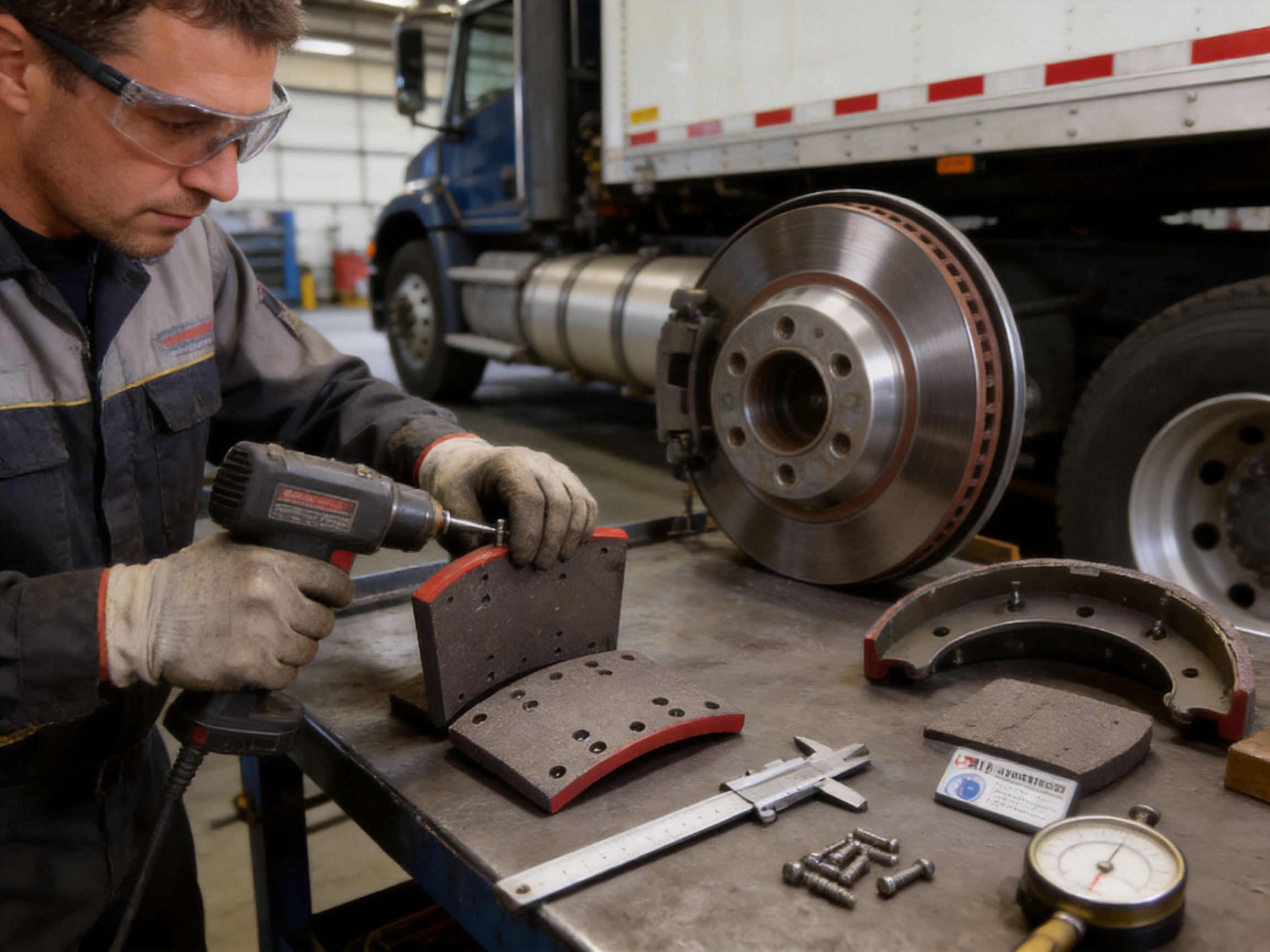
Heavy-duty braking systems operate under demanding conditions that require dependable friction materials, accurate dimensions, consistent quality, and reliable service support. Trucks, trailers, buses, and industrial vehicles may carry substantial loads, travel long distances, and face repeated braking cycles in changing temperatures and road conditions. In these applications, the brake lining is more than a replacement component. It is a critical working surface that directly influences braking response, heat management, drum condition, maintenance intervals, and operating confidence.
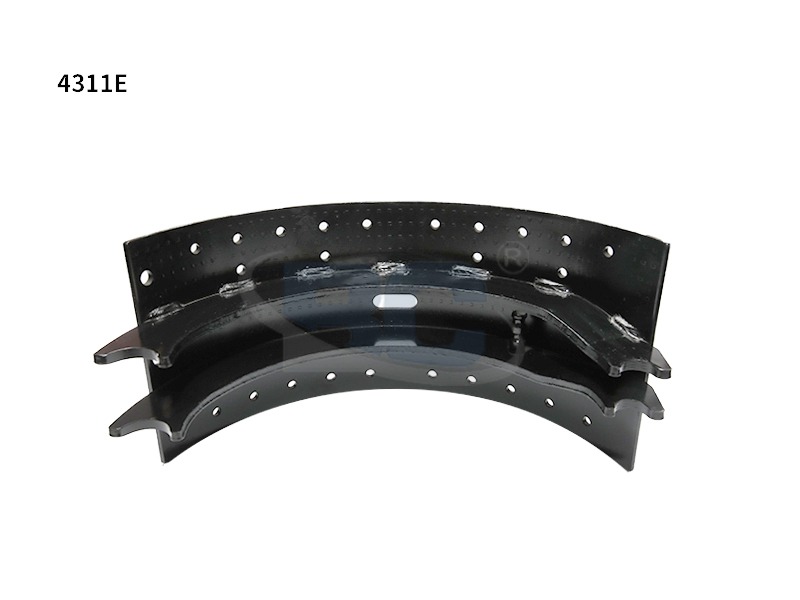
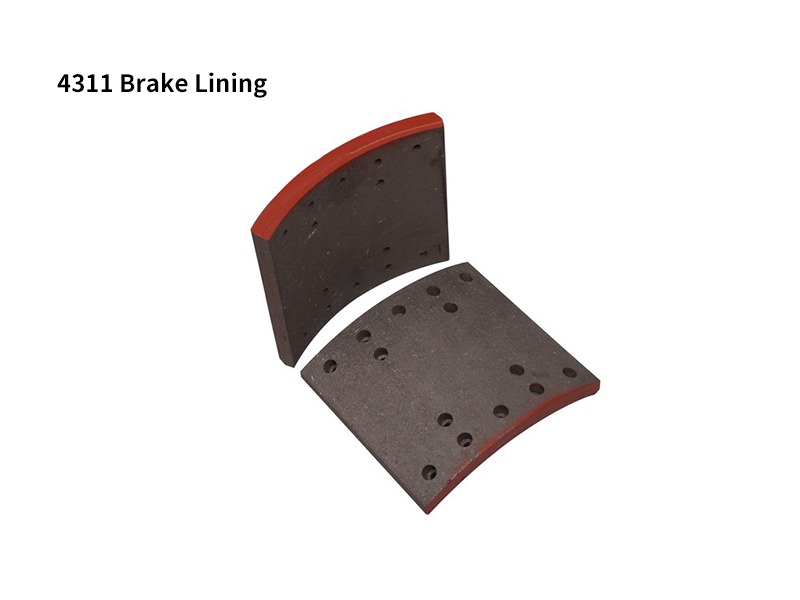
The 4311 Brake Lining is designed for heavy-duty brake shoe applications where stable performance and practical serviceability are essential. The supplied product specification identifies the part as a 4311 Brake Lining, with a product size of 16.5 inches by 7 inches and 14 rivet holes. These basic specifications provide a clear starting point for maintenance teams, distributors, brake repair specialists, and vehicle component buyers who need to identify a suitable lining for a particular brake assembly.
As with every friction component, dimensional information must be checked against the complete vehicle and brake system requirements before installation. Drum diameter, shoe construction, lining thickness, arc, rivet pattern, friction grade, operating environment, and application data should all be confirmed. Correct identification is essential because a lining that appears similar may still differ in radius, hole placement, material behavior, or intended service duty.
4311 Brake Lining
Product Overview
The 4311 Brake Lining belongs to the brake lining category within a broader heavy-duty brake parts product range. It is intended to be attached to a compatible brake shoe through a defined rivet-hole pattern. The listed configuration includes 14 rivet holes, allowing the lining to be mechanically secured when the brake shoe and installation hardware are properly matched.
The stated product size is 16.5 inches by 7 inches. In practical service terms, these dimensions help maintenance personnel compare the lining with the original component or with technical drawings used by the brake system manufacturer. However, the length and width alone do not establish complete interchangeability. The curvature, end profile, hole spacing, hole diameter, thickness, and material specification are equally important when confirming suitability.
The product is supplied as a brake lining rather than as a complete lined brake shoe. This distinction is important for customers who operate their own relining processes or who work with brake repair workshops. A replacement lining enables a service provider to reuse a structurally sound brake shoe while renewing the friction surface. This can be a practical approach for fleets and repair centers that maintain established relining procedures and have the correct riveting equipment.
| Product characteristic | Specified information | Service relevance |
|---|---|---|
| Product name | 4311 Brake Lining | Used for product identification and purchasing |
| Product category | Brake Lining | Supplied as a friction lining for compatible brake shoes |
| Listed size | 16.5 inches by 7 inches | Supports dimensional comparison during selection |
| Rivet-hole quantity | 14 holes | Helps confirm the mechanical attachment pattern |
| Application data | To be verified for the specific brake assembly | Confirms safe and correct installation |
| WVA number | Not provided in the supplied specification | Should be confirmed through application records or technical documentation |
Why Heavy-Duty Brake Linings Require Careful Selection
Brake linings must function under mechanical pressure, frictional heat, vibration, moisture, contamination, and repeated loading. During braking, the lining presses against the rotating drum and converts vehicle motion into heat. The lining must provide an appropriate coefficient of friction while maintaining structural integrity and controlling wear. If the friction material is poorly matched to the application, braking behavior can become inconsistent, drum wear can increase, or the service interval can be shortened.
Heavy-duty vehicles also experience a wide range of operating conditions. A loaded truck descending a long grade places very different demands on a brake lining from those encountered by a lightly loaded vehicle traveling on level roads. Stop-and-go urban service, regional freight, long-distance haulage, construction transport, and trailer operation can each produce distinct thermal and mechanical stresses.
For this reason, a professional selection process should consider more than a part number. The buyer should review the original brake system specification, the brake shoe dimensions, the drum condition, the vehicle gross weight, the typical load, the operating terrain, and the service history. The 4311 designation and the 16.5-inch by 7-inch size are valuable identification references, but they should be used together with complete application verification.
Correct rivet alignment is especially important. A lining with 14 holes must match the corresponding shoe pattern. Rivets should be installed using suitable equipment and the correct sequence so that the lining sits firmly against the shoe without gaps, distortion, or uneven loading. A professional relining process also includes inspection of the shoe, removal of corrosion and contamination, confirmation of shoe geometry, and measurement of the finished assembly.
Key Advantages of the 4311 Brake Lining
Defined Dimensional Identification
A clear dimensional description is one of the most useful advantages for purchasing and maintenance work. The stated 16.5-inch by 7-inch size gives distributors and repair professionals an immediate reference point. It supports comparison with existing inventory, workshop records, original equipment samples, and vehicle maintenance documentation.
Clear identification reduces the risk of selecting a visually similar but technically different component. In heavy-duty brake service, a small difference in lining dimensions can affect contact area, edge position, bedding behavior, and wear distribution. A defined product size therefore contributes to more organized inventory control and more efficient parts selection.
Practical Riveted-Lining Configuration
The 14-hole configuration is suitable for service operations that use mechanical riveting to attach the friction lining to a reusable brake shoe. Riveted construction remains widely used in heavy-duty brake repair because it allows worn friction material to be replaced while the shoe structure is retained when it remains within service limits.
A properly riveted lining can provide secure attachment throughout repeated braking cycles. The mechanical connection distributes retention across multiple points rather than relying on a single attachment area. During installation, the workshop must still use compatible rivets and suitable tooling. Correct countersinking, rivet height, hole alignment, and seating pressure are essential to achieving a dependable result.
Suitable for Professional Relining Programs
Brake repair centers, fleet workshops, and commercial vehicle service providers often require friction materials that can be integrated into an established relining workflow. A separate brake lining gives these users flexibility. They may inspect the original shoe, restore or replace the shoe when necessary, and install a new lining according to their internal quality procedures.
This approach can help reduce unnecessary replacement of serviceable shoe components. It can also support more efficient inventory planning because one lining product may be used in a controlled range of compatible shoe assemblies. The economic benefit depends on labor, equipment, shoe condition, and local service practices, but the relining format offers a practical alternative to replacing a complete assembly in every case.
Designed for Heavy-Duty Brake Service Requirements
The 4311 Brake Lining is positioned for heavy-duty brake parts applications. This means customers can evaluate it as part of a professional brake maintenance program rather than treating it as a general-purpose friction product. The intended focus is dependable use in compatible heavy-duty drum brake systems, with attention to dimensional accuracy and repeatable manufacturing.
A heavy-duty lining should be evaluated for its balance of braking response, wear behavior, heat resistance, drum compatibility, and noise characteristics. No single attribute determines overall quality. A successful product must offer a suitable combination of properties for the intended brake system. The 4311 product can therefore be considered within a complete application-matching process that includes both the lining specification and the operating environment.
Support for OEM-Style Identification
The company states that its brake parts follow the global FMSI numbering system. Numbering systems are valuable because they give buyers a consistent method for organizing products, comparing references, and communicating with distributors. They can reduce ambiguity when customers work across different markets or manage multiple vehicle platforms.
Although the supplied information does not provide a WVA number for this specific product, the absence of that number should not prevent a professional inquiry. Buyers can request application confirmation, dimensional drawings, cross-reference information, or additional technical data before ordering. The most reliable purchasing decision combines the listed part number with physical dimensions and vehicle or brake assembly information.
Manufacturing Quality and Process Strengths
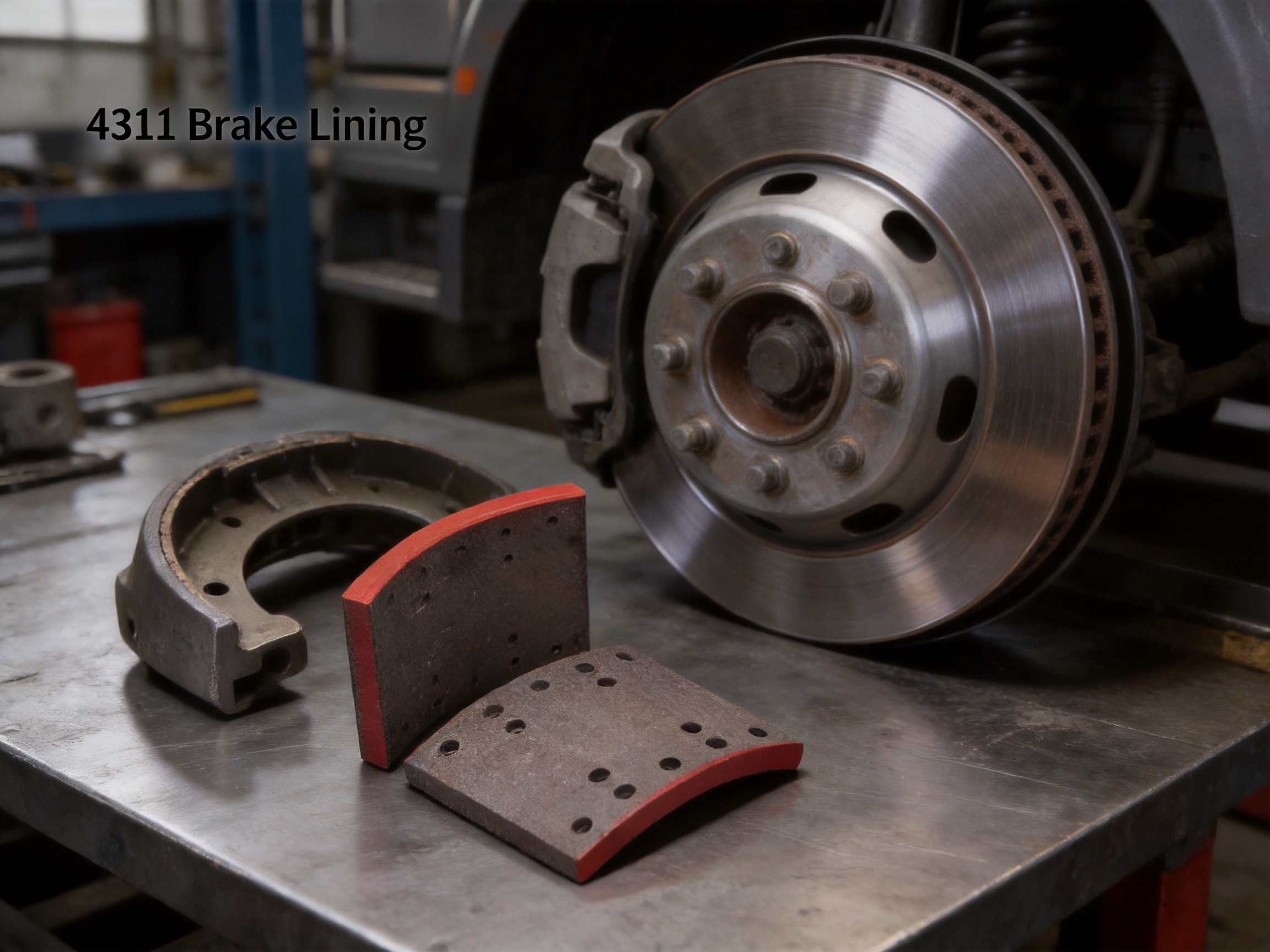
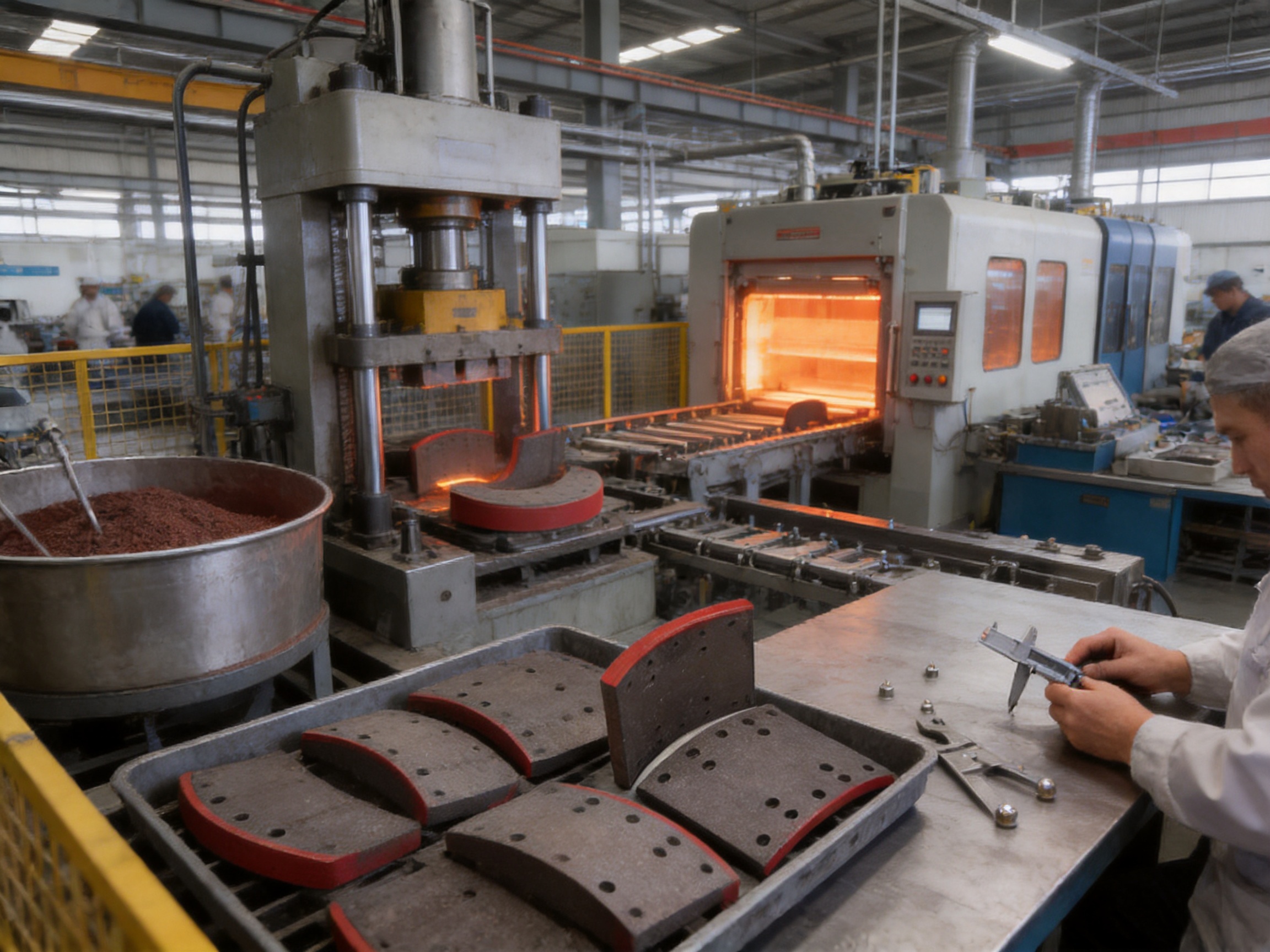
The performance of a brake lining depends heavily on manufacturing discipline. Friction materials are engineered composites, and their behavior is influenced by the consistency of raw materials, mixing accuracy, forming pressure, curing conditions, dimensional control, machining, finishing, and final inspection. A strong manufacturer must control the complete process rather than focusing only on the appearance of the finished product.
Zhejiang Bangchi Auto Parts Co., Ltd. operates in the heavy-duty brake parts field and offers products including steel brake shoes, cast brake shoes, brake linings, lined brake shoes, brake shoe repair kits, and lined brake shoe kits. This broader product scope is significant because it reflects an understanding of the brake system as a group of interacting components. A supplier that works across linings, shoes, and repair kits can better serve customers who need either individual friction material or a more complete replacement solution.
Material Preparation and Batch Consistency
Brake lining production begins with the preparation of friction-material ingredients. Depending on the formulation, these may include reinforcing fibers, friction modifiers, binders, fillers, and other functional components. Each ingredient contributes to a particular performance characteristic, such as friction stability, wear resistance, heat behavior, compressibility, or noise control.
Consistency in weighing and mixing is essential. If the distribution of ingredients varies from batch to batch, the finished linings may show differences in friction response or wear. A controlled production system therefore requires defined material specifications, accurate batching, suitable mixing equipment, and records that allow production personnel to trace each batch through subsequent stages.
For customers, manufacturing consistency is one of the most important differences between a professional supplier and an uncontrolled source. Two linings may have similar dimensions and appearance, yet behave differently under braking because of variation in formulation or processing. Stable production helps reduce this uncertainty and supports repeat purchasing for fleets and distributors.
Forming and Density Control
After mixing, the friction material must be formed into the required shape. Pressing conditions influence density, strength, porosity, and dimensional stability. The manufacturer must control forming pressure, material distribution, mold condition, and cycle parameters so that the lining achieves a consistent structure throughout its usable area.
Uneven density can contribute to uneven wear or inconsistent contact against the drum. Dimensional variation can create installation problems, especially when the lining must match a particular shoe radius and rivet-hole pattern. Accurate forming is therefore directly connected to both workshop efficiency and in-service behavior.
The 4311 Brake Lining's defined size and 14-hole pattern create measurable process targets. These targets can be checked through dimensional inspection and tooling control. A manufacturer with suitable production discipline can use fixtures, gauges, and documented procedures to maintain repeatability across production batches.
Controlled Curing and Thermal Processing
Curing is a critical stage in the production of bonded friction materials. During curing, the binder system develops the strength and stability required for the lining to maintain its shape and integrity. Time, temperature, pressure, and loading conditions must be controlled according to the material formulation.
Insufficient or uneven curing may affect mechanical strength, dimensional stability, and resistance to operating heat. Excessive or poorly controlled thermal processing may also influence material behavior. Professional production therefore relies on defined process windows and monitoring rather than informal timing or visual judgment alone.
Controlled thermal processing is particularly relevant to heavy-duty brake products because the lining may encounter repeated heat cycles in service. A stable manufacturing structure helps the product respond more predictably when the brake system transitions between light braking, severe braking, and cooling periods.
Precision Machining and Hole Processing
Once the lining has been formed and cured, machining and finishing operations may be used to achieve the required profile, thickness, edge shape, and surface condition. Accurate machining supports correct contact with the brake shoe and helps ensure that the finished lining can be installed without unnecessary adjustment.
The rivet-hole pattern is a central feature of a riveted lining. For the 4311 product, the stated quantity is 14 holes. In addition to counting the holes, quality control should address their location, spacing, diameter, angle, and countersink condition. A hole that is present but incorrectly positioned can prevent proper assembly or create local stress around the rivet.
Clean and accurately formed holes also improve workshop productivity. They reduce the need for manual correction and help the lining sit evenly against the shoe. Consistent hole processing is therefore both a manufacturing advantage and a service advantage.
Surface Finishing and Application Readiness
The friction surface must be prepared appropriately for installation and bedding. Depending on the product design and customer requirements, finishing may include grinding, edge treatment, chamfering, profiling, or other operations. These steps can help control the initial contact pattern and reduce the likelihood of concentrated edge loading.
Surface treatment must be compatible with the intended brake drum and service procedure. Installers should follow the supplier's handling and bedding recommendations when available. The brake drum should also be inspected for scoring, excessive wear, out-of-round condition, contamination, and dimensional limits before a new lining is fitted.
Inspection and Traceability
Quality control should continue through the complete manufacturing process. Typical checkpoints may include raw-material verification, mixture inspection, green-part dimensions, cured-part dimensions, hole pattern, thickness, surface condition, packaging, and final identification. The exact testing program depends on the product and the manufacturer's quality system, so customers should request relevant documents when a project requires formal approval or traceability.
Traceability is particularly useful for commercial fleets and distributors. If a customer identifies an unusual performance issue, batch information can help the manufacturer investigate production records and compare the affected material with other batches. Clear labeling also supports stock rotation and reduces confusion between similar brake lining references.
Advantages Compared with Less Specialized Alternatives
Customers comparing the 4311 Brake Lining with lower-cost or less specialized alternatives should look beyond the initial purchase price. A cheaper lining may create additional costs if it requires more frequent replacement, produces uneven wear, damages the drum, takes longer to install, or causes inconsistent braking behavior. The complete value of a brake lining includes product quality, fitment confidence, workshop time, vehicle availability, and technical support.
The first advantage of a specialized product is application focus. A heavy-duty brake lining is developed and cataloged for demanding commercial brake systems rather than for broad, undefined use. This focus allows the buyer to assess dimensions, hole pattern, material category, and compatibility in a more structured way.
The second advantage is manufacturing repeatability. Consistent forming, curing, machining, and inspection can reduce variation between replacement sets. For fleets that service multiple vehicles using the same brake reference, repeatability is valuable because technicians can work from established procedures and maintenance records.
The third advantage is product-range coordination. A supplier offering both linings and complete brake shoe products can support different maintenance preferences. One customer may require loose linings for an in-house relining program, while another may prefer a lined brake shoe or repair kit for faster replacement. A wider product portfolio allows the supplier to respond to both needs.
The fourth advantage is communication. A defined part number, stated size, and stated rivet-hole quantity give distributors a practical foundation for quotations and technical questions. When additional data is needed, the customer can refer to a specific product rather than describing an uncertain replacement part.
Installation and Workshop Considerations
Confirming Compatibility Before Installation
Before installing the 4311 Brake Lining, the technician should compare the new lining with the removed component and the brake system records. Confirm the part number, nominal size, thickness, curvature, end profile, rivet-hole count, hole spacing, and application. Because the supplied specification does not include a WVA number, buyers should obtain additional cross-reference information where required.
The brake shoe should be inspected for cracks, deformation, corrosion, excessive wear, damaged rivet holes, and loss of structural integrity. A new lining should not be installed on a shoe that is outside service limits. Reusing an unsuitable shoe can compromise the performance of an otherwise good friction lining.
Preparing the Brake Shoe
The shoe surface should be clean, dry, and free from oil, grease, loose rust, and old lining residue. The shoe should retain its intended shape and should not have high spots that prevent the new lining from sitting correctly. Rivet holes must be clear and aligned with the replacement lining.
Technicians should use appropriate relining machinery and follow the equipment manufacturer's instructions. The process should avoid cracking, crushing, or distorting the lining. Rivets must be compatible with the lining and shoe, and the finished rivet heads should hold the lining securely without protruding into the drum contact area.
Checking the Finished Assembly
After riveting, inspect the complete assembly for gaps between the lining and shoe, loose rivets, damaged edges, incorrect hole alignment, and surface contamination. The lining should be firmly seated across its full intended contact area. Any assembly that shows movement, distortion, or incomplete seating should be corrected before installation on the vehicle.
The brake drum should be measured and inspected at the same time. A drum that is badly scored, tapered, cracked, or beyond its allowable service diameter can prevent proper bedding and may accelerate lining wear. Brake hardware, return springs, rollers, adjusters, and related components should also be checked according to the vehicle manufacturer's maintenance procedure.
Bedding and Initial Service
Newly installed linings require a suitable bedding process so that the friction surfaces develop a stable contact pattern. Bedding should follow the recommendations of the vehicle or brake system manufacturer and should take place in a controlled manner. Severe braking immediately after installation may generate excessive heat before the lining and drum have established even contact.
After initial service, technicians should inspect for abnormal contact, hot spots, uneven wear, noise, pulling, delayed braking response, or other unusual behavior. The precise inspection schedule depends on the vehicle and operating environment. Commercial fleets may choose to record the installation date, mileage, vehicle identity, lining reference, drum condition, and technician details for future maintenance analysis.
Quality Management for Fleet and Distributor Customers
Fleet operators can gain more value from a brake lining when the product is integrated into a documented maintenance system. The fleet should identify approved applications, define inspection intervals, standardize relining methods, and train technicians in riveted lining installation. Using consistent procedures makes it easier to compare service life and identify operating conditions that influence wear.
Distributors should maintain accurate product records that distinguish the 4311 Brake Lining from similar references. Stock labels should include the part number, dimensions, hole count, and any verified cross-reference information. Packaging should protect the friction material from moisture, contamination, impact, and deformation during transportation and storage.
Purchasers should also communicate their actual needs to the manufacturer. Information such as vehicle type, axle position, brake drum size, typical load, operating terrain, annual mileage, and expected order quantity can help determine whether the product is appropriate. Technical communication is especially important when a part number is being considered for a new vehicle platform or a non-standard operating environment.
| Customer type | Primary concern | Recommended evaluation point |
|---|---|---|
| Commercial fleet | Service life and predictable maintenance | Confirm application, establish installation standards, and track wear |
| Brake repair workshop | Relining efficiency and secure attachment | Verify shoe condition, tooling, rivet compatibility, and hole alignment |
| Distributor | Inventory accuracy and customer fitment support | Maintain part-number, size, and cross-reference records |
| Vehicle parts importer | Stable supply and product consistency | Review production capability, inspection practices, and packaging |
| Original equipment service provider | Technical conformity | Request drawings, test information, and application documentation |
Supplier Strengths and Product Portfolio
Zhejiang Bangchi Auto Parts Co., Ltd. is identified as a manufacturer and supplier of heavy-duty brake parts. Its product categories include steel brake shoes, cast brake shoes, brake linings, lined brake shoes, brake shoe repair kits, and lined brake shoe kits. This combination provides several advantages for customers who prefer to source related brake components from one specialized supplier.
First, the portfolio supports different repair strategies. A workshop can purchase a loose lining when it has suitable shoes and relining capability. It can choose a lined brake shoe when a ready-to-install assembly is more efficient. It can also purchase a repair kit when several associated components are needed for a planned service operation.
Second, a broad product range can improve purchasing efficiency. Buyers may consolidate orders, simplify supplier communication, and coordinate product availability across multiple brake service requirements. This is useful for distributors and fleet maintenance departments that manage many references.
Third, experience with both friction materials and shoe assemblies can support better component matching. Brake performance depends on the interaction between the lining, shoe, drum, hardware, and adjustment system. A manufacturer active in several of these product areas is positioned to understand the practical requirements of the complete brake assembly.
The company also states that it provides OEM brake parts following the global FMSI numbering system. For international customers, standardized numbering can make product communication more efficient. Buyers should still request the specific technical information needed for their market, including application data, packaging requirements, inspection records, and any regulatory documentation relevant to the destination country.
Ordering Information and Technical Questions
When requesting a quotation for the 4311 Brake Lining, customers should provide the part number and state that the required product is a brake lining measuring 16.5 inches by 7 inches with 14 rivet holes. If the lining is intended for a specific vehicle or axle, the buyer should include the vehicle model, production year, brake manufacturer, drum dimensions, and original lining reference when available.
Because the supplied product information leaves the WVA number blank, customers should ask whether an applicable WVA reference or equivalent cross-reference is available. They may also request a dimensional drawing showing thickness, curvature, hole spacing, hole diameter, end shape, and other relevant measurements.
For larger orders, purchasers may wish to discuss packaging, minimum order quantity, production lead time, sample approval, batch identification, inspection documentation, and shipping protection. A clear technical and commercial specification helps prevent misunderstandings and ensures that the delivered product matches the intended service application.
Customers can contact the manufacturer through the supplied business details. The listed address is No. 9 Building, No. 11 Qiyi Road, Chang'an Town, Haining, Zhejiang, China. The supplied contact information includes telephone number +86-133 7230 7977, fax number +86-0573-87960639, email address sfp@zjbangchi.com, and an additional telephone number of +86-0573-87960600.
Safety and Responsible Use
Brake components are safety-critical parts. The 4311 Brake Lining should be installed only by qualified personnel who understand heavy-duty drum brake systems and have access to suitable tools and inspection equipment. The product should not be modified by drilling additional holes, cutting away structural material, changing the friction surface, or using unapproved attachment methods.
Installation must follow the relevant vehicle, brake system, and workshop procedures. All applicable local regulations and safety requirements should be observed. If there is uncertainty about fitment, material compatibility, drum condition, or installation quality, the vehicle should not be returned to service until the issue has been resolved.
Proper storage is also important. Brake linings should be protected from oil, grease, water, chemicals, excessive humidity, and impact. Products should remain flat and supported in a manner that prevents bending or deformation. Before installation, the technician should verify that the lining is clean, undamaged, and correctly identified.
Environmental and Operational Considerations
Brake lining wear produces dust and discarded friction material, so responsible maintenance practices are important. Workshops should collect waste material according to applicable local requirements and avoid releasing dust unnecessarily during removal or machining. Suitable personal protective equipment and workshop ventilation should be used during relining operations.
Operational practices also influence lining life. Excessive speed, overloading, poor brake adjustment, dragging brakes, aggressive braking, and neglected drum maintenance can increase wear regardless of lining quality. A well-selected product performs best when the complete braking system is correctly adjusted and maintained.
Fleet managers can improve brake efficiency through driver training, preventive inspection, load control, and analysis of wear patterns. If one vehicle consumes linings significantly faster than comparable vehicles, the cause may involve brake adjustment, wheel-end condition, axle loading, driving behavior, or drum irregularity. Product selection and vehicle maintenance should therefore be considered together.
Frequently Asked Questions
What is the 4311 Brake Lining?
The 4311 Brake Lining is a heavy-duty friction lining identified by part number 4311. It is supplied as a lining for installation on a compatible brake shoe rather than as a complete lined shoe assembly.
What are the listed dimensions?
The supplied product information lists the size as 16.5 inches by 7 inches. Buyers should confirm additional dimensions, including thickness, curvature, end profile, and hole spacing, before ordering for a specific brake assembly.
How many rivet holes does the product have?
The product is specified with 14 rivet holes. The complete rivet pattern must match the brake shoe, including hole location, diameter, and countersink requirements.
Does the supplied information include a WVA number?
No WVA number is provided in the supplied specification. Customers who require WVA identification should request confirmation from the manufacturer and provide the vehicle or brake assembly details needed for cross-reference research.
Can the lining be installed on any 16.5-inch by 7-inch brake shoe?
No. The listed size alone does not confirm compatibility. The shoe radius, thickness, hole pattern, brake drum dimensions, friction requirements, and application must all be checked before installation.
Is the product suitable for fleet maintenance?
It can be considered for fleet maintenance when the application is verified and the workshop has suitable relining equipment and trained personnel. Fleets should establish inspection, riveting, bedding, and record-keeping procedures.
What makes a riveted brake lining practical?
A riveted lining allows a serviceable brake shoe to be reused while the worn friction material is replaced. This can support efficient repair programs, but the shoe must be inspected carefully and the lining must be installed with compatible rivets and correct equipment.
What should be checked before installing a new lining?
Technicians should check the part number, dimensions, curvature, hole pattern, shoe condition, drum condition, rivet compatibility, and surface cleanliness. The complete assembly should be inspected again after riveting.
What types of brake products does the manufacturer offer?
The supplied company information identifies steel brake shoes, cast brake shoes, brake linings, lined brake shoes, brake shoe repair kits, and lined brake shoe kits as product categories.
Can customers request technical documentation?
Customers should contact the manufacturer to request drawings, application information, cross-reference data, inspection documents, packaging details, and other technical material relevant to their purchase.
How should the product be stored?
The lining should be stored in a clean, dry environment away from oil, grease, water, chemicals, excessive humidity, and impact. It should be supported properly to prevent bending or deformation before installation.
Why is drum inspection important?
The drum and lining work as a friction pair. A drum that is cracked, severely scored, tapered, out of round, contaminated, or beyond its service limit can prevent proper bedding and cause abnormal wear even when the lining is correctly manufactured.
Conclusion
The 4311 Brake Lining offers a clearly identified solution for compatible heavy-duty drum brake applications. Its listed 16.5-inch by 7-inch size and 14-rivet-hole configuration provide useful purchasing and workshop references. As a separate lining, it is suited to professional relining programs in which a qualified technician evaluates and reuses a structurally sound brake shoe.
The product's value should be considered together with manufacturing consistency, dimensional control, controlled forming and curing, accurate hole processing, surface finishing, inspection, packaging, and technical support. These process strengths help distinguish a specialized heavy-duty brake component from an unverified substitute.
Zhejiang Bangchi Auto Parts Co., Ltd. supports the product with a broader portfolio that includes brake shoes, linings, lined shoe assemblies, and repair kits. This range can help fleets, distributors, and repair workshops select the format that best matches their maintenance system. The company's stated use of the global FMSI numbering system also provides a useful framework for product identification and international communication.
Before purchase or installation, every customer should verify the complete application. The part number, dimensions, 14-hole pattern, brake shoe, drum, operating conditions, and installation method must be considered together. When correctly selected, professionally installed, and properly maintained, the 4311 Brake Lining can contribute to dependable brake service, organized fleet maintenance, and efficient heavy-duty vehicle operation.
References
1. Supplied product specification for 4311 Brake Lining, including product category, size, and rivet-hole quantity.
2. Supplied company information for Zhejiang Bangchi Auto Parts Co., Ltd., including product categories and contact details.
3. Friction Materials Standards and Testing Practices, general technical reference for brake lining evaluation and manufacturing control.
4. Heavy-Duty Drum Brake Service Principles, general workshop reference for brake shoe inspection, relining, riveting, and bedding.
5. FMSI Automotive Part Numbering Practices, general reference for friction-material identification and catalog communication.
6. Commercial Vehicle Preventive Maintenance Guidelines, general reference for brake inspection, drum condition, fleet records, and safe service procedures.