 English
 简体中文
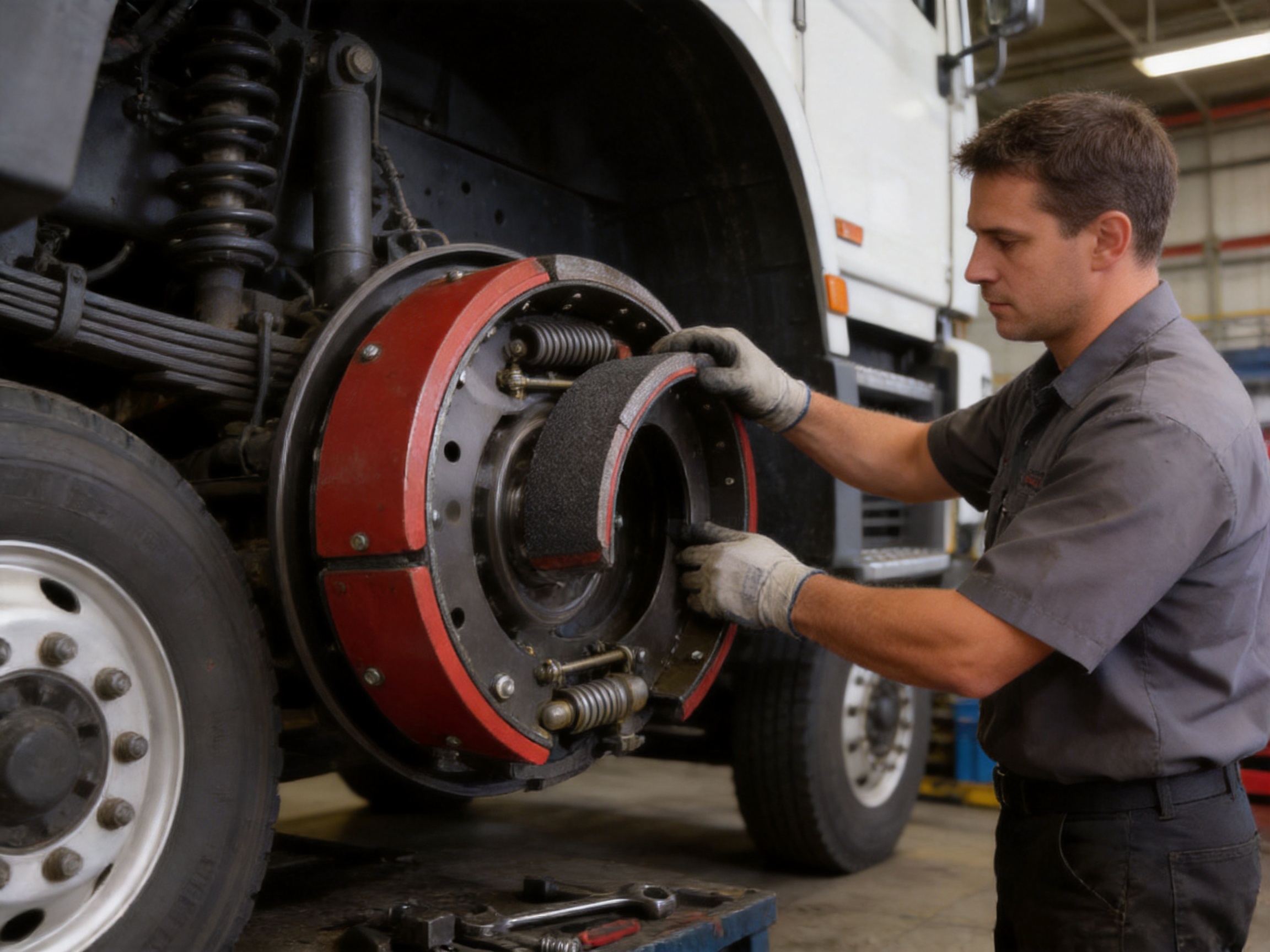
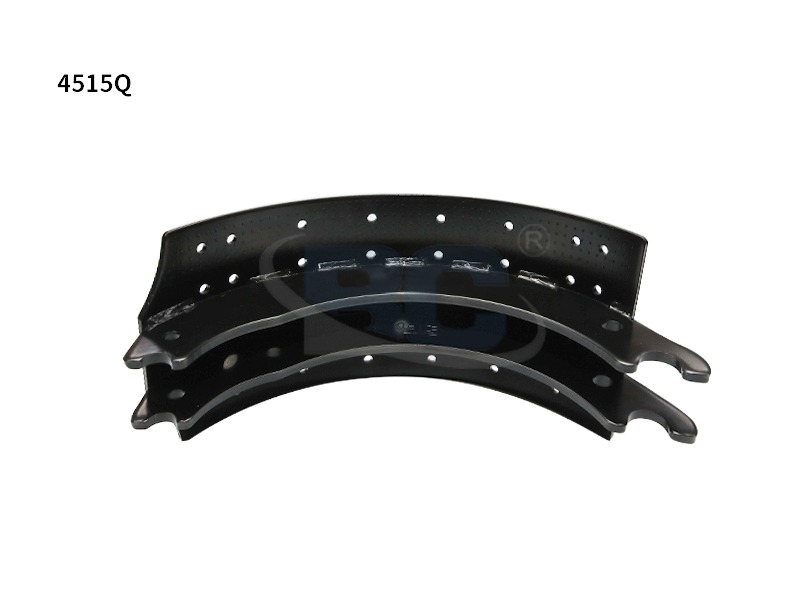
The 4515Q Lined Brake Shoe is a heavy-duty friction component developed for commercial vehicle braking systems that require dependable fitment, consistent friction performance, and reliable service support. Identified by part number 4515Q, this lined brake shoe is listed with a product size of 16.5 inches by 7 inches, 32 rivet holes, and the OE reference numbers 152.05533 and 3222 Q 1291. These specifications make the product especially relevant to distributors, repair workshops, fleet maintenance departments, and vehicle manufacturers seeking a replacement brake shoe aligned with established heavy-duty application requirements.
A brake shoe is a safety-critical part. It operates inside the drum brake assembly and transfers the force generated by the braking mechanism to the brake lining. When the shoe, lining, rivets, and drum interface work together correctly, the braking system can convert vehicle motion into controlled heat and deceleration. When fitment or friction consistency is poor, the result may be uneven braking, noise, premature lining wear, drum damage, or unplanned downtime.
The 4515Q Lined Brake Shoe is designed around the practical needs of heavy truck and commercial vehicle maintenance. Its defined hole pattern, identified OE references, lined construction, and product-specific dimensions help simplify identification and replacement. At the same time, its production by Zhejiang Bangchi Auto Parts Co., Ltd. supports a supply model centered on heavy-duty brake parts, OEM-oriented manufacturing, and product references that follow the global FMSI numbering system.
Product Identification and Core Specifications
Correct product identification is the first step in brake service. A brake shoe may appear similar to another shoe while differing in curvature, width, hole arrangement, lining thickness, or attachment details. Such differences can affect installation and braking performance. The 4515Q designation provides a clear reference point for buyers and technicians who need to match a replacement component with a known application.
| Specification | 4515Q Lined Brake Shoe Information |
|---|---|
| Part number | 4515Q |
| Product category | Lined Brake Shoe |
| Listed product size | 16.5 inches by 7 inches |
| Rivet hole quantity | 32 |
| OE reference numbers | 152.05533 and 3222 Q 1291 |
| Product type | Brake shoe supplied with friction lining |
| Application focus | Heavy-duty and commercial vehicle brake service |
The listed size should always be compared with the dimensions required by the vehicle or axle manufacturer. In the supplied product data, the size appears as 16.5"*7"mm. Because the notation combines an inch symbol and a millimeter abbreviation, buyers should confirm the intended unit format before placing a large order. This verification is a normal and valuable part of professional brake component purchasing.
The 32-rivet-hole specification is particularly useful during product selection. The hole count provides an immediate dimensional reference and helps distinguish the 4515Q from visually similar brake shoes. It also gives maintenance personnel a practical inspection point when comparing a replacement shoe with the component removed from a vehicle.
The OE reference numbers 152.05533 and 3222 Q 1291 offer additional identification support. OE references do not replace a complete application check, but they can improve purchasing accuracy when used together with dimensions, vehicle information, axle details, and the existing brake assembly. For distributors, including these references in product listings can also make catalog searching faster and reduce ordering errors.
Why a Lined Brake Shoe Matters in Heavy-Duty Service
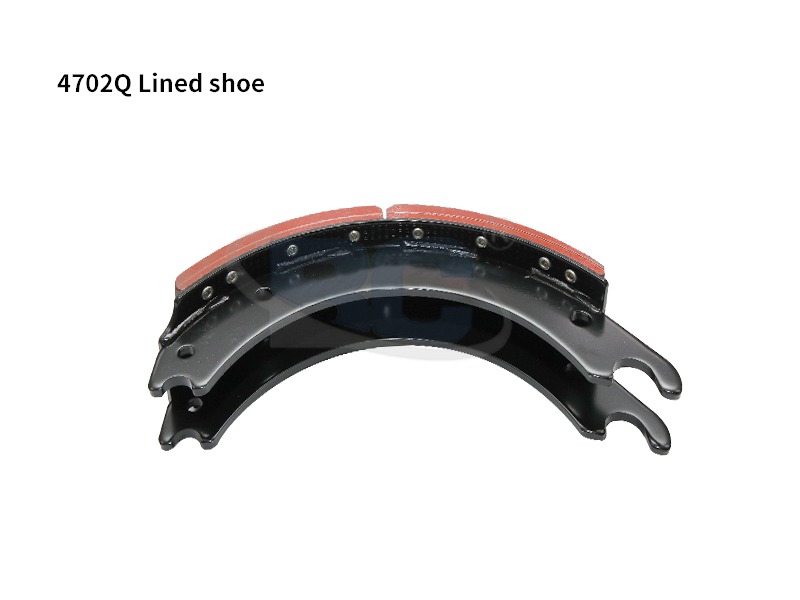
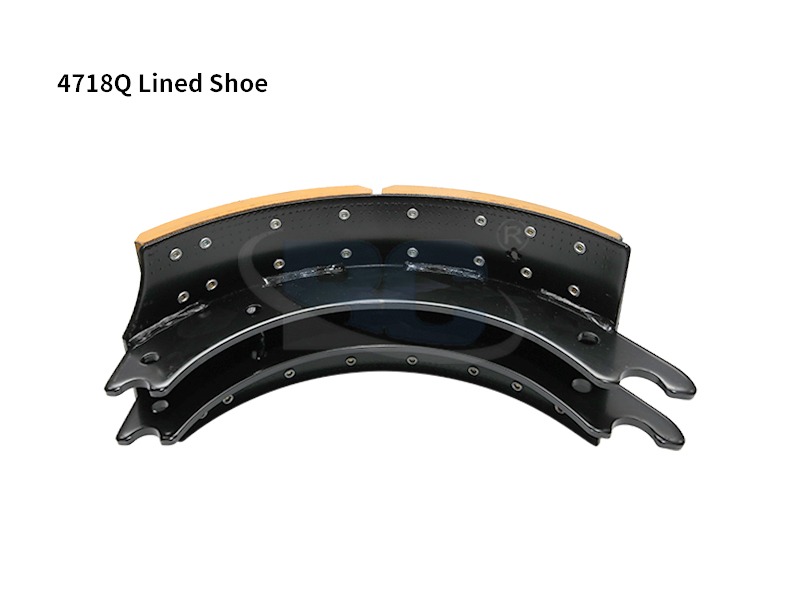
A lined brake shoe combines a structural shoe with a friction lining that contacts the internal surface of a brake drum. The shoe provides the mechanical foundation, while the lining supplies the friction material needed to create braking torque. In a heavy-duty vehicle, this assembly may be exposed to high loads, repeated stops, long downhill descents, vibration, moisture, road contamination, and substantial temperature changes.
The lining must maintain a predictable relationship between pedal or actuator force and braking response. If the friction level changes excessively with temperature, moisture, or wear, the driver may experience inconsistent braking. If the lining wears unevenly, the drum contact pattern can become irregular. If the attachment between the lining and shoe is not secure, the entire braking system may be compromised.
A lined brake shoe is therefore more than a simple replacement plate. It is a coordinated component that must meet dimensional, mechanical, and friction-related requirements. The 4515Q product is intended to give buyers a ready-to-install lined solution rather than requiring a separate lining selection and installation process for every service event.
Compared with an unlined shoe, a lined brake shoe can reduce the number of separate purchasing decisions required by a repair facility. The workshop does not have to source a bare shoe, select a compatible lining, determine the correct rivets, and complete the lining attachment as an independent operation. A properly supplied lined shoe can support faster parts handling and more consistent assembly practices.
Advantages of the 4515Q Lined Brake Shoe
Application-Oriented Identification
One of the strongest advantages of the 4515Q is the clarity of its product identity. The part number, dimensions, rivet-hole count, and OE reference numbers create several ways to confirm the correct product. This is valuable in aftermarket distribution, where buyers may search by a manufacturer number, a cross-reference number, a dimensional description, or a workshop requirement.
Products with multiple identification points are easier to manage in inventory. A distributor can organize stock by part number while still supporting customers who search by OE reference. A fleet maintenance department can record the 4515Q in its service database and connect it with the relevant vehicle or axle application. A repair technician can compare the physical shoe with the listed 32-hole configuration before installation.
Ready-Lined Construction
The product is supplied as a lined brake shoe, which supports efficient maintenance. A repair facility can receive a component that already combines the shoe and friction lining. This can reduce the number of assembly stages performed at the workshop and help standardize the replacement process.
Ready-lined construction can be especially useful for fleets that maintain several vehicles under time pressure. Reducing avoidable preparation work may help shorten vehicle downtime, particularly when a replacement is required during routine inspection or an unexpected repair. The final installation must still be performed by qualified personnel and checked against the vehicle manufacturer’s service instructions.
Defined Rivet-Hole Configuration
The 32-rivet-hole configuration gives the product a specific attachment pattern. Correct rivet placement helps distribute the mechanical connection between the lining and the shoe. A defined hole pattern also supports repeatable production and makes incoming inspection more straightforward.
For buyers comparing products from different suppliers, rivet-hole quantity is a useful screening characteristic. It should not be used alone, because hole diameter, spacing, countersink geometry, lining dimensions, and shoe curvature are also important. However, the 32-hole specification provides a clear starting point for checking whether a product corresponds to the intended application.
Suitability for Heavy-Duty Replacement Programs
Heavy-duty brake parts must support the service realities of trucks, trailers, buses, industrial vehicles, and other commercial equipment. These vehicles often operate with high gross weights and frequent braking cycles. A replacement part should therefore be selected with attention to dimensional accuracy, friction compatibility, thermal conditions, maintenance history, and the operating environment.
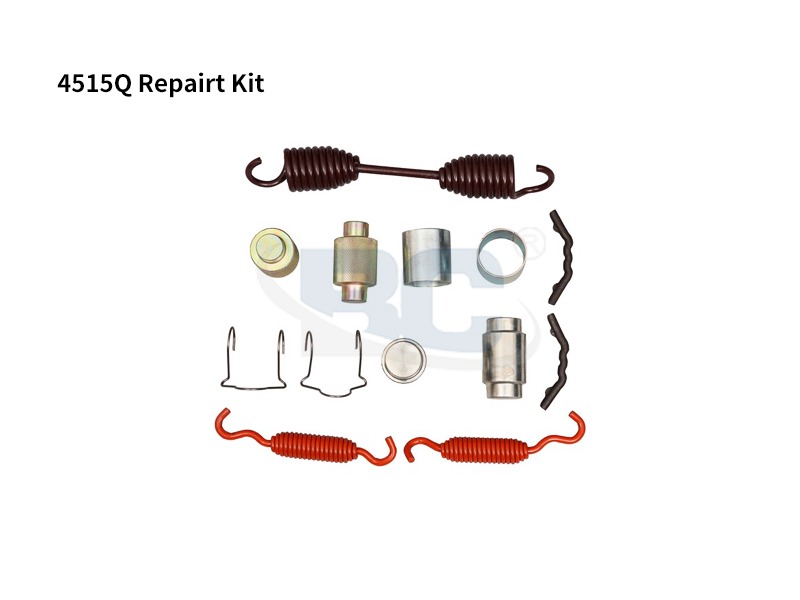
The 4515Q is positioned within a product range that includes steel brake shoes, casted brake shoes, brake linings, lined brake shoes, brake shoe repair kits, and lined brake shoe kits. This broader category coverage can benefit customers who prefer to source related drum brake products from one specialized supplier. It also allows purchasing teams to compare complete assemblies with repair-oriented alternatives according to their own maintenance strategy.
OEM-Oriented Reference System
Zhejiang Bangchi Auto Parts Co., Ltd. states that it provides OEM brake parts following the global FMSI numbering system. A structured numbering approach can help improve catalog organization, product communication, and replacement-part traceability. For international customers, consistent part references are particularly important because vehicles and components may be identified differently across markets.
The use of recognizable reference conventions does not eliminate the need for application verification. Instead, it provides a stronger foundation for communication between the manufacturer, distributor, workshop, and end user. When a buyer asks for 4515Q, the supplier can connect the request with the listed dimensions, hole count, and OE numbers rather than relying only on a general description such as “heavy truck brake shoe.”
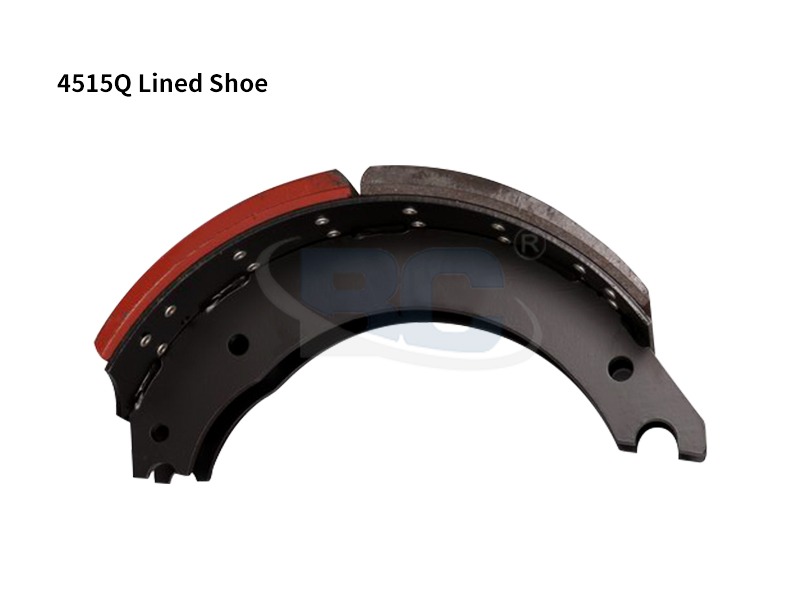
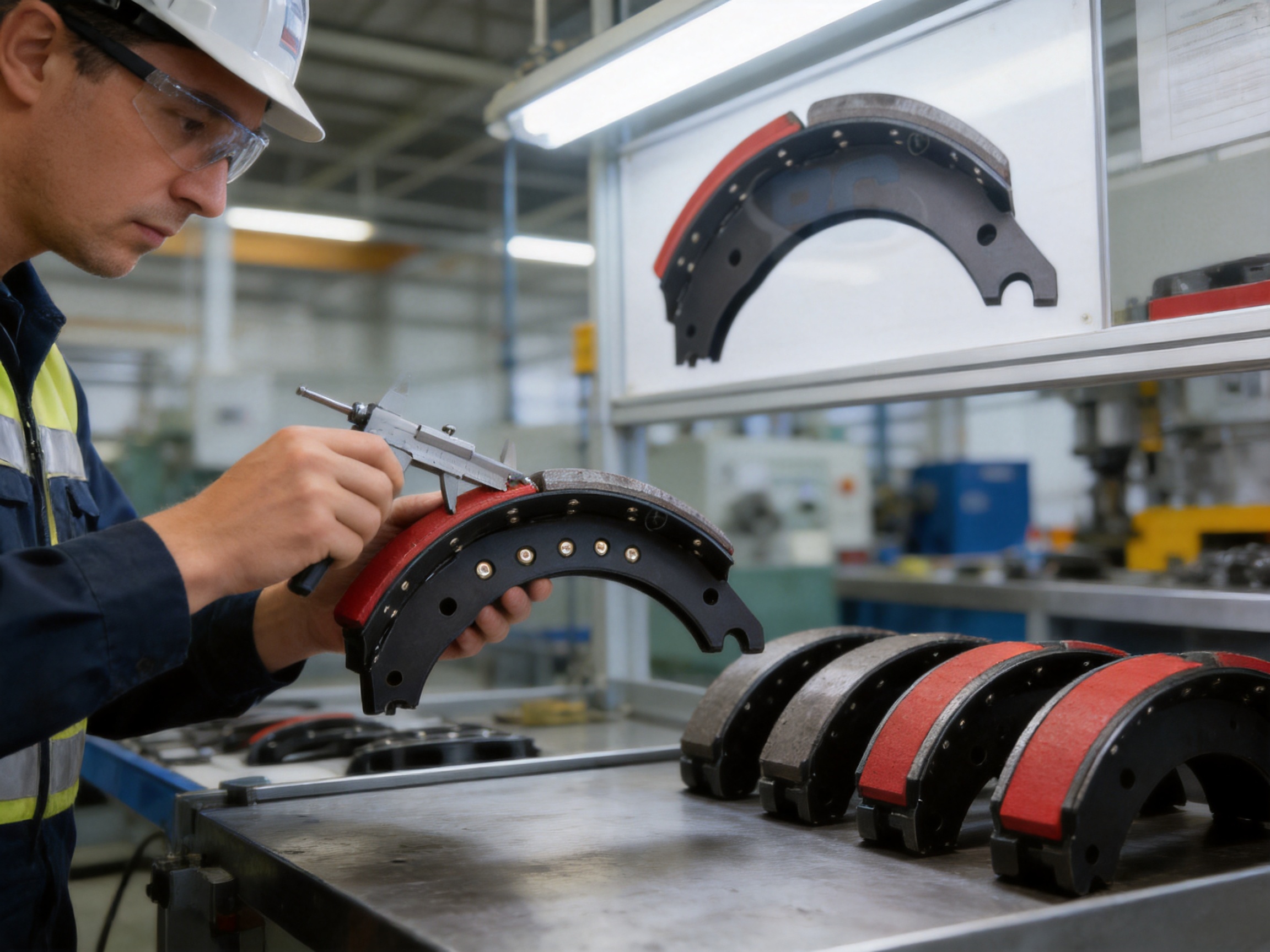
4515Q Lined Brake Shoe
Manufacturing Strengths Behind the Product
The performance of a brake shoe depends heavily on the manufacturing discipline used to produce it. A reliable product requires controlled raw materials, accurate forming or casting, consistent machining, suitable lining preparation, secure attachment, and final inspection. Zhejiang Bangchi Auto Parts Co., Ltd. focuses on heavy-duty brake parts and offers product categories covering both complete assemblies and repair components.
This specialization is an important strength. A company concentrated on brake shoes and related friction components can develop production knowledge around the dimensional and service requirements of drum brake systems. It can organize tooling, inspection routines, product records, and customer support around brake-part applications rather than treating brake shoes as a minor product among unrelated automotive components.
Material and Component Control
A brake shoe assembly contains materials with different functions. The shoe must provide structural support. The lining must provide controlled friction and tolerate service temperature. Rivets or other attachment components must maintain a secure connection. Each material must be suitable for its role, and the interface between the materials must be properly controlled.
Effective manufacturing begins with incoming material management. Material identification, supplier evaluation, batch records, and inspection procedures can help reduce variation before production begins. For a heavy-duty component, consistency is important because small changes in shoe geometry or lining composition may influence installation, contact, wear, and braking response.
Manufacturers with organized production systems can assign traceable records to raw materials and work-in-process components. Such records support quality investigations and make it easier to identify the production conditions associated with a particular batch. This is valuable for distributors and fleet customers who require stable supply over repeated orders.
Accurate Shoe Forming and Geometry
The shoe must fit the brake drum assembly and interact correctly with the associated hardware. Curvature, width, end geometry, mounting points, and lining seating area all affect how the shoe operates. If the geometry is inaccurate, the lining may not contact the drum evenly, or the shoe may not seat correctly in the brake mechanism.
A capable production process uses dedicated tooling and controlled forming operations to maintain repeatability. Depending on the shoe design, production may involve stamping, pressing, machining, casting, or a combination of processes. The objective is to create a consistent structural component that matches the intended drawing and application reference.
For the 4515Q, dimensional control is especially relevant because the product is identified by a defined size and a 32-hole configuration. The shoe and lining must be coordinated so that the attachment points align correctly and the finished part remains within the required application envelope.
Controlled Lining Preparation
The friction lining is a central functional element. Its composition, density, thickness, surface condition, and attachment interface all influence brake operation. A professional manufacturing process should control the preparation and handling of the lining so that each finished shoe has a consistent fit and suitable contact surface.
Lining preparation may include cutting, drilling, countersinking, surface treatment, cleaning, and dimensional inspection. The exact process depends on the product design and material. For a riveted lined brake shoe, hole alignment and countersink quality are important because the rivets must sit correctly and avoid creating an interference condition between the lining and the brake drum.
Consistent lining preparation also supports smoother workshop installation. When the holes align with the shoe and the rivet seats are properly formed, technicians can complete the attachment or inspection process with fewer adjustments. In the case of a factory-lined product, this consistency is built into the supplied assembly.
Secure Lining Attachment
The connection between the lining and shoe must remain reliable throughout service. The attachment process should be controlled for hole alignment, rivet positioning, seating, and deformation. A loose, damaged, or incorrectly seated rivet may allow movement between the lining and shoe, which can lead to noise, uneven wear, or serious brake-system damage.
A 32-hole product requires repeatable attachment across a relatively large number of connection points. The manufacturing process must ensure that the holes are correctly matched and that the attachment sequence does not create distortion. Inspection should verify that the lining is firmly secured and that no attachment point is visibly defective.
For customers comparing suppliers, the quality of the attachment process is often more important than appearance alone. A clean-looking shoe is not enough; the lining must be properly aligned, securely fixed, and compatible with the intended brake drum application.
Inspection and Quality Assurance
Quality assurance for a lined brake shoe should include more than a final visual check. Useful inspection points may include dimensional verification, hole count, hole position, lining thickness, shoe curvature, surface condition, attachment integrity, product marking, and packaging accuracy.
Final inspection can confirm that the finished 4515Q corresponds to the product record. The part number, OE references, dimensions, and quantity of rivet holes should be checked against the approved specification. Packaging and labeling should also make the product easy to identify after shipment, especially when distributors manage multiple brake shoe models.
Process inspection is equally important. Checking only the finished product may detect a problem late in production. In-process checks can identify forming variation, drilling errors, attachment problems, or lining damage before the product reaches final packing. A process-oriented quality system can therefore reduce waste and improve consistency.
How the 4515Q Compares with Generic Alternatives
Customers often compare brake shoes based on price alone. However, the lowest purchase price may not represent the lowest operating cost. A generic product with unclear dimensions, incomplete reference information, inconsistent lining attachment, or limited technical support can create additional labor and inventory risks.
The 4515Q offers several practical comparison points. It has a specific part number, listed OE references, a stated size, and a defined 32-hole arrangement. These details provide a clearer basis for evaluation than an unreferenced brake shoe advertised only by a broad vehicle description.
Another advantage is the manufacturer’s concentration on heavy-duty brake parts. A specialist supplier is more likely to understand the importance of brake shoe geometry, lining attachment, replacement compatibility, and commercial vehicle service requirements. This specialization can support better product communication and more efficient problem resolution than a general supplier with limited brake-system expertise.
The product category coverage is also relevant. Zhejiang Bangchi Auto Parts Co., Ltd. supplies steel brake shoes, casted brake shoes, brake linings, lined brake shoes, brake shoe repair kits, and lined brake shoe kits. This range allows customers to select between a complete lined assembly and a repair-oriented product depending on workshop capability, vehicle condition, and procurement policy.
A complete lined shoe may be preferable when speed, consistency, and simplified installation are priorities. A repair kit may be more suitable when the existing shoe remains serviceable and the workshop has the tools and expertise to replace the lining. The ability to source both types from a brake-part specialist may simplify supplier management.
Of course, no brake shoe should be selected solely because it appears similar to a competitor’s product. A proper comparison should include physical dimensions, hole arrangement, friction-material suitability, attachment method, application coverage, quality documentation, packaging, minimum order requirements, and after-sales communication.
Application and Purchasing Guidance
Confirm the Existing Brake Assembly
Before ordering the 4515Q, the buyer should inspect the existing brake shoe and collect as much application information as possible. Useful details include the vehicle make and model, axle manufacturer, brake chamber or actuator type, drum dimensions, existing part number, OE reference, shoe width, shoe radius, and lining attachment pattern.
The 4515Q part number and OE references should be compared with the information found on the vehicle or removed component. If the existing shoe is damaged or heavily worn, measurements should be taken carefully because wear can make the original dimensions difficult to judge.
Check Dimensions and Hole Pattern
The listed product size is 16.5 inches by 7 inches, and the product has 32 rivet holes. These specifications should be checked against the required application. Buyers should also verify the units because the supplied data uses mixed notation. A supplier can confirm the final dimensional drawing before production or shipment.
Hole count is only one part of the attachment pattern. Hole spacing, diameter, countersink, and alignment are also important. If the replacement shoe is intended for a repair application, the workshop should confirm that its existing tools and rivets are compatible with the 4515Q design.
Consider Operating Conditions
Vehicle duty cycle influences brake component selection. Long-haul trucks, urban delivery vehicles, buses, trailers, mining equipment, and construction vehicles may place different demands on a drum brake assembly. Factors such as load, terrain, stop frequency, ambient temperature, water exposure, and maintenance intervals should be considered.
A heavy vehicle operating in mountainous terrain may generate more heat during repeated downhill braking than a vehicle operating on flat roads. A city bus may experience frequent stops and starts. A trailer may remain unused for extended periods and then operate under a high load. These conditions should be discussed with a qualified brake-system professional when selecting friction components.
Review Packaging and Storage
Brake shoes should be protected from impact, moisture, oil, grease, and contamination during storage and transportation. Packaging should keep the lining surface clean and prevent deformation of the shoe. Products should be stored in a dry, controlled environment and handled carefully to avoid dropping or striking the assembly.
Distributors should maintain clear stock rotation and product identification. The 4515Q part number should remain visible on the package or inventory record. Mixing similar-looking brake shoes without clear labels can create avoidable installation errors.
Use Qualified Installation Procedures
Installation should follow the vehicle and brake-system manufacturer’s instructions. The drum, springs, adjusters, cam components, anchors, and related hardware should be inspected before the new shoe is installed. Replacing a shoe without addressing worn or damaged associated components may prevent the brake system from operating correctly.
The brake drum should be checked for scoring, cracking, excessive wear, heat damage, and dimensional suitability. The mating surface should be clean and free from oil or grease. After installation, the brake adjustment, wheel-end condition, and operating clearance should be verified by a qualified technician.
Where required, the brake system should be tested under controlled conditions before the vehicle returns to normal service. The driver or fleet manager should be informed of any bedding-in or post-installation inspection requirements applicable to the friction material and vehicle system.
Benefits for Distributors and Fleet Operators
The 4515Q can support several types of commercial customers. For distributors, a clearly identified product with multiple reference points is easier to catalog and market. For fleet operators, a known part number can simplify repeat purchasing and maintenance records. For workshops, a ready-lined assembly can help reduce preparation time and improve replacement consistency.
Inventory Simplification
Inventory management becomes more efficient when products have stable part numbers and clear descriptions. The 4515Q can be recorded by its part number, OE numbers, size, and hole count. These fields can be used in digital catalogs, warehouse systems, quotation documents, and service records.
Clear product data also helps prevent duplicate purchasing. A fleet may discover that two departments have been ordering similar brake shoes under different descriptions. Standardizing the internal record around the 4515Q reference can improve visibility and reduce unnecessary stock variation.
Reduced Identification Errors
Brake parts are often ordered during urgent repairs. Under time pressure, buyers may rely on an incomplete description or a photograph. A part number supported by dimensions and OE references makes the ordering process more dependable. It also gives the supplier a stronger basis for confirming the intended product before shipment.
Reduced identification errors can lower return costs, delivery delays, and vehicle downtime. These benefits are particularly meaningful for fleets that operate on tight schedules or maintain vehicles in multiple locations.
Consistent Service Planning
Fleet maintenance programs benefit from repeatability. When the same approved brake shoe is used for a defined application, technicians become familiar with its installation requirements and inspection points. Purchasing teams can forecast demand more accurately, while service managers can track usage and replacement intervals.
Using a specialized supplier with a wider heavy-duty brake range may also help fleets coordinate related purchases. Brake shoes, linings, repair kits, and other components can be evaluated under one sourcing relationship, subject to application suitability and technical approval.
Company Capabilities and Customer Support
Zhejiang Bangchi Auto Parts Co., Ltd. is located at No. 9 Building, No. 11 Qiyi Road, Chang’an Town, Haining, Zhejiang, China. The company focuses on heavy-duty brake parts and presents products for international OEM and replacement markets. Its product scope includes steel brake shoes, casted brake shoes, brake linings, lined brake shoes, brake shoe repair kits, and lined brake shoe kits.
This product focus is a significant commercial strength. Customers purchasing heavy-duty brake components often need more than a single item. They may require a complete lined shoe for one application, a bare shoe for another, a lining for a rebuild program, or a repair kit for an existing assembly. A supplier with coverage across these categories can offer a more flexible sourcing relationship.
The company’s use of the global FMSI numbering system is also relevant to international communication. Reference-based product management can make it easier for customers in different markets to discuss equivalent or related components. It can support quotation preparation, technical clarification, sample approval, and repeat ordering.
For export customers, direct communication is important. Product dimensions, hole arrangements, OE references, packaging details, production lead times, and application questions should be confirmed before a commercial order is finalized. The company provides telephone, fax, and email contact channels for these discussions.
As with any safety-related automotive component, customers should request the technical information needed for their application. Depending on the order, this may include dimensional drawings, sample confirmation, lining information, packaging specifications, inspection records, or other documentation agreed between the buyer and supplier.
Quality-Focused Production as a Competitive Advantage
Manufacturing quality is not limited to the final appearance of a brake shoe. It includes the ability to repeat the same dimensions, hole pattern, lining attachment, and product identification across multiple production batches. This repeatability is a major advantage for customers who need dependable supply over time.
A well-controlled process can also support customization and private-label requirements. Distributors may need specific packaging, labels, pallet quantities, or documentation. Fleet customers may require consistent batch records or internal product codes. A manufacturer familiar with OEM-oriented production is better positioned to discuss these requirements in a structured manner.
Another advantage is production feedback. When a company specializes in brake parts, customer comments about fitment, installation, wear, or packaging can be directed toward the relevant manufacturing and quality teams. Continuous feedback can help strengthen product records and improve future production planning.
Buyers should distinguish between verified capabilities and assumptions. They should request the exact quality documents, test information, and technical specifications required for their market. Nevertheless, the combination of heavy-duty product specialization, a broad brake-part range, defined product references, and OEM-oriented numbering provides a solid basis for professional sourcing.
Maintenance Considerations After Installation
Installing a new 4515Q Lined Brake Shoe is only one part of maintaining a reliable drum brake system. The entire wheel-end assembly should be inspected at appropriate service intervals. Technicians should look for uneven lining wear, cracked or contaminated friction material, loose attachment points, damaged springs, worn adjusters, cam wear, and abnormal drum surfaces.
Uneven wear may indicate incorrect adjustment, worn hardware, misalignment, contamination, or a problem elsewhere in the braking system. If a lining becomes oil-soaked or heavily contaminated, cleaning alone may not restore its intended performance. The cause of contamination should be corrected before the vehicle returns to service.
Brake noise should not automatically be attributed to the lining material. Noise may result from worn hardware, incorrect fitment, drum condition, excessive clearance, improper adjustment, or contamination. A systematic inspection is more effective than replacing parts without identifying the cause.
Brake performance should also be evaluated across the axle or vehicle system. Replacing only one side when the opposite side has significantly different wear or friction characteristics may create imbalance. The service procedure should follow the applicable vehicle and regulatory requirements.
Technical Questions Buyers Should Ask
Professional buyers can improve order accuracy by asking specific questions before purchase. They may confirm whether the listed 16.5-inch by 7-inch size is the correct unit format, whether the 32 holes include all lining attachment positions, and whether the OE references apply to the exact shoe configuration being quoted.
They may also ask about lining thickness, friction classification, drum compatibility, shoe material, surface treatment, rivet specifications, packaging, labeling, minimum order quantity, lead time, sample availability, and inspection documentation. The appropriate questions depend on the customer’s market and regulatory obligations.
For repeat orders, buyers should compare the new shipment with the previously approved sample. Part number, dimensions, hole pattern, markings, packaging, and visual condition should remain consistent unless a documented engineering change has been agreed. This practice supports stable fleet maintenance and reduces unexpected variation.
Q&A: 4515Q Lined Brake Shoe
What is the 4515Q Lined Brake Shoe?
The 4515Q is a lined brake shoe intended for heavy-duty and commercial vehicle brake service. It combines a brake shoe structure with a friction lining and is identified by part number 4515Q.
What are the listed dimensions?
The supplied product information lists the size as 16.5 inches by 7 inches. Because the original notation includes both an inch symbol and a millimeter abbreviation, buyers should confirm the exact unit format with the supplier before ordering.
How many rivet holes does the product have?
The 4515Q is listed with 32 rivet holes. Hole count should be checked together with hole spacing, diameter, countersink, and the complete shoe geometry.
Which OE references are associated with the product?
The listed OE reference numbers are 152.05533 and 3222 Q 1291. These references should be used together with vehicle, axle, and dimensional information to confirm application suitability.
Is the product supplied with a lining?
Yes. The product category is Lined Brake Shoe, meaning the brake shoe is supplied with a friction lining rather than as a bare shoe only.
What is the advantage of choosing a lined shoe instead of a bare shoe?
A lined shoe can simplify purchasing and workshop preparation because the shoe and lining are supplied as one assembly. It may reduce separate component selection and support more consistent installation, provided the product is correctly matched to the application.
Can the 4515Q be used for any heavy truck?
No. Heavy trucks use different brake assemblies and dimensions. The 4515Q should be selected only after confirming the vehicle or axle application, dimensions, OE references, hole configuration, and other relevant requirements.
What should be checked before installation?
The technician should inspect the brake drum, springs, adjusters, anchors, actuator-related components, shoe supports, and surrounding hardware. The drum should be checked for wear, cracking, scoring, heat damage, and dimensional suitability.
Who manufactures the 4515Q?
The product is manufactured by Zhejiang Bangchi Auto Parts Co., Ltd., a China-based supplier focused on heavy-duty brake parts and related brake components.
Does the manufacturer supply other brake products?
Yes. The stated product categories include steel brake shoes, casted brake shoes, brake linings, lined brake shoes, brake shoe repair kits, and lined brake shoe kits.
How can international buyers improve ordering accuracy?
International buyers should provide the 4515Q part number, OE reference, dimensions, hole count, vehicle or axle information, required quantity, packaging expectations, and any documentation requirements. A drawing or sample comparison may be useful for confirmation.
What makes the 4515Q attractive for distributors?
The product has several cataloging points, including a defined part number, two listed OE references, a stated size, and a 32-hole configuration. These details can make product identification, inventory control, and customer communication more efficient.
Conclusion
The 4515Q Lined Brake Shoe is a clearly identified heavy-duty replacement component with a defined product reference, listed dimensions, 32 rivet holes, and OE numbers 152.05533 and 3222 Q 1291. Its lined construction supports efficient service, while its detailed identification information helps distributors, workshops, and fleet operators verify fitment before purchase.
Its main advantages over less clearly specified alternatives are practical: improved product identification, a ready-lined design, a defined attachment pattern, compatibility with structured cataloging, and support from a manufacturer focused on heavy-duty brake parts. These advantages become more valuable when combined with proper dimensional confirmation, qualified installation, suitable storage, and routine inspection.
Zhejiang Bangchi Auto Parts Co., Ltd. strengthens the product offering through its specialized brake-part range, OEM-oriented approach, and use of the global FMSI numbering system. Its ability to supply brake shoes, linings, and repair kits can support customers with different maintenance and purchasing strategies.
For every application, the final selection should be based on verified vehicle and axle information rather than appearance alone. When correctly matched and professionally installed, the 4515Q can serve as a practical solution for heavy-duty drum brake maintenance and replacement programs.
References
1. Product specification sheet for the 4515Q Lined Brake Shoe, including part number, size, rivet-hole quantity, and OE reference information.
2. Zhejiang Bangchi Auto Parts Co., Ltd. product category information for steel brake shoes, casted brake shoes, brake linings, lined brake shoes, brake shoe repair kits, and lined brake shoe kits.
3. Friction Materials Standards Institute, FMSI numbering and identification principles for friction products.
4. Commercial vehicle brake system service manuals covering drum inspection, brake shoe replacement, adjustment, and post-installation testing.
5. Automotive brake component quality-control guidance covering dimensional inspection, friction-material handling, lining attachment, packaging, and traceability.
6. General heavy-duty vehicle maintenance practices for brake drum, shoe, lining, spring, adjuster, and wheel-end inspection.