 English
 简体中文
简体中文In commercial vehicles, braking performance depends on the quality, compatibility, and consistency of every friction component. A brake lining must generate dependable friction under changing loads, temperatures, speeds, and road conditions while maintaining a secure fit inside the brake shoe assembly. For fleet operators, repair workshops, distributors, and original equipment buyers, the right lining can help improve braking confidence, simplify installation, and control long-term maintenance costs.
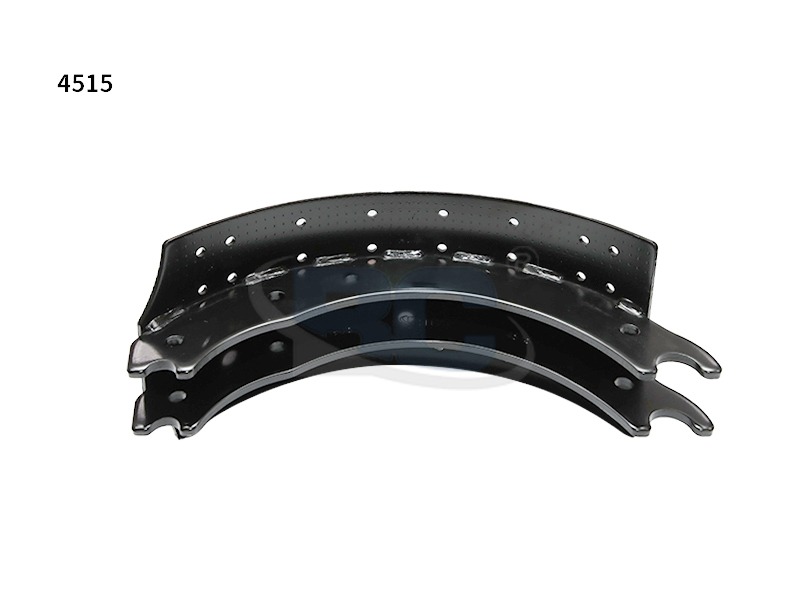
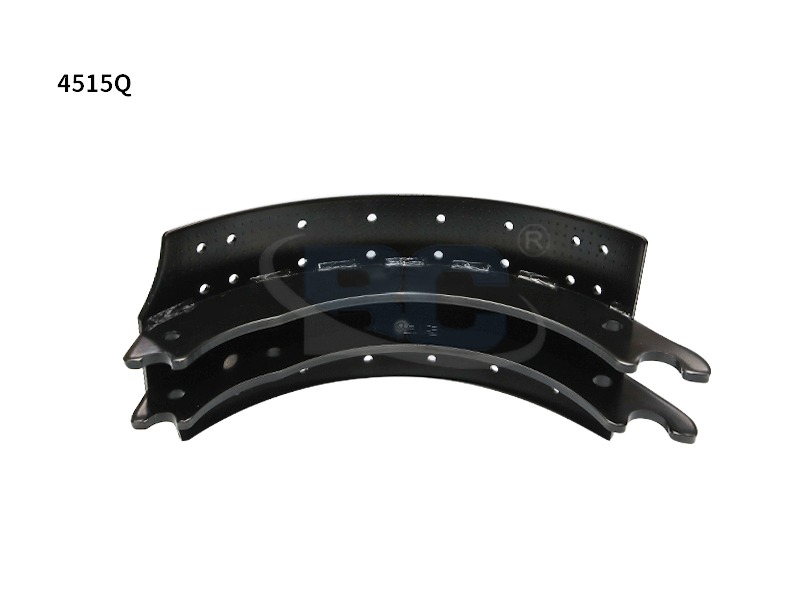
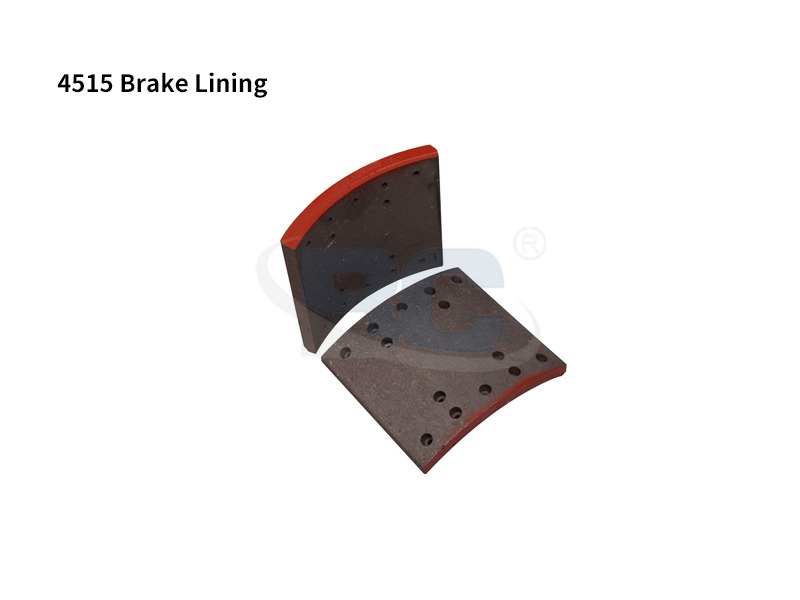
The 4515 Brake Lining is a heavy-duty friction product developed for applications requiring a 16.5-inch by 7-inch lining format and 16 rivet holes. It is identified by the Willys Vehicle Application number 19036/37 and is designed to support replacement and repair requirements in commercial vehicle brake systems. Its defined dimensions, hole configuration, and application reference make it suitable for professional parts selection where fitment accuracy is essential.
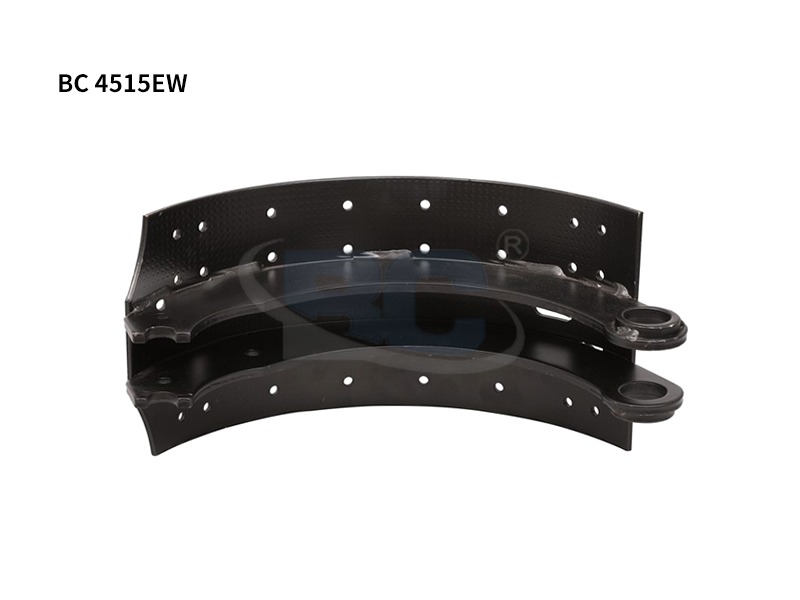
Manufactured by Zhejiang Bangchi Auto Parts Co., Ltd., the 4515 Brake Lining forms part of a broader product range that includes steel brake shoes, casted brake shoes, brake linings, lined brake shoes, brake shoe repair kits, and lined brake shoe kits. This product range allows buyers to source individual friction linings or complete brake-related assemblies from one specialized supplier.
This article examines the construction, specification, manufacturing considerations, performance advantages, installation requirements, inspection methods, and purchasing value of the 4515 Brake Lining. It also explains how a dedicated heavy-duty brake parts manufacturer can support consistent quality through controlled production, application-based identification, and professional aftermarket service.
4515 Brake Lining
Product Identification and Core Specifications
The first step in selecting a brake lining is confirming that the product matches the vehicle, brake shoe, drum, and operating conditions. The 4515 Brake Lining is identified by a clear part number and a defined dimensional profile. These details provide a practical reference for distributors, maintenance departments, and repair technicians.
| Specification | Information |
|---|---|
| Product name | 4515 Brake Lining |
| Product category | Brake Lining |
| Part number | 4515 |
| Product size | 16.5 inches by 7 inches |
| Number of rivet holes | 16 |
| Vehicle application reference | 19036/37 |
| Application type | Heavy-duty brake lining replacement and repair |
| Related product range | Steel brake shoes, casted brake shoes, lined brake shoes, repair kits, and lined brake shoe kits |
The 16.5-inch by 7-inch format is important because lining dimensions influence contact area, shoe coverage, drum interaction, and installation compatibility. A lining that is too short may not provide the intended friction area, while a lining that is too large can create fitting problems or interfere with the drum and shoe assembly. Dimensional accuracy is therefore not simply a convenience; it is a fundamental part of braking system safety and service reliability.
The 16-rivet-hole configuration is another essential identification feature. Rivet holes must align with the corresponding brake shoe holes so that the lining can be securely attached without distortion, forced positioning, or uneven loading. The hole pattern also supports repeatable installation for repair shops handling multiple vehicles or large quantities of replacement work.
The 19036/37 application reference offers an additional way to check suitability. Professional buyers commonly compare part numbers, dimensions, hole counts, application references, and existing component details before placing an order. Using multiple identification points reduces the risk of ordering an incorrect lining based only on a general visual similarity.
Why Correct Brake Lining Selection Matters
Brake linings operate in one of the most demanding areas of a commercial vehicle. They must work against a rotating brake drum and convert vehicle motion into heat through controlled friction. During normal service, they may experience repeated stops, long downhill braking, heavy cargo loads, water exposure, dust, vibration, and changes in operating temperature.
A correct lining provides a predictable interface between the brake shoe and the drum. When the lining is properly sized and correctly installed, the friction material can distribute contact more evenly across the intended braking surface. This supports stable braking behavior and helps reduce localized wear caused by poor fitment or irregular contact.
Incorrect selection may create multiple problems. A lining with the wrong length or width can reduce effective contact area. A lining with an incompatible hole pattern may be difficult to rivet safely. A lining designed for a different application may deliver unsuitable friction behavior or wear characteristics. Even when a product appears physically close to the required part, small differences can affect assembly quality and braking response.
For this reason, the 4515 Brake Lining should be evaluated using its full specification: part number 4515, 16.5-inch by 7-inch size, 16 rivet holes, and application reference 19036/37. Buyers should also confirm the vehicle model, brake shoe dimensions, drum condition, and service requirements before installation.
Design Advantages of the 4515 Brake Lining
Application-Focused Dimensional Accuracy
One of the most important advantages of the 4515 Brake Lining is its clearly defined application format. The product is not presented as a generic friction sheet; it is identified as a specific replacement lining with a known size and rivet-hole arrangement. This supports more efficient product matching for distributors and maintenance teams.
Application-focused dimensions can simplify inventory management. A parts distributor can organize stock by part number, size, and application reference rather than relying only on photographs or broad product descriptions. Repair shops can also use the specification to compare a replacement lining with the removed component before beginning installation.
Clear identification is especially valuable in heavy-duty maintenance because downtime can be expensive. When a replacement part is correctly selected before the vehicle enters the workshop, technicians can reduce delays caused by returns, incorrect hole patterns, or unsuitable dimensions.
Reliable Rivet-Hole Configuration
The 16-rivet-hole arrangement provides a defined attachment pattern for the brake shoe assembly. A properly matched hole pattern allows the lining to be positioned accurately along the shoe and secured through the designated points. This is important for maintaining close contact between the lining and the shoe throughout service.
Uniform attachment helps limit movement between the lining and the shoe. It can also support a more stable transfer of braking force from the friction material into the shoe structure. During installation, technicians should confirm that every hole is aligned, that the rivet size is appropriate, and that the rivets are formed correctly without cracking or over-compression.
The hole count should never be considered separately from the overall application. The brake shoe, rivets, lining thickness, drum diameter, and vehicle braking system must all be compatible. Nevertheless, having the correct 16-hole configuration is a valuable first checkpoint when verifying the 4515 Brake Lining.
Suitable Format for Heavy-Duty Service
The 16.5-inch by 7-inch size indicates a substantial lining format intended for heavy-duty brake applications. Larger commercial vehicle braking systems generally require friction components capable of operating with significant mechanical loads and repeated thermal cycles. A lining of the correct size helps provide the intended friction coverage across the brake shoe.
Heavy-duty performance is not determined by size alone. Friction material formulation, bonding quality, processing control, rivet installation, drum condition, and correct adjustment all influence actual service results. However, an appropriately sized lining provides the necessary foundation for the brake assembly to operate as designed.
Practical Replacement Flexibility
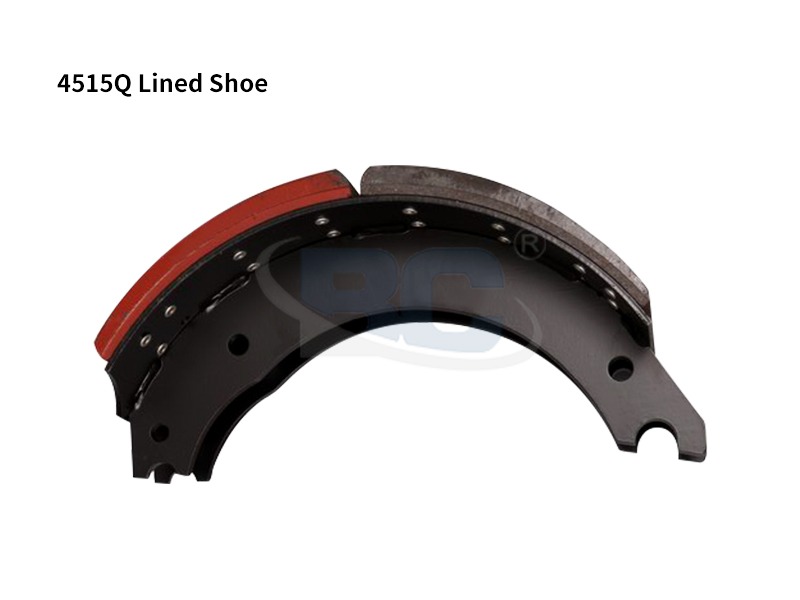
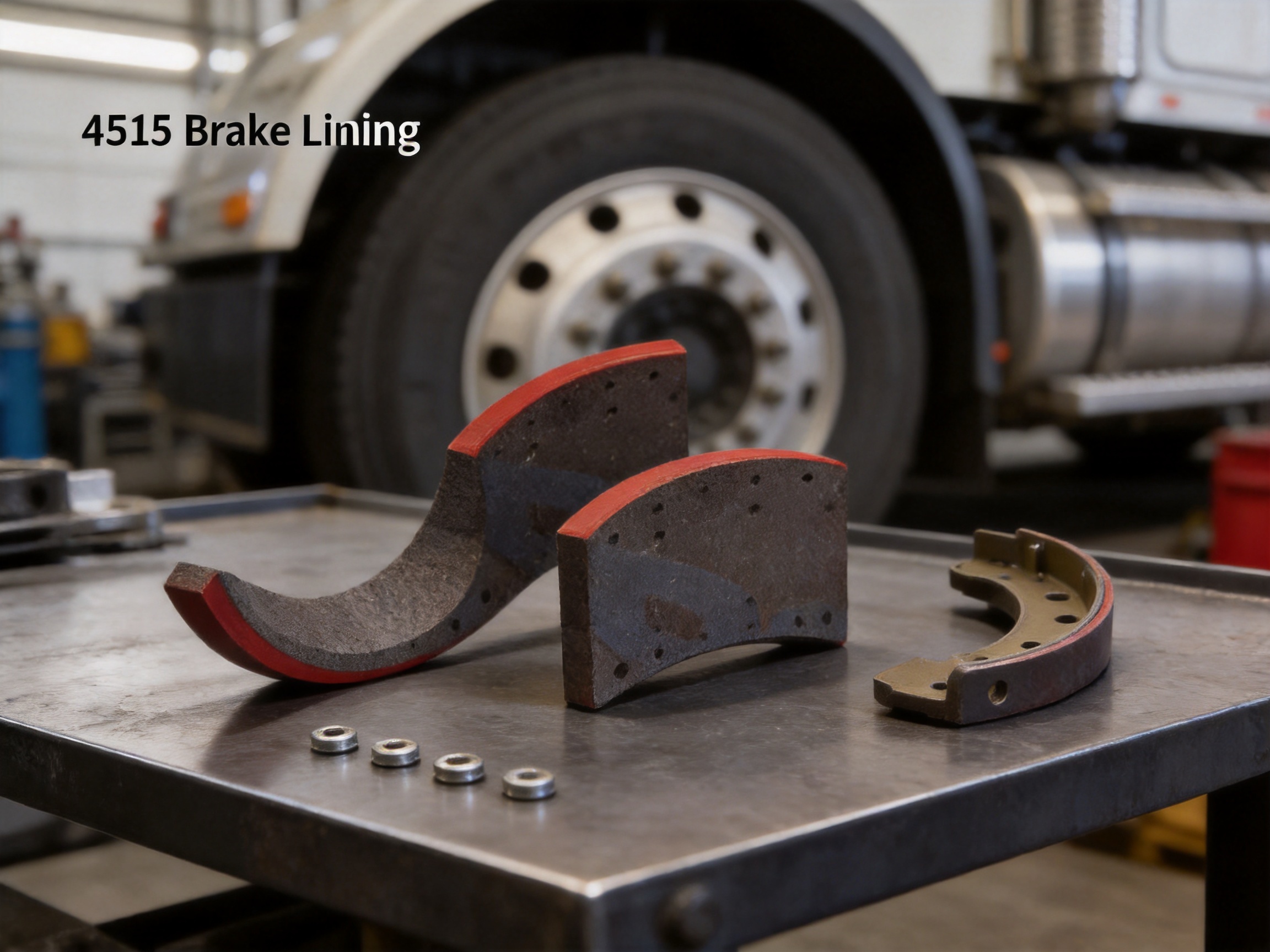
The 4515 Brake Lining can be used as an individual replacement component in brake shoe rebuilding and repair operations. This can be advantageous for workshops that maintain serviceable shoe structures and need to replace worn friction material without replacing the complete shoe assembly.
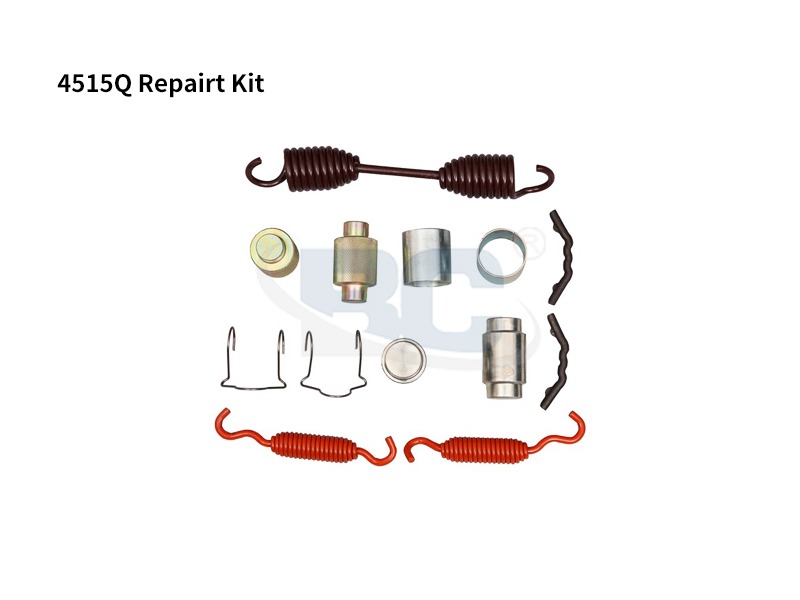
Individual lining replacement may also support more flexible maintenance planning. In some cases, a repair shop can inspect the existing brake shoe, retain it if structurally sound, and install a new lining. If the shoe is damaged, heavily corroded, distorted, or outside service limits, the workshop can instead select a complete lined brake shoe or repair kit from the same broader product category.
Manufacturing Strengths and Process Control
Brake lining quality depends heavily on manufacturing consistency. The production process must control material preparation, forming, drilling, finishing, inspection, packaging, and identification. Zhejiang Bangchi Auto Parts Co., Ltd. focuses on heavy-duty brake components and supplies products aligned with the global FMSI numbering system. This specialization supports a more application-oriented approach than a general industrial parts supplier may provide.
Specialization in Heavy-Duty Brake Components
A manufacturer dedicated to brake shoes, brake linings, and related kits can develop process knowledge around the specific demands of friction components. This includes understanding the relationship between lining dimensions, hole patterns, shoe curvature, drum contact, and vehicle application references.
Product specialization also supports a broader technical range. The company’s product categories cover steel brake shoes, casted brake shoes, brake linings, lined brake shoes, brake shoe repair kits, and lined brake shoe kits. These categories represent different stages of brake system repair and replacement, allowing the supplier to support both component-level and assembly-level purchasing requirements.
For buyers, this breadth can reduce the need to coordinate multiple suppliers. A distributor may purchase standalone linings for workshop customers while also sourcing complete lined shoes for fleet maintenance programs. The ability to discuss related components with one manufacturer can improve communication and help identify compatible solutions.
Material Preparation and Friction Consistency
A brake lining must be manufactured from a friction material that can maintain stable performance over repeated braking cycles. Material preparation normally requires controlled batching, mixing, forming, and curing or consolidation. The purpose of these stages is to produce a consistent friction structure throughout the lining rather than a product with significant variations from one area to another.
Consistency is important because uneven friction behavior can affect bedding, wear, noise, and braking response. A professional manufacturing process should control the proportion and distribution of the material ingredients, the forming pressure, the curing conditions, and the final dimensions. These controls help the finished lining maintain a reliable profile during installation and use.
Specific material formulations may vary according to application requirements and manufacturer design. Buyers should request technical data when they need information about friction characteristics, temperature range, compressibility, wear rate, or regulatory compliance. The available product information confirms the 4515 dimensions and application reference, while detailed performance values should be verified for the intended vehicle and operating environment.
Accurate Forming and Curvature
The lining must match the geometry of the brake shoe and work within the brake drum assembly. Forming accuracy influences how easily the lining can be positioned and how quickly it can achieve proper contact during bedding. A lining that is poorly formed or unevenly curved may require excessive adjustment or may contact the drum irregularly.
Controlled forming helps produce a repeatable shape from one production batch to another. It also supports efficient riveting because the lining can sit firmly against the shoe during attachment. When the lining and shoe are properly matched, technicians can reduce the risk of gaps, shifting, or stress concentrations around the rivet holes.
Hole Drilling and Edge Finishing
The 16 rivet holes must be accurately positioned in relation to the lining edges and the overall length. Hole placement affects alignment with the brake shoe and the distribution of attachment points. A professional process should control drilling or punching tools, verify hole spacing, and remove harmful burrs or sharp edges.
Edge finishing is also relevant to installation quality. Clean, consistent edges allow the lining to sit properly against the shoe and reduce the possibility of interference. The lining should be handled carefully after drilling so that the holes remain clean and the friction surface is not damaged before installation.
Inspection and Product Identification
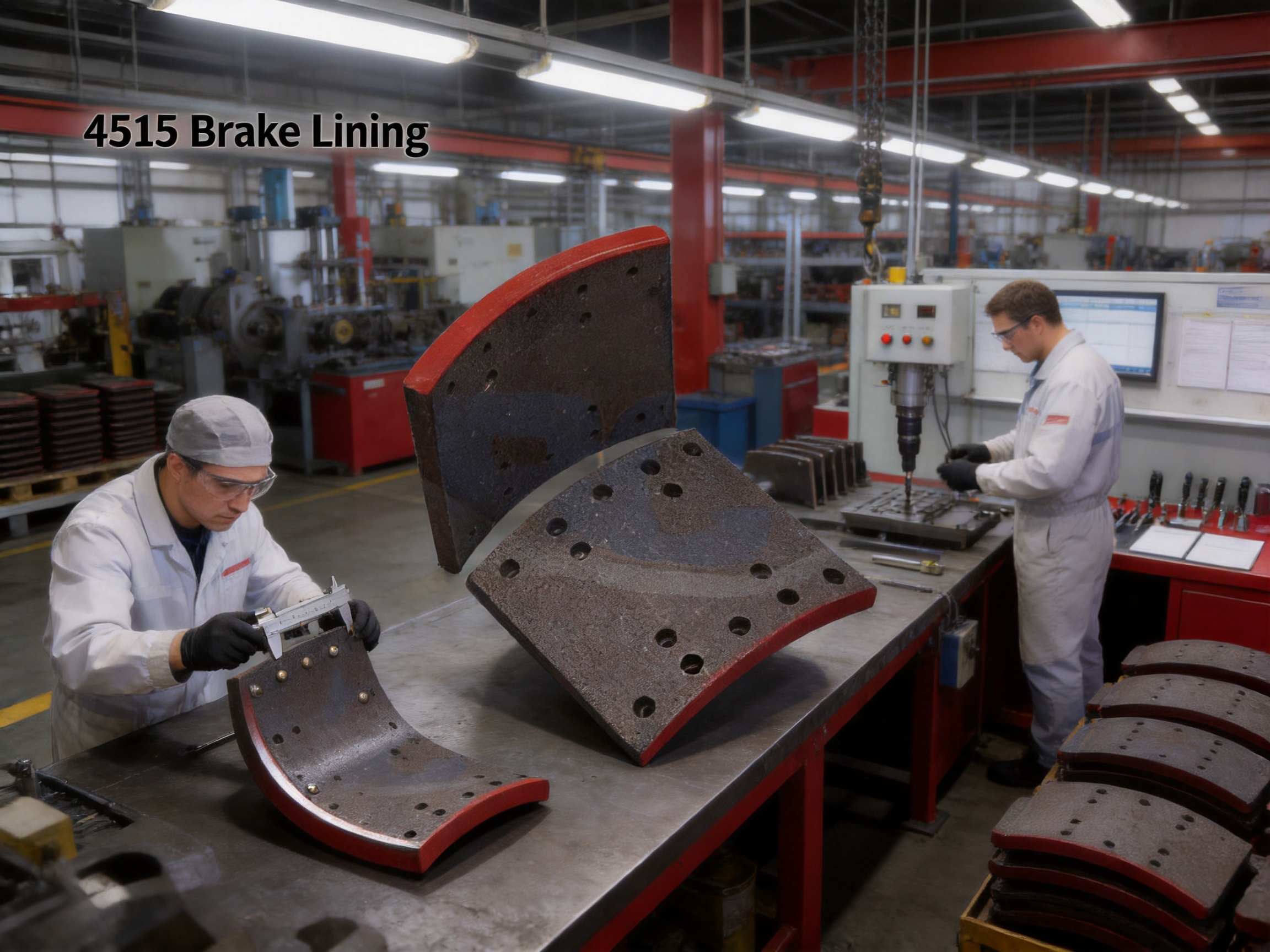
Inspection should cover dimensions, hole count, hole alignment, surface condition, curvature, and marking. For the 4515 Brake Lining, confirming the 16.5-inch by 7-inch size and 16-hole configuration is a basic but important quality checkpoint. The part number and application reference should also remain traceable through packaging and inventory records.
Clear product identification supports quality control throughout the supply chain. It helps warehouse personnel select the correct component, enables distributors to answer customer inquiries, and allows repair technicians to compare the supplied part with their purchase order. A traceable part number also makes it easier to investigate any quality issue or application question after delivery.
Advantages Compared with Less Specialized Alternatives
Many brake linings may look similar when viewed outside the vehicle. However, the differences between a specialized application lining and a generic substitute can influence installation time, service reliability, and purchasing risk.
Better Fitment Confidence
The 4515 Brake Lining is specified by part number, dimensions, rivet-hole count, and vehicle application reference. This information provides more fitment confidence than a product sold only by a broad description such as “heavy truck lining.” The more precise the identification, the easier it is for buyers to make a documented selection.
Reduced Installation Uncertainty
A matching hole pattern and correct size help reduce the need for modification. Drilling new holes, enlarging existing holes, cutting the lining, or forcing a component into position can compromise the assembly and create unnecessary labor. A correctly specified lining allows the workshop to focus on proper preparation, riveting, adjustment, and testing.
Improved Supply Planning
Standardized part-number identification makes stock planning more efficient. Distributors can monitor demand for the 4515 application and maintain appropriate inventory levels. Fleet maintenance departments can list the component in preventive maintenance records and reorder it using a consistent reference.
Broader Product Support
Because the manufacturer supplies related brake components, buyers may be able to source compatible repair kits or complete lined brake shoes when an individual lining is not the most suitable solution. This is useful when an existing shoe is damaged or when a fleet prefers to reduce workshop assembly time by installing a pre-lined shoe.
More Professional Aftermarket Service
Specialized brake parts suppliers understand that aftermarket customers need more than a product box. They require dimensional information, application references, packaging consistency, technical communication, and responsive order support. A manufacturer focused on this sector is better positioned to organize products around real maintenance workflows.
Manufacturing and Quality Considerations for Buyers
When evaluating a brake lining supplier, purchasers should consider more than the unit price. The total value of a lining includes fitment reliability, production consistency, packaging, delivery performance, technical support, and the cost of any installation problems.
Dimensional Verification
Buyers should request confirmation of the stated 16.5-inch by 7-inch dimensions and 16-rivet-hole arrangement. If the customer has an original lining available, the workshop should compare its length, width, curvature, hole spacing, and overall profile with the replacement part. Measurements should be taken carefully because worn or damaged components may no longer represent their original shape.
Application Verification
The 19036/37 application reference should be used together with vehicle and brake assembly information. Application numbers can be valuable for cross-reference, but the final selection should also consider the specific vehicle configuration, axle position, drum type, and brake shoe design.
Friction Material Documentation
For demanding applications, purchasers may require information about friction classification, temperature performance, wear characteristics, noise behavior, environmental requirements, and compliance documentation. These details can vary by market and vehicle application. They should be requested from the manufacturer or distributor when necessary rather than assumed from the part number alone.
Packaging and Protection
Friction components should be packaged so that they remain dry, clean, and protected from impact during transport. Packaging should preserve the friction surface, prevent damage to edges and holes, and maintain clear product identification. Warehouse personnel should store linings in a dry location away from oil, grease, solvents, and other materials that could contaminate the friction surface.
Batch and Order Traceability
Traceability is valuable for fleet programs and distributor inventory. Buyers should maintain records of part number, purchase date, supplier, quantity, and, where available, batch information. These records support maintenance planning and help identify whether multiple vehicles received components from the same production batch.
Installation Guidance for the 4515 Brake Lining
Installation should be performed by trained brake technicians using the correct tools and procedures. The following guidance is general and does not replace the vehicle manufacturer’s service instructions or applicable workshop regulations.
Inspect the Brake Shoe Before Installation
Before fitting a new lining, inspect the brake shoe for cracks, distortion, corrosion, excessive wear, damaged rivet holes, and loss of structural strength. A new lining should not be installed on a shoe that cannot securely support it. If the shoe is bent or the holes are enlarged, the completed assembly may not maintain proper contact or attachment.
Remove the Old Lining Safely
The old lining should be removed using appropriate equipment and safe workshop procedures. Technicians should avoid practices that create uncontrolled dust, fragments, or damage to the shoe. The work area should be ventilated, and protective equipment should be used according to local safety requirements.
Clean and Prepare the Shoe Surface
The shoe surface should be clean, dry, and free from rust scale, grease, paint flakes, and loose material. The contact surface must be sufficiently smooth to support the new lining. Any preparation work should preserve the shoe’s structural integrity and should not enlarge or distort the original rivet holes.
Check the Lining Before Riveting
Place the 4515 Brake Lining against the shoe and confirm that the length, width, curvature, edges, and 16 rivet holes align correctly. Do not force the lining into position or modify the holes without approved technical guidance. If the part does not match the shoe, stop the installation and verify the part number and application.
Use Correct Rivets and Tools
Rivets must be appropriate for the lining and brake shoe assembly. The riveting tool should form the rivet head evenly and securely without cracking the lining, crushing the material, or leaving excessive looseness. Riveting should follow a controlled sequence that maintains close contact between the lining and shoe.
Check Contact and Surface Condition
After riveting, inspect the assembly for gaps, lifted edges, loose areas, cracked material, damaged rivet heads, and irregular alignment. The lining should be firmly attached along its intended length. The technician should also confirm that no contaminant has reached the friction surface.
Perform Final Brake Adjustment
After installation, the brake assembly must be reinstalled and adjusted according to the vehicle manufacturer’s instructions. Drum condition, clearance, return springs, adjusters, and related hardware should be checked. A new lining may require a bedding-in period, during which the vehicle should be operated carefully while the friction surfaces establish proper contact.
Brake work should always be followed by a controlled functional test in a safe area. The vehicle should not return to service until the braking system operates correctly and all relevant inspection requirements have been satisfied.
Maintenance Practices That Support Long Service Life
Even a well-manufactured brake lining can deliver poor results if the surrounding brake system is neglected. Maintenance teams should inspect the complete assembly rather than treating the lining as an isolated component.
Brake drums should be checked for cracks, excessive diameter, heat damage, scoring, and uneven wear. A damaged drum can prevent proper lining contact and may accelerate friction material wear. Drum measurements should remain within the applicable service limits.
Brake shoe hardware should be inspected for weakened springs, worn anchor points, damaged adjusters, and loose components. The lining must be supported by a shoe that retains its correct geometry. Hardware problems may cause dragging, uneven wear, delayed release, or irregular braking.
Contamination is another major concern. Oil, grease, hydraulic fluid, and certain cleaning chemicals can alter the friction surface. Any lining showing significant contamination should be assessed by a qualified technician and replaced when necessary. Contaminated friction material should not be returned to service simply because it appears visually intact.
Fleet operators should monitor lining wear at regular intervals and record the results. Tracking wear rates across vehicles can reveal problems related to loading, driving routes, brake adjustment, drum condition, or operating technique. Sudden changes in wear may indicate an underlying issue that requires investigation.
Applications in Fleet and Aftermarket Programs
The 4515 Brake Lining can support several purchasing models. A fleet maintenance department may buy the lining for planned brake shoe rebuilding. A distributor may stock it for commercial vehicle repair customers. A brake specialist may use it as part of a larger rebuilding service that includes inspection, cleaning, riveting, and final shoe preparation.
For fleet operators, consistent part-number use can simplify maintenance documentation. Work orders can identify the 4515 lining, the vehicle, the axle position, the installation date, and the mileage or operating hours. This information helps establish replacement intervals based on real service conditions rather than assumptions.
For distributors, the defined specifications make it easier to create accurate catalog entries. Product listings can include the part number, 16.5-inch by 7-inch size, 16 rivet holes, and 19036/37 reference. Clear information reduces customer questions and lowers the risk of an incorrect order.
For repair workshops, a standalone lining provides flexibility. Some customers may prefer a cost-effective rebuild when the existing shoe is serviceable. Others may require a complete lined brake shoe or repair kit to shorten installation time. A supplier that offers all of these categories can help workshops select the most appropriate solution for each vehicle.
Purchasing from a Specialized Manufacturer
Zhejiang Bangchi Auto Parts Co., Ltd. is located in Haining, Zhejiang, China, and specializes in heavy-duty brake parts. The company supplies products following the global FMSI numbering system, which supports systematic identification across brake friction applications.
For international buyers, supplier capability should be evaluated through product consistency, communication, packaging, order handling, and technical responsiveness. A manufacturer with a focused brake product portfolio can provide more relevant support than a trading company that offers unrelated components from multiple sources.
Buyers may communicate with the manufacturer regarding product specifications, application confirmation, packaging quantities, private labeling, order requirements, and related brake shoe products. The appropriate contact details supplied for the company include telephone, fax, and email communication channels.
Before placing a large order, customers should confirm current production specifications, availability, lead time, shipping terms, inspection requirements, and documentation. They should also communicate the target market and intended vehicle applications so that the supplier can identify any relevant technical or regulatory considerations.
Quality, Safety, and Responsible Use
Brake components are safety-critical products. The 4515 Brake Lining should be selected, installed, and maintained by qualified personnel. Product information should be reviewed against the actual brake system, and no component should be used when its identity or compatibility is uncertain.
Manufacturers and buyers share responsibility for product quality. The manufacturer must control production and provide accurate identification. The distributor must protect the product during storage and communicate correct application information. The installer must inspect the brake shoe, use suitable tools, and follow approved procedures. The vehicle operator must report abnormal braking behavior and ensure that scheduled inspections are completed.
Safety also includes responsible handling of removed friction material and workshop waste. Local environmental and occupational safety requirements should be followed when storing, transporting, or disposing of used linings, dust, and contaminated materials.
Frequently Asked Questions
What is the 4515 Brake Lining?
The 4515 Brake Lining is a heavy-duty brake friction component identified by part number 4515. Its listed size is 16.5 inches by 7 inches, and it has 16 rivet holes. The associated vehicle application reference is 19036/37.
What type of brake system is it intended for?
It is intended for heavy-duty commercial vehicle brake shoe replacement and repair applications. Buyers should verify the specific vehicle, axle, brake shoe, and drum requirements before installation.
How many rivet holes does the lining have?
The lining has 16 rivet holes. The hole pattern should be checked against the brake shoe before installation to confirm correct alignment.
What are the dimensions of the product?
The listed product size is 16.5 inches by 7 inches. Customers should confirm any additional dimensional requirements, such as thickness, curvature, hole spacing, or rivet specifications, with the supplier before ordering.
What does the 19036/37 reference mean?
The 19036/37 reference is a vehicle application identification number associated with the product. It should be used together with the vehicle and brake assembly information rather than as the only basis for selection.
Can the lining be installed on any brake shoe with the same general size?
No. Similar dimensions do not guarantee compatibility. The brake shoe geometry, hole arrangement, lining thickness, drum dimensions, rivet type, and vehicle application must all be considered.
Can the 4515 lining be used to rebuild an existing brake shoe?
It may be used for brake shoe rebuilding when the existing shoe is structurally sound and compatible. The shoe must be inspected for cracks, distortion, corrosion, damaged holes, and other conditions before the new lining is installed.
Does the manufacturer supply complete brake shoe assemblies?
The company’s product categories include steel brake shoes, casted brake shoes, lined brake shoes, brake shoe repair kits, and lined brake shoe kits in addition to standalone brake linings. Buyers can discuss the most suitable product format for their repair program.
What should be checked before riveting?
Technicians should check the part number, dimensions, curvature, edge condition, hole alignment, shoe condition, rivet suitability, and cleanliness of the contact surfaces. Any mismatch should be resolved before riveting begins.
How should new linings be stored?
They should be stored in a dry, clean area away from oil, grease, solvents, moisture, and impact. The original packaging should be retained when practical, and product identification should remain visible throughout storage.
How can buyers compare this product with competing linings?
Buyers should compare verified fitment, dimensional accuracy, material documentation, manufacturing consistency, packaging, quality control, technical support, delivery reliability, and total installed cost rather than comparing unit price alone.
Is special bedding required after installation?
A new lining generally requires a controlled bedding-in process so that the friction surfaces establish proper contact. The exact procedure should follow the vehicle or brake system manufacturer’s instructions and should be performed in a safe operating environment.
What should a fleet record after installation?
A fleet should record the part number, vehicle identification, axle position, installation date, mileage or operating hours, technician, drum condition, and any relevant inspection results. These records help evaluate service performance and plan future maintenance.
Where can customers obtain more information?
Customers can contact Zhejiang Bangchi Auto Parts Co., Ltd. through the company’s listed telephone, fax, or email channels to confirm specifications, availability, application details, and related product options.
Conclusion
The 4515 Brake Lining is a clearly identified heavy-duty replacement component with a 16.5-inch by 7-inch format, 16 rivet holes, and a 19036/37 vehicle application reference. These specifications give buyers practical tools for confirming fitment and organizing inventory.
Its value is supported by more than its basic dimensions. The product is part of a specialized heavy-duty brake component portfolio that includes individual linings, brake shoes, lined assemblies, and repair kits. This gives distributors, fleets, and workshops greater flexibility when choosing between component-level rebuilding and complete assembly replacement.
Manufacturing quality remains central to performance. Controlled material preparation, forming, hole production, edge finishing, inspection, identification, and packaging all contribute to a dependable replacement product. When these processes are combined with correct application selection and professional installation, the 4515 Brake Lining can support reliable brake maintenance in demanding commercial vehicle environments.
For the best result, purchasers should verify the complete brake application, request any required technical documentation, inspect the existing shoe and drum, use correct riveting procedures, and complete all post-installation adjustments and tests. With these practices in place, the 4515 Brake Lining offers a practical solution for heavy-duty brake repair and aftermarket supply programs.
References
1. Manufacturer Product Specification: 4515 Brake Lining, including part number, dimensions, rivet-hole count, and vehicle application reference.
2. Manufacturer Product Category Information: Steel Brake Shoe, Casted Brake Shoe, Brake Lining, Lined Brake Shoe, Brake Shoe Repair Kits, and Lined Brake Shoe Kits.
3. Global FMSI Friction Material Identification and Numbering Practices.
4. Commercial Vehicle Brake System Service and Inspection Principles.
5. General Workshop Guidance for Brake Shoe Inspection, Riveting, Adjustment, and Bedding-In.