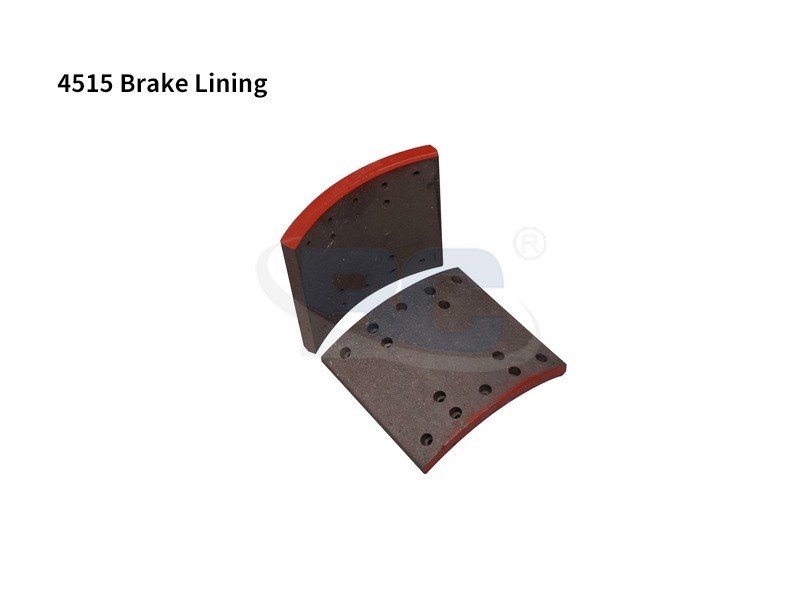
 English
 简体中文
In heavy-duty vehicle braking systems, the brake shoe is a fundamental safety component. It supports the friction lining, transfers braking force to the drum, and must perform reliably through repeated cycles of loading, heat, vibration, contamination, and wear. A brake shoe that is accurately formed, properly finished, and compatible with the intended brake assembly can contribute to consistent braking response, longer service intervals, and reduced maintenance interruptions.
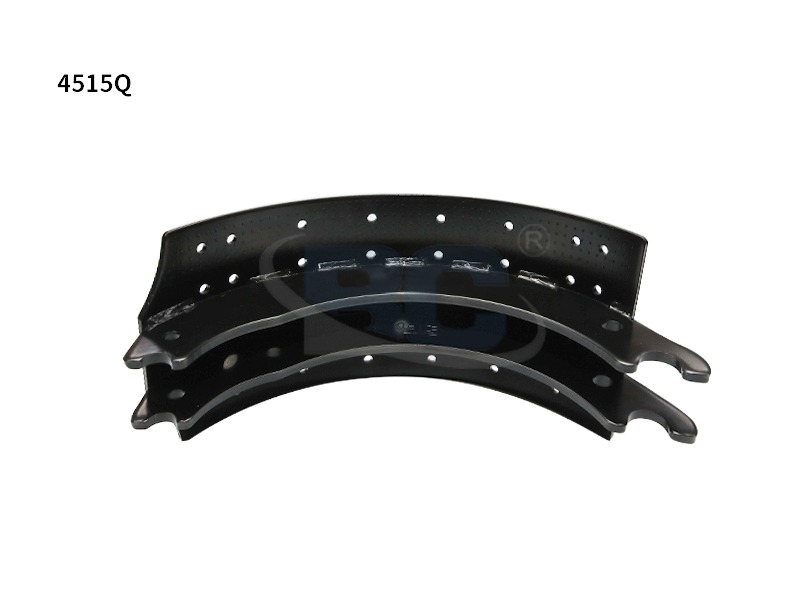
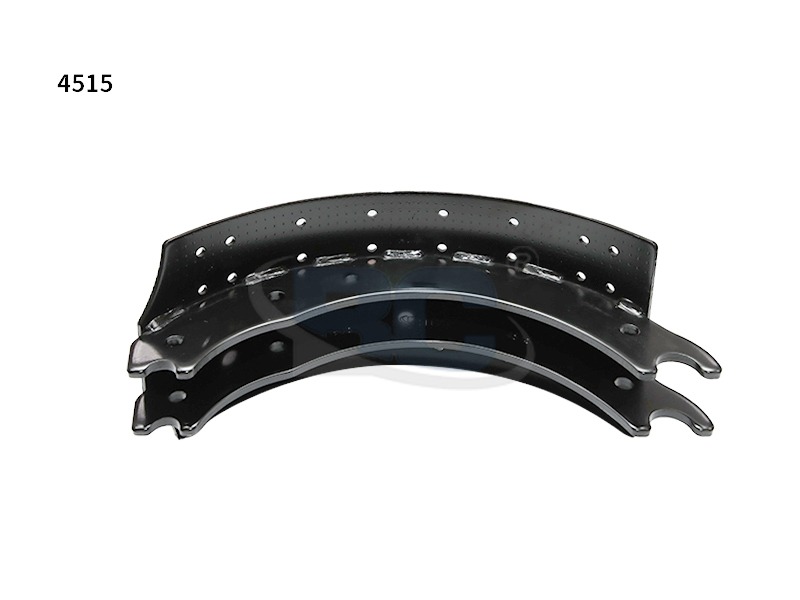
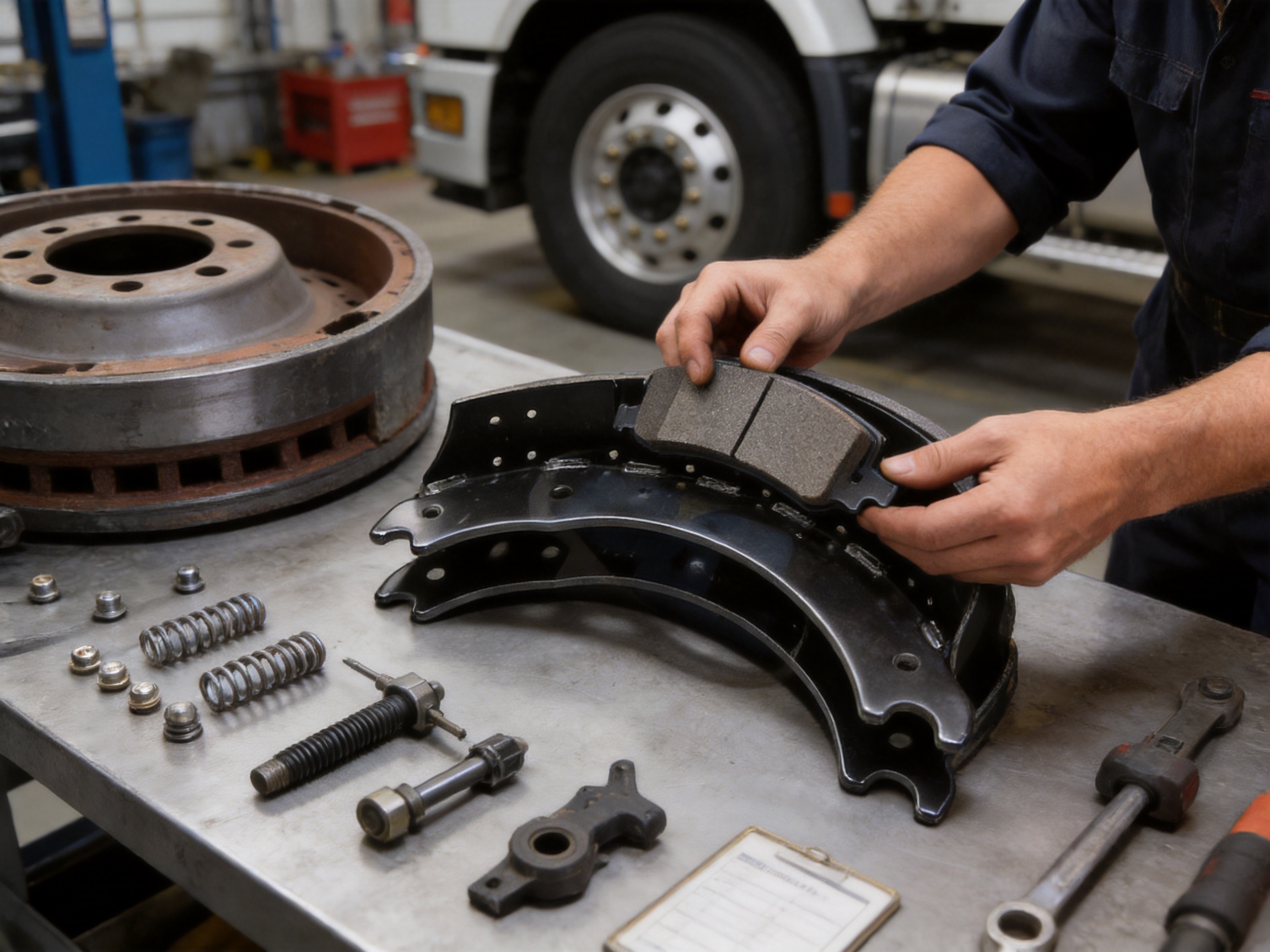
The 4515 Brake Shoe is a steel brake shoe designed for heavy-duty brake applications. It is identified by Part Number 4515 and is associated with the product OE number R4515F3. The supplied product specification lists a size of 16.5 by 7 inches and 32 rivet holes. These specifications make the product suitable for applications that require a broad friction surface, a substantial mounting structure, and a high number of rivet positions for secure lining installation.
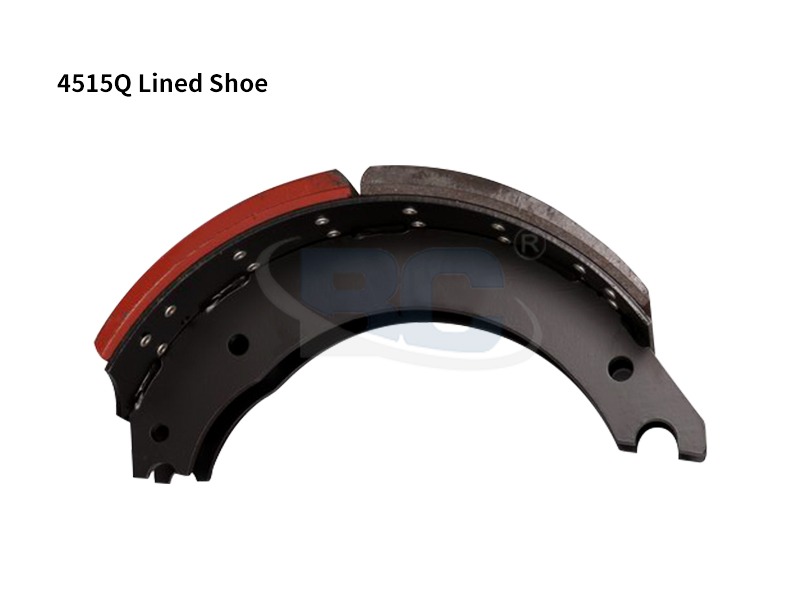
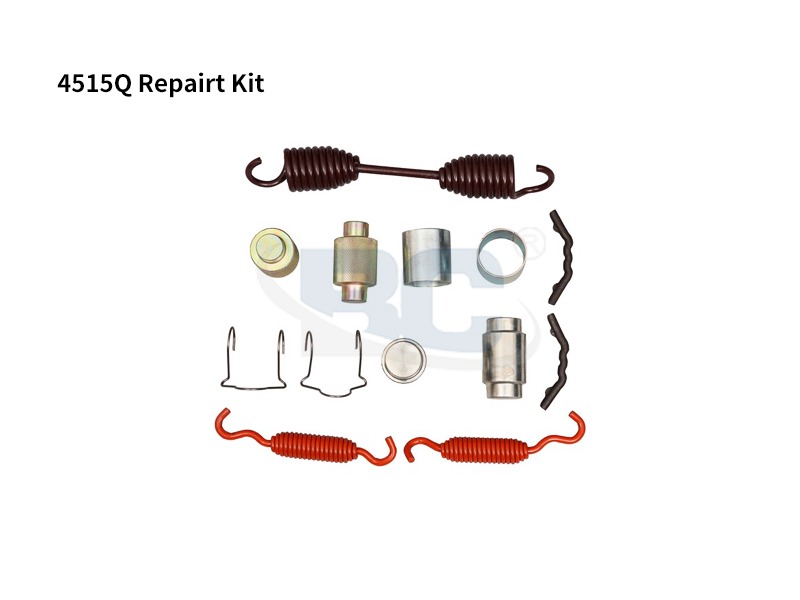
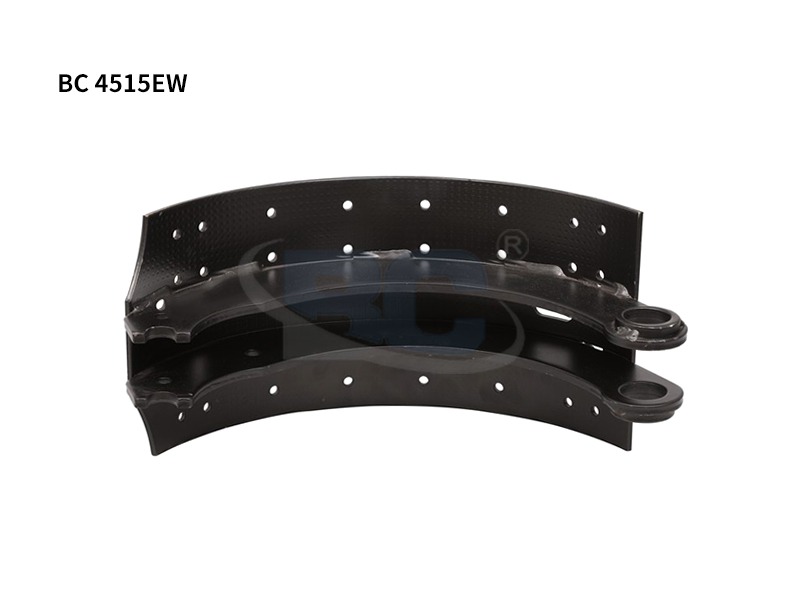
Manufactured by Zhejiang Bangchi Auto Parts Co., Ltd., the 4515 Brake Shoe is part of a wider product range that includes steel brake shoes, casted brake shoes, brake linings, lined brake shoes, brake shoe repair kits, and lined brake shoe kits. This product-family approach allows distributors, repair facilities, fleet operators, and vehicle manufacturers to source related brake components from one experienced production partner.
The product is positioned for the heavy-duty brake parts market, where interchangeability, dimensional control, material consistency, and production stability are essential. Its design follows the global FMSI numbering system, helping professional buyers organize product references and identify the correct replacement component for a specific application.
4515 Brake Shoe
Product Overview
The 4515 Brake Shoe is a steel brake shoe intended to serve as the structural foundation for a drum brake lining. In a typical drum brake assembly, the shoe is installed inside the brake drum. When the braking mechanism is activated, the shoe moves outward and presses its friction lining against the inner drum surface. The resulting friction converts vehicle motion into heat and slows or stops the vehicle.
Although a brake shoe may appear simple compared with other braking components, its performance depends on several closely related characteristics. The shoe must maintain its shape under load, provide stable support for the lining, fit correctly within the brake assembly, and work smoothly with return springs, adjusters, anchors, and other associated hardware. Small errors in curvature, hole location, or overall dimensions can affect installation and braking performance.
The 4515 model is specified with 32 rivet holes. This hole pattern is an important feature because it determines compatibility with the corresponding brake lining and the method used to secure the lining to the shoe. A properly matched lining and shoe assembly distributes retention force across multiple points and supports stable contact between the lining and the shoe body.
The listed product dimensions are 16.5 inches by 7 inches. Because product specifications in the commercial vehicle parts industry can be presented in different measurement conventions, purchasers should confirm the dimensional interpretation with the supplier and compare it with the original component before ordering. Verification is especially important when a product is used across multiple vehicle models, axle configurations, or regional applications.
Core Product Specifications
| Item | Specification |
|---|---|
| Product name | 4515 Brake Shoe |
| Product category | Steel Brake Shoe |
| Part number | 4515 |
| Product size | 16.5 by 7 inches, as supplied |
| Number of rivet holes | 32 |
| Product OE number | R4515F3 |
| Related product families | Casted brake shoes, brake linings, lined brake shoes, brake shoe repair kits, and lined brake shoe kits |
| Numbering reference | Global FMSI numbering system |
The table provides a concise purchasing reference, but it should not replace application verification. Buyers should compare the shoe against the original part, confirm drum and lining compatibility, and review the required axle and vehicle information before installation.
Structural Role of a Steel Brake Shoe
A steel brake shoe performs more than one function. First, it provides the mechanical support for the friction lining. Second, it transfers force from the braking actuator to the lining. Third, it must maintain the correct relationship between the lining and the brake drum throughout the service life of the assembly.
During braking, the shoe is subjected to radial loading as the lining contacts the drum. It may also experience bending, vibration, thermal expansion, and localized stress around the anchor points and lining fasteners. In a heavy-duty vehicle, these forces can be repeated thousands of times under different loads and operating conditions. The quality of the shoe material and the accuracy of its forming therefore have a direct effect on reliability.
Steel is widely used for brake shoe structures because it combines strength, formability, durability, and compatibility with established manufacturing processes. A well-produced steel shoe can provide a stable base for the friction lining while maintaining the dimensional characteristics needed for proper installation. It also supports efficient repair and replacement practices because it can be matched with standard lining and rivet systems.
The 4515 Brake Shoe is designed around these practical requirements. Its 32-hole configuration gives the corresponding lining multiple attachment locations. When the correct lining, rivets, and installation procedure are used, the assembled component can provide secure retention and dependable contact over repeated braking cycles.
Advantages of the 4515 Brake Shoe
Application-Oriented Design
One of the principal advantages of the 4515 Brake Shoe is its application-oriented design. Rather than serving as a generic structural part, it is identified by a specific part number and OE reference. This makes it easier for buyers and maintenance personnel to compare the component with an existing brake assembly.
Clear identification is particularly valuable for commercial vehicle fleets. Fleet managers often maintain vehicles with different axle types, brake sizes, and operating roles. A specific part number helps reduce confusion during purchasing, warehouse storage, and workshop installation. It also improves communication between the fleet, distributor, repair technician, and manufacturer.
High Rivet Hole Count
The 32-rivet-hole configuration is another important advantage. A higher number of rivet positions can help distribute lining attachment forces across the length of the shoe. This may support stable lining retention when the brake is exposed to vibration, thermal cycling, and repeated mechanical loading.
Rivet-hole quantity also helps define the replacement lining required for the shoe. By matching the 4515 Brake Shoe with a compatible 32-hole lining and the correct rivet specifications, repair technicians can create an assembly that follows the intended mounting pattern. Correct hole alignment is essential because forced installation or misaligned rivets can damage the shoe, lining, or fasteners.
Steel Structural Support
The steel construction provides a practical balance between mechanical strength and manufacturing flexibility. It allows the shoe to be formed into the required profile while retaining sufficient rigidity for heavy-duty use. A stable shoe body helps the lining remain correctly positioned and supports predictable movement inside the drum.
Compared with poorly controlled alternatives, a consistently formed steel shoe can reduce the risk of fitment problems, uneven lining contact, and unnecessary adjustment work. The benefit is not only related to the raw material but also to how the material is processed, shaped, inspected, and finished.
Replacement Compatibility
The inclusion of both Part Number 4515 and OE number R4515F3 supports replacement identification. Professional buyers can use these references when checking catalogs, preparing quotations, or comparing existing inventory. Clear references are also useful for international trade because distributors in different regions may use different naming conventions for the same type of component.
Replacement compatibility should always be confirmed using the full application data. The correct brake shoe must match the vehicle, axle, drum, lining, hardware, and operating requirements. Nevertheless, a standardized reference system provides a strong starting point and reduces the chance of ordering an unrelated component.
Integration with Related Products
The manufacturer offers more than an individual steel shoe. The wider range includes casted brake shoes, brake linings, lined brake shoes, brake shoe repair kits, and lined brake shoe kits. This product breadth creates several advantages for customers.
A repair facility may need only a replacement shoe for one job, while another customer may require a complete lined shoe kit for faster installation. A distributor may want to maintain multiple product levels for different fleet and aftermarket requirements. By supporting several product forms, the supplier can help customers select the most suitable solution without changing to multiple unrelated sources.
Product-family integration can also simplify technical communication. When a supplier understands the relationship between the shoe, lining, rivets, and repair kit, it can provide more useful guidance on compatibility, assembly, packaging, and replacement planning.
Manufacturing Strengths and Process Control
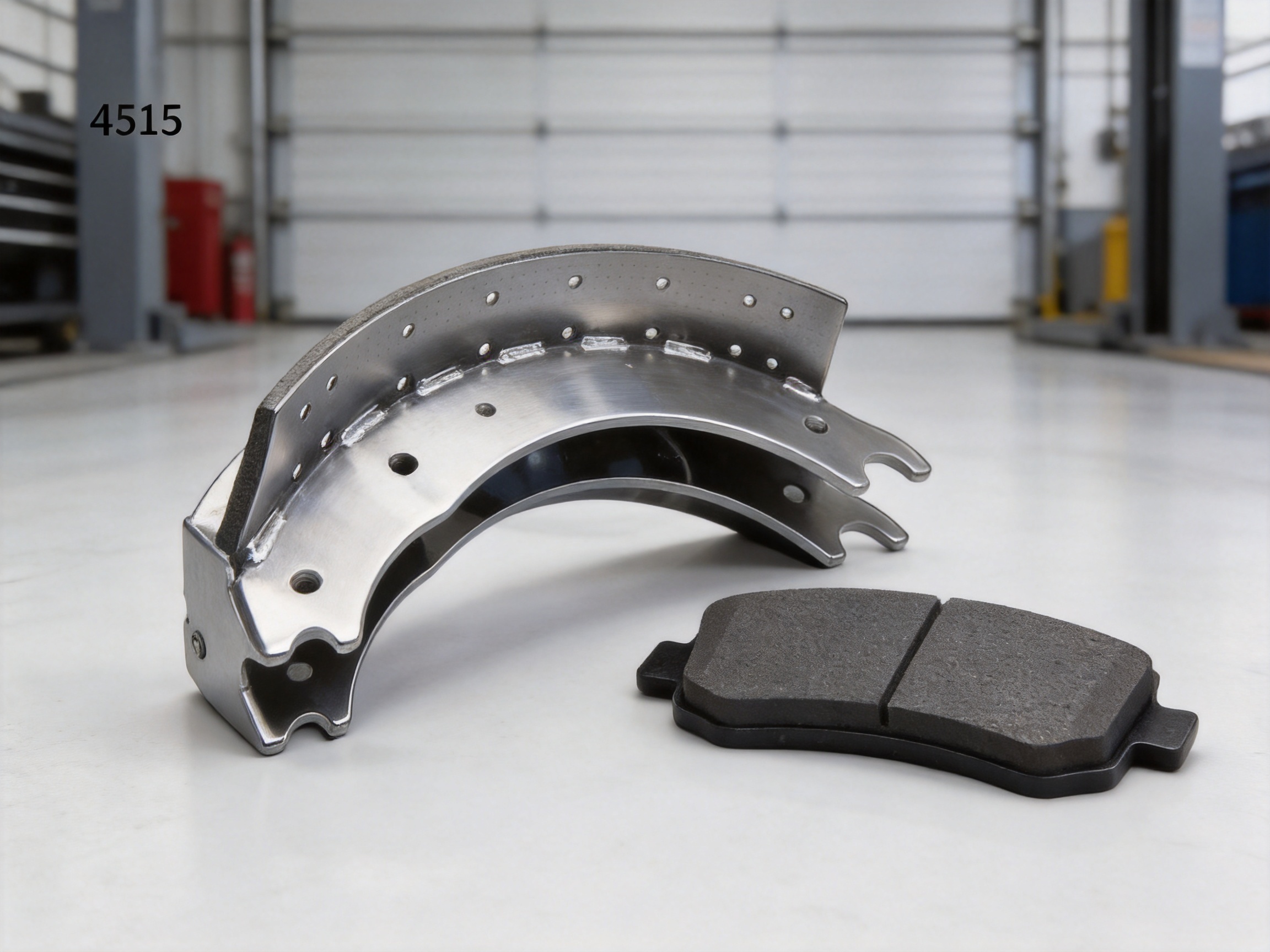
The performance of a brake shoe depends heavily on manufacturing control. The production process must preserve dimensional accuracy while producing components efficiently and consistently. For a product such as the 4515 Brake Shoe, key process stages typically include material preparation, forming, hole production, shaping, finishing, inspection, and packaging.
Advanced manufacturing does not refer only to the presence of automated machinery. It also includes the ability to repeat a controlled process, monitor critical dimensions, identify deviations, and maintain traceability from raw material to finished product. These capabilities are especially important for brake components because the part must fit into a larger safety-critical system.
Material Preparation
The first stage is the preparation of suitable steel material. Material selection should consider strength, formability, thickness stability, and compatibility with the intended forming process. Consistent material properties help prevent variation during stamping, bending, or other shaping operations.
Before production, material may be reviewed for thickness, surface condition, and general conformity with internal requirements. Stable incoming material reduces the risk of cracks, distortion, excessive springback, and inconsistent edge quality. It also supports more predictable tool performance.
Precision Forming
The shoe body must be formed into a curved and structurally stable profile. Controlled forming operations help establish the correct arc, flange shape, mounting features, and overall geometry. The forming process must balance sufficient pressure with appropriate tooling clearance so that the part reaches the required shape without excessive deformation.
Accurate forming is important because a brake shoe that is too flat, too sharply curved, or dimensionally inconsistent may not sit correctly inside the drum. Incorrect geometry can create uneven contact, abnormal wear, noise, or installation difficulty. Consistent forming supports the relationship between the shoe and the lining after assembly.
Manufacturing teams can improve forming consistency through dedicated tooling, controlled process parameters, fixture design, and regular tool inspection. Where production volumes justify it, repeatable machine settings and standardized work instructions can help reduce operator-to-operator variation.
Rivet-Hole Production
The 32 rivet holes must be located accurately and produced with suitable edge quality. Hole position affects the fit of the lining and the alignment of the rivets. Hole diameter, spacing, and relationship to the shoe edges should be controlled throughout production.
Poorly located holes can create several problems. The lining may shift during installation, rivets may not seat properly, or excessive force may be required during assembly. Burrs and sharp edges can also interfere with contact between the shoe and lining. For this reason, hole-making operations should be followed by appropriate deburring, cleaning, and inspection.
Dedicated fixtures or controlled tooling can help maintain the correct hole pattern. Inspection gauges may be used to verify critical locations. Depending on the production arrangement, dimensional checks can be performed at defined intervals or on every part for selected characteristics.
Surface Treatment and Finishing
Surface condition influences storage life, handling, appearance, and resistance to environmental exposure. A properly finished brake shoe should be free from loose scale, harmful burrs, excessive sharp edges, and visible defects that could interfere with installation.
Finishing operations may include cleaning, deburring, surface preparation, and protective treatment appropriate to the product specification. The selected treatment should not interfere with the contact areas, lining installation, or fit between the shoe and associated brake hardware.
Good finishing also improves warehouse handling. Brake shoes may pass through multiple stages of transportation before installation. Consistent protection helps reduce the risk of premature surface deterioration caused by moisture, dust, and normal storage conditions.
Inspection and Quality Assurance
Quality assurance should cover both dimensional requirements and visual condition. Typical inspection points for a steel brake shoe include overall length, width, curvature, hole count, hole location, edge condition, mounting features, and surface appearance.
Inspection is most effective when it is integrated into the production process rather than performed only at the end. In-process checks can identify tool wear or process drift before a large quantity of nonconforming parts is produced. Final inspection then confirms that finished parts meet the defined release requirements.
For customers, consistent quality assurance provides confidence that repeated orders will maintain comparable characteristics. This is important for distributors that need predictable inventory and for fleets that want standardized maintenance results across multiple vehicles.
Traceability and Production Documentation
Production documentation can strengthen manufacturing control by connecting raw materials, tooling, processing, inspection, and packaging. Traceability practices help a manufacturer investigate questions about a particular production batch and support more efficient communication with customers.
For an international supplier, documentation is also useful when preparing commercial quotations, technical confirmations, packing lists, and shipment records. Clear product identification using the 4515 part number and R4515F3 OE reference can reduce errors as orders move through purchasing and logistics departments.
Why Manufacturing Quality Matters More Than Appearance Alone
A brake shoe can appear acceptable while still having dimensional or structural problems that affect service performance. Visual inspection is necessary, but it does not replace measurement and process control. A component may have a clean surface yet fail to match the required curvature or hole pattern.
Manufacturing quality should therefore be evaluated through several dimensions: material consistency, geometric accuracy, hole-pattern precision, surface condition, assembly compatibility, packaging, and repeatability. These factors collectively influence the total cost of ownership.
A low purchase price may become less attractive if the part requires additional fitting, causes premature lining wear, creates installation delays, or leads to repeated returns. Conversely, a well-controlled component can improve workshop efficiency and reduce uncertainty in fleet maintenance. The most meaningful comparison between suppliers should consider total operating value rather than unit price alone.
Comparison with Generic or Poorly Controlled Alternatives
When comparing the 4515 Brake Shoe with generic alternatives, buyers should examine more than the product name. The most important questions concern identification, dimensional control, material quality, production consistency, and customer support.
| Evaluation area | 4515 Brake Shoe purchasing value | Potential concern with an uncontrolled alternative |
|---|---|---|
| Product identification | Specific Part Number 4515 and OE reference R4515F3 | Unclear or incomplete reference information |
| Rivet pattern | Defined 32-hole configuration | Unverified hole count or inaccurate spacing |
| Structural material | Steel brake shoe construction | Uncertain material grade or inconsistent thickness |
| Product range | Access to related shoes, linings, and repair kits | Limited compatibility support from a single-product source |
| Manufacturing approach | Process-oriented forming, hole production, finishing, and inspection | Inconsistent tooling or insufficient final checks |
| Ordering support | Suitable for OEM and aftermarket reference management | Higher risk of misunderstanding during quotation or replacement |
This comparison does not mean that every alternative product is unsuitable. It means that professional buyers should request evidence of consistency and application compatibility before making a decision. The 4515 Brake Shoe offers a clearly defined reference, a stated hole pattern, and access to a broader heavy-duty brake product range.
Competitiveness also depends on supply reliability. A product that is technically suitable but difficult to reorder may create inventory problems. A supplier with manufacturing experience and a wider catalog can be better positioned to support repeat orders, mixed product requirements, and long-term aftermarket programs.
Benefits for Different Customer Groups
Fleet Operators
Fleet operators need brake components that support predictable maintenance. The 4515 Brake Shoe can help simplify fleet purchasing when the relevant vehicle and axle application has been confirmed. A clear part number makes it easier to organize stock and create internal replacement procedures.
Fleet maintenance departments may also benefit from pairing the shoe with compatible linings or repair kits. This can help standardize workshop operations and reduce the time spent sourcing separate components. Before implementation, fleet engineers should confirm that the product matches the specific drum, lining, hardware, and service conditions used by the fleet.
Commercial Vehicle Repair Facilities
Repair workshops often work under time pressure. A correctly identified shoe with an accurate hole pattern can reduce unnecessary fitting work and help technicians complete brake repairs more efficiently. The availability of lined and repair-kit options may also allow the workshop to select between component replacement and a more complete service solution.
Technicians should still follow established brake repair procedures. The drum should be inspected, the shoe should be checked for damage or distortion, and all related hardware should be evaluated before reassembly. A new shoe cannot compensate for worn adjusters, damaged springs, contaminated linings, or an unsuitable drum surface.
Distributors and Importers
Distributors need products that can be cataloged, quoted, packaged, and reordered with minimal ambiguity. The 4515 part number and R4515F3 OE reference support catalog organization and customer communication. The broader product range can also help distributors build a more complete heavy-duty brake offering.
For importers, consistent packaging and documentation are important. Product labels should correspond with purchase orders, cartons, and shipping records. Distributors may also request product photographs, dimensional drawings, packing details, and application information before placing a production order.
Original Equipment and Private-Label Buyers
OEM and private-label buyers generally require more than a sample product. They may need stable production capacity, controlled specifications, packaging customization, inspection records, and ongoing technical communication. A manufacturer that already works with standardized FMSI references is better prepared to discuss structured product programs.
Before entering a long-term supply agreement, buyers should define all critical requirements in writing. These may include material expectations, dimensions, tolerances, surface treatment, marking, packaging, inspection methods, sampling plans, and change-control procedures.
Installation and Compatibility Considerations
The 4515 Brake Shoe should be installed only after confirming compatibility with the intended brake system. Part number matching is useful, but professional verification should include the vehicle application, axle position, drum dimensions, lining type, hole pattern, hardware arrangement, and brake actuator configuration.
The 32 rivet holes must align with the selected lining. Rivets should be appropriate for the lining material, shoe thickness, and approved assembly method. During riveting, the lining should remain properly positioned, and the rivets should be set without cracking, crushing, or loosening the lining.
Before assembly, technicians should inspect the shoe for transportation damage, corrosion, burrs, distortion, or other visible defects. The mating brake drum should also be checked for excessive wear, cracks, heat damage, scoring, or out-of-round condition. A worn drum can affect the performance of a correctly manufactured shoe.
All springs, pins, anchors, rollers, adjusters, and retaining hardware should be inspected. Reusing damaged hardware may create noise, uneven shoe movement, poor retraction, or premature lining wear. Brake components should be cleaned using appropriate procedures, and friction surfaces should be protected from grease, oil, and other contamination.
After installation, the brake system should be adjusted according to the vehicle or brake-system requirements. The wheel should rotate freely when appropriate, and the brake should respond evenly. A controlled bedding-in procedure may be required for the lining and drum. Technicians should follow the instructions applicable to the chosen lining material and vehicle system.
Maintenance Value and Service Planning
A quality brake shoe contributes to maintenance planning by providing a stable base for the friction lining. However, service life depends on many factors, including vehicle load, operating terrain, braking frequency, drum condition, lining material, adjustment accuracy, axle alignment, driver behavior, and environmental exposure.
Regular inspection should look for uneven lining wear, loose rivets, cracks, deformation, corrosion, abnormal contact patterns, and signs of overheating. If wear is concentrated in one area, the cause may involve drum condition, shoe geometry, hardware movement, or adjustment rather than the lining alone.
Fleet operators can improve maintenance outcomes by recording the part number, installation date, axle position, vehicle mileage, operating conditions, and inspection findings. This information helps identify recurring problems and supports better purchasing decisions. It also allows a fleet to compare products based on actual service results rather than assumptions.
Where several vehicle groups use related brake components, standardized part-number management can reduce stock duplication. The 4515 Brake Shoe may be included in a controlled inventory system with minimum and maximum stock levels, approved suppliers, and application notes.
Packaging, Storage, and Logistics
Brake shoes should be packed to prevent damage to the formed profile, mounting surfaces, and edges. Packaging should keep parts separated or adequately protected so that they do not rub against one another during handling and transportation.
Labels should identify the product name, part number, quantity, and relevant reference information. For international shipments, clear carton markings can simplify receiving inspection and warehouse placement. Buyers may request customized labels or packing arrangements for private-label distribution programs.
During storage, brake shoes should be kept in a clean, dry environment protected from unnecessary moisture and contamination. Heavy components should be stacked in a way that prevents distortion. Warehouse personnel should avoid dropping or dragging the parts, especially when the shoe profile or finished surface could be damaged.
Stock rotation is also useful. Older inventory should be reviewed periodically, and packaging should be checked for damage or signs of environmental exposure. Before installation, each part should receive a basic visual inspection even when it has been stored under controlled conditions.
OEM and FMSI Reference Advantages
The global FMSI numbering system is widely used in the friction-material and brake-component market to organize product references. Following a recognized numbering approach helps manufacturers, distributors, and service organizations communicate more efficiently.
For the 4515 Brake Shoe, the Part Number 4515 and OE number R4515F3 provide two useful reference points. One reference may be used for internal product identification, while the other can support cross-checking with original-equipment or aftermarket catalogs. Buyers should treat reference numbers as an important identification tool while still confirming the complete application.
Structured numbering also supports digital catalogs and enterprise resource planning systems. A distributor can connect the part number with dimensions, photographs, stock levels, compatible linings, packaging data, and customer-specific pricing. This reduces manual searching and can improve order accuracy.
Manufacturer Capabilities
Zhejiang Bangchi Auto Parts Co., Ltd. is a manufacturer and supplier of heavy-duty brake parts based in Haining, Zhejiang, China. Its product scope covers several related categories, including steel brake shoes, casted brake shoes, brake linings, lined brake shoes, brake shoe repair kits, and lined brake shoe kits.
This range indicates a manufacturing focus on drum-brake components rather than a narrow single-product offering. Such specialization can support better understanding of component relationships, including the way a shoe works with a lining, rivet pattern, drum, and repair hardware.
The company states that it provides OEM brake parts following the global FMSI numbering system. This is relevant to buyers that require recognizable product references, organized cataloging, and compatibility-oriented communication.
Its location in Zhejiang provides access to an established industrial and logistics environment. For international customers, supplier location is only one part of the purchasing decision, but it can support export coordination, production communication, and shipment planning when combined with effective documentation and quality control.
Customers evaluating a manufacturing partner should discuss production capacity, tooling management, inspection procedures, material control, packaging, sample approval, and change notification. These discussions help convert general manufacturing capability into clear purchasing requirements.
How to Select the Correct Product Configuration
Before ordering the 4515 Brake Shoe, buyers should prepare as much application information as possible. Useful information may include the vehicle make and model, axle position, brake-system type, original part number, drum dimensions, lining dimensions, rivet-hole count, and photographs of the existing component.
The specified size of 16.5 by 7 inches should be treated as a key reference, but its exact measurement convention should be confirmed. Buyers should ask whether the dimensions refer to the shoe length and width, the friction lining envelope, or another catalog measurement. A short dimensional clarification before ordering can prevent costly returns.
The 32-hole pattern should also be compared with the existing lining. Hole count alone does not prove compatibility; hole spacing, diameter, countersink or seating style, and lining curvature may also matter. The shoe and lining should be selected as a matched system whenever possible.
For repeat orders, buyers should approve a reference sample or technical drawing and retain it as a purchasing standard. Any requested change to material, surface treatment, hole pattern, packaging, or marking should be reviewed before production.
Quality Questions for Professional Buyers
Professional buyers can improve supplier evaluation by asking focused questions. What are the critical dimensions of the 4515 Brake Shoe? How are the 32 rivet holes controlled? What checks are performed on the steel material? How are forming tools maintained? What packaging is used for export shipments? Can the supplier provide compatible linings or repair kits?
Additional questions may concern sample approval, order quantities, lead time, production scheduling, inspection records, and handling of nonconforming products. The purpose is not to create unnecessary complexity but to ensure that technical expectations are clear before commercial commitment.
A reliable supplier should be able to discuss the product in practical terms and explain how it is identified, produced, inspected, packed, and supported. Open communication is particularly important when the part will be used across multiple markets or sold under different catalog references.
Environmental and Operational Considerations
Heavy-duty brake components are used in demanding environments that may include dust, mud, water, road salt, temperature variation, and repeated thermal cycling. The shoe should therefore be selected and maintained as part of a complete brake system rather than evaluated in isolation.
Proper storage and surface protection can help reduce unnecessary corrosion before installation. Correct lining selection and brake adjustment can help prevent excessive heat generation. Regular inspection can identify problems before they cause secondary damage to the drum, hardware, or other axle components.
When a brake shoe reaches the end of its service life, it should be handled according to applicable workshop, recycling, and waste-management procedures. Steel components may be suitable for metal recycling after they are separated from other materials, subject to local requirements.
Ordering Information
For quotations and technical inquiries, customers can identify the product as the 4515 Brake Shoe, Part Number 4515, with OE number R4515F3. The product category is Steel Brake Shoe, and the stated configuration includes a 32-rivet-hole pattern and a listed size of 16.5 by 7 inches.
The manufacturer’s contact details include Zhejiang Bangchi Auto Parts Co., Ltd., No. 9 Building, No. 11 Qiyi Road, Chang'an Town, Haining, Zhejiang, China. The listed telephone contact is +86-133 7230 7977, with an additional office telephone number of +86-0573-87960600. The listed fax number is +86-0573-87960639, and the email address is sfp@zjbangchi.com.
When contacting the supplier, buyers should include the required quantity, destination market, packaging requirements, application information, and whether they need the bare steel shoe, a lined brake shoe, or a complete repair kit. Providing complete information helps the supplier prepare a more accurate response.
Frequently Asked Questions
What is the 4515 Brake Shoe?
The 4515 Brake Shoe is a steel brake shoe for heavy-duty drum brake applications. It is identified by Part Number 4515 and is associated with OE number R4515F3.
How many rivet holes does it have?
The product specification lists 32 rivet holes. The matching lining and rivets must be verified to ensure that the hole pattern, spacing, and seating arrangement are compatible.
What size is the product?
The supplied specification lists the product size as 16.5 by 7 inches. Buyers should confirm the exact measurement convention and compare the dimensions with the original brake shoe before ordering.
Is the 4515 Brake Shoe made from steel?
Yes. It is classified as a steel brake shoe. Its role is to provide structural support for the friction lining and transfer braking force within the drum brake assembly.
Can it be purchased with a lining?
The manufacturer offers related lined brake shoes, brake linings, brake shoe repair kits, and lined brake shoe kits. Customers should specify whether they need the bare steel shoe or a more complete assembly.
Is the product suitable for every heavy-duty vehicle?
No. Compatibility must be confirmed for the specific vehicle, axle, drum, lining, and hardware configuration. The part number is an important reference, but it should be supported by application and dimensional verification.
What is the advantage of 32 rivet holes?
A 32-hole configuration provides multiple attachment points for the lining and can distribute retention forces across the shoe. The advantage depends on using the correct lining, rivets, and installation method.
How should the brake shoe be stored?
It should be stored in a clean, dry location and protected from moisture, contamination, impact, and distortion. Heavy parts should be stacked safely, and packaging should be inspected before installation.
What should be checked before installation?
Technicians should check the part number, dimensions, hole pattern, shoe profile, surface condition, and any signs of damage. They should also inspect the drum, lining, springs, adjusters, anchors, rollers, and other related hardware.
Why is FMSI numbering useful?
FMSI numbering provides a structured reference system for brake components. It can improve catalog organization, replacement identification, quotation accuracy, and communication among manufacturers, distributors, and repair facilities.
How can buyers compare this product with a competitor’s product?
Buyers should compare material consistency, dimensions, hole-pattern accuracy, forming quality, inspection procedures, packaging, documentation, product range, and supply reliability rather than comparing price alone.
Where is the manufacturer located?
Zhejiang Bangchi Auto Parts Co., Ltd. is located in Haining, Zhejiang, China. The company supplies heavy-duty brake parts for OEM and aftermarket requirements.
Conclusion
The 4515 Brake Shoe is a clearly identified steel brake shoe developed for heavy-duty drum brake applications. Its key specifications include Part Number 4515, OE number R4515F3, a listed size of 16.5 by 7 inches, and 32 rivet holes. These details provide a practical basis for application checking, catalog management, and replacement purchasing.
Its value comes from the combination of a defined structural design, a specified rivet pattern, steel construction, and integration with a broader range of brake shoes, linings, and repair kits. For fleets, distributors, repair workshops, and OEM-oriented buyers, this product can support organized sourcing and standardized maintenance when the application is correctly confirmed.
The manufacturer’s focus on heavy-duty brake parts and use of the global FMSI numbering system further support professional product identification. Manufacturing quality remains essential, however. Accurate forming, controlled hole production, suitable finishing, inspection, traceability, and protective packaging all contribute to the reliability expected from a brake component.
For the best result, buyers should provide complete application information, verify the product dimensions, match the 32-hole shoe with a compatible lining, and follow correct installation and maintenance procedures. When these steps are combined with stable manufacturing and responsive supplier communication, the 4515 Brake Shoe can be a practical component for demanding commercial vehicle brake service.
References
1. Product specification supplied for the 4515 Brake Shoe, including Part Number 4515, size information, rivet-hole count, and OE number R4515F3.
2. Manufacturer product-category information covering steel brake shoes, casted brake shoes, brake linings, lined brake shoes, brake shoe repair kits, and lined brake shoe kits.
3. General engineering principles for heavy-duty drum brake construction, brake shoe forming, lining attachment, inspection, and maintenance.
4. FMSI numbering practices for brake friction products and related replacement-component identification.
5. General workshop practices for brake drum inspection, brake shoe installation, riveted lining assembly, adjustment, and service checks.