 English
 简体中文
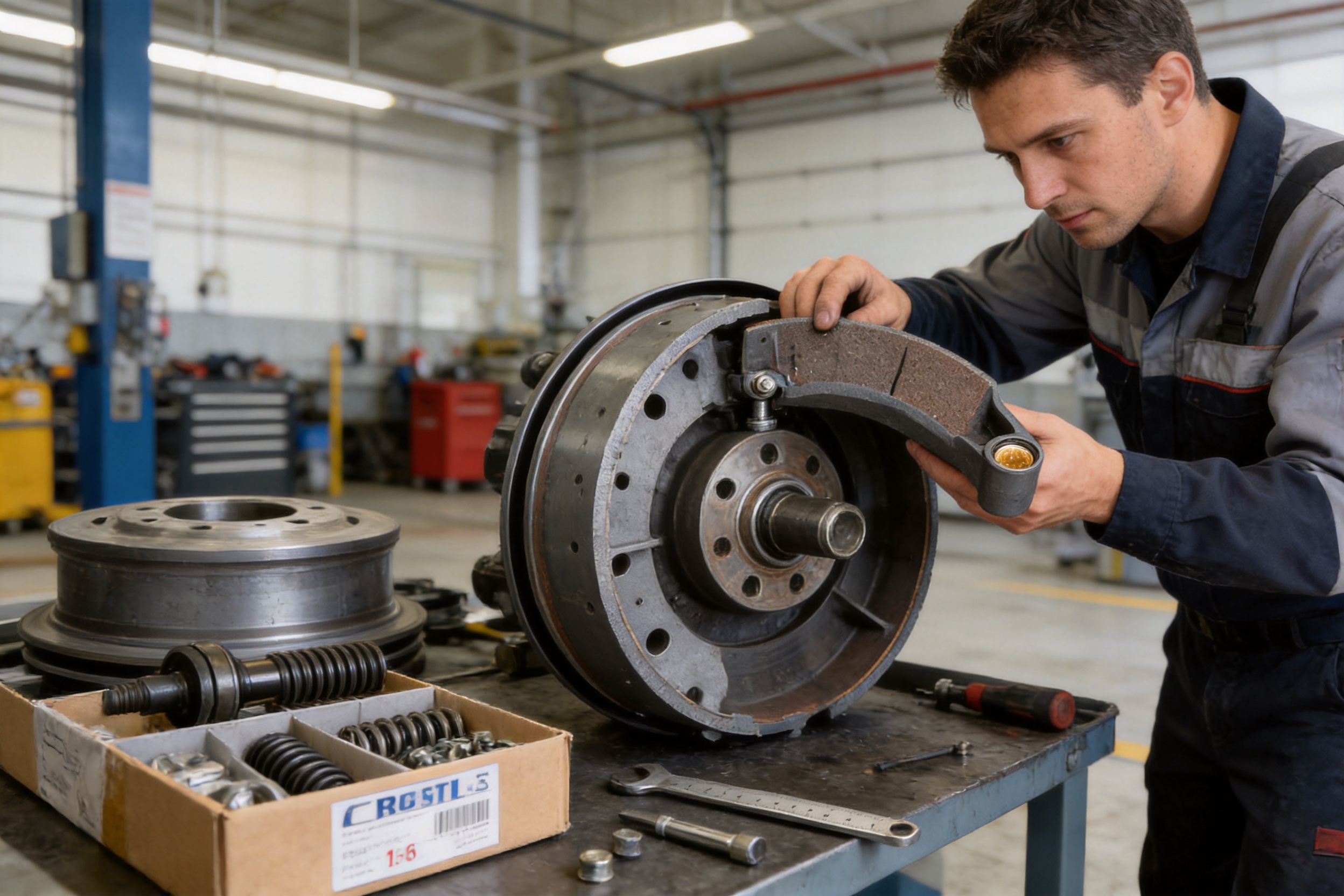
Reliable braking begins with a correctly engineered foundation. In a heavy-duty drum brake system, the brake shoe is the component that supports the friction lining and transfers braking force to the brake drum. Its geometry, material stability, riveting-hole accuracy, and contact with the drum all influence braking performance, service life, maintenance frequency, and operating safety.
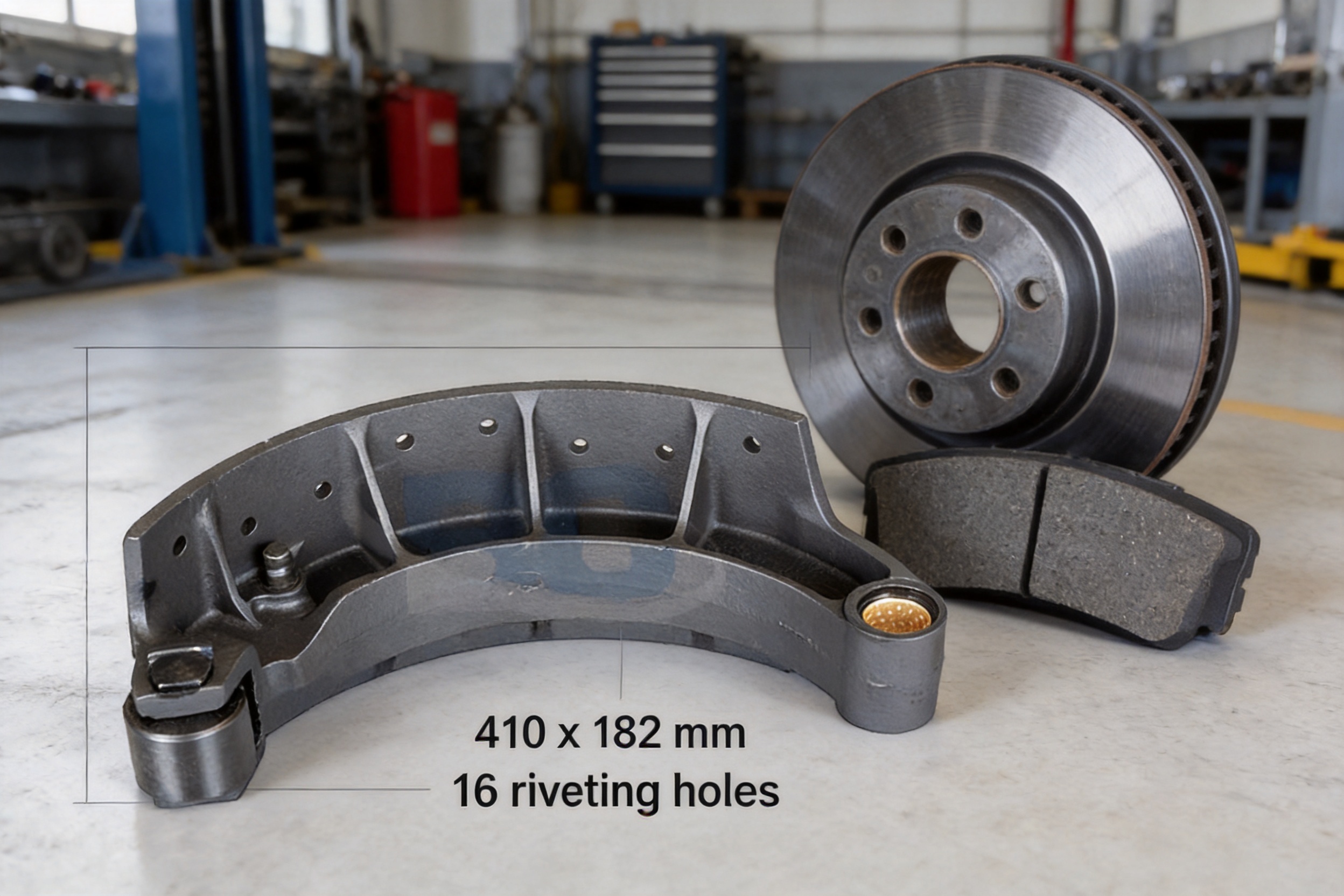
The 6594200619 Casted Brake Shoe, identified by Part No. BZ180, is developed for Benz heavy-duty applications. It has a specified size of 410 x 182 mm, includes 16 riveting holes, and is categorized as a casted brake shoe. These characteristics make it suitable for professional repair, replacement, and brake-system assembly where accurate dimensional matching is essential.
This article examines the product’s technical characteristics, application value, manufacturing considerations, quality advantages, installation requirements, and purchasing factors. It also explains how a specialized heavy-duty brake-parts manufacturer can create value through process control, product compatibility, flexible production, and disciplined inspection.
Product Overview
The 6594200619 Casted Brake Shoe is a heavy-duty brake shoe designed for Benz applications. Its main identifying information is summarized below:
| Item | Specification |
|---|---|
| Product type | Casted brake shoe |
| Part number | BZ180 |
| OEM number | 6594200619 |
| Application | Benz heavy-duty brake systems |
| Size | 410 x 182 mm |
| Riveting holes | 16 |
| Product category | Casted Brake Shoe |
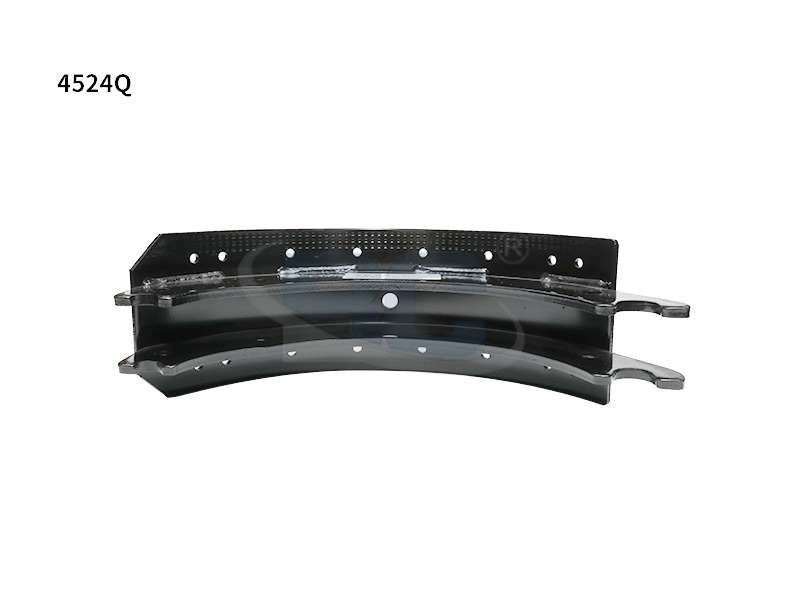
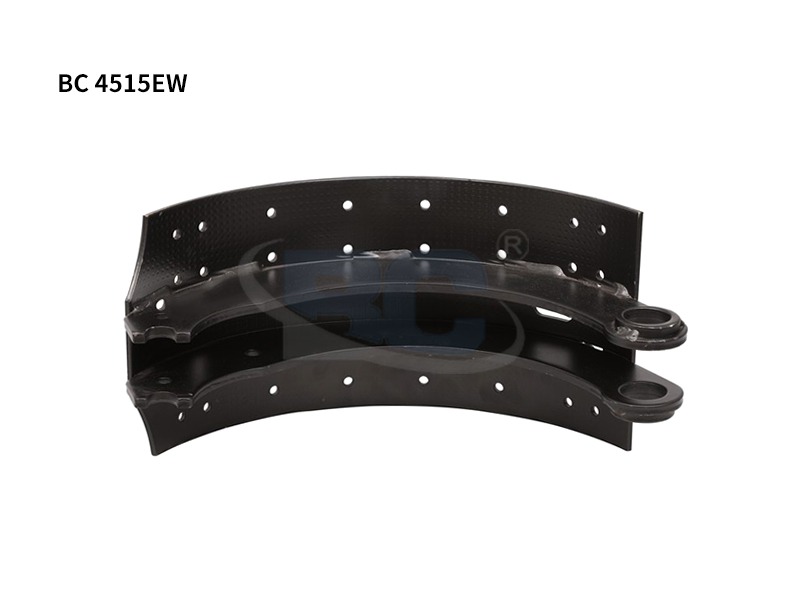
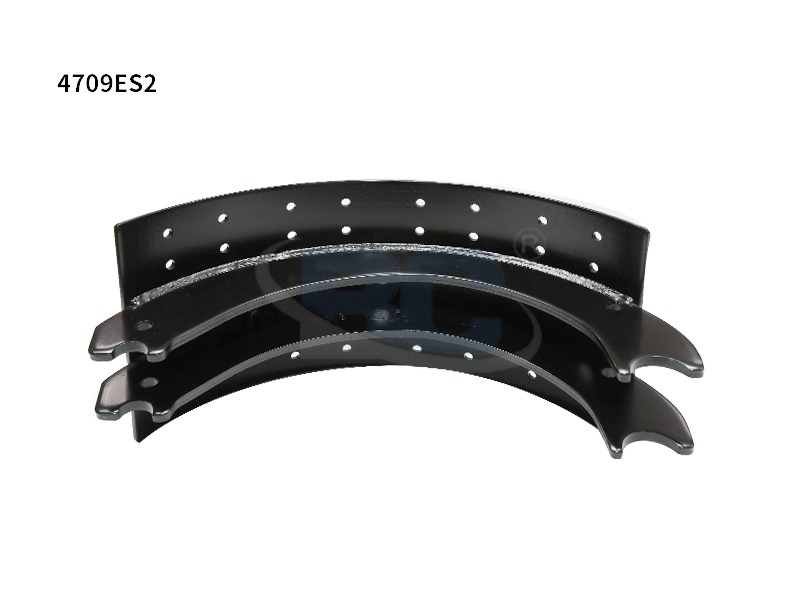
In practical terms, the product is intended to serve as the structural carrier for a brake lining. During braking, the brake actuator pushes the shoe outward toward the inner surface of the drum. The lining then creates friction against the rotating drum, converting vehicle motion into heat. The casted shoe must remain dimensionally stable while carrying repeated mechanical loads, vibration, and thermal cycling.
Correct identification is especially important in heavy commercial vehicles because similar-looking brake shoes may differ in width, radius, hole layout, offset, or mounting details. A brake shoe with the wrong dimensions may create uneven lining contact, premature wear, excessive heat, noise, or installation problems. For this reason, the OEM number, part number, size, application, and riveting-hole count should be checked together rather than relying on appearance alone.
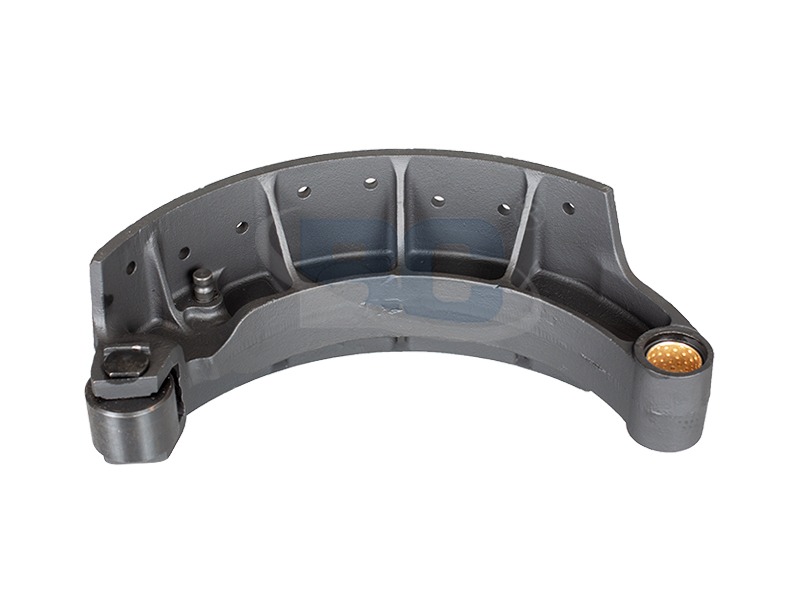
6594200619 Casted Brake Shoe
Why the Brake Shoe Structure Matters
A brake shoe is more than a simple metal support. It is a load-bearing component that must work in coordination with the brake drum, lining, rollers, camshaft, return springs, adjuster, and axle assembly. If the shoe does not maintain its shape under load, the lining may not contact the drum evenly. This can reduce the effective braking area and increase localized heat generation.
The casted construction of the BZ180 shoe provides a foundation for heavy-duty service. Casting allows the component to be produced with a defined structural profile and with material distributed around areas that experience force. For commercial vehicles, the shoe must withstand repeated actuation cycles, road vibration, shock loads, and changes in temperature. A stable structural form helps maintain the intended relationship between the shoe and the brake drum.
The product’s 410 x 182 mm specification is a key dimensional reference. The size helps buyers, distributors, repair workshops, and fleet maintenance teams compare the shoe with the original component. However, size alone is not sufficient for final verification. The complete assembly should also be checked for shoe curvature, mounting features, offset, actuator contact points, and the location of every riveting hole.
The 16 riveting holes are another important functional characteristic. The hole arrangement determines how the friction lining is attached to the shoe. Correct hole positioning supports even lining retention and helps maintain the lining’s designed relationship with the drum. If hole spacing is incorrect, the lining may be difficult to install, may not sit flush, or may experience uneven stress during braking.
Advantages of a Casted Brake Shoe
Structural Stability
A casted brake shoe is designed to retain its shape under demanding operating conditions. Heavy trucks and buses frequently carry high loads, operate for long periods, and brake in difficult environments. These conditions place greater demands on the brake foundation than ordinary passenger-vehicle service.
The casted structure supports consistent force transfer from the brake actuator to the lining. When the shoe remains stable, the lining can maintain more uniform contact with the drum. This supports predictable braking behavior and helps reduce the possibility of localized wear.
Suitable for Heavy-Duty Applications
The BZ180 product is positioned specifically for a Benz heavy-duty application. Its dimensions and hole count are intended to support professional replacement work rather than general-purpose use. This application focus helps buyers select a part according to an established vehicle and brake-system requirement.
Heavy-duty brake parts must also tolerate maintenance conditions that are more demanding than those found in light vehicles. The vehicle may be repaired in a fleet workshop, roadside service environment, or commercial repair center. A replacement shoe that is clearly identified and dimensionally consistent can reduce uncertainty during the repair process.
Support for Lining Replacement
Because the product is supplied as a casted brake shoe with 16 riveting holes, it can be used as part of a lining replacement program when the existing shoe is no longer suitable for reuse. In many maintenance operations, the shoe is inspected separately from the lining. If the original shoe is cracked, distorted, excessively worn, or damaged around the rivet holes, replacing the complete shoe may be more appropriate than fitting a new lining to a compromised foundation.
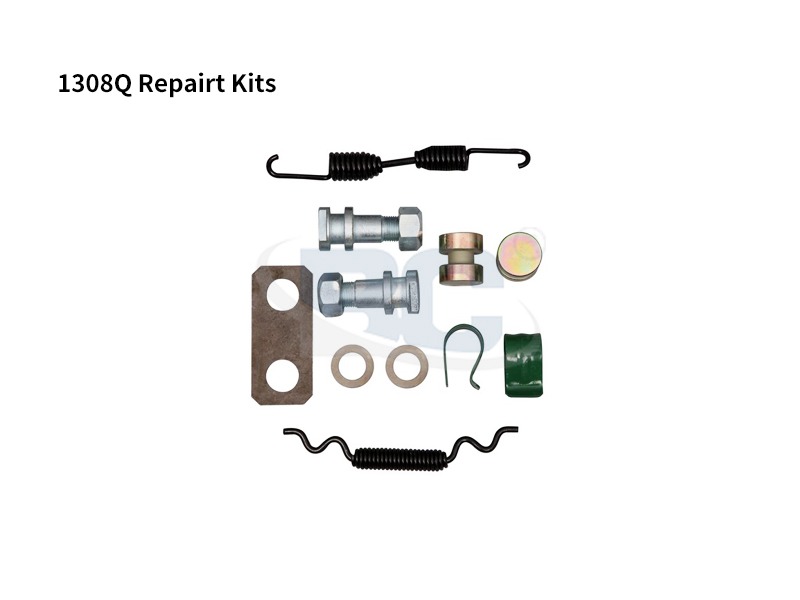
The BZ180 format also fits within a broader product range that includes brake linings, lined brake shoes, brake shoe repair kits, and lined brake shoe kits. This range can help distributors and repairers source either individual structural components or more complete replacement solutions according to their service needs.
Clear Identification
The combination of BZ180 and OEM No. 6594200619 gives the product two useful identification references. The part number supports internal cataloging and product management, while the OEM number helps buyers compare the product with the original application reference.
Clear identification can reduce ordering errors, especially where several brake shoes have similar dimensions. It also supports inventory control, quotation preparation, and communication between the purchasing department, warehouse staff, and installation technicians.
Manufacturing Process Considerations
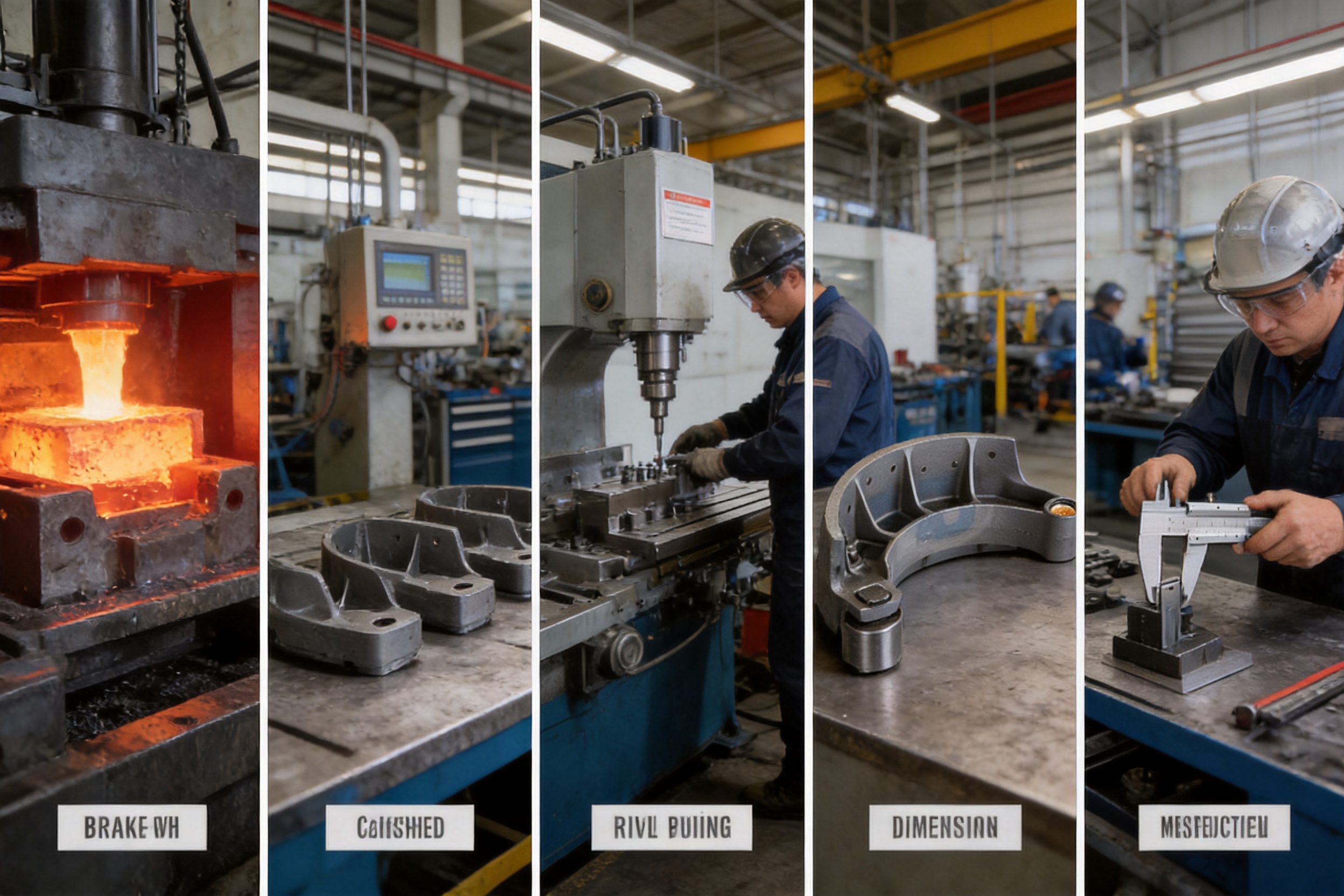
The quality of a casted brake shoe depends on the complete manufacturing chain rather than on a single production step. A professional process normally begins with product engineering and pattern preparation, followed by material handling, casting, cleaning, machining, hole processing, dimensional inspection, surface treatment where applicable, marking, and final packing.
Engineering and Pattern Preparation
The first stage is establishing the correct product geometry. The 410 x 182 mm size and 16-hole riveting layout must be translated into a repeatable production pattern. The pattern must also account for the shoe’s curved profile, thickness, mounting features, and relationship with the lining.
Engineering control is important because a small error in the pattern can be repeated across a large production batch. A specialized manufacturer can organize product drawings, process instructions, inspection points, and revision records so that production personnel work from controlled information.
Before production, the manufacturer should verify the product reference, application, dimensional requirements, and any customer-specific packaging or marking instructions. This preparation helps prevent confusion between products that belong to the same brake-shoe family but have different dimensions or hole arrangements.
Material Preparation
Material preparation influences casting consistency. The raw material must be selected and managed according to the required mechanical performance and production method. Batch identification is useful because it helps connect the finished product with the material source and production records.
Good material control includes organized storage, protection from contamination, and clear separation between approved and unapproved material. It also includes control of additions and returns used during the melting process. Consistent preparation supports more stable casting results and simplifies investigation if a quality concern arises.
Casting Control
During casting, molten material is introduced into a prepared mold to create the basic shoe form. The manufacturer must control the conditions that influence filling, solidification, shrinkage, and the formation of internal or surface defects.
Process discipline at this stage may include checking melt temperature, mold condition, pouring practice, cooling behavior, and production timing. The exact parameters depend on the selected material and equipment. The important principle is repeatability: every production batch should follow an approved process rather than relying only on operator judgment.
A well-controlled casting process helps produce a more consistent structural body. It can also reduce the risk of problems such as incomplete filling, excessive surface irregularity, dimensional distortion, or hidden casting defects. These issues are particularly important in brake components because the shoe is exposed to repeated mechanical loading.
Cleaning and Finishing
After casting, the shoe may require removal of gating material, flash, excess material, and surface residue. Cleaning and finishing establish the basic shape needed for later machining and inspection.
Finishing should be controlled carefully. Excessive removal can affect dimensions or reduce material around important areas, while insufficient cleaning can interfere with assembly or inspection. A consistent finishing procedure supports a better fit between the shoe and related brake components.
Machining and Hole Processing
Machining establishes critical interfaces and improves dimensional consistency. The 16 riveting holes must be located accurately so that the lining can be installed correctly. Hole diameter, spacing, alignment, and edge condition are all relevant to the final assembly.
Using controlled fixtures or dedicated tooling can help maintain repeatability. Fixtures hold the shoe in a defined position while drilling, boring, or other hole-processing operations are performed. This is particularly valuable for curved components because inconsistent positioning can create cumulative errors across the hole pattern.
Machining may also be used to refine mounting areas and other functional surfaces. The objective is not simply to make the product visually clean; it is to ensure that the finished shoe matches the intended assembly geometry.
Dimensional Inspection
Inspection should confirm the product’s principal requirements before it is released. For the BZ180 shoe, the 410 x 182 mm size and 16 riveting holes are essential inspection references. Depending on the drawing and customer requirements, inspection may also cover curvature, thickness, hole diameter, hole spacing, mounting features, and surface condition.
Inspection equipment should be appropriate for the dimension being checked. Calipers, gauges, templates, coordinate measurement equipment, fixtures, and visual inspection may all have a role. The inspection method should be repeatable, and measurement results should be recorded when required by the quality system or customer order.
Consistent inspection creates a practical advantage over suppliers that rely only on visual similarity. A product may appear correct but still have an incorrect hole pattern or dimensional deviation. Measurement-based verification helps turn product claims into documented manufacturing control.
Manufacturing Strengths of a Specialized Supplier
Zhejiang Bangchi Auto Parts Co., Ltd. focuses on heavy-duty brake parts, including casted brake shoes, steel brake shoes, brake linings, lined brake shoes, brake shoe repair kits, and lined brake shoe kits. This product focus is valuable because experience with related brake components improves understanding of how the shoe, lining, and repair kit function together.
A specialized supplier can organize production around the requirements of commercial brake systems rather than treating brake shoes as generic fabricated parts. This includes attention to lining attachment, drum contact, replacement compatibility, part numbering, and the needs of distributors and fleet maintenance operations.
Product Range Coordination
A broad but related product range can simplify sourcing. A customer may need a casted shoe for one vehicle application, a steel shoe for another, or a lined shoe kit for a faster workshop installation. A manufacturer that supports several categories can provide a more coordinated purchasing channel.
For the BZ180 application, the supplier can support customers that require the shoe as an individual structural component. Other customers may prefer a brake shoe supplied with lining or included in a repair kit. The most suitable form depends on the customer’s equipment, installation capability, maintenance policy, and inventory strategy.
Global Numbering Awareness
The company states that it provides OEM brake parts following the global FMSI numbering system. Numbering discipline can be useful in international aftermarket business because customers often manage products through cross-reference catalogs, distributor databases, and fleet maintenance systems.
Part-number awareness also helps reduce ambiguity between products with similar physical characteristics. When a product is connected to an internal part number, an OEM reference, an application, and a dimensional description, customers have more information for checking compatibility before ordering.
Flexible Order Support
Heavy-duty brake-parts customers are not all the same. An international distributor may require export packaging and repeated container orders, while a repair wholesaler may need smaller quantities across several applications. A specialized manufacturer can create value by supporting different purchasing patterns while maintaining product identification and quality controls.
Flexible production should not mean uncontrolled production. The most useful flexibility is based on documented specifications, controlled tooling, and clear order communication. This allows a supplier to handle product variety without losing track of dimensions, applications, or packaging instructions.
Communication and Technical Information
Technical information is part of product quality. The BZ180 description provides the product type, part number, OEM number, size, riveting-hole count, and application. These details give purchasing and technical personnel a practical starting point for compatibility review.
When additional information is required, customers should be able to request drawings, photographs, samples, packaging details, or installation recommendations. A manufacturer that communicates clearly can help customers avoid selecting a similar but unsuitable component.
Competitive Advantages of the 6594200619 Casted Brake Shoe
The product’s advantages are most meaningful when compared with common aftermarket risks. The following points explain why a purpose-identified casted shoe can be preferable to an unverified alternative.
Application-Specific Design
The BZ180 shoe is identified for Benz use rather than marketed as a universal component. Application-specific positioning helps guide buyers toward the correct brake-system family. This is particularly important for heavy-duty vehicles, where braking hardware can vary significantly between models, axles, production years, and operating configurations.
Defined Size and Hole Count
Some aftermarket listings provide only a general vehicle description. By specifying 410 x 182 mm and 16 riveting holes, the product description gives customers measurable criteria for comparison. These details are useful for pre-order verification and for warehouse staff who need to distinguish similar products.
Structural Replacement Value
A new casted shoe can be a practical alternative when an original shoe is no longer suitable for relining. Reusing a distorted or damaged shoe may compromise the performance of a new lining. Replacing the complete structural foundation allows the repairer to begin with a component whose dimensions and condition are known.
Compatibility with Different Service Models
The product can support both component-level and kit-based maintenance strategies. A fleet workshop with lining-riveting equipment may purchase the bare shoe, while a repair distributor may prefer lined brake shoes or repair kits. A manufacturer with a wider product range can help customers select according to their service model.
Traceable Product Identity
Using both a manufacturer part number and an OEM number supports clearer records. Better identification can reduce incorrect shipments, simplify repeat ordering, and make it easier to investigate field feedback. In commercial vehicle maintenance, traceability is a practical advantage because a failed or incorrectly selected part can create vehicle downtime and additional labor.
Specialist Manufacturing Focus
A supplier dedicated to heavy-duty brake parts is more likely to understand the importance of shoe geometry, lining attachment, drum compatibility, and fleet maintenance requirements than a general metal-component supplier. This specialist focus can support better process planning and more useful technical communication.
Quality Control from Incoming Material to Finished Product
Quality control should cover the complete production route. Incoming inspection may verify material documentation, quantity, condition, and identification. In-process inspection may verify casting appearance, basic dimensions, machining results, and hole processing. Final inspection may confirm the finished product against the approved specification.
Visual inspection is useful for identifying obvious cracks, excessive flash, surface damage, deformation, or incomplete finishing. However, visual inspection should be combined with dimensional checks because many fit-related problems cannot be seen easily.
Functional quality also depends on the relationship between the shoe and the lining. The riveting holes should support secure attachment, and the shoe should provide the correct foundation for the lining’s curved contact surface. If a customer purchases the shoe for relining, the lining selected must also be compatible with the application and drum dimensions.
Packaging inspection is another important step. Brake shoes should be protected from impact, moisture, contamination, and confusion with other part numbers. Labels should clearly identify the part number, OEM number, application, quantity, and any customer-specific information required for warehouse control.
A disciplined quality system does not guarantee that every operating condition will be identical, but it does improve consistency and provides a basis for corrective action. This is a meaningful advantage over products sourced through unclear or poorly documented channels.
Installation and Maintenance Guidance
Installation should be performed by qualified brake-service personnel using the vehicle or axle manufacturer’s service instructions. The brake system should be safely isolated before work begins, and the vehicle must be properly supported. Heavy commercial vehicle components are large and heavy, and safe handling procedures are essential.
Confirm the Replacement Before Installation
Before removing or installing the shoe, compare the replacement with the original component. Confirm the BZ180 part number, OEM No. 6594200619, 410 x 182 mm size, and 16-hole pattern. Check the curvature, mounting points, actuator contact areas, and orientation.
Do not force a component into position if the holes, mounting points, or curvature do not align. Forced installation can damage the shoe, lining, fasteners, or related brake parts and may create a dangerous operating condition.
Inspect Related Components
A brake shoe should not be evaluated in isolation. Inspect the drum for excessive wear, cracks, scoring, heat checking, or out-of-round conditions. Inspect the camshaft, rollers, bushings, springs, adjuster, and mounting hardware for wear or damage.
A new shoe installed with severely worn supporting components may not deliver the expected result. For example, a worn actuator or roller can affect how the shoe moves, while an unsuitable drum surface can cause uneven lining contact. Replacing related worn parts may be necessary for a complete repair.
Prepare the Lining and Riveting Process
If the shoe is supplied without lining, the selected lining must match the application and the shoe’s dimensions. The lining should be clean, correctly curved, and free from damage. Rivets must be suitable for the lining and hole specifications.
Riveting should be performed with appropriate equipment and technique. The lining must sit flush against the shoe, and the rivets should be formed consistently without cracking the lining or leaving excessive looseness. The finished lining should not have gaps, raised areas, or movement relative to the shoe.
Check Drum Contact
After installation, the brake assembly should be checked according to professional service procedures. The lining should contact the drum appropriately, and the brake should be adjusted according to the applicable instructions. Improper adjustment may lead to dragging, excessive pedal travel, uneven braking, or overheating.
Where the drum has been replaced or machined, the technician should confirm that the drum and lining dimensions remain compatible. The shoe’s purpose is to support the lining, but complete braking performance depends on the entire friction pair and actuation system.
Perform a Controlled Service Check
After repair, conduct a controlled functional check before returning the vehicle to normal operation. Listen for abnormal noise, observe brake response, and monitor for signs of dragging or uneven operation. The vehicle should be tested under safe conditions and according to professional procedures.
Purchasing Guide for Distributors and Fleets
Purchasers should begin with application verification rather than price comparison alone. The correct product is the one that matches the vehicle, axle, drum, shoe geometry, lining arrangement, and maintenance method.
For this product, the essential purchasing references are Benz application, BZ180 part number, OEM No. 6594200619, 410 x 182 mm size, and 16 riveting holes. Buyers should include these details in purchase orders and ask suppliers to confirm them on quotations and packing documents.
| Purchasing checkpoint | Why it matters |
|---|---|
| Vehicle and axle application | Confirms that the shoe belongs to the intended brake system |
| OEM number | Provides an established application reference |
| Part number | Supports supplier and warehouse identification |
| Size | Helps compare the shoe with the original component |
| Riveting-hole count | Confirms lining attachment compatibility |
| Product construction | Distinguishes a casted shoe from other shoe types |
| Packaging and marking | Reduces storage and shipment errors |
| Inspection documentation | Supports quality review and repeat purchasing |
Distributors should also consider how the product will be presented in their catalog. A listing should include the part number, OEM number, application, dimensions, hole count, product category, and whether the shoe is supplied bare or with lining. Clear catalog content reduces technical questions and improves order accuracy.
Fleet operators should consider consumption rates, vehicle downtime, warehouse space, and standardization. If several vehicles use the same brake-shoe reference, stocking the correct product can simplify maintenance. However, inventory should be controlled carefully to prevent similar references from being mixed.
Why Manufacturing Consistency Supports Cost Efficiency
The purchase price of a brake shoe is only one part of the total maintenance cost. A dimensionally inconsistent component may create additional labor, installation delays, rejected shipments, premature wear, or repeat repairs. A product with clear identification and stable manufacturing quality can reduce these indirect costs.
Consistent castings may also reduce the need for workshop adjustment. While professional fitting and inspection are always necessary, a component that arrives within the intended dimensional range is easier to process than one requiring excessive correction.
For international distributors, consistent packaging and labeling can reduce warehouse errors. A clearly marked carton helps staff identify the product quickly and improves stock rotation. Repeatable product information also supports digital catalogs and purchasing systems.
The company’s location in Haining, Zhejiang, China, places its production operation within a major Chinese manufacturing region. Its listed address is No. 9 Building, No. 11 Qiyi Road, Chang’an Town, Haining, Zhejiang, China. Customers can use the company’s published contact channels for product inquiries, order discussions, and technical confirmation.
Application Value in Commercial Vehicle Maintenance
Commercial vehicles depend on predictable braking because they operate with high gross weights, long duty cycles, and varied road conditions. A brake shoe must therefore be evaluated as a safety-related structural component rather than as an ordinary replacement item.
The 6594200619 Casted Brake Shoe offers a defined replacement option for the stated Benz application. Its product identity, dimensions, and riveting-hole count provide useful information for maintenance planning. When combined with compatible linings, correctly prepared drums, and properly maintained actuation components, the shoe can support a systematic brake-service program.
For repair shops, a clearly specified shoe helps technicians begin with the correct component. For distributors, it creates a more complete product listing. For fleets, it supports standardized purchasing and replacement procedures. These benefits come from the combination of engineering information and manufacturing specialization.
Frequently Asked Questions
What is the 6594200619 Casted Brake Shoe?
It is a casted brake shoe identified by Part No. BZ180 and OEM No. 6594200619. It is designed for a Benz heavy-duty brake application.
What are the dimensions of the product?
The specified size is 410 x 182 mm. Buyers should still compare the complete geometry and mounting features with the original shoe before ordering.
How many riveting holes does it have?
The product has 16 riveting holes. The hole arrangement should be checked against the intended lining and original component before installation.
Is the shoe supplied with brake lining?
The listed product is categorized as a casted brake shoe. The supplied configuration should be confirmed with the seller because a bare shoe, lined shoe, repair kit, and lined shoe kit are different product forms.
Why is the OEM number important?
The OEM number provides an application reference that helps buyers compare the replacement with the original brake-system component. It should be used together with the part number, dimensions, application, and hole count.
Can this product be used for applications other than Benz?
The listed application is Benz. It should not be assumed to fit another vehicle or axle merely because the dimensions appear similar. Compatibility must be confirmed through technical references.
Why choose a casted brake shoe instead of reusing an old shoe?
A new casted shoe provides a fresh structural foundation when the original shoe is cracked, distorted, excessively worn, or damaged around the rivet holes. Reusing a damaged foundation may compromise lining installation and braking performance.
What should be inspected before installing the shoe?
Inspect the shoe dimensions, hole pattern, curvature, mounting features, and surface condition. Also inspect the drum, lining, camshaft, rollers, springs, adjuster, bushings, and related hardware.
What makes a specialized brake-parts supplier valuable?
A specialized supplier understands the relationship between brake shoes, linings, drums, repair kits, and heavy-duty service requirements. This focus can support better product identification, process control, application guidance, and inventory coordination.
Does the product support international aftermarket purchasing?
Its part number, OEM number, application, dimensions, and hole count provide useful information for international catalogs and purchasing systems. Export packaging, quantities, lead times, and documentation should be confirmed for each order.
How should the brake shoe be stored?
Store it in a clean, dry area protected from impact, moisture, and contamination. Keep products separated by part number and maintain clear carton identification to avoid mixing similar components.
What information should be included in a purchase inquiry?
Include the product name, BZ180 part number, OEM No. 6594200619, Benz application, 410 x 182 mm size, 16 riveting holes, required quantity, packaging requirements, and whether a bare shoe or a lined product is needed.
Conclusion
The 6594200619 Casted Brake Shoe is a clearly identified heavy-duty replacement component for Benz applications. Its BZ180 part number, 410 x 182 mm size, and 16 riveting holes provide practical information for compatibility verification, inventory management, and workshop preparation.
Its value is supported by the role of a casted brake shoe as a stable foundation for the brake lining. When produced with controlled casting, finishing, machining, hole processing, and inspection, the shoe can help support consistent assembly and reliable service. The product is also part of a broader heavy-duty brake-parts offering that includes linings, lined shoes, repair kits, and lined shoe kits.
Zhejiang Bangchi Auto Parts Co., Ltd. brings a specialist focus to heavy-duty brake components and provides OEM brake parts following the global FMSI numbering system. This focus, together with product identification and application-oriented manufacturing, gives distributors, repair shops, and fleet operators a practical sourcing option.
As with every brake component, correct selection and professional installation remain essential. Buyers should verify the complete application, dimensions, hole pattern, and supplied configuration before ordering. When the product is matched correctly with the vehicle and installed according to qualified service procedures, it can serve as a dependable structural component in a demanding commercial brake system.
References
1. Product specification supplied for the 6594200619 Casted Brake Shoe, Part No. BZ180.
2. Manufacturer product category information for steel brake shoes, casted brake shoes, brake linings, lined brake shoes, brake shoe repair kits, and lined brake shoe kits.
3. Manufacturer statement regarding OEM brake parts and the global FMSI numbering system.
4. General heavy-duty drum-brake service principles covering brake-shoe inspection, lining attachment, drum compatibility, and component replacement.
5. General manufacturing quality-control principles for cast metal components, machining, dimensional inspection, product identification, and traceable packaging.