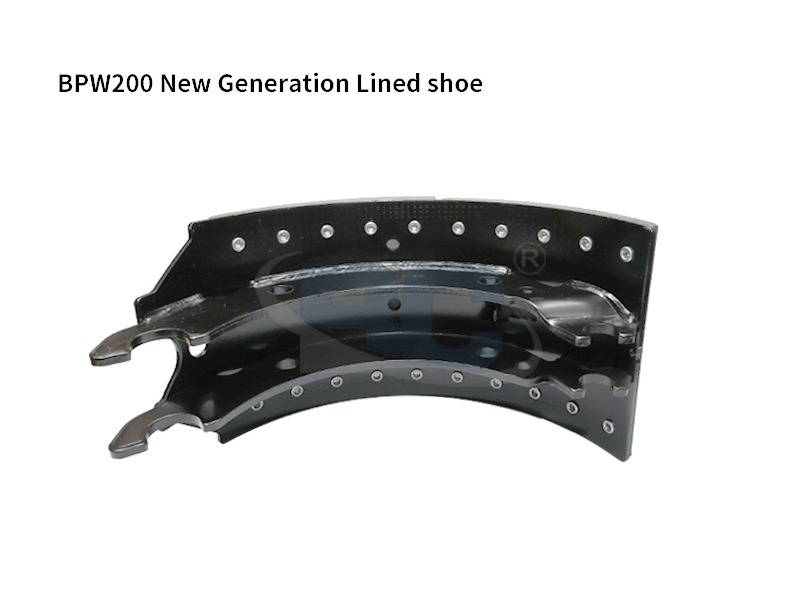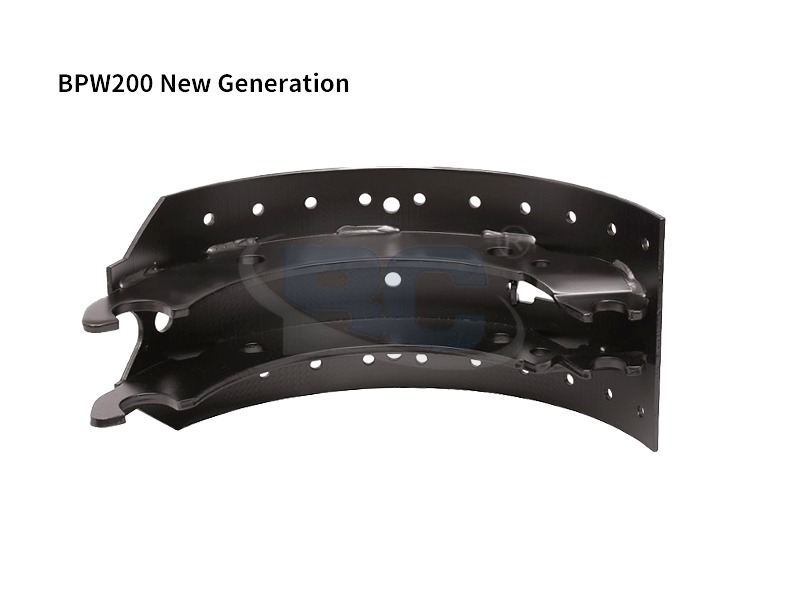
 English
 简体中文
Reliable braking is one of the most important requirements in commercial vehicle operation. Heavy trucks, trailers, buses, and other demanding vehicles depend on friction components that can deliver stable braking force under changing loads, temperatures, road conditions, and service schedules. Within a drum brake system, the brake lining is the material that creates friction against the rotating brake drum. Its dimensions, rivet-hole arrangement, friction characteristics, and installation quality directly influence braking performance and maintenance reliability.
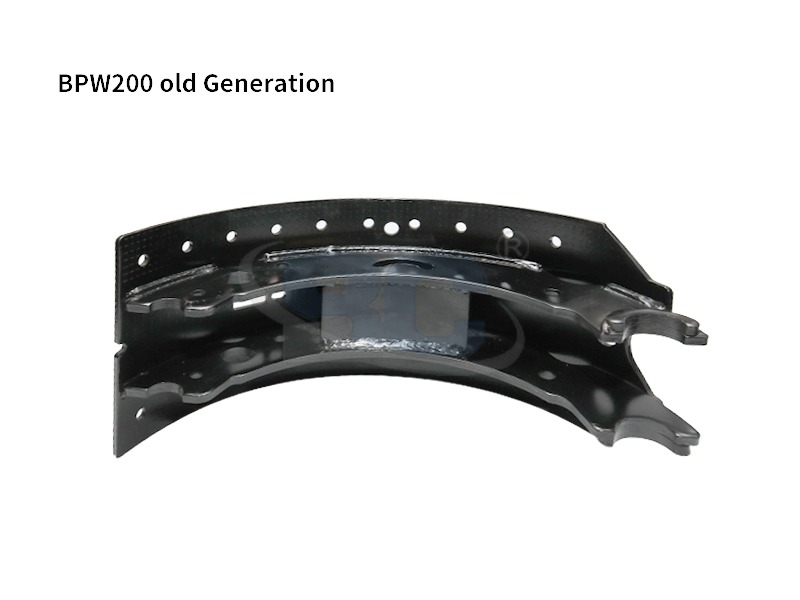
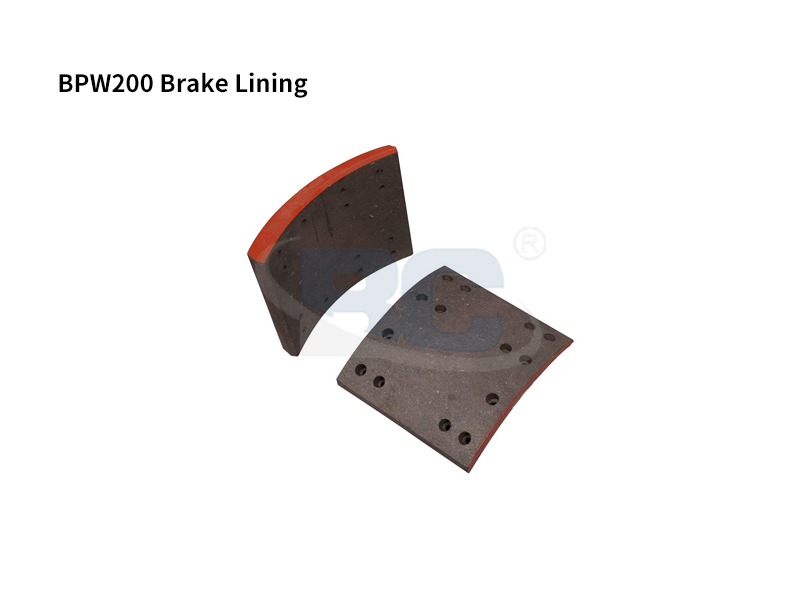
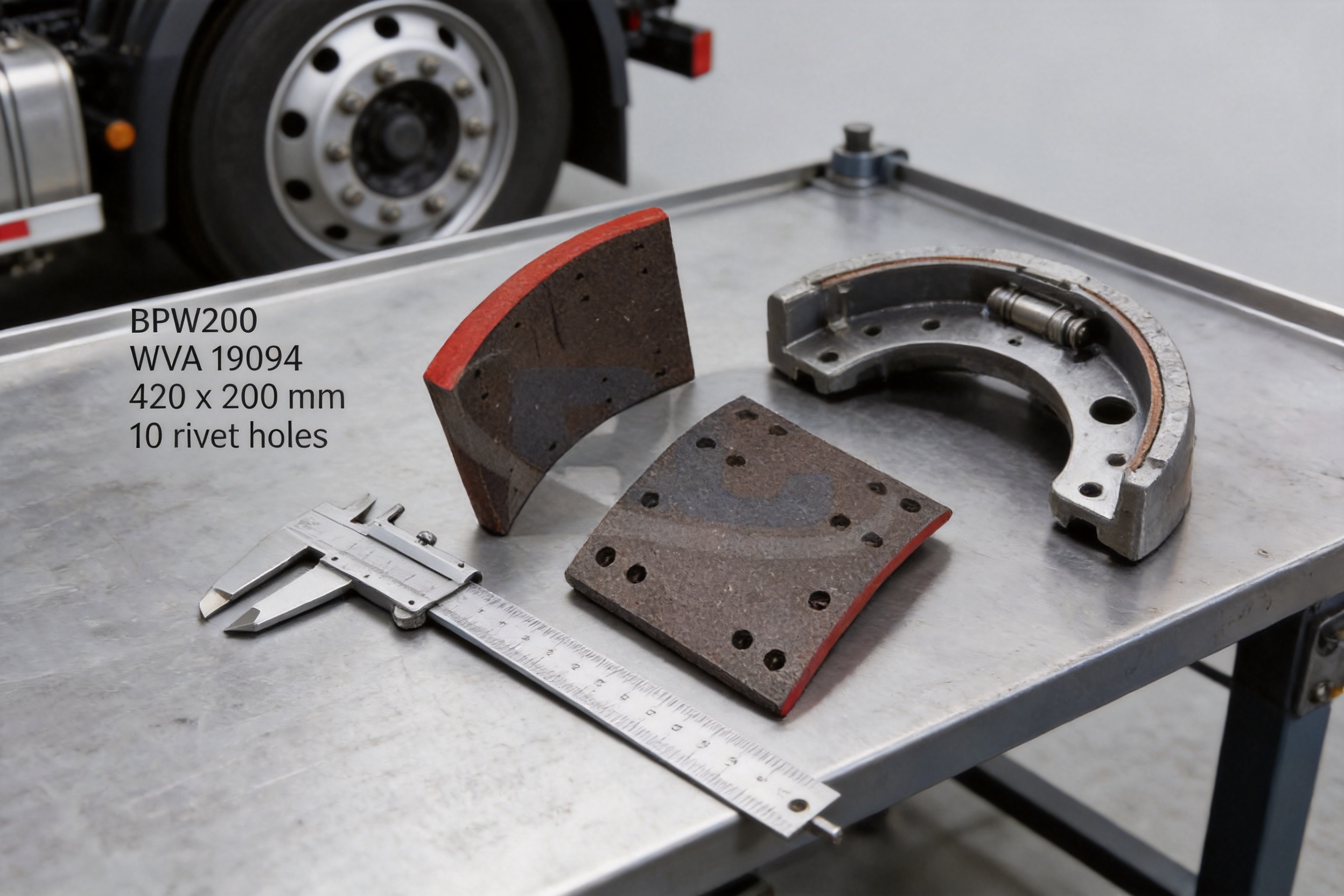
The BPW200 Brake Lining is a heavy-duty replacement component identified with WVA number 19094. It is specified at 420 × 200 millimeters and incorporates 10 rivet holes. These details provide important information for distributors, fleet maintenance departments, repair workshops, and original-equipment-oriented buyers who need to identify a suitable brake lining before ordering or installation.
This article examines the product’s construction, dimensional significance, installation considerations, operating advantages, quality expectations, manufacturing processes, customization potential, and selection criteria. It also explains how a specialized heavy-duty brake parts manufacturer can support consistent supply through process control, inspection, production planning, and application-focused engineering.
Because brake systems are safety-critical, the information in this article should be used together with the vehicle manufacturer’s service documentation, axle data, brake-system specifications, and professional installation procedures. WVA 19094, the BPW200 designation, the 420 × 200 mm size, and the 10-hole pattern should always be checked against the actual vehicle and brake assembly before installation.
BPW200 Brake Lining
1. Product Identification and Core Specifications
The BPW200 Brake Lining is a drum-brake friction component designed for heavy-duty applications. Its primary identification information is as follows:
| Specification | Product Information |
|---|---|
| Product designation | BPW200 Brake Lining |
| Product category | Brake Lining |
| WVA number | 19094 |
| Product size | 420 × 200 mm |
| Number of rivet holes | 10 |
| Application format | Riveted heavy-duty drum brake lining |
| Supplier type | OEM-oriented heavy-duty brake parts manufacturer |
The WVA number is particularly useful for product identification within the European commercial vehicle brake parts market. It provides a recognized reference point for comparing friction materials and lining configurations. However, a reference number should not be treated as the only fitment requirement. Correct selection also depends on the brake shoe profile, drum dimensions, axle or trailer system, lining curvature, hole positioning, rivet specifications, and vehicle application.
The stated 420 × 200 mm dimensions describe the principal size of the lining. In practical terms, these measurements assist purchasing teams and technicians when comparing the product with an existing lining or a technical drawing. Nevertheless, product dimensions should be interpreted according to the manufacturer’s measurement convention. Depending on the design, the stated size may relate to lining length and width, while thickness, arc radius, chamfering, and hole spacing require additional confirmation.
The 10-rivet-hole configuration is another essential identification feature. Rivet holes must align accurately with the brake shoe. Incorrect hole spacing can prevent proper assembly, create uneven clamping, or lead to localized stress in the lining. The hole count alone is not sufficient; the complete hole layout, hole diameter, countersink or counterbore profile, and end-hole position must correspond to the brake shoe design.
2. Why Correct Brake Lining Selection Matters
A brake lining is not simply a shaped piece of friction material. It is a precision replacement component that must work as part of a complete braking system. During braking, the brake shoe pushes the lining against the inner surface of the drum. The resulting friction converts vehicle motion into heat. The lining must tolerate this repeated conversion of mechanical energy while maintaining predictable friction and resisting excessive wear.
When an incorrect lining is installed, several problems may occur. The lining may not sit evenly on the shoe, the rivets may not seat correctly, or the lining may contact the drum only on a limited portion of its surface. Such conditions can produce uneven braking, noise, accelerated wear, elevated operating temperatures, and reduced service life. In serious cases, incorrect fitment can compromise the braking system.
Correct identification also helps avoid unnecessary maintenance delays. Fleet operators often manage vehicles with demanding schedules, and an incorrectly ordered friction component can result in downtime, additional freight costs, and repeated workshop labor. Using the BPW200 designation together with WVA 19094, the 420 × 200 mm dimensions, and the 10-hole configuration creates a stronger basis for product verification.
Professional purchasers should compare at least the following points before placing an order:
1. The WVA reference or equivalent catalog number.
2. The brake lining length and width.
3. The lining thickness and allowable wear limit.
4. The number and exact position of rivet holes.
5. The hole diameter and countersink or counterbore design.
6. The lining curvature and compatibility with the brake drum.
7. The required friction classification or application specification.
8. The correct rivet material, length, and installation method.
9. The vehicle, axle, trailer, or brake-shoe application.
10. The manufacturer’s technical documentation and installation guidance.
3. Construction of the BPW200 Friction Component
Brake lining performance depends on the interaction of several material and geometric features. The friction material is generally produced from a carefully balanced formulation containing reinforcing fibers, friction modifiers, binders, fillers, and other functional ingredients. The exact formulation is application-dependent and should be controlled by the manufacturer through approved recipes and production records.
The purpose of the binder is to hold the formulation together and maintain structural integrity during repeated heating and cooling. Reinforcing ingredients help support the material under mechanical and thermal loads. Friction modifiers influence the relationship between friction level, temperature, wear, and drum compatibility. Fillers and processing aids contribute to manufacturability, density, compressibility, and stability.
A suitable heavy-duty lining must balance several characteristics rather than maximize only one. Extremely high friction does not automatically mean superior braking. A useful lining should provide predictable friction, acceptable wear, good heat resistance, stable contact with the drum, controlled compressibility, and reasonable noise behavior. It should also avoid excessive drum attack and maintain its shape during service.
The BPW200 geometry is equally important. The 420 × 200 mm format provides a defined contact area for the intended brake shoe application. The 10-hole arrangement supports mechanical attachment through rivets and allows the lining to follow the shoe profile. Accurate shaping and hole placement help ensure that the lining can be installed without forced alignment or excessive adjustment.
For a replacement lining, consistency from piece to piece is essential. If two linings with the same part reference have different thicknesses, hole positions, curvature, or material density, workshop results may vary. Controlled production therefore matters as much as the basic material formula.
4. Advantages in Heavy-Duty Service
4.1 Stable Friction Behavior
Heavy commercial vehicles often experience wide changes in operating conditions. A loaded trailer descending a long grade places very different demands on a braking system than an unloaded vehicle traveling on level ground. A suitable lining must operate over a broad temperature and pressure range while maintaining a predictable response.
The BPW200 Brake Lining is positioned as a heavy-duty component for applications where dependable friction behavior is important. Its value lies in the combination of a defined application reference, established dimensional information, and a production approach intended for commercial brake parts. Buyers can evaluate the component against the relevant vehicle and brake-system requirements instead of selecting a generic lining based only on appearance.
4.2 Proper Contact with the Brake Drum
Good brake performance requires effective contact between the lining and the drum. A lining that matches the brake-shoe profile can distribute pressure more evenly across the friction surface. This helps reduce localized hot spots and may support more uniform wear during the bedding-in period and throughout service.
The stated 420 × 200 mm size and intended BPW200 configuration give maintenance personnel a clear starting point for checking dimensional compatibility. Correct curvature and final fit should still be confirmed during installation. The brake drum should be inspected for scoring, out-of-round conditions, excessive diameter, cracking, or contamination before a replacement lining is fitted.
4.3 Secure Riveted Attachment
With 10 rivet holes, the lining is designed to be attached to a compatible brake shoe by a distributed fastening pattern. Properly installed rivets keep the lining firmly supported and help maintain close contact with the shoe. The fastening pattern must be used with the correct rivet type and installation pressure.
A rivet that is too long may create an unsuitable formed head or interfere with the brake drum. A rivet that is too short may not provide sufficient retention. Excessive riveting force can damage the friction material or deform the shoe, while insufficient force can allow movement. For this reason, the lining and rivets should be treated as a coordinated installation system.
4.4 Suitability for Fleet Maintenance
Fleet maintenance departments benefit from components that are easy to identify, reorder, inspect, and document. The BPW200 name, WVA 19094 reference, stated dimensions, and 10-hole construction provide several cataloging points. This can simplify internal parts management and reduce confusion between visually similar linings.
For larger fleets, consistent part identification also supports preventive maintenance planning. When service records include the installed lining reference, vehicle application, installation date, brake drum condition, and inspection findings, maintenance teams can make better decisions about replacement intervals and recurring issues.
4.5 OEM-Oriented Supply
An OEM-oriented manufacturer generally focuses on repeatable dimensions, controlled materials, application matching, and stable production. This is different from treating every brake lining as a universal product. Heavy-duty customers often require catalog parts and customized options for different vehicles, axle systems, and market requirements.
Zhejiang Bangchi Auto Parts Co., Ltd. presents itself as a manufacturer and exporter of heavy-duty brake parts, including steel brake shoes, casted brake shoes, brake linings, lined brake shoes, brake shoe repair kits, and lined brake shoe kits. Its stated product approach follows the global FMSI numbering system and supports OEM brake-part supply. This product range can be useful to customers seeking a coordinated source for friction linings and related brake-shoe assemblies.
5. Manufacturing Process for a Heavy-Duty Brake Lining
The quality of a brake lining begins well before final packaging. A controlled manufacturing process normally includes material selection, formulation control, mixing, forming, curing, machining, drilling, finishing, inspection, and traceability. Each stage contributes to the final product’s ability to fit the brake shoe and perform in service.
5.1 Engineering and Application Review
Production begins with technical information. For the BPW200 Brake Lining, the product reference, WVA number, dimensions, hole count, lining profile, and intended application form the basis of the manufacturing specification. Engineering personnel review drawings, samples, customer requirements, and fitment information before creating or approving production documents.
An application review should consider the vehicle type, axle or trailer configuration, brake drum dimensions, expected loads, operating speeds, ambient conditions, and service environment. A component used in regional distribution may experience different thermal cycles from one used in long-haul transport or mountainous operation. The friction material and geometry should therefore be selected for the intended duty rather than copied without assessment.
5.2 Raw Material Control
Friction material consistency depends on the stability of incoming raw materials. A manufacturer should maintain approved supplier information, incoming inspection procedures, storage requirements, and batch records. Materials may be checked for identity, appearance, moisture, particle size, or other relevant characteristics according to the internal quality plan.
Storage is also important. Powders, fibers, binders, and additives can be affected by humidity, contamination, or unsuitable temperature. Clearly identified storage areas and first-in, first-out practices can help reduce variation. Materials should not be introduced into production if their identity or condition is uncertain.
5.3 Controlled Mixing
Mixing combines the friction-material ingredients into a uniform compound. The order of addition, mixing time, equipment condition, and batch size influence dispersion. Poor mixing can create local differences in binder concentration, reinforcement distribution, density, or friction behavior.
Advanced process control at this stage may include digital weighing, recipe verification, timed mixing cycles, equipment maintenance records, and batch identification. These controls help the manufacturer reproduce the approved formulation across multiple production runs. A retained sample from each batch can also support later investigation if a quality question arises.
5.4 Forming and Compression
After mixing, the material is formed into a basic lining shape. Compression parameters influence density, thickness, strength, and internal structure. The forming process must be compatible with the required length, width, curvature, and edge shape of the BPW200 component.
Uniform pressure distribution is important. If the material is compressed unevenly, one portion of the lining may have a different density from another. This can affect wear, heat transfer, and contact with the brake drum. Production teams should monitor tooling condition and replace or maintain dies when wear begins to affect dimensional stability.
5.5 Curing and Heat Treatment
Curing develops the structural integrity of the friction material. Temperature, pressure, time, and cooling conditions must be controlled according to the approved process. Inadequate curing may leave the material insufficiently consolidated, while excessive or poorly controlled heat can alter the material or produce unwanted internal stresses.
Uniform curing is especially important for a lining intended for heavy-duty work. The material must remain stable when repeatedly exposed to heat generated during braking. Process records should identify the batch, equipment, cycle parameters, and operator or production line responsible for the work.
5.6 Surface Machining and Profile Control
After curing, machining may be required to achieve the specified thickness, curvature, edge treatment, and surface condition. The finished lining must be suitable for mounting on the corresponding brake shoe. Dimensional control at this stage helps ensure that the lining does not create excessive interference or an unsuitable gap in the assembled brake.
Surface preparation can also influence bedding-in. A controlled surface helps the lining make progressive contact with the drum rather than relying on a small number of high points. Depending on the application, the lining may receive chamfers, grooves, or other approved features. Such features should be defined by the relevant product specification and not added arbitrarily.
5.7 Drilling and Hole Formation
The 10 rivet holes are a critical precision feature. Hole position should be established using controlled tooling, templates, or computer-guided equipment. The drilling process must maintain the correct center distance, diameter, angle, and countersink or counterbore form.
Hole edges should be inspected for cracks, excessive burrs, delamination, or material breakout. A damaged hole can interfere with rivet seating and reduce attachment reliability. Gauge checks and sample inspections help verify that the production tooling remains aligned throughout the manufacturing run.
5.8 Final Finishing and Marking
Finished linings may undergo edge finishing, cleaning, marking, and visual inspection. Product markings can include the part designation, reference number, batch code, or other traceability information where appropriate. Clear identification helps distributors and workshops distinguish the component from similar products.
Packaging should protect the lining from moisture, impact, contamination, and deformation during storage and transport. Heavy-duty friction components should be packed so that their edges and drilled holes are not damaged by movement inside the carton. Packaging labels should correspond to the product and batch records.
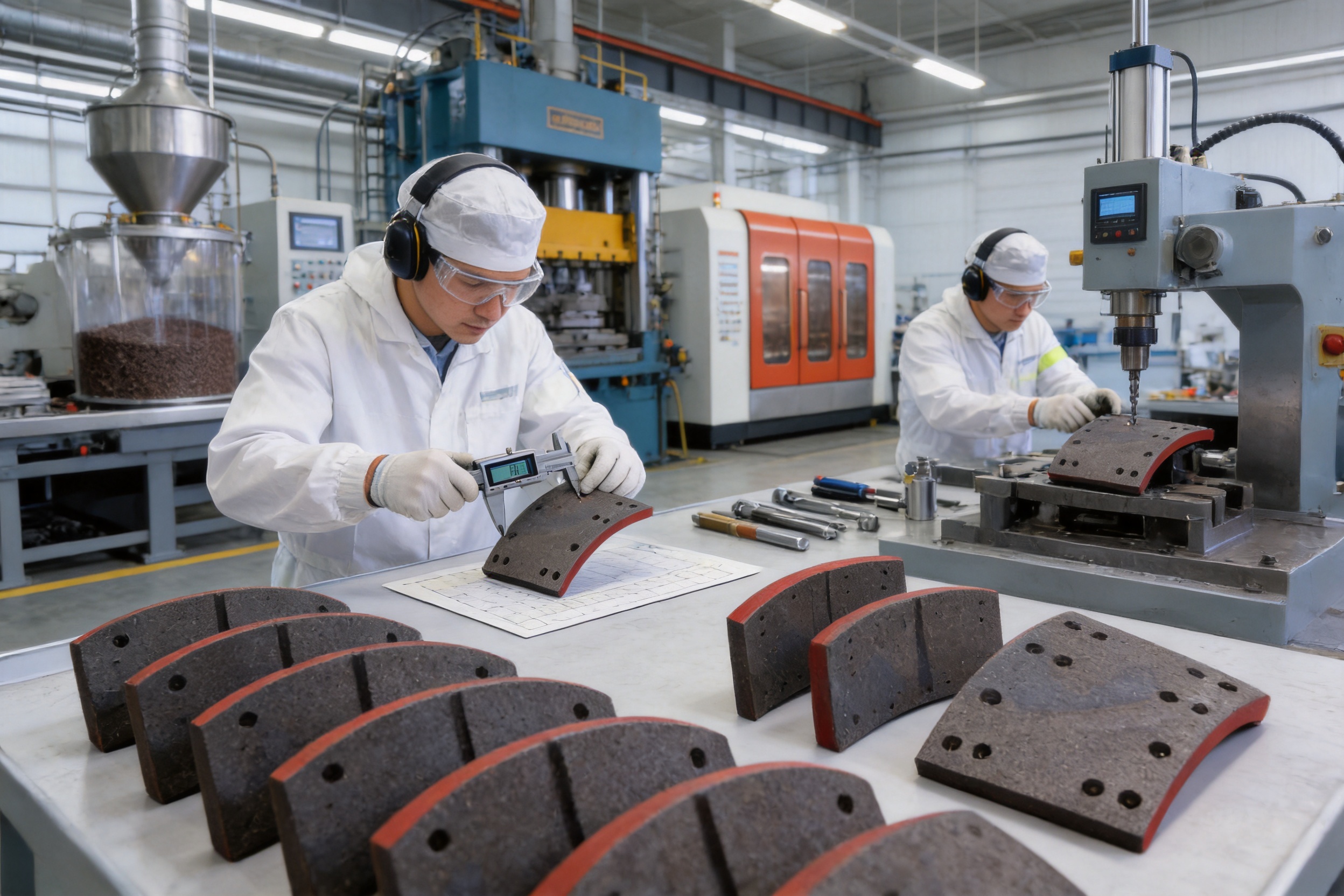
6. Quality Assurance and Inspection Strengths
A manufacturer’s strength is demonstrated not only by its machinery but also by the discipline of its quality system. For a product such as the BPW200 Brake Lining, quality assurance should cover material identity, dimensions, hole layout, appearance, attachment suitability, and relevant performance characteristics.
6.1 Dimensional Inspection
Dimensional inspection confirms that the lining remains within the approved tolerances. Measurements may include length, width, thickness, arc radius, chamfer dimensions, hole diameter, hole spacing, and countersink geometry. Inspection equipment should be calibrated or verified according to the manufacturer’s quality procedures.
Inspection frequency can vary according to the feature and production risk. Critical dimensions such as rivet-hole position may require first-piece approval, periodic checks, and final sampling. A nonconforming part should be identified and segregated rather than mixed with accepted product.
6.2 Material and Process Inspection
Material-related checks help confirm that each production batch uses the approved formulation and process conditions. Depending on the manufacturer’s test plan, evaluations may include density, hardness, compressibility, shear strength, wear behavior, friction stability, and thermal response.
These tests should be interpreted in relation to the product specification and intended application. A single test result cannot represent every aspect of field performance. A robust quality program combines laboratory evaluation, production control, dimensional checks, and application feedback.
6.3 Visual and Workmanship Inspection
Visual inspection can identify cracks, chips, delamination, contamination, unusual surface defects, damaged edges, and incomplete machining. The lining should have a uniform appearance appropriate to the approved product standard. Visual inspection does not replace dimensional or performance testing, but it is an important final barrier against obvious defects.
6.4 Traceability
Traceability allows the manufacturer to connect a finished product with its raw-material batches, production line, tooling, inspection results, and packing records. If a customer raises a technical question, traceability can support a focused investigation rather than requiring an evaluation of all products shipped over a long period.
For distributors and fleet customers, batch information can also support stock rotation and field-service documentation. A product identified by its reference and batch can be reordered more accurately and discussed more effectively with the supplier.
7. Comparison with Generic or Poorly Matched Alternatives
The BPW200 Brake Lining offers several practical advantages over an unverified generic alternative. The first advantage is clearer identification. A generic product may be described only by approximate dimensions, while the BPW200 is associated with a specific product designation, WVA 19094, 420 × 200 mm size, and 10-hole pattern.
The second advantage is application-oriented manufacturing. A specialized brake-parts producer is more likely to understand the relationship between lining geometry, brake-shoe fit, rivet attachment, friction performance, and fleet maintenance requirements. This application knowledge can reduce the risk of treating a heavy-duty lining as a simple universal replacement.
The third advantage is supply coordination. A customer purchasing brake linings may also need bare steel brake shoes, casted brake shoes, lined brake shoes, repair kits, or complete lined brake-shoe kits. A supplier with capabilities across these product categories can help maintain consistency between the lining and the associated brake-shoe assembly.
The fourth advantage is manufacturing repeatability. When a product is made under controlled recipes, tooling, curing cycles, machining parameters, and inspection procedures, the customer receives a more consistent component from one order to the next. This is especially valuable for fleet operators and distributors that need predictable stock.
The fifth advantage is customization support. Customers may require private labeling, packaging differences, alternative friction grades, additional reference markings, or related sizes. An OEM-focused manufacturer can review such requirements more effectively than a trading source that only resells standard stock.
These advantages should not be interpreted as permission to substitute the product without verification. The best brake lining is the one that matches the complete brake-system specification and is installed correctly. Product identification, technical confirmation, and professional inspection remain essential.
8. Installation Considerations
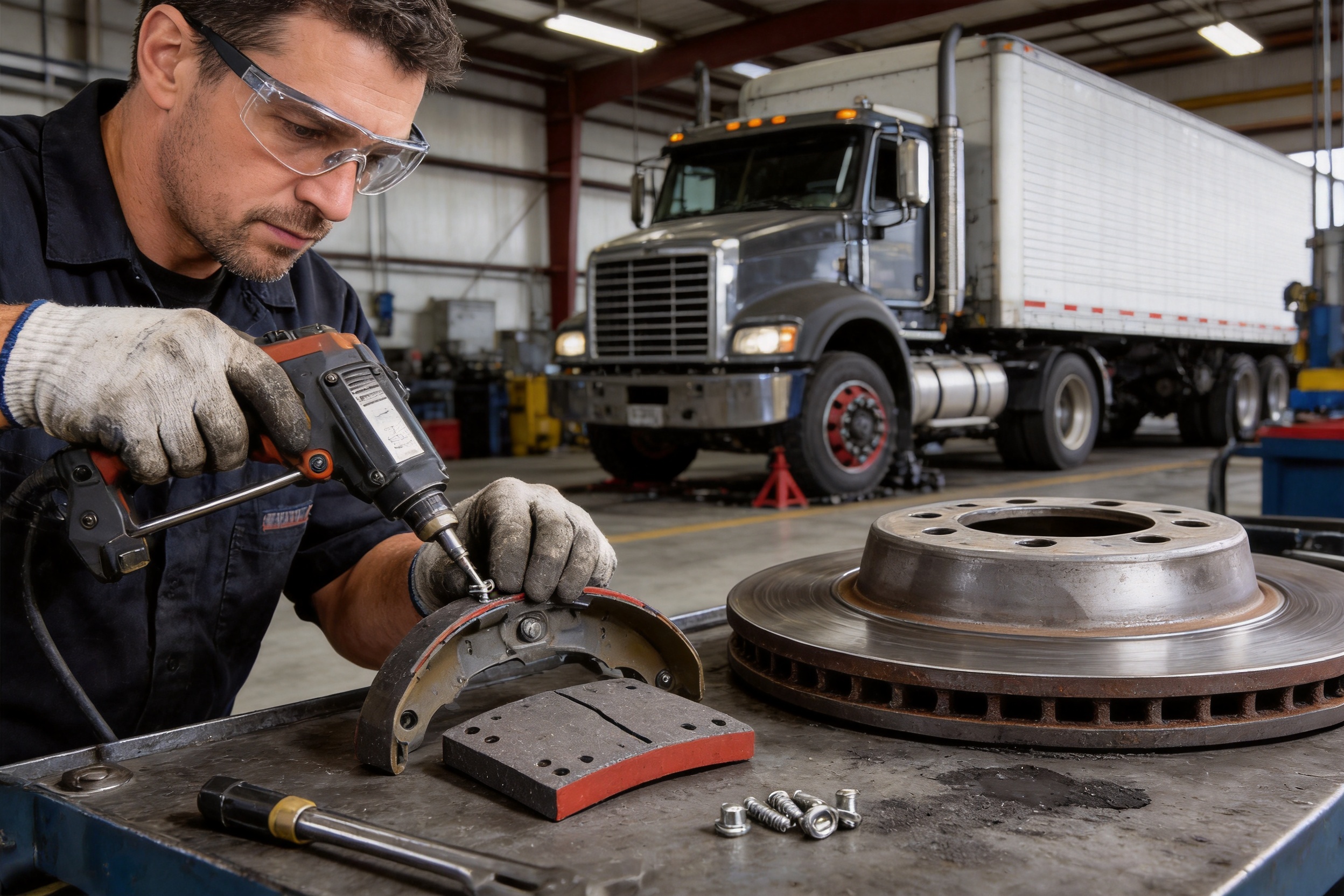
Installation should be carried out by trained brake technicians using the applicable service instructions. Before removing the old lining, the brake assembly should be inspected and documented. The technician should note the brake-shoe condition, drum condition, rivet arrangement, lining wear pattern, and any evidence of overheating or contamination.
8.1 Brake Drum Inspection
The drum should be checked for cracks, deep scoring, heat checking, corrosion, out-of-round conditions, and excessive internal diameter. A replacement lining cannot correct a brake drum that is beyond its service limit. If the drum surface is unsuitable, the new lining may experience poor bedding, uneven pressure, noise, or accelerated wear.
8.2 Brake-Shoe Preparation
The brake shoe should be clean, structurally sound, and free from distortion. Old rivets must be removed without damaging the shoe. The seating surface should be checked for raised areas, corrosion, cracks, or deformation. The 10-hole pattern on the new lining must be compared with the shoe before riveting begins.
8.3 Rivet Installation
Rivets should be selected according to the brake-shoe design and lining thickness. The rivet length must allow proper formation of the head without damaging the friction material. Riveting should proceed with suitable equipment and controlled force. The lining should be supported evenly so that it is not bent or fractured during attachment.
After riveting, each formed rivet head should be checked for secure seating, correct formation, and interference risk. The lining should remain firmly attached with no looseness, cracks, raised sections, or gaps that could affect drum clearance.
8.4 Bedding-In
New linings generally require a controlled bedding-in process. During the early service period, contact between the lining and drum develops progressively. The vehicle should be operated according to professional service procedures, avoiding unnecessary severe braking until the contact pattern is established.
After initial operation, the brake system should be inspected for abnormal noise, uneven contact, excessive heat, loose attachment, or unexpected wear. Any irregularity should be investigated before the vehicle returns to demanding service.
9. Maintenance and Service-Life Considerations
Brake lining life depends on many factors, including vehicle weight, traffic conditions, driver behavior, terrain, braking frequency, brake adjustment, drum condition, temperature, and maintenance quality. A high-quality lining can support reliable service, but it cannot compensate for a malfunctioning brake system or improper operating practices.
Routine inspections should examine remaining lining thickness, rivet security, surface condition, cracking, contamination, uneven wear, and heat-related damage. The technician should also inspect the brake drum, shoe bushings, rollers, return springs, adjusters, and other related components where applicable.
Uneven lining wear can indicate a problem elsewhere in the brake system. Possible causes may include a distorted shoe, incorrect adjustment, seized hardware, misalignment, drum irregularity, or unequal actuation. Replacing the lining without correcting the underlying cause may result in repeated failure.
Contamination by oil, grease, or other substances can reduce friction and may require replacement. Cleaning methods should follow the relevant service guidance. Components that have absorbed contamination or suffered thermal damage should not be returned to service merely because they appear visually acceptable.
Maintenance records should identify the vehicle, axle or brake position, installed part reference, date, mileage or operating hours, drum condition, and inspection findings. This information helps establish service trends and supports future purchasing decisions.
10. Customization and OEM Supply Capability
Heavy-duty brake customers often operate in different markets and may have requirements beyond a standard catalog listing. A manufacturer with OEM-oriented production can review technical drawings, samples, reference numbers, packaging instructions, and market-specific documentation.
Customization may involve product dimensions, hole arrangements, friction-material selection, marking, packaging, label language, pallet configuration, or coordinated supply with a lined brake shoe. Any change to a safety-critical component should be subject to technical review and validation. A visually small change in thickness, curvature, hole position, or friction grade can influence the completed brake assembly.
Zhejiang Bangchi Auto Parts Co., Ltd. identifies its business as a source for heavy-duty brake parts and follows the global FMSI numbering system. Its listed product categories cover both individual friction components and assembled repair products. This breadth can be beneficial for customers that want to consolidate purchasing across brake linings, brake shoes, and repair kits.
OEM supply also requires communication. Customers should provide accurate drawings, vehicle information, sample parts, expected quantities, annual demand, packaging requirements, and applicable test criteria. The supplier should clarify the approved specification, sample-approval process, production lead time, inspection documents, and change-control procedure before mass production.
11. Purchasing and Export Considerations
When purchasing the BPW200 Brake Lining, buyers should request confirmation of the complete specification rather than relying on the product name alone. The order should state the WVA 19094 reference, 420 × 200 mm size, 10 rivet holes, required quantity, packaging method, and any customer-specific requirements.
For international shipments, buyers should also confirm carton dimensions, gross and net weight, pallet requirements, labeling, export documentation, production lead time, and shipping terms. Friction components should be protected from moisture and physical damage during transport and storage.
Stock should be kept in a clean, dry area away from oil, grease, chemicals, direct water exposure, and excessive mechanical pressure. Cartons should not be stacked in a way that bends or deforms the linings. Inventory should be rotated so that older approved stock is used according to the supplier’s storage guidance.
A purchasing department may also benefit from creating an internal approval checklist. The checklist can include reference verification, sample inspection, packaging approval, supplier quality documentation, delivery inspection, and nonconformance procedures. This approach helps ensure that cost savings do not come at the expense of component traceability or fitment control.
12. Why Manufacturer Process Strength Matters to Competitiveness
Competition in the heavy-duty brake parts market is not determined only by unit price. Product consistency, delivery reliability, technical support, application range, and the ability to respond to customer requirements all influence the true value of a supplier.
A manufacturer with controlled production processes can reduce variation between batches. This may lower the risk of fitment problems, installation delays, inconsistent bedding, and premature returns. Better process discipline can also improve material utilization and reduce waste, allowing a supplier to remain commercially competitive while maintaining product quality.
Integrated knowledge across brake linings, steel brake shoes, casted brake shoes, lined brake shoes, and repair kits can create additional value. The manufacturer can understand how the friction material interacts with the shoe, how the hole pattern affects riveting, and how the assembled product should be packaged for the service market.
Advanced manufacturing should be understood as a combination of equipment, engineering, process control, inspection, data management, and trained personnel. A modern machine cannot guarantee quality if the drawing is incorrect, the material is not controlled, or the inspection method is inadequate. Conversely, skilled technicians and clear procedures can make each production stage more reliable and repeatable.
For distributors, this means that the BPW200 Brake Lining can be evaluated not only as an individual part but also as a product supported by a broader manufacturing system. The supplier’s ability to maintain reference accuracy, produce consistent dimensions, provide related brake products, and respond to OEM requirements can be more valuable than a short-term price difference.
13. Technical Checklist for Distributors and Workshops
| Check Point | Recommended Verification |
|---|---|
| Reference | Confirm BPW200 and WVA 19094 identification. |
| Dimensions | Verify the 420 × 200 mm specification and required thickness. |
| Hole pattern | Confirm 10 holes, hole diameter, spacing, and countersink details. |
| Brake shoe | Compare the lining with the exact shoe profile before riveting. |
| Brake drum | Inspect diameter, surface condition, cracks, scoring, and runout. |
| Rivets | Use approved rivet dimensions and suitable riveting equipment. |
| Material condition | Reject parts with contamination, cracking, delamination, or damage. |
| Traceability | Record supplier, batch information, vehicle, and installation date. |
| Bedding-in | Follow professional procedures for progressive initial contact. |
| Post-installation | Inspect for noise, heat, looseness, uneven contact, and abnormal wear. |
14. Frequently Asked Questions
Q1: What is the BPW200 Brake Lining?
The BPW200 Brake Lining is a heavy-duty drum-brake friction component. The supplied product information identifies it as a 420 × 200 mm lining with 10 rivet holes and WVA number 19094.
Q2: What does WVA 19094 indicate?
WVA 19094 is a product reference used to identify a particular brake lining specification within the commercial vehicle brake parts market. It supports catalog comparison, but final fitment should also be confirmed using dimensions, hole arrangement, brake-shoe profile, and vehicle application.
Q3: Is the 420 × 200 mm size sufficient to confirm compatibility?
No. The size is an important identification point, but compatibility also depends on thickness, curvature, hole spacing, hole diameter, countersink design, brake-shoe shape, drum dimensions, and the complete brake-system application.
Q4: Why is the number of rivet holes important?
The 10-hole arrangement determines how the lining attaches to the compatible brake shoe. The holes must align accurately, and the rivets must be correctly selected and installed. Hole count alone is not enough; the complete layout must match.
Q5: Can the lining be installed on any heavy-duty brake shoe?
No. It should be installed only on a compatible brake shoe confirmed by technical documentation or professional fitment inspection. A similar-looking shoe may have a different profile, hole pattern, or application requirement.
Q6: What should be checked before installation?
The technician should verify the part reference, dimensions, hole layout, lining condition, brake-shoe condition, rivets, brake drum surface, drum diameter, and related brake hardware. The assembly should be clean and free from oil, grease, and other contamination.
Q7: What are the main advantages of buying from an OEM-oriented manufacturer?
Potential advantages include more consistent dimensions, controlled material and curing processes, improved traceability, application-focused technical support, related brake-part availability, and the ability to review customized requirements.
Q8: Does a new lining eliminate the need to inspect the brake drum?
No. A worn, cracked, scored, distorted, or oversized drum can prevent the new lining from bedding and operating correctly. The drum must be inspected and serviced according to applicable limits before the vehicle returns to operation.
Q9: How should BPW200 linings be stored?
They should be stored in a clean, dry, protected area away from water, oil, grease, chemicals, and damaging pressure. Packaging should remain intact, and stock should be managed according to the supplier’s storage and rotation guidance.
Q10: Can the product be customized?
Customization may be possible through technical review with the manufacturer. Potential requirements can include dimensions, friction material, marking, packaging, or related brake-shoe assemblies. Any change should be approved and validated before production.
Q11: What other products may be sourced from the same manufacturer?
The supplied company information lists steel brake shoes, casted brake shoes, brake linings, lined brake shoes, brake shoe repair kits, and lined brake shoe kits. Availability and technical compatibility should be confirmed for each specific application.
Q12: What information should be included in an inquiry?
An inquiry should include the BPW200 designation, WVA 19094 reference, 420 × 200 mm dimensions, 10-hole arrangement, required quantity, vehicle or axle application, sample or drawing if available, packaging requirements, and delivery destination.
15. Conclusion
The BPW200 Brake Lining is a clearly identified heavy-duty friction component with a 420 × 200 mm size, 10 rivet holes, and WVA number 19094. These specifications provide a practical basis for cataloging, purchasing, and preliminary fitment review. For fleet operators, distributors, and workshops, the product can offer the advantages of defined identification, application-focused production, coordinated supply, and OEM-oriented manufacturing support.
Its performance, however, depends on more than the printed reference. The correct brake shoe, drum, rivets, installation method, adjustment, bedding-in procedure, and maintenance condition all influence the result. A quality lining must be manufactured with controlled materials, accurate forming, stable curing, precise machining, correct drilling, and reliable inspection.
Zhejiang Bangchi Auto Parts Co., Ltd. offers a product range that covers brake linings and related heavy-duty brake assemblies. Its stated focus on OEM brake parts and the global FMSI numbering system supports the needs of customers seeking identifiable and repeatable commercial vehicle brake components.
For the most reliable purchasing decision, buyers should confirm the complete technical specification, request application verification when necessary, inspect incoming products, and use qualified technicians for installation. When these measures are combined with disciplined manufacturing and appropriate maintenance, the BPW200 Brake Lining can serve as a dependable component within a properly maintained heavy-duty drum brake system.
References
1. WVA Brake Lining Identification and Commercial Vehicle Friction-Component Cataloging Principles.
2. FMSI Heavy-Duty Brake Parts Numbering and Application Reference Practices.
3. Commercial Vehicle Drum Brake Inspection, Maintenance, and Installation Procedures.
4. Friction Material Manufacturing: Raw-Material Control, Mixing, Forming, Curing, and Finishing Principles.
5. Heavy-Duty Brake Shoe Riveting, Drum Inspection, and Bedding-In Service Guidance.
6. Supplier-provided product information for BPW200 Brake Lining, WVA 19094, 420 × 200 mm, 10 rivet holes.
7. Supplier-provided company information regarding OEM heavy-duty brake parts manufacturing and global FMSI numbering support.