 English
 简体中文
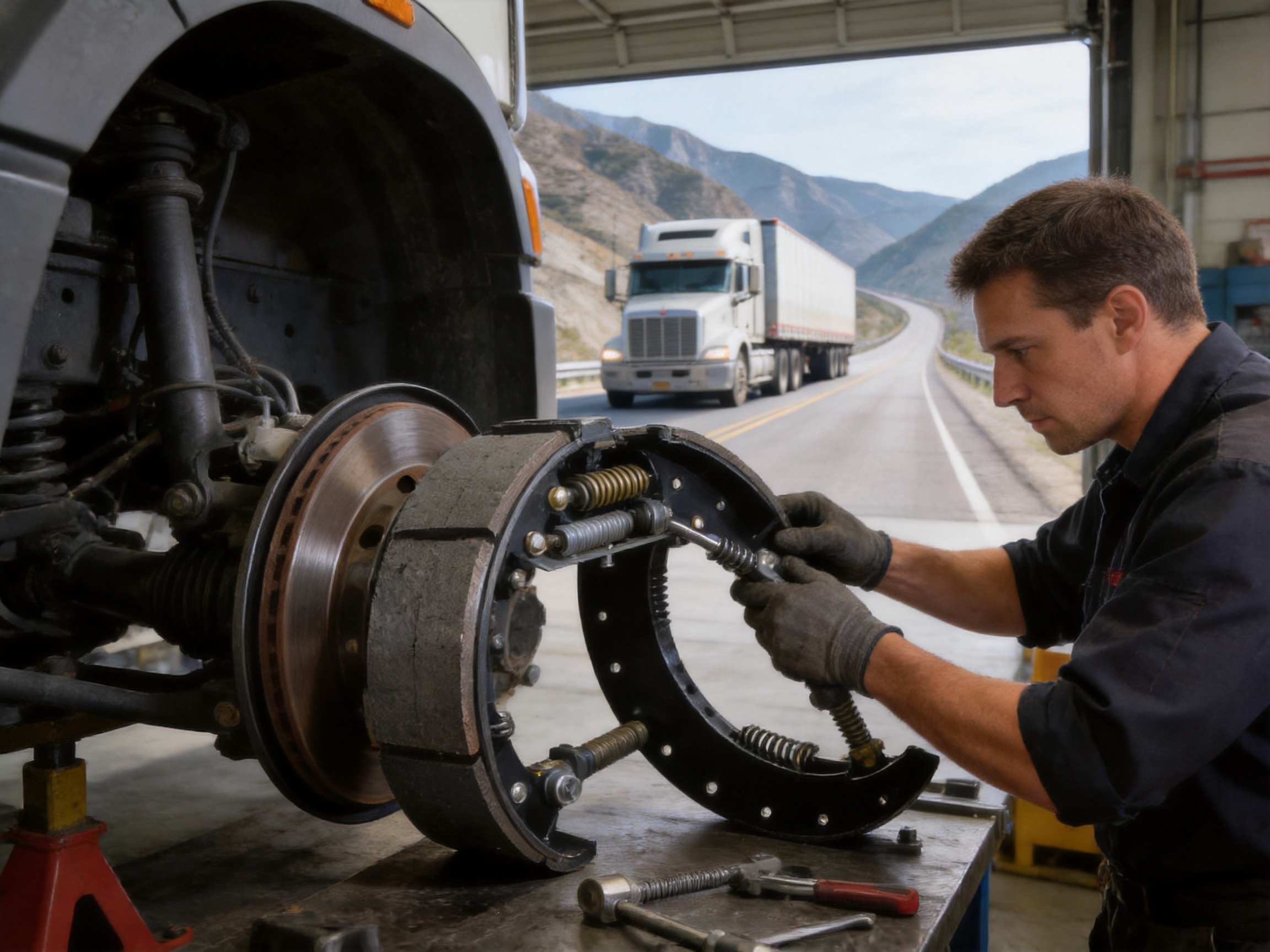
Heavy-duty braking systems operate under demanding conditions that require dependable mechanical strength, consistent friction performance, accurate fitment, and resistance to heat. Trucks, trailers, buses, and other commercial vehicles frequently carry substantial loads over long distances, steep gradients, congested urban roads, and uneven operating surfaces. In these environments, the brake shoe is not simply a supporting component for the lining. It is a critical structural element that transfers braking force, supports friction material, manages heat, and helps maintain stable contact with the brake drum.
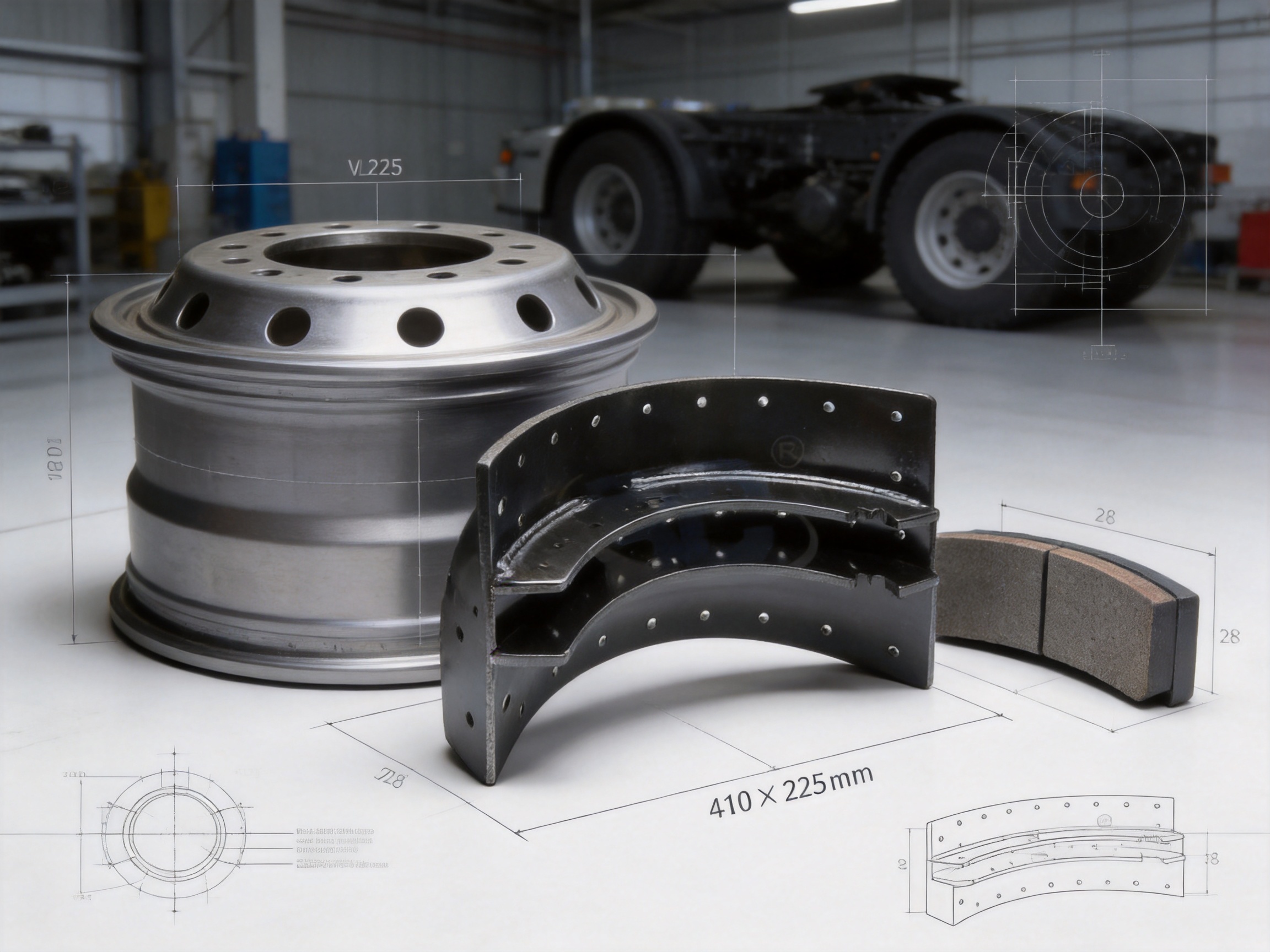
The VL225 New Generation Brake Shoe, identified by OE number 3095197, has been developed for applications using a 410 × 225 mm brake shoe format and 28 rivet holes. Its design combines a heavy-duty steel structure, carefully arranged rivet locations, advanced alloy material, and geometry intended for reliable commercial vehicle service. The result is a brake shoe designed to deliver consistent force distribution, reduced vibration, extended component life, and stable braking response across a wide range of operating conditions.
Manufactured by Zhejiang Bangchi Auto Parts Co., Ltd., the VL225 reflects an approach centered on replacement compatibility, production precision, and practical fleet requirements. The company supplies heavy-duty brake parts according to the global FMSI numbering system and focuses on OEM-style brake components for commercial vehicles. This product article examines the construction, performance advantages, production considerations, installation requirements, inspection practices, and application value of the VL225 New Generation Brake Shoe.
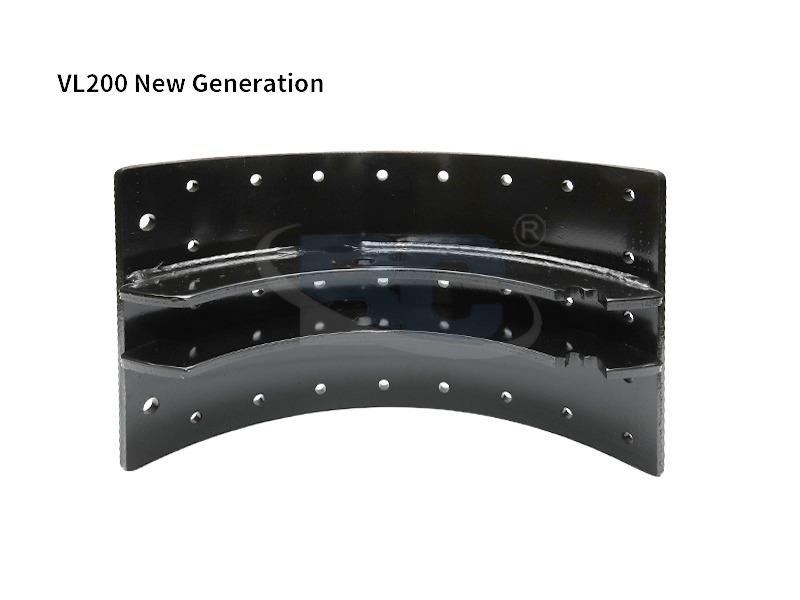
VL225 New Generation Brake Shoe
1. Product Identification and Basic Specifications
Correct identification is the first step in selecting a brake shoe. A commercial vehicle brake system may use components that appear similar while differing in width, diameter, hole count, offset, web shape, or drum compatibility. The VL225 is identified through several key dimensions and reference numbers, allowing purchasing teams, maintenance technicians, and distributors to confirm the correct part before installation.
| Specification | VL225 New Generation Brake Shoe |
|---|---|
| Product category | Steel brake shoe |
| Product reference | VL225 New Generation |
| OE number | 3095197 |
| Overall product size | 410 × 225 mm |
| Number of rivet holes | 28 |
| Nominal rivet hole diameter | 10.0 mm |
| Suggested application | Heavy-duty trucks and commercial trailers |
| Drum compatibility | Standard 410 mm drum applications, subject to verification |
| Material description | Advanced alloy steel |
| Specified friction coefficient range | 0.42–0.48 |
| Specified maximum temperature | 520°C |
The 410 × 225 mm dimensions establish the principal footprint of the shoe. These measurements should always be compared with the dimensions of the removed component, the vehicle service manual, and the relevant drum assembly. The 28-hole configuration is equally important because the holes must align with the selected lining and the approved rivet arrangement. A dimensional match without correct hole positioning is not sufficient for safe service.
The OE number 3095197 provides an additional identification reference. OE numbers are useful for cross-referencing, but they should not replace physical verification. Commercial vehicle braking systems can be modified during fleet maintenance, and regional vehicle specifications may vary. Before ordering, users should confirm the axle, drum size, shoe width, rivet pattern, and vehicle application.
2. Structural Function of a Heavy-Duty Brake Shoe
A brake shoe provides the foundation on which the lining is mounted. During braking, the shoe is forced outward or otherwise positioned against the inner surface of a rotating drum. Friction between the lining and drum converts kinetic energy into heat and slows the vehicle. The shoe must therefore withstand mechanical loading while maintaining the intended relationship between the lining and drum.
In a heavy-duty vehicle, braking forces can be substantial. The shoe may experience repeated loading during service braking, emergency stops, downhill braking, low-speed maneuvering, and trailer operation. If the shoe lacks stiffness, the structure can deflect under pressure. Excessive deflection may produce uneven lining contact, localized heating, irregular wear, noise, or reduced braking consistency.
The VL225 design is intended to support stable force distribution across its 410 mm format. Its 28 rivet holes provide a broad attachment pattern for compatible lining material. When the correct lining is installed using the correct rivets and approved riveting technique, the attachment system helps maintain a secure relationship between the lining and shoe throughout the service cycle.
The shoe also contributes to thermal management. Braking energy is transferred from the lining to the drum, but the shoe must remain stable in an environment where temperatures can rise significantly. The product specification identifies a maximum temperature of 520°C and a friction coefficient range of 0.42–0.48 for the associated product information. Actual performance depends on the complete brake system, including lining formulation, drum condition, vehicle load, speed, adjustment, cooling, and operating technique.
2.1 Force Distribution
Even force distribution is one of the most important requirements for a brake shoe. A shoe that supports consistent lining contact can help reduce concentrated hot spots and irregular wear. The 28-hole arrangement of the VL225 is designed to provide a secure and evenly distributed lining attachment over the shoe surface.
Uniform attachment is especially valuable in heavy-duty applications because commercial vehicles often operate for long periods between scheduled maintenance events. A stable rivet pattern helps the lining remain supported during repeated thermal cycles and mechanical loading. It also assists technicians in maintaining a predictable installation process.
2.2 Mechanical Stability
Advanced alloy steel is used for the VL225 structure. The purpose of the material selection is to combine strength, dimensional stability, and resistance to the mechanical and thermal conditions associated with drum braking. Steel brake shoes must retain their shape under repeated use while remaining suitable for accurate machining and assembly.
Material performance is not determined by the alloy description alone. It also depends on forming accuracy, heat treatment where applicable, surface condition, dimensional control, and inspection. For this reason, a reliable manufacturing process is as important as the basic raw material selection.
2.3 Compatibility with Lining Systems
The VL225 is supplied as a steel brake shoe rather than as a complete lined assembly. It may therefore be used as a foundation for a compatible lining and rivet set, subject to application confirmation. The lining must match the shoe dimensions, hole pattern, curvature, and intended brake system.
Technicians should not assume that any 410 mm lining is automatically suitable. The lining width, thickness, arc, material specification, rivet diameter, and hole spacing must be checked. A correct shoe combined with an incorrect lining can lead to poor contact, premature wear, noise, or unsafe braking performance.
3. Performance Advantages in Commercial Vehicle Service
The VL225 New Generation Brake Shoe is designed around several practical advantages relevant to fleet operators and parts distributors. These include improved thermal stability, consistent friction support, reduced noise and vibration, extended lining and drum service potential, and compatibility with demanding operating environments.
3.1 High-Temperature Stability
Brake components used on heavy trucks and trailers must tolerate repeated heat cycles. Long descents, high gross vehicle weights, frequent stops, and inadequate cooling can raise brake temperatures rapidly. A shoe that maintains structural stability at elevated temperature provides a dependable base for the lining and supports more consistent braking behavior.
The VL225 product information specifies a maximum temperature of 520°C. This figure should be treated as a product reference rather than a guarantee that every application will remain within that limit. Actual temperature depends on vehicle mass, speed, gradient, braking frequency, drum condition, lining characteristics, adjustment, and driver technique.
Compared with a basic shoe made without a clearly defined thermal-performance target, the VL225 offers a more focused design approach. The combination of advanced alloy steel and refined geometry is intended to reduce the effects of heat-related distortion and braking inconsistency. This can be particularly valuable for long-haul fleets and vehicles operating in mountainous areas.
3.2 Consistent Friction Support
The specified friction coefficient range of 0.42–0.48 indicates the product information’s target friction performance when used with a compatible lining system. A stable friction relationship helps the brake respond predictably when the driver applies pressure. Predictability is essential for controlled deceleration, especially when vehicles carry varying loads.
The shoe itself does not create the complete friction coefficient. Friction depends primarily on the lining compound and the condition of the drum, while the shoe provides structural support. The advantage of a precisely manufactured shoe is that it allows the lining to maintain the intended contact geometry and attachment security.
In comparison with poorly matched or inaccurately formed shoes, a properly engineered shoe can help reduce variation from one braking event to the next. This is one reason why dimensional consistency and lining compatibility are important competitive factors in heavy-duty brake parts.
3.3 Reduced Brake Noise, Vibration, and Harshness
Noise and vibration can result from several conditions, including uneven lining contact, drum irregularity, loose hardware, incorrect adjustment, worn support points, or unsuitable friction material. The VL225 geometry is described as being refined to reduce noise, vibration, and harshness. This design objective supports smoother brake operation when the rest of the brake system is in good condition.
A brake shoe cannot correct every source of noise. The drum must be inspected, the shoe must move freely, return springs must be serviceable, and the lining must be installed correctly. Nevertheless, a stable shoe profile and accurate rivet placement can provide a better foundation for minimizing unwanted vibration than a component with inconsistent geometry.
3.4 Extended Component Service Life
Fleet maintenance costs are influenced by more than the initial purchase price of a brake part. Labor, vehicle downtime, drum replacement, lining replacement, inspection time, and emergency repairs all contribute to the total cost of ownership. A shoe that supports even wear and protects the integrity of the lining and drum may provide value over the full maintenance cycle.
The VL225 is designed to help extend lining and drum service life through stable geometry, secure lining attachment, and controlled heat behavior. This does not mean that every vehicle will achieve the same service interval. Road conditions, loading, braking habits, axle alignment, adjustment systems, and maintenance quality have a major influence on wear.
Compared with lower-quality alternatives that may have uneven holes, poor surface preparation, or inconsistent dimensions, a carefully produced shoe can reduce the risk of premature fitting problems. The advantage is particularly relevant to professional fleets that track maintenance performance and seek repeatable results across multiple vehicles.
4. Manufacturing Strengths and Process Considerations
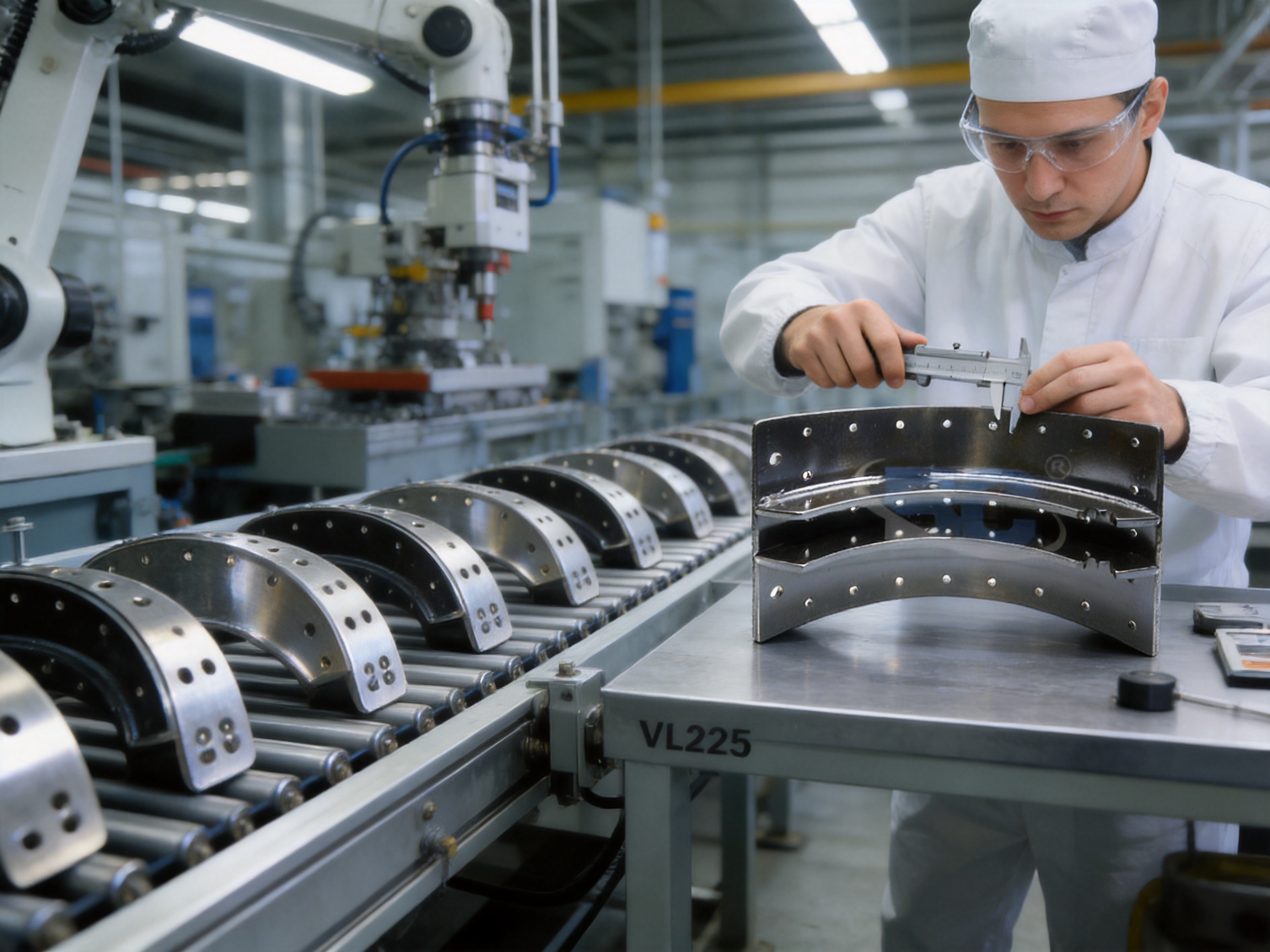
The quality of a steel brake shoe is established through a sequence of manufacturing operations rather than through one isolated feature. The production process must control raw material quality, forming, dimensional accuracy, hole positioning, surface condition, inspection, and packaging. Each step contributes to the performance of the finished component.
Zhejiang Bangchi Auto Parts Co., Ltd. focuses on heavy-duty brake parts and supplies OEM-style components following the global FMSI numbering system. This specialization allows the company to concentrate its production and quality-control resources on commercial vehicle braking requirements instead of treating brake shoes as a general-purpose fabricated item.
4.1 Material Selection
The VL225 uses advanced alloy steel as identified in the product specifications. For a brake shoe, the material must provide adequate mechanical strength, resistance to deformation, and suitability for forming and machining. Consistency in material thickness and composition helps maintain predictable behavior during manufacturing and service.
A focused material-control system normally begins with supplier selection and incoming inspection. Material identification, thickness checks, surface examination, and traceability are important because variations in steel can influence forming accuracy and structural performance. Consistent raw material also supports repeatability from one production batch to another.
4.2 Forming and Profile Accuracy
The curved profile of a brake shoe must correspond with the intended drum and lining assembly. Inaccurate forming can create gaps or concentrated contact areas between the lining and drum. These conditions may generate uneven wear and localized heat.
Production tooling should therefore be maintained to preserve the intended curvature and overall dimensions. Forming pressure, tool condition, springback, and inspection frequency all affect the final shape. A product designed for 410 mm applications must be checked against the relevant dimensional tolerances rather than relying only on visual similarity.
4.3 Rivet Hole Positioning
The VL225 has 28 rivet holes, with the product information specifying a nominal hole diameter of 10.0 mm. Hole count alone does not define the complete attachment system. The position, spacing, diameter, edge distance, and alignment of every hole are important.
Accurate hole positioning helps the lining sit correctly against the shoe. It also enables rivets to be installed without excessive force or misalignment. Poorly positioned holes can cause lining stress, damaged rivets, loose attachment, or difficulty during assembly.
Modern production control may include dedicated fixtures, drilling or punching tools, gauges, and sample-based dimensional checks. The goal is to ensure that each shoe can be assembled with its compatible lining without unnecessary adjustment by the technician.
4.4 Surface Preparation
The shoe surface must be suitable for lining installation and resistant to conditions encountered during storage and service. Surface contamination, sharp edges, excessive burrs, or corrosion can interfere with fitting and reduce assembly quality.
Deburring and cleaning are therefore important process stages. Edges around rivet holes should be checked so that the lining can sit flush and rivets can be properly seated. Surface treatment and packaging should also protect the shoe before it reaches the customer or workshop.
4.5 Inspection and Quality Assurance
Inspection should cover both visible workmanship and functional dimensions. Typical checkpoints for a steel brake shoe include overall length and width, hole count, hole diameter, hole spacing, profile, flatness, surface condition, edge quality, and identification markings.
For a product such as the VL225, inspection records can help maintain consistency across production batches. A structured quality system also supports customer communication when a distributor or fleet operator needs to trace a product by reference number or manufacturing lot.
The company’s heavy-duty focus is a competitive advantage because it aligns manufacturing attention with the needs of truck and trailer applications. Customers are not only purchasing a shaped steel part; they are purchasing dimensional confidence and a component intended to integrate with a specific brake system.
5. Advantages Over Lower-Quality or Poorly Matched Alternatives
Comparing brake shoes requires more than comparing catalog price. A less expensive component may become more costly if it causes installation delays, uneven wear, premature replacement, drum damage, or additional vehicle downtime. The VL225 offers several practical advantages over alternatives that lack controlled specifications or application-focused manufacturing.
5.1 Clear Identification
The combination of VL225 product reference, OE number 3095197, 410 × 225 mm dimensions, and 28-hole configuration gives distributors and technicians several ways to confirm the product. Clear identification reduces the chance of ordering a visually similar but dimensionally incorrect component.
5.2 Application-Specific Geometry
Heavy-duty brake shoes should be designed for the intended drum and lining system. The VL225 is positioned for standard 410 mm drum applications, subject to compatibility verification. Its geometry is intended for trucks, trailers, long-haul fleets, urban traffic, and off-highway operations.
A generic shoe without application-specific geometry may fit poorly or require unacceptable modification. Brake components should never be forced, drilled, bent, or altered in the workshop to compensate for an incorrect part.
5.3 High Hole Count and Secure Lining Support
The 28-hole pattern provides a substantial attachment arrangement for a compatible lining. Compared with a shoe whose hole pattern does not correspond precisely to the required lining, the VL225 can support a more orderly and secure assembly process.
Correct riveting remains essential. A high hole count cannot compensate for unsuitable rivets, incorrect riveting pressure, poor hole cleaning, or failure to seat the lining properly.
5.4 Balanced Performance Objectives
The VL225 is not designed around one performance feature alone. Its product information combines structural strength, thermal stability, friction consistency, reduced noise, and service-life objectives. This balanced approach is important because commercial vehicle braking performance depends on the interaction of many factors.
A shoe that is strong but dimensionally inaccurate is unsuitable. A shoe that is inexpensive but thermally unstable may create long-term maintenance problems. A shoe that fits correctly but has inconsistent surface quality can complicate lining installation. The VL225’s value lies in addressing these requirements as part of one product specification.
6. Application Areas
The VL225 New Generation Brake Shoe is intended for heavy-duty trucks and commercial trailers using compatible 410 mm drum brake systems. Its operating profile is relevant to several commercial applications.
6.1 Long-Haul Fleets
Long-haul trucks may travel thousands of kilometers through changing weather, road surfaces, and elevations. Braking events may be less frequent on open highways but more demanding during exits, traffic control, loading areas, and downhill sections. A stable brake shoe helps support consistent performance over extended routes.
6.2 Mountainous Routes
Mountain roads place additional stress on drum brakes because of prolonged descent braking. Drivers and fleet managers must use appropriate gear selection, auxiliary braking systems, and controlled service-brake application where available. The VL225’s focus on thermal stability is relevant to these conditions, although no brake shoe can eliminate the need for correct driving technique and system maintenance.
6.3 Urban Commercial Vehicles
Urban trucks and trailers may experience frequent stopping, low-speed maneuvering, congestion, and repeated brake applications. These conditions create high cycle counts and can increase wear even when vehicle speeds are moderate. A precisely fitted shoe with stable lining support can help maintain predictable operation in stop-and-go service.
6.4 Off-Highway Operations
Construction, agricultural, mining-support, and other off-highway vehicles can operate in dusty, uneven, or heavily loaded conditions. Brake components may be exposed to vibration, contamination, and frequent changes in load. Regular inspection is essential, but a robust shoe structure and accurate assembly provide a necessary foundation for dependable service.
7. Installation and Service Guidance
Brake shoe installation should be performed by qualified personnel using the vehicle manufacturer’s procedures and appropriate workshop equipment. The following guidance is based on the supplied product information and should be used together with the service documentation for the specific axle and brake system.
7.1 Inspect the Brake Drum
Before installing the shoe, inspect the drum surface for scoring, cracks, heat checking, excessive wear, out-of-round conditions, and contamination. Measure the drum according to the applicable service limits. A new or properly prepared shoe cannot perform correctly against a damaged or excessively worn drum.
Drum condition also affects noise, bedding, friction stability, and lining life. If the drum surface has deep grooves or severe heat damage, replacing only the shoe or lining may not solve the underlying problem.
7.2 Confirm the Shoe and Lining Match
Verify the VL225 reference, OE number 3095197, 410 × 225 mm size, and 28-hole arrangement. Confirm that the lining is designed for the same shoe and drum application. Check that the lining curvature corresponds to the shoe and that the rivet holes align without force.
Do not enlarge, relocate, or add holes in the shoe. Any modification can weaken the structure and change the intended force distribution.
7.3 Use Correct Rivets and Tools
The supplied service information recommends torquing rivets to 40–45 N·m using a star pattern. Technicians should confirm whether this instruction applies to the specific rivet design and workshop tooling in use. Riveting procedures can vary according to rivet material, machine type, lining construction, and manufacturer requirements.
Using a star pattern helps distribute assembly force progressively across the lining. This can reduce the risk of pulling the lining out of position during installation. Rivets should be fully seated, correctly formed, and free from cracks or loose contact.
7.4 Check Brake Hardware
Inspect return springs, pins, bushings, rollers, adjusters, retainers, and support points. Worn hardware can cause symptoms that may be incorrectly attributed to the brake shoe. Excessive movement, binding, weak springs, or incorrect adjustment may result in drag, uneven wear, noise, or delayed brake release.
Clean contact points according to the applicable service procedure. Lubricants must be kept away from friction surfaces. Any grease or oil contamination on the lining or drum requires corrective action before the vehicle returns to service.
7.5 Bedding Procedure
The supplied service note recommends 250–350 km of progressive braking for bedding. During this period, braking should be controlled and gradual where road and traffic conditions permit. Avoid unnecessary severe braking immediately after installation because the lining and drum need time to establish an even contact pattern.
After bedding, inspect the system for signs of uneven contact, abnormal noise, overheating, loose hardware, or unusual wear. If braking performance is inconsistent, the vehicle should be removed from service until the cause is identified.
8. Maintenance and Inspection Planning
Preventive maintenance is essential for heavy-duty brake systems. The product information recommends inspecting lining thickness every 15,000 km and replacing the lining when it is worn below 10 mm. For severe-duty applications, the recommended inspection interval is reduced to 10,000 km.
These intervals should be adapted to the vehicle manufacturer’s instructions, fleet experience, legal requirements, operating environment, and observed wear rate. A vehicle that operates in mountainous regions, carries heavy loads, or works in frequent stop-and-go conditions may require more frequent inspection.
8.1 What to Inspect
Inspection should include lining thickness, lining security, rivet condition, drum surface, shoe profile, return hardware, adjuster operation, and signs of overheating. Look for cracks, missing rivet heads, loose lining sections, contamination, blue or discolored drum areas, and localized wear.
Check whether the lining is wearing evenly across its width and length. Tapered wear or isolated contact may indicate a drum problem, misalignment, worn hardware, incorrect adjustment, or an unsuitable lining fit.
8.2 Replacement Decisions
Replace the lining when it reaches the applicable minimum thickness or shows structural damage. Replace the shoe if it is cracked, distorted, excessively corroded, damaged around rivet holes, or otherwise outside service limits. A shoe that has lost its intended shape should not be returned to service simply because the lining remains thick.
Whenever a brake shoe is replaced, inspect the mating components. Brake performance depends on the complete system, and replacing one part without correcting related defects can lead to repeated service problems.
9. Purchasing and Fleet Management Value
For distributors and fleet operators, product consistency is an important purchasing criterion. A brake shoe with clear references and stable dimensions simplifies inventory management. The VL225 can be cataloged under its product reference, OE number, dimensions, and hole count, creating multiple verification points for warehouse staff.
Reliable identification also reduces incorrect shipments. When parts are ordered for several vehicle models or axle configurations, internal purchasing systems can use the 3095197 reference together with the 410 × 225 mm size and 28-hole pattern. This makes it easier to compare incoming goods with purchase orders.
Fleet managers can also evaluate the shoe through maintenance records. Useful data includes kilometers per lining set, drum replacement frequency, inspection findings, installation time, noise complaints, and braking-related downtime. These measurements help determine whether a product provides value in the fleet’s actual operating environment.
Zhejiang Bangchi Auto Parts Co., Ltd. supports this type of professional sourcing through its focus on heavy-duty brake parts and OEM-style numbering. The company’s product range includes steel brake shoes, cast brake shoes, brake linings, lined brake shoes, brake shoe repair kits, and lined brake shoe kits. This broader category coverage can help customers source related components from a specialist supplier.
10. Frequently Asked Questions
What is the OE number for the VL225 New Generation Brake Shoe?
The OE number provided for the product is 3095197. Buyers should still verify the vehicle, axle, drum, dimensions, and rivet pattern before ordering.
What are the dimensions of the VL225?
The listed product size is 410 × 225 mm. These dimensions should be compared with the removed component and the service specifications for the vehicle.
How many rivet holes does the brake shoe have?
The VL225 has 28 rivet holes. The supplied technical information identifies the nominal hole diameter as 10.0 mm.
Is the VL225 supplied with lining?
The product is listed under the steel brake shoe category. It should therefore be treated as a shoe foundation unless the specific supplier quotation identifies it as a lined assembly or kit.
What vehicles can use the VL225?
The product is designed for compatible heavy-duty trucks and commercial trailers using 410 mm drum brake applications. Vehicle compatibility must be verified before installation.
Can it be used with an aftermarket drum?
It may be used with an aftermarket drum when the drum is correctly specified and compatible. The drum condition, diameter, width, surface, and service limits should be checked before installation.
What friction coefficient is specified?
The product information lists a friction coefficient range of 0.42–0.48. Actual braking performance depends on the complete lining, drum, adjustment, load, temperature, and operating conditions.
What is the specified maximum temperature?
The listed maximum temperature is 520°C. This value is a product reference and does not remove the need for correct braking technique, thermal inspection, or system maintenance.
How should the rivets be installed?
The supplied service note recommends a torque range of 40–45 N·m and a star-pattern installation sequence. Technicians should confirm the exact procedure for the selected rivet and use suitable professional tooling.
How long should bedding take?
The service information recommends 250–350 km of progressive braking for bedding. The process should be adapted to traffic, road, weather, and vehicle safety conditions.
How often should the lining be inspected?
The recommended standard interval is every 15,000 km, with inspection every 10,000 km for severe-duty service. Fleet maintenance rules or vehicle manufacturer requirements may call for shorter intervals.
When should the lining be replaced?
The supplied information recommends replacement when lining thickness falls below 10 mm. Damage, contamination, loose rivets, cracking, or uneven wear may require earlier replacement.
How does the VL225 differ from older designs?
The New Generation design is described as using advanced alloy material, improved heat dissipation, and refined geometry intended to support quieter and more consistent braking. Correct application and installation remain essential to achieving these benefits.
11. Conclusion
The VL225 New Generation Brake Shoe is a heavy-duty steel brake shoe designed for demanding commercial vehicle applications. Its 410 × 225 mm format, 28-rivet-hole configuration, OE reference 3095197, advanced alloy steel construction, and specified performance characteristics provide a clear basis for application and purchasing decisions.
Its principal advantages include stable lining support, controlled force distribution, thermal performance objectives, reduced noise and vibration potential, and suitability for trucks and trailers operating on highways, urban roads, mountainous routes, and off-highway surfaces. Compared with poorly matched or inconsistently manufactured alternatives, the VL225 offers a more clearly defined and application-focused solution.
The product’s performance also depends on the manufacturing discipline behind it. Material control, forming accuracy, hole positioning, surface preparation, inspection, and packaging all contribute to the reliability of the finished shoe. Zhejiang Bangchi Auto Parts Co., Ltd.’s specialization in heavy-duty brake components and OEM-style FMSI numbering supports a focused approach to commercial vehicle replacement parts.
For the best results, buyers should verify all application details, technicians should inspect the drum and related hardware, rivets should be installed according to the approved procedure, and fleets should follow a structured bedding and inspection plan. When integrated into a correctly maintained brake system, the VL225 provides a practical foundation for dependable heavy-duty braking service.
References
1. Product specification sheet for the VL225 New Generation Brake Shoe, including OE number 3095197, dimensions, rivet-hole count, material description, and performance data.
2. Heavy-duty commercial vehicle brake maintenance practices, including drum inspection, lining measurement, rivet installation, bedding, and preventive service planning.
3. Global FMSI numbering principles for automotive friction and brake component identification.
4. General engineering principles for drum brake shoe design, friction material support, thermal management, and mechanical force distribution.
5. Commercial vehicle workshop guidance concerning brake hardware inspection, drum compatibility, lining wear assessment, and safe component replacement.