 English
 简体中文
Heavy-duty braking systems demand components that can withstand repeated loading, high frictional temperatures, vibration, contamination, and long operating cycles. Among the most important foundation brake components is the casted brake shoe, which supports the brake lining and transfers braking force to the drum. A brake shoe that is accurately manufactured, dimensionally stable, and compatible with the intended braking system can contribute to dependable stopping performance, controlled maintenance costs, and improved fleet productivity.
The 1246532 casted brake shoe series is designed for heavy-duty applications associated with DAF braking systems. The available product information identifies three related specifications: 1246530, 1246531, and 1246532. These variants cover different brake shoe widths and riveting-hole configurations, allowing parts purchasers, repair workshops, and commercial vehicle fleets to select a suitable replacement according to the original brake assembly.
Manufactured and supplied by Zhejiang Bangchi Auto Parts Co., Ltd., the product range is positioned for the heavy-duty brake parts market. The company provides brake components based on original-equipment references and the global FMSI numbering system. Its product categories include steel brake shoes, casted brake shoes, brake linings, lined brake shoes, brake shoe repair kits, and lined brake shoe kits.
This article explains the construction, specifications, applications, manufacturing considerations, purchasing advantages, installation requirements, maintenance practices, and quality factors associated with the 1246532 casted brake shoe series.
1246532 Casted Brake Shoe
Product Overview
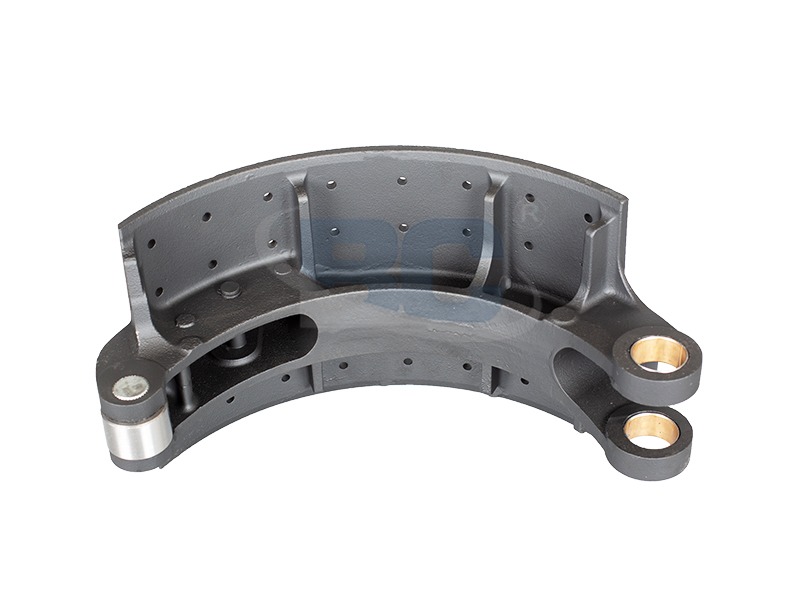
A casted brake shoe is a rigid, curved support component used inside a drum brake assembly. During braking, the brake shoe carries the friction lining and moves outward against the inner surface of the brake drum. The resulting friction converts the vehicle’s kinetic energy into heat, reducing vehicle speed or bringing the vehicle to a stop.
Unlike a simple flat steel support, a brake shoe must maintain a carefully controlled curved profile. The profile must correspond with the brake drum and lining arrangement so that contact develops progressively and evenly. If the shoe is distorted, poorly fitted, or manufactured outside acceptable dimensional limits, the brake lining may contact the drum unevenly. This can cause accelerated wear, noise, reduced braking efficiency, or localized overheating.
The 1246532 casted brake shoe belongs to a group of heavy-duty replacement components identified for DAF applications. The related references in the supplied product data are 1246530, 1246531, and 1246532. They are differentiated primarily by overall size and the number of riveting holes.
| Reference | Category | Listed Size | Riveting Holes | Application |
| 1246530 | Casted brake shoe | 419 × 152 mm | 16 | DAF |
| 1246531 | Casted brake shoe | 419 × 178 mm | 32 | DAF |
| 1246532 | Casted brake shoe | 419 × 203 mm | 32 | DAF |
The dimensions and hole counts should always be checked against the vehicle identification information, the original component, and the complete brake assembly before ordering. In particular, the product data identifies the three specifications in a compact table, so purchasers should verify the exact reference and configuration required for their vehicle or axle.
Why Casted Brake Shoes Matter in Heavy-Duty Braking
Commercial vehicles operate under conditions that are significantly more demanding than those experienced by many passenger cars. A loaded truck, trailer, bus, or vocational vehicle may repeatedly brake while carrying substantial mass. Long downhill routes, frequent stops, urban traffic, high ambient temperatures, and uneven road surfaces place continuous stress on brake components.
The brake shoe is exposed to several types of load at the same time. Mechanical forces are generated when the actuator pushes the shoe against the drum. Thermal loads are created when friction converts motion into heat. Vibrations can develop when the drum, lining, or shoe does not operate smoothly. Environmental contamination may include dust, moisture, road salt, oil, and other materials. A suitable casted brake shoe must support reliable performance under this combination of conditions.
A properly manufactured shoe provides a stable foundation for the brake lining. Its geometry helps the lining follow the drum surface. Its mounting areas must accommodate the correct hardware, rollers, springs, and pivot arrangements. Its riveting holes must be positioned accurately so that the lining can be installed without stress, misalignment, or damage.
For fleet operators, these characteristics have a direct commercial impact. A brake shoe that fits correctly can reduce installation time, simplify workshop procedures, and help avoid premature rework. Consistent components also make it easier for maintenance teams to standardize inspection and replacement practices across multiple vehicles.
Key Features of the 1246532 Series
Heavy-Duty Casted Construction
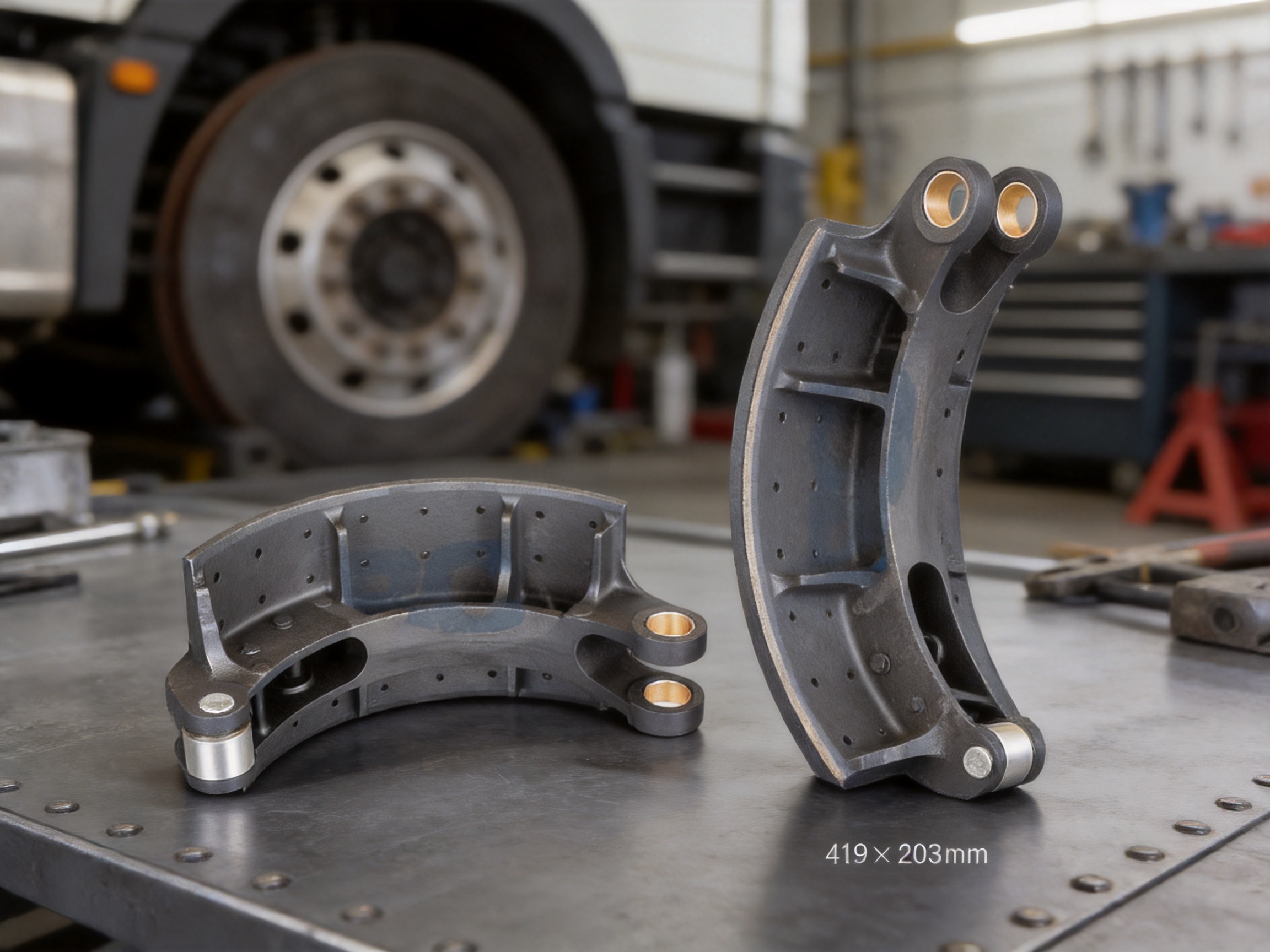
The product is identified as a casted brake shoe, making it suitable for applications where a robust support structure is required. Casting allows the component to be formed with the necessary curved body and integrated structural features. The resulting shoe can be designed around the geometry of the intended drum brake system rather than being treated as a generic flat replacement part.
A casted body also provides a stable base for lining attachment. When the shoe is matched with an appropriate brake lining and correctly installed, the assembly can deliver the mechanical support required for repeated braking cycles.
Application-Specific Dimensions
The listed variants share a nominal length of 419 mm while differing in width. The 1246530 specification is listed at 152 mm, the 1246531 specification at 178 mm, and the 1246532 specification at 203 mm. These distinctions are important because brake drum assemblies are designed around specific shoe dimensions.
Choosing a shoe solely because it has a similar length can result in an incorrect installation if the width, lining coverage, mounting arrangement, or riveting-hole pattern does not match. The reference number and complete dimensional details should therefore be treated as essential ordering information.
Riveting-Hole Configurations
The available information identifies 16 riveting holes for the 1246530 version and 32 riveting holes for both the 1246531 and 1246532 versions. Riveting holes determine how the friction lining is attached to the shoe. Their quantity and arrangement influence the distribution of attachment points across the lining.
Correct hole alignment is essential. If the lining does not match the hole pattern, the lining may not sit flush against the shoe. Incorrect riveting can create gaps, concentrated stress, loose attachment points, or damage to the lining. For this reason, a replacement shoe should be ordered with the correct reference rather than modified at the workshop without suitable engineering approval.
Compatibility with DAF Applications
The product data lists DAF as the application for the three related references. This provides a useful starting point for vehicle and parts identification. However, commercial vehicle braking systems can vary according to axle, model, production period, gross vehicle weight, drum specification, and regional configuration.
Before purchase, a buyer should compare the part reference with the original shoe, vehicle documentation, axle information, and workshop records. The application description should be used together with physical dimensions and mounting details to reduce the possibility of selecting an unsuitable component.
Manufacturing Process Considerations
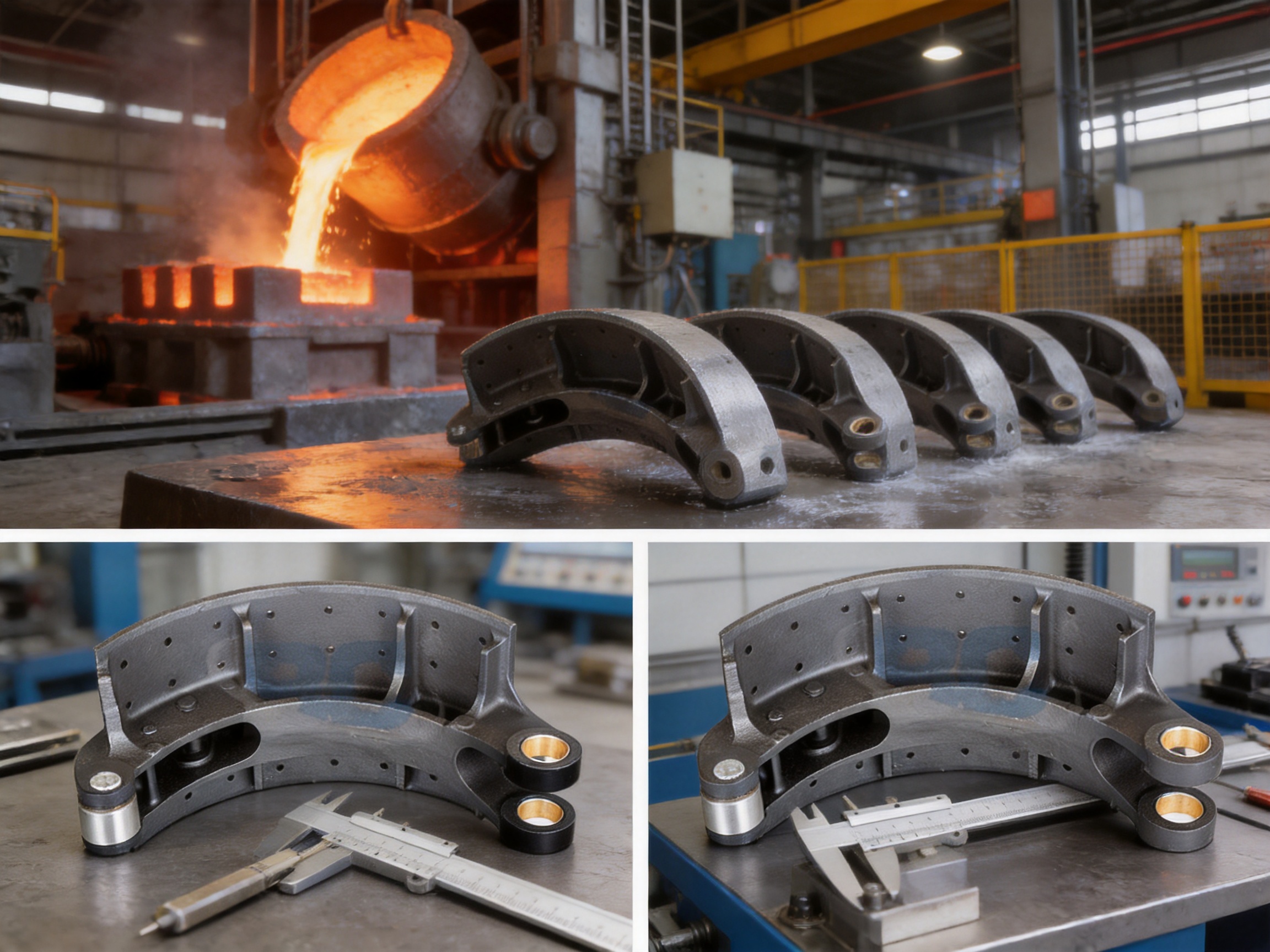
Advanced manufacturing is not limited to the casting stage. A dependable casted brake shoe requires a controlled sequence that may include engineering review, pattern preparation, material selection, casting, cooling, fettling, machining, hole processing, dimensional inspection, surface treatment, and final packing.
Engineering and Pattern Preparation
The manufacturing process begins with a clear understanding of the reference component. Engineers review the required shoe profile, width, length, mounting points, lining interface, and riveting-hole arrangement. The casting pattern or tooling must reproduce the intended shape consistently across production batches.
Pattern accuracy is especially important for curved brake shoes. Small deviations in the profile can affect how the lining sits against the drum. A controlled pattern-development process helps ensure that the body shape is repeatable and suitable for subsequent machining and assembly.
Material and Melt Control
The cast material must provide an appropriate balance of strength, toughness, wear resistance, and dimensional stability. In a professional manufacturing environment, control of the melt and material condition is an important part of production consistency. Material preparation, temperature management, pouring practice, and cooling conditions all influence the final casting.
Good melt control can help reduce common casting issues such as excessive porosity, inclusions, shrinkage defects, and inconsistent structure. These controls are particularly relevant for braking components because the shoe must remain structurally sound while exposed to repeated mechanical and thermal loading.
Controlled Casting
During casting, molten material is introduced into prepared molds. The mold design must allow the material to fill the required curved body and structural areas while minimizing defects. Gates, risers, vents, and cooling conditions are considered as part of the casting design.
After the material solidifies, the casting is removed and allowed to reach a stable condition before further processing. The timing and method of cooling can affect internal stress and dimensional stability. Consistent production procedures are therefore important for repeatable results.
Fettling and Surface Preparation
After casting, excess material from gates, risers, and flash is removed. The shoe body is cleaned and visually examined for obvious defects. Surface preparation ensures that subsequent machining and inspection can be completed more accurately.
Edges, contact areas, and mounting features must be treated carefully. Excessive removal can change the intended geometry, while insufficient finishing can interfere with assembly or create an irregular interface with the brake lining.
Machining and Hole Processing
Machining operations help bring critical areas of the casting to the required dimensions. Depending on the component design, this can include processing at pivot locations, roller seats, mounting points, and lining interfaces. Riveting holes must be positioned accurately and produced with suitable diameter, spacing, and alignment.
For the 1246532 version, the listed configuration includes 32 riveting holes. The hole pattern is a defining feature of the product and should be protected from deformation, burrs, and contamination during processing. Controlled fixtures and appropriate tooling help maintain repeatability from one component to the next.
Inspection and Quality Control
Quality control should take place throughout production rather than only at the end. Incoming material checks, process inspections, dimensional verification, visual examination, and final reference identification can work together to reduce the chance of nonconforming parts reaching the customer.
Typical inspection points for a casted brake shoe may include overall length, width, curvature, hole count, hole position, mounting features, casting appearance, and surface condition. The specific inspection plan should correspond to the drawing, approved sample, or technical standard used for the product.
Consistent inspection is one of the main advantages of purchasing from an experienced brake component manufacturer. A supplier that understands the relationship between casting, machining, lining attachment, and drum compatibility can provide more useful technical support than a general metal casting supplier.
Advantages Compared with Generic or Poorly Matched Alternatives
Better Application Matching
A generic shoe may appear similar to the original part but still differ in width, curvature, hole arrangement, or mounting geometry. The 1246532 series is identified by specific reference numbers and dimensions, which gives buyers a clearer basis for selecting the replacement.
Application-specific identification can reduce workshop uncertainty. When the reference, dimensions, and riveting-hole configuration are documented, technicians can compare the replacement with the removed component before installation.
Reduced Risk of Improvised Modification
Poorly matched brake shoes may tempt a workshop to enlarge holes, drill new holes, grind contact areas, or alter the casting. Such modifications can affect structural integrity and may create unpredictable lining attachment. A correctly specified replacement reduces the need for these practices.
The 1246532 version is supplied with a defined 32-hole configuration, while other related versions have their own listed arrangements. Selecting the correct version helps preserve the intended design instead of relying on unapproved alterations.
Support for Consistent Lining Installation
The brake shoe and lining function as a single working assembly. A properly prepared shoe provides a stable foundation for riveting or other approved attachment procedures. Consistent hole positioning helps the lining sit correctly and allows attachment forces to be distributed across the assembly.
By contrast, an inconsistent shoe can make it difficult to achieve even lining contact. This may cause bedding-in problems, localized wear, or repeated adjustment requirements.
Potential Maintenance Efficiency
For fleet maintenance departments, component consistency is valuable. When replacement parts follow recognized references and repeatable dimensions, purchasing teams can maintain clearer inventory records. Workshops can also develop standard inspection and installation procedures for each application.
Efficient parts identification can reduce vehicle downtime. Instead of comparing many visually similar alternatives, a buyer can begin with the known reference, confirm the physical specifications, and order the corresponding brake shoe.
Suitability for Professional Brake Parts Distribution
The product is positioned within a broader range of heavy-duty brake components, including lined shoes and repair kits. This allows distributors and service providers to build a more complete product offering. A supplier that handles both support shoes and related lining products may also better understand the complete brake assembly requirements.
Role of a Manufacturer with a Complete Brake Product Range
A manufacturer focused on heavy-duty brake parts can develop knowledge that extends beyond one individual casting. Steel brake shoes, casted brake shoes, brake linings, lined brake shoes, repair kits, and lined shoe kits are related products. Each part must work with the others to achieve correct braking performance.
This broader product scope can support buyers in several ways. Distributors may be able to consolidate sourcing. Workshops can obtain related parts from a coordinated supplier. Fleet managers can reduce the number of separate product references they need to qualify. Technical communication may also be more efficient when one supplier understands the shoe, lining, and repair-kit relationship.
The company’s stated focus on OEM brake parts and the global FMSI numbering system is relevant to international buyers. Numbering systems help connect replacement components with recognized market references. Even so, reference-number matching should always be supported by dimensional and application verification.
Installation and Assembly Guidance
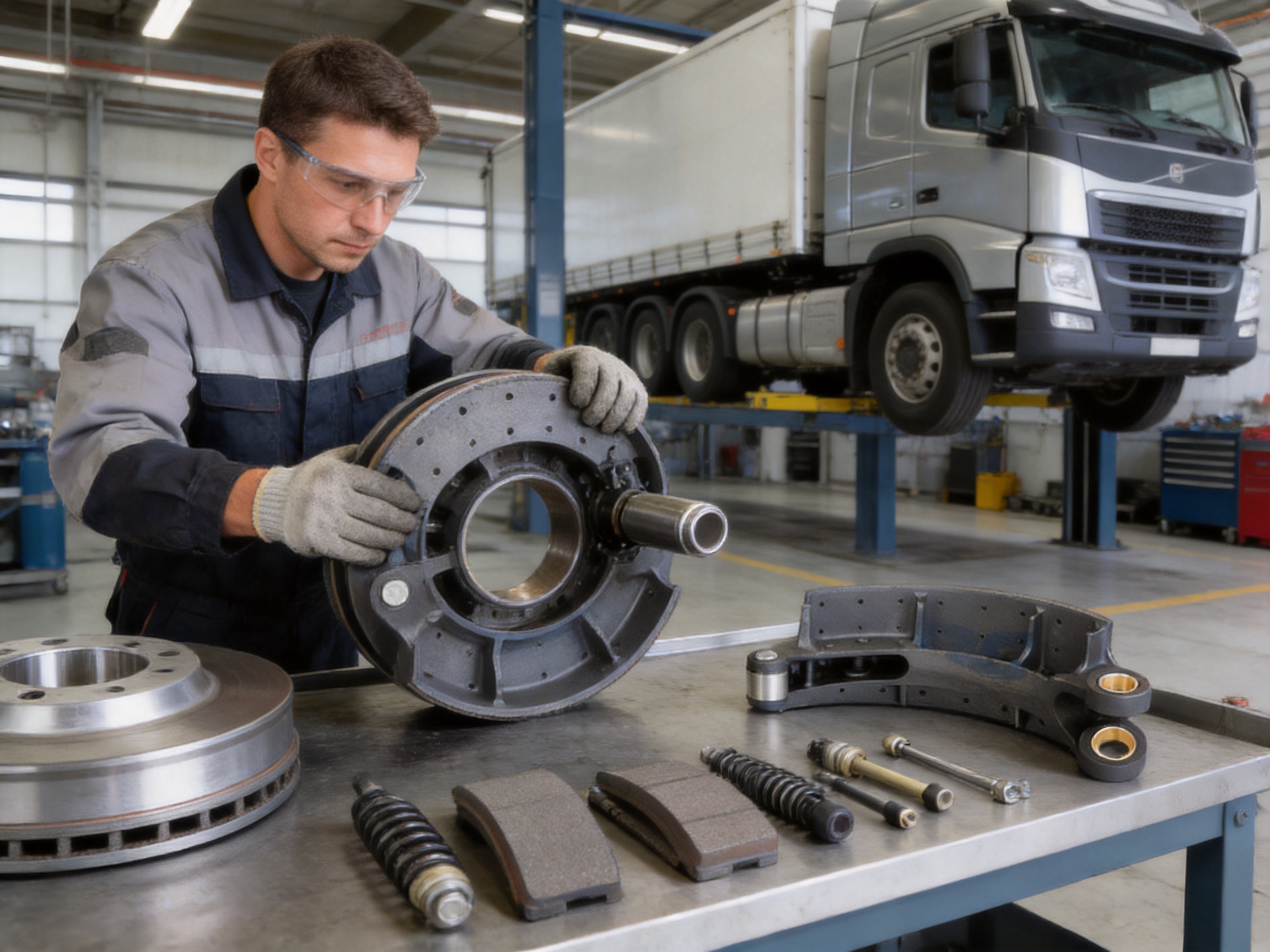
Brake shoe replacement should be performed by trained technicians using the vehicle manufacturer’s service procedures and applicable workshop safety requirements. The brake system is safety-critical, and incorrect assembly can cause loss of braking performance.
Pre-Installation Verification
Before installation, compare the replacement shoe with the removed component. Check the reference number, overall dimensions, curvature, riveting-hole count, hole arrangement, pivot areas, roller seats, and other mounting features. For the 1246532 specification, confirm that the listed size is 419 × 203 mm and that the shoe has the expected 32 riveting holes.
Inspect the brake drum and related hardware at the same time. A new shoe may not perform correctly if the drum is excessively worn, cracked, out of round, contaminated, or beyond its service limit. Springs, rollers, pins, retainers, adjusters, and other hardware should be checked for wear and replaced where required.
Lining Attachment
If the shoe is supplied without a lining, the lining must be attached using an approved method and suitable equipment. The lining should match the shoe dimensions and hole pattern. Rivets must be appropriate for the lining and shoe assembly, and the riveting process should achieve secure attachment without cracking, crushing, or creating raised areas.
The lining must sit flush against the shoe. Gaps, loose sections, damaged edges, or poorly formed rivet heads are unacceptable. After attachment, the assembly should be inspected for correct alignment and secure fit.
Brake Drum and Shoe Preparation
All contact surfaces should be clean and free from oil, grease, loose rust, and foreign material. The brake drum should be measured and assessed according to the applicable service limits. If the drum is machined, the final surface must be compatible with the selected lining and shoe assembly.
Technicians should avoid contaminating friction surfaces during installation. Lubricants belong only on designated non-friction contact points and must never be allowed to reach the lining or drum braking surface.
Final Adjustment and Testing
After installation, the brake shoe assembly must be adjusted according to the correct procedure. The wheel should rotate as specified, and the brake should engage and release smoothly. The system should be tested in a controlled environment before the vehicle returns to normal service.
Where applicable, the new lining should be bedded in gradually. Severe braking immediately after installation can create uneven heat and prevent the friction surfaces from establishing a stable contact pattern. The exact bedding-in procedure should follow the lining manufacturer’s instructions and vehicle service requirements.
Inspection, Maintenance, and Service Life Factors
The service life of a casted brake shoe depends on many factors, including vehicle weight, route conditions, driving style, brake adjustment, lining material, drum condition, environmental exposure, and maintenance quality. A high-quality shoe provides an important foundation, but no component can compensate for an incorrectly adjusted or poorly maintained braking system.
Routine Visual Inspection
Regular inspections should look for cracked or distorted shoe bodies, loose linings, damaged rivets, abnormal wear, corrosion, and signs of overheating. The lining should wear evenly across its working surface. Tapered wear, localized glazing, or heavily worn areas may indicate problems elsewhere in the assembly.
The shoe should also be checked when the drum is removed for lining inspection. Early detection of distortion or damage can prevent secondary damage to the drum and other brake components.
Checking for Uneven Contact
Uneven contact between the lining and drum can reduce braking efficiency and accelerate wear. Possible causes include incorrect shoe curvature, worn hardware, drum distortion, poor adjustment, or contamination. If the contact pattern is abnormal, the entire brake assembly should be investigated rather than replacing the shoe without identifying the cause.
Managing Corrosion and Contamination
Heavy-duty vehicles may operate in rain, snow, coastal environments, construction areas, mines, ports, and locations where road chemicals are used. These conditions can promote corrosion and contamination. Cleaning and inspection schedules should reflect the operating environment.
Oil or grease contamination of the friction material requires immediate attention. Contaminated linings may not recover their original friction characteristics through simple cleaning. The correct service action should be determined by a qualified technician.
Monitoring Adjustment and Hardware
Brake adjustment affects shoe travel, lining contact, heat generation, and braking response. Worn or seized adjusters, rollers, springs, or pins can prevent the shoe from operating correctly. During shoe replacement, related hardware should be inspected rather than automatically reused without assessment.
Maintaining the complete brake assembly helps protect the investment in the replacement shoe and lining. It also reduces the likelihood that an unrelated worn component will cause premature failure.
Purchasing Guidance for Distributors and Fleets
Purchasing departments should create a clear identification process for heavy-duty brake shoes. The process can begin with the original reference number, followed by confirmation of application, dimensions, hole count, and complete mounting configuration.
For the product family discussed here, the three listed references should not be treated as interchangeable. The 1246530, 1246531, and 1246532 versions differ in width and, in the case of the 1246530, riveting-hole count. A purchase order should state the exact reference and any required packaging, labeling, inspection, or documentation requirements.
Distributors should also consider stocking strategy. Fast-moving references can be held in regional inventory, while less common versions may be purchased according to confirmed customer demand. Clear labeling helps prevent similar-looking components from being mixed in storage.
When evaluating a supplier, buyers may consider manufacturing experience, product range, inspection capability, communication quality, packaging standards, export experience, and ability to provide consistent repeat orders. A supplier of brake components should be able to discuss application matching and not only quote a price.
Packaging and Logistics Considerations
Casted brake shoes are robust components, but their machined areas, riveting holes, and mounting surfaces should still be protected during transport. Packaging should prevent metal-to-metal impact, excessive movement, moisture exposure, and contamination.
Labels should identify the exact reference, quantity, application information, and batch or production details where applicable. For international shipments, accurate product descriptions and export documentation help reduce receiving delays and inventory errors.
Because brake shoes are often purchased in batches, consistent packaging can help distributors organize warehouse stock. Separating the 1246530, 1246531, and 1246532 specifications is particularly important because their dimensions and hole configurations are different.
Quality and Commercial Value
The commercial value of a brake shoe is not determined only by its initial purchase price. Total cost can also include installation labor, vehicle downtime, inspection time, premature replacement, warranty claims, and potential damage to drums or related hardware.
A correctly identified and consistently manufactured casted brake shoe can support lower total operating costs by reducing avoidable fitting problems. Dimensional consistency makes installation more predictable, while suitable casting and finishing practices help provide a reliable foundation for the friction lining.
For international buyers, a manufacturer that can supply multiple categories of brake parts may offer additional value through consolidated purchasing. The ability to source casted shoes, steel shoes, linings, lined shoes, and repair kits from one product specialist can simplify supplier management.
However, cost savings should never be achieved by removing necessary inspection or using an unverified substitute. Brake components are safety-critical, and quality decisions should consider the full operating environment and applicable technical requirements.
Applications in Commercial Vehicle Maintenance
The 1246532 series can be considered for replacement programs involving DAF heavy-duty vehicles where the specified brake shoe dimensions and hole arrangement are confirmed. Typical users may include fleet maintenance departments, commercial vehicle repair workshops, brake specialists, parts distributors, vehicle importers, and original-equipment replacement suppliers.
Fleet applications may include long-haul transport, regional distribution, construction support, municipal service, agricultural logistics, and other operations using drum-braked commercial vehicles. The correct suitability depends on the specific vehicle and axle configuration.
Repair workshops can use the listed reference information as part of a broader identification procedure. The reference should be cross-checked against the removed component and workshop documentation before the shoe is fitted.
Frequently Asked Questions
What is a casted brake shoe?
A casted brake shoe is a curved structural component inside a drum brake assembly. It supports the friction lining and transfers actuator force to the brake drum during braking. Its shape, dimensions, mounting areas, and lining-attachment features are designed for a specific brake system.
What application is listed for the 1246532 brake shoe?
The supplied product information lists DAF as the application for the 1246532 casted brake shoe and its related references. The exact vehicle and axle should still be verified using the original part, vehicle records, dimensions, and mounting configuration.
What are the dimensions of the 1246532 version?
The listed size for the 1246532 version is 419 × 203 mm. It is also listed with 32 riveting holes.
How does 1246532 differ from 1246530 and 1246531?
The listed references differ primarily in width and riveting-hole configuration. The 1246530 version is listed at 419 × 152 mm with 16 holes. The 1246531 version is listed at 419 × 178 mm with 32 holes. The 1246532 version is listed at 419 × 203 mm with 32 holes.
Can these three references be used interchangeably?
They should not be assumed to be interchangeable. Their dimensions and hole configurations are different. The correct reference must be selected according to the vehicle, axle, drum, original shoe, and approved technical information.
Does the casted brake shoe include a lining?
The product is identified as a casted brake shoe. The supplied information does not state that the shoe includes a lining. Buyers should confirm whether they require an unlined shoe, a lined brake shoe, or a complete lined brake shoe kit.
Why is the riveting-hole count important?
The riveting-hole count and arrangement determine how the lining can be attached to the shoe. A mismatch can prevent correct installation or create an unsafe lining attachment. The 1246532 version is listed with 32 riveting holes.
What should be checked before ordering?
Buyers should check the reference number, application, vehicle and axle information, overall dimensions, width, riveting-hole count, mounting features, and compatibility with the brake drum and lining. Comparing the replacement with the removed shoe is also recommended.
What should be inspected during installation?
The brake drum, lining, springs, pins, rollers, adjusters, retainers, and other related hardware should be inspected. The shoe should be checked for damage, correct dimensions, clean contact surfaces, accurate hole positioning, and secure lining attachment.
Why purchase from a specialist heavy-duty brake parts manufacturer?
A specialist manufacturer is more likely to understand the relationship between the casted shoe, lining, drum, mounting hardware, and vehicle application. A broader product range can also simplify sourcing for distributors and fleet maintenance departments.
Where is the supplier located?
The supplied company information identifies Zhejiang Bangchi Auto Parts Co., Ltd. at No. 9 Building, No. 11 Qiyi Road, Chang’an Town, Haining, Zhejiang, China.
How can buyers request product information?
The supplied contact information lists the email address sfp@zjbangchi.com and telephone numbers +86-133 7230 7977, +86-0573-87960600, and +86-0573-87960639. Buyers should request current specifications, availability, packaging details, and application confirmation before placing an order.
Conclusion
The 1246532 casted brake shoe is a heavy-duty replacement component identified for DAF applications and listed at 419 × 203 mm with 32 riveting holes. It forms part of a related product family that also includes the 1246530 and 1246531 specifications. These variants are differentiated by their dimensions and riveting-hole configurations, making accurate identification essential.
The main advantages of an application-specific casted brake shoe include a stable foundation for the lining, controlled dimensional matching, reduced need for workshop modification, and improved consistency in fleet maintenance. These benefits depend on correct selection, professional installation, suitable lining attachment, and proper inspection of the complete braking system.
Manufacturing quality is equally important. Controlled pattern preparation, casting, material management, finishing, machining, hole processing, inspection, and packaging all contribute to a dependable replacement component. A manufacturer with expertise in heavy-duty brake parts and a broader range of shoes, linings, and repair kits can provide practical value to distributors, workshops, and commercial vehicle operators.
For purchasing decisions, the correct approach is to confirm the exact reference, compare the dimensions and hole pattern, verify the DAF application, inspect related brake components, and obtain current technical information from the supplier. With these checks in place, the 1246532 casted brake shoe can serve as a practical option for maintaining compatible heavy-duty drum brake systems.
References
1. Product specification data for the 1246530, 1246531, and 1246532 casted brake shoe references, supplied for this article.
2. Global FMSI numbering system principles for replacement friction and brake component identification.
3. General commercial vehicle drum brake inspection and maintenance practices.
4. General foundry, machining, dimensional inspection, and quality-control practices for cast automotive components.
5. General workshop safety principles for commercial vehicle brake shoe, lining, and drum replacement.