 English
 简体中文
简体中文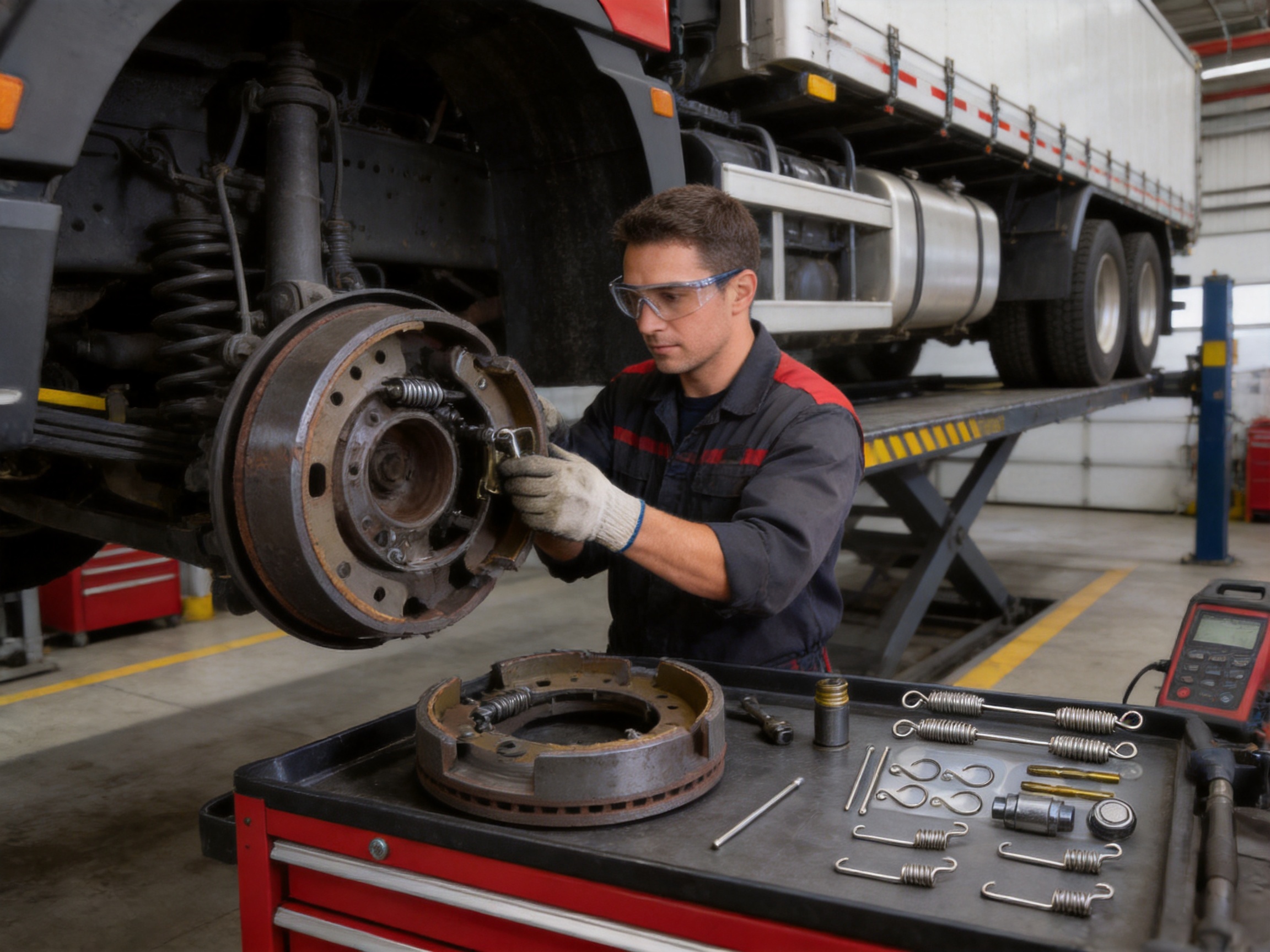
Introduction
Heavy-duty braking systems operate under demanding conditions that passenger-car braking systems rarely experience. Commercial trucks, trailers, buses, and other transport vehicles may carry substantial loads, travel long distances, operate on steep gradients, and face frequent braking cycles. Under these conditions, even a small amount of wear in a brake shoe assembly can affect braking response, service efficiency, and vehicle availability. For maintenance teams, a dependable repair kit is therefore more than a collection of replacement parts. It is a practical solution for restoring the working condition of an established brake shoe assembly while controlling repair time, cost, and component compatibility.
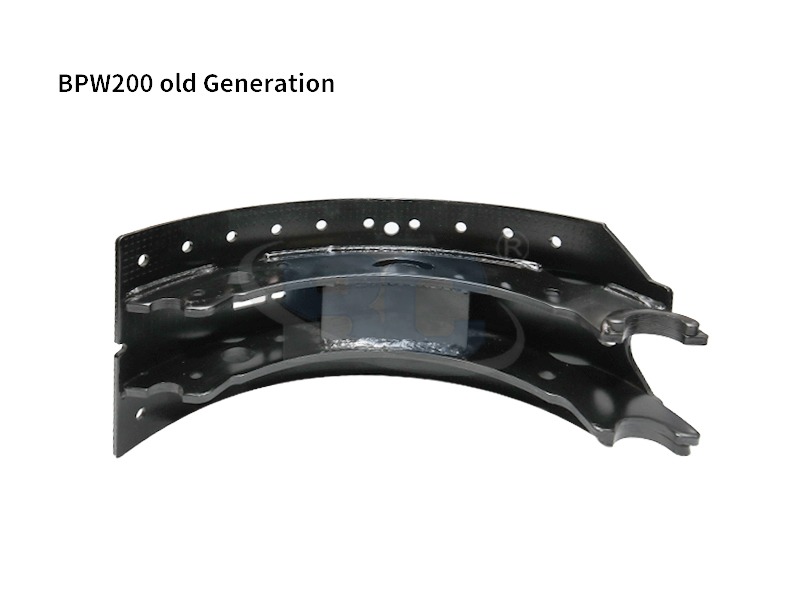
The BPW Old Generation Repair Kit is designed for the servicing of compatible older-generation BPW brake shoe applications. It belongs to the brake shoe repair kit category and supports the replacement of wear-related or serviceable hardware associated with a brake shoe assembly. Instead of replacing an entire brake shoe structure when only selected components require attention, a suitable repair kit can help maintenance professionals renew the necessary parts and return the assembly to dependable operation.
This product is supplied by Zhejiang Bangchi Auto Parts Co., Ltd., a Chinese manufacturer focused on heavy-duty brake parts, heavy truck brake components, steel brake shoes, cast brake shoes, brake linings, lined brake shoes, and brake shoe repair kits. The company states that its OEM brake parts follow the global FMSI numbering system, supporting more systematic identification and cross-reference work for distributors, workshops, fleet operators, and original-equipment replacement markets.
The main value of the BPW Old Generation Repair Kit lies in application-focused restoration. It is intended to support compatible older BPW brake shoe systems rather than forcing a workshop to adopt an entirely new brake configuration. When the correct kit is selected and installed according to the applicable service procedure, it can help reduce unnecessary replacement, simplify inventory planning, and maintain the operational life of heavy-duty braking equipment.
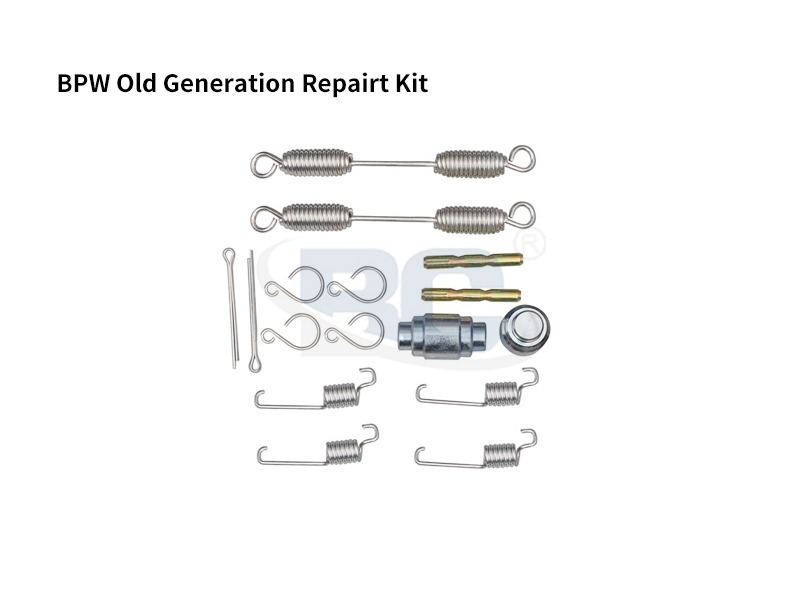
BPW Old Generation Repair Kit
Product Overview
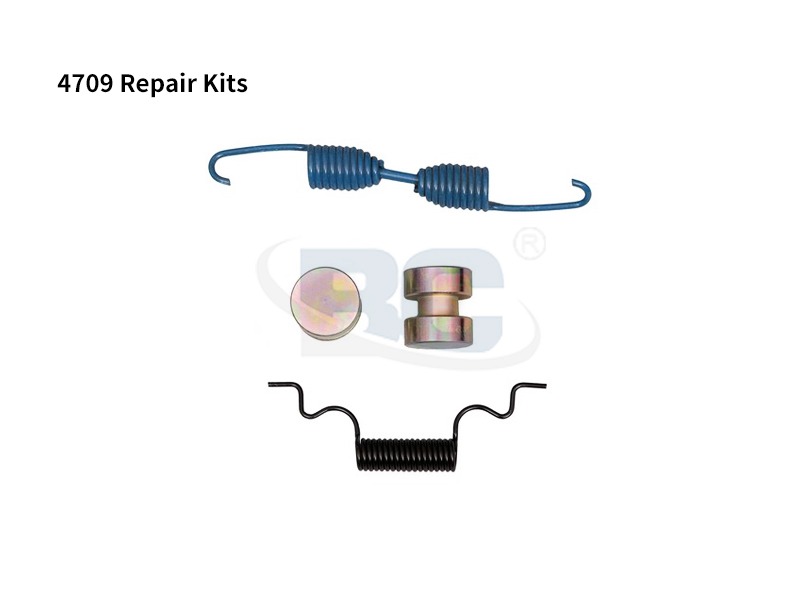
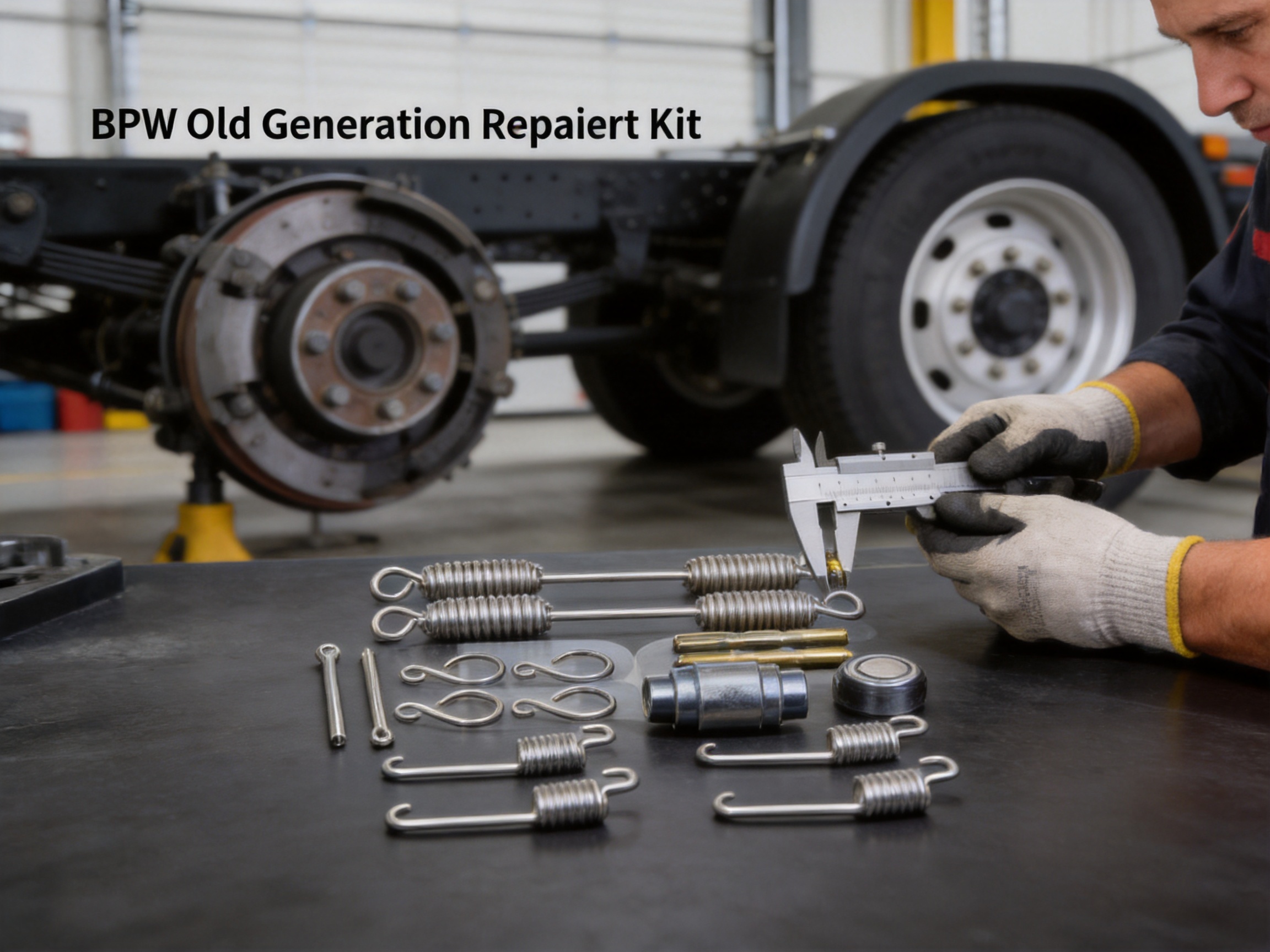
The BPW Old Generation Repair Kit is a replacement and restoration product for compatible BPW older-generation brake shoe assemblies. Its function is to provide the service parts required to renew a brake shoe system that has experienced wear, corrosion, looseness, contamination, or deterioration during normal commercial vehicle operation.
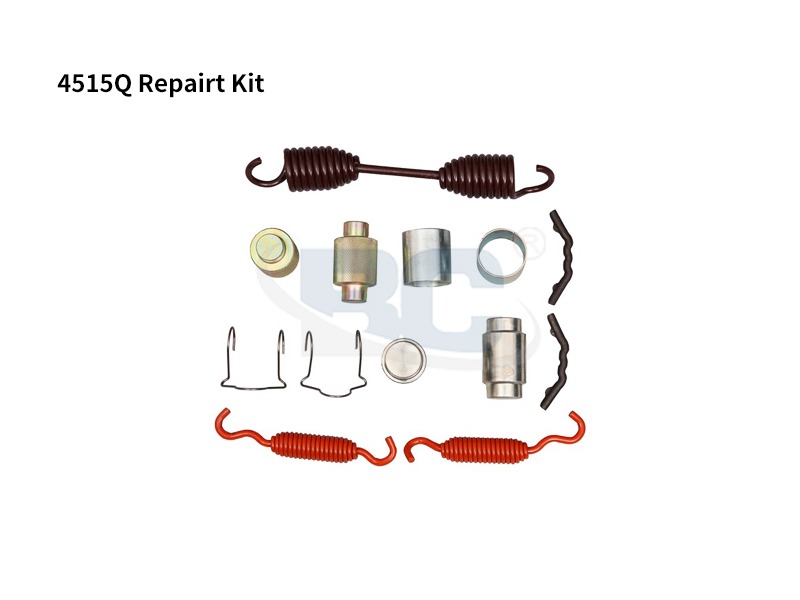
A brake shoe assembly includes more than the friction lining alone. Depending on the specific design, its service-related components may include retaining hardware, return or hold-down elements, bushings, rollers, pins, springs, wear-related fittings, and other parts that allow the shoe to move correctly against the brake drum. The precise contents of a repair kit depend on the relevant application and configuration. For that reason, technicians should always verify the kit specification, vehicle data, axle information, brake type, and applicable cross-reference before installation.
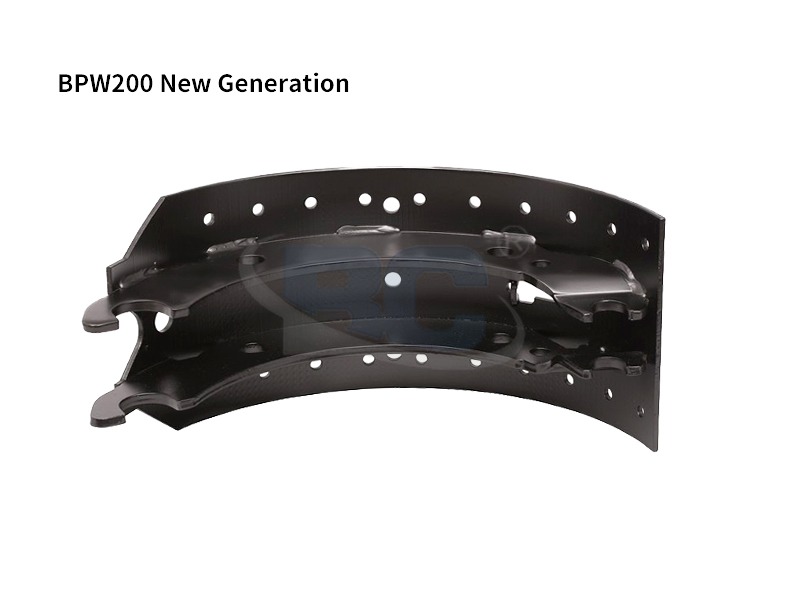
The “old generation” designation is important. Older brake systems may use dimensions, mounting arrangements, hardware designs, or component interfaces that differ from later generations. A repair kit intended for an older system should not be assumed to fit a newer assembly simply because the vehicle manufacturer or axle family appears similar. Accurate product identification is essential for preventing mismatched components and avoiding unnecessary workshop delays.
In practical terms, the kit is intended to support a controlled repair process. The technician can inspect the existing brake shoe, determine which elements have exceeded acceptable wear limits, remove damaged or deteriorated service parts, and install compatible replacements. This approach is especially valuable when the main brake shoe structure remains suitable for continued service but its supporting hardware requires renewal.
Product Category
The product is classified under Brake Shoe Repair Kits. This category is closely related to other heavy-duty brake products, including steel brake shoes, cast brake shoes, brake linings, and lined brake shoes. A repair kit does not replace the function of every item in these categories. Instead, it complements them by supporting the maintenance and restoration of brake shoe assemblies already in service.
For distributors, this category distinction improves product organization. For fleet operators, it assists purchasing teams in separating complete brake shoe replacement requirements from targeted repair requirements. For workshops, it helps technicians identify whether the correct solution is a complete lined shoe, a replacement lining, a new steel or cast shoe, or a repair kit for existing components.
Intended Applications
The BPW Old Generation Repair Kit is intended for compatible heavy-duty brake applications using older-generation BPW brake shoe systems. Potential users include commercial vehicle repair workshops, trailer maintenance centers, fleet service departments, brake specialists, aftermarket distributors, and vehicle parts wholesalers.
The kit may be particularly useful where vehicle operators prioritize serviceability and controlled maintenance costs. Many heavy-duty fleets continue to operate vehicles and trailers for extended service periods. Maintaining a reliable supply of correctly identified repair parts can help these fleets avoid premature equipment replacement and reduce the time that vehicles remain unavailable for work.
Application suitability must be confirmed before purchase. Important verification information may include the axle or brake assembly model, vehicle identification information, brake dimensions, shoe configuration, existing component references, and the relevant OEM or FMSI number. If there is uncertainty, the buyer should provide detailed application data to the supplier or technical department for confirmation.
Why Brake Shoe Repair Matters in Heavy-Duty Vehicles
Brake shoes operate within a system where mechanical movement, friction, heat, and load are closely connected. During braking, the shoe must move in a controlled manner and press the friction lining against the brake drum. Supporting hardware must hold components securely while permitting the designed movement of the assembly. If a pin, roller, spring, bushing, or related component is worn, the shoe may not operate as intended even when the friction lining appears acceptable.
Wear can develop gradually. Commercial vehicles may experience repeated braking on urban routes, high thermal loads on descending roads, extended operation in dust or moisture, and long periods of exposure to road salt or corrosive contaminants. A vehicle may continue to move while its brake shoe hardware is deteriorating, making regular inspection especially important.
Replacing only the visibly damaged part may not always provide a durable repair. Related components may have experienced similar operating conditions and may be near the end of their useful service life. A well-matched repair kit allows several associated service components to be renewed together, helping create a more balanced repair and reducing the likelihood that one neglected part will compromise the newly serviced assembly.
For fleet maintenance managers, repair kits also offer planning advantages. A kit can be stocked as a defined service item rather than requiring the workshop to source multiple individual parts during an urgent repair. This may simplify purchasing, reduce the risk of missing small but essential hardware, and make work-order preparation more predictable.
Key Advantages of the Repair Kit
Application-Specific Restoration
The principal advantage of the BPW Old Generation Repair Kit is its focus on a defined older-generation BPW application. Application-specific design is valuable because brake systems are not universally interchangeable. A repair solution that reflects the correct assembly generation is more useful than a generic collection of parts with uncertain compatibility.
By concentrating on a recognized brake shoe configuration, the product can support a more organized service process. Technicians can begin with a known reference, compare the existing assembly, check the included components, and confirm the required installation arrangement. This is more efficient than trying to adapt unrelated hardware in the workshop.
Potential Reduction in Repair Cost
A complete brake shoe assembly may not be necessary every time a brake system requires service. If the primary shoe structure is reusable and meets inspection requirements, replacing selected service parts can provide a more economical maintenance option. The repair kit supports this approach by making targeted restoration possible.
Cost savings should not be understood as a reason to reuse unsafe components. Every original part must be inspected against the applicable maintenance criteria. Components that are cracked, excessively worn, deformed, severely corroded, contaminated, or outside permitted dimensional limits must be replaced. The financial advantage comes from avoiding unnecessary replacement of serviceable components, not from extending the use of damaged parts.
Improved Inventory Control
Heavy-duty parts distributors often manage thousands of references. A clearly identified repair kit can help separate complete brake assemblies from repair-oriented products. This makes it easier to establish stock levels according to fleet demand and application frequency.
For a workshop, a repair kit can also reduce the number of individual small parts that must be sourced separately. When all required kit contents are confirmed, purchasing teams can order one service item rather than coordinating several unrelated references. This may reduce administrative work and improve repair scheduling.
Support for Extended Vehicle Service Life
Commercial vehicles are frequently maintained for long operating periods. Replacing a complete brake shoe system whenever a supporting component becomes worn may increase maintenance expenditure and create unnecessary waste. A suitable repair kit helps maintenance teams keep viable assemblies in service while renewing the parts that require attention.
This approach can be particularly valuable for trailers, fleet vehicles, and specialized commercial equipment where the brake assembly remains structurally sound but requires periodic hardware renewal. Proper repair supports responsible asset management by balancing safety, reliability, and lifecycle cost.
Compatibility-Oriented Identification
The supplier’s stated use of the global FMSI numbering system for OEM brake parts provides a structured basis for product identification and cross-reference work. Numbering systems do not replace application verification, but they can help distributors and buyers organize references, compare equivalent market products, and communicate requirements more precisely.
Clear numbering is especially useful in export markets, where the same vehicle or axle application may be described differently by different suppliers. A recognized reference system can reduce ambiguity and support more consistent purchasing decisions.
Suitability for Professional Workshop Operations
A professional repair environment benefits from parts that can be integrated into established inspection and installation procedures. A repair kit for a defined brake shoe application supports a methodical workflow: identify the vehicle, confirm the brake system, inspect the assembly, compare the replacement parts, install according to the relevant procedure, and complete post-service checks.
The kit is not a substitute for technician training or manufacturer service documentation. Its value is that it provides a focused replacement solution that can be used within a professional maintenance system.
Comparison with Generic and Unverified Alternatives
Not all brake shoe repair products provide the same level of application clarity. Generic alternatives may appear attractive because of a lower purchase price, but uncertain compatibility can create hidden costs. A part that requires modification, has an incorrect dimension, or does not match the original brake geometry may cause installation delays and additional labor.
Unverified parts can also complicate troubleshooting. If a repair fails, the workshop may need to investigate whether the issue originated from installation, vehicle adjustment, component quality, or incorrect application. A clearly identified repair kit helps narrow the range of uncertainty before the repair begins.
Another difference concerns completeness. When individual components are purchased separately, a workshop may unintentionally omit a small item that is important to the assembly. A properly specified kit can reduce this risk by grouping associated service components under one application reference. The exact content must still be checked, because kit configurations can vary according to brake design and market requirements.
The BPW Old Generation Repair Kit also offers an advantage over replacing a complete brake shoe assembly when such replacement is unnecessary. Complete replacement may be appropriate when the shoe is cracked, distorted, badly corroded, or otherwise beyond service limits. However, when inspection confirms that the main structure remains serviceable, a repair kit may provide a more proportionate solution.
Compared with improvised repairs, an application-specific kit provides a stronger basis for quality control. Improvised repairs may involve uncertain material properties, inaccurate dimensions, unsuitable fasteners, or nonstandard assembly practices. Heavy-duty brake systems are safety-critical, so maintenance should use parts selected for the intended system and installed according to approved procedures.
| Evaluation Area | Application-Specific Repair Kit | Generic or Unverified Parts | Complete Brake Shoe Replacement |
|---|---|---|---|
| Application clarity | Designed for a defined brake shoe configuration | May require extensive checking or adaptation | Usually clear when the complete assembly reference is correct |
| Repair scope | Renews selected associated service components | Depends on separately purchased parts | Replaces the complete shoe assembly |
| Cost control | Can avoid unnecessary replacement of serviceable components | Low initial price may create extra labor or compatibility costs | May cost more when only hardware requires renewal |
| Inventory management | One defined kit reference can simplify stocking | Several individual items may be required | Requires storage of larger complete assemblies |
| Workshop efficiency | Supports a planned restoration process | May cause delays if parts are missing or incorrect | Can be efficient when the full shoe must be replaced |
| Best use case | Serviceable shoe structure with worn or damaged supporting parts | Only when compatibility and quality are fully verified | Damaged, distorted, or unserviceable complete shoe |
Manufacturing Strengths
Zhejiang Bangchi Auto Parts Co., Ltd. focuses on the heavy-duty brake parts sector. Its product range includes steel brake shoes, cast brake shoes, brake linings, lined brake shoes, brake shoe repair kits, and lined brake shoe kits. This product concentration is significant because brake components function as interconnected systems. Experience across several related categories can help a manufacturer understand the relationship between shoe structure, friction material, lining attachment, hardware, and application identification.
Focused Heavy-Duty Product Portfolio
A manufacturer that concentrates on heavy-duty braking can organize its engineering and production resources around the requirements of commercial vehicle applications. These requirements include mechanical strength, dimensional consistency, resistance to operating loads, reliable friction-material attachment, and repeatable assembly quality.
The presence of both complete brake products and repair-oriented products allows the company to serve different maintenance strategies. Some customers may require complete lined brake shoes, while others may need replacement linings or repair kits for existing assemblies. This breadth can make it easier for distributors to develop a coordinated product range rather than relying on unrelated sources for each category.
Process Control from Material Preparation to Final Inspection
Advanced manufacturing is not limited to one machine or one production step. For heavy-duty brake parts, quality begins with the selection and preparation of raw materials and continues through forming, machining, lining preparation, assembly, surface treatment, identification, and inspection.
Steel brake shoe production typically requires controlled forming or fabrication to achieve the intended profile and dimensional accuracy. Cast brake shoe production requires disciplined control of casting conditions, mold preparation, cooling, cleaning, and subsequent machining. Whichever manufacturing route applies, the finished component must maintain the correct geometry so that it can operate within the brake drum and interact properly with the remaining brake hardware.
Brake lining production and lined shoe assembly require additional attention. The friction material must be suitable for the intended application, and the attachment process must be controlled to ensure reliable contact between the lining and shoe. Depending on the product design, this may involve riveting, bonding, or another approved attachment method. The finished assembly should be checked for alignment, secure attachment, surface condition, and dimensional conformity.
Repair kit production also requires careful organization. Small components must be counted, matched, protected against damage, and packed under the correct application reference. Packaging accuracy is part of product quality because a correctly manufactured component can still create service problems if it is placed in the wrong kit or labeled incorrectly.
Dimensional and Reference Management
Heavy-duty brake components are sensitive to dimensional variation. A difference in hole position, pin diameter, roller size, shoe profile, or hardware length may affect assembly and operation. A structured manufacturing system therefore needs drawing control, reference management, inspection standards, and traceable production information.
The stated use of the global FMSI numbering system supports a more disciplined product identification process. A numbering reference can connect technical information, production records, inventory data, packaging labels, and customer orders. This is particularly useful for international aftermarket supply, where accurate reference communication is essential.
Quality-Oriented Production Culture
For brake products, quality should be integrated into the production process rather than treated as a final sorting activity. In-process checks can identify issues before they reach final assembly. Final inspection can then verify that the completed product meets the applicable technical and packaging requirements.
A quality-oriented process may include checks for material condition, geometry, hole location, surface finish, component completeness, lining attachment, marking, and packaging. The precise tests depend on the product and production method. Customers should request the relevant technical documentation when they require specific test reports, material certificates, or quality records.
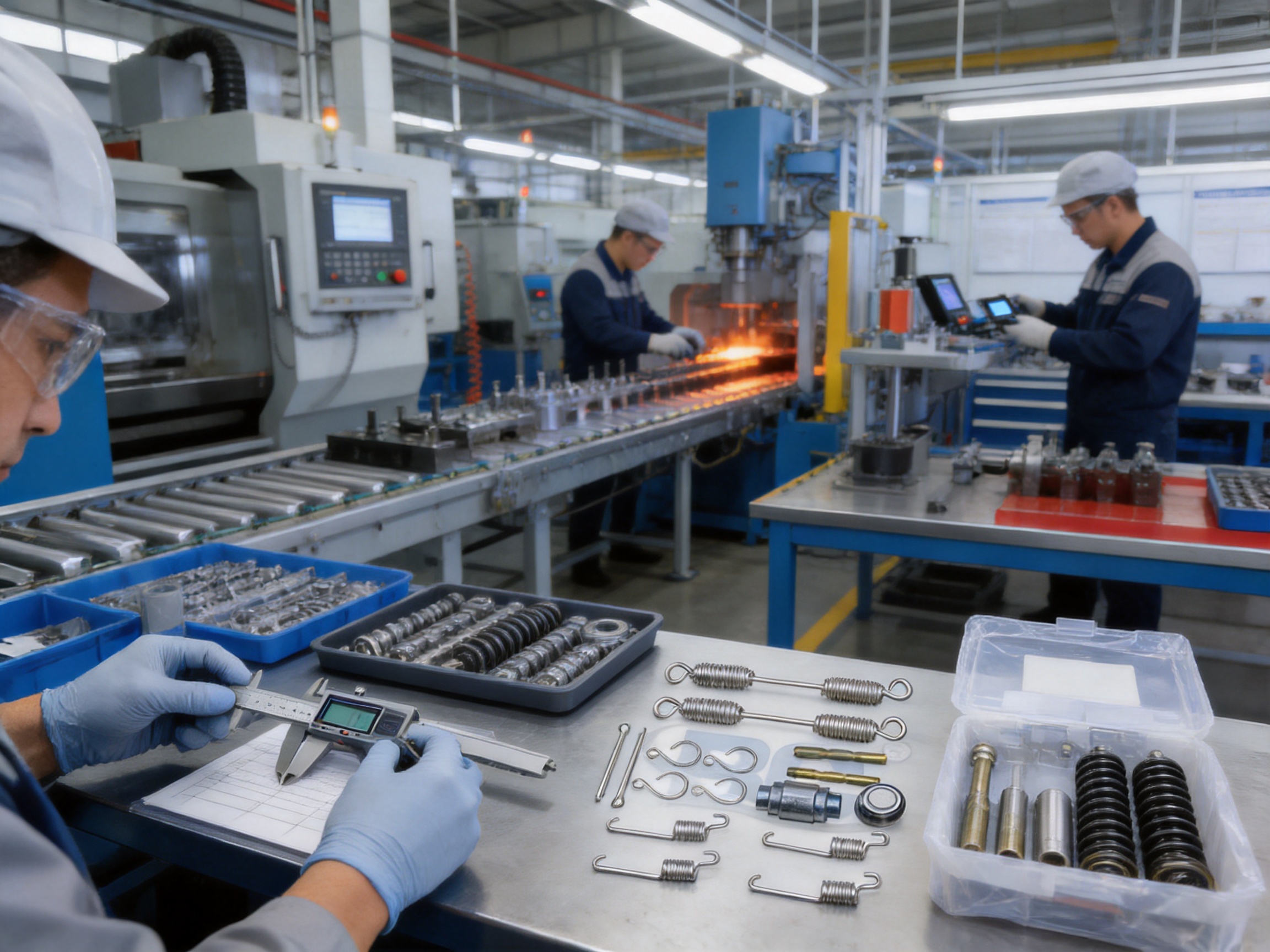
Advanced Manufacturing Process for Repair Kit Components
Although the repair kit is a compact product, its reliability depends on the manufacturing quality of every individual component. A small spring, pin, bushing, roller, or retaining part must be produced within the dimensional and material requirements of the intended brake assembly.
Engineering and Product Definition
The process begins with application definition. Technical personnel identify the brake shoe generation, component interface, dimensions, and service requirements. Product information is then organized into drawings, bills of materials, reference numbers, inspection points, and packaging instructions.
For an older-generation BPW application, this step is especially important because historical designs may differ from later versions. The product definition must preserve the features required by the original assembly while allowing consistent aftermarket production. Where multiple variants exist, they should be separated by clear reference data rather than combined under an ambiguous description.
Material Preparation
Material selection influences the performance and service life of repair components. Hardware exposed to repeated movement and load requires suitable strength and wear characteristics. Components exposed to moisture or road contaminants may also require appropriate corrosion protection or surface treatment.
Material preparation may include cutting, blanking, turning, forming, heat treatment, deburring, cleaning, or coating, depending on the component. Each operation should be controlled to avoid sharp edges, distortion, dimensional drift, or surface defects that could interfere with assembly.
Precision Machining and Forming
Pins, rollers, bushings, and other cylindrical components require controlled machining to achieve the intended diameter, length, concentricity, and surface finish. Formed components such as springs and retaining elements require consistent shape and elastic behavior. The objective is not simply to produce a part that looks similar to the original. It must function within the mechanical movement and load conditions of the brake shoe system.
Modern production equipment can improve repeatability by controlling tool position, processing parameters, and inspection intervals. However, equipment alone does not guarantee quality. Effective manufacturing also requires trained operators, maintained tooling, documented procedures, and clear acceptance criteria.
Surface Treatment and Protection
Surface treatment can help protect suitable components from corrosion and environmental exposure. Brake assemblies may operate near water, mud, dust, salt, and road chemicals. Corrosion can affect movement, weaken a component, or make future servicing difficult.
The selected treatment must be compatible with the part’s function. Excessive coating thickness may interfere with fit, while inadequate preparation may reduce corrosion resistance. Controlled cleaning, coating, curing, and inspection therefore contribute to the consistency of the finished repair kit.
Assembly and Kit Packing
Kit assembly requires more than placing parts into a bag or box. Each kit must be matched to the correct product reference, and the component quantity must be verified. Packaging should protect parts from impact, contamination, moisture, and loss during transport or storage.
Labels should communicate the product name, reference information, quantity where appropriate, and any necessary handling or application data. For international distribution, consistent labeling helps warehouses and customers identify the kit without opening every package.
Final Quality Verification
Final verification should confirm that the kit corresponds to the defined application and includes the required components. Visual inspection may identify damage, corrosion, burrs, incorrect markings, or missing items. Dimensional inspection may be necessary for critical components. Packaging inspection helps ensure that the product reaches the customer in a usable condition.
Customers with specific quality requirements should communicate them before ordering. Depending on the contract and application, this may include inspection plans, sample approval, batch documentation, traceability records, or special packaging instructions.
Installation and Workshop Best Practices
The repair kit should be installed only by personnel familiar with heavy-duty brake systems. Brake work directly affects vehicle safety, so technicians must follow the applicable vehicle, axle, brake, and component service instructions.
1. Confirm the Application
Before removing parts, confirm that the repair kit matches the vehicle and brake assembly. Check the vehicle identification information, axle details, brake dimensions, existing reference numbers, and old-generation configuration. Do not rely solely on appearance.
2. Inspect the Complete Brake Assembly
Remove contamination and inspect the brake shoe, drum, cam or actuator interface, anchor points, rollers, pins, bushes, springs, lining, and related hardware. Look for cracks, excessive wear, distortion, heat damage, oil contamination, corrosion, and abnormal contact patterns.
The existence of a repair kit does not automatically mean that the complete brake shoe is reusable. If the shoe structure or lining is beyond service limits, a complete replacement may be more appropriate.
3. Compare the Kit Contents
Before installation, compare the supplied parts with the removed components and the technical reference. Confirm quantities, dimensions, shape, and intended position. If a part appears incorrect or missing, stop the installation and contact the supplier or parts distributor for clarification.
4. Clean the Assembly Properly
All reusable surfaces should be cleaned using an approved method. Grease, oil, rust scale, abrasive dust, and other contaminants can affect brake movement and friction performance. Friction surfaces must be protected from contamination throughout the repair.
5. Use Correct Tools and Procedures
Specialized tools may be required for spring removal, pin replacement, bushing installation, riveting, or other operations. Using unsuitable tools can damage the shoe or deform the replacement hardware. Fasteners and retaining components should be installed using the prescribed method and tightening requirements.
6. Check Free Movement
After assembly, the brake shoe should move as intended without binding, excessive looseness, or interference. Springs and retainers must be seated correctly. Rollers, pins, and bushings should align with their mating parts. Any abnormal resistance should be investigated before the vehicle returns to service.
7. Complete Brake Adjustment and Testing
Once the repair is complete, the brake system must be adjusted and tested according to the applicable procedure. The technician should verify braking response, release, shoe-to-drum relationship, actuator movement, and the absence of abnormal noise or drag. A controlled road test or brake performance test may be required by the operator’s maintenance policy and local regulations.
Maintenance Benefits for Fleets and Distributors
Fleet operators measure brake parts not only by purchase price but also by their effect on vehicle availability. A product that supports predictable maintenance can help reduce unplanned downtime. The BPW Old Generation Repair Kit contributes to this objective by offering a focused solution for servicing compatible brake shoe assemblies.
For preventive maintenance programs, repair kits can be included in scheduled inspection planning. When technicians identify early wear in service hardware, the required kits can be ordered before a failure causes an emergency repair. This encourages a proactive maintenance culture and reduces dependence on urgent parts sourcing.
For distributors, the product provides an opportunity to serve customers that do not need a complete brake shoe. Repair kits can complement lined brake shoes, linings, steel shoes, and cast shoes in a broader heavy-duty braking portfolio. A distributor that offers several levels of repair solution can respond more effectively to different customer budgets, vehicle conditions, and workshop preferences.
For export customers, consistent references and product classification are especially important. International buyers often require clear technical information before placing an order. Product title, category, application, reference number, packaging quantity, and compatibility data should be communicated accurately. The supplier’s focus on the global FMSI numbering system can support this communication process.
Purchasing and Technical Verification Guide
Before purchasing the BPW Old Generation Repair Kit, buyers should prepare as much application information as possible. Useful data may include the vehicle make and model, trailer or axle information, brake system generation, existing part number, brake shoe dimensions, lining specifications, and photographs of the installed assembly.
Photographs can assist initial communication, but they should not replace dimensional and reference verification. Similar-looking brake components may have different mounting details or operating geometry. A professional parts inquiry should therefore include written application information whenever available.
Buyers should also clarify the intended market. A product may be required for aftermarket service, fleet maintenance, export distribution, private-label packaging, or OEM-style replacement. Packaging, labeling, documentation, minimum order quantities, and inspection requirements can differ according to the purchasing arrangement.
When comparing suppliers, purchasing teams should evaluate more than unit price. Relevant factors include application accuracy, manufacturing consistency, reference management, packaging quality, technical response, production capacity, lead-time reliability, and after-sales support. In safety-related parts, a low price does not compensate for uncertainty about compatibility or quality.
| Buyer Question | Why It Matters |
|---|---|
| Does the kit match the old-generation BPW brake configuration? | Prevents the purchase of a visually similar but technically incompatible product. |
| What components are included? | Allows the workshop to confirm that all required service parts are present. |
| Which reference or numbering system is used? | Supports cross-reference, inventory management, and international ordering. |
| What inspection or quality documents are available? | Helps customers align the product with internal purchasing and quality procedures. |
| How is the kit packaged? | Protects small components and reduces the risk of loss or mixing during storage. |
| Can the supplier support customized packaging? | May be important for distributors, private-label customers, and export programs. |
| What information is required for technical confirmation? | Reduces delays caused by incomplete application data. |
Company Manufacturing and Service Strengths
Zhejiang Bangchi Auto Parts Co., Ltd. is located in Haining, Zhejiang, China, and supplies heavy-duty brake parts for commercial vehicle and aftermarket applications. Its product focus covers several closely related categories, allowing customers to source brake shoe products and service solutions from a specialized manufacturer.
The company’s stated product range includes steel brake shoes, cast brake shoes, brake linings, lined brake shoes, brake shoe repair kits, and lined brake shoe kits. This combination suggests a product structure designed to address multiple stages of brake maintenance, from complete assembly replacement to component-level repair.
The company also states that its OEM brake parts follow the global FMSI numbering system. For customers working across international supply chains, systematic numbering can improve communication among manufacturers, warehouses, distributors, and workshops. It may also assist customers in developing catalogs and cross-reference databases.
A specialized manufacturer can provide value through production focus, application knowledge, and technical continuity. When the same organization understands brake shoes, linings, and repair kits, it can better coordinate product information across related items. This does not eliminate the need for customer verification, but it provides a stronger foundation for professional sourcing.
Customers may contact the company for product inquiries, application confirmation, purchasing discussions, and technical requirements. The listed contact details are Zhejiang Bangchi Auto Parts Co., Ltd., No. 9 Building, No. 11 Qiyi Road, Chang’an Town, Haining, Zhejiang, China. The listed telephone numbers are +86-133 7230 7977 and +86-0573-87960600. The listed fax number is +86-0573-87960639, and the listed email address is sfp@zjbangchi.com.
Operational Reliability and Lifecycle Value
A heavy-duty brake repair part creates value when it performs consistently across the full service process. The product must be correctly identified, supplied in complete form, installed accurately, and maintained within the brake system’s service requirements. The BPW Old Generation Repair Kit is intended to support this complete lifecycle rather than function as an isolated replacement item.
Lifecycle value includes the initial purchase, workshop labor, vehicle downtime, future inspection requirements, inventory burden, and end-of-life replacement needs. A repair kit may improve lifecycle economics when it enables the continued use of a structurally sound brake shoe while renewing components that have reached their service limit.
The product can also support more sustainable maintenance practices. Replacing only the necessary components may reduce material consumption compared with discarding an otherwise serviceable assembly. However, this benefit must always remain subordinate to safety and technical compliance. Components should be reused only when they pass the relevant inspection criteria.
Reliable maintenance also depends on record keeping. Fleets should record the vehicle, axle, brake reference, installation date, mileage or operating hours, inspection findings, and parts used. These records help identify recurring issues, plan future purchases, and evaluate the performance of different maintenance strategies.
Common Mistakes to Avoid
One common mistake is selecting a repair kit based only on the vehicle brand. The same vehicle manufacturer may use different axles, brake dimensions, or component generations. The exact brake system reference is more important than the vehicle name alone.
Another mistake is assuming that all old-generation parts are interchangeable. Historical brake designs may vary by axle capacity, drum size, shoe width, actuator arrangement, and hardware configuration. Reference verification remains necessary.
Technicians should also avoid mixing new and worn hardware without inspection. A new component may not correct excessive wear in a mating part. For example, a new pin installed into an excessively worn mounting location may still result in unwanted movement. The complete interface must be evaluated.
Improper cleaning is another risk. Oil or grease on the friction lining or drum can reduce braking performance and create uneven contact. Cleaning products must be selected carefully, and contaminated friction material may require replacement rather than attempted recovery.
Finally, installation should not end when the components are physically assembled. Adjustment, movement checks, brake performance testing, and documentation are essential parts of the repair. A component can be correctly manufactured and still perform poorly if the surrounding system is not serviced correctly.
Quality Assurance Checklist
The following checklist can help purchasing and maintenance teams establish a consistent process for the BPW Old Generation Repair Kit:
Confirm the application, axle, brake generation, and reference number before ordering.
Review the kit description and confirm the included components and quantities.
Inspect packaging for damage, moisture, opened seals, or mixed references upon receipt.
Compare the supplied components with the old parts and the approved technical information.
Inspect the reusable brake shoe and related parts before installation.
Reject components with cracks, severe corrosion, deformation, excessive wear, contamination, or uncertain identity.
Use approved tools and installation methods.
Verify that moving parts operate freely and that retainers and springs are correctly positioned.
Complete brake adjustment and performance checks before releasing the vehicle.
Record the repair reference, date, vehicle information, and inspection outcome.
Frequently Asked Questions
What is the BPW Old Generation Repair Kit used for?
It is used to support the repair and restoration of compatible older-generation BPW brake shoe assemblies. The kit is intended for replacing selected service components associated with the brake shoe system. The exact contents and suitability must be confirmed against the relevant application reference.
Does the kit replace a complete brake shoe?
Not necessarily. A repair kit is generally used when the main brake shoe remains serviceable but associated hardware or wear-related components require replacement. If the shoe is cracked, distorted, badly corroded, or outside service limits, a complete brake shoe or lined brake shoe may be more appropriate.
Can the kit be used on any BPW brake system?
No. The “old generation” description indicates a specific application group. Buyers must verify the brake system generation, axle information, dimensions, and reference number before ordering. Similar appearance does not guarantee technical compatibility.
Why is application verification important?
Brake shoe systems can differ in geometry, mounting points, hardware dimensions, and operating arrangements. Incorrect parts may cause installation difficulties, abnormal wear, poor movement, or unsafe braking performance. Application verification reduces these risks.
What information should be provided when requesting a quotation?
Useful information includes the vehicle or trailer details, axle model, brake system reference, existing part number, brake dimensions, required quantity, destination market, and packaging requirements. Clear information allows the supplier to provide a more accurate response.
What is the benefit of the FMSI numbering system?
A structured FMSI reference can help customers identify, organize, and cross-reference brake parts in international aftermarket operations. It supports communication among manufacturers, distributors, and workshops, although application verification is still required.
Is the repair kit suitable for fleet preventive maintenance?
It can be included in a preventive maintenance program when the fleet operates compatible brake systems. Workshops can stock appropriate references and use them when inspections show that service hardware requires renewal. The vehicle’s maintenance policy and applicable technical requirements should guide the process.
Can the company provide private-label or customized packaging?
Customers should discuss private-label packaging, labeling, documentation, and order requirements directly with Zhejiang Bangchi Auto Parts Co., Ltd. Availability may depend on product reference, quantity, market, and packaging specifications.
What should be checked after installation?
The technician should check component fit, retaining hardware, spring position, free movement, alignment, brake adjustment, friction-surface cleanliness, and overall brake performance. The final inspection should follow the applicable service documentation and fleet procedures.
How should the kit be stored?
Store the kit in a clean, dry environment protected from moisture, impact, contamination, and extreme conditions. Keep the original label and reference information with the package, and avoid mixing similar-looking kits in the same storage location.
What makes a repair kit better than buying individual parts?
A defined kit can simplify purchasing, reduce the risk of missing small components, improve application tracking, and support a more complete repair. Individual parts may still be appropriate in some cases, but they require careful coordination and verification.
What makes this product different from a generic repair kit?
The product is positioned for a defined BPW older-generation application rather than being presented as a universal kit. Its value comes from application focus, organized reference information, and integration into a heavy-duty brake parts portfolio.
Conclusion
The BPW Old Generation Repair Kit is a practical maintenance solution for compatible older-generation BPW brake shoe assemblies. It helps workshops and fleets address wear-related service needs without automatically replacing a complete brake shoe structure that may remain usable. Its application-specific focus, repair-oriented format, and connection to a broader heavy-duty brake parts portfolio make it suitable for professional aftermarket maintenance programs.
The product’s advantages are strongest when supported by correct identification and disciplined installation. Buyers should confirm the brake system generation, reference number, dimensions, and kit contents before ordering. Technicians should inspect the entire assembly, replace only components that meet service requirements, use approved procedures, and complete adjustment and performance checks after installation.
Zhejiang Bangchi Auto Parts Co., Ltd. strengthens the product offering through its focus on heavy-duty brake parts, including steel brake shoes, cast brake shoes, brake linings, lined brake shoes, repair kits, and lined shoe kits. The company’s stated use of the global FMSI numbering system supports clearer identification for international customers and aftermarket distribution.
For fleet managers, distributors, and workshops seeking a controlled way to restore compatible older-generation BPW brake shoe systems, the repair kit provides a balanced combination of application focus, maintenance flexibility, inventory convenience, and lifecycle value. When selected and installed correctly, it can contribute to dependable brake service and more efficient heavy-duty vehicle maintenance.
References
Federal-Mogul Motorparts. Friction Materials and Brake Component Identification Principles.
FMSI. Global Friction Material and Brake Part Numbering Practices.
Commercial Vehicle Brake Manufacturers. Heavy-Duty Drum Brake Inspection and Maintenance Procedures.
International Organization for Standardization. Quality Management Systems: General Principles for Controlled Manufacturing.
International Organization for Standardization. Road Vehicles: Braking System Performance and Service Considerations.
Heavy-Duty Vehicle Workshop Practices. Brake Shoe Assembly Inspection, Repair, Adjustment, and Testing Guidance.
Zhejiang Bangchi Auto Parts Co., Ltd. Product classification and company information supplied for the BPW Old Generation Repair Kit.