 English
 简体中文
简体中文
For heavy-duty commercial vehicles, the brake shoe is a safety-critical component that must work reliably under repeated braking, heavy loads, changing road conditions, and demanding maintenance schedules. A brake shoe is not merely a shaped metal component. It is the structural foundation that supports the friction lining, transfers braking force to the braking surface, and contributes to the stability and consistency of the entire drum-brake assembly. For this reason, accurate dimensions, dependable casting quality, correct hole positioning, and reliable compatibility are essential when selecting a replacement part.
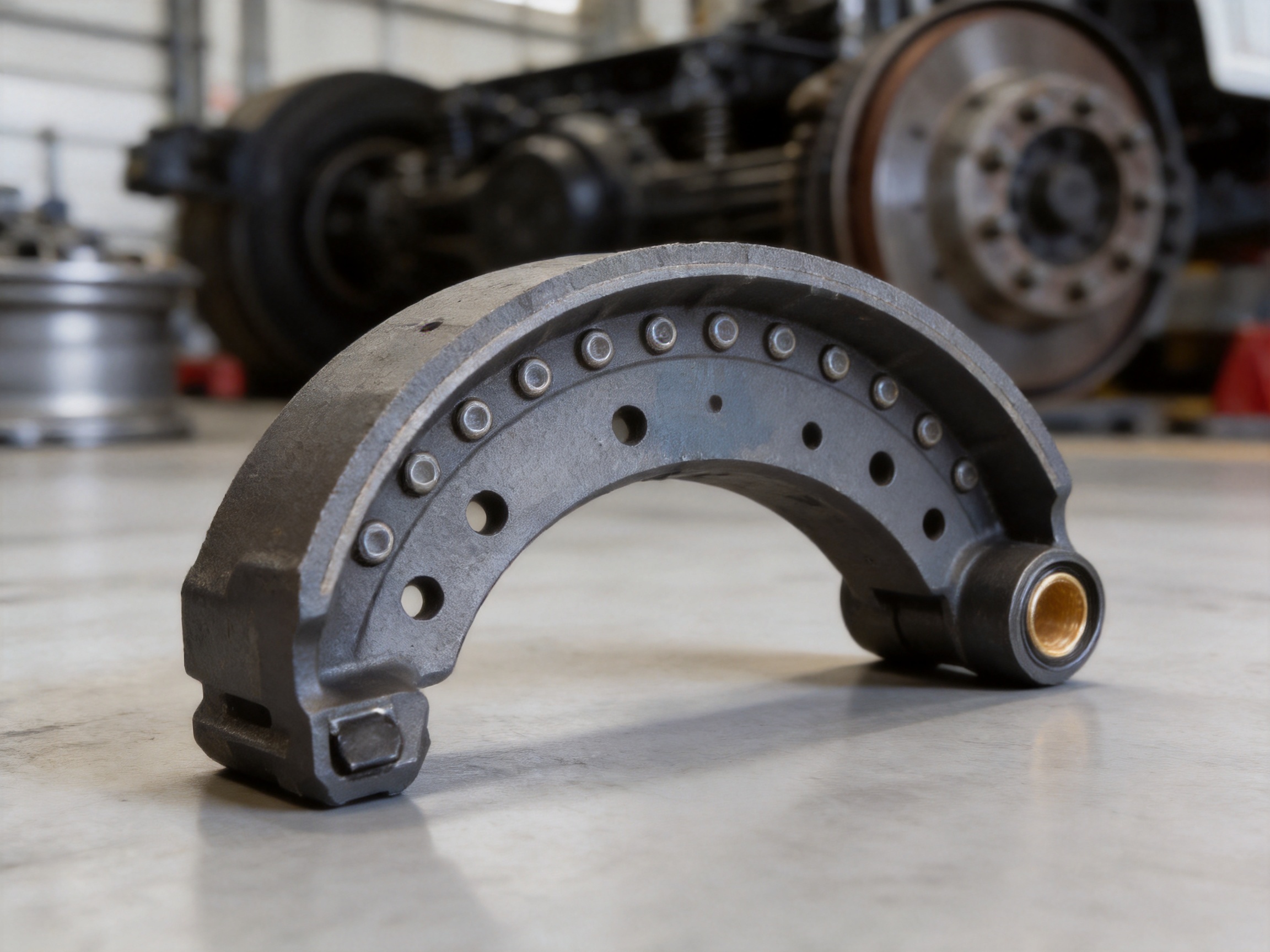
The 6594200619 Casted Brake Shoe, identified by Part No. BZ180, is designed for Benz applications and has a specified size of 410 x 182 mm with 16 riveting holes. Its cast construction provides a strong foundation for heavy-duty braking systems, while its application-specific dimensions support practical replacement and maintenance requirements. The product belongs to a broad range of heavy-duty brake components that includes steel brake shoes, casted brake shoes, brake linings, lined brake shoes, brake shoe repair kits, and lined brake shoe kits.
Produced by Zhejiang Bangchi Auto Parts Co., Ltd., the product is positioned for customers seeking reliable aftermarket brake components made according to recognized identification and fitment requirements. The company provides heavy-duty brake parts and follows the global FMSI numbering system, helping distributors, repair businesses, fleet operators, and brake specialists organize product selection with greater clarity.
Product Overview
The 6594200619 Casted Brake Shoe is a replacement brake shoe for Benz heavy-duty applications. It is supplied as a casted brake shoe, meaning the main shoe body is formed from cast metal rather than fabricated from multiple bent or welded steel sections. This type of construction is commonly selected for applications where rigidity, dimensional stability, and resistance to repeated mechanical stress are important.
| Product Item | Specification |
|---|---|
| Product Name | 6594200619 Casted Brake Shoe |
| Part Number | BZ180 |
| OEM Number | 6594200619 |
| Product Category | Casted Brake Shoe |
| Size | 410 x 182 mm |
| Riveting Holes | 16 |
| Application | Benz |
| Product Range | Heavy-duty brake parts |
The OEM number 6594200619 is an important identification reference for buyers comparing replacement options. The internal part number BZ180 provides an additional product reference for catalog management, purchasing, warehousing, and communication with the supplier. Buyers should always compare the OEM number, part number, dimensions, hole pattern, and vehicle or axle application before placing an order.
The specified 410 x 182 mm size gives purchasers a useful starting point for compatibility verification. The 16 riveting holes are equally important because the hole pattern affects the installation of the friction lining. A brake shoe with the correct overall dimensions but an incorrect hole layout may not be suitable for the intended lining or vehicle application. The combination of size and riveting-hole information therefore improves the accuracy of product selection.
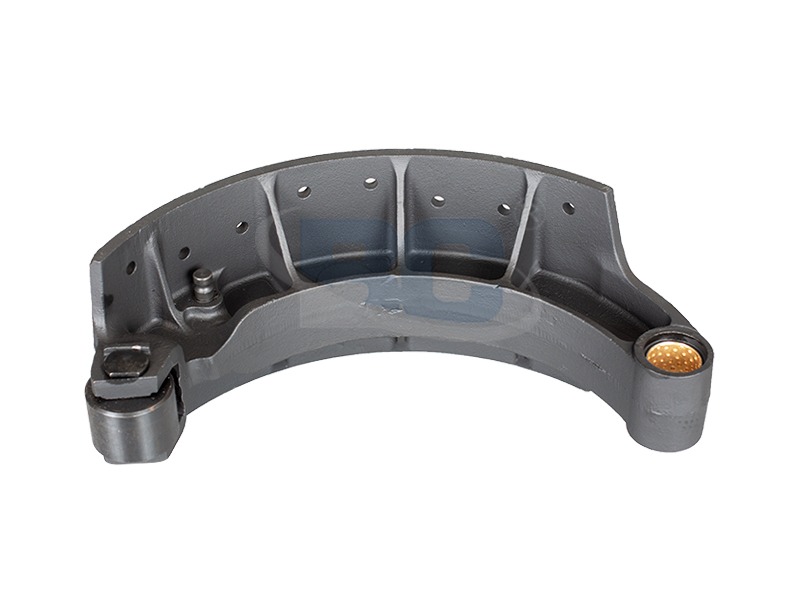
6594200619 Casted Brake Shoe
Why Cast Construction Matters in Heavy-Duty Brake Shoes
Heavy-duty brake shoes are exposed to forces that are considerably more demanding than those encountered in many light-vehicle braking systems. Commercial vehicles can operate with high gross weights, long service intervals, frequent stop-and-go cycles, and extended downhill braking. Under these conditions, the shoe body must remain structurally stable while transmitting the force generated by the brake actuator to the friction lining and drum.
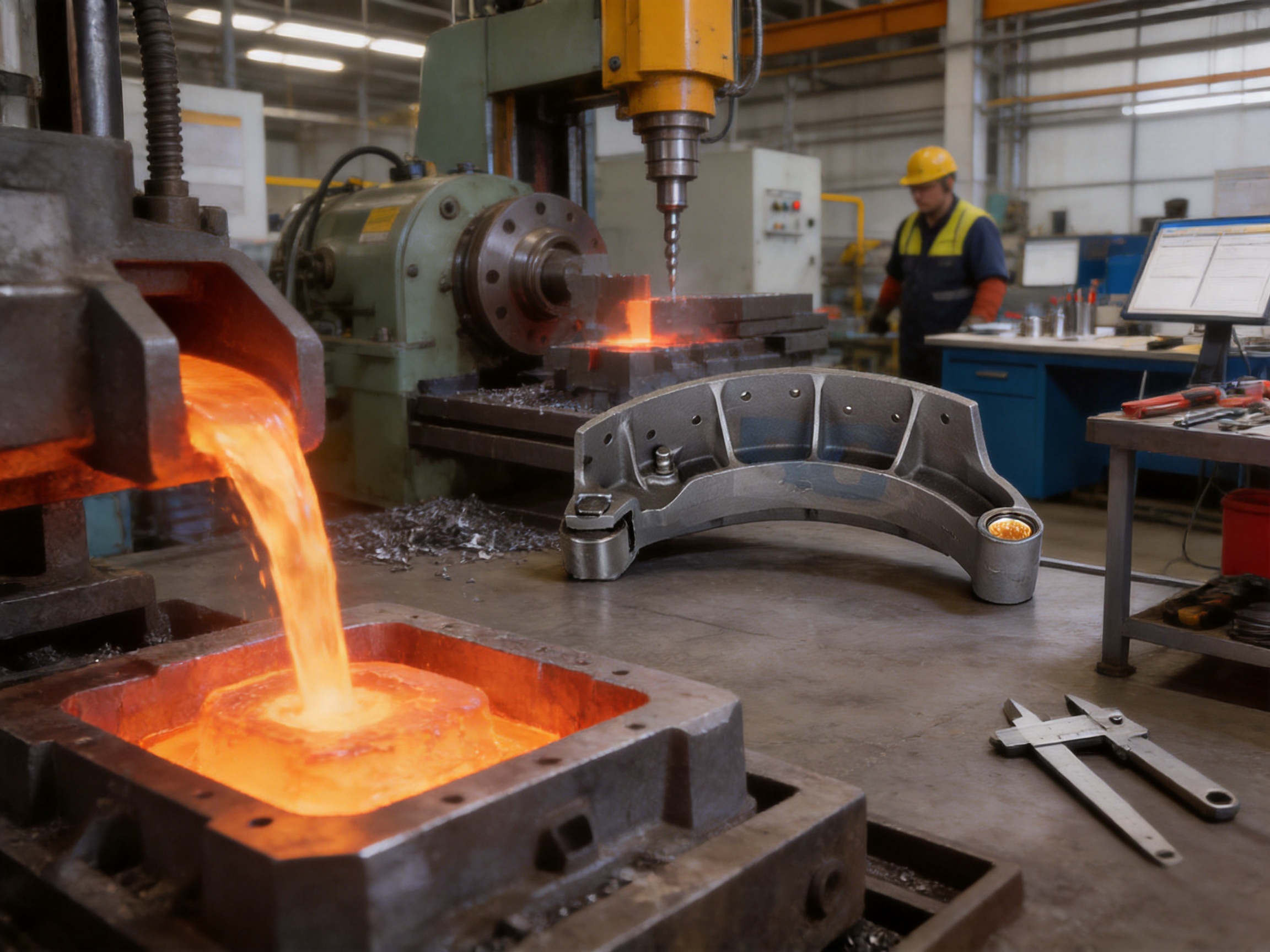
A casted brake shoe is formed by introducing molten metal into a prepared mold and allowing the material to solidify into the required geometry. This process can create a strong, integrated body with a consistent structural profile. Instead of relying on multiple separately formed pieces, the cast body is designed as a unified component. This can support durability and dimensional consistency when the casting process, tooling, finishing, and inspection are properly controlled.
One advantage of cast construction is the ability to produce complex shapes that support the geometry of a heavy-duty brake assembly. Ribs, mounting areas, curved sections, and other structural features can be incorporated into the mold design. This helps the shoe body match the intended braking mechanism while maintaining a balance between strength and weight.
Another advantage is resistance to deformation during service. Brake shoes must preserve their shape as the friction lining is pressed against the brake drum. If the shoe body bends, twists, or loses dimensional accuracy, the contact between lining and drum may become uneven. Uneven contact can contribute to irregular wear, reduced braking consistency, noise, or premature maintenance. A properly produced casted shoe provides a stable platform for the lining and helps maintain the intended relationship between the braking components.
Cast construction can also support repeatable production. Once tooling and process parameters have been established, successive components can be formed according to the same design. Consistency is especially important for fleet customers and distributors, who need replacement parts with predictable dimensions rather than products that vary significantly from one production batch to another.
Designed for Benz Heavy-Duty Applications
The 6594200619 Casted Brake Shoe is identified for Benz application. This application information is essential because brake shoes are not universal components. Even when two products appear similar, differences in shoe radius, width, overall height, mounting points, actuator interfaces, lining-hole arrangement, or drum compatibility may prevent interchangeability.
A replacement part selected for a Benz system should be verified against the vehicle, axle, braking assembly, and service documentation. The OEM number 6594200619 provides a useful basis for this comparison. The product’s BZ180 part number, 410 x 182 mm dimensions, and 16 riveting holes provide additional checkpoints for purchasing departments and technical staff.
For repair workshops, detailed identification reduces the risk of ordering an unsuitable brake shoe. For wholesalers, clear specification data helps create accurate catalogs and reduces confusion among similar-looking brake components. For fleet maintenance teams, the information supports planned purchasing and can help organize replacement stock according to vehicle group or axle application.
Application-specific design also supports more efficient installation. When the shoe body has the correct profile and hole arrangement, technicians can focus on normal preparation, lining installation, hardware inspection, and brake adjustment rather than attempting to modify an incompatible component. Brake shoes should never be altered by unauthorized drilling, bending, heating, or cutting to force a fit.
Dimensional Accuracy and Riveting-Hole Design
The 410 x 182 mm specification is one of the central characteristics of the BZ180 casted brake shoe. Dimensions influence how the component fits within the brake assembly and how the friction lining aligns with the drum. Accurate size control is therefore not simply a matter of appearance. It directly affects installation, contact geometry, and the working relationship between the shoe, lining, drum, and associated hardware.
The 16 riveting holes are designed to support the attachment of a compatible brake lining. Riveting is a widely used method for securing friction material to brake shoes. The hole count, spacing, diameter, edge distance, and alignment must correspond to the intended lining design and the selected rivets. A correct hole pattern allows the lining to be attached evenly across the shoe body, helping avoid localized movement or unsupported areas.
During a professional lining installation, the technician should check that the lining is properly matched to the shoe, that all holes are clean and accurately aligned, and that suitable rivets and tools are used. Rivets should be installed according to the lining manufacturer’s instructions. Poorly installed rivets may loosen, crack, or fail to secure the lining evenly, even when the underlying brake shoe is correctly manufactured.
The presence of 16 riveting holes also makes the product easier to identify in a purchasing environment. Product descriptions that list only a general category such as “casted brake shoe” may not provide enough information for an accurate decision. Listing the hole count together with the dimensions and OEM number gives buyers a more complete technical profile.
Dimensional inspection is particularly important for cast components because the material changes from a liquid state to a solid state during production. Controlled tooling, appropriate process management, and post-casting inspection help minimize dimensional variation. Additional operations such as trimming, cleaning, machining, and drilling can further refine the finished component.
Manufacturing Process from Casting to Finished Component
The production of a heavy-duty casted brake shoe involves multiple stages. Each stage contributes to the final quality of the product. A reliable manufacturing system does not depend on one operation alone; it combines material control, mold preparation, casting, finishing, machining, drilling, inspection, and packaging.
Engineering and Tooling Preparation
Manufacturing begins with product information and tooling preparation. The product drawing or technical specification defines the shoe profile, dimensions, mounting features, lining interface, and reference points. For the BZ180 brake shoe, the 410 x 182 mm size and 16-hole riveting configuration are key production requirements.
Tooling must reproduce the intended geometry with sufficient repeatability. Mold condition, alignment, and maintenance influence the shape of each casting. A well-maintained mold helps reduce unwanted variation and supports consistent production between batches. Engineering review may also consider areas where metal flow, cooling, shrinkage, or finishing could affect the final dimensions.
Material Preparation
Material preparation is an important part of casting quality. The selected metal must provide the mechanical properties required for a heavy-duty brake shoe. Raw materials and charge materials should be managed carefully, with attention to cleanliness, composition, and suitability for the casting process.
Consistent material preparation supports stable production. Uncontrolled contamination or variation can affect the strength, toughness, machinability, or surface quality of the finished shoe. A professional manufacturing process therefore treats material handling as a controlled step rather than an informal preliminary activity.
Casting
During casting, prepared metal is melted and introduced into the mold. The mold must fill the intended cavity so that the final shoe body contains the required structural features. Temperature, pouring practice, mold condition, and cooling behavior can all influence the result.
The goal is to produce a sound casting with the correct shape and sufficient internal integrity. Casting defects such as unacceptable voids, cracks, inclusions, incomplete filling, or serious dimensional distortion can compromise the component. For this reason, castings require appropriate inspection before they proceed to later operations.
Cleaning and Finishing
After solidification, the casting is removed from the mold and undergoes cleaning and finishing. Excess material, flash, gates, and other temporary features are removed. The surface is prepared so that the shoe can move to machining, drilling, and inspection stages.
Finishing also supports safer handling. Sharp edges or unnecessary projections should be removed or controlled. The finished shoe must present a suitable surface for contact with brake hardware and for attachment of the friction lining.
Machining and Drilling
Machining refines selected areas of the casting to achieve the required dimensions and interfaces. Depending on the product design, machining may address mounting points, contact areas, reference surfaces, or other functional features. Drilling creates the 16 riveting holes used for lining installation.
Hole positioning is especially important. A drilling fixture or controlled positioning method can help maintain repeatability across the production batch. The drilling process should also control hole size, spacing, alignment, and cleanliness. Burrs and chips must be removed so that the lining can sit correctly against the shoe body.
Inspection and Release
Inspection verifies whether the finished part matches the applicable technical requirements. Typical checks may include visual examination, dimensional measurement, hole-pattern verification, surface inspection, and comparison with approved drawings or samples. The exact inspection plan depends on the manufacturer’s quality system and product requirements.
Inspection records can support traceability and help identify production trends. If a measurement begins to move toward an unacceptable limit, corrective action can be taken before the issue affects a larger quantity of parts. This process-oriented approach is more dependable than relying only on final visual inspection.
Packaging
Brake shoes should be packaged to prevent impact damage, contamination, corrosion, and confusion between similar products. Correct labeling should identify the product name, part number, OEM number, and other relevant information. Good packaging protects the component during transportation and supports efficient receiving and warehouse management.
Quality and Process Strengths
Zhejiang Bangchi Auto Parts Co., Ltd. focuses on heavy-duty brake parts and offers product categories covering both complete and serviceable brake components. Its range includes steel brake shoes, casted brake shoes, brake linings, lined brake shoes, brake shoe repair kits, and lined brake shoe kits. This breadth is valuable because many customers need more than one component type when managing commercial-vehicle brake maintenance.
A manufacturer with a focused product range can develop deeper process knowledge in brake-component production. Experience with casted shoes, linings, and repair kits helps connect the requirements of the supporting metal structure with those of the friction material and installation hardware. This can improve product communication and make it easier for customers to select a suitable component configuration.
The company’s stated use of the global FMSI numbering system is another practical strength. Numbering systems help organize friction and brake components according to recognized references. Although buyers should still confirm application and dimensions, structured identification can reduce errors in catalogs, quotations, purchase orders, and warehouse records.
Product information for the BZ180 model includes the internal part number, OEM number, dimensions, rivet-hole count, and application. Providing these details demonstrates an emphasis on technical identification rather than relying on a generic product name. For international customers, this level of information supports communication across different languages, markets, and purchasing systems.
Manufacturing strength is also reflected in the relationship between design and process. A casted brake shoe must be engineered for its intended use, produced with stable tooling, finished accurately, drilled consistently, and checked before shipment. Each step contributes to the final product. A competitive supplier is therefore evaluated not only by price but also by process discipline, product consistency, responsiveness, and ability to support repeat orders.
Advantages Compared with Less Suitable Alternatives
When properly matched to the vehicle and brake assembly, the 6594200619 Casted Brake Shoe offers several practical advantages over less suitable alternatives.
Structural Stability
The integrated cast body provides a rigid support for the brake lining. Compared with a poorly formed or inaccurately fabricated shoe, a quality casting can offer better resistance to shape change under repeated braking loads. Structural stability supports more consistent lining contact and may help reduce uneven wear caused by a distorted shoe.
Application-Specific Fitment
The product is identified for Benz application and includes a specific OEM number, part number, size, and hole count. This is an advantage over generic products with limited technical information. Accurate identification helps buyers avoid parts that look similar but do not meet the requirements of the intended brake assembly.
Serviceable Lining Interface
With 16 riveting holes, the shoe is prepared for attachment of a compatible lining. This supports repair-oriented maintenance strategies in which the metal shoe body is retained when appropriate and the friction lining is replaced. A suitable repair approach may help reduce component waste and provide flexibility for workshops that perform relining operations.
Catalog and Inventory Efficiency
The combination of BZ180 and OEM number 6594200619 makes the item easier to list, search, and reorder. Clear identification can reduce purchasing delays and lower the risk of mixing similar parts in inventory. For distributors, structured product data also supports more useful online and printed catalogs.
Heavy-Duty Product Focus
A supplier specializing in heavy-duty brake parts is more likely to understand the practical needs of commercial-vehicle customers. These needs include repeatability, supply continuity, cross-reference support, packaging, technical specifications, and suitability for fleet maintenance. Product focus can be a meaningful advantage over suppliers that treat brake shoes as a minor part of a much broader and less specialized range.
Installation and Maintenance Considerations
The 6594200619 Casted Brake Shoe should be installed only by qualified personnel using the correct service procedures. Before installation, the technician should confirm the part number, OEM number, dimensions, hole pattern, vehicle application, and condition of the product. The brake drum, lining, springs, pins, rollers, adjusters, and other related components should also be inspected.
A brake shoe is part of a system. Even a correctly manufactured shoe cannot compensate for a cracked drum, worn hardware, contaminated friction material, incorrect adjustment, or damaged mounting points. Replacing only one visibly damaged component without checking the surrounding brake assembly may leave the underlying problem unresolved.
If the shoe is to be relined, the old friction material and rivets should be removed carefully. The shoe body should be examined for cracks, deformation, excessive wear, corrosion, or damage around the riveting holes. A shoe that no longer meets service requirements should not be reused merely because it can accept a new lining.
The replacement lining must match the shoe dimensions and hole pattern. Rivets must be compatible with the lining and installed with appropriate equipment. The lining should sit flush against the shoe body without gaps, rocking, or misalignment. After riveting, the technician should inspect the assembly to ensure that the rivets are properly formed and that the lining has not been damaged during installation.
Brake drums should be checked for scoring, cracking, excessive wear, out-of-round conditions, and contamination. The drum and shoe must work together as a matched braking interface. If the drum surface is outside service limits, installing a new shoe may not restore proper performance.
After assembly, the brake system should be adjusted according to the vehicle or axle manufacturer’s service procedure. The technician should confirm correct movement, clearance, return action, and operation of the adjustment mechanism. A controlled inspection and road test, where legally and safely permitted, should be completed before the vehicle returns to normal service.
Brake components should never be exposed to oil, grease, fuel, paint, or other contaminants unless the service procedure specifically requires it. Contaminated friction material generally requires replacement. Safe lifting, wheel support, spring-removal tools, and appropriate personal protective equipment are also essential during brake work.
Benefits for Different Customer Groups
Fleet Operators
Fleet operators require predictable maintenance and reliable parts availability. The BZ180 brake shoe’s clear identification supports planned purchasing and stock control. By recording both the OEM number and internal part number, a fleet can create a consistent replacement database and reduce delays caused by uncertain product matching.
For fleets operating Benz vehicles, application-specific brake shoes can make maintenance planning more orderly. Maintenance personnel can compare the product with existing service records and determine whether it belongs to a particular vehicle group, axle, or brake configuration. Final fitment must always be confirmed through technical documentation.
Wholesale Distributors
Distributors benefit from products that are easy to describe and cross-reference. The BZ180 product has several catalog-friendly data points: casted construction, Benz application, OEM number 6594200619, 410 x 182 mm size, and 16 riveting holes. This information can be used in product listings, quotation sheets, warehouse labels, and customer support materials.
A broad product portfolio also allows distributors to offer related items. Customers purchasing casted brake shoes may also need brake linings, lined brake shoes, repair kits, or lined brake shoe kits. A supplier capable of supporting several categories can simplify sourcing and help distributors build a more complete heavy-duty brake offering.
Repair Workshops
Repair workshops need components that are straightforward to identify and practical to install. A casted shoe with a defined riveting-hole pattern supports lining replacement when the shoe body remains serviceable. Accurate technical information helps workshops prepare the correct lining, rivets, tools, and labor time before beginning a job.
Workshop efficiency also depends on consistent replacement quality. If successive parts match the stated specifications, technicians can develop repeatable inspection and installation procedures. This can reduce uncertainty and improve the organization of maintenance operations.
Brake Component Specialists
Brake specialists often require detailed communication about applications, dimensions, and cross-references. The manufacturer’s heavy-duty focus and FMSI-based identification approach provide a useful foundation for technical discussions. Specialist customers can evaluate the product according to their own test plans, service requirements, and market regulations.
Purchasing Checklist for the 6594200619 Brake Shoe
Before ordering the product, buyers should confirm the complete application. The following checklist can help reduce selection errors:
First, verify that the vehicle or brake assembly is a Benz application corresponding to the specified OEM reference. The OEM number should be compared with the vehicle manufacturer’s parts information, axle documentation, or the existing component.
Second, confirm the product category. The item described here is a casted brake shoe, not a lined brake shoe, complete repair kit, or brake lining alone. Buyers should determine whether they need the bare shoe body or an assembled product.
Third, compare the size of 410 x 182 mm with the required service dimensions. Measurements should be taken using suitable tools and should account for the method specified by the relevant technical documentation.
Fourth, verify the 16 riveting holes and confirm that the selected lining and rivets match the shoe. Hole count alone is not sufficient; spacing and diameter may also be relevant.
Fifth, review packaging and labeling requirements, especially for export orders. Product labels should remain legible during transport and warehouse storage.
Sixth, discuss order quantity, production lead time, inspection documents, and shipping arrangements with the supplier. Clear communication before production helps avoid misunderstandings regarding specifications and packaging.
Product Consistency and Supply Reliability
For commercial-vehicle parts, consistency from one order to the next is often as important as the performance of an individual component. Fleet operators and distributors need confidence that a repeat order will correspond to the same approved specification. This is particularly relevant for brake shoes because small differences in dimensions or hole locations can affect lining installation and fitment.
A controlled manufacturing process supports consistency through documented specifications, maintained tooling, repeatable machining and drilling methods, and inspection procedures. Batch identification and traceability can further assist in resolving questions about production dates, material lots, or inspection results.
Supplier communication is another part of supply reliability. Customers may require private labeling, neutral packaging, carton markings, pallet instructions, or specific documentation. These details should be agreed before production. A manufacturer experienced in export-oriented heavy-duty brake parts can help customers coordinate technical and logistical requirements more efficiently.
Zhejiang Bangchi Auto Parts Co., Ltd. provides contact channels for product inquiries and commercial communication. Customers can use these channels to confirm current availability, technical details, quotation conditions, and application information before purchasing. Because product specifications and vehicle applications can vary, direct confirmation is recommended for large or technically sensitive orders.
Responsible Use and Performance Expectations
A brake shoe should be evaluated as part of a complete braking system. The product’s cast construction and specified dimensions are important quality characteristics, but they do not replace correct installation, suitable friction material, proper adjustment, or regular inspection. Performance depends on the interaction of the shoe, lining, drum, actuator, hardware, and maintenance practices.
Buyers should avoid assuming that a part is suitable solely because the shape appears similar. The OEM number, application, dimensions, and hole pattern should be checked together. If uncertainty remains, technical advice should be obtained before installation.
It is also important to distinguish product information from guaranteed vehicle performance. No responsible component selection can guarantee a particular stopping distance or service life without considering vehicle weight, operating speed, road conditions, brake system design, lining formulation, drum condition, installation quality, and maintenance intervals.
When correctly matched and professionally installed, a quality casted brake shoe can provide a dependable structural base for the braking assembly. Its value lies in accurate fitment, sound construction, support for compatible relining, and the confidence that comes from purchasing a clearly identified component from a focused manufacturer.
Frequently Asked Questions
What is the product name?
The product is the 6594200619 Casted Brake Shoe. Its internal part number is BZ180.
What is the OEM number?
The OEM number provided for this product is 6594200619. Buyers should compare this reference with official vehicle or axle documentation before ordering.
What vehicle application is specified?
The stated application is Benz. Because several brake configurations may exist within a vehicle range, application confirmation should include the vehicle, axle, and brake assembly details whenever possible.
What are the product dimensions?
The specified size is 410 x 182 mm. The measurement should be checked against the required technical reference and the existing brake assembly.
How many riveting holes does the shoe have?
The product has 16 riveting holes. The replacement lining and rivets must be compatible with this hole pattern.
Is the product supplied with a brake lining?
The listed product category is Casted Brake Shoe. Based on the provided information, it should be treated as a casted shoe body rather than automatically assuming that a friction lining is included. Buyers should confirm the supply configuration before placing an order.
Can the brake shoe be relined?
The 16 riveting holes indicate that the shoe is designed to accept a compatible riveted brake lining. Before relining, the shoe body must be inspected for cracks, deformation, excessive wear, corrosion, and damage. A qualified technician should decide whether reuse is appropriate.
What is the advantage of a casted brake shoe?
A casted brake shoe provides an integrated metal body that can offer structural rigidity, dimensional stability, and a consistent platform for the friction lining when produced and inspected correctly. These characteristics are valuable in heavy-duty braking applications.
Why are the dimensions and hole count important?
Dimensions affect fitment within the brake assembly, while the riveting-hole pattern affects lining installation. Both must correspond to the intended application. A visually similar component may still be unsuitable if its size or hole layout is different.
Who manufactures the product?
The product is manufactured by Zhejiang Bangchi Auto Parts Co., Ltd., a supplier of heavy-duty brake parts including casted brake shoes, steel brake shoes, brake linings, lined brake shoes, brake shoe repair kits, and lined brake shoe kits.
Does the company use a numbering system?
The company states that it provides OEM brake parts following the global FMSI numbering system. The BZ180 internal part number and 6594200619 OEM number are the primary references provided for this product.
What should be inspected before installation?
The shoe, lining, rivets, brake drum, springs, pins, rollers, adjusters, mounting points, and related components should be checked. The technician should also verify that the part matches the application and that no contamination or damage is present.
How can buyers request more information?
Customers can contact Zhejiang Bangchi Auto Parts Co., Ltd. through the telephone, fax, or email information provided in the supplier’s commercial materials. Technical questions should include the OEM number, part number, vehicle or axle information, required quantity, and any packaging or documentation requirements.
Conclusion
The 6594200619 Casted Brake Shoe, Part No. BZ180, is a specialized heavy-duty brake component for Benz applications. Its key specifications are a 410 x 182 mm size and a 16-hole riveting pattern. These details provide a practical basis for fitment verification, lining selection, catalog management, and maintenance planning.
Its cast construction is suited to the structural demands of heavy-duty drum-brake systems. When produced through controlled casting, finishing, machining, drilling, and inspection processes, a casted brake shoe can provide a rigid and stable foundation for the friction lining. Compared with generic or poorly identified alternatives, the product offers clearer application information and a more defined technical profile.
Zhejiang Bangchi Auto Parts Co., Ltd. strengthens the product offering through its focus on heavy-duty brake components, a range that covers both individual brake parts and repair-oriented assemblies, and an identification approach based on OEM and FMSI references. These strengths can benefit fleets, distributors, workshops, and brake specialists that require dependable sourcing and organized product information.
Correct selection and professional installation remain essential. Buyers should confirm the OEM number, application, dimensions, hole pattern, supply configuration, and related brake-system requirements before purchase. With those checks completed, the BZ180 casted brake shoe can serve as a practical replacement foundation for compatible Benz heavy-duty braking systems.
References
1. Product specification supplied for 6594200619 Casted Brake Shoe, Part No. BZ180.
2. Manufacturer product-category information for steel brake shoes, casted brake shoes, brake linings, lined brake shoes, brake shoe repair kits, and lined brake shoe kits.
3. Manufacturer information regarding OEM brake parts and the global FMSI numbering system.
4. General heavy-duty drum-brake service and inspection principles.
5. General casting, machining, drilling, riveting, and quality-control practices for commercial-vehicle brake components.