 English
 简体中文
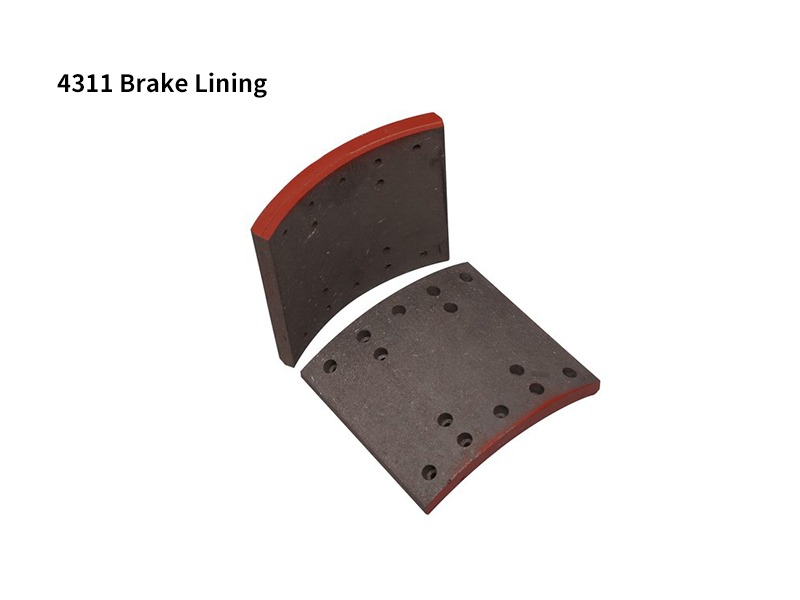
简体中文The 4311 Brake Lining is a heavy-duty friction component designed for commercial vehicle brake applications where dependable stopping performance, dimensional consistency, and serviceability are essential. With a product size of 16.5 by 7 inches and 14 rivet holes, this lining is configured for brake shoe assemblies that require accurate fitting and reliable attachment. Its specification makes it suitable for maintenance, replacement, and repair programs serving heavy trucks, trailers, buses, and other commercial vehicles that use compatible brake shoe designs.
Brake linings operate in one of the most demanding areas of a vehicle. Every braking event converts vehicle motion into heat through controlled friction between the lining and the brake drum. The lining must therefore withstand repeated mechanical loading, changing temperatures, vibration, moisture, road contamination, and long operating cycles. A replacement lining is not simply a flat friction material. It is a precision-manufactured component whose size, hole pattern, curvature, friction behavior, and attachment quality all influence the performance of the complete brake assembly.
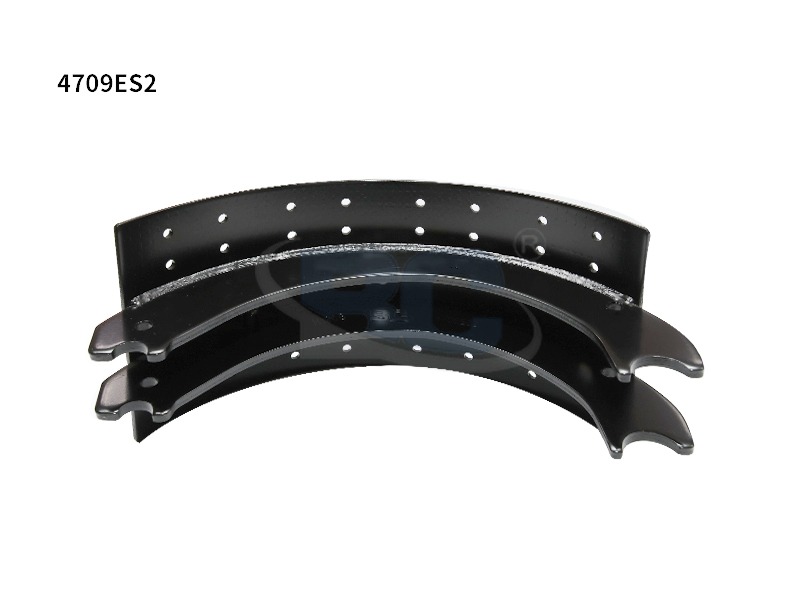
The 4311 Brake Lining is produced by Zhejiang Bangchi Auto Parts Co., Ltd., a China-based manufacturer focused on heavy-duty brake parts. The company provides products in categories including steel brake shoes, casted brake shoes, brake linings, lined brake shoes, brake shoe repair kits, and lined brake shoe kits. Its product approach is oriented toward replacement and original-equipment-style supply, with product identification following the global FMSI numbering system.
For distributors, repair specialists, fleet maintenance departments, and brake component wholesalers, the value of the 4311 lining lies in its combination of a clearly defined dimensional specification, a practical 14-hole attachment layout, and compatibility with professional brake shoe rebuilding processes. A well-controlled lining can help simplify component selection, improve assembly repeatability, and support a consistent maintenance workflow.
4311 Brake Lining
Product Overview
The 4311 Brake Lining is identified by the part number 4311. Its stated product size is 16.5 by 7 inches, and it has 14 rivet holes. These three details are important when determining whether the component is suitable for a particular brake shoe or service application. The part number supports catalog identification, the dimensions help confirm physical fit, and the hole count assists technicians in checking attachment compatibility before installation.
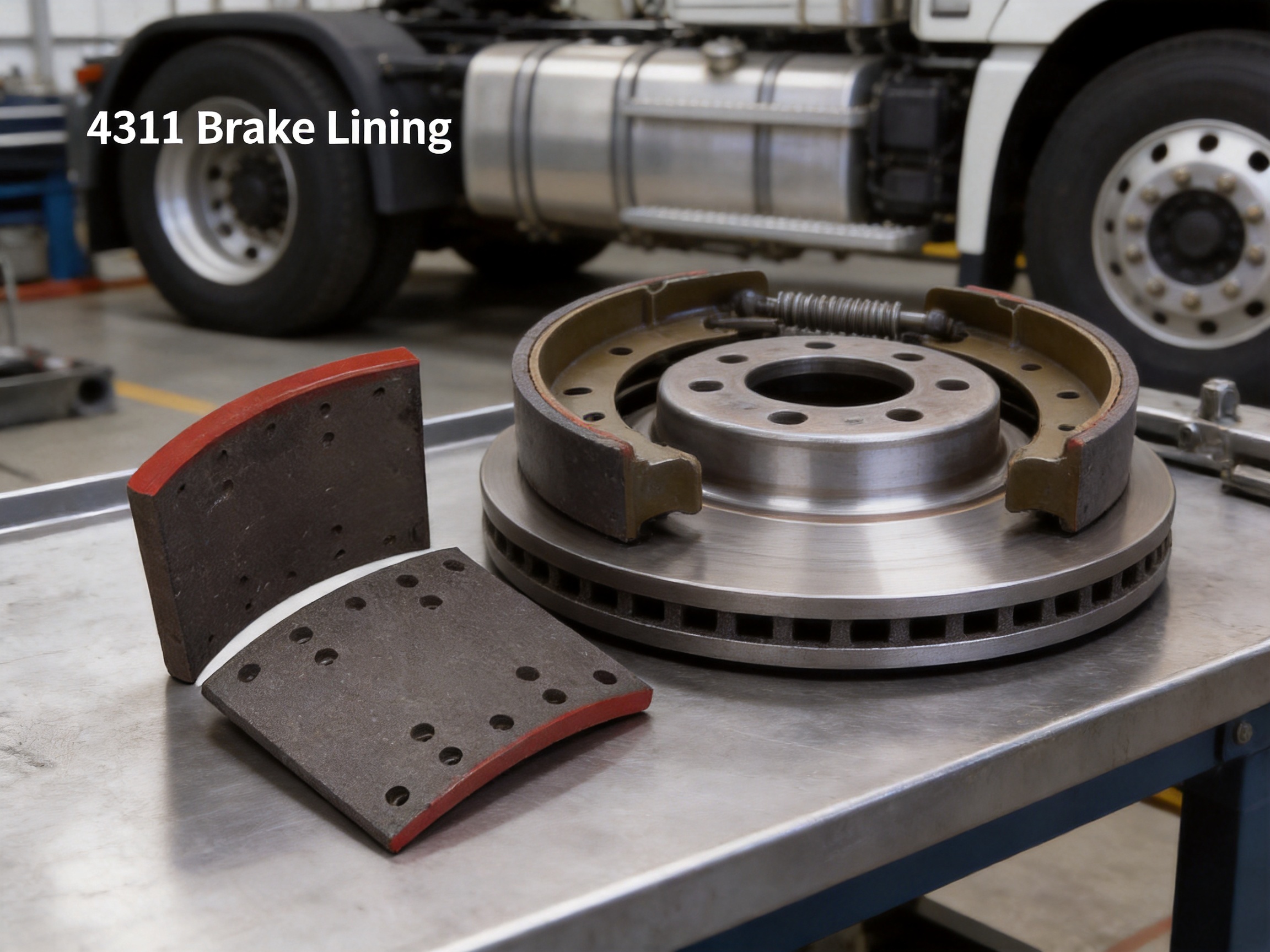
The lining is supplied as a separate friction component rather than as a complete lined brake shoe. This format is useful for brake repair operations in which a reusable steel or cast brake shoe remains structurally serviceable while its worn friction material must be replaced. By replacing the lining instead of the entire shoe assembly, repair businesses and fleet workshops may be able to organize maintenance more efficiently and reduce unnecessary replacement of reusable hardware.
| Product Attribute | Specification | Service Relevance |
|---|---|---|
| Part number | 4311 | Supports product identification and ordering |
| Product category | Brake lining | Designed for lining replacement and brake shoe rebuilding |
| Product size | 16.5 by 7 inches | Provides a basic dimensional reference for application matching |
| Rivet hole count | 14 | Helps confirm compatibility with the brake shoe attachment pattern |
| WVA number | Not provided | Application should be confirmed through dimensions, part number, and technical records |
| Manufacturer | Zhejiang Bangchi Auto Parts Co., Ltd. | Supports sourcing from a specialized heavy-duty brake parts manufacturer |
The available product information does not include a WVA number. For that reason, purchasers should not rely on a WVA cross-reference that has not been verified. Application decisions should be made using the 4311 part number, the 16.5 by 7 inch size, the 14-hole configuration, the original brake shoe information, and the requirements of the specific vehicle or axle. Professional confirmation is recommended whenever the original lining has an unclear identification mark or the brake shoe has been modified.
Why Correct Brake Lining Selection Matters
Brake lining selection affects more than installation convenience. The lining is part of a friction pair that also includes the brake drum, brake shoe, rivets or other attachment method, and the mechanical brake actuator. If a lining is too long, too short, too wide, or incorrectly drilled, it may not sit correctly on the shoe. Poor contact can create uneven pressure distribution, localized overheating, irregular wear, noise, or premature damage to the drum and lining.
The 4311 specification gives maintenance personnel a defined starting point for checking the replacement part. The 16.5 by 7 inch dimensions help establish whether the lining has the correct general coverage for the shoe. The 14 rivet holes provide an additional reference for positioning and attachment. These details can reduce the risk of ordering a visually similar product with a different hole arrangement or an unsuitable length.
Correct selection also supports inventory management. Heavy-duty repair facilities frequently service multiple vehicle types and brake configurations. A clearly identified part number makes it easier to separate products in storage, prepare purchasing records, and reduce picking errors. When lining specifications are recorded consistently, the maintenance team can develop dependable replacement procedures instead of relying only on visual comparison.
Key Advantages of the 4311 Brake Lining
Defined Heavy-Duty Size
The 16.5 by 7 inch size is a practical specification for heavy-duty brake service. Clearly defined dimensions help purchasing teams compare the lining with the original component and help technicians verify the product before installation. Dimensional clarity is especially valuable in commercial vehicle maintenance, where a small mismatch can delay repairs or require additional machining and fitting work.
A correctly sized lining can provide the intended friction coverage across the working area of the brake shoe. Good coverage supports more uniform transfer of braking force and helps avoid unnecessary exposed areas on the shoe. The lining should still be checked against the complete brake shoe because dimensions alone do not confirm every aspect of compatibility. However, a specified size is more useful than an unspecified or generic description.
Fourteen-Hole Attachment Configuration
The 14-rivet-hole design provides an important mechanical reference. Rivet holes must align with the prepared brake shoe, and the spacing must be suitable for the assembly process. A known hole count allows the repair technician to perform a preliminary check before removing the old lining or beginning the reline operation.
Multiple attachment points can help distribute the clamping and retention function along the length of the lining. The actual performance of the attachment depends on correct rivet selection, hole alignment, rivet setting, shoe condition, and assembly technique. The lining specification therefore works together with a controlled installation process. The 4311 design gives professional rebuilders a defined configuration around which that process can be organized.
Suitable for Professional Brake Shoe Rebuilding
A separate brake lining is useful for workshops that rebuild brake shoes. When the shoe remains free from cracks, distortion, excessive corrosion, and other structural damage, relining can be a practical maintenance option. The process permits the service provider to replace the worn friction material while retaining an acceptable shoe body.
This approach can offer operational advantages over replacing every brake shoe as a complete assembly. It may help reduce material waste, provide greater flexibility in managing replacement stock, and allow a workshop to match the lining to its established relining equipment. The decision must always be based on inspection of the shoe and compliance with the workshop's safety procedures.
Clear Part Number Identification
The 4311 part number is concise and easy to use in product catalogs, quotations, inventory systems, and maintenance documentation. Clear identification is valuable in international heavy-duty parts distribution because a buyer may need to communicate with a supplier across different languages, vehicle markets, and catalog systems.
A part number also supports traceability. Distributors can record the part number on packaging, invoices, warehouse labels, and customer orders. Fleet operators can include it in maintenance histories. If a technical question later arises, the recorded part number helps connect the installed component with the applicable product information.
Designed for the Heavy-Duty Replacement Market
The product is positioned within the heavy-duty brake parts sector rather than the passenger car replacement market. Heavy trucks and commercial vehicles impose substantial demands on brake systems because of their weight, mileage, operating schedules, and exposure to variable road conditions. A brake lining intended for this sector must be handled as a serious service component, with careful application matching and controlled installation.
The 4311 lining is therefore relevant to wholesalers, fleet workshops, brake specialists, vehicle repair centers, and original-equipment-style replacement programs. Its specification allows professional users to evaluate it within their own brake system catalogs and service procedures.
Manufacturing Strengths
Zhejiang Bangchi Auto Parts Co., Ltd. manufactures heavy-duty brake parts and offers products across several related categories. This product range includes steel brake shoes, casted brake shoes, brake linings, lined brake shoes, brake shoe repair kits, and lined brake shoe kits. A manufacturer working across these categories can develop a broader understanding of the relationship between friction material, shoe structure, attachment methods, and complete brake assembly requirements.
The company states that it provides OEM brake parts following the global FMSI numbering system. This positioning reflects an emphasis on structured part identification and application-based product development. FMSI-style numbering is valuable because it gives buyers a common reference for brake friction components and supports more organized cross-border sourcing.
Process-Based Product Development
Reliable brake lining production begins with controlled product development. A lining must be considered in relation to its intended brake shoe, drum dimensions, attachment pattern, and service environment. The 4311 product information establishes its primary identity, size, and hole count. These details form the basis for tooling, drilling or forming arrangements, inspection records, and packaging information.
A process-based approach helps reduce variation between production batches. Instead of treating each lining as an isolated item, the manufacturer can connect the part number with defined production instructions and inspection checkpoints. This is particularly important for replacement parts, where customers expect the new component to reproduce the basic fit of the original part.
Dimensional Control
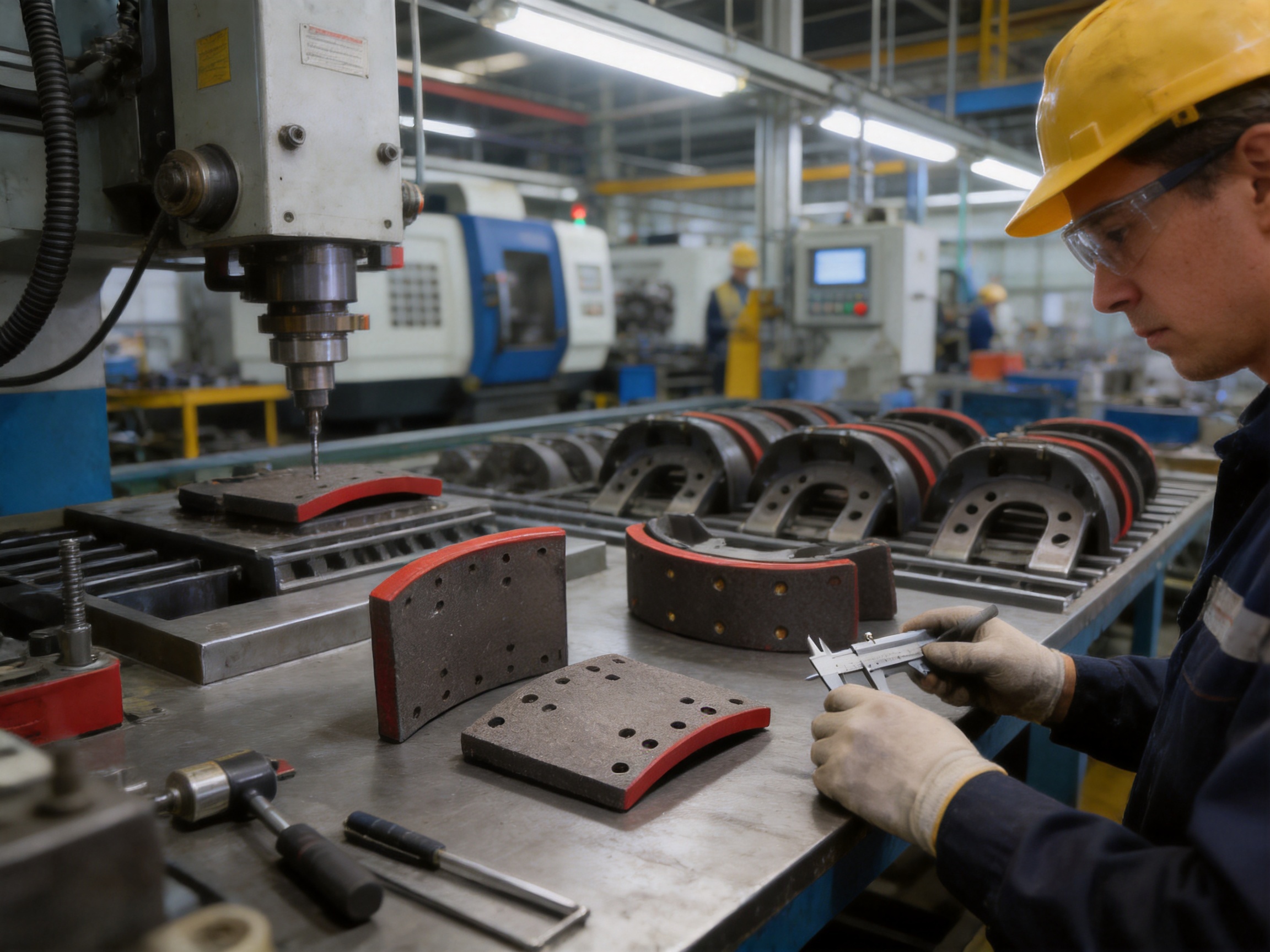
Dimensional control is one of the most important strengths in brake lining manufacturing. The 16.5 by 7 inch specification should be managed through suitable measuring procedures so that finished parts remain within the manufacturer's intended tolerances. Length and width checks help confirm that the lining is suitable for the associated brake shoe design, while hole count and hole positioning checks help support correct assembly.
Dimensional inspection may include checking the overall outline, the location of each rivet hole, the relationship between the holes and the lining edges, and the consistency of the finished surface. The exact instruments and tolerances depend on the manufacturing process and product requirements. What matters to the customer is that the manufacturer treats these features as controlled characteristics rather than informal visual details.
For a professional buyer, dimensional consistency has a direct commercial benefit. It can reduce the time spent correcting mismatched components, improve workshop productivity, and make repeat orders more predictable. Consistent dimensions also support the use of standard relining tools and fixtures.
Hole Pattern and Attachment Preparation
The 14-hole arrangement requires careful preparation. Holes should be formed or drilled in a manner that supports clean attachment and accurate alignment with the brake shoe. Inconsistent hole positioning can create stress concentrations, interfere with rivet setting, or cause the lining to shift during assembly.
A strong manufacturing process treats the hole pattern as a critical product feature. Tooling should be maintained, production operators should follow defined work instructions, and inspection should confirm that the finished lining matches the intended configuration. This attention is particularly important for a lining with multiple attachment points because an error at one position can affect the entire installation.
Good hole preparation also supports the work of the brake repair technician. When the lining and shoe align correctly, the technician can focus on proper seating, riveting, and final inspection rather than improvising around an inconsistent component.
Friction Material Manufacturing Discipline
The friction material is the working surface of the product. Its composition and processing influence braking behavior, wear, thermal response, and interaction with the drum. Although the specific compound details for the 4311 lining have not been provided, manufacturing discipline remains essential regardless of the selected formulation.
Important production principles include controlled material batching, consistent mixing, accurate forming, appropriate curing or heat treatment, stable finishing, and protection against contamination. Each stage can influence the final friction characteristics. A manufacturer with experience in heavy-duty brake parts can apply process controls appropriate to the demands of commercial vehicle service.
Material consistency is also important from one order to the next. Fleet operators and distributors need replacement products that behave predictably. Uncontrolled variation could produce differences in wear, bedding behavior, or customer experience. For that reason, production records and batch management are valuable elements of a professional brake lining program.
Surface Finishing and Fit Preparation
The surface of a brake lining must be prepared so that it can make appropriate contact with the brake shoe and, after installation and bedding, work correctly against the drum. Finishing operations may be used to achieve the required profile, smoothness, edge condition, or curvature. The exact process depends on the product design and the requirements of the mating brake shoe.
Proper finishing can support efficient installation. A lining with a consistent profile is easier for a technician to seat against the shoe, while controlled edges can help reduce interference during assembly. The product should not be assumed ready for installation without inspection; the shoe, lining, and attachment hardware must all be checked as a system.
Inspection and Quality Assurance
Quality assurance is central to the production of safety-related brake components. A robust inspection program can include incoming material checks, in-process monitoring, final dimensional inspection, visual examination, hole-pattern verification, and packaging review. The purpose is to identify nonconforming products before they reach the customer.
For the 4311 Brake Lining, key inspection points should include confirmation of the part number, size, 14-hole configuration, surface condition, and general workmanship. Packaging labels should correspond with the physical product so that the correct lining reaches the correct customer and application.
Quality assurance also provides information for process improvement. If a recurring dimensional issue or packaging error is discovered, production management can investigate the cause and update the relevant process. This continuous feedback is an important strength for a manufacturer serving international replacement markets.
Advantages Compared with Generic or Poorly Controlled Alternatives
Not all replacement linings offer the same level of specification clarity. A generic lining may appear similar in size but have an unverified hole pattern, unclear application range, or incomplete traceability. The 4311 product provides a specific part number, stated dimensions, and a defined rivet-hole count. These details allow a professional customer to make a more structured comparison.
Another advantage is the manufacturer's concentration on heavy-duty brake parts. A supplier focused on this product field is more likely to understand the practical needs of brake shoe rebuilders, commercial vehicle distributors, and fleet maintenance programs than a general industrial supplier with no dedicated brake product range.
The availability of related products can also simplify sourcing. Buyers who need brake linings may also require steel brake shoes, casted brake shoes, lined brake shoes, or repair kits. A supplier with these categories can support more complete purchasing conversations and help customers organize compatible components within one product portfolio.
Following the global FMSI numbering system is another advantage for international communication. Numbering discipline can reduce ambiguity when a customer requests a replacement component. It does not eliminate the need for application verification, but it provides a recognized structure for identifying brake friction products.
The 4311 lining should not be compared only by price. A lower initial purchase cost may be offset by fitment problems, installation delays, premature wear, or inventory confusion. A more useful evaluation considers dimensional accuracy, ordering clarity, production consistency, technical support, packaging, and the supplier's ability to provide repeatable supply.
Application and Compatibility Considerations
Before ordering, the buyer should compare the 4311 part number with the vehicle or brake assembly documentation. The 16.5 by 7 inch dimensions should be checked against the removed lining and the shoe. The 14-hole pattern should be checked against the shoe body, including hole location and spacing. A lining that has the same hole count but different spacing may not be suitable.
The condition of the existing brake shoe must also be assessed. A shoe with cracks, distortion, deep corrosion, damaged rivet holes, or excessive wear should not automatically be reused. Relining is appropriate only when the shoe meets the requirements of the repair procedure. If the shoe is not serviceable, a complete lined brake shoe or another suitable assembly may be a better option.
Brake drum condition is equally important. The drum should be examined for cracks, excessive wear, scoring, heat damage, out-of-round condition, and contamination. A new lining cannot compensate for a drum that is outside acceptable service limits. The lining and drum need to be evaluated as a friction pair.
Because the WVA number has not been provided for this product, customers should request additional cross-reference information if their procurement system depends on WVA identification. The absence of a listed WVA number does not by itself indicate a product deficiency; it simply means that the customer should use the available specifications and obtain confirmation before placing an application-sensitive order.
Recommended Installation Workflow
Installation should be performed by qualified personnel using equipment and procedures appropriate for heavy-duty brake relining. The following workflow is a general service guide and does not replace the vehicle manufacturer's instructions or the requirements of the workshop's technical standards.
1. Confirm the Replacement Part
Verify the part number, dimensions, hole count, quantity, and packaging condition. Compare the new 4311 lining with the removed component and the brake shoe. Do not begin installation if the part appears damaged, contaminated, incorrectly labeled, or inconsistent with the intended application.
2. Inspect the Brake Shoe
Clean the shoe sufficiently to reveal cracks, distortion, corrosion, damaged holes, and other defects. Measure or inspect the shoe according to the applicable service procedure. The shoe must provide a stable foundation for the new lining. Any uncertainty about structural condition should be resolved before relining.
3. Remove the Worn Lining
Remove the old friction material using safe workshop methods. Avoid actions that can deform the shoe or enlarge the rivet holes. Old dust and debris should be controlled in accordance with occupational health requirements. The shoe should be cleaned and prepared without compromising its structure.
4. Position the New Lining
Place the 4311 lining on the shoe and confirm that the profile, edges, and 14 holes align correctly. The lining should sit securely against the shoe without rocking, forced bending, or unacceptable gaps. If the part does not align naturally, stop and investigate the application rather than modifying the lining without authorization.
5. Install Suitable Rivets
Use rivets and tools that are suitable for the brake shoe and lining assembly. Rivet selection and setting should follow the established repair procedure. Each attachment point should be properly seated, and the process should avoid crushing, cracking, loosening, or unevenly clamping the lining.
6. Perform a Final Inspection
Inspect the completed assembly for correct alignment, secure attachment, damaged edges, contamination, and visible defects. Confirm that the lining is firmly fixed and that the shoe can be installed in the brake system without interference. The complete brake assembly should be checked before returning the vehicle to operation.
7. Complete Bedding and Service Checks
Newly installed friction material may require a controlled bedding procedure so that the lining and drum develop appropriate contact. Follow the applicable vehicle, axle, or workshop instructions. After installation, check brake adjustment, actuator operation, wheel-end condition, and overall braking response. A road test, when appropriate and safe, should be conducted under controlled conditions.
Maintenance and Service Benefits
A correctly installed lining can support a more orderly maintenance program. The 4311 part number and fixed specification make it easier to record what was installed, when it was installed, and which vehicle or axle received the component. Such records help fleets identify wear patterns and plan future purchasing.
Inspection intervals should be based on vehicle use, load, terrain, climate, braking system design, and the recommendations of the vehicle or brake manufacturer. Heavy-duty vehicles operating in mountainous regions, urban stop-and-go traffic, or severe weather may experience different lining conditions from vehicles used primarily on highways.
During inspection, technicians should look for uneven wear, cracks, loose attachment points, contamination, abnormal glazing, heat damage, and signs of drum incompatibility. The cause of unusual wear should be investigated rather than simply replacing the lining. Potential causes can include incorrect adjustment, seized components, worn drums, misalignment, overloading, or improper bedding.
Keeping the lining clean and dry during storage is also important. Friction material should be protected from oils, greases, solvents, water exposure, impact, and unnecessary contamination. Storage labels should remain legible, and products should be organized by part number to prevent mix-ups.
Value for Distributors and Fleet Operators
For distributors, the 4311 Brake Lining offers a product with straightforward catalog data. The part number, category, size, and hole count can be included in quotations, stock records, and technical product listings. This clarity helps sales staff answer basic customer questions and gives buyers information for initial application screening.
For fleet operators, the product can support a relining strategy where serviceable brake shoes are retained and worn linings are replaced. This may be useful for fleets with in-house rebuilding capacity or established relationships with professional brake repair centers. The decision should be evaluated against labor cost, equipment availability, inspection standards, and the condition of the existing shoe.
For repair shops, a defined 14-hole lining can be integrated into a repeatable workflow. Technicians can prepare tooling, check alignment, and maintain standard inspection steps around a known product configuration. Repeatability is particularly valuable when a shop processes multiple brake shoes for the same customer or vehicle group.
For international buyers, the manufacturer's location in Zhejiang, China, provides access to a major manufacturing region with established auto parts production capabilities. Zhejiang Bangchi Auto Parts Co., Ltd. lists its address as No. 9 Building, No. 11 Qiyi Road, Chang'an Town, Haining, Zhejiang, China. The company can be contacted for product inquiries, application confirmation, and purchasing discussions.
Ordering and Technical Communication
When requesting a quotation, customers should identify the product as the 4311 Brake Lining and provide the required quantity. It is useful to include the stated size of 16.5 by 7 inches and the 14-rivet-hole configuration, especially when the request is part of a broader brake parts inquiry.
Customers should also provide information about the vehicle, axle, brake shoe, original part number, and service application whenever available. Photographs, dimensional drawings, or old component markings may assist the manufacturer in confirming the application. Because no WVA number is listed in the supplied product data, buyers should specifically request any available cross-reference if their purchasing system requires one.
Technical communication should distinguish between a separate lining and a complete lined brake shoe. The 4311 product is identified as a brake lining. If the customer requires the shoe body, rivets, or a complete assembly, that requirement should be stated separately. The manufacturer's broader product range includes lined brake shoes and brake shoe repair kits, which may provide alternative sourcing options depending on the repair strategy.
Company Manufacturing and Supply Profile
Zhejiang Bangchi Auto Parts Co., Ltd. is presented as a manufacturer of heavy-duty brake parts and a supplier of heavy truck brake products. Its listed product categories cover both individual friction components and assembled brake products. This breadth supports customers with different maintenance models, from component-level relining to complete brake shoe replacement.
The company emphasizes OEM brake parts that follow the global FMSI numbering system. For customers, this indicates an effort to organize product development and identification according to an established brake friction reference method. A structured numbering system is especially helpful when products are sold through distributors and used in markets with different vehicle brands and catalog conventions.
The manufacturer's focus on heavy-duty products is also relevant to product strength. Heavy truck brake components require attention to large friction surfaces, robust attachment, repeatable fit, and the operating demands of commercial vehicles. Experience across brake linings, shoes, and kits can help the manufacturer understand how individual components function within a larger service assembly.
Customers seeking additional technical information can contact the company by telephone or email. The listed contact details are as follows: telephone +86 133 7230 7977, fax +86 573 87960639, email sfp@zjbangchi.com, and office telephone +86 573 87960600. Contact information should be confirmed during procurement, particularly for current quotations, lead times, packaging requirements, export documentation, and technical records.
Safety, Compliance, and Responsible Use
Brake components are safety-critical products. The 4311 Brake Lining should be selected, installed, and maintained by qualified professionals. Product dimensions and hole count are important, but they do not replace full vehicle application verification. The installer must confirm compatibility with the brake shoe, drum, actuator, and service procedure.
Customers should request any documentation required by their market or organization. Depending on the application, this may include technical drawings, material information, inspection records, packaging specifications, test documentation, or quality system information. The materials provided for this product do not state specific certifications, test values, friction classifications, or regulatory approvals, so these details should be confirmed directly with the manufacturer when required.
Responsible use also includes correct storage, dust control, safe removal of old friction material, proper riveting equipment, and final brake-system inspection. No replacement lining should be treated as a universal component. The correct part must be matched to the correct brake design.
Frequently Asked Questions
What is the 4311 Brake Lining?
The 4311 Brake Lining is a heavy-duty replacement friction component identified by part number 4311. It is intended for use in compatible brake shoe applications and is supplied as a lining rather than necessarily as a complete lined brake shoe assembly.
What are the dimensions of the 4311 lining?
The stated product size is 16.5 by 7 inches. Buyers should compare these dimensions with the original lining and brake shoe before ordering or installing the product.
How many rivet holes does it have?
The product has 14 rivet holes. The complete hole pattern, including spacing and position, should be checked against the brake shoe because hole count alone does not confirm compatibility.
Is a WVA number available?
No WVA number is included in the supplied product information. Customers who require WVA cross-referencing should contact Zhejiang Bangchi Auto Parts Co., Ltd. and request confirmation using the vehicle, brake shoe, original lining, and part number information.
Can the lining be used on any heavy truck brake shoe?
No. The lining should be used only on a compatible brake shoe and brake system. The 16.5 by 7 inch dimensions and 14-hole configuration are important references, but the full application must be confirmed before installation.
Is the 4311 product a complete brake shoe?
The supplied information identifies it as a brake lining. It should not be assumed to include a steel shoe, casted shoe, rivets, or other repair kit contents. Customers requiring a complete assembly should state that requirement when requesting a quotation.
What is the main advantage of a separate brake lining?
A separate lining can support professional brake shoe rebuilding when the existing shoe is structurally serviceable. It may allow the workshop to replace worn friction material without discarding a reusable shoe body. The shoe must be inspected carefully before reuse.
Who can benefit from this product?
Potential users include heavy-duty brake repair shops, commercial vehicle maintenance departments, fleet operators, distributors, wholesalers, and purchasing organizations that source replacement brake friction components.
What should be checked before installation?
Check the part number, dimensions, hole configuration, lining condition, brake shoe condition, drum condition, attachment hardware, and application records. The lining should be clean, undamaged, correctly aligned, and installed by qualified personnel.
Does the product have a specified friction rating?
No friction rating or compound designation is included in the supplied information. Customers with performance, regulatory, or fleet specification requirements should request the relevant technical data from the manufacturer before purchase.
How does the manufacturer support international sourcing?
The company is based in Zhejiang, China, and states that it provides OEM brake parts following the global FMSI numbering system. Buyers can use the listed part number and product specifications when communicating with the manufacturer or its distribution partners.
What related products does the manufacturer offer?
The listed product categories include steel brake shoes, casted brake shoes, brake linings, lined brake shoes, brake shoe repair kits, and lined brake shoe kits. These categories can support different repair and replacement requirements.
How should the lining be stored?
Store the lining in a clean, dry, protected location away from oil, grease, solvents, moisture, impact, and contamination. Keep the part number and packaging identification visible so that products are not mixed during inventory handling.
Why is professional installation important?
The lining is part of a safety-critical brake assembly. Incorrect alignment, unsuitable rivets, damaged shoe hardware, or poor final adjustment can affect braking performance. Qualified technicians should follow the applicable service instructions and complete all required inspections.
Conclusion
The 4311 Brake Lining is a clearly identified heavy-duty replacement component with a 16.5 by 7 inch size and a 14-rivet-hole configuration. These specifications provide practical references for application matching, inventory control, and professional brake shoe rebuilding. Its separate-lining format can serve repair businesses and fleets that retain serviceable brake shoes while replacing worn friction material.
The product's principal advantages include defined dimensional information, a stated attachment configuration, straightforward part-number identification, and placement within a dedicated heavy-duty brake parts portfolio. These benefits are strengthened by the manufacturer's broader capabilities in brake linings, brake shoes, lined assemblies, and repair kits. Zhejiang Bangchi Auto Parts Co., Ltd. also states that its OEM brake parts follow the global FMSI numbering system, supporting organized identification for international customers.
Successful use depends on correct application confirmation and disciplined installation. Buyers should verify the brake shoe, drum, hole spacing, service requirements, and any required technical or regulatory documentation. When selected and installed correctly, the 4311 Brake Lining can be a practical component for heavy-duty brake maintenance and replacement programs.
References
1. Product information supplied for the 4311 Brake Lining, including part number, size, and rivet-hole count.
2. Zhejiang Bangchi Auto Parts Co., Ltd. company information and heavy-duty brake product category listing.
3. Global FMSI brake friction product numbering principles referenced in the manufacturer product description.
4. General heavy-duty brake maintenance and brake shoe relining practices used by professional commercial vehicle service organizations.
5. General principles of friction material application, brake drum inspection, attachment control, and commercial vehicle brake system maintenance.