 English
 简体中文
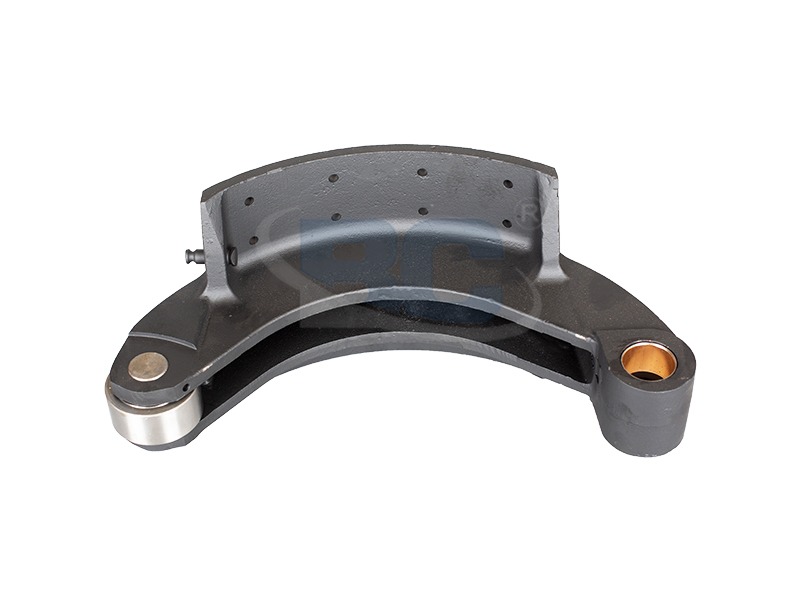
简体中文The 1104543 Casted Brake Shoe is a heavy-duty braking component designed for demanding commercial vehicle applications. Identified by Part No. SCA178 and OEM No. 1104543, this casted brake shoe combines a substantial 413 x 178 mm format with 16 riveting holes and an application specification for Scania vehicles. These characteristics make it suitable for replacement, repair, and maintenance programs that require dependable dimensional compatibility and consistent braking performance.
Brake shoes operate in one of the most safety-critical areas of a vehicle. They transfer mechanical force to the brake lining, support friction generation inside a drum brake assembly, and withstand repeated thermal and mechanical loading. For heavy trucks, buses, trailers, and other commercial vehicles, a brake shoe must perform reliably under high axle loads, frequent braking, long operating cycles, changing road conditions, and demanding maintenance schedules.
The 1104543 Casted Brake Shoe is developed around these requirements. Its cast construction provides a strong structural foundation for the lining and riveting system. Its specified dimensions support accurate application matching, while the 16 riveting holes allow the brake lining to be securely attached when the correct lining and riveting procedure are used. As a replacement component, it offers a practical solution for workshops, distributors, fleet operators, and original-equipment-equivalent brake part programs.
Unlike a light-duty brake component designed for occasional use, a heavy-duty casted brake shoe must balance strength, stability, fit, serviceability, and production consistency. The value of this product therefore depends not only on its nominal size or reference number, but also on the manufacturing discipline used to produce every batch. Controlled casting, accurate machining, dimensional inspection, surface preparation, and reliable traceability all contribute to a brake shoe that can be integrated into professional maintenance operations.
1104543 Casted Brake Shoe
Product Identification and Main Specifications
Correct identification is essential when selecting a replacement brake shoe. The product information supplied for this model gives the following key references: Part No. SCA178, OEM No. 1104543, application Scania, size 413 x 178 mm, and 16 riveting holes. These details should be checked against the vehicle, axle, brake assembly, existing shoe, and workshop documentation before installation.
| Specification | Product Information |
|---|---|
| Product type | Casted brake shoe |
| Part number | SCA178 |
| OEM number | 1104543 |
| Nominal size | 413 x 178 mm |
| Riveting holes | 16 |
| Vehicle application | Scania heavy-duty vehicle applications |
| Product category | Casted Brake Shoe |
The OEM number is useful for cross-referencing, while the supplier part number helps distributors and purchasing departments manage stock. The size specification provides a first dimensional reference, but it should not be treated as the only fitment criterion. Brake assemblies may differ in shoe profile, anchor arrangement, cam contact area, lining position, offset, and other design details. Professional buyers should therefore confirm all available technical information before ordering in volume.
The 16 riveting holes are an important feature of the shoe design. They indicate the intended attachment pattern for the brake lining. A correct hole count alone does not guarantee compatibility; hole spacing, hole diameter, edge distance, countersinking, and lining shape must also correspond to the selected lining. When these elements match, the shoe can support a secure and accurately positioned lining installation.
The supplied product record identifies the application as Scania. This application reference assists workshops and distributors in narrowing their product selection, particularly when maintaining fleets containing multiple vehicle makes or axle configurations. The final replacement decision should always be based on the vehicle identification number, axle and brake system information, the original component, and the latest technical instructions available to the installer.
Why a Casted Brake Shoe Is Important in Heavy-Duty Applications
A brake shoe is exposed to forces that are significantly greater than those encountered in many passenger-car braking systems. When the driver applies the brake, the actuator and cam mechanism push the shoes outward against the internal surface of the brake drum. The shoe must resist bending, distortion, local stress concentration, and repeated loading while maintaining a stable relationship with the lining and drum.
Casting is well suited to producing a robust brake shoe body with a defined structural shape. A properly controlled casting process can create a strong and consistent foundation around the shoe’s working areas, support points, and lining attachment zones. The resulting component can be designed to manage the loads generated during braking while retaining the geometry needed for correct movement inside the drum assembly.
For heavy trucks and commercial vehicles, structural stability is especially important because the brake shoe may experience high contact pressure and substantial heat transfer. A shoe that loses its shape can affect lining contact, braking balance, drum wear, and adjustment performance. By contrast, a sound cast shoe helps maintain the intended relationship between the friction material and drum during repeated service cycles.
The casted structure also supports the refurbishment and replacement needs of the commercial vehicle market. Brake shoes are service components, and fleets need replacement parts that can be installed efficiently without unnecessary modification. A consistent cast body provides a dependable base for lining attachment, inspection, and workshop handling.
Design Advantages of the 1104543 Model
Heavy-Duty Structural Foundation
The primary advantage of the 1104543 Casted Brake Shoe is its cast construction. A cast shoe body is intended to provide the rigidity required for drum brake operation in commercial vehicles. The shoe must carry the lining, transmit actuator force, and remain stable as braking pressure changes. A sound structure reduces the risk that the shoe will deform under normal service loads.
Structural strength also contributes to consistent braking contact. The lining must meet the drum with a controlled and predictable pressure distribution. If the shoe body flexes excessively, the lining may not wear evenly, and braking efficiency may vary across the contact surface. A stable foundation helps the lining work as intended throughout its service life.
Application-Specific Dimensions
The 413 x 178 mm specification gives buyers a clear initial reference for product selection. Application-specific dimensions reduce the risk of choosing a visually similar but functionally incompatible component. In a professional parts program, clearly stated dimensions make it easier to organize catalogs, manage inventory, prepare quotations, and support workshop ordering.
Dimensional consistency is also valuable during installation. A brake shoe that matches the intended assembly can reduce fitting difficulties and limit the need for adjustments caused by incorrect geometry. This supports faster maintenance work and helps prevent avoidable downtime for fleet operators.
Sixteen Riveting Holes for Lining Attachment
The 16-hole riveting pattern is another important design feature. Brake lining attachment must be secure because the lining is exposed to friction, vibration, heat, and repeated mechanical loading. A correctly matched hole arrangement distributes attachment points along the lining and helps maintain reliable contact between the lining and shoe body.
Multiple riveting points can also support better retention across the length of the lining. The exact benefit depends on the lining design, riveting method, rivet material, and installation quality. When the correct components are used together, the 16-hole configuration provides a practical basis for a professional relining process.
Suitable for Replacement and Repair Programs
The product belongs to a broad range of commercial vehicle brake components that includes steel brake shoes, casted brake shoes, brake linings, lined brake shoes, brake shoe repair kits, and lined brake shoe kits. This product family approach is valuable because fleets and distributors often require more than one form of brake service solution.
A casted brake shoe can be supplied as a foundation for relining, while a lined shoe or repair kit may be selected according to workshop capability and maintenance policy. The availability of related categories allows purchasers to align product selection with their preferred repair process, inventory strategy, and service schedule.
Manufacturing Process and Quality Control Approach
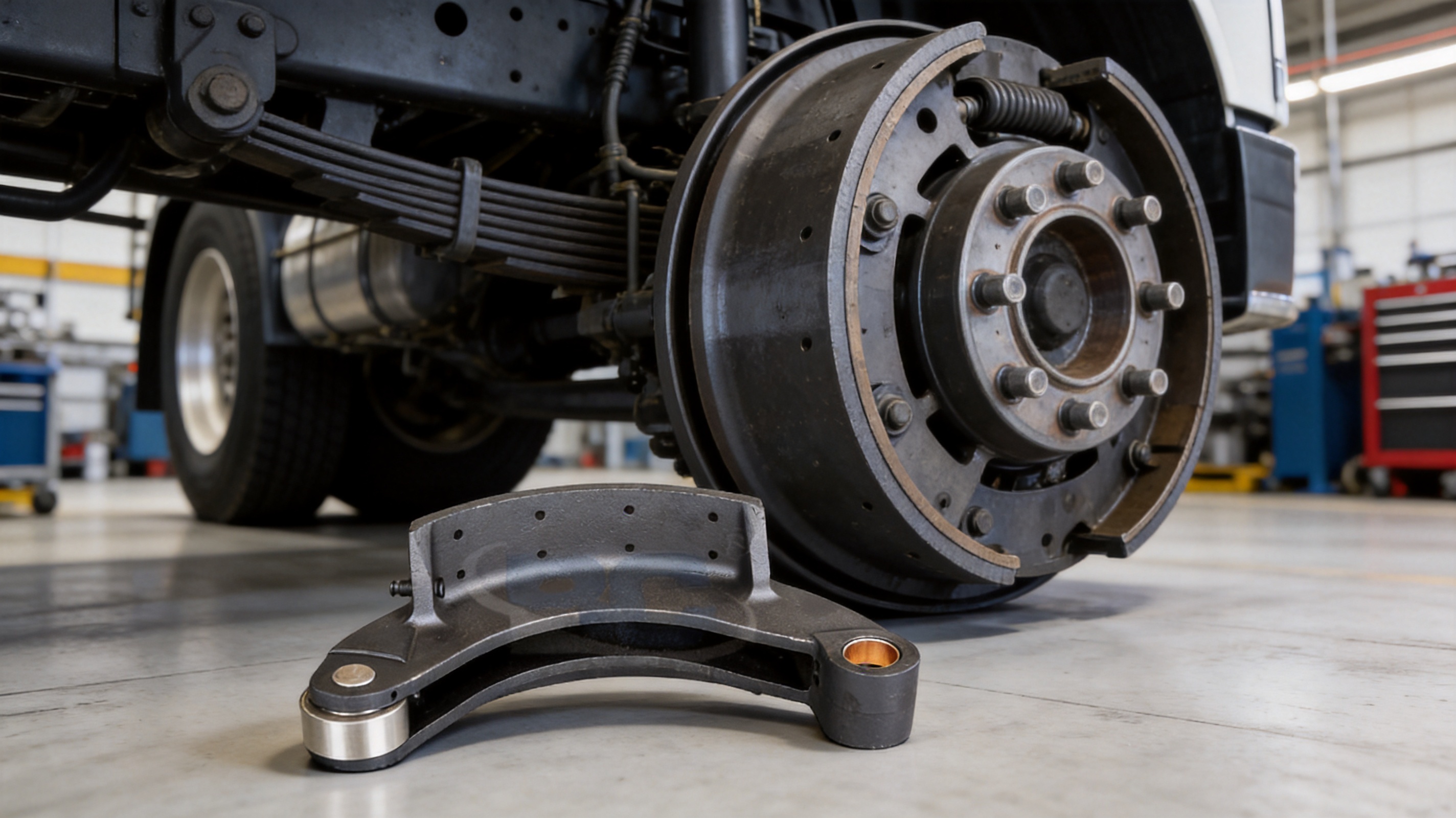
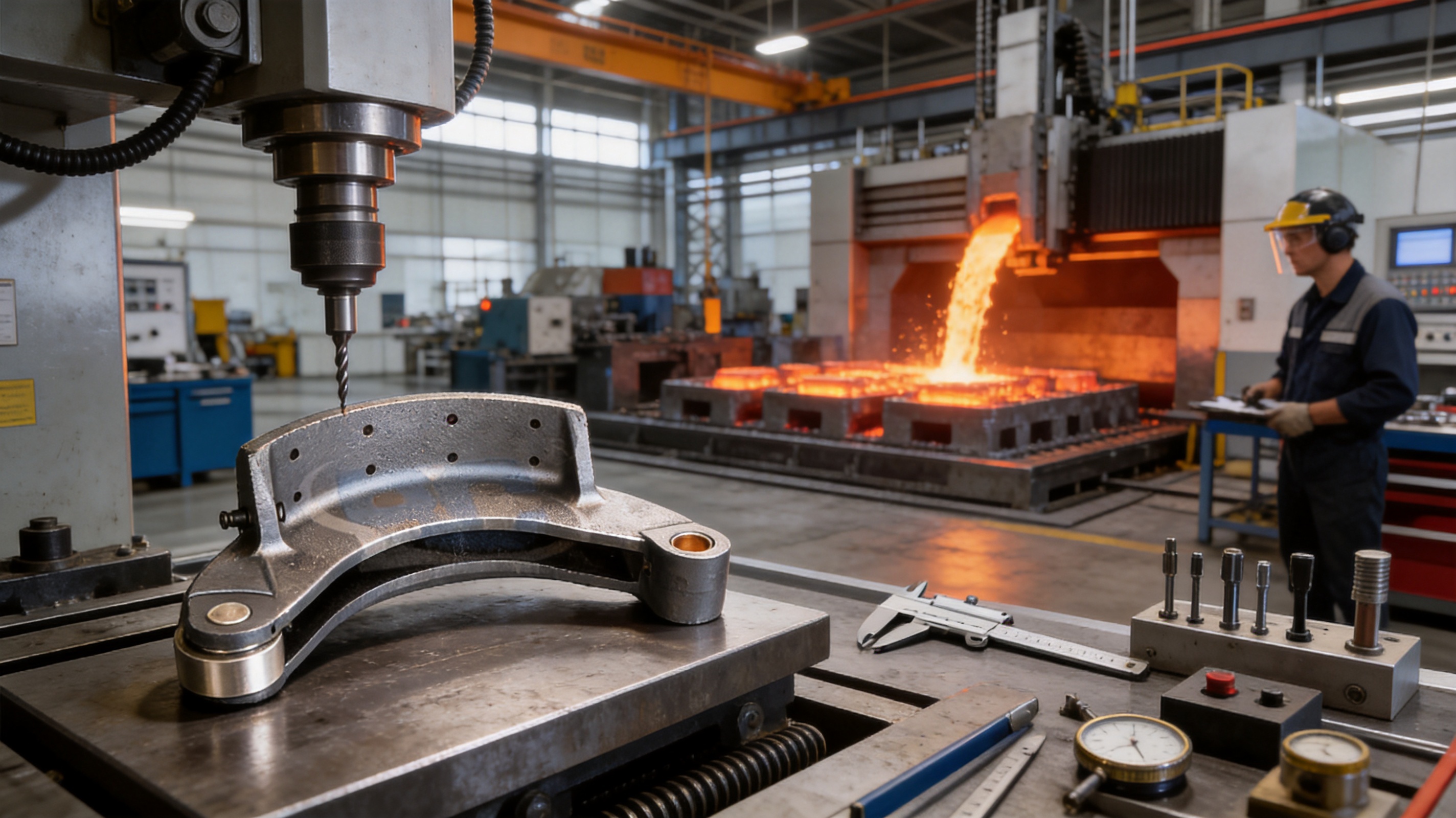
The performance of a casted brake shoe is closely connected to the quality of its manufacturing process. While the finished part may appear simple, it must meet multiple requirements at the same time. The body needs appropriate material integrity, the shape must remain within dimensional tolerances, the riveting holes must be correctly positioned, and the finished surface must be suitable for assembly and service.
An advanced manufacturing approach begins with controlled production planning. Product drawings, application references, process instructions, inspection requirements, and customer specifications should be reviewed before production starts. This prevents confusion between similar brake shoe models and ensures that the selected pattern, tooling, and machining program correspond to the correct part number.
Pattern and Tooling Control
Casting accuracy begins with pattern and tooling control. The pattern defines the basic form of the brake shoe, so its condition directly affects the consistency of the finished casting. Regular inspection of patterns and fixtures helps identify wear, damage, distortion, or other conditions that could influence product geometry.
For a product such as the 1104543 Casted Brake Shoe, controlled tooling is particularly important because the shoe’s curvature and support areas must correspond to the intended drum brake assembly. Proper tooling management helps maintain repeatability from one production batch to the next and supports stable dimensional results for distributors that purchase the same reference repeatedly.
Material Preparation and Casting
Material preparation is a central part of cast component production. The foundry process should use controlled raw materials and a repeatable charge composition suited to the required strength, toughness, and service conditions. Incoming materials should be identified and checked before they enter production, while process parameters should be documented and monitored.
During casting, control of temperature, filling behavior, solidification, and cooling is essential. These factors influence the internal quality and external geometry of the shoe. A disciplined process can help reduce the risk of defects such as incomplete filling, excessive porosity, shrinkage-related imperfections, or unwanted dimensional variation.
After casting, each batch should be subject to appropriate visual and dimensional checks. Depending on the customer requirement and quality system, additional inspection methods may be used to assess casting integrity. The objective is to ensure that the cast body provides a reliable foundation for subsequent machining and lining attachment.
Machining and Hole Processing
Casting establishes the main body shape, but machining refines the areas that require more accurate dimensions. Machining operations may include surface preparation, edge finishing, hole drilling, hole cleaning, and processing of mounting or contact areas. The exact operations depend on the product drawing and production design.
The 16 riveting holes require special attention. Their quantity, location, diameter, and alignment affect the installation of the brake lining. Modern production control can use dedicated fixtures, controlled drilling equipment, and inspection gauges to maintain the required hole pattern. Clean and accurately formed holes also help reduce difficulties during riveting.
Machining consistency offers a clear advantage over poorly controlled low-cost alternatives. A component may have the correct overall appearance but still cause fitting problems if hole positions vary, edges are rough, or contact surfaces are not properly finished. Production discipline helps convert the nominal design into a usable workshop component.
Deburring and Surface Finishing
After machining, the brake shoe should be properly deburred and cleaned. Sharp edges, loose particles, machining residue, and casting flash can interfere with installation or create unnecessary handling risks. Surface finishing improves the overall usability of the product and supports a more consistent assembly process.
Cleaning is also important before packaging. Residual material can contaminate the lining interface or create corrosion concerns during storage. A controlled finishing and cleaning stage allows the product to move into inspection and packing in a condition suitable for professional distribution.
Dimensional Inspection
Dimensional inspection confirms whether the finished shoe corresponds to its technical requirements. Important checkpoints may include overall length and width, shoe curvature, hole count, hole spacing, contact areas, thickness, and other application-specific dimensions. The inspection plan should be based on the product drawing, approved sample, and customer requirements.
Inspection equipment may include calipers, micrometers, gauges, templates, coordinate measurement equipment, and dedicated checking fixtures. The equipment selected should be suitable for the tolerance and feature being measured. Where repeatability is important, dedicated fixtures can help reduce operator variation and improve inspection efficiency.
Quality control is most effective when it is applied throughout the process rather than only at the end. Incoming material inspection, process checks, first-piece approval, in-process measurements, and final inspection together provide a stronger quality system than final visual checking alone. This layered approach supports stable production and helps identify process problems before a large quantity is completed.
Traceability and Batch Management
Traceability supports accountability and after-sales service. Production records should connect the finished brake shoes with the relevant material batch, tooling, process date, inspection results, and packaging information. If a question arises about a shipment, traceable records make it easier to investigate the issue and identify affected products.
For international distributors, traceability also supports inventory control. Part number, batch number, quantity, production date, and inspection status can be recorded in the warehouse system. This helps buyers manage stock rotation and respond more efficiently to technical inquiries from workshops and fleet customers.
Advantages Over Less Specialized Alternatives
Heavy-duty brake parts are available from many sources, but not all products offer the same level of application clarity or manufacturing control. The 1104543 Casted Brake Shoe is positioned as a specialized commercial vehicle component rather than a generic metal replacement. Its stated part number, OEM reference, dimensions, hole count, and vehicle application provide a useful technical foundation for purchasing decisions.
One advantage is the balance between product specificity and service flexibility. The shoe is identified for a particular heavy-duty application, yet it can be incorporated into different maintenance programs. A workshop may use it as a base for installing new lining material, while a distributor may include it in a wider brake component catalog. This flexibility is valuable in markets where maintenance practices vary.
A second advantage is the structural suitability of cast construction. Some lower-quality alternatives may prioritize low purchase price without adequately addressing long-term dimensional stability or material consistency. A properly manufactured cast shoe is intended to withstand the mechanical demands of drum braking and provide a stable platform for the friction material.
A third advantage is the defined riveting pattern. Clear information about 16 riveting holes allows buyers to compare the product with the required lining and repair process before purchase. This can reduce ordering errors and help workshops prepare the correct tools, rivets, and lining components.
A fourth advantage is the potential for consistent repeat supply. Commercial vehicle fleets need parts that can be reordered with confidence. Consistent production controls, inspection records, and clear part numbering help reduce variation between shipments. This is especially important for distributors that serve multiple repair centers or manage long-term fleet contracts.
It is important to understand that product advantages are realized only when the brake shoe is correctly matched and installed. No brake component can compensate for an incorrect lining, damaged drum, improper riveting, poor adjustment, or unsuitable installation procedure. The value of the product therefore includes not only its design and manufacturing quality, but also the technical discipline applied throughout the service process.
Compatibility, Ordering, and Application Verification
Before ordering the 1104543 Casted Brake Shoe, the purchaser should compare the OEM number 1104543 and Part No. SCA178 with the vehicle and brake assembly information. The stated Scania application is a useful guide, but commercial vehicle braking systems can vary according to axle, model year, gross vehicle weight, brake manufacturer, and regional specification.
The existing brake shoe should be removed and examined when practical. Technicians can compare the overall profile, anchor and cam contact areas, lining position, hole pattern, and major dimensions. Measurements should be taken using appropriate tools, and the original part should not be relied upon solely by visual appearance.
The 413 x 178 mm size should be checked against the required replacement dimensions. Buyers should also confirm whether the measurement refers to the shoe body, lining envelope, or another catalog convention. Different suppliers may describe brake shoe dimensions in slightly different ways, so technical clarification is recommended when there is uncertainty.
| Verification Item | Reason for Checking |
|---|---|
| OEM reference | Confirms the intended cross-reference |
| Supplier part number | Ensures the correct catalog product is ordered |
| Vehicle and axle application | Helps distinguish similar brake assemblies |
| Overall dimensions | Supports correct physical fit |
| Riveting hole count and pattern | Confirms lining attachment compatibility |
| Brake shoe profile | Ensures correct contact and movement in the drum |
| Drum and lining specifications | Supports safe and effective friction performance |
For wholesale orders, it is useful to request technical drawings, samples, inspection information, packaging details, and applicable quality documentation. A sample comparison before mass purchase can reduce the risk of receiving a part that is close in appearance but unsuitable for the intended brake system.
Installation and Relining Considerations
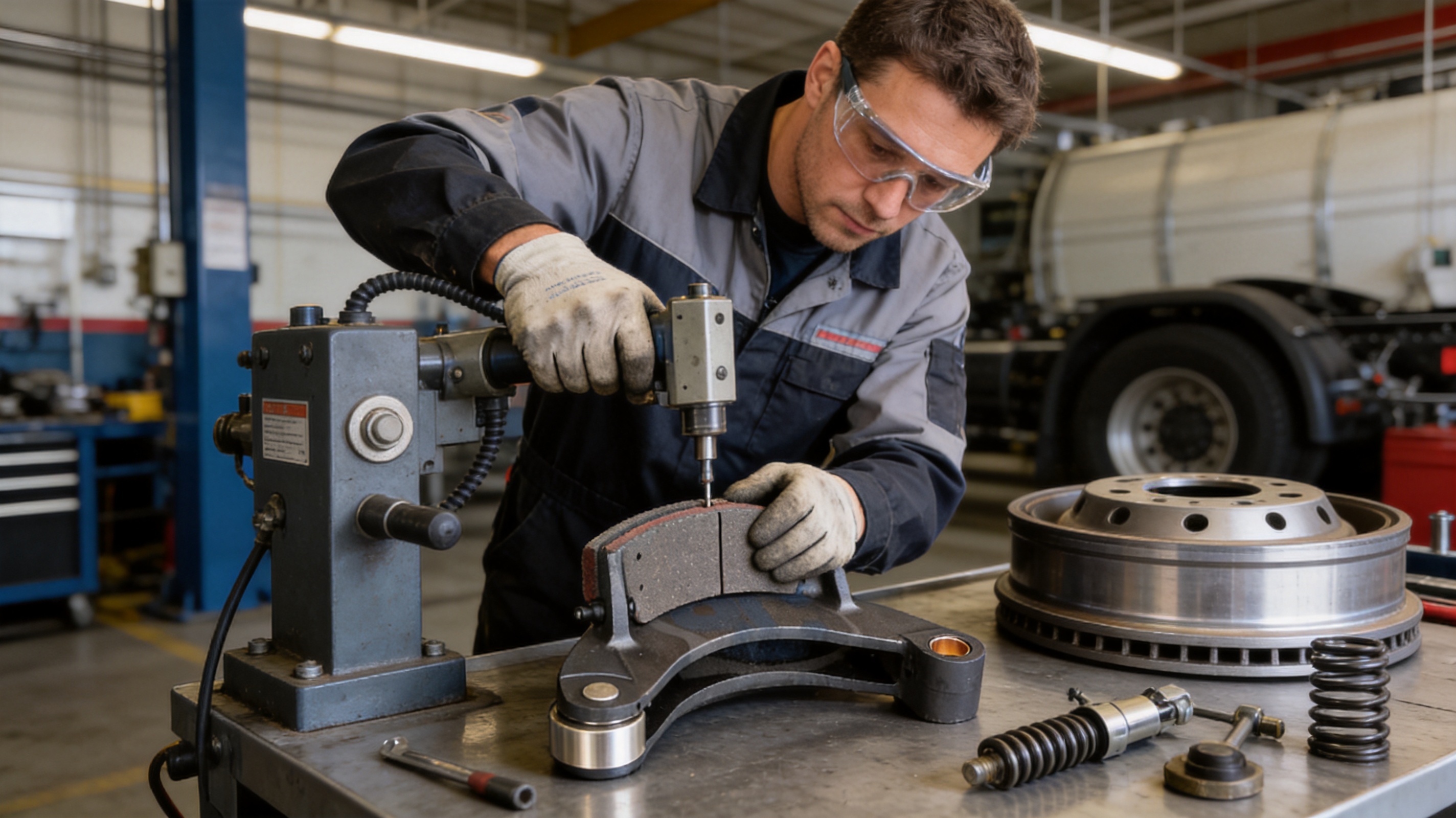
The 1104543 Casted Brake Shoe may be used in a relining program when the selected lining is compatible with the shoe and vehicle application. Relining should be performed by trained personnel using approved equipment and procedures. The lining must be correctly positioned, and the rivets must be installed with suitable force and sequence.
Before fitting a lining, the shoe should be inspected for cracks, distortion, damaged holes, corrosion, or other conditions that could compromise service. A casted shoe that has been subjected to severe overheating, impact, or prolonged corrosion may not be suitable for reuse even if its general shape appears acceptable.
The lining should match the shoe’s 16-hole configuration. Hole alignment must be checked before riveting. Forcing a rivet through a misaligned hole can damage the lining or shoe and may produce an uneven attachment. Rivets should be selected according to the lining manufacturer’s requirements, including material, diameter, length, and head form.
After riveting, the lining should sit firmly against the shoe without gaps, movement, raised edges, or damaged friction material. The rivet heads should be properly formed and should not create interference with the brake drum. The completed assembly should be cleaned and checked before installation.
Brake drums should also be inspected. Excessive wear, cracking, scoring, heat checking, out-of-round conditions, or an incorrect internal diameter can affect braking performance and lining life. Installing a new or relined shoe against a severely damaged drum may produce poor contact and irregular wear.
All springs, pins, rollers, retainers, adjusters, and related hardware should be inspected during brake service. Worn hardware can prevent the shoe from moving correctly even when the shoe itself is in good condition. Replacing related worn parts can improve the reliability of the complete braking assembly.
After installation, the brake should be adjusted according to the vehicle and brake system instructions. The wheel should rotate without unacceptable drag, and the braking system should be tested in a controlled environment. Any unusual noise, pulling, overheating, delayed release, or inconsistent braking response should be investigated before the vehicle returns to normal operation.
Service-Life and Performance Factors
The service life of a brake shoe depends on many factors. Vehicle loading, road gradient, traffic conditions, driver behavior, brake adjustment, lining formulation, drum condition, temperature, maintenance quality, and axle configuration all influence wear. A high-quality casted shoe provides the necessary structural base, but overall performance remains dependent on the entire braking system.
Correct adjustment is especially important. Excessive clearance can increase actuator travel and reduce braking response, while insufficient clearance can cause drag and heat buildup. Automatic slack adjusters and related mechanisms should be checked for correct operation. Regular inspection helps maintain the intended relationship between the shoe, lining, drum, and actuator.
Thermal management also affects brake component life. Heavy-duty vehicles may generate substantial heat during downhill operation, repeated urban stops, emergency braking, or high-load transport. Excessive heat can affect lining properties, drum dimensions, rivet security, and shoe condition. Fleet maintenance plans should consider operating conditions rather than relying only on fixed mileage intervals.
Even wear across the lining is a useful indicator of brake system condition. Uneven wear may point to incorrect shoe geometry, worn hardware, poor drum condition, misadjustment, or other system problems. Inspectors should record wear patterns and compare them with the vehicle manufacturer’s service recommendations.
Packaging, Storage, and Distribution Strengths
Commercial vehicle brake components may spend significant time in warehouses or transit networks before installation. Proper packaging helps protect the casted brake shoe from impact, contamination, moisture, and unnecessary surface damage. Packaging should identify the part number, OEM reference, quantity, and relevant batch information so that the product can be managed accurately.
Storage areas should be dry, clean, and protected from corrosive chemicals. Brake shoes should not be stored where they can be exposed to standing water, excessive humidity, or direct contamination by oil and grease. Parts should be arranged to avoid unnecessary impact or stacking loads that could damage edges or surfaces.
Clear labeling supports efficient distribution. The SCA178 part number and 1104543 OEM reference should be visible on the product packaging or documentation. For distributors, this reduces picking errors and helps ensure that the correct product reaches the workshop. It also makes stock audits and reorder procedures more efficient.
A manufacturer with a broad brake product range can support mixed purchasing requirements. Buyers may source casted brake shoes, steel brake shoes, linings, lined brake shoes, and repair kits within a coordinated product program. This can simplify supplier management and make it easier to maintain consistent documentation across related brake components.
Manufacturer Capability and Production Strengths
Zhejiang Bangchi Auto Parts Co., Ltd. supplies heavy-duty brake parts and heavy truck brake products for commercial vehicle applications. The company’s stated product categories include steel brake shoes, casted brake shoes, brake linings, lined brake shoes, brake shoe repair kits, and lined brake shoe kits. This range indicates a production focus on braking components rather than a single isolated product.
A specialized product portfolio can provide several practical advantages. First, it allows engineering and production teams to build experience across related brake components. Second, it supports coordinated purchasing for customers that require multiple brake products. Third, it creates a broader reference base for developing application-specific parts that follow established dimensions, lining arrangements, and service requirements.
The company states that its OEM brake parts follow the global FMSI numbering system. Numbering and application discipline are important in the replacement-parts market because distributors and workshops need dependable ways to identify products. A structured reference system supports catalog development, cross-referencing, quotation accuracy, and international communication.
Manufacturing strength is not limited to equipment. It also includes process documentation, trained personnel, production planning, inspection capability, supplier control, packaging procedures, and customer support. For a casted brake shoe, these elements work together to determine whether a batch is consistent and suitable for professional use.
The company’s location in Haining, Zhejiang, China, provides a base for serving domestic and international automotive parts markets. Its listed contact channels support communication for product inquiries, technical confirmation, quotations, and order coordination. Buyers can use these channels to request the latest specifications and verify application details before purchasing.
Because no extended company introduction was supplied, product claims should be evaluated through technical documentation, samples, inspection records, customer requirements, and agreed quality standards. This is a responsible approach for any heavy-duty safety component. A professional supplier should be prepared to discuss specifications, quality control, production capacity, packaging, lead times, and after-sales support in a clear and documented manner.
Quality Management for International Buyers
International buyers often require more than a part number. They may need approval samples, dimensional reports, material information, packaging standards, labeling requirements, inspection plans, and shipping documentation. Establishing these requirements before production helps avoid misunderstandings and supports a smoother supply relationship.
A purchase specification for the 1104543 Casted Brake Shoe may include the OEM number, supplier part number, dimensions, riveting hole count, application, casting requirements, surface condition, acceptable tolerance, marking, packaging, and inspection method. The specification should also identify any customer-specific requirements that differ from standard catalog information.
Pre-shipment inspection can include quantity verification, visual inspection, dimensional sampling, hole pattern checks, packaging review, and documentation confirmation. For larger programs, buyers may also use an agreed control plan covering raw materials, casting, machining, final inspection, and batch traceability.
These measures help distinguish a dependable supply program from a purely price-based purchase. Lower unit cost can be attractive, but inconsistent dimensions, poor packaging, or unclear application data may create higher costs through installation delays, returns, stock disruption, and vehicle downtime.
Commercial Value for Fleets and Distributors
For fleet operators, brake component value is measured across the total maintenance cycle. The purchase price is only one factor. Installation time, fitment accuracy, service life, availability, inspection requirements, and vehicle uptime are also important. A clearly identified casted brake shoe can support better planning and reduce the uncertainty associated with generic replacement parts.
Fleet managers can use the SCA178 and 1104543 references to organize approved parts lists. This helps maintenance departments order the intended component and reduces the risk of substituting an unverified part. Standardized references are particularly helpful for fleets operating multiple depots or using external repair contractors.
Distributors benefit from a product that can be presented with specific technical information. A catalog entry containing the type, part number, OEM number, size, hole count, and application gives customers a useful basis for comparison. Accurate information also helps sales teams answer routine inquiries and reduces avoidable returns.
Repair workshops may appreciate the flexibility of a casted shoe that can be integrated into a relining process. Depending on local practice, the workshop can pair the shoe with a suitable lining and approved riveting method. This can support customized service solutions while maintaining a clear base component reference.
For export markets, reliable packaging and documentation are equally important. Components may pass through several logistics stages, and each stage increases the need for clear identification and physical protection. A professional export program should make it easy to match the product received with the purchase order and technical requirements.
Responsible Use and Safety
Brake shoes are safety-critical components. They should be installed only by qualified technicians who understand the relevant brake system and follow applicable service instructions. Product information in a catalog is not a substitute for vehicle-specific repair documentation.
Technicians should use appropriate personal protective equipment and safe lifting procedures. Brake assemblies may contain dust and heavy components, so cleaning and disassembly should be performed using approved methods. Compressed air should not be used in a way that unnecessarily disperses brake dust into the working environment.
After brake work, the complete system should be checked. This may include adjustment, actuator operation, air or hydraulic system inspection where applicable, wheel-end inspection, leak checks, and controlled functional testing. The vehicle should not be released if braking performance is uncertain.
Product selection, installation, and maintenance should comply with local regulations and the vehicle manufacturer’s requirements. If there is any disagreement between general catalog information and vehicle-specific documentation, the vehicle and brake system instructions should be followed until the technical issue is resolved.
Frequently Asked Questions
What is the 1104543 Casted Brake Shoe?
It is a casted brake shoe for heavy-duty commercial vehicle brake systems. The supplied product information identifies it by Part No. SCA178 and OEM No. 1104543.
What are the dimensions of the product?
The stated size is 413 x 178 mm. Buyers should confirm the measurement convention and compare the dimensions with the original shoe and brake assembly before ordering.
How many riveting holes does it have?
The product has 16 riveting holes. The lining selected for relining must have a matching hole count and compatible hole spacing, diameter, and position.
Which vehicles is it intended for?
The supplied application is Scania heavy-duty vehicle applications. Vehicle, axle, brake system, and model information should be checked before installation because similar vehicles may use different brake configurations.
Can the shoe be used for relining?
It may be used as a foundation for relining when the lining and riveting system are compatible. Relining should be completed by trained personnel using suitable tools and approved procedures.
What is the advantage of cast construction?
Cast construction provides a substantial structural base designed to support the lining and withstand repeated mechanical loading in a drum brake system. Actual service performance depends on material quality, manufacturing control, correct matching, installation, and maintenance.
Why are the riveting holes important?
The riveting holes define how the brake lining is attached to the shoe. Correct hole alignment supports secure lining retention and helps the lining maintain its intended position during braking.
Should the brake drum be checked when replacing the shoe?
Yes. The drum should be inspected for wear, cracks, scoring, heat damage, out-of-round conditions, and other problems. A damaged drum can reduce the performance and service life of a new or relined brake shoe.
How can buyers confirm compatibility?
Buyers should compare the OEM number, supplier part number, dimensions, hole pattern, shoe profile, vehicle, axle, and brake assembly details. A sample or technical drawing may be requested when the application is uncertain.
What information should be requested for a wholesale order?
Useful information includes product specifications, drawings, inspection requirements, packaging details, marking, batch traceability, production capacity, lead time, and any customer-specific quality standards.
How should the product be stored?
It should be stored in a clean, dry area protected from moisture, corrosive substances, oil, grease, and impact. Packaging should remain labeled so that part number and batch information can be identified easily.
What related products are available?
The stated product categories include steel brake shoes, casted brake shoes, brake linings, lined brake shoes, brake shoe repair kits, and lined brake shoe kits. Availability should be confirmed directly with the supplier.
Conclusion
The 1104543 Casted Brake Shoe is a clearly identified heavy-duty replacement component with Part No. SCA178, a 413 x 178 mm size, 16 riveting holes, and a stated Scania application. Its cast construction provides a stable foundation for demanding drum brake service, while its defined dimensions and attachment pattern support more accurate product selection and professional relining work.
Its advantages over less specialized alternatives include application-specific identification, a substantial cast body, a documented riveting pattern, and suitability for broader commercial vehicle brake maintenance programs. These advantages are strengthened when the product is manufactured through controlled tooling, material preparation, casting, machining, deburring, inspection, traceability, and packaging processes.
Zhejiang Bangchi Auto Parts Co., Ltd. offers this product within a wider heavy-duty brake parts portfolio that includes brake shoes, brake linings, lined assemblies, and repair kits. Its stated use of the global FMSI numbering system supports structured product identification for international buyers. Customers should confirm the latest technical details, compatibility, quality documentation, and commercial terms before ordering.
For fleet operators, workshops, and distributors, the most reliable approach is to treat the brake shoe as part of a complete braking system. Correct matching, professional lining attachment, drum inspection, proper adjustment, and scheduled maintenance are essential. When these requirements are combined with a consistent casted brake shoe and disciplined manufacturing control, the product can provide a practical and dependable solution for heavy-duty brake service.
References
1. Product specification supplied for the 1104543 Casted Brake Shoe: Part No. SCA178, OEM No. 1104543, size 413 x 178 mm, 16 riveting holes, Scania application.
2. Supplier product category information covering steel brake shoes, casted brake shoes, brake linings, lined brake shoes, brake shoe repair kits, and lined brake shoe kits.
3. General commercial vehicle drum brake maintenance principles concerning brake shoe inspection, lining attachment, drum condition, adjustment, and service safety.
4. General foundry and machining quality-control practices for cast automotive components, including tooling control, material preparation, dimensional inspection, deburring, cleaning, and batch traceability.
5. General replacement-parts purchasing practices for OEM cross-reference verification, technical approval samples, packaging review, and pre-shipment inspection.