 English
 简体中文
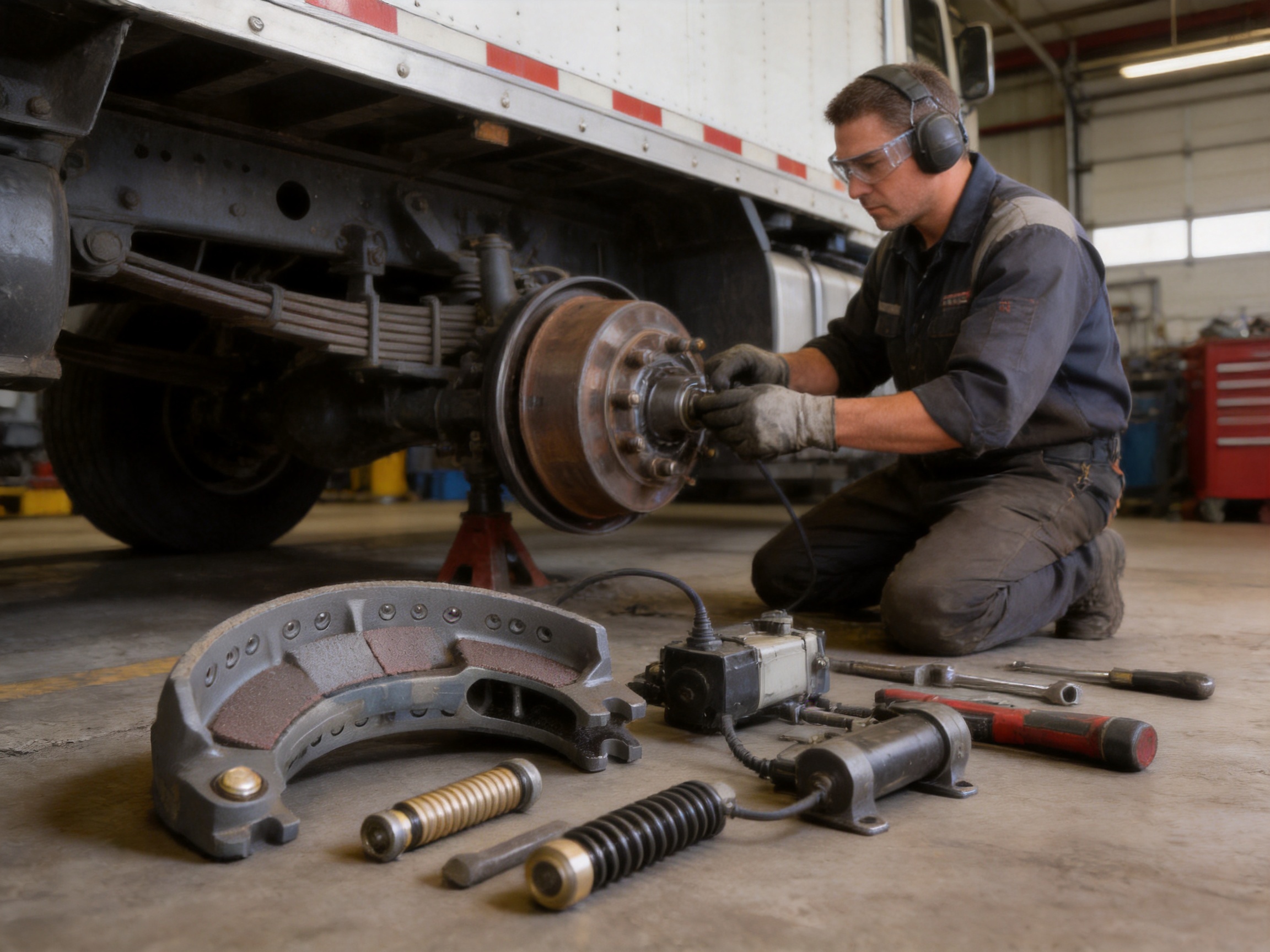
Heavy-duty braking systems demand components that can withstand repeated loading, harsh road conditions, high temperatures, vibration, and long operating cycles. Within a drum brake assembly, the brake shoe is one of the most important structural and functional parts. It supports the friction lining, transfers braking force to the drum, and contributes directly to braking stability, service life, and maintenance efficiency. For ROR and trailer applications, the brake shoe must combine dimensional accuracy, structural strength, dependable fitment, and compatibility with established replacement standards.
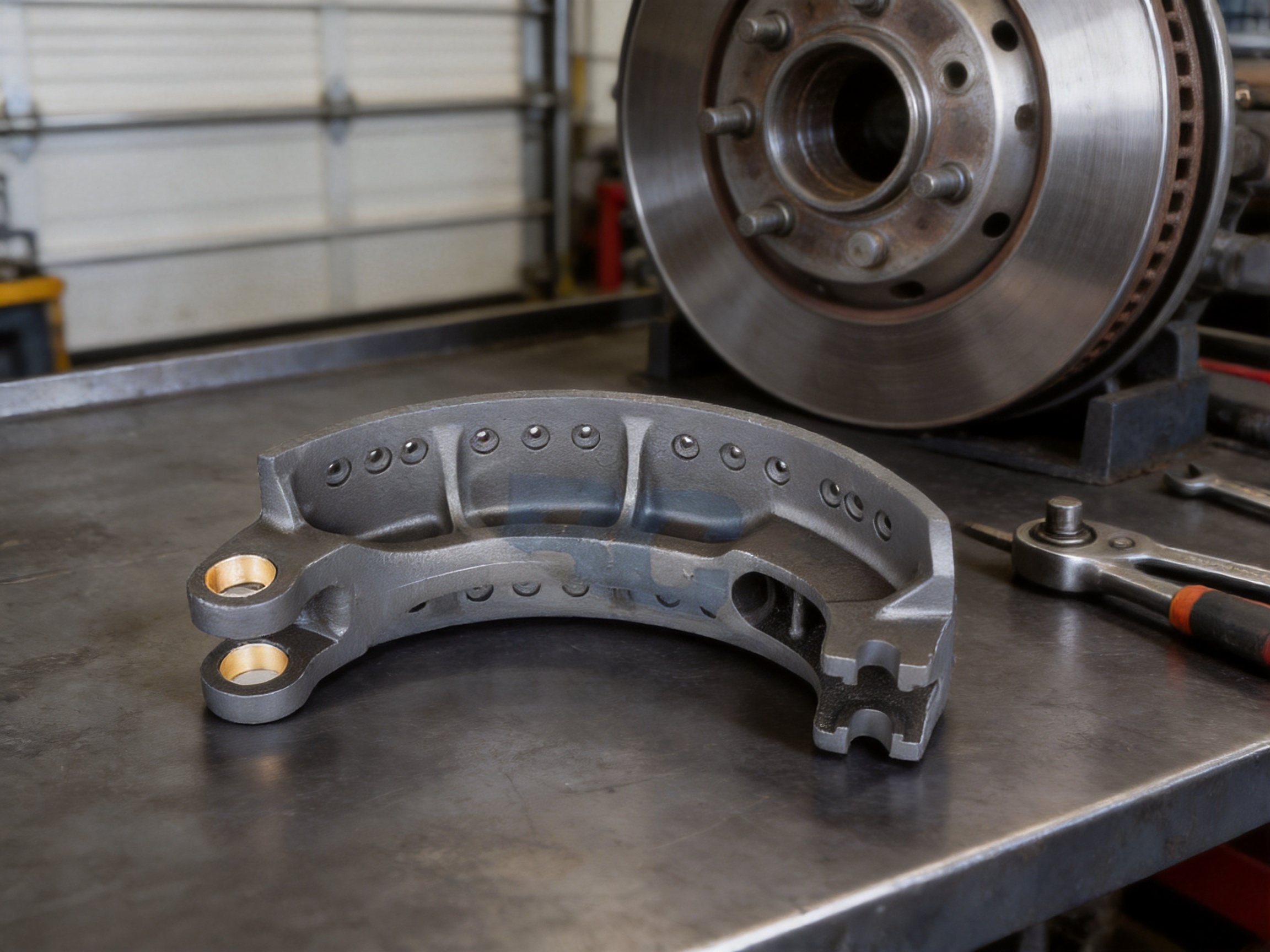
The 4715 Casted Brake Shoe is designed for this demanding operating environment. It is identified by Part No. 4715 and is manufactured for a 16.5-inch by 6-inch brake configuration. With 32 riveting holes and an application covering ROR and trailer equipment, the product provides a practical replacement solution for heavy-duty fleets, trailer manufacturers, maintenance distributors, and brake service professionals.
Unlike a light-duty automotive brake component, a heavy-duty casted brake shoe must be engineered for higher mechanical loads and more severe duty cycles. Its performance depends not only on the raw material but also on the casting design, machining accuracy, riveting-hole positioning, surface quality, inspection procedures, and compatibility with the selected brake lining. The manufacturing approach behind the 4715 model is therefore centered on repeatable production and reliable integration into the complete drum brake system.
Product Overview
The 4715 Casted Brake Shoe is a heavy-duty brake foundation component for ROR and trailer braking systems. It is supplied as a casted shoe body that can be paired with a suitable friction lining through riveting or an equivalent approved lining process. The design includes 32 riveting holes, allowing the brake lining to be securely attached across the working surface of the shoe.
| Product Characteristic | Specification | Practical Significance |
|---|---|---|
| Part number | 4715 | Supports product identification, purchasing, and replacement matching |
| Product type | Casted brake shoe | Provides a rigid foundation for heavy-duty drum brake lining |
| Nominal size | 16.5 inches by 6 inches | Suitable for the specified heavy-duty brake configuration |
| Riveting holes | 32 | Allows secure and distributed attachment of the brake lining |
| Application | ROR and trailer | Designed for commercial and heavy-duty trailer braking systems |
| Replacement reference | FMSI-oriented identification | Helps buyers organize brake component selection by recognized numbering practices |
Accurate product identification is particularly important in the commercial vehicle aftermarket. Brake shoes may appear similar while differing in width, radius, hole pattern, offset, or drum compatibility. The 4715 designation, size information, and 32-hole configuration give purchasers essential technical points for comparing the product with an existing shoe before ordering or installation.
Because the product is intended for ROR and trailer applications, its value extends beyond the individual component. A correctly matched casted brake shoe helps service teams reduce installation uncertainty, minimize fitting adjustments, and maintain consistency across a fleet. This can simplify inventory planning and make it easier for distributors to serve customers who need dependable replacement parts for heavy-duty drum brakes.
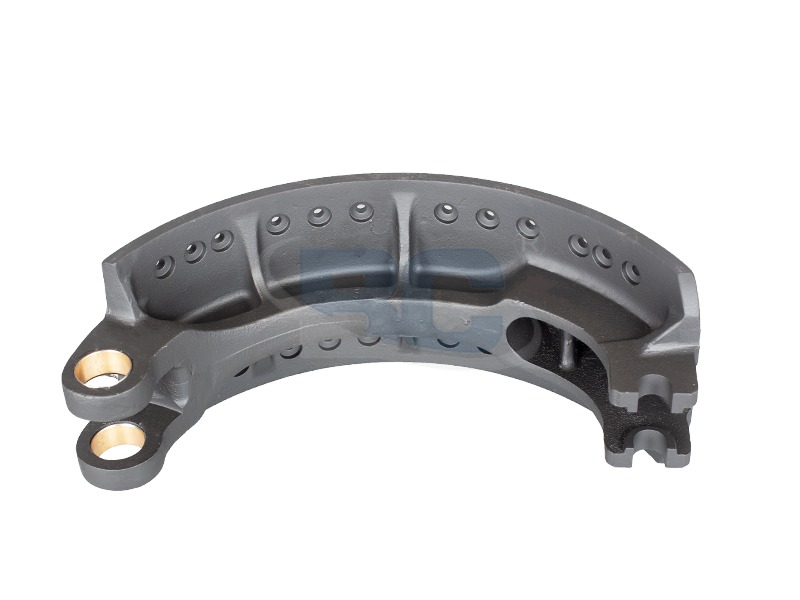
4715 Casted Brake Shoe
Why a Casted Brake Shoe Is Important in Heavy-Duty Braking
A drum brake shoe operates inside a demanding mechanical environment. When the driver applies the brake, the actuator or cam mechanism forces the shoes outward against the inner surface of the brake drum. The friction lining contacts the rotating drum and converts kinetic energy into heat. At the same time, the shoe body experiences bending forces, contact pressure, vibration, and repeated cycles of expansion and release.
The casted shoe body serves as the structural support for these forces. It must preserve its shape while the lining is pressed against the drum. If the shoe lacks sufficient rigidity, the lining may not contact the drum evenly. Uneven contact can result in localized wear, reduced braking efficiency, noise, heat concentration, or premature maintenance requirements.
A properly manufactured casted brake shoe offers several functional benefits:
Structural stability: The shoe provides a strong foundation for the lining and helps maintain the intended braking geometry during operation.
Consistent lining support: The curved shoe profile supports more uniform contact between the lining and the drum when the assembly is correctly installed.
Reliable riveting: Correctly positioned holes allow the lining to be attached with an appropriate number of rivets and a balanced load distribution.
Serviceability: A replacement shoe with clearly defined dimensions and identification can help maintenance teams restore a braking assembly with less uncertainty.
Heavy-duty suitability: The design is intended for the larger brake dimensions and operating requirements associated with ROR and trailer equipment.
These characteristics distinguish a purpose-built heavy-duty casted shoe from a generic metal component. The brake shoe is not simply a curved piece of material. It is a precision-shaped foundation that must cooperate with the brake drum, lining, actuator, rollers, pins, return springs, and other parts in the complete braking mechanism.
Engineering Features of the 4715 Model
16.5-Inch by 6-Inch Configuration
The stated size of 16.5 inches by 6 inches identifies the general dimensional class of the brake shoe. This information is essential when matching the shoe to a drum brake assembly. The diameter-related measurement helps indicate the drum size for which the shoe is intended, while the six-inch width relates to the axial working dimension of the friction lining and drum contact area.
For fleet maintenance personnel, the size specification is a first-level screening tool. It allows a buyer to separate this model from narrower or smaller brake shoes that may belong to different axle or trailer configurations. However, size alone should not be used as the only fitment criterion. The purchaser should also confirm the part number, hole pattern, shoe orientation, actuator arrangement, and the dimensions of the existing brake assembly.
Thirty-Two Riveting Holes
The 4715 shoe includes 32 riveting holes. A distributed hole pattern is important because it enables the lining to be attached at multiple points along the shoe. Properly installed rivets help prevent movement between the lining and the shoe body during braking cycles.
The hole count also provides a useful identification feature. When inspecting an existing brake shoe, maintenance professionals can compare the number and arrangement of holes with the replacement product. This reduces the risk of ordering a visually similar shoe with an incompatible lining attachment pattern.
During lining installation, the holes should be clean, correctly aligned, and free from burrs or casting debris. The rivet type, length, installation pressure, and final seating must be selected according to the lining material and the applicable service procedure. The shoe should not be forced into alignment with a lining if the holes do not match naturally. Correct fitment is essential to prevent stress concentration and premature lining separation.
ROR and Trailer Application
ROR and trailer equipment often operates under demanding transport conditions. Trailers may travel long distances, carry substantial loads, encounter steep descents, and experience road contamination from water, salt, dust, and debris. Their brake components must function reliably even when service intervals are controlled by fleet schedules rather than individual vehicle owners.
The 4715 model is positioned for this environment. Its application information gives distributors and maintenance teams a direct indication that the shoe is intended for heavy-duty ROR and trailer brake systems rather than passenger-car applications. This helps support more accurate cataloging, purchasing, and workshop preparation.
Advantages Compared with Generic or Inconsistent Brake Shoes
In the aftermarket, not all replacement brake shoes provide the same level of consistency. A low-cost component may appear acceptable during visual inspection but reveal problems through dimensional variation, rough casting surfaces, inaccurate holes, or poor lining fit. These issues can create additional labor and may affect the behavior of the entire brake assembly.
The 4715 Casted Brake Shoe offers several advantages when compared with generic replacement products that do not provide clear application and specification information.
Clear Identification and Specification
The combination of Part No. 4715, 16.5-inch by 6-inch size, 32 riveting holes, and ROR/trailer application gives professional buyers a practical technical profile. Clear specifications make it easier to compare products, prepare purchase orders, and verify incoming goods.
In contrast, an inadequately documented brake shoe may be sold only by a general description such as “heavy truck brake shoe.” That description may not provide enough information to distinguish between different widths, hole patterns, and axle applications. The clearer the product data, the lower the chance of an avoidable mismatch.
Heavy-Duty Structural Design
A casted construction is appropriate for a brake shoe that must support high and repeated mechanical forces. The shoe body is designed to act as a stable platform for the friction lining. This can help preserve the geometry of the brake assembly during repeated application and release cycles.
Structural stability is especially important for trailers and other commercial equipment because brake performance must remain predictable under varying loads. A dependable shoe body helps the lining work as intended instead of allowing unwanted flexing or irregular contact.
Balanced Lining Attachment
The 32-hole pattern supports multiple fastening points along the lining. When the correct lining and approved riveting procedure are used, this arrangement can provide secure attachment and distribute fastening loads along the shoe.
Good lining attachment is a major advantage in service operations. A lining that shifts, lifts, or separates from the shoe can create serious braking problems. A shoe designed with a defined riveting pattern provides a more controlled foundation for professional relining.
Aftermarket Replacement Convenience
Commercial vehicle operators often need replacement parts that can be sourced repeatedly over time. A defined part number and recognized application information make the product easier to include in fleet catalogs and distributor databases. This can support standardized maintenance across multiple vehicles or trailers.
Standardized purchasing also helps workshops reduce the number of emergency substitutions. When a common replacement model is documented and stocked, technicians can prepare the correct lining, rivets, tools, and inspection procedure before beginning the repair.
Compatibility with FMSI-Oriented Numbering Practices
The product is offered in accordance with the global FMSI numbering system approach. Numbering systems are valuable in the brake industry because they provide a common language for identifying friction and brake components. While a number should always be verified against the complete application, an organized reference system improves communication among manufacturers, distributors, repair centers, and fleet operators.
This approach can be particularly helpful for international buyers. Different markets may use different commercial descriptions, but a consistent product reference can reduce confusion during quotation, sourcing, and technical confirmation.
Manufacturing Process and Production Strengths
The performance of a casted brake shoe depends on much more than its final appearance. A reliable manufacturing process must control the component from design and material preparation through casting, finishing, machining, inspection, packaging, and customer support. Zhejiang Bangchi Auto Parts Co., Ltd. focuses on heavy-duty brake parts and provides products following the global FMSI numbering system. This specialization allows production knowledge to be concentrated on brake component requirements rather than spread across unrelated product categories.
Application-Based Product Planning
Manufacturing begins with understanding the intended brake system. For the 4715 model, the relevant requirements include the 16.5-inch by 6-inch configuration, ROR and trailer application, and 32 riveting holes. These details guide the creation and maintenance of the production drawing, tooling references, inspection points, and product identification records.
Application-based planning is an important advantage over purely general-purpose production. A brake shoe must be treated as part of a complete assembly. Its dimensions, curvature, hole layout, and contact geometry must be considered together. The purpose of planning is to ensure that the finished shoe is not merely similar in shape but suitable for the specified braking environment.
Pattern and Tooling Control
In cast component production, the pattern and tooling determine much of the basic shape and dimensional repeatability. A controlled pattern helps establish the shoe profile, mounting features, reinforcement areas, and reference surfaces. Tooling condition should be monitored because wear or damage can gradually influence part dimensions.
For a professional brake component manufacturer, tooling control includes maintaining correct pattern references, checking critical dimensions, and separating approved tooling from outdated or modified versions. This supports batch-to-batch consistency and reduces the likelihood that two products carrying the same part number will have avoidable differences.
Controlled Casting Operations
The casting stage creates the main shoe body. It is essential that the metal is prepared, melted, transferred, and poured under controlled conditions appropriate to the selected material. Temperature management, mold preparation, filling behavior, and cooling all influence the final quality of the casting.
Proper casting control helps reduce common risks such as incomplete filling, excessive porosity, inclusions, distortion, cold shuts, and surface defects. These defects may not always be visible immediately, but they can affect structural reliability or create difficulties during machining and lining installation.
After casting, components should be allowed to cool under controlled conditions before further processing. Handling hot castings too aggressively can contribute to distortion or surface damage. A disciplined cooling and handling process helps preserve the intended shape of the shoe body.
Cleaning and Surface Preparation
Cast components normally require cleaning to remove residual sand, scale, flash, and other unwanted material. Surface preparation improves the appearance of the shoe and, more importantly, allows inspection personnel to examine the body for casting irregularities.
Cleaning also prepares reference areas for machining and measurement. A surface covered with casting residue can make it difficult to identify dimensional problems or confirm whether a feature has been formed correctly. Effective cleaning is therefore part of quality control rather than merely a cosmetic operation.
Machining of Critical Features
Although the shoe body is formed by casting, critical features may require additional machining or finishing. Machining can be used to improve the accuracy of contact surfaces, mounting points, locating features, and other areas that affect assembly. The goal is to achieve a controlled interface with associated brake components.
The 32 riveting holes require particular attention. Their number, position, spacing, and cleanliness influence the installation of the lining. If holes are not properly formed, a rivet may not seat correctly or the lining may not align with the shoe. Controlled drilling, reaming, or finishing operations can help maintain the required hole condition.
Machining also helps remove sharp edges and burrs that could interfere with lining fitment or create handling hazards. A finished shoe should be suitable for workshop use and should not require unnecessary correction before relining or assembly.
Dimensional Inspection
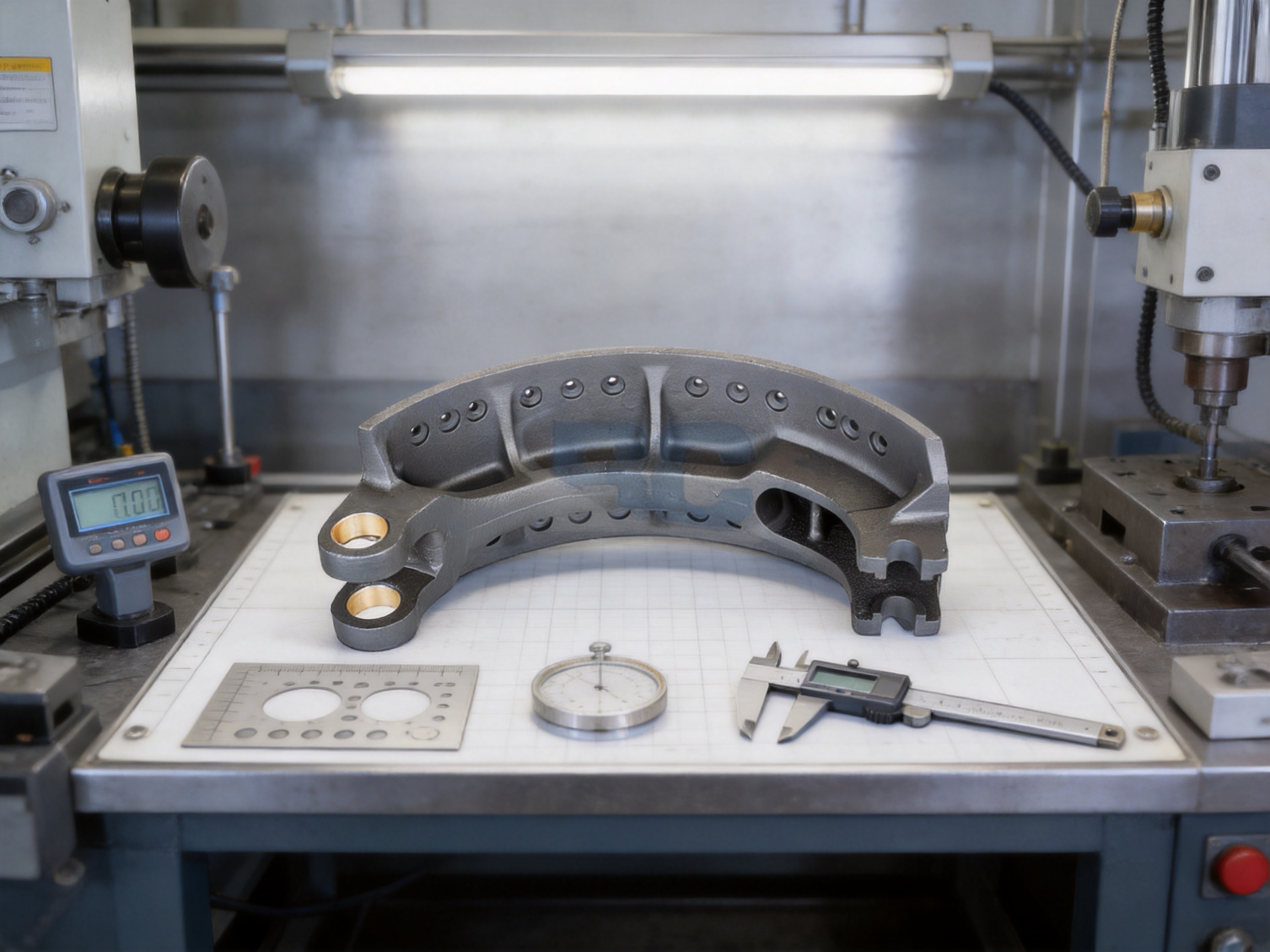
Inspection is used to confirm that the product conforms to its intended specification. For the 4715 model, inspection should address overall size, shoe curvature, lining width, hole count, hole arrangement, key mounting dimensions, and other application-specific features.
Dimensional checks may be performed using calibrated measuring tools, gauges, fixtures, templates, or coordinate-based equipment, depending on the feature being inspected. A robust inspection plan distinguishes between critical dimensions and general dimensions so that resources are focused on the characteristics most likely to affect braking performance and fitment.
Visual and Structural Quality Checks
Visual inspection can identify surface cracks, excessive porosity, incomplete casting, sharp edges, distortion, contamination, or machining damage. Although visual inspection cannot replace every other test, it remains an important first line of quality assurance.
Where required by the production specification, additional structural evaluation may be used to assess the integrity of the cast body. The specific inspection method depends on the material, design, customer requirements, and applicable quality procedures. The underlying principle is consistent: the shoe must be checked as a safety-related structural component, not treated as an ordinary decorative casting.
Process Traceability
Traceability allows a manufacturer to connect the finished product with its production information. Useful records may include part number, production batch, inspection status, material information, and packaging details. Traceability supports internal process improvement and helps address customer questions efficiently.
For distributors and fleet customers, traceable product identification can also improve inventory control. If a product is clearly marked and packaged by part number, warehouse personnel can reduce picking errors and maintain more accurate stock records.
Material and Structural Performance Considerations
The shoe body must have sufficient strength and dimensional stability for the intended braking application. Material selection is therefore a central part of product engineering. A suitable cast material should provide a practical balance of strength, toughness, wear resistance, castability, machinability, and cost.
The exact material grade and heat-treatment details should be confirmed through the manufacturer’s technical documentation for the specific order. Regardless of the selected grade, the material must support the basic functions of a heavy-duty brake shoe. It must withstand the forces transmitted through the lining and retain its shape during repeated brake applications.
Thermal conditions also matter. Although the friction lining and drum absorb much of the heat generated during braking, the shoe body is exposed to elevated temperatures. Repeated heating and cooling can produce thermal expansion and contraction. A suitable design and controlled manufacturing process help reduce the risk of distortion and maintain stable assembly behavior.
Mechanical performance is also influenced by geometry. Reinforced areas, transition zones, and curved surfaces should be designed to avoid unnecessary stress concentration. Smooth transitions and consistent casting quality can contribute to long-term durability under cyclic loading.
Installation and Service Recommendations
Correct installation is necessary to obtain the intended performance from any brake shoe. Before installation, technicians should compare the replacement shoe with the removed component and confirm the part number, size, hole count, orientation, and application. The brake drum should also be inspected for excessive wear, scoring, cracking, out-of-round condition, or a diameter beyond the permitted service limit.
If the 4715 shoe is being relined, the lining must match the shoe dimensions and the intended drum application. The lining should sit naturally against the shoe without excessive gaps, forced bending, or misaligned holes. All 32 riveting positions should be checked before riveting.
Rivets should be installed using suitable equipment and the correct sequence. Excessive force can damage the lining or deform the shoe, while insufficient force can leave loose attachment points. The finished rivet heads should be properly seated, and the lining should not move when inspected by hand.
During brake assembly, technicians should inspect related components such as rollers, bushings, pins, return springs, actuators, and cam surfaces. Replacing only a worn shoe while leaving damaged hardware in service may reduce the benefit of the new component. A complete brake inspection provides a more reliable basis for repair decisions.
After installation, the brake system should be adjusted according to the vehicle or axle manufacturer’s service procedure. The brake should operate without binding, abnormal noise, or uneven contact. Where applicable, a controlled bedding-in procedure should be followed so that the lining and drum establish an even contact surface.
Fleet and Distributor Benefits
For fleet operators, the value of the 4715 Casted Brake Shoe includes more than component performance. A clearly specified replacement part can support preventive maintenance planning, reduce procurement complexity, and improve consistency between service locations.
Fleet managers can organize stock by part number and application. Maintenance planners can identify which trailers use the 16.5-inch by 6-inch configuration and maintain an appropriate quantity of replacement shoes or relining materials. Standardized parts can also make technician training more straightforward because service personnel repeatedly work with familiar dimensions and procedures.
Distributors benefit from a product that has a defined technical profile. The 4715 model can be cataloged using its part number, size, hole count, and application. This improves the quality of product listings and helps sales teams answer customer questions with specific information rather than general descriptions.
International buyers may also benefit from the manufacturer’s ability to communicate through established brake numbering practices. A common reference system can make technical discussions more efficient when the buyer, distributor, and end user are located in different countries.
Quality Management as a Competitive Advantage
In heavy-duty brake manufacturing, quality is best understood as consistency over time. A single acceptable sample is not enough. The production process must repeatedly deliver shoes that conform to the same dimensions, hole pattern, surface condition, and application requirements.
Zhejiang Bangchi Auto Parts Co., Ltd. specializes in heavy-duty brake parts, including steel brake shoes, casted brake shoes, brake linings, lined brake shoes, brake shoe repair kits, and lined brake shoe kits. This product focus supports a deeper understanding of how the shoe body interacts with lining and repair components. A manufacturer that works across the brake component range can better appreciate the practical requirements of relining, replacement, and complete brake service.
Quality management should cover incoming material, casting conditions, tooling, machining, inspection, packaging, and customer feedback. If a dimensional issue is identified in the field, the information can be used to review production records and improve the relevant process. This feedback-based approach is especially important for commercial vehicle components that operate under diverse conditions.
Packaging is another part of product quality. Brake shoes should be protected from impact, contamination, and unnecessary moisture during storage and transport. Clear labels should identify the part number and application. Proper packaging helps ensure that a correctly manufactured component arrives at the customer in usable condition.
Comparison of Product Selection Factors
When comparing the 4715 Casted Brake Shoe with alternative products, buyers should evaluate more than price. The following factors provide a practical purchasing framework.
| Selection Factor | Why It Matters | Value of the 4715 Model |
|---|---|---|
| Application matching | Prevents installation of an unsuitable component | Specified for ROR and trailer applications |
| Dimensional class | Ensures compatibility with the brake drum and lining width | Identified as 16.5 inches by 6 inches |
| Lining attachment | Supports secure fastening and even load distribution | Includes 32 riveting holes |
| Structural format | Influences rigidity and service durability | Casted heavy-duty shoe body |
| Identification | Reduces ordering and warehouse errors | Part No. 4715 |
| Manufacturer specialization | Supports product knowledge and process consistency | Produced by a heavy-duty brake parts specialist |
| Numbering practice | Improves communication across markets | Designed for FMSI-oriented product identification |
Price remains relevant, but the lowest initial purchase price does not always represent the lowest total cost. A shoe that requires extra fitting, causes installation delays, or wears irregularly may increase labor and downtime. A clearly specified and consistently manufactured product can provide better value over the complete service cycle.
Purchasing and Technical Confirmation Checklist
Before placing an order, purchasers should confirm the following points:
First, verify that the required application is an ROR or trailer brake system and that the existing assembly corresponds to the 16.5-inch by 6-inch configuration.
Second, confirm the part number as 4715 and compare the replacement shoe with the original component or the brake manufacturer’s technical reference.
Third, check the 32-hole riveting pattern. The hole count should be supported by a matching lining and correct rivet specification.
Fourth, confirm whether the buyer needs a bare casted brake shoe, a lined brake shoe, or a complete repair kit. These are different product forms and may require different purchasing references.
Fifth, request any available drawings, inspection information, packaging requirements, material details, and sample approval procedures required for the application.
Finally, confirm storage and transportation conditions if the parts will be held for an extended period. Heavy-duty brake components should be kept clean, dry, and protected from impact or corrosion-producing environments.
Why Product Specialization Matters
Brake components are safety-related parts that require application knowledge. A company focused on heavy-duty brake products can develop manufacturing routines, inspection experience, and customer service practices that are directly relevant to commercial vehicle braking.
The product range associated with Zhejiang Bangchi Auto Parts Co., Ltd. includes several related categories. Steel brake shoes and casted brake shoes address different construction needs. Brake linings and lined brake shoes support replacement and ready-to-install requirements. Brake shoe repair kits and lined brake shoe kits support service operations where multiple related components are required.
This product breadth can make technical communication more efficient. Customers may discuss not only the shoe body but also lining selection, riveting requirements, repair procedures, and kit contents. A supplier familiar with the complete service chain is better positioned to understand the practical concerns of distributors and workshops.
The company is located in Haining, Zhejiang, China, an established manufacturing region with access to industrial supply networks, engineering resources, transportation infrastructure, and export channels. Its contact information supports direct communication for product inquiries, technical confirmation, quotations, and order coordination.
Maintenance Value Over the Product Life Cycle
A brake shoe contributes value throughout several stages of the product life cycle. During procurement, clear identification reduces ordering uncertainty. During installation, accurate geometry and a defined hole pattern can reduce preparation time. During operation, a stable shoe body supports consistent lining contact. During maintenance, the part number makes future replacement easier.
Life-cycle value is especially important for trailers because a trailer may be serviced at different locations during its working life. A clearly identified replacement model helps different workshops understand what component is required. This can reduce the risk of incompatible substitutions and support a more uniform maintenance history.
The shoe should nevertheless be treated as one part of a complete braking system. Its performance depends on the condition of the drum, lining, actuator, hardware, axle alignment, adjustment system, and other related components. Proper maintenance practices are necessary to realize the benefits of the product.
Frequently Asked Questions
What is the 4715 Casted Brake Shoe?
The 4715 is a casted heavy-duty brake shoe identified by Part No. 4715. It is designed for a 16.5-inch by 6-inch brake configuration and includes 32 riveting holes. Its stated application is ROR and trailer braking systems.
Is the product supplied with brake lining?
The listed product is a casted brake shoe, which generally refers to the shoe body without an attached friction lining. Buyers should confirm whether they require a bare shoe, a lined shoe, or a complete repair kit before ordering.
Why are 32 riveting holes important?
The 32 holes provide the attachment pattern for installing a compatible brake lining. They help distribute fastening points along the shoe and also serve as an important product identification feature.
Can the shoe be used on any 16.5-inch brake?
No. The size alone is not sufficient to confirm compatibility. Buyers should also verify the part number, six-inch width, hole pattern, shoe geometry, orientation, drum application, and other dimensions of the existing brake assembly.
What equipment is the product intended for?
The stated application is ROR and trailer equipment. Technical personnel should confirm the exact axle or brake assembly before installation.
What makes a casted brake shoe suitable for heavy-duty use?
A heavy-duty casted shoe provides a rigid structural foundation for the brake lining and is designed to withstand repeated mechanical loading. Its performance also depends on accurate geometry, sound casting quality, proper machining, and correct installation.
How should the shoe be inspected before installation?
Inspect the part number, overall dimensions, curvature, riveting holes, mounting areas, and surface condition. The component should be free from visible cracks, severe distortion, damaging burrs, and contamination. It should also be compared with the removed shoe and the applicable technical reference.
What should be checked on the brake drum?
The drum should be checked for cracks, excessive scoring, uneven wear, out-of-round condition, overheating damage, and service diameter. A new shoe and lining may not perform correctly if the drum is outside its permitted condition.
Can the product be used for fleet maintenance?
Yes. Its defined part number, size, hole count, and ROR/trailer application make it suitable for organized fleet purchasing and inventory management, subject to proper technical confirmation.
Does the manufacturer provide other brake products?
The company product categories include steel brake shoes, casted brake shoes, brake linings, lined brake shoes, brake shoe repair kits, and lined brake shoe kits. Customers can contact the manufacturer to confirm available models and product configurations.
How can international buyers confirm a product?
International buyers should provide the existing part number, application, brake dimensions, lining requirements, hole pattern, estimated quantity, and any drawings or samples available. Direct technical confirmation before ordering helps reduce the risk of an application mismatch.
What is the main advantage of using a specialized supplier?
A specialized heavy-duty brake supplier understands the relationship between shoe construction, lining attachment, drum fitment, and commercial vehicle service requirements. This can improve product selection, communication, and long-term purchasing consistency.
Conclusion
The 4715 Casted Brake Shoe is a purpose-oriented heavy-duty component for 16.5-inch by 6-inch ROR and trailer drum brake applications. Its 32 riveting holes, defined part number, and clear application profile provide useful advantages for distributors, workshops, fleet operators, and replacement-parts buyers.
Its value is based on more than basic dimensions. A casted shoe must provide a stable foundation for the friction lining, maintain its shape under repeated braking loads, and integrate accurately with the surrounding brake hardware. Controlled pattern preparation, casting, cleaning, machining, hole finishing, dimensional inspection, visual checking, traceability, and packaging all contribute to dependable product performance.
Compared with generic or poorly documented alternatives, the 4715 model offers clearer identification and a more structured basis for purchasing and fitment verification. The manufacturer’s focus on heavy-duty brake parts and FMSI-oriented numbering supports efficient communication across international markets and commercial vehicle service channels.
For the best result, buyers should verify the complete brake application, confirm the 16.5-inch by 6-inch configuration and 32-hole pattern, inspect the associated drum and hardware, and follow an approved lining and installation procedure. When these steps are followed, the 4715 Casted Brake Shoe can serve as a practical and dependable foundation for heavy-duty ROR and trailer brake maintenance.
References
Federal-Mogul Motorparts. Friction Materials and Brake Component Identification Practices.
Automotive Aftermarket Suppliers Association. Commercial Vehicle Brake Service and Replacement-Part Considerations.
Society of Automotive Engineers. Heavy-Duty Vehicle Brake System Engineering Principles.
Commercial Vehicle Safety Alliance. Recommended Inspection Practices for Commercial Vehicle Brake Systems.
International Organization for Standardization. Quality Management Principles for Manufacturing Operations.
Manufacturer-provided product specification for Part No. 4715 Casted Brake Shoe.