 English
 简体中文
简体中文In heavy-duty transportation, braking components must perform consistently under high loads, repeated heat cycles, vibration, contamination, and demanding road conditions. A brake shoe is a central structural element within a drum brake assembly, supporting the friction lining and transferring braking force to the inner surface of the brake drum. When the shoe is correctly designed, accurately manufactured, and properly matched with the vehicle’s brake system, it contributes to stable stopping performance, balanced wear, predictable maintenance, and dependable fleet operation.
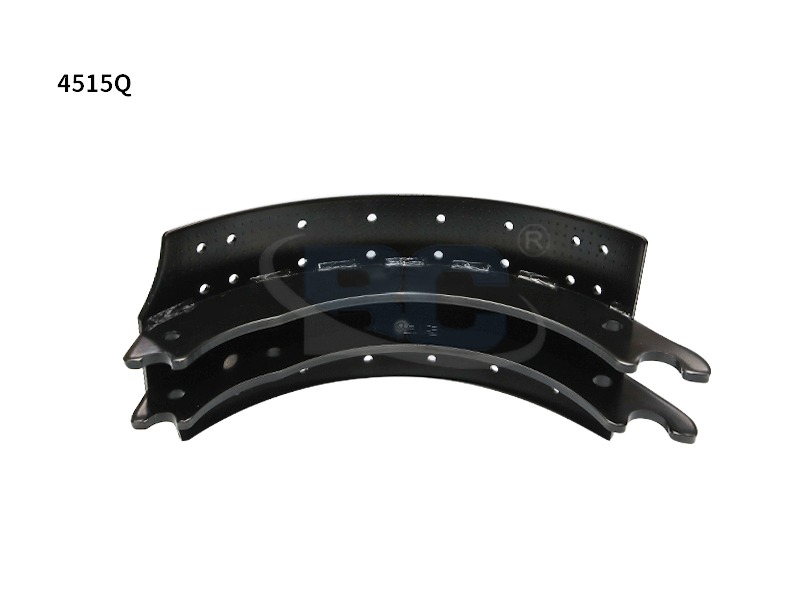
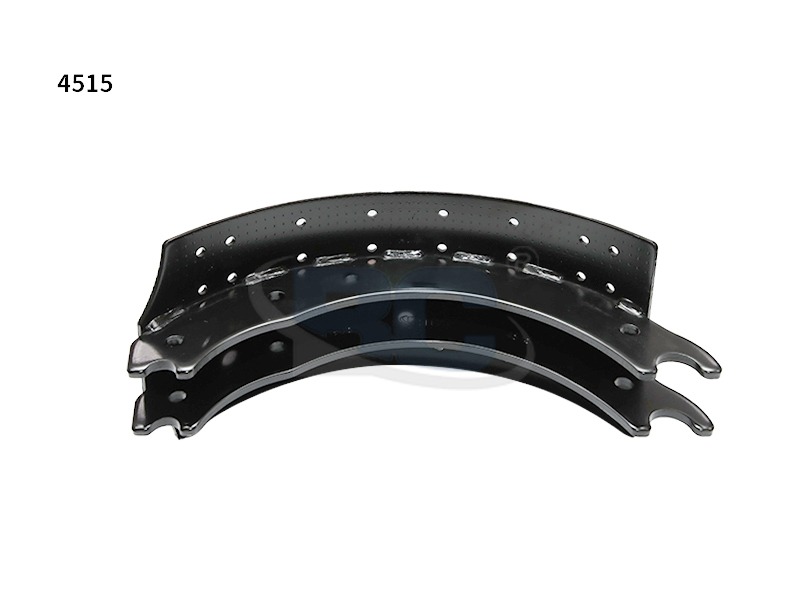
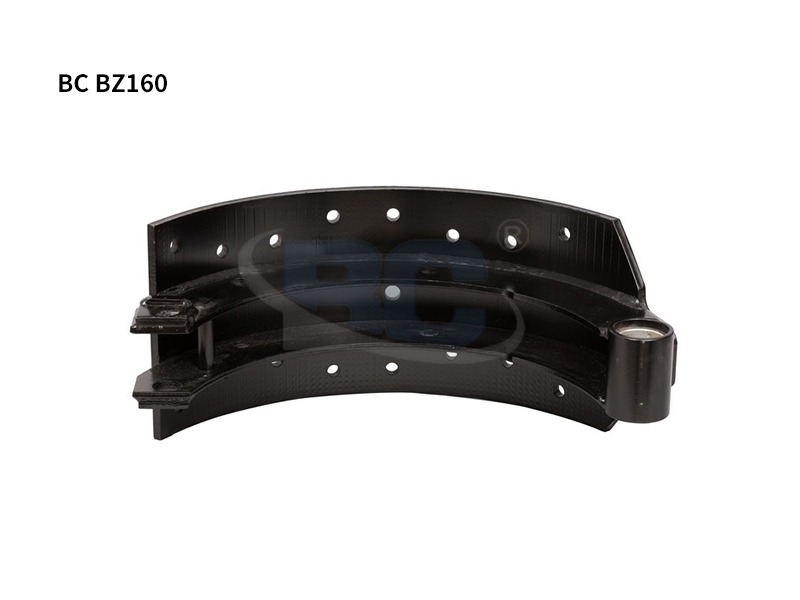
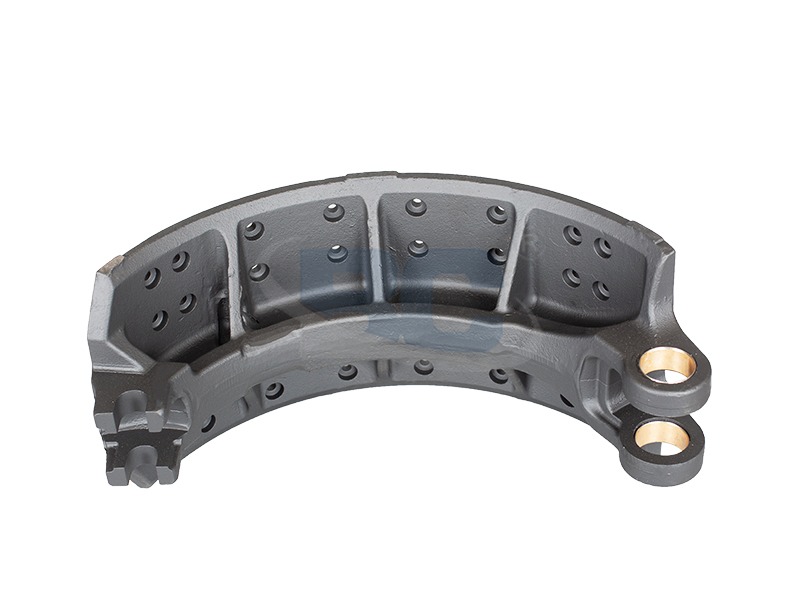
The 4515 Casted Brake Shoe is designed for heavy-duty drum brake applications using Meritor systems. It is identified by Part No. 4515 and features a 16.5-inch by 7-inch size specification, with 32 riveting holes for the attachment of the friction lining. This configuration makes the product suitable for replacement and repair programs that require a casted brake shoe with a defined hole pattern and established application information.
Manufactured by Zhejiang Bangchi Auto Parts Co., Ltd., the 4515 brake shoe forms part of a broader heavy-duty brake parts range that includes steel brake shoes, casted brake shoes, brake linings, lined brake shoes, brake shoe repair kits, and lined brake shoe kits. The company supplies products according to global FMSI numbering principles, helping distributors, repair workshops, and fleet maintenance teams identify the correct component more efficiently.
This article examines the construction, application, manufacturing considerations, quality advantages, installation value, and purchasing benefits of the 4515 Casted Brake Shoe. It also explains how a focused production process and a complete heavy-duty brake product range can help customers reduce sourcing complexity and improve maintenance planning.
4515 Casted Brake Shoe
Product Overview and Identification
The 4515 Casted Brake Shoe is a heavy-duty drum brake component intended for use in Meritor applications. Its basic product information is concise but important: the part number is 4515, the size is listed as 16.5 inches by 7 inches, and the shoe contains 32 riveting holes. These identifiers provide the foundation for product matching during quotation, purchasing, inventory control, and workshop installation.
| Product Attribute | Specification | Practical Importance |
|---|---|---|
| Product name | 4515 Casted Brake Shoe | Defines the component type and product reference |
| Part number | 4515 | Supports ordering, inventory management, and identification |
| Category | Casted Brake Shoe | Indicates the structural manufacturing type |
| Size | 16.5 inches by 7 inches | Helps verify dimensional compatibility with the brake assembly |
| Riveting holes | 32 | Supports matching with the corresponding brake lining and rivet layout |
| Application | Meritor | Indicates the intended heavy-duty brake system family |
| Product range | Casted brake shoes and related brake components | Allows broader sourcing from one specialized supplier |
Brake shoe dimensions should always be checked against the original component, vehicle information, axle configuration, and service manual before installation. The stated 16.5-inch by 7-inch specification is a primary reference, while the 32-hole pattern is an additional confirmation point. These two details can help buyers avoid a common replacement problem: selecting a shoe with a similar overall appearance but an incorrect lining attachment pattern or application profile.
The absence of an OEM number in the supplied product information does not reduce the value of the part number. In practical procurement, a product can be identified through a combination of manufacturer part number, application, dimensions, hole count, shoe type, and photographs. For large distributors, maintaining these details together in a product database can significantly improve search accuracy and reduce order clarification time.
Why Casted Brake Shoes Matter in Heavy-Duty Applications
A brake shoe must withstand mechanical force while maintaining an accurate relationship with the brake lining, brake drum, anchor points, and actuating mechanism. In a heavy truck, trailer, bus, or other commercial vehicle, these forces are repeated thousands of times. The component is also exposed to high temperatures generated during braking, road dust, moisture, corrosion risks, and vibration transferred through the axle and suspension.
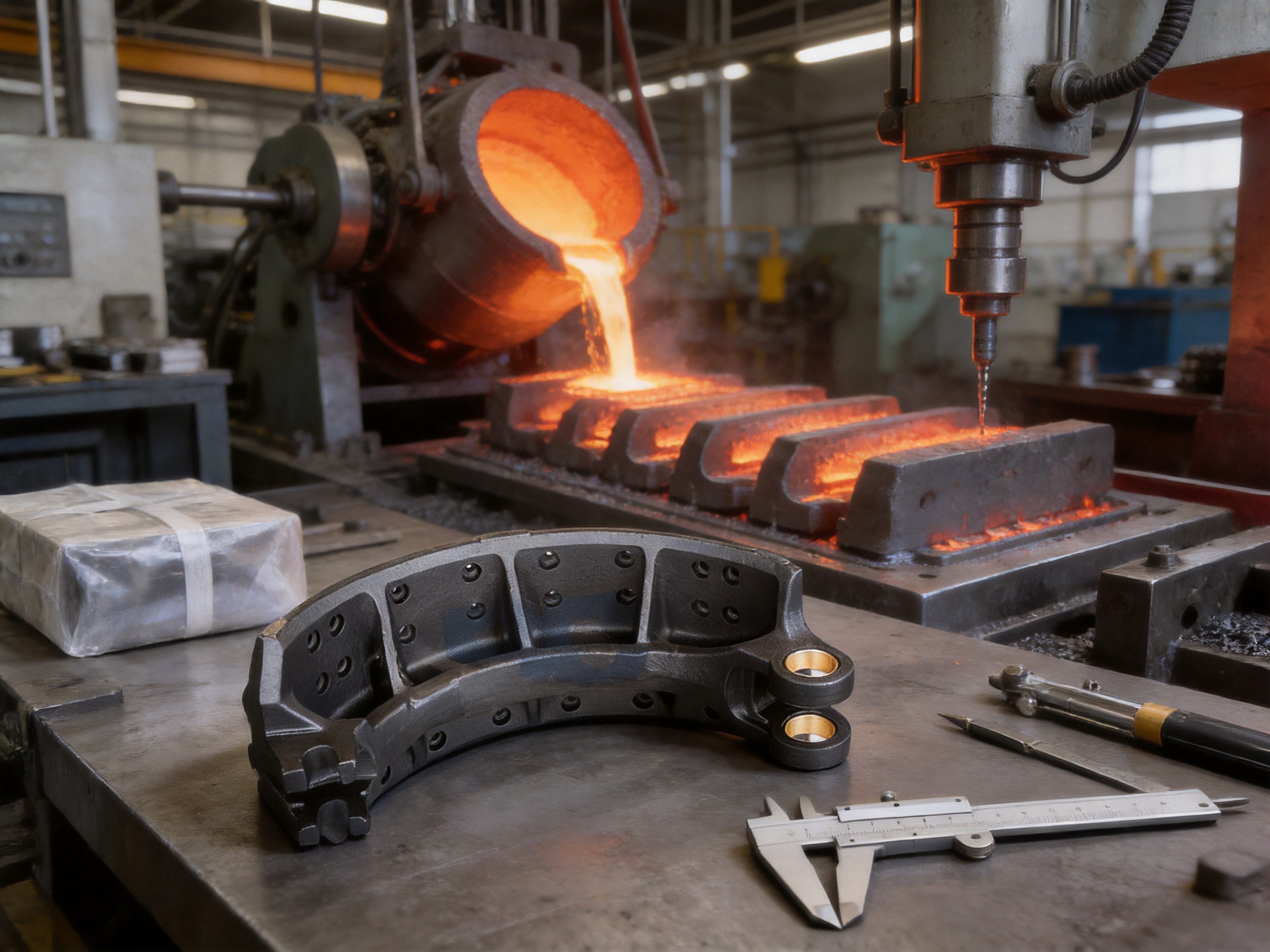
Casted brake shoes are valued because casting allows the manufacturer to form a substantial structural component with a consistent overall geometry. The casting process can support robust sections, carefully shaped ribs, reinforced mounting areas, and the dimensional features required by a heavy-duty drum brake assembly. Once the casting is produced, subsequent operations such as cleaning, machining, drilling, finishing, and inspection refine the component for assembly.
Compared with lighter or less robust alternatives, a properly produced casted shoe can offer a strong foundation for demanding service. The advantage is not simply the presence of cast material. Performance depends on the quality of the raw material, mold control, cooling behavior, dimensional stability, finishing accuracy, and inspection discipline. A well-managed casted brake shoe should present a stable platform for the lining and maintain the required shape during normal service.
The 4515 model is therefore suited to buyers who need more than a generic brake shoe. It provides a defined application, a known dimensional reference, and a specified 32-hole riveting arrangement. These characteristics help connect the structural component with the other parts of the brake assembly, including the matching lining, rivets, rollers, springs, and related repair items.
Key Advantages of the 4515 Casted Brake Shoe
Application-Focused Design
The 4515 Casted Brake Shoe is identified for Meritor application use rather than being presented as an undifferentiated universal component. Application-focused design improves the likelihood that the shoe will correspond to the geometry and operating requirements of the intended brake system. It also makes the product easier for sales teams and maintenance professionals to classify.
For distributors, the application reference supports catalog organization. For workshops, it provides a starting point when comparing the old shoe with a replacement. For fleet managers, it assists in establishing approved parts lists for particular axle and vehicle groups. A product that is clearly categorized is easier to purchase correctly than a component described only by general terms such as “heavy truck brake shoe.”
32-Hole Riveting Configuration
The 32 riveting holes are an important product feature. A brake lining must be secured to the shoe with a hole pattern that corresponds to the lining and the selected rivets. If the hole positions are incorrect, the lining may not seat properly, the rivets may not align, and the assembly process may be delayed or compromised.
By defining the 32-hole configuration, the 4515 product provides a clear matching parameter. Buyers can use this information when selecting a corresponding brake lining or repair kit. The hole count also helps distinguish the product from visually similar brake shoes that may have a different attachment pattern.
Correct riveting is essential to the integrity of a relined brake shoe. The lining must sit firmly against the shoe, and the rivets must be installed with suitable tools and controlled force. A properly manufactured shoe with accurately located holes provides a better foundation for this work than a component with irregular or poorly positioned openings.
Heavy-Duty 16.5-Inch by 7-Inch Format
The listed 16.5-inch by 7-inch size places the 4515 within a recognized heavy-duty brake shoe format. The dimensions provide a useful first-level check during product selection. They should be combined with application information and hole count to achieve a reliable match.
Size consistency supports several maintenance objectives. It helps the lining cover the intended friction area, supports the designed relationship with the brake drum, and reduces the risk of installing a component that is too small, too large, or incorrectly shaped. In fleet maintenance, standardized dimensional information also helps technicians prepare tools, linings, and replacement procedures in advance.
Structural Strength for Commercial Service
Heavy commercial vehicles place considerable demands on their brake assemblies. The brake shoe must carry the lining and transmit braking forces without unwanted deformation under normal operating conditions. A casted structure is appropriate for applications where a sturdy base is required.
The 4515 shoe is intended to provide a durable structural platform for a heavy-duty lining. Its value should be considered as part of a complete friction assembly, because actual braking performance also depends on the brake drum, lining compound, wheel-end adjustment, actuator condition, springs, and installation quality. Even so, the structural shoe remains a critical part of the system and should not be treated as a secondary component.
Efficient Replacement and Repair Support
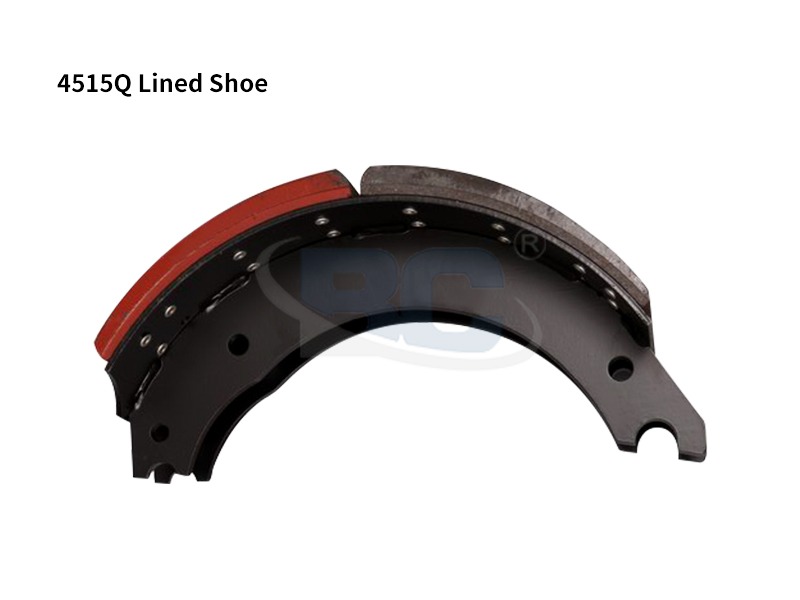
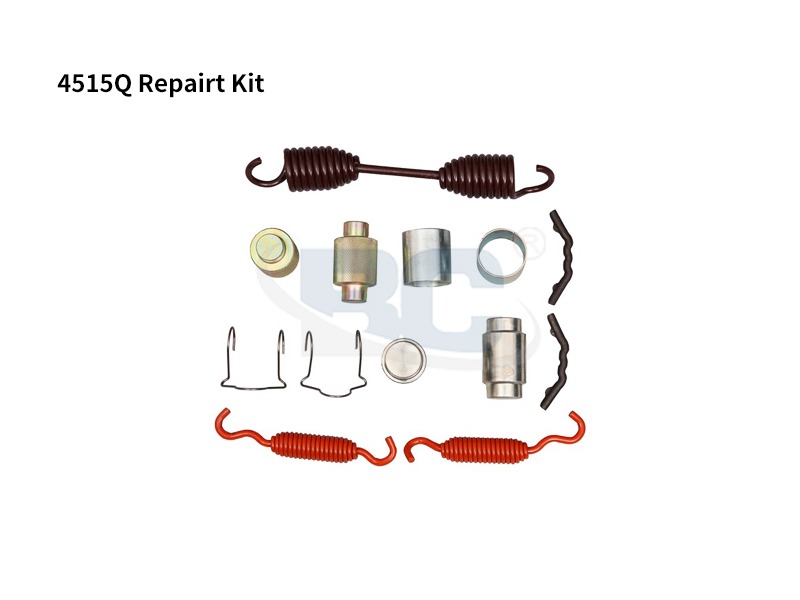
Brake shoes are often replaced or relined during scheduled maintenance. A product that is easy to identify and available in related categories can simplify the process. The 4515 model can be sourced as part of a broader brake product program that includes brake linings, lined brake shoes, repair kits, and lined brake shoe kits.
This broader range provides a practical advantage over suppliers that offer only one isolated component. Customers may be able to consolidate purchasing, reduce the number of supplier relationships, and standardize product documentation. Workshops can also select between a bare casted shoe, a lining, a lined shoe, or a complete repair kit according to their preferred maintenance method.
Manufacturing Process Considerations
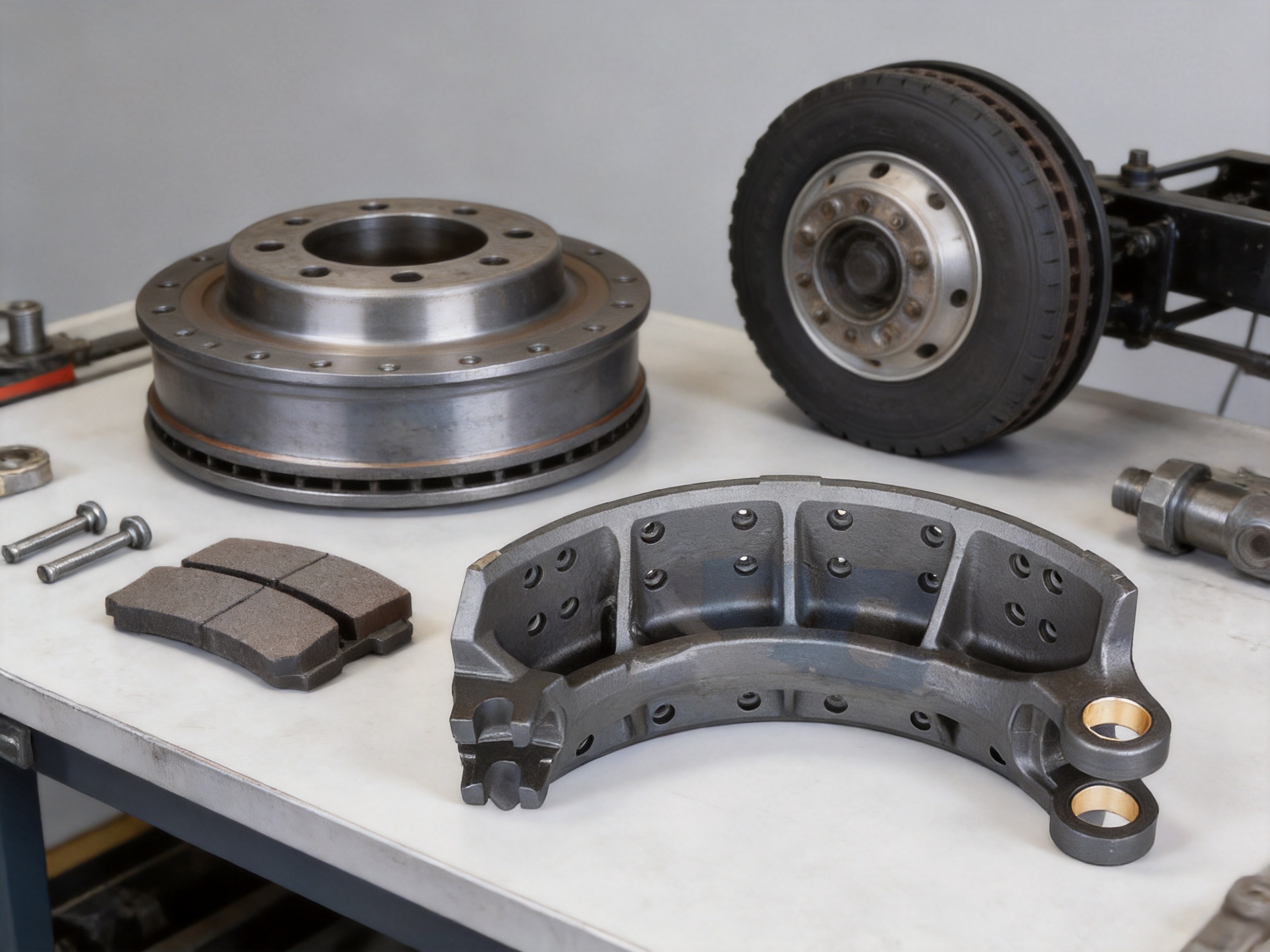
The performance of a casted brake shoe begins with manufacturing control. A brake shoe is not defined only by its final appearance. Internal material consistency, surface condition, dimensional accuracy, hole location, edge quality, and compatibility with the lining all influence the reliability of the finished part.
Material and Casting Preparation
A controlled casting program begins with suitable raw materials and a stable production method. Material preparation should be managed so that the cast structure provides the required strength and durability for the intended heavy-duty application. Melting conditions, material proportions, temperature, mold preparation, and pouring practice all affect the quality of the final casting.
For a specialized brake parts manufacturer, casting is more than a single production step. It is part of a repeatable process that should support consistent results across batches. Control of the production environment helps reduce variation between pieces, which is especially important when shoes are supplied to distributors or fleet customers who expect repeat orders to match previous deliveries.
After casting, the shoe requires appropriate cleaning and removal of excess material. Casting residues, flash, and unwanted projections must be eliminated before machining and drilling. This stage is important because a clean surface allows later operations to be performed more accurately and makes visual inspection more effective.
Machining and Profile Control
The brake shoe profile must correspond to the intended drum brake assembly. Machining and finishing operations refine critical areas, mounting points, edges, and other functional surfaces. The goal is to produce a component that can be integrated with the associated brake hardware without unnecessary fitting or modification.
Profile control is particularly important when the shoe is used with a replacement lining. The lining must sit against the shoe in a stable and uniform manner. Excessive gaps, raised areas, rough edges, or inconsistent support can affect riveting and may reduce the quality of the completed assembly.
Modern production management can combine process instructions, dedicated fixtures, measuring tools, and inspection records to maintain repeatability. These methods are valuable because they reduce dependence on individual operator judgment and create a more consistent manufacturing outcome.
Accurate Riveting-Hole Production
The 32-hole configuration of the 4515 shoe requires careful control during drilling or punching operations. Hole position, diameter, spacing, and edge condition should be checked so that the matching lining and rivets can be installed efficiently.
Accurate hole production offers several benefits. It improves the speed of relining work, supports proper rivet seating, and reduces the need for manual correction. It also helps preserve the intended distribution of attachment points across the lining. When the hole pattern is consistent, customers can order matching linings and kits with greater confidence.
Hole quality should be assessed for burrs, distortion, blockage, and dimensional variation. Any burr or sharp irregularity can interfere with lining placement or create stress around the rivet. A finishing process that leaves clean and usable holes contributes directly to workshop efficiency.
Surface Treatment and Corrosion Awareness
Brake shoes operate in an environment where moisture, road salt, dirt, and temperature changes can contribute to corrosion. A suitable surface treatment or protective finishing approach can help preserve the component during storage and service. The exact treatment should be selected according to the material, application, customer requirements, and compatibility with subsequent lining and assembly work.
For international distribution, corrosion awareness is also important during packaging and transportation. Products may spend significant time in warehouses, containers, or open-air loading areas. Clean packaging, suitable protective materials, and controlled storage help ensure that the shoe reaches the customer in an acceptable condition.
Inspection and Quality Verification
Quality verification should cover both appearance and function-related dimensions. A practical inspection program may include checking overall size, profile, hole count, hole location, surface condition, casting integrity, and identification markings. Batch records and inspection documentation can further support traceability.
Although the supplied product information does not list specific certifications or test results, customers can request the quality documentation relevant to their purchasing requirements. Depending on the order and market, this may include dimensional inspection records, material information, batch identification, packaging standards, or sample approval procedures.
A reliable manufacturer should be prepared to discuss product verification openly. Clear communication about specifications, tolerances, inspection methods, and packaging helps customers evaluate whether the part is appropriate for their market and application.
Manufacturing Strengths of a Specialized Brake Parts Supplier
A company specializing in heavy-duty brake parts can provide advantages that are difficult to achieve through general automotive component production. Product knowledge accumulates across related brake shoes, linings, kits, and application references. This specialization supports better communication between design, production, inspection, sales, and customer service teams.
Zhejiang Bangchi Auto Parts Co., Ltd. focuses on heavy-duty brake components and supplies products following the global FMSI numbering system. This focus is valuable for customers who work with multiple brake applications and need clear product identification. It also supports the development of a coordinated catalog rather than a collection of unrelated parts.
The company’s product categories include steel brake shoes, casted brake shoes, brake linings, lined brake shoes, brake shoe repair kits, and lined brake shoe kits. This range demonstrates an approach that addresses several stages of brake maintenance. A customer can purchase a structural shoe for relining, a separate lining for workshop assembly, or a more complete kit for faster replacement.
Specialization can also improve manufacturing flexibility. Different customers may require different packaging, labeling, product combinations, or order quantities. A focused supplier is more likely to understand these requirements and organize production around repeatable heavy-duty brake part workflows.
Another strength is the ability to support product matching through technical information. The 4515 part number, Meritor application, 16.5-inch by 7-inch size, and 32 riveting holes create a useful identification profile. When such information is consistently maintained across a catalog, customers can reduce the risk of confusion between similar-looking brake shoes.
Advantages Compared with Generic or Poorly Matched Alternatives
Better Specification Transparency
One advantage of the 4515 brake shoe is that its principal identification information is stated clearly. A generic product may be advertised with limited detail, such as a broad vehicle description or a photograph without dimensional information. That approach can create uncertainty during procurement.
The 4515 specification provides several direct comparison points: part number, application, size, and hole count. These data points help a buyer evaluate suitability before placing an order. Clear information is particularly important for export customers, where returning an incorrect heavy-duty brake component can involve substantial transportation and administrative costs.
More Reliable Lining Compatibility
A brake shoe and its lining must function as a matched pair. The 32-hole arrangement helps customers select a compatible lining and rivet pattern. In contrast, a poorly matched shoe may require modification, additional drilling, or an unsuitable lining installation, all of which can create unnecessary risk and labor.
The availability of related linings and kits from the same product program may further improve compatibility. Customers should still confirm the precise lining specification, friction material, rivet size, and drum application, but sourcing related components through a specialized supplier can simplify the matching process.
Improved Procurement Efficiency
Heavy-duty repair operations depend on efficient parts management. A supplier with multiple brake product categories can reduce the time spent searching across different sources. It may also allow customers to combine orders, standardize product labels, and maintain more consistent stock.
For distributors, a focused product range makes it easier to build a coherent catalog. For fleet operators, it supports the creation of approved replacement lists. For repair workshops, it can reduce delays caused by missing linings, wrong hole patterns, or incompatible bare shoes.
Support for Repeat Orders
Repeatability is a major advantage in commercial vehicle maintenance. A fleet may use the same axle and brake configuration over many service cycles. If the replacement part is clearly identified and consistently produced, the maintenance team can reorder with greater confidence.
The 4515 part number creates a stable reference for future purchasing. Customers can also retain the size and hole-count information in their internal parts records. This is more practical than relying only on visual comparison or informal descriptions.
Brake Shoe Installation and Relining Considerations
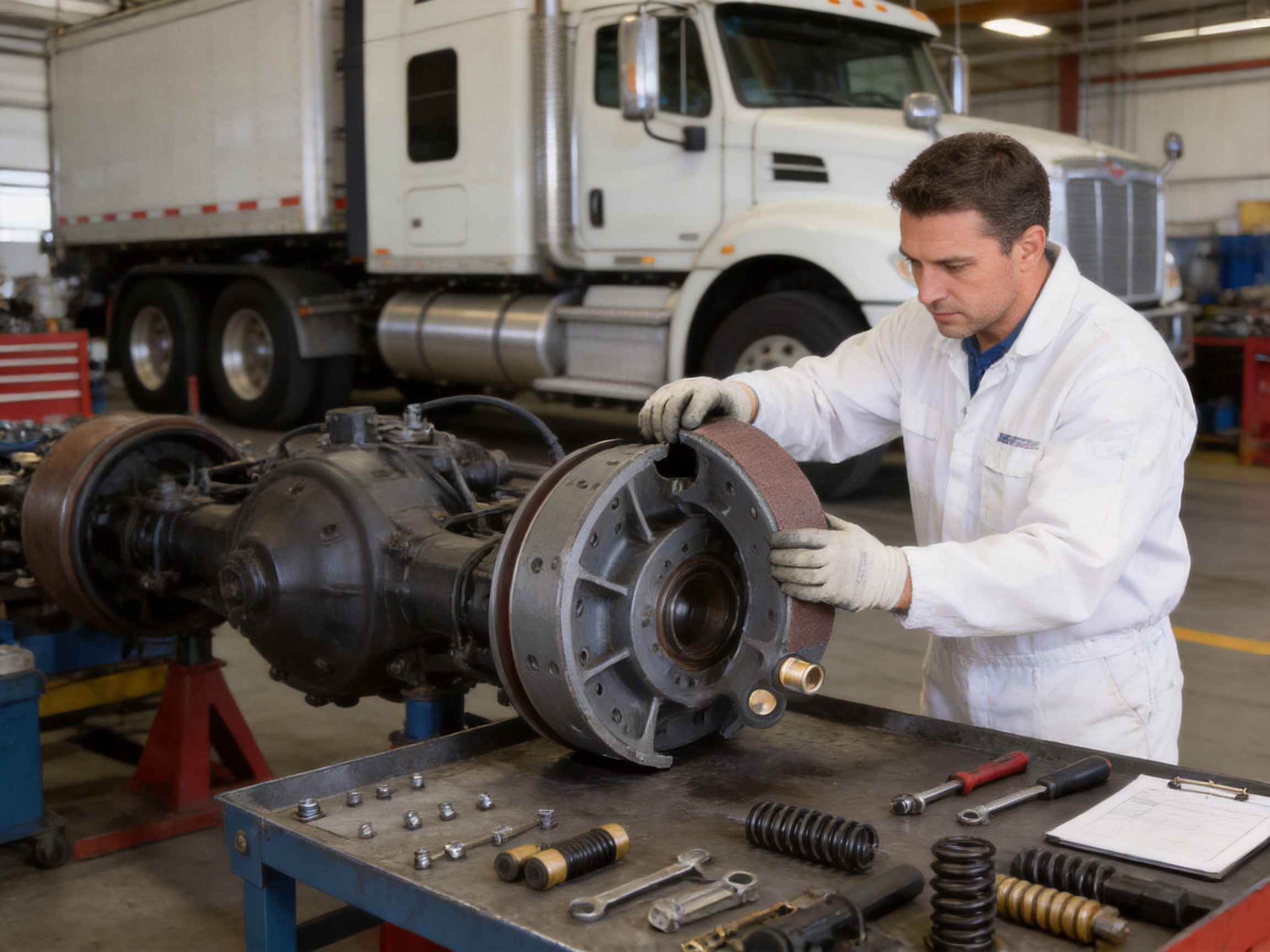
Correct installation is essential to achieving the intended value of any brake shoe. Before fitting the 4515 model, technicians should verify the vehicle or axle application, compare the new shoe with the removed component, and confirm the size and hole pattern. The brake drum should also be inspected for wear, scoring, cracking, excessive diameter, or other conditions that could affect the new assembly.
If the shoe is supplied as a bare casted component, the matching brake lining must be selected carefully. The lining should correspond to the 16.5-inch by 7-inch shoe format and 32-hole attachment layout. Rivets must be suitable for the lining and shoe, and the installation should be performed with equipment designed for brake shoe relining.
The lining should be positioned evenly before riveting. Rivets should be installed according to an appropriate sequence so that the lining remains seated against the shoe without gaps or distortion. After riveting, the technician should inspect the assembly for loose rivets, damaged lining edges, uneven seating, and contamination.
Other brake components should be assessed during the same service. Return springs, rollers, anchor points, adjusters, bushings, seals, and drums can influence the behavior of the brake shoe. Replacing only the shoe while ignoring worn hardware may prevent the brake system from operating as intended.
After installation, the brake should be adjusted in accordance with the vehicle or axle manufacturer’s procedures. The wheel-end assembly should rotate freely when appropriate, and the brake should be tested in a controlled environment before the vehicle returns to normal service. Bedding or burnishing procedures should follow the requirements of the selected lining manufacturer.
These installation principles apply to all brake shoes, regardless of brand. A well-made component cannot compensate for incorrect application, improper riveting, contaminated friction material, faulty adjustment, or a damaged drum. The best results come from combining a correctly matched product with disciplined workshop practice.
Role of the 4515 Shoe in Fleet Maintenance
Fleet operators generally seek brake components that support safety, uptime, predictable service intervals, and manageable operating costs. The 4515 Casted Brake Shoe can contribute to these goals when it is selected for the correct Meritor application and maintained as part of a complete brake system.
Standardized part identification helps fleet managers plan inventory. A central parts list can record the 4515 reference, application, size, hole count, approved lining, and preferred rivet specification. This information reduces dependence on individual employee memory and helps maintain consistency across multiple workshops or service locations.
The product can also support preventive maintenance programs. If a fleet tracks brake wear, lining replacement intervals, drum measurements, and operating conditions, it can determine when shoes or relining components should be ordered. Keeping the structural shoe and related lining products available can reduce vehicle downtime during scheduled service.
For vehicles that operate in mountainous regions, heavy traffic, construction zones, or severe weather, brake inspections may need to occur more frequently. These operating conditions can increase heat and mechanical stress. A robust casted shoe, correctly matched to the brake assembly, provides a suitable base for maintenance under demanding conditions.
Fleet maintenance teams should not evaluate the shoe solely by purchase price. A lower initial cost can be offset by poor fit, installation delays, premature wear, return freight, or vehicle downtime. Product clarity, availability of matching components, supplier responsiveness, and repeatability are all relevant to the total cost of ownership.
Packaging, Identification, and Supply Chain Value
Heavy-duty brake shoes must be protected during handling and transportation. Their weight and shape can create impact risks if they are packed loosely. Suitable packaging should prevent excessive movement, protect machined or functional areas, and keep product labels visible.
Each package should ideally carry the product reference and essential identification information. For the 4515 model, the part number, application, size, and hole count are useful details for warehouse personnel. Clear labeling reduces picking errors and makes it easier to verify incoming goods.
Export customers may also require customized labels, carton quantities, pallet arrangements, or documentation. A specialized manufacturer can discuss these requirements during the quotation and order-confirmation stages. Early agreement on packaging helps prevent confusion later in the supply chain.
Inventory efficiency is another consideration. Because the 4515 shoe is associated with a specific application and hole pattern, it should be stored separately from visually similar models. Warehouse software can include cross-reference notes, application restrictions, and minimum stock levels. This approach helps prevent accidental substitution.
Reliable supply also depends on communication. Customers should provide expected order quantities, delivery schedules, target markets, packaging preferences, and any inspection requirements. The manufacturer can then plan production and prepare the correct documentation for the order.
How to Evaluate the Product Before Purchasing
Buyers should begin by confirming the application. The 4515 is identified for Meritor use, but the exact axle, vehicle model, brake configuration, and service position should be verified. Application names alone may not always distinguish between related configurations.
The next step is to compare dimensions and attachment details. The listed size is 16.5 inches by 7 inches, and the shoe contains 32 riveting holes. Buyers should compare these specifications with the removed shoe or technical records. If uncertainty remains, photographs and dimensional drawings can be requested from the supplier.
Customers should also determine whether they need a bare casted shoe, a separate brake lining, a lined brake shoe, a repair kit, or a lined brake shoe kit. The correct purchasing format depends on the workshop’s equipment, labor capability, and maintenance policy.
Quality questions may include the material specification, inspection process, hole-pattern control, surface treatment, packaging method, batch identification, and availability of sample approval. These questions are especially useful for distributors who need to evaluate a product before adding it to a catalog.
Commercial questions are equally important. Buyers should confirm minimum order quantity, production lead time, payment terms, shipping arrangements, carton details, labeling options, and after-sales procedures. A complete quotation should make the technical and commercial scope clear.
Recommended Maintenance Practices
Brake shoes should be inspected as part of a complete wheel-end maintenance program. Technicians should look for lining wear, loose or damaged rivets, cracks, corrosion, abnormal contact patterns, distortion, and signs of overheating. The surrounding drum and hardware should be checked at the same time.
Any lining that is contaminated with oil, grease, or other substances should be evaluated carefully. Contamination can reduce friction performance and may require replacement of the affected components. Cleaning alone may not restore a damaged friction surface.
Brake adjustment should be checked according to the relevant vehicle system. Excessive clearance can increase stopping distance and reduce braking efficiency, while incorrect adjustment can contribute to drag and overheating. Automatic adjusters and associated hardware should be inspected for proper operation.
Drum condition is particularly important. A drum with excessive diameter, deep scoring, heat checks, cracks, or an unsuitable surface may prevent the new lining from making proper contact. The drum should be measured and serviced according to the applicable specifications.
Maintenance records should include the date of service, vehicle or axle identification, part number, lining type, drum measurement, technician, and any observations. Recording the 4515 reference in service documentation helps establish a useful history for future inspections and purchasing decisions.
Quality, Safety, and Responsible Product Positioning
Brake components are safety-related products. Marketing and purchasing decisions should therefore be based on accurate technical information rather than unsupported performance claims. The 4515 Casted Brake Shoe should be selected for the correct application and installed by qualified personnel using appropriate procedures.
The supplied information identifies the product as a casted brake shoe for Meritor application, with a 16.5-inch by 7-inch size and 32 riveting holes. These details are suitable for initial identification, but final compatibility must be confirmed against the vehicle or axle requirements.
A responsible supplier should communicate what is known, what must be verified, and what documentation can be provided upon request. This approach protects the customer and promotes better long-term cooperation. It also helps prevent the common mistake of treating a general size match as complete application approval.
Product quality should be supported by a controlled manufacturing process. Casting, finishing, drilling, inspection, labeling, and packaging should all be managed as connected stages. When each stage is controlled, the final brake shoe is more likely to meet the customer’s expected consistency.
Why Choose a Focused Heavy-Duty Brake Parts Manufacturer
A specialized supplier offers more than a single replacement component. It can provide product knowledge across the brake assembly, helping customers select compatible shoes, linings, kits, and related service items. This broader perspective is valuable when a customer is developing a new product line or standardizing maintenance across several vehicle groups.
Zhejiang Bangchi Auto Parts Co., Ltd. serves the heavy-duty brake parts market with a product range covering casted brake shoes and complementary components. Its stated use of the global FMSI numbering system supports more systematic product identification for international customers.
The company’s location in Haining, Zhejiang, China, places its manufacturing and supply activities within one of China’s established industrial regions. Customers can communicate with the company for product details, quotations, application confirmation, and order requirements through its available business contacts.
For importers and distributors, supplier specialization can improve product development. New applications can be evaluated within the context of existing shoe, lining, and kit categories. This may make it easier to expand a catalog while maintaining consistent terminology and reference information.
The strongest supplier relationship is based on clear specifications, stable quality, practical communication, and continuous improvement. Customers should expect accurate product information and should provide useful feedback from field service, installation, and market demand. This exchange helps both sides improve future orders.
Frequently Asked Questions
What is the 4515 Casted Brake Shoe?
The 4515 Casted Brake Shoe is a heavy-duty drum brake shoe identified by Part No. 4515. It is listed for Meritor application and has a 16.5-inch by 7-inch size specification with 32 riveting holes.
What does the 32-hole specification mean?
The 32-hole specification refers to the number of riveting holes used to attach the brake lining to the shoe. The matching lining and rivets should be selected according to this configuration.
Is the 4515 shoe suitable for every Meritor brake system?
No. The product is identified for Meritor application, but the exact axle, vehicle, brake assembly, dimensions, and service position should be confirmed before installation. A Meritor reference alone may not identify every configuration.
Is the product supplied with a brake lining?
The supplied information identifies the product as a casted brake shoe. Customers should confirm whether they require a bare shoe, a separate lining, a lined brake shoe, or a complete repair kit when requesting a quotation.
Can the shoe be used for relining?
Yes, a casted brake shoe is generally used as the structural base for a lining installation. The correct lining, rivets, tools, and relining procedure must be confirmed for the specific application.
Why is a casted shoe useful for heavy-duty service?
A casted shoe provides a substantial structural foundation for supporting the lining and transferring braking forces. Its suitability depends on material quality, dimensional accuracy, manufacturing control, application matching, and correct installation.
What information should be checked before ordering?
Buyers should check the part number, application, size, riveting-hole count, original shoe, axle information, lining type, packaging requirements, and order quantity. The 4515 reference, 16.5-inch by 7-inch size, and 32-hole pattern should be used together rather than separately.
What related products are available?
The broader product categories include steel brake shoes, casted brake shoes, brake linings, lined brake shoes, brake shoe repair kits, and lined brake shoe kits. Availability and exact specifications should be confirmed with the supplier.
How does the FMSI numbering system help customers?
A structured numbering system provides a consistent reference for identifying brake components. It can help distributors organize catalogs, help workshops search for replacement parts, and help fleets maintain accurate purchasing records.
Does the product come with a warranty or certification?
The supplied product information does not state warranty terms or specific certifications. Customers should request the applicable warranty, quality documents, inspection records, and compliance information for their market and order.
What should be inspected during installation?
Technicians should inspect the brake drum, lining, rivets, springs, rollers, adjuster, anchor points, seals, and other wheel-end components. The shoe should be checked for correct application, dimensions, hole alignment, and proper lining seating.
How can fleet operators manage this part more effectively?
Fleet operators can record the 4515 part number, application, dimensions, hole count, approved lining, service date, and vehicle information in their maintenance system. This improves repeat ordering and reduces the chance of selecting a similar but incorrect component.
Conclusion
The 4515 Casted Brake Shoe is a clearly identified heavy-duty drum brake component for Meritor applications. Its principal specifications include Part No. 4515, a 16.5-inch by 7-inch size, and 32 riveting holes. These details provide useful technical checkpoints for distributors, workshops, fleet operators, and purchasing departments.
The product’s main advantages include an application-focused reference, a defined lining attachment pattern, a robust casted structure, and compatibility with a wider range of related brake products. These benefits can help customers improve product matching, simplify inventory management, and support efficient relining or brake shoe replacement.
Its performance ultimately depends on more than the shoe alone. Correct application, suitable lining selection, accurate riveting, proper drum condition, functional hardware, correct adjustment, and qualified installation are all essential. When these factors are managed together, the 4515 shoe can serve as a practical foundation for heavy-duty brake maintenance.
Zhejiang Bangchi Auto Parts Co., Ltd. strengthens the product offering through specialization in heavy-duty brake parts and a catalog that includes shoes, linings, and repair kits. Its use of global FMSI numbering principles supports clearer identification for international customers. For buyers seeking a defined casted brake shoe and a supplier capable of supporting related brake component requirements, the 4515 model is a product worthy of technical and commercial evaluation.
References
1. FMSI Standardized Brake and Friction Component Identification Principles.
2. Commercial Vehicle Drum Brake Maintenance and Inspection Practices.
3. General Principles of Brake Shoe Casting, Machining, Drilling, and Dimensional Inspection.
4. Heavy-Duty Vehicle Brake System Service and Relining Procedures.
5. Manufacturer-Supplied Product Information for the 4515 Casted Brake Shoe.
6. General Workshop Guidance for Brake Drum, Lining, Rivet, and Wheel-End Inspection.