 English
 简体中文
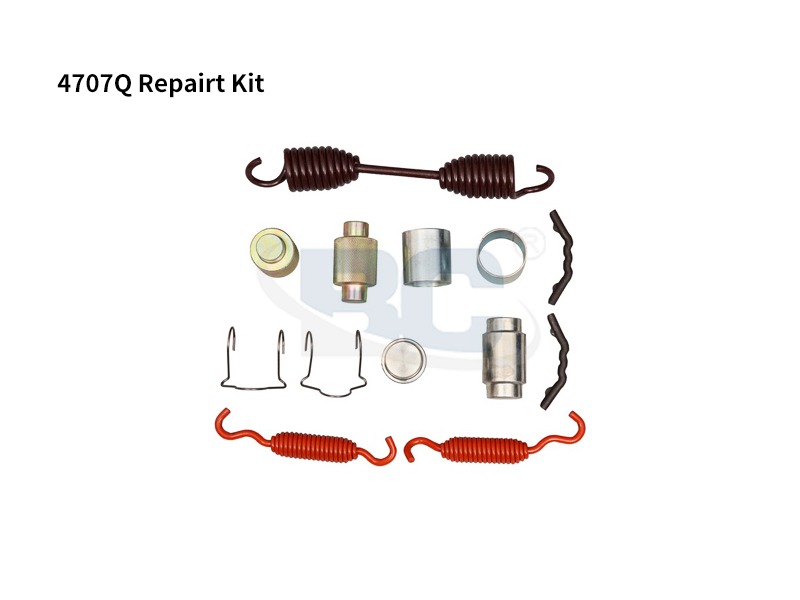
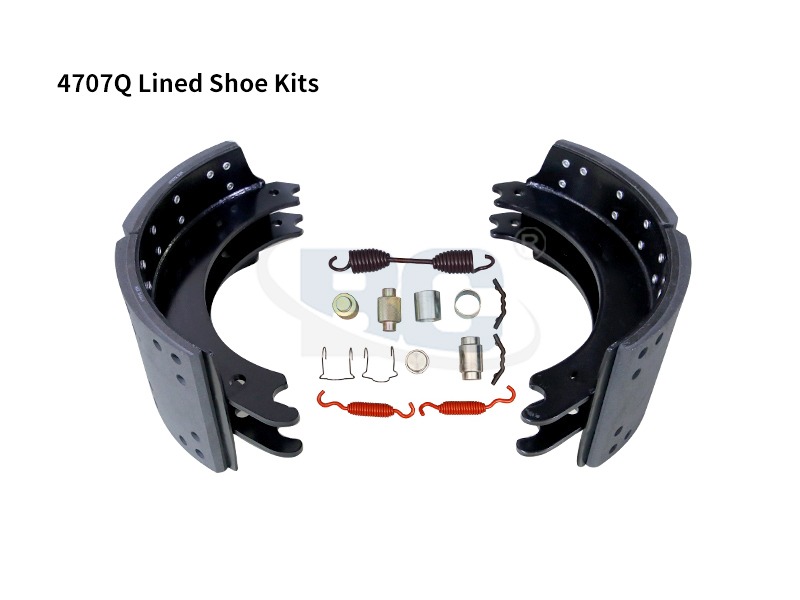
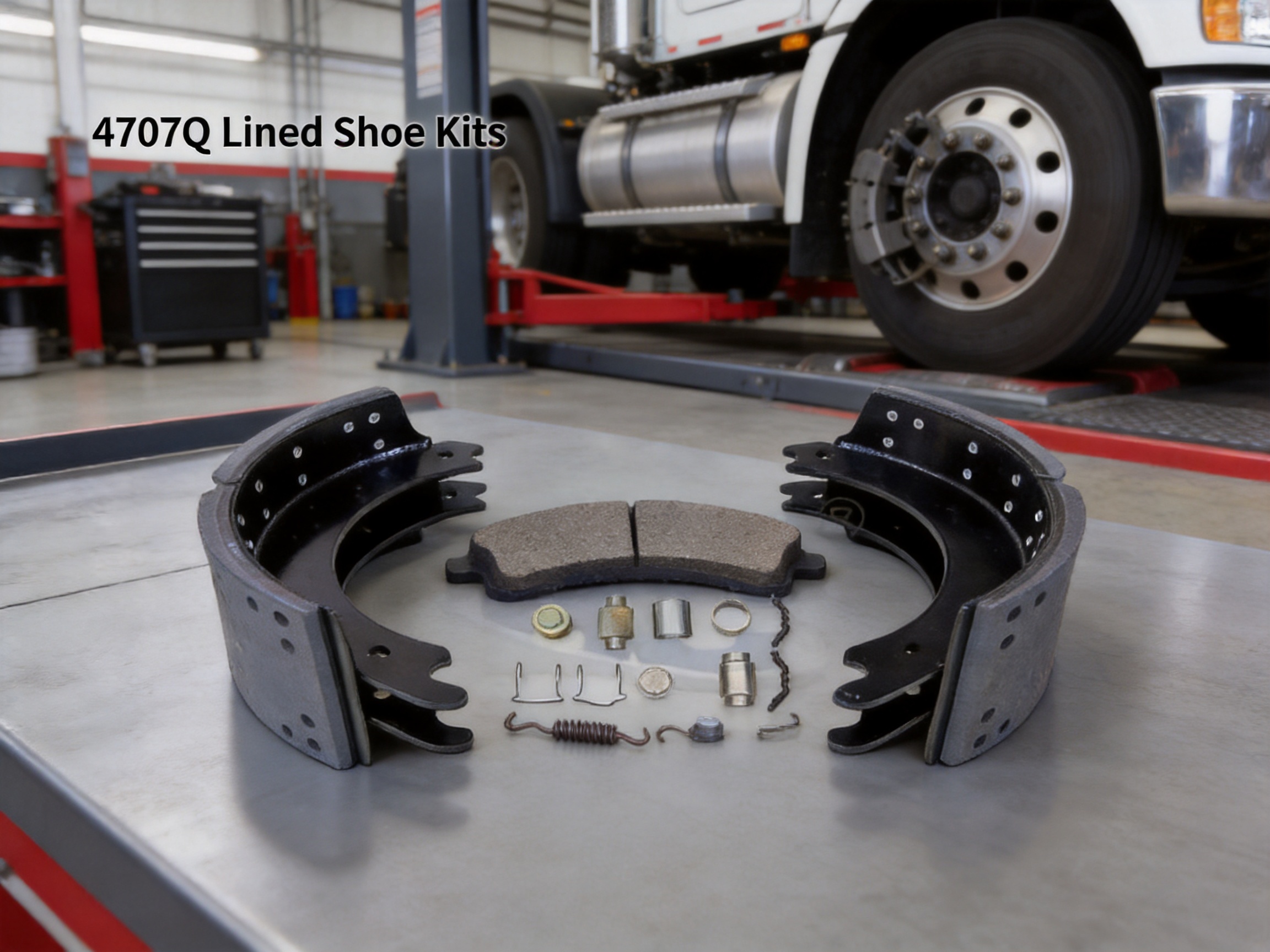
简体中文In heavy-duty vehicle braking systems, a repair kit must do more than replace individual worn components. It must help restore the correct relationship between the brake shoe, lining, fastening points, drum, and braking mechanism. A properly selected kit can support safer maintenance, reduce unnecessary replacement costs, and extend the useful life of a serviceable brake shoe assembly. The 4707Q Brake Shoe Repair Kit is designed for this type of maintenance application and is identified for the 4515Q/4707Q brake shoe family.
Listed under the Lined Brake Shoe Kits category, the 4707Q kit is intended for professional brake service environments where dependable replacement parts, accurate identification, and consistent repair procedures are essential. It is associated with heavy-duty brake parts and heavy truck brake applications, making it relevant to commercial vehicles that operate under demanding loads, long service intervals, frequent braking cycles, and challenging road conditions.
The product is supplied by Zhejiang Bangchi Auto Parts Co., Ltd., a Chinese manufacturer focused on heavy-duty brake parts. The company states that its products follow the global FMSI numbering system, a useful reference framework for identifying friction and brake components. For purchasing teams, distributors, workshops, and fleet maintenance departments, this numbering approach can simplify product selection and cross-reference work when the original component number is known.
A repair kit is often evaluated by more than its price. Buyers also need to consider application accuracy, friction-component compatibility, manufacturing control, dimensional consistency, packaging, traceability, and technical communication. The 4707Q product offers a practical solution for replacing worn or damaged brake shoe service components while preserving the possibility of reusing a suitable brake shoe foundation where inspection confirms that reuse is appropriate.
4707Q Brake Shoe Repair Kit
Product Overview
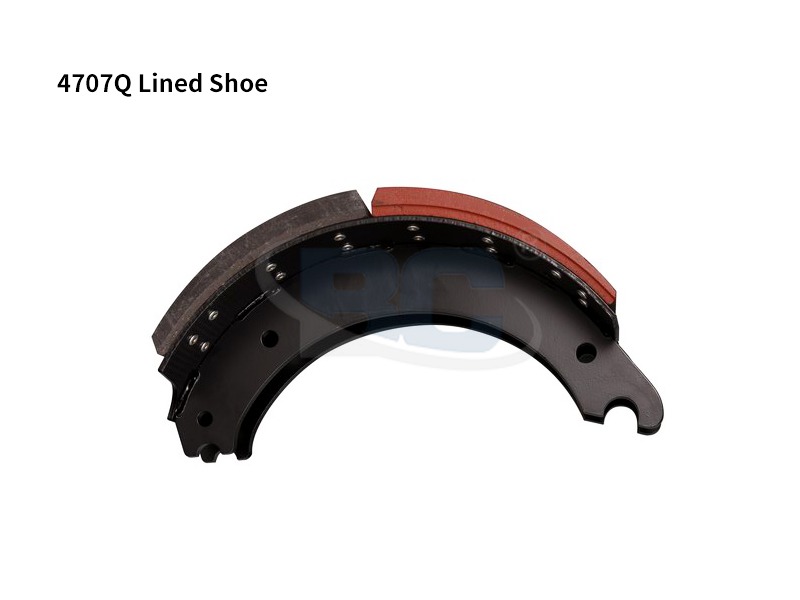
The 4707Q Brake Shoe Repair Kit is identified by the product part number 4707Q and is connected with the 4515Q/4707Q brake shoe application. Its category, Lined Brake Shoe Kits, indicates that the product is intended to support the service or refurbishment of a lined brake shoe assembly rather than simply functioning as a loose, universal friction material.
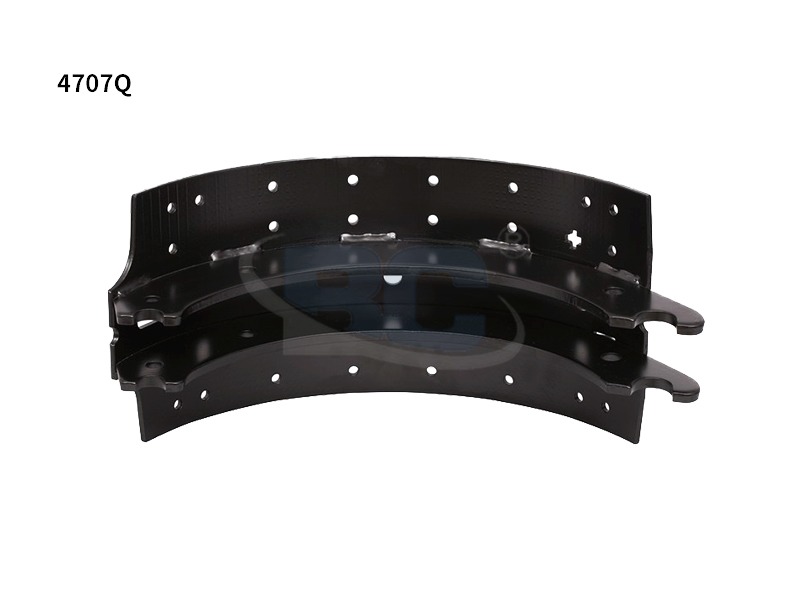
In a typical heavy-duty drum brake maintenance process, the brake shoe serves as the structural carrier for the friction lining. When the lining reaches its wear limit, becomes contaminated, cracks, separates, or develops other defects, the shoe may require relining or replacement. If the metal shoe remains within acceptable dimensional and structural limits, a repair kit can provide a more economical and resource-efficient alternative to replacing the entire assembly.
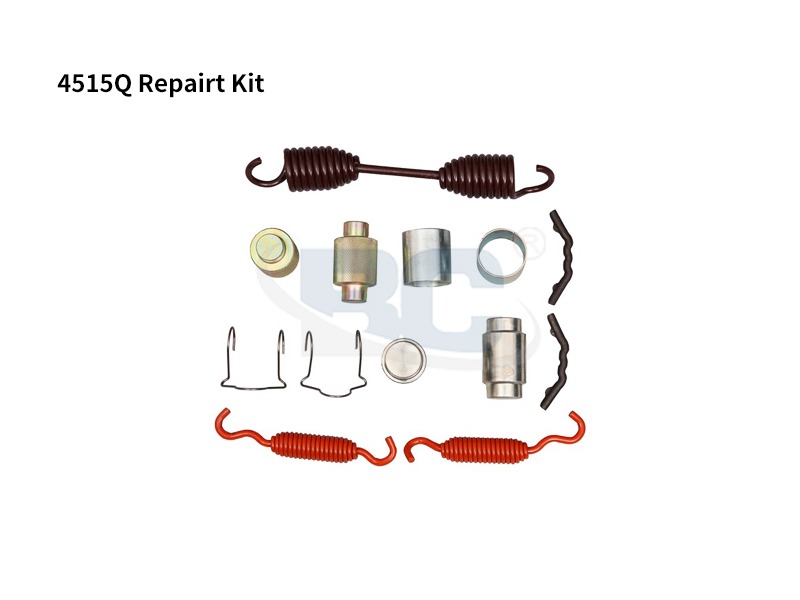
The product information identifies the part as a “4515Q/4707Q brake shoe” repair item. This information should be used together with the vehicle application, original component markings, brake system specifications, and workshop inspection results. Part-number confirmation is particularly important in heavy-duty braking because visually similar shoes and linings may differ in arc, width, thickness, hole location, anchor geometry, or drum compatibility.
The 4707Q kit is therefore best understood as an application-specific maintenance product. It is not simply a generic brake lining that can be installed without verification. Its value depends on a correct match with the relevant brake shoe and the service conditions in which the vehicle operates.
Why Brake Shoe Repair Kits Matter in Heavy-Duty Applications
Heavy-duty braking systems work under conditions that are substantially more demanding than many passenger-car applications. Commercial vehicles may carry high payloads, travel long distances, descend steep grades, operate in stop-and-go traffic, or work in environments with dust, moisture, road salt, and temperature variation. These conditions place continuous demands on drum, shoe, lining, springs, actuators, and adjustment mechanisms.
Because of these demands, brake maintenance must address the complete braking interface. The friction lining must contact the drum correctly, the shoe must move freely and return properly, and the braking force must be distributed evenly across the lining surface. A repair kit that helps restore the original shoe configuration can support a more controlled maintenance process than an improvised replacement using mismatched components.
Repairing a brake shoe can also improve maintenance planning. Fleet operators may maintain a stock of suitable kits and service reusable shoe cores during scheduled inspections. This approach can shorten vehicle downtime when replacement components are required. It may also reduce the number of complete brake shoe assemblies that must be kept in inventory, provided that the workshop has appropriate inspection and relining capabilities.
Another important consideration is resource efficiency. Reusing a structurally sound shoe foundation avoids discarding a component that may still have useful service value. The repair kit replaces the serviceable friction-related elements while allowing qualified technicians to evaluate the original metal shoe. This approach can be especially attractive for fleets that manage large numbers of similar vehicles and seek consistent maintenance procedures.
Key Product Advantages
Application-Oriented Identification
One of the main advantages of the 4707Q kit is its clear association with the 4515Q/4707Q brake shoe application. Application-oriented identification helps buyers avoid the uncertainty associated with completely generic brake service products. The use of a defined part number creates a reference point for quotations, purchase orders, warehouse records, service instructions, and quality documentation.
For distributors, a recognizable part number also supports catalog organization. Instead of describing the product only by general dimensions or vehicle type, a distributor can organize it under the 4707Q reference and connect it with the corresponding brake shoe family. This can reduce selection errors when customers are replacing components across multiple vehicle models or axle configurations.
For workshops, part-number identification can make repair orders more precise. A work order may record the original shoe number, the replacement kit number, the date of service, and the inspection findings. Such records are useful for fleet maintenance planning and can help technicians identify recurring wear patterns or application issues.
Support for Professional Relining and Repair
The kit format is suitable for maintenance operations in which a qualified technician inspects the original brake shoe before fitting new service components. This supports a repair philosophy based on condition assessment rather than automatic full replacement. If the foundation is sound and meets the workshop’s acceptance criteria, the kit can help return the shoe to service.
Professional relining requires careful preparation, correct positioning, secure fastening or bonding according to the applicable procedure, and final inspection. The usefulness of a repair kit is closely connected to the accuracy of these operations. A component manufactured for a defined application gives the technician a more reliable starting point than a lining selected only because it appears similar.
Compatibility with Heavy-Duty Service Requirements
The product is positioned within the heavy-duty brake parts range, making it relevant to demanding commercial vehicle maintenance. Heavy-duty service requires brake components that are selected with attention to load, drum size, friction behavior, operating temperature, and maintenance interval. The 4707Q reference provides a practical path toward matching the kit with the intended brake shoe application.
Although every vehicle installation must be verified, the product’s heavy-duty positioning indicates that it is intended for professional markets rather than casual or improvised repair. This focus can be advantageous to fleet operators and workshops that require repeatable service parts for commercial vehicles.
Potential Inventory and Cost Benefits
A repair kit may reduce the need to replace a complete shoe assembly when only the lining or related service components require renewal. This can help control material consumption and maintenance expenditure. The economic benefit depends on the condition of the shoe foundation, labor costs, local regulations, and the workshop’s relining process.
Repair kits can also support a core-exchange or refurbishment program. A fleet may remove worn shoes, inspect them, reline approved cores, and return them to inventory for future use. Such a program requires disciplined inspection and process control, but it can help improve parts availability and reduce dependence on emergency purchasing.
Alignment with Structured Numbering Practices
Zhejiang Bangchi Auto Parts Co., Ltd. states that its products follow the global FMSI numbering system. Numbering systems are important in the brake industry because they help organize friction products and make product identification more systematic across manufacturers, distributors, and service organizations.
Numbering alignment does not eliminate the need for application verification, but it can make communication more efficient. A purchasing department, importer, and workshop can refer to a common number when discussing the required product. This is particularly useful when a company serves international customers and needs to manage different languages, vehicle descriptions, and regional naming practices.
Manufacturing Strengths and Process Considerations
The quality of a brake shoe repair kit depends on the interaction between product design, material control, forming accuracy, friction-material production, assembly, inspection, and packaging. A manufacturer serving the heavy-duty market must coordinate these stages carefully because variation in any one stage can affect fit, installation, or braking behavior.
Controlled Material Selection
Brake repair components must be produced from materials suitable for mechanical stress, heat, vibration, and repeated service cycles. The metal shoe foundation, fastening elements, and friction lining each have different functional requirements. A controlled manufacturing process begins with the selection and verification of materials that correspond to the intended application.
For the friction lining, material consistency is especially important. The lining must provide a stable friction interface under changing temperature, pressure, and speed conditions. It must also maintain structural integrity during repeated braking cycles. The exact friction formulation and performance values should be confirmed through the manufacturer’s technical documentation for the specific product and market.
For metal components, dimensional stability and resistance to deformation are critical. A shoe that is not correctly formed may not follow the drum surface evenly. A fastening point that is incorrectly positioned may complicate installation or affect the distribution of pressure across the lining. Careful control of raw materials and forming operations helps reduce these risks.
Accurate Forming and Dimensional Control
Brake shoe components are application-specific parts. Their radius, width, thickness, hole locations, edge profile, and contact geometry must correspond to the intended brake system. Advanced manufacturing therefore requires more than basic stamping or forming; it requires control of tooling, machine settings, process repeatability, and measurement standards.
Dimensional inspections may include checks of overall length, width, lining position, hole spacing, shoe curvature, and other application-related features. The exact inspection plan depends on the product design. The purpose is to ensure that each batch remains within the defined production requirements and that the kit can be installed using the expected service procedure.
For international customers, stable dimensional control is particularly valuable. A distributor may receive products at different times and from different production batches. Consistency allows the distributor to maintain confidence that later deliveries will perform and install in the same general manner as earlier deliveries, subject to normal product verification.
Friction Lining Production and Bonding Control
The connection between the lining and the shoe is central to brake shoe performance. A professional manufacturing process must control surface preparation, lining placement, bonding or riveting operations, curing conditions where applicable, and final inspection. Poor preparation or inconsistent bonding can create weak areas, uneven contact, noise, premature wear, or lining separation.
The lining must be positioned accurately along the shoe arc. Misalignment can create uneven loading and may prevent the entire friction surface from contacting the drum correctly. Consistent placement also helps the technician install the component without excessive correction or modification.
Where bonding is used, process control may include adhesive preparation, application quantity, pressure, temperature, and curing time. Where mechanical fastening is used, control may include rivet type, hole alignment, installation force, and seating quality. The specific process must follow the manufacturer’s technical instructions and the requirements of the applicable brake system.
Traceability and Batch Management
Traceability is an important strength in the production of safety-related vehicle components. A well-organized manufacturing system can connect finished products with production batches, inspection records, raw-material information, and packaging details. This helps support quality investigations, customer service, and stock management.
For a product such as the 4707Q Brake Shoe Repair Kit, traceability can be especially useful when the same part is distributed across multiple markets. Customers may need to identify the product by part number, batch, shipment date, or purchase order. Clear records help create a more dependable relationship between the manufacturer and the downstream service network.
Production Experience in Heavy-Duty Brake Parts
Zhejiang Bangchi Auto Parts Co., Ltd. presents itself as a manufacturer of heavy-duty brake parts and heavy truck brakes. This product focus is relevant because heavy-duty components require manufacturing decisions that reflect commercial vehicle service conditions. A supplier dedicated to this field is more likely to organize its product range, tooling, cataloging, and customer support around the requirements of truck and fleet maintenance.
The company’s stated use of the global FMSI numbering system also suggests an orientation toward structured international product identification. For customers outside China, this can be beneficial when comparing part references, preparing import documents, and maintaining a multi-region product catalog.
Why It Can Compete Effectively in the Market
The heavy-duty brake parts market includes complete brake shoes, cast brake shoes, steel brake shoes, brake linings, lined brake shoes, and repair kits. Products compete not only on unit price but also on availability, application coverage, manufacturing consistency, technical support, and the ability to meet fleet maintenance needs.
The 4707Q kit can compete effectively by addressing a specific service requirement: the repair or relining of the 4515Q/4707Q brake shoe application. A clearly defined repair solution is valuable because it allows customers to purchase an application-oriented component instead of adapting an unrelated product.
Another competitive advantage is the combination of product specialization and manufacturing capability. A supplier that focuses on heavy-duty braking can develop knowledge of drum brake architecture, friction materials, shoe geometry, and commercial vehicle service demands. This specialization can support more useful product selection and more consistent customer communication.
The repair-kit format may also provide an economic advantage over complete assembly replacement in suitable situations. Customers can evaluate and reuse a serviceable shoe foundation while replacing the worn friction component. This may lower parts expenditure and support sustainable maintenance practices without sacrificing the need for professional inspection.
In addition, the product can be suitable for distributors seeking a focused aftermarket reference. A defined part number is easier to list, quote, reorder, and connect with customer inquiries than an unclassified product description. When combined with accurate product documentation, this can improve order efficiency and reduce avoidable selection errors.
Recommended Application and Service Workflow
Step One: Confirm the Application
Before ordering or installing the 4707Q kit, the technician or purchaser should confirm that the vehicle and brake shoe correspond to the 4515Q/4707Q application. The original shoe marking, existing lining dimensions, axle information, drum specifications, and maintenance records should be reviewed where available.
Part-number confirmation is the first protection against incorrect installation. Similar-looking brake shoes may not be interchangeable. Even a small difference in radius, width, hole spacing, or lining length can affect drum contact and braking performance.
Step Two: Inspect the Shoe Foundation
The metal shoe should be cleaned and inspected before relining. The inspection should consider corrosion, cracks, deformation, wear at contact points, damaged holes, distortion of the shoe arc, and any evidence of overheating. The foundation should only be reused when it meets the workshop’s technical acceptance criteria.
A repair kit is not intended to make an unsafe shoe safe. If the metal foundation is damaged or outside acceptable limits, complete replacement may be the correct service decision. The kit provides a repair option for suitable components; it does not remove the need for professional judgment.
Step Three: Remove the Existing Lining
Removal of the old lining should be performed using equipment and procedures suitable for brake service. Technicians should prevent unnecessary damage to the shoe and should manage dust and debris according to applicable workplace safety requirements. The shoe surface must be prepared so that the new lining can be correctly positioned and securely attached.
Step Four: Prepare the Surface
Surface preparation is essential for reliable bonding or fastening. Old adhesive, corrosion, contaminants, and irregular material should be removed as required by the repair process. The preparation method should not weaken or excessively thin the shoe. Clean, uniform contact surfaces promote better installation consistency.
Step Five: Install the New Service Components
The lining and associated parts should be installed according to the manufacturer’s instructions and the workshop’s approved procedure. Alignment, hole position, fastener seating, bond coverage, and curing requirements should be checked carefully. The technician should avoid unauthorized modifications that could alter the intended friction or structural behavior of the assembly.
Step Six: Conduct Final Inspection
After assembly, the repaired shoe should be inspected for correct lining position, secure attachment, absence of cracks or gaps, acceptable surface condition, and conformity with the intended brake system. The completed component should be clean and free from oil, grease, and other contaminants before installation.
The vehicle’s complete brake system should also be checked. Drum condition, return springs, adjusters, cam or actuator components, bushings, seals, and wheel-end hardware can all influence brake performance. Installing a new lining onto a defective surrounding system may lead to uneven wear or poor braking results.
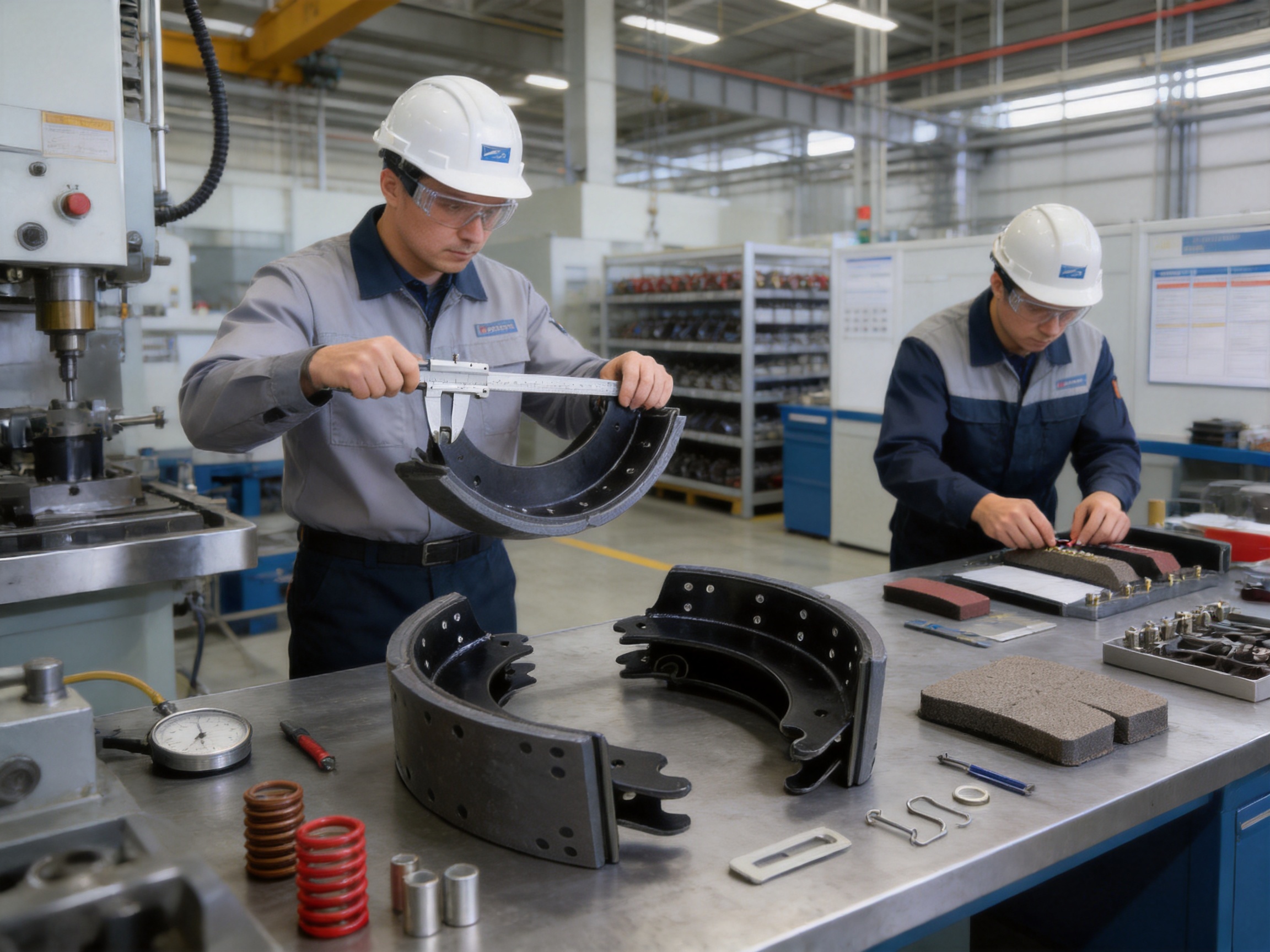
Quality, Safety, and Performance Factors
Brake components are safety-related products, so performance should always be considered within the complete vehicle system. The 4707Q kit can support a professional repair, but its results depend on correct identification, proper installation, suitable drum condition, correct adjustment, and compliance with vehicle and regional requirements.
Friction behavior may vary according to temperature, load, speed, drum condition, lining wear, and adjustment. For this reason, a workshop should follow the applicable bedding-in or burnishing procedure after installation. The purpose of bedding-in is to establish an appropriate contact pattern between the new friction surface and the drum.
Improper adjustment can cause excessive clearance, delayed braking response, overheating, or uneven wear. Excessive drag can also produce heat and accelerate component deterioration. The adjustment system should therefore be inspected and set according to the brake manufacturer’s service requirements.
Drum inspection is equally important. A drum with excessive wear, scoring, cracking, out-of-round condition, or an unsuitable internal surface may prevent the new lining from operating correctly. Replacing the lining without correcting a defective drum may compromise the expected service result.
Environmental conditions should also be considered. Vehicles operating in mountainous regions, urban delivery routes, construction environments, or high-humidity areas may experience different wear patterns. Fleet maintenance intervals should reflect actual operating conditions rather than relying solely on a standard calendar schedule.
Benefits for Different Customer Groups
Fleet Operators
Fleet operators can use the 4707Q repair kit as part of a planned brake maintenance program. A defined part number simplifies purchasing and allows maintenance managers to track consumption by vehicle, axle, depot, and service interval. If suitable shoe cores are available, the repair-kit approach may also help control replacement costs.
Fleets can establish inspection standards for reusable shoe foundations and create a controlled process for relining. This may improve consistency between maintenance locations. It can also help the fleet identify whether premature wear is related to loading, route conditions, adjustment, drum condition, or other system factors.
Brake Repair Workshops
Workshops can benefit from an application-specific kit because it supports a repeatable repair workflow. Once the correct application has been confirmed, technicians can use a known part reference when ordering replacement materials. This reduces the need to search through loosely described universal products.
Workshops should maintain technical records, including the original part number, inspection findings, installation date, and any measurements required by their procedures. Such records can support warranty discussions, customer communication, and future troubleshooting.
Distributors and Importers
Distributors and importers may find the product suitable for aftermarket catalogs serving heavy-duty vehicle customers. The 4707Q designation can be used for inventory control, cross-reference organization, and customer quotations. Clear packaging and documentation are important because customers often rely on distributors to provide both the part and the correct application information.
Distributors should avoid presenting the product as universally interchangeable. A precise application description improves customer confidence and reduces returns caused by incorrect ordering. It is also advisable to request current technical data, packaging specifications, and applicable quality documents before listing the item in a regional catalog.
Vehicle Service Networks
Service networks operating across several locations can use standardized part references to coordinate procurement. A common repair-kit number may help central purchasing departments negotiate supply while allowing local workshops to identify the same component consistently.
Standardization is most effective when supported by training. Technicians should understand inspection requirements, installation procedures, drum checks, adjustment, and post-installation testing. The product is one part of a complete maintenance system, and its benefits are maximized when service quality is consistent.
Product Information Table
| Item | Information |
|---|---|
| Product name | 4707Q Brake Shoe Repair Kit |
| Product category | Lined Brake Shoe Kits |
| Related brake shoe reference | 4515Q/4707Q brake shoe |
| Market focus | Heavy-duty brake parts and heavy truck brake applications |
| Numbering reference | Products are stated to follow the global FMSI numbering system |
| Manufacturer | Zhejiang Bangchi Auto Parts Co., Ltd. |
| Location | Haining, Zhejiang, China |
| Recommended purchasing check | Verify part number, vehicle application, shoe dimensions, drum specification, and service requirements |
Purchasing and Supplier Evaluation Checklist
Purchasers should begin by confirming the exact 4707Q part number and its connection with the 4515Q/4707Q brake shoe application. They should compare the requested application with the vehicle’s existing component and avoid relying only on a general description such as “heavy truck brake shoe.”
The next step is to request the technical information needed for the intended market. This may include product dimensions, lining material information, installation instructions, packaging details, inspection documents, and any available test data. Documentation requirements can vary by country, vehicle type, customer, and regulatory environment.
Purchasers should also evaluate production capacity and delivery reliability. For fleet programs, consistent supply is often as important as the initial product price. A supplier should be able to communicate lead times, minimum order quantities, packaging formats, and batch information clearly.
Quality communication is another important supplier strength. Questions about application, installation, warranty, and product identification should receive precise answers. The manufacturer’s location, contact details, and product specialization should be recorded in the purchasing system so that technical issues can be addressed efficiently.
Finally, purchasers should establish a receiving inspection process. Incoming kits can be checked for correct labeling, visible damage, quantity, part number, packaging integrity, and consistency with the purchase order. This simple process helps prevent incorrect parts from reaching the workshop floor.
Storage and Handling Recommendations
Brake repair kits should be stored in a clean, dry, and protected environment. Excessive moisture can contribute to corrosion, while oil, grease, and chemical contamination can affect friction materials. Products should remain in their original packaging until they are ready for inspection and installation.
Warehouse personnel should avoid placing heavy objects on packages if this could deform the components. Stock should be rotated according to the organization’s inventory procedure. Part numbers and batch information should remain visible so that warehouse staff can select the correct product without opening multiple packages unnecessarily.
Before installation, the kit should be visually inspected for transport damage, contamination, missing components, or incorrect labeling. Any irregularity should be documented and reported before the product is fitted to a vehicle.
Maintenance Advantages Over Unstructured Replacement
Compared with an unstructured approach based on replacing whatever component appears worn, an application-specific repair kit supports a more disciplined maintenance process. It creates a defined reference for the required part, encourages inspection of the reusable shoe foundation, and promotes better records.
This approach can also reduce variation between repairs. If technicians use different generic linings or improvised fasteners for the same brake shoe application, the resulting assemblies may differ in fit and friction behavior. A designated repair kit helps establish a more repeatable service standard.
The repair-kit approach may also provide a sustainability advantage. Reusing an acceptable shoe foundation reduces the need to discard the entire metal carrier. It may lower the material and transportation requirements associated with complete assembly replacement. However, sustainability must never override safety: any shoe that fails inspection should be removed from service.
For large fleets, these advantages can become more significant over time. Small improvements in part selection, inventory control, repair consistency, and service planning may produce meaningful reductions in downtime and maintenance waste across many vehicles.
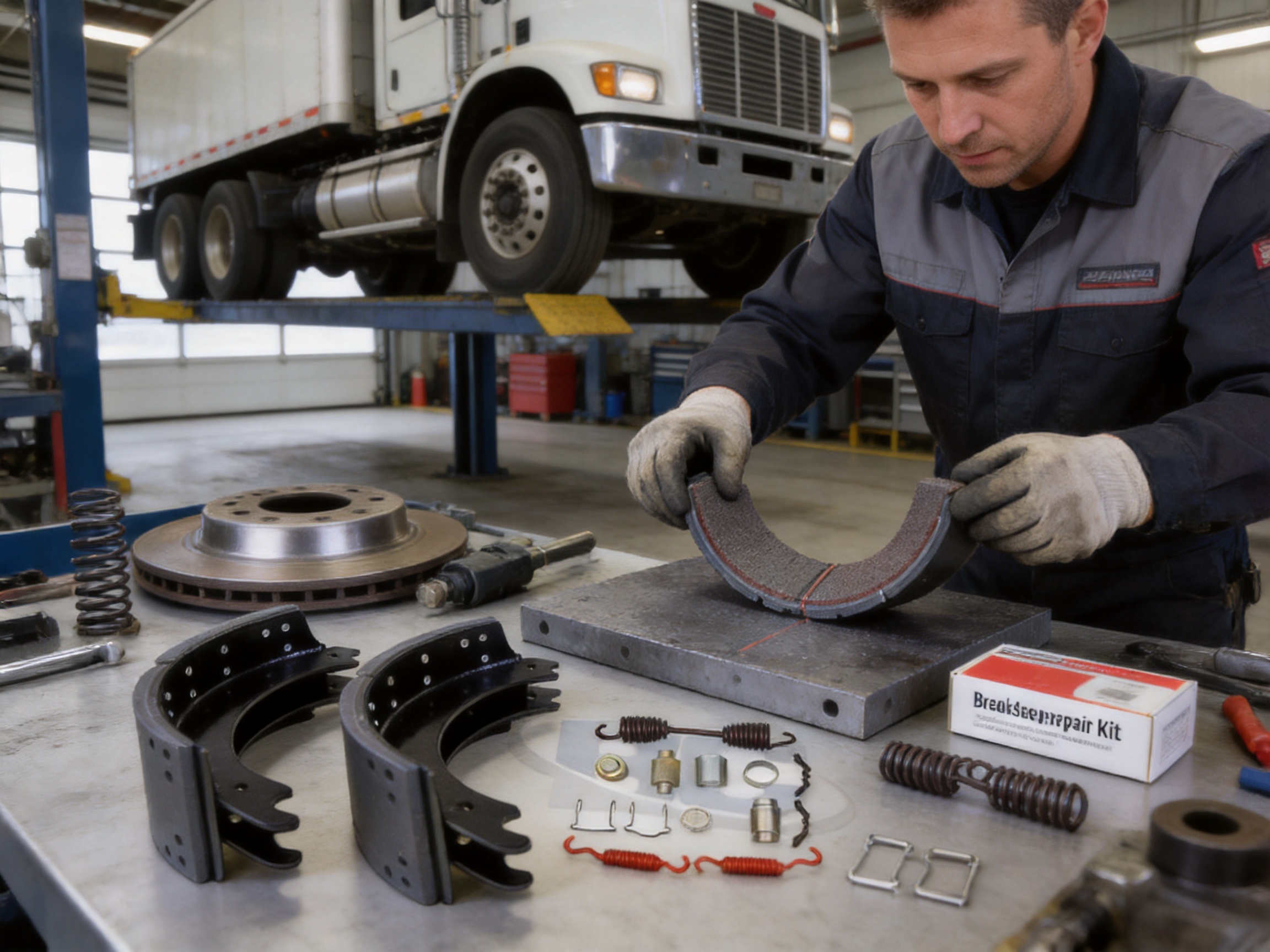
Technical Questions to Discuss with the Manufacturer
Customers should request the latest technical specification for the 4707Q kit before placing a large order. Important questions may include the complete kit contents, lining dimensions, shoe application details, installation method, recommended inspection criteria, packaging quantity, and available quality documentation.
It is also useful to confirm whether the kit is supplied for a particular regional market or vehicle configuration. Commercial vehicle brake systems may vary by axle, drum, braking actuator, and local specification. The product number should therefore be connected to a complete application record.
If a customer intends to develop a private-label, distributor, or fleet program, additional questions may address annual production capacity, sample approval, batch consistency, labeling requirements, and technical support. Clear communication before production and shipment can prevent confusion later.
Frequently Asked Questions
What is the 4707Q Brake Shoe Repair Kit?
The 4707Q Brake Shoe Repair Kit is a lined brake shoe service product associated with the 4515Q/4707Q brake shoe application. It is intended to support professional repair or relining work when the original shoe foundation has been inspected and determined to be suitable for reuse.
What category does the product belong to?
The product belongs to the Lined Brake Shoe Kits category. This identifies it as a repair-oriented kit for a lined brake shoe application rather than a completely universal loose lining product.
Can the kit be used on any heavy truck brake shoe?
No. The 4707Q reference should not be treated as a universal heavy truck brake shoe number. Customers must verify the vehicle application, original component number, shoe dimensions, drum specification, and other relevant details before ordering or installation.
What does the 4515Q/4707Q reference mean?
The product information identifies the kit with the 4515Q/4707Q brake shoe. This reference helps connect the repair kit with the intended shoe family. It should be used alongside vehicle and component verification to confirm suitability.
What is the main advantage of using a repair kit?
The main advantage is that a suitable shoe foundation may be repaired rather than replaced as a complete assembly. This can support lower parts consumption, more efficient maintenance, and better inventory planning. The foundation must pass inspection before reuse.
Does a repair kit eliminate the need for brake inspection?
No. Inspection remains essential. The shoe, lining, drum, springs, adjusters, actuators, seals, and related wheel-end components should be checked. The kit can support a repair, but it cannot compensate for structural damage or defects elsewhere in the braking system.
What should be checked before installing the kit?
The workshop should confirm the part number, inspect the shoe for cracks and deformation, check the shoe arc and contact surfaces, remove contamination, verify the drum condition, and follow the appropriate installation procedure. The final assembly should be checked for secure attachment and correct positioning.
Is the product intended for passenger cars?
The supplied information positions the product within heavy-duty brake parts and heavy truck brakes. Customers should obtain application confirmation before considering it for any vehicle outside the intended commercial vehicle range.
How does FMSI numbering help customers?
FMSI numbering provides a structured reference system for brake friction products. It can help manufacturers, distributors, purchasers, and workshops communicate more clearly about the required component. Numbering still needs to be confirmed against the specific vehicle and brake application.
What makes the product competitive?
The product combines a defined application reference, repair-kit format, heavy-duty market focus, and support from a manufacturer that states it follows the global FMSI numbering system. These features can help customers improve selection accuracy, service planning, inventory organization, and repair consistency.
How should the kit be stored?
The kit should be kept in a clean, dry, protected area in its original packaging until inspection and installation. It should be protected from oil, grease, moisture, chemicals, excessive pressure, and other conditions that may damage or contaminate brake components.
Where can customers request more information?
Customers can contact Zhejiang Bangchi Auto Parts Co., Ltd. through the company’s listed sales and service channels. The supplied contact information includes the email address sfp@zjbangchi.com and telephone numbers +86-133 7230 7977 and +86-0573-87960600. The listed company address is No. 9 Building, No. 11 Qiyi Road, Chang’an Town, Haining, Zhejiang, China.
Conclusion
The 4707Q Brake Shoe Repair Kit is a practical product for professional maintenance of the 4515Q/4707Q brake shoe application. Its greatest value lies in combining application-specific identification with the repair-kit concept, allowing qualified workshops to renew the friction-related service components while evaluating whether the original shoe foundation can remain in use.
For heavy-duty fleets, distributors, and repair centers, the product can support improved inventory control, reduced unnecessary assembly replacement, more consistent relining procedures, and better maintenance documentation. Its relevance to heavy-duty brake parts and heavy truck brakes makes it suitable for commercial vehicle service environments where load, heat, wear, and downtime are important concerns.
The product’s competitiveness is also connected to the manufacturer’s specialized focus. Zhejiang Bangchi Auto Parts Co., Ltd. identifies itself as a heavy-duty brake parts manufacturer and states that its products follow the global FMSI numbering system. This combination of product specialization and structured identification can help international customers manage brake component selection and communication more effectively.
As with every brake component, correct application and professional installation are essential. Customers should verify the part number, inspect the shoe foundation, assess the drum and related hardware, follow approved installation procedures, and conduct suitable post-installation checks. When these steps are followed, the 4707Q repair kit can serve as a useful component in a controlled, economical, and reliable heavy-duty brake maintenance program.
References
1. Product information supplied for the 4707Q Brake Shoe Repair Kit, including the 4515Q/4707Q brake shoe reference and Lined Brake Shoe Kits classification.
2. Manufacturer information supplied for Zhejiang Bangchi Auto Parts Co., Ltd., including its heavy-duty brake parts focus and stated use of the global FMSI numbering system.
3. General workshop principles for inspection, relining, installation, adjustment, and maintenance of heavy-duty drum brake systems.
4. General aftermarket purchasing and inventory-management practices for commercial vehicle brake components.