 English
 简体中文
简体中文
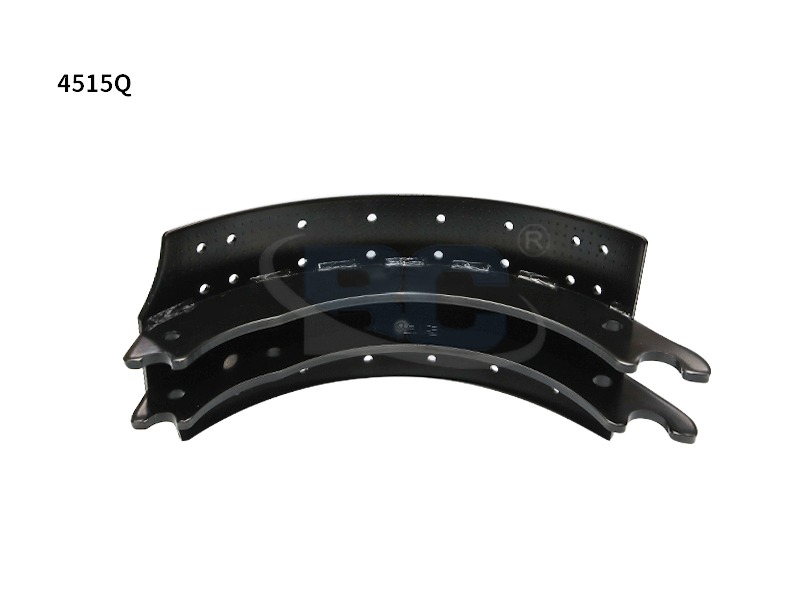
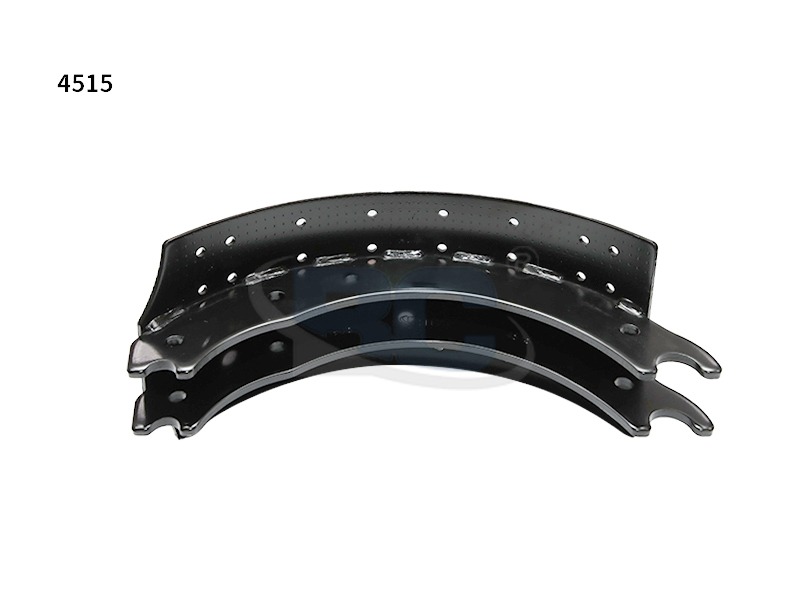
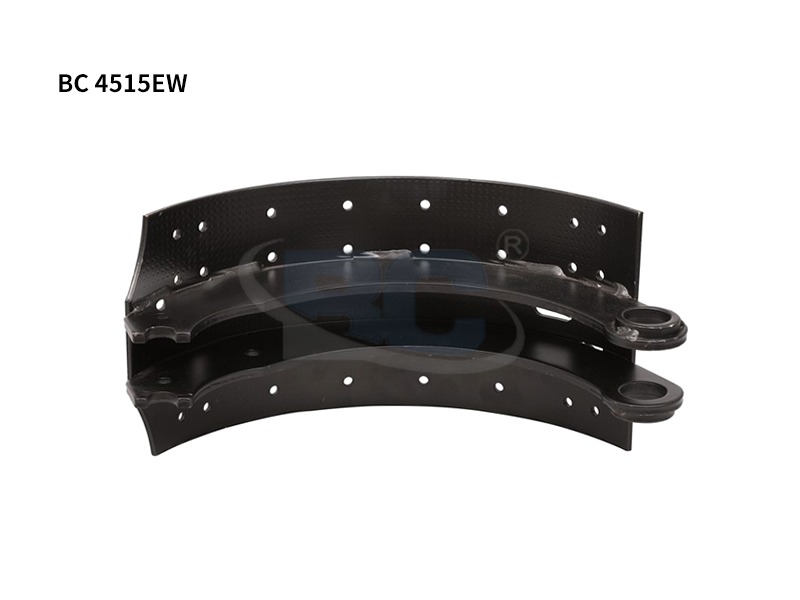
Heavy-duty braking systems demand components that can tolerate repeated loading, high temperatures, vibration, contamination, and the severe operating conditions associated with commercial vehicles. The 4515E Brake Shoe is designed as a steel brake shoe for applications that require dependable mechanical support for a compatible brake lining and consistent interaction with the drum. With a product size listed as 16.5 inches by 7 inches and 32 rivet holes, this brake shoe is positioned for heavy truck and commercial vehicle brake service where dimensional accuracy, structural strength, and repeatable production are essential.
The product is supplied under Part Number 4515EW and is also identified by the alias BC-4515EW-with-ring. It belongs to a broad range of heavy-duty braking products that includes steel brake shoes, cast brake shoes, brake linings, lined brake shoes, brake shoe repair kits, and lined brake shoe kits. This range allows distributors, repair specialists, fleet maintenance teams, and original equipment customers to source related braking components from one experienced manufacturer.
Manufactured by Zhejiang Bangchi Auto Parts Co., Ltd., the 4515E Brake Shoe reflects a product strategy centered on commercial vehicle compatibility, OEM-oriented production, and the global FMSI numbering system. Its design provides a durable foundation for lining installation while supporting efficient replacement and repair operations. For buyers comparing brake shoes from different suppliers, the most important considerations are not only the stated dimensions and hole count, but also manufacturing consistency, fitment control, material discipline, process stability, and the supplier’s ability to support repeat orders.
4515E Brake Shoe
Product Overview
The 4515E Brake Shoe is a steel brake shoe intended to serve as the supporting component within a drum brake assembly. In a typical heavy-duty drum brake system, the brake shoe is positioned inside the brake drum and connected to the vehicle’s actuation mechanism. When the brake system is activated, the shoe moves outward so that the installed friction lining contacts the inner surface of the rotating drum. The resulting friction converts vehicle motion into heat and slows or stops the vehicle.
The brake shoe itself is not normally the primary friction material. Instead, it provides the structural platform that holds the lining in the correct position. This makes the quality of the shoe especially important. If the shoe is distorted, poorly formed, incorrectly drilled, or dimensionally inconsistent, the lining may not contact the drum evenly. Uneven contact can contribute to irregular wear, reduced braking efficiency, noise, vibration, and premature service requirements.
The 4515E model is listed in the Steel Brake Shoe category. Steel construction offers a practical balance of strength, formability, durability, and production efficiency. Compared with poorly controlled low-grade alternatives, a properly produced steel shoe can provide a more stable base for riveting or otherwise securing the brake lining. It can also support consistent fitment across repeat production batches when the forming, machining, hole-making, and inspection processes are properly controlled.
| Product Item | Specification |
|---|---|
| Product Name | 4515E Brake Shoe |
| Part Number | 4515EW |
| Product Category | Steel Brake Shoe |
| Listed Product Size | 16.5 inches by 7 inches |
| Number of Rivet Holes | 32 |
| Product Alias | BC-4515EW-with-ring |
| Intended Market Position | Heavy-duty commercial vehicle brake service and OEM-oriented supply |
| Related Product Categories | Cast brake shoes, brake linings, lined brake shoes, brake shoe repair kits, and lined brake shoe kits |
The listed size should be confirmed against the buyer’s engineering drawings, application records, and vehicle or axle requirements before ordering. The supplied product information states “16.5"*7"mm”; because the notation combines inch marks with millimeters, professional buyers should verify the intended unit convention during technical communication. This simple confirmation can prevent an otherwise avoidable ordering error, especially when several brake shoe profiles share similar dimensions.
Why Steel Brake Shoe Construction Matters
A brake shoe operates in a mechanically demanding environment. It must withstand the force transmitted by the actuator, the reaction force created when the lining contacts the drum, and the repeated thermal and mechanical cycles generated during braking. The shoe must also maintain its shape while the vehicle travels over uneven roads, carries changing loads, and operates in rain, dust, mud, salt, and other contaminants.
Steel is widely used for brake shoe structures because it can be formed into an accurate profile while retaining useful strength and rigidity. A well-designed steel shoe distributes force through its web, rim, anchor areas, and mounting features. The result is a stable foundation for the lining and a component that can function within the original brake assembly geometry.
For the 4515E, the 32-rivet-hole arrangement is an important identifying feature. The hole pattern helps determine lining compatibility and provides the attachment points needed for a complete lined brake shoe assembly. Hole position, diameter, spacing, edge distance, and burr control all influence the quality of the final repair. Even a small deviation can make lining installation difficult or create uneven pressure around the rivets.
Steel construction also supports repair-oriented purchasing. A fleet may purchase bare shoes for lining installation, lined shoes for quicker replacement, or a repair kit for planned workshop maintenance. A manufacturer with a wider product family can help customers select the most appropriate configuration for their maintenance model without changing suppliers for every related component.
Key Advantages of the 4515E Brake Shoe
Stable Structural Support
The principal advantage of the 4515E is its role as a solid structural base for a heavy-duty brake lining. The shoe must retain its profile under repeated actuation and braking loads. A stable shoe helps maintain the intended lining-to-drum relationship and supports predictable brake operation when the complete assembly is correctly installed.
Compared with inconsistent aftermarket products, a controlled steel shoe can reduce the risk of fitting problems caused by incorrect curvature, irregular edges, misplaced holes, or deformation. This is especially valuable for commercial vehicle maintenance, where workshop time and vehicle availability directly affect operating costs.
Defined Rivet-Hole Configuration
The 32-rivet-hole specification gives buyers a clear reference point when comparing compatible linings and repair components. A defined hole count supports application identification and helps technicians prepare the correct lining and rivet set before beginning assembly. It also allows quality personnel to verify a basic feature quickly during incoming inspection.
Consistent hole placement can improve the efficiency of lining installation. When the lining and shoe are properly matched, the technician can align the components with less adjustment, reduce the chance of rejected rivet positions, and achieve more uniform attachment across the shoe. This does not replace professional installation, but it provides a more dependable starting point for the repair process.
Suitability for Heavy-Duty Service
The product is positioned within the heavy-duty brake parts segment, making it relevant to customers who require robust components for trucks and other commercial vehicle applications. Heavy-duty service often involves high gross vehicle weights, frequent braking, long operating hours, steep routes, and demanding fleet schedules. A brake shoe for this environment must be selected according to the complete brake system and the vehicle manufacturer’s requirements.
The 4515E is therefore attractive to buyers who need a replacement shoe with an identifiable part number, a defined dimensional profile, and a manufacturing source capable of supporting commercial quantities. Its value is not based only on the steel material. It comes from the combination of structural design, repeatable hole layout, product identification, and supplier support.
Flexible Supply Options
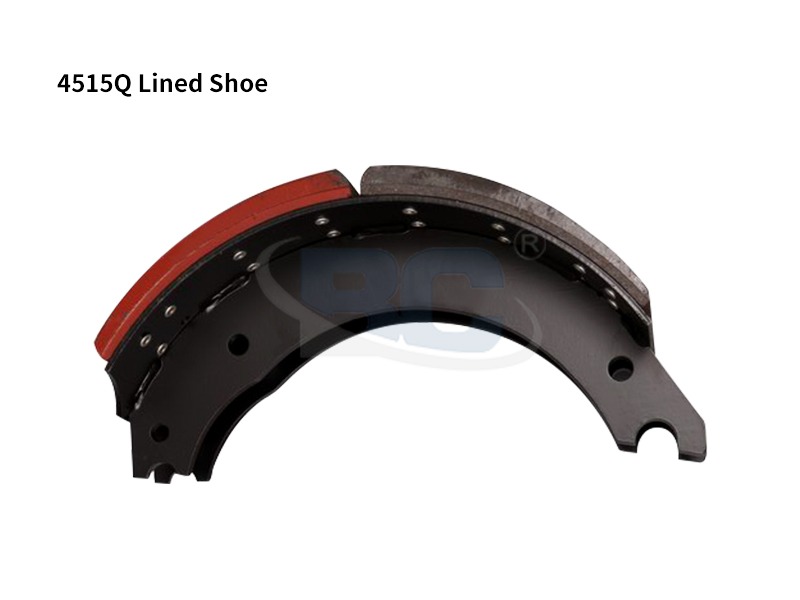
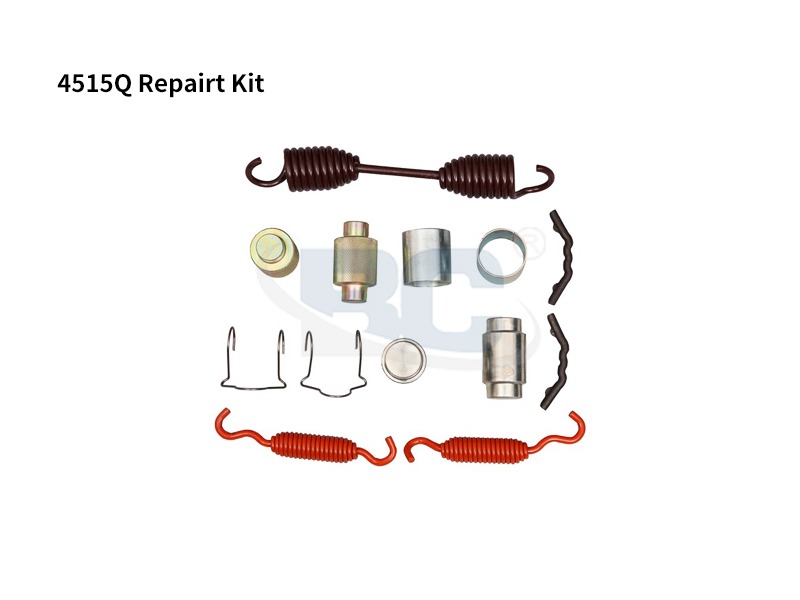
The product family associated with the 4515E includes bare steel brake shoes, cast brake shoes, linings, lined brake shoes, brake shoe repair kits, and lined brake shoe kits. This breadth gives customers several purchasing options. A specialist brake workshop may prefer bare shoes and separate linings, while a fleet maintenance department may choose assembled lined shoes to shorten installation time. A distributor may require multiple formats to meet the different preferences of regional customers.
This flexibility is an advantage over suppliers that offer only one finished configuration. It can simplify sourcing and make it easier to match the product to local workshop practices, inventory policies, and vehicle service requirements.
OEM-Oriented Identification
Zhejiang Bangchi Auto Parts Co., Ltd. states that it provides OEM brake parts following the global FMSI numbering system. Numbering discipline is important in the brake parts industry because part identification must remain clear across manufacturers, distributors, workshops, and vehicle service records. A consistent reference such as 4515EW helps reduce confusion between similar-looking components.
For professional buyers, an identifiable part number also supports purchasing control, inventory management, quotation preparation, and replacement planning. When a fleet records the part number used on a particular axle or vehicle group, future orders can be processed more efficiently, subject to application verification.
Manufacturing Process and Quality Focus
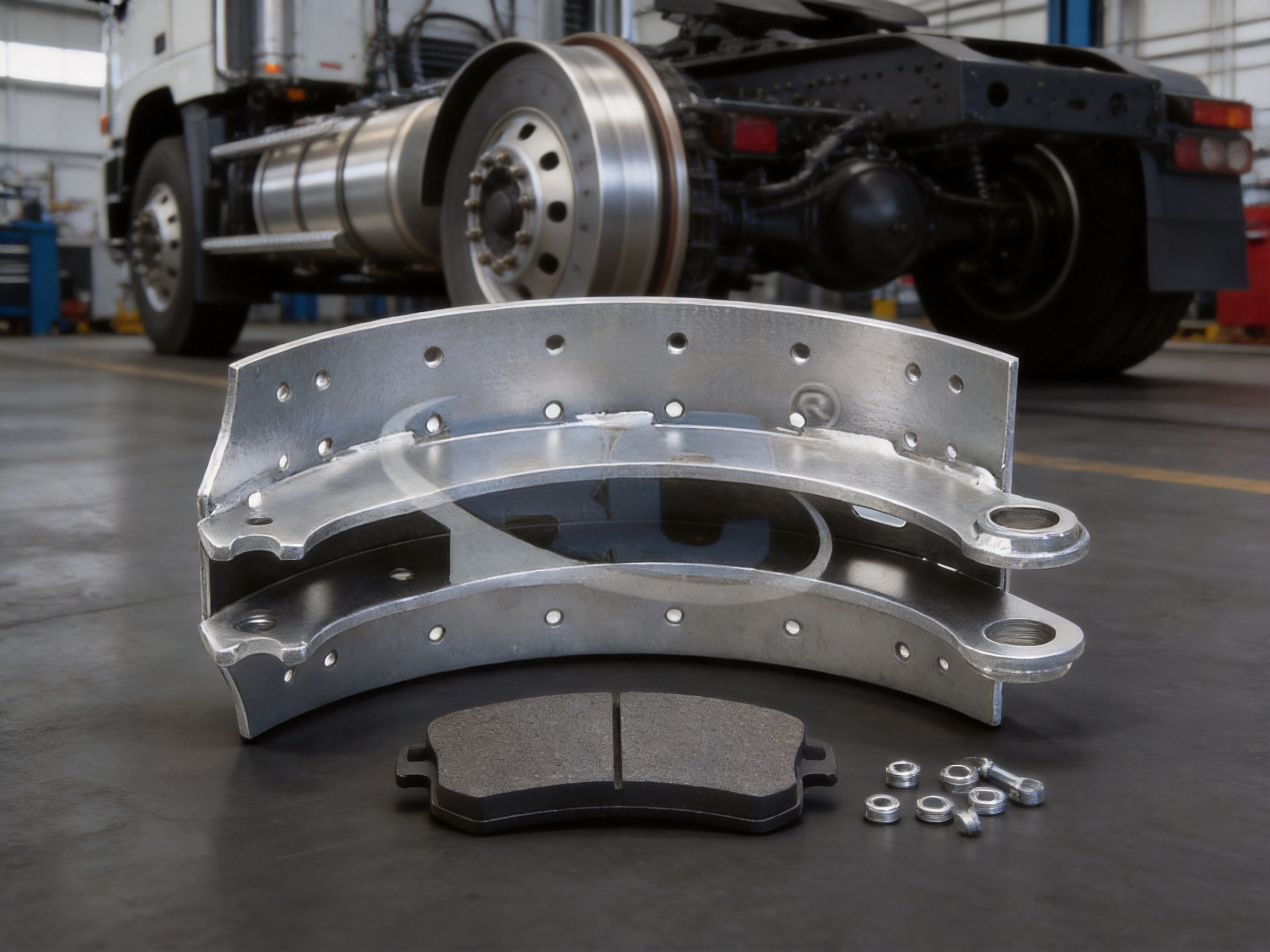
The strength of a brake shoe supplier depends heavily on how consistently the product is manufactured. The raw material, tooling, forming method, hole-making process, dimensional inspection, surface treatment, and final packaging all influence the result delivered to the customer. Although individual production details may vary according to the customer’s specification and factory equipment, a professional manufacturing process for the 4515E should be organized around disciplined control at every stage.
Material Selection and Incoming Inspection
Production begins with the selection of suitable steel material. The material must be compatible with the required forming operations and strong enough for the service conditions of the completed brake shoe. Incoming material control should include verification of dimensions, surface condition, material documentation, and batch identification.
Maintaining batch records helps connect the finished product with its source material. If a question arises during quality review, the manufacturer can investigate the relevant production batch rather than treating every product as an unknown. This form of traceability is valuable for OEM-oriented production and for repeat customers who require stable quality from one order to the next.
Tooling and Profile Forming
The brake shoe profile must be created using tooling that controls the intended shape. Forming operations may include blank preparation, bending, pressing, or other controlled shaping steps depending on the production design. The goal is to achieve the correct curvature, flange position, web geometry, anchor features, and overall profile without introducing unacceptable cracks, folds, distortion, or residual deformation.
Tooling condition is particularly important. Worn dies or poorly maintained fixtures can gradually change the product profile even when the production settings appear unchanged. A strong manufacturing system therefore includes scheduled tooling checks, first-piece approval, in-process measurements, and corrective action when variation approaches the defined limit.
Hole-Making Accuracy
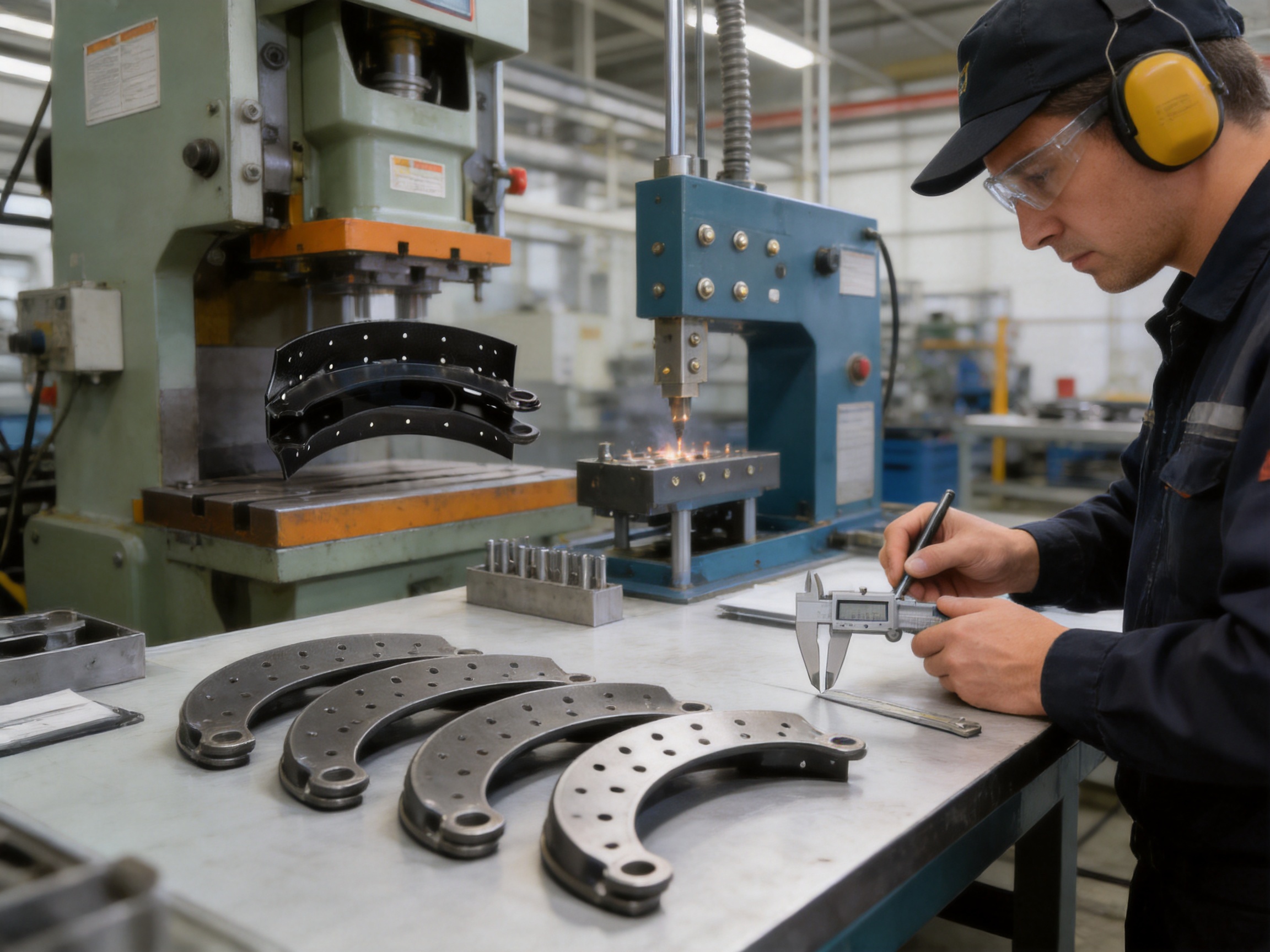
The 32 rivet holes must be produced in a controlled pattern. Hole-making may involve punching, drilling, or a combination of operations selected for the material thickness and production requirements. The process should control hole position, diameter, spacing, edge quality, and burr formation.
Accurate holes help the lining sit correctly on the shoe and support consistent riveting. Excessive burrs can interfere with assembly or create localized stress. Misaligned holes can prevent the lining from seating properly. For this reason, hole inspection should be treated as a functional requirement rather than merely a visual detail.
Modern manufacturing control can combine dedicated fixtures with measuring tools and production documentation. The exact equipment may differ from one factory to another, but the principle remains the same: each critical feature should be defined, measured, and monitored according to the application requirement.
Edge Treatment and Surface Preparation
After forming and hole-making, the shoe may require edge treatment, deburring, cleaning, and surface preparation. These operations improve handling safety, reduce interference during lining installation, and support a more consistent appearance. They also help prevent loose metal particles from entering the brake assembly.
Surface preparation is important before protective finishing. Oil, scale, dust, and other contaminants can reduce coating adhesion or create uneven coverage. A carefully controlled preparation stage supports better corrosion resistance and more consistent product presentation during storage and transportation.
Protective Finishing
Brake shoes may be exposed to humidity, road splash, warehouse condensation, and contaminants before installation. A suitable protective finish can help preserve the steel surface during storage and distribution. The selected finish should be compatible with the product’s intended use and must not interfere with lining attachment or critical fitment surfaces.
For export-oriented supply, packaging and corrosion protection should be considered together. A properly finished component can still be damaged if it is poorly packed, exposed to moisture, or allowed to move excessively inside a shipping carton. Product protection is therefore part of manufacturing quality, not an afterthought.
Final Inspection and Release Control
Before shipment, the 4515E Brake Shoe should be checked against the order specification and approved product data. Typical inspection points include part number, overall dimensions, profile, hole count, hole location, surface condition, visible defects, and packaging identification. The release process should ensure that nonconforming items are separated from approved stock.
Final inspection is most effective when supported by earlier in-process controls. End-of-line checking cannot fully correct a problem that was allowed to continue through multiple operations. Zhejiang Bangchi’s OEM-oriented positioning makes process consistency particularly important because customers may expect repeatable dimensions and stable identification across future orders.
Manufacturing Strengths for Commercial Vehicle Customers
A manufacturer’s strength is measured not only by machinery, but also by the way production, engineering, inspection, and customer communication work together. Heavy-duty brake components require a supplier that understands the relationship between product dimensions, lining fitment, vehicle application, and workshop use.
Product-Family Capability
Zhejiang Bangchi Auto Parts Co., Ltd. offers a product range covering steel brake shoes, cast brake shoes, brake linings, lined brake shoes, brake shoe repair kits, and lined brake shoe kits. This product-family capability can support customers with different levels of assembly and different maintenance requirements.
A distributor can use a broader catalog to build a more complete commercial vehicle brake offering. A repair center can source components for both complete replacement and rebuild work. An OEM-oriented customer can discuss related products with a supplier that already works across several brake component categories. This can reduce communication time and improve consistency in product selection.
Application-Based Communication
Brake shoe selection should not be based on appearance alone. Two shoes can look similar while differing in profile, hole pattern, offset, anchor geometry, or drum compatibility. A manufacturer that requests part numbers, dimensions, drawings, photographs, vehicle information, or sample components is better positioned to reduce application errors.
The 4515EW part number and the 4515E product name provide an initial identification point. Customers should also provide the complete application information when requesting a quotation or confirming an order. This is especially important when the requested size notation requires clarification or when a product is being used in a regional vehicle configuration.
Support for OEM and Replacement Markets
The company’s stated use of the global FMSI numbering system supports both OEM-oriented and replacement-market communication. OEM customers generally require controlled specifications, repeatability, documentation, and dependable production planning. Replacement customers often place greater emphasis on availability, correct identification, packaging, and practical installation.
A supplier that understands both markets can organize products in a way that serves large-volume orders as well as smaller distribution requirements. The 4515E Brake Shoe can therefore be considered for fleet programs, wholesale distribution, service networks, and independent repair operations, provided the application is confirmed.
Export and Commercial Supply Experience
Located in Haining, Zhejiang, China, the company is positioned within one of China’s major manufacturing regions. Its contact information supports direct communication for technical inquiries, quotations, and order coordination. Direct factory communication can be useful for customers that require customized packaging, repeated production schedules, private labeling, technical confirmation, or mixed product orders.
Commercial customers should evaluate a supplier through practical criteria such as response time, sample handling, documentation, packaging quality, lead-time communication, and after-sales cooperation. These factors can be as important as the initial unit price because brake components are safety-related products that must be managed carefully throughout the supply chain.
Comparison with Competing Brake Shoes
When comparing the 4515E with competing brake shoes, buyers should look beyond general statements such as “heavy duty” or “high quality.” A meaningful comparison should include measurable and application-related factors. The following table provides a practical evaluation framework.
| Comparison Factor | 4515E Brake Shoe Consideration | Why It Matters |
|---|---|---|
| Construction | Steel brake shoe structure | Provides a formed support platform for the compatible lining |
| Part Identification | 4515E product name and 4515EW part number | Helps control purchasing, inventory, and application records |
| Rivet Configuration | 32 rivet holes | Supports compatibility checks with the selected lining and rivets |
| Listed Size | 16.5 inches by 7 inches, subject to unit confirmation | Allows dimensional comparison with drawings and existing components |
| Product Range | Related shoes, linings, and repair kits available from the same product family | Supports different workshop and distribution requirements |
| Manufacturing Orientation | OEM brake parts following the global FMSI numbering system | Encourages structured product identification and repeat-order control |
| Inspection Priorities | Profile, hole count, hole position, dimensions, and surface condition | Reduces fitment and assembly risks |
| Customer Use | Heavy-duty commercial vehicle brake service and related supply channels | Matches the needs of fleets, distributors, and repair specialists |
Some competing products may offer a lower purchase price, but the lowest initial price does not always produce the lowest total cost. A shoe that requires rework, causes delayed installation, or does not match the selected lining can create additional labor and downtime. A consistently manufactured product can provide better value when the complete maintenance process is considered.
Other competitors may offer cast brake shoes rather than steel brake shoes. Cast products can have their own application advantages, but they are not automatically interchangeable with a steel shoe. The correct comparison must account for the original system design, lining dimensions, mounting geometry, and vehicle application. The 4515E should be selected where its steel shoe design and specified configuration are appropriate.
Some suppliers may sell a visually similar shoe without clear part numbering or technical identification. This can make future reordering difficult and increase the chance of mixing incompatible components. The 4515EW number, combined with the 4515E name and 32-hole specification, gives buyers a more practical basis for controlled sourcing.
Installation and Workshop Considerations
The 4515E Brake Shoe should be installed only by qualified personnel using procedures appropriate for the vehicle and brake system. Before installation, the technician should compare the replacement shoe with the removed component or approved technical data. The profile, hole pattern, anchor features, and overall dimensions should be verified before the lining is attached or the shoe is placed into the assembly.
If the shoe is supplied without a lining, the lining must be selected specifically for the shoe and brake application. The lining’s length, width, thickness, curvature, material, and hole pattern should be compatible. The 32-hole layout should be matched carefully, and the correct rivet type and installation method should be used.
The shoe should be inspected for transit damage, corrosion, sharp burrs, deformation, or visible manufacturing defects. A damaged component should not be installed merely because the part number appears correct. The technician should also inspect related brake components, including the drum, rollers, anchors, springs, adjusters, and actuating mechanism, because a new shoe cannot compensate for a defective surrounding system.
After assembly, the brake system should be adjusted and tested according to the vehicle manufacturer’s procedure. The completed brake should operate smoothly, and the lining should make appropriate contact with the drum. Any abnormal noise, drag, uneven contact, or excessive travel should be investigated before the vehicle returns to service.
Brake work is safety-critical. The information in this article is intended for product and purchasing understanding and does not replace the vehicle manufacturer’s service instructions, applicable regulations, or the judgment of a qualified brake technician.
Purchasing Guidance for Distributors and Fleets
Confirm the Complete Application
Before ordering the 4515E, buyers should provide the part number, product name, vehicle or axle information, required quantity, and any available drawing or sample reference. The listed product size should be clarified because the source specification combines inch and millimeter notation. Written confirmation is recommended whenever units or dimensions are uncertain.
Define the Supply Format
Customers should specify whether they require bare steel brake shoes, lined brake shoes, repair kits, or related linings. The appropriate format depends on the workshop’s tools, labor capacity, inventory strategy, and local regulations. A fleet with an established lining installation process may prefer bare shoes, while a time-sensitive service network may prefer complete lined assemblies.
Review Packaging Requirements
Brake shoes are heavy metal components that can damage one another if they are allowed to move freely during transportation. Buyers should discuss carton strength, internal separators, corrosion protection, product labels, quantity per carton, pallet configuration, and shipping marks. Clear labeling should identify the product name and part number so warehouse personnel can locate the correct item efficiently.
Plan Repeat Orders
For fleet and distributor customers, repeatability is a major purchasing advantage. Orders should retain the same part number, agreed specification, packaging format, and inspection expectations. A documented purchasing history makes it easier to identify the correct replacement and reduces the possibility of unapproved substitutions.
Evaluate Total Cost
Total cost includes the purchase price, freight, inspection, storage, installation labor, rejected components, and vehicle downtime. A supplier that provides stable production and clear identification may offer better overall value even if another quotation has a lower unit price. Buyers should evaluate the complete supply relationship rather than comparing a single number.
Maintenance and Service-Life Considerations
The service life of a brake shoe depends on many factors beyond the shoe itself. Vehicle weight, road conditions, driver behavior, braking frequency, drum condition, lining material, brake adjustment, axle configuration, and maintenance quality all influence wear. The 4515E should therefore be used as part of a complete brake system that is inspected and maintained according to the applicable service schedule.
Regular inspection can identify uneven lining wear, loose attachment, corrosion, deformation, cracked components, damaged hardware, or excessive drum wear. Early detection helps prevent secondary damage and allows the fleet to plan repairs before a vehicle experiences an unexpected service interruption.
Correct adjustment is especially important for drum brakes. Excessive clearance can increase pedal travel and reduce braking response, while insufficient clearance can create drag and unnecessary heat. Adjustment procedures must follow the vehicle or axle manufacturer’s instructions, and technicians should never attempt to correct a system problem by modifying the brake shoe without approved engineering guidance.
Storage also affects product condition. Brake shoes should be kept in a clean, dry area, protected from water and corrosive chemicals, and stored in a way that prevents bending or impact damage. The part number should remain visible throughout storage so that stock rotation and application control can be maintained.
Environmental and Operational Value
Reliable replacement components can contribute to more efficient fleet operations by reducing avoidable rework and improving maintenance planning. When a brake shoe fits correctly and is supplied with clear identification, technicians can spend less time resolving basic compatibility questions. Better planning can reduce vehicle downtime and support more predictable service intervals.
Steel brake shoes may also be considered within a responsible end-of-life process because steel is a widely recyclable material. Recycling decisions should follow local waste-handling requirements and should account for any attached lining, coating, or contamination. Workshop personnel should manage removed components according to applicable environmental and occupational safety rules.
Product durability and manufacturing consistency support resource efficiency. A component that performs reliably within its intended application may reduce premature replacement and unnecessary workshop consumption. However, durability should always be evaluated together with correct vehicle selection, professional installation, and proper brake maintenance.
Quality Assurance Questions for Professional Buyers
Professional buyers can improve sourcing decisions by asking focused technical and commercial questions before placing an order. These questions help confirm whether a supplier can support the required application and production volume.
Is the 4515EW part number matched to the requested 4515E product specification?
Does the product have 32 rivet holes in the required pattern and dimensions?
What unit system applies to the listed 16.5-inch by 7-inch size?
Can the supplier provide a drawing, inspection record, or sample for approval?
What steel material and protective finish are used for the requested order?
Are bare shoes, lined shoes, repair kits, and compatible linings available?
How are production batches identified and inspected?
What packaging method is used to prevent impact and corrosion during shipment?
Can the supplier support repeat orders with consistent specifications?
What information is required to confirm vehicle and axle compatibility?
These questions do not replace the customer’s own technical approval process. They help create a clear exchange of information between the buyer and manufacturer. For a safety-related product, written specification confirmation is preferable to relying only on a product photograph or a general description.
Frequently Asked Questions
What is the 4515E Brake Shoe?
The 4515E Brake Shoe is a steel brake shoe intended to provide structural support for a compatible drum brake lining. It is listed under Part Number 4515EW and is associated with heavy-duty commercial vehicle brake applications.
How many rivet holes does the product have?
The product information specifies 32 rivet holes. Buyers should confirm the complete hole pattern, including spacing and diameter, against the intended lining and brake application before ordering.
What size is the 4515E Brake Shoe?
The supplied specification lists the product size as 16.5 inches by 7 inches. Because the original notation combines inch marks with millimeters, customers should confirm the exact unit convention and dimensional drawing with the supplier before purchase.
Is the 4515E supplied with a brake lining?
The listed product is categorized as a Steel Brake Shoe, so the base product should be treated as a shoe unless the order specifically states that it is a lined brake shoe or kit. Zhejiang Bangchi Auto Parts Co., Ltd. also lists brake linings, lined brake shoes, brake shoe repair kits, and lined brake shoe kits among its related product categories.
What is the difference between a steel brake shoe and a cast brake shoe?
A steel brake shoe is formed from steel and is designed around the required shoe profile and mounting features. A cast brake shoe is produced through a casting process and may have different material characteristics and application requirements. Neither type should be substituted for the other without confirming compatibility with the original brake system.
Can the 4515E be used for every heavy truck?
No. Heavy-duty vehicles use many different brake dimensions, drum configurations, shoe profiles, and lining patterns. The 4515E must be matched to the correct vehicle, axle, drum, lining, and application data. The part number and dimensions should be verified before installation.
Why is the 32-hole specification important?
The hole count is an important compatibility feature for lining attachment. It helps buyers and technicians compare the shoe with the intended lining and rivet arrangement. Hole count alone is not sufficient; hole location, diameter, shoe profile, and other dimensions must also match.
What advantages does OEM-oriented numbering provide?
OEM-oriented numbering helps customers identify products, manage inventory, prepare repeat orders, and communicate with distributors and workshops. The manufacturer states that it follows the global FMSI numbering system for OEM brake parts, which supports more structured product identification.
What manufacturing qualities should buyers look for?
Buyers should look for controlled material selection, accurate forming, consistent hole-making, effective deburring, suitable surface protection, final dimensional inspection, clear batch identification, and secure packaging. These factors collectively influence fitment, installation efficiency, and repeat-order consistency.
How should the product be stored?
The brake shoe should be stored in a clean, dry environment protected from moisture, corrosive chemicals, impact, and deformation. Product labels and part numbers should remain visible so that stock can be identified and rotated correctly.
Who should install the brake shoe?
Installation should be performed by qualified brake technicians using the vehicle or axle manufacturer’s service procedures. Because braking systems are safety-critical, untrained personnel should not attempt installation, lining attachment, adjustment, or testing.
How can customers contact the manufacturer?
Zhejiang Bangchi Auto Parts Co., Ltd. is located at No. 9 Building, No. 11 Qiyi Road, Chang’an Town, Haining, Zhejiang, China. The listed contact details include the email address sfp@zjbangchi.com, telephone number +86-133 7230 7977, office telephone +86-0573-87960600, and fax number +86-0573-87960639.
Conclusion
The 4515E Brake Shoe is a clearly identified steel brake shoe for heavy-duty drum brake service, supplied under Part Number 4515EW and specified with 32 rivet holes. Its value lies in its structural role, defined attachment configuration, commercial vehicle positioning, and integration into a broader range of brake shoes, linings, and repair kits.
Compared with poorly identified or inconsistently manufactured alternatives, the product offers buyers a more organized basis for application confirmation, inventory control, and repeat purchasing. Its steel construction provides a practical foundation for a compatible lining, while its listed dimensions and hole count support technical comparison with approved brake system data.
Zhejiang Bangchi Auto Parts Co., Ltd. strengthens this product offering through its OEM-oriented approach, use of global FMSI numbering principles, and wider heavy-duty brake product range. The company’s manufacturing strength should be evaluated through the complete process: material control, profile forming, accurate hole-making, surface preparation, protective finishing, inspection, packaging, and customer communication.
For the best result, buyers should confirm the size units, hole pattern, vehicle application, lining compatibility, supply format, and inspection requirements before ordering. When correctly selected, professionally installed, and properly maintained, the 4515E Brake Shoe can serve as a dependable component within a commercial vehicle drum braking system.
References
1. Product specification supplied for the 4515E Brake Shoe, including Part Number 4515EW, listed dimensions, rivet-hole count, product category, and product alias.
2. Zhejiang Bangchi Auto Parts Co., Ltd. company information and product-category data supplied for this article.
3. Global FMSI brake part numbering principles as referenced in the manufacturer’s OEM product description.
4. General engineering principles for commercial vehicle drum brake construction, brake shoe support, lining attachment, and dimensional fitment.
5. General workshop practices for brake component inspection, installation, adjustment, storage, and maintenance.