 English
 简体中文
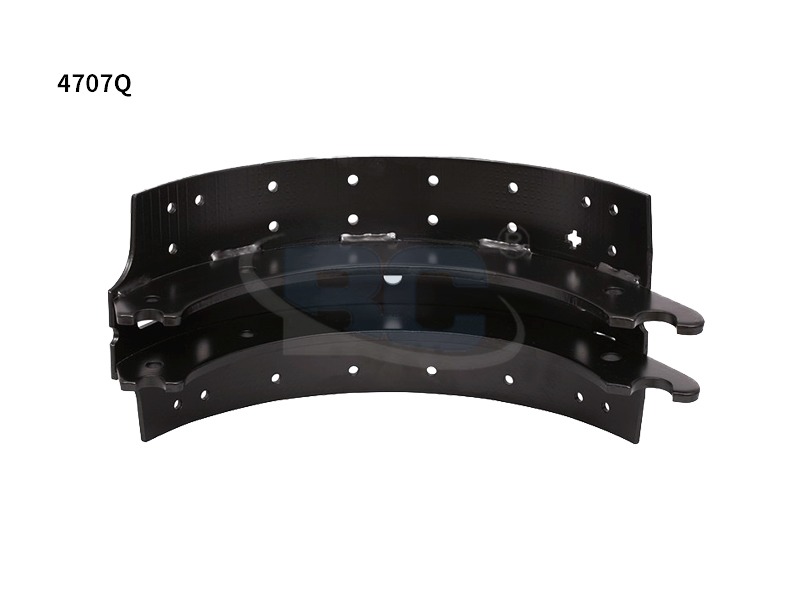
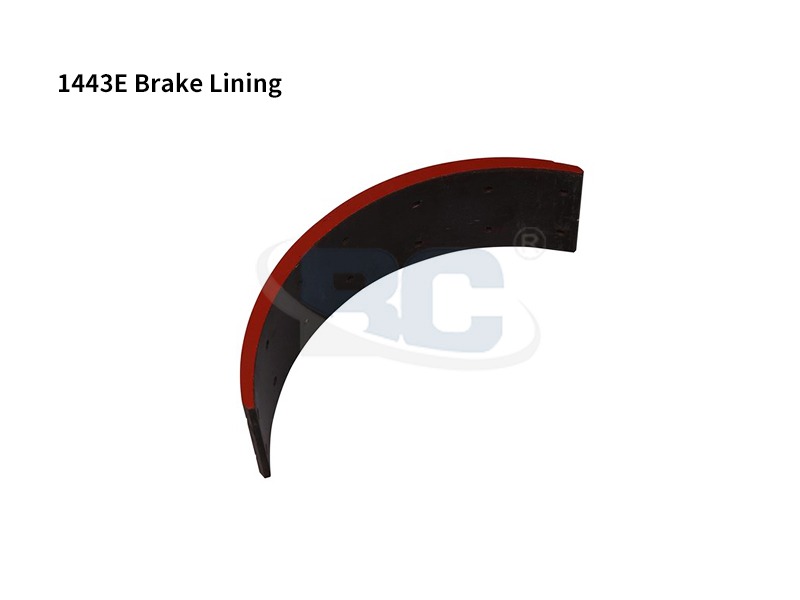
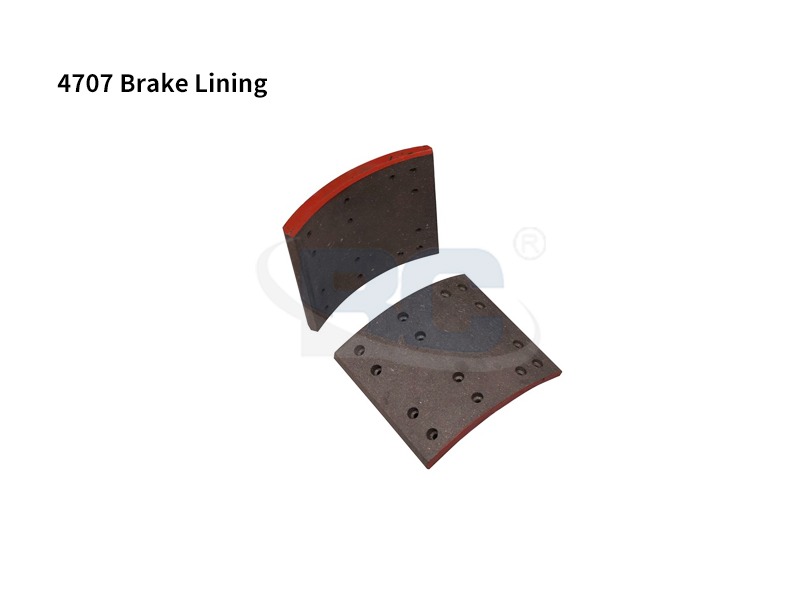
The 4707 brake lining is a heavy-duty friction component designed for commercial vehicle brake systems that require dependable stopping performance, stable fitment, and consistent service behavior. With a product size of 16.5 inches by 7 inches and a configuration of 14 or 16 rivet holes, this lining is intended to support replacement and maintenance applications where correct dimensions and mounting accuracy are essential.
Brake linings operate in one of the most demanding areas of a vehicle. They must generate friction against a brake drum while tolerating heat, pressure, vibration, moisture, dust, and repeated mechanical loading. A lining that appears suitable by size alone may still create problems if its curvature, hole pattern, thickness, material consistency, or surface preparation does not meet the requirements of the brake assembly. For that reason, the value of a heavy-duty brake lining depends not only on the friction material itself, but also on engineering control, forming accuracy, drilling precision, and production consistency.
The 4707 Brake Lining combines a recognized part-number reference with a practical heavy-duty format. Its listed WVA numbers, 19030 and 19033, provide additional identification support for distributors, workshops, fleet maintenance departments, and purchasing teams. This identification structure helps reduce confusion during component selection and supports more efficient sourcing across markets that use different cataloging systems.
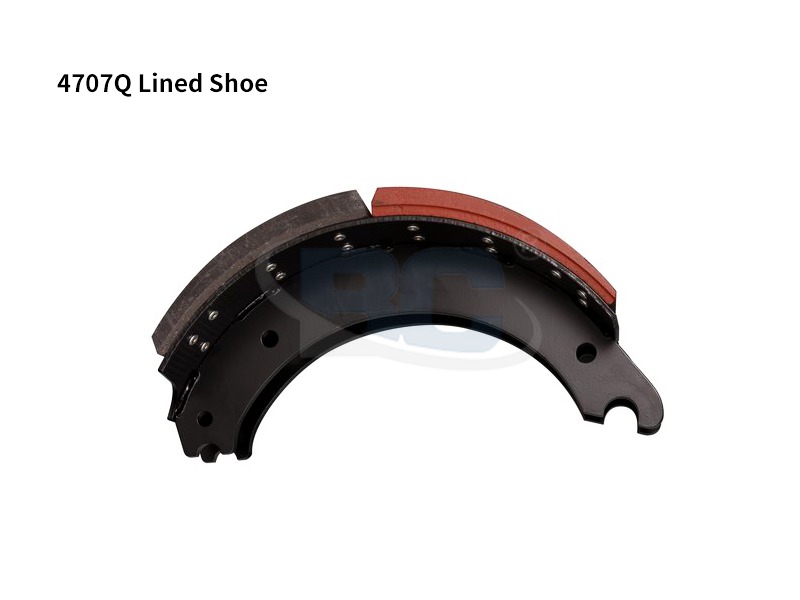
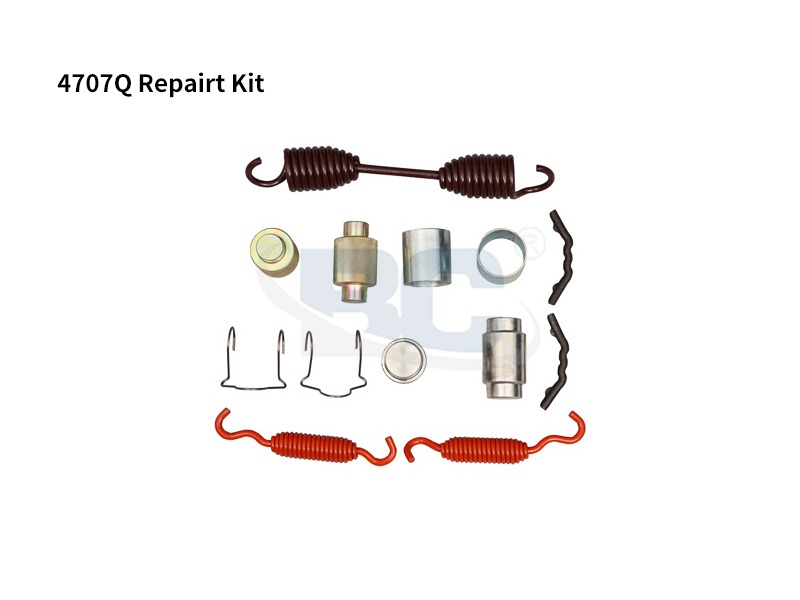
Manufactured by Zhejiang Bangchi Auto Parts Co., Ltd., the product is positioned within a broader range of heavy-duty brake components that includes steel brake shoes, casted brake shoes, brake linings, lined brake shoes, brake shoe repair kits, and lined brake shoe kits. This product range gives customers the option to source either individual friction components or more complete brake service assemblies according to their maintenance requirements.
4707 Brake Lining
Product Overview
The 4707 Brake Lining is a replacement friction lining for heavy-duty brake applications. Its principal specifications are straightforward and useful for initial product identification:
| Specification | Details |
|---|---|
| Product name | 4707 Brake Lining |
| Product category | Brake Lining |
| Product size | 16.5 inches by 7 inches |
| Rivet-hole configuration | 14 or 16 holes |
| WVA reference | 19030 / 19033 |
| Application focus | Heavy-duty and commercial vehicle brake service |
| Available product family | Brake linings, brake shoes, lined brake shoes, and repair kits |
The listed dimensions provide a starting point for compatibility checks. However, professional installation should also verify the complete brake assembly, including the shoe profile, drum dimensions, lining thickness, rivet spacing, lining radius, operating position, and vehicle-specific requirements. A qualified technician should confirm all application details before installation.
The 14-hole and 16-hole configurations are particularly important because rivet-hole count affects the way the lining is secured to the brake shoe. The correct pattern allows the lining to sit evenly against the shoe, distributes clamping force over the friction component, and supports a stable connection during repeated braking cycles. Selecting the correct hole configuration is therefore an important part of ensuring service reliability.
Why Heavy-Duty Brake Linings Require Specialized Engineering
Commercial vehicles and heavy-duty equipment place greater demands on braking systems than many passenger vehicles. A loaded truck has a substantially higher operating mass, and that mass must be converted into heat whenever the vehicle slows. Repeated stops, downhill operation, frequent loading cycles, and high ambient temperatures can all increase the stress placed on the brake lining.
A heavy-duty lining must perform under changing conditions rather than under a single laboratory event. It may be required to provide stable friction during a cold start, after long periods of operation, in wet conditions, and during repeated braking events. It must also resist excessive wear and remain securely attached to the brake shoe throughout its service life.
These requirements make production discipline essential. The raw materials must be blended consistently. The friction compound must be formed with controlled pressure and temperature. The finished lining must maintain its intended geometry after curing. Rivet holes must be placed accurately, and the product must be checked for defects that could affect installation or operation.
A high-quality brake lining is therefore the result of coordinated material engineering and manufacturing control. It is not enough to produce a component that looks correct. The component must retain its shape, maintain appropriate surface contact with the drum, and support predictable brake response under practical operating conditions.
Heat management
During braking, friction converts kinetic energy into thermal energy. If heat is generated faster than it can be released, the lining and drum may experience elevated temperatures. Excessive heat can affect friction behavior, accelerate wear, and place additional stress on other brake components.
The 4707 format is intended for heavy-duty brake service, where thermal stability is a central consideration. A properly manufactured lining should provide consistent contact across the working surface and help the brake assembly manage the heat produced during normal braking. Product selection, installation, drum condition, vehicle loading, and maintenance practices all influence final thermal performance.
Mechanical attachment
Rivets provide the mechanical connection between a brake lining and a brake shoe. The hole pattern must correspond to the shoe, and the lining must be formed so that it sits correctly without excessive gaps or forced distortion. Incorrect hole alignment can make installation difficult and may lead to uneven loading or premature damage.
The availability of both 14-hole and 16-hole configurations allows the 4707 product reference to address more than one installation format. This flexibility can be useful for distributors and repair professionals, but the exact configuration must be confirmed against the original component or the approved application information.
Wear control
Brake lining wear is influenced by many variables, including vehicle mass, driving conditions, braking frequency, drum condition, adjustment accuracy, alignment, and friction-material composition. A well-controlled lining should wear progressively rather than shedding material irregularly or developing localized damage.
Predictable wear supports maintenance planning. Fleet operators can inspect brake components at planned intervals, identify approaching replacement requirements, and reduce the risk of unexpected downtime. Consistent wear also helps protect the brake drum and supports more uniform braking behavior across an axle or vehicle.
Key Advantages of the 4707 Brake Lining
Accurate dimensional reference
The 16.5-inch by 7-inch product size gives buyers a clear initial reference when comparing replacement linings. Clear dimensional information simplifies product identification and helps purchasing teams narrow their selection before checking detailed application data.
Dimensional accuracy is especially important for curved brake linings. A lining that is too large, too small, incorrectly radiused, or inconsistent from one end to the other may not seat properly on the brake shoe. Accurate forming helps the component make stable contact with the shoe and supports a more uniform working relationship with the drum.
Flexible rivet-hole selection
The 14-hole and 16-hole options provide practical flexibility for brake repair operations. Workshops often service vehicles with different brake-shoe designs, and a lining that is available in the required hole pattern can reduce the need for extensive modification or special sourcing.
Hole-count flexibility also supports distributor inventory planning. Instead of relying on a single generic component, distributors can identify the appropriate configuration according to customer demand and application requirements. This improves order accuracy and can shorten the time required to locate a suitable replacement.
Recognized identification support
The WVA references 19030 and 19033 provide an additional method of cross-referencing the product. In international brake-component markets, part numbers, WVA references, vehicle catalogs, and original-equipment references are often used together. Including more than one identification method helps reduce the risk of selecting a visually similar but technically different lining.
Identification accuracy is particularly valuable for export customers. Product names may vary between regions, while standardized or widely recognized numbering systems provide a more stable basis for communication. The listed part number and WVA references can therefore support smoother cooperation between manufacturers, importers, wholesalers, and repair businesses.
Suitability for heavy-duty maintenance
The product is designed around the needs of heavy-duty brake maintenance, where durability and dependable fit are major purchasing considerations. It is suited to professional replacement work in which the original lining has reached its wear limit or the brake shoe assembly requires refurbishment.
By offering the lining as an individual component, the product can be used in repair programs where the existing brake shoe remains serviceable. This may be more economical than replacing the entire shoe assembly, provided that the shoe is inspected and confirmed to be suitable for relining.
Integration with a broader component range
The 4707 Brake Lining forms part of a product range that includes complete and semi-complete brake solutions. Customers may be able to source steel brake shoes, casted brake shoes, lined brake shoes, repair kits, and lined brake shoe kits from the same manufacturing partner.
This broader range can simplify procurement. A fleet maintenance department may require individual linings for some vehicles, complete lined shoes for others, and repair kits for specific workshop operations. A supplier with multiple product categories can help customers coordinate specifications, packaging, documentation, and replenishment schedules across different maintenance requirements.
Manufacturing Process and Quality-Oriented Production
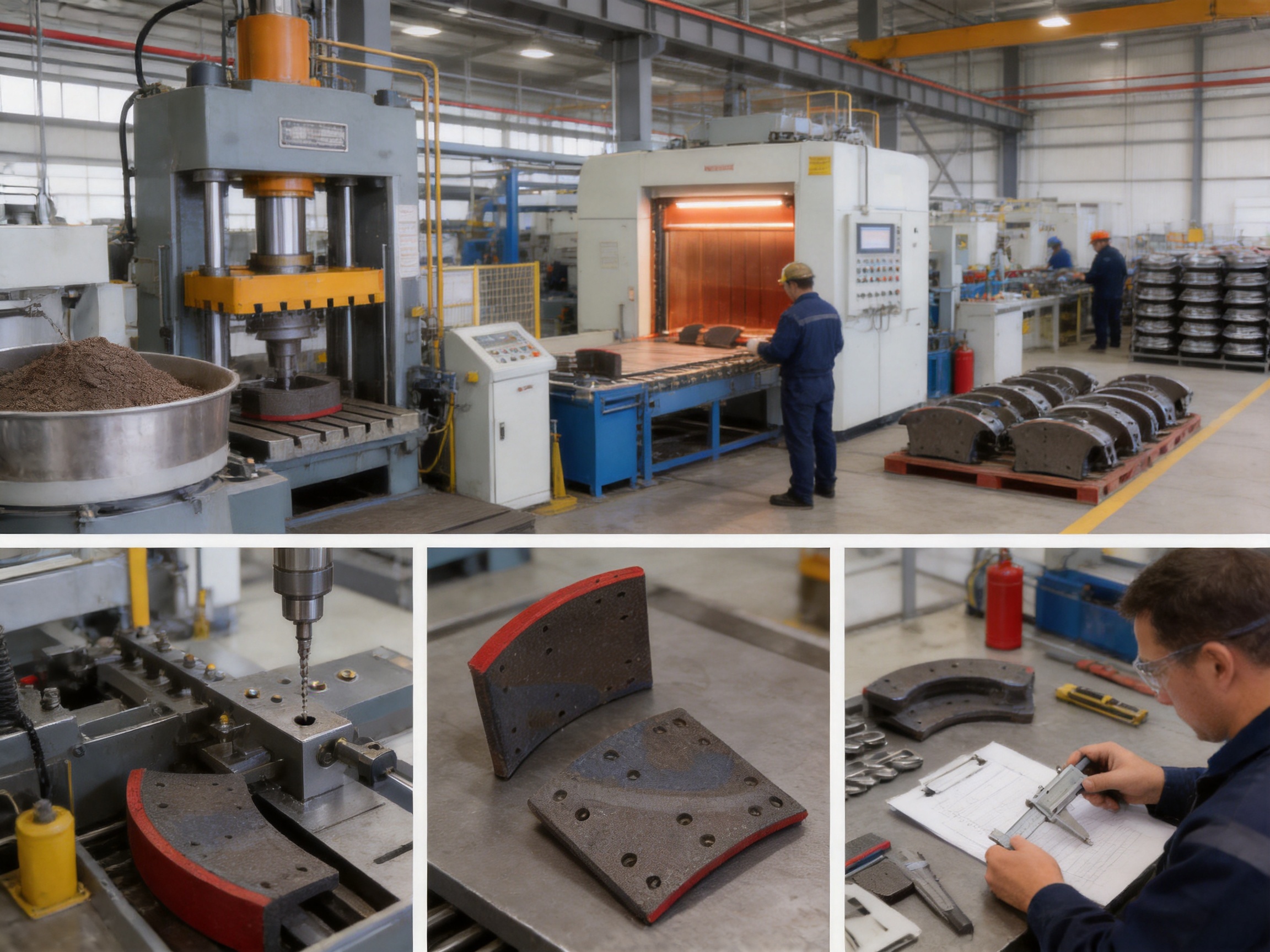
The performance of a brake lining depends heavily on how it is manufactured. Advanced manufacturing is not limited to a single machine or production stage. It includes material preparation, process control, forming, curing, machining, drilling, inspection, packaging, and traceability.
A professional brake-component manufacturer must control the product from incoming materials to final shipment. Each stage can influence the final result. Material variation may affect friction behavior. Uneven forming may affect contact with the drum. Inaccurate drilling may complicate riveting. Poor finishing may leave sharp edges or surface defects. Strong process management reduces these risks.
Material preparation
Brake-lining compounds are normally produced from a carefully selected combination of friction modifiers, reinforcing materials, binders, fillers, and other functional ingredients. The exact formulation is selected according to the intended application and performance objectives.
Consistent weighing and controlled mixing are essential. If the distribution of ingredients is uneven, different areas of the same lining may respond differently to heat and pressure. Controlled batching and thorough blending help produce a more uniform friction material across the finished component.
Material preparation also requires attention to storage conditions. Moisture, contamination, improper temperature, or extended storage outside the recommended conditions can affect processing behavior. Organized material handling helps protect consistency before the compound enters the forming stage.
Forming and compression
After material preparation, the friction compound is formed into the required lining shape. Controlled pressure helps achieve the intended density and geometry. For a curved lining, the forming process must maintain the correct arc so that the component can be mounted securely on the brake shoe.
Pressing parameters influence the final structure of the material. Consistent pressure, mold condition, and cycle control help reduce variation between production batches. Process monitoring is especially important for heavy-duty components because the lining must remain stable under repeated mechanical and thermal stress.
Curing and thermal control
Curing allows the binder system to develop the structure required for the finished friction material. Temperature, time, and pressure must be controlled according to the material formulation and product design. Inadequate curing may reduce structural stability, while excessive or uneven curing can affect material behavior.
Modern production management focuses on repeatability. Rather than treating each batch as an isolated operation, a quality-oriented factory establishes controlled parameters and checks whether the process remains within the intended range. This approach supports consistent output and makes it easier to investigate any unusual result.
Surface treatment and finishing
Once the lining has been formed and cured, finishing operations may be used to achieve the required dimensions, edge condition, and surface characteristics. Accurate finishing helps the lining sit correctly against the brake shoe and supports proper contact with the drum after installation.
Edges must be handled carefully. Excessive sharpness, burrs, cracks, or dimensional irregularities can complicate assembly and may create stress concentrations. Controlled finishing and visual inspection help identify problems before the product reaches the customer.
Rivet-hole drilling
Drilling the correct number and location of rivet holes is a critical production stage for the 4707 Brake Lining. The 14-hole and 16-hole versions must follow their intended patterns accurately. The holes should be positioned to correspond with the brake shoe and should be free from defects that could interfere with riveting.
Computer-controlled or guided drilling equipment can improve repeatability by maintaining consistent spacing and alignment. Process checks should confirm hole count, hole position, diameter, and edge condition. These checks are important because a small positional error can become more significant when multiple holes must align with a used or replacement shoe.
Dimensional inspection
Inspection should verify the main product dimensions, including length, width, thickness, curvature, hole pattern, and overall appearance. Measuring equipment must be appropriate for the component and maintained in suitable condition.
Dimensional inspection is not simply a final administrative step. It provides feedback about the forming, curing, and finishing processes. If measurements begin to drift, corrective action can be taken before a larger quantity of product is affected.
Traceability and process records
Manufacturing records help connect a finished product with its production batch, material inputs, process settings, and inspection results. Traceability supports internal quality improvement and provides a useful foundation for customer service.
For international customers, organized records can also support communication about product specifications, packaging, shipment quantities, and repeat orders. Consistent documentation reduces ambiguity and helps ensure that future deliveries match previously approved requirements.
Manufacturing Strengths That Support Competitive Value
In the heavy-duty replacement market, competitive value is created through a combination of product performance, manufacturing consistency, application knowledge, and service responsiveness. A lower purchase price alone does not guarantee a lower total cost. If a lining is difficult to install, wears unevenly, creates service complaints, or causes unplanned downtime, the apparent saving may disappear.
The manufacturing strengths associated with the 4707 Brake Lining are centered on controlled production and product-family capability. The ability to produce brake linings alongside steel brake shoes, casted brake shoes, lined brake shoes, and repair kits gives the manufacturer experience across connected stages of the braking system.
Component-system understanding
A brake lining does not operate independently. It works with a brake shoe, rivets, a drum, an actuator, adjustment hardware, and the vehicle’s broader braking system. Experience with multiple brake-component categories supports a more complete understanding of how these parts fit together.
This system perspective can be valuable when developing replacement products. The lining must be made not only to a nominal size, but also to a practical shape that supports assembly and operation. Cooperation between product categories may help improve compatibility and make it easier to offer complete service solutions.
Support for OEM-style numbering
The company’s stated product strategy follows the global FMSI numbering system for OEM brake parts. Numbering-system awareness is valuable for export markets because it gives customers a structured way to identify components without relying only on photographs or informal descriptions.
Accurate identification is one of the most effective ways to reduce replacement errors. A professional supplier should encourage buyers to compare all available references, including part number, WVA number, dimensions, rivet-hole configuration, vehicle application, and original component details.
Production scalability
Heavy-duty brake customers may include independent repair shops, regional distributors, fleet operators, and importers. These customers often have different order patterns. Some require a small quantity for urgent maintenance, while others need repeated bulk deliveries for inventory programs.
A structured manufacturing operation can respond more effectively when it has standardized processes, organized tooling, and clear product records. Scalable production does not mean sacrificing control. It means using repeatable procedures so that larger quantities can be produced with consistent specifications.
Customization awareness
Commercial vehicle markets differ by region. Customers may request different packaging formats, labeling, language requirements, product combinations, or order quantities. A manufacturer with experience serving international buyers can better understand these operational differences.
Any customization should be confirmed technically and commercially before production. The core product specifications, including size and rivet-hole configuration, must remain clear so that packaging or labeling changes do not create application confusion.
Comparison with Generic or Poorly Controlled Alternatives
The 4707 Brake Lining offers several practical advantages over generic alternatives that provide incomplete identification or limited configuration information. A generic product may list only a broad vehicle type without stating the exact dimensions, hole count, or cross-reference numbers. This creates additional work for the buyer and increases the possibility of ordering the wrong component.
Clear product information is the first advantage. The 4707 reference, 16.5-inch by 7-inch size, 14/16 rivet-hole options, and WVA 19030/19033 references give professional customers several points for verification.
The second advantage is configuration awareness. Because rivet-hole count is specifically identified, the buyer can distinguish between two potentially different installation formats. This is more useful than a generic description such as “heavy truck brake lining,” which may not provide enough information for accurate selection.
The third advantage is manufacturing consistency. Poorly controlled friction components may show variation in thickness, curvature, hole location, or surface quality. A process-oriented manufacturer can reduce these issues through controlled batching, forming, curing, drilling, and inspection.
The fourth advantage is supply breadth. Customers who need a complete brake shoe, a repair kit, or a separate lining can work within one product family instead of coordinating multiple unrelated suppliers. This may simplify purchase orders, inventory management, technical communication, and after-sales support.
These advantages should not be interpreted as a substitute for application verification. Even a well-manufactured lining must be matched to the correct brake assembly. The best results are achieved when product quality and correct selection are combined.
Installation and Workshop Considerations
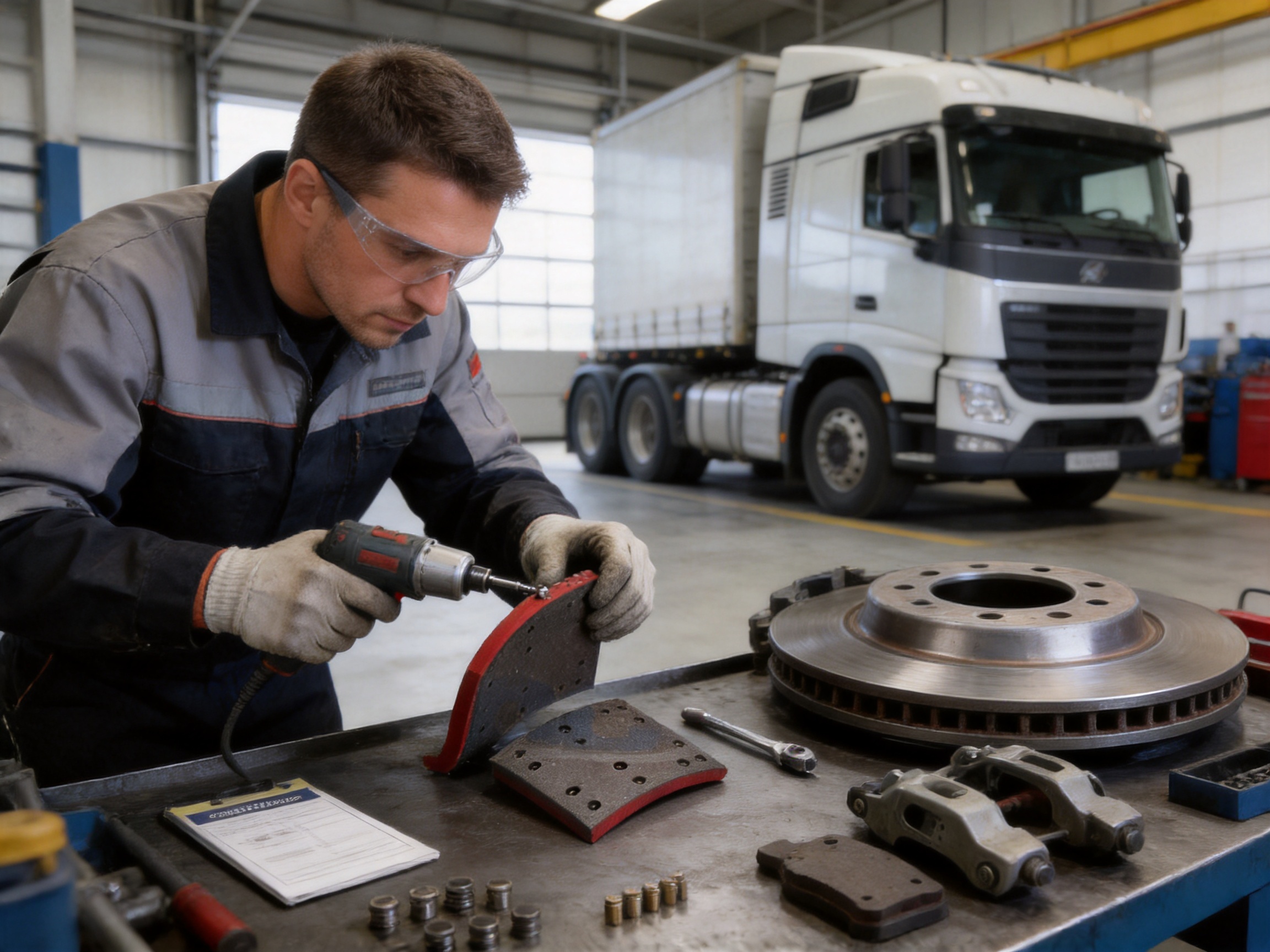
Professional installation is necessary to obtain the intended performance of any brake lining. Before relining a brake shoe, the technician should inspect the shoe for cracks, corrosion, distortion, excessive wear, and damage around the rivet holes. A shoe that is not structurally sound should not be reused simply because a new lining is available.
The brake drum should also be inspected. Deep scoring, excessive diameter, heat checking, cracks, or an unsuitable internal surface can affect the way the new lining beds in. Drum condition should be evaluated according to the vehicle manufacturer’s service requirements and applicable workshop procedures.
The selected 4707 lining must match the required size and hole configuration. The technician should confirm whether the application requires the 14-hole or 16-hole version and should compare the lining with the old component or approved technical information before riveting.
During installation, the lining should sit evenly against the shoe without forced bending, excessive gaps, or misalignment. Riveting should be performed with suitable equipment and the correct sequence. Rivets must be properly seated and should secure the lining without cracking or crushing the friction material.
After assembly, the brake system should be checked for correct adjustment, free movement, actuator operation, and even contact. A controlled bedding-in procedure may be required so that the lining and drum develop an appropriate working interface. The exact procedure should follow the vehicle or brake-system service guidance.
Brake work is safety-critical. Installation, inspection, adjustment, and testing should be carried out by trained personnel using appropriate tools and procedures.
Purchasing Guidance for Distributors and Fleet Operators
When purchasing the 4707 Brake Lining, buyers should prepare complete technical information rather than relying on the product name alone. The part number should be recorded together with the required size, rivet-hole count, WVA reference, quantity, packaging needs, and intended application.
Distributors should consider demand for both 14-hole and 16-hole versions if their customer base services multiple brake-shoe formats. Inventory planning should be based on historical sales, fleet composition, regional vehicle populations, and expected maintenance cycles.
Fleet operators may evaluate the product through a controlled trial. A trial can include installation quality, bedding behavior, wear pattern, inspection results, brake response, and service interval observations. Records should distinguish the lining from other factors such as drum condition, vehicle loading, route profile, and driver behavior.
Packaging should protect the friction material from moisture, impact, contamination, and deformation during storage and transportation. Product labels should remain legible and should include the necessary identification information for warehouse and workshop personnel.
Repeat orders should reference the originally approved specification. If a customer changes the required hole pattern, packaging, or quantity, the change should be confirmed before shipment. Clear communication helps prevent substitutions that may appear similar but are not suitable for the same installation.
Quality, Reliability, and Total Cost of Ownership
A brake lining’s purchase price is only one part of its economic value. Total cost of ownership includes installation labor, vehicle downtime, inspection requirements, replacement frequency, drum wear, inventory carrying cost, and the consequences of unexpected brake service.
A lining with accurate dimensions can reduce installation difficulty. A lining with consistent material and forming can support more predictable service behavior. A lining with correct identification can reduce purchasing errors. A manufacturer with a broad product range can simplify sourcing. Together, these factors may provide value beyond the initial unit price.
Reliability should be evaluated over time. Fleet maintenance teams can monitor mileage, operating conditions, lining wear, brake-drum condition, and the reason for replacement. These records help determine whether a product is performing consistently in a particular application.
It is also important to recognize that brake performance depends on the complete system. Incorrect adjustment, overloaded vehicles, damaged drums, poor installation, or neglected maintenance can cause premature wear even when the lining itself is correctly manufactured. Product quality and maintenance discipline must work together.
Recommended Inspection Checklist
The following checklist can support product selection and workshop control:
| Inspection area | Recommended check |
|---|---|
| Product identity | Confirm the 4707 part number and applicable WVA reference. |
| Dimensions | Check the 16.5-inch by 7-inch size against the required application. |
| Rivet pattern | Confirm whether the brake shoe requires 14 or 16 holes. |
| Brake shoe | Inspect for cracks, distortion, corrosion, and damaged rivet holes. |
| Brake drum | Check surface condition, wear, scoring, cracking, and service limits. |
| Lining condition | Look for cracks, chips, contamination, deformation, or packaging damage. |
| Installation | Verify even seating, correct riveting, and secure attachment. |
| Final testing | Check adjustment, free movement, contact, and controlled bedding-in. |
This checklist is a general service aid and does not replace vehicle-specific instructions. Technical personnel should follow the relevant service manual, safety procedures, and applicable regulations.
Applications and Market Suitability
The 4707 Brake Lining is suited to markets where heavy-duty brake maintenance depends on replacement friction components rather than complete brake-system replacement. It can be relevant to commercial vehicle repair shops, fleet workshops, brake relining specialists, distributors, and importers of truck brake components.
Relining remains an important service model in many heavy-duty markets. When a brake shoe is structurally reusable, replacing the worn lining can provide a practical and cost-conscious repair option. This approach also allows workshops to maintain established shoe assemblies while renewing the friction surface.
Complete lined brake shoes and repair kits may be more suitable where workshop efficiency, standardized assembly, or reduced installation time is the priority. The availability of related product categories allows customers to select the service format that best fits their equipment, labor capacity, and operating schedule.
International buyers should consider local regulations and customer expectations when selecting friction materials. Application requirements may vary according to vehicle type, axle design, operating environment, legal standards, and fleet maintenance policy.
Questions and Answers
What is the 4707 Brake Lining?
The 4707 Brake Lining is a heavy-duty replacement friction lining. It is listed with a product size of 16.5 inches by 7 inches and is available with a 14-hole or 16-hole rivet configuration.
What are the WVA references for this product?
The listed WVA references are 19030 and 19033. Buyers should use these references together with the part number, dimensions, hole count, and application information to confirm compatibility.
How do I choose between the 14-hole and 16-hole versions?
The correct version depends on the brake shoe and approved application. Count the holes on the original lining or inspect the brake shoe, then confirm the result against reliable technical information before ordering or installing.
Can the lining be installed on any heavy-duty brake shoe?
No. The lining must match the brake shoe’s dimensions, curvature, hole pattern, thickness, and application requirements. The shoe must also be structurally serviceable. A trained technician should complete the compatibility check.
Is the product suitable for fleet maintenance?
Its heavy-duty format, clear identification, and availability in common rivet-hole configurations make it suitable for consideration in commercial fleet maintenance. Fleet operators should conduct application verification and monitor service results under their operating conditions.
What should be checked before relining a brake shoe?
The shoe should be checked for cracks, distortion, corrosion, worn rivet holes, and other structural defects. The brake drum should also be inspected for excessive wear, scoring, cracks, or an unsuitable surface condition.
What manufacturing factors influence lining quality?
Material batching, mixing uniformity, forming pressure, curing control, dimensional finishing, rivet-hole accuracy, surface inspection, and traceability all influence the consistency of a finished brake lining.
What makes this product different from an unidentified generic lining?
The 4707 lining is presented with a specific part number, stated dimensions, two rivet-hole configurations, and WVA references. These details give professional buyers more information for identification and reduce reliance on appearance alone.
Can customers purchase complete brake assemblies instead of individual linings?
The related product range includes steel brake shoes, casted brake shoes, lined brake shoes, brake shoe repair kits, and lined brake shoe kits. Customers can select the component format that best suits their repair process and application.
How should the product be stored?
It should be stored in clean, dry conditions and protected from moisture, contamination, impact, and deformation. Packaging should remain intact until the product is ready for inspection and installation.
Does the lining eliminate the need for brake-system maintenance?
No. A replacement lining is only one part of the braking system. Correct adjustment, drum inspection, shoe condition, installation quality, and regular maintenance remain essential for safe and reliable operation.
Conclusion
The 4707 Brake Lining is a practical heavy-duty friction component defined by clear dimensional information, recognized cross-reference numbers, and flexible 14-hole or 16-hole mounting configurations. Its 16.5-inch by 7-inch format supports replacement applications where accurate fitment and dependable mechanical attachment are essential.
Its competitive value is supported by more than the product specification. The combination of clear identification, heavy-duty application focus, a broader brake-component range, and process-oriented manufacturing provides benefits for distributors, repair shops, fleet operators, and international buyers.
Consistent material preparation, controlled forming and curing, accurate finishing, precise rivet-hole drilling, and systematic inspection are central to producing a reliable brake lining. These manufacturing practices help reduce installation problems, support predictable service behavior, and improve confidence in repeat orders.
For the best result, customers should verify the complete application before purchase. The part number, WVA reference, dimensions, rivet-hole count, brake-shoe design, drum condition, and vehicle requirements should all be considered. When correctly selected and professionally installed, the 4707 Brake Lining can serve as a dependable option for heavy-duty brake maintenance and relining programs.
References
1. Product specification sheet for the 4707 Brake Lining, including size, rivet-hole configuration, and WVA references.
2. Heavy-duty commercial vehicle brake maintenance principles and workshop inspection practices.
3. Friction-material manufacturing guidance covering mixing, forming, curing, finishing, and dimensional inspection.
4. Brake shoe relining procedures and rivet-installation recommendations for professional service operations.
5. International replacement-brake-component identification practices, including part-number and cross-reference management.