 English
 简体中文
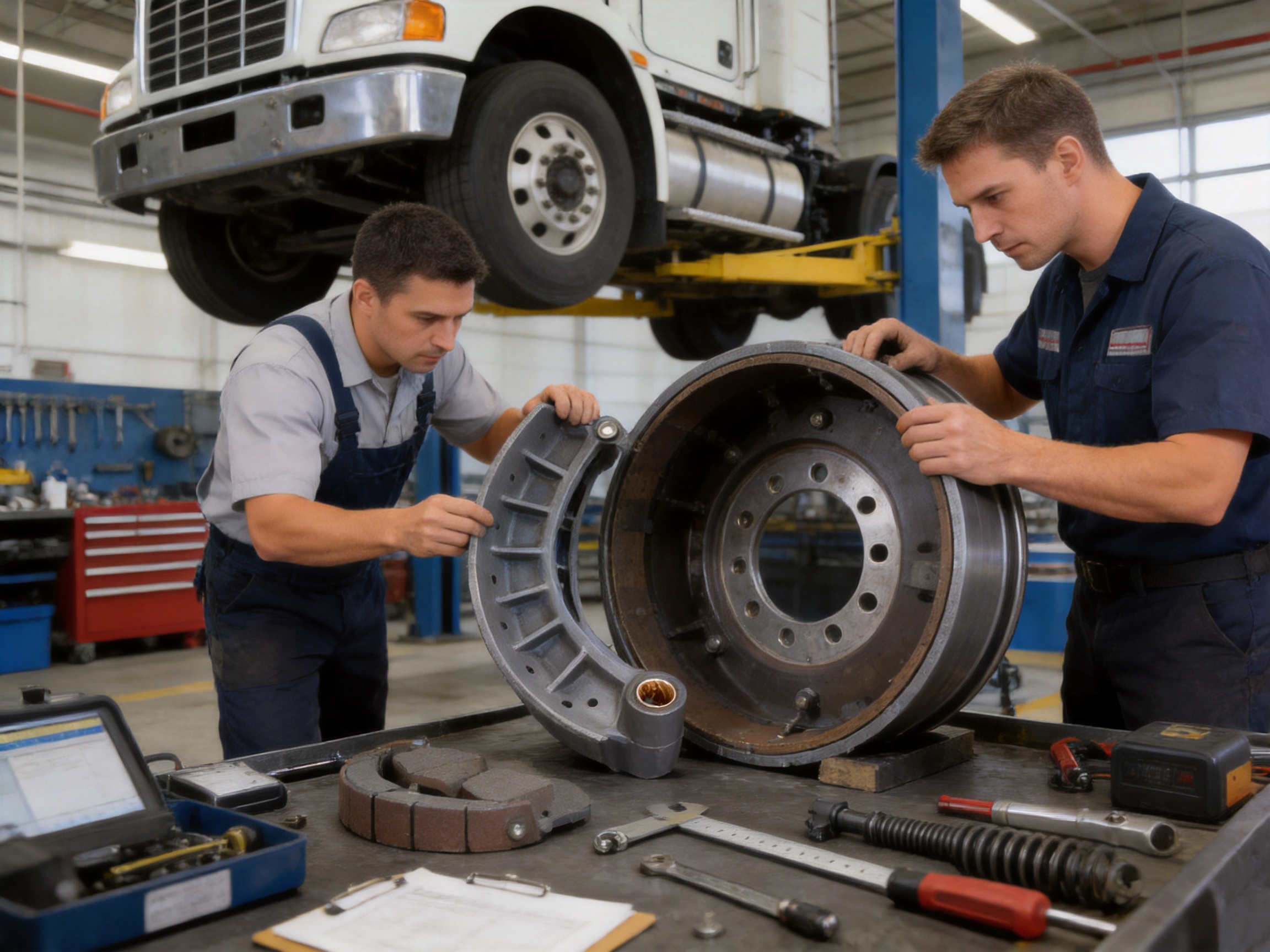
Heavy-duty braking systems require components that can tolerate repeated loading, heat, vibration, contamination, and demanding service conditions. Among the most important parts in a drum brake assembly is the brake shoe. A brake shoe supports the friction lining and transfers braking force to the drum. Its shape, material, dimensional accuracy, riveting-hole layout, and compatibility with the vehicle application all influence braking performance and maintenance efficiency.
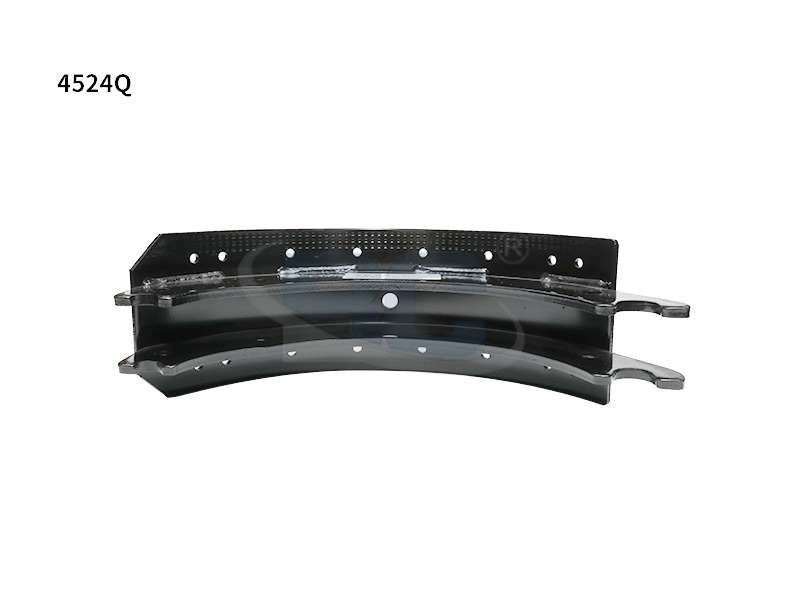
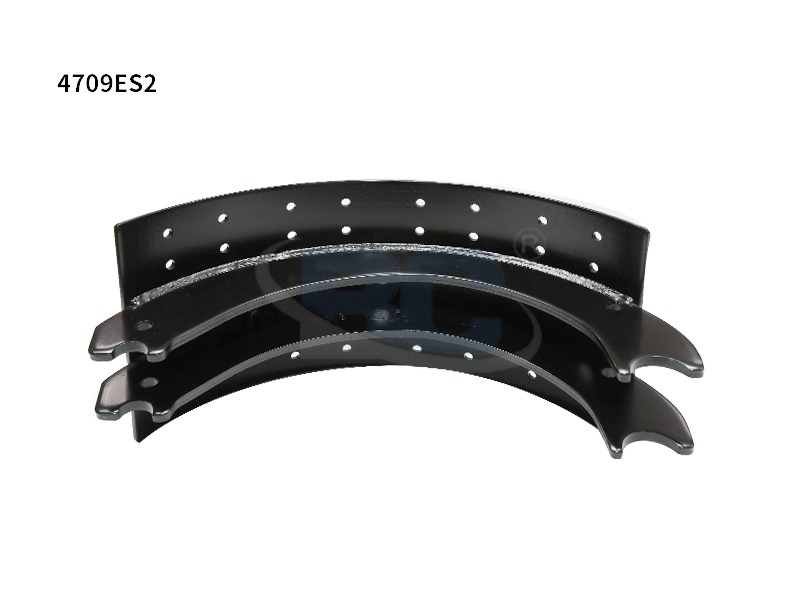
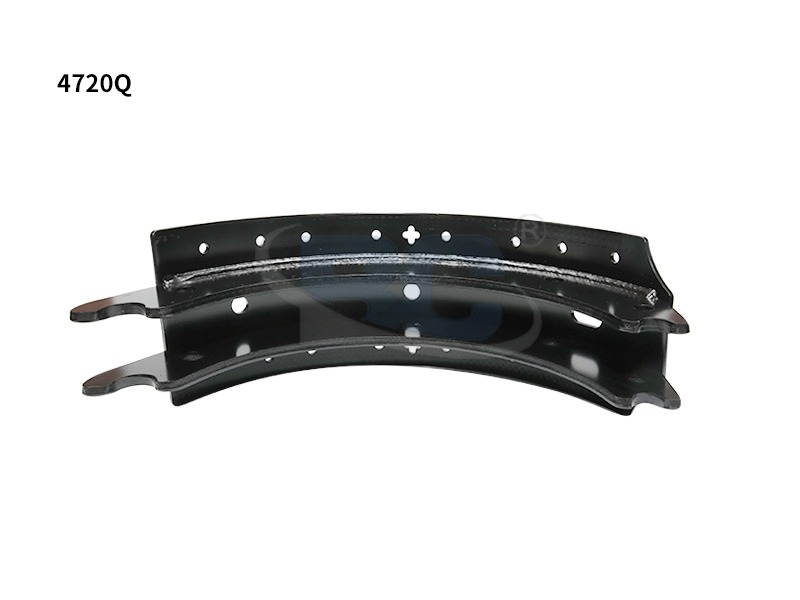
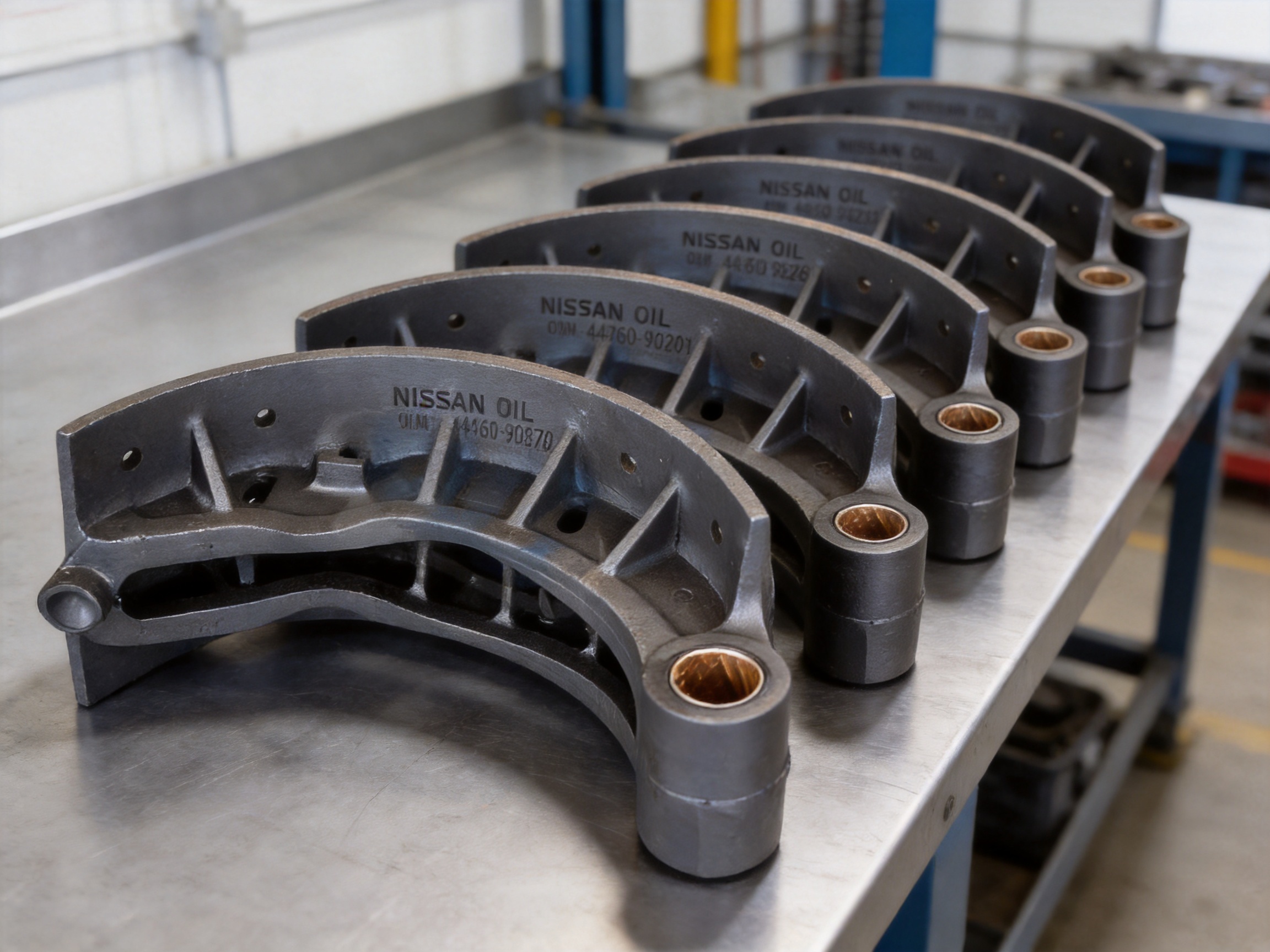
The NISSAN OIL Casted Brake Shoe range is developed for heavy-duty drum brake applications associated with Nissan oil vehicles. The range includes several dimensional options for different brake assemblies, including 6-inch, 7-inch, and 8.5-inch table widths. It also provides different riveting-hole configurations, allowing workshops and distributors to select a replacement brake shoe according to the original braking system.
Manufactured and supplied by Zhejiang Bangchi Auto Parts Co., Ltd., the product range is positioned within a broader portfolio of heavy-duty brake components. This portfolio includes steel brake shoes, casted brake shoes, brake linings, lined brake shoes, brake shoe repair kits, and lined brake shoe kits. Such a product structure enables customers to source individual components or more complete brake repair solutions from one specialist supplier.
Product Overview
A casted brake shoe is a rigid support component used inside a drum brake. During braking, the wheel cylinder or mechanical actuator pushes the shoe outward against the inner surface of the brake drum. The friction lining attached to the shoe creates the friction required to reduce vehicle speed or hold the vehicle stationary.
Compared with a brake shoe made from a lighter formed structure, a casted design can provide a substantial, stable base for heavy-duty applications. The casting process allows the shoe to be shaped around the functional requirements of the braking assembly. This is especially useful where the component must withstand high mechanical loads and repeated thermal cycles.
The NISSAN OIL Casted Brake Shoe is supplied in multiple specifications. The available product information identifies the following reference data:
| Part No. | OEM No. | Table Width | Riveting Holes | Application |
| NISSAN OIL | 44060-90870 | 6 inches | 20 | NISSAN oil |
| Not separately specified | 44060-90201 | 7 inches | 18 | NISSAN oil |
| Not separately specified | 44060-90326 | 8.5 inches | 30 | NISSAN oil |
| Not separately specified | 44060-90278 | 8.5 inches | 38 | NISSAN oil |
The catalog information lists “NISSAN OIL” as the part designation for the first reference and provides OEM numbers for the listed applications. Because brake assemblies can vary by model, axle, production year, and regional configuration, buyers should compare the original part number, table width, riveting-hole count, and physical dimensions before ordering.
The product is intended for professional replacement and repair use. It may be used by commercial vehicle service centers, brake specialists, parts distributors, fleet maintenance departments, and wholesalers serving heavy-duty vehicle markets.
Why Casted Brake Shoes Matter in Heavy-Duty Applications
Commercial vehicles frequently operate under conditions that are more demanding than those experienced by passenger cars. A loaded truck, industrial vehicle, or oil-service vehicle can place significant force on its braking system. Long operating hours, frequent stops, uneven road surfaces, heavy payloads, and high ambient temperatures can accelerate wear throughout the brake assembly.
The brake shoe must remain structurally stable while the friction lining is pressed against the drum. It must also maintain its correct position and shape as the brake system heats and cools. If the supporting shoe is distorted, poorly fitted, or incorrectly drilled, the lining may not contact the drum evenly. Uneven contact can reduce braking efficiency, create localized heat, increase lining wear, and lead to additional maintenance problems.
A properly manufactured casted brake shoe helps provide a solid foundation for the lining. The strength of the supporting structure is particularly important for applications involving frequent braking or high gross vehicle weight. A stable shoe can also support consistent riveting and help maintain the designed relationship between the lining and the drum.
For this reason, a casted brake shoe should not be treated as a simple metal replacement part. It is a precision-related brake component whose geometry and assembly compatibility directly affect the serviceability of the complete drum brake system.
Main Product Advantages
Heavy-Duty Structural Support
The primary advantage of the casted construction is its suitability for demanding braking environments. The shoe is designed to function as a strong support member for the friction lining. Its cast form provides a substantial body that can accommodate the loads produced during braking and repeated service operation.
For fleet operators and repair professionals, this structural characteristic can be valuable when replacing worn or damaged original brake shoes. A suitable casted shoe helps restore the mechanical foundation of the brake assembly rather than relying on a temporary or poorly matched substitute.
Multiple Dimensional Options
The product range includes 6-inch, 7-inch, and 8.5-inch table-width options. This gives buyers more flexibility when matching replacement components to different Nissan oil vehicle brake assemblies. The two 8.5-inch versions are differentiated by their riveting-hole counts, with one listed at 30 holes and the other at 38 holes.
These variations are important because similar-looking brake shoes may not be interchangeable. A difference in width, hole pattern, or lining attachment arrangement can prevent correct installation. By identifying these specifications in the product data, the supplier makes it easier for customers to narrow the selection before placing an order.
OEM Reference Compatibility
The listed OEM references include 44060-90870, 44060-90201, 44060-90326, and 44060-90278. OEM reference numbers are useful for cross-identification during procurement, inventory management, and workshop planning.
Using an OEM number as a starting point can reduce the risk of selecting a visually similar but technically unsuitable component. However, the reference should always be checked against the vehicle’s original part, because part-number interpretation can vary by market and model configuration.
Riveting-Hole Accuracy
The number of riveting holes is a key selection factor for a brake shoe intended to receive a replacement lining. The listed configurations include 18, 20, 30, and 38 holes. Correct hole alignment supports the installation of the appropriate lining and helps distribute the attachment points along the shoe.
A correct riveting pattern can improve workshop efficiency. Technicians do not need to modify the shoe or attempt to create an improvised hole arrangement. This helps preserve the intended mechanical relationship between the shoe and the lining and reduces unnecessary installation risk.
Support for Repair and Replacement Programs
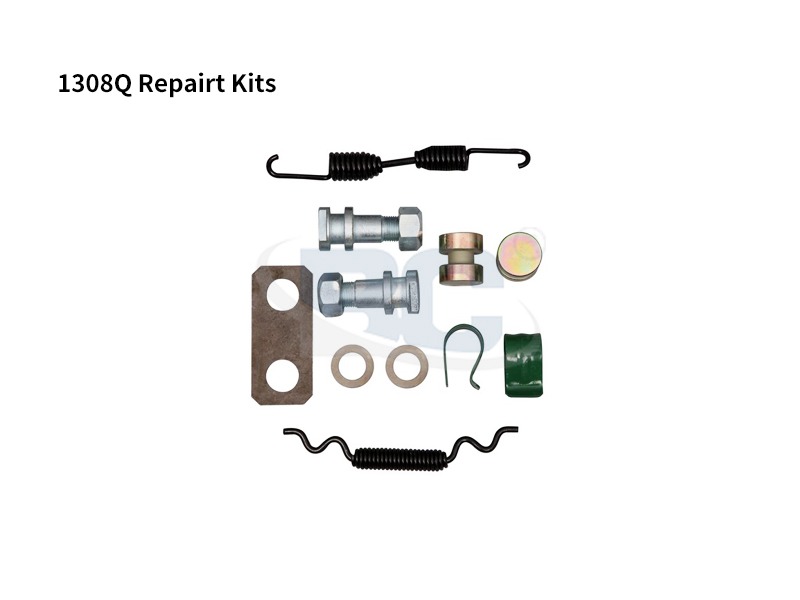
The supplier’s product categories include both individual brake shoes and related repair products. Customers can therefore select an unlined casted shoe when they already have a suitable lining and riveting process, or they can consider a lined shoe or repair kit when a more complete service solution is needed.
This product breadth is beneficial for distributors that serve customers with different maintenance preferences. Some fleets rebuild brake shoes in their own workshops, while others prefer ready-to-install lined assemblies. A supplier capable of supporting both approaches can make procurement more efficient.
Suitability for Professional Aftermarket Supply
Heavy-duty aftermarket buyers often need consistent identification, repeat availability, and practical technical information. The product information provides the application, OEM reference, table width, and riveting-hole count required for initial product selection.
These details are more useful than a general description such as “truck brake shoe.” They enable purchasing teams to compare the replacement component with the removed part and to organize warehouse stock according to application and specification.
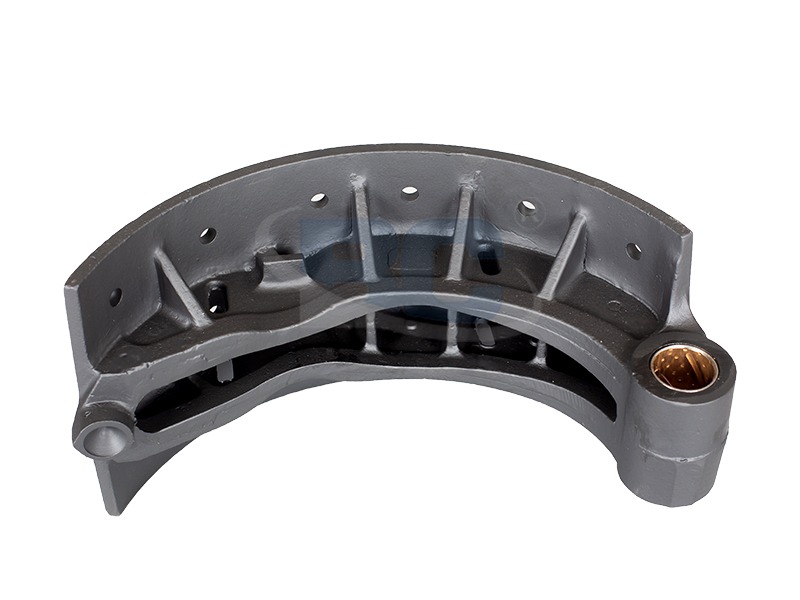
NISSAN OIL Casted Brake Shoe
Manufacturing Approach for Casted Brake Shoes
The performance of a brake shoe depends not only on its design but also on how consistently it is produced. A reliable manufacturing program normally involves controlled stages from material preparation through final inspection. Zhejiang Bangchi Auto Parts Co., Ltd. specializes in heavy-duty brake parts and states that its OEM brake parts follow the global FMSI numbering system. This product identification approach supports organized cataloging and helps customers connect replacement parts with established brake-component references.
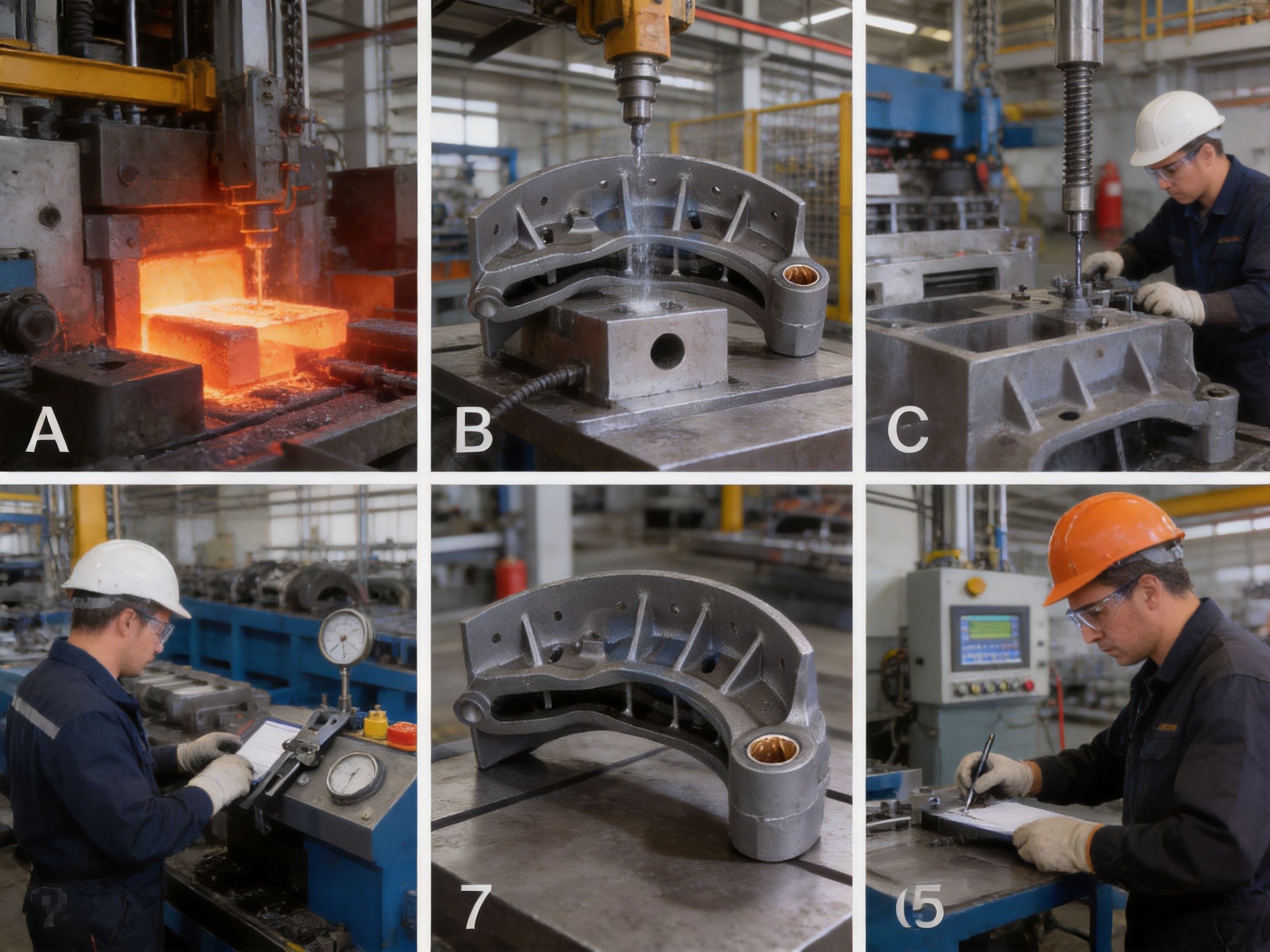
Although individual production parameters may vary according to the model, a professional casted brake shoe manufacturing process generally includes engineering review, pattern or tooling preparation, casting, cleaning, machining, drilling, dimensional inspection, and final packing. Each stage contributes to the performance and interchangeability of the finished component.
Engineering and Application Review
Before production, the brake shoe specification must be reviewed against the intended application. Important factors include overall profile, table width, curvature, pivot and actuator areas, lining-contact surface, riveting-hole position, and relationship to the brake drum.
The four listed OEM references represent different configurations. The 6-inch version with 20 riveting holes is not simply a smaller version of the 8.5-inch shoe with 30 or 38 holes. Each design must be treated as a separate application requirement. Engineering review helps prevent the accidental use of a similar but incompatible pattern.
Application review is also important when a product is reproduced for aftermarket supply. A replacement component should preserve the essential interfaces of the original brake shoe. Maintaining these interfaces helps the replacement part work with the existing drum, lining, actuator, and hardware.
Pattern and Tooling Control
Casting depends on accurate patterns and tooling. The pattern determines the basic geometry of the shoe, while the tooling supports repeatable production of the required form. Proper tooling control helps maintain consistent dimensions from one production batch to another.
For brake shoes, dimensional consistency is especially important around the lining table and the areas that connect with the brake hardware. Excessive variation can affect installation, lining seating, and brake adjustment. Controlled tooling also supports the production of several models within a family while preserving the unique characteristics of each specification.
Metal Casting
During casting, molten metal is shaped into the required brake shoe form. The material and process must be managed to produce a sound component with adequate mechanical integrity. Temperature, filling behavior, solidification, and cooling all influence the quality of the casting.
A well-controlled casting process aims to reduce internal defects, dimensional distortion, and surface irregularities. The casting must provide a suitable foundation for subsequent machining and drilling. Since the brake shoe is exposed to mechanical stress during operation, the integrity of the cast body is a fundamental quality consideration.
After the casting stage, the component may require cleaning and removal of excess material. This prepares the shoe for machining and inspection. Proper surface preparation also makes it easier to identify visible defects before the product proceeds to the next stage.
Machining and Surface Preparation
Cast components commonly require machining at selected functional surfaces. Machining can help establish accurate interfaces and remove material that is not part of the finished design. The lining table, pivot areas, actuator contact points, and other critical locations must be prepared according to the application requirements.
Surface preparation should create a suitable foundation for brake lining installation. The lining must sit correctly on the shoe, and the riveting points must be positioned so the attachment process can be completed without interference.
Consistent finishing also improves the practical experience of repair workshops. A clean, accurately formed shoe can be easier to handle, inspect, and assemble than a component with excessive casting residue or poorly controlled edges.
Riveting-Hole Drilling
The listed models use different riveting-hole counts. The hole pattern must correspond to the intended lining and must remain consistent with the original brake shoe specification. Drilling or forming the holes with controlled tooling helps maintain position, spacing, and diameter.
Accurate hole placement is essential for lining installation. If holes are misplaced, the lining may not align properly or the rivets may not seat correctly. This can reduce assembly quality and create stress concentrations in the lining or shoe.
The difference between 18, 20, 30, and 38 holes illustrates why brake shoe identification must be specific. A buyer should not select a replacement based only on width. The hole count and layout are equally important parts of the application match.
Inspection and Quality Control
A professional production system should include inspection of dimensions, hole patterns, surface condition, and overall appearance. For a casted brake shoe, inspection may begin with visual review of the casting and continue with dimensional checks of the functional areas.
Inspection records can help manufacturers identify process variation and improve repeatability. They can also support communication with distributors and fleet customers when a technical question arises. For aftermarket brake parts, clear product identification and consistent inspection are valuable because the parts may be installed far from the original manufacturing location.
Quality control should also include packaging review. Brake shoes are heavy metal components with machined and finished surfaces that can be damaged by impact, moisture, or poor handling. Suitable packaging protects the part during storage and transportation and helps the customer receive a component ready for inspection and installation.
Advantages Compared with Generic Replacement Brake Shoes
Not all replacement brake shoes provide the same level of application information or configuration control. A generic product may be marketed for a broad vehicle category without clearly stating the exact table width, riveting-hole count, or OEM reference. This can make selection more difficult and increase the risk of ordering an unsuitable part.
The NISSAN OIL Casted Brake Shoe range offers a more application-oriented approach. Its product data identifies the intended Nissan oil application and separates the available specifications by width, OEM number, and riveting-hole quantity. This gives professional buyers a clearer basis for comparison.
Another advantage is the availability of different sizes within the same product category. Customers do not have to search for an unrelated supplier for each specification. A coordinated range can simplify sourcing, reduce administrative work, and support more organized inventory management.
The casted construction is also relevant when a vehicle requires a robust supporting shoe for heavy-duty operation. While the correct choice must always be based on the original application, a dedicated casted design may be preferable to an unsuitable universal substitute.
In addition, the supplier’s wider range of steel brake shoes, brake linings, lined brake shoes, repair kits, and lined brake shoe kits allows customers to select the level of service they need. This can be an advantage over competitors that offer only one type of replacement component.
These advantages should be evaluated together with normal purchasing checks, including sample approval, dimensional verification, material expectations, packaging requirements, and local regulatory obligations. Product suitability is strongest when technical data and customer-side inspection are used together.
Application and Selection Guidance
Confirm the OEM Reference
The first step is to compare the vehicle’s original brake shoe or service documentation with the listed OEM reference. The relevant references for this range are 44060-90870, 44060-90201, 44060-90326, and 44060-90278.
Part numbers should be read carefully because a single digit can identify a different specification. When the original number is unavailable, the removed brake shoe should be measured and compared with the catalog information.
Measure the Table Width
The listed table widths are 6 inches, 7 inches, and 8.5 inches. The table width is a major dimensional characteristic of the shoe and should be checked against the original component.
Measurements should be made using appropriate tools and should account for the area defined by the supplier’s specification. If there is uncertainty about the measurement method, the buyer should provide photographs, drawings, or the original component to the supplier for confirmation.
Count and Compare the Riveting Holes
The number of holes must match the intended lining. The available data includes 20 holes for the 6-inch reference, 18 holes for the 7-inch reference, 30 holes for one 8.5-inch reference, and 38 holes for the other 8.5-inch reference.
Hole count alone may not be sufficient. Hole diameter, spacing, and position should also be compared when rebuilding a brake shoe. A lining with a different drilling pattern should not be forced onto the shoe.
Inspect the Brake Drum and Hardware
Replacing a brake shoe does not correct every problem in a drum brake assembly. Before installation, technicians should inspect the brake drum, wheel cylinder, return springs, adjuster, anchor points, and other associated hardware. The drum should be checked for excessive wear, cracking, scoring, or an unsuitable internal diameter.
A new shoe and lining can perform poorly if the drum is severely worn or if the actuator does not operate correctly. A complete inspection helps ensure that the replacement shoe is installed into a serviceable braking system.
Use the Correct Lining and Rivets
When an unlined casted brake shoe is selected, the lining and rivets must be appropriate for the application. The lining should match the shoe profile and hole pattern. Rivets should be suitable for the lining material and installed with the correct equipment and technique.
Improper riveting can cause loose lining attachment, uneven contact, or damage to the lining. Professional workshops should follow their established brake-rebuilding procedures and verify the finished assembly before returning the vehicle to service.
Benefits for Distributors and Fleet Maintenance Departments
For distributors, a clearly differentiated product range improves stock organization. The four OEM references can be stored and sold according to application, width, and hole pattern. This reduces confusion when customers request a replacement and helps sales staff provide more accurate technical guidance.
Distributors can also create product listings that include the most useful selection data rather than relying on a general product name. Showing the OEM reference, table width, riveting-hole count, and application helps professional buyers make faster decisions.
Fleet maintenance departments can benefit from planned stocking of frequently used specifications. If a fleet operates multiple Nissan oil vehicle configurations, maintaining a small selection of the relevant brake shoes can reduce downtime while awaiting special orders.
The availability of both individual shoes and related lined or repair products can support different maintenance schedules. A workshop may choose to rebuild shoes when it has the required equipment and labor, while another fleet may prefer ready-to-install assemblies. Flexible product sourcing allows each customer to select the most practical method.
Heavy-duty brake parts also require careful logistics. Products should be identified clearly, packed securely, and stored in a dry environment. Good inventory practices help prevent mixing similar-looking parts and reduce damage before installation.
Company Manufacturing and Supply Strengths
Zhejiang Bangchi Auto Parts Co., Ltd. is identified as a manufacturer and supplier of heavy-duty brake parts. Its listed product categories cover several stages of drum brake maintenance, including the structural shoe, friction lining, lined assembly, and repair kit.
This product specialization is an important strength. A company focused on heavy-duty brake parts can organize its engineering, tooling, production, inspection, and product documentation around the requirements of commercial vehicle braking systems. Such focus may help support more consistent application development than a general automotive parts supplier with only a limited brake product range.
The company also states that it provides OEM brake parts following the global FMSI numbering system. A structured numbering approach supports product identification across international markets and can make it easier for distributors to manage catalogs, quotations, and replacement references.
Its manufacturing strengths can be understood through the requirements of this product family. Producing multiple casted brake shoe configurations requires control of patterns, casting, machining, drilling, inspection, and packaging. Maintaining different widths and riveting-hole patterns also requires careful separation of product models during production and warehouse handling.
The company’s broader offering includes steel brake shoes in addition to casted versions. This gives customers access to more than one structural format and supports different vehicle and repair requirements. The inclusion of brake linings, lined brake shoes, brake shoe repair kits, and lined brake shoe kits further indicates an effort to serve complete drum brake maintenance needs.
For international customers, direct communication with a specialized supplier can be valuable. The listed contact information includes a sales email, telephone numbers, fax number, and a manufacturing address in Haining, Zhejiang, China. Buyers can use these channels to confirm dimensions, request quotations, discuss packaging, and verify application details before ordering.
Production Consistency as a Competitive Factor
In the heavy-duty aftermarket, consistency can be as important as the initial product design. A replacement brake shoe must be repeatable from batch to batch so that distributors and workshops can rely on the same dimensions and installation characteristics over time.
Production consistency depends on controlled tooling, clear model identification, inspection practices, and proper documentation. These elements are particularly important when two products share a similar width but use different riveting-hole counts, as in the 8.5-inch versions listed in this range.
Application Knowledge as a Service Advantage
A manufacturer’s value is not limited to the metal component. Technical application knowledge can help customers avoid incorrect substitutions. When a supplier can discuss OEM references, table widths, hole patterns, and related lining options, the customer receives support during the selection process as well as a physical product.
This is useful for export distributors and regional wholesalers that may not have detailed engineering resources for every brake application. Clear data from the manufacturer helps them build accurate catalogs and respond more confidently to workshop inquiries.
Integrated Product Development
Because the company supplies several related brake products, it can approach the shoe and lining as parts of a complete system. The relationship between the shoe profile, lining dimensions, riveting pattern, and finished assembly is important during product development.
Integrated development can also support repair kit design. A repair kit should contain components that are compatible with the intended shoe and application. Offering these products within one specialized portfolio may simplify coordination for customers that prefer a complete service package.
Installation and Service Considerations
Installation should be performed by qualified brake technicians using appropriate tools and procedures. Before fitting the new component, the technician should compare it with the removed shoe and confirm its width, hole pattern, orientation, and contact areas.
The brake drum should be cleaned and measured. Any contamination, oil, grease, or debris on the friction surfaces must be removed. Oil contamination is particularly important because it can reduce friction and compromise the serviceability of the lining.
The shoe should be installed with the correct hardware and in the correct position. Return springs, adjusters, anchors, and other components should be inspected for stretching, corrosion, or damage. Reusing worn hardware may prevent the new shoe from operating correctly.
If the shoe is being relined, the lining should be fitted evenly and securely. The riveting process should not crack or crush the lining. After assembly, the brake should be adjusted according to the vehicle manufacturer’s procedure or the workshop’s approved technical standard.
Following installation, the brake system should be tested in a controlled environment. The technician should check for proper pedal or actuator response, abnormal noise, uneven braking, and signs of drag. A suitable bedding-in procedure may be required for the new lining and drum contact surfaces.
Brake work should never be evaluated solely by visual appearance. A shoe that appears similar to the original may still differ in critical dimensions. Functional checks and accurate measurement remain essential parts of professional installation.
Maintenance and Inspection Recommendations
Regular inspection can extend the useful life of the brake system and identify problems before they become serious. Fleet operators should establish inspection intervals based on vehicle use, loading conditions, terrain, operating speed, and braking frequency.
During inspection, technicians should examine lining thickness, rivet condition, shoe distortion, drum surface condition, spring integrity, adjuster operation, and signs of overheating. Uneven lining wear may indicate an issue with the drum, actuator, hardware, or shoe alignment.
Brake shoes should also be checked for corrosion or damage caused by contamination. Vehicles operating in wet, dusty, salty, or industrial environments may require more frequent inspections than vehicles used in mild conditions.
If a brake shoe is replaced on one side of an axle, the workshop should assess whether the corresponding shoe on the opposite side should also be replaced. Balanced braking performance is important, and components with significantly different wear levels may not provide uniform response.
Correct storage of replacement parts is equally important. Casted brake shoes should be kept dry, protected from impact, and separated by part number. Labels should remain legible so that the 6-inch, 7-inch, and 8.5-inch specifications are not mixed during warehouse handling.
Quality and Purchasing Checklist
Before ordering the NISSAN OIL Casted Brake Shoe, buyers should prepare the vehicle and component information available to them. The following checklist can support a more accurate purchasing decision.
| Check Item | Why It Matters |
| OEM reference | Helps identify the intended brake application. |
| Table width | Confirms the basic dimensional match. |
| Riveting-hole count | Ensures compatibility with the selected lining. |
| Hole spacing and diameter | Supports correct lining installation. |
| Brake drum condition | Determines whether the surrounding system is serviceable. |
| Required product format | Distinguishes an unlined shoe from a lined shoe or repair kit. |
| Packaging and labeling | Protects the component and prevents warehouse confusion. |
| Quantity and delivery schedule | Supports fleet planning and inventory control. |
Buyers should request technical confirmation when the original part number is uncertain or when the removed component differs from the catalog photographs and dimensions. A sample comparison can be especially useful for mixed fleets or older vehicle applications.
Why Choose a Specialized Heavy-Duty Brake Supplier
A specialized heavy-duty brake supplier understands that brake components are application-sensitive. The supplier must manage more than general metalworking. It must consider vehicle compatibility, friction-material assembly, installation requirements, aftermarket identification, and the consequences of dimensional error.
Specialization also supports product range depth. Customers may need a casted shoe for one vehicle, a steel shoe for another, a replacement lining for a third, and a complete repair kit for a fourth. A supplier with a broad heavy-duty brake portfolio can respond to these requirements more efficiently.
For distributors, specialization can improve technical communication. Product data can be presented in terms that workshops understand: OEM number, width, riveting holes, application, and assembly format. This reduces the dependence on vague descriptions and helps build confidence in the purchasing process.
For fleet operators, a specialist supplier can provide a more direct route to replacement planning. The customer can discuss recurring failures, service intervals, stock requirements, and product selection with a company familiar with commercial drum brake systems.
The value of a specialized supplier is therefore both technical and operational. It includes the physical quality of the brake shoe, the organization of the product range, the accuracy of the application data, and the ability to support customers before and after purchase.
Frequently Asked Questions
What is a casted brake shoe?
A casted brake shoe is a brake shoe produced through a casting process. It serves as the structural support for the friction lining inside a drum brake. When the brake is applied, the shoe moves outward and presses the lining against the brake drum.
Which applications are covered by this product range?
The listed application is Nissan oil. The available references include OEM numbers 44060-90870, 44060-90201, 44060-90326, and 44060-90278. The exact match should be confirmed using the original part number and physical measurements.
What table widths are available?
The range includes 6-inch, 7-inch, and 8.5-inch table widths. The two 8.5-inch references have different riveting-hole counts, so width alone is not enough for identification.
How many riveting holes are available?
The listed options include 20 holes for the 6-inch reference, 18 holes for the 7-inch reference, 30 holes for one 8.5-inch reference, and 38 holes for the other 8.5-inch reference.
Are the brake shoes supplied with linings?
The listed product is a casted brake shoe. The supplier also offers brake linings, lined brake shoes, brake shoe repair kits, and lined brake shoe kits. Buyers should specify whether they need an unlined shoe, a lining, or a complete assembled product.
Can one 8.5-inch version replace the other?
Not automatically. The two listed 8.5-inch versions have different riveting-hole counts: one has 30 holes and the other has 38 holes. Their complete dimensions and application references must be checked before substitution.
What should be checked before ordering?
Customers should check the OEM number, table width, riveting-hole count, hole layout, overall shoe shape, and intended vehicle application. Photographs or measurements of the original component can help the supplier confirm the selection.
Who may purchase these brake shoes?
The product is suitable for professional distributors, commercial vehicle repair workshops, fleet maintenance departments, brake specialists, and wholesalers serving heavy-duty vehicle markets.
Why is the riveting-hole pattern important?
The riveting-hole pattern determines whether a lining can be correctly attached to the shoe. Incorrect spacing or hole count can prevent proper installation and may affect the security and performance of the finished brake assembly.
Does replacing the brake shoe eliminate the need to inspect the drum?
No. The brake drum and associated hardware should be inspected whenever the shoe is replaced. A worn, damaged, contaminated, or incorrectly sized drum can reduce the performance of a new brake shoe and lining.
What other brake products are available from the supplier?
The product categories include steel brake shoes, casted brake shoes, brake linings, lined brake shoes, brake shoe repair kits, and lined brake shoe kits. This provides several options for individual replacement, relining, and complete brake repair.
How can international customers request more information?
Customers can contact Zhejiang Bangchi Auto Parts Co., Ltd. through the listed telephone numbers or sales email to confirm specifications, application details, packaging, and ordering requirements.
Conclusion
The NISSAN OIL Casted Brake Shoe range provides a focused solution for heavy-duty Nissan oil drum brake applications. Its principal advantages include casted structural support, multiple table-width options, clearly identified OEM references, and several riveting-hole configurations.
The 6-inch, 7-inch, and 8.5-inch options allow customers to address different brake assemblies, while the listed 18-, 20-, 30-, and 38-hole patterns support more precise lining compatibility. These details make the product more practical to identify than a generic brake shoe described only by vehicle type.
Zhejiang Bangchi Auto Parts Co., Ltd. strengthens the offering through a broader heavy-duty brake product portfolio that includes steel shoes, casted shoes, linings, lined assemblies, and repair kits. Its stated use of the global FMSI numbering system provides an organized approach to OEM-oriented product identification.
For the best result, buyers should verify the OEM reference, table width, riveting-hole count, and complete physical configuration before ordering. Professional installation should include inspection of the drum, lining, hardware, and adjustment system. When correctly selected and properly installed, a suitable casted brake shoe can provide a dependable foundation for heavy-duty drum brake maintenance.
References
1. Zhejiang Bangchi Auto Parts Co., Ltd. Product information for NISSAN OIL Casted Brake Shoe, including OEM references, table widths, riveting-hole counts, and application data.
2. Zhejiang Bangchi Auto Parts Co., Ltd. Heavy-duty brake parts product categories, including steel brake shoes, casted brake shoes, brake linings, lined brake shoes, brake shoe repair kits, and lined brake shoe kits.
3. Federal-Mogul Motorparts. Friction and brake component identification principles for commercial vehicle applications.
4. Automotive brake service manuals covering drum brake inspection, shoe replacement, lining riveting, adjustment, and bedding-in procedures.
5. Commercial vehicle maintenance references covering brake drum inspection, brake shoe compatibility, friction-material installation, and fleet brake-service planning.