 English
 简体中文
简体中文Heavy-duty braking systems depend on the accurate interaction of several components, and the brake shoe is one of the most important structural parts in that system. A brake shoe must support the friction material, maintain its shape under repeated braking loads, fit correctly within the drum assembly, and remain stable throughout demanding operating conditions. When the shoe is manufactured with the correct dimensions, hole pattern, material strength, and surface quality, it creates a dependable foundation for safe and consistent braking performance.
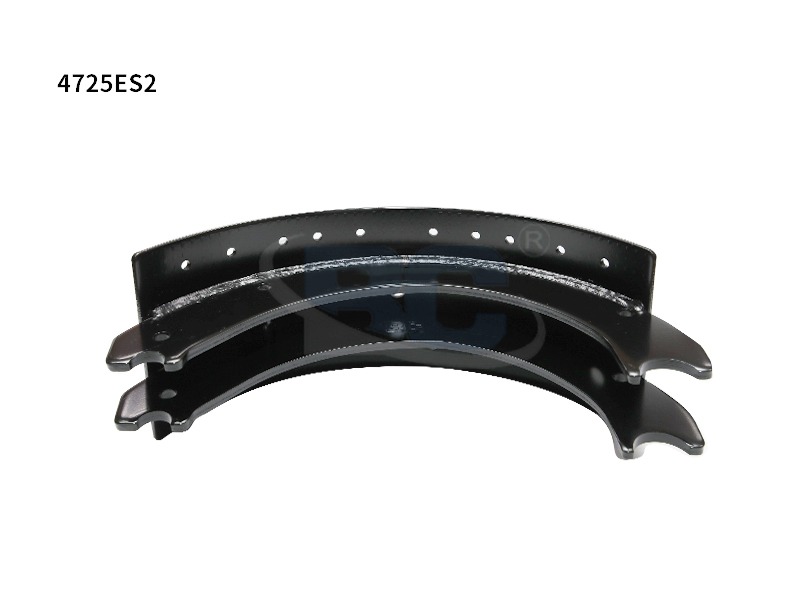
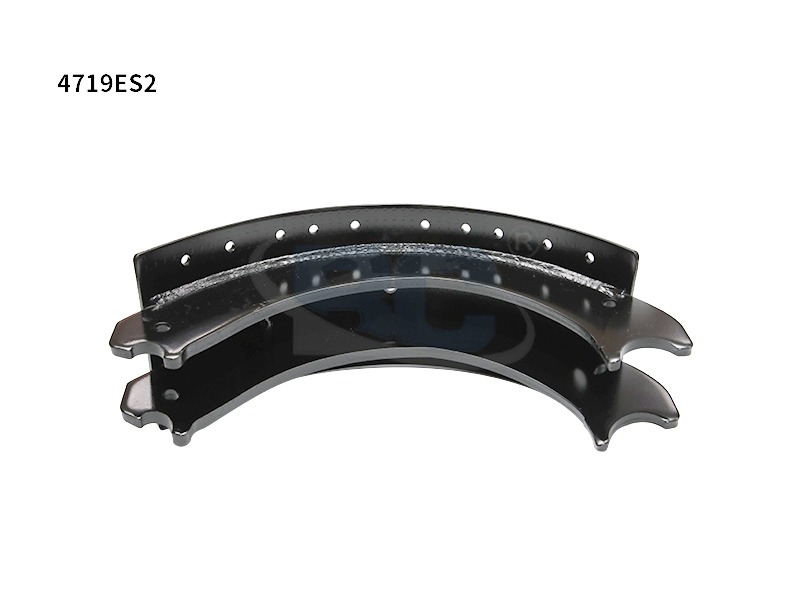
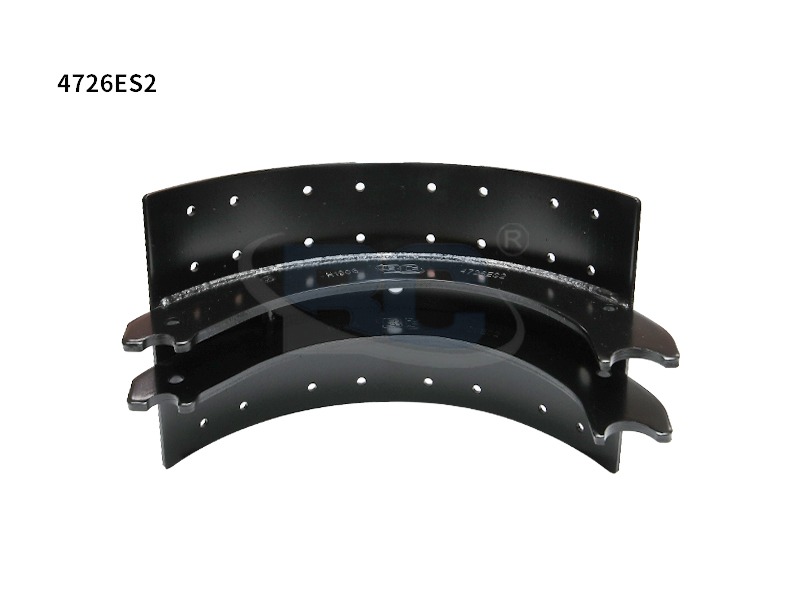
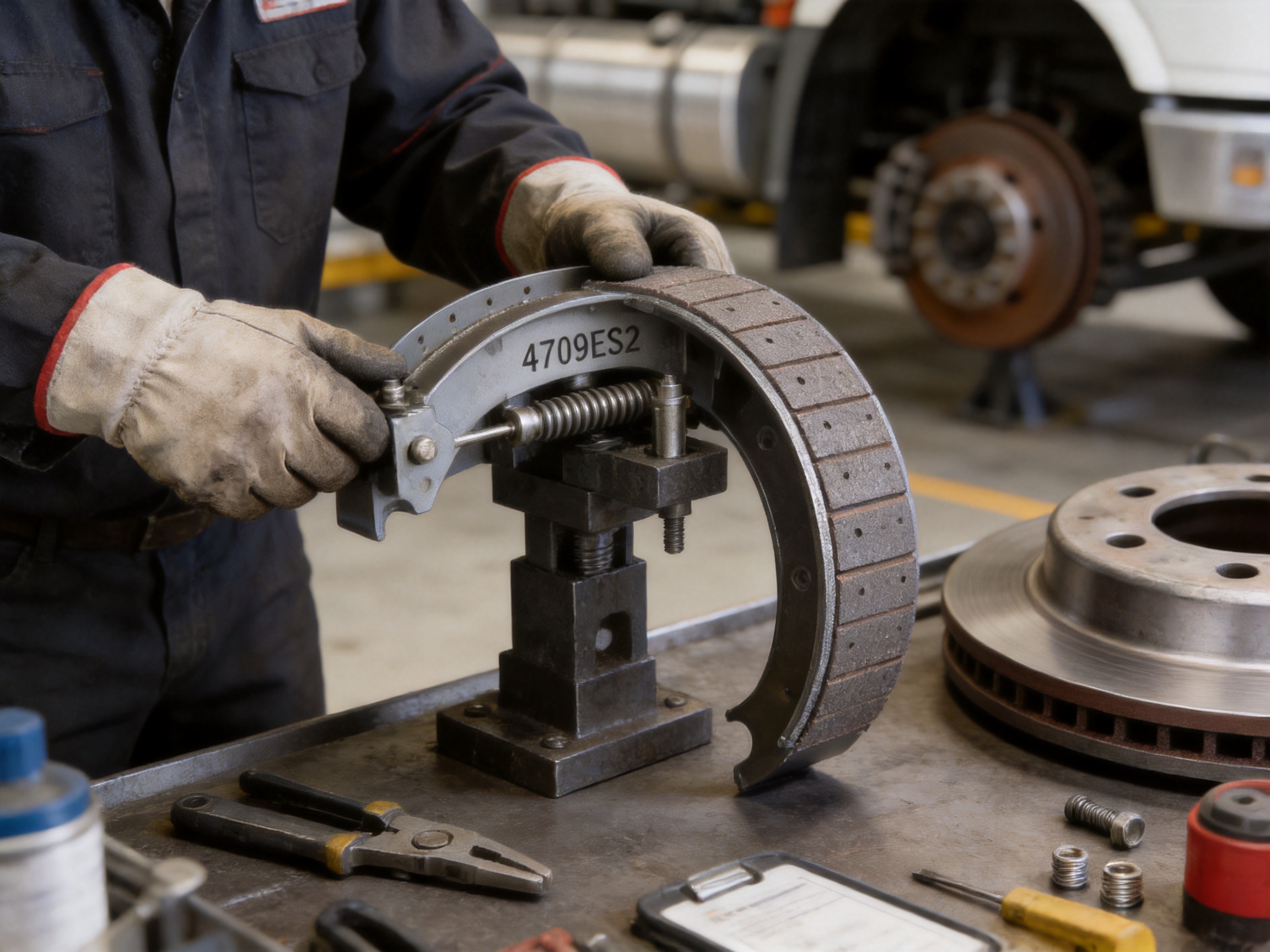
The 4709ES2 Brake Shoe is a steel brake shoe designed for heavy-duty brake service applications. Its supplied product information identifies it by part number 4709ES2, with a product size of 16.5 by 7 inches as specified in the source data and a 32-rivet-hole configuration. The product is also associated with OE number EATON 819707. These specifications make the component suitable for professional replacement, brake system rebuilding, and friction-material installation where the corresponding application requirements are confirmed.
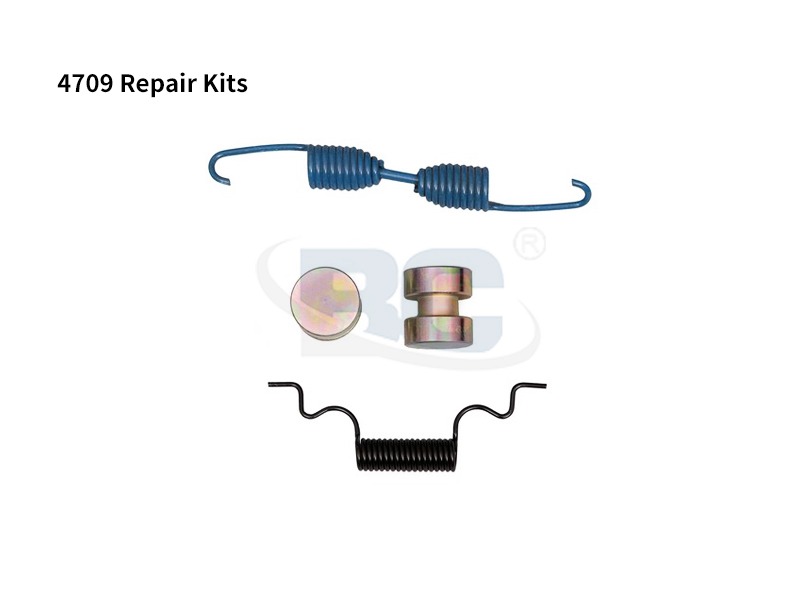
Manufactured by Zhejiang Bangchi Auto Parts Co., Ltd., the 4709ES2 is positioned within a broad range of heavy-duty brake components that includes steel brake shoes, casted brake shoes, brake linings, lined brake shoes, brake shoe repair kits, and lined brake shoe kits. This product-range approach is valuable for distributors, repair workshops, fleet maintenance departments, and brake specialists because it allows them to source related parts from one experienced production partner rather than combining components from multiple suppliers with different quality standards.
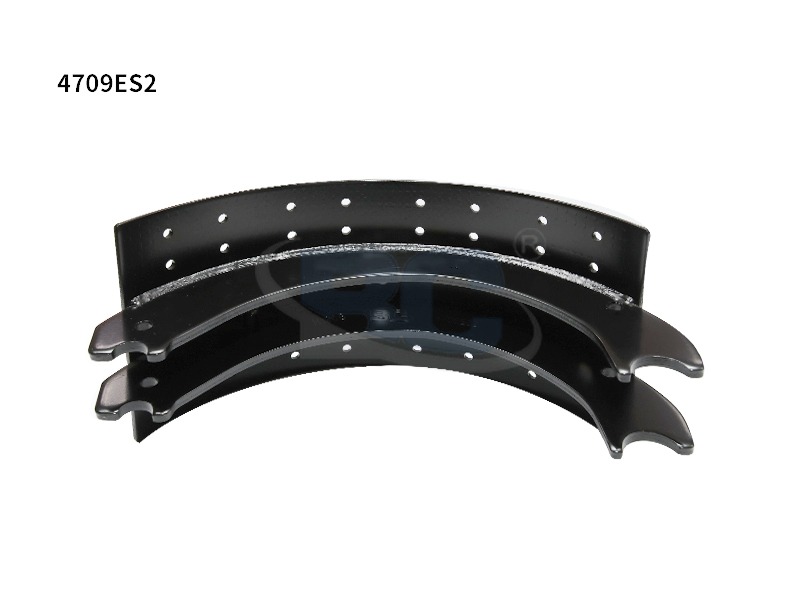
4709ES2 Brake Shoe
Product Overview and Application Identity
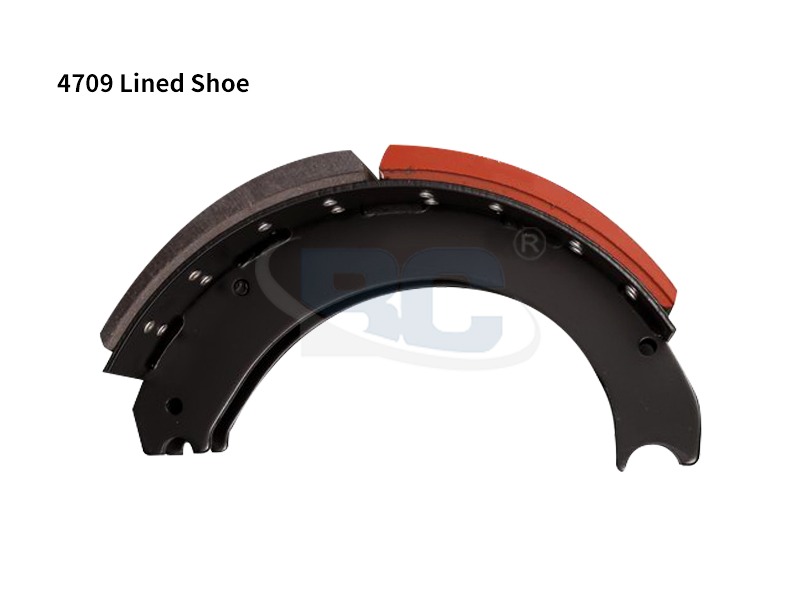
The 4709ES2 Brake Shoe is a steel brake shoe rather than a complete lined brake shoe assembly. This distinction is important. A steel brake shoe is the formed structural carrier that supports the friction lining. A lined brake shoe includes the steel shoe together with friction material that has been bonded or riveted to the shoe. Depending on the maintenance strategy, customers may purchase the bare steel shoe for rebuilding or select a complete lined assembly when faster installation is required.
The product’s part number provides the primary identification reference for purchasing and inventory control. The OE reference EATON 819707 provides an additional cross-reference for customers who need to match the replacement shoe with an existing brake system. Cross-reference information should always be checked against the vehicle, axle, drum, brake model, and service documentation before installation. Part numbers can be used across different catalogs and supply channels, so confirming the complete application remains a responsible step in professional brake maintenance.
The 32-rivet-hole layout is a significant practical feature. Rivet-hole quantity and positioning affect the way a lining is secured to the shoe. A correct hole pattern supports proper installation, helps distribute retention forces across the friction material, and reduces the possibility of an incorrect lining being fitted to the shoe. For brake rebuilding facilities, a clearly defined hole count also improves production planning because the correct lining and rivet specifications can be selected before assembly begins.
The size is listed as 16.5"*7"mm in the supplied information. Because the notation combines inch symbols with a millimeter designation, professional buyers should confirm the intended unit and the dimensional drawing before ordering large quantities or beginning installation. In practical purchasing communication, the required dimensions should include the shoe width, overall arc or drum diameter compatibility, lining contact area, hole spacing, offset, cam or anchor geometry, and any relevant thickness tolerances. Confirming these details protects the customer from an avoidable mismatch.
Why the Steel Brake Shoe Matters
In a drum brake system, the brake shoe transmits mechanical force from the actuating mechanism to the friction lining. When the brake is applied, the shoe moves outward and presses the lining against the inner surface of the rotating drum. The resulting friction slows the wheel and vehicle. This process produces mechanical loads, thermal exposure, vibration, and repeated cycles of expansion and contraction.
The shoe must therefore do more than simply hold a lining. It must preserve its geometry while supporting the braking force. If the shoe flexes excessively, has inaccurate contact points, or contains defects around the rivet holes, the friction material may not contact the drum evenly. Uneven contact can contribute to irregular wear, reduced braking efficiency, noise, heat concentration, or premature service requirements.
A well-produced steel brake shoe gives the entire assembly a stable platform. Its advantages become especially important in commercial vehicles, trailers, buses, vocational trucks, and other heavy-duty applications where braking components may operate under high loads and frequent stop-and-go conditions. The 4709ES2 is intended for this type of professional parts environment, where dimensional consistency and repeatable fit are more important than superficial appearance alone.
Key Specifications of the 4709ES2 Brake Shoe
| Specification | Product Information | Maintenance Significance |
|---|---|---|
| Part number | 4709ES2 | Primary identification for purchasing, cataloging, and replacement matching |
| Product type | Steel brake shoe | Structural carrier for a compatible brake lining or friction material |
| Listed product size | 16.5 by 7 inches as supplied | Provides an initial dimensional reference; final application dimensions should be verified |
| Rivet-hole quantity | 32 | Supports selection and installation of a compatible 32-hole lining |
| OE reference | EATON 819707 | Useful for cross-referencing an existing brake system or replacement requirement |
| Product category | Steel Brake Shoe | Distinguishes the component from lined shoes, linings, and repair kits |
This specification profile is concise, but it communicates the details that matter most at the initial sourcing stage. For fleet and distribution customers, the part number, OE reference, and hole count support inventory organization. For rebuilding facilities, the shoe type and hole pattern help determine the required lining and rivet combination. For export customers, the basic size provides a starting point for application confirmation and technical documentation.
Structural Advantages of a Steel Brake Shoe
Stable Support for Friction Material
The primary advantage of the 4709ES2 is that it provides a stable steel base for compatible friction material. A lining can only perform effectively when it is supported by a shoe with accurate geometry. The shoe helps maintain the intended radius and alignment of the lining against the drum, allowing the friction surface to work across its designed contact area.
A stable carrier also supports more predictable wear. When the shoe and lining are correctly matched, the friction material can wear in a controlled manner rather than concentrating pressure in isolated areas. This may improve service consistency and make inspection results easier to interpret during fleet maintenance.
Practical Rivet-Hole Configuration
The 32-hole design is another important advantage for professional rebuilding operations. A defined hole pattern helps technicians use the correct lining and installation method. It also supports distributed fastening across the lining length. Correct riveting is essential because the fasteners must secure the lining without damaging the friction material or creating irregularities that could interfere with drum contact.
For a repair shop, a standard hole pattern can reduce preparation time. Technicians can organize the correct lining, rivets, and tooling according to the established application. This is more efficient than adapting an unsuitable lining or drilling a shoe without approved technical instructions.
Compatibility-Oriented Identification
The combination of the 4709ES2 part number and EATON 819707 OE reference supports practical replacement identification. In a competitive aftermarket, clear references reduce uncertainty. Buyers can compare their existing component, vehicle documentation, and supplier catalog information before placing an order.
Good identification also helps prevent a common aftermarket problem: selecting a part based only on approximate appearance. Brake shoes can look similar while differing in width, offset, hole layout, anchor geometry, or operating position. A dedicated part number and OE cross-reference encourage a more disciplined selection process.
Suitable for Rebuilding and Replacement Programs
Because the 4709ES2 is supplied as a steel brake shoe, it can support multiple maintenance strategies. A brake rebuilding company may install a chosen friction lining according to its application and operating requirements. A distributor may stock the shoe for customers who prefer local lining installation. A fleet workshop may use the component in a controlled refurbishment program when the appropriate lining and riveting equipment are available.
This flexibility is a competitive advantage compared with products that are available only in one configuration. Some customers require complete lined shoes for rapid replacement, while others need bare shoes to meet their own friction-material specifications. A supplier with both shoe and lining-related product categories can better serve these different purchasing models.
Manufacturing Strengths Behind the Product
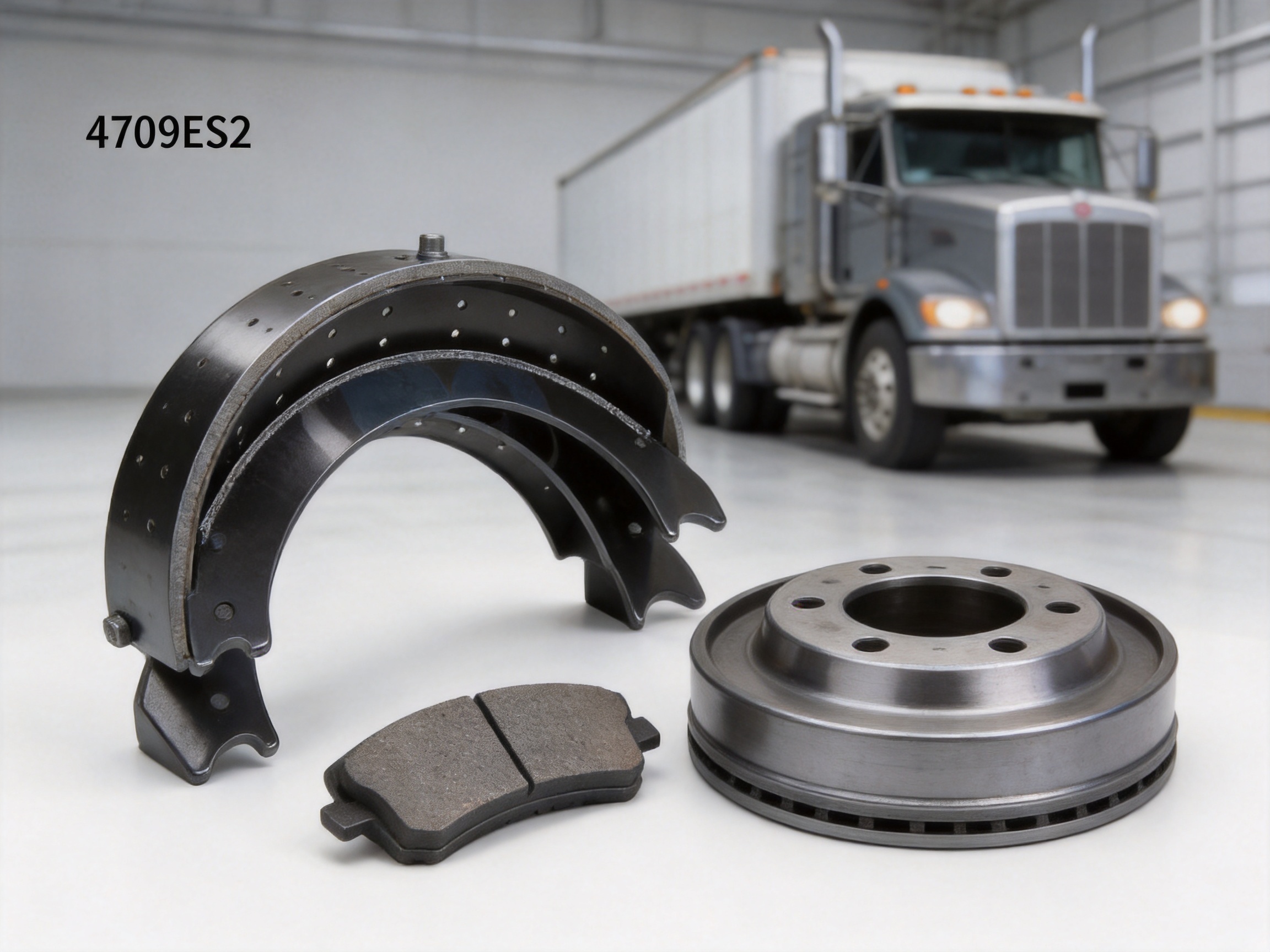
The performance of a brake shoe begins with the manufacturing process. A reliable component requires more than a basic steel profile. It depends on controlled forming, accurate tooling, consistent hole production, proper finishing, and inspection at multiple stages. Zhejiang Bangchi Auto Parts Co., Ltd. focuses on heavy-duty brake parts and supports product development and production around professional replacement requirements.
The company’s product portfolio includes several related categories, including steel brake shoes, casted brake shoes, brake linings, lined brake shoes, brake shoe repair kits, and lined brake shoe kits. This breadth indicates an ability to work across different brake-component formats and customer requirements. It also creates opportunities for coordinated product development, because knowledge gained from lining, riveting, and complete shoe assembly can inform the production of the structural shoe itself.
Application-Focused Product Development
Heavy-duty brake parts cannot be developed effectively through general-purpose metalworking alone. The supplier must understand application references, shoe geometry, lining requirements, and replacement expectations. The 4709ES2 is identified through a specific part number, OE reference, and rivet-hole count, demonstrating an application-focused approach to product definition.
In a professional manufacturing environment, product development normally begins with reference data such as original components, technical drawings, samples, customer specifications, or established aftermarket catalogs. These references are used to define the shoe profile, hole locations, operating features, and inspection points. The clearer the product definition, the easier it becomes to maintain consistency from one production batch to the next.
Controlled Steel Forming and Geometry
A steel brake shoe must be formed into a precise curved profile. The forming operation determines whether the shoe can support the lining and fit the brake drum assembly correctly. Controlled tooling helps maintain the intended curvature and reduces variation between individual pieces.
Accurate geometry is particularly important for heavy-duty brake systems because even small deviations can influence lining contact and installation quality. A dependable production process therefore pays attention to the shoe arc, width, edge condition, offset, and relationship between the structural profile and the mounting features.
Tooling condition is also important. Worn dies, inconsistent setup, or uncontrolled material springback can affect the final shape. A strong manufacturer monitors forming equipment, maintains production fixtures, and uses inspection methods that identify dimensional changes before they become widespread across a batch.
Accurate Rivet-Hole Production
The 32 rivet holes of the 4709ES2 must be positioned consistently. Hole spacing, diameter, alignment, and edge quality all influence the lining installation process. Poorly formed holes may make riveting difficult, damage the lining, or create excessive clearance around the fastener.
Accurate hole production can be achieved through dedicated tooling, controlled punching or drilling operations, and inspection against approved product specifications. The exact equipment may vary according to production volume and design, but the manufacturing objective remains the same: every hole must be located and formed in a way that supports a secure, repeatable lining installation.
When the hole pattern is consistent, customers benefit from easier assembly and fewer rejected parts. This is a direct competitive advantage over low-control products that may offer a similar visual profile but show variation in hole position or size.
Surface Preparation and Finish Control
The steel shoe surface should be properly prepared before storage, shipment, or lining installation. Surface condition affects corrosion resistance, handling, and the ability of the component to remain serviceable during the time between manufacture and assembly.
Finish control may include cleaning, removal of production residue, inspection for sharp edges, and application of an appropriate protective treatment where specified. The goal is not simply to make the product attractive. It is to protect the steel, support safe handling, and ensure that contact areas and rivet-hole regions are free from defects that could interfere with assembly.
Inspection and Batch Consistency
Manufacturing strength is demonstrated through repeatability. A single correctly made shoe is not enough for fleet and distribution customers; the supplier must be able to produce consistent parts across regular orders. Batch inspection should focus on key characteristics such as dimensions, hole count, hole position, profile, visible defects, and compatibility with the approved reference.
Consistent inspection also helps identify process trends. If measurements begin to move toward an unacceptable limit, corrective action can be taken before the issue affects a larger quantity of product. This type of process discipline helps reduce variation and improves customer confidence.
Advantages Compared with Generic Aftermarket Alternatives
The aftermarket contains many brake shoes with similar shapes and broad application claims. However, a product should not be judged solely by whether it resembles an original component. The more important comparison concerns identification, repeatability, assembly support, and supplier capability.
Better Reference Clarity
The 4709ES2 has a defined part number and an OE reference of EATON 819707. This is more useful than a generic description such as “heavy truck brake shoe” without a precise application code. Clear references make it easier for purchasing teams to compare quotations, maintain records, and reorder the same component.
More Efficient Rebuilding
The 32-rivet-hole configuration gives rebuilding professionals a concrete technical reference. A generic shoe may require additional checking before the correct lining can be selected. A clearly specified hole count streamlines the preparation process and reduces the possibility of pairing the shoe with an unsuitable lining.
Broader Product Support
A supplier that offers steel shoes together with linings, lined shoes, and repair kits can provide a more complete replacement solution. This can reduce the number of separate supplier relationships and make it easier to coordinate related parts. It may also support private-label, wholesale, and application-specific purchasing programs.
Closer Alignment with Professional Aftermarket Needs
Heavy-duty customers generally require dependable supply, clear specifications, practical packaging, and responsive technical communication. A manufacturer focused on commercial brake parts is more likely to understand these requirements than a supplier whose main business is light-duty or general metal components.
Potential for Application Customization
When a company works across multiple brake-part categories, it may be better positioned to support variations in lining type, fastening method, packaging, or assembly format. Custom requirements should be confirmed directly with the manufacturer, but a specialized product portfolio provides a stronger starting point than an undifferentiated commodity supply chain.
Manufacturing Process from Material to Finished Shoe
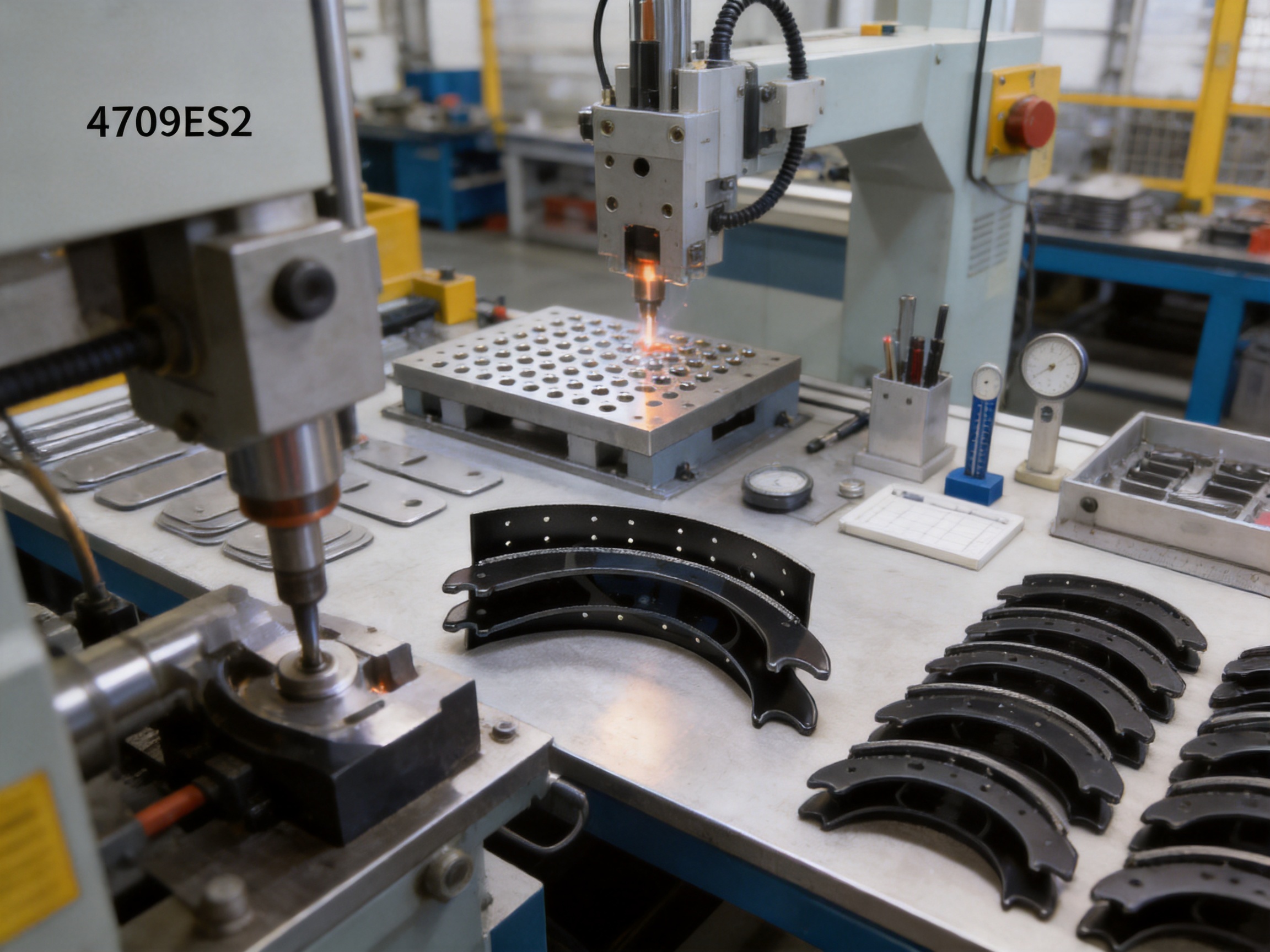
Although individual production details depend on the approved technical specification, a professional steel brake shoe manufacturing process can be understood through several essential stages. Each stage contributes to the final performance and supply reliability of the 4709ES2.
1. Material Selection
The process begins with steel selected for the required strength, formability, and service conditions. The material must be suitable for forming without excessive cracking or distortion while also providing adequate structural support during braking. Material control includes receiving checks, identification, storage, and protection from contamination or unnecessary corrosion.
For heavy-duty parts, material selection should balance forming performance with structural stability. A material that is easy to shape but lacks suitable strength may not provide the desired service performance. Conversely, a material that is excessively difficult to form can increase production variation and tool wear.
2. Blank Preparation
The steel is prepared into blanks or starting shapes that correspond to the brake shoe design. Accurate blank preparation helps control the amount of material available for forming and reduces unnecessary waste. It also supports repeatable positioning of later features such as holes, edges, and mounting areas.
At this stage, edge quality matters. Rough or irregular edges can complicate forming and create additional finishing requirements. Controlled cutting and proper handling help maintain a clean starting component.
3. Forming and Curving
The blank is formed into the required shoe profile using appropriate tooling. The forming operation establishes the curved support surface for the lining and determines how the shoe relates to the brake drum assembly.
Process control may include fixture setup verification, tool maintenance, sample measurement, and periodic dimensional checks. These controls help manage springback and ensure that the finished shoe remains within the approved profile requirements.
4. Hole Formation
The 32 rivet holes are produced according to the product layout. Their position and size must correspond to the compatible lining and fastening system. Hole formation should be controlled to prevent deformation, burrs, cracking, or misalignment.
After hole production, inspection can verify both the count and the pattern. A simple hole-count check confirms that the shoe is the intended design, while a fixture or measuring system can confirm that the holes are correctly positioned.
5. Edge and Surface Treatment
After forming and hole production, the shoe may undergo edge finishing and surface preparation. Sharp edges, loose particles, and production residue should be removed or controlled. These steps improve handling safety and help prepare the shoe for protective finishing or lining installation.
6. Dimensional and Visual Inspection
Inspection is used to verify the most important characteristics. Typical checks may include overall dimensions, width, profile, hole count, hole diameter, hole location, surface condition, and visible deformation. The inspection plan should be based on the approved technical drawing or product standard.
Visual inspection remains valuable even when dimensional equipment is available. Cracks, incomplete forming, surface damage, excessive burrs, and corrosion can often be detected through a careful visual review. Combining visual and dimensional inspection provides a more complete quality assessment.
7. Identification, Packaging, and Shipment
Finished shoes should be identified in a way that preserves part-number accuracy through storage and distribution. Labels, batch references, packaging quantities, and protective materials all contribute to order control. Proper packaging also helps prevent scratches, deformation, moisture exposure, and mixing of similar-looking parts.
For international customers, packaging should be suitable for handling through multiple logistics stages. Strong cartons, separators, and clear labels can reduce the risk of damage or confusion during transportation and warehouse operations.
Quality Management Considerations for Professional Buyers
When evaluating the 4709ES2, customers should consider both the product specification and the supplier’s quality-management approach. A dependable purchase process normally includes confirmation of the part number, OE reference, dimensions, hole pattern, finish, packaging, and inspection documentation where required.
Buyers should also ask whether the supplier can provide technical drawings, sample approval, product photographs, inspection reports, or pre-shipment checks for a particular order. These documents are especially useful when the part is being introduced into a new market, private-label program, or fleet maintenance system.
Quality should be evaluated over repeated deliveries rather than through one sample alone. Consistent lot-to-lot performance is essential for distributors who need to maintain stable inventory and for fleets that want predictable service procedures. A manufacturer with experience in heavy-duty brake parts is better placed to understand this requirement.
Installation and Service Guidance
The 4709ES2 should be installed only by qualified personnel using the correct brake-system procedures. Before installation, the technician should compare the replacement shoe with the removed component or approved technical reference. The part number, shape, width, hole count, mounting features, and operating orientation should all be confirmed.
If the shoe is being used for relining, the compatible friction material must be selected according to the brake application and approved service requirements. The lining should match the 32-hole layout and fit the shoe without forced bending, excessive gaps, or unauthorized modification.
Riveting must be performed with suitable equipment and the correct rivets. The rivets should be installed in the proper sequence and formed securely without cracking the lining or distorting the shoe. The finished lining should sit firmly against the shoe, with no loose sections, raised edges, or abnormal gaps.
The brake drum should also be inspected before the rebuilt shoe is installed. Excessive wear, scoring, cracking, heat damage, or an unsuitable internal diameter can affect the performance of a new shoe and lining. Replacing the shoe without evaluating the mating drum may lead to premature wear or poor contact.
After assembly, the brake system should be adjusted and tested according to the vehicle or axle manufacturer’s service procedure. The technician should verify free movement, correct clearance, proper return action, and balanced braking. A controlled bedding-in procedure may be needed for the selected lining material.
Maintenance Benefits for Fleets and Workshops
A clearly identified steel brake shoe can simplify fleet maintenance. When part numbers and application references are recorded accurately, maintenance teams can standardize replacement procedures and reduce time spent searching for uncertain alternatives. The 4709ES2 can be included in a controlled inventory system with its part number, OE reference, dimensions, and 32-hole specification.
For workshops that rebuild shoes, the product supports a repeatable workflow. Technicians can inspect the bare shoe, select the correct lining, prepare the rivets, complete the assembly, and document the finished component. This process can be more economical than replacing every brake shoe with a complete assembly, particularly when the workshop already has suitable relining equipment.
Distributors can also benefit from the product’s position within a wider brake-parts range. Stocking related steel shoes, linings, lined shoes, and repair kits allows distributors to serve different customer preferences. Some buyers may need only the structural shoe, while others may request a ready-to-install kit. A coordinated range improves product organization and creates opportunities for application-based selling.
Company Manufacturing and Supply Capabilities
Zhejiang Bangchi Auto Parts Co., Ltd. is located in Haining, Zhejiang, China, and specializes in heavy-duty brake parts. Its product scope covers structural brake shoes, casted brake shoes, friction linings, lined assemblies, and repair kits. This specialization is relevant because commercial brake components require dedicated product knowledge and a strong understanding of replacement-market requirements.
The company states that it provides OEM brake parts following the global FMSI numbering system. Numbering systems are important in the friction-material and brake-parts industry because they provide a structured way to identify products and connect replacement components with established applications. A manufacturer familiar with systematic numbering is better equipped to support catalog development, cross-reference work, and international distribution.
Its manufacturing strength is also reflected in the ability to serve multiple product formats. A supplier producing both bare and assembled brake products can coordinate structural components and friction-material requirements more effectively. This can be helpful for customers seeking a single source for brake shoe programs, repair kits, and related replacement products.
For original-equipment-style and aftermarket customers, communication is another important strength. Technical questions about application, dimensions, samples, packaging, production quantities, and inspection requirements should be discussed before an order is finalized. Direct communication allows the supplier and customer to confirm requirements rather than relying on assumptions based on a product photograph.
Ordering Recommendations
When requesting the 4709ES2 Brake Shoe, customers should provide the complete part number and identify the OE reference EATON 819707. They should also confirm whether they require bare steel shoes, lined brake shoes, or a repair kit. Stating the intended application and quantity helps the supplier recommend the correct product format.
Customers should request confirmation of the listed size because the source specification presents the dimension as 16.5"*7"mm. The intended unit, measurement points, and dimensional tolerance should be clarified before production or shipment. A technical drawing or sample comparison is recommended for customers who are introducing the product into a new application.
It is also advisable to confirm packaging quantity, surface treatment, labeling, available inspection documents, lead time, and shipping requirements. These factors may not change the physical performance of the shoe, but they have a major effect on inventory management and distribution efficiency.
How the 4709ES2 Supports Competitive Aftermarket Positioning
For wholesalers and distributors, the product can be positioned around several practical benefits: clear application identity, a defined 32-hole layout, compatibility with professional rebuilding operations, and access to a broader heavy-duty brake-parts portfolio.
For repair workshops, the main value is process flexibility. The bare shoe allows the technician or rebuilder to select a suitable lining and complete the assembly according to the intended service application. This can be useful when local regulations, fleet policies, or customer preferences require a particular friction-material specification.
For fleet operators, consistent part identification and supplier communication can support maintenance planning. A fleet may use the 4709ES2 as part of a documented brake-component program, provided that the component is confirmed for the specific axle and drum application. Standardization can help reduce training complexity, improve stock control, and make service records easier to analyze.
Compared with an anonymous or poorly documented alternative, the 4709ES2 offers a stronger basis for professional sourcing. Its part number, OE reference, and rivet-hole count provide tangible information for evaluation. The manufacturer’s focus on heavy-duty brake components adds further value for customers that need more than a general metal part.
Q&A: Common Questions About the 4709ES2 Brake Shoe
What type of component is the 4709ES2?
The 4709ES2 is a steel brake shoe. It is the structural component that supports compatible friction lining inside a drum brake system. It should not automatically be considered a complete lined brake shoe unless the order specifically includes the lining and assembly.
What is the OE reference for this product?
The supplied product information identifies EATON 819707 as the OE number associated with the 4709ES2. Customers should still confirm the complete application before installation because OE cross-references should be checked against the vehicle, axle, brake model, and technical specifications.
How many rivet holes does the shoe have?
The product has 32 rivet holes. This information is important when selecting a compatible brake lining and rivet set for rebuilding.
What size is the 4709ES2?
The supplied data lists the product size as 16.5"*7"mm. Because the notation combines inch and millimeter symbols, buyers should request confirmation of the intended unit and measurement definition before ordering. A technical drawing or approved sample comparison is recommended.
Can the 4709ES2 be purchased with a lining?
The listed product is a steel brake shoe, but the manufacturer also offers brake linings, lined brake shoes, brake shoe repair kits, and lined brake shoe kits. Customers should specify whether they need the bare shoe or a complete lined configuration when requesting a quotation.
Is this product intended for heavy-duty vehicles?
The product is included in a heavy-duty brake-parts range and is presented for professional brake applications. Application compatibility must be confirmed before use, especially for commercial vehicles, trailers, buses, and heavy trucks.
Why is the rivet-hole pattern important?
The hole pattern determines whether a lining can be properly installed on the shoe. A correct 32-hole lining and suitable rivets help distribute fastening forces and support secure contact between the lining and shoe.
What should be checked before installation?
The technician should check the part number, OE reference, dimensions, shoe profile, hole count, mounting geometry, lining compatibility, drum condition, and brake-system application. Installation should follow approved service procedures and be completed by qualified personnel.
What makes this product different from a generic brake shoe?
The 4709ES2 has a defined part number, an OE cross-reference, and a specified 32-hole configuration. It is also supplied by a manufacturer focused on heavy-duty brake products and related replacement categories. These characteristics provide better identification and application support than an unspecified generic component.
Can the product support fleet or wholesale purchasing?
Yes, the product is suitable for consideration in fleet, workshop, distributor, and wholesale programs when application compatibility has been confirmed. Customers should discuss quantity, packaging, labeling, inspection requirements, and delivery schedules with the manufacturer.
Does the product come from a manufacturer with related brake components?
Yes. The manufacturer’s product categories include steel brake shoes, casted brake shoes, brake linings, lined brake shoes, brake shoe repair kits, and lined brake shoe kits. This broader range can help customers source related parts through one specialized supplier.
Recommended Inspection Checklist
| Inspection Item | Recommended Check |
|---|---|
| Identification | Confirm part number 4709ES2 and the EATON 819707 reference |
| Dimensions | Verify all dimensions against the approved drawing or application data |
| Unit clarification | Confirm the interpretation of the listed 16.5 by 7 size before ordering |
| Rivet holes | Count all 32 holes and check location, diameter, and edge condition |
| Profile | Compare the shoe arc, width, offset, and mounting geometry with the original |
| Surface | Check for excessive corrosion, burrs, cracks, deformation, or production residue |
| Lining match | Confirm that the selected lining and rivets correspond to the shoe design |
| Packaging | Check labels, quantity, protection, and batch information upon receipt |
This checklist can be adapted for incoming inspection, workshop rebuilding, or fleet receiving procedures. It does not replace the vehicle or brake-system manufacturer’s technical instructions, but it provides a useful framework for reducing preventable errors.
Conclusion
The 4709ES2 Brake Shoe is a professional steel brake component identified by part number 4709ES2, a 32-rivet-hole configuration, and the OE reference EATON 819707. Its role is to provide a stable structural base for compatible brake lining in heavy-duty drum brake applications.
Its main advantages include clear product identification, a defined rivet-hole pattern, suitability for rebuilding programs, and compatibility with a broader range of brake-part purchasing strategies. The product is particularly relevant to distributors, fleet maintenance departments, brake rebuilders, and workshops that require dependable structural shoes rather than unverified generic substitutes.
The manufacturing value behind the product comes from application-focused development, controlled steel forming, accurate hole production, surface and edge preparation, dimensional inspection, and organized packaging. Zhejiang Bangchi Auto Parts Co., Ltd. strengthens this offering through its specialization in heavy-duty brake parts and its wider range of shoes, linings, lined assemblies, and repair kits.
Before purchase or installation, customers should confirm the listed dimensions, vehicle and axle application, drum compatibility, lining requirements, and service instructions. With these checks completed, the 4709ES2 can serve as a reliable foundation for professional brake rebuilding and replacement programs.
References
1. Product specification supplied for the 4709ES2 Brake Shoe, including part number, listed size, rivet-hole quantity, and OE reference.
2. Heavy-Duty Vehicle Brake System Service Practices, general principles for drum brake inspection, adjustment, relining, and component replacement.
3. Commercial Vehicle Brake Component Identification Guidelines, principles for using part numbers, OE references, dimensions, and application data.
4. Friction Material Installation and Riveting Practices, general guidance for matching linings, rivets, shoe profiles, and assembly procedures.
5. Manufacturer product-category information covering steel brake shoes, casted brake shoes, brake linings, lined brake shoes, brake shoe repair kits, and lined brake shoe kits.