 English
 简体中文
简体中文Introduction
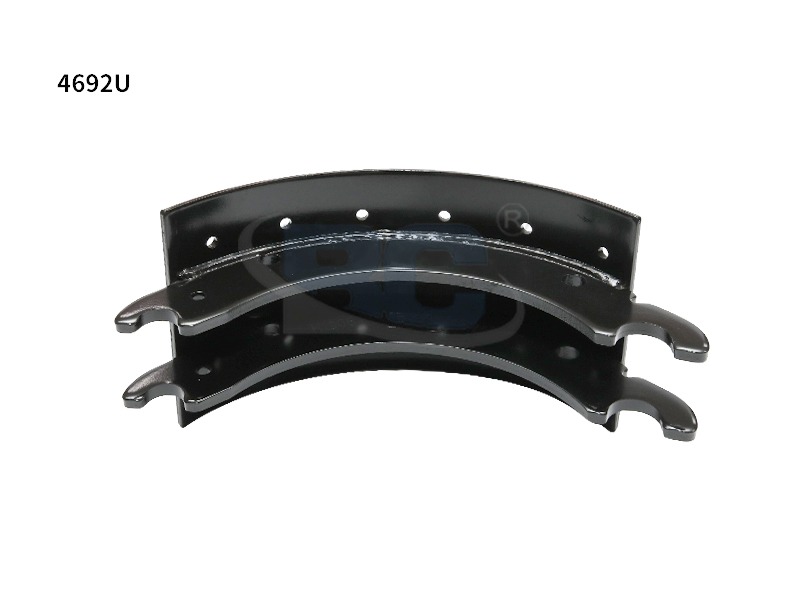
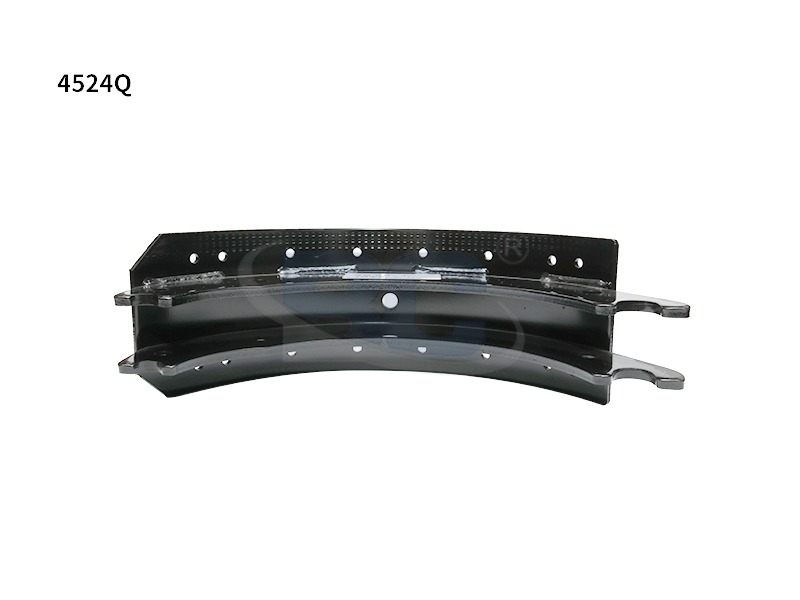
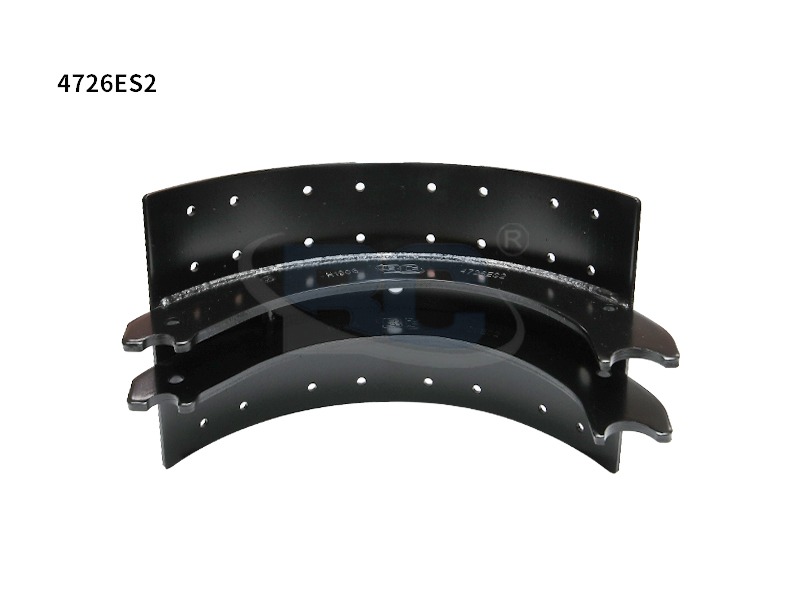
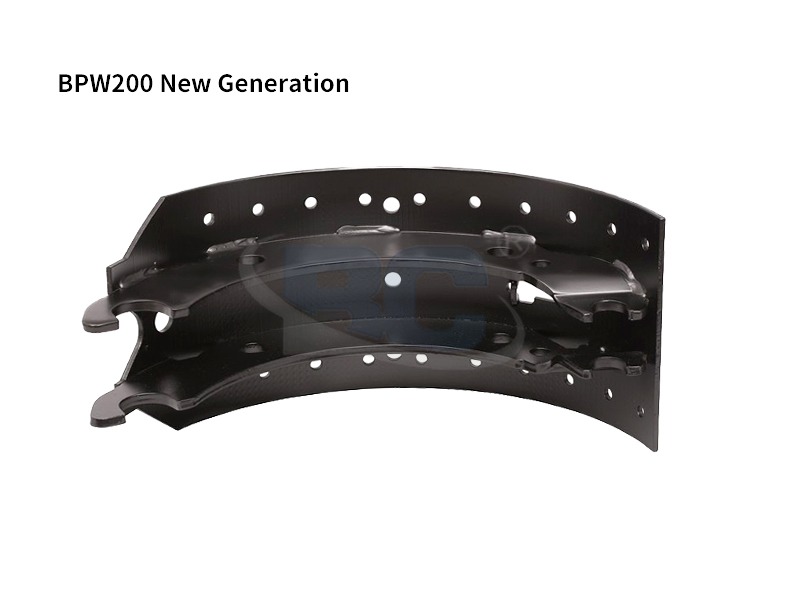
Brake shoes are essential structural and friction-support components in many heavy-duty drum brake systems. They transfer the force generated by the wheel cylinder or cam mechanism to the brake lining, allowing the lining to press against the inside surface of the brake drum. Because this operation is repeated under high loads, elevated temperatures, vibration, dust, moisture, and changing road conditions, the quality of the brake shoe directly influences braking consistency, service life, maintenance requirements, and vehicle safety.
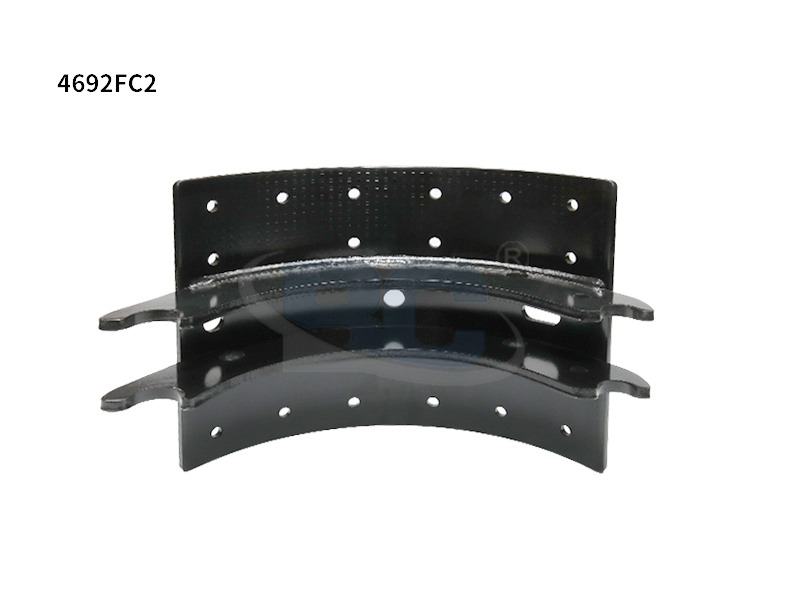
The 4692FC2 Brake Shoe is a steel brake shoe designed for commercial vehicle and heavy-duty brake applications. It is identified by the part number 4692FC2 and is manufactured according to an established brake component configuration. The supplied product information specifies a product size of 12.25 inches by 7.5 inches and a total of 20 rivet holes. These characteristics make the shoe suitable for brake assemblies that require a precisely positioned steel foundation and a matching riveted brake lining.
As a component used in demanding transportation environments, the 4692FC2 is intended to support stable lining installation, dependable mechanical strength, and consistent replacement performance. It can be considered by fleet operators, brake service centers, distributors, vehicle maintenance companies, and original-equipment-oriented buyers seeking a steel brake shoe that follows a recognizable FMSI-based numbering approach.
Zhejiang Bangchi Auto Parts Co., Ltd. focuses on heavy-duty brake components, including steel brake shoes, casted brake shoes, brake linings, lined brake shoes, brake shoe repair kits, and lined brake shoe kits. Its product range reflects an understanding of the complete brake shoe replacement process, from the bare steel foundation to the finished lined assembly and repair accessories.
This article explains the construction, application value, production considerations, quality advantages, installation requirements, and purchasing considerations associated with the 4692FC2 Steel Brake Shoe. It also describes how a specialized manufacturer can create value through controlled manufacturing processes, dimensional discipline, product identification, and support for OEM-oriented brake part supply.
4692FC2 Brake Shoe
Product Overview
The 4692FC2 is a steel brake shoe supplied as a brake shoe foundation component. Its primary purpose is to provide a firm, shaped base for the brake lining and to transmit braking force across the brake assembly. The shoe must maintain its shape while the lining is pressed against the drum, and it must remain compatible with the brake hardware used for positioning, return, actuation, and retention.
The basic product information is summarized below.
| Item | Specification |
|---|---|
| Product name | 4692FC2 Brake Shoe |
| Product category | Steel Brake Shoe |
| Part number | 4692FC2 |
| Product size | 12.25 inches by 7.5 inches, according to the supplied product listing |
| Number of rivet holes | 20 |
| Product type | Steel foundation brake shoe for compatible drum brake applications |
| OE number | Not specified in the supplied information |
| Typical use | Heavy-duty commercial vehicle brake service and replacement applications |
The listed dimensions and rivet-hole count are important identification references, but buyers should always compare them with the original brake shoe, vehicle records, drum brake specifications, and application catalog before installation. Brake shoe dimensions can include different measurement conventions depending on the manufacturer, and the supplied listing presents the size as “12.25 inches by 7.5 inches mm.” For procurement accuracy, the exact measurement method should be confirmed with the supplier before a large order or safety-critical replacement.
The 20-hole configuration is particularly relevant when selecting a matching brake lining. A lining with the wrong hole pattern may not sit correctly on the shoe, may require unsuitable modifications, or may create uneven contact with the drum. For this reason, the steel shoe and its lining should be treated as a matched system. The hole locations, hole spacing, shoe curvature, lining length, and lining thickness all contribute to the quality of the final brake assembly.
Why the Steel Foundation Matters
A brake lining produces friction, but the steel brake shoe provides the mechanical support that allows the lining to perform its function. When the brake is applied, the actuator forces the shoe outward. The shoe then transfers this force to the lining, and the lining contacts the drum. If the shoe bends excessively, loses its designed curvature, or has poor contact with the lining, braking performance can become inconsistent even when the friction material itself is properly selected.
The steel foundation must therefore balance rigidity, shape retention, manufacturability, and compatibility with the brake assembly. It must be strong enough to carry repeated braking loads while maintaining the correct geometry. It must also be manufactured with suitable edge quality and hole placement so that the lining can be riveted securely and the shoe can operate without interfering with neighboring hardware.
The 4692FC2 is designed around these fundamental requirements. As a dedicated steel brake shoe, it offers a clean foundation for replacement lining installation and allows customers to select a lining formulation suitable for their particular vehicle, load profile, operating environment, and maintenance strategy. This flexibility is valuable for repair businesses that serve multiple fleets or use different lining materials according to regional regulations and operating conditions.
Advantages in Heavy-Duty Applications
Stable Mechanical Support
One of the principal advantages of a steel brake shoe is its ability to provide a stable base for the friction lining. Heavy commercial vehicles can operate at high gross weights and may brake repeatedly on highways, urban roads, grades, and construction routes. During these events, the brake shoe experiences mechanical loading that can be much higher than the loads found in light passenger vehicles.
A properly manufactured shoe helps distribute actuator force across the lining area. This supports more uniform lining contact and reduces the risk of localized pressure concentration. Uniform support can contribute to even lining wear, more predictable brake response, and improved use of the available friction material.
Compatibility with Riveted Lining Systems
The 4692FC2 has 20 rivet holes, giving it a defined interface for a compatible brake lining. Riveted lining systems remain widely used in heavy-duty repair because they provide a mechanically secure connection and allow service centers to replace worn friction material without discarding a reusable steel shoe, provided that the shoe remains within acceptable service condition.
For repair specialists, a bare steel shoe can provide a practical alternative to purchasing only a finished lined assembly. The workshop can select the lining material and rivet specification, perform the assembly using its own approved process, and maintain control over the final repair configuration. This can be useful when vehicles operate under different loads, temperatures, speeds, or regional service requirements.
Recognizable Part Identification
The 4692FC2 part number provides a clear reference for purchasing, inventory management, and replacement planning. In commercial vehicle maintenance, a precise part number reduces confusion between similar-looking brake shoes that may differ in width, radius, hole count, or mounting geometry.
A structured part-numbering approach also assists distributors and fleet maintenance teams. Instead of relying only on photographs or general descriptions, buyers can connect the required shoe to internal inventory codes, service records, lining references, and procurement documents. Zhejiang Bangchi Auto Parts Co., Ltd. states that it provides OEM brake parts following the global FMSI numbering system, which supports organized identification for customers who use industry-based brake part references.
Flexibility for Fleet Maintenance
Fleet operators often need to balance safety, availability, service time, and cost. A steel brake shoe that can be supplied as a bare foundation may help a workshop organize its own lining replacement program. It can also be used as part of a broader product strategy that includes lined brake shoes and lined brake shoe kits.
This product flexibility is one area where a specialized brake component supplier may offer an advantage over a general automotive parts seller. A supplier with several related product categories can help customers source complete brake repair requirements from a more consistent product family. This may simplify qualification, packaging, purchasing, and technical communication.
Comparison with Generic or Lower-Control Brake Shoes
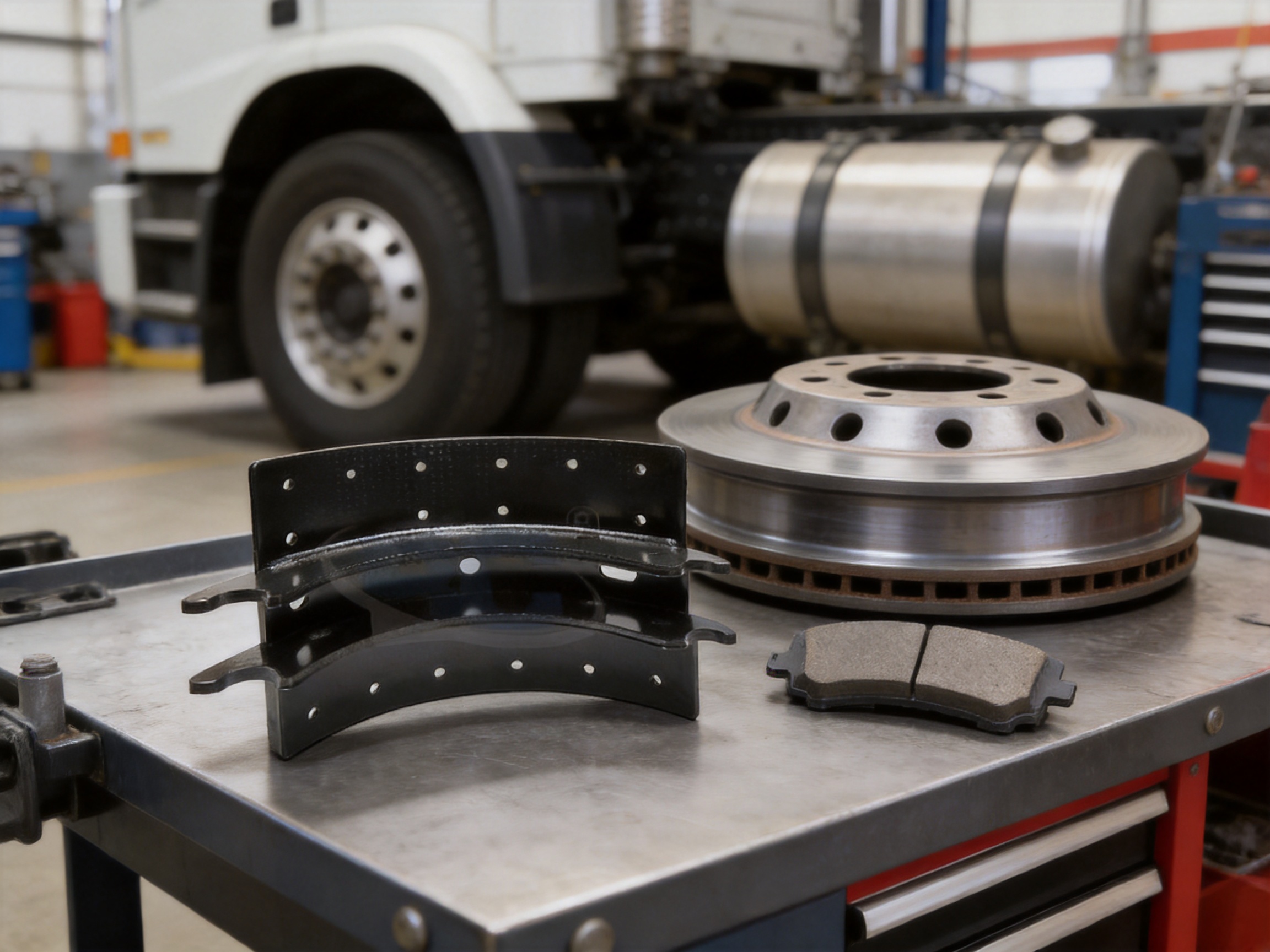
Not all replacement brake shoes provide the same level of manufacturing consistency. A low-cost generic shoe may appear similar in a photograph but differ in the details that influence assembly and service performance. Differences can include the shoe radius, flange profile, material thickness, hole position, edge finish, surface condition, and overall dimensional accuracy.
The 4692FC2 is positioned as a purpose-identified heavy-duty steel brake shoe rather than an unspecified universal component. Its part number, defined 20-hole pattern, and listed size provide more information for application matching. This is an important advantage over products sold only by broad descriptions such as “truck brake shoe” or “heavy vehicle shoe.”
Another potential advantage is the relationship between the bare shoe and the manufacturer’s wider brake product range. When the supplier also produces brake linings, lined brake shoes, and repair kits, it can develop a more integrated understanding of the interfaces between these components. This does not remove the need for customer verification, but it can improve communication when a buyer needs a complete compatible system rather than an isolated replacement part.
Manufacturing control is also important. A brake shoe that has inconsistent hole locations can create problems during riveting. A shoe with an inaccurate curvature may produce uneven lining contact. A shoe with poorly finished edges may complicate handling or interfere with adjacent components. A specialized manufacturer can reduce these risks through dedicated tooling, process inspection, and product-specific production records.
It is important to describe these advantages accurately. The product should not be selected solely because it is described as heavy-duty. The purchaser should confirm the brake application, size, hole pattern, lining compatibility, drum dimensions, and operating requirements. The advantage of the 4692FC2 is that it offers a defined, traceable product specification for this verification process.
Manufacturing Process and Production Strengths
Engineering and Part Development
Brake shoe manufacturing begins with product engineering and application definition. The manufacturer must establish the shoe profile, width, curvature, mounting interfaces, rivet-hole arrangement, and relationship to the corresponding brake lining. For a part such as the 4692FC2, the part number functions as the central reference for drawings, tooling, inspection requirements, packaging, and customer communication.
At this stage, a careful manufacturer considers the operating role of the shoe within the complete brake system. The shoe must fit the drum assembly, accept the specified lining, and accommodate the hardware that controls movement. Engineering discipline at the beginning of the process helps prevent errors from being repeated during forming, drilling, finishing, and assembly.
Material Preparation
The steel used for a brake shoe must be suitable for forming and repeated mechanical loading. Material preparation includes receiving, identification, dimensional review, and cutting or blanking according to the product design. The purpose is to create a repeatable starting shape that can be processed into the required shoe geometry.
Material traceability can help a manufacturer investigate quality questions and maintain consistency between production batches. A specialized brake parts factory can organize material records according to product family and production order, helping customers receive more dependable replacement parts over time.
Forming and Curvature Control
Forming is a critical step because the brake shoe must follow the intended drum-related curvature. If the curvature is too open, too tight, or inconsistent from one end to the other, the lining may not contact the drum evenly. Forming equipment and dedicated tooling help establish a repeatable profile.
The production process should control springback, material movement, and the relationship between the shoe web and the lining support surface. These factors are particularly important for commercial vehicle applications, where the brake assembly must operate under repeated loads and temperature changes.
Accurate forming also helps with final assembly. A shoe that maintains its intended shape is easier to match with a lining and easier for a service technician to install. It can reduce the likelihood of forcing a lining into position or compensating for a dimensional mismatch during riveting.
Rivet-Hole Production
The 20 rivet holes are a defining feature of the 4692FC2. Their location and diameter must correspond with the selected lining and rivets. Hole production may involve dedicated punching, drilling, or other controlled methods, depending on the production design and equipment used.
Hole quality includes more than simply achieving the correct hole count. The hole must be positioned accurately, have an appropriate diameter, and maintain suitable edge condition. Excessive burrs, distorted edges, or inconsistent spacing can affect lining seating and riveting quality.
For this reason, hole-pattern inspection should be part of the manufacturing control plan. A supplier with experience in brake shoe production understands that a small hole-location error can become a larger assembly problem when multiplied across a full set of lining fasteners.
Edge Finishing and Surface Preparation
After forming and hole production, the shoe may require edge finishing and surface preparation. Smooth, controlled edges support safer handling and help prevent interference with brake hardware. Surface preparation can also improve the consistency of protective treatments, storage performance, and visual inspection.
The exact finish depends on the product specification and customer requirements. Buyers who operate in humid, coastal, or corrosive environments should discuss packaging and surface-protection expectations with the supplier. The bare steel shoe should be stored in a clean and dry location until it is assembled or installed.
Inspection and Process Verification
Quality assurance for a steel brake shoe should include dimensional verification, visual inspection, hole-pattern checks, forming checks, and review of the part identification. A professional production system may use first-piece inspection, in-process checks, final inspection, and batch documentation.
Inspection is most effective when it is connected to the process rather than performed only at the end. Forming tools should be monitored, hole-making equipment should be maintained, and measurement results should be reviewed for trends. Early detection allows the manufacturer to correct process variation before a large quantity is completed.
The strength of a specialized supplier lies partly in this product-specific experience. A company that manufactures several categories of brake components can build production knowledge around friction material, steel foundations, riveted assemblies, and repair kits. This creates a practical basis for serving distributors and OEM-oriented customers with repeat orders.
Complete Product Portfolio and Supply Advantages
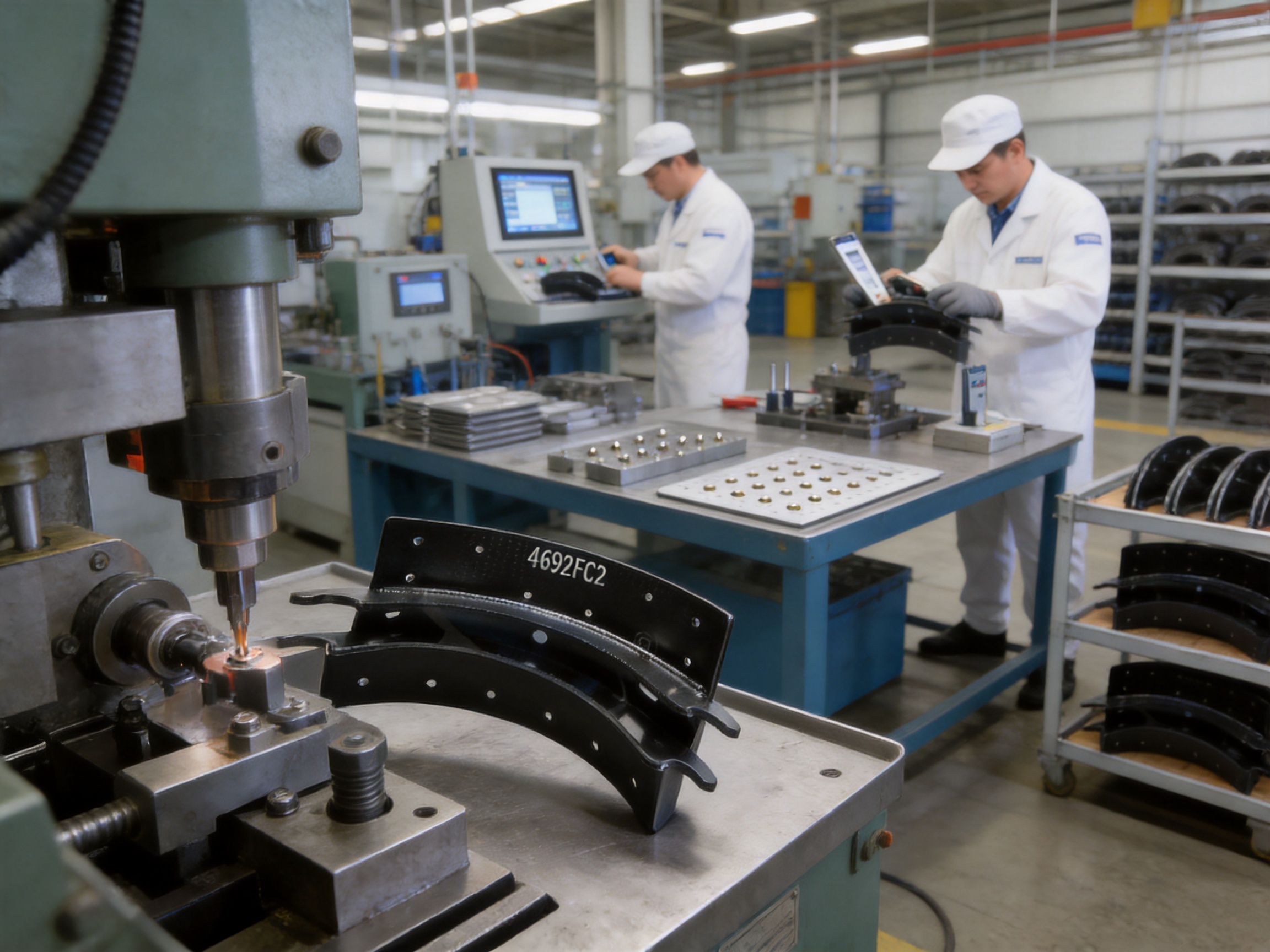
Zhejiang Bangchi Auto Parts Co., Ltd. lists several brake product categories: steel brake shoes, casted brake shoes, brake linings, lined brake shoes, brake shoe repair kits, and lined brake shoe kits. This product coverage is significant because customers do not always require the same form of replacement.
A truck repair workshop may need a bare steel shoe for lining installation. Another customer may prefer a ready-to-install lined brake shoe. A fleet may require a repair kit containing the lining and associated installation materials. A distributor may want to stock multiple product formats for different regional markets. A supplier with these product categories can respond to different purchasing models without limiting customers to one type of component.
The 4692FC2 can therefore be considered within a broader brake service strategy. It may be purchased as an individual steel foundation, included in a larger inventory program, or matched with a compatible lining for workshop assembly. The correct option depends on the customer’s technical capabilities, local service practices, and product approval requirements.
Consolidated sourcing can also simplify communication. When a buyer discusses the shoe, lining, rivets, and finished assembly with one experienced manufacturer, it may be easier to resolve questions regarding fit and compatibility. This is especially useful for international customers who need consistent documentation, part-number references, and export packaging.
Application Considerations
Matching the Brake Shoe to the Vehicle
Before ordering the 4692FC2, the buyer should verify that the part number corresponds to the intended axle and brake assembly. Heavy-duty vehicles may use multiple brake sizes and configurations across different models, production years, axles, and operating specifications. Similar dimensions do not always guarantee interchangeability.
Application verification should include the original part number, shoe dimensions, lining dimensions, rivet-hole count, hole spacing, drum diameter, shoe width, actuator arrangement, and hardware position. If any information is unclear, the customer should provide photographs, measurements, vehicle details, and the original component reference to the supplier.
Matching a Brake Lining
The steel shoe must be paired with a compatible lining. The lining should match the shoe’s length, width, curvature, thickness, rivet-hole pattern, and intended friction performance. It should also be suitable for the vehicle’s operating conditions and regulatory requirements.
When installing a lining, the technician should ensure that it sits fully against the shoe without gaps or rocking. The rivets should be appropriate for the lining and installed using controlled equipment. Riveting pressure and sequence should be sufficient to secure the lining without cracking the friction material or distorting the shoe.
Inspecting the Existing Brake Hardware
Replacing a brake shoe does not automatically correct problems in the rest of the brake assembly. Before installation, technicians should inspect the drum, cam or wheel-cylinder components, rollers, return springs, anchor points, bushings, adjusters, and related hardware. Worn hardware can cause uneven shoe movement and premature lining wear.
The brake drum should be checked for excessive wear, scoring, cracking, heat damage, and out-of-round conditions. A new or correctly rebuilt shoe cannot deliver consistent performance if it is installed against a drum that is outside the applicable service limits.
Installation and Adjustment
Installation should follow the vehicle manufacturer’s service procedure and the applicable workshop safety requirements. The shoe should be positioned correctly, all retaining hardware should be installed, and the lining should be centered within the drum. After assembly, the brake should be adjusted according to the vehicle system design.
Technicians should confirm that the wheel rotates correctly after adjustment and that the brake releases without abnormal drag. The vehicle should be tested in a controlled area before returning to normal service. After initial operation, the brake assembly may require a bedding or burnishing procedure appropriate for the selected lining material.
Because brake components are safety-critical, the 4692FC2 should be installed only by trained personnel using suitable tools and approved procedures. This article provides product information and does not replace the service instructions for a particular vehicle or brake system.
Performance Benefits for Fleet Operators
For fleet operators, component reliability is connected to operating efficiency. A brake shoe that fits correctly and supports even lining wear can contribute to predictable maintenance intervals. Although actual service life depends on loading, terrain, driver behavior, lining formulation, drum condition, adjustment, and climate, a consistent foundation is an important starting point.
The 4692FC2 may help fleet maintenance teams organize replacement work around a clearly identified part number. This can reduce the risk of mixing visually similar components and make it easier to plan stock levels. If a fleet uses a standardized brake configuration, maintaining an approved part-number list can improve workshop productivity and purchasing accuracy.
The product can also support a repair-oriented maintenance model. Instead of replacing an entire lined assembly every time a lining wears, a service center may be able to reuse a suitable shoe or install a new steel shoe with a selected lining. The decision should always be based on inspection results and the service limits of the relevant brake system.
For distributors, the product’s defined specifications make it easier to create catalog entries, cross-reference requests, and customer quotations. The 20-hole configuration and 4692FC2 identification can be included in inventory systems to distinguish this component from other heavy-duty brake shoes.
Manufacturing Strengths of a Specialized Supplier
A specialized brake component manufacturer offers several practical strengths compared with a supplier that treats brake shoes as an occasional product. Brake shoes require knowledge of geometry, friction-material interfaces, rivet installation, vehicle applications, and safety-related quality expectations. Repeated production in these categories allows the manufacturer to refine tooling, inspection routines, and production planning.
Zhejiang Bangchi Auto Parts Co., Ltd. is located in Haining, Zhejiang, China, and focuses on heavy-duty brake parts. Its stated product scope includes both individual components and assembled brake products. This focus can support customers that need more than a single part number and want to develop a coordinated brake component supply program.
The company also states that it provides OEM brake parts following the global FMSI numbering system. Numbering discipline is valuable in international trade because it gives customers a common reference for communication. It can help connect product labels, quotations, packing lists, catalogs, and technical inquiries.
Manufacturing strength should be evaluated through repeatability, inspection, documentation, responsiveness, and product support rather than through marketing language alone. Buyers should request the technical information needed for their application, including confirmed dimensions, material details where relevant, lining compatibility, packaging information, and available quality documents.
A long-term supplier relationship may also allow customers to improve forecasting and reduce emergency purchasing. When product identification is stable and production planning is organized, distributors and fleets can establish replenishment schedules around known demand. This is particularly useful for heavy trucks that cannot remain out of service for extended periods.
Procurement and Quality Checklist
When purchasing the 4692FC2, the customer should first confirm the exact part number and product category. The order should clearly state that the required item is the steel brake shoe rather than a casted shoe, lined shoe, lining, or repair kit. Clear product descriptions help prevent errors when several related brake parts are purchased from the same supplier.
The customer should then verify the listed size and the 20-rivet-hole configuration. Since the supplied listing does not provide an OE number, the buyer should provide the original reference or application information if an OE cross-reference is required. The absence of a listed OE number does not necessarily mean that no compatible reference exists; it means that confirmation is needed before ordering.
For repeat purchasing, the buyer should ask for consistency between samples and production orders. The approved sample should be identified by part number and, where appropriate, by drawing or inspection record. Any changes to material, tooling, hole arrangement, dimensions, or surface treatment should be communicated before production.
Packaging should protect the shoes from impact, deformation, moisture, and contamination. Heavy steel components can damage one another if stacked without suitable separators. Export customers should discuss carton strength, palletization, labeling, corrosion protection, and handling marks according to the shipping route and storage period.
The purchasing team should also consider technical support. A dependable brake parts supplier should be able to clarify whether the product is supplied bare or lined, identify compatible lining options, explain the required measurements, and respond to questions about inspection or installation. These services can be as important as the physical component when the product is used in an international maintenance supply chain.
Recommended Inspection Before Use
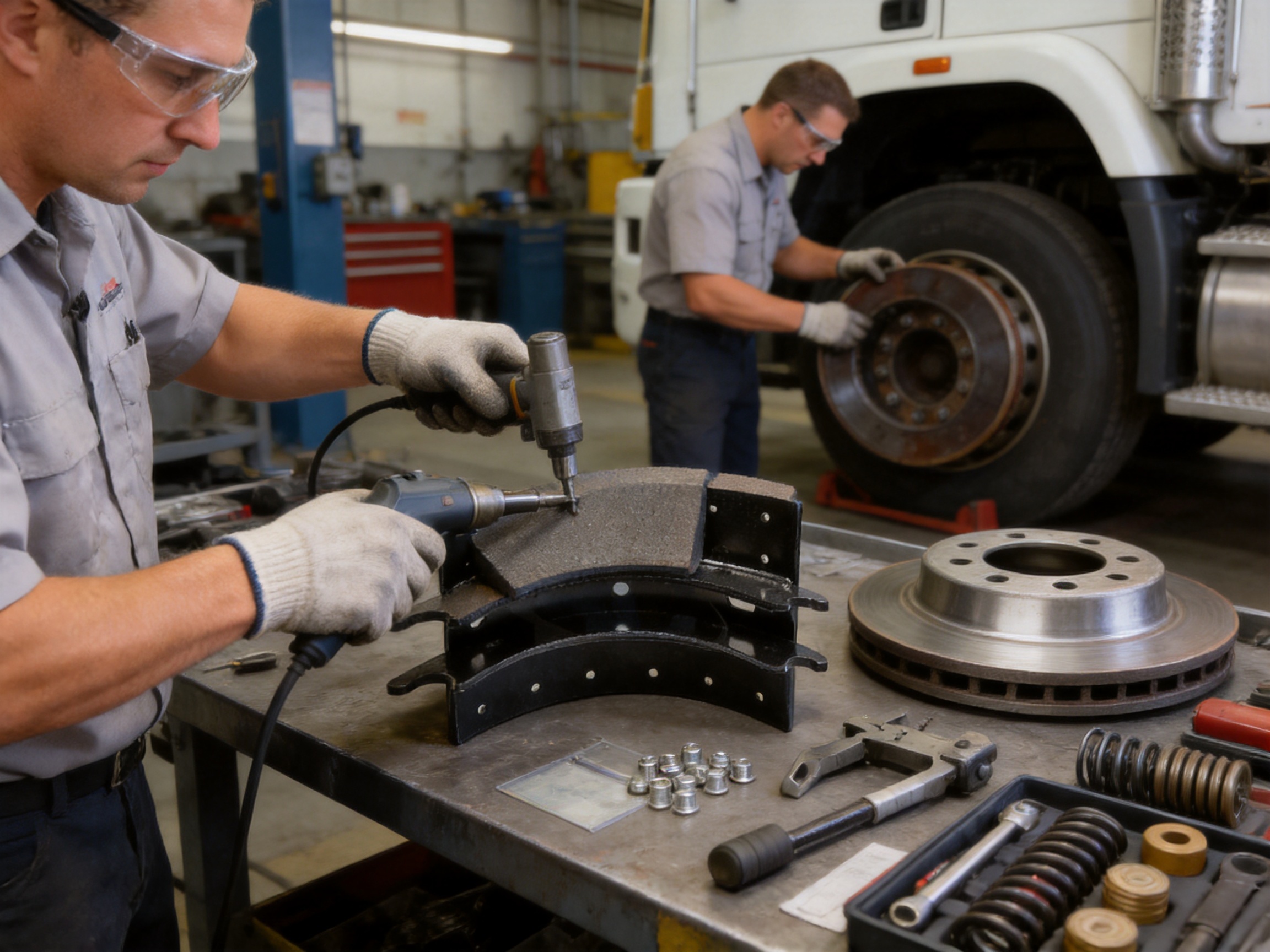
Upon receiving the 4692FC2, the customer should inspect the packaging and confirm the part number. The quantity should be compared with the purchase order, and the shoes should be checked for visible deformation, corrosion, impact damage, contamination, and incorrect labeling.
The shoe profile should be compared with the approved sample or original component. The technician should verify the overall dimensions, width, curvature, web position, edge condition, and rivet-hole count. A measurement record is especially useful when the product is being qualified for a new vehicle application.
The rivet holes should be clean and free from excessive burrs. Their pattern should be compared with the selected lining before assembly. If the lining does not align naturally with all holes, the technician should stop and investigate rather than forcing the components together or enlarging holes without authorization.
The shoe should also be checked for cracks, folds, abnormal bends, or signs of manufacturing damage. Any questionable part should be isolated and reported to the supplier. Safety-critical components should not be installed merely because the damage appears minor.
Maintenance and Service Guidance
Brake shoes should be inspected as part of a complete brake maintenance program. Inspection intervals depend on the vehicle, mileage, load, route, brake design, and service policy. During inspection, technicians should examine lining thickness, rivet condition, shoe shape, drum condition, return hardware, adjustment, and evidence of overheating.
Uneven lining wear can indicate problems that are not caused by the shoe alone. Possible contributing factors include incorrect adjustment, worn bushings, damaged rollers, misaligned hardware, drum irregularity, contamination, or an unsuitable lining. Corrective maintenance should address the underlying cause before a replacement shoe is returned to service.
Corrosion prevention is also important. Bare steel components should be stored away from water and corrosive chemicals. If the shoe is not being installed immediately, it should remain in protective packaging and be handled with clean equipment. Storage areas should have reasonable control of humidity and temperature fluctuations.
After installation, the brake system should be tested for correct actuation and release. Abnormal noise, dragging, vibration, pulling, overheating, or delayed brake response should be investigated promptly. A properly identified replacement component is only one part of a safe and effective brake repair.
Why Accurate Product Information Supports Better Results
Product information is a practical quality tool. The part number, size, hole count, category, and application details help all participants in the supply chain make the same decision. A distributor can quote the correct item, a warehouse can store it correctly, and a technician can compare it with the original component.
For the 4692FC2, the available information establishes a useful starting point: a steel brake shoe, a 12.25-inch by 7.5-inch listed size, and 20 rivet holes. Additional confirmation should be obtained where the application requires exact metric dimensions, OE references, or detailed drawing data. This approach is preferable to assuming that a general size description is sufficient for every brake assembly.
Accurate information also helps distinguish the product from complete lined assemblies. A bare shoe requires a compatible lining and professional riveting, while a lined brake shoe may be ready for installation after application verification. Repair kits may contain additional parts. Clear terminology reduces the chance of ordering an incomplete or unsuitable replacement.
Frequently Asked Questions
What is the 4692FC2 Brake Shoe?
The 4692FC2 is a steel brake shoe used as the structural foundation of a compatible heavy-duty drum brake assembly. It supports the brake lining and transfers actuator force to the drum through the lining.
What is the listed size of the product?
The supplied product information lists the size as 12.25 inches by 7.5 inches mm. Because the notation combines inch and millimeter terminology, buyers should confirm the exact measurement convention and dimensions with the supplier before ordering.
How many rivet holes does the 4692FC2 have?
The product listing specifies 20 rivet holes. The matching lining and rivets must use a compatible hole pattern and suitable dimensions.
Is the 4692FC2 supplied with a brake lining?
The listed product category is Steel Brake Shoe, so the item should be treated as a bare steel foundation unless the quotation or order confirmation states otherwise. Customers requiring a finished assembly should ask about a compatible lined brake shoe or lined brake shoe kit.
Is an OE number available?
No OE number is provided in the supplied product information. Customers should submit the original part number, vehicle information, photographs, and measurements if an OE cross-reference is needed.
Can the shoe be used with any heavy-duty brake lining?
No. The lining must match the shoe’s dimensions, curvature, hole pattern, thickness, and intended brake application. The 20-hole arrangement should be checked carefully before riveting.
What is the benefit of buying a bare steel brake shoe?
A bare shoe allows a qualified workshop to select and install a suitable lining according to its vehicle application and service requirements. It can also support repair programs that replace worn linings while using a correctly inspected foundation.
What should be inspected before installation?
The technician should verify the part number, dimensions, curvature, hole count, hole alignment, edge condition, surface condition, and absence of cracks or deformation. The drum and related brake hardware should also be inspected.
Why is the manufacturer’s product range important?
A supplier that produces steel shoes, casted shoes, brake linings, lined shoes, and repair kits can offer several replacement formats. This may simplify sourcing and technical communication for distributors, workshops, and fleets.
Does the part number guarantee vehicle compatibility?
No. The part number is an important identification reference, but compatibility must be confirmed against the vehicle’s brake system, original component, dimensions, lining pattern, and service requirements.
How should the shoe be stored?
It should be stored in clean, dry conditions with protection against moisture, impact, contamination, and deformation. Heavy components should be packaged and stacked in a way that prevents contact damage.
Who should install the 4692FC2?
The component should be installed by trained brake service personnel using suitable tools and the vehicle manufacturer’s approved procedures. Brake systems are safety-critical and should not be repaired by unqualified personnel.
Conclusion
The 4692FC2 Steel Brake Shoe is a defined heavy-duty brake foundation component with a listed size of 12.25 inches by 7.5 inches and a 20-rivet-hole configuration. Its value lies in providing a stable steel support for compatible brake linings, enabling organized replacement, professional lining installation, and flexible maintenance planning.
Compared with unspecified generic brake shoes, the product offers clearer part identification and a defined hole pattern for application verification. Its suitability should still be confirmed against the original component and complete brake assembly. Correct matching remains essential because dimensions, curvature, lining compatibility, and brake hardware all affect final performance.
The manufacturing strengths associated with a specialized brake parts supplier include product-focused engineering, controlled forming, accurate hole production, edge finishing, dimensional inspection, organized part numbering, and experience across steel shoes, casted shoes, linings, lined assemblies, and repair kits. These capabilities can provide practical advantages for international distributors, fleet operators, repair centers, and OEM-oriented customers.
Zhejiang Bangchi Auto Parts Co., Ltd. presents the 4692FC2 within a broader heavy-duty brake product portfolio and states that it provides OEM brake parts following the global FMSI numbering system. Customers requiring quotations, application confirmation, technical details, or product documentation can contact the company through its commercial service channels and provide complete vehicle and brake assembly information.
When correctly selected, professionally lined or assembled, properly installed, and routinely inspected, the 4692FC2 can serve as a dependable steel foundation for compatible heavy-duty drum brake applications. Its most important advantages are not based on appearance alone, but on accurate identification, controlled geometry, reliable lining support, and integration into a disciplined brake maintenance process.
References
1. Federal Motor Vehicle Safety Standards, commonly referenced requirements for motor vehicle braking performance and equipment.
2. Federal-Mogul Motorparts, Friction Materials and Brake Service Technical Principles.
3. Society of Automotive Engineers, Heavy-Duty Vehicle Brake System Engineering Practices.
4. Commercial Vehicle Brake Manufacturers Association, General Brake Shoe and Lining Service Principles.
5. Manufacturer-supplied product information for the 4692FC2 Steel Brake Shoe.
6. Manufacturer-supplied product category information covering steel brake shoes, casted brake shoes, brake linings, lined brake shoes, brake shoe repair kits, and lined brake shoe kits.