 English
 简体中文
简体中文Heavy-duty braking systems must perform consistently under demanding operating conditions. Commercial vehicles, buses, industrial trucks, and other large road vehicles often carry substantial loads, travel long distances, and operate in environments where braking components are exposed to heat, vibration, dust, moisture, and repeated mechanical stress. In these applications, the brake shoe is not a minor replacement component. It is a critical structural and friction-supporting part of the complete braking assembly.
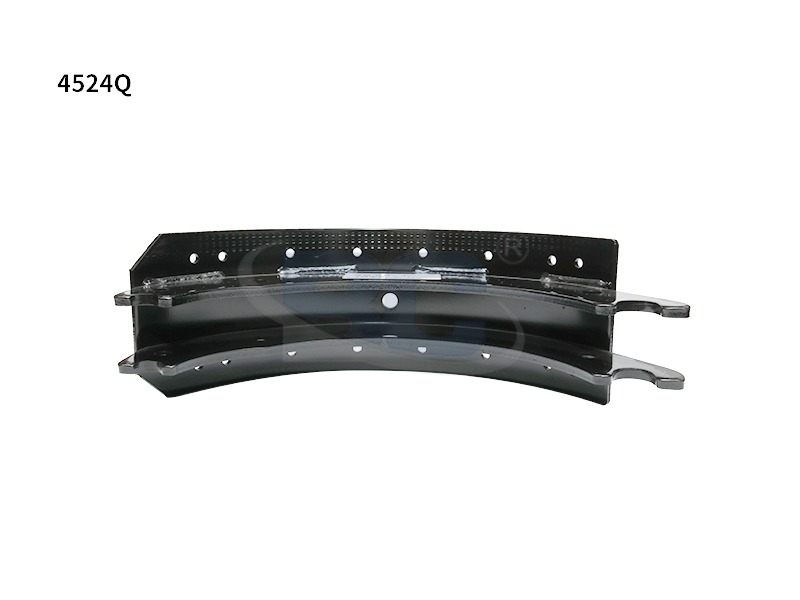
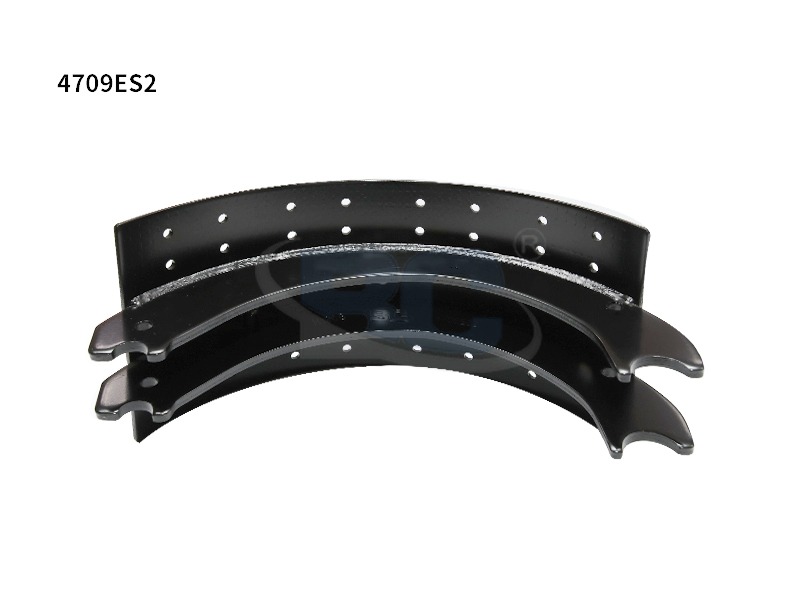
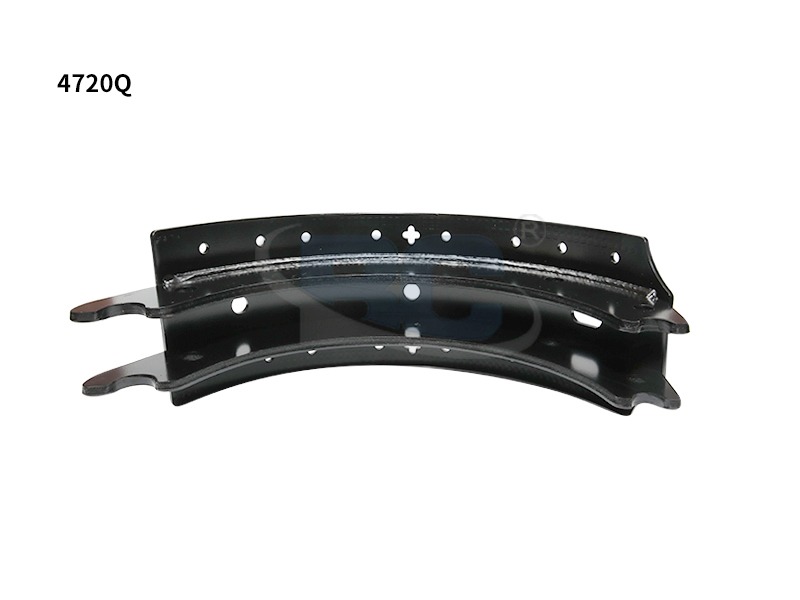
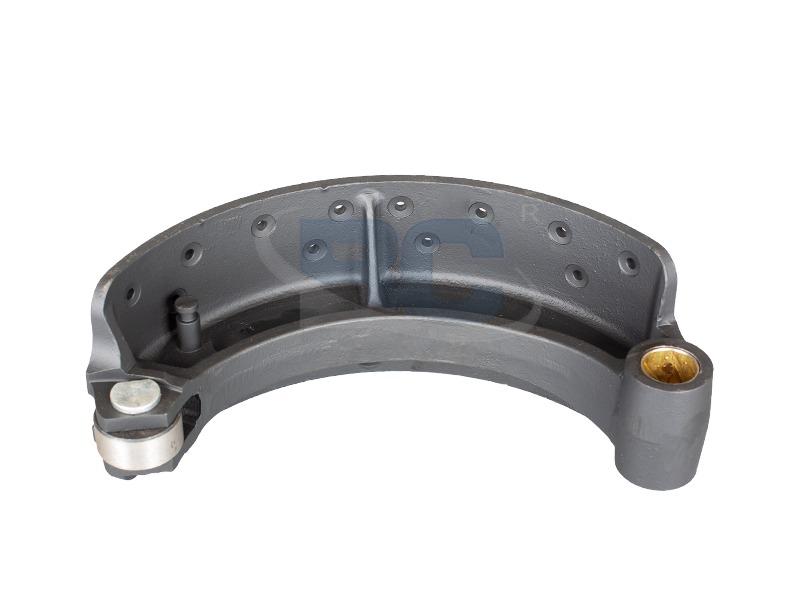
The HINO OIL Casted Brake Shoe is designed for oil-braked applications requiring a durable cast shoe structure, accurate fitment, and dependable support for the friction lining. The product range includes multiple table widths and riveting-hole configurations, allowing repair specialists, distributors, fleet maintenance teams, and original-equipment replacement buyers to select a suitable specification for different HINO oil brake systems.
This article examines the construction, specifications, manufacturing considerations, application value, maintenance benefits, and purchasing factors associated with heavy-duty casted brake shoes. It also explains how Zhejiang Bangchi Auto Parts Co., Ltd. supports the product category through specialized heavy-duty brake-part production, OEM-oriented identification, and manufacturing processes intended to meet the practical needs of commercial vehicle repair markets.
HINO OIL Casted Brake Shoe
Understanding the Role of a Casted Brake Shoe
A brake shoe is a curved structural component installed inside a drum-style braking system. During braking, the shoe moves outward or otherwise engages with the inner surface of the brake drum. The friction lining mounted to the shoe contacts the drum, converting vehicle motion into heat and reducing speed. The shoe must therefore provide a stable foundation for the lining while tolerating repeated loading, thermal cycling, and mechanical movement.
In heavy-duty oil-braked systems, the brake shoe may be exposed to conditions that differ from those found in light passenger-car brakes. Larger vehicles generate higher braking forces. Their brake assemblies may also operate for longer periods, particularly during downhill travel, frequent delivery stops, construction work, or industrial transport. A suitable casted shoe must retain its shape and maintain correct contact geometry throughout these operating cycles.
The term “casted brake shoe” refers to a shoe manufactured through a casting-based metal-forming process rather than being produced only from a pressed sheet-metal blank. Casting allows the manufacturer to create a robust component with a defined structural profile. This can be valuable where the shoe must withstand high loads and support a comparatively wide friction lining.
The shoe itself does not create braking friction independently. Its purpose is to transmit the force generated by the brake actuator to the lining and then to the drum. This makes dimensional accuracy particularly important. If the shoe profile, width, hole layout, or mounting features do not correspond to the intended brake assembly, installation may be difficult and braking performance may be compromised.
Product Overview
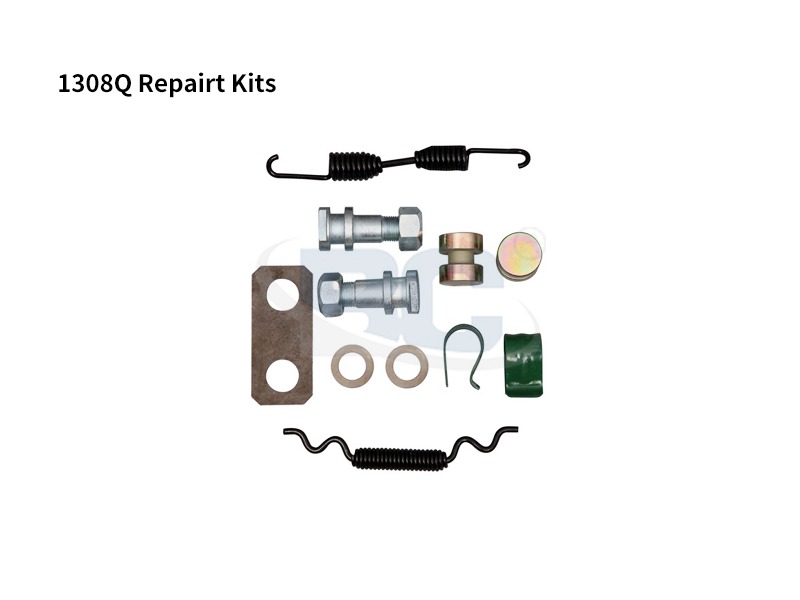
The HINO OIL Casted Brake Shoe is listed under the Casted Brake Shoe category and forms part of a wider heavy-duty brake-parts range that includes steel brake shoes, brake linings, lined brake shoes, brake shoe repair kits, and lined brake shoe kits. This broader product structure is useful to customers because it supports several maintenance strategies, from replacing an individual shoe to rebuilding a complete braking assembly.
The listed product specifications cover five primary configurations. These configurations include table widths from 5 inches to 8.5 inches and riveting-hole counts of either 16 or 24. The range is intended for HINO oil applications and provides options for different brake sizes and lining arrangements.
| Part or OEM Reference | Table Width | Riveting Holes | Application |
| 474311320 | 5 inches | 16 | HINO oil |
| 474311430 | 6 inches | 24 | HINO oil |
| 474311480 | 6.5 inches | 24 | HINO oil |
| 474311330 | 8 inches | 24 | HINO oil |
| 474312260 | 8.5 inches | 24 | HINO oil |
The supplied catalog identifies HINO OIL as the part reference for the first line and lists 474311320 as the corresponding OEM number. The remaining catalog lines identify the additional OEM references and their matching widths and hole counts. Customers should always compare the complete vehicle, axle, drum, and brake-assembly information before ordering.
Why Table Width Matters
Table width is an important selection dimension for a brake shoe. In this context, the table generally relates to the surface area available for the friction lining. A wider table can accommodate a wider lining, provided that the brake drum and backing-plate assembly are designed for that configuration.
A 5-inch shoe with 16 riveting holes cannot automatically be substituted for an 8-inch shoe with 24 holes. The two components may belong to different brake sizes, different axle applications, or different lining patterns. Even when the external shape appears similar, the mounting arrangement and contact area may not match the original assembly.
The availability of 5-inch, 6-inch, 6.5-inch, 8-inch, and 8.5-inch versions gives buyers a useful range of replacement options. It also allows distributors to organize inventory according to common commercial-vehicle applications rather than stocking only one universal component.
Correct width supports proper lining coverage across the working surface of the drum. If the lining is too narrow, the available friction area may be reduced. If it is too wide, the lining may extend beyond the intended contact area or interfere with adjacent brake components. The brake shoe, lining, drum, and riveting pattern must therefore be considered as a matched system.
Importance of the Riveting-Hole Pattern
The riveting-hole count is another essential identification feature. The listed product range includes a 16-hole version and several 24-hole versions. These holes provide the attachment points for securing the brake lining to the casted shoe.
A correct riveting pattern supports even lining attachment and helps distribute mechanical loads along the shoe. It also assists the brake technician during rebuilding work because the hole locations provide a direct reference for fitting the replacement lining.
Using a lining with an incorrect number of holes can create several problems. The lining may not sit correctly on the shoe, some holes may remain unused, or the rivets may be placed too close to an edge. These conditions can reduce attachment quality and may lead to uneven wear or premature separation.
For this reason, purchasing departments and repair shops should confirm both the width and the riveting-hole count. A reference number alone may not be sufficient when a vehicle has been modified, when different axle options exist, or when a previous repair has used a nonstandard component.
Material and Structural Advantages of a Casted Design
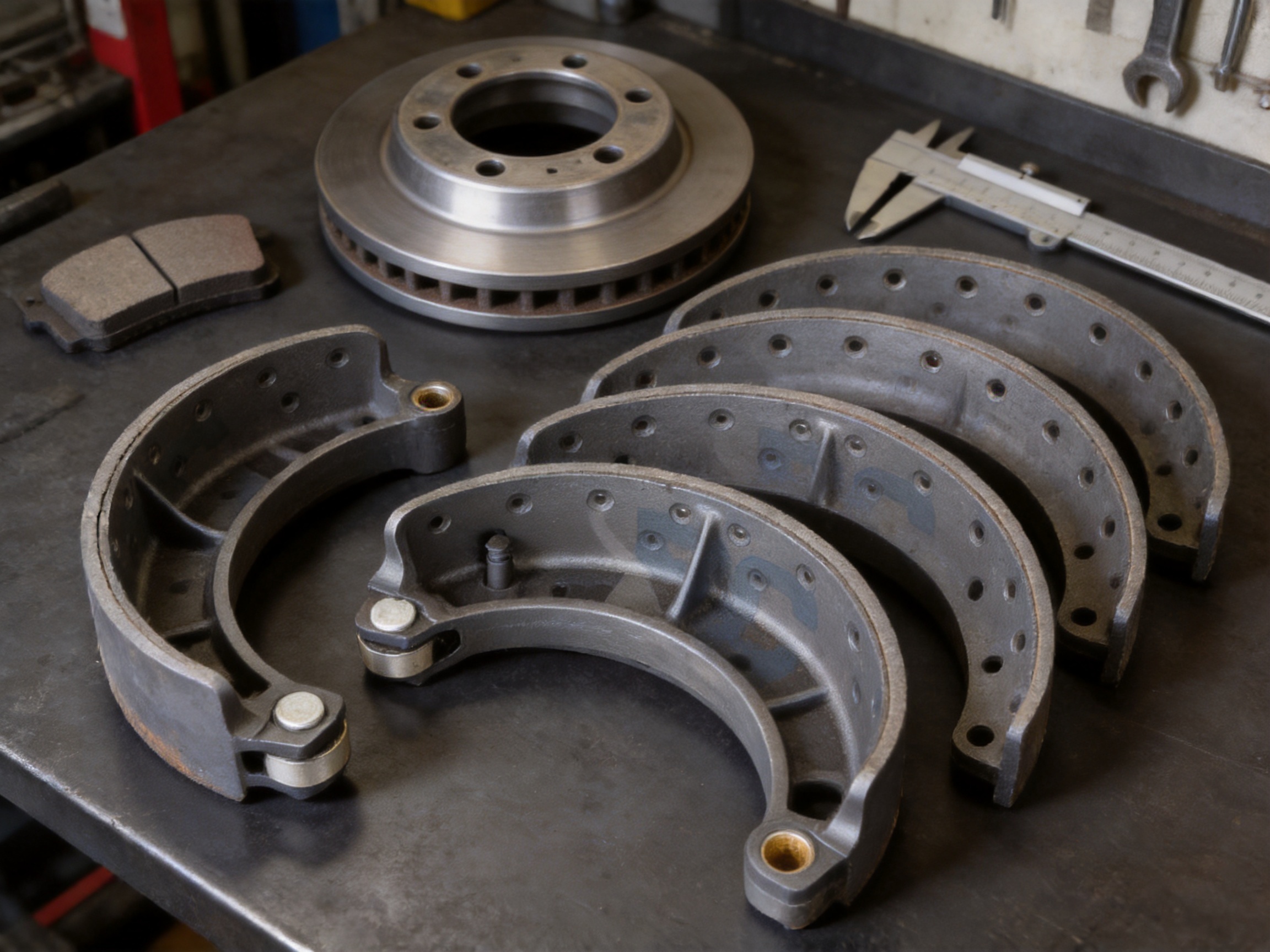
The main advantage of a casted brake shoe is its ability to provide a strong, stable support structure for heavy-duty braking. A casting can be designed with a substantial cross-section and carefully formed load-bearing areas. This is particularly relevant in large drum-brake systems where the shoe must withstand repeated force from the actuator and friction lining.
A properly manufactured casted shoe can offer dimensional stability during service. Braking generates heat, and repeated heating and cooling can place stress on metal components. The structural design and material quality must work together to resist distortion and preserve the intended shoe profile.
The casted structure also supports the attachment of a replacement lining. The shoe must provide a secure base for drilling or preformed riveting holes. Its surface should allow the lining to sit in the intended position without excessive gaps, rocking, or localized pressure.
Compared with a light-duty stamped component, a casted brake shoe is generally selected where greater structural robustness is required. The exact performance depends on the material specification, casting quality, machining accuracy, brake design, and installation procedure. Nevertheless, the fundamental benefit is a heavy-duty platform suitable for demanding oil-brake applications.
Resistance to Repeated Mechanical Loading
Commercial vehicle brakes may be applied hundreds or thousands of times over a service period. Each application creates a force cycle that travels through the actuator, shoe, lining, and drum. The shoe must resist fatigue-related damage and maintain its shape during these cycles.
A robust casted design helps the shoe carry these loads without relying on thin sections that may flex excessively. Reduced flexing can contribute to more stable lining contact and can help the brake assembly respond consistently when the vehicle is loaded.
Support for Wider Linings
The product specifications include widths up to 8.5 inches. Wider friction linings are commonly associated with larger braking assemblies that require a substantial contact area. A casted shoe gives the lining a rigid foundation over the full table width.
When the shoe and lining are correctly matched, the friction material can make more uniform contact with the drum. This may support even wear, predictable braking response, and more efficient use of the lining surface.
Compatibility with Rebuild Programs
Many commercial brake assemblies are rebuilt rather than discarded whenever the friction lining reaches its wear limit. A durable casted shoe can be reused if it passes inspection and remains within the applicable dimensional requirements. In other cases, a replacement shoe can be installed as part of a repair kit or lined brake shoe assembly.
This flexibility is valuable to fleet operators and repair businesses. They may choose between bare shoes for in-house relining, pre-lined shoes for faster installation, or complete kits for a more comprehensive overhaul.
Manufacturing Process Considerations
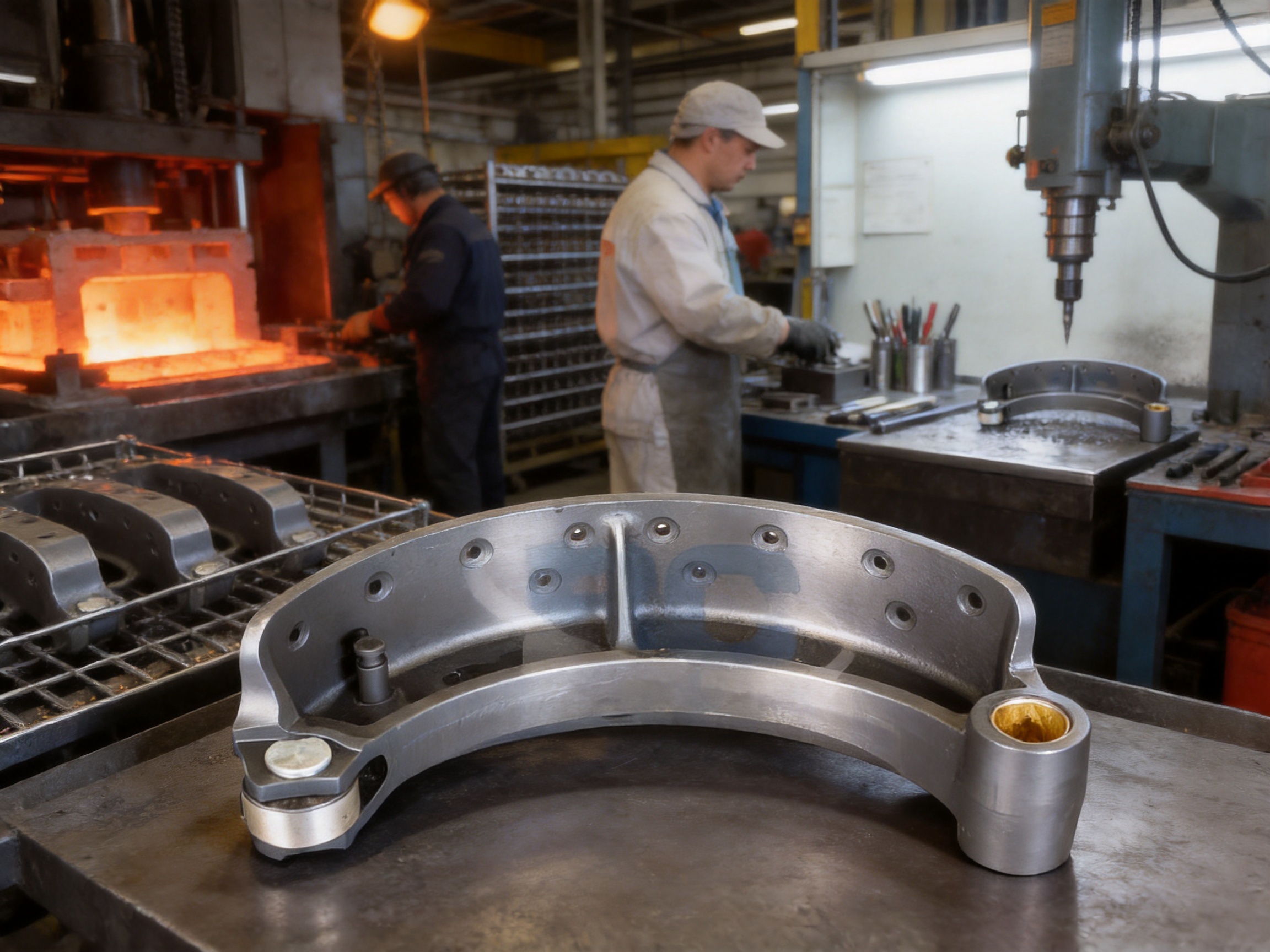
The performance of a casted brake shoe depends heavily on manufacturing control. A high-quality product is not created by casting alone. The process must include pattern preparation, metal selection, mold control, casting, cooling, cleaning, machining, dimensional inspection, hole processing, and final quality verification.
Pattern and Mold Preparation
The manufacturing process begins with a pattern or tooling system that defines the shoe geometry. The pattern must reproduce the required curvature, table width, mounting features, and structural sections. For a product range with several sizes, each configuration requires appropriate tooling and process control.
Mold preparation is important because defects in the mold can be transferred to the casting. The mold must maintain the intended dimensions and allow the molten metal to fill the cavity correctly. Proper control of the mold also supports repeatability from one production batch to another.
Controlled Metal Pouring
During casting, molten metal is introduced into the prepared mold. Temperature, flow, timing, and filling behavior influence the final structure. Inadequate filling can create voids or incomplete sections, while poor temperature control can affect surface quality and internal integrity.
Heavy-duty brake components require a consistent material structure because they are subject to mechanical and thermal stress. A disciplined pouring process helps reduce variation and supports the production of shoes with stable physical characteristics.
Cooling and Casting Removal
After filling, the casting must cool under controlled conditions. Rapid or uneven cooling can contribute to internal stress or distortion. The cooling stage should allow the metal to solidify in a stable manner before the shoe is removed from the mold.
Once the casting has cooled, excess material such as runners, gates, and flash is removed. Cleaning and fettling operations prepare the component for machining and inspection. These steps are essential because residual casting material could interfere with the brake assembly or affect the lining fit.
Machining and Hole Processing
Machining establishes the final dimensions required for installation. Depending on the product design, this may include finishing mounting surfaces, correcting reference dimensions, preparing riveting holes, and ensuring that the shoe follows the specified curvature.
Riveting holes must be accurately located. The 16-hole and 24-hole versions in this product range require different drilling or tooling arrangements. Hole spacing, diameter, edge distance, and alignment all contribute to reliable lining attachment.
Dimensional Inspection
Inspection should verify the features most important to fitment and service. These include table width, overall profile, hole count, hole position, curvature, mounting dimensions, and visible surface condition. A documented inspection process helps identify deviations before the product is packed for shipment.
For international replacement markets, consistent identification is equally important. Part references and OEM numbers help distributors match products to their catalogs, while physical dimensions provide a second level of confirmation for technicians.
Advantages for Heavy-Duty Brake-Part Distributors
Distributors need products that are easy to identify, practical to stock, and suitable for multiple customer groups. The HINO OIL Casted Brake Shoe range offers several commercial advantages in this respect.
First, the range covers five widths. This allows a distributor to serve different HINO oil brake requirements without relying on one highly limited specification. Second, the product information includes riveting-hole counts, which are useful for separating similar-looking items. Third, the OEM references provide an additional cataloging tool for sales teams and purchasing departments.
A clear product structure can reduce order errors. When a customer provides a reference number, the distributor can compare it with width, hole count, and application. This is more reliable than selecting a component based only on a general description such as “HINO brake shoe.”
The product also fits naturally within a wider portfolio. A distributor may offer the casted shoe together with matching brake linings, repair kits, lined shoes, and lined shoe kits. This creates opportunities to supply complete repair solutions instead of isolated components.
Advantages for Fleet Maintenance Operations
Fleet operators generally focus on vehicle availability, predictable maintenance, safety, and total operating cost. A correctly selected casted brake shoe can support these goals by providing a strong foundation for the friction material and by simplifying replacement planning.
When a fleet maintains several vehicles using related HINO oil brake systems, standardized references can help the maintenance department organize inventory. The five listed product configurations allow the fleet to assign parts according to axle or vehicle specification rather than using an unsuitable universal substitute.
A replacement shoe may also reduce repair downtime when the existing shoe is damaged, excessively worn, distorted, or otherwise unsuitable for relining. In cases where the original shoe remains serviceable, a brake shoe repair kit or replacement lining may be more economical. Having access to both options helps maintenance teams select the appropriate repair path.
Fleet maintenance should always include inspection of the brake drum, actuator, springs, pins, rollers, lining, and related hardware. Installing a new shoe while leaving a damaged drum or worn hardware in service may prevent the braking system from achieving its intended performance.
Advantages Over Generic or Poorly Matched Alternatives
The most important advantage over a generic alternative is application specificity. A product identified for HINO oil service and supported by reference numbers, widths, and riveting-hole counts gives the buyer more information than a component described only as a “heavy truck brake shoe.” This information supports more accurate selection.
A second advantage is the casted construction. Where a heavy vehicle requires a robust shoe platform, a casted component may be more suitable than an incorrectly selected light-duty pressed shoe. The structural form is intended for the demands of a heavy braking assembly rather than for universal use across unrelated vehicles.
A third advantage is range coverage. The availability of several widths means that customers do not have to force one size into different applications. Correct sizing can support better lining contact, proper attachment, and more predictable maintenance results.
A fourth advantage is compatibility with different purchasing models. Customers can use the bare casted shoe for relining, combine it with a separate brake lining, or source a complete lined brake shoe kit. This flexibility can be more practical than a single fixed product format.
These advantages do not eliminate the need for verification. No brake shoe should be selected solely because it appears similar to the old part. Proper comparison with the vehicle and axle specifications remains essential.
Quality Control and Product Consistency
Quality control for casted brake shoes should begin with incoming materials and continue through every production stage. Material handling, mold condition, casting temperature, cooling behavior, finishing, machining, and final inspection can all influence the finished component.
Surface inspection can identify visible cracks, excessive porosity, incomplete filling, sharp flash, and other defects. Dimensional checks can confirm whether the product meets the required width and profile. Hole-pattern inspection can verify that the riveting holes are complete, correctly positioned, and free from obstructions.
Batch consistency is particularly important for distributors that purchase repeat quantities. If dimensions vary from one batch to another, customers may experience fitting problems even when the printed reference remains the same. A controlled manufacturing system helps reduce this risk.
The company information identifies Zhejiang Bangchi Auto Parts Co., Ltd. as a manufacturer of heavy-duty brake parts and states that its products follow the global FMSI numbering system. A numbering-oriented approach can assist product identification and support the organization of replacement components for international markets.
Because the supplied company information does not provide specific certifications, test values, alloy grades, or laboratory reports, buyers requiring formal compliance documentation should request the relevant technical documents before placing an order. This is a normal and important step for safety-related commercial vehicle components.
Application Matching and Ordering Guidance
Before ordering a casted brake shoe, the buyer should collect as much application information as possible. Useful details include the vehicle model, production year, axle position, brake type, drum dimensions, existing shoe reference, table width, riveting-hole count, and any markings found on the original component.
The OEM references listed for this product are 474311320, 474311430, 474311480, 474311330, and 474312260. These references should be compared with the customer’s vehicle documentation and the physical part. If a reference is unclear or incomplete, width and hole count can provide additional confirmation.
It is also important to distinguish between a bare shoe and a lined shoe. A bare casted brake shoe is supplied without the friction lining unless otherwise stated. A lined brake shoe includes the lining already attached. A repair kit may include lining and rivets or other rebuilding items, depending on the kit contents.
Purchasers should clarify packaging, minimum order quantities, sample availability, labeling, and export documentation with the supplier. For regular fleet or distributor orders, it may be useful to establish a reference list showing each vehicle application and the corresponding shoe width and hole pattern.
Recommended Identification Checklist
Confirm that the application is an oil-brake system intended for the relevant HINO vehicle or axle configuration.
Match the OEM or catalog reference with the original part or vehicle documentation.
Measure the table width and compare it with the listed 5-inch, 6-inch, 6.5-inch, 8-inch, or 8.5-inch options.
Count the riveting holes and identify whether the required version uses 16 or 24 holes.
Check the shoe curvature and mounting features against the brake assembly.
Determine whether a bare shoe, lining, repair kit, lined shoe, or complete lined shoe kit is required.
Request technical and quality documents if the application requires formal approval or fleet-level qualification.
Installation and Relining Considerations
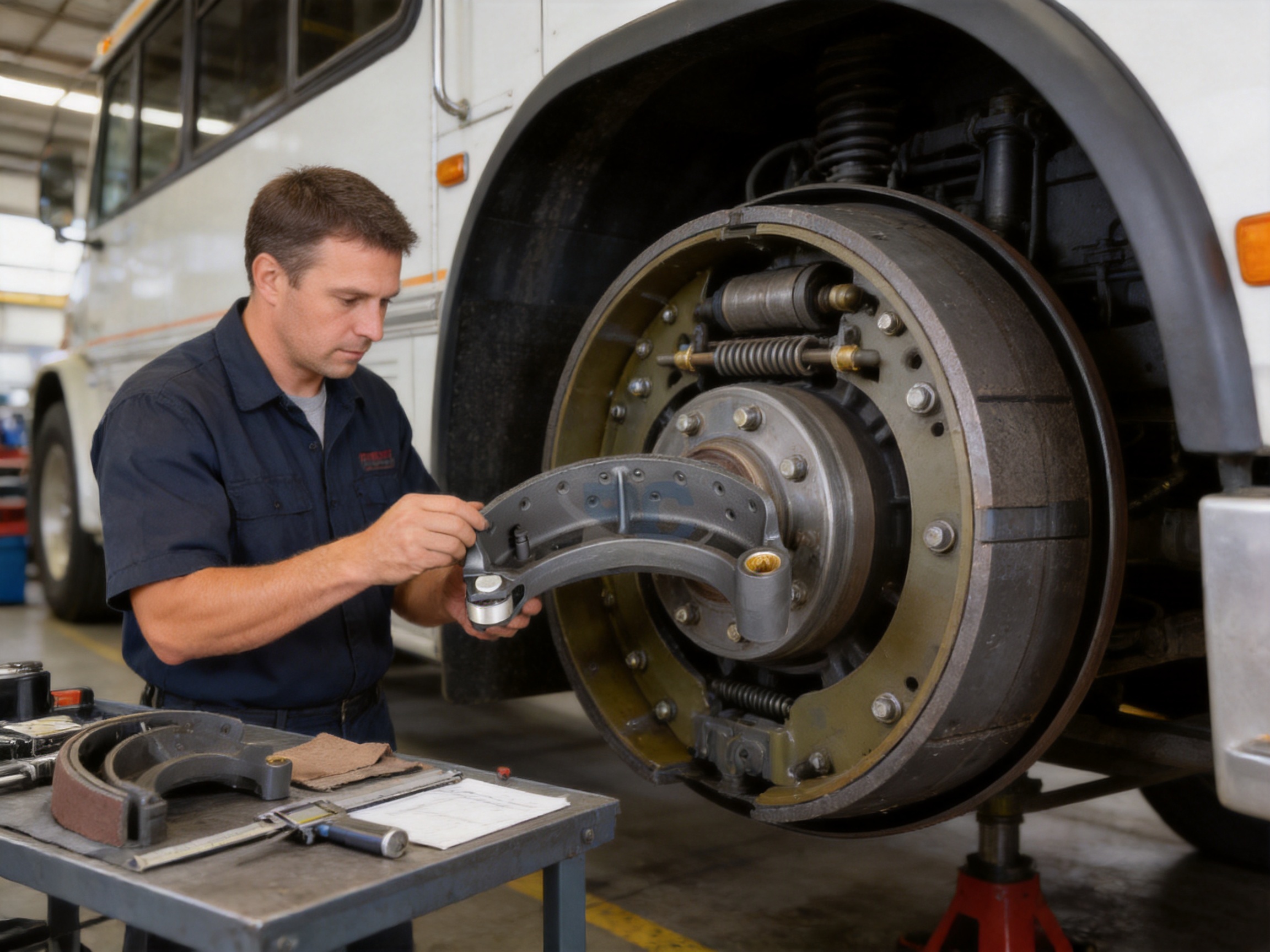
Brake shoe installation should be performed by trained personnel using the correct service procedures. Before fitting a new component, the brake assembly should be cleaned and inspected. Oil contamination, damaged hardware, worn anchor points, or an out-of-round drum can affect the result of a new shoe installation.
When relining a casted shoe, the old lining should be removed carefully so that the shoe is not damaged. The shoe should then be checked for cracks, distortion, excessive corrosion, worn holes, and other conditions that could make reuse unsafe. A shoe that fails inspection should be replaced rather than relined.
The replacement lining must match the shoe width, curvature, hole pattern, and intended service conditions. Rivets must be suitable for the lining and installed with the correct equipment. Poor riveting can create loose sections, uneven contact, or damage to the friction material.
After assembly, the brake should be adjusted according to the vehicle manufacturer’s procedure. The drum should rotate without unacceptable drag, and the brake should engage evenly. A controlled bedding-in process may be required so that the new lining develops a uniform contact pattern with the drum.
Technicians should not grind, drill, bend, or modify a brake shoe merely to force an incorrect component into place. Such changes can weaken the structure, alter the lining position, or affect the intended movement of the brake assembly.
Maintenance Practices That Extend Service Life
Regular inspection is one of the most effective ways to protect brake-shoe performance. Maintenance personnel should monitor lining thickness, wear pattern, rivet condition, shoe movement, return-spring condition, drum surface, and signs of overheating.
Uneven lining wear may indicate incorrect adjustment, worn hardware, a distorted drum, poor shoe alignment, or contamination. Replacing only the visibly worn component may not resolve the underlying problem. A complete inspection helps identify the cause and prevent repeated repairs.
Brake drums should be checked for scoring, cracks, excessive diameter, heat checking, and irregular contact surfaces. A new lining cannot perform correctly against a drum that has exceeded its service limit or developed severe surface damage.
Oil, grease, and other contaminants must be kept away from friction surfaces. Because this product is identified for HINO oil applications, technicians should pay particular attention to the condition of seals and oil-control components. An oil leak can contaminate the lining and substantially reduce braking effectiveness.
Hardware such as rollers, pins, bushes, springs, and anchor components should be inspected at the same time as the shoe. Excessive clearance or corrosion can alter the way the shoe moves and may lead to uneven loading.
Manufacturing Strengths of the Supplier
Zhejiang Bangchi Auto Parts Co., Ltd. is presented in the supplied materials as a manufacturer of heavy-duty brake parts, including casted brake shoes and related brake components. Its stated product focus includes heavy-duty brake parts and heavy truck brakes, with OEM-oriented production following the global FMSI numbering system.
This manufacturing focus is significant because heavy-duty brake parts require different product knowledge from passenger-car components. The dimensions are larger, the structural loads are higher, and customers often require application-specific references for commercial vehicles, buses, trailers, and industrial equipment.
A specialized product portfolio can also improve manufacturing coordination. Casted shoes, steel shoes, linings, lined shoes, and repair kits are related products. Experience with one category can support better understanding of the dimensional relationships among the shoe, lining, rivets, and brake drum.
The company’s listed location in Haining, Zhejiang, China, places the manufacturing operation within an established automotive-component production region. The supplied contact information includes a sales email, telephone numbers, and fax number, giving international buyers several channels for technical and commercial communication.
Although the available materials do not provide a detailed factory profile, production capacity, equipment list, or certification schedule, the company’s product classification and numbering statement indicate an orientation toward organized aftermarket and OEM-reference supply. Buyers can use direct communication to request drawings, inspection standards, samples, packaging details, and application confirmation.
Packaging, Identification, and Export Supply
Heavy-duty brake shoes should be packaged in a way that protects machined surfaces, riveting holes, and curved profiles during transport. The components may be relatively heavy, and poor packaging can allow them to strike one another or become exposed to moisture.
Clear labeling is valuable for warehouses and repair shops. Each package should ideally identify the product category, reference number, table width, hole count, application, quantity, and production or batch information where applicable. This helps prevent mixing of similar-looking 6-inch, 6.5-inch, 8-inch, and 8.5-inch products.
For international shipments, distributors may require commercial invoices, packing lists, certificates of origin, quality documents, and other export paperwork. The exact requirements vary by destination and customer contract. These details should be confirmed before production or shipment.
Inventory managers should store brake shoes in a dry environment and protect them from impact and contamination. Friction surfaces and lining materials should be kept away from oil, grease, and chemicals. Stock should be rotated according to the company’s warehouse policy so that older inventory is used appropriately.
Environmental and Lifecycle Considerations
A durable brake shoe can contribute to more efficient use of maintenance resources. When a casted shoe remains structurally sound, it may be suitable for relining rather than immediate disposal. This depends on inspection results and applicable service standards, but the rebuild option can reduce the need to replace the complete shoe assembly every time the lining wears.
Repair kits also support a component-level maintenance strategy. Instead of replacing every element, the customer can replace only the parts that have reached the end of their service life. This may reduce material consumption and simplify planned maintenance.
At the end of its service life, the metal shoe can generally be managed through appropriate scrap-metal recycling channels, subject to local rules and contamination controls. Friction materials, rivets, and other components may require separate handling.
Environmental performance should not be considered separately from safety. Reuse or recycling is appropriate only when the component meets inspection requirements. A shoe with a crack, severe distortion, damaged mounting area, or unacceptable wear must not be returned to service for the sake of reducing waste.
How to Evaluate Supplier Competitiveness
Price is only one factor when comparing heavy-duty brake-shoe suppliers. A low purchase price may not produce a lower total cost if the component has inconsistent dimensions, poor hole alignment, inadequate packaging, or limited application support.
A more complete evaluation should consider dimensional consistency, material and casting control, product range, reference accuracy, lining compatibility, inspection documentation, delivery reliability, communication speed, and after-sales support.
The HINO OIL range has several features that can support a competitive position: multiple widths, defined riveting-hole counts, OEM reference identification, a casted heavy-duty structure, and compatibility with a broader brake-parts portfolio. These factors can help distributors offer a more complete solution to commercial vehicle customers.
Buyers should also evaluate whether the supplier can provide samples before bulk purchasing, maintain consistent packaging, support private labeling when required, and respond to technical questions. For safety-critical products, the ability to communicate clearly about fitment is an important part of supplier quality.
Common Selection Mistakes
One common mistake is selecting a brake shoe by vehicle name only. A single vehicle model may use different axles, brake drums, or production configurations. The OEM reference and physical dimensions should be checked as well.
Another mistake is ignoring the hole count. A shoe with the correct width but the wrong riveting pattern may still be unsuitable. Width and hole pattern must be treated as connected identification features.
A third mistake is confusing the shoe width with the overall external dimension of the brake assembly. Measurements should be taken at the correct reference points and compared with the supplier’s catalog or technical drawing.
A fourth mistake is replacing the shoe without investigating drum or hardware condition. A new component cannot compensate for an excessively worn drum, seized actuator, damaged spring, or leaking seal.
Finally, some buyers assume that every casted brake shoe is interchangeable with every other casted shoe. Casting describes a manufacturing method, not a universal fitment standard. The application, profile, hole arrangement, width, and reference number remain essential.
Q&A
What type of product is the HINO OIL Casted Brake Shoe?
It is a heavy-duty casted brake shoe intended for HINO oil-brake applications. It provides the structural base to which a compatible brake lining can be attached.
What widths are available?
The listed range includes 5-inch, 6-inch, 6.5-inch, 8-inch, and 8.5-inch table widths.
How many riveting holes are specified?
The 5-inch version is listed with 16 riveting holes. The 6-inch, 6.5-inch, 8-inch, and 8.5-inch versions are listed with 24 riveting holes.
What are the listed OEM references?
The provided catalog lists 474311320, 474311430, 474311480, 474311330, and 474312260. These references should be verified against the vehicle and the original brake component before ordering.
Can the bare shoe be used for relining?
Yes, a bare casted shoe is generally intended to receive a compatible brake lining, provided the shoe passes inspection and the lining matches its width, curvature, and riveting-hole pattern. Relining should be completed by trained personnel using suitable equipment.
Is the product supplied with a brake lining?
The listed product is a casted brake shoe. The supplied information does not state that a lining is included. Buyers should confirm whether they need a bare shoe, a separate lining, a repair kit, or a complete lined brake shoe kit.
Why is a casted shoe suitable for heavy-duty applications?
A casted design provides a substantial structural platform for the lining and is intended to handle the mechanical demands associated with large drum-brake systems. Actual performance depends on correct application, manufacturing quality, installation, and maintenance.
Can one width replace another?
No. The width must correspond to the brake drum and the intended lining. A different-width shoe may have a different profile, hole pattern, or application and should not be installed without confirmed technical compatibility.
Why should the riveting-hole count be checked?
The hole pattern determines how the lining attaches to the shoe. A mismatch can prevent correct installation or create uneven lining support.
What should be inspected before installing the shoe?
The brake drum, lining, actuator, springs, pins, rollers, seals, backing plate, and related hardware should be checked. The shoe must also be inspected for cracks, distortion, corrosion, and damaged holes.
How can distributors reduce ordering errors?
Distributors should record the OEM reference, table width, hole count, vehicle or axle application, and whether the customer requires a bare or lined component. Maintaining a cross-reference inventory record can further improve accuracy.
Does the supplier provide global OEM-style numbering?
The supplied company information states that its OEM brake parts follow the global FMSI numbering system. Customers requiring a specific numbering format or documentation should confirm the details directly with the supplier.
Are formal certifications included in the available information?
No specific certifications, test reports, material grades, or laboratory values are provided in the supplied materials. Buyers with formal compliance requirements should request the relevant documents before purchase.
Conclusion
The HINO OIL Casted Brake Shoe is a specialized heavy-duty replacement component for oil-braked HINO applications. Its principal selection advantages are the casted structural design, multiple table-width options, defined riveting-hole patterns, and OEM-oriented reference information.
The five listed configurations cover 5-inch through 8.5-inch widths, with 16-hole and 24-hole attachment patterns. This range gives repair shops, fleets, and distributors greater flexibility when matching a replacement shoe to the correct brake assembly.
The product’s value depends on more than the shoe alone. Correct identification, compatible lining selection, accurate riveting, brake-drum inspection, proper adjustment, and regular maintenance are all necessary for dependable service. A well-manufactured shoe can provide a strong foundation, but the complete brake system must be treated as an integrated assembly.
Zhejiang Bangchi Auto Parts Co., Ltd. is positioned in the supplied information as a heavy-duty brake-parts manufacturer offering casted shoes and related products for commercial vehicle repair markets. Its broader product range and stated use of global FMSI numbering provide a useful basis for organized OEM-reference supply.
For buyers seeking a dependable casted brake-shoe solution, the most effective approach is to combine the catalog reference with physical measurements and application verification. When the width, riveting-hole count, profile, drum, lining, and vehicle requirements are correctly matched, the product can support efficient maintenance and reliable heavy-duty braking service.
References
1. Product specification sheet for HINO OIL Casted Brake Shoe, supplied by Zhejiang Bangchi Auto Parts Co., Ltd.
2. Heavy-duty commercial vehicle drum-brake inspection and maintenance principles.
3. General engineering practices for cast-metal automotive brake components.
4. Friction-lining attachment and brake-shoe relining procedures for drum-brake systems.
5. Global FMSI numbering and replacement-part identification practices.
6. Commercial vehicle brake-system service and safety guidelines.