 English
 简体中文
简体中文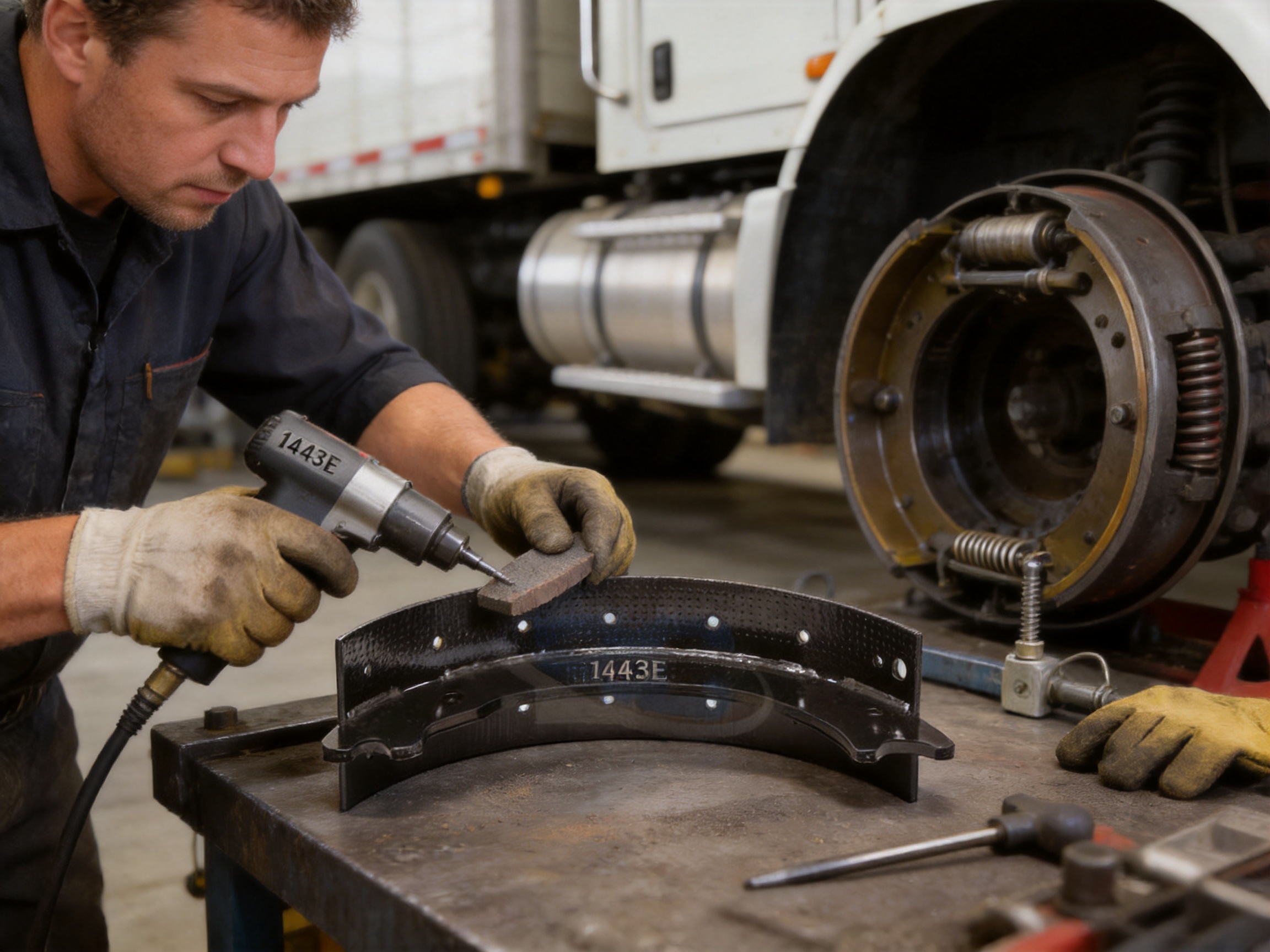
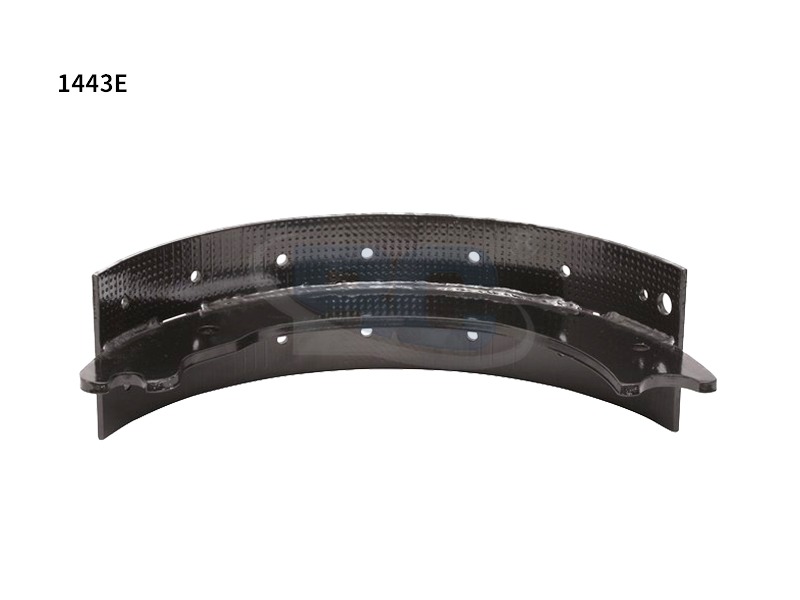
Reliable braking is one of the most important requirements in commercial vehicles, heavy trucks, trailers, buses, and other demanding transportation equipment. A brake shoe must support consistent braking force, maintain structural integrity under repeated loading, and work accurately with the vehicle’s drum brake system. The 1443E Brake Shoe is designed for this type of application, combining a robust steel foundation with a practical 15 x 4 inch format and 14 rivet holes for secure brake lining installation.
As a steel brake shoe, the 1443E provides the structural platform required for a complete drum brake assembly. It is intended to be used with a compatible brake lining, rivets, and related hardware. Its value is not limited to its basic dimensions. A well-manufactured brake shoe can improve the consistency of lining installation, help maintain correct contact with the brake drum, and support efficient service work during brake refurbishment.
The 1443E is produced by Zhejiang Bangchi Auto Parts Co., Ltd., a specialist manufacturer of heavy-duty brake parts and heavy truck braking components. The company supplies brake products according to the global FMSI numbering system and focuses on replacement and original-equipment-compatible applications. This article examines the product’s construction, expected operating advantages, manufacturing considerations, quality requirements, installation factors, and suitability for professional fleet maintenance.
Product Overview
The 1443E Brake Shoe is identified as a steel brake shoe with the following principal specifications:
| Item | Specification |
|---|---|
| Part number | 1443E |
| Product type | Steel brake shoe |
| Listed product size | 15 x 4 inch format as provided |
| Number of rivet holes | 14 |
| Primary application role | Structural carrier for a compatible brake lining |
| Brake system type | Drum brake system |
| Related product categories | Casted brake shoes, brake linings, lined brake shoes, brake shoe repair kits, and lined brake shoe kits |
The supplied specification describes the product size as “15 x 4 mm,” while the format is commonly associated with a 15 x 4 inch brake shoe size. Because a dimensional unit can affect product selection, buyers and installers should confirm the intended unit, application, drum dimensions, shoe profile, and vehicle interchange information before ordering. This verification step is especially important in heavy-duty braking, where even a small dimensional mismatch can affect lining contact and braking performance.
The 14 rivet holes are an important part of the design. They provide the attachment points for a compatible friction lining and are distributed along the shoe so that the lining can be held securely against the steel web and table. The exact rivet type, rivet diameter, hole spacing, countersink profile, and lining dimensions should be checked against the applicable repair specification before assembly.
Because the 1443E is a steel brake shoe rather than a complete lined brake shoe, it gives professional users flexibility. A repair facility may select the appropriate lining compound for a particular vehicle, operating environment, axle position, load range, or service requirement. This format is useful for workshops that rebuild brake assemblies, distributors that stock unlined cores, and fleets that maintain their own brake components.
The Structural Role of a Steel Brake Shoe
In a drum brake, the brake shoe supports the friction lining and transfers the force generated by the wheel cylinder, cam mechanism, or other actuator to the inner surface of the brake drum. When the brake is applied, the shoe moves outward and the lining contacts the rotating drum. The resulting friction converts vehicle motion into heat and slows the wheel.
The steel shoe must withstand several different types of stress. These include radial loading from contact with the drum, bending forces across the shoe table, localized loads around the anchor and actuator points, vibration during vehicle operation, and repeated thermal cycles caused by braking. A properly designed shoe must remain stable while allowing the lining to maintain an even working position.
The 1443E therefore performs more than a supporting function. Its geometry influences the way the lining sits inside the drum, the manner in which forces are distributed, and the ability of the brake assembly to operate smoothly. If the shoe is distorted, poorly finished, incorrectly drilled, or dimensionally inaccurate, the finished brake assembly may suffer from uneven wear, noise, reduced contact area, or premature service requirements.
For this reason, the manufacturing quality of an unlined brake shoe is directly connected to the performance of the final lined product. The steel material, forming accuracy, hole placement, surface condition, and inspection process all contribute to the reliability of the completed brake assembly.
1443E Brake Shoe
Key Advantages of the 1443E Brake Shoe
Heavy-Duty Steel Foundation
The primary advantage of the 1443E is its steel construction. Steel provides the strength and rigidity required for a brake shoe that operates under high mechanical loads. Compared with lightweight materials that may be unsuitable for severe commercial service, a properly engineered steel shoe offers a dependable foundation for the lining and hardware.
A rigid steel foundation helps limit unwanted deformation during braking. This is important because the lining should contact the drum in a controlled and predictable manner. Excessive flexing can reduce the effective contact area and create uneven pressure distribution. By maintaining the intended shoe shape, the 1443E can support more consistent lining engagement when paired with the correct compatible components.
Fourteen Rivet Holes for Secure Lining Attachment
The 14-hole configuration supports mechanical attachment of a brake lining to the shoe. A suitable hole pattern enables the lining to be fixed at multiple points rather than relying on a small number of fasteners. This can help distribute attachment loads along the lining and reduce the risk of localized movement when the brake is applied.
Multiple rivet locations are especially useful in commercial braking, where brake linings are exposed to repeated pressure, vibration, moisture, contamination, and thermal expansion. Correct riveting remains essential. The holes must be clean and properly aligned, the rivets must match the lining and shoe specification, and the finished rivet heads must be correctly formed without damaging the friction material.
Practical Replacement Format
The 1443E format is suitable for repair and replacement operations where the steel shoe is retained as a separate component. This can be advantageous for workshops that already have lining selection and riveting equipment. Instead of purchasing a fully assembled unit for every application, the workshop can prepare the shoe with a friction material selected for the vehicle and operating conditions.
This approach may also help distributors manage inventory. Unlined steel shoes can be supplied to different customers who require different friction compounds or lining thicknesses. A single shoe reference can therefore support several repair workflows, provided that the final lining and hardware are correctly matched.
Compatibility with Professional Brake Service
The product is positioned within a broader range that includes steel brake shoes, casted brake shoes, brake linings, lined brake shoes, brake shoe repair kits, and lined brake shoe kits. This product-family approach is useful to professional buyers because it allows them to source related components from a specialist brake-parts supplier.
For a fleet maintenance department, the availability of several product forms can simplify procurement. Some vehicles may require a bare shoe for in-house relining, while others may be better served by a ready-to-install lined shoe or a complete repair kit. Having access to different formats can help a fleet select the most efficient option for its workshop capabilities and maintenance schedule.
FMSI-Oriented Product Identification
The manufacturer states that its brake parts follow the global FMSI numbering system. Standardized part identification is valuable in the replacement market because it helps distributors, repair centers, and fleet managers communicate about brake components with greater consistency.
A recognizable part number such as 1443E can simplify catalog organization, quotation preparation, purchasing, and stock control. However, a part number should always be confirmed against the vehicle, axle, drum, shoe dimensions, and lining specification. Numbering systems improve identification, but they do not replace application verification.
Advantages Compared with Generic or Poorly Manufactured Alternatives
Brake shoes in the replacement market can vary considerably in material quality, dimensional accuracy, forming consistency, and inspection discipline. A low-cost generic shoe may appear similar at first glance but can create additional costs if it requires rework, does not align with the lining, or produces uneven brake performance. The 1443E is intended to offer a more controlled alternative through specialist production and application-oriented design.
More Consistent Geometry
Accurate shoe geometry is essential for correct positioning inside the drum. A shoe that is too wide, too narrow, incorrectly curved, or distorted during forming may not match the drum surface correctly. Such a condition can cause partial lining contact, accelerated wear, or a longer bedding-in period.
A specialist brake manufacturer can use dedicated tooling, forming controls, gauges, and inspection procedures to maintain the required shape. Consistency from one production batch to another is particularly important for fleets because it reduces variation during repair and makes service results more predictable.
Better Support for Lining Installation
The rivet-hole pattern is a functional feature rather than a cosmetic detail. Correctly positioned holes allow the lining to be attached without forcing it into an inaccurate position. Poor hole placement can make riveting difficult, create stress concentrations in the lining, or prevent the lining from following the shoe contour.
The 1443E’s 14-hole configuration is designed to support a secure lining installation when the correct matching lining is used. This gives the workshop a reliable starting point for relining work. It also reduces the risk that installers will need to modify the shoe, enlarge holes, or compensate for a poorly matched component.
Improved Service Predictability
Heavy-duty operators value predictable maintenance more than a low initial purchase price alone. A brake shoe that is dimensionally consistent and properly manufactured is easier to inspect, reline, and install. It can help reduce unexpected workshop delays caused by fitment problems or premature rework.
Predictability also supports fleet planning. When replacement components behave consistently, maintenance teams can establish more reliable inspection intervals, stocking levels, and repair procedures. This is especially important for vehicles that operate on fixed routes, construction sites, long-distance transport networks, or other applications where downtime has a direct commercial impact.
Suitable for Demanding Commercial Applications
The product is designed for the heavy-duty brake-parts sector rather than light passenger-car service. Its steel construction and repair-oriented format make it relevant to commercial vehicles that require durable and serviceable drum brake components. The final performance will depend on the complete brake system, including the drum, lining, springs, actuator, adjustment mechanism, wheel-end condition, and installation quality.
Compared with an unsuitable or poorly matched alternative, a correctly selected 1443E assembly can provide a better basis for maintaining the designed function of a heavy-duty drum brake. It is not a substitute for correct system engineering, but it is an important component within that system.
Manufacturing Strengths of the Supplier
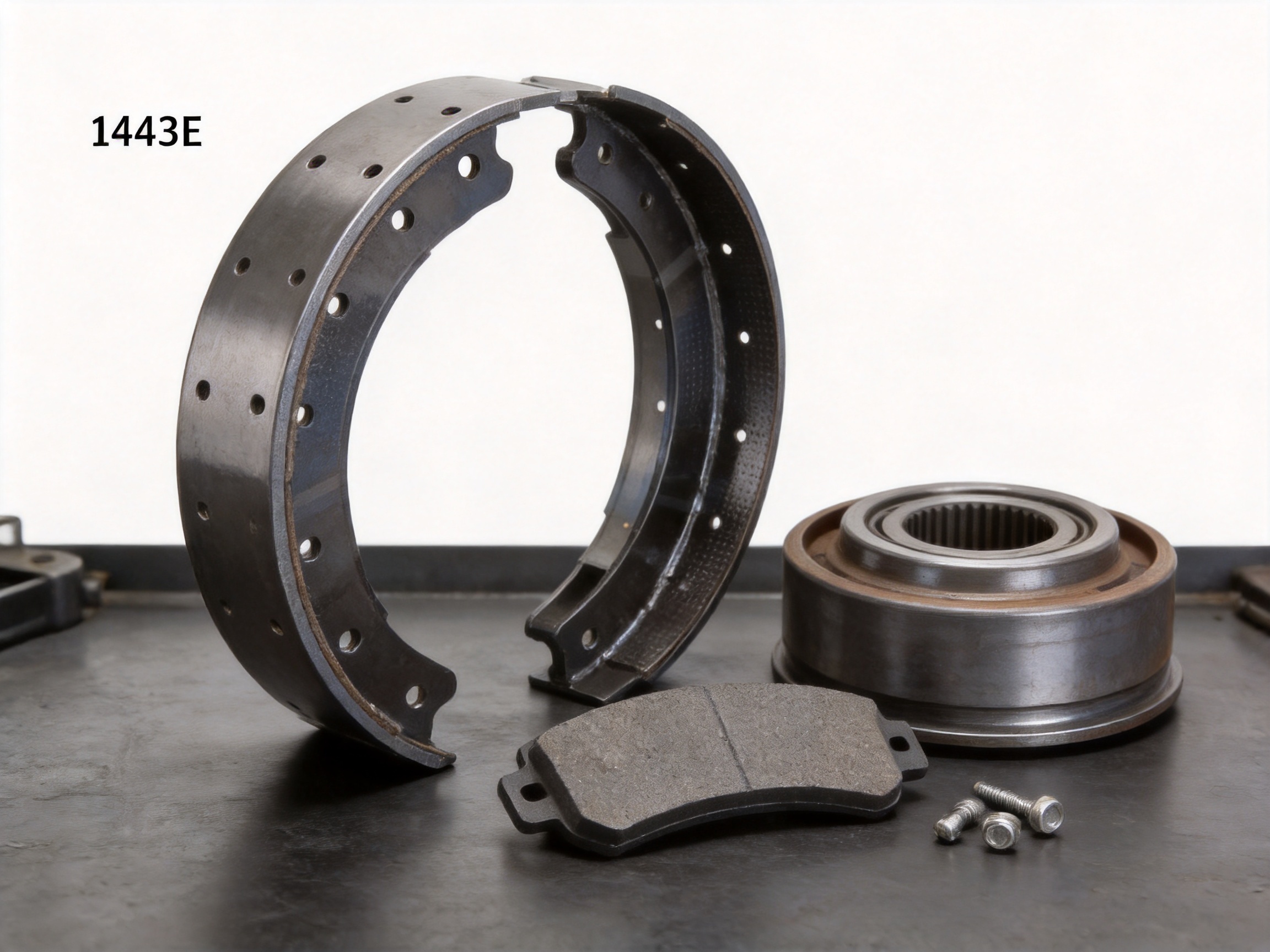
Zhejiang Bangchi Auto Parts Co., Ltd. is presented as a manufacturer of heavy-duty brake parts and heavy truck brake components. Its product categories include steel brake shoes, casted brake shoes, brake linings, lined brake shoes, brake shoe repair kits, and lined brake shoe kits. This specialization gives the company a focused understanding of the materials, geometries, fitting requirements, and service conditions associated with drum brake assemblies.
Specialized Product Knowledge
A manufacturer that works across several related brake-product categories can develop practical knowledge of the complete repair process. Steel shoe production must be coordinated with lining dimensions, rivet positions, drum profiles, and assembly procedures. Experience with lined shoes and repair kits can help the manufacturer understand how the bare shoe will be used after it leaves the factory.
This product-family knowledge is a potential advantage over suppliers that treat brake shoes as general stamped or formed metal products. A brake shoe is not simply a curved steel part. It is a safety-critical component whose shape and attachment features must support the operation of the entire brake assembly.
Controlled Material and Forming Processes
Advanced brake-shoe manufacturing normally begins with controlled material selection. Steel must provide the appropriate combination of strength, formability, dimensional stability, and resistance to service-related deformation. Incoming material should be checked for thickness, surface condition, and conformity with the applicable internal specification.
The steel is then processed through cutting, forming, pressing, welding, machining, drilling, or other operations depending on the shoe design. Dedicated tooling helps establish the required curvature and structural profile. Forming equipment must be maintained so that repeated production does not introduce gradual dimensional drift.
Where welded or joined elements are used, joint quality is important. Welding parameters, fixture alignment, penetration, and visual condition should be controlled. Any structural connection that carries actuator or anchor loads must be produced consistently and inspected according to the manufacturer’s quality procedures.
Dimensional Inspection
Dimensional inspection is one of the most important quality activities in brake-shoe production. Relevant checks may include overall length, width, shoe radius, web position, table profile, hole diameter, hole spacing, rivet countersink, anchor location, and actuator contact geometry.
Inspection can be performed with dedicated gauges, coordinate measuring equipment, templates, profile fixtures, calipers, micrometers, and other tools appropriate to the feature being checked. A combination of first-piece inspection, in-process inspection, and final inspection helps identify deviations before products are packaged and shipped.
For the 1443E, particular attention should be given to the 14 rivet holes and the overall shoe curvature. These features directly influence lining attachment and drum contact. An accurate hole pattern and stable shoe profile make downstream assembly more efficient and help the finished brake maintain the intended relationship between the lining and drum.
Surface Treatment and Corrosion Protection
Steel brake shoes may be exposed to humidity, road spray, salt, dust, and workshop storage conditions. Appropriate surface preparation and protective treatment can help reduce corrosion during transportation, inventory storage, and service preparation.
Surface treatment must be applied carefully. Areas intended for welding, riveting, bonding, or friction-material contact may require specific preparation. The finished surface should not interfere with lining installation or introduce contamination into the brake assembly. Packaging should also protect the shoe from impact, moisture, and deformation during handling.
Process Traceability
Professional buyers increasingly expect traceability for safety-related replacement parts. Traceability may include production batch information, material records, inspection results, tooling identification, packaging labels, and shipment documentation. Such records help a manufacturer investigate quality concerns and support continuous improvement.
For fleet customers and distributors, clear traceability can improve stock management. It allows products to be identified by part number and batch, reduces the possibility of mixing similar components, and provides a more organized foundation for warranty or technical-service discussions.
Quality Control from Raw Material to Finished Product
A reliable brake shoe is the result of multiple controlled steps rather than a single final inspection. Quality begins with the specification and continues through material purchasing, production planning, tool maintenance, forming, joining, drilling, surface treatment, inspection, packaging, and customer support.
Incoming Material Control
Steel sheet, plate, or other raw materials should be verified against the required grade and thickness. Material certificates, supplier records, and incoming inspection results can help confirm conformity. Visual checks should identify excessive rust, laminations, edge damage, oil contamination, or other conditions that might affect processing.
Tooling and Fixture Control
Brake shoes depend heavily on tooling accuracy. Forming dies and fixtures must maintain the intended curvature and alignment. Worn tooling can produce gradual changes that may not be obvious without regular measurement. A disciplined maintenance program should include cleaning, inspection, repair, calibration, and replacement of worn components.
In-Process Inspection
In-process checks can detect problems while they are still correctable. Operators and quality personnel may verify part orientation, forming depth, hole placement, weld appearance, surface condition, and dimensional conformity at selected stages. Early detection reduces scrap, prevents large batches of nonconforming parts, and protects delivery schedules.
Final Product Inspection
Before shipment, finished 1443E brake shoes should be checked for part-number accuracy, quantity, visible damage, dimensional conformity, rivet-hole condition, surface finish, and packaging integrity. Any protective coating should be uniform and free from defects that could interfere with assembly.
Final inspection should also confirm that the product is clearly labeled. The label should identify the 1443E part number and provide any relevant batch or production information. Clear identification is essential when similar brake shoes are stored in the same warehouse or workshop.
Installation and Relining Considerations
The 1443E is a steel carrier and must be paired with a compatible brake lining. Installation should be performed by trained personnel using the vehicle manufacturer’s service information, the lining supplier’s instructions, and appropriate workshop safety procedures.
Application Verification
Before installation, confirm the part number, shoe dimensions, drum size, axle position, lining specification, hole pattern, actuator arrangement, and anchor configuration. The listed product size should be clarified with the supplier if there is any uncertainty about whether the stated 15 x 4 measurement is expressed in inches or another unit.
The old shoe should not be used as the only reference. A worn or distorted component may no longer represent the original design dimensions. Measurements should be taken from reliable service information and compared with the new component.
Inspection of the New Shoe
Inspect the shoe for bending, cracks, sharp edges, damaged holes, corrosion, coating contamination, or shipping damage. Place the shoe against the matching lining to confirm that the contours and hole positions correspond. Do not force a lining into alignment by drilling or enlarging holes unless a formally approved repair procedure specifically permits it.
Lining Selection
The friction lining must be suitable for the vehicle’s gross weight, axle load, speed, operating environment, drum material, temperature range, and service duty. Different lining compounds can produce different friction, wear, noise, and heat-resistance characteristics. The 1443E provides the steel foundation, but the complete braking result depends heavily on the chosen lining.
Riveting Procedure
Rivets should match the lining thickness, shoe-hole dimensions, and approved assembly method. The lining must be positioned correctly along the shoe, with the rivets installed in the prescribed sequence. Riveting equipment should apply sufficient and controlled force to form secure heads without cracking the lining or distorting the shoe.
After riveting, each attachment point should be inspected. Rivet heads should be properly formed, seated, and free from looseness. The lining should not rock, shift, or show visible gaps between the friction material and the shoe. Any damaged or improperly set rivet should be corrected before the assembly is installed on the vehicle.
Brake Drum and Hardware Inspection
A new or relined shoe cannot compensate for a severely worn drum, damaged springs, faulty adjustment hardware, contaminated surfaces, or a malfunctioning actuator. The complete brake assembly should therefore be inspected during service.
The drum should be checked for scoring, cracks, excessive diameter, heat checking, out-of-round condition, and correct surface finish. Return springs, hold-down components, anchor points, rollers, cam followers, adjusters, and lubricated contact points should be evaluated according to the applicable service procedure.
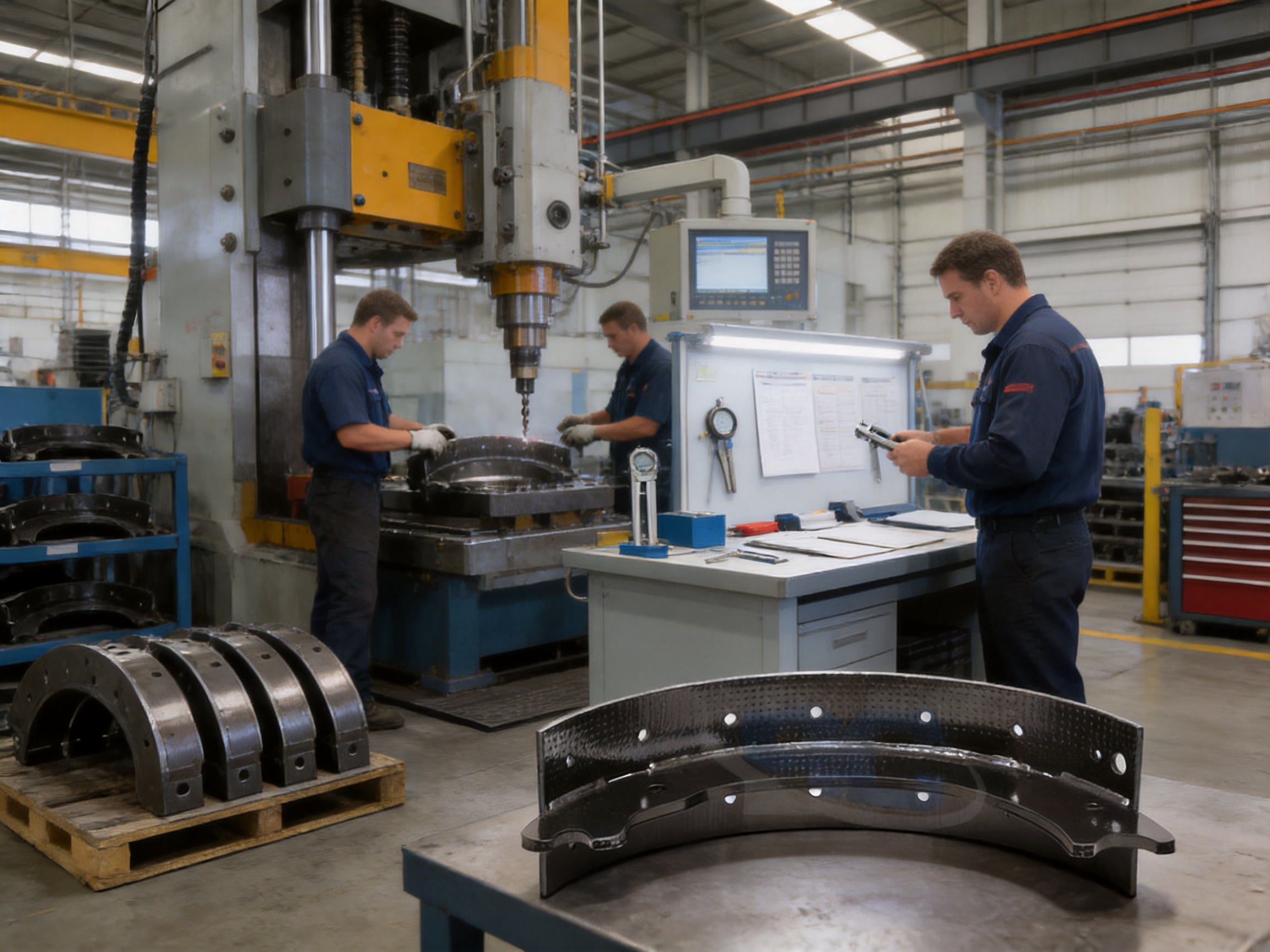
Performance Factors in Heavy-Duty Service
Brake performance is influenced by the interaction of the shoe, lining, drum, actuator, adjustment system, wheel bearings, tires, and vehicle control system. The 1443E contributes primarily through its structural support, geometry, and lining attachment capability.
Even Contact and Bedding
When the shoe and lining are correctly matched to the drum, the friction material should develop contact progressively during bedding. Even contact helps distribute heat and wear across the working surface. A properly shaped steel shoe supports this process by maintaining the lining in the intended position.
Operators should follow the applicable bedding procedure rather than making repeated severe stops immediately after installation. Controlled bedding allows the lining and drum surfaces to establish an appropriate contact relationship. Excessive heat during initial service can damage a new lining or create uneven transfer material on the drum.
Resistance to Repeated Loading
Commercial vehicles may apply their brakes hundreds or thousands of times during normal operation. Descents, urban traffic, loading-yard movement, and emergency stops can impose different patterns of force and heat. The steel shoe must remain stable throughout these cycles.
The 1443E’s steel structure is intended to provide a durable platform for such service when the product is correctly matched and installed. However, operating beyond the vehicle’s rated capacity, using an unsuitable lining, or neglecting brake adjustment can create loads that exceed the intended service conditions.
Heat Management
Braking converts kinetic energy into heat. The drum, lining, and shoe must operate within their intended temperature ranges. The shoe’s role is to support the lining and transfer loads, while the drum and lining manage much of the heat generation and dissipation.
Repeated overheating can affect lining friction, drum dimensions, rivet security, and component durability. Correct vehicle loading, proper adjustment, suitable lining selection, and appropriate driving technique are therefore essential. A high-quality shoe is an important part of the system, but it must be used within a correctly maintained brake assembly.
Noise and Vibration Considerations
Brake noise and vibration can be influenced by shoe geometry, lining material, drum condition, springs, clearances, adjustment, and contact surfaces. A dimensionally accurate shoe can reduce one possible source of inconsistency, but quiet operation still depends on the complete assembly.
During installation, technicians should confirm that the shoe moves freely at its anchor and actuator points, that springs are correctly positioned, and that lubrication is applied only where specified. Friction surfaces must remain clean and free from grease, oil, paint, or excessive protective coating.
Benefits for Distributors and Fleet Operators
Inventory Efficiency
A clearly identified 1443E steel brake shoe can be incorporated into a structured inventory system. Distributors can organize stock by part number, application, size, and product form. Fleet workshops can maintain separate inventories for bare shoes, linings, rivets, lined shoes, and complete kits.
The availability of both component-level and assembled products can make purchasing more flexible. A workshop with relining equipment may choose the bare steel shoe, while a workshop with limited assembly capacity may select a lined brake shoe or repair kit. This supports different maintenance models without requiring every customer to use the same procurement method.
Reduced Workshop Rework
Accurate holes, consistent curvature, and reliable identification can reduce the need for workshop adjustments. Every avoided modification saves labor and lowers the risk of introducing an assembly error. In heavy-vehicle service, these savings can be significant because a brake repair may require wheel removal, drum handling, cleaning, measurement, relining, installation, and final adjustment.
Support for Preventive Maintenance
Fleet operators can use replacement brake shoes as part of a preventive maintenance program. By recording installation dates, mileage, operating routes, axle positions, lining types, and inspection results, the fleet can establish service patterns. Data from repeated maintenance events can help identify abnormal wear, overloaded routes, drum problems, or adjustment issues.
A standardized part number supports accurate maintenance records. When the same reference is used consistently, it becomes easier to compare service performance across vehicles and operating locations.
Professional Technical Communication
The manufacturer’s focus on heavy-duty brake parts and FMSI-oriented identification can help improve communication between the supplier, distributor, repair center, and end user. Clear technical exchanges should include the part number, dimensions, application, lining requirement, order quantity, packaging expectation, and any special inspection documentation.
For export and wholesale customers, this information is especially important. Heavy-duty brake components may be distributed across different markets with varying vehicle configurations. A complete technical inquiry reduces the risk of a part being selected only because it looks similar to an existing shoe.
Responsible Product Selection
The safest and most economical way to purchase a brake shoe is to treat selection as an engineering and service decision rather than a simple price comparison. Buyers should evaluate dimensional accuracy, material quality, production controls, supplier reliability, documentation, packaging, and technical support.
The 1443E should be selected only after confirming that it matches the intended brake assembly. The supplier can be asked to provide dimensional drawings, application information, lining compatibility details, rivet recommendations, inspection documentation, and packaging specifications where required.
Buyers should also consider the difference between a steel brake shoe and a casted brake shoe. These product types can have different structural characteristics, manufacturing methods, and application requirements. The correct choice depends on the original brake design and the service conditions of the vehicle.
Packaging, Storage, and Handling
Even a well-manufactured brake shoe can be damaged by poor handling. Components should be packed so that they cannot strike one another, become bent, or suffer damage to the rivet holes and contact surfaces. Heavy parts should not be stacked in a way that places excessive load on a thin edge or unsupported area.
Storage should be dry, clean, and protected from corrosive chemicals. If the shoe has a protective coating, the coating should be kept intact until assembly where possible. Before installation, technicians should remove any packaging residue or temporary protection from areas that must contact the lining or brake hardware.
Warehouse personnel should use the part number and packaging label to control stock rotation. Similar-looking shoes should be separated and clearly identified. Mixing parts from different references can create application errors even when the components appear close in size.
Why Specialist Manufacturing Matters
The braking system is a safety-critical system, and the brake shoe is a load-bearing component within that system. Specialist manufacturing matters because it brings together material knowledge, forming technology, hole-pattern control, finishing processes, inspection discipline, and application experience.
A general metalworking supplier may be able to produce a curved steel component, but heavy-duty brake production requires more than shape alone. The shoe must be compatible with a lining, drum, actuator, anchor, and service procedure. It must remain stable under repeated mechanical and thermal loading. It must also be identifiable, repeatable, and suitable for efficient inspection.
Zhejiang Bangchi Auto Parts Co., Ltd. positions itself within this specialist field by offering several categories of heavy-duty brake products. Its focus on heavy truck brakes and the global FMSI numbering system supports an application-oriented approach. For customers, the practical benefit is access to a supplier that understands the relationship between individual brake components and the complete repair assembly.
Frequently Asked Questions
What is the 1443E Brake Shoe?
The 1443E is a steel brake shoe designed to serve as the structural carrier for a compatible drum-brake lining. It is supplied as an unlined steel shoe and includes 14 rivet holes for mechanical lining attachment.
What size is the 1443E?
The supplied product information lists the size as 15 x 4. It also presents the unit as “mm,” while this format is commonly described in inches. Buyers should confirm the exact unit and dimensional drawing with the supplier before ordering or installing the component.
Does the product include the brake lining?
The listed product is a steel brake shoe, so the brake lining is not indicated as included. A compatible lining must be selected and installed separately unless the buyer orders a corresponding lined brake shoe or lined brake shoe kit.
Why are there 14 rivet holes?
The 14 holes provide attachment points for the brake lining. Multiple attachment points help secure the lining along the shoe and distribute mechanical loads when the brake is applied. The rivet type and installation method must match the lining and service specification.
Can the 1443E be used on any heavy truck?
No. Brake shoes are application-specific components. The part number, dimensions, shoe profile, drum size, axle position, actuator arrangement, lining specification, and vehicle application must all be confirmed before use.
What are the main advantages of a steel brake shoe?
A properly manufactured steel shoe provides a strong and rigid foundation for the lining. It can support consistent lining positioning, withstand repeated mechanical loading, and provide a practical platform for professional relining and repair operations.
How does the 1443E compare with a casted brake shoe?
A steel brake shoe and a casted brake shoe are different product types with different construction methods and application characteristics. The correct choice depends on the original brake design and the manufacturer’s application requirements. They should not be treated as automatically interchangeable.
What should be checked before riveting the lining?
The technician should confirm the lining specification, hole alignment, shoe curvature, rivet dimensions, countersink requirements, and riveting procedure. The shoe should be free from cracks, distortion, contamination, and damaged holes. The lining should sit evenly against the shoe without forced alignment.
Can the product help reduce maintenance costs?
A dimensionally consistent and properly identified brake shoe can reduce fitment problems, workshop rework, and inventory confusion. Actual cost savings depend on the vehicle application, lining choice, installation quality, operating conditions, and maintenance practices.
What information should be included in an order inquiry?
An inquiry should include the 1443E part number, required quantity, intended vehicle or axle application, dimensional requirements, lined or unlined product preference, lining information if applicable, delivery destination, packaging requirements, and any documentation needs.
How should the 1443E be stored?
Store the shoe in a clean, dry area protected from impact, excessive humidity, corrosive chemicals, and deformation. Keep part numbers separated and clearly labeled to prevent similar components from being mixed.
Who should install or reline the brake shoe?
Installation and relining should be performed by qualified technicians who understand heavy-duty drum brake systems and have access to the correct tools, service data, and safety procedures.
Conclusion
The 1443E Brake Shoe is a practical heavy-duty steel component for drum brake repair and relining applications. Its listed 15 x 4 format and 14 rivet holes provide a defined starting point for application matching, lining attachment, and workshop planning. Its main advantages are the strength of a steel foundation, support for professional lining installation, compatibility with repair-oriented workflows, and identification within a specialist heavy-duty brake-parts program.
The performance of the finished brake assembly will depend on more than the shoe alone. Correct dimensional verification, lining selection, riveting, drum inspection, hardware condition, adjustment, bedding, and preventive maintenance are all essential. When these factors are controlled, the 1443E can serve as a reliable structural component for commercial vehicle brake refurbishment.
Zhejiang Bangchi Auto Parts Co., Ltd. strengthens the product offering through its focus on heavy-duty brake parts, heavy truck brakes, related lined products, repair kits, and FMSI-oriented identification. Its manufacturing value is based on specialist product knowledge, controlled steel forming, rivet-hole accuracy, inspection processes, traceability, and support for professional customers.
For distributors, fleet operators, and brake workshops, the most important purchasing decision is not simply choosing a component that looks similar. It is selecting a correctly identified, dimensionally compatible, consistently manufactured brake shoe that can be integrated into a complete and properly maintained braking system. Used in that manner, the 1443E provides a dependable foundation for efficient heavy-duty brake service.
References
1. Federal Motor Vehicle Safety Standards, Brake Systems and Service Brake Performance, general regulatory reference.
2. Federal-Mogul Motorparts, Drum Brake Service Principles and Component Identification, technical training reference.
3. Society of Automotive Engineers, Commercial Vehicle Brake System Engineering Practices, professional engineering reference.
4. International Organization for Standardization, Quality Management Systems and Manufacturing Process Control Principles.
5. International Organization for Standardization, Road Vehicles and Brake System Performance Terminology, technical reference.
6. Commercial Vehicle Brake Manufacturers’ Association, Heavy-Duty Drum Brake Inspection and Maintenance Practices.
7. Manufacturer-provided product information for the 1443E Steel Brake Shoe, including part number, size information, and rivet-hole quantity.
8. Manufacturer-provided product category information for steel brake shoes, casted brake shoes, brake linings, lined brake shoes, brake shoe repair kits, and lined brake shoe kits.