 English
 简体中文
简体中文Reliable braking is one of the most important requirements in commercial vehicles. Heavy trucks, buses, and other large vehicles operate under high loads, long working hours, frequent braking cycles, and demanding road conditions. In these applications, the brake shoe must provide consistent contact with the drum, maintain structural stability, resist wear, and support safe vehicle operation over an extended service interval. A brake shoe that is correctly engineered and accurately manufactured contributes directly to braking efficiency, operating reliability, maintenance control, and total fleet productivity.
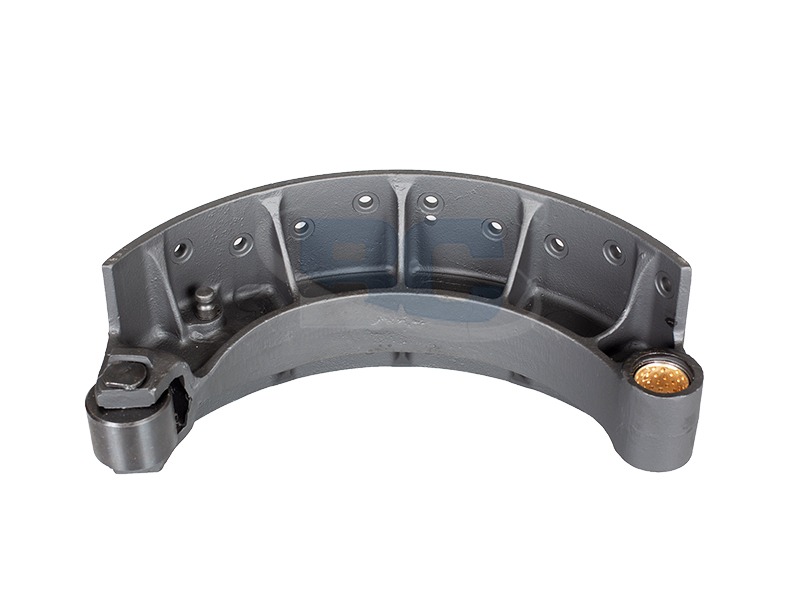
The 4656 Casted Brake Shoe is a heavy-duty brake component developed for MAN160 applications. It has a size of 410 x 160 mm and is manufactured with 18 riveting holes. These dimensions and hole specifications provide a clear reference for correct identification, installation, and replacement. As a casted brake shoe, the product is intended to provide the strength and dimensional stability required in demanding drum-brake systems.
This article examines the design, construction, application, manufacturing considerations, installation value, inspection requirements, and purchasing advantages of the 4656 Casted Brake Shoe. It also explains how Zhejiang Bangchi Auto Parts Co., Ltd. supports the production of heavy-duty brake parts through specialized product categories, application-focused manufacturing, and attention to global part-numbering requirements.
4656 Casted Brake Shoe
Product Overview
The 4656 Casted Brake Shoe is identified by part number 4656 and is categorized as a casted brake shoe. Its stated application is MAN160. The product has a nominal size of 410 x 160 mm and includes 18 riveting holes for the attachment of the appropriate brake lining. These specifications are essential when comparing replacement components because brake shoes that appear similar may differ in arc profile, width, hole arrangement, or drum compatibility.
| Item | Specification |
|---|---|
| Product name | 4656 Casted Brake Shoe |
| Part number | 4656 |
| Product category | Casted Brake Shoe |
| Application | MAN160 |
| Size | 410 x 160 mm |
| Riveting holes | 18 |
| OEM number | Not specified in the supplied product information |
| Manufacturer | Zhejiang Bangchi Auto Parts Co., Ltd. |
The purpose of a brake shoe is to support the brake lining and transfer mechanical force into frictional contact with the brake drum. When the brake system is activated, the shoe moves outward or otherwise applies force so that the lining presses against the inner surface of the drum. The resulting friction slows or stops the wheel. The casted shoe must therefore remain stable while exposed to mechanical loading, vibration, temperature changes, and repeated braking cycles.
For fleet operators and repair professionals, the product’s clearly defined dimensions and riveting-hole count are useful during the identification process. Correct matching helps prevent installation delays and reduces the risk of using a component that does not align properly with the original braking assembly.
Why the Brake Shoe Design Matters
A brake shoe is more than a simple metal support. It is a load-bearing component that determines how effectively the brake lining is positioned against the drum. Its shape, stiffness, surface condition, and hole placement all influence braking performance. If the shoe is distorted, incorrectly sized, or poorly aligned, the lining may not contact the drum evenly. Uneven contact can lead to reduced braking efficiency, localized wear, noise, heat concentration, and premature replacement.
The 4656 Casted Brake Shoe is designed around the requirements of a specific vehicle application rather than as a universal component. This application-oriented approach is important for heavy-duty vehicles because braking assemblies often differ in dimensions, operating forces, drum geometry, and lining attachment methods. A product intended for MAN160 must be checked against the vehicle’s existing brake assembly before installation, especially when the original equipment number is not available.
The 410 x 160 mm size provides a basic dimensional reference. However, responsible parts selection should also consider the complete installation profile, including the curvature of the shoe, the position and diameter of the riveting holes, the relationship between the shoe and the lining, and the configuration of the brake hardware. Dimensional data should be compared with the removed part, technical drawings, or vehicle service information before an order is confirmed.
Advantages of a Casted Brake Shoe
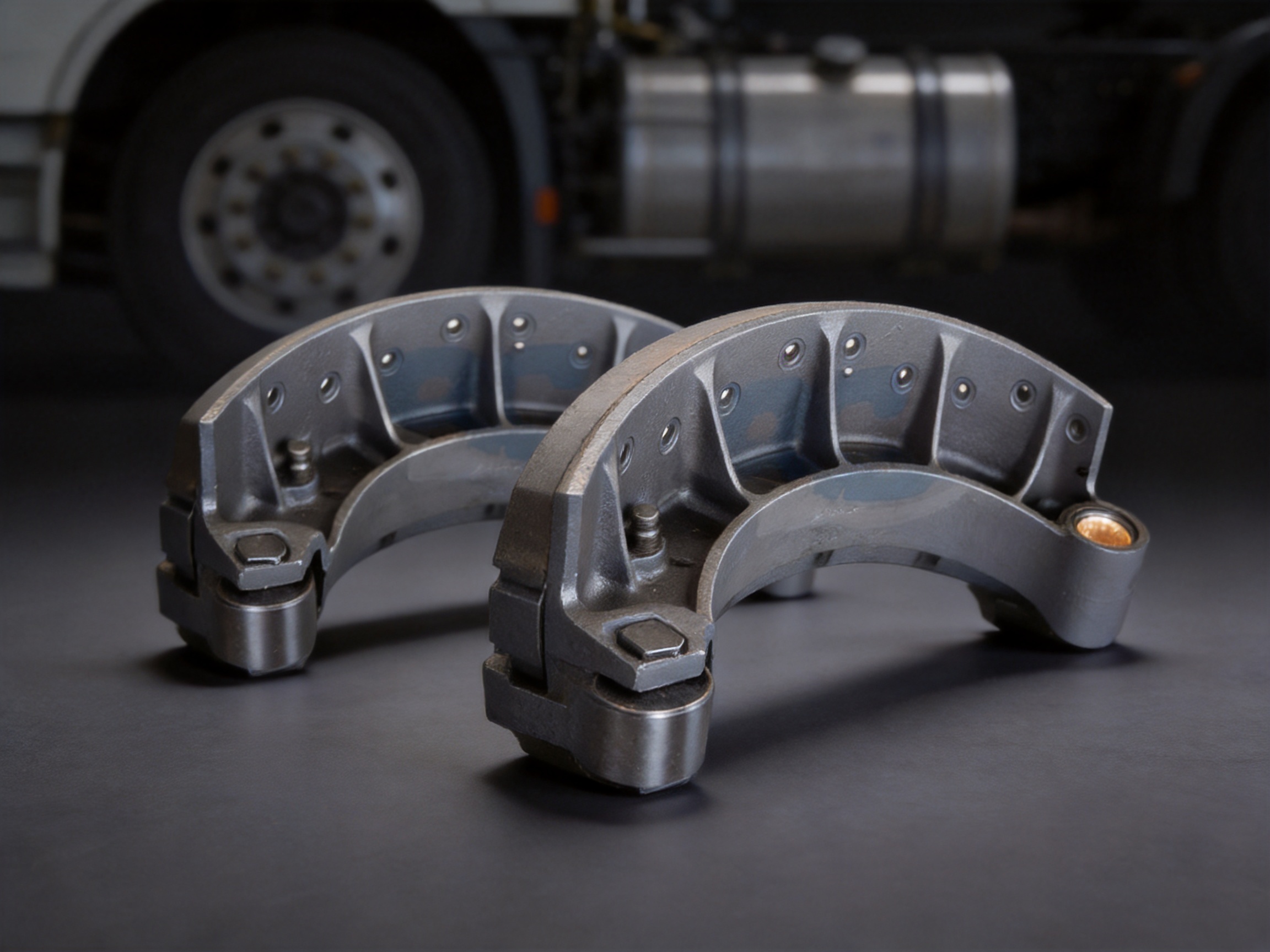
Casting is widely used for brake shoes that must combine structural strength with repeatable production. In a casting process, molten metal is formed in a mold that represents the required component geometry. Once solidified, the casting can be cleaned, machined, inspected, and prepared for lining attachment. This method is suitable for producing complex support profiles and maintaining a consistent shape across repeated production batches.
Compared with lower-quality alternatives, a properly produced casted brake shoe can offer several important advantages. It can provide a stable support platform for the lining, maintain its geometry under repeated loading, and resist deformation when the vehicle operates under heavy braking conditions. The casting process also allows the manufacturer to produce a component that follows the intended brake-system profile instead of relying on a basic flat or inadequately formed support.
Structural stability
Heavy-duty braking generates significant mechanical force. The brake shoe must withstand the force transmitted from the actuator and distribute that force across the lining. A stable casted structure helps reduce unwanted movement and supports even pressure distribution. This is especially important in commercial vehicles that may carry heavy cargo or operate on routes with frequent stops and descents.
Consistent geometry
Accurate geometry is essential for proper drum contact. The shoe must conform to the intended brake assembly so that the lining can be positioned correctly. A controlled casting process, followed by appropriate finishing and inspection, helps maintain repeatability between parts. Consistency is valuable for distributors and repair workshops because it reduces fitting variation and simplifies replacement planning.
Support for lining attachment
The 4656 product includes 18 riveting holes. These holes provide the attachment points for the brake lining and must be correctly positioned so the lining can be secured without distortion. A properly arranged hole pattern supports a stable connection between the casted shoe and the lining. It also allows repair professionals to select a compatible lining and riveting method for the application.
Suitability for demanding service
Commercial vehicle brake systems often operate under higher loads than passenger-car systems. A casted shoe is appropriate for applications where durability, resistance to deformation, and dependable support are priorities. It is not the friction material itself; instead, it is the structural foundation that enables the friction material to perform correctly.
Manufacturing Process and Quality Considerations
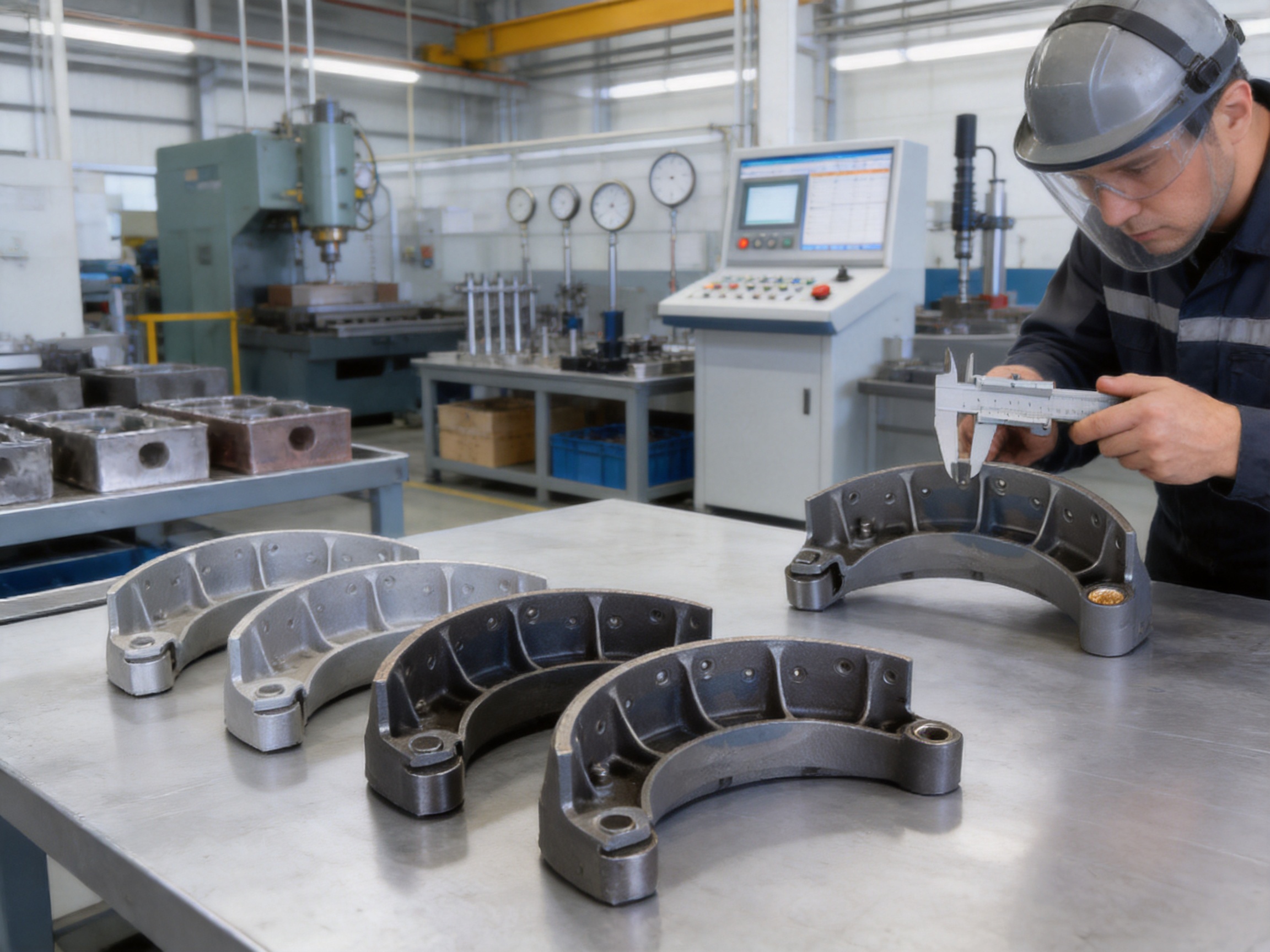
The quality of a casted brake shoe depends on more than the casting stage alone. A reliable manufacturing program normally includes material preparation, mold control, casting, cooling, cleaning, dimensional processing, hole formation, inspection, and final product identification. Each stage can affect the final fit and operating behavior of the part.
Material preparation
Material consistency is the starting point for a dependable cast component. The selected metal must be suitable for the mechanical requirements of a brake shoe and must be prepared in a controlled manner. Clean charge material, suitable melting practice, and appropriate temperature management help reduce the risk of inclusions, porosity, and inconsistent mechanical properties.
Manufacturers serving the heavy-duty replacement market must pay attention to batch control. A repeatable material process helps ensure that products made at different times remain compatible in terms of strength, appearance, and dimensional behavior. This is important for wholesalers and fleet maintenance programs that purchase the same part number over an extended period.
Mold and pattern control
The mold or pattern determines the fundamental shape of the brake shoe. If the mold is worn, damaged, or inaccurately maintained, the resulting parts may show variation in profile or critical dimensions. Controlled mold maintenance helps preserve the shoe’s intended geometry and reduces the likelihood of mismatch during installation.
For an application-specific product such as the 4656 Casted Brake Shoe, mold control is especially relevant. A small change in curvature or width can influence the way the shoe sits inside the brake assembly. Manufacturing teams should therefore maintain clear process records and use established inspection points for each production batch.
Casting and solidification
During casting, temperature, filling behavior, and solidification conditions influence the internal and external quality of the part. Proper control helps create a sound casting with a suitable surface and adequate structural integrity. After solidification, the casting must be separated from the mold and prepared for subsequent processing.
Cooling should be managed in a way that minimizes avoidable distortion and excessive residual stress. A controlled cooling approach supports dimensional stability. The exact process parameters depend on the material, equipment, mold design, and production requirements, but the general objective is consistent, sound, and repeatable castings.
Cleaning and finishing
Cast components commonly require cleaning to remove residual sand, scale, gates, risers, and other unwanted material. Finishing operations make the component suitable for dimensional inspection and assembly. Particular attention should be paid to contact surfaces, edges, and areas around the riveting holes.
A clean and properly finished shoe is easier to inspect and install. It also reduces the possibility that unwanted material will interfere with the lining or brake hardware. Surface preparation should not remove material from critical areas or alter the intended profile.
Machining and hole processing
The 18 riveting holes are a critical feature of the 4656 Casted Brake Shoe. Hole position, spacing, diameter, and edge condition all affect lining attachment. Accurate drilling, punching, or machining helps ensure that the lining can be fitted correctly and that the rivets seat properly.
Hole processing should be carried out with suitable fixtures or controlled production equipment. Consistent positioning reduces assembly variation and helps prevent a lining from shifting during service. The holes should also be free from excessive burrs, cracks, or deformation that could compromise the riveted connection.
Dimensional inspection
Inspection should confirm the key characteristics of the shoe, including the overall 410 x 160 mm size, the 18-hole arrangement, the application profile, and the condition of the casting. Inspection tools may include calibrated gauges, templates, coordinate measurement equipment, and visual checks. The appropriate method depends on the production volume and quality requirements.
For distributors and buyers, product identification and traceability are also valuable. Marking the part number or maintaining batch records can help connect the finished component with its production information. This supports more efficient stock management and makes it easier to investigate any field issue.
Manufacturing Strengths of Zhejiang Bangchi Auto Parts Co., Ltd.
Zhejiang Bangchi Auto Parts Co., Ltd. is a Chinese manufacturer specializing in heavy-duty brake parts. Its product categories include steel brake shoes, casted brake shoes, brake linings, lined brake shoes, brake shoe repair kits, and lined brake shoe kits. This category coverage is an important strength because it reflects an understanding of the brake shoe as part of a complete service system rather than as an isolated component.
The company states that it provides OEM brake parts following the global FMSI numbering system. A structured part-numbering approach helps international buyers identify products, organize catalogs, and compare replacement requirements. For importers and distributors, clear part identification can reduce communication errors and simplify the process of matching a brake shoe with an application.
A specialized manufacturer can also develop practical knowledge from producing related components. Experience with casted shoes, linings, and repair kits can support better coordination between the shoe structure and the friction material. This is relevant when customers need a complete replacement solution rather than only an unlined shoe.
The company’s product range is also useful for workshops that perform different levels of brake repair. A repair shop may need a bare casted shoe for relining, a lined brake shoe for direct replacement, or a repair kit for restoring an existing brake assembly. Having multiple product formats available from one specialist supplier can reduce sourcing complexity and make purchasing more efficient.
Application-focused production
The 4656 product is linked to the MAN160 application. Application-focused production helps ensure that the component is developed and cataloged with a specific vehicle requirement in mind. This is preferable to relying only on general size descriptions because two parts with similar dimensions may not be interchangeable.
Product-category specialization
Specialization in heavy-duty brake parts allows a manufacturer to concentrate its equipment, inspection methods, tooling, and technical knowledge on a defined product field. This focus can support more consistent production and better communication with professional buyers.
Support for international purchasing
International customers often need clear part numbers, product dimensions, application data, packaging information, and responsive technical communication. A manufacturer that organizes products according to recognizable numbering practices can make export purchasing more straightforward. This is particularly valuable for distributors managing large inventories across multiple truck and bus applications.
Competitive Advantages of the 4656 Casted Brake Shoe
The 4656 Casted Brake Shoe offers several advantages when compared with generic or poorly documented alternatives. These benefits relate to product identification, structural design, application clarity, and supplier specialization.
Clearly defined application
The product is identified for MAN160 use. Application information allows buyers to begin the selection process with a specific reference rather than relying on appearance alone. This can reduce the risk of ordering a shoe with an incorrect profile or unsuitable hole arrangement.
Documented dimensions
The 410 x 160 mm size provides a useful purchasing and inspection reference. While buyers should verify all relevant dimensions before installation, documented size information helps technicians compare the replacement part against the original component and identify potential mismatches before the vehicle is dismantled for repair.
Defined riveting-hole count
The 18 riveting holes distinguish this product from other brake shoes that may have a different lining attachment pattern. The hole count is a practical identification feature and provides a direct reference for lining compatibility. Correct hole alignment is essential for a secure and even connection.
Heavy-duty cast construction
A casted construction is appropriate for a support component exposed to repeated mechanical loading. When produced with controlled materials and processes, it can provide a strong and stable foundation for the lining. This is a meaningful advantage over low-grade components that may show poor dimensional control or inadequate structural consistency.
Availability in related product categories
Because the manufacturer also supplies linings, lined shoes, and repair kits, buyers may be able to coordinate related components through one source. This can simplify procurement, improve product matching, and reduce the administrative burden of dealing with several suppliers.
Part-numbering discipline
Following the global FMSI numbering system supports clearer catalog organization. In the aftermarket, accurate product identification is essential. A recognized numbering approach can help distributors create structured product listings and enable repair professionals to communicate requirements more efficiently.
Brake Lining Compatibility and Riveting
The casted shoe is normally used with a compatible brake lining. The lining provides the friction surface, while the shoe supports and positions it. These two components must be matched carefully. The lining should have an appropriate length, width, thickness, curvature, and hole arrangement for the shoe and drum.
For the 4656 Casted Brake Shoe, the 18 riveting holes are a central compatibility feature. A lining with the wrong number or position of holes should not be forced into place. Improper alignment can create uneven clamping, damaged rivets, loose sections, or local stress concentrations. Any of these conditions may affect braking safety.
During riveting, the lining should be seated evenly against the shoe without gaps or rocking. Rivets should be selected according to the lining and application requirements. The riveting sequence should help maintain uniform contact and avoid lifting one section of the lining away from the shoe.
After riveting, the assembly should be inspected for loose fasteners, cracked lining material, damaged edges, and irregular curvature. The finished lined shoe should fit the drum and associated hardware without excessive interference. If the lining requires machining or arcing to match the drum, that operation should be completed using appropriate workshop equipment and procedures.
Installation and Workshop Recommendations
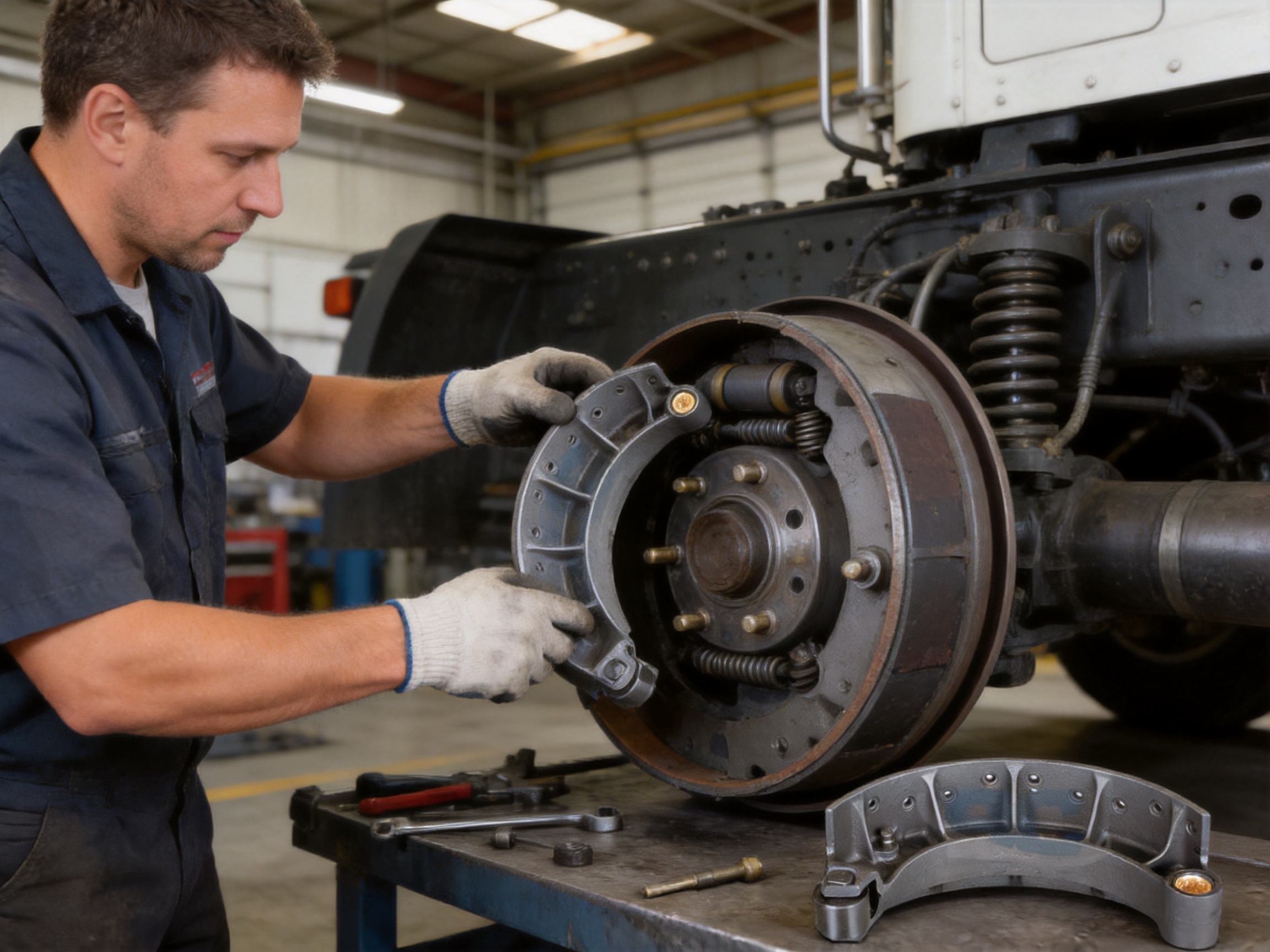
Before installation, confirm that the replacement part is the correct 4656 Casted Brake Shoe and that it is intended for the MAN160 application. Compare the new component with the removed shoe and check the overall size, profile, hole arrangement, and general construction. Do not rely solely on a visual resemblance.
Inspect the brake drum before fitting the shoe. A drum with excessive wear, cracks, deep scoring, heat damage, or an unsuitable internal diameter can reduce the effectiveness of a new shoe and lining. If the drum is not within the vehicle manufacturer’s service limits, it should be repaired or replaced as required by qualified personnel.
All related brake hardware should also be checked. Return springs, rollers, pins, adjusters, anchor points, and other components can influence shoe movement and lining contact. Reusing damaged or excessively worn hardware may prevent the new brake shoe from performing correctly.
The shoe should be installed in the correct orientation and positioned without forcing it into place. Contact points should be clean and free from harmful contamination. Lubrication, where specified by the vehicle service procedure, should be applied only to the correct non-friction contact points. Grease or oil must never contaminate the lining or drum friction surfaces.
After assembly, the brake system should be adjusted according to the applicable service instructions. The wheel should rotate appropriately without abnormal drag, and the brake should respond smoothly. A professional road test or controlled functional check should be completed before the vehicle returns to normal service.
Inspection, Maintenance, and Service Life
The service life of a brake shoe depends on vehicle weight, operating conditions, brake adjustment, drum condition, lining material, driving style, and maintenance quality. The casted shoe is designed to serve as a durable support, but it should still be inspected whenever the brake assembly is serviced.
Technicians should look for cracks, distortion, corrosion, damaged hole edges, loose rivets, unusual wear marks, and contact patterns that indicate misalignment. A shoe that is bent, cracked, or materially damaged should not be returned to service. Even if the lining appears usable, structural damage to the shoe can compromise the complete assembly.
Uneven lining wear may indicate a problem elsewhere in the brake system. Possible causes include an incorrectly adjusted brake, worn hardware, a damaged drum, contamination, incorrect lining fit, or an improperly positioned shoe. Replacing only the visibly worn component may not solve the underlying problem.
Fleet maintenance teams can improve reliability by recording brake inspections, replacement dates, mileage, operating conditions, and the part numbers used. Such records help identify service trends and support more accurate inventory planning. They also make it easier to confirm whether the correct brake shoe has been installed on each vehicle.
Purchasing and Inventory Benefits
For distributors, repair chains, and fleet operators, product documentation is almost as important as the component itself. A brake shoe should be listed with its part number, category, application, dimensions, riveting-hole count, and any available cross-reference information. This reduces ambiguity during purchasing and helps prevent incorrect stock allocation.
The 4656 product has a straightforward identification structure: part number 4656, casted brake shoe category, MAN160 application, 410 x 160 mm size, and 18 riveting holes. These details can be included in internal inventory systems, product catalogs, quotation documents, and workshop job cards.
Maintaining accurate stock records is especially important for heavy-duty brake parts because many products have similar visual characteristics. Separate storage and labeling can reduce picking errors. Packaging should protect the casted shoe from impact, excessive moisture, and contamination during transportation and storage.
Buying from a specialized manufacturer may also help customers consolidate orders. A supplier that offers shoes, linings, lined shoes, and repair kits can support several workshop requirements through one purchasing channel. Consolidation may simplify quality control, documentation, shipping coordination, and supplier communication.
Quality Control from the Customer’s Perspective
Customers evaluating a casted brake shoe should consider more than price. A lower-cost part may become expensive if it causes installation delays, premature wear, fitting problems, or repeated vehicle downtime. Important evaluation factors include dimensional consistency, application accuracy, casting quality, hole alignment, surface condition, packaging, and technical support.
Buyers should request or verify the product information needed for their specific application. For the 4656 Casted Brake Shoe, this includes confirmation of the MAN160 application and the 410 x 160 mm dimensions. Since no OEM number is provided in the available product data, buyers should perform additional cross-checking with the vehicle’s original component, technical documentation, or supplier support before placing a large order.
Where possible, customers should review sample parts before approving a new supplier. A sample evaluation can include dimensional measurement, hole-pattern comparison, surface inspection, lining fit, and installation verification. For fleet customers, a controlled trial can provide information about fit and workshop efficiency before broader adoption.
Role of Advanced Production in Aftermarket Reliability
Advanced manufacturing does not depend on one machine or one production stage. It is a coordinated system that connects product design, tooling, casting, finishing, machining, inspection, documentation, and customer feedback. For brake components, this coordination is particularly important because a small dimensional error can affect installation or braking behavior.
A capable production system should use defined process standards rather than relying solely on individual operator experience. Work instructions, inspection checkpoints, equipment maintenance, and batch records help create repeatable results. Continuous improvement can then be based on measurable information such as rejection causes, dimensional trends, customer feedback, and field performance.
For a specialist manufacturer such as Zhejiang Bangchi Auto Parts Co., Ltd., concentration on heavy-duty brake parts provides a foundation for process improvement. The company can apply experience across related product groups, including casted shoes, steel shoes, linings, and repair kits. This product knowledge supports better understanding of how individual parts interact inside a complete drum-brake system.
The practical result for customers is greater confidence in product selection and replacement planning. A well-controlled manufacturing process does not eliminate the need for application verification, but it helps ensure that the part received is consistent with the published specification.
Environmental and Operational Considerations
Brake components are safety-related products, but they are also part of a broader maintenance and resource system. Durable components can help reduce unnecessary replacement frequency and associated transportation, packaging, and workshop consumption. Correctly matched brake shoes also support more efficient maintenance because they reduce the likelihood of repeated fitting attempts.
Responsible production includes efficient use of raw materials, control of casting waste, management of process emissions, and appropriate handling of machining residues. The exact environmental measures used by a manufacturer should be verified through its own technical and management documentation. From a buyer’s perspective, selecting a correctly specified component is one of the simplest ways to avoid waste caused by returns and unsuitable parts.
Operational efficiency is equally important. A heavy vehicle that remains out of service because of an incorrect brake part can create delivery delays, lost revenue, and additional labor costs. Clear application data and dependable product quality help reduce these avoidable interruptions.
Recommended Selection Checklist
Before purchasing the 4656 Casted Brake Shoe, confirm the vehicle and brake-system application. The stated application is MAN160, but the complete vehicle configuration should still be checked. Model names and brake assemblies may vary by production year, axle configuration, market, or service modification.
Confirm the product category. The 4656 is a casted brake shoe, not a complete lined shoe or a repair kit. If the workshop requires a ready-to-install assembly, a lined version may be more appropriate. If the workshop performs its own relining, the bare casted shoe may be the correct choice.
Compare the main dimensions. The stated size is 410 x 160 mm. Also verify the arc, mounting features, and any dimensions not included in the basic product description.
Check the riveting pattern. The product has 18 riveting holes. The selected lining must have a compatible hole arrangement, and the rivets must be appropriate for the lining and shoe.
Review the OEM or cross-reference information. No OEM number is listed in the supplied data, so additional confirmation should be obtained when required by the buyer’s cataloging system or vehicle documentation.
Finally, confirm packaging, quantity, inspection requirements, and delivery details with the supplier. These steps support a smoother purchasing process and reduce the possibility of receiving an unsuitable component.
Frequently Asked Questions
What is the 4656 Casted Brake Shoe?
The 4656 Casted Brake Shoe is a heavy-duty brake shoe identified by part number 4656. It belongs to the casted brake shoe category and is specified for MAN160 applications.
What are the dimensions of the product?
The stated size is 410 x 160 mm. These dimensions should be confirmed against the original brake shoe and the vehicle’s technical information before installation.
How many riveting holes does the shoe have?
The 4656 Casted Brake Shoe has 18 riveting holes. The replacement lining must have a compatible hole arrangement to ensure proper attachment.
Does the product include a brake lining?
The supplied product information identifies it as a casted brake shoe. It does not state that a lining is included. Buyers should confirm whether they require a bare shoe, a lined brake shoe, or a complete repair kit.
What is the application of this brake shoe?
The listed application is MAN160. Because brake configurations can vary, the application should be checked against the vehicle’s existing component and technical documentation.
Is an OEM number available?
No OEM number is provided in the available product information. Buyers who require an OEM cross-reference should request additional confirmation before ordering.
Why is cast construction useful for a brake shoe?
Casted construction can provide a stable and strong support structure for the brake lining. When manufactured under controlled conditions, it can help maintain shape and resist deformation during repeated heavy-duty braking.
What should be checked before installing the product?
Check the part number, vehicle application, dimensions, shoe profile, riveting-hole arrangement, lining compatibility, brake drum condition, and associated brake hardware. Installation should be performed by qualified personnel according to applicable service procedures.
Can the shoe be used with any brake lining?
No. The lining must match the shoe’s dimensions, curvature, hole arrangement, thickness, and braking application. A lining with an incompatible pattern should not be forced into position.
What other brake products does the manufacturer supply?
The manufacturer’s listed product categories include steel brake shoes, casted brake shoes, brake linings, lined brake shoes, brake shoe repair kits, and lined brake shoe kits.
What makes a specialized supplier valuable?
A specialized supplier can offer focused product knowledge, application-specific manufacturing, structured part numbering, and access to related components. This can simplify sourcing and improve consistency for distributors and repair workshops.
How should the product be stored?
The shoe should be stored in clean, dry conditions and protected from impact, excessive moisture, and contamination. Product labels should remain legible so the part number and application can be identified when required.
Conclusion
The 4656 Casted Brake Shoe is a clearly identified heavy-duty component for MAN160 applications. Its 410 x 160 mm size and 18 riveting holes provide useful references for selection, lining compatibility, inspection, and inventory management. As a casted brake shoe, it is intended to provide a stable support structure for the brake lining and to withstand the mechanical demands associated with commercial vehicle braking.
Its competitive value comes from the combination of application clarity, defined dimensions, a documented riveting pattern, heavy-duty cast construction, and support from a manufacturer focused on brake components. Zhejiang Bangchi Auto Parts Co., Ltd. offers a broader range that includes shoes, linings, lined assemblies, and repair kits, allowing customers to source related products through a specialized supplier.
Correct application remains essential. Buyers should verify the MAN160 reference, compare the replacement part with the original shoe, confirm all critical dimensions, and ensure that the lining and brake hardware are compatible. When supported by appropriate inspection, installation, and maintenance practices, the 4656 Casted Brake Shoe can contribute to dependable brake-system service and more efficient heavy-vehicle maintenance.
References
1. Product specification provided for the 4656 Casted Brake Shoe, including part number, application, size, and riveting-hole count.
2. Manufacturer product-category information for heavy-duty brake shoes, casted brake shoes, brake linings, lined brake shoes, brake shoe repair kits, and lined brake shoe kits.
3. General commercial-vehicle drum-brake service principles concerning brake shoes, linings, riveting, drum inspection, adjustment, and maintenance.
4. General manufacturing principles for cast-metal components, including mold control, solidification, cleaning, machining, dimensional inspection, and batch traceability.
5. General aftermarket parts-management practices for application identification, part-number control, inventory organization, and replacement verification.