 English
 简体中文
简体中文Heavy-duty commercial vehicles depend on braking components that can withstand high loads, repeated heat cycles, vibration, contamination, and demanding operating schedules. Within a drum-brake system, the brake shoe is a critical structural and friction-supporting component. It transfers the force generated by the brake actuator to the brake lining and, through contact with the brake drum, helps convert vehicle motion into controlled deceleration. A brake shoe that is dimensionally inaccurate, structurally weak, or poorly matched to the braking system can reduce service life and negatively affect braking consistency.
The 6594200519 Casted Brake Shoe is designed for Benz applications and is identified by part number BZ160. It has a stated size of 410 x 222 millimeters and is manufactured with 16 riveting holes. This configuration makes it suitable for applications requiring a heavy-duty cast brake shoe with a defined mounting and lining attachment pattern. The product is part of a broader range that includes steel brake shoes, casted brake shoes, brake linings, lined brake shoes, brake shoe repair kits, and lined brake shoe kits.
For fleet operators, distributors, repair businesses, and original-equipment-oriented buyers, the value of a brake shoe is determined by more than its nominal dimensions. Material integrity, casting quality, hole accuracy, surface condition, compatibility with the correct lining, inspection discipline, packaging, and supply consistency all influence the total result. A properly manufactured casted brake shoe can offer a robust foundation for heavy-duty braking, especially when its design is correctly matched to the vehicle and brake assembly.
The 6594200519 Casted Brake Shoe combines a clearly identified OEM reference, an application-specific design, a 16-hole riveting pattern, and a heavy-duty cast construction. These characteristics help buyers select a replacement component with greater confidence and support more organized purchasing across repair and maintenance programs.
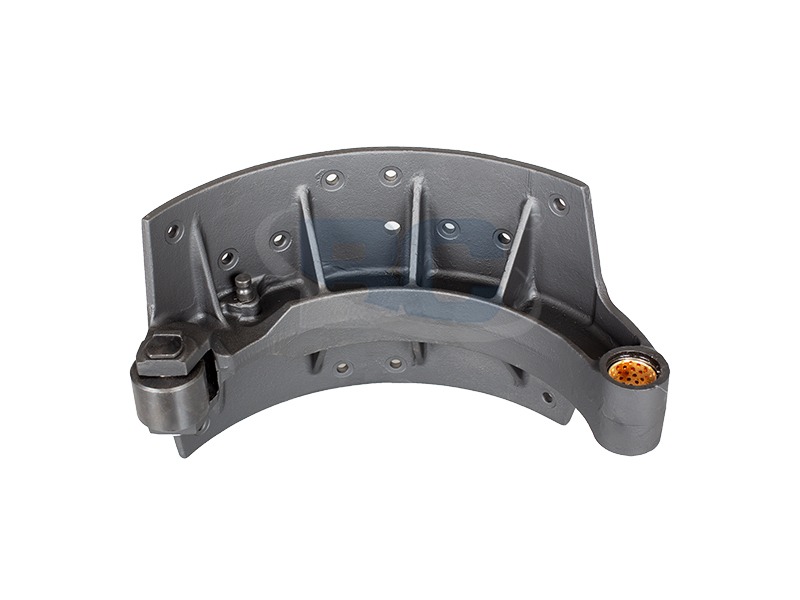
6594200519 Casted Brake Shoe
Product Overview and Identification
The 6594200519 Casted Brake Shoe is listed under the Casted Brake Shoe category. Its product identification details are as follows:
| Item | Specification |
|---|---|
| Product name | 6594200519 Casted Brake Shoe |
| Part number | BZ160 |
| OEM number | 6594200519 |
| Application | Benz |
| Size | 410 x 222 mm |
| Riveting holes | 16 |
| Product category | Casted Brake Shoe |
The OEM number is an important reference for product selection. Buyers should compare the number printed or recorded on the removed component, vehicle documentation, maintenance data, or supplier cross-reference information before ordering. The part number BZ160 provides an additional internal or product-family reference that can assist with catalog management and communication between buyers and suppliers.
The stated 410 x 222 millimeter size gives the buyer an initial dimensional reference, while the 16 riveting holes identify an important feature of the lining attachment arrangement. However, brake-shoe replacement should never be based on size alone. The brake drum, backing plate, actuator, return springs, rollers, lining thickness, and complete brake assembly must also be checked for compatibility and service condition.
A product with precise identification reduces the risk of ordering a visually similar but functionally incompatible component. This is particularly important in heavy-truck brake systems, where different brake assemblies may use similar external shapes but different dimensions, hole positions, offsets, or operating clearances.
Why Casted Construction Matters in Heavy-Duty Braking
A casted brake shoe is formed from molten metal poured into a prepared mold. After solidification, the casting is cleaned, processed, machined where required, and inspected. Compared with a purely formed or stamped component, a casted structure can be engineered to provide substantial section strength and stable geometry for demanding applications.
Heavy vehicles place considerable forces on brake shoes. During braking, the shoe is pressed against the inner surface of the drum through the action of the brake actuator. The component experiences mechanical loading, friction-related vibration, thermal exposure, and repeated changes between loaded and unloaded conditions. In addition, road dust, moisture, salt, and oil contamination may affect the surrounding brake assembly. A sound cast structure helps the shoe maintain its functional shape when subjected to these conditions.
One advantage of cast construction is the ability to create a substantial body with geometry suited to load transfer. The shoe must support the brake lining and distribute applied force across the contact area. If the structure flexes excessively, the lining may not contact the drum uniformly. Uneven contact can produce irregular wear, hot spots, noise, and reduced braking efficiency. A correctly produced casted shoe helps provide a stable foundation for consistent lining contact.
Cast construction can also support repeatable production of application-specific shapes. The contour, support sections, mounting features, and end profiles can be reproduced through controlled tooling and process management. This is especially useful for replacement parts that must replicate an established original-equipment design or fit a defined Benz brake assembly.
It is important to understand that casting quality depends on the complete process, not merely on the use of cast metal. Mold preparation, material control, pouring practice, solidification, cleaning, machining, and inspection must work together. Poor control can lead to dimensional variation, surface defects, inclusions, or internal discontinuities. A professional manufacturer therefore treats casting as one stage within a controlled production system rather than as an isolated operation.
Key Advantages of the 6594200519 Casted Brake Shoe
Application-specific compatibility
The product is identified for Benz application and associated with OEM number 6594200519. This application-specific positioning is more useful than a generic brake-shoe description because it gives distributors and maintenance teams a defined starting point for compatibility verification. Correct application matching supports proper installation, correct lining position, and suitable interaction with the drum and actuator components.
Heavy-duty structural foundation
The casted body is intended to provide a solid base for heavy-duty braking service. The shoe must withstand the force needed to press the lining against the drum while retaining the intended geometry over repeated braking cycles. A rigid, well-formed body can help limit unwanted deformation and support more even lining contact.
Defined riveting configuration
The 16 riveting holes are a significant product feature. They provide the attachment pattern for securing a compatible brake lining to the shoe. Accurate hole positioning is essential because the lining must sit correctly along the shoe surface. Misaligned holes can complicate assembly, place stress on the lining, or prevent the correct rivet from seating properly.
A defined riveting pattern also makes the product easier to manage in repair operations. When the brake shoe is supplied without a lining, a qualified repair facility can select the appropriate lining and rivet set according to the vehicle application and braking requirements. When supplied as part of a lined brake shoe kit, the same dimensional control supports a more efficient replacement process.
Consistent dimensional reference
The 410 x 222 millimeter specification provides a clear reference for purchasing and workshop verification. Consistent dimensions are important for maintaining the designed relationship between the shoe, lining, drum, and backing plate. Dimensional consistency also reduces the likelihood of excessive adjustment, interference, or uneven clearance after installation.
Support for repair and replacement programs
The product can serve different purchasing needs. A fleet may purchase bare casted shoes for lining installation in a controlled brake-repair department. A distributor may stock the shoe as an application-specific replacement component. A repair shop may use it as part of a brake shoe repair kit or lined brake shoe assembly. This flexibility can help buyers choose the supply format that best matches their technical capacity and operating model.
Traceable catalog identity
Clear references such as BZ160 and 6594200519 help reduce confusion in quotations, warehouse records, and repeat orders. A supplier that maintains organized product data can support more reliable purchasing by identifying part numbers, dimensions, hole counts, and applications in a consistent format.
Manufacturing Process for a Professional Casted Brake Shoe
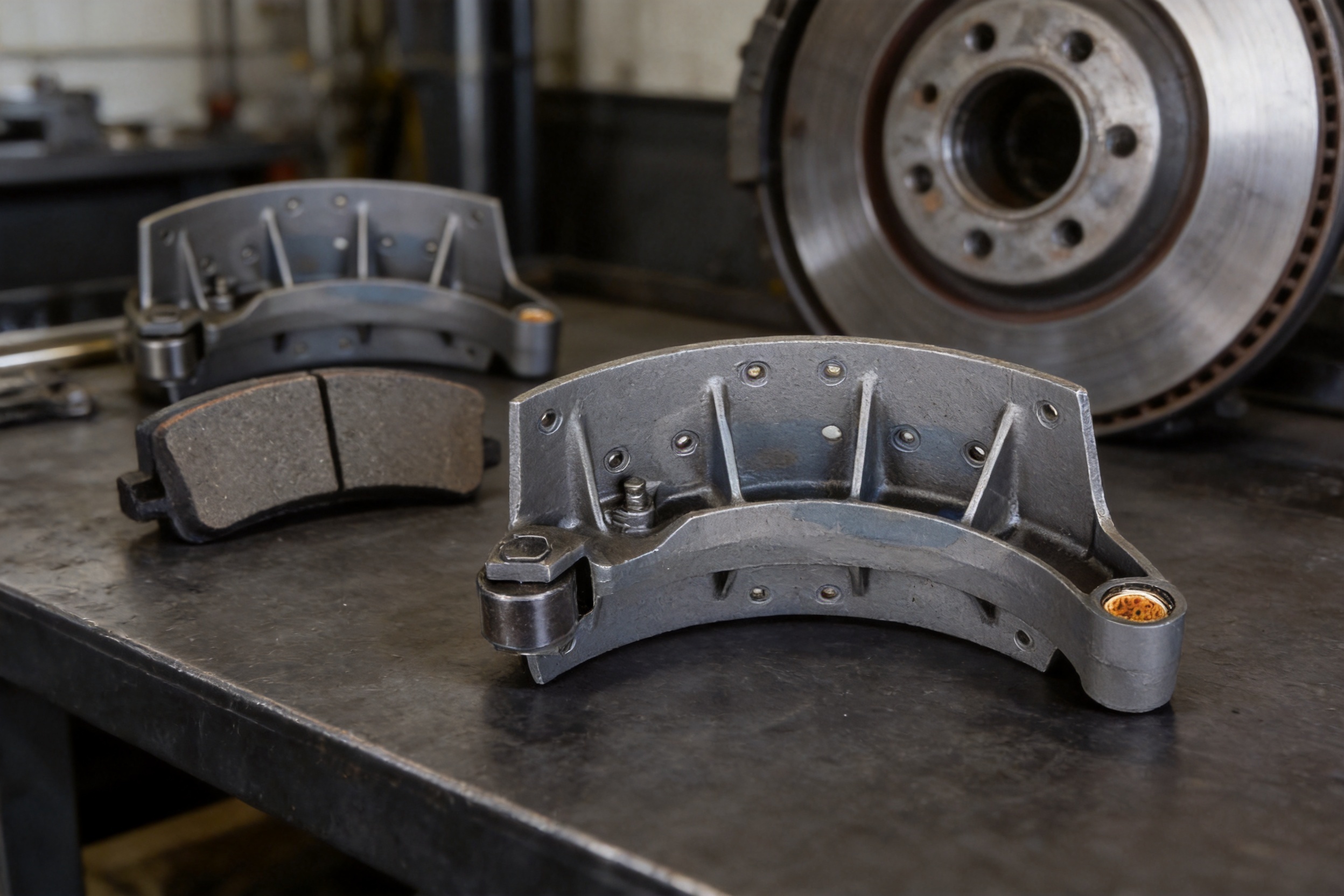
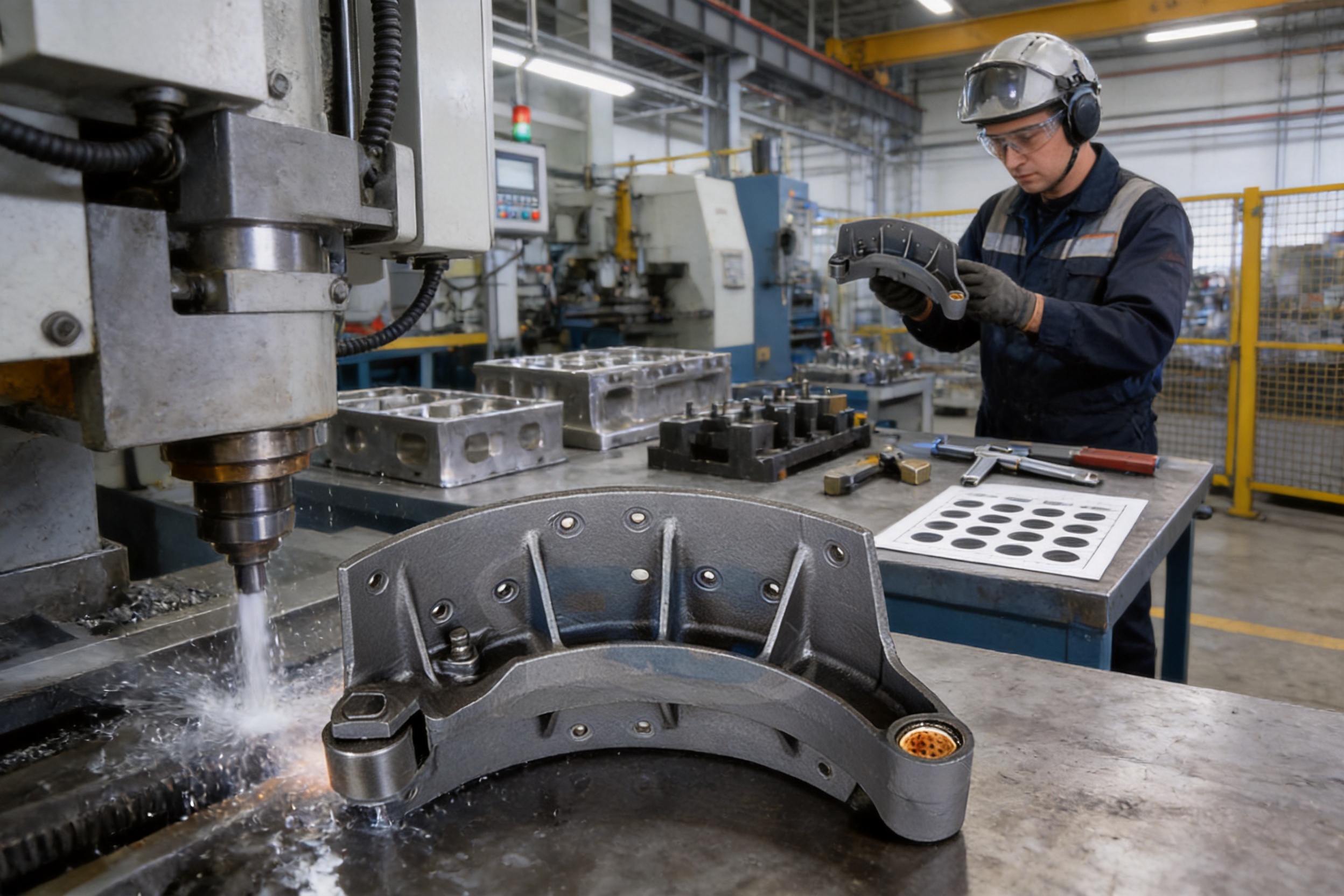
The quality of a casted brake shoe is developed through a sequence of manufacturing steps. Every stage contributes to the final performance of the component. While individual production details may vary according to equipment and engineering requirements, a robust process generally includes design review, pattern and mold preparation, controlled casting, cleaning, machining, hole processing, surface treatment, inspection, and final packing.
1. Product engineering and drawing review
Production begins with a technical review of the product design. The manufacturer confirms the principal dimensions, shoe curvature, mounting features, lining support area, end geometry, and riveting-hole arrangement. For a component identified by OEM number 6594200519, the production team must maintain a clear relationship between the reference design and the manufactured part.
Engineering review also considers manufacturing allowances. Casting requires suitable allowances for shrinkage, machining, and finishing. If these allowances are not correctly established, the final dimensions may fall outside the required range. The design team therefore evaluates how the geometry will behave during molding, pouring, cooling, and subsequent machining.
2. Pattern and mold preparation
The pattern defines the external form of the casting. Accurate pattern preparation is important because defects or inaccuracies in the pattern can be repeated across large production quantities. The mold must reproduce the required shoe contour while allowing molten metal to fill the cavity effectively.
Gating and riser design are also important parts of mold engineering. The metal must flow into the mold in a controlled manner, and the feeding system must support sound solidification. Poor flow or inadequate feeding may increase the risk of shrinkage-related defects. A carefully prepared mold helps improve repeatability from one production batch to another.
3. Material preparation and melting
Material control begins before the metal enters the furnace. The manufacturer should manage the incoming material, charge composition, furnace condition, temperature, and handling practice. Consistent material preparation supports more stable casting behavior and helps maintain the mechanical characteristics required by the brake-shoe design.
Clean handling is especially important. Foreign material, excessive moisture, or contamination can negatively affect the casting process. Controlled storage and documented batch management help the manufacturer identify the source of material used in a particular production run.
4. Controlled pouring and solidification
During pouring, the molten material must enter the mold at a suitable temperature and in a stable manner. Excessive turbulence, inappropriate temperature, or delayed filling can affect casting quality. Operators and process engineers monitor the pouring operation to achieve repeatable mold filling and solidification.
Cooling conditions influence the final structure of the casting. The brake shoe must develop a sound body without unacceptable cavities, cracks, or major inclusions. Controlled cooling and appropriate mold design contribute to stable results. The castings are then removed from the molds and transferred to cleaning and finishing operations.
5. Casting cleaning and removal of excess material
After solidification, the casting may contain gates, risers, flash, sand residue, or other excess material. These features are removed through suitable cleaning and finishing methods. The objective is to produce a clean, stable component that can proceed to machining and inspection without unwanted projections or contamination.
Cleaning also makes it easier to identify visible surface conditions. A casting that remains covered in residue may conceal defects or interfere with accurate measurement. Thorough preparation improves both appearance and inspection reliability.
6. Machining and dimensional correction
Some areas of a casted brake shoe require machining to achieve the necessary dimensional accuracy, surface condition, or interface geometry. Machining may be applied to mounting points, end features, reference surfaces, or other locations where casting alone cannot provide the required precision.
Machining must be controlled carefully. Removing too much material can change the shoe geometry, while insufficient processing may leave roughness or dimensional variation. Fixtures should hold the casting securely and position it consistently so that the same features are processed in the same relationship across the production batch.
7. Riveting-hole processing
The 16 riveting holes are central to the lining attachment function. Hole diameter, spacing, position, and alignment must be controlled according to the product design. The holes should be clean and suitable for the selected rivets. Burrs or irregular edges may interfere with assembly or create stress concentrations in the lining.
Hole inspection can include gauges, templates, coordinate measurement, or other appropriate tools. The specific inspection method depends on the manufacturer’s quality system and production volume. The key objective is to verify that the hole pattern corresponds to the intended lining and application.
8. Surface finishing and protection
A suitable surface treatment can improve handling, storage protection, and resistance to environmental exposure before installation. The treatment must be compatible with the brake assembly and should not contaminate the lining contact area or interfere with riveting.
Protective finishing also supports warehouse management. Brake components may be stored and transported through environments with changing temperature and humidity. Proper preparation and packaging help preserve the product until it reaches the customer.
9. Final inspection and release
Before shipment, the manufacturer should verify product identity, dimensions, hole count, appearance, and packaging. A final inspection confirms that the component corresponds to BZ160 and OEM number 6594200519 rather than to a visually similar product.
Inspection records can support internal process improvement and customer communication. When nonconforming items are identified, the manufacturer can investigate whether the cause relates to tooling, material, machining, handling, or another production stage. This feedback loop is an important part of manufacturing strength.
Quality Control Priorities
A brake shoe is a safety-related component, so quality control must be practical, repeatable, and connected to actual service requirements. A professional quality program should cover incoming materials, process conditions, in-process dimensions, final product characteristics, and packaging.
Dimensional inspection
The stated product size is 410 x 222 millimeters. Measurement should be performed with suitable calibrated tools and under consistent conditions. In addition to overall size, the manufacturer should control the shoe curvature, width, end locations, mounting features, and lining support area.
Dimensional inspection helps prevent installation problems. A shoe that is too large may interfere with the drum or backing plate. A shoe that is too small may create excessive clearance or fail to position the lining correctly. Even when the difference appears minor, accumulated variation across several features can affect brake adjustment.
Hole-pattern inspection
Because this product uses 16 riveting holes, the count must be confirmed during final inspection. Hole locations should also be checked against the approved product drawing or inspection template. The inspection should identify missing holes, blocked holes, incorrect spacing, excessive burrs, and misalignment.
For a repair facility, correct holes reduce assembly time and support reliable lining attachment. For a distributor, consistent hole patterns reduce returns caused by mismatch between the shoe and the intended lining.
Visual and surface inspection
Visual checks can identify cracks, serious surface irregularities, sharp edges, incomplete cleaning, excessive flash, and coating problems. Visual inspection does not replace dimensional or material testing, but it is an essential first line of quality control.
The brake shoe should have a clean, functional surface without conditions that could affect installation or lining attachment. Particular attention should be given to mounting areas and the lining support surface because these regions directly influence assembly and contact behavior.
Material and casting integrity
The manufacturer’s process should include appropriate controls for casting integrity. Depending on the production requirements, this may involve material verification, process monitoring, sample testing, or non-destructive inspection. The aim is to reduce the risk of internal or external conditions that could weaken the shoe during service.
Buyers seeking large-volume supply can request information about inspection procedures, batch control, and conformity documentation. These discussions help align supplier capabilities with fleet, distributor, or repair-network requirements.
Process consistency
Quality is not limited to a single inspection at the end of production. Consistency is built through stable tooling, controlled operating parameters, trained personnel, clear work instructions, and corrective-action procedures. A manufacturer with a disciplined process can better manage repeat orders and reduce variation between batches.
Advantages Over Generic or Poorly Matched Alternatives
Not all replacement brake shoes provide the same level of confidence. Generic components may appear similar but differ in contour, hole arrangement, material quality, or dimensional control. The 6594200519 Casted Brake Shoe offers several practical advantages when correctly matched to the specified Benz application.
Better reference control than unidentified parts
An unidentified brake shoe creates uncertainty during ordering and installation. Buyers may have difficulty determining whether the component is intended for the required drum, whether the hole pattern is correct, or whether the shoe has the appropriate offset. A product carrying both BZ160 and 6594200519 references is easier to verify against purchasing records and vehicle information.
More reliable lining installation
The 16-hole design provides a defined lining attachment arrangement. A generic shoe with a different number or position of holes may force the repairer to modify the lining or use an unsuitable attachment method. Correct hole design helps the technician use the intended lining and rivets without unnecessary alteration.
Improved structural confidence
A heavy-duty casted shoe is designed to provide a robust base for braking loads. Compared with a lightly constructed or poorly formed alternative, a well-produced cast shoe can provide greater confidence in structural stability. This does not eliminate the need for correct installation and inspection, but it gives the brake assembly a more suitable foundation.
Reduced risk of fitment-related downtime
Incorrect brake components can cause delays during vehicle maintenance. If a shoe fails to fit the backing plate, does not align with the lining, or creates abnormal clearance, the vehicle may remain out of service while another part is sourced. Clear product identification and application-specific design help reduce this risk.
Better suitability for organized fleet procurement
Fleet operators often need repeatable parts for multiple vehicles or service locations. A defined part number, OEM number, size, and hole count make it easier to create approved-parts lists and purchasing procedures. This supports stock control, technician training, and maintenance planning.
Benefits for Different Customer Groups
For heavy-truck fleets
Fleet maintenance departments need brake components that are easy to identify, install, inspect, and reorder. The 6594200519 reference allows the fleet to connect the component with a specific vehicle application and maintenance record. The casted construction supports the requirements of heavy-duty brake service, while the defined dimensions and hole count assist workshop verification.
Fleet buyers can also evaluate whether to purchase bare shoes, lined shoes, or repair kits. A fleet with its own riveting equipment and trained technicians may prefer bare casted shoes and separate linings. A fleet seeking faster replacement may prefer a lined brake shoe or complete kit, provided the lining specification is correct.
For brake repair workshops
Repair workshops benefit from components that support efficient preparation and assembly. A clean, accurately formed shoe with a correct 16-hole pattern can reduce fitting difficulties. The technician can focus on inspection, lining selection, riveting quality, and final brake adjustment rather than correcting avoidable component problems.
Workshops should inspect the brake drum, camshaft, rollers, return springs, bushings, and other related components at the same time. Installing a new shoe without addressing worn supporting parts may prevent the braking system from achieving its intended performance.
For distributors and importers
Distributors need products with clear catalog data and stable supply. The combination of OEM number 6594200519, part number BZ160, 410 x 222 millimeter size, and 16 riveting holes provides useful information for product listings and customer inquiries. Accurate data can reduce order errors and make technical support more efficient.
Distributors may also build product families around the same application, including casted shoes, steel shoes, brake linings, lined shoes, and repair kits. This allows them to serve customers with different repair preferences while maintaining a coherent brake-parts catalog.
For original-equipment-oriented buyers
Buyers who follow the global FMSI numbering system or use OEM cross-reference processes generally require disciplined product identification. A manufacturer experienced in heavy-duty brake parts can support these buyers through consistent references, application data, and product documentation.
Installation and Service Considerations
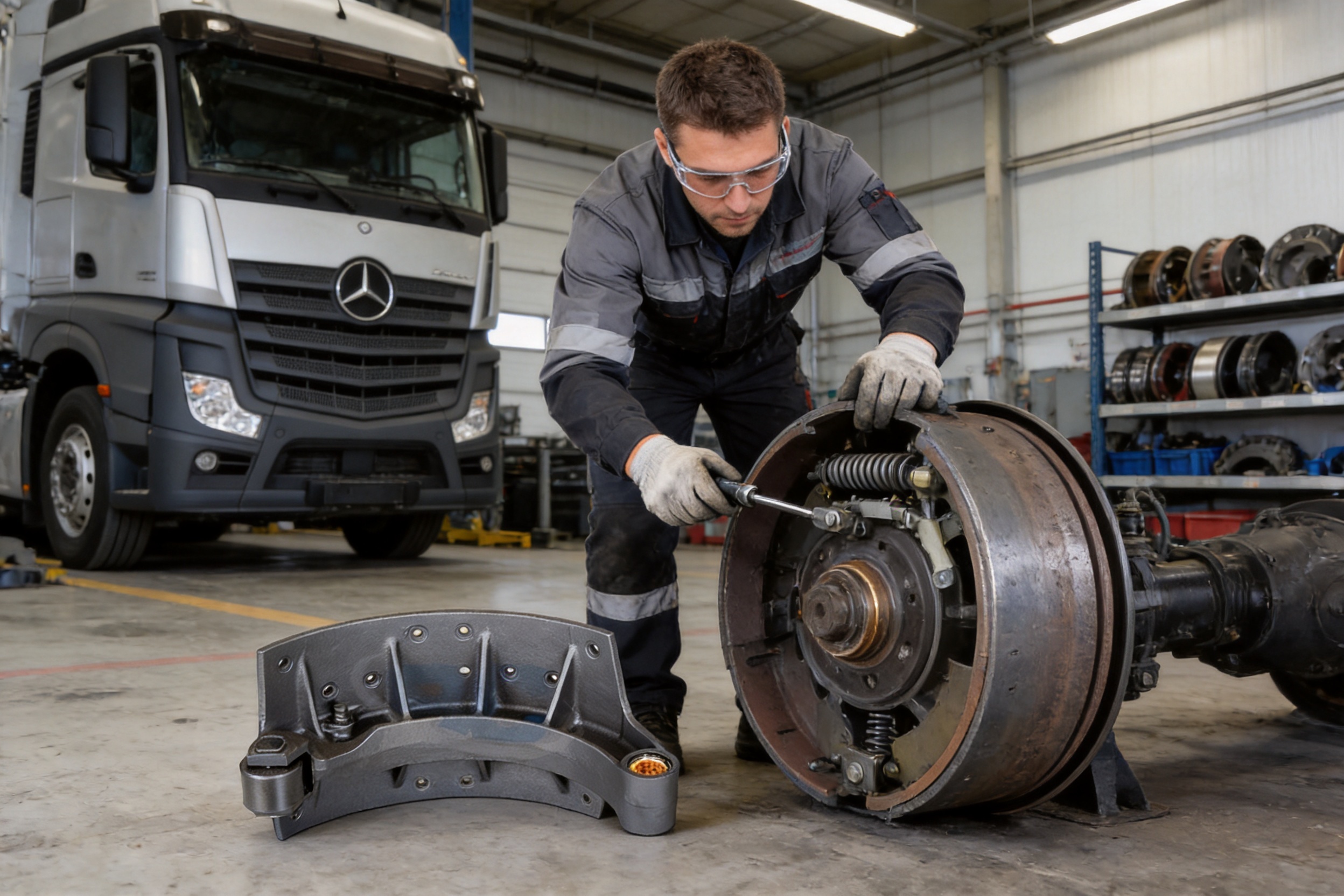
Correct installation is essential to brake performance. The 6594200519 Casted Brake Shoe should be installed only by qualified personnel using the correct service procedure for the relevant Benz brake system. Before installation, the technician should confirm the OEM number, part number, dimensions, hole pattern, and overall design.
The old brake shoe should be compared with the replacement before disassembly is completed. This comparison can identify differences in contour, mounting features, lining position, and hole arrangement. The brake drum should also be inspected for scoring, cracking, excessive wear, out-of-round condition, and heat damage.
When a bare shoe is being lined, the lining must be compatible with the application and the shoe’s 16-hole pattern. Rivets should be suitable for the lining and installed using the correct equipment. Riveting should provide secure attachment without cracking the lining, deforming the shoe, or leaving loose points. The finished lining should sit firmly against the shoe without gaps or movement.
During assembly, all contact points should be clean and free from unsuitable grease, dirt, and corrosion. Lubrication should be applied only where the vehicle manufacturer’s service instructions permit it. The friction surface of the lining and the inner surface of the drum must remain free from oil and other contaminants.
After installation, the technician should confirm spring placement, shoe orientation, actuator movement, adjustment mechanism operation, and drum clearance. The brake system should be tested in a controlled manner before the vehicle returns to normal service. Where required, the brakes should be adjusted and bedded in according to the applicable service practice.
A new brake shoe cannot compensate for a damaged drum, worn bushings, seized hardware, leaking seals, or an incorrectly adjusted actuator. Brake performance depends on the complete system. The product should therefore be treated as one carefully selected part of a broader maintenance operation.
Maintenance and Inspection Recommendations
Regular inspection helps preserve braking performance and identify problems before they become serious. Maintenance intervals should follow the vehicle manufacturer’s recommendations, operating conditions, legal requirements, and fleet policy. Vehicles carrying heavy loads, operating on steep terrain, or working in stop-and-go traffic may require more frequent inspection.
Technicians should monitor lining wear, rivet condition, shoe alignment, drum surface condition, return-spring performance, and adjustment. Uneven lining wear may indicate a problem with shoe geometry, drum condition, actuator movement, or supporting hardware. Noise, pulling, overheating, reduced braking response, or repeated adjustment needs should be investigated promptly.
Brake shoes should be replaced when they are worn beyond the permitted limit, damaged, distorted, contaminated, or otherwise unsuitable for continued use. If a shoe has experienced serious overheating or structural damage, reuse may create an unnecessary safety risk. Related components should be evaluated at the same time so that the replacement shoe operates within a sound brake assembly.
Storage is also important. Brake shoes should be kept in clean, dry conditions and protected from impact, moisture, and contamination. Heavy components should be stacked in a manner that prevents bending or damage to the lining-support area. Product labels should remain legible so that the OEM number and part number can be confirmed before dispatch or installation.
Manufacturing Strengths of Zhejiang Bangchi Auto Parts Co., Ltd.
Zhejiang Bangchi Auto Parts Co., Ltd. is presented as a China-based manufacturer and exporter of heavy-duty brake parts. Its stated product scope includes steel brake shoes, casted brake shoes, brake linings, lined brake shoes, brake shoe repair kits, and lined brake shoe kits. This product breadth is relevant because brake shoes are often purchased as part of a wider replacement or repair program rather than as isolated components.
The company’s stated focus on OEM brake parts following the global FMSI numbering system indicates an emphasis on structured identification and application management. For buyers, this approach can make product selection more systematic. It supports the use of part numbers, cross-reference information, product categories, and technical specifications in catalogs and purchasing systems.
Focused heavy-duty product experience
A manufacturer dedicated to heavy-duty brake parts can concentrate its engineering, tooling, production, and inspection resources on the requirements of commercial-vehicle braking. This focus is valuable because heavy-truck brake shoes differ from light-duty components in size, loading, service frequency, and operating environment.
Product specialization also enables the development of related items. A customer requiring the BZ160 casted shoe may also need a compatible lining, rivet set, lined shoe, or repair kit. A supplier with several product categories can help simplify sourcing and improve catalog continuity.
OEM-oriented production approach
OEM-oriented manufacturing requires attention to more than visual similarity. The manufacturer must control reference numbers, application data, dimensional features, hole patterns, and production repeatability. These controls support customers who need replacement parts that correspond closely to established vehicle and brake-system designs.
Export and customer-support capability
As an exporter, the company serves customers beyond its local market. International supply requires careful product labeling, documentation, packaging, communication, and shipment coordination. Clear technical information is especially important when the buyer and supplier are separated by distance and different service environments.
For the 6594200519 Casted Brake Shoe, buyers can use the product references and specification data as the basis for quotation, sample confirmation, technical review, and repeat ordering. Direct communication with the supplier is recommended when a buyer needs confirmation of application details, lining compatibility, packaging, or order quantity.
How to Evaluate Supplier Quality Before Ordering
Buyers should evaluate the product and the manufacturing system together. A competitive price is useful only when the component has reliable fit, consistent quality, and adequate support. The following questions can help structure a supplier assessment.
Are the product references consistent?
The supplier should be able to associate BZ160 with OEM number 6594200519 and provide consistent information for the 410 x 222 millimeter size and 16 riveting holes. Conflicting data between a catalog, quotation, label, and drawing should be clarified before purchase.
Can the supplier provide a sample?
A sample comparison can help the buyer verify contour, mounting points, hole arrangement, surface condition, and packaging. For repeat orders, the approved sample can serve as a reference for future production discussions.
Is the production process controlled?
Buyers can ask about pattern management, casting control, machining, hole processing, inspection, and batch identification. The purpose is not simply to collect documents, but to understand whether the supplier has a repeatable method for producing the same component over time.
How are nonconformities handled?
A capable manufacturer should have a method for recording, investigating, and correcting quality problems. Buyers may ask how product complaints are reviewed, how affected batches are identified, and how corrective actions are communicated.
Can the supplier support related products?
Because brake maintenance frequently requires several components, it may be efficient to work with a supplier that offers casted shoes, steel shoes, linings, lined shoes, and repair kits. A broader range can simplify logistics and help maintain compatibility across the brake-repair program.
Purchasing Guidance for the 6594200519 Casted Brake Shoe
When requesting a quotation, buyers should provide the OEM number 6594200519 and part number BZ160. The application should be stated as Benz, and the buyer should confirm the required size of 410 x 222 millimeters and the 16-hole riveting pattern. If the purchase is for a complete lined assembly, the lining material, thickness, friction characteristics, and rivet specification should also be confirmed.
Order quantity and packaging requirements should be discussed in advance. Commercial-vehicle parts must be protected from impact during transportation. Packaging should prevent the shoes from striking one another and should keep labels visible. If the buyer has pallet, carton, barcode, or private-label requirements, these should be agreed before production.
For large orders, it is advisable to establish an approval process. This may include drawing confirmation, sample approval, first-batch inspection, and periodic quality review. Such procedures help align the supplier’s production with the buyer’s expectations and reduce misunderstandings during repeat supply.
Buyers should also consider total cost rather than unit price alone. A component that fits correctly, supports efficient lining installation, and reduces returns may provide better value than a lower-priced part with inconsistent dimensions. Inventory reliability, technical communication, packaging, and delivery performance can all influence the real cost of ownership.
Environmental and Operational Considerations
Brake components operate in environments that can include dust, water, mud, road salt, high temperatures, and repeated thermal cycles. The brake shoe itself must be protected during storage and transportation, while the complete brake system must be maintained to prevent contamination and corrosion.
Responsible repair practices are also important. Used brake linings and contaminated cleaning materials should be handled according to local waste-management requirements. Technicians should avoid creating airborne dust during brake service and should use appropriate cleaning and personal-protection practices.
From an operational perspective, selecting an application-correct brake shoe can help reduce premature replacement and unnecessary waste. A correctly matched component is more likely to install properly and perform as intended. Efficient inventory management can further reduce obsolete stock by linking product references with actual vehicle and fleet requirements.
Frequently Asked Questions
What is the OEM number of this casted brake shoe?
The OEM number listed for the product is 6594200519. Buyers should compare this number with their vehicle or removed-part information before ordering.
What is the manufacturer’s part number?
The manufacturer’s part number is BZ160. This reference can be used together with OEM number 6594200519 for quotation, cataloging, and repeat purchasing.
Which vehicle application is specified?
The stated application is Benz. Because brake systems can vary by vehicle model, axle, production year, and brake assembly, application confirmation remains necessary before installation.
What are the product dimensions?
The listed size is 410 x 222 millimeters. These dimensions should be verified against the existing brake shoe and the relevant technical documentation.
How many riveting holes does the shoe have?
The product has 16 riveting holes. The lining and rivets must be compatible with this hole arrangement.
Is this product supplied with a lining?
The listed product is a casted brake shoe. Whether it is supplied bare or with a lining depends on the specific quotation and order configuration. Buyers should clearly state whether they need a bare shoe, lined brake shoe, or repair kit.
What is the advantage of a casted brake shoe?
A casted brake shoe can provide a substantial structural foundation for heavy-duty braking. It is designed to support the lining and withstand repeated mechanical loading when correctly manufactured and properly matched to the brake system.
Can the shoe be used with any 410 x 222 millimeter lining?
No. Overall size alone is not sufficient to establish compatibility. The lining contour, hole spacing, thickness, friction specification, and brake-system application must also match.
What should be checked before installation?
The technician should check the OEM number, part number, dimensions, contour, mounting features, hole pattern, brake drum condition, actuator components, return springs, adjustment system, and lining compatibility.
Does a new brake shoe solve all braking problems?
No. Braking performance depends on the entire system. A worn drum, damaged actuator, contaminated lining, seized hardware, incorrect adjustment, or poor installation can affect performance even when the brake shoe is new.
Why is the 16-hole pattern important?
The hole pattern determines how the lining is attached to the shoe. Correct hole number and positioning help the lining fit properly and support secure riveting.
What related products may be needed?
Depending on the repair method, buyers may need brake linings, rivets, lined brake shoes, brake shoe repair kits, or lined brake shoe kits. The correct combination should be selected according to the vehicle and service requirements.
How can distributors reduce ordering errors?
Distributors should record the OEM number, part number, application, size, riveting-hole count, product category, and packaging information in their catalog. Sample approval and clear cross-reference procedures can provide additional control.
Where can buyers request product information?
Product inquiries can be directed to Zhejiang Bangchi Auto Parts Co., Ltd. using the company contact information supplied for the product. Buyers should include the required part number, quantity, application, delivery destination, and whether a bare or lined configuration is needed.
Conclusion
The 6594200519 Casted Brake Shoe is a clearly identified heavy-duty replacement component for Benz applications. With part number BZ160, OEM number 6594200519, a stated size of 410 x 222 millimeters, and 16 riveting holes, it provides the essential reference information needed for application review, procurement, workshop preparation, and inventory management.
Its casted construction is suited to the structural demands of heavy-duty drum braking, where the shoe must support the lining and transfer braking force through repeated service cycles. The defined riveting pattern helps promote correct lining attachment, while the application-specific identification reduces the uncertainty associated with generic or poorly matched alternatives.
The product’s value is strengthened by a manufacturing approach that includes engineering review, controlled molding, material preparation, casting, cleaning, machining, hole processing, surface protection, inspection, and packaging. Zhejiang Bangchi Auto Parts Co., Ltd. further supports the product through a broader heavy-duty brake-parts range and an OEM-oriented approach based on organized product references.
For the best result, buyers should verify all application details before ordering and should ensure that installation is completed by qualified technicians. When the shoe, lining, drum, actuator, and related hardware are correctly matched and maintained, the 6594200519 Casted Brake Shoe can serve as a dependable foundation for heavy-duty brake repair and replacement programs.
References
1. Product specification supplied for the 6594200519 Casted Brake Shoe: part number BZ160, OEM number 6594200519, size 410 x 222 millimeters, 16 riveting holes, Benz application.
2. Heavy-duty commercial-vehicle drum-brake service principles, including brake-shoe inspection, lining attachment, drum evaluation, and adjustment practices.
3. General foundry manufacturing principles covering pattern preparation, mold filling, solidification, casting cleaning, machining, and dimensional inspection.
4. General brake-component quality-control practices covering application identification, hole-pattern verification, surface inspection, batch management, and final product release.
5. General fleet-maintenance guidance for commercial-vehicle brake inspection, replacement planning, storage, and service documentation.