 English
 简体中文
简体中文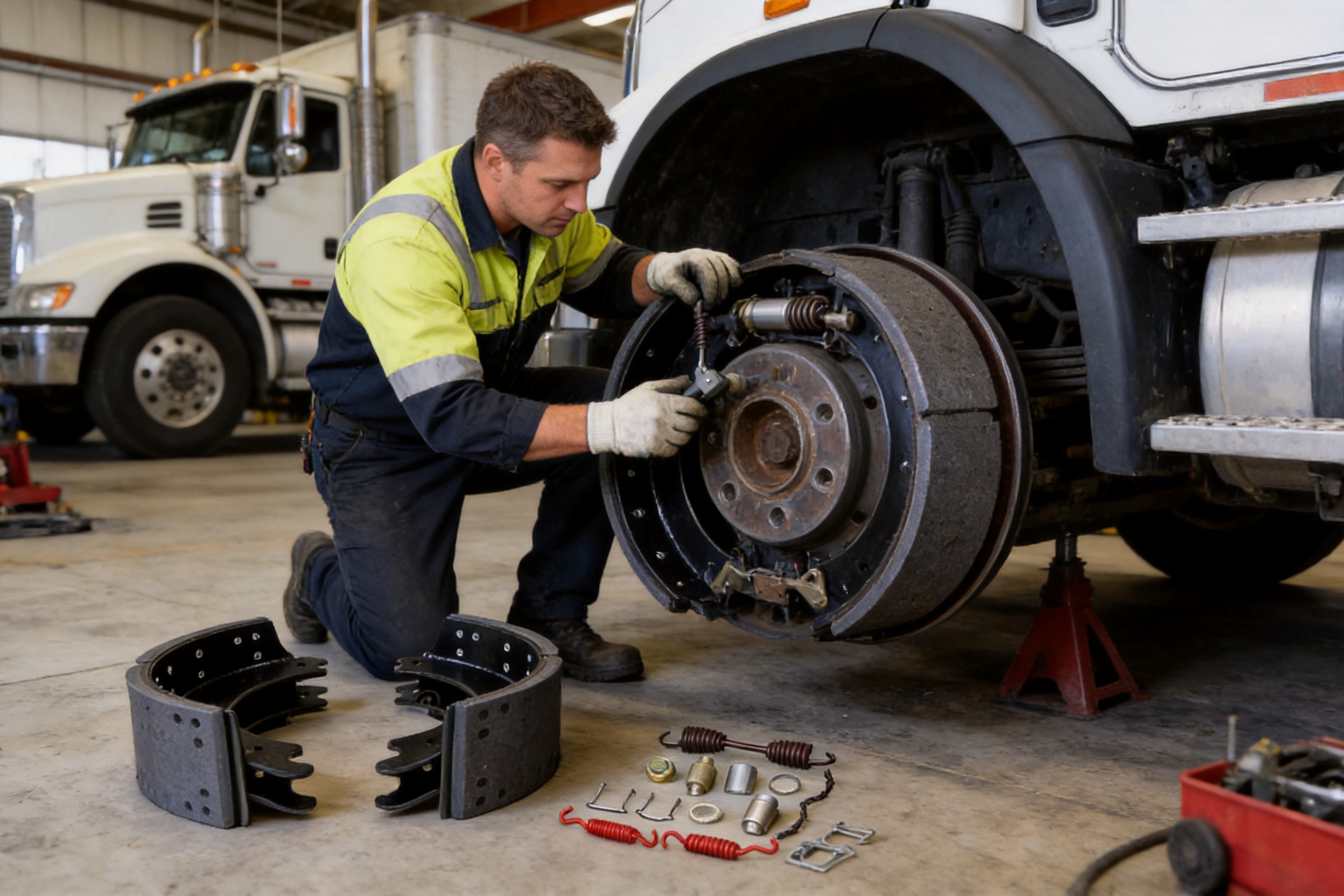
Introduction to the 4707Q Brake Shoe Repair Kit
Heavy-duty braking systems operate under demanding conditions that passenger-car braking components do not routinely encounter. Commercial trucks, trailers, buses, agricultural vehicles, and other large vehicles may carry substantial loads, travel long distances, and experience repeated braking cycles in traffic, on gradients, and in changing weather. Every component inside the braking assembly must therefore provide dependable friction, stable mechanical engagement, accurate fitment, and consistent service performance.
The 4707Q Brake Shoe Repair Kit is a replacement solution in the lined brake shoe kit category. The product information identifies the part as a 4515Q/4707Q brake shoe application, making it suitable for maintenance programs that require a practical way to restore the working condition of a drum brake assembly. Instead of replacing unrelated parts unnecessarily, a repair kit allows maintenance teams to address worn or serviceable brake shoe components while preserving compatible hardware and reducing vehicle downtime.
Designed for the heavy-duty brake parts market, the 4707Q kit reflects the importance of accurate brake shoe production, controlled lining attachment, reliable material selection, and inspection throughout the manufacturing process. Its value is not limited to the physical brake shoe. The complete repair-kit concept also supports organized maintenance, more efficient parts management, and a repeatable installation process for professional technicians.
For distributors, fleet operators, repair workshops, and original-equipment-oriented buyers, the key question is not simply whether a brake shoe fits. A suitable replacement must also maintain dependable contact with the drum, tolerate heat and mechanical stress, support consistent braking response, and meet the expectations associated with global heavy-duty brake service. The 4707Q Brake Shoe Repair Kit is positioned to answer these requirements through an application-focused design and a manufacturing approach centered on quality control.
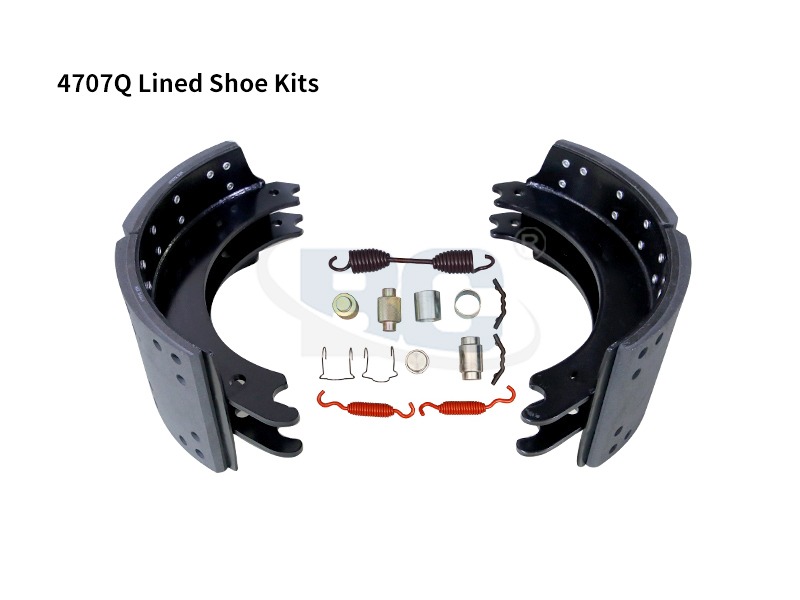
4707Q Brake Shoe Repair Kit
Product Overview
The 4707Q Brake Shoe Repair Kit is listed under the category of Lined Brake Shoe Kits. Its associated product reference is stated as “4515Q/4707Q brake shoe.” This information is important for purchasing departments and service professionals because brake shoe references can vary according to vehicle application, axle design, drum dimensions, lining specification, and regional catalog conventions. Confirming the reference before installation remains an essential part of responsible brake maintenance.
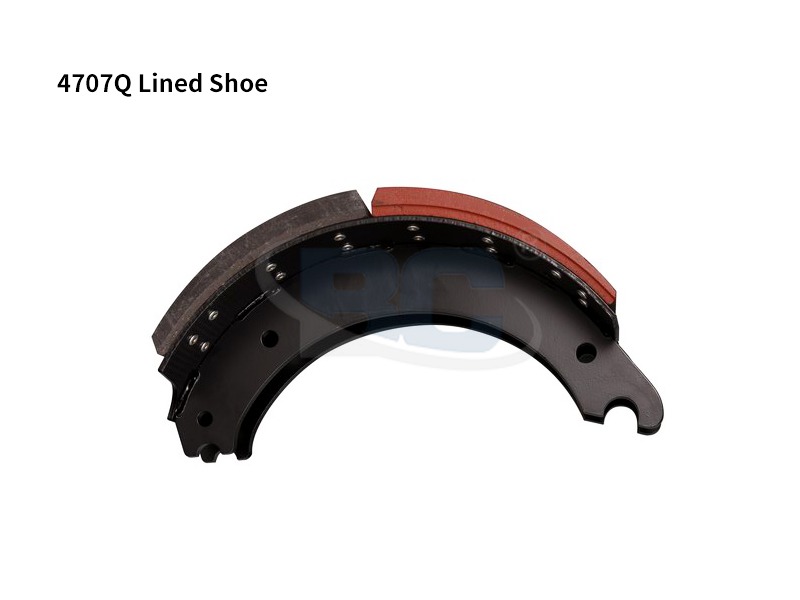
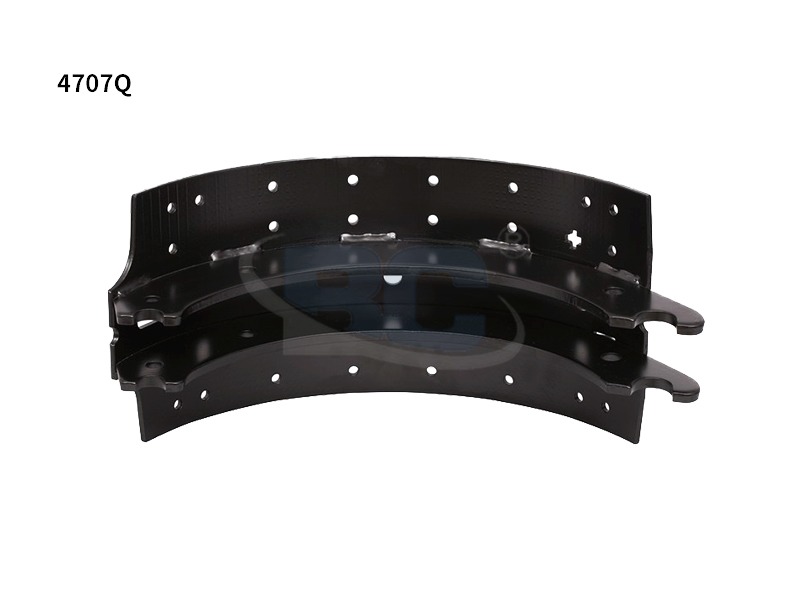
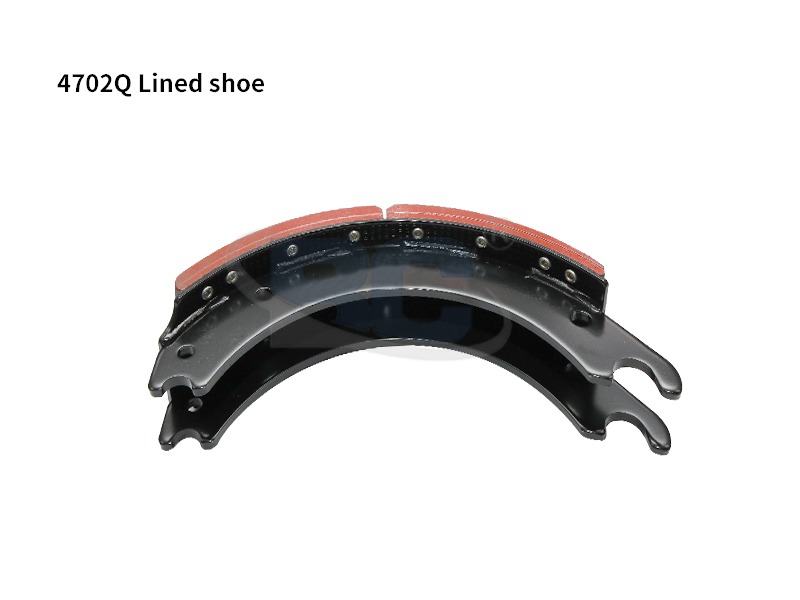
A lined brake shoe is a curved structural component carrying a friction lining. During braking, the shoe is moved outward against the internal surface of a brake drum. The friction generated between the lining and drum converts vehicle motion into heat and slows the vehicle. Because the lining must remain securely attached to the shoe while experiencing repeated pressure and temperature changes, the quality of the complete assembly is more important than the appearance of any single component.
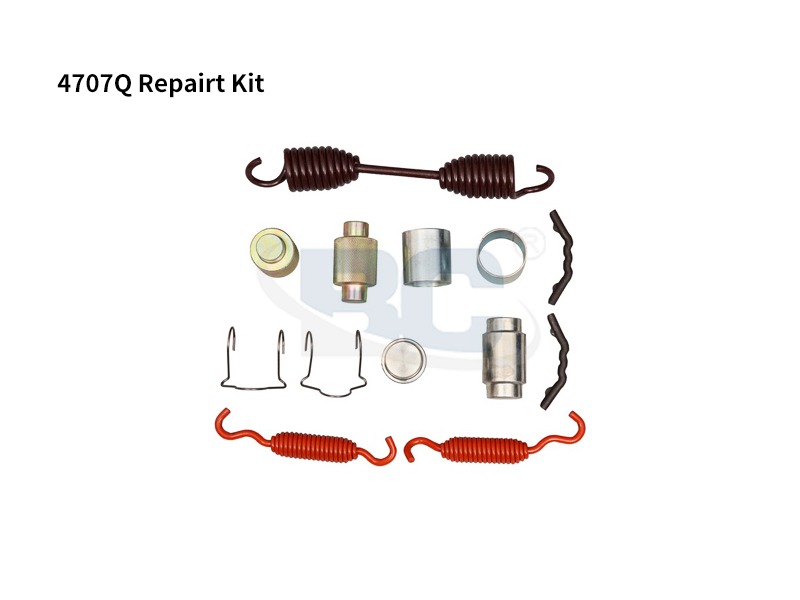
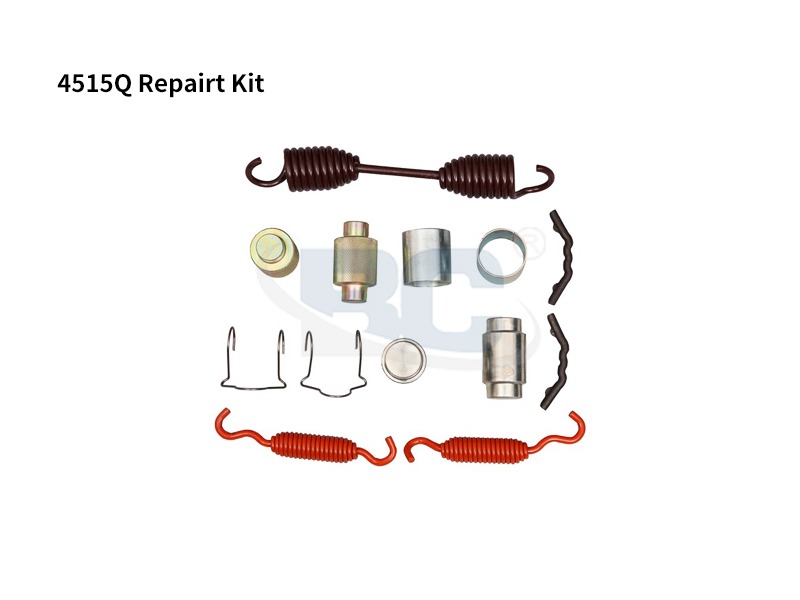
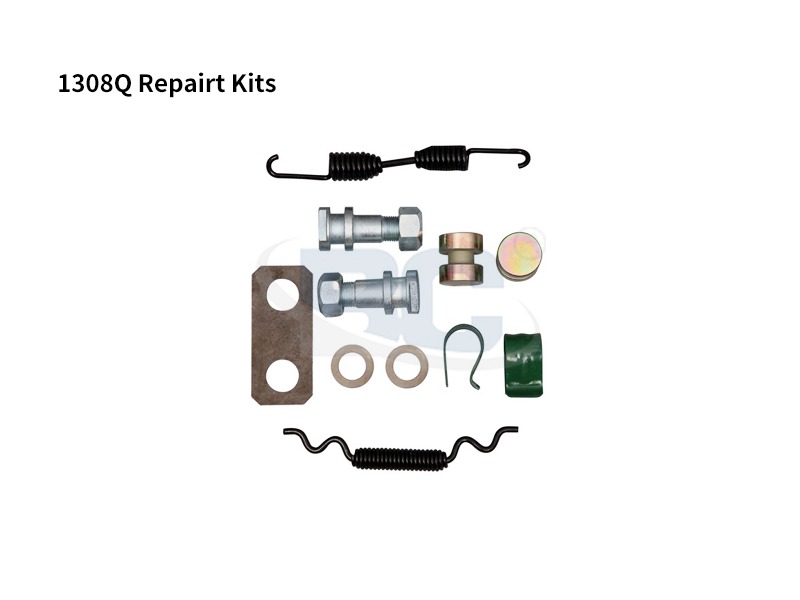
A repair kit is intended to simplify the replacement or restoration of a brake shoe assembly. Depending on the service configuration, a kit may help technicians renew the lined shoe and associated service items required for an appropriate repair. Buyers should always verify the exact kit contents, vehicle application, and installation requirements against the current technical specification before ordering. The available product information confirms the model and category but does not provide a detailed list of every included component or a specific OE number.
The product is manufactured by Zhejiang Bangchi Auto Parts Co., Ltd., a China-based heavy-duty brake parts manufacturer located in Haining, Zhejiang. The company states that it provides OEM brake parts following the global FMSI numbering system. This positioning is relevant to professional buyers because standardized friction-product references help distributors, workshops, and fleet maintenance departments organize product selection across different commercial vehicle applications.
| Product Attribute | Information |
|---|---|
| Product name | 4707Q Brake Shoe Repair Kit |
| Associated brake shoe reference | 4515Q/4707Q brake shoe |
| Product category | Lined Brake Shoe Kits |
| Product type | Heavy-duty drum brake repair component |
| Numbering approach | FMSI-oriented product identification |
| Manufacturer location | Haining, Zhejiang, China |
| Recommended users | Fleet operators, distributors, service workshops, and commercial vehicle parts buyers |
| OE number information | Not specified in the supplied product data; application confirmation is required |
Why Brake Shoe Repair Quality Matters
Drum brakes remain widely used in heavy commercial vehicles because they can provide strong braking force, durable mechanical construction, and effective compatibility with parking-brake systems. However, drum brake performance depends on the relationship between the drum, brake shoe, lining, return springs, adjuster, anchor points, and actuator. A defect or mismatch in one area may influence the performance of the entire brake assembly.
The brake shoe must maintain its structural shape under load. If the shoe is poorly formed or unsuitable for the application, the lining may not contact the drum evenly. Uneven contact can create localized heat, irregular wear, reduced braking efficiency, noise, and premature replacement. Proper forming and dimensional control are therefore fundamental manufacturing requirements.
The friction lining must also provide a stable coefficient of friction over a useful operating temperature range. Heavy vehicles generate significant heat during repeated stops, downhill operation, emergency braking, and high-load service. A lining that performs acceptably in light use may not deliver the same stability under severe duty. The manufacturing process must control the friction material formulation, density, curing, bonding, and finishing characteristics.
Attachment security is equally important. The lining must remain firmly secured to the brake shoe throughout the service life of the assembly. Riveted, bonded, or otherwise engineered attachment methods must be selected and controlled according to the product design. Inadequate attachment can lead to separation, damage to the drum, sudden loss of friction material, and serious safety risks.
Finally, correct dimensional tolerances make installation more predictable. A professional repair shop needs a replacement shoe that aligns with the existing brake hardware and follows the intended arc of the drum. Accurate dimensions reduce unnecessary fitting work and help the technician complete the repair efficiently.
Key Advantages of the 4707Q Repair Kit
Application-focused replacement
The 4707Q kit is identified for a specific brake shoe reference rather than being presented as a generic universal component. Application-focused design supports more reliable selection and helps reduce the uncertainty associated with adapting an unsuitable part. For commercial vehicle maintenance, this is especially valuable because brake assemblies vary considerably between axles and vehicle platforms.
When a workshop uses a correctly identified repair kit, technicians can work from a known reference and compare the replacement against the existing assembly before installation. This approach supports more consistent maintenance decisions, reduces the chance of ordering an incompatible part, and assists distributors in maintaining an organized product catalog.
Complete repair-kit convenience
A repair kit can simplify the service process by grouping related replacement components under one product reference. This is more efficient than sourcing each item individually, especially when a vehicle is already in the workshop and downtime must be controlled. A coordinated kit also helps reduce the risk that a technician will combine components with incompatible dimensions, materials, or service characteristics.
Buyers should verify the detailed contents of the 4707Q kit for the intended application, but the category itself communicates a maintenance advantage: the product is designed to support repair activity rather than merely supply an isolated friction component. This can improve purchasing efficiency for fleet operators and reduce the number of separate stock-keeping units required for routine brake service.
Consistent friction-material performance
The quality of a lined brake shoe depends heavily on the friction material. A well-controlled formulation can help the brake maintain stable stopping behavior, predictable pedal response, and suitable wear characteristics. For heavy-duty operation, consistency is often more valuable than an aggressive friction characteristic that changes significantly with temperature.
A properly selected friction lining should work in cooperation with the drum. It should provide effective friction without causing unnecessary drum scoring, excessive dust, abnormal noise, or rapid lining loss. Manufacturing discipline in material preparation and curing helps ensure that the finished product performs more consistently from one production batch to another.
Structural reliability
The steel shoe provides the supporting structure for the lining and transmits mechanical force during braking. A reliable shoe must be formed accurately, maintain its geometry, and resist distortion under service loads. Controlled stamping, forming, machining, and inspection processes help protect these characteristics.
Structural reliability also supports even lining wear. When the shoe maintains the intended shape, the lining can work across a more uniform area of the drum. This contributes to more predictable maintenance intervals and helps the technician identify genuine wear conditions rather than problems caused by poor component geometry.
Compatibility with professional maintenance systems
The 4707Q reference and FMSI-oriented identification approach can support professional parts management. Distributors can organize product data by number, application, and category, while fleet maintenance departments can associate the product with service records and recurring replacement schedules. Clear identification is particularly important when a company operates mixed fleets with several braking configurations.
Standardized reference practices also make communication easier between manufacturers, importers, wholesalers, workshops, and end users. Although a reference number does not replace application verification, it provides a practical starting point for technical comparison and order processing.
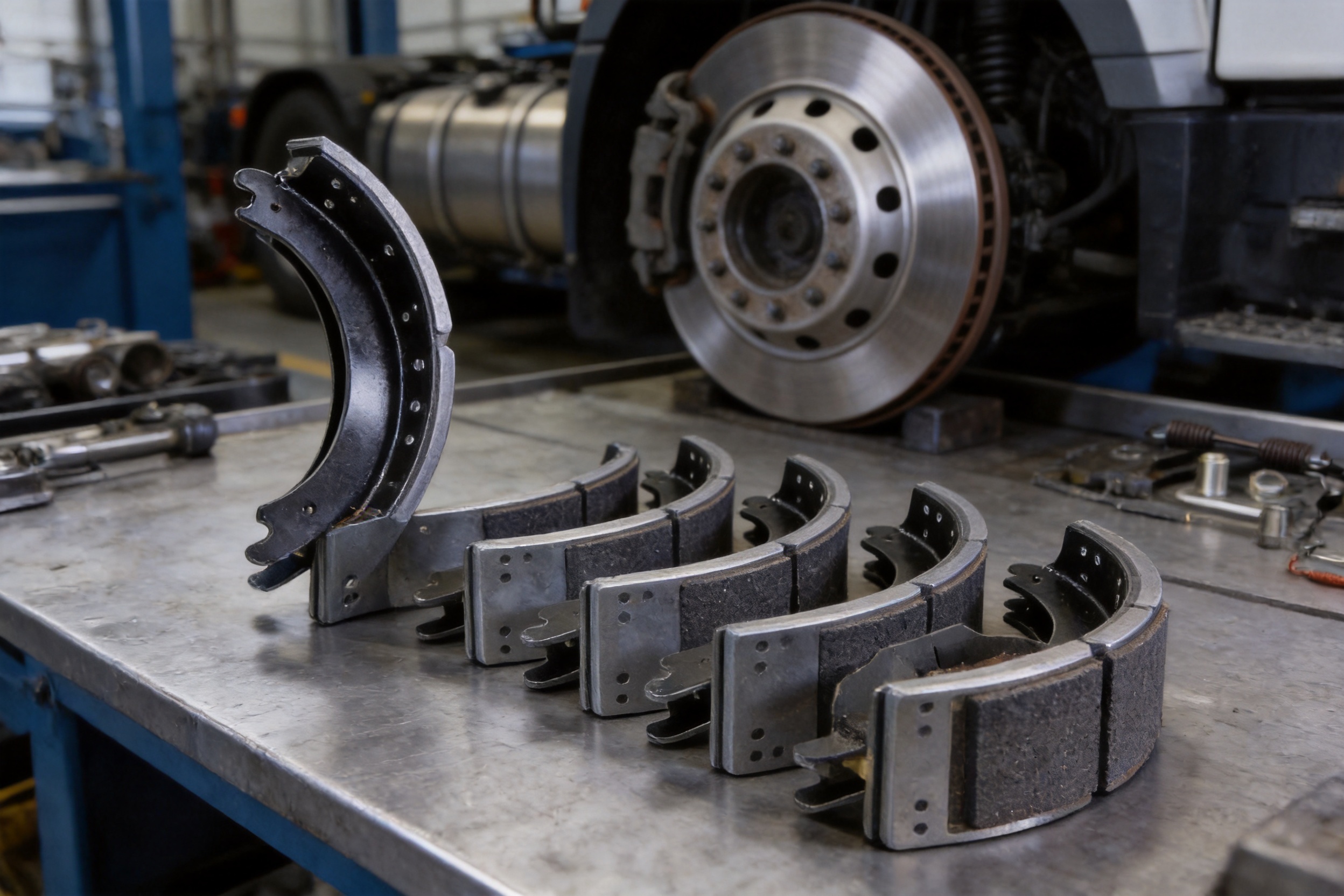
Manufacturing Strengths Behind the Product
Material selection and incoming inspection
Advanced brake-shoe manufacturing begins before production starts. Steel plates, friction-material ingredients, bonding materials, fasteners, and other inputs must be selected according to the intended product specification. Incoming inspection can include dimensional checks, visual examination, material verification, and documentation review.
For the shoe structure, the material must support forming and service loads without introducing unnecessary weight or instability. For the friction lining, raw materials must be prepared in controlled proportions. Variation in particle size, fiber distribution, resin content, or filler composition can influence friction behavior, compressibility, wear, and heat response. A disciplined material-control system helps limit these variations.
Suppliers are also an important part of manufacturing strength. Stable supply relationships and clear technical requirements help a manufacturer maintain repeatable quality. When materials are traceable by batch, any production issue can be investigated more efficiently, and corrective action can be applied to the affected products.
Precision forming of the brake shoe
The brake shoe must follow a controlled arc that corresponds to the drum and the supporting hardware. Forming equipment, dies, fixtures, and process settings must be maintained to preserve this geometry. Excessive variation can cause poor contact, difficult installation, and irregular wear.
Precision forming involves more than producing a visually curved component. Hole locations, edge profiles, anchor areas, actuator interfaces, and other reference points must remain within the required dimensional range. These features determine how the shoe works with the rest of the braking mechanism.
Modern manufacturing methods may combine automated or semi-automated forming with dedicated inspection fixtures. A fixture can quickly identify whether the shoe sits correctly against a reference profile or whether critical holes and contact points are positioned accurately. This type of process control is more dependable than relying only on a final visual inspection.
Controlled friction-lining production
Friction material is a highly engineered composite. It may contain fibers, binders, friction modifiers, fillers, and other ingredients selected to create a particular balance of friction, wear, heat resistance, noise behavior, and mechanical strength. The exact formulation is part of the manufacturer’s technical design and should be controlled carefully during batching.
Mixing must provide a uniform distribution of ingredients. Pressing must establish the intended shape and density. Curing must allow the binder system to develop sufficient strength without producing defects. Finishing processes must produce a suitable surface and accurate dimensions for contact with the brake drum.
Process parameters such as temperature, pressure, time, and material quantity can directly affect the finished lining. Advanced production management records these parameters and uses inspection data to identify trends. This helps prevent small process changes from becoming large variations in braking performance.
Secure lining attachment
The connection between the lining and the steel shoe is a critical safety feature. Depending on the specified design, the lining may be attached using rivets, adhesive bonding, or a combination of engineered methods. The attachment process must be controlled so that the lining remains secure under vibration, thermal cycling, braking pressure, and repeated expansion and contraction.
For bonded linings, surface preparation, adhesive application, pressure, and curing conditions are important. For riveted linings, rivet selection, hole alignment, setting force, and seating quality must be controlled. In either case, inspection should confirm that the lining is properly seated and that there are no visible gaps, cracks, looseness, or attachment irregularities.
A strong attachment process protects both the vehicle and the brake drum. It also contributes to customer confidence because the replacement part is designed as a functioning assembly rather than a collection of loosely matched materials.
Machining and finishing control
After forming and lining attachment, selected surfaces may require machining, grinding, drilling, or finishing. These operations influence dimensional accuracy, surface condition, and installation quality. Excessive material removal can alter the intended geometry, while insufficient finishing can create interference or uneven contact.
Controlled finishing also helps prepare the lining for bedding with the drum. The technician must still follow appropriate installation and bedding procedures, but a properly finished component provides a better starting point for the service process.
In-process inspection
Quality cannot be created only at the end of a production line. In-process inspection is necessary at multiple stages. Typical control points may include raw-material verification, shoe dimensions, arc profile, hole position, lining thickness, attachment condition, surface appearance, and final packaging.
Inspection data can be used for statistical process control, allowing production teams to identify gradual drift before parts fall outside specification. This is especially useful for high-volume brake components, where a small process deviation could affect a large number of units if it is not detected early.
Final testing and traceability
Final inspection provides a last opportunity to confirm that the completed kit corresponds to the correct product reference and meets release requirements. Product labels, batch information, packaging checks, and visual examination help ensure that the correct part reaches the customer.
Traceability strengthens after-sales support. If a distributor or fleet reports a concern, the manufacturer can use production records to investigate the relevant batch, raw materials, inspection results, and process conditions. This supports faster technical communication and more effective corrective action.
Advantages Compared with Low-Control Alternatives
The heavy-duty brake-parts market includes products made with very different levels of process discipline. A low-cost component may appear similar externally while lacking consistent material control, accurate forming, reliable lining attachment, or adequate final inspection. Such differences can become visible only after installation and service use.
The 4707Q repair-kit concept offers several advantages when compared with loosely specified alternatives. First, the product is identified through a defined part reference and product category. This gives buyers a clearer basis for application matching. Second, the lined brake shoe is treated as an engineered assembly, requiring coordination between the steel shoe, friction material, and attachment method. Third, a manufacturer focused on heavy-duty brake parts can develop processes and inspection methods specifically for commercial vehicle requirements.
Another advantage is purchasing efficiency. An unclear or incomplete replacement may require repeated ordering, additional workshop modifications, or premature removal. A properly identified repair kit can reduce these risks and help maintenance teams plan labor and inventory more effectively.
Price remains an important purchasing factor, but the lowest initial price does not always represent the lowest operating cost. Poor fitment, uneven wear, frequent replacement, drum damage, and vehicle downtime can outweigh the initial saving. A more reliable kit may provide better value by supporting longer and more predictable service intervals, provided it is correctly selected and installed.
| Comparison Factor | 4707Q Repair Kit Approach | Uncontrolled Generic Alternative |
|---|---|---|
| Product identification | Defined 4707Q reference with associated 4515Q/4707Q brake shoe information | May rely on incomplete or ambiguous descriptions |
| Application matching | Supports reference-based verification before ordering | Greater risk of relying on appearance alone |
| Assembly concept | Designed as a lined brake shoe repair solution | May combine unrelated or inconsistent components |
| Manufacturing focus | Heavy-duty brake-parts production and process control | Process quality may vary by supplier |
| Inventory management | One repair-kit reference can simplify purchasing | Several separate items may need to be sourced |
| Service confidence | Supported by application-oriented product information | Technicians may need additional adaptation or verification |
| Long-term value | Potentially lower downtime and more predictable maintenance | Initial saving may be offset by fitment or durability problems |
Benefits for Fleets, Distributors, and Workshops
Fleet operators
Fleet operators require brake components that support uptime, safety, and predictable maintenance budgeting. A reference-based repair kit can help fleet managers standardize replacement decisions across service locations. When maintenance teams use consistent parts and procedures, they can compare wear patterns, service life, and operating conditions more effectively.
The 4707Q kit may also support planned maintenance. Brake shoes can be inspected during scheduled service, and replacement can be coordinated with drum inspection, adjustment, and other axle work. Planned repairs are generally easier to manage than emergency repairs caused by a damaged lining, severe wear, or unexpected fitment problems.
Parts distributors
Distributors benefit from clear product categorization. The 4707Q kit belongs to the lined brake shoe kit segment, while the broader product range includes steel brake shoes, cast brake shoes, brake linings, lined brake shoes, and brake shoe repair kits. This range structure allows a distributor to serve customers with different repair preferences and vehicle requirements.
A defined product reference also supports catalog organization, quotation preparation, and stock planning. Distributors can connect the reference with application notes, packaging details, and customer-order history. Clear technical communication is particularly important when customers are purchasing for mixed fleets or exporting to several markets.
Repair workshops
Workshops need components that can be inspected, identified, and installed efficiently. A repair kit can reduce time spent gathering individual parts and can help technicians follow a more organized repair procedure. The workshop should still compare the new component with the removed part, inspect the drum and related hardware, and confirm that the complete brake assembly is suitable for return to service.
Reliable product identification also reduces comebacks. If a part is ordered incorrectly, the vehicle may remain in the workshop while a replacement is sourced. A reference-led ordering process improves the probability that the correct item is available when the repair begins.
Installation and Maintenance Considerations
Only qualified technicians should install heavy-duty brake components. Before fitting a 4707Q repair kit, the technician should confirm the application, reference number, kit contents, and condition of the associated drum-brake parts. The vehicle must be secured according to approved workshop procedures, and all relevant safety precautions must be followed.
The brake drum should be inspected for cracks, excessive wear, scoring, heat damage, or an unsuitable internal diameter. A new lined brake shoe cannot compensate for a drum that is outside its service limits. If the drum surface is damaged or excessively worn, it may cause poor contact and accelerated lining wear.
Related hardware should also be examined. Return springs, retainers, anchors, adjusters, rollers, and actuators can influence shoe movement and release. Worn or damaged hardware may prevent the new shoe from operating correctly. Replacing or servicing these parts as required helps preserve the performance of the complete braking system.
The technician should clean the assembly using approved methods and avoid contaminating the friction surfaces with grease, oil, paint, or unsuitable chemicals. Friction surfaces must remain clean and dry. Any contamination can reduce braking performance and create abnormal wear.
After installation, the brake should be adjusted according to the vehicle and axle manufacturer’s procedure. Automatic and manual adjustment systems may require different checks. The wheel should rotate as intended without excessive drag, and the brake should release correctly after actuation.
Bedding-in is an important part of service. New friction material may require controlled use to establish an even contact pattern with the drum. The exact procedure depends on the vehicle manufacturer, brake system, operating conditions, and workshop policy. Drivers should avoid unnecessarily severe braking immediately after installation unless an emergency requires it.
Following installation, the technician should check for abnormal noise, uneven contact, excessive heat, air-system issues where applicable, and correct brake response. A road test should be performed only under safe and controlled conditions. Maintenance records should include the product reference, installation date, vehicle information, mileage or operating hours, drum condition, and any observations.
Quality Assurance and Customer Confidence
For a heavy-duty brake manufacturer, quality assurance must extend from product development to customer support. A reliable quality system defines specifications, production procedures, inspection requirements, nonconformance controls, and documentation practices. It also encourages continuous improvement rather than treating inspection as a simple pass-or-fail activity.
Customer confidence is strengthened when product information is clear and consistent. The 4707Q reference, the associated 4515Q/4707Q brake shoe description, the product category, and the manufacturer’s heavy-duty focus provide a useful foundation for technical communication. Buyers should request the latest application chart, drawing, specification sheet, and kit-content confirmation when these details are required for a particular vehicle.
Packaging is another part of product quality. Brake shoes must be protected from impact, moisture, contamination, and incorrect labeling during storage and transportation. A well-organized package should make it easy to identify the part and should preserve the condition of the friction surfaces until installation.
After-sales communication is particularly important for commercial vehicle components. If a customer identifies a fitment question or performance concern, the manufacturer and distributor should collect the vehicle application, brake dimensions, installation details, operating conditions, photographs where appropriate, and batch information. This evidence helps distinguish between product issues, incorrect application, installation errors, drum conditions, and unrelated system faults.
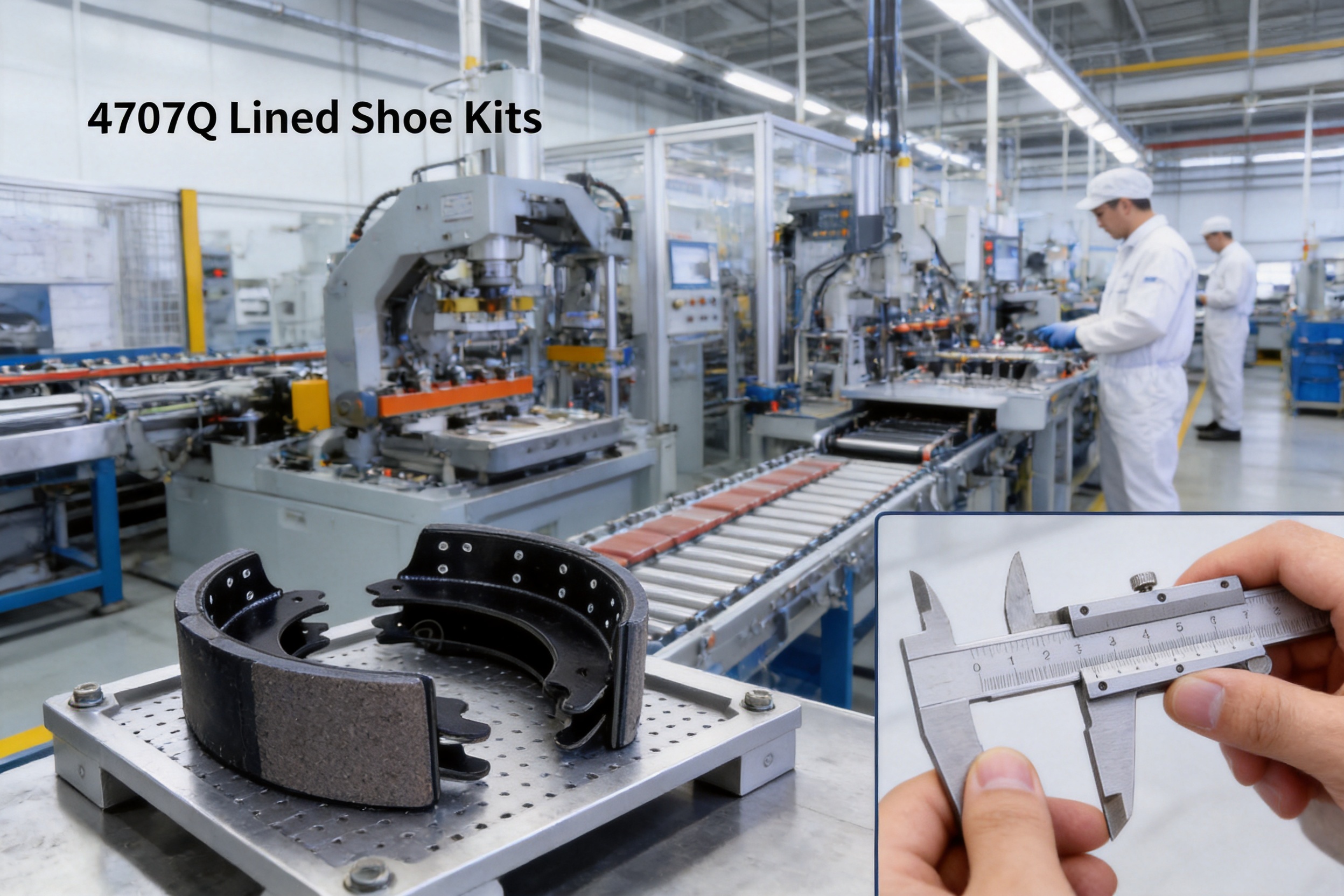
Product Selection Guidance
Before ordering the 4707Q Brake Shoe Repair Kit, buyers should compare the existing component and service documentation with the product reference. Important information may include axle type, brake diameter, shoe width, lining thickness, mounting arrangement, drum dimensions, and vehicle or trailer configuration. The supplied data identifies the reference but does not list a complete application schedule, so confirmation with the manufacturer or distributor is recommended for specific vehicles.
Purchasers should also clarify whether the repair kit is intended for one wheel position, one axle, or another defined quantity. Packaging quantities can differ between suppliers and markets. Confirming the quantity avoids delays and ensures that the maintenance team has enough components to complete the planned repair.
Where local regulations or fleet standards specify friction-material requirements, the buyer should request the relevant technical documentation. Different operating environments may require different performance characteristics. A vehicle working in mountainous regions, urban delivery routes, long-haul transport, or off-road conditions may experience different temperature and wear patterns.
Storage conditions should be considered after delivery. Components should remain in a clean, dry, covered area away from oil, chemicals, excessive humidity, and direct mechanical damage. Friction products should not be stored in a way that bends, contaminates, or compresses the lining. Correct stock rotation can also help ensure that older inventory is used appropriately.
Environmental and Operational Considerations
Heavy-duty brake products contribute to road safety, but their production and use also involve environmental considerations. Efficient manufacturing can reduce material waste, energy consumption, and rejected components. Accurate forming and controlled friction-material processing help improve yield by reducing the number of parts that require rework or disposal.
During vehicle operation, brake lining wear produces particulate matter. The composition of friction materials and the way they interact with the drum influence the amount and nature of wear debris. Responsible product development therefore considers not only braking effectiveness but also wear stability, durability, and the broader operating environment.
At the end of service, worn brake shoes and linings should be handled according to applicable local waste-management rules. Workshops should avoid uncontrolled disposal and should separate contaminated materials where required. Metal components may be suitable for recycling through approved channels, while friction materials should be managed in accordance with regional regulations.
Operational efficiency is also an environmental benefit. A brake component that supports predictable service intervals can reduce unnecessary vehicle trips to the workshop, emergency transportation, replacement packaging, and premature disposal. Reliable maintenance planning contributes to a more efficient fleet operation.
Manufacturing Expertise and Supply Capability
Zhejiang Bangchi Auto Parts Co., Ltd. is located in Chang’an Town, Haining, Zhejiang, China, an area with access to industrial manufacturing resources and transportation networks. The company identifies itself as a heavy-duty brake parts manufacturer and states that its products follow the global FMSI numbering system. This specialization allows the product range to focus on commercial brake applications rather than treating heavy-duty components as a secondary product line.
The company’s listed product categories include steel brake shoes, casted brake shoes, brake linings, lined brake shoes, brake shoe repair kits, and lined brake shoe kits. This breadth suggests a product structure covering several stages and preferences within drum-brake maintenance. Customers may require a complete lined shoe, a separate lining, a structural shoe, or a repair kit depending on their local repair practice and vehicle condition.
A manufacturer with multiple related product categories can also build knowledge across the complete brake assembly. Understanding the interaction between steel shoe geometry, lining material, attachment methods, and repair hardware supports better product development and technical service. It can also help the manufacturer respond to distributor requirements for application-specific products.
OEM-oriented production requires attention to repeatability. Whether a product is supplied to an original-equipment channel or the independent aftermarket, customers expect stable dimensions, consistent materials, accurate labels, and dependable packaging. Manufacturing systems that emphasize process control and traceability are better positioned to meet these expectations.
For international buyers, supplier evaluation should include more than a product photograph. Buyers may review manufacturing capability, inspection procedures, sample approval processes, documentation, packaging standards, production capacity, lead times, and communication quality. These factors influence the total reliability of the supply relationship.
Technical Questions Before Purchase
Is the 4707Q kit a complete brake assembly?
The product is categorized as a Lined Brake Shoe Kit and is described as a 4707Q Brake Shoe Repair Kit. However, the supplied information does not list every component included in the package. Buyers should request the current packing list or product specification to confirm whether the kit includes the lined shoe only or additional repair hardware.
What is the associated brake shoe number?
The supplied product content states “4515Q/4707Q brake shoe.” This indicates that both references are associated with the product information. The correct application should be confirmed using vehicle, axle, drum, and dimensional data before purchase.
Are OE numbers available?
The product data includes a heading for “Product OE number” but does not provide a number. Buyers requiring OE cross-reference information should request the latest manufacturer catalog or technical confirmation. An OE comparison should never be assumed solely from a similar-looking component.
Can the kit be used on any heavy truck?
No. Heavy trucks use different brake systems and dimensions. The 4707Q reference must be matched to the specified application. A professional technician or parts specialist should verify the brake assembly before installation.
Does a new repair kit eliminate the need to inspect the drum?
No. The drum, adjuster, springs, anchors, actuator, and related components must be inspected. A new shoe cannot correct a cracked, excessively worn, contaminated, or dimensionally unsuitable drum.
How does the FMSI-oriented numbering system help buyers?
It provides a structured way to identify friction products and organize product information. It can assist distributors and fleet managers with cataloging and ordering, although the number should still be checked against the actual vehicle application.
Q&A: 4707Q Brake Shoe Repair Kit
Q1: What is the main purpose of the 4707Q Brake Shoe Repair Kit?
The kit is intended to support the repair or replacement of a compatible heavy-duty drum brake shoe assembly. It is listed in the Lined Brake Shoe Kits category and is associated with the 4515Q/4707Q brake shoe reference.
Q2: What type of vehicle uses this kind of product?
The product is intended for compatible heavy-duty applications, which may include commercial vehicles and other vehicles using the specified drum-brake configuration. Exact vehicle compatibility must be verified before ordering.
Q3: What are the principal benefits of a lined brake shoe kit?
A lined kit combines the structural shoe and friction lining in an application-oriented replacement solution. It can simplify purchasing, reduce assembly uncertainty, support faster workshop preparation, and provide a coordinated replacement component.
Q4: Why is lining attachment important?
The lining must remain securely connected to the shoe while exposed to pressure, vibration, heat, and repeated braking cycles. Reliable attachment helps prevent separation, protects the brake drum, and supports stable braking performance.
Q5: What should be checked before installing the product?
The technician should verify the product reference, application, shoe dimensions, drum condition, lining condition, mounting points, adjuster, springs, anchors, and actuator. The kit contents should also be checked against the purchase order and current specification.
Q6: How can the product help fleet maintenance?
A defined repair-kit reference can simplify stock management, support planned replacement, and make service records more consistent. It may also reduce downtime associated with sourcing multiple individual components.
Q7: What makes a heavy-duty brake manufacturer valuable to buyers?
Specialization supports application knowledge, controlled material selection, suitable forming methods, friction-material expertise, and inspection procedures designed for commercial braking requirements. It can also improve technical communication and product continuity.
Q8: Is the product suitable for direct installation without professional inspection?
No. Brake repairs should be performed by qualified personnel using approved procedures. Correct application, drum condition, adjustment, bedding, and post-installation testing are all important to safe operation.
Q9: Is the exact OE number included in the supplied information?
No. The supplied data shows an OE-number heading but does not state a specific OE number. Buyers should obtain current cross-reference information from the manufacturer or distributor.
Q10: How should the product be stored?
It should be kept in a clean, dry, protected area away from oil, chemicals, moisture, excessive heat, and impact. The lining should remain free from contamination and physical damage until installation.
Q11: Can the 4707Q kit be compared with competitor products?
Yes, but the comparison should consider more than price. Buyers should evaluate application accuracy, dimensional consistency, friction-material quality, lining attachment, inspection, packaging, technical documentation, supply reliability, and total operating cost.
Q12: What information should be supplied when requesting a quotation?
A useful inquiry should include the 4707Q reference, required quantity, vehicle or axle information, drum dimensions where available, destination market, packaging requirements, documentation needs, and any requested OE cross-reference. This allows the supplier to provide a more accurate response.
Recommended Purchasing Checklist
Confirm that the requested item is the 4707Q Brake Shoe Repair Kit and not a separate steel brake shoe, casted brake shoe, brake lining, or lined brake shoe. Similar product names can refer to different levels of assembly.
Confirm the associated reference, including the stated 4515Q/4707Q brake shoe information. If the number on the removed component differs, obtain technical assistance before ordering.
Request the latest product drawing, application list, dimensions, friction-material information, and kit-content description when required by the project or fleet standard.
Confirm whether the package quantity is suitable for the planned repair. Determine whether one kit serves one wheel position, one axle, or another defined service quantity.
Review packaging, labeling, batch identification, and storage requirements. These details are important for international transportation and warehouse management.
Verify the supplier’s production lead time, minimum order quantity, quality documentation, inspection process, and after-sales communication procedure.
Plan installation with qualified technicians and inspect all related brake parts. Product quality and installation quality must work together to achieve dependable results.
Conclusion
The 4707Q Brake Shoe Repair Kit is a reference-based lined brake shoe solution for compatible heavy-duty drum brake applications. Associated with the 4515Q/4707Q brake shoe reference, it is designed to support practical maintenance and replacement requirements in the commercial vehicle parts market.
Its principal advantages include application-focused identification, repair-kit convenience, coordinated shoe-and-lining design, potential inventory benefits, and suitability for professional fleet and workshop maintenance. These benefits become more meaningful when supported by disciplined manufacturing processes, including controlled material selection, precise shoe forming, engineered friction-material production, secure lining attachment, dimensional inspection, final testing, and product traceability.
The product should always be selected and installed according to the correct vehicle and brake-system requirements. Buyers should confirm dimensions, kit contents, OE cross-reference information, and application data because the supplied product description does not provide a complete OE-number list. Technicians should inspect the drum and all related brake hardware before returning the vehicle to service.
For distributors and fleet operators, the product offers a practical way to organize heavy-duty brake maintenance around a defined part reference. For workshops, it can support more efficient repair preparation and reduce the uncertainty associated with sourcing separate components. For international customers, the manufacturer’s focus on heavy-duty brake parts and FMSI-oriented numbering provides a useful basis for technical communication and supply planning.
When correct application, controlled manufacturing, professional installation, and responsible maintenance are combined, the 4707Q Brake Shoe Repair Kit can contribute to dependable drum-brake service and more predictable commercial vehicle operation.
References
1. Product information supplied for the 4707Q Brake Shoe Repair Kit, including the 4515Q/4707Q brake shoe reference and Lined Brake Shoe Kits category.
2. Manufacturer information supplied for Zhejiang Bangchi Auto Parts Co., Ltd., including its heavy-duty brake-parts product categories and FMSI-oriented numbering statement.
3. General commercial vehicle drum-brake maintenance principles covering brake shoes, friction linings, drums, adjusters, springs, anchors, and installation inspection.
4. General friction-material manufacturing principles covering material batching, forming, curing, attachment, finishing, inspection, and traceability.
5. General fleet-maintenance practices concerning application verification, planned brake inspection, inventory control, professional installation, bedding-in, and service records.