 English
 简体中文
简体中文Heavy-duty braking systems must deliver dependable friction, stable stopping performance, and consistent service life under demanding operating conditions. Commercial trucks, trailers, buses, agricultural vehicles, construction equipment, and other large vehicles place exceptional loads on their brake components. Within these systems, the brake lining is one of the most important working elements because it converts mechanical pressure into controlled friction against the brake drum.
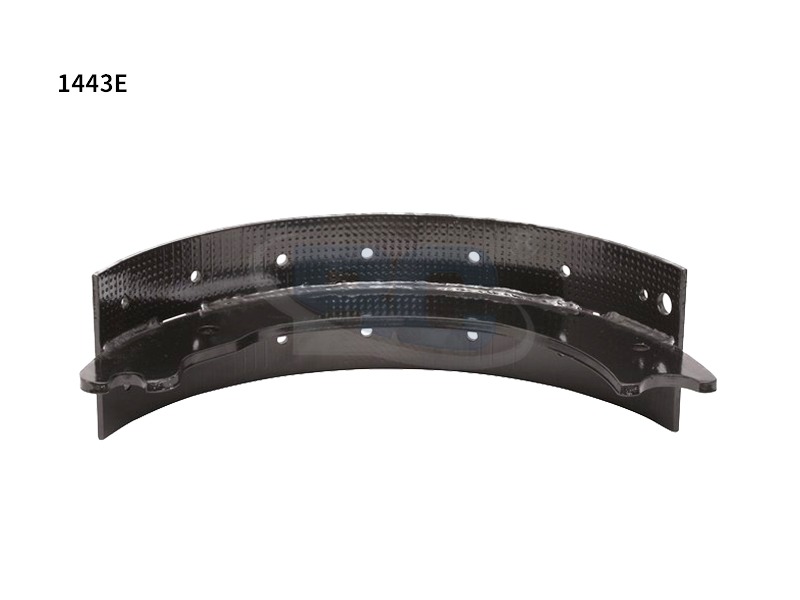
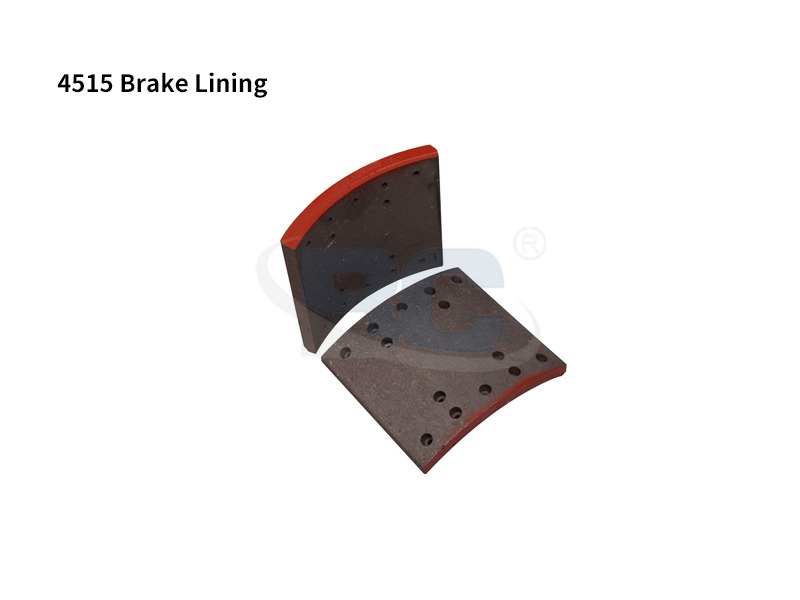
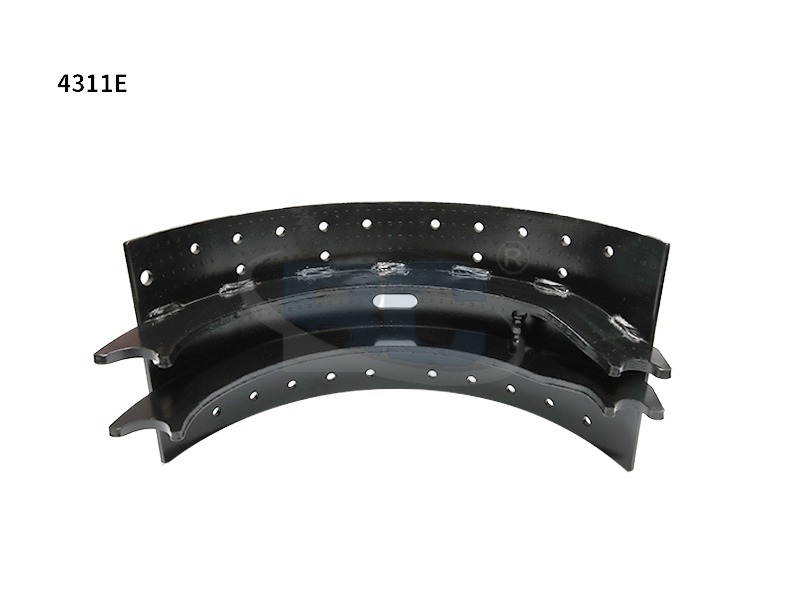
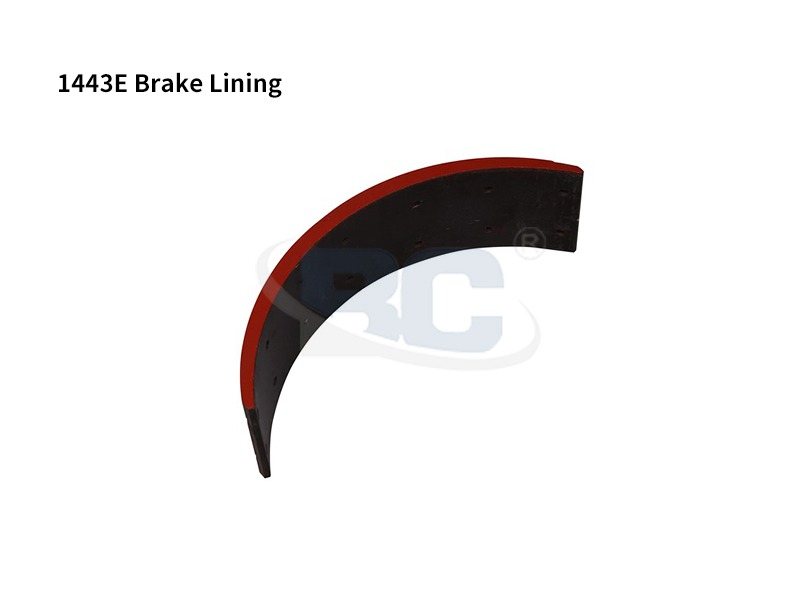
The 1443 brake lining, identified by part number 1443E, is designed for applications that require a practical combination of dimensional consistency, reliable friction performance, and production efficiency. With a product size listed as 15"*4"mm and 14 rivet holes, this lining is intended for installation in compatible heavy-duty brake shoe assemblies. Its design supports replacement, repair, and assembly operations across the heavy truck brake parts market.
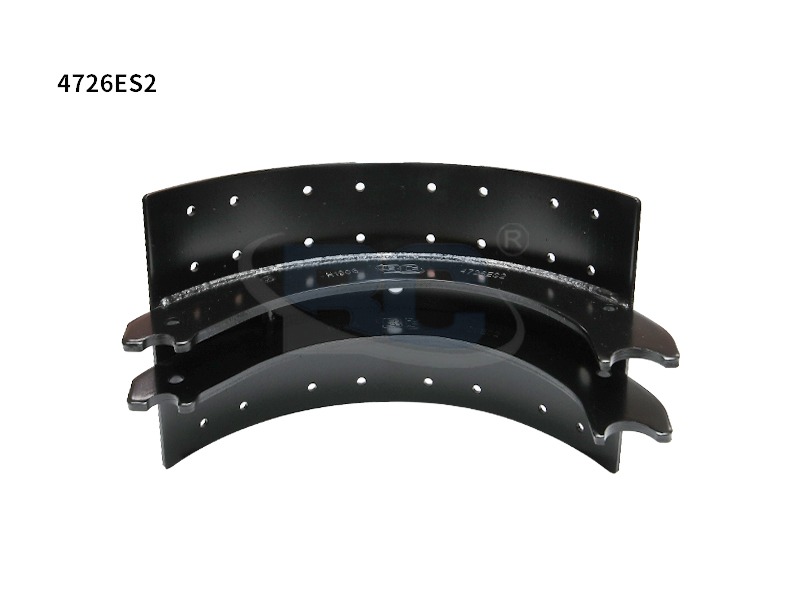
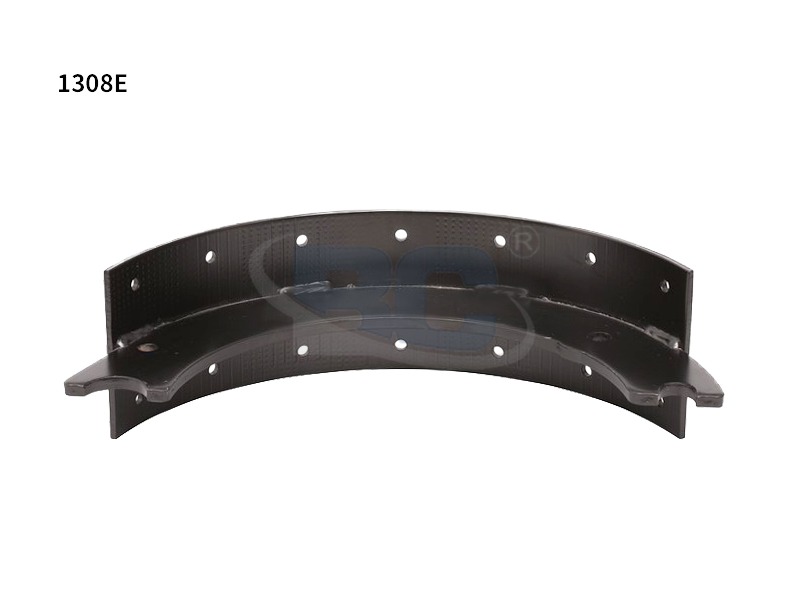
Manufactured by Zhejiang Bangchi Auto Parts Co., Ltd., the 1443E brake lining is part of a broader product range that includes steel brake shoes, casted brake shoes, lined brake shoes, brake shoe repair kits, and lined brake shoe kits. This product range enables customers to source both individual friction components and complete brake assembly solutions from one specialized manufacturer.
The following article examines the construction, application value, manufacturing considerations, quality advantages, installation requirements, and purchasing benefits associated with the 1443E brake lining. It also explains how a focused heavy-duty brake parts manufacturer can support original equipment and aftermarket requirements through process control, product identification, and flexible supply capability.
1443 Brake Lining
Product Overview
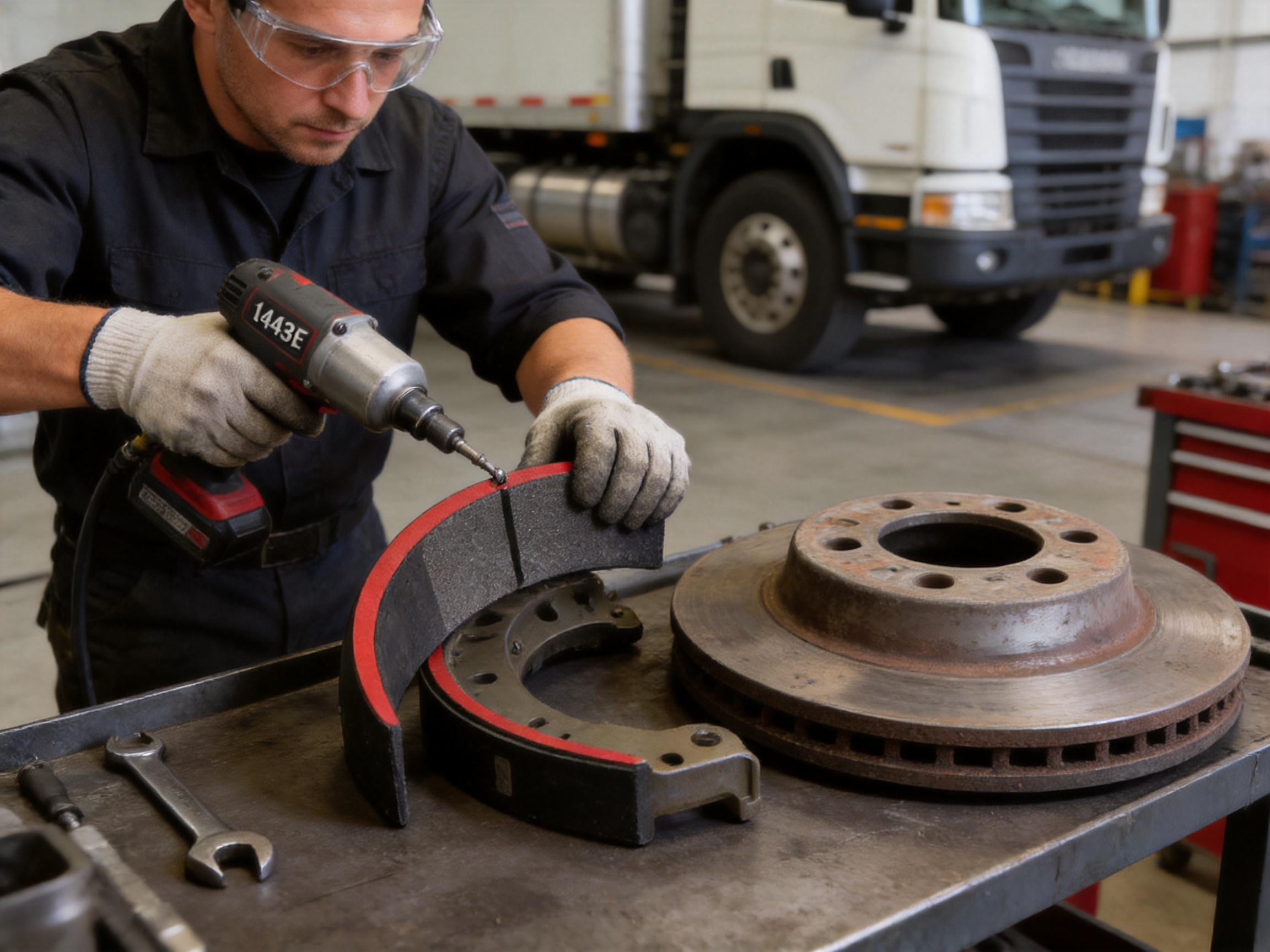
The 1443E brake lining is a replaceable friction component for compatible drum brake systems. Its primary purpose is to provide the friction surface that contacts the inner surface of a brake drum when the brake shoe is actuated. This contact produces the braking force required to decelerate or stop a vehicle.
The basic product information supplied for this model is shown below.
| Product Item | Specification |
|---|---|
| Product Name | 1443 Brake Lining |
| Part Number | 1443E |
| Product Category | Brake Lining |
| Listed Product Size | 15"*4"mm |
| Number of Rivet Holes | 14 |
| WVA Number | Not specified in the supplied information |
| Typical Product Role | Replacement friction lining for compatible heavy-duty brake shoes |
The listed dimensions and hole pattern are essential identification features. A brake lining must match the brake shoe profile, arc, length, width, thickness, and rivet-hole arrangement of the intended application. Even a small dimensional difference can influence contact pressure, fitting accuracy, bedding-in behavior, and wear distribution. For this reason, buyers should compare the 1443E part number with their existing brake lining, vehicle documentation, brake shoe assembly, or technical drawing before ordering.
The supplied product data identifies the lining as having 14 rivet holes. This detail is particularly important for repair workshops and remanufacturing operations because the hole pattern must correspond with the prepared brake shoe. A correct rivet-hole layout helps simplify installation, reduce rework, and ensure that the lining is securely attached across its working surface.
The WVA number field is currently blank in the supplied product information. Customers who require WVA cross-reference confirmation should request the applicable identification details from the manufacturer before purchase. Part-number verification remains the safest method for preventing incorrect application, particularly when similar linings may share comparable dimensions but differ in hole spacing, curvature, or friction characteristics.
Why Brake Lining Quality Matters in Heavy-Duty Applications
Brake lining performance affects much more than stopping distance. It also influences driver confidence, vehicle uptime, drum condition, maintenance frequency, operating cost, and the safety of passengers and cargo. In heavy-duty vehicles, brake components often operate under high thermal and mechanical loads. Repeated braking on steep roads, frequent stop-and-go traffic, heavy payloads, and long-distance operation can expose weaknesses in friction material and attachment quality.
A well-produced brake lining should maintain stable contact with the brake drum and provide predictable friction as operating conditions change. It should also resist excessive cracking, disintegration, uneven wear, and premature separation from the brake shoe. The backing and friction material must work together as a complete assembly rather than as separate parts.
For fleet operators, consistent product quality is especially valuable. If a replacement lining performs differently from one installation to the next, technicians may need to adjust braking systems repeatedly or investigate unusual wear. In contrast, a stable product specification helps workshops establish repeatable installation and maintenance procedures.
The 1443E brake lining is positioned for this type of practical heavy-duty requirement. Its defined part number, specified rivet-hole count, and inclusion in a specialized brake parts product range make it suitable for organized replacement and repair programs, subject to final application verification.
Design Characteristics of the 1443E Brake Lining
Dimensional Compatibility
Brake linings are not universal components. They are manufactured for particular brake shoe shapes and drum configurations. The 1443E model has a listed size of 15"*4"mm. Because the source specification presents the unit exactly in this form, buyers should confirm the intended measurement convention, including length, width, and thickness, with Zhejiang Bangchi Auto Parts Co., Ltd. before placing a production order.
Dimensional compatibility affects the total contact area between the lining and drum. A lining that is too short may leave part of the brake shoe inadequately covered. A lining that is too wide or too thick may not seat correctly or may require improper modification. Correct dimensions support more uniform pressure distribution and help protect the brake drum from irregular contact.
Fourteen-Rivet Hole Configuration
The 14-hole pattern is a defining feature of the 1443E lining. Rivet holes are positioned to allow the lining to be attached to a compatible brake shoe using suitable brake-lining rivets and workshop equipment. The number of holes alone is not enough to confirm fit; hole diameter, spacing, edge distance, and alignment must also be checked.
A properly distributed rivet pattern helps maintain secure attachment over the entire lining length. It can also reduce the risk of local movement between the lining and shoe during braking. For professional repair work, technicians should use the correct rivet type, rivet length, setting pressure, and sequence recommended for the brake shoe and lining combination.
Friction Surface Function
The friction surface is the active working area of the lining. It must engage the drum smoothly and maintain useful braking force during repeated applications. A dependable friction material should support controlled braking without excessive grabbing, unstable response, or rapid loss of performance caused by heat.
In practical operation, the lining works in combination with the brake drum, shoe geometry, return springs, actuators, adjustment mechanisms, and vehicle load. Therefore, product performance depends on the complete brake system and correct installation. The 1443E lining should be installed only in applications for which its dimensions and material characteristics are appropriate.
Manufacturing Strengths of a Specialized Brake Parts Supplier
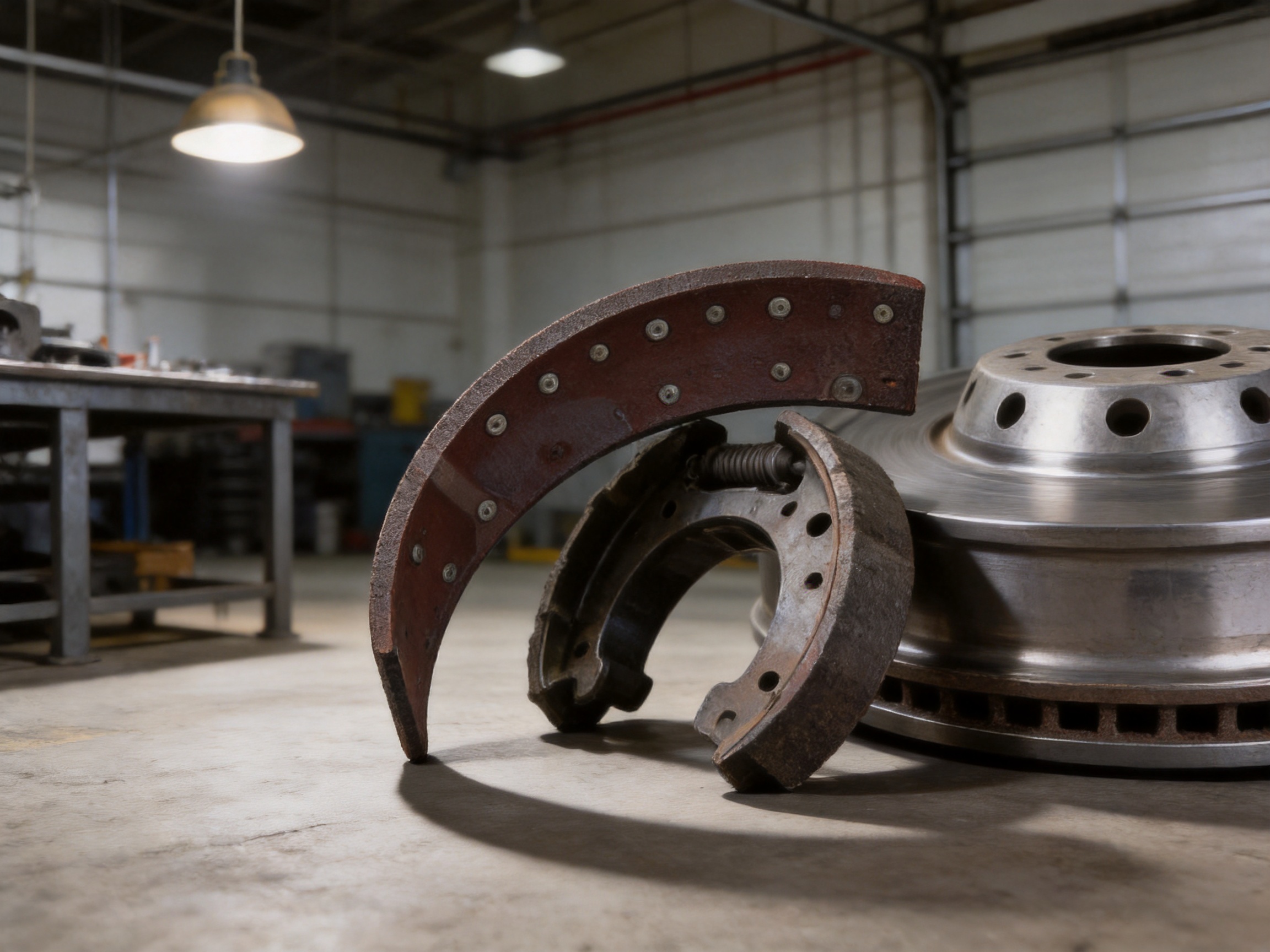
Zhejiang Bangchi Auto Parts Co., Ltd. focuses on heavy-duty brake parts and supplies products according to the global FMSI numbering system, as stated in the supplied company information. This specialization is an important advantage for customers who need brake components rather than a broad, unrelated range of automotive products.
A specialized manufacturer can organize its production systems around the requirements of brake shoes, brake linings, riveted assemblies, and repair kits. Such concentration supports product-family consistency, technical familiarity, and more efficient communication with distributors, repair workshops, and original equipment customers.
Controlled Material Preparation
Brake lining production begins with the preparation and control of friction-material ingredients. The exact formulation may vary according to application requirements, but the manufacturing objective is to combine the necessary reinforcing, friction-modifying, binding, and wear-control components into a stable material system.
Consistent weighing, mixing, and material handling are central to repeatable production. If ingredients are not distributed evenly, the finished lining may show differences in friction response, density, wear rate, or thermal behavior. A disciplined manufacturing process therefore places emphasis on batch identification, controlled mixing time, and prevention of contamination between material grades.
For a product such as the 1443E lining, stable material preparation supports repeatable performance from one production batch to another. This is valuable to customers who purchase replacement parts regularly and expect each shipment to remain compatible with established service procedures.
Accurate Forming and Pressing
Once the friction material is prepared, it must be shaped into a lining that meets the specified length, width, thickness, and curvature requirements. Pressing and forming operations influence density, edge condition, structural integrity, and dimensional stability.
Accurate tooling helps create a consistent product profile. Proper pressure distribution during forming can reduce variations across the lining and support a more uniform finished surface. For curved brake linings, forming accuracy is especially important because the part must follow the contour of the brake shoe and drum assembly.
Manufacturing control at this stage can distinguish a professional brake lining from a low-cost substitute with inconsistent geometry. A lining may appear visually similar while still having differences that affect installation and contact performance. Focused tooling, process monitoring, and dimensional inspection help reduce these risks.
Controlled Curing and Heat Treatment
Curing is an important stage in the development of the lining’s structural properties. It allows the binder system to develop the required cohesion and helps stabilize the formed material. Curing conditions such as time, temperature, and loading pattern must be controlled according to the material design.
Insufficient or uneven curing may affect strength, stability, and wear behavior. Excessive or poorly controlled heat may also influence the final characteristics of the friction material. A well-organized production process therefore treats curing as a defined manufacturing operation rather than an informal drying step.
For heavy-duty brake applications, controlled curing contributes to product reliability during repeated braking cycles. It also supports consistent finishing, machining, and drilling in later stages.
Precision Drilling and Hole-Pattern Control
The 14 rivet holes of the 1443E brake lining require accurate positioning. Drilling or punching operations must be coordinated with the part’s reference edges and centerline so that the final pattern matches the compatible brake shoe.
Hole quality is also important. Burrs, damaged edges, incorrect diameters, or poor spacing can complicate riveting and create stress concentrations. A controlled drilling process, followed by visual and dimensional checks, helps ensure that the lining reaches the customer ready for professional installation.
For manufacturers and repair-kit suppliers, reliable hole-pattern control reduces assembly adjustments and supports higher workshop productivity. It also helps maintain the integrity of the lining during riveting.
Surface Finishing and Final Inspection
After forming, curing, and drilling, the lining may undergo finishing operations to remove unwanted irregularities and prepare it for packaging or assembly. The finished surface should be free from obvious defects that could interfere with installation or normal friction contact.
Final inspection typically considers visible appearance, dimensions, hole count, hole position, edge condition, identification marking, and packaging status. Depending on the customer’s requirements, inspection may also include material or performance verification using the manufacturer’s internal quality procedures.
The objective is not merely to make the part look uniform. Inspection provides a final opportunity to identify deviations before the product enters a vehicle braking system. This quality gate is especially important for export orders, large fleet programs, and customers who require reliable interchangeability.
Advantages Compared with Generic or Inconsistent Alternatives
Clear Product Identification
The 1443E part number gives customers a direct reference for purchasing and inventory management. Clear identification is preferable to relying only on general descriptions such as “heavy truck brake lining” or “15-inch brake lining.” A specific number helps connect the product to technical records, order history, workshop instructions, and replacement schedules.
In comparison, generic products with incomplete identification may create uncertainty about dimensions, hole patterns, or application range. This uncertainty can lead to incorrect orders, installation delays, and additional inspection work. A defined part number helps reduce these avoidable problems.
Application-Focused Product Development
A manufacturer dedicated to heavy-duty brake components can develop its production and inspection practices around the actual needs of commercial braking systems. This application focus can provide an advantage over suppliers that treat brake linings as a minor accessory within a much broader product catalog.
Specialization encourages familiarity with brake shoe assemblies, friction-material behavior, rivet-hole arrangements, and replacement-market requirements. It also makes technical communication more direct when customers need assistance with product matching or custom specifications.
Integration with Complete Brake Solutions
Zhejiang Bangchi Auto Parts Co., Ltd. offers several related categories, including steel brake shoes, casted brake shoes, lined brake shoes, brake shoe repair kits, and lined brake shoe kits. This range allows customers to purchase the 1443E lining as an individual replacement component or coordinate it with other brake-system products.
One-source purchasing can simplify supplier management and reduce the number of separate technical interfaces. A repair workshop may need a lining for a brake shoe rebuild, while a distributor may require complete lined brake shoe kits. A manufacturer with multiple compatible product categories can support both requirements more efficiently than a supplier offering only one isolated component.
Production Flexibility for OEM and Aftermarket Needs
The supplied company information states that the manufacturer provides OEM brake parts following the global FMSI numbering system. This indicates an orientation toward organized part identification and professional supply programs. OEM and aftermarket customers often need repeatable specifications, stable packaging, and dependable order communication.
Production flexibility is also valuable when customers require different packaging quantities, private labeling arrangements, or coordinated supply of multiple brake components. Any specific customization should be confirmed directly with the manufacturer, but a focused product range provides a practical foundation for such cooperation.
Reduced Workshop Rework
Correctly manufactured linings can help reduce the amount of adjustment required during installation. Accurate dimensions and a matching rivet-hole pattern allow technicians to concentrate on proper riveting, shoe preparation, drum inspection, and brake adjustment rather than correcting avoidable component deviations.
Reduced rework can lower labor costs and improve vehicle availability. For fleets and repair centers, these operational benefits may be as important as the unit price of the lining itself.
Application Areas
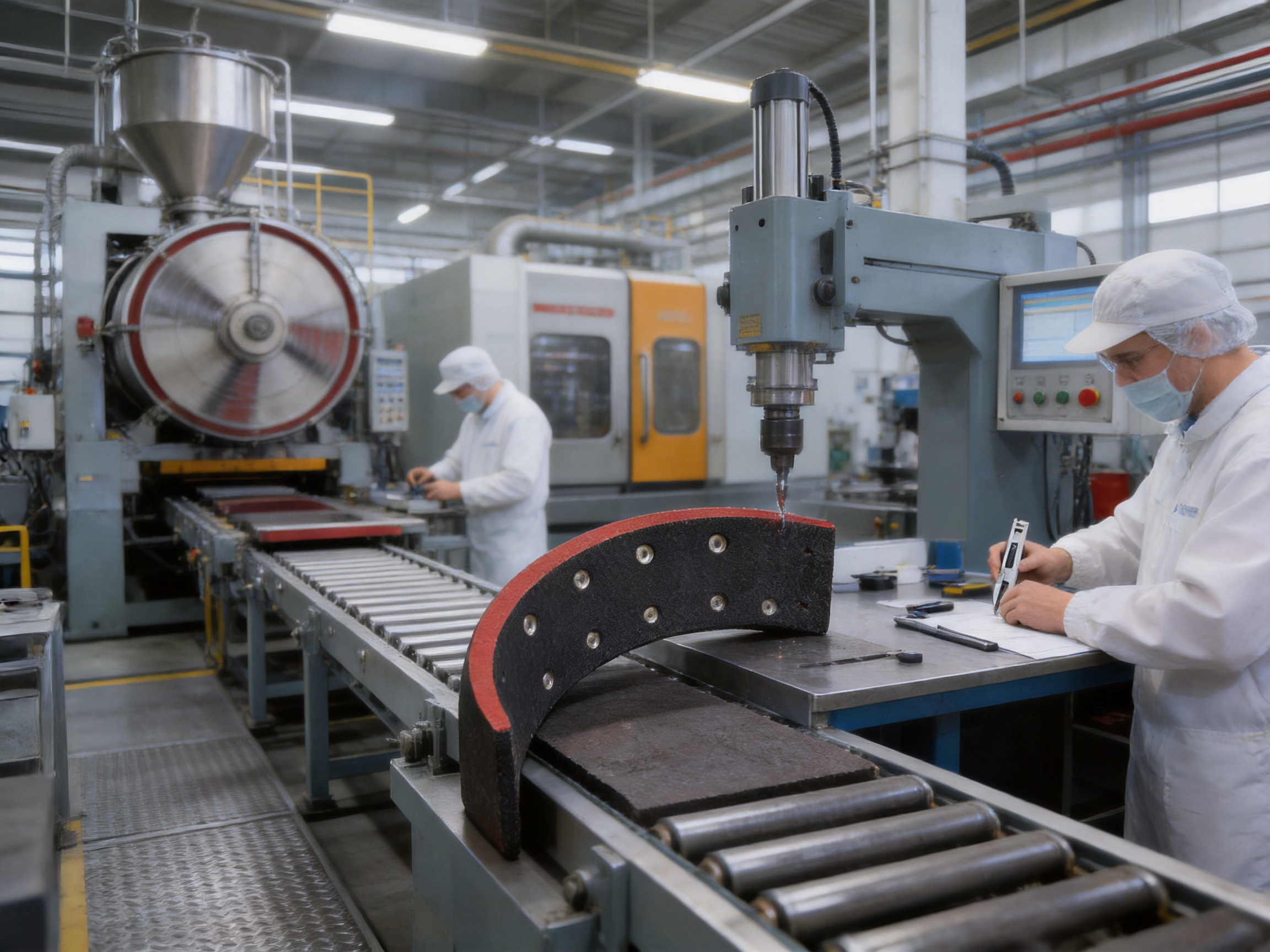
The 1443E brake lining is intended for compatible heavy-duty drum brake applications. Potential users include commercial vehicle repair shops, truck parts distributors, fleet maintenance departments, brake remanufacturers, and original equipment purchasing organizations.
Heavy trucks often require brake components that can support high gross vehicle weights and frequent service intervals. A correctly matched lining can contribute to predictable maintenance planning and reliable brake-shoe rebuilding.
Bus operators may also value consistent replacement linings because passenger vehicles require dependable braking and carefully managed maintenance schedules. In stop-and-go service, brake components can experience frequent applications, making friction stability and wear control important considerations.
Trailer and axle service providers may use compatible brake linings during overhaul work. Because trailers can operate across different regions and loads, replacement components should be selected according to the exact axle and brake-shoe specification rather than by appearance alone.
Agricultural, construction, and industrial vehicles may have specialized brake requirements. These applications can involve low-speed heavy loading, dusty environments, repeated maneuvering, or long periods of intermittent use. Buyers should confirm that the 1443E model is suitable for the specific vehicle, brake drum, and operating conditions before installation.
Installation and Maintenance Considerations
Confirming Application Before Installation
Before fitting a 1443E brake lining, technicians should compare the new part with the removed lining and the brake shoe. Key points include overall dimensions, curvature, thickness, rivet-hole count, hole spacing, hole diameter, and lining orientation.
The brake drum should also be inspected. A drum with excessive wear, scoring, cracking, heat damage, or an unsuitable internal diameter can compromise the performance of a new lining. Installing a new friction component against a severely damaged drum may lead to poor bedding, uneven contact, or accelerated wear.
Preparing the Brake Shoe
The brake shoe should be clean, structurally sound, and free from loose corrosion or distortion. Old rivets must be removed carefully so that the shoe is not bent or weakened. The rivet holes should be checked for enlargement, cracking, or deformation.
If the shoe is not suitable for reuse, a complete lined brake shoe or brake shoe repair kit may be more appropriate. The availability of related products from the same manufacturer gives customers multiple repair options, depending on the condition of the existing assembly.
Using Correct Riveting Practice
Riveting should be completed with equipment and procedures suitable for heavy-duty brake linings. Rivet selection must account for hole size, lining thickness, shoe design, and required clinching characteristics. Rivets should be installed in an orderly sequence to promote even seating.
The lining should lie firmly against the shoe without gaps, rocking, or excessive force. Rivet heads should be correctly formed and should not create protrusions that could interfere with drum clearance. Technicians should follow the procedures specified by their workshop, vehicle manufacturer, brake-system supplier, or applicable service documentation.
Bedding-In and Brake Adjustment
After installation, the brake system may require adjustment and bedding-in. The purpose of bedding-in is to develop a more complete contact area between the lining and drum under controlled conditions. The exact procedure depends on the vehicle and brake system.
Brakes should be tested in a safe and controlled environment before the vehicle returns to normal service. Technicians should check for abnormal noise, pulling, overheating, irregular response, and signs of inadequate contact. Brake adjustment should be performed according to the applicable service requirements.
Routine Inspection
Regular inspection should consider lining thickness, rivet condition, wear uniformity, drum condition, adjustment position, and evidence of contamination. Oil, grease, or other substances on the friction surface can significantly affect braking performance and should be addressed immediately.
Uneven wear may indicate problems elsewhere in the system, such as incorrect shoe alignment, worn bushings, seized hardware, drum irregularity, or improper adjustment. Replacing the lining without correcting the underlying issue may not provide a lasting solution.
Quality and Supply Benefits for Distributors
Distributors of heavy-duty brake parts need products that are easy to identify, store, explain, and reorder. The 1443E part number supports catalog organization and helps sales teams distinguish the product from other brake lining models.
Product-category breadth is another commercial advantage. A distributor may serve customers who require individual linings, complete lined shoes, casted brake shoes, steel brake shoes, or repair kits. Access to these related products can improve purchasing efficiency and allow the distributor to respond to different repair conditions.
Consistent packaging and labeling are important for warehouse management. Each package should clearly identify the part number and, where applicable, the quantity, production information, and handling requirements. Customers should confirm available packaging formats with the manufacturer because packaging arrangements may vary by order.
Reliable communication is also part of supply quality. Zhejiang Bangchi Auto Parts Co., Ltd. provides telephone, fax, and email contact channels for product inquiries and order coordination. Direct communication enables buyers to confirm technical specifications, request application information, discuss order quantities, and verify delivery details before purchasing.
OEM and Aftermarket Purchasing Considerations
OEM customers generally require stable specifications, repeatable production, documentation, and clear part-number control. Aftermarket distributors may place greater emphasis on interchangeability, packaging, stock availability, and broad application coverage. The 1443E brake lining can be considered within either purchasing context when the application is correctly verified.
Before issuing a purchase order, customers should provide the part number, required quantity, packaging preference, destination, and any documentation requirements. If the order involves an existing brake shoe or vehicle program, technical drawings or sample parts may help confirm compatibility.
Buyers should also ask whether the stated size uses a particular measurement convention. The product information lists the size as 15"*4"mm, but the notation may require clarification regarding the exact unit and thickness. Confirming this detail in advance is a simple way to reduce the possibility of ordering errors.
Where cross-reference numbers are important, customers should request confirmation of the appropriate WVA number or other applicable identification. The supplied information does not provide a WVA number for this product, so it should not be assumed without manufacturer verification.
Environmental and Operational Responsibility
Brake components operate in demanding conditions, and responsible manufacturing should include attention to material handling, production efficiency, waste reduction, and safe workshop practices. Friction-material production requires controlled management of raw materials and process residues. Manufacturers should follow applicable local requirements for worker safety, emissions, waste treatment, and product handling.
From an operational perspective, a durable and consistently performing lining can support responsible vehicle maintenance by reducing premature replacement and unnecessary downtime. However, service life depends on many factors, including vehicle loading, driving conditions, brake adjustment, drum condition, installation quality, and maintenance frequency.
Repairing a suitable brake shoe with a replacement lining can also be an efficient alternative to discarding the entire assembly. Brake shoe repair kits and individual linings provide maintenance professionals with options for restoring serviceable components. The correct choice should always be based on the structural condition of the shoe and the requirements of the braking system.
How the 1443E Lining Supports Professional Brake Maintenance
Professional brake maintenance depends on repeatable processes. A technician must identify the correct part, inspect the surrounding components, install the lining correctly, and verify the completed assembly. The 1443E model supports this workflow through its defined part number and specified 14-hole configuration.
For a fleet maintenance department, the product can be incorporated into a planned inventory system. Stock records can be arranged by part number, vehicle application, brake-shoe type, and replacement frequency. This organization helps reduce emergency purchasing and ensures that technicians have the appropriate component available when a brake shoe requires rebuilding.
For a remanufacturer, the lining can be used within a controlled process that includes shoe inspection, cleaning, riveting, finishing, and final quality verification. The lining’s dimensions and hole pattern should be checked against the remanufacturer’s approved assembly specifications.
For a distributor, the product can be marketed as part of a complete heavy-duty brake parts program. The ability to offer individual linings together with shoes and repair kits allows customers to select a repair solution based on budget, time, and component condition.
Technical Verification Checklist
Before purchasing or installing the 1443E brake lining, customers should consider the following checklist:
| Verification Item | Reason for Verification |
|---|---|
| Part number 1443E | Confirms that the ordered model matches the required product reference. |
| Overall size | Ensures that length, width, thickness, and curvature match the brake shoe. |
| Fourteen rivet holes | Confirms the basic hole-count requirement for the compatible shoe. |
| Hole spacing and diameter | Ensures that the lining can be properly riveted to the shoe. |
| WVA or other cross-reference | Provides additional identification where required by the customer or market. |
| Brake drum condition | Helps prevent poor contact and irregular wear after installation. |
| Brake shoe condition | Determines whether relining is appropriate or a complete assembly is needed. |
| Packaging and labeling | Supports warehouse control and correct product distribution. |
| Application documentation | Helps confirm compatibility with the intended truck, bus, trailer, or equipment. |
This checklist does not replace the vehicle manufacturer’s service instructions or the brake-system supplier’s technical requirements. It is a practical purchasing and workshop aid intended to improve product selection and installation preparation.
Company Manufacturing and Service Profile
Zhejiang Bangchi Auto Parts Co., Ltd. is located at No. 9 Building, No. 11 Qiyi Road, Chang'an Town, Haining, Zhejiang, China. The company’s stated product focus includes heavy-duty brake parts and heavy truck brakes. Its range covers both friction components and brake shoe assemblies, allowing it to serve customers across replacement, repair, distribution, and OEM-oriented markets.
The company’s manufacturing strengths are reflected in its focused product categories, part-number organization, and ability to supply products connected with the global FMSI numbering system. These strengths are relevant to customers who need dependable identification and repeatable sourcing rather than unclassified or irregular replacement parts.
Customers can contact the company to confirm technical details, including the exact dimensions of the 1443E lining, applicable cross-reference numbers, material requirements, packaging, production quantities, and shipping arrangements. Direct technical confirmation is recommended whenever the product will be used in a safety-critical commercial vehicle application.
The company can be reached by telephone at +86-133 7230 7977 or +86-0573-87960600. Its fax number is +86-0573-87960639, and its email address is sfp@zjbangchi.com. These contact channels provide options for distributors, repair organizations, and purchasing departments that require product or order support.
Frequently Asked Questions
What is the 1443E brake lining used for?
The 1443E brake lining is a friction component used in compatible heavy-duty drum brake shoe assemblies. It provides the friction surface that contacts the brake drum during braking. Compatibility must be confirmed by checking the dimensions, curvature, hole pattern, and application requirements.
What is the listed size of the product?
The supplied product information lists the size as 15"*4"mm. Because this notation may require clarification regarding the exact measurement convention and thickness, customers should confirm the full dimensional specification with Zhejiang Bangchi Auto Parts Co., Ltd. before ordering.
How many rivet holes does the 1443E lining have?
The product is listed with 14 rivet holes. Technicians should also verify hole diameter, spacing, and alignment because hole count alone does not guarantee compatibility with a particular brake shoe.
Is a WVA number available for this product?
No WVA number is provided in the supplied product information. Customers who require WVA identification or a cross-reference should request confirmation directly from the manufacturer.
Can the lining be used on any heavy truck brake shoe?
No. Brake linings are application-specific components. The 1443E model should only be installed on a brake shoe for which its dimensions, curvature, rivet-hole pattern, and friction characteristics are appropriate. Product identification should be confirmed before purchase and installation.
Can the 1443E lining be purchased as part of a repair program?
The manufacturer offers brake shoe repair kits and lined brake shoe kits in addition to individual brake linings. Customers can discuss whether the 1443E lining, a repair kit, or a complete lined shoe is the most suitable option for their maintenance program.
What makes a specialized manufacturer advantageous?
A specialized manufacturer concentrates its product knowledge, tooling, inspection procedures, and supply systems on brake components. This focus can support better part identification, more consistent production, easier technical communication, and coordinated sourcing of related brake shoes and repair kits.
What should be checked before riveting the lining?
The brake shoe should be structurally sound, clean, correctly shaped, and free from damaged or enlarged rivet holes. The lining should match the shoe in size and hole pattern. Appropriate rivets and suitable riveting equipment should be used according to professional service procedures.
Should the brake drum be inspected when replacing the lining?
Yes. The drum should be checked for scoring, cracks, heat damage, excessive wear, and other conditions that could prevent proper contact. A new lining cannot compensate for a drum or brake assembly that is outside acceptable service condition.
How can customers confirm the correct product specification?
Customers should provide the 1443E part number and, when possible, application details, sample dimensions, photographs, technical drawings, or the original lining reference. The manufacturer can then help confirm the specification, packaging, cross-reference information, and order requirements.
Conclusion
The 1443E brake lining is a clearly identified heavy-duty friction component with a listed size of 15"*4"mm and a 14-rivet-hole configuration. Its value lies in its role within compatible drum brake systems, where dimensional accuracy, secure attachment, stable friction behavior, and consistent replacement supply are essential.
Compared with poorly identified or inconsistent alternatives, the product benefits from a defined part number, an application-focused product category, and access to a broader range of steel brake shoes, casted brake shoes, lined brake shoes, repair kits, and lined shoe kits. These characteristics can support more efficient purchasing, inventory management, workshop preparation, and brake-system repair.
Zhejiang Bangchi Auto Parts Co., Ltd. strengthens this offering through its focus on heavy-duty brake parts, OEM-oriented supply, and product identification based on the global FMSI numbering system. Its manufacturing approach can support controlled material preparation, accurate forming, curing, drilling, finishing, and final inspection when applied through disciplined production and quality procedures.
Because brake linings are safety-critical components, every customer should verify the complete technical specification and intended application before purchase. The listed size notation and missing WVA number should be confirmed directly with the manufacturer. When correctly matched and professionally installed, the 1443E brake lining can serve as a practical component for heavy-duty brake shoe rebuilding and replacement programs.
References
1. Product specification supplied for the 1443E brake lining, including part number, listed size, and rivet-hole count.
2. Company product-category information supplied for steel brake shoes, casted brake shoes, brake linings, lined brake shoes, brake shoe repair kits, and lined brake shoe kits.
3. Manufacturer information supplied for Zhejiang Bangchi Auto Parts Co., Ltd., including its heavy-duty brake parts focus and OEM supply orientation.
4. FMSI numbering-system information referenced in the supplied manufacturer description.
5. General heavy-duty drum-brake service principles concerning brake-shoe inspection, lining riveting, drum condition, adjustment, and bedding-in.