 English
 简体中文
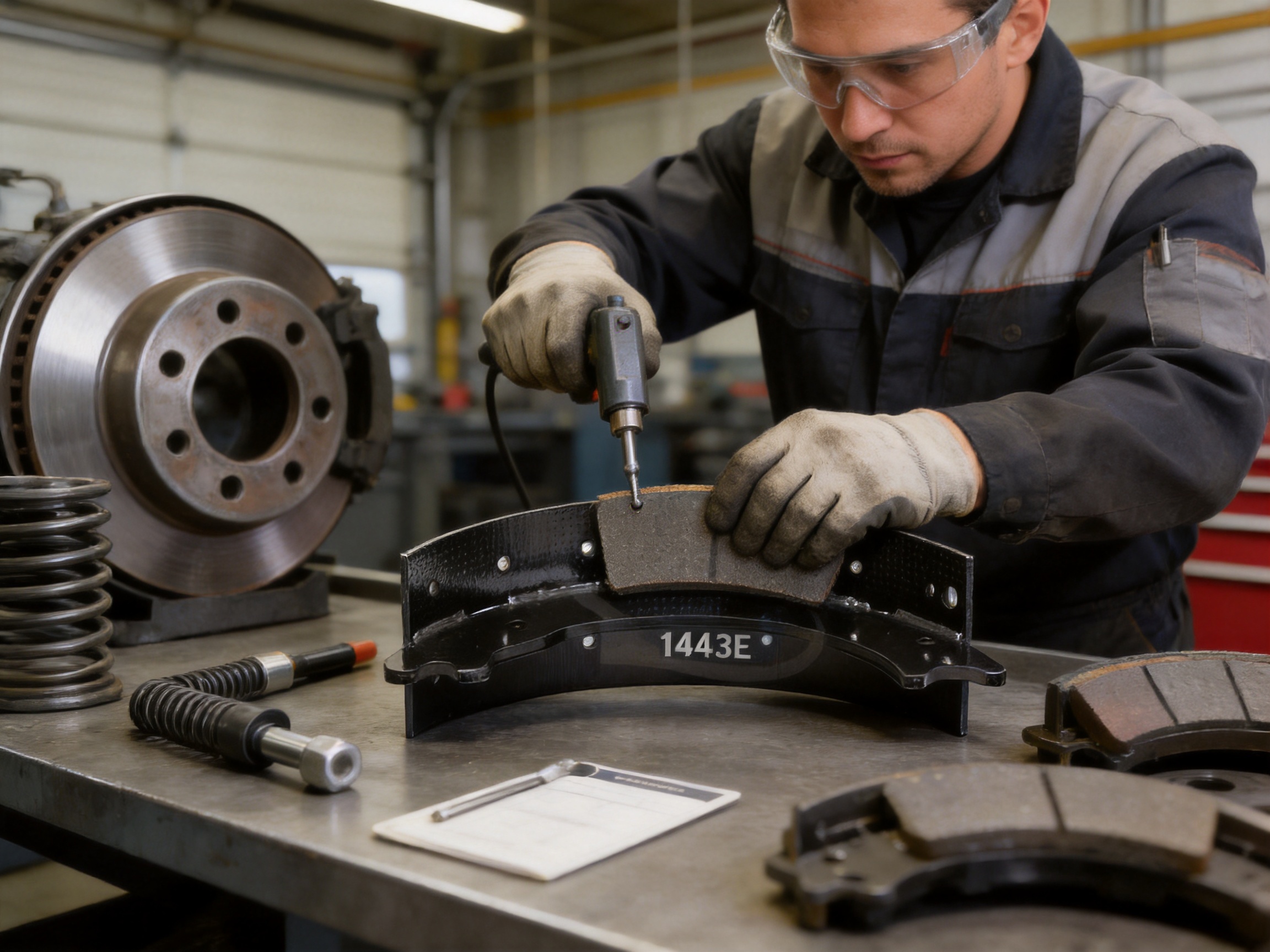
Heavy-duty braking systems depend on more than friction material alone. Every braking event transfers force through a group of components that must work together accurately, consistently, and safely. The brake shoe is one of the most important structural elements in that system because it supports the lining, transfers mechanical or pneumatic actuation force, and helps convert that force into controlled contact with the brake drum. If the shoe is poorly formed, dimensionally inconsistent, or unable to withstand repeated loading, even a high-quality lining may fail to deliver dependable performance.
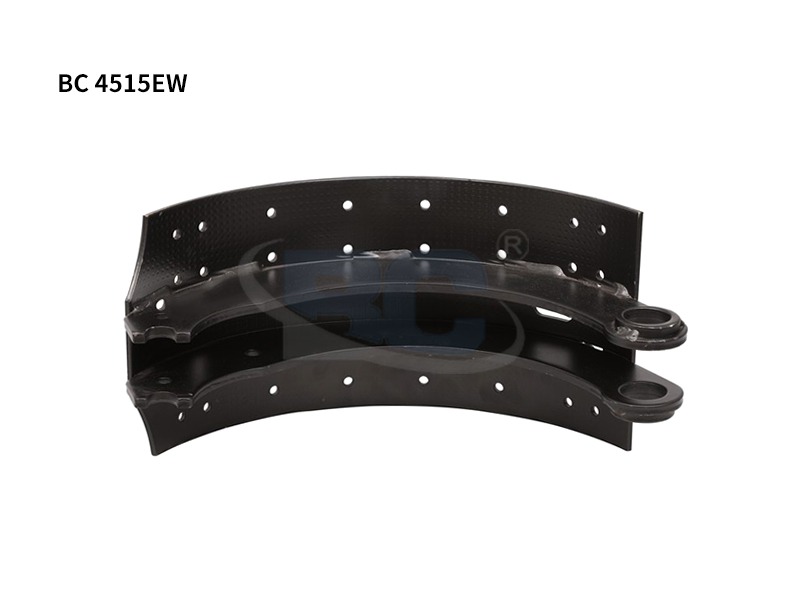
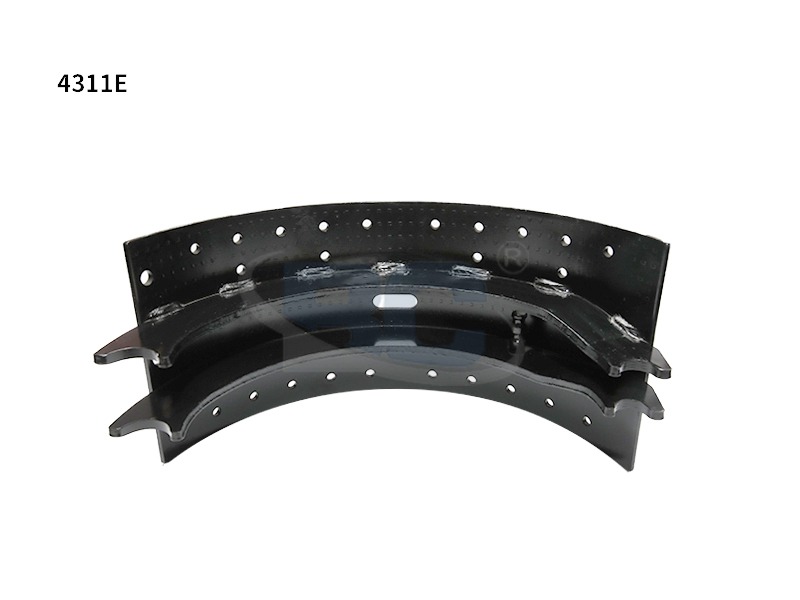
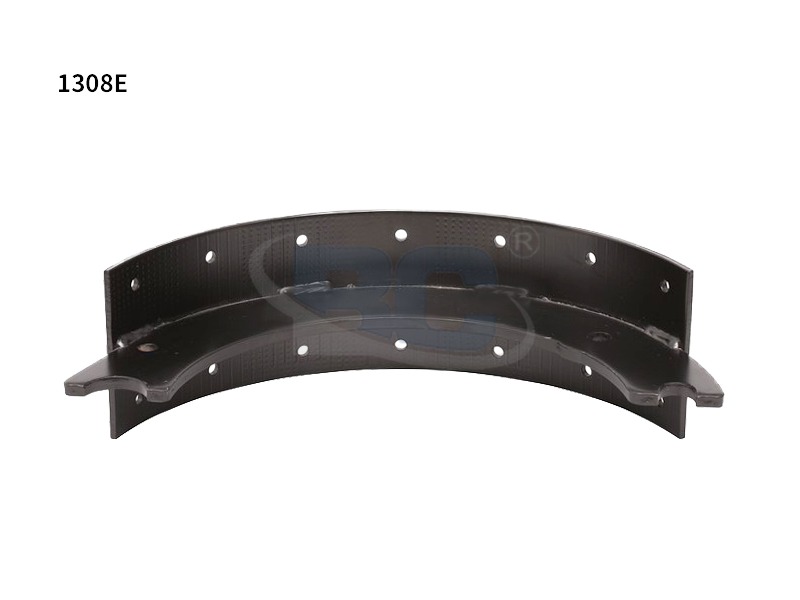
The 1443E Brake Shoe is a steel brake shoe developed for heavy-duty vehicle applications. Its listed product size is 15 inches by 4 inches, and it is designed with 14 rivet holes. These basic specifications are important because the shoe must match the intended drum, lining, hardware, and braking assembly. A correct fit supports stable lining installation, even load distribution, and reliable service performance.
Manufactured by Zhejiang Bangchi Auto Parts Co., Ltd., the 1443E is positioned within a broad range of commercial vehicle brake components that includes steel brake shoes, casted brake shoes, brake linings, lined brake shoes, brake shoe repair kits, and lined brake shoe kits. The company also states that its OEM brake parts follow the global FMSI numbering system, supporting systematic identification and compatibility management for replacement and original-equipment-oriented applications.
This article examines the construction, application value, manufacturing considerations, quality advantages, maintenance requirements, and purchasing factors associated with the 1443E Steel Brake Shoe. It also explains why a carefully produced steel shoe can be a strong alternative to less consistent aftermarket products and how a professional manufacturer can improve reliability through controlled processes rather than relying only on low cost.
Product Overview
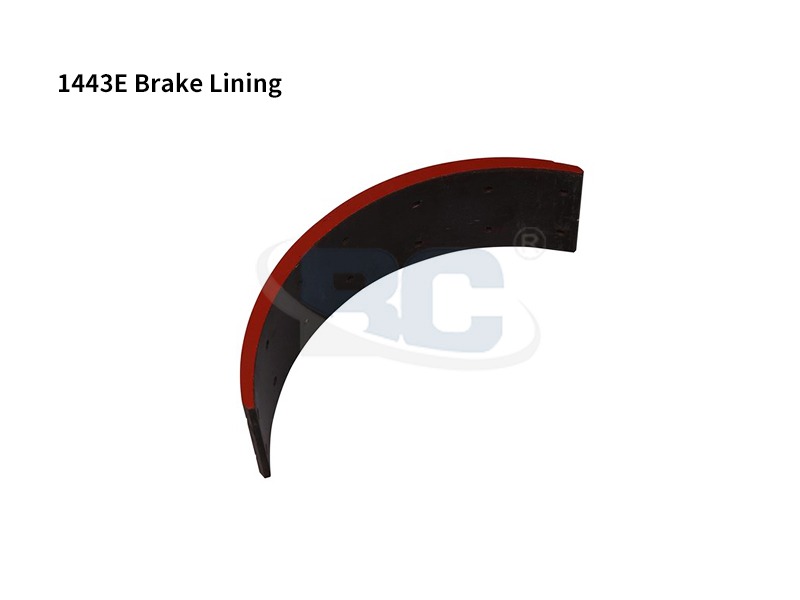
The 1443E Brake Shoe belongs to the steel brake shoe category. Unlike a complete lined brake shoe, the steel shoe is the structural foundation onto which the friction lining is attached. This configuration gives fleet operators, repair workshops, distributors, and brake specialists greater flexibility. They may select an appropriate lining compound for the operating environment instead of replacing the complete assembly every time the friction material reaches its wear limit.
The available product information identifies the part number as 1443E and specifies a product size of 15 inches by 4 inches. It also identifies 14 rivet holes. These details provide an initial reference for application matching, but they should always be compared with the vehicle manufacturer’s specifications, the original component, the brake drum dimensions, and the applicable lining pattern before installation.
| Item | Specification | Application Significance |
|---|---|---|
| Product | 1443E Brake Shoe | Provides the structural base for a heavy-duty drum brake lining |
| Product category | Steel Brake Shoe | Suitable for lining installation and service replacement programs |
| Listed size | 15 inches by 4 inches | Used as a primary dimensional reference during application matching |
| Rivet holes | 14 | Supports mechanical attachment of a compatible brake lining |
| Identification system | 1443E part number | Helps organize purchasing, inventory, and replacement records |
| Related product range | Linings, lined shoes, repair kits, and casted shoes | Allows customers to source related brake service components from one product category |
The product is especially relevant to maintenance programs in which brake shoes are inspected, relined, and returned to service. In these programs, the steel shoe must remain dimensionally sound and free from structural damage. A shoe with correct geometry makes lining installation more predictable and reduces the risk of uneven contact, premature wear, or noise caused by poor alignment.
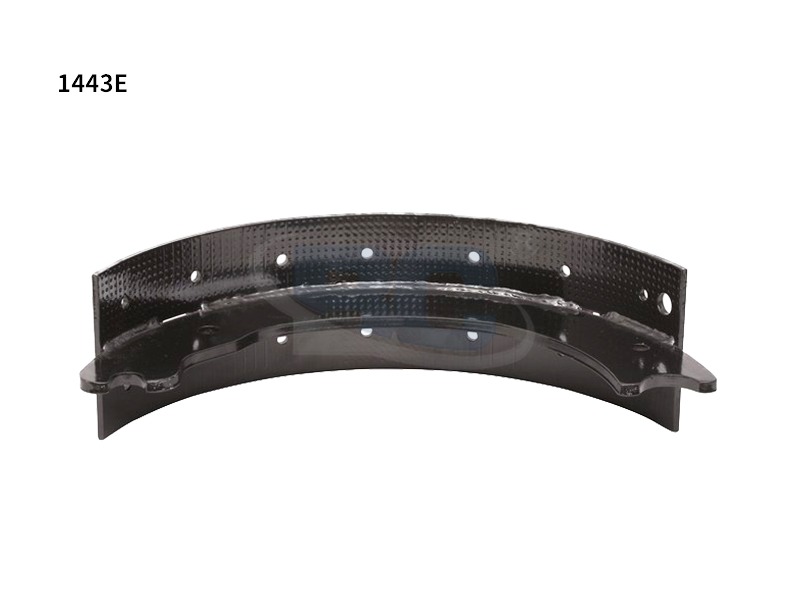
1443E Brake Shoe
Why the Brake Shoe Matters in a Heavy-Duty System
In a drum brake assembly, braking force is transferred through several stages. An actuator moves the brake mechanism, the mechanism pushes the shoe outward, the lining contacts the inner surface of the drum, and friction converts vehicle motion into heat. The steel shoe sits between the actuation hardware and the lining. It must therefore withstand bending forces, localized pressure, vibration, and repeated thermal cycles.
The shoe also influences how evenly the lining contacts the drum. A properly formed shoe presents a stable support surface for the lining. This helps the lining wear progressively instead of developing isolated high spots. Even contact can improve braking consistency and help reduce the possibility of irregular drum wear.
Heavy trucks, trailers, buses, and other commercial vehicles often operate under more demanding conditions than passenger cars. They may carry high loads, travel long distances, descend steep grades, and encounter dust, water, road salt, and fluctuating temperatures. Brake components used in these vehicles must be designed and manufactured with the expectation of repeated service stress.
The 1443E steel brake shoe is therefore not simply a curved piece of metal. It is a load-bearing component that affects the behavior of the complete braking system. Its shape, thickness, hole layout, edge condition, surface condition, and material consistency all contribute to final performance.
Key Advantages of the 1443E Steel Brake Shoe
Stable Structural Support
A principal advantage of a steel brake shoe is its ability to provide a rigid foundation for the friction lining. Steel offers a useful combination of strength, formability, and resistance to repeated mechanical loading. When the shoe is correctly manufactured, it can transfer actuation force across the lining support area while maintaining the intended shape.
Compared with poorly made alternatives, a precision-formed steel shoe is less likely to create installation difficulties or uneven support. Consistent geometry is particularly important when the shoe is used with a replacement lining. If the shoe does not match the expected profile, the lining may require excessive adjustment, the rivet holes may not align, or the final contact pattern may be unsatisfactory.
Practical 14-Hole Lining Attachment
The 14-rivet-hole configuration is a defining feature of the 1443E. Rivet holes must be positioned accurately because the lining depends on them for secure mechanical attachment. Hole spacing affects how the lining is held along its length and how clamping forces are distributed.
Accurately produced holes also help reduce installation variation. In a professional relining operation, technicians can place a compatible lining against the shoe, confirm the pattern, and complete the riveting process with less correction. This can improve workflow efficiency while supporting a more consistent final assembly.
The hole count alone does not establish compatibility with every 15-inch by 4-inch lining. Rivet diameter, spacing, countersink requirements, lining curvature, and application-specific dimensions must also be checked. Nevertheless, the 14-hole layout gives distributors and service professionals a useful starting point for identification.
Flexibility in Lining Selection
A bare steel shoe allows the end user to select the friction material according to the operating environment. A long-haul truck, refuse vehicle, transit bus, trailer, and off-road vehicle may have different braking demands. They may require different friction characteristics, temperature resistance, noise behavior, or wear properties.
By purchasing a steel shoe separately, a brake specialist can combine the structural component with a suitable lining. This is valuable for repair shops that maintain several friction-material options. It can also support fleet maintenance programs that use standardized lining compounds across a particular vehicle group.
Suitability for Repair and Rebuilding Programs
Many commercial vehicle maintenance operations use rebuilding or relining procedures to control operating costs. When the existing shoe is still structurally serviceable, fitting a new lining may be a practical alternative to replacing the entire assembly. A replacement steel shoe is also useful when the original shoe has suffered corrosion, distortion, cracked areas, worn rivet holes, or other damage.
The availability of a dedicated steel shoe helps repair businesses maintain a broader range of service options. Instead of depending only on pre-lined assemblies, they can manage components independently and select the repair method that best suits the customer’s condition, budget, and downtime requirements.
Clear Part Identification
The 1443E part number provides a direct reference for procurement and inventory control. Clear identification reduces confusion between similar-looking brake shoes that may differ in hole pattern, width, offset, or drum application. For distributors, a recognized part number also supports catalog organization and quotation accuracy.
Part identification becomes especially valuable when fleets manage large numbers of vehicles. Maintenance records can associate the 1443E with inspection results, lining choices, installation dates, and replacement intervals. This creates a more organized approach to brake component management.
Manufacturing Strengths and Process Control
The quality of a steel brake shoe is determined by the consistency of the manufacturing process. A product can have the correct general dimensions and still perform poorly if forming, hole punching, finishing, or inspection are uncontrolled. A capable brake parts manufacturer therefore needs process discipline from raw material selection through final packing.
Material Preparation
The manufacturing process begins with appropriate steel material. The material must be suitable for forming and capable of tolerating the loads expected in a heavy-duty brake assembly. Consistent thickness and predictable mechanical behavior support stable forming results.
Material preparation may include incoming inspection, identification of coil or sheet batches, surface checks, and dimensional verification. These controls help prevent material variation from becoming a hidden cause of cracking, distortion, or inconsistent spring-back during production.
For an OEM-oriented and replacement-oriented supplier, material traceability is a valuable manufacturing strength. When production records connect finished components to material batches and process dates, quality personnel can investigate issues more efficiently and improve corrective action when necessary.
Controlled Forming
The curved profile of a brake shoe must correspond closely to the intended brake drum and lining geometry. Forming equipment and tooling should be configured to produce the required contour repeatedly. Excessive variation in curvature can affect how the lining sits on the shoe and how the assembly contacts the drum.
Controlled forming also reduces the need for manual correction. Manual correction can be useful in limited circumstances, but reliance on uncontrolled adjustment may introduce inconsistent angles, local deformation, or surface marks. Repeatable tooling provides a stronger foundation for production stability.
During forming, manufacturers should monitor spring-back and dimensional recovery. Steel does not always remain exactly in the shape imposed by a forming tool. The process must account for material behavior so that the finished shoe reaches the required profile after release.
Accurate Hole Production
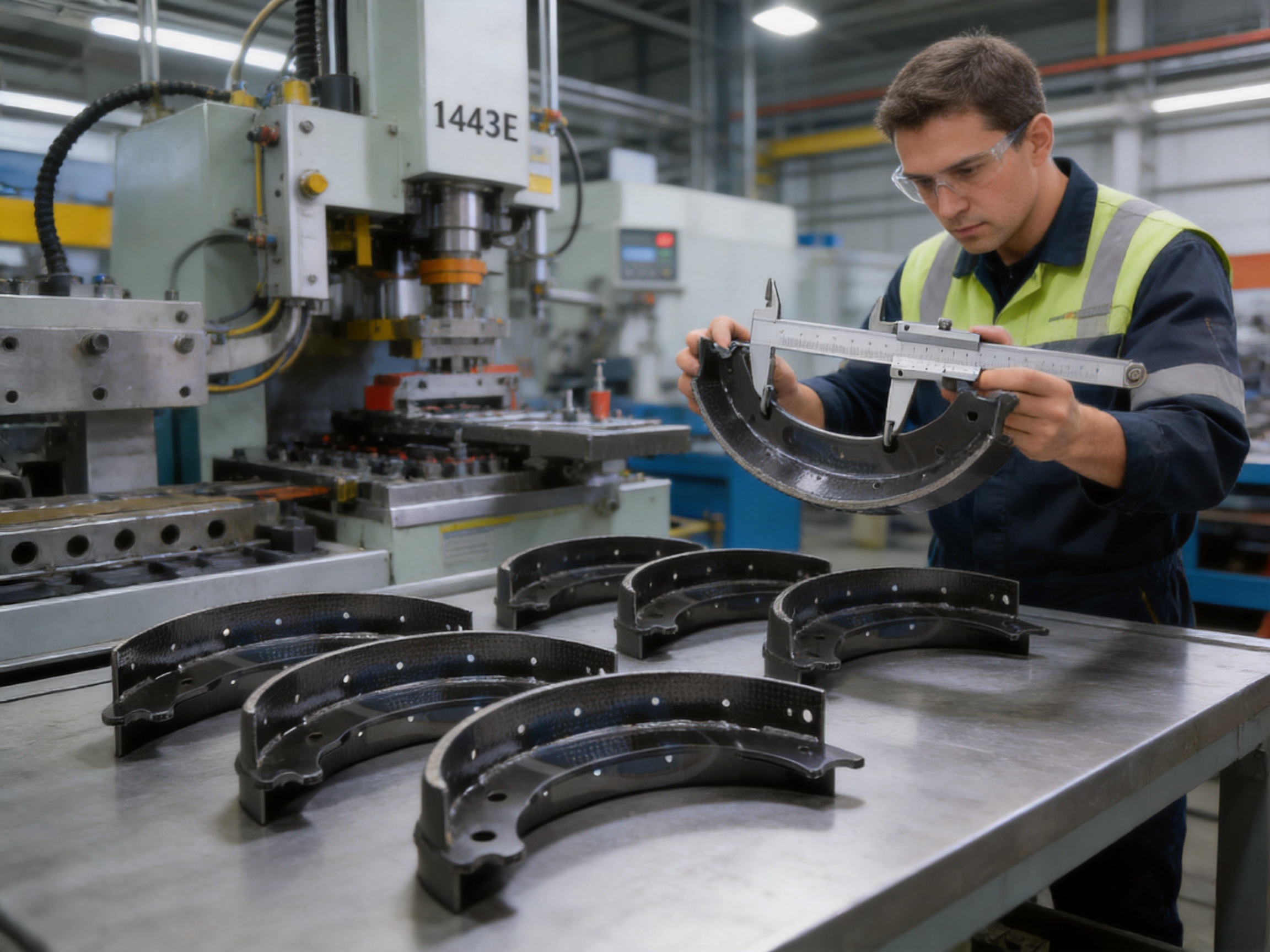
The 14 rivet holes are a critical manufacturing feature. Hole location, diameter, spacing, and edge quality should be controlled through suitable punching, drilling, or machining processes. Burrs and sharp edges can interfere with lining installation or create localized stress concentrations.
Accurate hole production improves the relationship between the shoe and the lining. It also supports efficient riveting because the rivets can enter the holes without forcing the lining out of position. In a high-volume manufacturing environment, dedicated fixtures and repeatable tooling can help maintain hole-pattern consistency from one production batch to another.
Quality inspection may include dimensional gauges, visual checks, sampling plans, and comparison with approved drawings or application data. These checks are important because a small hole-position error can become more significant when multiplied across the entire lining assembly.
Edge Treatment and Surface Finishing
Edges should be managed carefully after forming and hole production. Uncontrolled burrs may complicate handling, damage adjacent components, or interfere with the lining. Proper edge treatment can improve assembly safety and product appearance while reducing the possibility of contact-related problems.
Surface preparation is also important. Depending on the specified manufacturing route, the shoe may receive cleaning, protective treatment, coating, or another form of corrosion management. The selected finish should be compatible with storage, transportation, and service conditions. Customers should confirm the exact finish and corrosion-protection specification when it is important to their application.
Assembly Compatibility Checks
A professional brake component manufacturer should evaluate the shoe not only as an isolated metal part but also as part of a complete brake service process. This means checking the relationship between the shoe, lining, rivets, actuating hardware, and brake drum application.
Compatibility checks can include trial fitting with the designated lining, verification of rivet seating, review of the shoe profile, and examination of the finished assembly. These activities help identify problems that may not be visible during individual component inspection.
Advantages Over Less Consistent Competitor Products
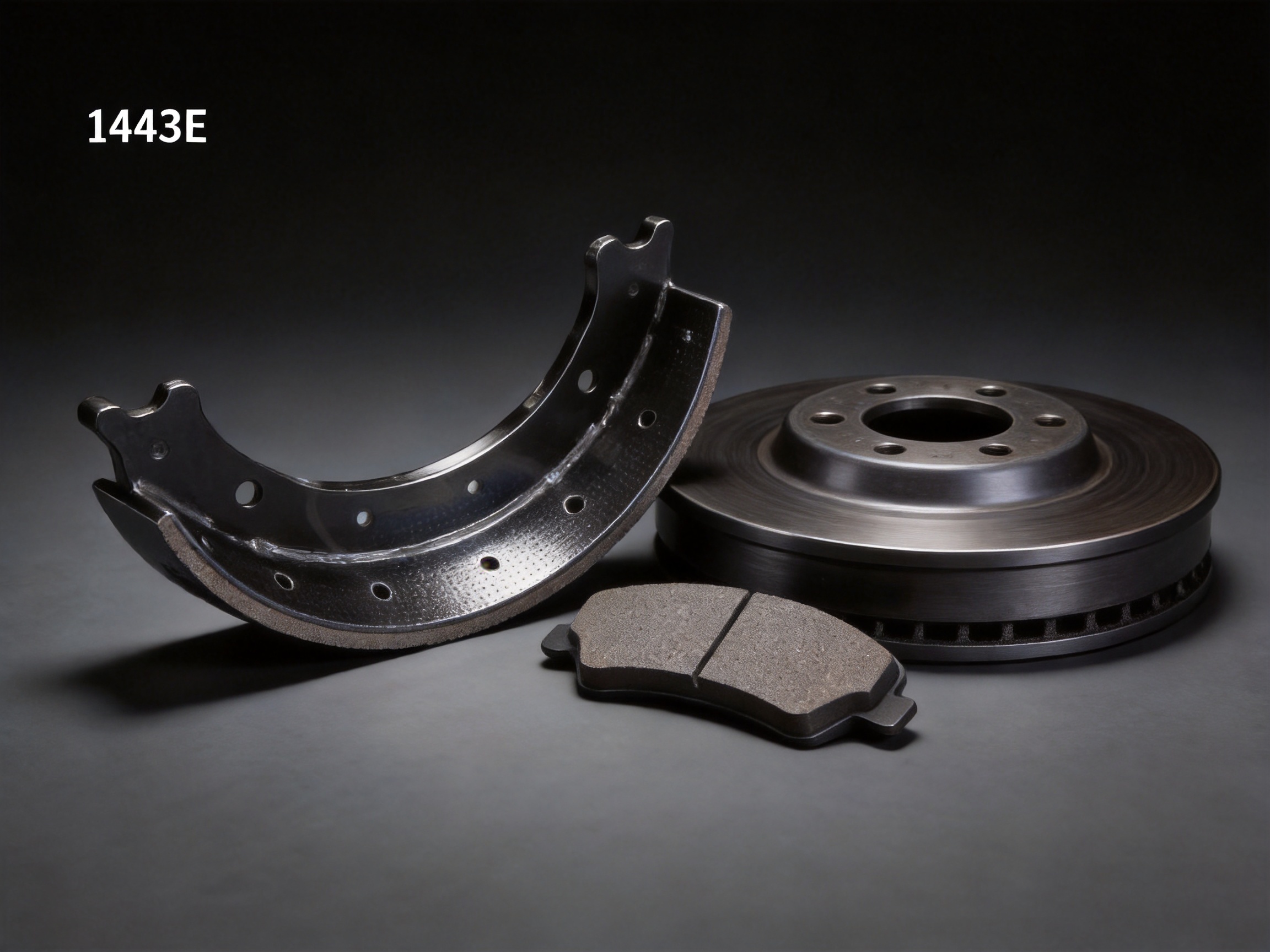
Competition in the brake parts market is often based on price, availability, and apparent similarity. Many brake shoes look nearly identical when viewed in a catalog photograph. However, differences in material consistency, tooling accuracy, process control, inspection, and technical support can have a major influence on service results.
More Predictable Fit
A well-controlled 1443E shoe can provide a more predictable fit than a low-cost component produced with inconsistent tooling. Predictable fit reduces the need for repeated trial assembly and helps technicians identify the correct lining more quickly.
When a shoe is dimensionally stable, the repair shop can use established work instructions with greater confidence. This may reduce installation time and help prevent mistakes caused by forcing mismatched parts into position.
Better Support for Lining Performance
The lining generates friction, but the shoe supports the lining. A shoe that is properly formed and adequately rigid helps the lining make controlled contact with the drum. By contrast, a distorted or poorly supported shoe may contribute to uneven contact, localized heat, and irregular wear.
The 1443E’s steel construction and 14-hole attachment layout are intended to provide a practical base for a compatible lining. The final result still depends on correct lining selection and installation, but the shoe gives the service provider a stable platform from which to achieve that result.
Lower Risk of Installation Disruption
Commercial vehicle repair time can be expensive. A part that causes alignment problems, hole mismatch, or repeated adjustment can increase labor cost and vehicle downtime. A precisely made replacement shoe helps reduce these avoidable interruptions.
For fleet operators, the value of a brake shoe should therefore be judged by more than its purchase price. A slightly cheaper component may become more expensive if it causes installation delays, premature relining, accelerated drum wear, or an early return to the workshop.
Stronger Inventory Organization
Part-number discipline is another advantage of a professional product range. The 1443E designation allows customers to separate this shoe from other applications and maintain clearer inventory records. Manufacturers that offer steel shoes, linings, lined shoes, and repair kits can also support more complete purchasing strategies.
This product-family approach helps distributors reduce sourcing complexity. Instead of purchasing unrelated components from many suppliers, they may be able to coordinate structural shoes and related brake service products through one established product category.
OEM-Oriented Identification
The manufacturer states that its OEM brake parts follow the global FMSI numbering system. A structured numbering approach can help bridge the information gap between original equipment references, replacement catalogs, and workshop records. It does not replace application verification, but it gives buyers a more organized method for comparing parts.
Manufacturers that understand numbering systems and cross-reference requirements are generally better positioned to serve international distributors and commercial vehicle repair markets. This is especially useful when customers purchase parts across different regions and need consistent technical identification.
Application and Compatibility Considerations
The 1443E should be selected through a complete application check rather than by size alone. The listed size of 15 inches by 4 inches is an important reference, but brake shoe compatibility may also depend on the drum diameter, shoe geometry, offset, anchor arrangement, roller or cam interface, lining length, lining thickness, rivet specifications, and vehicle axle configuration.
Before ordering, customers should compare the part number with the vehicle or axle documentation. They should also compare the original shoe with the proposed replacement. Measurements should be taken carefully and recorded in a consistent unit system.
The notation supplied for the product size is “15 inches by 4 inches.” Because dimensional formatting can vary between catalogs, drawings, and markets, buyers should confirm whether the stated width, length, radius, and other application dimensions correspond exactly to their required reference. A manufacturer or authorized technical representative can assist when the application is uncertain.
| Verification Area | Questions to Confirm |
|---|---|
| Part number | Does the existing component or service record identify the application as 1443E? |
| Overall dimensions | Do the shoe length, width, profile, and curvature match the brake assembly? |
| Rivet pattern | Does the compatible lining use 14 holes with matching spacing and rivet requirements? |
| Drum relationship | Is the shoe intended for the correct drum size and internal braking surface? |
| Hardware interface | Do the anchor, roller, cam, spring, and adjuster connections match? |
| Service condition | Is a new shoe required because the original is cracked, distorted, corroded, or worn? |
| Installation procedure | Are the correct lining, rivets, tools, and torque or assembly practices available? |
If the shoe is being used in a relining program, the lining manufacturer’s instructions should be followed. The lining must be compatible with the shoe curvature and hole pattern. Rivets must be appropriate for the lining and installation equipment. After assembly, the finished shoe should be checked for secure attachment, correct arc, and absence of interference.
Quality Assurance for Heavy-Duty Brake Shoes
Quality assurance should cover both measurable dimensions and functional suitability. Dimensional inspection can verify the shoe’s length, width, profile, hole count, hole position, and other drawing requirements. Visual inspection can identify cracks, excessive burrs, deformation, surface damage, and unacceptable corrosion.
Process inspection is equally important. If a final inspection discovers that a shoe is out of specification, the manufacturer should be able to determine where the variation originated. Monitoring forming, hole production, finishing, and packing processes helps prevent repeated defects rather than merely sorting them afterward.
A mature quality system also includes documentation. Production batches, inspection results, tooling information, and material records can provide useful evidence for customers and internal improvement. Documentation is particularly valuable for international trade, private-label programs, and long-term fleet supply agreements.
Customers may wish to request available technical documents such as product drawings, inspection standards, material information, packaging specifications, and application cross-references. The exact documents available will depend on the supply agreement and product program.
Manufacturing Technology and Production Efficiency
Advanced manufacturing does not necessarily mean that every process must be fully automated. In brake component production, the best results often come from combining suitable machinery, reliable tooling, trained operators, and disciplined inspection. Automation can improve repeatability, while skilled personnel remain important for setup, troubleshooting, and process evaluation.
Production efficiency is valuable because it supports both cost control and supply stability. A manufacturer that organizes material flow, tooling management, process sequencing, and inspection effectively can produce consistent parts without unnecessary delay. This benefits distributors that need dependable replenishment and fleet operators that cannot afford prolonged stockouts.
Tooling maintenance is a further indicator of manufacturing strength. Forming dies, punching tools, gauges, and fixtures gradually wear during production. If they are not inspected and maintained, dimensions may drift. Preventive tooling management helps maintain the intended 1443E geometry over repeated production cycles.
Manufacturing flexibility also matters. A supplier serving a broad brake parts range must be able to manage different shoe patterns, lining configurations, and repair kit requirements. An organized production system can support both regular volume orders and specialized customer requirements while preserving identification accuracy.
Installation and Service Guidance
Installation should be performed by trained brake technicians using the correct tools and procedures. The vehicle must be safely supported, and the brake system should be made secure before work begins. Brake dust should be handled according to appropriate workshop practices, and technicians should avoid unsafe cleaning methods that could disperse contaminants into the air.
The original shoe and related hardware should be inspected before installation. If the anchor, cam, rollers, springs, adjuster, or other associated parts are worn or damaged, installing a new shoe alone may not restore proper braking performance. The brake drum should also be evaluated for cracks, excessive wear, scoring, heat damage, and out-of-round conditions.
When relining the 1443E, the lining should sit correctly against the shoe without gaps or forced distortion. The rivet holes should align naturally. Rivets should be installed using suitable equipment so that they secure the lining without cracking it or creating an uneven surface.
After assembly, the technician should confirm that the lining is firmly attached, the shoe profile is correct, and all moving interfaces operate as intended. The brake should be adjusted according to the applicable vehicle procedure. A controlled test should follow installation, with attention to braking response, noise, pulling, abnormal heat, and other signs of incorrect assembly.
Brake bedding or burnishing procedures should follow the lining supplier’s instructions and the vehicle manufacturer’s service recommendations. The bedding process allows the lining and drum to develop an appropriate contact relationship. Severe braking immediately after installation may produce excessive heat and should be avoided unless required by a controlled testing procedure.
Maintenance Value for Fleets and Workshops
Fleet maintenance departments can benefit from a standardized brake shoe strategy. When the correct 1443E application is documented, technicians can use consistent inspection and replacement practices. This helps reduce variation between maintenance locations and supports more reliable parts forecasting.
Inspection intervals should reflect vehicle duty, load, terrain, speed, climate, and braking frequency. Vehicles operating in mountainous areas or carrying heavy loads may place greater demands on their braking systems than vehicles operating under lighter conditions. The shoe, lining, drum, and actuation hardware should be inspected as a system.
Records should include the installation date, vehicle identification, brake axle position, lining specification, drum condition, and inspection findings. Tracking this information can help fleets identify recurring issues such as uneven wear, accelerated lining loss, contamination, adjustment problems, or repeated overheating.
A steel shoe that remains serviceable may be eligible for relining, but it should not be reused automatically. Shoes with cracks, severe corrosion, distortion, damaged rivet holes, or unacceptable wear should be removed from service. Rebuilding decisions should be based on established inspection criteria rather than appearance alone.
Environmental and Operating Factors
Brake shoes operate in a demanding environment. Road moisture can contribute to corrosion, while dirt and debris can affect moving components. High temperatures may arise during repeated braking, long descents, emergency stops, or heavy-load operation. Low temperatures, water exposure, and road salt can also influence service conditions.
The steel shoe is only one part of the system, but its condition can reflect the operating environment. Corrosion around edges or holes may affect lining attachment. Contamination may interfere with friction performance. Heat-related distortion may alter the shoe profile or cause unusual lining contact.
Customers working in severe environments should discuss protective finish, packaging, storage, and inspection requirements with the supplier. The product’s basic dimensions remain important, but environmental suitability may require additional controls throughout the supply chain and service life.
Supply, Packaging, and Customer Support
Commercial vehicle parts are often transported across borders and stored for extended periods. Packaging should protect the shoe from impact, deformation, moisture, and identification loss. Part numbers should remain visible throughout storage and distribution, and packaging quantities should support the customer’s inventory system.
For international buyers, communication quality is an important part of supplier performance. A manufacturer should be able to provide clear information about product identification, available specifications, order quantities, production schedules, and shipment preparation. Technical questions should be addressed through drawings, measurements, photographs, or application records whenever uncertainty exists.
Zhejiang Bangchi Auto Parts Co., Ltd. operates from Haining, Zhejiang, China, and supplies a product range covering several heavy-duty brake component categories. Its stated focus on OEM brake parts and FMSI-based numbering indicates an orientation toward structured product identification and international supply requirements.
For purchasing departments, the most useful supplier relationship is one that combines product availability with technical consistency. A dependable source can help reduce emergency purchases, simplify catalog management, and support repeat orders with fewer application questions.
Choosing Between a Bare Shoe and a Complete Lined Shoe
The 1443E is a bare steel brake shoe, so the customer must install a compatible lining or purchase a lining separately. This format is well suited to repair shops, relining specialists, and fleets that want control over friction-material selection. It can also be economical when the workshop already has suitable riveting equipment and trained personnel.
A complete lined brake shoe may be more convenient for users who need rapid replacement and do not perform relining in-house. The best option depends on labor capability, equipment, downtime requirements, lining preferences, and purchasing volume.
The same manufacturer’s broader product range includes lined brake shoes, brake linings, repair kits, and lined brake shoe kits. This range can help customers select the supply format that best fits their service model. A workshop may purchase bare shoes and linings, while a fleet with limited workshop capacity may prefer a ready-to-install assembly.
| Purchase Format | Main Benefit | Best Suited To |
|---|---|---|
| Bare steel brake shoe | Allows flexible lining selection and rebuilding | Relining shops, fleets with technical workshops, brake specialists |
| Brake lining | Supports replacement of worn friction material on a serviceable shoe | Repair operations with reusable shoe cores |
| Lined brake shoe | Reduces in-house assembly work | Fast replacement programs and general maintenance facilities |
| Brake shoe repair kit | Provides selected supporting service parts | Workshops performing component-level repairs |
| Lined brake shoe kit | Combines an assembled shoe with related service requirements | Fleet and distributor programs seeking simplified procurement |
Purchasing Recommendations
Buyers should begin with application accuracy. Confirm the 1443E part number, listed size, 14-hole pattern, and all relevant vehicle or axle dimensions. If the part is replacing an existing shoe, compare the old component with the supplier’s technical information rather than relying only on visual similarity.
Second, clarify whether the order is for bare shoes, linings, complete lined shoes, or a repair kit. Different formats require different installation resources and may have different packaging or minimum order considerations.
Third, request information about inspection and quality control. Useful questions may concern material consistency, dimensional checks, hole-pattern verification, corrosion protection, packaging, batch identification, and technical documentation.
Fourth, consider supply continuity. A brake component is more valuable when it can be reordered consistently with the same application definition and quality expectations. Customers should discuss forecast volumes, production lead time, shipment planning, and replacement-part support with the supplier.
Finally, evaluate the total operating cost. Purchase price is only one factor. Labor time, installation reliability, vehicle downtime, lining compatibility, inventory organization, and service life all affect the final value of the 1443E brake shoe.
Frequently Asked Questions
What is the 1443E Brake Shoe?
The 1443E is a steel brake shoe for heavy-duty drum brake applications. It serves as the structural foundation for attaching a compatible brake lining and transferring braking force through the drum brake assembly.
What are the listed dimensions?
The supplied product information lists the size as 15 inches by 4 inches. Buyers should confirm the complete application dimensions, including curvature, offset, and related interfaces, before ordering.
How many rivet holes does it have?
The 1443E is listed with 14 rivet holes. The compatible lining must have a matching hole pattern, and rivet specifications should be confirmed before assembly.
Is the 1443E supplied with a lining?
The listed product is categorized as a steel brake shoe, which generally refers to the unlined structural shoe. Customers should confirm whether their quotation is for a bare shoe or a complete lined assembly.
Can the shoe be relined?
Yes, a steel brake shoe is commonly used in relining operations when the shoe is structurally serviceable and a compatible lining is available. It must be inspected for cracks, distortion, corrosion, damaged holes, and other conditions before reuse.
Does the 14-hole pattern guarantee compatibility?
No. Hole count is only one compatibility factor. Lining length, hole spacing, rivet size, shoe curvature, drum dimensions, offset, and vehicle application must also match.
What advantages does steel provide?
Steel provides a strong and formable foundation for the lining. It can support repeated actuation and friction loads when properly designed, formed, inspected, and matched to the intended application.
How does the 1443E compare with low-cost alternatives?
The primary potential advantages are predictable geometry, organized part identification, compatible lining attachment, and manufacturing process control. Customers should evaluate actual drawings, inspection information, and application performance rather than comparing price alone.
Who manufactures the 1443E?
The supplied information identifies Zhejiang Bangchi Auto Parts Co., Ltd. as the manufacturer. The company supplies heavy-duty brake components, including steel brake shoes, casted brake shoes, linings, lined shoes, and repair kits.
Does the manufacturer support OEM-style identification?
The company states that it provides OEM brake parts following the global FMSI numbering system. Buyers should still confirm specific cross-references and application details for each order.
What should be checked before installation?
Technicians should check the shoe profile, dimensions, rivet-hole alignment, compatible lining, drum condition, anchor and actuating hardware, springs, adjusters, and overall brake-system condition. Installation should follow applicable service procedures.
Can the 1443E be used on any heavy truck?
No. Heavy trucks use many different brake configurations. The 1443E must be matched to the correct vehicle, axle, drum, lining, and hardware specifications.
Why is manufacturing consistency important?
Consistent forming and hole placement help the shoe fit the lining and brake assembly more predictably. This can reduce installation difficulty and support more even lining contact, provided that all other components are correct and properly maintained.
Conclusion
The 1443E Steel Brake Shoe is a practical structural component for heavy-duty drum brake service. Its listed 15-inch by 4-inch size, 14-rivet-hole configuration, and dedicated part-number identification provide useful starting points for application matching. As a bare steel shoe, it gives repair specialists and fleet workshops flexibility in selecting and installing the appropriate lining.
Its value depends on more than the basic specification. A reliable brake shoe should be produced through controlled material preparation, forming, hole production, finishing, inspection, and packaging. These manufacturing disciplines help create the predictable geometry and attachment support needed for a professional relining or replacement operation.
The product also benefits from a broader heavy-duty brake component range that includes linings, lined shoes, repair kits, and lined shoe kits. This allows customers to choose between component-level rebuilding and more complete replacement solutions. The manufacturer’s stated use of the global FMSI numbering system further supports organized identification for OEM-oriented and international replacement markets.
For the best result, buyers should verify every application detail, including dimensions, hole spacing, lining compatibility, drum condition, and hardware interfaces. When correctly selected, properly installed, and maintained as part of a complete brake system, the 1443E can provide a solid and serviceable foundation for demanding commercial vehicle braking applications.
References
1. Product information supplied for the 1443E Brake Shoe, including part number, listed size, and 14-rivet-hole configuration.
2. Zhejiang Bangchi Auto Parts Co., Ltd. product category information covering steel brake shoes, casted brake shoes, brake linings, lined brake shoes, brake shoe repair kits, and lined brake shoe kits.
3. Manufacturer-provided company information concerning OEM brake parts and the use of the global FMSI numbering system.
4. General heavy-duty drum brake service principles concerning brake shoes, linings, rivets, drums, actuation hardware, inspection, and maintenance.
5. General manufacturing and quality-control practices for formed steel automotive brake components.