 English
 简体中文
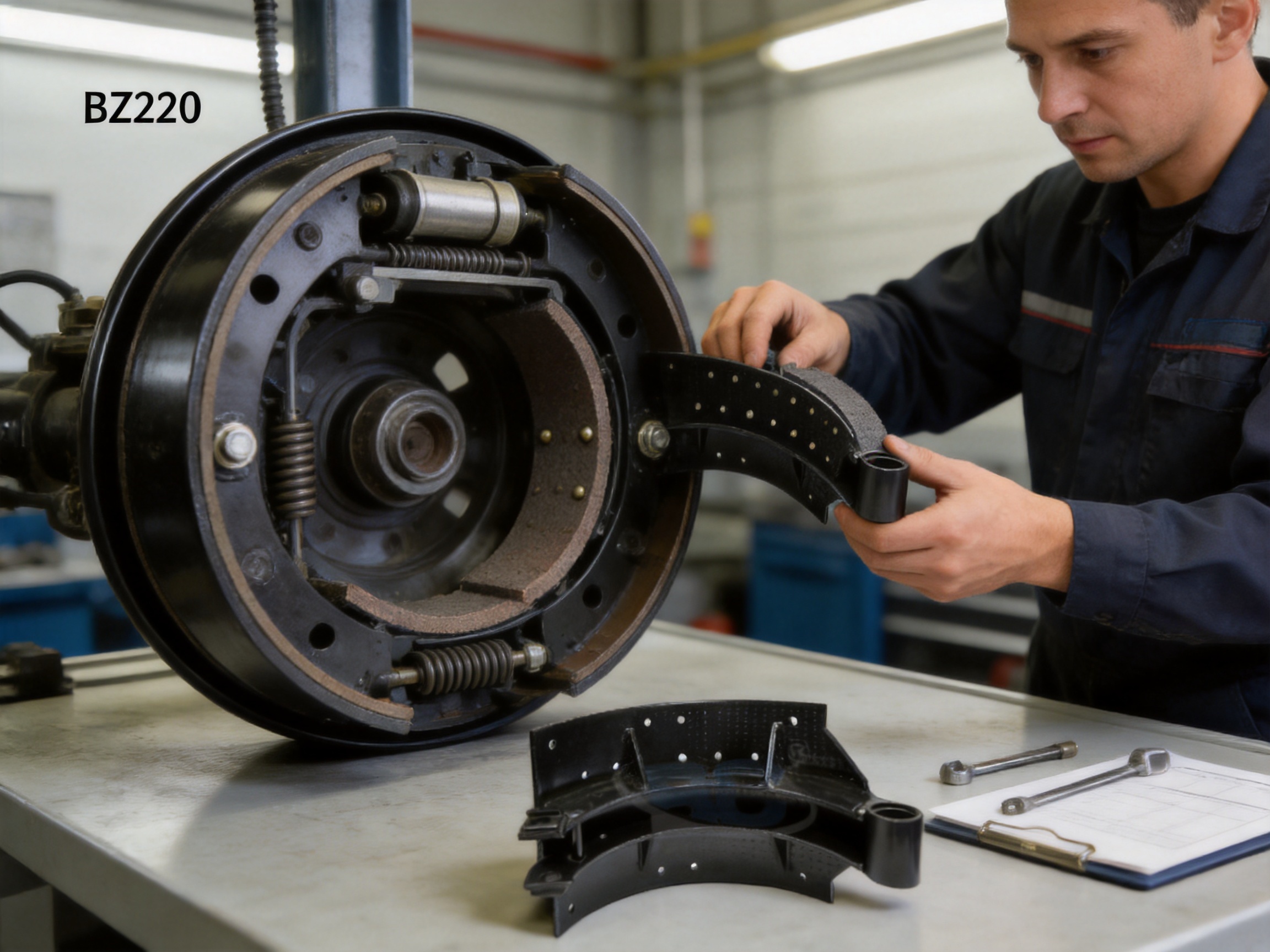
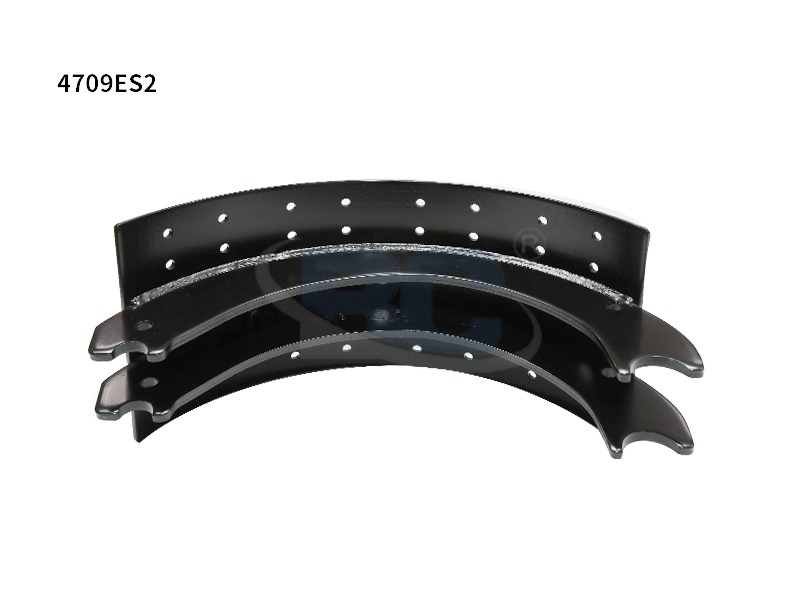
Heavy-duty commercial vehicles depend on brake components that can withstand substantial loads, repeated braking cycles, vibration, road contamination, and demanding operating environments. A steel brake shoe is one of the essential structural parts within a drum brake assembly. It supports the brake lining, transfers braking force to the drum, and contributes directly to the stability, service life, and safety of the complete braking system.
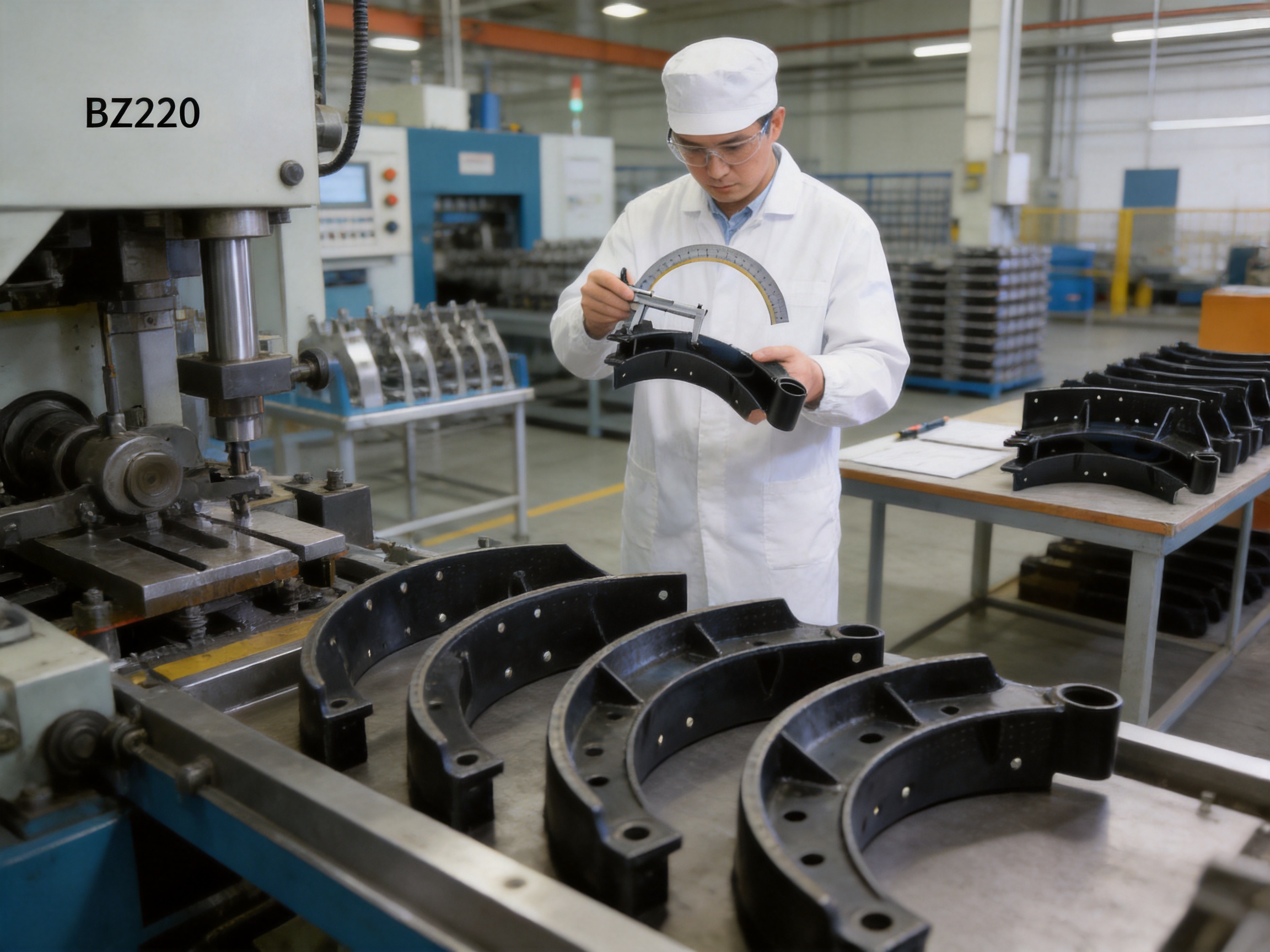
The A6204200519 brake shoe, identified by product number BZ220, is designed for Mercedes-Benz applications or customized vehicle requirements. The supplied product specification lists a size of 410 by 220 millimeters, with 16 rivet holes and the original equipment reference A 620 420 0519. These specifications make the component suitable for heavy-duty brake repair, replacement, fleet maintenance, and customized brake system programs.
Manufactured by Zhejiang Bangchi Auto Parts Co., Ltd., the product belongs to a range that includes steel brake shoes, casted brake shoes, brake linings, lined brake shoes, brake shoe repair kits, and lined brake shoe kits. This product range allows buyers to source different levels of brake assembly and repair solutions from one specialized supplier. Instead of treating the brake shoe as an isolated replacement part, the manufacturer can support complete maintenance requirements, including the structural shoe, lining-related components, and repair kits.
Product Overview
The A6204200519 brake shoe is a steel brake shoe developed for a heavy-duty drum brake application. Its primary purpose is to provide a stable foundation for the brake lining and maintain the correct mechanical relationship between the lining, shoe, brake drum, and actuating mechanism.
| Item | Specification |
|---|---|
| Product type | Steel brake shoe |
| Product number | BZ220 |
| Reference number | A 620 420 0519 |
| Listed product size | 410 x 220 millimeters |
| Number of rivet holes | 16 |
| Application | Mercedes-Benz or customized applications |
| Manufacturer | Zhejiang Bangchi Auto Parts Co., Ltd. |
| Product category | Heavy-duty steel brake shoe |
A brake shoe must do more than match an outside dimension. It must also align correctly with the drum, support the lining across its working surface, accept the required rivets, and fit the related brake hardware. For that reason, the product number, original equipment reference, size, hole pattern, and application information should be considered together when selecting this component.
The 16 rivet holes are particularly important for buyers who use riveted brake linings. The hole arrangement provides the attachment points needed to secure the friction lining to the steel shoe. Correct hole quantity and positioning help ensure that the lining is evenly supported and that installation can be completed with the appropriate rivets and tooling.
Why the Steel Brake Shoe Matters
In a drum brake system, the brake shoe operates inside the brake drum. When the brake actuator applies force, the shoe moves outward and presses the friction lining against the inner surface of the rotating drum. Friction then converts the vehicle’s kinetic energy into heat, slowing or stopping the vehicle.
The steel shoe is the load-bearing foundation of this process. It receives force from the actuator, distributes that force along the lining, and helps maintain contact with the drum. If the shoe is distorted, incorrectly formed, poorly aligned, or weakened by fatigue, the lining may not contact the drum evenly. Uneven contact can lead to reduced braking efficiency, accelerated lining wear, noise, vibration, and irregular heat distribution.
For heavy trucks and other commercial vehicles, the operating conditions are especially demanding. A loaded vehicle has greater momentum than a passenger car, and repeated stops can generate significant heat. Long downhill routes, urban delivery cycles, construction-site operation, and frequent trailer use can all increase the stress placed on the braking system.
A correctly manufactured steel brake shoe contributes to consistent brake operation by maintaining structural stability. It also supports efficient maintenance because a properly matched shoe can be installed with fewer modifications and less risk of mismatch-related problems.
Application for Mercedes-Benz and Customized Requirements
The A6204200519 reference identifies the intended Mercedes-Benz-related application supplied with the product information. Buyers may use this reference when comparing replacement requirements, fleet records, warehouse inventories, and purchasing documents.
Original equipment references are useful, but they should not be treated as the only verification method. Commercial vehicle brake systems can vary according to axle configuration, production year, brake manufacturer, vehicle weight rating, drum design, lining specification, and regional configuration. Before ordering, buyers should compare the reference number with the existing component, technical drawing, vehicle records, and the complete brake assembly.
The product is also described as suitable for customized requirements. Customization can involve dimensions, hole patterns, lining compatibility, surface treatment, packaging, markings, or production quantities. A customized project normally begins with technical information from the customer. This may include a sample part, drawing, original equipment number, photographs, application details, or dimensional measurements.
Customization is most effective when the buyer supplies complete information about the intended use. Important details may include axle position, brake drum inside diameter, shoe width, overall shoe length, pivot location, actuator contact points, rivet hole spacing, lining thickness, and the expected service environment.
For buyers managing multiple truck models, a customized supply program can help consolidate purchasing. A supplier with a wider brake product range may be able to support steel shoes, casted shoes, linings, lined shoes, and repair kits under the same quality and communication system.
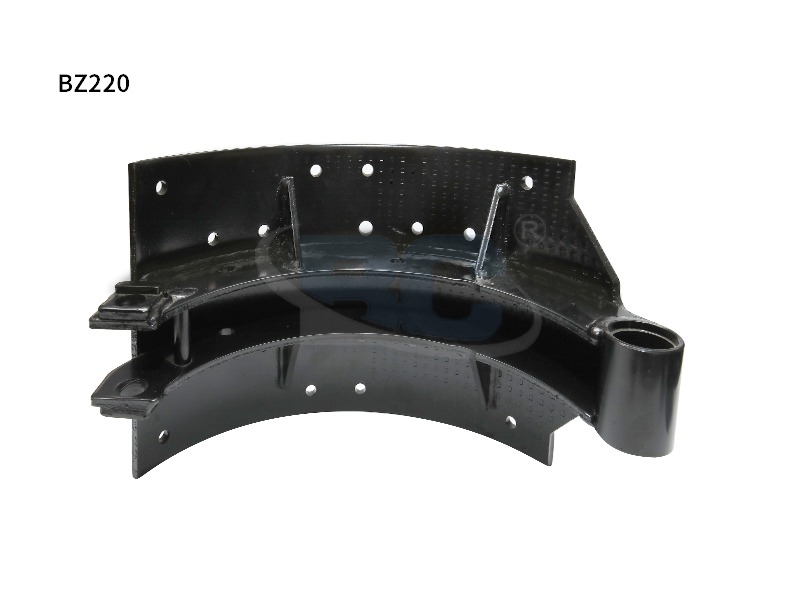
A6204200519 Brake shoe
Structural Advantages of the BZ220 Steel Brake Shoe
Stable Steel Foundation
The BZ220 product is a steel brake shoe designed to provide a strong foundation for the brake lining. Steel is widely used for brake shoe structures because it offers a practical combination of strength, formability, durability, and compatibility with industrial manufacturing processes.
A stable shoe helps preserve the designed contact relationship between the lining and the drum. It also supports the transfer of mechanical force from the actuator to the friction material. When the shoe retains its shape during service, the lining can work more consistently across the intended braking surface.
Support for Riveted Linings
The 16 rivet holes provide a defined attachment pattern for a riveted brake lining. Riveting is a common method for joining friction material to a brake shoe in heavy-duty applications. A suitable hole pattern helps the lining remain securely attached while allowing the brake assembly to be serviced when the friction material reaches its wear limit.
Evenly distributed attachment points can help reduce unsupported areas in the lining. They also help maintain consistent pressure between the lining and the shoe during operation. The correct rivet type, rivet length, installation force, and lining specification must still be selected according to the brake system and repair procedure.
Heavy-Duty Format
The listed 410 by 220 millimeter size places the product within a large commercial vehicle brake shoe format. Larger brake shoes can support the braking requirements of vehicles that operate with higher gross weights and greater thermal loads than ordinary passenger vehicles.
Size alone does not determine braking performance. The complete system also depends on the brake drum, friction material, actuator, return springs, clearance adjustment, axle design, and vehicle operating conditions. Nevertheless, accurate shoe dimensions are essential for ensuring that the replacement component fits the intended assembly.
Replacement and Fleet Maintenance Value
A clearly identified replacement brake shoe can simplify fleet maintenance planning. The product number BZ220 and reference A6204200519 can be used in purchasing systems, spare parts catalogs, and warehouse labels. Clear identification reduces the risk of ordering an incorrect shoe for a specific maintenance job.
For fleet operators, using consistent replacement references can also make it easier to track usage, establish reorder points, and prepare service kits. Maintenance teams can organize brake components by axle, vehicle platform, or application, helping technicians locate the appropriate part more efficiently.
Advantages Compared with Generic or Poorly Matched Alternatives
Not all brake shoes that appear similar are interchangeable. A generic component may have a similar outside profile while differing in width, curvature, hole position, offset, or actuator contact geometry. Such differences can prevent correct installation or cause problems after installation.
The A6204200519 brake shoe offers an application-oriented identification system based on a specific product number and original equipment reference. This is an advantage over unmarked or poorly documented alternatives because buyers have a clearer basis for technical comparison and purchasing control.
The 16-hole configuration is another important differentiating feature. A brake shoe with the wrong number or arrangement of rivet holes may require unsuitable modifications, create unsupported lining areas, or become impossible to assemble with the intended lining. Matching the hole pattern before purchase helps prevent these problems.
The product is also positioned within a specialized heavy-duty brake parts program rather than a general metal stamping catalog. A supplier focused on brake components is more likely to understand the relationship between the shoe, lining, rivets, drums, repair kits, and vehicle applications. This product knowledge can improve communication during technical confirmation and customization.
Another advantage is the possibility of sourcing related components. Buyers may require only an unlined steel shoe for their own lining process, or they may need a lined shoe or complete repair kit. A supplier offering several product categories can support different maintenance models, including component-level repair, complete assembly replacement, and fleet-specific kit preparation.
Compared with low-cost alternatives that provide limited technical information, a properly documented product makes it easier to verify dimensions, application, rivet-hole quantity, and reference number. Better documentation can lower the risk of installation delays and avoid the indirect costs associated with incorrect brake parts.
Cost should always be evaluated together with service life, installation accuracy, availability, and maintenance risk. A component that appears less expensive may create additional costs if it requires rework, does not match the lining, or causes premature wear. A correctly specified brake shoe can provide better overall value by supporting more predictable installation and maintenance.
Manufacturing Strengths and Process Control
Zhejiang Bangchi Auto Parts Co., Ltd. specializes in heavy-duty brake parts and provides OEM brake parts following the global FMSI numbering system. This positioning indicates a manufacturing approach centered on repeatable identification, application matching, and supply to international brake component markets.
Although individual production details may vary according to the customer program, manufacturing a steel brake shoe generally involves several controlled stages. These stages may include material preparation, forming or pressing, hole production, trimming, surface treatment, inspection, marking, packing, and final shipment preparation.
Material Preparation
The manufacturing process begins with suitable steel material selected for the required brake shoe structure. Material selection must consider strength, thickness, formability, dimensional stability, and resistance to service-related deformation.
Consistent material preparation is important because variations in thickness or mechanical behavior can affect forming accuracy. It can also influence the final fit of the shoe and the stability of the lining support surface. For repeat orders, controlled material sourcing helps maintain consistency between production batches.
Forming and Profile Accuracy
The steel blank must be formed into the required brake shoe profile. The shoe curvature must correspond with the intended brake drum and lining geometry. Forming accuracy is essential because excessive deviation can create poor contact, uneven lining wear, or installation difficulty.
Industrial forming equipment and controlled tooling help reproduce the required shape from one component to the next. Tool maintenance is also important. As forming tools wear, the resulting profile may gradually change. Monitoring the condition of dies, fixtures, and gauges helps preserve dimensional repeatability.
Rivet-Hole Production
The 16 rivet holes must be produced at the correct positions and with suitable dimensional control. Hole quantity is easy to verify, but hole spacing and alignment are equally important. A lining with matching holes must sit correctly on the shoe without forced adjustment.
Hole production may involve punching, drilling, or another controlled metalworking method, depending on the design and production volume. After forming, the manufacturer can inspect hole position, diameter, edge condition, and burr control. Clean hole edges help support reliable riveting and reduce the possibility of interference during lining installation.
Trimming and Edge Finishing
After forming and hole production, the shoe may require trimming or edge finishing. These operations remove unwanted material, sharp edges, and production irregularities. Proper finishing supports safer handling and helps ensure that the component does not interfere with adjacent brake hardware.
Edge condition is especially relevant in a service environment where technicians handle the part during installation. Controlled finishing can also improve the consistency of protective coatings and reduce locations where corrosion may begin.
Surface Protection
Brake shoes may be exposed to moisture, road salt, dust, and changing temperatures during transportation and service. Surface protection helps preserve the component before installation and can contribute to long-term resistance against corrosion.
The appropriate surface treatment depends on the material, customer requirements, and intended application. Surface preparation must be compatible with any later lining attachment or assembly operation. Buyers requiring a specific coating, color, or corrosion-protection standard should confirm the requirement before production.
Dimensional Inspection
Dimensional inspection is a critical part of brake shoe manufacturing. Inspectors may verify overall length, width, curvature, hole quantity, hole position, thickness, and other application-specific dimensions. Inspection methods can include gauges, templates, measuring tools, fixtures, and comparison with approved samples or drawings.
For a product such as the BZ220, inspection should pay particular attention to the listed 410 by 220 millimeter size and the 16-hole configuration. Where the customer has a formal drawing, the drawing should control the final acceptance criteria.
Traceability and Identification
Clear product identification supports communication throughout the supply chain. Product numbers, original equipment references, batch information, and packaging labels help connect the finished component with the relevant manufacturing and purchasing information.
Following a structured numbering approach also helps international buyers manage large product catalogs. The FMSI numbering system referenced by the manufacturer provides a recognized framework for identifying brake friction and related components in global markets. Buyers should still confirm the exact product application because numbering systems do not replace technical verification.
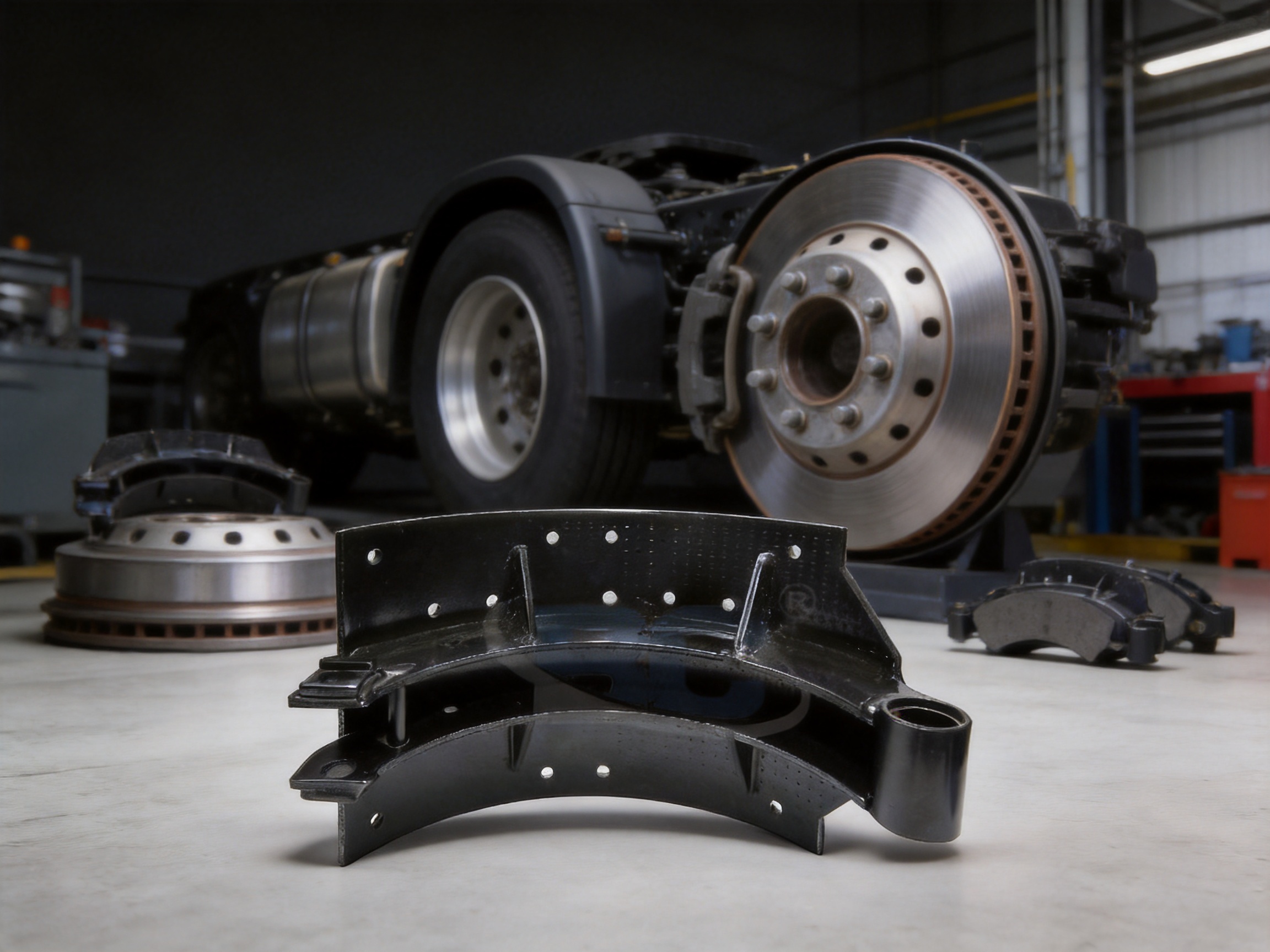
Quality-Oriented Production for International Buyers
International buyers need more than a component that looks correct in a photograph. They require repeatability, clear communication, stable packaging, documentation, and a supplier capable of handling future orders. A manufacturing partner becomes more valuable when it can support the complete process from technical confirmation to shipment.
Zhejiang Bangchi Auto Parts Co., Ltd. presents itself as a China-based manufacturer, exporter, and company specializing in heavy-duty brake parts. Its product categories cover both structural and friction-related brake components. This broader scope can help importers consolidate sourcing and reduce the number of suppliers involved in a brake parts program.
For export orders, product information should be confirmed before production. The confirmation process may include the part number, application, material, size, rivet-hole quantity, lining requirements, packaging method, order quantity, and shipping marks. Careful pre-production confirmation is especially useful when a product is offered for both standard and customized applications.
Quality management should address the complete product lifecycle. Incoming material must be suitable, production tooling must remain accurate, in-process dimensions must be monitored, and final products must be protected during storage and shipping. Packaging should prevent deformation, scratching, moisture exposure, and mixing of similar-looking parts.
For distributors, consistent packaging and labeling are commercially important. A clear label can include the product number, reference number, quantity, application, and batch information. This reduces warehouse confusion and supports faster picking when several brake shoe models have similar shapes.
Brake Shoe Selection and Technical Confirmation
Before ordering the A6204200519 brake shoe, buyers should confirm the intended application with the manufacturer. The following information is useful during the inquiry process:
First, provide the complete reference number, including the spacing format if it appears on the original component. The supplied reference is A 620 420 0519, also commonly written as A6204200519. Consistent formatting helps prevent confusion in databases and purchasing systems.
Second, confirm the product type. The supplied item is a steel brake shoe rather than a complete lined brake shoe. Buyers who need a ready-to-install assembly should ask whether a lined version or matching repair kit is available.
Third, confirm the dimensions. The product content lists 410 by 220 millimeters. The associated product alias includes a different width description, so buyers should request a final drawing or dimensional confirmation before placing a production order. This is particularly important when the part must fit an existing brake drum and lining.
Fourth, confirm the rivet-hole pattern. The supplied specification identifies 16 holes. The customer should compare this pattern with the lining and the original shoe to ensure that the repair process is compatible.
Fifth, confirm the application. The product is suitable for Mercedes-Benz or customized requirements, but the exact axle, vehicle model, brake assembly, and production year may affect compatibility.
Sixth, provide the required quantity and purchasing schedule. A trial order, regular replenishment order, and original equipment program may require different packaging, inspection, and production arrangements.
Installation Considerations
Installation should be performed by qualified brake technicians using the correct service procedures. Brake components are safety-critical, and a replacement shoe must be installed as part of a complete, inspected brake assembly.
Before installation, the technician should compare the new shoe with the removed component. Important checks include overall dimensions, curvature, hole quantity, hole arrangement, pivot points, actuator contact points, and any other features related to the axle design.
The brake drum should also be inspected. A worn, cracked, scored, or excessively enlarged drum can affect the performance of a new shoe and lining. Drum measurements should be compared with the applicable service limits. Replacing the shoe alone cannot correct a drum that is outside its permitted condition.
When installing a riveted lining, the lining must be correctly matched to the shoe. Rivets should be suitable for the lining and hole dimensions. Riveting must provide secure attachment without crushing, cracking, loosening, or distorting the friction material.
After assembly, the brake mechanism should be checked for free movement, correct return action, suitable clearance, and proper alignment. The wheel should rotate as specified by the service procedure without abnormal drag. Any automatic or manual adjustment mechanism must be inspected and set correctly.
A controlled bedding-in procedure may be necessary after fitting new friction material. Bedding allows the lining and drum to develop an appropriate contact area under controlled conditions. The vehicle manufacturer or brake system supplier’s instructions should be followed.
Technicians should never assume that a visually similar brake shoe is suitable without verification. Small differences in curvature, offset, or actuator geometry can affect braking behavior. Correct part identification is therefore an important part of safe installation.
Maintenance and Service Life
The life of a brake shoe depends on several factors, including vehicle weight, load distribution, driving style, route conditions, brake adjustment, drum condition, lining material, ambient temperature, and maintenance quality. The steel shoe itself should be inspected whenever the brake drum is removed or the lining is replaced.
Inspection should look for cracking, distortion, excessive corrosion, worn contact areas, damaged rivet holes, loose rivets, and any evidence of heat-related damage. A shoe that no longer provides a stable foundation should not be returned to service merely because it remains visually recognizable.
Regular inspection can also identify problems elsewhere in the brake system. Uneven lining wear may indicate misalignment, incorrect adjustment, a damaged drum, actuator problems, or a return spring issue. Replacing the shoe without correcting the underlying cause may lead to repeated failures.
Fleet operators can improve maintenance planning by recording the date, mileage, vehicle load conditions, axle position, lining type, and component reference used during each brake service. These records help identify abnormal wear patterns and support better spare parts forecasting.
Value of a Complete Brake Parts Product Range
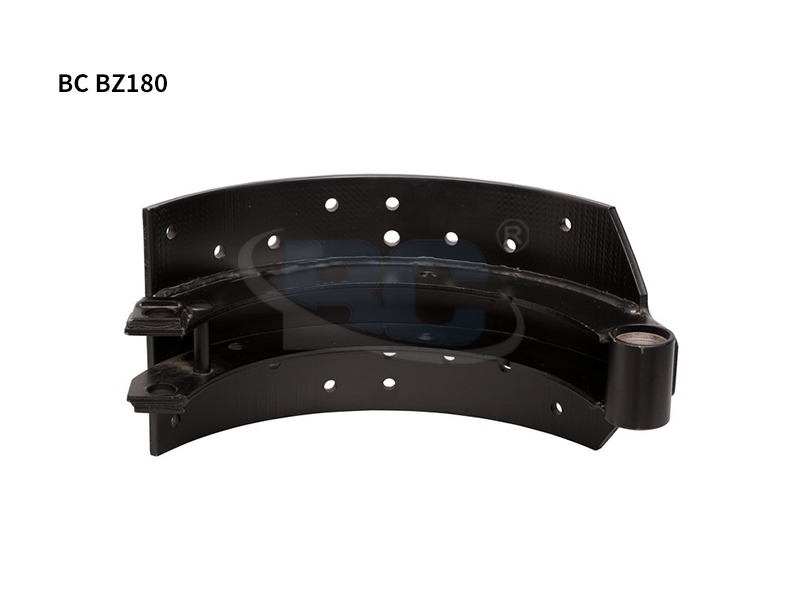
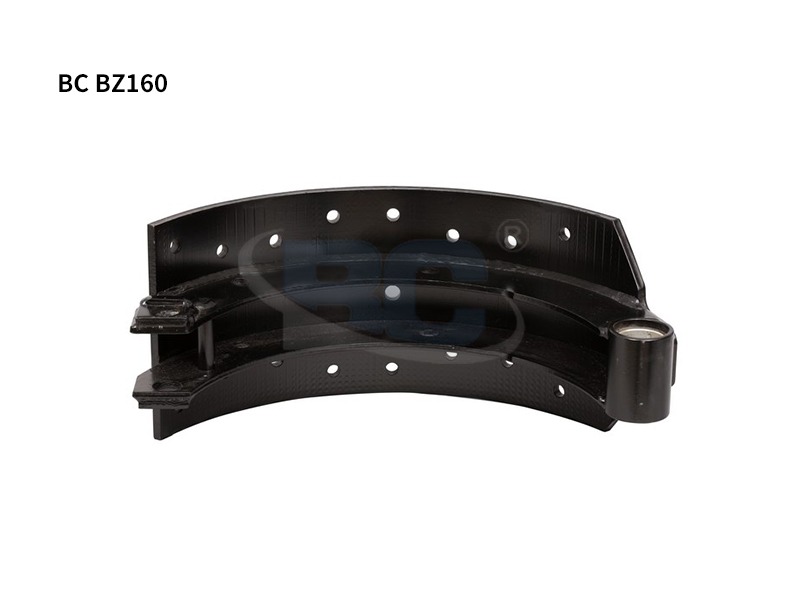
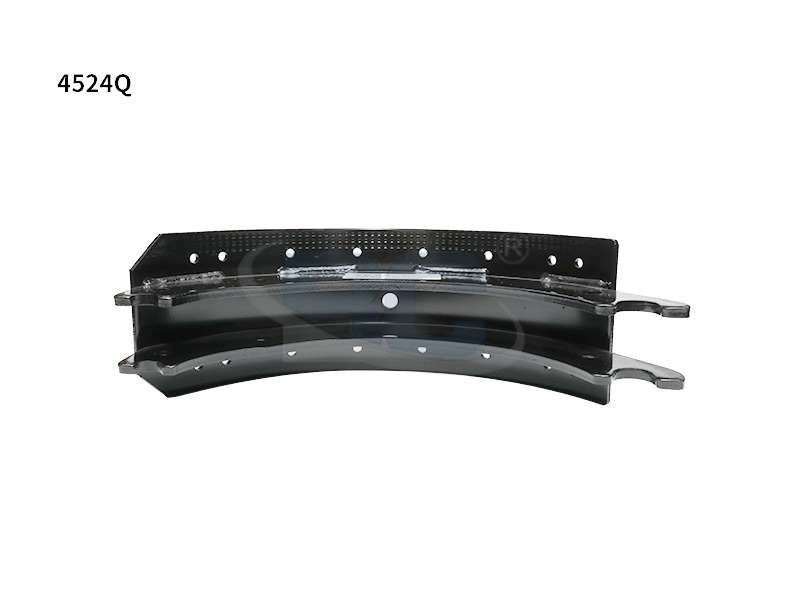
A manufacturer that supplies multiple brake product categories can provide practical advantages to distributors, repair centers, and fleet operators. Zhejiang Bangchi Auto Parts Co., Ltd. lists steel brake shoes, casted brake shoes, brake linings, lined brake shoes, brake shoe repair kits, and lined brake shoe kits.
Steel brake shoes are useful when the customer already has a preferred lining source or performs its own riveting. Casted brake shoes may serve applications that require a different structural design. Brake linings support friction material replacement, while lined brake shoes offer a more complete replacement option.
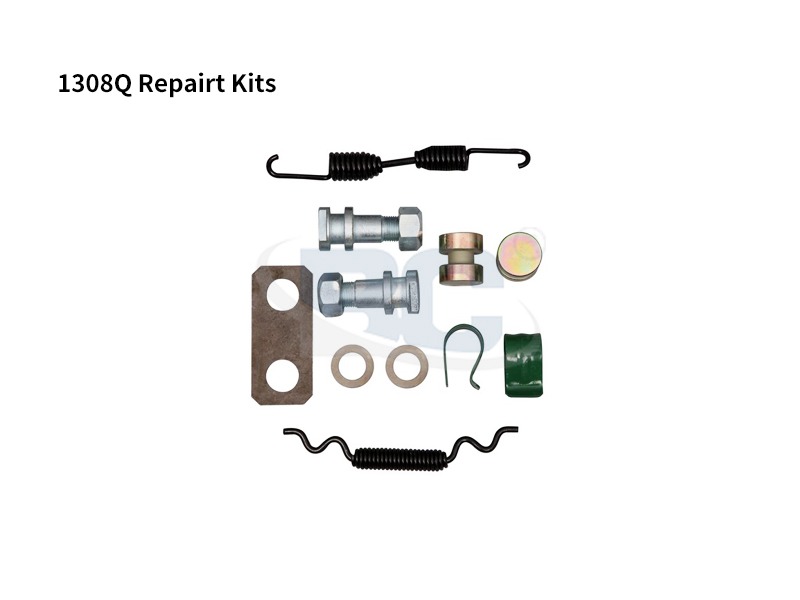
Repair kits can be useful when a workshop wants to replace several related components in one service operation. Lined brake shoe kits can simplify purchasing where the customer prefers a packaged solution rather than separate shoe and lining orders.
This product range allows customers to select the supply format that best matches their workshop capabilities. It also creates opportunities for product standardization across different markets. A distributor may stock unlined shoes for specialist customers while offering lined assemblies to general repair shops.
From a procurement perspective, a broad product range can reduce communication time. Technical questions, packaging instructions, export coordination, and product development discussions can be managed through one supplier relationship. This can be particularly valuable for buyers importing multiple heavy-duty brake references.
Benefits for Distributors and Fleet Buyers
Inventory Organization
The clear BZ220 product number and A6204200519 reference support organized inventory management. Distributors can use the information to create stock keeping units, warehouse labels, product listings, and application cross-references.
Reduced Matching Risk
Documented dimensions and rivet-hole quantity help distributors explain the product to their customers. More complete information reduces the chance that a customer will purchase a visually similar but mechanically unsuitable brake shoe.
Flexible Order Programs
The manufacturer’s ability to offer standard and customized products can support different purchasing volumes. A buyer may begin with a replacement order, move to regular stock replenishment, and later request a customized version for a specific vehicle or regional market.
Export Support
As an exporter of heavy-duty brake parts, the manufacturer can communicate with international customers about part references, packaging, product categories, and order requirements. Export buyers should discuss shipping terms, documents, labeling, inspection expectations, and delivery schedules during the quotation stage.
How the Product Supports Safer Brake System Maintenance
A brake shoe cannot independently guarantee vehicle safety, but a correctly specified and accurately manufactured shoe is an important part of a reliable brake repair. The shoe must work with the correct lining, drum, actuator, springs, and adjustment mechanism.
The A6204200519 product supports maintenance by providing a defined replacement reference, a stated heavy-duty application, a listed size, and a specified 16-hole rivet pattern. These details give technicians and purchasing teams a practical starting point for verification.
The manufacturer’s wider focus on brake parts also supports system-level thinking. Rather than selecting a structural shoe without considering the lining and repair method, customers can discuss the most appropriate product format for their maintenance process.
For commercial vehicles, this approach is valuable because brake performance affects not only the driver but also cargo, passengers, fleet productivity, and road safety. Reliable sourcing and careful installation are therefore essential parts of responsible vehicle maintenance.
Frequently Asked Questions
What is the A6204200519 brake shoe?
The A6204200519 brake shoe is a heavy-duty steel brake shoe identified by product number BZ220. It is listed for Mercedes-Benz or customized applications and has a supplied product size of 410 by 220 millimeters with 16 rivet holes.
Is the product supplied with brake lining?
The supplied product is categorized as a steel brake shoe. Buyers who need a lining or a complete lined assembly should confirm whether a matching brake lining, lined brake shoe, brake shoe repair kit, or lined brake shoe kit is required.
What does the 16-hole specification mean?
The 16-hole specification identifies the number of rivet holes in the shoe. These holes are intended to support the attachment of a compatible riveted brake lining. Hole spacing, diameter, and lining compatibility should also be confirmed before installation.
Can the brake shoe be customized?
The product is described as suitable for Mercedes-Benz or customized requirements. Customization should be discussed with the manufacturer using drawings, samples, original equipment references, dimensions, photographs, or complete vehicle application information.
Is A6204200519 suitable for every Mercedes-Benz commercial vehicle?
No. An original equipment reference is an important identification aid, but vehicle configuration can vary. Buyers should verify the axle, brake assembly, dimensions, drum design, lining pattern, and production details before ordering.
Why should the product dimensions be confirmed before purchase?
Brake shoes must fit the complete drum brake assembly accurately. The supplied product content lists 410 by 220 millimeters, while the associated alias contains a different dimensional description. Buyers should request confirmation against the approved drawing or sample before production or installation.
What manufacturing advantages does the supplier provide?
The supplier specializes in heavy-duty brake parts, offers several brake product categories, exports brake components, and provides OEM brake parts following the global FMSI numbering system. Its manufacturing value includes application-based product identification, support for standard and customized requirements, and the ability to coordinate related brake components.
Can the steel shoe be used with any brake lining?
No. The lining must match the shoe dimensions, rivet-hole pattern, friction requirements, and brake drum application. The lining material and rivets should be selected according to the brake system requirements and qualified service procedures.
What should be checked before installation?
The technician should check the part number, reference number, overall dimensions, curvature, rivet-hole pattern, shoe condition, brake drum condition, lining compatibility, actuator relationship, return springs, and adjustment mechanism.
How should the product be ordered for export?
Export buyers should provide the complete reference number, product number, quantity, required dimensions, lining status, packaging requirements, destination, labeling instructions, and any inspection or documentation requirements. These details help the supplier prepare an accurate quotation and production plan.
Where is the manufacturer located?
Zhejiang Bangchi Auto Parts Co., Ltd. is located at No. 9 Building, No. 11 Qiyi Road, Chang'an Town, Haining, Zhejiang, China. The company provides heavy-duty brake parts for domestic and international customers.
How can buyers contact the manufacturer?
Buyers can contact the company by telephone at +86-133 7230 7977 or +86-0573-87960600, by fax at +86-0573-87960639, or by email at sfp@zjbangchi.com.
Conclusion
The A6204200519 steel brake shoe, also identified as BZ220, is a heavy-duty replacement component designed for Mercedes-Benz or customized applications. Its listed 410 by 220 millimeter size, 16 rivet holes, and original equipment reference provide the basic information needed for technical evaluation and purchasing.
The main advantages of this product are its application-specific identification, steel structural support, riveted-lining compatibility, heavy-duty format, and availability within a wider brake parts product range. These features make it suitable for fleet maintenance, commercial vehicle repair, distributor inventory, and customized brake component programs.
Zhejiang Bangchi Auto Parts Co., Ltd. strengthens the product offering through specialization in heavy-duty brake parts, OEM supply, international export capability, and product identification aligned with the global FMSI numbering system. Its range of steel shoes, casted shoes, linings, lined shoes, and repair kits provides buyers with flexible sourcing options.
Before purchasing, customers should confirm all application and dimensional details, especially the exact shoe width, hole arrangement, drum compatibility, lining requirements, and axle configuration. With correct verification, professional installation, and regular brake inspection, the BZ220 steel brake shoe can serve as a practical component in a dependable heavy-duty drum brake maintenance program.
References
1. Product specification supplied for the A6204200519 brake shoe, product number BZ220.
2. Manufacturer product category information covering steel brake shoes, casted brake shoes, brake linings, lined brake shoes, brake shoe repair kits, and lined brake shoe kits.
3. Manufacturer company information for Zhejiang Bangchi Auto Parts Co., Ltd., including heavy-duty brake parts and OEM product supply.
4. Global FMSI numbering system information for identifying brake friction and related commercial vehicle brake components.
5. General commercial vehicle drum brake service and inspection principles.