 English
 简体中文
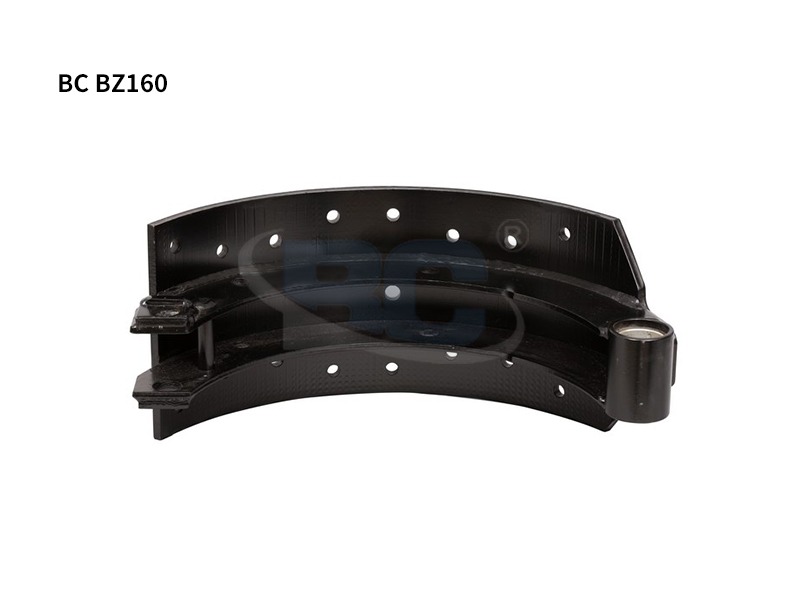
For commercial vehicles, brake components must deliver more than basic compatibility. They must support predictable braking, efficient workshop installation, stable supply, and controlled maintenance costs across demanding operating conditions. The VL225 Old Generation Brake Shoe is designed around these requirements. Identified by part number VL225 Old Generation and OE number 0270.829-5, this steel brake shoe provides a 410 × 225 mm footprint and a 28-hole rivet pattern for compatible heavy-duty drum brake systems.
The product is intended for fleet replacement, trailer axles, long-haul tractor units, regional distribution vehicles, and other commercial applications where reliable service intervals and repeatable fitting are important. Its design combines a standard-grade steel body, consistent dimensions, evenly distributed rivet holes, and a friction lining compatibility range suited to mixed-load duty cycles.
For fleet managers and distributors, the VL225 Old Generation is also a procurement-oriented product. It is supplied for bulk orders, supports batch traceability, and is manufactured with attention to dimensional consistency. These characteristics help reduce installation variation between vehicles and make the product suitable for scheduled maintenance programs.
This article examines the technical characteristics, practical advantages, manufacturing considerations, application requirements, installation procedures, maintenance recommendations, and purchasing value of the VL225 Old Generation Brake Shoe.
Product Identification and Core Specifications
Correct product identification is the first step in safe brake component procurement. The VL225 Old Generation Brake Shoe is associated with OE number 0270.829-5 and is identified by its 410 × 225 mm size and 28-hole rivet arrangement. These specifications should be checked against the vehicle axle, drum dimensions, existing brake shoe, and workshop records before an order is finalized.
| Specification | Product Data | Procurement Relevance |
|---|---|---|
| Product name | VL225 Old Generation Brake Shoe | Supports model and generation identification |
| Part number | VL225 Old Generation | Useful for purchase orders and inventory control |
| OE number | 0270.829-5 | Reference for compatible replacement applications |
| Brake shoe size | 410 × 225 mm | Must correspond with the compatible drum and backing assembly |
| Rivet holes | 28 | Ensures correct lining attachment and load distribution |
| Rivet hole diameter | 10.0 mm | Guides tooling and rivet selection |
| Body material | Standard-grade steel | Provides a practical balance of strength and cost |
| Friction coefficient | 0.38–0.43 | Indicates the specified friction performance range |
| Maximum temperature | 450°C | Relevant to thermal operating limits |
| Recommended bedding distance | Approximately 200–300 km of moderate braking | Allows the lining and drum to establish a stable contact pattern |
The dimensions and hole count are especially important because drum brake components depend on accurate geometry. A shoe that appears similar but has a different radius, width, offset, or hole pattern may not seat correctly. Even small differences can affect lining contact, braking balance, rivet positioning, and wear behavior.
For this reason, purchasers should avoid relying only on visual similarity. The OE reference, part number, dimensions, hole count, and vehicle application should be reviewed together. If the vehicle has previously received modified brake hardware, the original shoe should also be measured before replacement.
Why the VL225 Old Generation Design Matters in Fleet Operations
Heavy-duty fleets operate under different conditions from passenger vehicles. A trailer may be loaded close to its legal limit, a tractor may travel through mountainous terrain, or a regional delivery vehicle may experience frequent braking in urban traffic. These duty cycles expose brake shoes to repeated mechanical loading, vibration, thermal cycling, and friction material wear.
A suitable brake shoe must therefore support three related objectives: consistent contact with the drum, dependable lining retention, and efficient replacement. The VL225 Old Generation is structured around these practical requirements rather than being treated as a simple steel pressing.
The 410 × 225 mm braking surface provides a substantial contact area for compatible heavy-duty drums. The 28-hole pattern distributes lining attachment points across the shoe. This can help reduce localized stress in the lining and support more uniform transfer of braking force through the assembly.
Uniformity is particularly valuable in fleet programs. A single vehicle may be serviced many times over its operating life, while a fleet may contain dozens or hundreds of vehicles using the same component. Consistent dimensions help workshops use repeatable fitting procedures, reduce adjustment time, and simplify spare-parts planning.
The product’s standard-grade steel construction is also commercially practical. It is intended to provide stable structural support under normal heavy-duty service without introducing unnecessary material cost. For operators managing total cost per kilometer, a correctly specified standard-grade shoe can offer an effective balance between purchase price, serviceability, and expected operating life.
Advantages Compared with Generic or Poorly Matched Alternatives
Accurate OE-Oriented Interchange
One of the main advantages of the VL225 Old Generation is its direct reference to OE 0270.829-5. OE-oriented identification gives purchasers a more reliable starting point than selecting a generic shoe based only on approximate dimensions or appearance.
Generic alternatives may use similar measurements but differ in hole location, shoe curvature, flange geometry, or lining position. These differences can create installation difficulties or require workshop modifications. A product aligned with the OE reference is more likely to support a straightforward replacement process when the axle is compatible.
Consistent 28-Hole Attachment Pattern
The 28-hole pattern is not merely an identification feature. It determines how the lining is attached to the shoe and how load is distributed along the braking surface. A correctly positioned hole pattern supports even fastening and helps prevent excessive stress concentration at individual rivets.
Compared with a poorly matched lining or an incorrectly drilled replacement, a consistent 28-hole pattern can reduce the need for manual alteration. This is important for fleet workshops, where time spent correcting mismatched holes can undermine the savings expected from low-cost components.
Stable Dimensional Tolerances
Dimensional consistency is a competitive advantage because it affects the whole replacement process. Brake shoes must fit within the drum and cooperate with the backing plate, rollers, cam mechanism, springs, and adjuster. If the shoe body varies excessively from batch to batch, the workshop may encounter differences in seating, clearance, or contact pattern.
The VL225 Old Generation is described as being supplied with consistent dimensional tolerances for fast workshop fitting. In practical terms, this supports more predictable installation and reduces dependence on individual mechanic adjustment. It also helps distributors maintain clearer stock records because the same part number is less likely to produce unexpected fitting variations.
Balanced Friction Performance
The stated friction coefficient range of 0.38–0.43 provides a reference for the product’s intended friction behavior. A controlled friction range is important because excessive variation between replacement components can influence pedal response, axle balance, temperature generation, and lining wear.
The stated range should not be interpreted as a guarantee of identical braking performance in every vehicle. Drum condition, lining formulation, vehicle loading, brake adjustment, temperature, and operating environment all affect actual results. However, a defined friction range is more useful for procurement and quality control than an unspecified friction claim.
Practical Thermal Capability
The listed maximum temperature of 450°C provides a clear operating reference for compatible applications. Heavy-duty braking can generate substantial heat, particularly during downhill operation, repeated urban stops, or high-load service. A shoe and lining assembly must retain its mechanical integrity and friction behavior within the expected thermal range.
Compared with an unverified generic product, a component with a stated thermal limit gives fleet engineers and maintenance managers a better basis for application review. It also emphasizes the need to inspect drums, confirm adjustment, and avoid operating conditions that repeatedly exceed the intended limits.
Availability for Volume Replacement
Fleet maintenance depends on availability as much as on technical performance. A brake shoe that is technically suitable but difficult to obtain can delay scheduled repairs and increase vehicle downtime. The VL225 Old Generation is positioned for bulk supply and fleet replacement programs, making it suitable for distributors, commercial operators, and maintenance contractors that require repeat orders.
Volume supply can also improve purchasing efficiency. Operators may standardize a compatible component across a group of vehicles, maintain planned stock levels, and coordinate brake inspections with other maintenance activities. Batch traceability further supports inventory management by helping purchasers identify production lots and organize quality records.
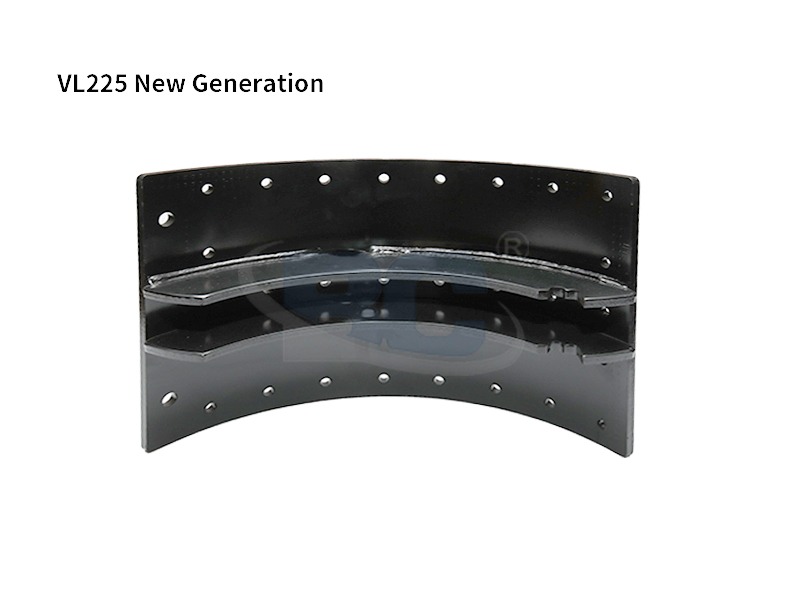
VL225 Old Generation Brake Shoe
Manufacturing Approach and Process Control
A heavy-duty brake shoe is only as reliable as the processes used to form, machine, inspect, and prepare it. Product specifications define the required result, but manufacturing discipline determines whether that result is repeated consistently across production batches.
The manufacturer, Zhejiang Bangchi Auto Parts Co., Ltd., supplies heavy-duty brake components for commercial vehicle applications. The available product information emphasizes consistent dimensional tolerances, batch traceability, standard-grade steel construction, and readiness for volume fleet orders. These strengths point to a production model centered on repeatability and controlled inspection.
Material Preparation
The process begins with steel material selected for the shoe body. Standard-grade steel is used to provide the structural foundation for the brake shoe. Material preparation should include identification of incoming stock, verification of thickness and surface condition, and separation of material by production batch.
Proper material control helps prevent variation in forming behavior. Steel with inconsistent thickness or excessive surface defects may produce changes in flange height, curvature, hole alignment, or local stiffness. For a component that must fit within a drum brake assembly, these differences can become significant during installation.
Batch identification is also important. When material and production records are connected to a finished product batch, manufacturers and customers have a better basis for investigating field feedback, managing stock, and coordinating replacement programs.
Forming and Shoe Geometry
The shoe body must be formed to the specified arc and profile. The 410 × 225 mm product dimensions describe the primary application size, but the full manufacturing requirement also includes curvature, width, flange geometry, end features, and the location of mechanical interfaces.
Controlled forming equipment helps produce repeatable geometry. After forming, the shoe should be checked for deformation, twist, and dimensional drift. Particular attention is required at the shoe ends and at areas that interact with rollers, cams, anchors, or adjusters.
A correctly formed shoe allows the lining to contact the drum progressively and evenly. By contrast, an incorrectly curved shoe may contact only at limited areas during initial operation. This can create localized heating, uneven wear, noise, and a longer bedding period.
Hole Drilling and Position Control
The VL225 Old Generation uses 28 rivet holes with a specified diameter of 10.0 mm. Hole position, diameter, spacing, and perpendicularity all influence the quality of the lining attachment.
Production fixtures or controlled drilling systems are useful for maintaining the repeated pattern. The hole pattern should be checked against a drawing or approved master sample. Hole edges should be free from excessive burrs because sharp or uneven edges may interfere with rivet seating or create stress concentrations.
Position control is especially important when the shoe is supplied for lining installation. The lining must align with the shoe without forced movement or hole elongation. Correct alignment allows rivets to clamp the lining evenly and reduces the risk of gaps between the lining and steel body.
Surface Finishing and Corrosion Protection
Brake shoes operate in environments containing water, road salt, dust, oil mist, and temperature fluctuations. Surface preparation and protective finishing help preserve the steel body during storage and service.
Before finishing, the body should be cleaned of forming residue, loose scale, and contamination. The selected coating or protective treatment must be appropriate for brake-component use and must not interfere with friction surfaces, rivet holes, or mechanical contact points.
Inspection of the finished surface should focus on coverage, adhesion, exposed steel, blocked holes, and contamination. Good packaging is also part of corrosion control. Components should be protected from moisture and impact during transportation, especially when they are shipped in bulk.
Dimensional Inspection
Dimensional inspection is one of the most important process stages for this product. Measurements may include overall length and width, shoe arc, hole diameter, hole spacing, flange dimensions, and critical contact points.
Inspection should not be limited to a single sample when the product is being supplied for fleet programs. Sampling plans can be used to monitor batch consistency, while first-piece inspection and final verification help confirm that tooling changes have not introduced variation.
For customers, dimensional records and batch traceability provide additional confidence. If an installation issue occurs, the production lot can be identified and compared with inspection data. This is more effective than treating each field complaint as an isolated event.
Final Quality Review and Packaging
Before dispatch, the brake shoe should be checked for visible damage, deformation, coating defects, blocked holes, sharp edges, and identification accuracy. The product label should correspond to the part number, OE reference, and batch information used in the purchasing documentation.
Packaging should prevent shoes from rubbing against one another or suffering impact damage. Dividers, protective wrapping, or suitable cartons can reduce scratches and preserve the finished surface. Bulk packaging should still allow warehouse staff to count, identify, and rotate inventory efficiently.
These processes support the manufacturer’s commercial strengths: dependable bulk supply, repeatable product dimensions, and practical support for fleet replacement. They also distinguish a controlled industrial product from an unverified component produced without consistent records.
Design Details That Support Serviceability
Serviceability is often overlooked when brake components are evaluated only by their purchase price. In a commercial fleet, every additional minute spent identifying, modifying, or fitting a part can become a measurable operating cost.
The VL225 Old Generation is designed for routine workshop replacement using standard tools. The 10.0 mm rivet-hole specification gives technicians a clear basis for selecting suitable rivets and tooling. A calibrated torque wrench is recommended for controlled fastening, while no special fixtures are identified as necessary for routine installation.
The shoe’s standardized dimensions also support repeatable workshop procedures. Mechanics can use established inspection forms, fitting sequences, and bedding instructions rather than developing a unique process for each delivery. This is particularly useful for fleet operators with multiple service locations.
Serviceability does not eliminate the need for careful inspection. Before installation, the technician should verify that the shoe is the correct part, compare it with the removed component, inspect the drum, confirm the lining condition, and check all associated hardware. A component can be correctly manufactured yet unsuitable for a particular axle if the application has been misidentified.
Fleet Applications
Heavy-Duty Trailer Axles
Trailer axles often operate under high static and dynamic loads. Their brake shoes may remain unused for periods and then experience intense braking during loaded operation. Moisture, storage conditions, uneven loading, and long downhill routes can further influence performance.
The VL225 Old Generation is suitable for compatible heavy-duty trailer applications where the 410 × 225 mm dimensions, OE reference, and 28-hole pattern match the existing brake system. Fleet operators should pay close attention to drum wear and internal corrosion because these conditions influence lining contact more than the shoe body alone.
Long-Haul Tractor Units
Long-haul vehicles may accumulate high mileage and encounter varied terrain, weather, and loading conditions. Brake components must therefore support predictable performance during both highway travel and controlled deceleration on grades.
The product’s defined friction range, standard steel body, and repeatable hole pattern make it a practical replacement option for compatible tractor units. The manufacturer’s bulk supply orientation can also help long-haul operators coordinate maintenance across multiple vehicles and reduce the risk of mixed or unidentified brake components in the parts system.
Regional Distribution Fleets
Regional distribution trucks typically experience more frequent braking than vehicles that operate mainly on open highways. Repeated stops can increase heat cycles and accelerate lining wear, especially when vehicles are heavily loaded.
For these fleets, inspection discipline is essential. Brake shoes should be evaluated at scheduled intervals, and the drum surface should be checked for scoring, cracking, excessive diameter, and heat damage. The VL225 Old Generation can support this application when the brake system is maintained within its intended operating conditions.
Municipal and Utility Vehicles
Municipal and utility vehicles often operate in mixed environments. They may travel slowly through urban areas, stop frequently, carry equipment, and operate on uneven roads. Their brake systems can be exposed to dust, water, and irregular loading.
A replacement shoe with clear identification and stable dimensions helps simplify maintenance for public-sector or contractor fleets. Consistent supply is also important because procurement procedures may require repeatability, documented specifications, and controlled replacement records.
Mixed-Load Duty Cycles
Mixed-load operation combines different braking patterns. A vehicle may run empty on one route and fully loaded on another, or alternate between highway and urban service. These changes affect brake temperature, stopping force, and lining wear.
The VL225 Old Generation is intended for standard mixed-load duty cycles when correctly matched to the axle and drum. Fleet managers should still use operating data to identify vehicles with unusually high wear. Rapid wear may indicate brake imbalance, incorrect adjustment, drum problems, overloaded operation, or a mechanical fault elsewhere in the system.
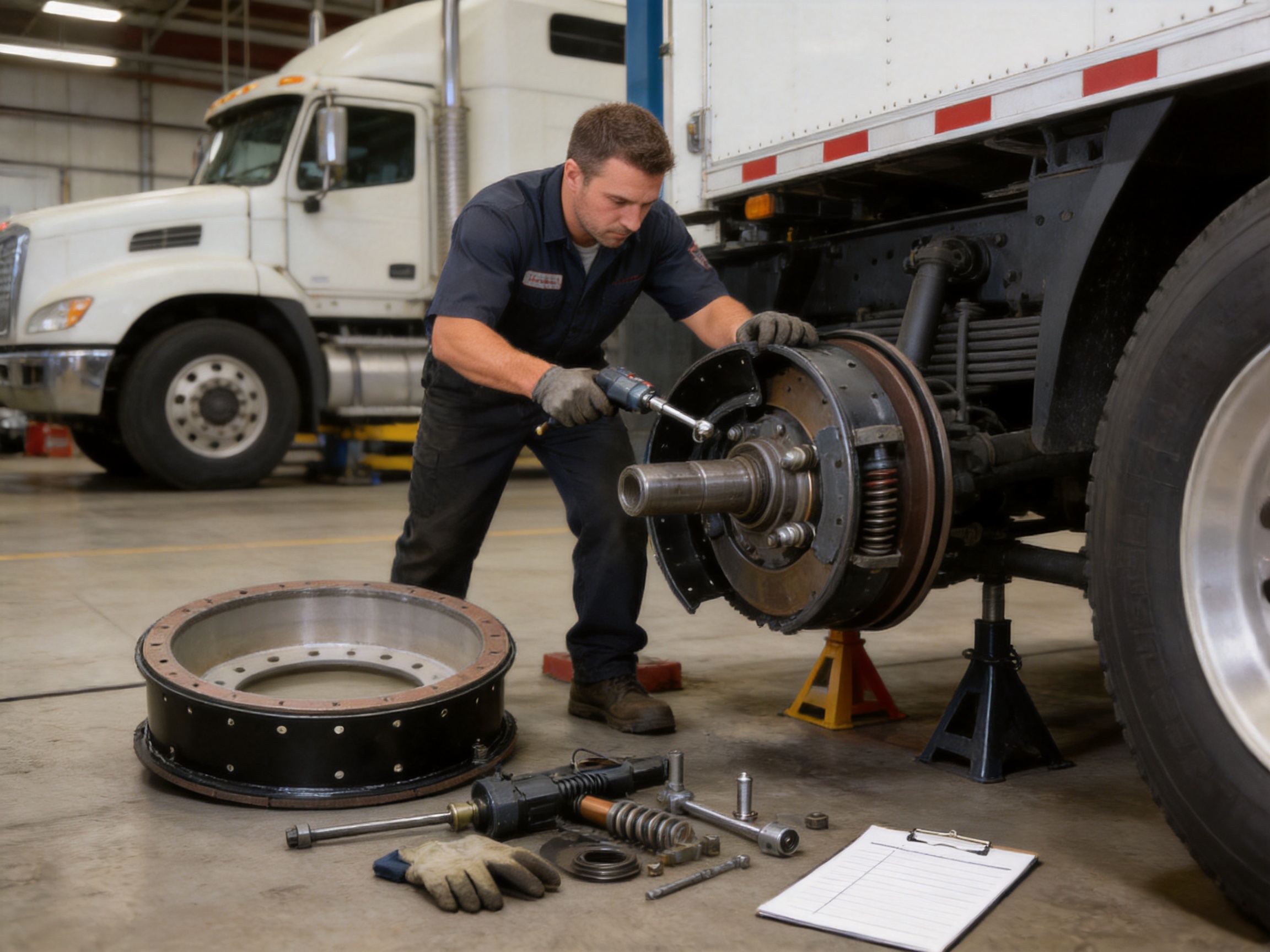
Installation Guidance
Installation must be completed by qualified personnel familiar with heavy-duty drum brake systems. The following guidance is a practical overview and does not replace the vehicle manufacturer’s service instructions or applicable regulatory requirements.
1. Confirm the Application
Before dismantling or fitting the component, compare the replacement shoe with the removed shoe and the vehicle documentation. Confirm OE number 0270.829-5, the 410 × 225 mm size, and the 28-hole pattern. Check whether the vehicle uses the old-generation configuration or a later design.
Do not assume that a visually similar shoe is interchangeable. The drum diameter, shoe width, offset, anchor arrangement, and cam or roller interface must all be compatible.
2. Inspect the Drum
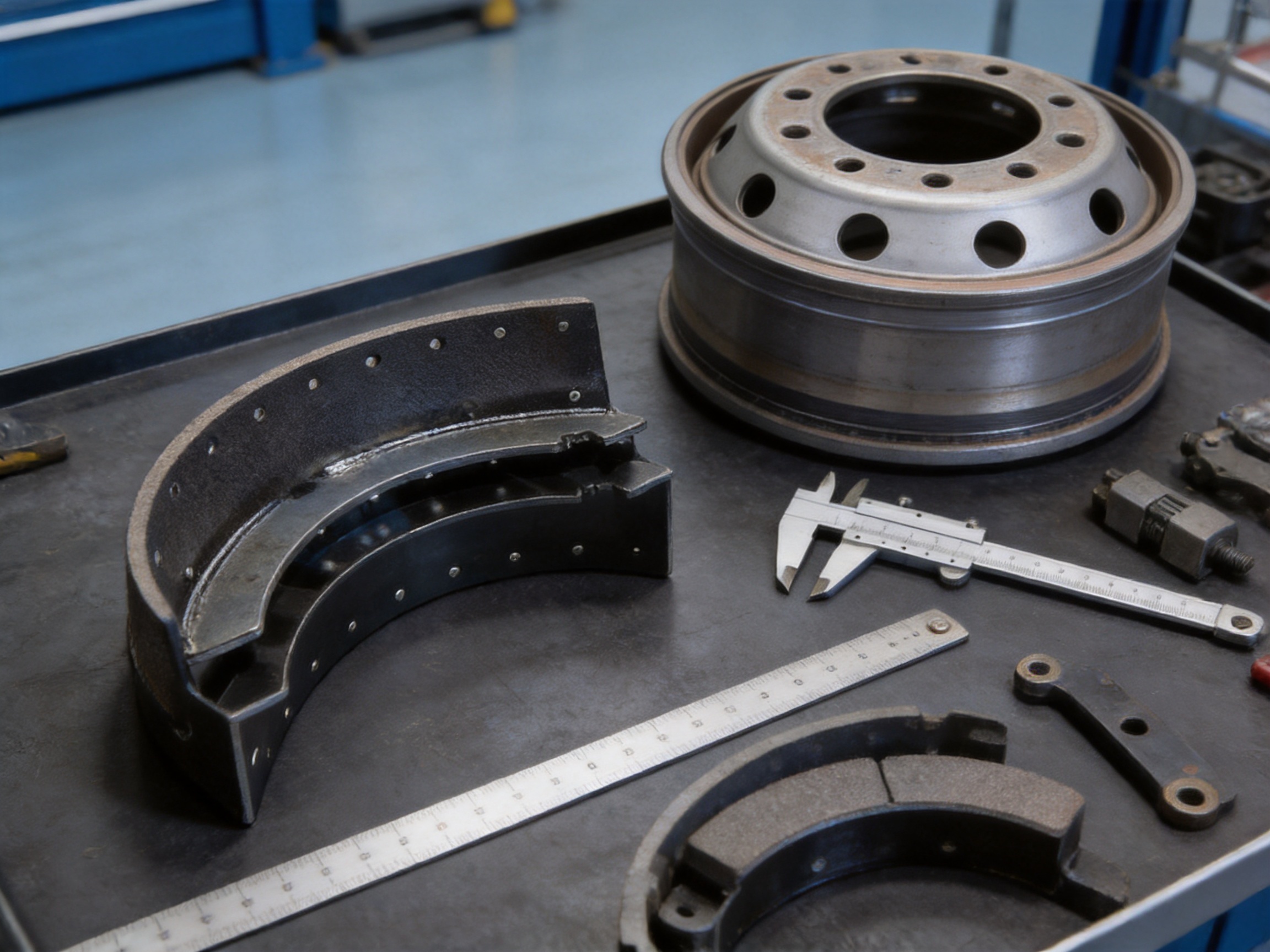
The drum should be inspected for scoring, cracks, heat checking, excessive wear, distortion, and contamination. Measure the internal diameter according to the vehicle service specification. A worn or damaged drum can prevent proper bedding and may cause uneven lining contact.
The drum surface should be clean and suitable for the replacement lining. Oil, grease, and excessive rust must be removed. If the drum exceeds its service limit, it should be replaced or processed according to the approved repair procedure.
3. Inspect Related Hardware
Brake shoe replacement is an appropriate time to inspect springs, rollers, anchors, bushings, adjusters, cam components, retainers, and other hardware. Worn hardware can cause shoe misalignment, drag, uneven wear, or inconsistent clearance.
Replacing only the shoe body while retaining severely worn support components may result in poor performance. Fleet maintenance procedures should define which hardware is reusable and which must be renewed during a brake service.
4. Fit the Lining Correctly
If the shoe is supplied for lining installation, use compatible lining material and 10.0 mm rivets appropriate for the application. Align the lining carefully with all 28 holes. Do not force rivets into misaligned holes or enlarge holes without an approved engineering instruction.
Rivets should be installed in a controlled sequence so that the lining seats evenly against the shoe. Gaps between the lining and steel body can create movement, noise, localized stress, and premature failure.
5. Torque Rivets in a Diagonal Sequence
The supplied workshop guidance recommends torquing rivets to 35–40 N·m in a diagonal sequence. The exact method must be confirmed against the rivet type, lining specification, and workshop procedure because rivet installation requirements can vary.
A calibrated tool should be used where torque control is specified. The diagonal sequence helps distribute clamping force progressively rather than loading one end of the lining before the other.
6. Reassemble and Adjust
After fitting the shoe, reinstall the brake hardware according to the vehicle service instructions. Confirm that springs are correctly positioned and that the shoe moves freely without binding. Set the brake adjustment to the manufacturer’s specified clearance.
Excessive clearance can increase pedal travel and delay braking response. Insufficient clearance can create drag, heat, and accelerated wear. Automatic adjusters should be checked for correct operation rather than assumed to be functional.
7. Conduct a Functional Check
Before returning the vehicle to service, check for correct wheel rotation, abnormal drag, leakage, damaged hoses, and proper air or hydraulic operation. Confirm that the brake responds evenly across the axle.
Where required, perform a controlled brake test. Any unusual noise, pull, vibration, overheating, or inconsistent response should be investigated before the vehicle enters normal operation.
8. Complete the Bedding Process
The recommended bedding period is approximately 200–300 km of moderate braking. During this period, avoid unnecessary severe braking where operating conditions permit. The goal is to establish an even contact pattern between the lining and drum.
Bedding should be monitored rather than treated as a substitute for correct installation. If the vehicle develops severe vibration, smoke, continuous drag, or a strong pull, it should be removed from service for inspection.
Maintenance and Inspection Recommendations
Routine inspection is recommended every 12,000 km under standard mixed-load duty cycles, or more frequently when required by the fleet’s operating conditions and service regulations. Vehicles operating in mountainous areas, high temperatures, severe stop-and-go traffic, or heavy off-road conditions may require shorter inspection intervals.
During inspection, technicians should evaluate lining thickness, wear uniformity, cracks, glazing, contamination, rivet security, shoe deformation, drum condition, and brake adjustment. The provided maintenance guidance recommends replacement when the lining falls below 8 mm or when cracking or glazing appears.
Uneven wear should be treated as a diagnostic signal. It may indicate a worn cam, seized roller, damaged anchor, incorrect adjustment, drum distortion, axle misalignment, or contamination. Replacing the shoe without correcting the underlying cause may lead to rapid recurrence.
Glazing can reduce friction and create a polished surface that does not bed effectively. Cracking can compromise the lining and should not be ignored. If rivets are loose, damaged, or improperly seated, the vehicle should be inspected before continued operation.
Fleet maintenance records should include the vehicle identification number, axle position, installation date, mileage, part number, batch information where available, drum measurement, lining thickness, and inspection findings. These records help identify abnormal wear patterns and support future purchasing decisions.
Procurement Benefits for Distributors and Fleet Buyers
Simplified Inventory Planning
A clearly identified part number and OE reference make it easier to organize warehouse stock. Distributors can list the VL225 Old Generation under the relevant application data, while fleet managers can connect the component to preventive maintenance schedules.
Correct labeling also reduces the risk of mixing old-generation and new-generation components. This is important where similar product names or images may otherwise cause confusion.
Bulk Supply Support
The product is positioned for volume fleet orders. This is valuable for operators that need to replace brake shoes across a group of vehicles at planned intervals. Bulk procurement can reduce emergency purchases and make it easier to maintain consistent parts across a fleet.
Volume supply should always be coordinated with forecasted demand, storage conditions, and vehicle inspection results. Buyers should specify packaging, labeling, batch documentation, and delivery requirements in the purchase order.
Traceability
Batch traceability supports quality management. If a customer identifies a dimensional issue, fitting concern, or unusual wear pattern, the batch number can help connect the field report with production and inspection records.
Traceability is especially useful for distributors supplying multiple regions. It helps separate product lots, manage customer notifications, and maintain a documented history of stock movement.
Lower Total Cost of Ownership
The purchase price of a brake shoe is only one part of its cost. Total cost of ownership includes installation labor, downtime, replacement frequency, inspection requirements, inventory carrying cost, and the consequences of premature wear.
A component with stable dimensions and reliable availability can reduce indirect costs by shortening fitting time and supporting planned maintenance. The VL225 Old Generation is therefore positioned not only as a replacement part but also as a practical fleet-management component.
How the Manufacturer Supports Commercial Vehicle Customers
Zhejiang Bangchi Auto Parts Co., Ltd. is identified as the manufacturer and supplier of the VL225 Old Generation Brake Shoe. Its product range includes steel brake shoes, casted brake shoes, brake linings, lined brake shoes, brake shoe repair kits, and lined brake shoe kits.
This product range is relevant to commercial vehicle customers because it covers several stages of brake component replacement. Depending on the application, a buyer may require an unlined shoe, a lined shoe, a lining-only solution, or a repair kit. A supplier with multiple related categories can help distributors consolidate purchasing and coordinate compatible components.
The company’s stated strengths for this product include supply readiness for bulk orders, consistent product dimensions, batch traceability, and compatibility with global FMSI-style numbering practices. These capabilities are useful for importers, wholesalers, fleet maintenance contractors, and vehicle operators that require structured product identification.
Manufacturing strength should be evaluated through measurable product controls rather than general claims. For this brake shoe, the most relevant controls include steel material consistency, forming accuracy, 28-hole pattern verification, hole diameter control, surface protection, final inspection, and accurate labeling.
Customers can strengthen the purchasing relationship by requesting technical drawings, inspection criteria, sample approval procedures, packaging details, batch records, and application confirmation before placing a large order. These practices create a clear connection between the manufacturer’s production system and the buyer’s quality requirements.
For international customers, the company can be contacted at sfp@zjbangchi.com or by telephone at +86-133 7230 7977. The listed business location is No. 9 Building, No. 11 Qiyi Road, Chang’an Town, Haining, Zhejiang, China.
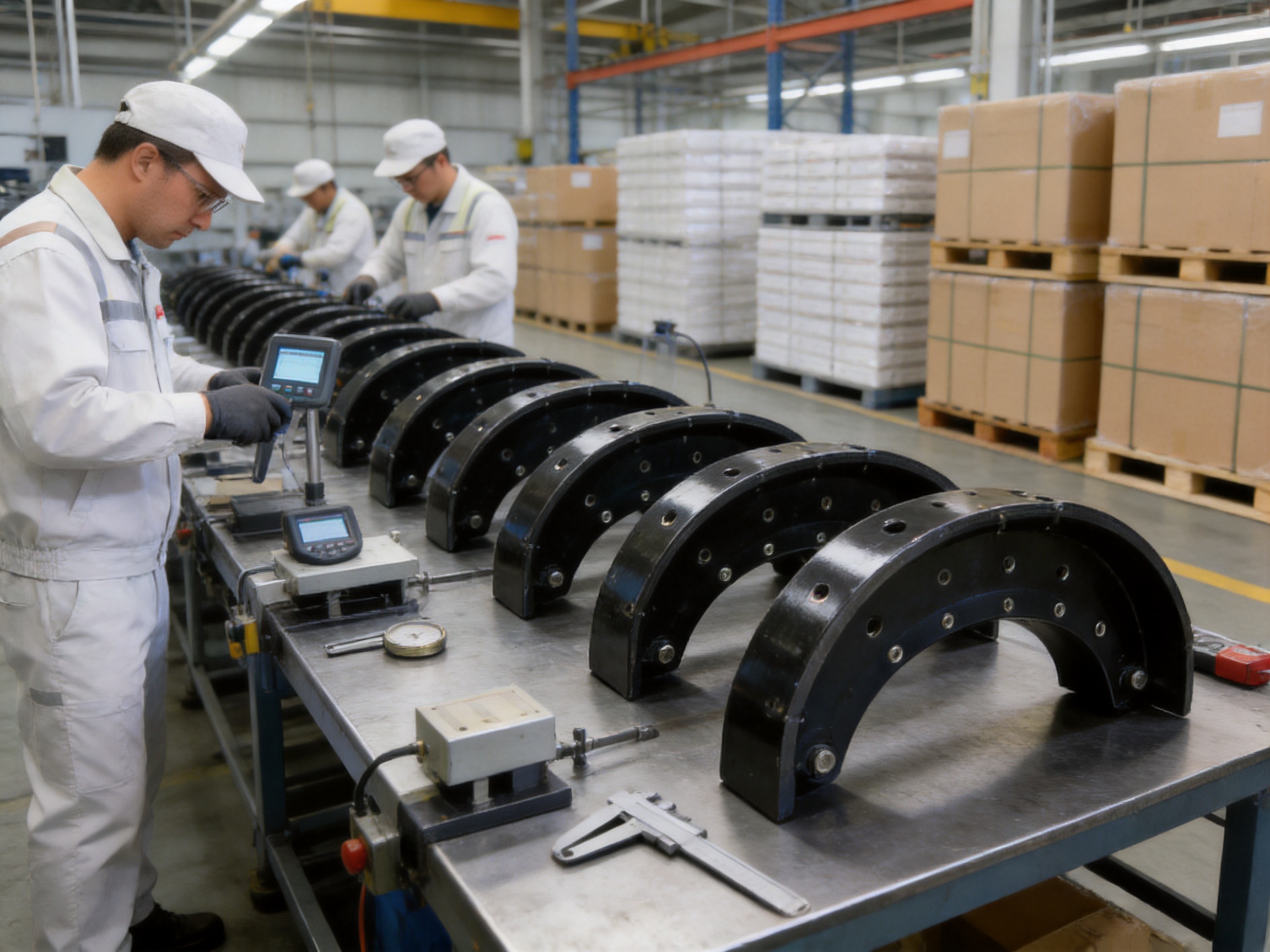
Quality Comparison: Controlled Replacement Versus Unverified Generic Parts
| Evaluation Area | Controlled VL225 Old Generation Supply | Unverified Generic Alternative |
|---|---|---|
| Identification | Part number and OE reference provided | May rely on visual similarity or incomplete listings |
| Dimensions | 410 × 225 mm specification available | Dimensions may vary or be stated ambiguously |
| Rivet pattern | 28 holes with stated 10.0 mm diameter | Hole count or spacing may not be confirmed |
| Material information | Standard-grade steel identified | Material grade may be undisclosed |
| Friction information | Specified coefficient range of 0.38–0.43 | Friction behavior may not be documented |
| Thermal reference | Maximum temperature listed as 450°C | Thermal capability may be unavailable |
| Traceability | Batch traceability supported | Production lot information may be absent |
| Fleet purchasing | Positioned for bulk supply and repeat orders | Availability may be inconsistent |
| Workshop fitting | Standard tooling and fitting guidance available | Additional adaptation may be required |
This comparison does not mean that every generic product is unsuitable. It demonstrates why buyers should evaluate documentation, dimensional accuracy, materials, and production controls rather than selecting solely by price. A lower initial price can be offset by increased fitting time, stock uncertainty, premature replacement, or vehicle downtime.
Recommended Buyer Checklist
Before ordering the VL225 Old Generation Brake Shoe, buyers should confirm the following points:
- Verify that OE number 0270.829-5 matches the vehicle application.
- Confirm the 410 × 225 mm size against the removed component and axle documentation.
- Confirm the 28-hole pattern and 10.0 mm rivet-hole diameter.
- Check whether the vehicle requires the old-generation configuration.
- Review the compatible drum diameter and maximum service limit.
- Specify whether the order requires steel shoes, lined shoes, linings, or repair kits.
- Request batch identification and traceability details for volume orders.
- Confirm packaging requirements for long-distance transportation and storage.
- Discuss sample approval or first-article inspection for new fleet programs.
- Coordinate delivery quantities with scheduled maintenance demand.
For distributors, product listings should include all major identification data. Showing only a product image or a short name is insufficient for a safety-critical replacement component. The OE number, dimensions, hole count, material, application, and generation should be presented clearly.
Common Questions and Answers
Q: What is the OE number for this brake shoe?
A: The VL225 Old Generation Brake Shoe is identified with OE number 0270.829-5. Buyers should still confirm axle compatibility, dimensions, and vehicle configuration before ordering.
Q: What are the dimensions of the VL225 Old Generation Brake Shoe?
A: The listed product size is 410 × 225 mm. The complete application should also be checked for drum diameter, shoe curvature, offset, and related hardware compatibility.
Q: How many rivet holes does the shoe have?
A: The shoe has 28 rivet holes. The listed rivet-hole diameter is 10.0 mm. Correct hole alignment is essential when installing a compatible lining.
Q: Is the product suitable for fleet replacement programs?
A: Yes. The product is positioned for bulk supply, scheduled maintenance, and fleet replacement. Consistent dimensions and batch traceability support repeat procurement and workshop standardization.
Q: Can the shoe be used on heavy-duty trailers?
A: It is intended for compatible heavy-duty trailer axles. The OE number, size, hole pattern, drum dimensions, and axle configuration must be verified before installation.
Q: Is the VL225 Old Generation suitable for long-haul tractor units?
A: It is designed for compatible long-haul tractor applications. Operating conditions, axle type, braking system design, and drum condition should be evaluated before use.
Q: What material is used for the shoe body?
A: The product information identifies standard-grade steel as the shoe-body material. This provides the structural base for the lined brake assembly in the intended heavy-duty applications.
Q: What friction coefficient is specified?
A: The listed friction coefficient range is 0.38–0.43. Actual braking behavior also depends on lining material, drum condition, temperature, adjustment, loading, and the complete brake system.
Q: What is the maximum listed temperature?
A: The stated maximum temperature is 450°C. Operators should prevent repeated overheating by maintaining correct adjustment, inspecting drums, and using appropriate driving practices on severe routes.
Q: What tools are needed for installation?
A: Routine installation is intended to use standard workshop tools, including suitable 10.0 mm rivet tooling and a calibrated torque wrench. The vehicle manufacturer’s service procedure remains the controlling reference.
Q: What rivet torque is recommended?
A: The workshop guidance recommends 35–40 N·m in a diagonal sequence. Technicians should confirm the requirement for the selected rivets and lining assembly before proceeding.
Q: How long should the bedding period be?
A: Approximately 200–300 km of moderate braking is recommended for bedding. The vehicle should be monitored during this period, and severe symptoms such as smoke, drag, vibration, or pulling require immediate inspection.
Q: How often should the brake lining be inspected?
A: The provided guidance recommends inspection every 12,000 km under standard mixed-load conditions. Severe applications may require shorter intervals based on fleet policy and local regulations.
Q: When should the lining be replaced?
A: Replacement is recommended when the lining thickness falls below 8 mm or when cracking, glazing, severe contamination, or other unsafe conditions appear. Uneven wear should also be investigated before continued service.
Q: Can the product be supplied in large quantities?
A: Yes. The product is described as ready for bulk supply and fleet replacement programs. Buyers should provide forecast quantities, delivery schedules, packaging requirements, and traceability expectations.
Q: Does the manufacturer supply other brake components?
A: The listed product categories include steel brake shoes, casted brake shoes, brake linings, lined brake shoes, brake shoe repair kits, and lined brake shoe kits. Buyers can discuss the appropriate product format for each application.
Q: How can buyers reduce the risk of ordering the wrong part?
A: Buyers should compare the OE number, product dimensions, hole count, hole diameter, vehicle axle, drum size, and old-generation status. A photograph alone should not be used as the only identification method.
Conclusion
The VL225 Old Generation Brake Shoe is a heavy-duty replacement component developed for compatible drum brake systems using OE reference 0270.829-5. Its principal specifications include a 410 × 225 mm size, a 28-hole rivet pattern, 10.0 mm rivet holes, standard-grade steel construction, a stated friction coefficient of 0.38–0.43, and a listed maximum temperature of 450°C.
Its strongest advantages are practical: OE-oriented identification, repeatable dimensions, balanced lining attachment, standard workshop installation, support for bulk orders, and batch traceability. These features make it suitable for fleet operators and distributors that value consistent replacement procedures and predictable inventory planning.
The product’s performance also depends on correct application and maintenance. Drum condition, brake adjustment, lining installation, rivet control, bedding, and inspection intervals all influence service life. A correctly manufactured shoe cannot compensate for a worn drum, damaged hardware, excessive clearance, or repeated overheating.
Zhejiang Bangchi Auto Parts Co., Ltd. supports this product through a broader range of heavy-duty brake components and a manufacturing approach focused on dimensional consistency, material control, production traceability, and fleet supply. For buyers, the most effective procurement strategy is to combine the product specification with application verification, sample approval, documented quality requirements, and planned maintenance.
When these steps are followed, the VL225 Old Generation Brake Shoe can provide a practical solution for compatible trailers, tractor units, regional distribution fleets, municipal vehicles, and mixed-load commercial applications.
References
1. Product specification sheet for VL225 Old Generation Brake Shoe, including OE 0270.829-5, 410 × 225 mm dimensions, and 28-hole configuration.
2. Workshop installation notes for VL225 Old Generation Brake Shoe, including rivet installation, torque sequence, bedding recommendations, and inspection intervals.
3. Heavy-Duty Drum Brake Service Practice, general principles for brake shoe fitting, drum inspection, adjustment, and lining bedding.
4. Commercial Vehicle Brake Maintenance Guidance, recommendations for fleet inspection records, wear monitoring, and preventive replacement planning.
5. Industrial Steel Component Manufacturing Practice, principles for material control, forming, dimensional inspection, surface protection, and batch traceability.
6. Global FMSI-Style Friction Component Identification Practices, reference principles for organizing and identifying commercial vehicle friction parts.