 English
 简体中文
Heavy-duty braking systems depend on components that can withstand repeated mechanical loading, heat, vibration, contamination, and demanding service conditions. Within a drum-brake assembly, the brake shoe is a critical structural element. It supports the friction lining, transfers force from the brake actuator, and helps convert mechanical movement into controlled deceleration. A brake shoe that is accurately formed, dimensionally stable, and properly matched to its application can contribute to dependable braking performance, consistent maintenance, and longer service life.
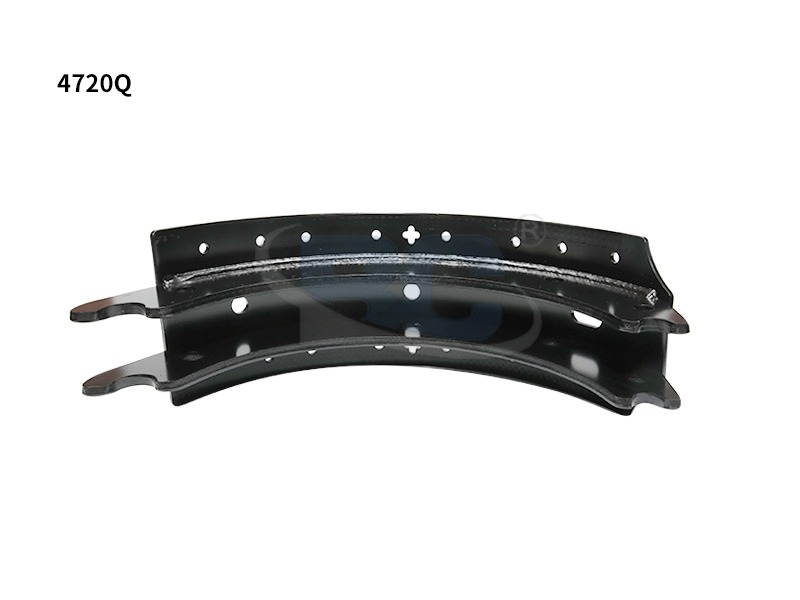
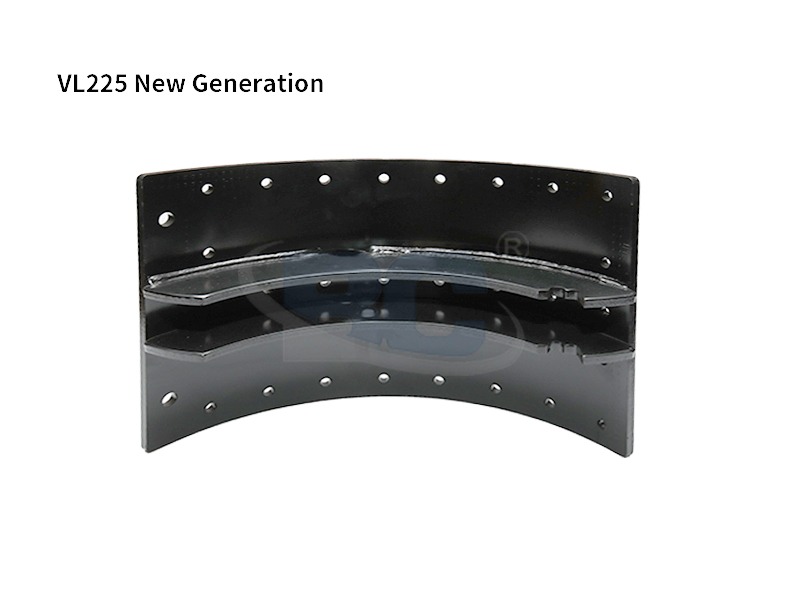
The VL225 Old Generation Brake Shoe is a steel brake shoe designed for heavy-duty brake applications. It has a product size of 410 × 225 mm, includes 28 rivet holes, and is identified by the OE number 0270.829-5. These specifications make it suitable for buyers who require a clearly defined replacement component for compatible drum-brake systems. The product is offered by Zhejiang Bangchi Auto Parts Co., Ltd., a Chinese manufacturer focused on heavy-duty brake parts, heavy truck brakes, brake shoes, brake linings, lined brake shoes, and brake shoe repair kits.
This article examines the product’s construction, dimensional characteristics, potential operating advantages, quality considerations, application value, and manufacturing context. It also explains why a steel brake shoe with a precise hole pattern and established reference number can be valuable to distributors, repair businesses, fleet operators, and original-equipment replacement specialists.
VL225 Old Generation Brake Shoe
Product Overview
The VL225 Old Generation Brake Shoe is categorized as a steel brake shoe. Unlike a complete lined brake shoe assembly, a steel brake shoe is the structural foundation to which a friction lining may be attached through riveting or another approved installation method. This format allows repair professionals and parts distributors to select a steel shoe separately from the lining, which can be useful when the original shoe requires replacement but the lining specification is selected independently.
The principal product data is straightforward. The shoe measures 410 × 225 mm and has 28 rivet holes. Its product reference is VL225 Old Generation, while the listed OE number is 0270.829-5. These identifiers provide a practical starting point for product matching, inventory management, purchasing, and technical communication between suppliers and customers.
| Item | Specification |
|---|---|
| Product type | Steel brake shoe |
| Product reference | VL225 Old Generation |
| Product size | 410 × 225 mm |
| Number of rivet holes | 28 |
| OE number | 0270.829-5 |
| Product category | Heavy-duty brake component |
| Related product categories | Casted brake shoes, brake linings, lined brake shoes, brake shoe repair kits, and lined brake shoe kits |
For commercial vehicle braking systems, dimensional accuracy is especially important. A brake shoe must sit correctly inside the drum, align with the actuator and anchor points, and maintain the intended relationship with the friction surface. The 410 × 225 mm size and 28-hole configuration therefore represent more than simple catalog information. They are key selection criteria that help reduce the risk of ordering an incompatible component.
Why the Steel Brake Shoe Matters
The brake shoe carries several important responsibilities inside a drum-brake system. When the brake mechanism is activated, the shoe moves outward toward the rotating drum. The friction lining mounted on the shoe contacts the drum’s inner surface and creates resistance. The resulting friction slows the vehicle. During this process, the shoe experiences compressive forces, bending forces, localized contact loads, and vibration.
A shoe that is poorly formed or dimensionally inconsistent may not distribute force evenly across the lining. Uneven force distribution can contribute to irregular lining wear, reduced contact efficiency, noise, or premature maintenance. In a heavy-duty vehicle, where braking loads are much greater than those of a passenger car, structural reliability becomes particularly significant.
The steel shoe must also maintain its shape under repeated thermal cycles. Braking generates heat at the lining-to-drum interface. Although the shoe is not the primary friction surface, heat can transfer through the lining and into the shoe. Repeated heating and cooling may create expansion and contraction stresses. A well-manufactured steel component should retain its functional geometry over the expected operating range and should be suitable for integration with the correct lining material.
The VL225 Old Generation Brake Shoe is therefore best understood as a foundation component. Its value is not determined only by its external dimensions. It also depends on the accuracy of its curvature, the consistency of the rivet-hole pattern, the condition of its surface, the quality of its edges, and its ability to work with the other parts of the braking assembly.
Dimensional Compatibility and the 28-Hole Design
One of the most important advantages of a cataloged replacement shoe is clear dimensional identification. The 410 × 225 mm specification allows a purchaser to compare the product with an existing component, a technical drawing, an OE reference, or a maintenance database. This can simplify the preliminary selection process and reduce uncertainty before an order is placed.
The 28 rivet holes are equally important. Rivet holes determine how a lining is positioned and secured to the shoe. Their number, spacing, diameter, and location influence the available lining pattern and the final fit of the assembled brake shoe. A lining intended for a different hole layout may not install correctly, even if its overall length and width appear similar.
A 28-hole pattern can provide multiple fastening points along the friction material. When used with the correct lining and approved rivets, multiple attachment points can help distribute fastening loads across the assembly. This is especially relevant in heavy-duty service, where braking vibration and thermal movement can place repeated stress on the lining attachment system.
Purchasers should not rely on size alone when selecting a replacement. The product reference, OE number, hole count, hole pattern, shoe curvature, anchor geometry, and operating application should all be checked. The information provided for this product gives a strong identification basis, but final compatibility should be confirmed against the vehicle, axle, drum, and braking-system specifications.
From an inventory perspective, a clearly defined 28-hole shoe can also improve warehouse organization. Distributors can distinguish it from visually similar products that use fewer or more holes. This reduces the risk of picking errors and makes it easier for sales teams to answer customer inquiries accurately.
Structural Advantages of a Steel Brake Shoe
Steel remains a practical material for heavy-duty brake shoes because it combines structural strength, formability, durability, and compatibility with established manufacturing methods. A steel shoe can be shaped to match the intended drum profile while providing the rigidity needed to transfer braking force from the actuator to the lining.
Compared with an incorrectly selected or poorly produced substitute, a properly manufactured steel shoe can provide several functional advantages. These include stable support for the friction lining, controlled force transmission, predictable installation, and reliable integration with existing hardware. The exact performance depends on material grade, thickness, forming accuracy, heat treatment where applicable, surface condition, and assembly quality.
The steel construction also supports repair-oriented purchasing. In many maintenance situations, the shoe frame may be replaced while the customer selects a compatible lining based on operating conditions, friction requirements, or regional availability. This can provide greater flexibility than purchasing only a fully assembled product. It may also be useful for specialist brake repair workshops that maintain their own lining installation processes.
Another advantage is the possibility of standardized production. Steel brake shoes can be manufactured through controlled blanking, forming, hole-making, finishing, and inspection processes. When these operations are properly managed, repeatability can be improved from batch to batch. Repeatability is valuable to customers who purchase replacement components over an extended period and expect consistent fit across multiple orders.
In a competitive market, a steel brake shoe should not be evaluated only by its purchase price. A lower-cost component may create additional expense if it requires reworking, presents installation problems, causes premature lining wear, or leads to avoidable vehicle downtime. A dimensionally reliable component can support total operating value by helping maintenance personnel install the correct part efficiently.
Advantages Compared with Generic or Poorly Matched Alternatives
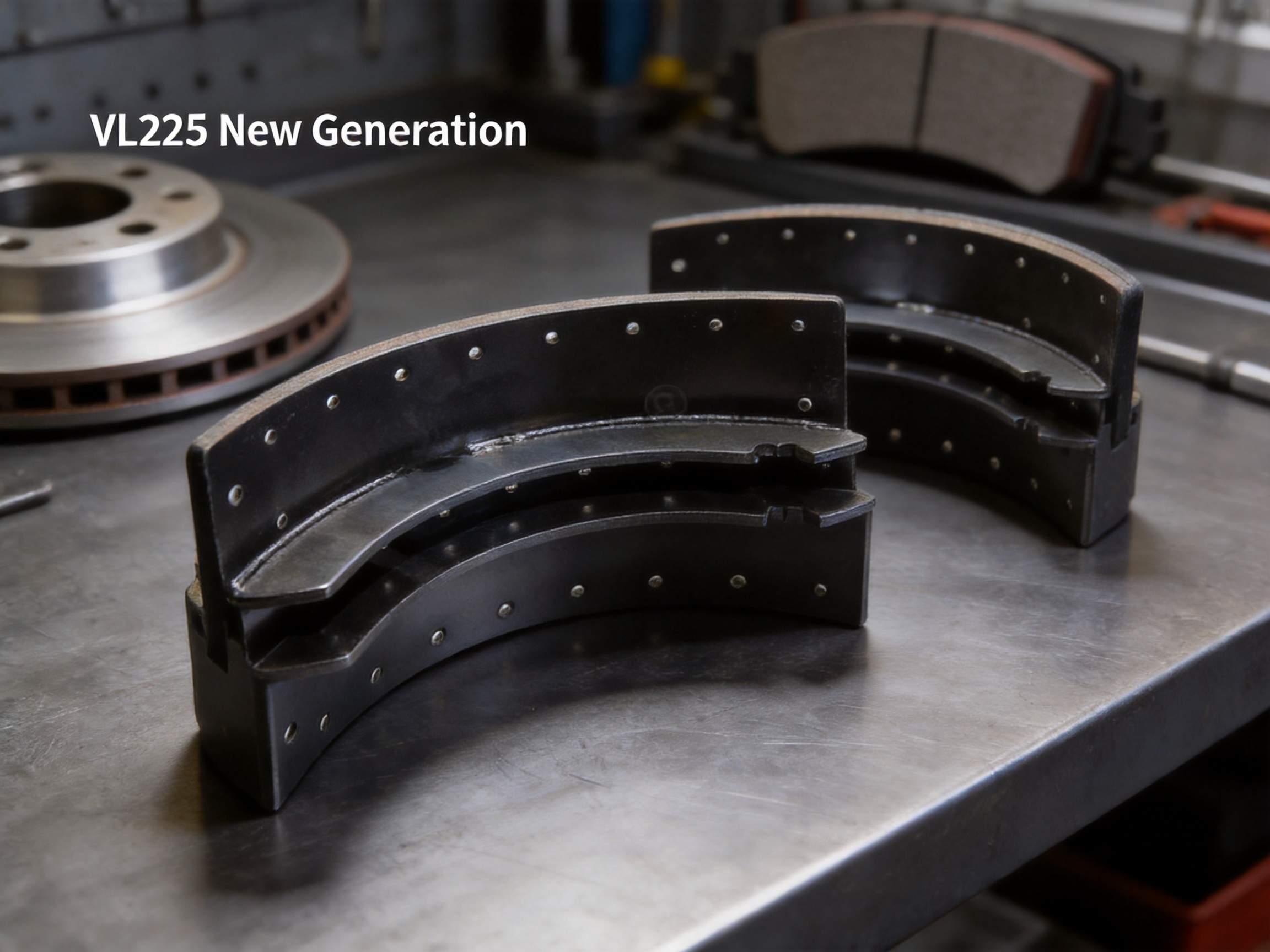
The replacement-parts market includes many products that may look similar from a distance. However, brake shoes are application-sensitive parts. Small differences in curvature, hole position, shoe width, anchor geometry, or material thickness can affect installation and performance. A product with a defined reference, OE number, size, and rivet-hole count offers a more disciplined basis for comparison than an unmarked generic component.
The first advantage is traceable identification. The VL225 Old Generation reference and OE number 0270.829-5 allow buyers to communicate about a specific product rather than relying only on photographs or informal descriptions. This can reduce ambiguity between old-generation and new-generation versions or between products that share similar external dimensions.
The second advantage is predictable lining integration. The stated 28-hole arrangement helps repair professionals identify the correct lining format and fastening configuration. Generic shoes without reliable hole-pattern information may require additional measurement or may be discovered to be unsuitable only after the vehicle has already been disassembled.
The third advantage is application-focused manufacturing. A product developed around a defined reference is generally easier to inspect against a known specification. Critical features can be checked during production and final quality control, including overall dimensions, hole quantity, hole location, forming consistency, and surface condition.
The fourth advantage is purchasing efficiency. A clearly documented product can simplify quotation, order confirmation, warehouse labeling, and after-sales communication. For distributors serving repair shops or fleet customers, efficient identification can help reduce returns and shorten the time required to resolve technical questions.
The fifth advantage is system compatibility. A steel shoe is not an isolated decorative component. It is intended to operate as part of a brake assembly that may include a drum, lining, rivets, rollers, anchors, adjusters, and actuators. A correctly referenced shoe provides a stronger foundation for checking the complete assembly against the intended braking system.
These advantages do not mean that every application is automatically suitable. Buyers should still confirm the vehicle and axle application, compare the OE reference, verify the old-generation configuration, and ensure that the selected lining and fastening hardware match the shoe.
Manufacturing Process for Heavy-Duty Steel Brake Shoes
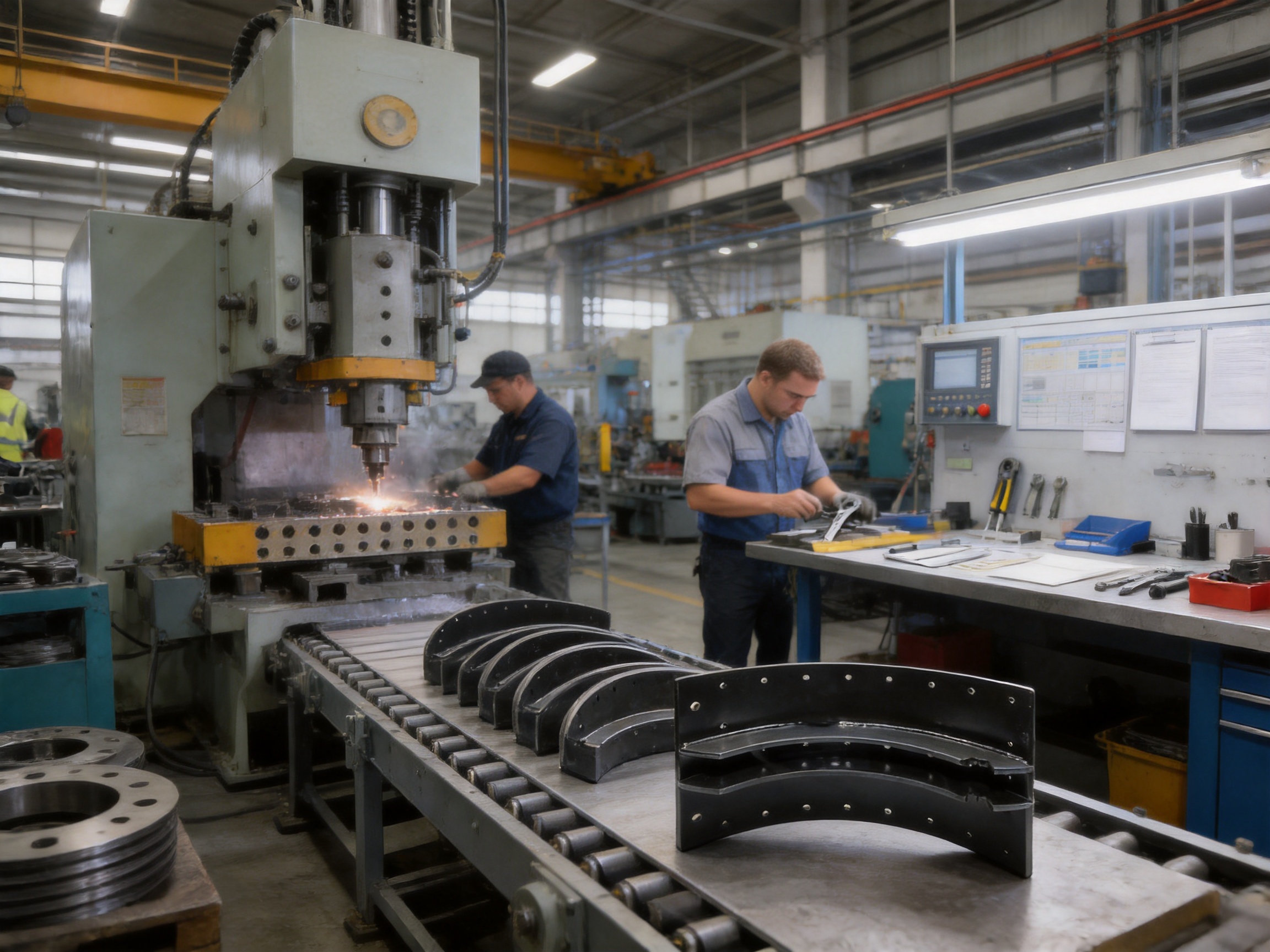
Advanced manufacturing is important because the performance of a brake shoe depends on a sequence of interconnected operations. A defect introduced during material preparation, blanking, forming, hole-making, welding, finishing, or inspection can affect the final assembly. A professional manufacturer therefore needs process control at each stage rather than relying only on a final visual check.
Material Preparation
Manufacturing begins with the selection and preparation of steel sheet or steel plate suitable for the intended brake-shoe design. The material should provide adequate strength, consistent thickness, and suitable formability. Incoming material may be checked for dimensions, surface condition, identification, and conformity with the internal purchasing specification.
Material control is important because inconsistent thickness can affect forming, finished geometry, weight, and contact alignment. Surface defects may also become more significant after forming or finishing. Organized storage and batch identification help maintain production traceability and support investigation if a quality concern is reported.
Blanking and Profile Formation
The steel is cut into a preliminary blank that reflects the basic outline of the brake shoe. Depending on the production method, this may involve stamping, shearing, laser cutting, or another controlled cutting process. The objective is to create a repeatable profile while minimizing deformation, excessive burrs, and dimensional variation.
Tool condition is important during blanking. Worn tooling can create rough edges, distorted profiles, or inconsistent dimensions. Regular tool maintenance and setup verification can help maintain product uniformity. For a brake component, edge quality matters because sharp or irregular edges may complicate handling, finishing, or assembly.
Hole Making
The 28 rivet holes must be produced with consistent quantity, location, and size. Hole-making may be performed through stamping, punching, drilling, or a combination of operations. The selected method depends on production volume, material thickness, tooling design, and required accuracy.
Hole position is especially important because a lining must align with the shoe during installation. If holes are displaced, a rivet may not seat correctly or the lining may be forced into an incorrect position. Controlled fixtures, maintained dies, and inspection gauges can help verify the hole pattern.
In addition to counting the holes, quality personnel should evaluate hole edges, burr height, roundness, and spacing. These details influence rivet installation and the final security of the lining. A professional process should also protect the product from damage caused by uncontrolled stacking or handling after hole-making.
Forming and Curvature Control
After blanking and hole-making, the steel shoe is formed into the required curvature. This operation creates the shape that allows the shoe and lining to work within the brake drum. Forming accuracy must be controlled because an incorrect radius can lead to poor lining contact, difficult installation, or uneven wear.
Forming equipment should be set according to the product reference and checked during production. The first pieces from a setup may receive additional verification before the batch continues. Periodic checks can identify gradual tool movement, material springback, or process drift.
Springback is a normal consideration in formed steel parts. After pressure is released, the material may recover slightly toward its original shape. Manufacturing engineers must account for this behavior through tooling design and process settings. The objective is not merely to create a curved part but to create a part that retains the intended geometry after forming and handling.
Joining and Reinforcement Operations
Some brake-shoe designs require additional components, reinforcements, brackets, or welded features. Where joining operations are used, the weld must be positioned correctly and have suitable penetration and consistency. Welding parameters, fixture stability, electrode condition, and operator training can all influence the result.
Welded areas should be inspected for visible discontinuities such as cracks, excessive spatter, incomplete fusion, or unacceptable distortion. The precise inspection method should correspond to the design and internal quality requirements. The broader objective is to ensure that every attached feature remains secure during service.
Surface Treatment and Finishing
After forming and joining, the shoe may undergo deburring, cleaning, and surface treatment. Removing burrs supports safer handling and can improve assembly. Cleaning helps eliminate oil, metal particles, and contaminants that could interfere with coating or storage.
A suitable protective finish can help reduce corrosion during transportation, warehousing, and service. The precise coating or treatment depends on the product specification and customer requirements. Surface treatment should be applied consistently and checked for coverage, adhesion, and visible defects.
Finishing is not simply a cosmetic step. Corrosion can affect the appearance, storage life, and dimensional condition of a steel component. Proper packaging should complement the surface treatment by protecting the shoe from moisture, impact, and contamination during shipment.
Final Inspection and Packing
Final inspection should confirm that the completed product corresponds to the correct reference. Typical checks may include product size, curvature, hole quantity, hole pattern, edge condition, weld condition where applicable, surface finish, and overall appearance.
Inspection equipment may include templates, gauges, calipers, coordinate measurement tools, curvature fixtures, and visual standards. The choice of equipment depends on the feature being checked and the required precision. Measurement results should be recorded according to the manufacturer’s quality system.
Packaging should prevent the shoes from rubbing against one another or becoming deformed under excessive load. Labels should identify the product reference and relevant order information. Clear packaging and labeling help distributors maintain stock accuracy and reduce product mix-ups.
Manufacturing Strengths and Supplier Value
Zhejiang Bangchi Auto Parts Co., Ltd. operates in the heavy-duty brake-parts sector and provides product categories that include steel brake shoes, casted brake shoes, brake linings, lined brake shoes, brake shoe repair kits, and lined brake shoe kits. This product range indicates a focus on multiple stages of the drum-brake replacement market rather than on a single isolated component.
A supplier with related product categories can offer practical advantages to distributors and repair businesses. Customers may be able to source the steel shoe, lining, or repair-kit format from one manufacturing partner, subject to application confirmation. This can simplify purchasing and make it easier to coordinate components that are intended to work together.
The company states that its OEM brake parts follow the global FMSI numbering system. Numbering-system awareness can support organized cataloging and technical communication, particularly for customers who manage a broad inventory of friction and brake components. Product numbering does not replace application verification, but it can provide a useful structure for identification.
Manufacturing strength should also be evaluated through process consistency. For a brake-shoe supplier, relevant capabilities include controlled steel forming, repeatable hole-pattern production, dimensional inspection, surface protection, product labeling, and packaging. These capabilities help transform a basic steel component into a dependable replacement part suitable for professional distribution.
Another important strength is responsiveness to market requirements. Heavy-truck and commercial-vehicle customers often need products for established vehicle populations, older brake configurations, and repair-oriented applications. A supplier that maintains clear product records and understands differences between product generations can provide more useful support than a supplier that treats all similar-looking shoes as interchangeable.
For international buyers, communication is also part of supplier performance. Accurate product data, clear order confirmation, professional packaging, and accessible technical contact channels can reduce misunderstandings. The provided company contact details include a telephone number, fax number, email address, and a manufacturing address in Haining, Zhejiang, China, supporting direct commercial communication for inquiries and orders.
Old-Generation Configuration and Replacement Planning
The term “Old Generation” is important because brake components can change across vehicle generations, axle revisions, production updates, or supplier designs. A newer component may resemble an older component but use a different hole pattern, shape, mounting detail, or lining arrangement. Selecting the correct generation helps prevent installation problems and reduces the possibility of mixing incompatible parts.
When replacing an old-generation shoe, maintenance personnel should record the reference number, OE number, dimensions, hole count, and visible mounting features before removing the original part. Photographs, measurements, and vehicle records can assist with confirmation. The 0270.829-5 OE number and VL225 Old Generation product reference should be included in purchase documentation.
Buyers should also determine whether they need a bare steel shoe, a lined brake shoe, or a complete repair kit. A steel shoe is appropriate when the customer intends to install a separate lining or when the existing procurement process is based on component-level repair. A lined brake shoe may be more convenient when the lining and shoe are purchased as an assembled unit. A repair kit may be preferred when several related service parts are required at the same time.
The correct choice depends on workshop equipment, labor capability, fleet policy, regional regulations, and the required maintenance procedure. In all cases, the brake shoe and lining must be compatible, and the completed assembly must be inspected before returning the vehicle to service.
Installation and Service Considerations
Installation should be performed by qualified personnel using the vehicle or axle manufacturer’s service procedures. Before fitting the new shoe, the drum, actuator, anchors, rollers, springs, adjusters, and related hardware should be inspected. Replacing only one worn component may not resolve a problem caused by a damaged or contaminated mating part.
The brake drum should be checked for excessive wear, scoring, cracking, heat damage, or out-of-round condition. A new or correctly refurbished shoe may not perform properly against a drum that is outside its service limits. Drum condition is especially important because the shoe and lining must establish an appropriate contact pattern.
If a lining is riveted to the steel shoe, the rivets should be suitable for the lining and hole configuration. Rivet installation should produce secure attachment without damaging the lining or distorting the shoe. The rivet heads should be properly seated, and the lining should remain aligned with the shoe’s curvature.
The shoe should move freely through its intended range without binding. Contact points may require appropriate service treatment according to the applicable maintenance instructions. Lubricant must not reach the friction surface. Contamination of the lining or drum can seriously reduce braking effectiveness.
After assembly, the brake system should be adjusted and tested according to the relevant procedure. The vehicle should not be returned to normal operation until the technician has confirmed correct movement, clearance, adjustment, and braking response. Any bedding-in procedure required for the selected lining should also be followed.
Quality Assurance Priorities
Quality assurance for a heavy-duty brake shoe should begin before production and continue through delivery. Incoming steel inspection, process checks, final measurement, packaging verification, and customer feedback all contribute to product reliability.
Dimensional control is one of the highest priorities. The product size of 410 × 225 mm should be interpreted according to the manufacturer’s measurement method and product drawing. Buyers who require strict dimensional confirmation should request the applicable technical drawing or inspection standard before placing a large order.
Hole-pattern control is equally important. Inspectors should verify that all 28 holes are present, clean, correctly positioned, and suitable for the intended rivet arrangement. A visual count alone may not reveal spacing errors, so appropriate gauges or templates are valuable for production control.
Curvature inspection helps confirm that the formed shoe matches the intended drum application. A template or radius gauge can identify deviations that may not be obvious during a simple visual inspection. Repeatable curvature is important for lining fit and contact behavior.
Surface quality should be checked for burrs, cracks, deformation, corrosion, coating defects, and handling damage. Packaging inspection is also necessary because a product that leaves the factory in good condition can still be damaged during transport if it is not protected adequately.
Quality documentation can strengthen customer confidence. Depending on the order and market, buyers may request batch information, inspection records, material documentation, dimensional reports, or other agreed documents. The exact documentation should be established during the quotation and order-confirmation stages.
Value for Distributors and Fleet Customers
Distributors need products that are easy to identify, store, quote, and resell. A brake shoe with a defined reference, OE number, size, and hole count supports these commercial tasks. The product can be listed in catalogs and inventory systems with information that helps customers distinguish it from related parts.
For fleet operators, part consistency is important because multiple vehicles may require the same replacement component over time. A stable product reference can simplify maintenance planning and reduce the risk of installing different, unverified components across similar vehicles. It can also help purchasing departments compare historical orders and forecast future demand.
Repair shops may value the flexibility of a bare steel shoe. If the workshop has suitable lining installation equipment and trained personnel, it can select the appropriate friction material and complete the repair according to its established procedure. This can be useful where different vehicles operate under different loads, routes, temperatures, or braking demands.
Export customers may also benefit from organized packaging and clear labeling. Heavy-duty brake parts are often shipped in commercial quantities, and accurate labels help receiving teams inspect deliveries quickly. Product identification should remain visible after outer packaging is opened so that warehouse staff can maintain correct stock separation.
Comparison with Other Brake Shoe Product Formats
| Product format | Main characteristic | Typical purchasing consideration |
|---|---|---|
| Steel brake shoe | Structural shoe supplied without an attached lining | Requires compatible lining and suitable installation method |
| Casted brake shoe | Brake shoe produced through a casting-based structural process | Selection depends on design, application, and dimensional compatibility |
| Lined brake shoe | Steel shoe and friction lining supplied as an assembled unit | Convenient for replacement when the complete assembly is required |
| Brake shoe repair kit | A service-oriented combination of related repair components | Useful when several parts are replaced during maintenance |
| Lined brake shoe kit | A packaged solution centered on a lined shoe assembly | Can simplify ordering when the correct complete configuration is known |
The VL225 Old Generation product belongs to the steel brake shoe category. Its most appropriate use depends on the customer’s repair method and the condition of the existing braking system. A purchaser who needs a complete ready-to-install unit should confirm whether a lined version is available and whether it uses the same application reference.
The existence of several product formats demonstrates why accurate technical communication matters. “Brake shoe” can refer to a bare structural component, a cast component, a lined assembly, or a kit. Orders should specify the desired format, reference number, OE number, dimensions, and quantity.
Storage, Handling, and Logistics
Steel brake shoes should be stored in a clean, dry environment protected from excessive humidity, rain, condensation, corrosive chemicals, and impact. Although a surface treatment may provide protection, prolonged exposure to moisture can still cause corrosion or packaging deterioration.
Products should be stacked in a way that prevents bending or distortion. Heavy items should not be placed carelessly on top of the shoes. Separators or suitable packaging materials can help protect coated surfaces and prevent metal-to-metal abrasion.
Warehouse personnel should use the product reference and OE number when receiving and issuing stock. Similar-looking parts should remain physically separated and should not be stored under a common unverified label. Stock rotation can help reduce long-term storage exposure, particularly in environments where humidity control is limited.
During transport, the packaging should protect the shoes from vibration, collision, and moisture. Export shipments may require additional wrapping or container protection depending on the route and climate. Customers should inspect cartons when received and report visible shipping damage promptly.
How to Select the Correct Product
Product selection should begin with the vehicle or axle application. The buyer should collect the vehicle model, production generation, axle information, brake-drum details, existing shoe reference, OE number, and any available maintenance documentation.
The next step is to compare the critical dimensions. The listed shoe size is 410 × 225 mm, and the rivet-hole quantity is 28. These measurements should be compared with the existing component or technical drawing. If there is uncertainty, the buyer should provide photographs and measurements to the supplier for confirmation.
The buyer should then determine the required supply format. If the workshop needs to install its own friction lining, the steel shoe may be suitable. If the customer needs a complete replacement assembly, a lined shoe or lined kit may be more appropriate. This decision should be made before quotation to avoid ordering a part that does not match the workshop’s process.
Finally, the purchaser should confirm packaging, quantity, labeling, inspection requirements, delivery schedule, and any documentation needed for the destination market. Clear order details reduce delays and make it easier for the manufacturer to prepare the correct product.
Q&A
What is the VL225 Old Generation Brake Shoe?
It is a steel brake shoe for a compatible heavy-duty drum-brake application. The listed product reference is VL225 Old Generation, and the listed OE number is 0270.829-5.
What are the dimensions of this brake shoe?
The stated product size is 410 × 225 mm. Buyers should confirm the manufacturer’s measurement method and compare the dimensions with the existing shoe or technical drawing before ordering.
How many rivet holes does the shoe have?
The shoe has 28 rivet holes. The complete hole pattern, including spacing and hole dimensions, should be checked when selecting a compatible brake lining.
Is this product supplied with a brake lining?
The product is categorized as a steel brake shoe, so the supplied component should be treated as a structural shoe rather than automatically assumed to be a lined assembly. Customers should confirm the supply format when placing an order.
Can any 28-hole lining be installed on the shoe?
No. The lining must match the shoe’s complete hole pattern, curvature, dimensions, and application requirements. Rivet size and installation procedure must also be appropriate.
Why is the OE number important?
The OE number 0270.829-5 provides a reference for product identification and comparison. It should be used together with the vehicle, axle, dimensions, hole pattern, and generation information rather than as the only selection criterion.
What does “Old Generation” mean?
It identifies a particular product configuration that may differ from a newer version. Differences can involve dimensions, mounting features, hole patterns, or other design details. Buyers should confirm which generation is installed on the vehicle.
What are the main benefits of a steel brake shoe?
A steel brake shoe provides a rigid foundation for the friction lining, supports force transfer within the drum-brake system, and allows repair businesses to select and install a compatible lining separately when appropriate.
What should be checked before installation?
The technician should inspect the drum, actuator, anchors, rollers, springs, adjusters, shoe contact points, lining, rivets, and related hardware. The shoe’s dimensions, curvature, hole pattern, and surface condition should also be verified.
Can this product be used for every heavy truck?
No. Heavy trucks use different brake systems and configurations. The product should be installed only when the vehicle or axle application, OE reference, dimensions, and complete technical requirements are confirmed.
How does a manufacturer improve brake-shoe consistency?
Consistency can be improved through controlled material selection, maintained cutting and forming tools, accurate hole-making, curvature fixtures, surface treatment, batch inspection, clear labeling, and protective packaging.
What information should a distributor provide when requesting a quotation?
The distributor should provide the product reference, OE number, required product format, quantity, destination, packaging expectations, and any requested inspection or documentation requirements. Vehicle or axle information is useful for application confirmation.
What is the advantage of sourcing related brake products from one supplier?
A supplier offering steel shoes, casted shoes, linings, lined shoes, repair kits, and lined shoe kits may simplify purchasing and coordination. However, each component must still be confirmed for the specific brake application.
How should the brake shoes be stored?
They should be kept in a dry, clean, protected area away from moisture, corrosive substances, impact, and excessive stacking loads. Products should remain clearly labeled and separated from similar-looking references.
Why should buyers compare more than price?
Brake-shoe value includes fit, dimensional consistency, installation efficiency, lining compatibility, service reliability, packaging, and supply support. A low purchase price may not represent good total value if the part causes rework or downtime.
Conclusion
The VL225 Old Generation Brake Shoe is a clearly identified steel component with a 410 × 225 mm size, 28 rivet holes, and OE number 0270.829-5. These specifications provide a practical foundation for application matching and purchasing decisions. For compatible heavy-duty drum-brake systems, the shoe can serve as the structural base for a properly selected and installed friction lining.
Its principal advantages over poorly defined alternatives are identification clarity, dimensional reference, known rivet-hole quantity, and suitability for organized repair and distribution processes. The product can be especially relevant to customers who require a bare steel shoe rather than a complete lined assembly.
The performance of any brake shoe depends on the entire system. Correct application, accurate lining selection, proper riveting, suitable drum condition, professional installation, and final adjustment are all essential. The component should therefore be selected and installed through a controlled technical process rather than by appearance alone.
As a heavy-duty brake-parts manufacturer, Zhejiang Bangchi Auto Parts Co., Ltd. supports a product range that includes steel brake shoes, casted brake shoes, brake linings, lined brake shoes, brake shoe repair kits, and lined brake shoe kits. Its stated focus on OEM brake parts and FMSI numbering provides a structured basis for communication with international buyers. Combined with controlled forming, hole-making, finishing, inspection, packaging, and customer support, these capabilities can help meet the needs of distributors, repair workshops, and commercial-vehicle maintenance programs.
For purchasing inquiries, customers can contact the manufacturer through the provided telephone, fax, or email channels and confirm the product reference, OE number, dimensions, hole pattern, supply format, quantity, and application details before ordering.
References
1. Product specification provided for the VL225 Old Generation Brake Shoe: 410 × 225 mm, 28 rivet holes, OE number 0270.829-5.
2. Manufacturer-provided product categories covering steel brake shoes, casted brake shoes, brake linings, lined brake shoes, brake shoe repair kits, and lined brake shoe kits.
3. Manufacturer-provided information regarding OEM brake parts and the global FMSI numbering system.
4. General service principles for heavy-duty drum-brake inspection, brake-shoe installation, lining attachment, drum inspection, and post-installation testing.
5. General manufacturing principles for formed steel components, including material control, blanking, hole-making, forming, surface treatment, dimensional inspection, and protective packaging.