 English
 简体中文
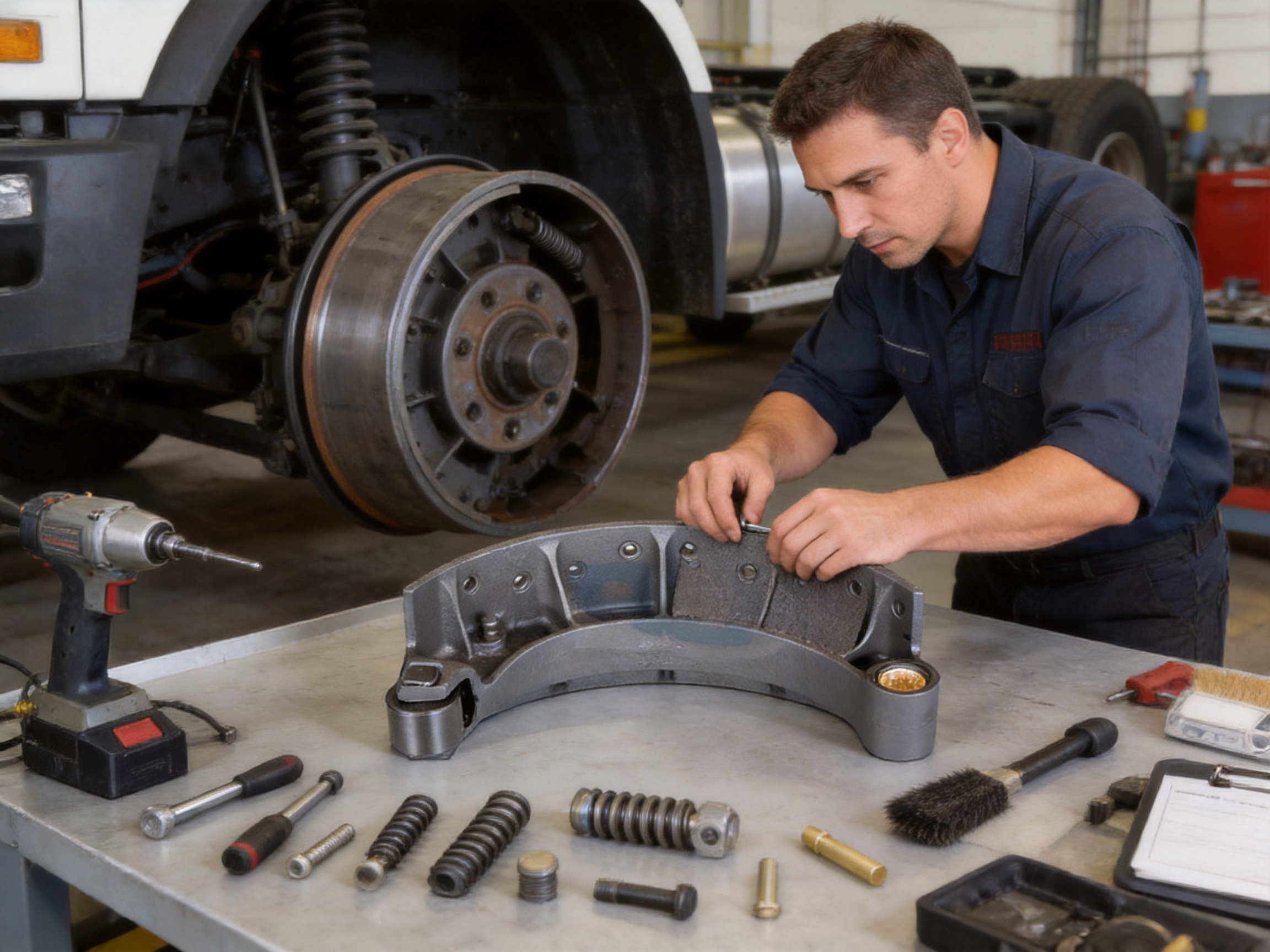
In heavy-duty commercial vehicles, braking performance depends on the combined quality of the drum, brake shoe, friction lining, hardware, and installation process. Among these components, the brake shoe provides the structural foundation that supports the friction material and transfers braking force to the inside surface of the brake drum. A brake shoe that is accurately produced, dimensionally stable, and properly matched to the vehicle application can contribute to dependable stopping performance, consistent maintenance, and longer service life.
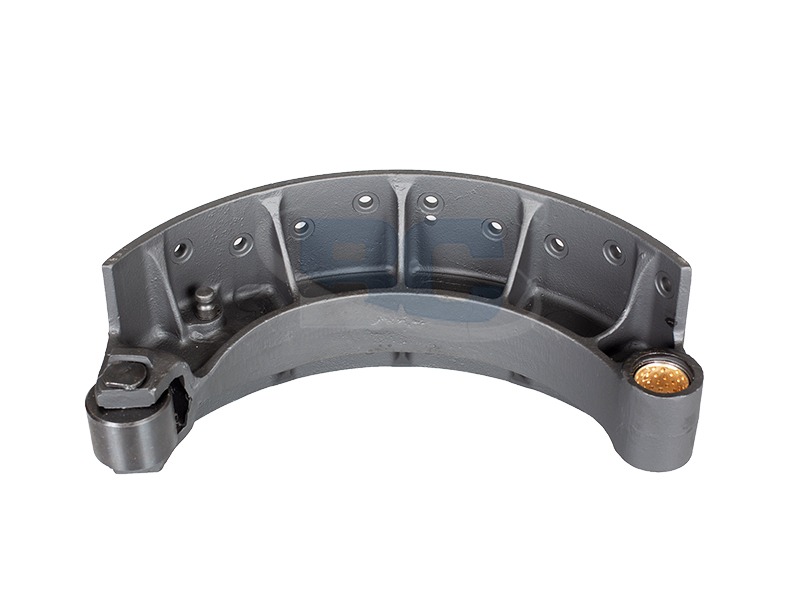
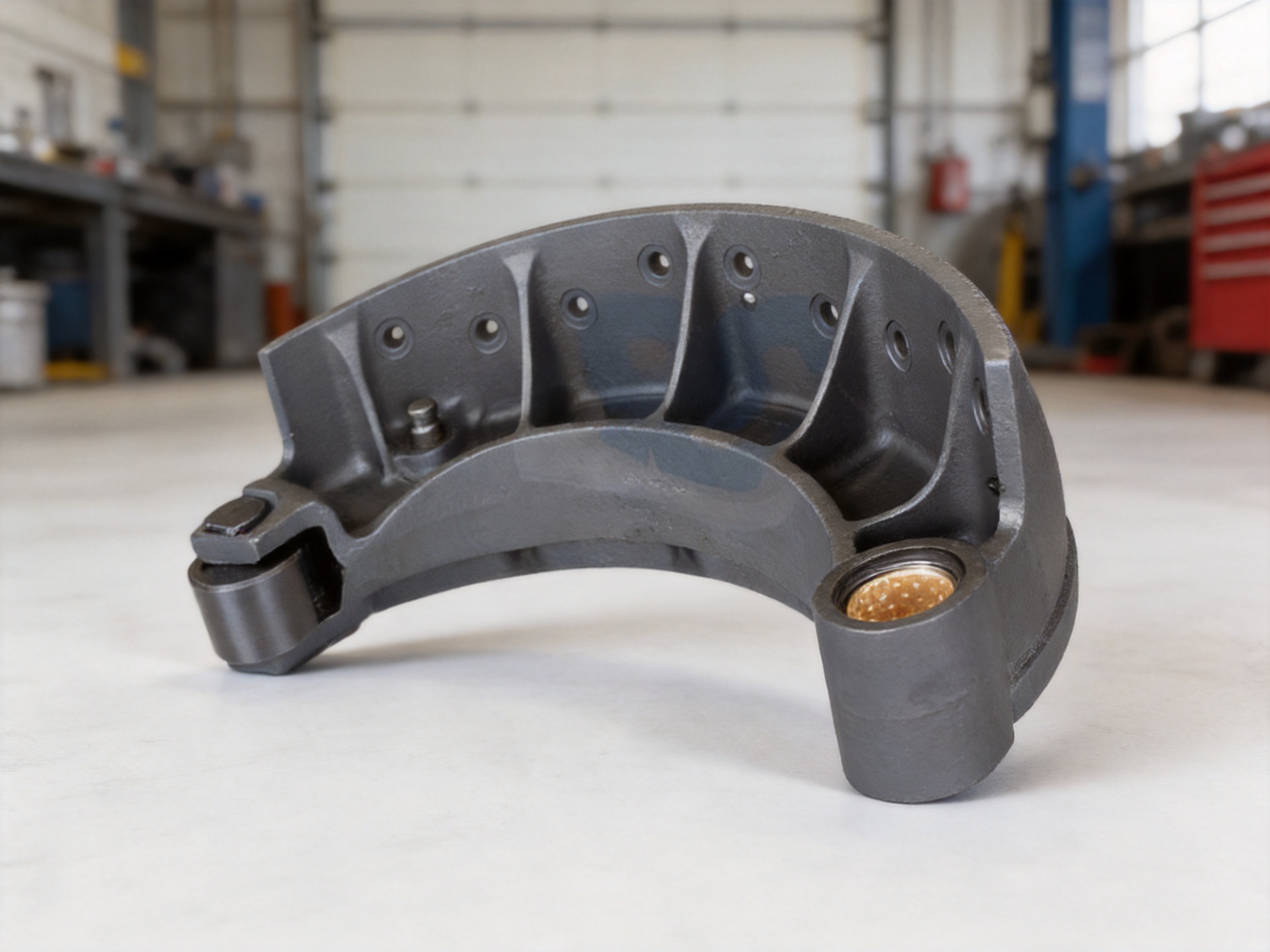
The 4656 Casted Brake Shoe is designed for MAN160 applications and is identified by Part No. 4656. It has a size of 410 X 160 mm and incorporates 18 riveting holes. These specifications make it suitable for professional replacement and brake-system maintenance operations where correct dimensional matching is essential. As a casted brake shoe, it is intended to provide a strong base for the installation of brake lining material while maintaining the shape and rigidity required for repeated braking cycles.
Manufactured and supplied by Zhejiang Bangchi Auto Parts Co., Ltd., the 4656 Casted Brake Shoe is part of a broader range that includes steel brake shoes, casted brake shoes, brake linings, lined brake shoes, brake shoe repair kits, and lined brake shoe kits. This product-family approach allows distributors, repair workshops, fleet operators, and braking-system specialists to source related components from one experienced heavy-duty brake parts manufacturer.
Product Overview
The 4656 Casted Brake Shoe is a cast brake shoe designed for the MAN160 application. Its product identification and main specifications are summarized below.
| Item | Specification |
|---|---|
| Product | 4656 Casted Brake Shoe |
| Part Number | 4656 |
| Product Category | Casted Brake Shoe |
| Application | MAN160 |
| Size | 410 X 160 mm |
| Riveting Holes | 18 |
| OEM Number | Not specified |
The dimensions and riveting-hole count are important identification features. In a commercial vehicle brake assembly, even a small variation in shoe geometry or hole positioning may affect lining fitment, riveting quality, contact with the drum, and final braking balance. For this reason, the 4656 model should be selected and installed according to the vehicle application, the original brake-system design, and the requirements of the repair operation.
The product is supplied as a casted brake shoe rather than as a complete lined brake shoe. This gives professional customers flexibility. A distributor may combine the shoe with a preferred friction lining. A repair workshop may use a compatible lining compound according to local operating conditions. A fleet maintenance department may standardize lining selection while keeping the supporting cast shoe consistent across its repair program.
Why the Brake Shoe Matters in a Heavy-Duty Vehicle
Heavy-duty vehicles operate under demanding conditions. Trucks, buses, trailers, construction vehicles, and other commercial vehicles may carry substantial loads, travel long distances, descend steep roads, and brake repeatedly in congested traffic. The brake shoe must therefore withstand mechanical force, thermal cycling, vibration, and long-term service exposure.
During braking, the wheel-end mechanism moves the brake shoe outward toward the drum. The friction lining mounted to the shoe then contacts the rotating drum surface. The resulting friction converts vehicle motion into heat and slows the vehicle. The shoe itself must remain sufficiently rigid so that braking force is transmitted effectively across the lining. If the shoe bends, distorts, or does not hold the lining securely, the friction surface may not contact the drum evenly.
A properly manufactured casted brake shoe supports several essential functions:
First, it provides a stable foundation for the friction lining. The lining must remain correctly positioned during normal braking, emergency braking, and repeated thermal cycles.
Second, it helps preserve the designed relationship between the lining and the drum. The shoe must follow the intended arc and profile of the brake assembly so that the lining can develop an appropriate contact pattern.
Third, it distributes mechanical stress. Braking force is not concentrated at a single point. The shoe transfers load through its body and mounting areas, reducing the risk of localized deformation when the product is correctly matched to the application.
Fourth, it supports maintainability. A casted shoe with correctly positioned riveting holes can simplify the replacement of worn friction material and help repair technicians achieve a secure lining installation.
These functions explain why brake shoe quality cannot be judged by appearance alone. Material integrity, casting consistency, dimensional accuracy, hole position, surface condition, and compatibility with the intended brake system are all important.
4656 Casted Brake Shoe
Advantages of the 4656 Casted Brake Shoe
Application-Specific Design
The 4656 brake shoe is identified specifically for the MAN160 application. Application-specific design is valuable because heavy-duty brake assemblies are not universal. Brake shoes differ in width, arc, mounting configuration, lining interface, and hole pattern. A product developed around a defined application is more practical for professional replacement than a generic component that requires uncertain adaptation.
For purchasing departments and distributors, the MAN160 application reference also improves product organization. Stock can be arranged by part number and vehicle application, reducing confusion between visually similar brake shoes. For repair technicians, the application reference provides an initial compatibility check before installation.
Cast Construction for Structural Support
The casted construction of the 4656 model is intended to provide a robust structural base for heavy-duty braking service. Casting allows the brake shoe body to be formed into a functional geometry with integrated structural features. When the material and process are properly controlled, the result can offer the stiffness and durability required for repeated load transfer.
Compared with a poorly formed or inadequately supported shoe, a correctly produced cast shoe can help maintain the intended profile under service conditions. This is especially relevant in commercial vehicles that experience high axle loads, frequent braking, and demanding road environments.
The strength of a casted brake shoe does not eliminate the need for correct installation. The shoe must still be paired with suitable friction material, correctly riveted, and installed with compatible springs, pins, rollers, adjusters, and drum components. Nevertheless, a sound structural foundation is a fundamental advantage for the entire brake assembly.
410 X 160 mm Size
The stated size of 410 X 160 mm provides an important reference for identification and procurement. Dimensional information helps customers compare the product with the original component, verify warehouse records, and reduce ordering errors.
In brake maintenance, dimensions are not simply packaging information. They influence the available friction area, the position of the lining in relation to the drum, and the suitability of the shoe within the wheel-end assembly. A properly matched size supports more predictable installation and helps the brake system operate according to its intended mechanical arrangement.
18 Riveting Holes
The 18 riveting holes are another defining characteristic of the 4656 brake shoe. The hole pattern determines how the lining is attached to the shoe. A correct hole count and layout help distribute the fastening points along the lining and support secure attachment during service.
Riveting quality depends on more than the number of holes. Hole diameter, position, alignment, edge condition, and spacing all influence the final result. When the lining and shoe are correctly matched, the rivets can be installed with a consistent grip and without creating unnecessary stress concentrations in the friction material.
The 18-hole configuration also provides a practical reference for repair-kit selection. Customers purchasing unlined shoes can use the hole count to identify compatible lining sets and riveting materials. This supports more accurate sourcing and reduces the likelihood of using a lining with an unsuitable hole pattern.
Flexibility for Professional Brake Repair
Because the product is supplied as a casted brake shoe, it can fit several professional repair strategies. Some customers may purchase shoes in bulk and install linings locally. Others may use the shoe as part of a repair kit or combine it with a selected friction material for a specific operating environment.
This flexibility can be valuable in international markets, where fleet operators may have established preferences for lining compounds, riveting methods, and maintenance schedules. It also allows distributors to serve both replacement markets and workshop customers without being restricted to one pre-lined configuration.
Manufacturing Strengths Supporting Product Reliability
Zhejiang Bangchi Auto Parts Co., Ltd. focuses on heavy-duty brake parts and provides products according to the global FMSI numbering system. Its product range covers several stages of brake repair, from individual brake shoes to linings and repair kits. This specialization gives the company a focused understanding of brake-component dimensions, lining attachment, application matching, and aftermarket supply requirements.
For the 4656 Casted Brake Shoe, manufacturing strength begins with control of the product specification. The part number, application, size, and riveting-hole count establish a clear production target. A reliable manufacturing system should preserve these characteristics from design and tooling through casting, finishing, inspection, and packing.
Engineering and Pattern Preparation
The production of a casted brake shoe begins with engineering preparation. The shoe geometry must reflect the intended brake application, including its overall shape, mounting areas, lining seat, arc, and hole configuration. Tooling and patterns are prepared to reproduce the required geometry consistently.
Accurate pattern preparation is essential because dimensional errors introduced at this stage may affect every subsequent part. A stable engineering process should therefore consider shrinkage, machining allowance, hole positioning, and the relationship between the shoe body and the friction lining.
For an application such as MAN160, the engineering team must preserve the 410 X 160 mm product specification and the 18-hole riveting arrangement. Production documentation should identify these features clearly so that operators and inspectors can verify them throughout the process.
Controlled Casting Operations
Casting creates the main body of the brake shoe. A controlled casting operation is intended to achieve a consistent shape and a sound material structure. Important process considerations include the preparation of the mould, the condition of the metal, pouring practice, solidification, and removal of the casting from the mould.
The purpose of process control is to reduce variation. A stable process helps limit problems such as incomplete filling, excessive dimensional fluctuation, unwanted surface defects, and internal irregularities. While no manufacturing process should be described as free from risk, systematic control and inspection can help identify nonconforming parts before they enter the next stage.
For heavy-duty brake components, casting consistency is particularly important because the shoe is subjected to repeated mechanical loading. A shoe that appears acceptable externally still requires appropriate inspection and quality evaluation. Manufacturing discipline should therefore combine process monitoring with dimensional and visual checks.
Finishing and Surface Preparation
After casting, the brake shoe generally requires finishing operations to remove unwanted material, improve the surface condition, and prepare functional areas for further processing. Excess material from the casting process must be removed carefully so that the intended geometry is preserved.
Surface preparation is also relevant to lining installation. The lining seat should be sufficiently clean and suitable for secure attachment. Edges and contact areas should be free from conditions that could interfere with riveting or create an uneven fit. Consistent finishing contributes to easier workshop assembly and more reliable final inspection.
Hole Formation and Dimensional Control
The 18 riveting holes are functional features rather than decorative details. Their position must correspond with the matching lining. Hole formation should therefore be supported by stable tooling, accurate fixtures, and inspection procedures designed to verify count, spacing, alignment, and general condition.
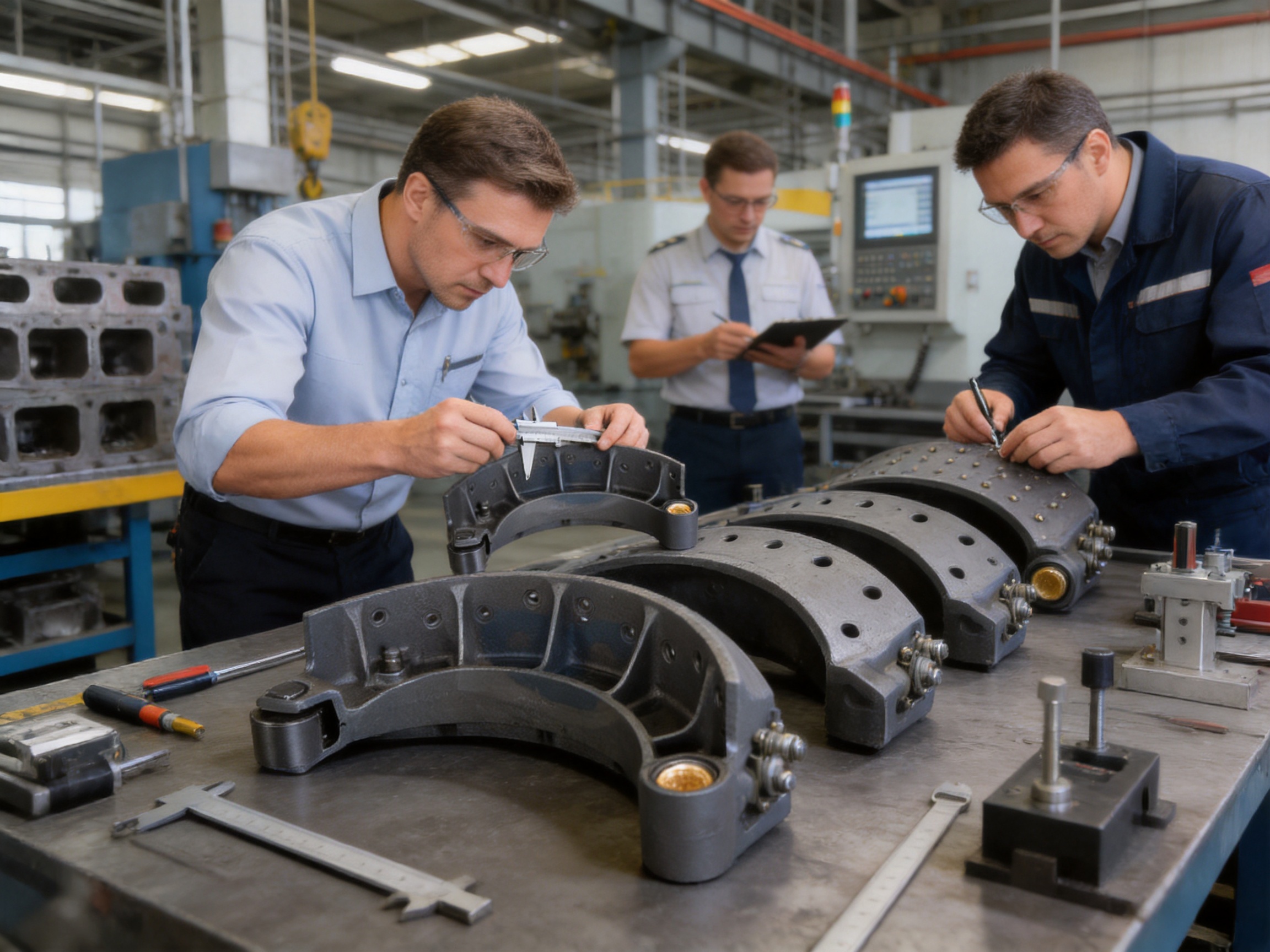
Dimensional control may include checking overall size, width, arc, hole location, and other application-related features. These checks are useful for detecting variation that could affect assembly. When a product is sold through international distribution channels, clear dimensional records also assist customers with incoming inspection and stock identification.
Inspection and Quality Assurance
A professional brake-part manufacturer should apply inspection at multiple stages rather than relying only on a final visual check. Incoming materials, moulds, castings, finished shoes, and packed products each represent different quality-control points.
Inspection activities for a casted brake shoe may include visual examination, dimensional measurement, hole-pattern verification, surface-condition checks, and assessment of conformity with the product specification. Depending on the production system and customer requirements, additional tests may be used to evaluate material or structural properties.
The objective is not merely to reject defective pieces. A strong quality system also provides feedback to production. If repeated dimensional variation is identified, the process can be reviewed and adjusted. If surface problems appear, mould preparation or finishing operations can be examined. This connection between inspection and process improvement is an important manufacturing strength.
How the Product Compares with Generic Alternatives
Customers often compare brake shoes based on price, appearance, and availability. These factors matter, but they do not provide a complete assessment. A lower-priced generic shoe may create additional costs if its dimensions are inconsistent, its hole pattern does not match the lining, or its application information is unclear.
The 4656 Casted Brake Shoe offers several practical advantages over an unverified generic alternative.
One advantage is clear product identification. The part number 4656 and MAN160 application provide a defined reference for purchasing and stock management. Generic products may be listed with incomplete or ambiguous descriptions, making it harder to confirm compatibility.
A second advantage is the availability of specific dimensional information. The 410 X 160 mm size and 18 riveting holes give professional buyers measurable criteria for comparison. This supports more disciplined procurement and incoming inspection.
A third advantage is product-family support. Zhejiang Bangchi Auto Parts Co., Ltd. supplies casted shoes alongside steel brake shoes, brake linings, lined brake shoes, brake shoe repair kits, and lined brake shoe kits. A customer can therefore discuss related requirements with a supplier that specializes in brake components rather than dealing with a general industrial parts source.
A fourth advantage is suitability for structured aftermarket repair. The unlined shoe format gives workshops the ability to select a lining and riveting process according to their established practice. This can be preferable to purchasing an unknown complete assembly when the customer requires control over lining selection.
A fifth advantage is alignment with the global FMSI numbering system. Part-number discipline helps international customers communicate product requirements more accurately. It can also simplify product catalogues, cross-referencing, quotation preparation, and repeat ordering.
These advantages do not mean that every competitor's product is unsuitable. The correct comparison should consider application, material quality, dimensional consistency, inspection, documentation, service support, and total maintenance cost. The strongest product is the one that meets the brake-system requirement reliably and can be supplied consistently over time.
Benefits for Different Customer Groups
Distributors and Importers
Distributors need products that can be identified, catalogued, and reordered without confusion. The 4656 part number, MAN160 application, 410 X 160 mm size, and 18-hole configuration provide a useful foundation for catalogue management.
The broader product range can also help distributors build a more complete heavy-duty brake-parts offering. Instead of stocking only one type of component, a distributor may offer unlined shoes, lined shoes, brake linings, and repair kits. This creates opportunities to serve different workshops and fleet-maintenance preferences.
Consistent packaging and clear labelling are important for warehouse efficiency. Products should be protected from damage and identified in a way that preserves the part number and application information through storage and shipment.
Fleet Maintenance Departments
Fleet operators generally seek dependable maintenance, predictable downtime, and controlled operating costs. A defined brake shoe can support standardization across repair procedures. Maintenance teams can establish inspection and replacement routines around a known part number and application.
The casted shoe format may also support local relining programs. Where fleets maintain their own brake workshops or work with specialized relining providers, they can select friction materials suitable for their routes, loads, climate, and operating patterns.
Fleet customers should always verify that the shoe is appropriate for the specific vehicle and axle position. They should also inspect the complete brake system rather than replacing only the visible worn component.
Brake Repair Workshops
Repair workshops benefit from parts that are easy to identify and practical to process. The 18 riveting holes provide a clear guide for matching the shoe with the correct lining. The specified size helps technicians conduct an initial comparison with the removed original part.
A workshop may use the 4656 shoe in a complete relining procedure. This normally involves cleaning and inspecting the shoe, checking for damage or distortion, selecting a compatible lining, aligning the lining holes, installing suitable rivets, and verifying the completed assembly before installation.
The shoe should not be reused if it has cracks, excessive corrosion, deformation, damaged mounting areas, or other conditions that could compromise service. Professional judgment and applicable repair standards remain essential.
Brake-Part Wholesalers
Wholesalers often require stable supply, broad product coverage, and efficient communication. A manufacturer focused on heavy-duty brake parts can offer more relevant technical support than a supplier whose product range is not specialized in commercial vehicle braking.
The combination of casted brake shoes, steel brake shoes, brake linings, and kits allows wholesalers to respond to varied customer requests. It may also reduce the need to source each related product from a separate supplier.
Installation and Maintenance Considerations
The 4656 Casted Brake Shoe should be installed by qualified personnel using procedures suitable for the MAN160 brake system. Before installation, the technician should compare the replacement part with the removed shoe and verify the part number, application, size, hole count, and general geometry.
The brake drum should be inspected at the same time. A drum with excessive wear, scoring, cracking, heat damage, or an unsuitable internal diameter can reduce the effectiveness of a new shoe and lining. Replacing the shoe alone may not resolve a problem caused by the drum or another brake component.
If the shoe is being relined, the friction material must match the shoe's hole pattern and dimensions. The lining should sit correctly against the shoe without unacceptable gaps, rocking, or misalignment. Rivets must be suitable for the lining and installed using an appropriate tool and method.
After assembly, the technician should check that the lining is secure and that the completed shoe can move correctly within the brake mechanism. Springs, rollers, pins, adjusters, cam surfaces, and other associated hardware should be inspected for wear or damage. Lubrication, where applicable, must be applied only at the correct points and in the correct quantity. Friction surfaces must remain free from grease, oil, and other contaminants.
Brake adjustment should follow the vehicle manufacturer's service requirements or the applicable maintenance procedure. Incorrect adjustment can cause poor braking, overheating, uneven lining wear, or excessive pedal travel. After installation, controlled testing should be completed before the vehicle returns to normal operation.
Regular inspection is equally important. The condition of the lining, drum, shoe, springs, and adjustment mechanism should be monitored. Uneven wear may indicate misalignment, a worn drum, improper adjustment, contamination, or a problem elsewhere in the brake system.
Operational Factors Affecting Service Life
Even a well-manufactured brake shoe does not operate independently of its environment. Service life is affected by vehicle load, road conditions, braking frequency, driver behavior, climate, maintenance quality, drum condition, lining selection, and adjustment.
Vehicles operating in mountainous areas may generate more heat because of frequent downhill braking. Urban buses and delivery trucks may experience repeated stop-and-go braking. Heavy haulage vehicles may place greater mechanical demands on the entire brake system. Dust, water, salt, and road contamination can also influence component condition.
These factors make preventive maintenance essential. A brake shoe should be inspected according to a schedule appropriate for the vehicle's use rather than waiting for severe symptoms. Early detection of uneven wear, loose lining, damaged hardware, or drum problems can help reduce safety risks and unplanned downtime.
Correct bedding-in of a new lining is also important. The procedure should follow the lining supplier's instructions and applicable service guidance. Abrupt heavy braking immediately after installation may produce uneven contact or excessive heat before the lining and drum have established a suitable contact pattern.
Quality, Traceability, and Supply Confidence
For international brake-parts buyers, product quality includes more than the physical component. It also includes the supplier's ability to communicate specifications, maintain consistent production, and support repeat orders.
Zhejiang Bangchi Auto Parts Co., Ltd. presents the 4656 model with identifiable product information: Part No. 4656, MAN160 application, 410 X 160 mm size, and 18 riveting holes. Such information supports quotation accuracy and reduces uncertainty during purchasing.
Traceability is especially valuable when a customer manages multiple brake-shoe models. A purchase record connected to a part number and application can help the customer review stock movement, warranty questions, maintenance history, and future demand.
Reliable supply also depends on communication. Customers should provide the intended application, required quantity, packaging expectations, destination market, and any special documentation requirements. The supplier can then confirm the product configuration before production or shipment.
Company Manufacturing and Product Portfolio Strength
Zhejiang Bangchi Auto Parts Co., Ltd. is located in Haining, Zhejiang, China, and specializes in heavy-duty brake parts. Its stated product categories include steel brake shoes, casted brake shoes, brake linings, lined brake shoes, brake shoe repair kits, and lined brake shoe kits.
This focused portfolio is a significant strength because brake components must work as a system. Experience with shoes and linings can support better understanding of fitment, riveting-hole arrangements, lining compatibility, and aftermarket repair requirements.
The company's use of the global FMSI numbering system also supports international product organization. A systematic numbering approach can make it easier for overseas customers to request the correct component, compare alternatives, and maintain a structured product catalogue.
For buyers seeking a long-term supplier, specialization can be more valuable than a broad but unrelated catalogue. A manufacturer dedicated to heavy-duty brake parts is more likely to develop its processes, tooling, inspection knowledge, and customer support around the needs of commercial vehicle braking.
Recommended Purchasing Checklist
Before purchasing the 4656 Casted Brake Shoe, customers should confirm the following information:
The required part number is 4656.
The intended application is MAN160.
The listed size is 410 X 160 mm.
The shoe has 18 riveting holes.
The customer requires a casted brake shoe rather than a complete lined shoe, unless an alternative configuration has been confirmed.
The matching lining and riveting method are suitable for the shoe and operating conditions.
The order quantity, packaging method, shipping requirements, and destination-market documentation are clear.
Incoming inspection criteria are agreed between the buyer and supplier where necessary.
These checks are simple but important. They help prevent the common problems associated with ordering a similar-looking but incompatible brake component.
Environmental and Commercial Value
A correctly selected brake shoe can contribute to more efficient maintenance by reducing installation errors, unnecessary returns, and premature replacement. When the supporting shoe remains serviceable and the lining can be replaced correctly, relining may provide a practical alternative to replacing the entire assembly.
Repairable component design may also support responsible resource use. The casted shoe is retained as the structural part while the worn friction material is replaced. Whether relining is appropriate depends on the condition of the shoe, local regulations, workshop capability, and the requirements of the brake system.
From a commercial perspective, a clearly specified product can help distributors forecast demand and maintain more accurate inventory. Workshops can reduce time spent identifying parts. Fleet operators can standardize maintenance records. These benefits contribute to the total value of the product beyond its initial purchase price.
Q&A
What is the 4656 Casted Brake Shoe?
The 4656 Casted Brake Shoe is a cast brake shoe identified by Part No. 4656 and designed for the MAN160 application. It is listed with a size of 410 X 160 mm and has 18 riveting holes.
Is the product supplied with brake lining?
The listed product is a casted brake shoe. It is not identified as a complete lined brake shoe. Customers should confirm the required configuration before ordering and select a compatible lining if the shoe will be relined.
What is the importance of the 18 riveting holes?
The 18 holes provide the fastening pattern for attaching compatible brake lining material to the shoe. The lining must match the hole count, layout, dimensions, and application requirements.
Why is the MAN160 application reference important?
The application reference helps customers identify the intended brake system and avoid selecting a visually similar but incompatible shoe. It should be checked together with the part number, dimensions, and original vehicle information.
What are the main advantages of casted construction?
Casted construction provides a formed structural body intended to support the friction lining and transfer braking force. Its performance depends on material quality, process control, dimensional accuracy, correct installation, and compatibility with the rest of the brake system.
How does this product compare with a generic brake shoe?
The 4656 model provides defined identification and specifications, including the part number, MAN160 application, 410 X 160 mm size, and 18 riveting holes. These details can make purchasing, inspection, and stock management more reliable than using an inadequately documented generic product.
Can a workshop use the shoe for local relining?
It may be suitable for professional relining when the shoe is paired with compatible friction material and processed according to appropriate repair procedures. The shoe must be inspected for cracks, deformation, corrosion, and other damage before reuse or assembly.
What should be checked before installation?
The technician should verify the part number, application, dimensions, hole pattern, shoe condition, lining compatibility, drum condition, and associated brake hardware. Friction surfaces must be kept clean, and the completed assembly must be adjusted and tested properly.
Who manufactures the 4656 Casted Brake Shoe?
The product is supplied by Zhejiang Bangchi Auto Parts Co., Ltd., a China-based manufacturer specializing in heavy-duty brake parts and related components.
Does the company supply other brake products?
Yes. The listed product categories include steel brake shoes, casted brake shoes, brake linings, lined brake shoes, brake shoe repair kits, and lined brake shoe kits.
What information should be included in an inquiry?
A useful inquiry should include the part number, application, required quantity, preferred product configuration, packaging requirements, destination, and any documentation or quality-control requirements. For this product, the key identification details are 4656, MAN160, 410 X 160 mm, and 18 riveting holes.
Conclusion
The 4656 Casted Brake Shoe is a purpose-identified heavy-duty brake component for MAN160 applications. Its 410 X 160 mm size, 18 riveting holes, and casted construction provide clear technical references for professional procurement and brake repair. As an unlined shoe, it offers flexibility to customers that select and install friction material according to their own maintenance systems and operating requirements.
Its value is supported by more than its basic dimensions. Application-specific identification, structured part numbering, product-family coverage, and a manufacturing focus on heavy-duty brake components can help distributors, workshops, fleet operators, and wholesalers manage their brake-parts requirements more effectively.
Zhejiang Bangchi Auto Parts Co., Ltd. combines a specialized product range with manufacturing processes centered on engineering preparation, casting, finishing, hole formation, dimensional control, and inspection. These process stages are important for producing a brake shoe that can serve as a dependable foundation for a properly assembled brake system.
Customers should always verify compatibility, inspect related components, follow appropriate installation procedures, and maintain the complete brake assembly according to professional service requirements. When correctly selected and installed, the 4656 Casted Brake Shoe can provide a practical and reliable solution for MAN160 heavy-duty brake maintenance.
References
1. Product specification supplied for the 4656 Casted Brake Shoe: Part No. 4656, MAN160 application, 410 X 160 mm size, and 18 riveting holes.
2. Zhejiang Bangchi Auto Parts Co., Ltd. product-category information covering steel brake shoes, casted brake shoes, brake linings, lined brake shoes, brake shoe repair kits, and lined brake shoe kits.
3. Global FMSI numbering-system principles for the identification and organization of automotive replacement brake components.
4. General heavy-duty vehicle brake inspection and maintenance practices for brake shoes, linings, drums, adjustment mechanisms, and associated hardware.
5. General technical principles of cast-component production, dimensional inspection, lining attachment, riveting, and commercial vehicle brake-system servicing.
Product: 4656 Casted Brake Shoe