 English
 简体中文
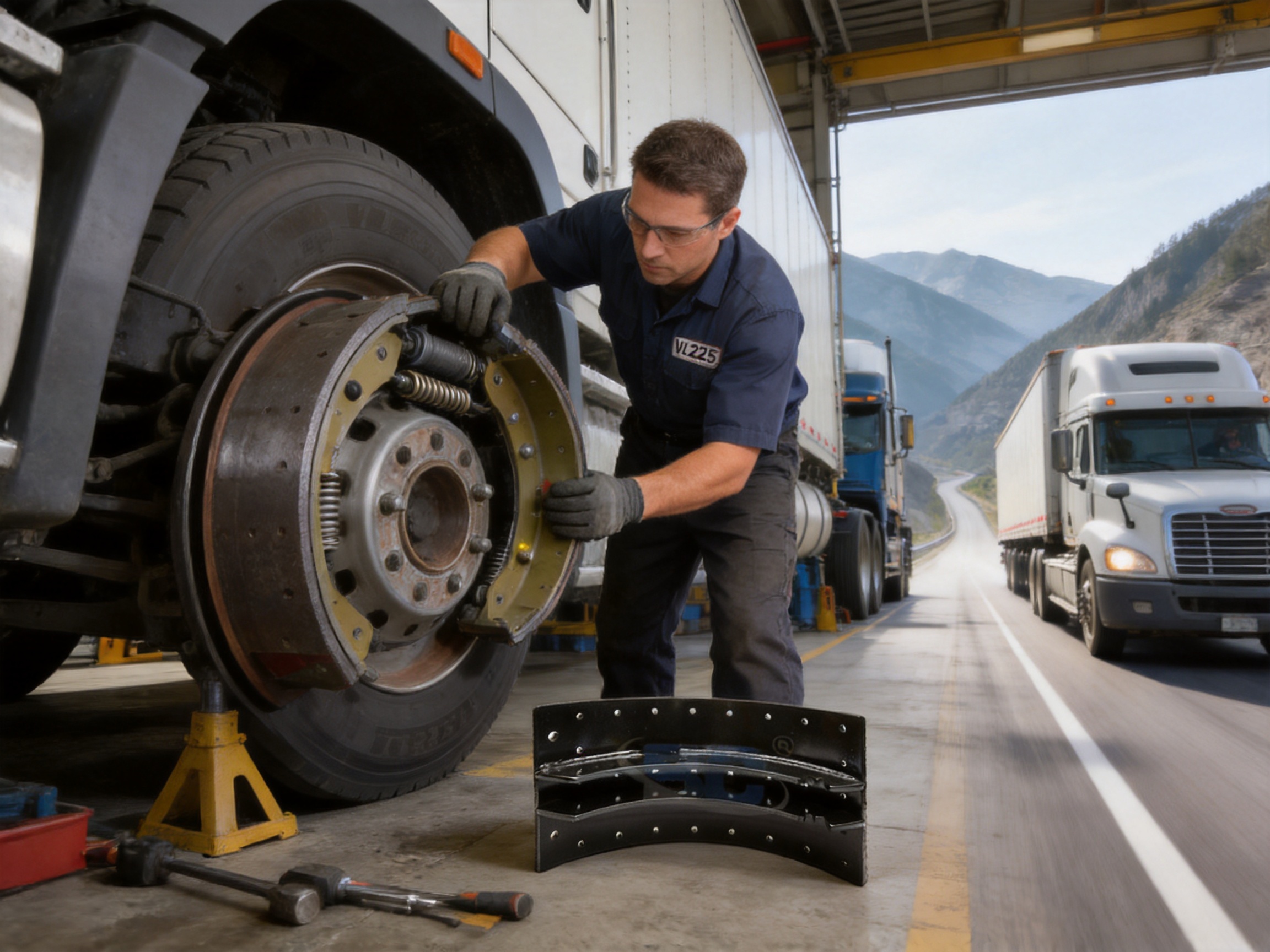
Heavy-duty commercial vehicles depend on braking components that can perform reliably under high axle loads, repeated stops, steep gradients, variable road conditions, and demanding operating schedules. Among the most important components in a drum-brake system is the brake shoe. Although a brake shoe may appear mechanically simple, its dimensions, material structure, rivet-hole layout, surface accuracy, and compatibility with the brake drum all influence stopping performance, service life, noise, and maintenance cost.
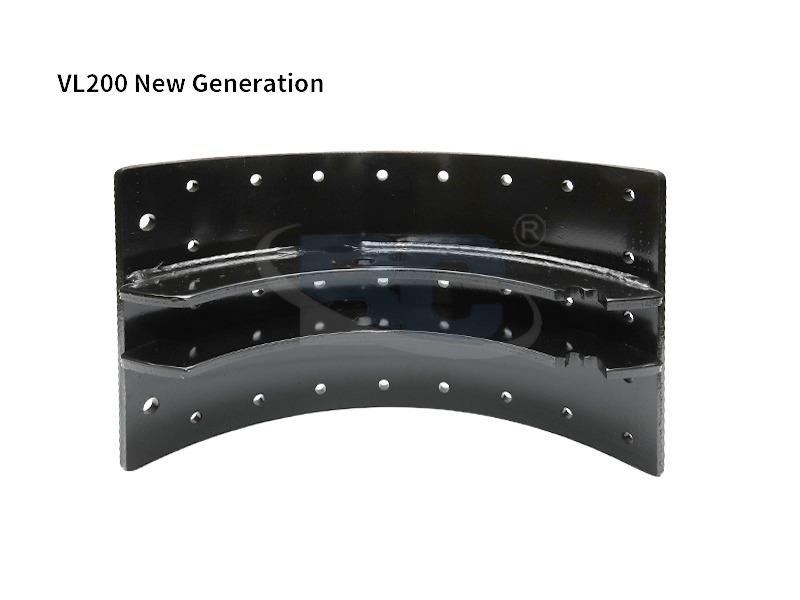
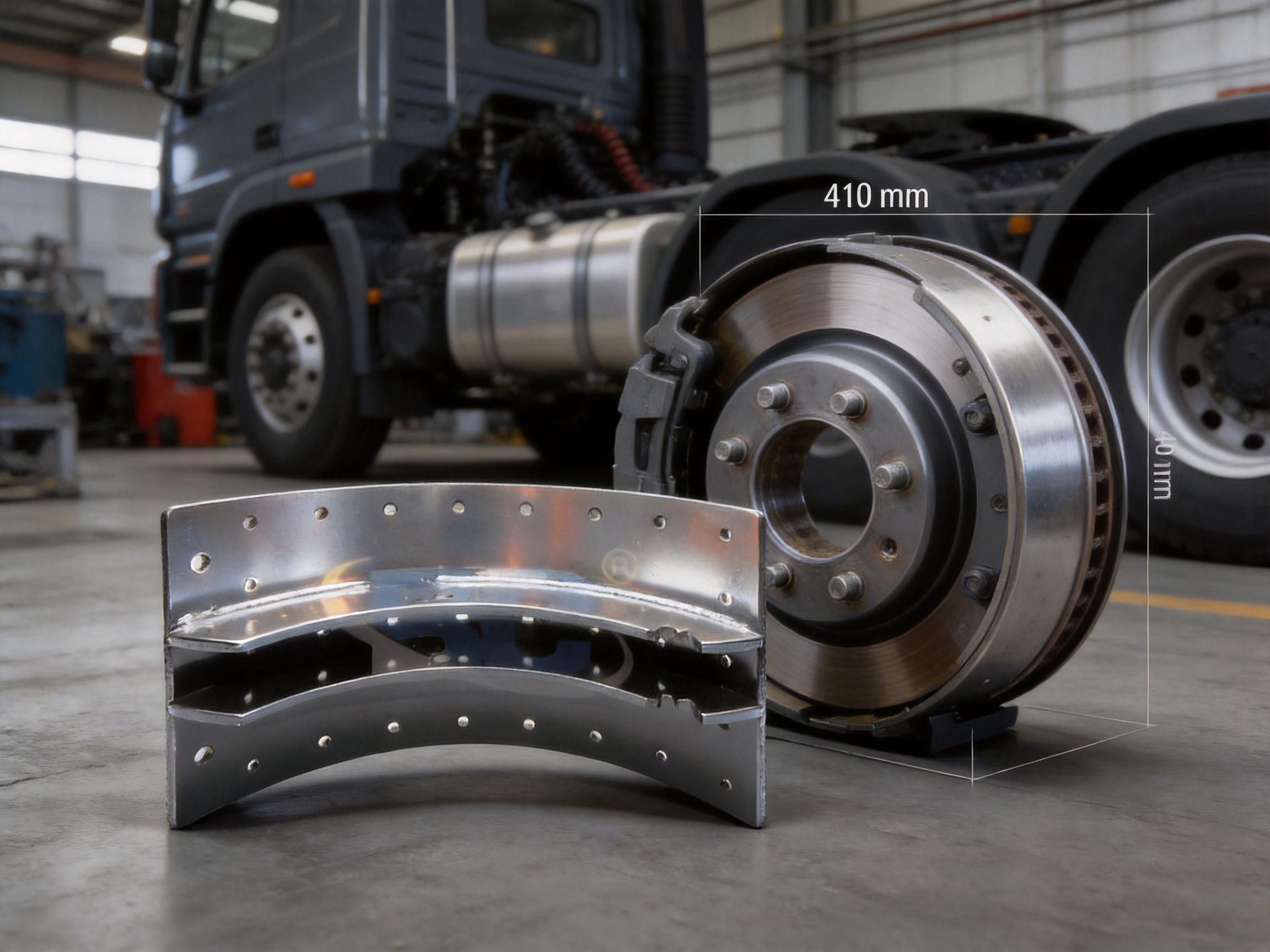
The VL225 New Generation Brake Shoe, identified by OE number 3095197, is designed for heavy-duty truck and trailer applications using a 410 mm brake drum. Its 410 × 225 mm format and 28-rivet-hole configuration provide a substantial contact platform for the friction lining. This design supports balanced load distribution, reliable lining attachment, and stable braking performance in commercial vehicle environments.
Manufactured by Zhejiang Bangchi Auto Parts Co., Ltd., the VL225 combines a robust alloy-steel structure with carefully controlled geometry and a practical design intended for demanding fleet use. The product is positioned within the steel brake shoe category and can serve applications requiring dependable replacement components aligned with established OE references and the global FMSI numbering system.
Product Overview
The VL225 New Generation Brake Shoe is engineered for heavy-duty braking systems that use standard 410 mm drums. The product has a nominal size of 410 × 225 mm and contains 28 rivet holes. These dimensions are central to correct fitment, because the brake shoe must match the drum diameter, lining profile, anchor arrangement, actuator position, and overall brake assembly geometry.
The OE reference for this product is 3095197. The reference provides a useful identification point for distributors, repair shops, fleet maintenance departments, and purchasing teams. However, OE numbers should always be checked against the vehicle manufacturer’s catalog, axle configuration, drum dimensions, and application data before installation.
| Specification | VL225 New Generation Brake Shoe |
|---|---|
| Product category | Steel brake shoe |
| Product reference | VL225 New Generation |
| OE number | 3095197 |
| Nominal size | 410 × 225 mm |
| Number of rivet holes | 28 |
| Rivet-hole diameter | Approximately 10.0 mm |
| Base material | Advanced alloy steel |
| Friction coefficient range | 0.42–0.48 |
| Maximum stated temperature | Approximately 520°C |
| Typical applications | Heavy-duty trucks and commercial trailers |
The product is intended for use in highway fleets, long-haul operations, mountainous routes, urban traffic, and selected off-highway conditions. Its design emphasizes consistent braking force, thermal stability, controlled lining wear, and reduced mechanical noise.
VL225 New Generation Brake Shoe
Why Brake Shoe Design Matters in Heavy-Duty Vehicles
Commercial vehicles operate under conditions that are considerably more severe than those experienced by passenger cars. A fully loaded truck or trailer can generate substantial kinetic energy during deceleration. That energy must be converted into heat through friction between the brake lining and drum. If the shoe or lining cannot manage the resulting temperature and mechanical stress, braking performance may decline rapidly.
A brake shoe must perform several functions simultaneously. It must support the friction lining, transmit the force generated by the actuator, maintain an appropriate relationship with the brake drum, and remain dimensionally stable during repeated heating and cooling cycles. It must also withstand vibration, impact, corrosion exposure, and the fatigue associated with frequent service.
The geometry of the shoe affects how evenly the lining contacts the drum. Uneven contact can produce localized hot spots, irregular wear, noise, and reduced braking efficiency. A well-controlled shoe profile helps the lining make progressive and uniform contact with the drum surface. This is particularly important during the bedding-in period, when the friction surfaces gradually adapt to one another.
The rivet-hole pattern is equally important. The 28-hole configuration of the VL225 provides multiple attachment points between the steel shoe and the friction lining. More attachment points can help distribute clamping forces across the lining and reduce the risk of local movement. Proper hole placement also supports stable lining retention under vibration and thermal expansion.
Core Performance Advantages
Balanced Braking Force Distribution
The VL225 is designed with a broad 410 × 225 mm footprint. This provides a substantial working area for the brake lining and supports a balanced transfer of braking force. When the shoe, lining, and drum are correctly matched, the larger contact area can help reduce excessive pressure concentration in individual sections of the lining.
Balanced pressure distribution contributes to more predictable friction behavior. It can also help limit irregular wear patterns that may otherwise require premature replacement. For fleet operators, predictable wear is valuable because it makes service planning easier and reduces the risk of unexpected downtime.
28-Hole Lining Attachment
The 28-rivet-hole design is one of the principal identifying features of the VL225. Each hole must be positioned accurately so that the lining can be fitted without distortion or excessive stress. The hole diameter is specified at approximately 10.0 mm, providing a defined interface for the rivets used during lining installation.
A well-distributed rivet pattern helps the lining remain securely attached during repeated braking cycles. It also supports consistent load transfer between the lining and the steel shoe. Compared with less carefully arranged attachment patterns, a 28-hole layout can offer improved resistance to local separation, movement, and vibration when the lining is installed using correct rivet procedures.
High-Temperature Stability
Heavy vehicles often encounter conditions that cause rapid temperature increases. Long downhill sections, repeated urban stops, overloaded operating conditions, and trailer braking can all raise brake temperature. The VL225 uses an advanced alloy-steel base intended to maintain structural stability in these demanding environments.
The stated maximum temperature is approximately 520°C. This figure should be understood as a product reference value rather than a substitute for complete brake-system testing. Actual operating temperature depends on vehicle mass, speed, road gradient, drum condition, brake adjustment, lining material, airflow, and driver behavior.
Thermal stability helps reduce the risk of distortion and supports more consistent contact between the lining and drum. A stable shoe can also help reduce the development of uneven wear, which may otherwise create vibration or noise. When combined with suitable lining material, the shoe can contribute to more dependable braking over a wide temperature range.
Consistent Friction Response
The stated friction coefficient range of 0.42–0.48 indicates a product intended to provide strong and stable friction performance. Friction coefficient is influenced by temperature, pressure, speed, lining formulation, surface condition, and environmental factors. Therefore, the numerical range should be considered within the context of a complete braking system.
Consistent friction response is important for vehicle control. If braking force changes abruptly as temperature rises, the driver may experience unpredictable pedal response or unequal braking between axles. The VL225 design is intended to support a stable relationship between the shoe assembly and the friction lining, helping the brake system deliver controlled deceleration.
Reduced Noise, Vibration, and Harshness
Brake noise is often caused by vibration within the shoe, lining, drum, anchor, actuator, or backing-plate assembly. Dimensional inaccuracies, poor lining fitment, worn hardware, contaminated surfaces, and incorrect adjustment can all contribute to squeal, groan, or chatter.
The refined geometry of the VL225 is intended to support more stable contact and reduce unnecessary movement. This does not mean that noise can be eliminated in every operating condition. Drum brakes remain sensitive to hardware condition, lining compatibility, drum wear, and installation quality. However, accurate shoe geometry provides a stronger foundation for quiet and controlled braking than a poorly manufactured or incorrectly fitted component.
Extended Lining and Drum Service Life
Brake maintenance cost is influenced by more than the purchase price of the shoe. The total cost also includes labor, vehicle downtime, replacement linings, drums, rivets, hardware, and inspection time. A shoe that supports even lining wear and stable contact can contribute to longer service intervals.
The VL225 is designed to reduce unnecessary lining and drum wear through controlled geometry and an appropriate attachment pattern. When the drum is within service limits and the brake system is correctly adjusted, these features can help preserve the condition of both friction surfaces.
Service life will vary according to route, load, weather, braking technique, axle configuration, and maintenance standards. Mountain routes and stop-and-go urban traffic generally impose more severe demands than lightly loaded highway operation. The product should therefore be evaluated according to the actual duty cycle of the vehicle.
Advantages Compared with Lower-Quality Alternatives
Not all steel brake shoes offer the same level of dimensional accuracy or material consistency. Lower-quality alternatives may appear similar at a glance, yet small deviations in profile, hole position, flange shape, or curvature can affect installation and performance.
The VL225 offers several practical advantages over generic products that lack controlled specifications. First, the product is clearly identified by size, OE reference, and rivet-hole count. This gives buyers a more reliable basis for selection than a broad description such as “410 mm brake shoe.”
Second, the 28-hole configuration provides a defined lining attachment arrangement. Generic shoes may use different patterns or inconsistent hole positions, creating problems during relining. A mismatch can force the installer to modify the lining or shoe, which may weaken the assembly and create safety risks.
Third, the stated alloy-steel construction is intended to provide greater resistance to heat-related deformation than poorly controlled low-grade steel. Material quality is particularly important in heavy-duty vehicles, where repeated thermal cycles can expose weaknesses that may not be visible during initial installation.
Fourth, the VL225 is designed around reduced noise and controlled wear. A low-cost shoe with irregular geometry may produce acceptable performance for a short period but cause accelerated lining wear, drum scoring, vibration, or frequent adjustment. A more carefully engineered component can support lower maintenance risk over its useful operating life.
Finally, the product is supported by a manufacturer focused on heavy-duty brake parts. Specialization can improve product development, production control, application knowledge, and customer support compared with suppliers that treat brake shoes as an incidental product line.
Manufacturing Strengths and Process Control
The performance of a brake shoe begins with the manufacturing process. A reliable product requires more than suitable raw material. It also depends on forming accuracy, welding quality, hole positioning, surface preparation, dimensional inspection, and final assembly control.
Material Selection
The base shoe must combine strength, toughness, thermal stability, and manufacturability. Advanced alloy steel is used for the VL225 to provide a structural foundation capable of supporting heavy braking loads and repeated heat cycles.
Material selection should be supported by incoming inspection and traceability. Consistent steel chemistry helps reduce variation in hardness, tensile behavior, and forming response. When raw material quality is stable, production equipment can maintain more consistent results from batch to batch.
Precision Forming
The curved profile of a brake shoe must correspond closely with the intended drum geometry. Forming operations therefore require controlled tooling, repeatable pressure, and appropriate process parameters. Excessive variation can cause poor lining contact, difficult installation, or uneven wear.
Precision forming also helps preserve the alignment of the shoe during operation. A properly formed component can seat more evenly against the brake assembly and support the intended movement generated by the actuator.
Accurate Rivet-Hole Processing
The rivet holes are a critical manufacturing feature. Their diameter, spacing, and position must match the lining and riveting process. Inaccurate holes can create misalignment, loose rivets, excessive stress, or gaps between the lining and shoe.
For the VL225, the 28-hole arrangement requires careful control across the entire shoe. Inspection may include checking hole diameter, center distance, pattern symmetry, edge distance, and burr removal. Clean, accurately formed holes help the installer achieve a secure lining attachment without damaging the friction material.
Welding and Structural Integrity
Where the shoe design includes welded structural elements, weld consistency is essential. Welds must provide sufficient strength without creating excessive distortion or localized stress concentrations. Controlled welding parameters and appropriate inspection help protect the shoe against fatigue during service.
After welding, the component may require dimensional correction or verification. The objective is to ensure that the final assembly remains within the intended profile and does not compromise drum contact or lining fitment.
Surface Preparation and Corrosion Protection
Brake shoes operate in environments that may include water, road salt, dust, mud, and chemical contaminants. Surface preparation and suitable protective treatment can help reduce corrosion during storage and service.
Corrosion protection must be applied carefully. Surfaces intended for friction or lining attachment must remain suitable for their function, while exposed steel areas require appropriate protection. Good process control helps ensure that coatings are uniform and do not interfere with assembly dimensions.
Dimensional Inspection
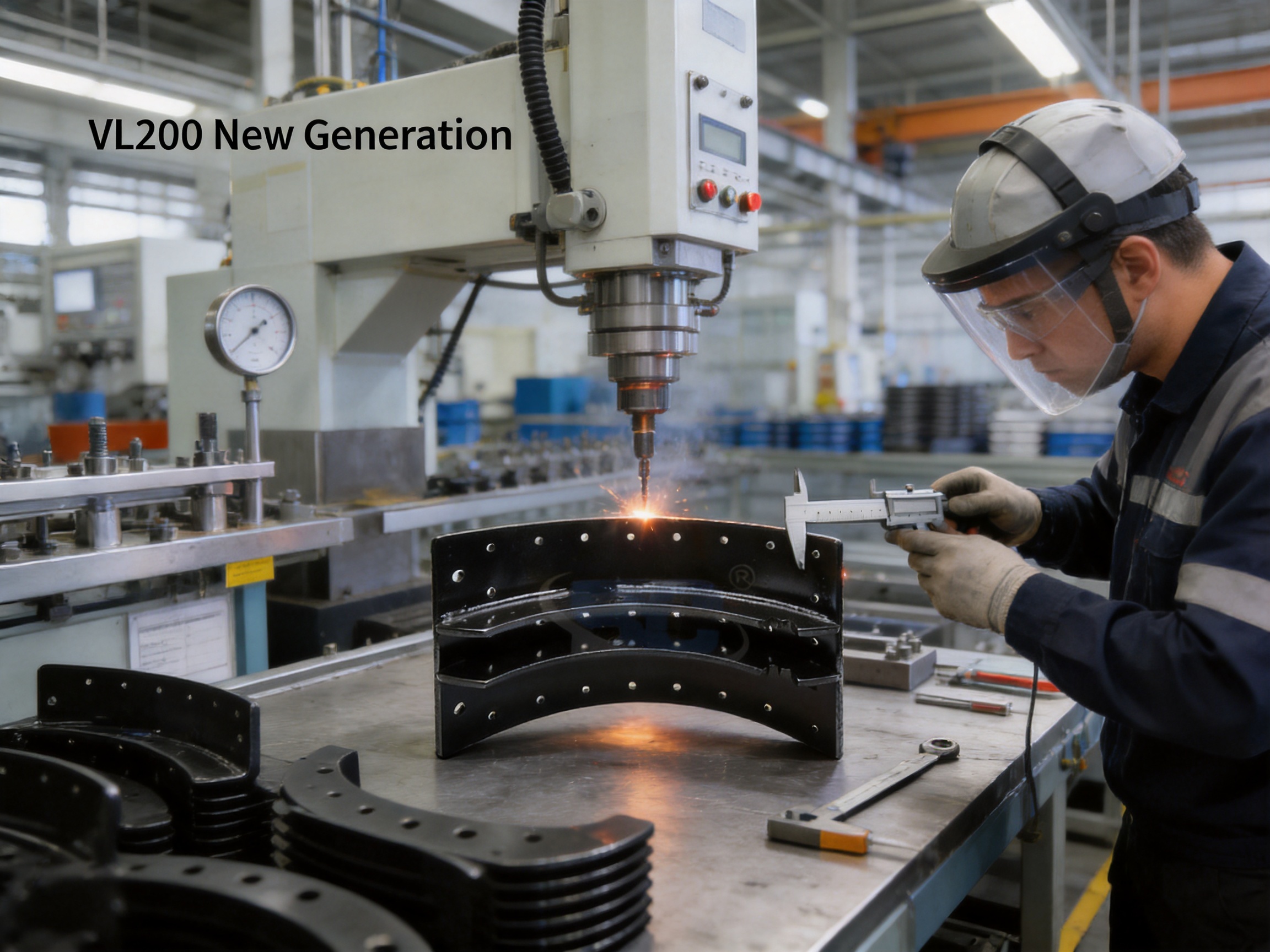
Dimensional inspection is a fundamental part of heavy-duty brake-shoe production. Important checks include overall length and width, curvature, hole count, hole diameter, hole position, shoe thickness, anchor points, and structural alignment.
Inspection can be performed at several stages rather than only at the end of production. In-process checks help identify tooling wear or process drift before a large number of components are affected. Final inspection provides an additional safeguard before packing and shipment.
Quality Assurance and Traceability
Traceability supports accountability. A well-managed production system should make it possible to identify the material batch, production date, process line, inspection record, and shipment information associated with a product group.
This approach benefits both the manufacturer and the customer. If a technical question arises, the product can be reviewed using documented information rather than relying only on visual examination. Traceability also supports continuous improvement by helping identify recurring causes of dimensional or assembly variation.
Application-Focused Product Development
Heavy-duty brake shoes must be designed with actual vehicle applications in mind. The requirements of a long-haul tractor-trailer may differ from those of an urban delivery truck or an off-highway vehicle. Route, load, speed, ambient temperature, and maintenance practices all influence product performance.
A manufacturer specializing in heavy-duty brake parts can use application experience to refine product geometry, material selection, and compatibility information. This focus helps ensure that product development is connected to real service conditions rather than based only on general component dimensions.
Installation and Relining Considerations
Correct installation is necessary to obtain the intended performance of the VL225. Even a precisely manufactured shoe can perform poorly if the drum is worn, the lining is incorrectly riveted, or the brake hardware is damaged.
Inspect the Brake Drum
Before installation, inspect the drum for cracks, heat checking, scoring, excessive wear, corrosion, and out-of-round conditions. The drum surface must be compatible with the replacement lining and within the applicable service limits.
A damaged or severely worn drum can prevent proper bedding. It may also create local hot spots and uneven lining wear. If the drum cannot provide a suitable friction surface, replacing the shoe alone will not solve the underlying problem.
Verify Dimensions and Fitment
Confirm the OE reference, shoe size, rivet-hole count, hole diameter, drum size, axle configuration, and vehicle application before assembly. The 410 × 225 mm designation and OE number 3095197 are important identification details, but they should be verified against the specific vehicle.
Check that the shoe seats correctly within the brake assembly and that the anchor points, return springs, rollers, adjusters, and actuator components are compatible. Never force a component into position or alter the shoe without an approved engineering reason.
Rivet Installation
When fitting a new lining, use compatible rivets and suitable riveting equipment. The rivets must be installed so that the lining is held securely against the shoe without cracking, crushing, or distorting the friction material.
The recommended service information specifies tightening or riveting force equivalent to approximately 40–45 N·m where applicable, using a star-pattern sequence. The exact procedure should follow the equipment manufacturer’s instructions and the requirements of the lining supplier. Rivet installation should proceed progressively from the center toward the ends or according to the approved pattern, ensuring that the lining remains fully seated.
After riveting, inspect the complete assembly for gaps, loose rivets, damaged lining edges, raised rivet heads, and contamination. Any defect should be corrected before the shoe is installed on the vehicle.
Brake Hardware Inspection
Return springs, rollers, anchor pins, adjusters, retainers, and backing-plate contact points should be examined during brake service. Worn hardware can cause poor shoe movement, uneven contact, dragging, noise, and accelerated wear.
Lubricate only the approved contact points with a suitable high-temperature brake lubricant. Friction surfaces must remain clean and free of grease, oil, paint, and other contaminants.
Bedding-In Procedure
The VL225 service guidance recommends approximately 250–350 km of progressive braking for bedding. During this period, the driver should avoid unnecessary severe stops where safe operating conditions permit. Progressive braking allows the lining and drum surfaces to establish a more uniform contact pattern.
Proper bedding can help stabilize friction performance and reduce the risk of localized overheating. The procedure should always be adapted to road conditions, vehicle load, traffic, and applicable safety requirements.
Maintenance Recommendations
Regular inspection is essential for commercial vehicles. The product guidance recommends checking lining thickness every 15,000 km and reducing the interval to 10,000 km in severe-duty applications. Severe duty may include mountainous routes, frequent heavy loading, stop-and-go traffic, off-highway work, high ambient temperatures, or unusually demanding braking cycles.
Replace the lining when its remaining thickness falls below 10 mm, or earlier if required by local regulations, vehicle manufacturer instructions, or the condition of the friction material. Inspect for cracks, separation, oil contamination, uneven wear, glazing, thermal damage, and loose rivets.
During each inspection, examine the drum and associated hardware. The brake system should be checked for adjustment, air-system performance, actuator movement, wheel-end condition, and signs of overheating. Uneven wear may indicate a problem elsewhere in the assembly and should not be treated only by replacing the shoe.
| Inspection Area | Recommended Action | Reason |
|---|---|---|
| Lining thickness | Inspect every 15,000 km; every 10,000 km in severe service | Detect wear before braking performance is compromised |
| Rivets and lining attachment | Check for looseness, gaps, cracks, and damaged heads | Maintain secure lining retention |
| Brake drum | Inspect for cracks, scoring, heat damage, and excessive wear | Preserve a suitable friction surface |
| Return springs and rollers | Check condition, movement, and corrosion | Support correct shoe release and contact |
| Adjustment system | Verify travel and operating clearance | Maintain consistent braking response |
| Brake noise or vibration | Investigate immediately | Identify geometry, hardware, or surface problems |
Applications and Fleet Benefits
The VL225 is intended for heavy-duty trucks and commercial trailers using compatible 410 mm brake drums. It can be considered for long-haul fleets, regional transport, urban freight vehicles, and selected off-highway operations where drum brakes remain in service.
For long-haul fleets, predictable wear and thermal stability are important because vehicles may travel long distances between maintenance facilities. A brake shoe that supports stable friction behavior can help reduce service interruptions and simplify inspection planning.
For mountainous routes, the ability to manage repeated heat cycles is particularly important. Drivers may apply the brakes frequently during descents, and brake temperature can rise rapidly if speed is not controlled. The VL225’s alloy-steel structure and thermal-performance objectives are intended to support demanding conditions, although proper driving technique and auxiliary braking remain essential.
For urban traffic, frequent stops and starts place repeated demands on the friction surfaces. Reduced noise and controlled geometry can improve operating comfort, while consistent response helps drivers manage traffic safely.
For commercial trailers, brake balance and lining attachment are especially important. Trailer braking systems must operate in coordination with the tractor and should be inspected carefully to prevent uneven braking, overheating, or premature wear.
Purchasing and Supply Advantages
Fleet buyers and distributors require more than a product image when selecting brake shoes. They need reliable identification, consistent specifications, responsive communication, and the ability to source repeat orders.
Zhejiang Bangchi Auto Parts Co., Ltd. focuses on heavy-duty brake parts and provides products based on OEM references and the global FMSI numbering system. This specialization can help customers organize product catalogs, match replacement components, and reduce confusion between visually similar shoe models.
Clear technical information also supports international purchasing. The VL225 specification includes the product reference, OE number, size, rivet-hole count, material description, friction coefficient range, and temperature reference. Such information helps purchasing departments compare alternatives and communicate requirements with maintenance teams.
Consistency between batches is another important supply advantage. Brake components are safety-related products, so customers benefit when the manufacturer maintains documented specifications and controlled production methods. Repeatable manufacturing can reduce installation variation and make fleet performance easier to monitor.
The company’s location in Haining, Zhejiang, provides access to an established automotive manufacturing region and to domestic and international logistics networks. For overseas buyers, centralized communication and product identification can simplify quotation, sample evaluation, technical clarification, and repeat ordering.
How the VL225 Supports Total Cost Management
The purchase price of a brake shoe represents only one part of its economic value. Fleet operators must also consider installation labor, vehicle downtime, lining life, drum wear, inspection frequency, warranty exposure, and operational risk.
A product designed for stable fitment and even lining contact can help reduce avoidable costs. Accurate hole placement can make relining more efficient. Stable material behavior can reduce the risk of premature distortion. Controlled geometry can support more even wear and fewer noise-related complaints.
These potential benefits depend on correct application and maintenance. No brake shoe can compensate for a damaged drum, incorrect adjustment, overloaded vehicle, contaminated lining, or poor installation. The best results come from combining a suitable product with disciplined service procedures.
For distributors, a clearly specified product can also reduce returns caused by incorrect identification. The VL225 name, OE 3095197 reference, 410 × 225 mm size, and 28-hole layout provide multiple checkpoints before an order is confirmed.
Safety and Technical Responsibility
Brake components are safety-critical. Product selection should be performed by qualified personnel who understand the vehicle’s axle, drum, lining, and braking-system requirements. The information in this article is intended for product understanding and general maintenance planning. It does not replace the vehicle manufacturer’s service documentation or applicable legal requirements.
Always use appropriate protective equipment during brake service. Brake dust should be handled using safe cleaning methods. Compressed air should not be used in a manner that disperses potentially harmful particles into the work area. The vehicle must be securely supported, and wheels must be prevented from moving before work begins.
After installation, perform a controlled functional test in a safe environment. Confirm that the vehicle stops evenly, that the brakes release correctly, and that no abnormal noise, pulling, vibration, or overheating is present. Any unusual behavior should be investigated before the vehicle returns to regular operation.
Frequently Asked Questions
What is the VL225 New Generation Brake Shoe?
The VL225 New Generation Brake Shoe is a steel brake shoe designed for heavy-duty trucks and commercial trailers. It has a nominal size of 410 × 225 mm, contains 28 rivet holes, and is associated with OE number 3095197.
Which brake drums are suitable for the VL225?
The product is intended for compatible 410 mm brake drums. The exact application must be verified using the vehicle, axle, drum, and brake-assembly specifications. A nominal drum diameter alone is not sufficient to confirm fitment.
What is the advantage of the 28-rivet-hole design?
The 28-hole configuration provides multiple attachment points for the friction lining. When the correct lining and rivets are used, the arrangement can support more even load distribution, secure lining retention, and stable performance under vibration and thermal cycling.
What material is used for the brake shoe?
The product is specified as using advanced alloy steel. This material is intended to provide a strong structural foundation and improved resistance to thermal and mechanical demands found in heavy-duty braking applications.
What friction coefficient is associated with the product?
The stated friction coefficient range is 0.42–0.48. Actual friction behavior depends on the selected lining, drum condition, temperature, pressure, speed, and overall brake-system configuration.
What is the maximum stated temperature?
The product information gives a maximum temperature reference of approximately 520°C. This value should not be interpreted as permission to operate continuously at that temperature. Brake temperature should be managed through correct vehicle loading, speed control, adjustment, cooling, and maintenance.
How often should the lining be inspected?
The recommended interval is every 15,000 km under normal conditions. For severe-duty applications, inspection should be increased to every 10,000 km. Local laws, fleet policies, and vehicle manufacturer requirements may require more frequent checks.
When should the lining be replaced?
The service guidance recommends replacement when lining thickness is below 10 mm. Replacement may also be required earlier if the lining is cracked, contaminated, separated, unevenly worn, glazed, or thermally damaged.
How long does bedding-in take?
The service information recommends approximately 250–350 km of progressive braking. Bedding conditions depend on traffic, load, road surface, weather, and driving style. Severe braking should be avoided during bedding whenever safe operating conditions allow.
Can the VL225 be used with aftermarket drums?
It may be used with compatible aftermarket drums, but the drum must be checked for correct dimensions, condition, surface quality, and service limits. Compatibility should be confirmed before installation.
What should be checked if brake noise occurs after installation?
Inspect lining contact, drum condition, rivet installation, return springs, rollers, anchor points, adjustment, backing-plate contact areas, and contamination. Noise can result from several conditions, so replacing the shoe alone may not resolve the cause.
Is the VL225 suitable for mountainous routes?
The product is intended for demanding heavy-duty applications, including mountainous routes. However, safe operation also requires correct speed management, proper use of auxiliary braking, appropriate loading, and regular inspection of the complete braking system.
How can buyers confirm the correct product?
Buyers should compare the OE number 3095197, VL225 product reference, 410 × 225 mm size, 28-hole pattern, drum dimensions, vehicle application, and axle information. When uncertainty remains, technical confirmation should be obtained before ordering.
Conclusion
The VL225 New Generation Brake Shoe is a heavy-duty steel brake component designed around the practical requirements of commercial vehicle braking. Its 410 × 225 mm format, 28-rivet-hole configuration, advanced alloy-steel construction, and OE 3095197 reference provide a clear product identity for fleet operators, distributors, and service professionals.
Its main advantages include balanced braking-force distribution, secure lining attachment, thermal stability, controlled friction response, reduced noise objectives, and support for longer lining and drum service life. These features are especially relevant to trucks and trailers operating on long-haul routes, mountainous roads, urban delivery cycles, and selected off-highway applications.
The product’s value is strengthened by the manufacturer’s focus on heavy-duty brake parts, structured product identification, application-oriented development, and manufacturing controls covering material selection, forming, hole accuracy, welding, surface treatment, and inspection. Such processes help distinguish a carefully engineered brake shoe from a generic component that may have similar dimensions but less consistent performance.
Correct fitment, professional relining, drum inspection, progressive bedding, and scheduled maintenance remain essential. When the VL225 is matched with the correct vehicle application and maintained as part of a complete brake system, it can provide a dependable foundation for safe, consistent, and economical commercial vehicle operation.
References
1. Product specification sheet for the VL225 New Generation Brake Shoe, OE 3095197.
2. Heavy-duty vehicle drum-brake inspection and maintenance practices.
3. Commercial vehicle brake-lining installation and riveting guidance.
4. General principles of friction materials, thermal management, and brake-system wear.
5. Global FMSI numbering and identification practices for replacement brake components.
6. Commercial vehicle manufacturer service procedures for drum, lining, shoe, and brake-hardware inspection.
7. Industry guidance concerning bedding-in procedures for newly installed brake linings.