 English
 简体中文
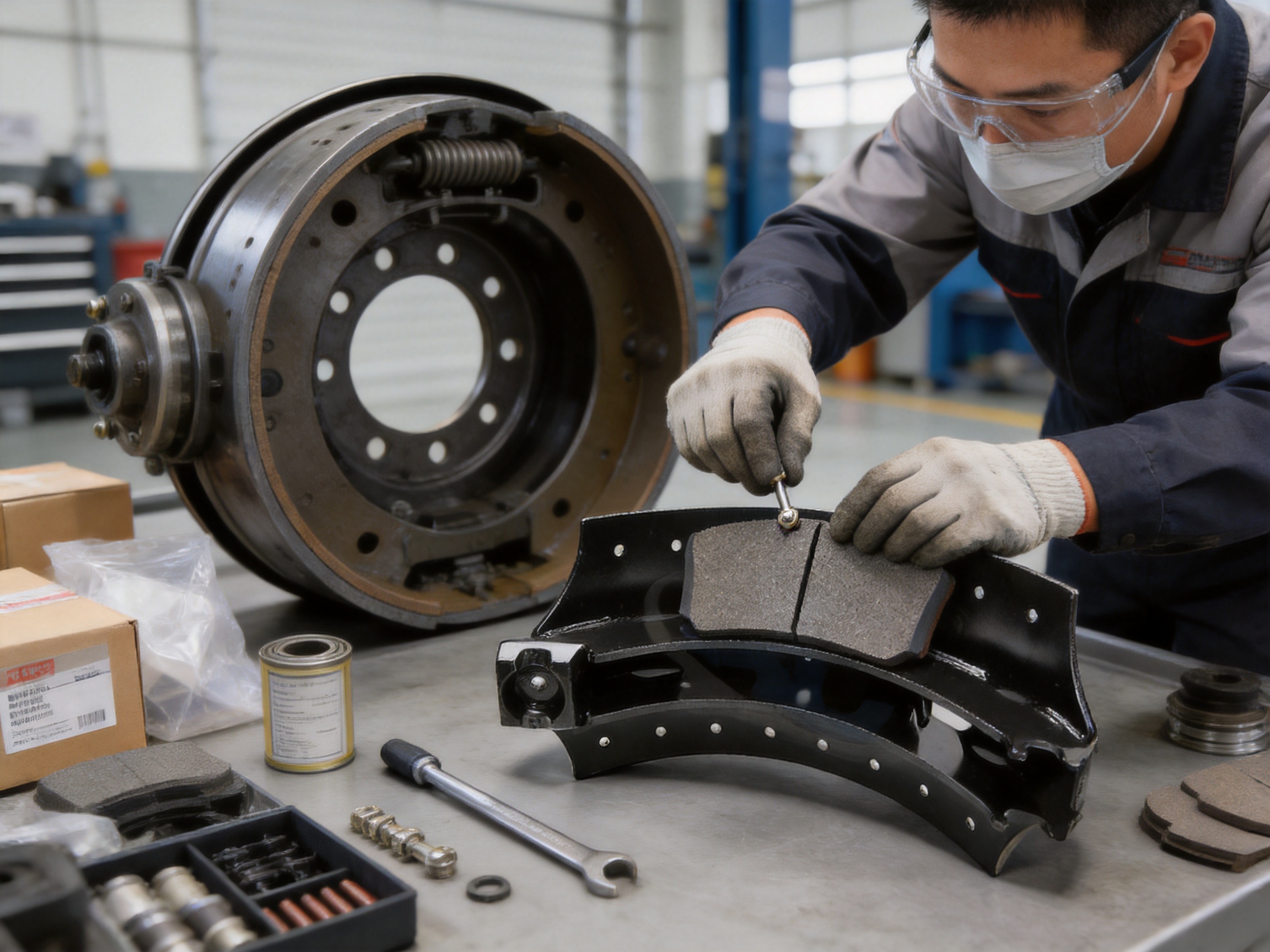
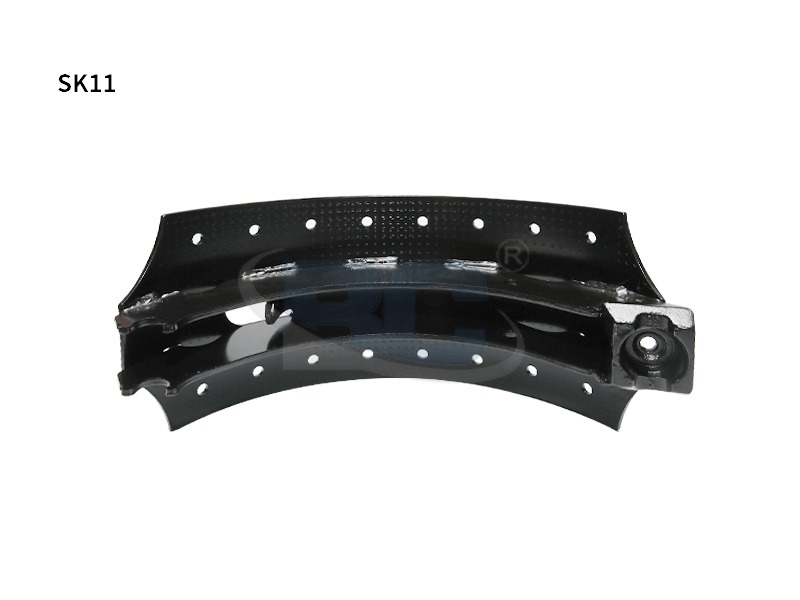
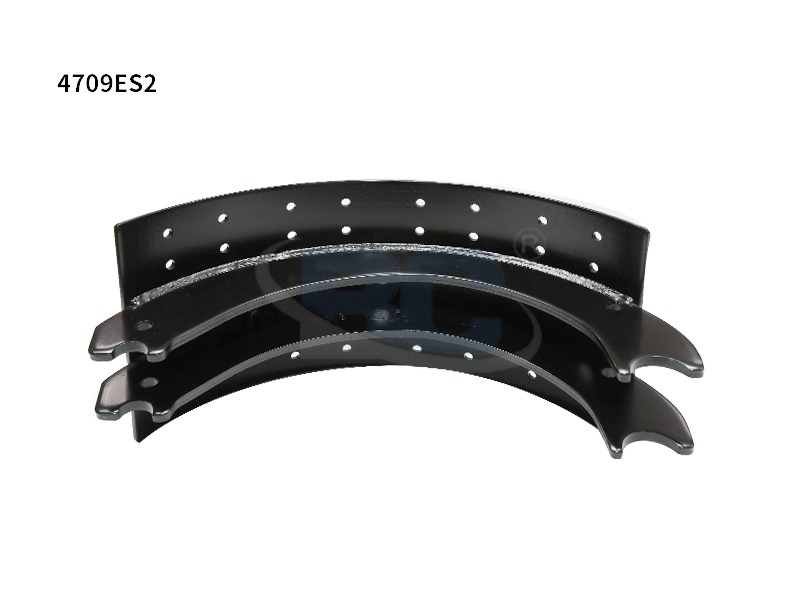
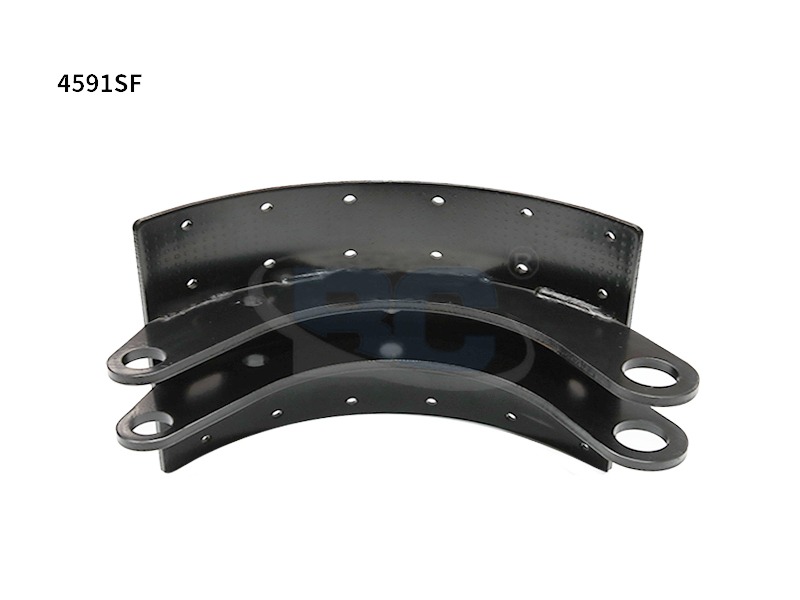
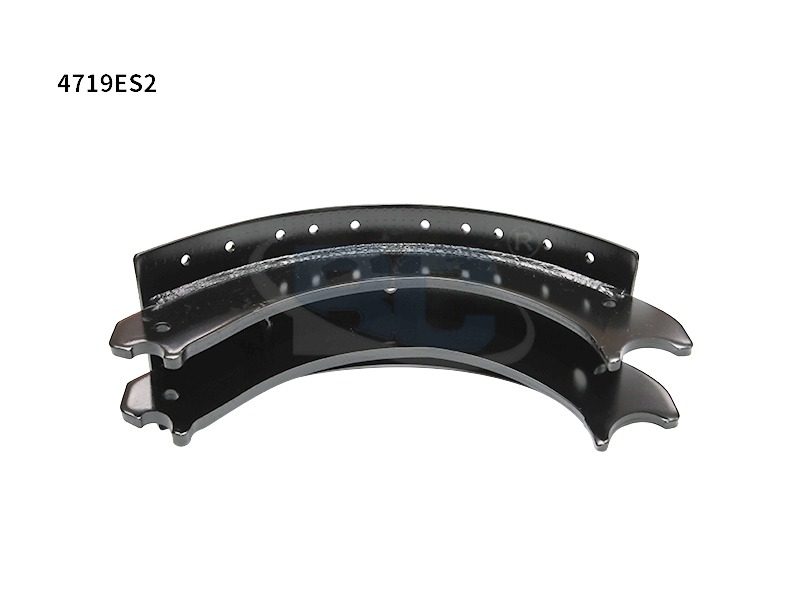
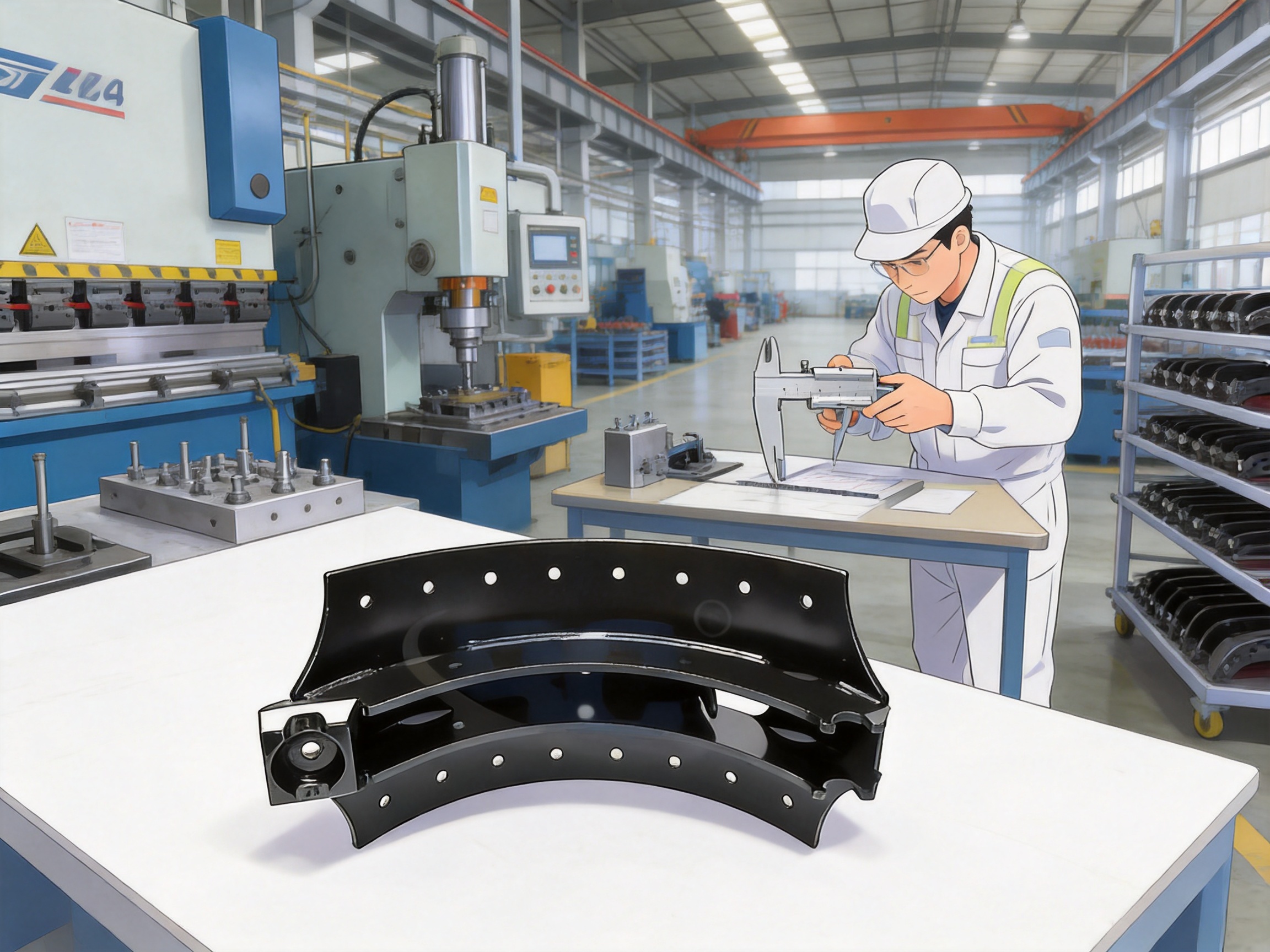
The 3054012000 SK9 brake shoe is a heavy-duty steel brake shoe designed for SAF SK9 braking applications. With a product size of 420 by 180 millimeters, a sixteen-rivet-hole configuration, and a steel construction, it is intended to provide a dependable foundation for commercial vehicle brake lining installation and service replacement. Its reference part number is 3054012000, and the product identification also includes SK9 SAF.
Brake shoes are essential components in drum brake systems. They support the friction lining, transfer braking force to the inner surface of the brake drum, and help convert mechanical or pneumatic actuation into controlled deceleration. Because they operate under repeated thermal, mechanical, and vibrational loads, the quality of the steel shoe directly affects the stability, service life, and safety of the complete braking assembly.
The 3054012000 SK9 brake shoe is manufactured for customers seeking a practical replacement or original equipment manufacturing solution. It is suitable for use in heavy-duty brake parts programs that require consistent dimensions, an established rivet-hole layout, and a material specification based on steel or an agreed customized alternative. The product can be considered for distributors, repair specialists, fleet maintenance programs, brake lining manufacturers, and vehicle component importers.
This article examines the product’s technical characteristics, application value, manufacturing considerations, inspection requirements, and advantages compared with less specialized brake shoe alternatives. It also explains how a focused heavy-duty brake parts manufacturer can support customization, production consistency, and international sourcing requirements.
Product Overview
The 3054012000 SK9 brake shoe is categorized as a steel brake shoe. It is identified for the SAF SK9 application and has the following principal specifications:
| Item | Specification |
|---|---|
| Product name | 3054012000 SK9 brake shoe |
| Application reference | SK9 SAF |
| Product category | Steel brake shoe |
| Reference part number | 3054012000 |
| Product size | 420 by 180 millimeters |
| Number of rivet holes | 16 |
| Material | Steel or customized material according to agreement |
| Product type | Heavy-duty drum brake component |
The size and hole arrangement are important identification points for purchasing and installation. A brake shoe that appears similar in general shape may still be unsuitable if its dimensions, curvature, rivet-hole positions, or mounting features do not match the intended brake assembly. For this reason, buyers should verify the reference number, application, measurements, and installation requirements before placing an order.
The sixteen-rivet-hole design provides the connection points needed to attach a friction lining to the shoe. Correct hole spacing and hole diameter are essential. If the rivet holes are not accurately located, the lining may not sit correctly against the shoe, and the finished brake assembly may experience uneven contact, looseness, or premature wear.
Why the Steel Brake Shoe Matters
A brake shoe is more than a curved metal support. It is a load-bearing structural component within a brake system. During braking, the shoe receives force from the actuator mechanism and presses the friction lining against the brake drum. The shoe must withstand this force while preserving its shape and maintaining a stable relationship with the lining, drum, anchor points, and return hardware.
Steel is widely used for brake shoes because it combines structural strength, manufacturability, and resistance to the repeated loads found in commercial vehicle braking systems. The selected steel must be suitable for forming and must maintain adequate rigidity after production. The material must also be compatible with the customer’s lining, riveting, coating, and service requirements.
The 3054012000 SK9 brake shoe is designed around a defined application rather than a general-purpose shape. This application-focused approach gives the product several practical advantages. It allows the manufacturer to control the geometry, hole pattern, and dimensions around the intended SAF SK9 brake system. It also helps customers simplify product selection because the reference number is connected to a specific replacement requirement.
In a heavy-duty vehicle, braking components are exposed to heat, moisture, road debris, vibration, and repeated load cycles. A correctly produced steel brake shoe helps maintain the structural support needed for safe and predictable friction performance. Although the shoe does not create friction by itself, its dimensional accuracy and mechanical stability influence how effectively the friction lining performs.
Application-Specific Design for SAF SK9 Systems
The SK9 SAF designation indicates that this product is intended for a specific brake application associated with the SAF SK9 system. This is important for fleet operators and aftermarket buyers because brake components should be selected according to the complete system design rather than by appearance alone.
Application-specific design helps reduce the risk of using a component with an incorrect radius, unsuitable mounting profile, or incompatible rivet arrangement. When the shoe is matched to the intended assembly, the friction lining can be installed in the correct position and the brake mechanism can operate as designed.
For distributors, a clearly identified application can also improve inventory control. A product described only as a “heavy truck brake shoe” may not provide enough information for reliable purchasing. The combination of the 3054012000 reference number, SK9 SAF application, 420 by 180 millimeter size, and sixteen-rivet-hole specification gives buyers several ways to verify the correct product.
Customers should still compare their existing component, vehicle or axle information, and technical drawings before installation. Product identification should be confirmed by a qualified technician or purchasing engineer when there is any uncertainty. Reference numbers may be used differently across regions, and similar brake shoe designs can exist for different axle or drum configurations.
Key Product Advantages
Stable Steel Structure
The primary advantage of the 3054012000 SK9 brake shoe is its steel construction. A properly manufactured steel shoe provides a firm support for the friction lining and helps resist deformation during repeated braking. A stable support structure is especially important in commercial vehicles, where braking loads and vehicle mass are generally greater than in passenger cars.
Structural stability can support more consistent lining contact with the drum. When the shoe maintains its intended geometry, the friction material has a better opportunity to wear evenly. Even wear can improve service planning and reduce the likelihood of localized lining damage caused by poor support or misalignment.
Defined Dimensions
The specified 420 by 180 millimeter product size gives buyers a practical dimensional reference. While overall dimensions alone do not establish complete interchangeability, they provide a useful first check when comparing a replacement shoe with an existing component or technical drawing.
Defined dimensions also support repeat purchasing. Fleet operators and parts distributors can use the reference specifications to reorder the same product, organize warehouse stock, and reduce errors caused by vague product descriptions.
Sixteen-Rivet-Hole Configuration
The sixteen-rivet-hole configuration is another important product characteristic. It supports the installation of a matching friction lining and allows the lining manufacturer or repair technician to use the intended hole arrangement. Accurate hole positioning is necessary for a secure and even connection between the steel shoe and lining.
Compared with an incorrectly matched shoe, a shoe with the correct hole pattern can reduce installation adjustments and help maintain the designed lining position. This is particularly valuable for brake repair operations that process multiple vehicles or axle types and need predictable assembly results.
OEM and Customized Material Options
The listed material is steel or customized material. This gives customers a basis for discussing different material requirements according to their operating conditions, manufacturing standards, or customer specifications. Customization may involve an agreed steel grade, mechanical property range, surface treatment, or production requirement.
Any material customization should be confirmed through technical documentation before production. A responsible purchasing process should define the material grade, testing method, hardness or strength requirements where applicable, surface condition, and acceptance criteria. Clear specifications help ensure that customization improves suitability without creating uncertainty in production or inspection.
Suitable for Heavy-Duty Aftermarket Programs
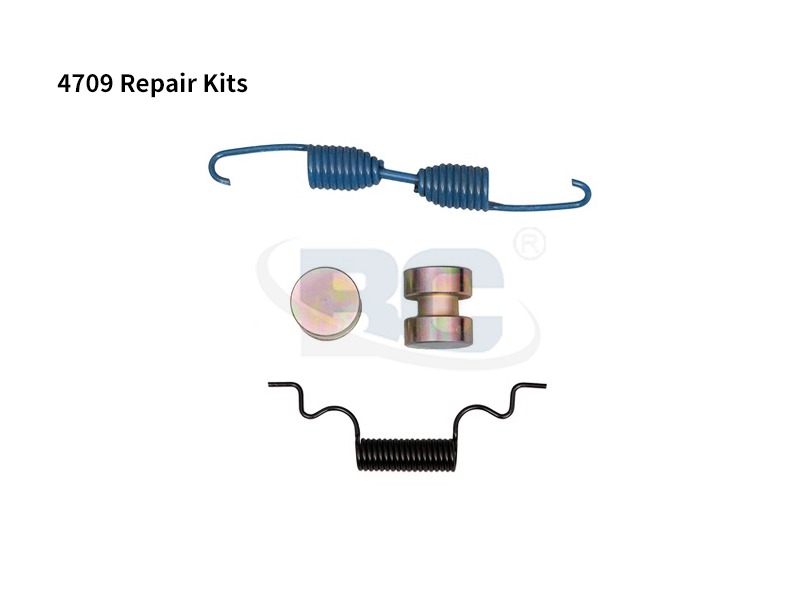
The product is positioned within a heavy-duty brake parts range that includes steel brake shoes, cast brake shoes, brake linings, lined brake shoes, brake shoe repair kits, and lined brake shoe kits. This broader product coverage can be valuable to buyers who need more than one brake component category.
A supplier that understands related brake products can help customers coordinate unlined shoes, friction linings, complete lined shoes, and repair kits. This may simplify sourcing for distributors and reduce the need to manage multiple unrelated vendors for compatible brake service components.
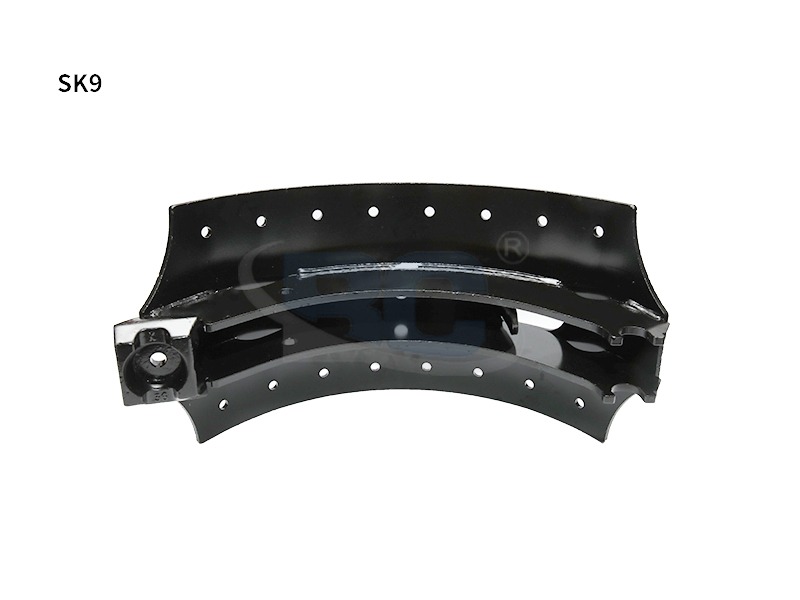
3054012000 SK9 Brake Shoe
Manufacturing Strengths and Process Control
The performance of a steel brake shoe depends heavily on manufacturing consistency. Even when the basic design is simple, the production process includes several stages that must be controlled carefully. These stages may include raw material preparation, forming, hole production, edge treatment, dimensional correction, surface preparation, inspection, packaging, and final shipment verification.
Material Preparation
Manufacturing begins with the selection and preparation of steel suitable for the customer’s approved specification. Material identification is important because the shoe must have the necessary strength and forming characteristics. The supplier should maintain clear records that connect incoming material with the production batch.
Proper material preparation helps reduce variation during forming. Steel with inconsistent thickness, surface defects, or unsuitable mechanical properties can affect the final shape and may create additional correction work. Controlled material handling is therefore an important part of efficient production.
Forming and Shape Control
The brake shoe must be formed into the required curved profile. Forming accuracy affects how the shoe supports the lining and how the finished assembly relates to the brake drum. A controlled forming process helps maintain repeatability from one production batch to another.
During forming, manufacturers need to manage the relationship between tooling, material thickness, springback, and final dimensions. The shoe may require measurement after forming to confirm that its profile remains within the agreed tolerance. Accurate tooling and regular process checks can reduce dimensional drift over time.
For customers buying repeated quantities, consistent forming is a major advantage over products made with poorly maintained tooling or uncontrolled manual adjustment. Consistency makes it easier for lining installers to work efficiently and helps reduce variation in finished brake assemblies.
Rivet-Hole Production
The sixteen rivet holes must be produced according to the approved drawing or sample. Their location, spacing, diameter, and edge condition influence the quality of lining installation. Hole production may involve dedicated fixtures or controlled equipment designed to maintain repeatable positioning.
After hole production, the holes should be checked for burrs, distortion, and blockage. Excessive burrs can interfere with lining placement or create stress concentrations around the fastener area. Clean and accurately located holes support a more reliable riveting operation.
Hole-pattern inspection is especially important when producing replacement components. A brake shoe can have the correct overall dimensions but still fail to function as a direct replacement if the rivet pattern is wrong. This is why the product’s sixteen-hole specification should be treated as a critical characteristic rather than a secondary detail.
Edge and Surface Treatment
Edges should be controlled so that the shoe can be handled and assembled safely. Surface preparation may include cleaning, removal of production residue, and an agreed protective treatment where required by the customer. The specific coating or finish should be confirmed according to the purchase specification rather than assumed.
A clean surface supports better inspection and may improve compatibility with subsequent operations such as painting, coating, lining installation, or warehouse storage. Protection against corrosion can be particularly useful for components transported over long distances or stored before assembly.
Dimensional Inspection
Quality control should include verification of the main product dimensions, profile, hole arrangement, and general appearance. Inspection tools may include gauges, calipers, templates, coordinate measurement equipment, or application-specific fixtures, depending on the customer’s requirements and production volume.
Inspection should be performed at more than one stage when practical. In-process checks can identify forming or punching problems before a large batch is completed. Final inspection confirms that accepted products meet the required specifications before packaging.
Batch Traceability
Batch traceability supports accountability and continuous improvement. A production record may connect the finished brake shoes with material information, tooling, production date, inspection results, and packaging details. Traceability is useful when customers need to investigate a quality question or reorder a specific product configuration.
For international customers, organized documentation can improve communication between the manufacturer, importer, distributor, and end user. It can also help purchasing departments maintain consistent internal records for recurring brake parts programs.
Comparison with Less Specialized Alternatives
Not all brake shoes described as heavy-duty products offer the same level of application control. A generic shoe may appear similar but lack the exact reference, hole layout, or dimensional information required for reliable installation. The 3054012000 SK9 brake shoe is differentiated by its clearly stated application and technical identifiers.
| Evaluation point | Application-specific 3054012000 SK9 shoe | Generic or poorly identified alternative |
|---|---|---|
| Application reference | SK9 SAF designation is provided | May be listed only by general vehicle type |
| Reference number | 3054012000 is available for product verification | May use incomplete or unclear numbering |
| Overall size | 420 by 180 millimeters is specified | Dimensions may be missing or approximate |
| Rivet-hole count | Sixteen holes are specified | Hole count or pattern may not be confirmed |
| Material approach | Steel or agreed customized material | Material details may be unclear |
| Manufacturing focus | Suitable for controlled OEM production | May depend on inconsistent general-purpose production |
| Purchasing support | Several identification points support repeat orders | Higher risk of selection errors |
The comparison does not mean that every alternative product is unsuitable. Rather, it demonstrates why customers should examine technical information instead of selecting a brake shoe solely by price or visual similarity. The correct product must match the brake system and the customer’s performance expectations.
An application-specific product can also reduce hidden costs. A low-priced but incorrectly identified shoe may lead to additional inspection, modification, return freight, installation delays, or vehicle downtime. A clearly specified product helps buyers evaluate total procurement value rather than unit cost alone.
Benefits for Distributors and Fleet Maintenance Operations
Distributors need products that are easy to identify, store, quote, and reorder. The 3054012000 reference number and SK9 SAF application provide useful information for catalog management. Including the size and sixteen-rivet-hole description can further help sales teams answer customer questions and distinguish the part from similar brake shoes.
Fleet maintenance departments can benefit from standardized replacement parts. When the correct brake shoe is consistently available, technicians can plan repairs more efficiently and reduce the time spent searching for compatible components. A stable supply program can also support preventive maintenance schedules.
For repair shops, the availability of a steel shoe suitable for lining installation offers flexibility. The shop may purchase unlined shoes and install the lining according to its own process, or it may source related lined products and repair kits when those options are appropriate. Product selection should always follow the shop’s technical procedures and the brake system manufacturer’s requirements.
International buyers may also value the ability to discuss OEM production and customized requirements with a manufacturer rather than relying only on standard aftermarket stock. Custom packaging, product markings, inspection documents, and agreed material details can be considered during the quotation and engineering process.
Quality Considerations Before Installation
Before installation, the brake shoe should be compared with the removed component or the approved technical drawing. The buyer or technician should check the reference number, overall dimensions, curvature, rivet-hole count, rivet-hole arrangement, mounting features, and surface condition.
The shoe should not be installed if it shows cracks, severe deformation, unacceptable corrosion, sharp burrs, blocked holes, or other visible defects. The friction lining must also be appropriate for the brake application and correctly installed with suitable rivets and equipment.
When a new lining is attached, the lining should sit firmly against the shoe without gaps or movement. Riveting should follow the approved sequence and tooling requirements. A qualified brake technician should verify that the completed assembly has the correct profile and can be installed without interference.
All related braking components should be inspected during service. Depending on the vehicle and maintenance procedure, this may include the brake drum, rollers, anchor points, cam mechanism, return springs, bushings, adjuster, seals, and associated hardware. Replacing only one worn part may not restore the complete system if other components are damaged or outside their service limits.
After installation, the braking system should be tested according to established workshop procedures. The vehicle should not return to service until the complete brake assembly has been checked and the technician is satisfied that it operates correctly.
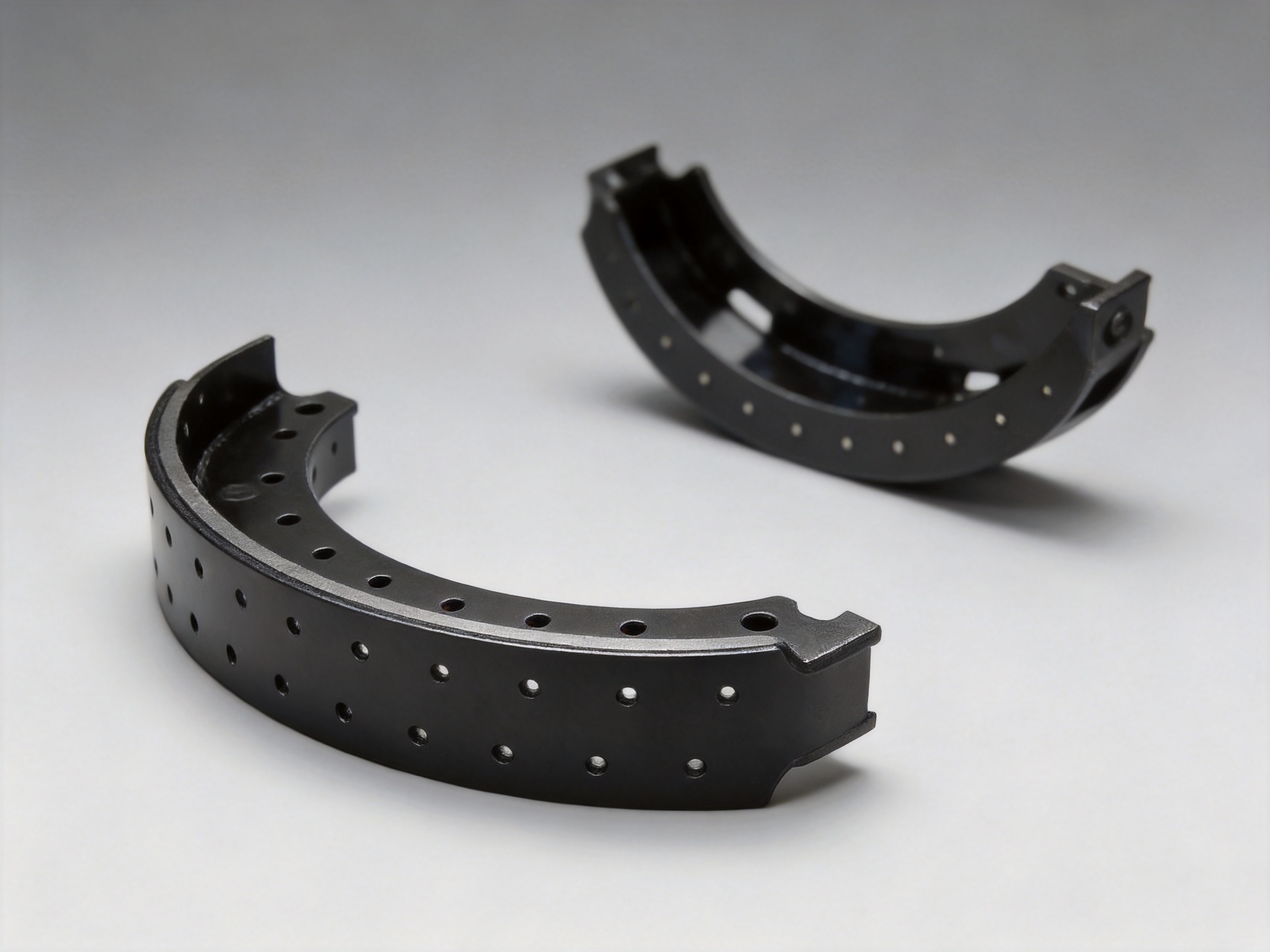
OEM Manufacturing and Customization Support
Zhejiang Bangchi Auto Parts Co., Ltd. is presented as a China-based manufacturer and exporter of heavy-duty brake parts. Its product scope includes steel brake shoes, cast brake shoes, brake linings, lined brake shoes, brake shoe repair kits, and lined brake shoe kits. This product coverage provides a foundation for serving customers with different levels of brake assembly requirements.
The company states that it provides OEM brake parts following the global FMSI numbering system. For buyers, this indicates a focus on structured product identification and compatibility within the commercial brake parts market. Product numbers, application references, dimensions, and configuration details can be used together during technical confirmation.
OEM production requires more than reproducing a general shape. It requires the manufacturer to understand the customer’s drawing, sample, reference number, material requirement, inspection standard, packaging instruction, and expected production quantity. A capable supplier should be able to review these details before confirming production.
Customer Drawing and Sample Review
A technical review is useful when a customer requests a new variation or wants to confirm an existing reference. Drawings can define critical dimensions and tolerances, while samples can help verify physical fit and application details. Comparing both sources can reduce the risk of producing a part that meets one measurement but does not fit the complete assembly.
For the 3054012000 SK9 brake shoe, the reference number, SK9 SAF application, 420 by 180 millimeter size, and sixteen-rivet-hole configuration form an initial technical basis. Additional details may be required for complete production approval, including curvature, thickness, hole diameter, edge treatment, and any coating or marking requirements.
Production Flexibility
The option of steel or customized material allows the manufacturer to discuss customer-specific requirements. Production flexibility can be valuable for regional distributors that need their own packaging, for fleet customers with internal part numbers, or for brake lining businesses that require a particular shoe preparation.
Customization should be managed through written specifications and sample approval where appropriate. Clear confirmation protects both the customer and the manufacturer by ensuring that the final product is evaluated against agreed requirements rather than informal assumptions.
Integrated Product Categories
A supplier with multiple brake product categories can support a broader purchasing plan. A customer may need bare steel shoes for its own lining operation, complete lined shoes for direct installation, or repair kits for workshop service. Coordinating these requirements with one specialized supplier may simplify communication and logistics.
However, each product category still requires separate technical confirmation. A lined brake shoe involves additional requirements for friction material, bonding or riveting, lining profile, and finished assembly inspection. The ability to supply related products is valuable when combined with disciplined product identification and quality control.
Packaging, Logistics, and Product Identification
Brake shoes are metal components that can be damaged by impact, moisture, and uncontrolled movement during transportation. Packaging should protect the shoe profile, prevent excessive contact between parts, and keep product labels readable. The packaging method should be appropriate for the shipping distance, handling conditions, and customer warehouse process.
Labels should identify the product reference, application, quantity, production information, and any customer-specific code agreed during the order process. Clear labeling helps prevent mixing between similar brake shoes and supports traceability after delivery.
For international shipments, buyers should confirm carton dimensions, pallet requirements, gross and net weights, loading instructions, and export documentation before dispatch. These details can influence freight cost and warehouse planning. Good logistics preparation is part of total product value because it reduces receiving delays and stock-management problems.
How to Select the Correct 3054012000 Brake Shoe
Customers considering this product should begin with the required application. Confirm that the brake system is associated with the SK9 SAF reference and that the replacement requirement corresponds to part number 3054012000.
Next, compare the principal physical characteristics. The expected product size is 420 by 180 millimeters, and the shoe should have sixteen rivet holes. The customer should also verify any additional dimensions that are important to the specific axle or brake drum assembly.
The material requirement should be discussed before ordering. Standard steel may be suitable for the intended service, while some customers may require a customized steel specification or additional documentation. Material changes should not be made without technical approval.
Finally, confirm the delivery configuration. The product may be required as an unlined steel shoe, or the customer may also need compatible brake linings, lined brake shoes, or repair kits. Defining the complete requirement at the quotation stage helps the manufacturer prepare an accurate offer.
Recommended Purchasing Checklist
| Checklist item | Recommended confirmation |
|---|---|
| Application | Confirm SK9 SAF suitability |
| Reference number | Confirm 3054012000 |
| Size | Confirm 420 by 180 millimeters |
| Rivet holes | Confirm sixteen holes and the approved pattern |
| Material | Confirm steel grade or customized material requirement |
| Product condition | Confirm unlined shoe, lined shoe, or kit requirement |
| Inspection | Confirm dimensions, appearance, and documentation |
| Packaging | Confirm labels, cartons, pallets, and shipping protection |
| Order quantity | Confirm trial order, recurring order, or production quantity |
| Technical approval | Approve drawing, sample, or specification before mass production |
This checklist is useful for both first-time orders and repeat purchasing. It helps ensure that commercial, technical, and logistics requirements are considered together.
Maintenance and Service Value
A properly selected steel brake shoe supports regular maintenance because it provides a predictable base for friction lining replacement. In a fleet environment, predictable component dimensions can make service work more repeatable across multiple vehicles using the same brake application.
Maintenance personnel should monitor lining thickness, drum condition, shoe wear, rivet security, and the operation of the complete brake mechanism. Abnormal wear patterns can indicate problems beyond the shoe itself, including drum damage, incorrect adjustment, worn bushings, seized hardware, or misalignment.
Brake shoes should be stored in a dry and organized environment. Heavy components should be stacked in a way that prevents bending or impact damage. Products should remain identifiable by part number and batch information until they are issued for installation.
The 3054012000 SK9 brake shoe is not a substitute for a complete maintenance procedure. Its value is realized when it is selected correctly, installed with a compatible lining and hardware, and inspected as part of a complete brake system service.
Frequently Asked Questions
What is the 3054012000 SK9 brake shoe?
It is a steel brake shoe identified for the SK9 SAF application. Its listed reference number is 3054012000, and its specified product size is 420 by 180 millimeters.
How many rivet holes does the product have?
The product has sixteen rivet holes. The exact hole spacing, diameter, and arrangement should be confirmed against the approved drawing or sample before installation.
What material is used?
The listed material is steel, with customized material options available according to customer requirements and technical agreement. Any customized material specification should be confirmed before production.
Is this product supplied with a brake lining?
The described product is categorized as a steel brake shoe, so it is presented as the shoe component rather than a complete lined assembly. Customers that need a lined brake shoe, brake lining, repair kit, or lined brake shoe kit should state that requirement when requesting a quotation.
Can the product be used for any heavy-duty drum brake?
No. It should be selected for the intended SK9 SAF application and verified against the vehicle, axle, brake drum, dimensions, and technical requirements. Visual similarity alone is not sufficient for interchangeability.
What are the main advantages of an application-specific brake shoe?
An application-specific shoe provides clearer product identification, a defined dimensional basis, a specified rivet-hole configuration, and a better starting point for compatibility verification. It can also support more consistent purchasing and maintenance planning than an unidentified generic component.
Can customers request OEM production?
Yes. The product is presented as an OEM brake parts offering. Customers should provide the required part number, application, drawings or samples, material requirements, inspection standards, packaging instructions, and expected order quantity for technical review.
How should buyers verify the product before ordering?
Buyers should compare the 3054012000 reference, SK9 SAF application, 420 by 180 millimeter size, sixteen-rivet-hole configuration, material requirement, and any additional dimensions with their existing component or approved technical documentation.
Why is rivet-hole accuracy important?
Rivet-hole accuracy affects the attachment and position of the friction lining. Incorrect hole placement can make installation difficult, create uneven support, or prevent the finished assembly from matching the intended brake design.
What should be inspected after receiving the product?
The receiver should check the product label, quantity, reference number, dimensions, hole count, surface condition, profile, and any visible damage. If the product is intended for lining installation, the shoe should also be checked for burrs, deformation, and other conditions that could affect assembly.
Where is the manufacturer located?
Zhejiang Bangchi Auto Parts Co., Ltd. is located in Haining, Zhejiang, China. The supplied company address is No. 9 Building, No. 11 Qiyi Road, Chang'an Town, Haining, Zhejiang, China.
Conclusion
The 3054012000 SK9 brake shoe is a clearly identified steel component for the SK9 SAF heavy-duty brake application. Its key specifications include a 420 by 180 millimeter size, sixteen rivet holes, and a steel or customized material option. These details provide a practical basis for product verification, replacement planning, and OEM manufacturing discussions.
Its principal advantages include an application-focused design, stable steel construction, defined dimensions, a controlled rivet-hole configuration, and suitability for heavy-duty aftermarket and OEM programs. Compared with poorly identified alternatives, the product offers more useful information for purchasing, inventory management, lining installation, and technical confirmation.
The manufacturing value of the product depends on process control. Material preparation, forming, hole production, edge treatment, dimensional inspection, traceability, packaging, and final verification all contribute to consistent brake shoe quality. A specialized manufacturer with a broader range of brake parts can also provide customers with options for linings, lined shoes, and repair kits.
For the best result, buyers should confirm the application, part number, dimensions, rivet-hole arrangement, material, product configuration, inspection requirements, and shipping details before ordering. When correctly selected and professionally installed, the 3054012000 SK9 steel brake shoe can provide a dependable structural base for heavy-duty drum brake service.
References
1. Supplied product specification for the 3054012000 SK9 steel brake shoe.
2. Supplied company information for Zhejiang Bangchi Auto Parts Co., Ltd.
3. General heavy-duty drum brake maintenance and inspection principles.
4. General commercial vehicle brake component identification and replacement practices.
5. General manufacturing principles for formed steel brake shoes and riveted friction lining assemblies.