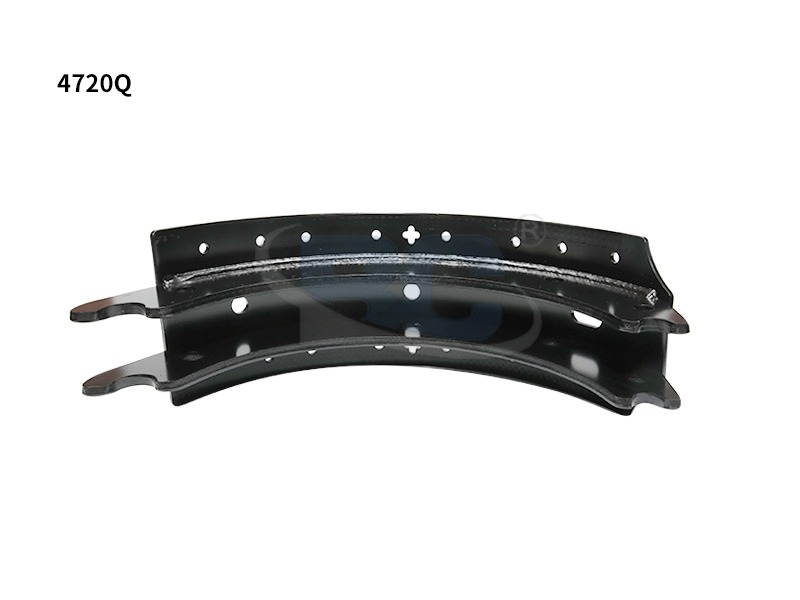
 English
 简体中文
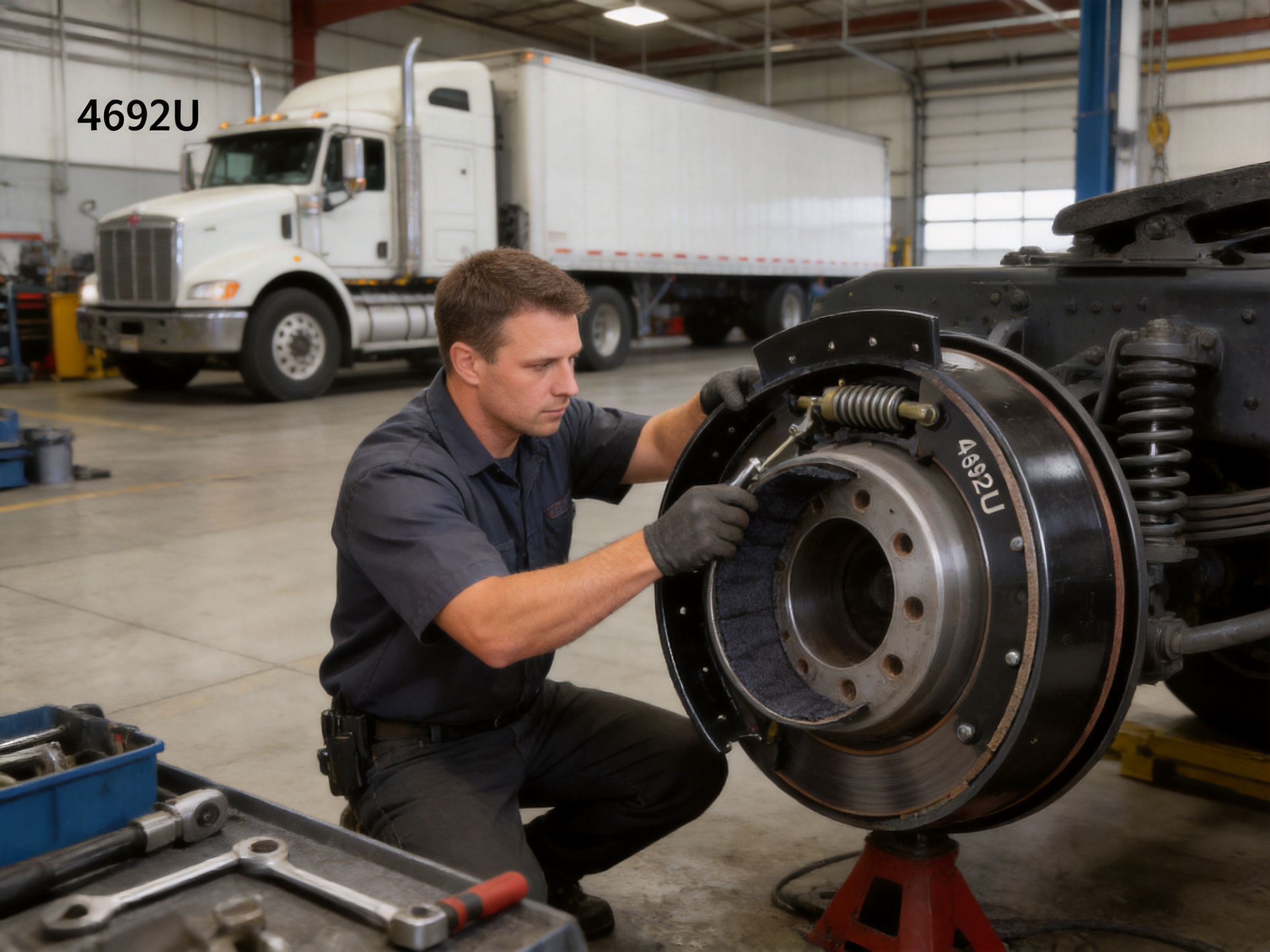
Reliable braking is one of the most important requirements in commercial vehicles, trailers, buses, and heavy-duty truck applications. A brake shoe must support consistent friction, stable contact with the drum, accurate fitment, and dependable operation through repeated braking cycles. When a brake shoe is manufactured with inadequate dimensional control or poor material consistency, the result can be accelerated lining wear, uneven braking, noise, drum damage, and increased maintenance costs.
The 4692U Brake Shoe is a steel brake shoe designed for heavy-duty braking applications. It is identified by part number 4692U and is associated with OE number R700011. The supplied product specification lists a product size of 12.25 inches by 7.5 mm and includes 20 rivet holes. Because the published size combines an imperial dimension with a millimeter unit, purchasers and installers should confirm the complete dimensional drawing before installation. This verification is especially important for fleet maintenance programs, where accurate interchange and controlled fitment are essential.
Manufactured by Zhejiang Bangchi Auto Parts Co., Ltd., the 4692U is positioned within a broader range of heavy-duty brake parts that includes steel brake shoes, casted brake shoes, brake linings, lined brake shoes, brake shoe repair kits, and lined brake shoe kits. The product range supports different repair and replacement requirements while following the global FMSI numbering system for product identification.
This article examines the construction, application value, manufacturing considerations, installation factors, maintenance benefits, and purchasing advantages of the 4692U Brake Shoe. It also explains how a professionally produced steel brake shoe can provide practical advantages over inconsistent aftermarket alternatives.
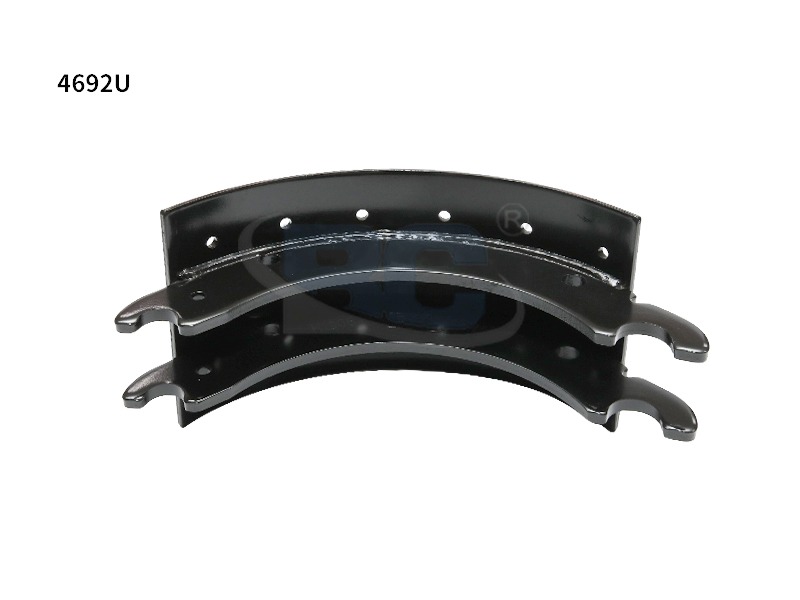
4692U Brake Shoe
1. Product Overview
The 4692U Brake Shoe is a steel brake shoe intended to serve as the structural foundation of a drum brake assembly. In a conventional drum brake system, the shoe is positioned inside the brake drum. When the braking mechanism is activated, the shoe moves outward and presses a friction lining against the inner surface of the drum. This contact creates friction and converts the vehicle’s kinetic energy into heat.
The steel shoe itself does not normally provide the primary friction surface. Instead, it supports the brake lining and transfers the force generated by the actuator, wheel cylinder, or mechanical linkage into the drum. For this reason, the shoe must possess sufficient rigidity, dimensional accuracy, resistance to deformation, and compatibility with the associated lining and hardware.
The basic product information supplied for the 4692U includes the following specifications:
| Item | Specification |
|---|---|
| Product name | 4692U Brake Shoe |
| Product category | Steel Brake Shoe |
| Part number | 4692U |
| OE reference number | R700011 |
| Number of rivet holes | 20 |
| Published product size | 12.25 inches by 7.5 mm as supplied; confirm the complete technical drawing before ordering |
| Application type | Heavy-duty drum brake service and replacement applications |
The 20-rivet-hole configuration is a significant identification feature. Rivet-hole quantity and spacing influence the compatibility between the steel shoe and the selected brake lining. A lining that does not match the hole pattern may not sit correctly against the shoe, and improper riveting can create localized stress, loose attachment, or uneven lining contact. Accordingly, the part number and OE reference should always be checked together with the actual brake assembly specifications.
2. Why Steel Brake Shoe Quality Matters
A brake shoe is a load-bearing component within a braking system. During braking, it experiences mechanical pressure, vibration, thermal cycling, and repeated loading. Although the component may appear simple, small differences in curvature, hole placement, edge finishing, or material quality can influence long-term performance.
A high-quality steel brake shoe should maintain its intended geometry during manufacturing, lining attachment, installation, and service. If the shoe becomes distorted, the lining may contact the drum unevenly. This can reduce braking effectiveness in part of the shoe, increase localized heat, and cause irregular wear. In severe cases, poor fitment may contribute to noise, vibration, or accelerated drum wear.
Structural consistency is particularly important in commercial vehicles because they often operate with high loads, long duty cycles, frequent stops, and challenging road conditions. Heavy trucks and trailers may also remain in service for many years. A replacement component must therefore provide dependable fitment and support the service expectations of professional fleets.
The steel substrate must also work effectively with the lining material. The back of the lining must conform to the shoe’s arc, while the rivets must be installed securely and evenly. A stable shoe surface helps the lining remain properly seated and supports uniform pressure distribution across the braking surface.
Compared with low-quality alternatives, a precisely manufactured steel shoe can help reduce installation complications and improve the consistency of brake service. It can also simplify inventory management because clearly identified parts are easier for distributors and maintenance teams to select.
3. Key Advantages of the 4692U Brake Shoe
3.1 Identifiable Part Number and OE Reference
The 4692U part number provides a clear product identity for purchasing, warehousing, and technical communication. The associated OE number R700011 offers an additional reference point for replacement planning. Using both references helps reduce the risk of selecting a visually similar but technically incompatible brake shoe.
For fleet operators, part-number accuracy is especially valuable. A maintenance department may manage many vehicles with different axle types, drum dimensions, and braking systems. Clear numbering helps personnel match the replacement part to service records and reduces unnecessary trial fitting.
3.2 Twenty-Rivet-Hole Configuration
The 20-rivet-hole design supports the installation of a compatible brake lining using a distributed attachment pattern. Properly spaced rivets help secure the lining across the shoe surface and reduce the possibility of movement between the lining and the steel substrate.
The exact rivet-hole spacing, diameter, and arrangement should be confirmed against the corresponding lining and technical drawing. Nevertheless, the stated 20-hole configuration provides an important specification for product identification and repair planning.
3.3 Heavy-Duty Steel Construction
The steel brake shoe format is suitable for applications in which structural strength and resistance to repeated mechanical loading are important. A properly formed steel shoe supports the lining, transfers actuator force, and retains its shape under ordinary service conditions.
Steel also offers practical advantages during refurbishment and replacement operations. It can be formed into the required arc, machined or pierced with controlled features, and prepared for riveted lining installation. When production controls are properly applied, the material provides a stable base for consistent brake assembly performance.
3.4 Compatibility with Lining and Repair Programs
As a bare steel brake shoe, the 4692U can be used in a repair program where the customer selects and installs a compatible brake lining. This format is useful for distributors, brake specialists, and fleets that maintain their own lining inventory or require a particular friction material for a defined operating environment.
A bare shoe may also provide flexibility for regional regulations and service preferences. Different fleets may choose different lining compounds based on load, climate, terrain, temperature range, noise requirements, and maintenance strategy. The steel shoe provides the structural base while allowing the friction material to be selected separately.
3.5 Support for Global Replacement Requirements
The manufacturer’s use of the global FMSI numbering system supports clearer communication across international markets. Standardized product identification is important for exporters, importers, wholesalers, workshops, and fleet operators that may use different local cataloging systems.
When a part is identified through a recognized numbering approach, buyers can more efficiently compare technical information, cross-reference inventory, and prepare replacement orders. This can help reduce downtime caused by incorrect or incomplete product descriptions.
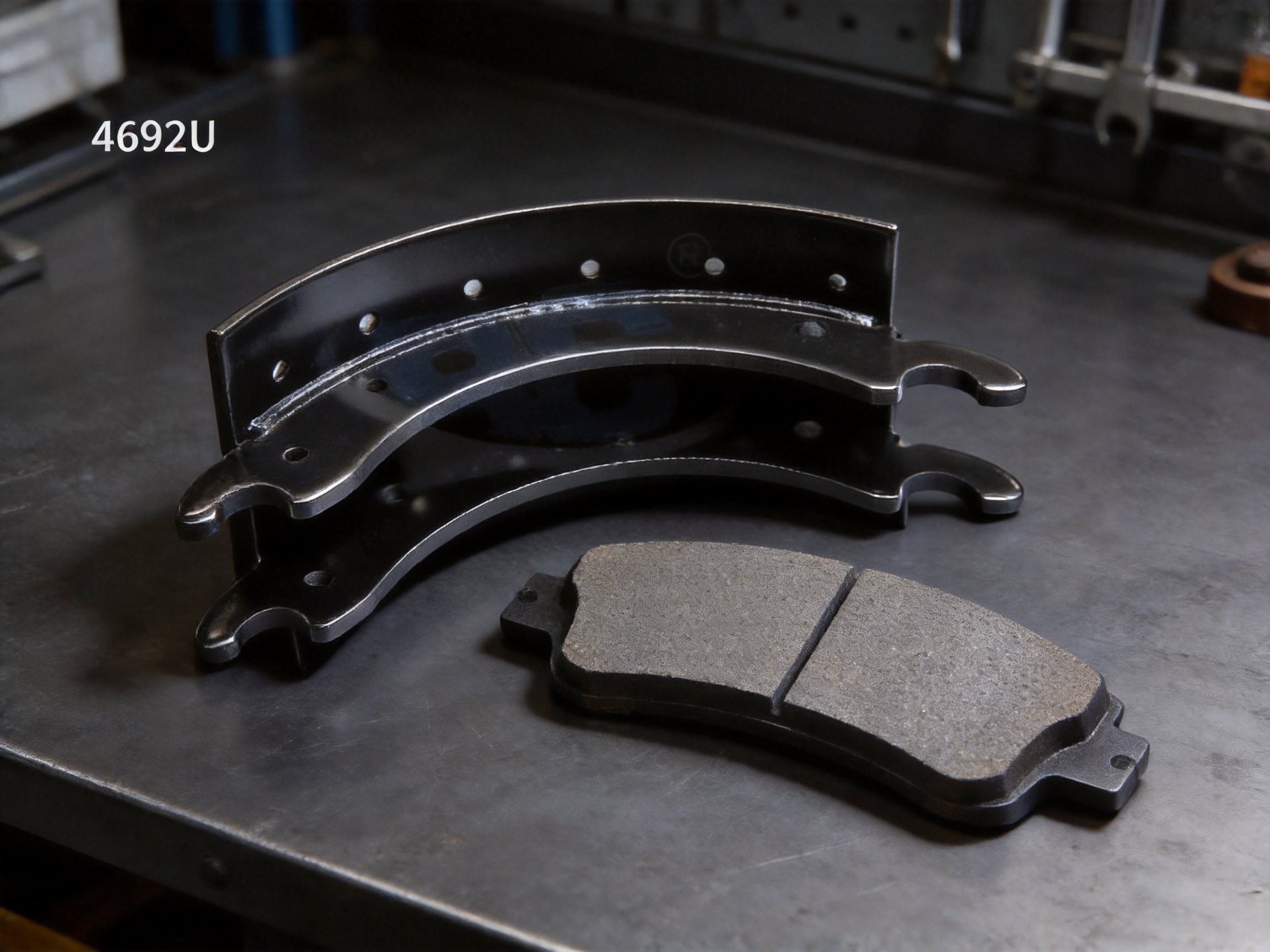
4. Manufacturing Process and Quality Considerations
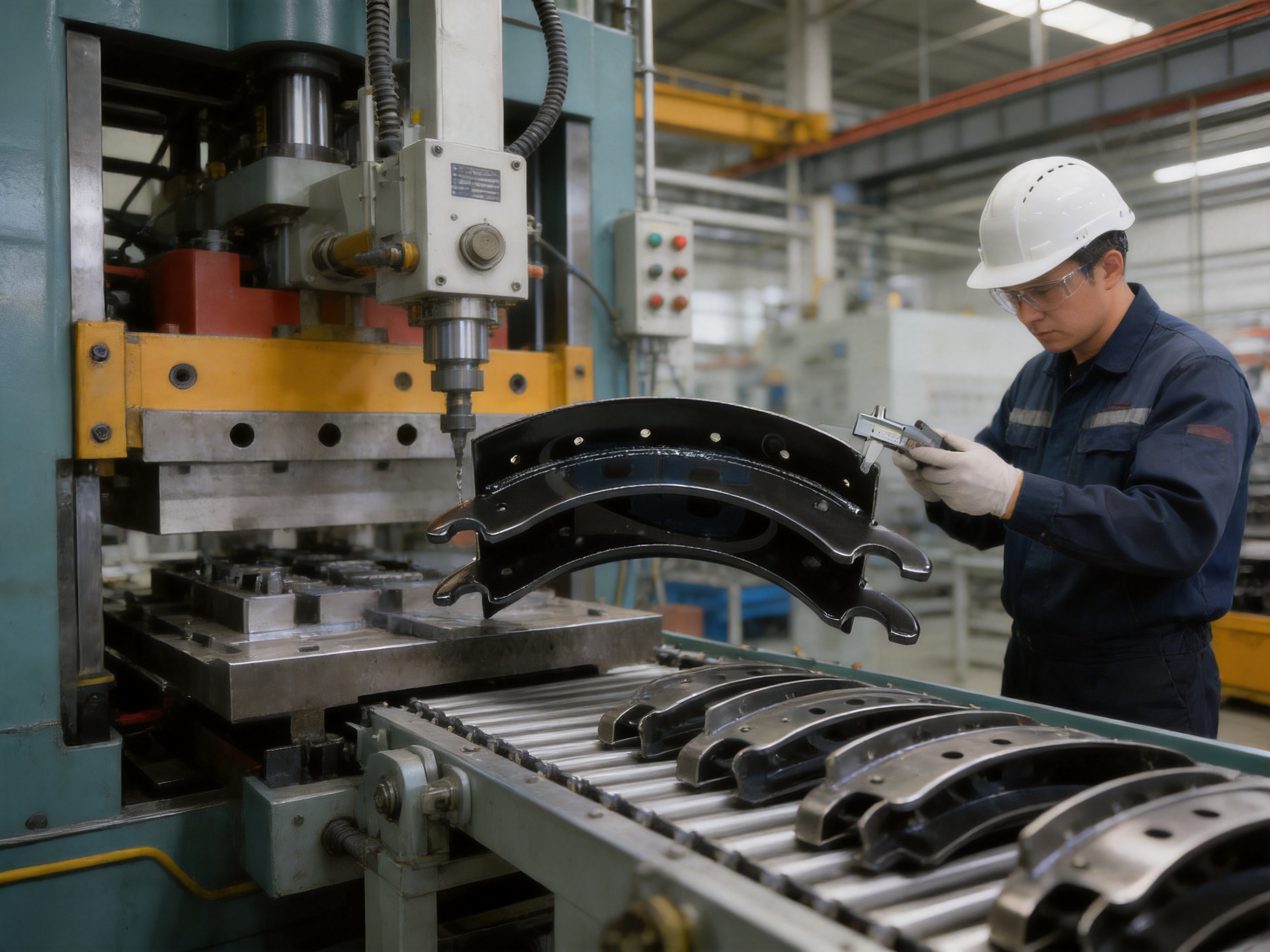
The performance of a steel brake shoe depends heavily on the quality of its manufacturing process. A professional production line should control the material, forming, hole placement, surface preparation, inspection, and packaging stages. Each step contributes to the final fit and reliability of the component.
4.1 Material Selection
The production process begins with steel selected for suitable strength, formability, and resistance to service-related deformation. The material must be capable of being formed into the required brake-shoe profile without excessive cracking, thinning, or residual distortion.
Material control may include verification of incoming steel dimensions, surface condition, and supplier documentation. Consistent material thickness helps support repeatable forming and hole-making operations. It also reduces variation between production batches.
For heavy-duty brake components, material selection should balance rigidity with manufacturability. Excessively hard material may be difficult to form accurately, while material with insufficient strength may be more vulnerable to distortion. A controlled material specification helps the manufacturer achieve a practical balance.
4.2 Cutting and Blanking
Steel sheet or strip is first prepared into blanks that correspond to the general outline of the brake shoe. Controlled cutting helps establish consistent external dimensions and reduces unnecessary material variation.
Accurate blanking is important because subsequent forming operations depend on the initial shape. Poorly controlled blank dimensions can lead to uneven edges, inconsistent curvature, and alignment issues during later steps. Clean cutting also helps reduce the amount of secondary correction required.
4.3 Forming and Arc Control
The blank is formed into the curved profile required for the brake drum. The arc must be controlled carefully so that the completed shoe matches the intended drum geometry and allows the lining to sit correctly.
Forming equipment must apply force consistently and maintain repeatable tooling alignment. Operators and quality personnel should monitor the formed part for over-bending, under-bending, twisting, and edge deformation. A stable forming process is essential to achieving consistent contact between the lined shoe and the drum during braking.
Arc control also influences the lining installation process. If the steel shoe has excessive variation, the lining may require additional adjustment, or the finished assembly may not maintain an even radius. Accurate forming reduces these risks and supports efficient workshop operations.
4.4 Rivet-Hole Production
For the 4692U, the specified 20 rivet holes are a central production feature. These holes must be located accurately and produced with suitable dimensional consistency. Hole position affects lining alignment, while hole quality influences the seating and retention of rivets.
Modern production methods may use dedicated dies, precision fixtures, automated punching equipment, or controlled drilling processes. Regardless of the equipment selected, the objective is to maintain the correct pattern across the full production batch.
Hole edges should be inspected for excessive burrs, cracking, or deformation. Burrs can interfere with lining fitment and may prevent rivets from seating properly. Clean holes contribute to a more stable connection between the lining and the steel shoe.
4.5 Edge Finishing
After cutting and punching, the brake shoe may require edge finishing. Removing sharp burrs and unwanted projections protects workers during handling and helps prevent interference during assembly.
Edge finishing also supports consistent contact with associated brake hardware. A clean edge can reduce the risk of localized stress points and makes the part easier to inspect before installation.
4.6 Surface Treatment
Depending on the product specification and customer requirements, steel brake shoes may receive cleaning, protective coating, painting, or another corrosion-control treatment. Surface preparation should be compatible with the intended lining attachment process and should not interfere with critical contact areas.
Corrosion protection is valuable during transportation and storage, especially when products are shipped internationally or held in warehouse conditions with changing humidity. Proper packaging should complement the surface treatment by protecting the part from moisture, impact, and contamination.
4.7 Inspection and Measurement
A responsible quality system evaluates the brake shoe at multiple stages instead of relying only on final inspection. Incoming material checks, process inspections, and finished-product verification can identify problems earlier and reduce the risk of nonconforming parts reaching customers.
Typical inspection points may include overall dimensions, arc profile, hole count, hole spacing, edge condition, surface appearance, and part identification. Where applicable, gauges and fixtures can be used to make inspection faster and more repeatable.
For international customers, production records and batch traceability can provide additional confidence. Traceability enables the manufacturer to investigate a quality question, identify affected batches, and improve process control when necessary.
5. Manufacturing Strengths of Zhejiang Bangchi Auto Parts Co., Ltd.
Zhejiang Bangchi Auto Parts Co., Ltd. is identified in the supplied information as a Chinese manufacturer of heavy-duty brake parts. Its product categories cover steel brake shoes, casted brake shoes, brake linings, lined brake shoes, brake shoe repair kits, and lined brake shoe kits. This product breadth is valuable because it allows customers to source related brake components from one specialized supplier.
The company states that it provides OEM brake parts following the global FMSI numbering system. This emphasis on standardized identification can benefit overseas buyers who require consistent catalog references and organized product communication.
A manufacturer focused specifically on heavy-duty brake components can develop more relevant production knowledge than a general metalworking supplier. Brake shoe manufacturing requires attention to curvature, lining attachment, rivet-hole patterns, drum compatibility, and service conditions. Experience in these areas can support more effective technical coordination with distributors and repair specialists.
The company’s location in Haining, Zhejiang, China, places it within a major manufacturing region with access to industrial supply chains, metal-processing resources, logistics services, and export infrastructure. For international buyers, a supplier based in an established manufacturing area may offer practical advantages in procurement coordination and shipment management.
The company provides telephone, fax, and email contact channels for customer communication. Direct communication is important when confirming technical details such as dimensions, OE references, rivet-hole patterns, lining options, packaging requirements, and minimum order quantities.
5.1 Product Range Synergy
The combination of bare brake shoes, brake linings, lined shoes, and repair kits can support different customer business models. A wholesaler may prefer bare shoes for local lining installation. A fleet may require completed lined shoes for faster maintenance. A workshop may choose repair kits for refurbishment operations.
This product-range synergy can simplify sourcing and reduce the need to coordinate multiple specialized suppliers. It may also help customers standardize product quality across related brake repair activities.
5.2 OEM-Oriented Identification
OEM-oriented references help customers compare replacement parts against existing vehicle and axle applications. A clear reference structure can support quotations, inventory systems, technical catalogs, and export documentation.
For distributors, accurate identification also improves customer service. When a workshop requests a particular brake shoe, sales staff can use the part number and OE reference as starting points for confirmation rather than relying only on photographs or approximate dimensions.
5.3 Application-Focused Production
Heavy-duty brake parts must be manufactured with attention to real operating conditions. Commercial vehicles may experience high axle loads, frequent braking, long downhill descents, severe weather, road contamination, and extended storage periods. A production process designed around these requirements can provide more dependable results than a process focused only on appearance.
The 4692U should therefore be evaluated not simply as a curved steel component, but as part of a complete braking system. Its manufacturing quality influences the way the lining is installed, how braking pressure is transferred, and how consistently the shoe works within the drum.
6. Advantages Compared with Inconsistent Aftermarket Alternatives
Not every aftermarket brake shoe provides the same level of dimensional or process control. Some low-cost alternatives may appear similar but differ in steel thickness, curvature, hole placement, surface preparation, or edge quality. These differences can create additional labor during installation and may affect service performance.
6.1 More Reliable Identification
The 4692U part number and R700011 OE reference provide two important points of comparison. A generic product with limited identification may be more difficult to verify, especially when several shoes have similar profiles.
6.2 Better Fitment Planning
The stated 20-rivet-hole configuration allows buyers to compare the shoe with the intended lining and existing assembly. This is more practical than choosing a product based only on visual similarity.
6.3 Greater Production Consistency
A specialized manufacturer with defined forming and inspection procedures can help reduce variation from one batch to another. Consistency is important for fleets that need repeatable maintenance outcomes across multiple vehicles.
6.4 Reduced Installation Risk
Accurate holes, controlled curvature, and finished edges can make the shoe easier to prepare and line. This can reduce the need for corrective work during refurbishment and help technicians complete brake jobs more efficiently.
6.5 Flexible Supply Options
Because the supplier offers several categories of brake products, buyers may be able to select bare shoes, lined shoes, or repair kits according to their operating requirements. This flexibility is useful when different branches or customers follow different maintenance procedures.
7. Selecting the Correct Brake Shoe for an Application
Even a well-manufactured brake shoe must be correctly matched to the vehicle and brake assembly. Before ordering the 4692U, customers should verify the part number, OE reference, brake drum dimensions, shoe profile, rivet-hole pattern, lining requirements, and axle application.
The supplied size is written as 12.25 inches by 7.5 mm. Since the two values use different units and may represent different dimensions, the complete technical drawing should be requested for confirmation. Buyers should not infer a missing dimension from the abbreviated product description.
Additional information that may be necessary includes the shoe width, inside and outside arc dimensions, overall height, hole diameter, hole spacing, offset, and the location of any slots or locating features. These details can determine whether the shoe is suitable for a specific drum brake assembly.
Customers should also consider whether they need a bare steel shoe or a completed lined shoe. A bare shoe is appropriate when the buyer has an established lining installation process. A lined shoe may be more suitable when rapid replacement is more important than in-house refurbishment.
8. Installation and Lining Considerations
Brake shoe installation should be performed by qualified technicians using the correct service procedures. The vehicle must be safely supported, and the brake system must be inspected before reassembly. Old hardware, springs, adjusters, and pins should be evaluated for wear because replacing only the shoe may not correct problems elsewhere in the assembly.
When installing a lining on the 4692U, the lining must match the shoe’s arc and rivet-hole pattern. The lining should sit evenly against the steel surface without rocking, excessive gaps, or forced misalignment. Rivets should be suitable for the lining and installed with the correct equipment and technique.
Riveting should proceed in a controlled sequence so that the lining remains properly positioned. Excessive force can damage the lining or distort the shoe, while insufficient force may leave the lining loose. After riveting, the assembly should be checked for secure attachment, correct curvature, and any interference between the rivet heads and the drum.
The brake drum should also be inspected for scoring, cracks, excessive wear, heat checking, and dimensional problems. Installing a new or refurbished shoe against a severely damaged drum may prevent proper bedding and can lead to uneven braking.
After installation, the braking system should be adjusted according to the vehicle manufacturer’s procedure. The vehicle should be tested in a controlled area before returning to normal service. Initial bedding may be required to establish uniform contact between the new lining and drum.
9. Maintenance and Fleet Management Benefits
For fleet operators, brake component selection influences more than one repair event. It affects inventory, labor, vehicle availability, safety procedures, and lifecycle cost. A clearly identified steel brake shoe can support more organized maintenance planning.
Fleet managers can record the 4692U part number and R700011 reference in purchasing and maintenance systems. This helps create a repeatable replacement process and reduces the likelihood of ordering an unsuitable part during urgent repairs.
Warehouses should store brake shoes in clean, dry conditions and protect them from unnecessary moisture, impact, and contamination. Parts should remain in their original packaging until required, where practical. Before installation, personnel should inspect each shoe for shipping damage, corrosion, distortion, and identification accuracy.
Maintenance records should include the vehicle or axle position, installation date, mileage or operating hours, lining type, drum condition, and any observed braking symptoms. These records can help determine whether a particular application requires a different lining compound, more frequent inspection, or additional attention to adjustment and hardware.
Consistent parts identification also allows purchasing departments to compare supplier performance over time. Important indicators may include delivery reliability, dimensional consistency, packaging quality, technical response, and the rate of installation-related concerns.
10. Quality Control Checklist
The following checklist can support receiving inspection and workshop preparation for the 4692U Brake Shoe:
| Inspection area | Recommended check | Purpose |
|---|---|---|
| Part identification | Confirm 4692U part number and R700011 OE reference | Prevents incorrect product selection |
| Quantity of holes | Confirm 20 rivet holes | Supports lining compatibility |
| Hole condition | Check for burrs, cracks, blockage, or deformation | Supports secure riveting |
| Arc profile | Compare with the approved drawing or gauge | Supports proper drum and lining fit |
| Edges | Check for sharp projections and damage | Improves handling and assembly safety |
| Surface | Inspect for excessive corrosion, contamination, or coating defects | Protects storage quality and preparation |
| Dimensions | Verify against the confirmed technical drawing | Reduces application and fitment risk |
| Packaging | Check for impact, moisture, and labeling damage | Confirms the product remained protected in transit |
This checklist does not replace the vehicle manufacturer’s service information or the supplier’s approved technical documentation. It is a practical receiving and preparation guide that can help identify obvious issues before the part enters service.
11. Purchasing and Export Considerations
International buyers should provide complete information when requesting a quotation for the 4692U. The inquiry should include the required quantity, whether the product is bare or lined, packaging preferences, destination, delivery requirements, and any requested inspection documents.
Buyers should ask the supplier to confirm the part number, OE reference, dimensions, rivet-hole pattern, available materials, and production lead time. If the published dimensions contain mixed units or abbreviated notation, the buyer should request clarification before placing an order.
Packaging is important for steel brake shoes because the parts may be exposed to vibration, stacking pressure, humidity, and repeated handling during transport. Suitable packaging should prevent contact damage and help protect the surface from corrosion.
For distributors, individual labels should clearly identify the part number and relevant references. Batch or carton labels can simplify warehouse counting and support traceability. Where multiple brake shoe types are shipped together, clear separation is essential to prevent mixing similar-looking products.
Communication with the manufacturer can also help buyers choose between steel brake shoes, casted brake shoes, lined brake shoes, and repair kits. The most suitable format depends on the customer’s equipment, workshop capability, local regulations, and expected service conditions.
12. Common Questions and Answers
Q1: What is the 4692U Brake Shoe?
The 4692U Brake Shoe is a steel brake shoe for heavy-duty drum brake applications. It provides the structural support for a compatible brake lining and transfers braking force toward the drum.
Q2: What is the OE reference for this product?
The supplied OE reference is R700011. Buyers should use this reference together with the 4692U part number and application details when confirming compatibility.
Q3: How many rivet holes does the shoe have?
The product specification states that the 4692U has 20 rivet holes. The hole spacing and diameter should still be checked against the selected lining and approved technical drawing.
Q4: Is the 4692U supplied as a complete lined brake shoe?
The listed product category is Steel Brake Shoe, so the supplied item should be treated as a bare steel shoe unless the quotation or product documentation specifically confirms that lining is included. The manufacturer also offers lined brake shoes and lined brake shoe kits as separate product categories.
Q5: What does the published size mean?
The supplied description lists the size as 12.25 inches by 7.5 mm. Because this notation combines different units and does not clearly identify each measurement, customers should request a complete dimensional drawing and confirm all critical dimensions before ordering.
Q6: Can the 4692U be used with any brake lining?
No. The lining must match the shoe’s dimensions, curvature, rivet-hole pattern, friction requirements, and intended brake application. A qualified technician or brake specialist should confirm compatibility.
Q7: Why is the rivet-hole pattern important?
The rivet-hole pattern determines whether the lining can be positioned and secured correctly. Incorrect hole alignment can result in poor attachment, uneven lining contact, or installation damage.
Q8: What are the main advantages of buying from a specialized brake-parts manufacturer?
A specialized manufacturer may provide more focused knowledge of brake shoe geometry, lining compatibility, hole patterns, production inspection, and heavy-duty applications. A broad product range can also simplify sourcing.
Q9: What should be inspected before installation?
Inspect the part number, OE reference, hole count, hole condition, arc profile, edges, surface condition, dimensions, and packaging condition. The drum, lining, rivets, springs, adjuster, and other brake hardware should also be evaluated.
Q10: How should the brake shoe be stored?
Store it in a clean, dry area protected from moisture, impact, contamination, and unnecessary handling. Keep the product in suitable packaging until it is needed for installation.
Q11: Is the 4692U suitable for fleet maintenance?
It can be considered for fleet maintenance when its part number, OE reference, dimensions, and application are confirmed. Clear identification supports repeat ordering and organized spare-parts management.
Q12: What information should be included in a purchase inquiry?
Include the 4692U part number, R700011 OE reference, required quantity, application, bare or lined configuration, destination, packaging requirements, delivery schedule, and any requested technical documents.
13. Conclusion
The 4692U Brake Shoe is a heavy-duty steel brake shoe identified by part number 4692U, OE reference R700011, and a 20-rivet-hole configuration. Its role is to provide a stable structural foundation for a compatible brake lining and to transfer braking force within a drum brake assembly.
Its primary advantages include clear part identification, a defined rivet-hole count, steel construction, compatibility with lining and repair programs, and support for standardized global product references. These features can make the component useful for distributors, workshops, fleet operators, and brake specialists that require organized replacement sourcing.
The quality of a brake shoe depends not only on the steel material but also on blanking, forming, arc control, hole production, edge finishing, surface protection, inspection, and packaging. A specialized manufacturing approach can help improve dimensional consistency and reduce installation-related problems compared with poorly controlled aftermarket alternatives.
Before purchase or installation, customers should confirm all dimensions, particularly because the supplied product size uses mixed units. Application verification should include the brake drum, shoe geometry, lining, rivet pattern, and associated hardware. When correctly matched and professionally installed, the 4692U can serve as a practical component in heavy-duty drum brake repair and replacement programs.
References
1. Product specification supplied for the 4692U Brake Shoe, including part number, OE reference, product category, size notation, and rivet-hole count.
2. Manufacturer product category information covering steel brake shoes, casted brake shoes, brake linings, lined brake shoes, brake shoe repair kits, and lined brake shoe kits.
3. Manufacturer information concerning OEM brake parts and use of the global FMSI numbering system.
4. General principles of commercial vehicle drum brake construction, brake shoe geometry, lining attachment, and maintenance inspection.
5. General workshop practices for brake component receiving inspection, storage, riveting, adjustment, and post-installation testing.