 English
 简体中文
Introduction
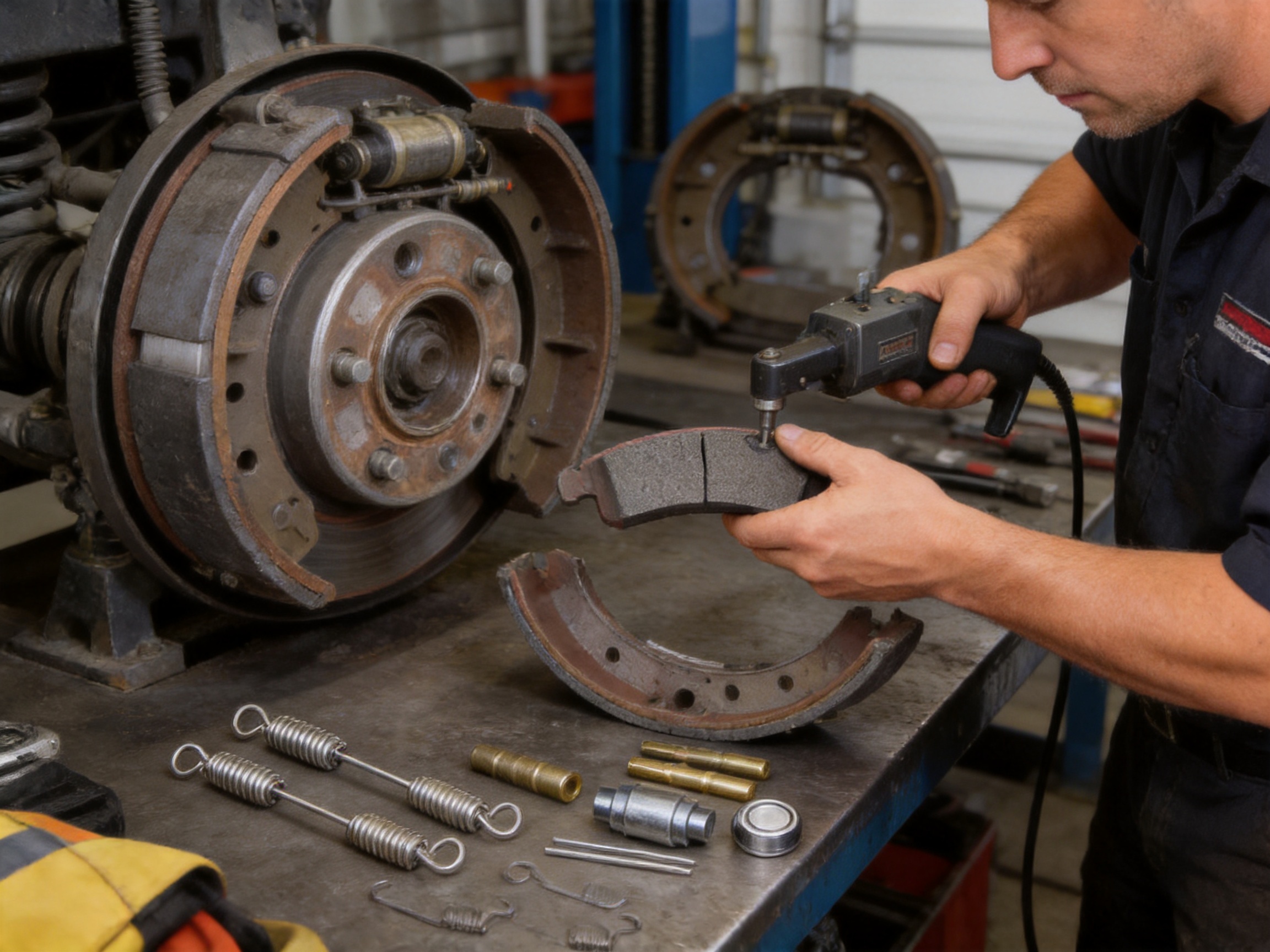
Brake shoes are among the most important wear components in a heavy-duty braking system. They operate under high mechanical loads, repeated thermal cycles, road contamination, vibration, and long service intervals. When a brake shoe assembly reaches the end of its usable life, fleet operators and maintenance professionals must choose between replacing the complete assembly and restoring the existing shoe with a properly engineered repair kit.
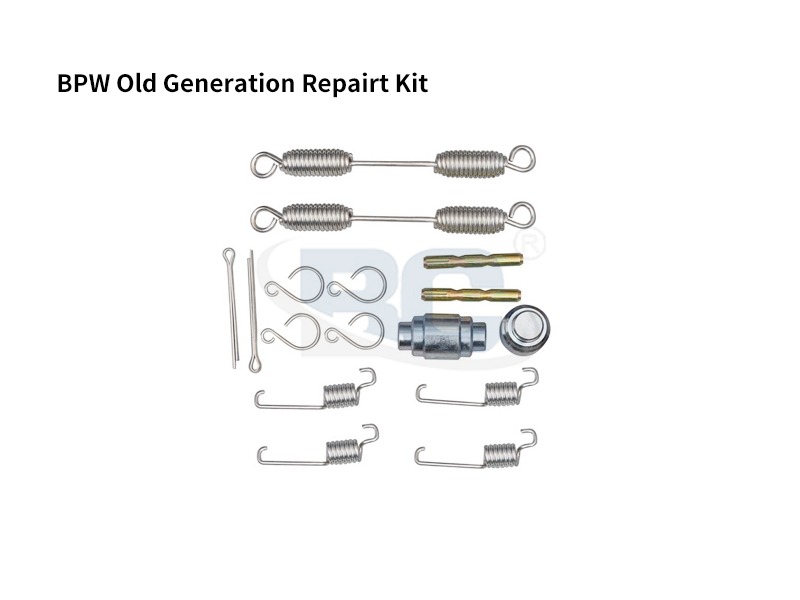
The BPW Old Generation Repair Kit is designed for the second option. It provides a practical maintenance solution for older-generation brake shoe applications where the main shoe body may still be structurally serviceable, but wear components, fastening elements, or lining-related parts require replacement. A suitable repair kit can reduce unnecessary component replacement, support faster workshop operations, and help fleet owners control maintenance costs without compromising the importance of correct brake servicing.
This article examines the role of an old-generation brake shoe repair kit, the factors that influence its performance, the benefits of using a product developed for heavy-duty applications, and the manufacturing strengths that support consistent aftermarket quality. It also explains how repair professionals can evaluate compatibility, prepare the brake shoe, install replacement components, and verify the finished assembly before returning a vehicle to service.
Because exact kit contents can vary according to application, production specification, and market requirements, users should always confirm the relevant brake shoe model, dimensions, lining specification, hardware configuration, and vehicle application before installation. The product should be treated as a precision repair solution rather than a universal replacement for every brake shoe design.
BPW Old Generation Repair Kit
Understanding the Product
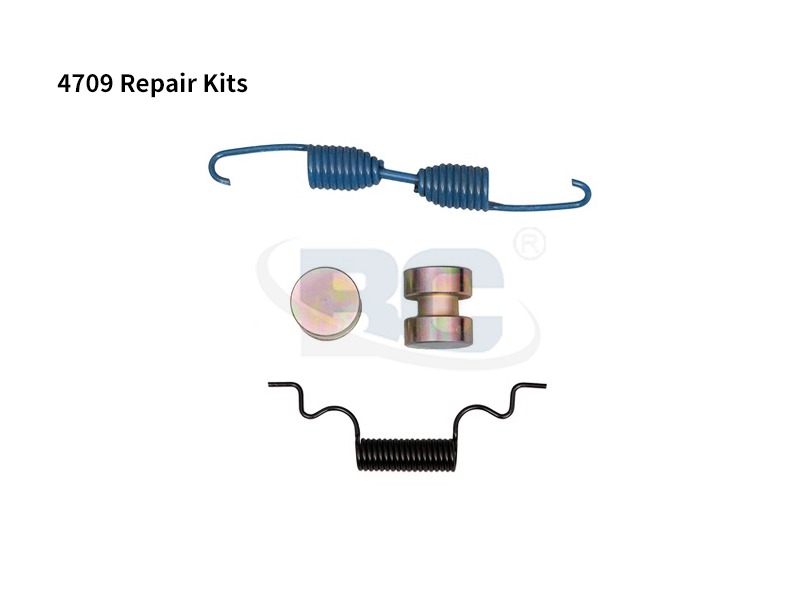
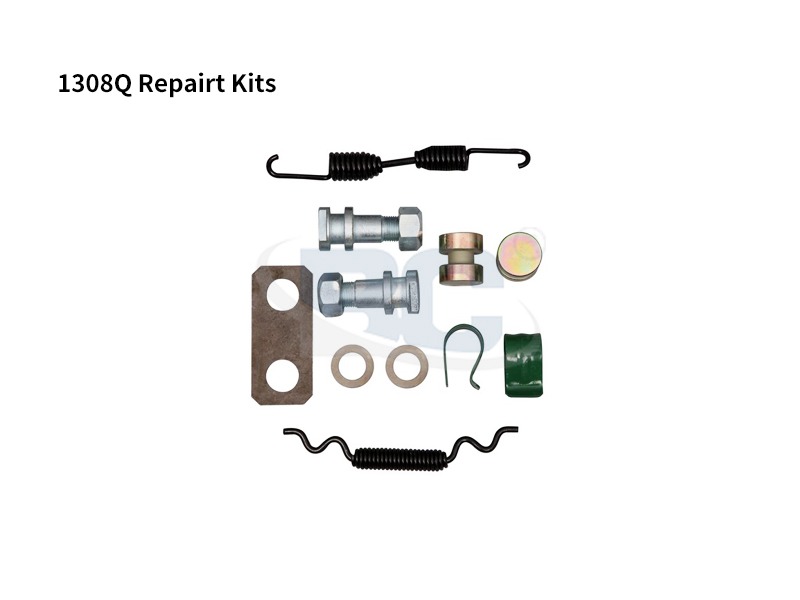
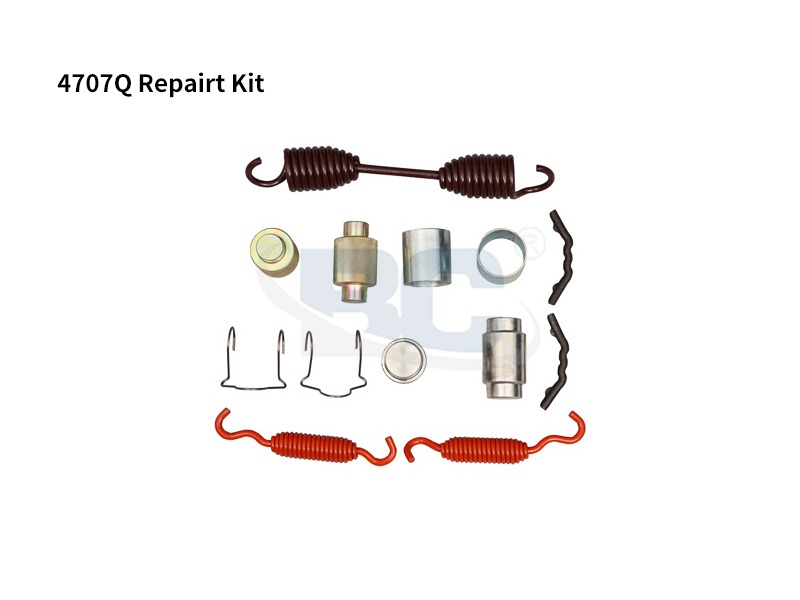
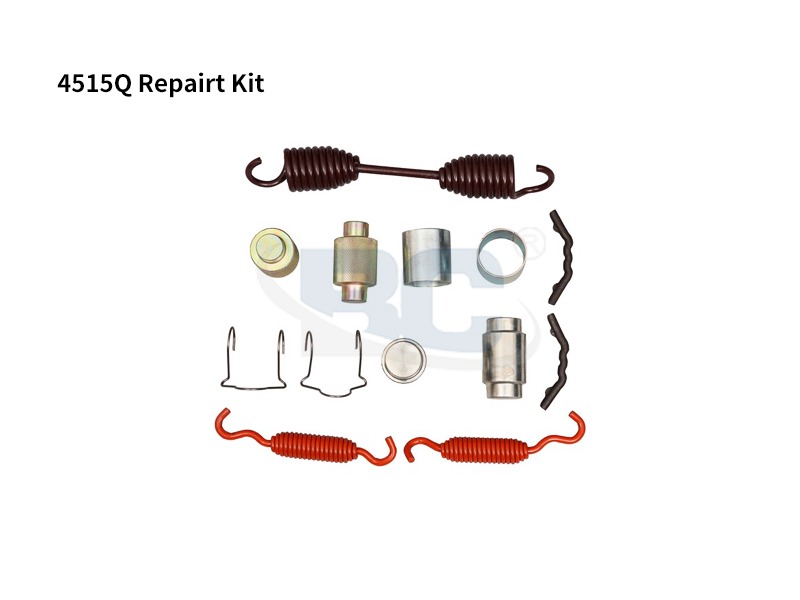
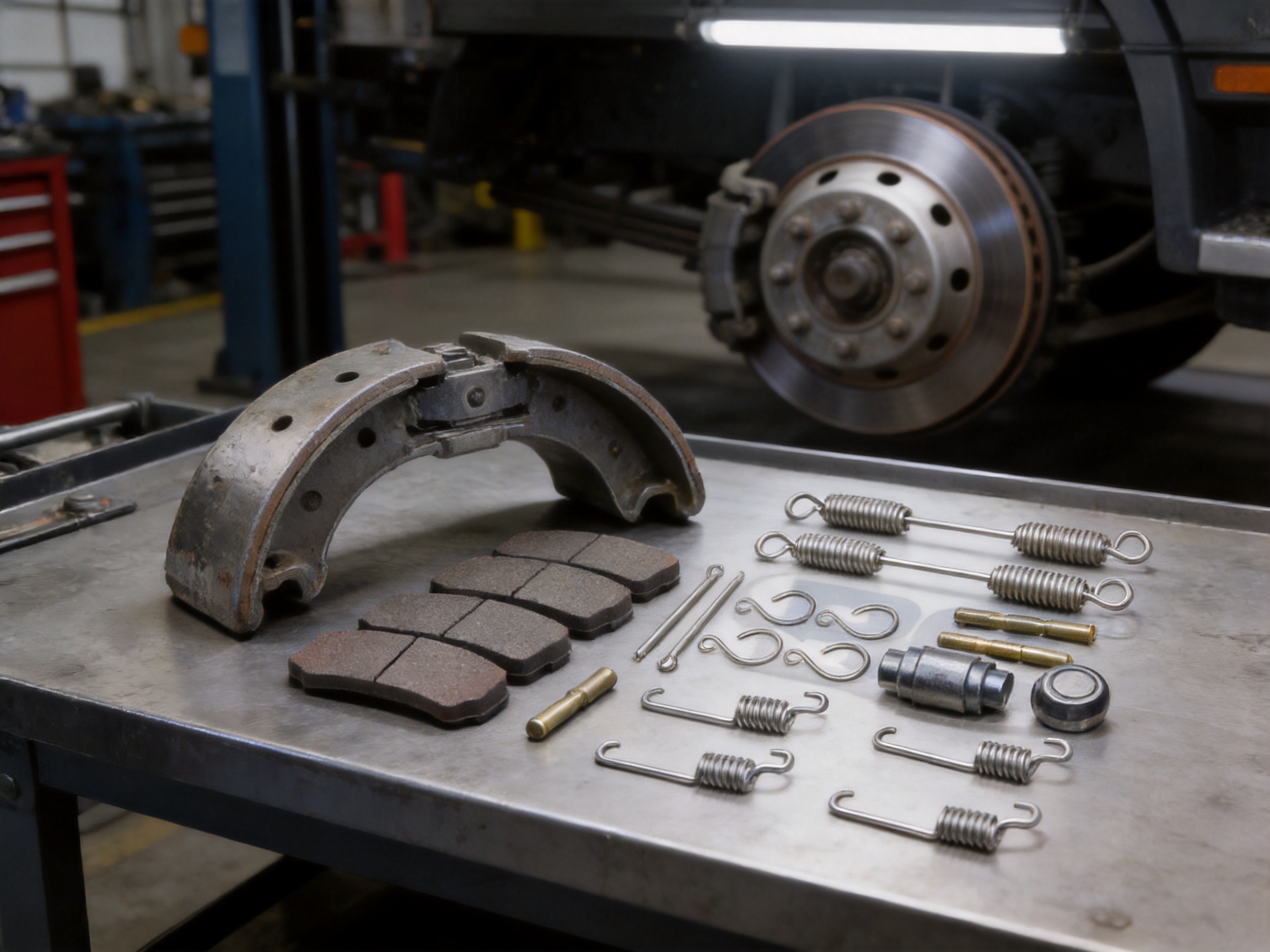
The BPW Old Generation Repair Kit belongs to the brake shoe repair kit category. Unlike a complete cast brake shoe or a fully lined brake shoe assembly, a repair kit is intended to restore selected serviceable parts of an existing brake shoe. Depending on the application, a kit may include replacement brake lining, rivets, fastening hardware, springs, rollers, pins, bushings, or other related components. The exact contents must be checked against the product specification and the original brake shoe configuration.
The term “old generation” is important. Heavy-duty vehicles often remain in service for many years, and their braking systems may use earlier mechanical layouts, dimensions, lining arrangements, and hardware patterns. Newer components are not always interchangeable with older-generation designs, even when the vehicle manufacturer or axle family appears similar. A repair kit developed specifically for an older brake shoe can therefore provide a more accurate maintenance option than a generic kit with only approximate dimensions.
In commercial vehicle maintenance, dimensional accuracy is essential. The lining must match the working radius of the brake drum, the mounting holes must align with the shoe, the fasteners must suit the lining and shoe thickness, and the finished shoe must move correctly within the brake assembly. Small errors in fit can produce uneven contact, excessive lining wear, noise, poor braking response, or damage to the drum.
A properly selected repair kit helps preserve the original geometry of a serviceable shoe while renewing the components most affected by normal wear. This approach is particularly useful when the shoe body has not suffered cracking, severe corrosion, deformation, or other structural damage. If the shoe body is not safe for reuse, a complete replacement brake shoe should be selected instead.
Typical Applications
Old-generation repair kits are commonly considered for heavy trucks, trailers, buses, and other commercial vehicles using mechanical drum brake systems. They may be suitable for fleet workshops, independent repair centers, axle service specialists, and parts distributors serving older vehicle populations.
The product is especially relevant where vehicle owners want to maintain older equipment economically. Many commercial vehicles continue working effectively long after their original production period. In these cases, repair kits can help extend the useful service life of existing brake shoes while reducing the need to source complete assemblies that may be more expensive or less readily available.
However, application suitability must never be assumed solely from a general vehicle description. Identification should be based on the brake shoe number, axle information, lining dimensions, hole pattern, shoe width, drum diameter, and other technical references. Where available, the original equipment number and the applicable FMSI reference should also be checked.
Why Repair Kits Matter in Heavy-Duty Brake Maintenance
Heavy-duty brakes operate in demanding conditions. A loaded truck or trailer may repeatedly convert substantial kinetic energy into heat. Frequent stops, downhill operation, urban delivery routes, high cargo weights, and harsh weather all increase the stress placed on brake shoes and linings.
Under these conditions, brake linings gradually wear down. Fastening points may also experience fatigue, springs may lose tension, and small hardware components can become corroded or distorted. In some cases, the shoe table and web remain serviceable even though the wear parts are no longer suitable for continued use.
A repair kit supports a targeted maintenance strategy. Instead of discarding every part of the existing assembly, the technician can inspect each component and replace only the parts that fall outside acceptable service limits. This can reduce material waste, lower replacement costs, and make better use of the original shoe structure.
The benefits are not limited to cost control. A vehicle workshop may also gain from shorter parts lead times, reduced inventory complexity, and improved repair planning. If a fleet operates many vehicles using older-generation brake shoes, a consistent repair kit can simplify the maintenance process and support standardized workshop procedures.
Repair Versus Complete Replacement
The choice between a repair kit and a complete brake shoe should be based on inspection rather than price alone. A repair kit is appropriate only when the original shoe body is strong, correctly shaped, and free from unacceptable defects. A complete replacement is the safer option when the shoe is bent, deeply corroded, cracked, worn beyond specification, or damaged around the lining holes.
Repairing a suitable shoe can be advantageous because the original component may already match the vehicle’s brake geometry. A newly manufactured complete shoe can also provide excellent performance, but the workshop must ensure that its dimensions, offset, cam profile, and related features are correct for the application.
The repair-kit approach is therefore best understood as one part of a broader brake service strategy. It is not intended to replace inspection, measurement, professional judgment, or compliance with applicable service procedures.
Product Advantages Compared with Generic Alternatives
The main advantage of an application-specific old-generation repair kit is controlled compatibility. Generic repair kits may appear similar but differ in lining radius, rivet pattern, hardware size, spring arrangement, or component thickness. A kit designed around a recognized brake shoe family can reduce the risk of assembling mismatched parts.
Another advantage is the potential for consistent component selection. When a kit is produced as a coordinated package, the lining, fastening hardware, and associated parts can be selected to work together. This is preferable to combining unrelated components from multiple sources, where tolerances and material characteristics may vary.
Application-focused production also improves workshop efficiency. Technicians can receive the necessary repair components in one organized package rather than spending time identifying individual parts. This may reduce installation errors and help prevent delays caused by missing rivets, incorrect pins, unsuitable springs, or mismatched lining sections.
Compared with the lowest-cost generic alternatives, a properly developed repair kit may offer better traceability, more dependable dimensional control, and clearer product identification. These factors are important in commercial vehicle braking, where a small part can influence the function of the entire assembly.
Dimensional Consistency
Brake components must be manufactured within controlled dimensional limits. Lining thickness, lining length, hole location, rivet diameter, shoe width, and related measurements all affect assembly quality. A consistent kit reduces the amount of adjustment and rework required in the workshop.
Dimensional consistency is also important during future maintenance. If a fleet uses the same repair kit across a defined application range, technicians can develop repeatable inspection and installation procedures. This supports more predictable service outcomes than a mixture of visually similar but technically different products.
Material Selection
Heavy-duty brake components must withstand heat, pressure, vibration, and environmental exposure. The materials used for the shoe, lining, rivets, pins, springs, and other parts should be selected according to their role in the braking system.
A lining material must deliver stable friction behavior across the expected operating temperature range. Metal hardware must provide suitable strength and resistance to deformation. Springs should retain functional tension during service, while pins and bushings must support correct movement without excessive looseness.
Material selection must also consider compatibility with the brake drum and the operating environment. An overly aggressive lining can accelerate drum wear, while an unsuitable low-temperature or high-temperature characteristic can influence braking response. The correct material is therefore application-dependent rather than determined by price or appearance.
Serviceability
A repair kit can be more convenient to store and use than a complete brake shoe assembly. It occupies less warehouse space, may reduce transport volume, and allows a workshop to restore existing shoe bodies when appropriate. This can be especially valuable for fleets maintaining older vehicle models with variable replacement demand.
Serviceability also depends on clear identification. Product labeling, part numbering, packaging protection, and application information help users select and install the correct kit. These details are often overlooked, but they contribute directly to maintenance accuracy.
Manufacturing Strengths Supporting Product Quality
The quality of a brake shoe repair kit depends on more than the final assembly. It begins with product design, material control, tooling, forming, machining, lining preparation, fastening, inspection, and packaging. Zhejiang Bangchi Auto Parts Co., Ltd. identifies itself as a manufacturer serving heavy-duty brake parts markets and states that its products follow the global FMSI numbering system.
An FMSI-based identification approach can help organize product references and improve communication between manufacturers, distributors, workshops, and vehicle operators. Clear numbering is particularly useful for brake components because similar-looking products may have different dimensions or applications.
Manufacturing strength in this sector is built through process control. A dependable producer must understand the relationship between the brake shoe body, the lining, the fastening method, and the operating environment. Each stage must be managed so that the final repair kit performs as a coordinated product rather than as a collection of unrelated parts.
Controlled Product Development
Product development begins with application research. Engineers and technical personnel need to study the original brake shoe design, measure critical dimensions, identify wear patterns, and understand how the assembly is installed and operated. For older-generation products, this may also involve comparing historical references and confirming whether later revisions are genuinely interchangeable.
Once the application is understood, drawings, specifications, inspection points, and production instructions can be established. These documents provide a basis for controlling repeated production and reducing variation between batches.
A strong development process also considers installation conditions. A component that meets a drawing dimension may still create problems if its assembly sequence is unclear or if the selected fastening method is difficult to apply consistently. Practical workshop requirements should therefore be considered during product design.
Brake Shoe Body Preparation
When a repair kit is used, the existing shoe body must be inspected and prepared correctly. During manufacturing and product development, attention to shoe geometry helps determine whether the replacement components will fit correctly. The shoe table, web, anchor area, cam contact area, and lining mounting surface all contribute to the final result.
In a complete brake shoe production process, forming or casting operations must produce a stable base with suitable mechanical strength. Subsequent machining or finishing operations may be required to achieve accurate dimensions. Even though the repair kit does not necessarily include a new shoe body, knowledge of these manufacturing requirements helps define the limits for safe repair and reuse.
For the workshop, the shoe body should be cleaned of rust, oil, old lining fragments, and loose material. The lining seat should be flat enough to support the replacement lining, and all holes should be checked for elongation or cracking. Any deformation that prevents reliable fastening is a reason to reject the shoe for repair.
Lining Manufacturing and Preparation
Brake lining production involves the controlled combination of friction materials, binders, reinforcing fibers, fillers, and other formulation components. The material is formed, cured, finished, and inspected so that it can provide predictable friction behavior and adequate wear resistance.
For heavy-duty applications, the lining must tolerate repeated heating and cooling. It should remain securely attached to the shoe and maintain a suitable contact relationship with the drum. The lining surface may require finishing or radius matching so that it beds into the drum correctly after installation.
Manufacturing control is particularly important because friction material performance cannot be judged by appearance alone. Two linings with similar color and shape may behave differently under temperature, pressure, moisture, and load. Consistent formulation, curing, thickness, and inspection help reduce such variation.
Fastener and Hardware Control
Rivets and other fastening parts may appear simple, but their dimensions and material properties are essential. The fastener must fill the hole appropriately, hold the lining securely, and avoid creating a raised area that could interfere with the drum. Incorrect riveting can leave loose spots, cracks, excessive compression, or uneven lining support.
Hardware such as springs, pins, rollers, and bushings also needs suitable dimensional accuracy. Excessive clearance can cause movement, noise, and uneven wear. Insufficient clearance can restrict movement and affect brake release. Controlled sourcing and inspection of these components contribute to the reliability of the complete repair kit.
Process Inspection
Inspection should take place throughout production rather than only at the final stage. Incoming materials can be checked for dimensions, surface condition, and identification. During production, operators can verify forming, machining, lining preparation, and hardware assembly steps. Final inspection can then confirm that the completed product meets the defined specification.
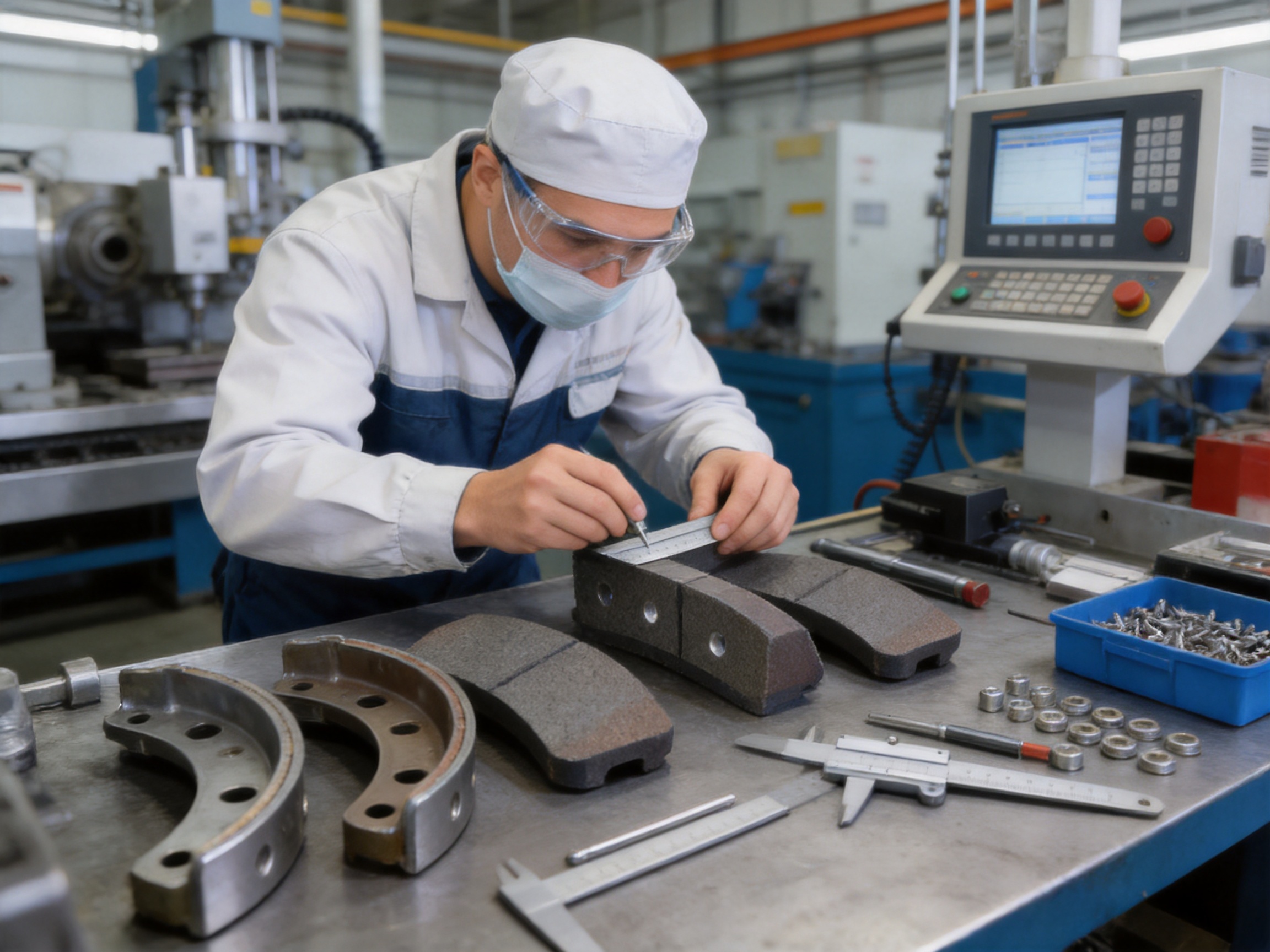
Typical inspection activities may include dimensional measurement, visual examination, lining thickness checks, hole-pattern verification, fastener inspection, packaging review, and reference-number confirmation. Additional tests may be used where appropriate to evaluate material strength, friction characteristics, or resistance to heat.
Manufacturers should also maintain batch identification where possible. Traceability helps identify production periods, materials, inspection records, and distribution information if a technical question arises after delivery.
Key Technical Considerations
Before purchasing or installing the repair kit, the user should confirm the application through multiple identifying features. Relying on a single part number can be risky when older brake systems have been revised or when different suppliers use similar numbering conventions.
| Inspection or Selection Item | Why It Matters | Recommended Action |
|---|---|---|
| Brake shoe reference | Confirms the intended application and design family | Compare the original reference with the repair kit specification |
| FMSI or equivalent identification | Supports consistent industry communication | Verify the complete number and any suffix or revision |
| Lining width and thickness | Affects contact area and final brake geometry | Measure the old component and compare with the kit data |
| Hole pattern | Determines whether the lining can be securely installed | Check hole count, spacing, diameter, and position |
| Brake drum size | Influences lining radius and bedding performance | Confirm drum diameter and wear condition |
| Shoe body condition | Determines whether repair is safe | Inspect for cracks, distortion, corrosion, and elongated holes |
| Hardware configuration | Ensures correct movement and retention | Compare springs, pins, rollers, and bushings with the original assembly |
| Vehicle and axle application | Prevents installation on an incompatible system | Check vehicle records, axle data, and service documentation |
Brake Drum Condition
The condition of the brake drum affects the performance of any newly repaired brake shoe. A drum with excessive diameter, deep grooves, cracks, heat checking, or severe taper can prevent uniform contact. Installing a new lining against a damaged drum may result in a long bedding period, localized overheating, noise, or poor braking balance.
The drum should be measured according to the applicable service limit. If machining is permitted, the final diameter must remain within the manufacturer’s specified maximum. If the drum is beyond its limit or structurally damaged, replacement may be necessary.
Riveting Quality
When the repair process includes fitting a new lining with rivets, the riveting operation deserves particular attention. The lining should sit firmly against the shoe without gaps. Rivets should be installed in the correct sequence and formed with suitable equipment.
Manual methods can be acceptable when performed by trained personnel using appropriate tools, but uncontrolled hammering can damage the lining or distort the shoe. A professional riveting machine generally offers more consistent pressure and repeatability. After riveting, the technician should inspect every fastening point and confirm that the lining remains properly supported.
Clearance and Movement
After reassembly, the brake shoe must move correctly within the brake mechanism. The anchor points, cam contact surfaces, rollers, return springs, and other related parts should be checked for wear and correct positioning.
Excessive resistance can prevent the shoe from applying or releasing correctly. Excessive looseness can produce noise, uneven contact, and rapid wear. The repair kit should therefore be installed as part of a complete brake inspection rather than treated as an isolated lining replacement.
Installation Guidance
Installation should be carried out by qualified technicians using the applicable vehicle or axle service information. The following sequence provides general guidance, but it does not replace the original manufacturer’s instructions or local safety requirements.
Step One: Confirm the Kit
Before disassembly, compare the kit reference, contents, and dimensions with the vehicle application. Check that the lining sections, rivets, springs, pins, and other supplied components match the brake shoe being serviced. If the product appears incomplete or inconsistent with the application, stop the process and request clarification.
Step Two: Remove and Inspect the Shoe
Remove the brake shoe using safe lifting and support methods. Clean the shoe sufficiently to reveal cracks, corrosion, deformation, and damaged holes. Pay special attention to areas around the lining fasteners, anchor points, and cam contact surfaces.
Do not reuse a shoe body that has lost its original shape or contains structural damage. A repair kit cannot correct a bent or cracked shoe.
Step Three: Remove the Old Lining
Remove the old lining carefully to avoid damaging the shoe. Once the lining is removed, clean the mounting surface and inspect the holes. Any burrs, distortion, or material buildup should be addressed according to approved workshop practice.
Step Four: Prepare and Position the New Lining
Position the replacement lining on the shoe and verify the hole alignment before installing fasteners. The lining should sit evenly along the shoe surface without rocking, twisting, or visible gaps. If alignment is poor, the component should not be forced into position.
Step Five: Install Fasteners
Install the specified rivets or other fasteners using suitable equipment. Follow the recommended sequence so that the lining is drawn evenly against the shoe. After fastening, check for loose points, cracked material, damaged rivet heads, or protrusions that could contact the drum.
Step Six: Reassemble Related Hardware
Replace worn springs, pins, rollers, or bushings when included in the kit or when inspection shows that the original parts are no longer serviceable. Lubricate only the areas specified by the service procedure, and keep friction surfaces free from grease, oil, and contamination.
Step Seven: Check the Finished Assembly
Measure the completed assembly where required and compare it with the applicable specifications. Confirm that the shoe moves freely, that the lining is secure, and that all hardware is correctly positioned. The brake drum should be clean and properly installed before adjustment and testing.
Step Eight: Adjust and Test
Adjust the brake according to the vehicle or axle procedure. After installation, conduct a controlled functional test in a safe location. The technician should check braking response, release, noise, temperature behavior, and any signs of uneven contact.
Newly installed lining may require a bedding-in period. During this period, avoid unnecessary severe braking and follow the applicable service recommendations. Brake performance should improve as the lining establishes an appropriate contact pattern with the drum.
Operational Benefits for Fleets and Workshops
A reliable repair kit can provide several operational benefits for commercial fleets. The first is maintenance flexibility. Fleet operators can restore serviceable shoe bodies instead of depending exclusively on complete replacement assemblies. This is helpful where vehicle age, regional supply conditions, or specific axle configurations make complete assemblies difficult to obtain.
The second benefit is inventory efficiency. A repair kit can be stored as a compact maintenance item and may support multiple planned repairs where the same application is used. Clear part identification helps the parts department organize stock and reduce selection errors.
The third benefit is reduced downtime. When the kit is correctly matched and all necessary components are available, the workshop can complete the repair without waiting for several separate parts. Less downtime can be particularly valuable for freight operators, bus companies, construction fleets, and regional carriers.
The fourth benefit is resource efficiency. Reusing a structurally sound shoe body can reduce the amount of material discarded during routine maintenance. This does not mean that every shoe should be repaired; safety inspection remains the controlling factor. It means that a suitable repair option is available when replacement of the entire assembly is unnecessary.
Cost Control Without Sacrificing Inspection
Cost savings are often a reason to consider repair kits, but the lowest purchase price should not be the only evaluation criterion. A poorly fitting kit can increase labor, cause premature wear, damage the drum, or create a safety concern. The true value of a repair kit includes fit, consistency, installation time, service life, and technical support.
Application-specific production can help reduce hidden costs associated with rework and incorrect parts. When a kit is clearly identified and manufactured to controlled dimensions, technicians can spend less time adapting components or resolving fitment problems.
Support for Older Vehicles
Older commercial vehicles may remain economically valuable even when their original parts are no longer widely available. A repair kit designed for an older-generation brake shoe can support continued operation and reduce dependence on complete assemblies that may have limited availability.
This is especially important in markets where fleets operate mixed-age vehicles. A maintenance program may include modern systems on newer trucks and traditional drum brake designs on older units. The ability to source application-specific repair parts allows the workshop to respond to both groups without treating every vehicle as if it required the same product.
Quality Management and Supplier Evaluation
Buyers should evaluate more than the product photograph when selecting a brake shoe repair kit. A professional supplier should be able to provide relevant application details, product references, dimensions, packaging information, and technical clarification when required.
Manufacturing location alone does not determine product quality. More meaningful indicators include process control, inspection discipline, traceability, technical communication, and the ability to maintain consistent production across batches.
Zhejiang Bangchi Auto Parts Co., Ltd. lists its operating address in Haining, Zhejiang, China, and identifies its product range as including steel brake shoes, cast brake shoes, brake linings, lined brake shoes, brake shoe repair kits, and lined brake shoe kits. This broader product scope suggests familiarity with several stages of the commercial brake component supply chain, from friction materials to complete shoe-related products.
The company also presents itself as a supplier of OEM brake parts following the global FMSI numbering system. For distributors and workshops, such a reference system can make product selection and cross-reference work more efficient. Nevertheless, buyers should still request the technical information needed for their specific application rather than relying only on a general product category.
Packaging and Identification
Brake repair components should be packaged to prevent moisture, impact, contamination, and mixing of similar parts. Labels should identify the product reference and, where relevant, the application, batch, quantity, and production information.
Good packaging is part of product quality because a correctly manufactured part can be damaged or contaminated during transport. Lining materials should be kept dry and protected from oil. Small hardware should be packaged so that it does not scratch or deform other components.
Technical Communication
Clear communication between the buyer and manufacturer is essential when working with older-generation applications. Useful information may include photographs of the original shoe, measured dimensions, brake drum details, axle identification, lining width, and original reference numbers.
When a product is exported through distributors, consistent terminology can reduce misunderstandings. References such as brake shoe type, lining specification, hole pattern, and FMSI number should be used together whenever possible.
Safety and Maintenance Recommendations
Brake repairs must be performed in accordance with applicable safety legislation, workshop procedures, and vehicle manufacturer instructions. The vehicle should be securely supported, the brake system should be handled by trained personnel, and all removed parts should be controlled during disassembly.
Technicians should avoid inhaling brake dust and should use suitable cleaning methods and personal protective equipment. Compressed air should not be used carelessly to disperse dust into the working environment.
After the repair, the entire axle or brake system should be checked for balance and correct adjustment. If only one side of an axle is repaired, the condition of the opposite side should receive particular attention. Differences in lining wear, friction behavior, or adjustment can influence braking balance.
Regular inspection after installation is also recommended. The workshop should monitor lining wear, drum temperature, brake response, unusual noise, and signs of contamination. Early detection of irregular wear can prevent more serious damage.
Common Mistakes to Avoid
Choosing by Appearance Alone
Brake shoes and repair kits may look similar while having different dimensions and applications. Visual similarity is not sufficient for selection. Always verify technical references and measurements.
Ignoring the Shoe Body
A new lining cannot make a damaged shoe safe. Cracks, severe corrosion, distortion, elongated holes, and weakened anchor areas require rejection or complete replacement.
Using Incorrect Rivets
Rivets that are too short, too long, too hard, too soft, or incorrectly shaped can compromise the lining attachment. Use the fasteners specified for the application and install them with suitable equipment.
Skipping Drum Inspection
A worn or damaged drum can prevent proper bedding and create uneven braking. The drum should be measured and inspected before the repaired shoe is returned to service.
Contaminating the Lining
Oil, grease, paint, and cleaning chemicals can affect friction material performance. Keep all friction surfaces clean and handle the lining carefully.
Failing to Bed In the Brake
A newly installed lining may need controlled bedding before it reaches its normal contact condition. Follow the applicable procedure and avoid severe braking during the initial service period unless an emergency requires it.
Frequently Asked Questions
What is the purpose of the BPW Old Generation Repair Kit?
The kit is intended to help restore a suitable older-generation brake shoe by replacing selected worn components, such as lining and related hardware, depending on the specified kit configuration. It is designed for applications where the original shoe body remains structurally serviceable.
Is the kit suitable for every BPW brake shoe?
No. Older-generation brake shoes can differ in dimensions, lining arrangement, hole pattern, and hardware. The exact brake shoe reference, axle application, FMSI number, dimensions, and kit contents should be confirmed before purchase and installation.
Does the repair kit include a complete brake shoe?
A repair kit is generally different from a complete brake shoe assembly. It may contain replacement lining and associated components rather than a new shoe body. Buyers should confirm the exact contents with the product specification.
When should a complete brake shoe be used instead?
A complete replacement should be considered when the original shoe is cracked, bent, excessively corroded, distorted, or damaged around the lining holes and anchor areas. A repair kit should not be used to restore a structurally unsafe shoe.
Why is the old-generation designation important?
The designation indicates that the product is intended for an earlier brake shoe configuration. Older designs may not share dimensions or hardware with later revisions, even when they are used on related vehicle or axle families.
How does an application-specific kit compare with a generic kit?
An application-specific kit is developed around defined dimensions and a particular brake shoe configuration. This can improve fit, reduce installation uncertainty, and support consistent workshop results compared with a generic product that may only approximate the required specification.
What should be checked before installing the kit?
Check the product reference, FMSI or equivalent number, lining dimensions, hole pattern, brake shoe width, drum diameter, hardware configuration, and condition of the original shoe. Also verify that the drum is within its service limits.
Can the kit reduce vehicle downtime?
It can, provided the correct kit is available and the shoe body is suitable for repair. Supplying coordinated components in one package may reduce the time spent sourcing individual parts and resolving compatibility problems.
Does a repair kit reduce material waste?
Potentially. Reusing a structurally sound shoe body can prevent unnecessary disposal of the entire assembly. However, safety inspection must determine whether reuse is appropriate.
Who should install the repair kit?
Installation should be performed by trained brake technicians using suitable tools, equipment, and service information. Brake repair is safety-critical and should not be treated as an unskilled replacement task.
How should the repaired brake be tested?
The completed brake should be checked for secure lining attachment, correct movement, adjustment, release, contact pattern, and braking response. A controlled road or test-area evaluation should be performed in accordance with applicable procedures.
Conclusion
The BPW Old Generation Repair Kit provides a focused maintenance solution for older heavy-duty brake shoe applications. Its value lies in restoring suitable existing shoe bodies with correctly matched replacement components, rather than replacing complete assemblies without first considering their condition.
The principal advantages of an application-specific repair kit include improved compatibility, organized component selection, more predictable installation, potential cost control, reduced downtime, and better support for older commercial vehicles. These benefits are strongest when the kit is selected using accurate technical references and installed by qualified personnel.
Manufacturing quality is equally important. Controlled product development, suitable friction material selection, accurate hardware production, dimensional inspection, traceability, and protective packaging all contribute to a dependable final product. A manufacturer serving the heavy-duty brake market must understand not only how to produce individual components but also how those components function together within a complete braking system.
Zhejiang Bangchi Auto Parts Co., Ltd. positions its product range around heavy-duty brake components and identifies its OEM products with the global FMSI numbering system. For buyers, this provides a useful basis for product identification, but the final selection should always be confirmed through application data, measurements, and service requirements.
When the original shoe body passes inspection, the brake drum is within specification, and the correct repair kit is installed carefully, an old-generation brake shoe can continue to provide dependable service. The result is a practical balance between safety, maintenance efficiency, component availability, and responsible use of existing vehicle hardware.
References
Federal-Mogul Motorparts. Friction Materials and Brake Component Identification Principles.
FMSI. Automotive Friction Material Standards and Numbering Practices.
Society of Automotive Engineers. Heavy-Duty Vehicle Brake System Service and Performance Principles.
Commercial Vehicle Safety Alliance. Recommended Commercial Vehicle Brake Inspection Practices.
European Committee for Standardization. Road Vehicles and Braking System Performance Guidance.
Manufacturer-provided product information for BPW Old Generation Repair Kit.
Manufacturer-provided company information for Zhejiang Bangchi Auto Parts Co., Ltd.