 English
 简体中文
简体中文Heavy-duty braking systems must perform consistently under demanding operating conditions. Commercial trailers, trucks, agricultural machines, and other transport equipment frequently operate with high loads, long service intervals, repeated braking cycles, and exposure to heat, dust, moisture, and vibration. In these applications, the brake shoe is a critical structural and functional component. It supports the friction lining, transfers braking force to the drum, and contributes directly to vehicle safety, maintenance efficiency, and operating cost.
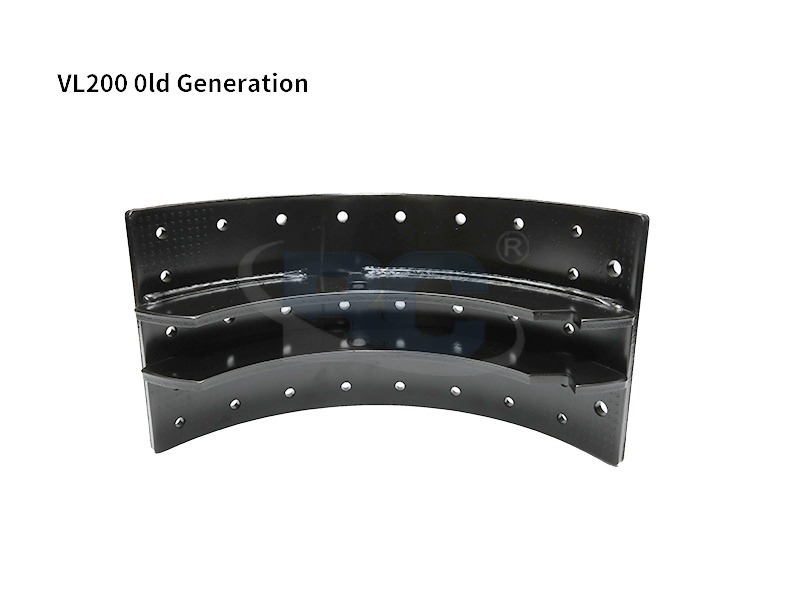
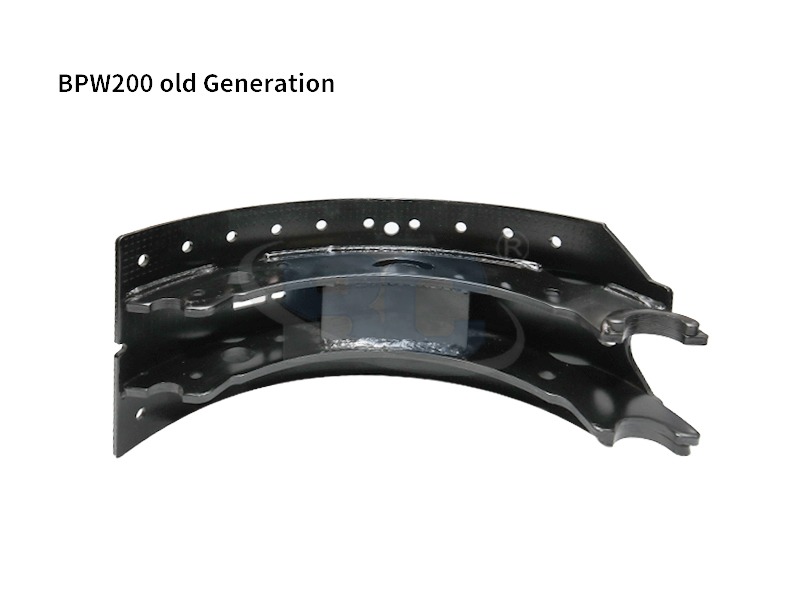
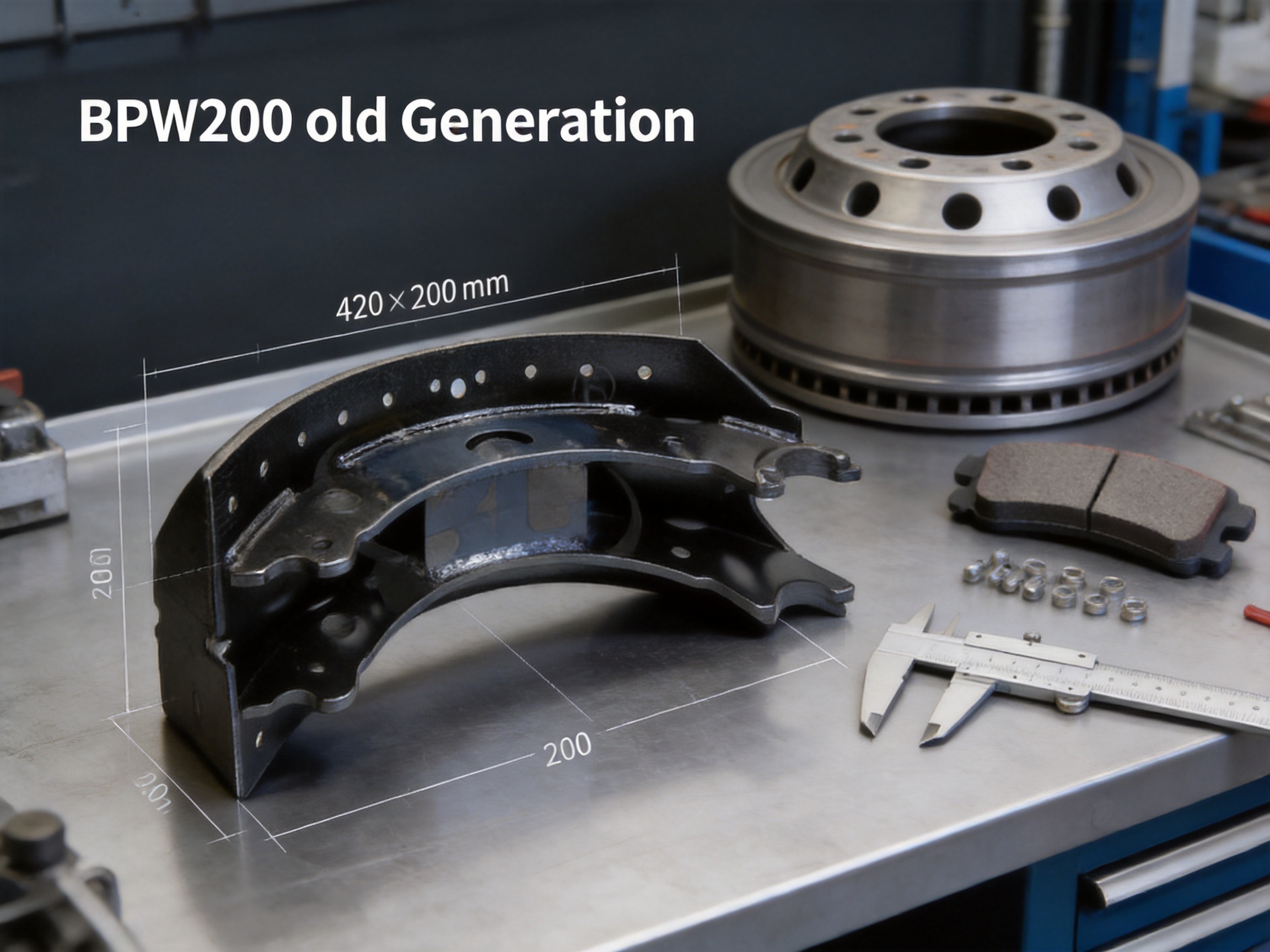
The BPW200 Old Generation brake shoe is a steel brake shoe designed for established heavy-duty axle and drum-brake applications. With a 420 × 200 mm footprint, 20 rivet holes, and a steel construction, it follows a proven configuration used across commercial vehicle braking systems. Its product OE number is 05.091.27.54.2, and its standard part designation is BPW200 Old Generation.
This article examines the product’s construction, dimensions, operating advantages, application range, installation considerations, maintenance requirements, and manufacturing value. It also explains how Zhejiang Bangchi Auto Parts Co., Ltd. supports the production of heavy-duty brake components through process control, dimensional management, material selection, and practical aftermarket knowledge.
BPW200 Old Generation Brake Shoe
Product Overview
The BPW200 Old Generation brake shoe is a steel brake shoe for drum-brake systems. It is manufactured around a 420 mm by 200 mm dimensional profile and includes 20 rivet holes. This configuration is important because the shoe must match the brake drum, lining, brake spider, cam mechanism, and related axle hardware. Correct geometry ensures that the shoe moves predictably and that the lining contacts the drum with an even pressure pattern.
The product is identified by the following primary specifications:
| Item | Specification |
|---|---|
| Product name | BPW200 Old Generation brake shoe |
| Product category | Steel brake shoe |
| Part designation | BPW200 Old Generation |
| Product size | 420 × 200 mm |
| Number of rivet holes | 20 |
| Rivet-hole diameter | Approximately 9.0 mm |
| Construction | Steel |
| Product OE number | 05.091.27.54.2 |
| Indicative friction coefficient | 0.38–0.42, depending on the installed lining material |
| Indicative maximum operating temperature | Up to approximately 450°C, subject to system conditions |
The stated friction coefficient and temperature range should be understood as product reference values rather than a substitute for the technical data of the selected friction lining. Actual braking behavior depends on the lining compound, drum condition, vehicle load, axle design, brake adjustment, operating speed, ambient temperature, and installation quality.
Why the Brake Shoe Structure Matters
A brake shoe is not simply a curved metal plate. It is a load-bearing component that must withstand repeated mechanical forces while maintaining its shape. During braking, the actuating mechanism pushes the shoe outward against the inside surface of the brake drum. The friction generated between the lining and drum converts kinetic energy into heat. At the same time, the shoe carries reaction forces through its web, ribs, anchor points, and riveted lining interface.
If the shoe is too flexible, the lining may not contact the drum evenly. Uneven contact can cause localized heat, irregular wear, noise, reduced braking efficiency, and accelerated drum damage. If the dimensions are inaccurate, the shoe may be difficult to install or may not move correctly within the drum. If rivet holes are misaligned, the lining cannot be secured uniformly. Therefore, steel quality, forming accuracy, hole positioning, and surface consistency all contribute to the finished product’s performance.
The BPW200 Old Generation design uses a time-tested geometry. Its established form helps maintenance personnel identify the correct replacement and simplifies comparison with an existing shoe. For fleets that prefer proven components rather than unverified design changes, a conventional configuration can reduce uncertainty during service work.
Advantages of the 420 × 200 mm Configuration
The 420 × 200 mm size provides a substantial friction-contact area for commercial vehicle drum-brake applications. A larger contact area can help distribute braking pressure over a broader section of the drum, provided that the lining is correctly matched and properly bedded. More uniform pressure distribution can support stable wear and reduce the risk of concentrated hot spots.
The shoe’s width and length also influence the total braking torque available from the assembly. Braking torque is affected by several factors, including the friction coefficient, effective radius, actuating force, and lining contact area. The BPW200 configuration is designed for systems where a robust shoe footprint is required for heavy-duty service.
Because the dimensions are clearly defined, buyers can compare the product against their existing brake shoe before ordering. This is especially useful for distributors and fleet workshops that manage multiple axle types. Verification should include the shoe profile, anchor arrangement, cam contact area, rivet-hole pattern, hole diameter, and drum compatibility rather than relying on size alone.
Benefits of the 20-Rivet-Hole Pattern
The 20-hole configuration is one of the product’s main identification features. Rivets secure the friction lining to the steel shoe, and the hole pattern determines how the lining is supported. A well-distributed pattern helps spread fastening loads along the lining and reduces the chance of unsupported areas separating from the shoe during service.
Even fastening is particularly important in heavy-duty applications. Commercial vehicle braking generates repeated vibration and thermal cycling. The lining expands and contracts as temperatures change, while the shoe experiences mechanical loading every time the brakes are applied. A consistent rivet pattern helps maintain a stable connection between the lining and the steel shoe when the correct rivets and installation method are used.
The 20-hole design also supports service compatibility. Many maintenance teams are familiar with the corresponding drilling pattern and can use established workshop procedures. This can reduce installation time compared with adapting an unfamiliar configuration.
Rivet-hole diameter is approximately 9.0 mm. Before installation, the workshop should verify the actual lining and rivet dimensions, because rivet selection must match the lining thickness, hole size, rivet material, and riveting equipment. The rivets should be installed according to the applicable maintenance procedure, and the stated cross-pattern torque range of 30–35 N·m should be treated as a product service reference that must be confirmed against the vehicle or axle manufacturer’s instructions.
Steel Construction and Structural Durability
Steel remains widely used for heavy-duty brake shoes because it combines strength, formability, heat tolerance, and practical manufacturing cost. A steel shoe can provide the structural support required for repeated braking cycles while maintaining an appropriate balance between weight and rigidity.
The BPW200 Old Generation brake shoe uses standard-grade steel construction. This design choice supports reliable production and straightforward replacement for applications that use a conventional shoe structure. Steel also offers useful heat-dissipation characteristics. Although the brake drum and lining perform most of the friction work, the shoe is exposed to the thermal environment of the brake assembly. A stable steel structure helps the component retain its geometry during normal temperature changes.
Durability is not determined by material selection alone. It also depends on forming accuracy, weld or joint quality where applicable, hole positioning, edge condition, corrosion protection, and inspection. A correctly produced steel shoe should have a consistent profile, cleanly formed edges, secure structural connections, and no visible defects that could affect assembly or service life.
For fleet operators, the practical value of a durable shoe extends beyond the component itself. A reliable shoe can support predictable maintenance scheduling, reduce the likelihood of premature replacement, protect the drum from abnormal contact, and limit unplanned vehicle downtime. These benefits are especially important for long-haul vehicles, regional delivery fleets, and trailers that operate with frequent loading and unloading cycles.
Stable Braking and Fade Resistance
Brake fade occurs when braking performance decreases as the brake assembly becomes excessively hot or when the friction material’s response changes under thermal stress. The BPW200 Old Generation product information specifies consistent fade resistance up to approximately 450°C. Actual results depend on the lining compound and complete brake-system design, but the reference indicates that the shoe is intended for demanding thermal environments.
The shoe contributes to thermal stability by maintaining the support geometry of the lining. If the shoe distorts, the lining may lose even contact with the drum, making temperature control more difficult. A sound steel structure helps preserve the intended contact pattern during repeated braking.
Stable braking is valuable in long descents, high-load transport, stop-and-go distribution, and off-highway work. In these conditions, the braking system may experience repeated heat cycles. The BPW200 Old Generation’s established geometry supports predictable movement and contact when the drum, lining, adjuster, cam, return springs, and other components are correctly maintained.
It is important to distinguish a brake shoe from the friction lining. The shoe provides the structural foundation, while the lining determines much of the friction response. For this reason, lining selection must be compatible with the vehicle’s braking requirements and operating environment. A high-quality shoe cannot compensate for an unsuitable lining, damaged drum, incorrect adjustment, or defective actuating hardware.
Reduced Drum Wear Through Optimized Contact
Brake drums are expensive and time-consuming to replace. Excessive drum wear may result from embedded debris, incorrect lining material, poor riveting, misalignment, overheating, or uneven shoe contact. The BPW200 Old Generation design is intended to support optimized contact between the lining and drum when the complete assembly is correctly matched.
Even contact can help distribute frictional energy across the lining surface. This may reduce isolated pressure points and lower the risk of scoring or localized overheating. The result can be more consistent lining wear and improved use of the drum’s serviceable life.
Technicians should inspect the drum before installing a replacement shoe. Scoring, cracks, excessive diameter, heat checking, blue discoloration, and uneven wear can affect the performance of a new assembly. If the drum is outside the permitted service limits, installing a new shoe alone may not solve the underlying problem.
Proper bedding is equally important. The recommended bedding period is approximately 200–300 km under controlled operating conditions. During this period, the lining gradually establishes full contact with the drum. Heavy emergency braking should be avoided when conditions allow, and the assembly should be monitored for abnormal noise, pulling, overheating, or uneven contact.
Compatibility and Application Range
The BPW200 Old Generation brake shoe is commonly associated with BPW axle systems and standard heavy-duty drum-brake configurations. It is intended for use in semi-trailers, heavy-duty trucks, agricultural machinery, and other commercial vehicle platforms that use the required 420 × 200 mm profile and 20-hole pattern.
The product information also indicates compatibility with BPW and standard axles, as well as use with automatic slack adjusters and manual brake linkage systems. Compatibility must always be verified at the vehicle level. The same nominal dimensions do not guarantee that every brake shoe will fit every axle. The anchor point, cam position, shoe offset, return-spring location, drum diameter, lining specification, and brake-chamber arrangement must all be considered.
For replacement purchasing, the OE number 05.091.27.54.2 provides an additional identification reference. Buyers should compare this number with the vehicle or axle documentation and inspect the existing component. Product labels, packaging, and workshop records should preserve the full part designation to avoid confusion with new-generation or differently configured versions.
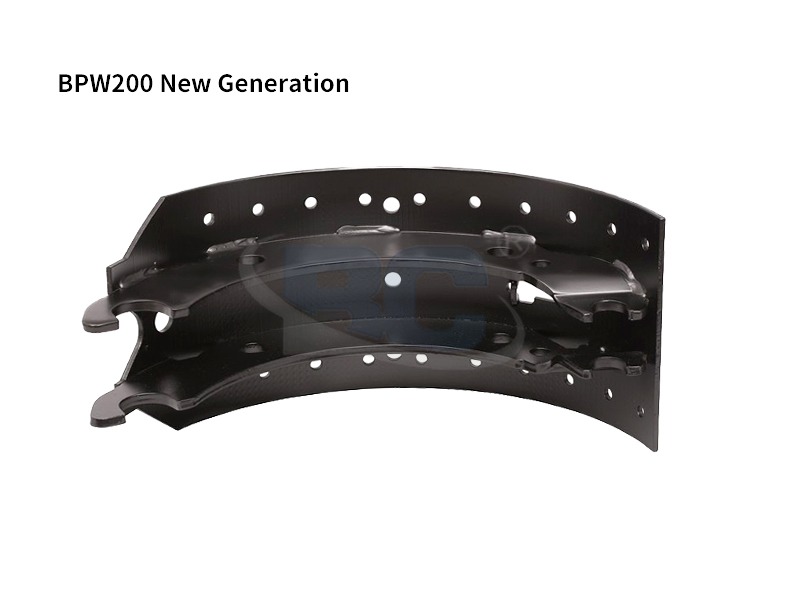
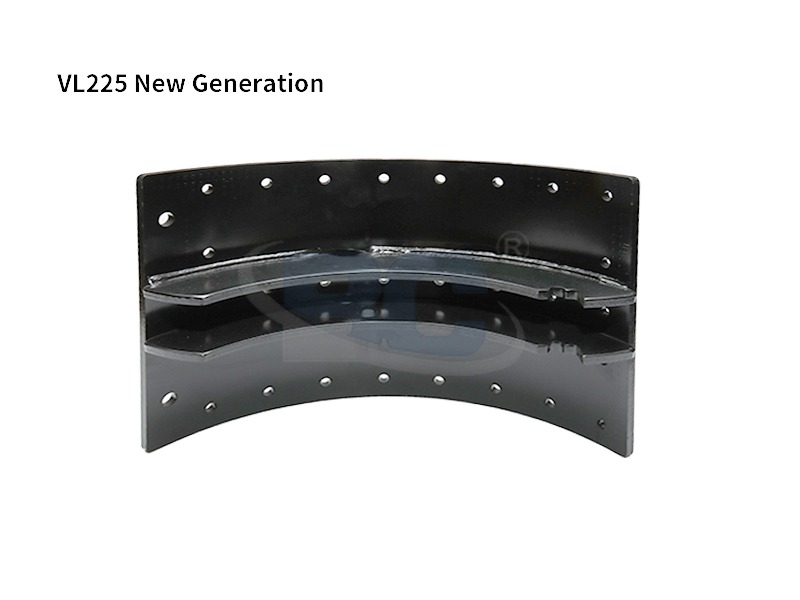
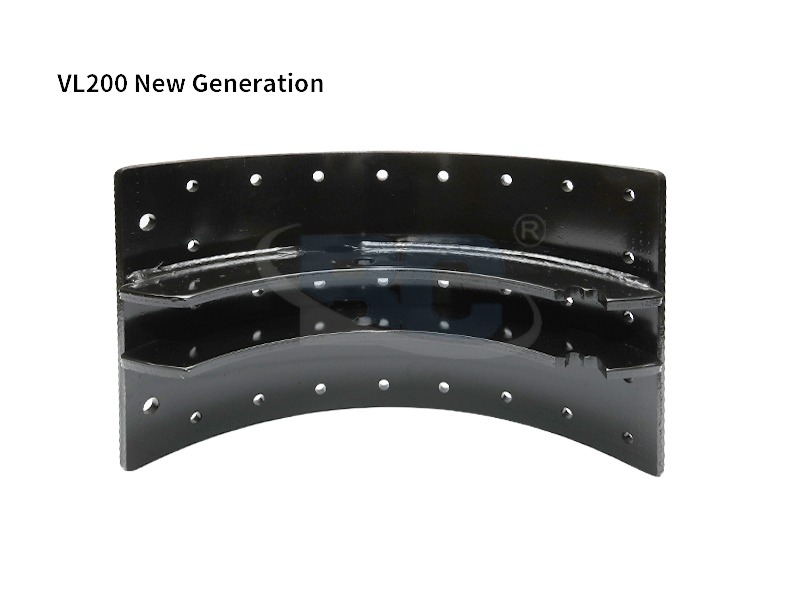
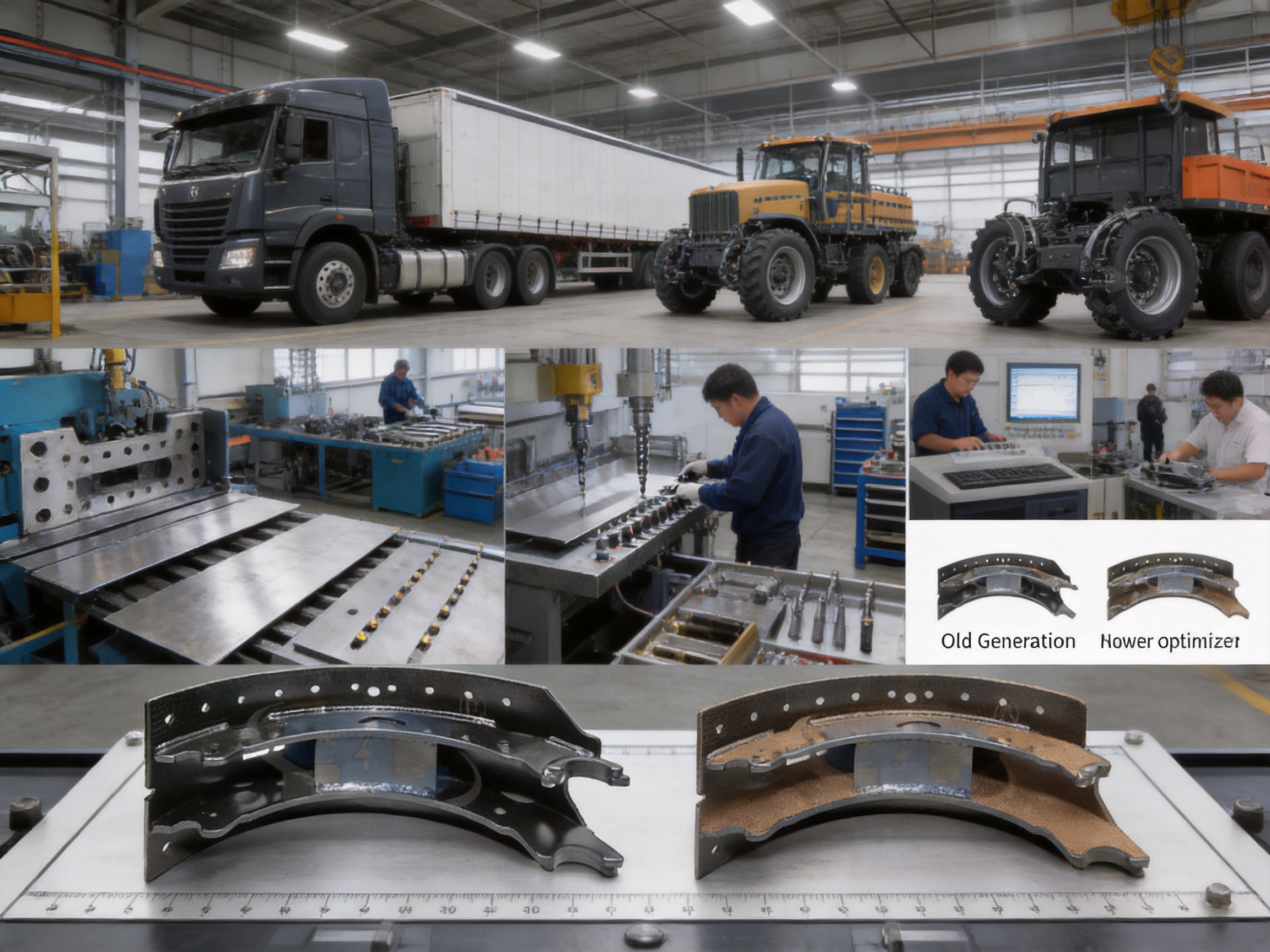
In many cases, the Old Generation design may be interchangeable with a New Generation arrangement that uses the same 420 mm footprint and 20-hole pattern. However, the product information notes differences between the two versions. The Old Generation uses standard steel and proven geometry, while the New Generation may use advanced steel alloys and an optimized chamfer design. Therefore, interchangeability should be confirmed rather than assumed, especially where the axle manufacturer specifies a particular shoe design.
Old Generation and New Generation: Practical Differences
The Old Generation version is designed around a conventional structure. Its main strengths are familiarity, established geometry, straightforward identification, and practical cost control. Fleet operators that already use this configuration may benefit from maintaining common spare-parts inventory and familiar installation procedures.
The New Generation version may include material and chamfer improvements intended to reduce noise and increase thermal capacity. These changes can be beneficial in applications where newer axle specifications or specialized braking characteristics are required. However, an advanced design is not automatically the best choice for every vehicle. The correct replacement must match the axle and brake system.
The Old Generation product can be advantageous when a fleet prioritizes compatibility with existing service procedures. Mechanics already familiar with the shoe profile can inspect, rivet, install, and adjust it efficiently. Distributors can also simplify inventory planning when demand is concentrated around a proven part number.
The following comparison provides a general guide:
| Feature | Old Generation | New Generation |
|---|---|---|
| Basic geometry | Proven conventional geometry | Updated geometry in applicable versions |
| Steel construction | Standard-grade steel | May use advanced steel alloys |
| Footprint | 420 × 200 mm reference configuration | May share the same footprint in compatible versions |
| Rivet pattern | 20 holes | May share the same 20-hole pattern in compatible versions |
| Service familiarity | High for existing Old Generation applications | Depends on the axle and workshop experience |
| Design emphasis | Proven reliability and practical replacement | Potentially improved noise and thermal characteristics |
This comparison is not a substitute for an application catalogue or axle manufacturer’s specification. The actual design details should be verified before ordering.
Manufacturing Strengths of Zhejiang Bangchi Auto Parts Co., Ltd.
Zhejiang Bangchi Auto Parts Co., Ltd. specializes in heavy-duty brake parts and commercial vehicle braking components. Its product range includes steel brake shoes, casted brake shoes, brake linings, lined brake shoes, brake shoe repair kits, and lined brake shoe kits. This product coverage gives the company practical knowledge across the complete brake-shoe assembly rather than only one isolated component.
The company’s product positioning follows the global FMSI numbering system. A consistent numbering approach supports product identification, aftermarket communication, distributor management, and cross-reference work. For international buyers, clear part-number control is particularly valuable because a single incorrect digit can result in an unsuitable shoe or lining being supplied.
Manufacturing heavy-duty brake shoes requires more than pressing steel into a general shape. The production process must control the relationship between the shoe profile, structural features, rivet holes, lining contact surface, and final assembly. A capable manufacturer therefore needs coordinated control over material preparation, forming, machining, joining, inspection, and packaging.
Material Preparation and Steel Control
Steel intended for brake-shoe production should be received, identified, and prepared according to the required specification. Material thickness, flatness, surface condition, and basic mechanical characteristics affect subsequent forming and assembly. Proper material control helps limit variation between production batches.
For the BPW200 Old Generation brake shoe, consistent steel preparation supports repeatable structural performance. Material should be protected from excessive corrosion and contamination before forming. Clear batch identification also helps support traceability and investigation if a quality issue is reported in the field.
Precision Forming
Forming operations establish the curved profile and structural shape of the shoe. The forming tools must produce a consistent radius and maintain the dimensions required for correct drum clearance and lining contact. Excessive variation can create installation difficulty or uneven braking behavior.
Controlled forming also helps reduce residual deformation. A shoe that is visibly twisted, warped, or unevenly curved should not be released for service. Inspection fixtures can be used to check the profile against defined reference points before the shoe proceeds to later operations.
Rivet-Hole Positioning
The 20 rivet holes must be positioned accurately around the shoe. Hole spacing and alignment affect the fit of the lining and the distribution of rivet loads. Poorly positioned holes may force the lining into an incorrect position, create edge clearance problems, or result in uneven fastening.
Production control should include checks for hole count, hole diameter, spacing, edge distance, burrs, and deformation. Clean holes support proper rivet seating and help reduce the chance of cracking or loosening during service. The approximately 9.0 mm hole specification is an important reference for matching the lining and rivets.
Edge Finishing and Surface Quality
After forming and drilling, the shoe should be checked for sharp edges, burrs, and surface irregularities. Edge finishing improves handling safety and reduces the possibility of interference with the lining or adjacent brake components. Surface preparation also supports any required protective treatment or coating.
A clean and consistent surface makes inspection easier. It allows technicians and quality personnel to identify corrosion, cracks, impact damage, or other defects before the product is packed and shipped.
Assembly and Lining Integration
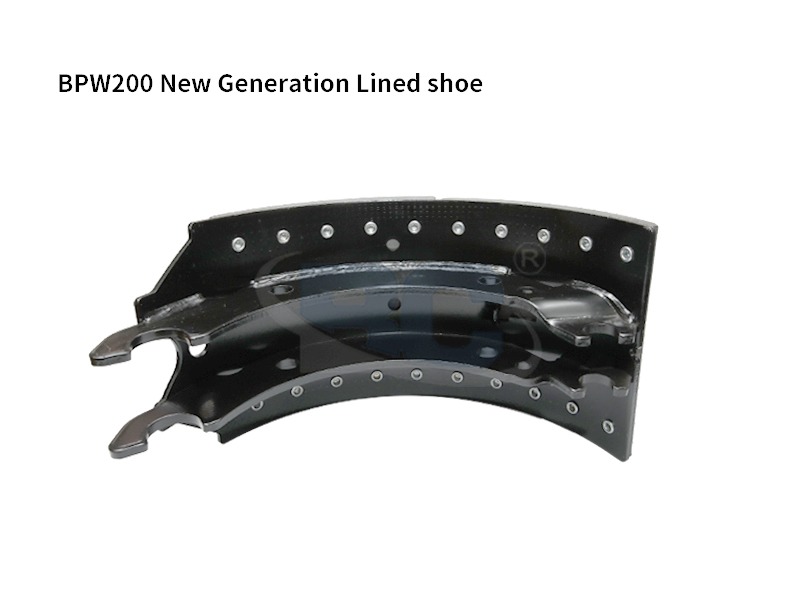
Where the shoe is supplied as part of a lined brake shoe assembly, the lining must be accurately matched to the steel shoe. The lining should follow the shoe’s curvature, and the rivets should be installed in the correct sequence and condition. A uniform riveted connection is essential for reliable service.
Because Zhejiang Bangchi supplies both unlined steel shoes and lined brake shoe products, customers can select the format that best matches their workshop capabilities. A bare steel shoe may be appropriate for repair centers that hold lining inventory and perform their own riveting. A complete lined assembly may be more convenient for fleets seeking faster installation and reduced workshop labor.
Inspection and Product Identification
Final inspection should confirm the part designation, dimensions, hole pattern, structural condition, surface quality, and packaging information. Product labels should clearly identify the BPW200 Old Generation designation and OE number 05.091.27.54.2 where applicable.
Reliable identification reduces mistakes in warehouses and workshops. It also helps distributors maintain accurate stock records and enables fleet operators to connect replacement parts with maintenance histories.
Quality and Process Advantages Over Generic Alternatives
Generic brake shoes may appear similar from a distance, but small differences can affect fit and service performance. Variations in shoe radius, web thickness, hole spacing, anchor geometry, or edge profile may not be obvious until installation. A component that requires excessive adjustment or does not establish even lining contact can increase workshop time and operating risk.
The BPW200 Old Generation’s defined 420 × 200 mm size and 20-hole pattern provide a clear basis for product verification. This is an advantage over unidentified alternatives that are sold only by approximate dimensions. The OE reference and part designation also make it easier to establish a documented replacement route.
Another advantage is product-family support. A manufacturer that offers steel shoes, linings, lined assemblies, and repair kits can help customers select a coordinated solution. This may reduce the risk of combining incompatible parts from multiple sources. It also supports different purchasing models, from component-level repair to complete assembly replacement.
Cost effectiveness is another practical consideration. Proven steel construction and established geometry can offer a sensible balance between acquisition cost and service value. For fleets with large numbers of compatible vehicles, maintaining a dependable supply of a familiar component can help reduce downtime and simplify training.
However, product advantages must be evaluated alongside correct application. No brake shoe should be selected solely because it is less expensive or visually similar. Technical matching, inspection, installation, and maintenance remain essential.
Installation Recommendations
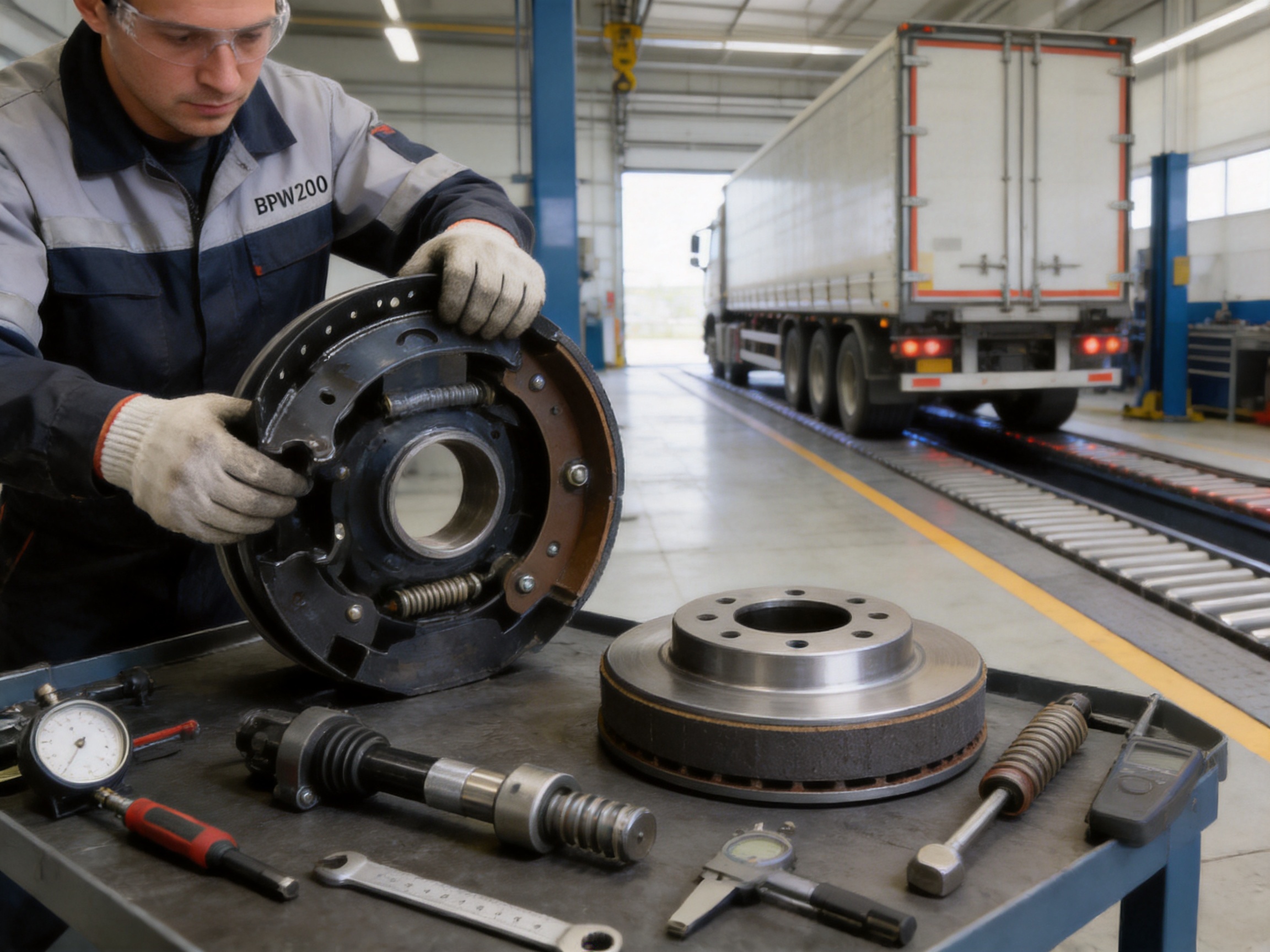
Before installation, compare the replacement shoe with the removed part. Confirm the size, hole pattern, anchor features, cam contact area, and overall curvature. Check that the product designation corresponds to the vehicle or axle requirement.
Inspect the brake drum for scoring, cracks, excessive wear, heat damage, and contamination. Measure the drum when required by the service procedure. A drum that is beyond its allowable limit can compromise the performance of a new shoe and lining.
Inspect related components, including the camshaft, rollers, anchor pins, bushings, return springs, slack adjuster, brake chamber, and dust seals. Excessive play or damaged hardware can cause uneven shoe movement and irregular lining wear.
When riveting a lining, use rivets that match the specified hole diameter and lining thickness. Ensure that the lining sits flush against the shoe without gaps. Rivets should be installed using suitable equipment and tightened or formed in a controlled cross pattern. The product service note recommends a rivet torque of 30–35 N·m, but the applicable vehicle or axle instruction should take priority if it specifies a different value.
After assembly, verify that the shoe moves freely and returns correctly. Confirm that no part of the shoe, lining, rivet, spring, or adjuster interferes with the drum. Reassemble the brake system carefully, adjust the brake according to the correct procedure, and perform a controlled functional test before returning the vehicle to normal operation.
Bedding-In and Maintenance
A new lining requires a bedding-in period to establish full contact with the drum. The recommended bedding distance for this product is approximately 200–300 km. During bedding, drivers and technicians should avoid unnecessary severe braking where safe operating conditions permit. The purpose is to allow the contact surfaces to develop gradually rather than generating excessive localized heat.
After bedding, the brake assembly should be checked for proper adjustment and even contact. If the vehicle pulls to one side, produces persistent noise, generates unusual heat, or shows abnormal lining wear, the brake system should be inspected immediately.
Under normal operating conditions, lining thickness should be checked at approximately 12,000 km intervals. The product service information recommends replacement when the friction lining is below 8 mm. Replacement is also necessary if the lining is cracked, glazed, contaminated, detached, unevenly worn, or otherwise damaged.
Inspection intervals may need to be shortened for vehicles that operate in mountainous regions, heavy traffic, severe weather, construction areas, agricultural environments, or frequent stop-and-go conditions. Fleet maintenance departments should use vehicle duty cycle and brake temperature history when establishing their own schedules.
Drum condition should be reviewed during each brake service. Scoring, ridges, heat checking, and excessive diameter can reduce the useful life of a new lining. Dust and debris should be removed using approved methods, and technicians should follow applicable safety requirements when handling brake dust.
Use with Automatic and Manual Brake Linkage Systems
The BPW200 Old Generation brake shoe is described as compatible with automatic slack adjusters and manual brake linkage systems when the correct hardware and adjustment procedures are used. The shoe itself does not determine the entire adjustment method. The slack adjuster, camshaft, chamber stroke, return springs, and axle design must work together.
Automatic slack adjusters require correct installation and regular functional verification. If an adjuster is incorrectly installed or fails to maintain the correct clearance, the shoe may drag against the drum or may not apply with sufficient force. Manual systems require careful adjustment to maintain appropriate clearance without causing continuous contact.
Technicians should not use adjustment to compensate for worn bushings, damaged rollers, distorted shoes, defective chambers, or a damaged drum. The underlying problem should be corrected first. Proper adjustment supports the shoe’s intended contact pattern and helps prevent overheating and uneven wear.
Applications in Different Operating Environments
Long-Haul Trailers
Long-haul trailers may remain in service for extended periods and can experience high thermal loads during descents or emergency braking. A proven shoe configuration helps maintenance teams use familiar inspection and replacement procedures. The 420 × 200 mm footprint and 20-hole pattern provide a practical reference for compatible trailer axle applications.
Regional Distribution Vehicles
Regional delivery vehicles often perform frequent stops, creating repeated brake applications throughout the working day. Consistent shoe geometry and reliable lining support can help maintain predictable braking performance. Regular inspection is important because high application frequency may accelerate lining wear compared with steady motorway operation.
Heavy-Duty Trucks
Heavy trucks operate with significant vehicle and cargo mass. Their brake shoes must tolerate repeated mechanical loading and thermal cycling. The steel construction of the BPW200 Old Generation provides the structural foundation required by compatible drum-brake systems.
Agricultural Machinery
Agricultural machinery may operate in muddy, dusty, or uneven environments. Contamination and long idle periods can affect brake components. Before seasonal use, operators should inspect the shoe, drum, lining, springs, and adjustment hardware. A replacement shoe should be installed only after contamination sources and related component problems have been addressed.
Off-Highway Applications
Off-highway equipment may encounter vibration, uneven surfaces, steep gradients, and variable loads. These conditions increase the importance of secure lining attachment and accurate shoe fit. The 20-rivet-hole arrangement supports evenly distributed fastening when the lining and rivets are correctly selected.
Purchasing and Inventory Guidance
Distributors and fleet purchasing departments should record the complete product identity rather than using a shortened description. The recommended record includes BPW200 Old Generation, 420 × 200 mm, 20 rivet holes, steel construction, and OE number 05.091.27.54.2.
Warehouse personnel should keep Old Generation and New Generation products clearly separated where both versions are stocked. Similar names or dimensions can create picking errors. Labels should remain legible, and packaging should protect the shoe from impact, moisture, and contamination during storage.
For regular fleet demand, buyers may consider stocking both bare steel shoes and complete lined brake shoe assemblies. Bare shoes are useful for repair operations with in-house riveting capability. Complete lined assemblies can reduce installation time and provide a more convenient replacement option for workshops that prefer ready-to-fit parts.
Before placing a bulk order, customers should provide vehicle information, axle details, required part numbers, quantity, packaging expectations, and any applicable quality documentation. Clear technical communication helps avoid substitution errors and supports efficient production planning.
Why Choose a Specialized Heavy-Duty Brake Parts Manufacturer?
A specialized manufacturer understands that brake shoes are safety-related components requiring consistent dimensional control. Experience with several product categories also creates a broader understanding of how shoes, linings, rivets, drums, and adjustment systems interact.
Zhejiang Bangchi Auto Parts Co., Ltd. focuses on heavy-duty brake parts for commercial vehicle and industrial applications. Its product scope includes both individual components and repair-oriented assemblies. This enables customers to source related brake products from one experienced supplier instead of coordinating multiple unrelated vendors.
The company’s location in Haining, Zhejiang, China, places its manufacturing operation within one of China’s major industrial regions. Its stated contact structure includes dedicated sales and office phone numbers, fax communication, and an email address for product inquiries. Buyers can use these channels to confirm specifications, packaging, availability, and application requirements before ordering.
A manufacturer’s strength should ultimately be assessed through product consistency, technical communication, response to customer requirements, and ability to support repeat supply. For the BPW200 Old Generation brake shoe, these strengths are reflected in the clear product identification, defined dimensions, established configuration, and availability within a wider heavy-duty brake-parts portfolio.
Safety Considerations
Brake work should be performed by trained personnel using appropriate lifting, securing, inspection, and installation equipment. The vehicle must be safely supported before removing wheels or brake components. Brakes should never be serviced while the vehicle is supported only by a jack.
Technicians should follow the vehicle, axle, and brake-system manufacturer’s instructions. Product information such as the 30–35 N·m riveting reference, 200–300 km bedding distance, 12,000 km inspection interval, and 8 mm lining replacement threshold should be reconciled with the applicable service documentation.
Any brake shoe showing cracks, severe deformation, damaged structural areas, or loose lining attachment should be removed from service. Components should not be repaired through unauthorized welding, drilling, heating, or reshaping. If the application is uncertain, installation should be paused until the correct technical information is confirmed.
Q&A
What is the BPW200 Old Generation brake shoe?
It is a steel brake shoe for compatible heavy-duty drum-brake systems. The reference configuration measures 420 × 200 mm and includes 20 rivet holes. Its product OE number is 05.091.27.54.2.
What vehicles can use this brake shoe?
It is commonly used in compatible semi-trailers, heavy-duty trucks, agricultural machinery, and other commercial vehicle applications. The vehicle or axle must use the required dimensions, hole pattern, and shoe geometry.
Does the product include a friction lining?
The product designation refers to a steel brake shoe. It may be supplied as a bare shoe or as part of a lined brake shoe product family, depending on the customer’s order. Buyers should confirm whether the required supply is an unlined shoe, lined shoe, repair kit, or lined shoe kit.
How many rivet holes does it have?
The BPW200 Old Generation brake shoe has 20 rivet holes. The reference hole diameter is approximately 9.0 mm, but the lining and rivet dimensions should be verified before assembly.
What is the product size?
The stated product size is 420 × 200 mm. Size alone is not sufficient for final identification; the complete profile, anchor arrangement, cam features, and hole pattern should also be checked.
Is it compatible with BPW axles?
It is commonly associated with BPW and standard compatible axle systems. Compatibility must be confirmed using the axle documentation, OE number, existing shoe, and complete dimensional comparison.
Can it replace a New Generation brake shoe?
In some cases, the Old Generation and New Generation versions may share the same 420 mm footprint and 20-hole pattern. However, the two designs can differ in steel grade, chamfer design, and thermal characteristics. Replacement should be confirmed for the specific axle and brake system.
Can it be used with automatic slack adjusters?
Yes, the product information states that it is compatible with automatic slack adjusters when the correct linkage, hardware, and adjustment procedure are used. The adjuster and related brake components must be inspected and installed correctly.
What lining friction coefficient is associated with the product?
The reference technical data lists a friction coefficient of approximately 0.38–0.42. The actual value depends on the selected friction lining compound and operating conditions, so the lining manufacturer’s data should also be reviewed.
What is the maximum temperature rating?
The reference data indicates fade resistance up to approximately 450°C. Actual brake temperature and performance depend on the lining, drum, vehicle load, speed, adjustment, and operating environment.
How should the brake drum be prepared?
The drum should be inspected for scoring, cracks, excessive wear, heat damage, contamination, and service-limit issues. Any underlying drum or hardware problem should be corrected before installing the replacement shoe.
How long should the bedding-in period be?
The recommended bedding distance is approximately 200–300 km. During this period, the braking surfaces should be allowed to establish full contact gradually, while abnormal noise, heat, pulling, or uneven wear is monitored.
When should the lining be inspected?
The service note recommends checking lining thickness at approximately 12,000 km intervals under normal conditions. More frequent checks may be appropriate for severe service, mountainous routes, frequent braking, or off-highway operation.
When should the lining be replaced?
Replacement is recommended when the lining is below 8 mm or when cracking, glazing, contamination, separation, or uneven wear is observed. Vehicle and axle service limits should also be followed.
What makes this product suitable for fleet operators?
Its established geometry, clear part identification, steel construction, 20-hole pattern, and broad commercial vehicle application make it practical for fleets that value familiar maintenance procedures, dependable supply, and controlled replacement costs.
Conclusion
The BPW200 Old Generation brake shoe is a practical heavy-duty component built around a proven steel design. Its 420 × 200 mm profile, 20-rivet-hole pattern, and OE number 05.091.27.54.2 provide clear identification for compatible commercial vehicle drum-brake systems.
Its principal advantages include structural durability, stable lining support, familiar service procedures, even fastening distribution, and compatibility with selected BPW and standard axle applications. These characteristics make it suitable for semi-trailers, heavy trucks, agricultural machinery, regional delivery vehicles, and other demanding applications where dependable braking is essential.
Zhejiang Bangchi Auto Parts Co., Ltd. strengthens the product offering through a specialized heavy-duty brake-parts portfolio that includes steel shoes, casted shoes, linings, lined shoes, repair kits, and lined shoe kits. Its focus on product identification, FMSI-based numbering, component coverage, and manufacturing process control provides a useful foundation for aftermarket and fleet supply.
Correct application remains essential. Buyers should confirm the complete shoe profile, axle requirements, drum dimensions, rivet pattern, lining specification, and service documentation before installation. When matched correctly and maintained through proper inspection, riveting, adjustment, and bedding, the BPW200 Old Generation brake shoe can provide reliable and cost-conscious service for demanding transport environments.
References
1. Product specification data for the BPW200 Old Generation brake shoe, including dimensions, rivet-hole count, steel construction, OE number, and service notes.
2. Heavy-duty drum-brake maintenance principles covering brake shoes, friction linings, drums, slack adjusters, and bedding procedures.
3. Commercial vehicle brake inspection practices for lining wear, drum condition, rivet security, component alignment, and thermal damage.
4. General engineering guidance on steel forming, dimensional control, rivet-hole accuracy, surface finishing, and quality inspection for brake components.
5. Manufacturer product-category information for steel brake shoes, casted brake shoes, brake linings, lined brake shoes, repair kits, and lined brake shoe kits.