 English
 简体中文
简体中文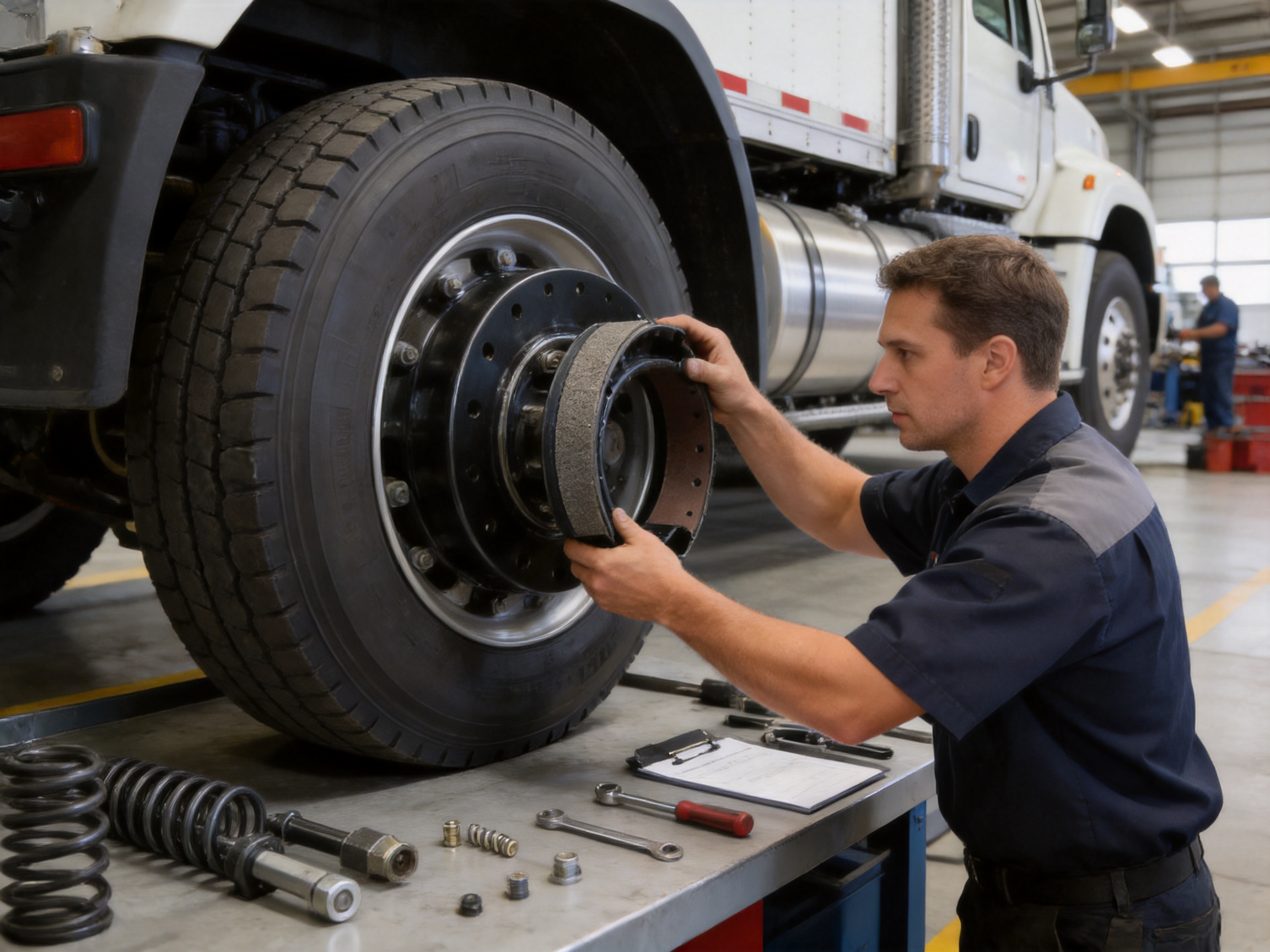
Heavy-duty braking systems must deliver dependable stopping power under demanding operating conditions. Commercial trucks, buses, trailers, construction vehicles, and other large vehicles place substantial loads on brake components. Every brake shoe must therefore provide reliable mechanical support, accurate fitment, stable friction performance, and long service life. A component that appears simple from the outside is, in reality, part of a carefully coordinated braking assembly in which dimensions, material quality, riveting accuracy, and surface condition all influence safety and maintenance costs.
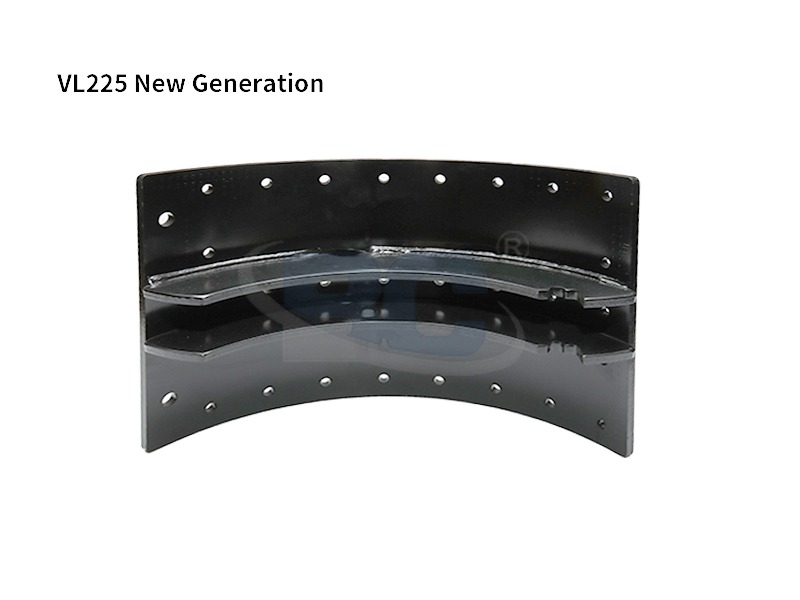
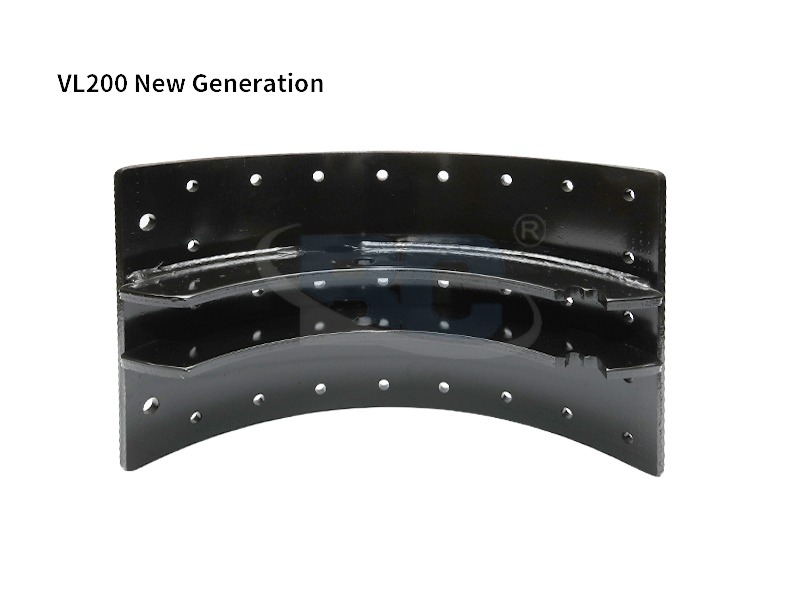
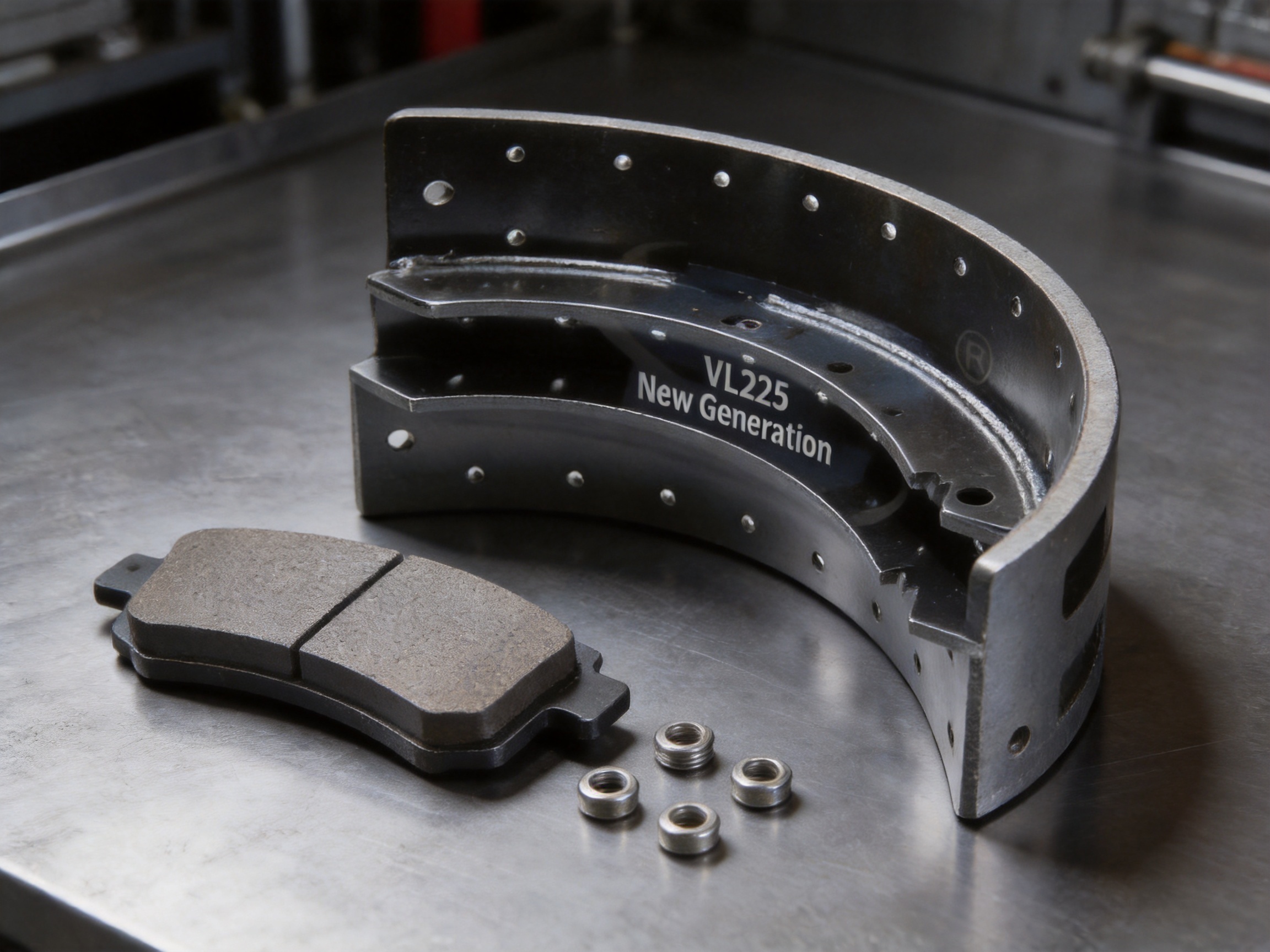
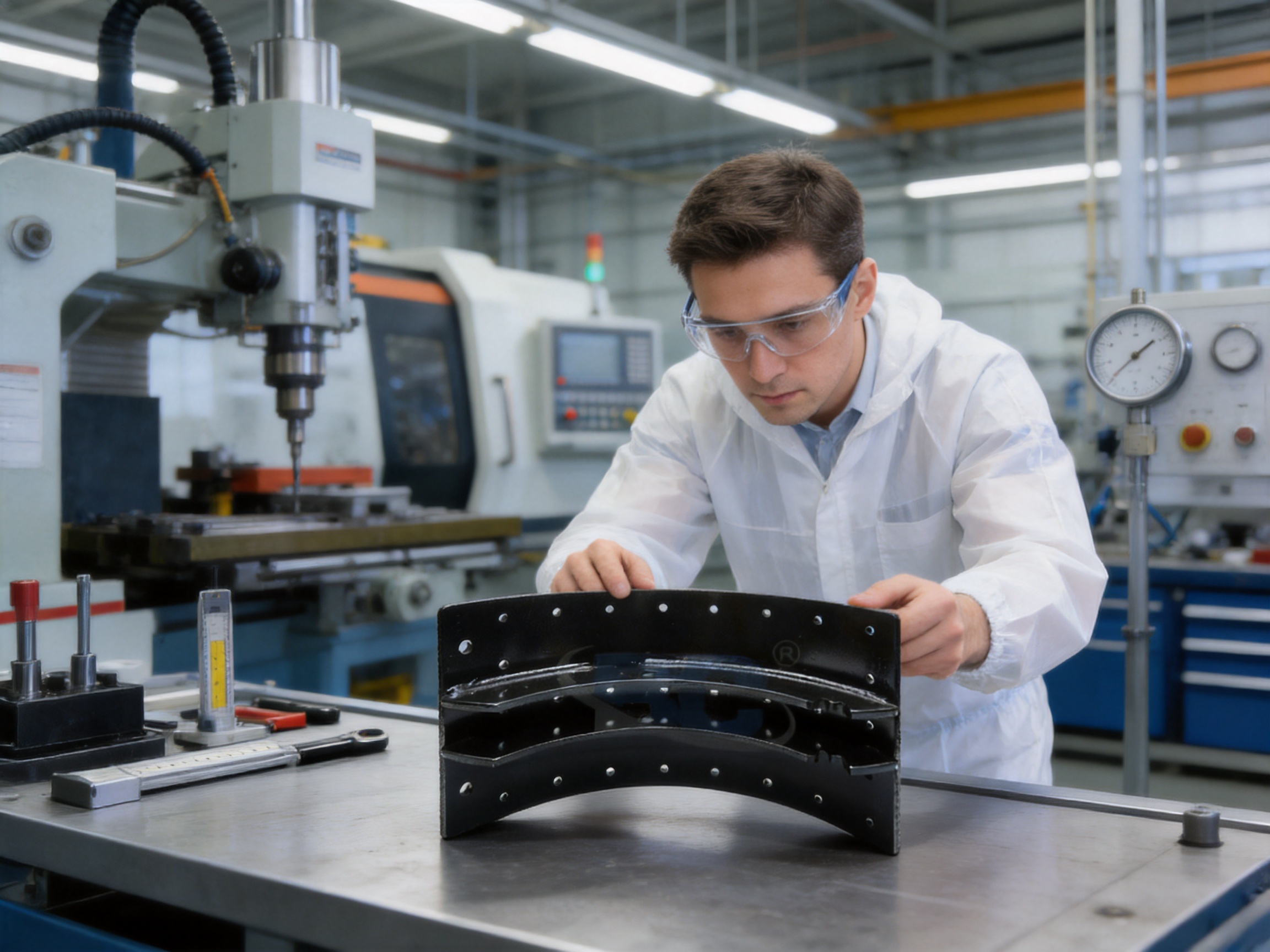
The VL225 New Generation Brake Shoe is designed for heavy-duty applications requiring a robust steel foundation and a precise replacement solution. It has a product size of 410 × 225 mm, incorporates 28 rivet holes, and is identified by the product OE number 3095197. These specifications make it suitable for brake repair and replacement programs in which dimensional compatibility, consistent production, and dependable installation are essential.
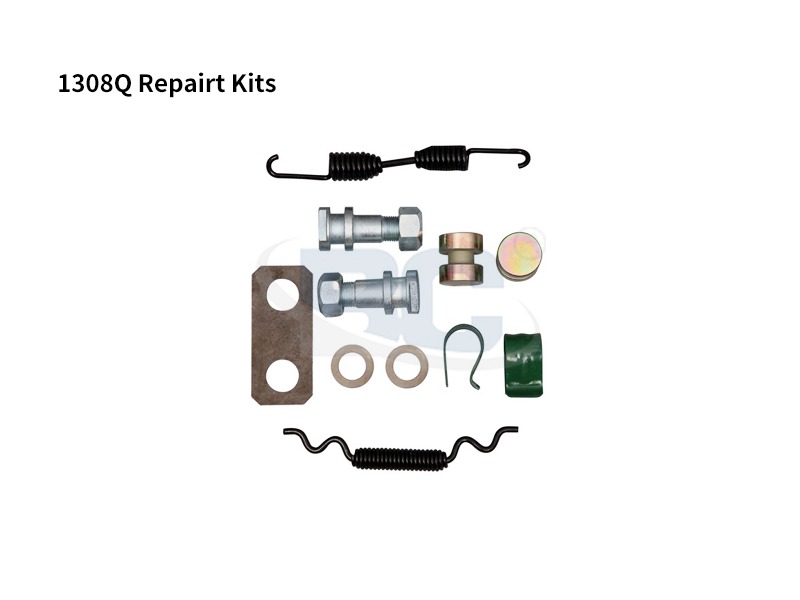
Manufactured by Zhejiang Bangchi Auto Parts Co., Ltd., the VL225 forms part of a broader heavy-duty brake component range that includes steel brake shoes, casted brake shoes, brake linings, lined brake shoes, brake shoe repair kits, and lined brake shoe kits. This product-family approach allows distributors, repair centers, and fleet operators to source complementary braking parts from one experienced manufacturer rather than combining components from multiple suppliers with different quality standards.
Understanding the Role of a Heavy-Duty Brake Shoe
A brake shoe is a structural and functional component within a drum brake system. When the braking mechanism is activated, the shoe moves outward and presses the friction lining against the internal surface of the brake drum. This contact converts vehicle motion into heat and creates the friction required to slow or stop the vehicle.
The brake shoe itself does not operate independently. Its performance depends on the interaction of the steel shoe body, friction lining, rivets or bonding system, return springs, anchor points, adjusters, wheel cylinders, brake drums, and the complete vehicle braking system. The steel shoe must maintain its shape while supporting the lining and transmitting braking force. If the shoe is distorted, poorly formed, incorrectly drilled, or weakened by corrosion and fatigue, the complete assembly may experience uneven contact and reduced braking efficiency.
For heavy vehicles, the operating environment is especially severe. A loaded truck generates greater braking energy than a passenger car. Long downhill routes create repeated heat cycles. Urban delivery fleets may apply the brakes hundreds of times in a single working day. Mining, construction, agricultural, and regional transport vehicles may also encounter dust, water, mud, vibration, and irregular road surfaces.
These conditions make the quality of the foundation shoe particularly important. The VL225 New Generation Brake Shoe is intended to provide a stable structural base for the friction material and a replacement part that can be integrated into a professional brake service process.
Product Specification Overview
| Specification | VL225 New Generation Brake Shoe |
|---|---|
| Product type | Steel Brake Shoe |
| Part number | VL225 New Generation |
| Product size | 410 × 225 mm |
| Number of rivet holes | 28 |
| Product OE number | 3095197 |
| Manufacturer | Zhejiang Bangchi Auto Parts Co., Ltd. |
| Related product categories | Casted Brake Shoe, Brake Lining, Lined Brake Shoe, Brake Shoe Repair Kits, Lined Brake Shoe Kits |
The dimensions and hole configuration are central to correct identification. A brake shoe must match the intended drum assembly and lining specification. The 410 × 225 mm size provides a useful reference during purchasing and workshop inspection, while the 28-rivet-hole configuration helps distinguish this model from other shoes with different lining lengths, hole spacing, or mounting requirements.
Although the OE number 3095197 supports product identification, buyers should confirm all relevant fitment details before installation. Vehicle configuration, axle design, brake chamber arrangement, drum dimensions, lining profile, and regional specification can affect interchangeability. A responsible replacement process combines the OE reference with physical measurement and application verification.
Why the Steel Foundation Matters
The steel shoe body supports the friction lining and transfers braking force through the drum brake mechanism. It must withstand repeated loading without excessive deformation. During braking, force is applied through the actuating mechanism and distributed across the shoe. The lining then contacts the drum, generating resistance. This process creates mechanical stress, thermal exposure, and vibration.
A well-manufactured steel shoe offers several important advantages. First, it provides a reliable base for riveted or otherwise installed friction material. Second, it helps maintain the intended curvature of the lining against the drum. Third, it supports consistent positioning of the shoe hardware. Finally, it contributes to predictable wear and easier inspection during regular maintenance.
For fleet operators, structural consistency is as important as initial price. A low-cost shoe that varies in shape or hole placement can create additional workshop labor, installation difficulties, uneven lining contact, or premature replacement. A dimensionally controlled part can reduce uncertainty and improve the efficiency of brake rebuilding operations.
The VL225 New Generation Brake Shoe is designed around these practical requirements. Its 28-hole arrangement allows the intended lining to be secured through a defined fastening pattern. The steel body is produced as a dedicated heavy-duty component rather than as a generalized light-vehicle part, making the model more appropriate for applications where brake durability and repairability are major considerations.
Advantages of the VL225 New Generation Design
1. Dedicated heavy-duty construction
The VL225 is classified as a steel brake shoe for heavy-duty brake applications. Its design focus is therefore different from that of small passenger-vehicle components. Heavy-duty brake shoes must support larger friction linings and tolerate more severe loading. The product’s 410 × 225 mm size reflects its position within a larger brake assembly and provides the foundation required for high-load drum brake service.
A dedicated heavy-duty product can offer more predictable installation than a generic substitute. When a part is developed around a particular size and rivet-hole arrangement, the lining and shoe can be matched more accurately. This helps workshops avoid excessive modification or uncertain alignment during brake rebuilding.
2. Defined 28-hole fastening pattern
The 28 rivet holes are one of the most important identifying features of the product. A consistent hole pattern supports accurate lining installation and helps distribute fastening forces along the shoe. Proper distribution can reduce localized stress on the lining and help maintain a secure connection throughout the service period.
For repair professionals, a defined hole count also improves inventory control. Warehouses can identify the product through the part number, OE number, dimensions, and hole configuration. This reduces the possibility of selecting a visually similar shoe with an incompatible lining pattern.
3. Useful OE reference
The OE number 3095197 provides an additional reference for procurement and cross-checking. OE references are particularly useful for fleet maintenance departments and distributors handling a large number of replacement components. They allow purchasing teams to compare supplier records, workshop requirements, and vehicle documentation more efficiently.
An OE reference should not replace technical verification, but it can simplify communication between buyers, mechanics, distributors, and manufacturers. When combined with the VL225 New Generation part number and the 410 × 225 mm dimensions, it creates a clearer identification profile than a product name alone.
4. Compatibility with brake rebuilding programs
The steel shoe format is well suited to brake rebuilding and remanufacturing workflows. A workshop may inspect a reusable brake shoe, compare it with the replacement specification, install a suitable friction lining, and complete the assembly using new or approved hardware. This approach can be practical for fleets that maintain their own repair programs or work with specialized brake rebuilders.
Because Zhejiang Bangchi Auto Parts Co., Ltd. also supplies brake linings, lined brake shoes, brake shoe repair kits, and lined brake shoe kits, customers can evaluate a complete range of service options. Some applications may require a bare steel shoe, while others may require a ready-to-install lined assembly or a kit containing the necessary repair components.
5. Simplified product selection
A clear product profile benefits both technical buyers and aftermarket distributors. The VL225 listing identifies the part number, category, dimensions, rivet-hole count, and OE number. This information supports faster comparison with existing inventory and reduces the risk of ordering an incorrect component based only on appearance.
In competitive aftermarket environments, product information is part of product quality. A technically sound component is more useful when its specifications are easy to confirm. Detailed identification also assists international buyers who may use different naming conventions for the same type of brake component.
Manufacturing Strengths and Production Discipline
The quality of a brake shoe depends on more than the selected steel material. Manufacturing discipline must control the shape, dimensions, hole positions, surface condition, and consistency of every production batch. For a heavy-duty component, small variations can influence lining fitment and brake balance. Zhejiang Bangchi Auto Parts Co., Ltd. positions itself as a manufacturer of heavy-duty brake parts and supplies products according to the global FMSI numbering system.
A professional brake shoe manufacturing process begins with controlled raw-material preparation. The steel must be suitable for forming and capable of supporting repeated mechanical loads. Material receiving procedures should include specification review, batch identification, and inspection for visible defects. Keeping material records allows production personnel to trace components through subsequent operations.
Material preparation and blanking
The first physical stage generally involves preparing steel blanks in accordance with the required shoe profile. Accurate blanking is important because the initial outline affects later forming, drilling, and finishing operations. A clean and consistent blank reduces unnecessary deformation and supports more stable production.
For the VL225, the blank must be suitable for the product’s final 410 × 225 mm format and the geometry required by its associated drum brake system. Production control at this stage helps prevent dimensional drift before the component reaches forming operations.
Forming and curvature control
Brake shoes require a controlled curved profile so that the friction lining can follow the inner surface of the brake drum. Forming must therefore be performed with suitable tooling and process control. If the curvature is too open, too tight, or inconsistent from one end to the other, the lining may not contact the drum evenly.
Consistent forming is especially important for heavy-duty applications because uneven contact may create localized heat and irregular wear. A correctly shaped shoe supports more uniform lining engagement and makes final adjustment more predictable for the installer.
Manufacturing teams should check formed components against dimensional references rather than relying only on visual inspection. Profile gauges, templates, fixtures, and other measurement tools can help confirm that the shoe remains within the required production tolerance. The specific inspection method may vary according to factory equipment and customer requirements, but the objective remains the same: maintain repeatable geometry.
Rivet-hole processing
The 28 rivet holes must be positioned accurately so that the lining can be installed without forced alignment or excessive movement. Hole location affects the distribution of the lining fastening points. Poorly positioned holes may cause a lining to sit unevenly, leave insufficient edge distance, or create installation delays.
Hole processing should therefore be coordinated with tooling designed for the VL225 pattern. Production personnel can verify hole count, spacing, diameter, edge condition, and burr removal. These checks are important because a hole may appear acceptable during a quick visual review while still causing difficulty during riveting.
Consistent hole quality also benefits the repair-kit supply chain. When a steel shoe, lining, and rivet set are designed to work together, the installer can complete the assembly more efficiently. This supports the use of the VL225 in both component-level and kit-based maintenance programs.
Surface treatment and finishing
After forming and machining, the steel shoe should receive appropriate finishing to improve surface condition and provide protection during storage and service. Finishing may include cleaning, deburring, coating, or other treatments selected according to the product specification. The purpose is to help protect the component from handling damage and environmental exposure before installation.
Finishing quality also influences workshop efficiency. A clean, properly prepared shoe is easier to inspect, handle, and combine with the friction lining. Excessive burrs, contamination, or uneven surface treatment can complicate installation and reduce confidence in the part.
Final inspection and batch consistency
Final inspection is the point at which the manufacturer confirms that the completed product matches the intended specification. A practical inspection plan for the VL225 should consider the part number, product dimensions, hole count, hole pattern, formed profile, visible surface condition, and packaging identification.
Batch consistency is valuable to distributors and fleet operators because replacement parts may be purchased over an extended period. If every production batch maintains the same identification and dimensional expectations, workshops can standardize their procedures and reduce the need for repeated trial fitting.
Zhejiang Bangchi Auto Parts Co., Ltd. can support this type of aftermarket requirement through its focused product range and manufacturer-to-customer communication. Customers can contact the company directly for product inquiries, application confirmation, and purchasing discussions. Direct communication is particularly useful when a fleet requires multiple brake components or has specific packaging and supply-chain requirements.
VL225 New Generation Brake Shoe
FMSI Numbering and Professional Product Identification
The global FMSI numbering system is widely used to organize friction material and brake component references. A structured numbering approach can make product identification more consistent across manufacturers, distributors, repair centers, and vehicle operators. For an international supplier, alignment with recognized numbering practices supports clearer cataloging and reduces confusion caused by regional product names.
The VL225 New Generation designation provides a direct product identity, while the OE number 3095197 offers an additional comparison point. The dimensions and 28-rivet-hole arrangement further strengthen the identification process. Together, these details create a practical product record for purchasing systems, warehouse labels, technical catalogs, and workshop documentation.
When ordering, buyers should record all available information rather than depending on one reference alone. The recommended identification record includes the part number, category, OE number, dimensions, number of rivet holes, intended vehicle or axle application, and whether the order requires a bare shoe, a lining, or a complete lined assembly.
For distributors, detailed identification can improve customer service. A sales team can ask a buyer for measurements or photos of the existing component and then compare those details with the manufacturer’s records. This approach is more reliable than matching only by a broad description such as “heavy truck brake shoe.”
Advantages Compared with Less Specialized Alternatives
Heavy-duty buyers often compare specialized brake shoes with lower-cost or less clearly identified alternatives. Price is important, but the full cost of a brake component includes installation time, inspection labor, replacement frequency, downtime, and the potential consequences of poor fitment. The VL225 offers several advantages when evaluated as part of a complete maintenance process.
More precise application control
A clearly specified product is easier to verify before purchase. The VL225 has a defined size, hole count, and OE reference. By contrast, a generic product with limited information may require additional trial fitting or may be returned after the workshop discovers an incompatibility.
Application control is especially valuable for international aftermarket customers. Different markets may use different vehicle names, axle combinations, or catalog descriptions. Physical dimensions and fastening details provide an objective basis for comparison.
Better integration with lining and kit options
A bare steel shoe is useful when a repair center has its own lining installation capability. However, not every customer wants to perform the complete rebuilding process. The availability of related brake linings, lined shoes, repair kits, and lined shoe kits allows buyers to choose the service format that best fits their operation.
This product-family approach can reduce sourcing complexity. A fleet may purchase steel shoes for one workshop, lined shoes for another location, and repair kits for a specialized rebuilder, while maintaining a consistent supplier relationship.
Support for repeat purchasing
Fleet maintenance depends on repeatability. A brake part should not be judged only by how it performs during one installation. It should also be easy to reorder, identify, store, and incorporate into a maintenance schedule. The VL225 part number and specification profile make it suitable for repeat purchasing programs.
When a fleet creates an approved-parts list, it can document the VL225 New Generation model together with the OE number 3095197, dimensions, and 28-hole configuration. This provides procurement teams with a stable reference and helps prevent substitution with an unverified component.
Reduced workshop uncertainty
Installation uncertainty can increase labor cost. A component with an inconsistent shape or poorly finished holes may require adjustment, rework, or additional inspection. A product manufactured with attention to forming and hole accuracy can make the installation process more predictable.
Predictability does not eliminate the need for professional inspection. Mechanics must still verify the drum, lining, springs, adjusters, and other associated parts. However, a consistent brake shoe gives the technician a sounder starting point for completing the repair.
Applications in Commercial Vehicle Maintenance
The VL225 can be considered for commercial vehicle brake service where the specified dimensions and OE reference match the existing brake assembly. Potential users include truck fleets, bus operators, trailer maintenance companies, heavy-equipment service centers, independent repair workshops, brake rebuilders, and aftermarket distributors.
Long-haul fleets may value consistent replacement parts because vehicles travel across regions and may be serviced at different depots. A standardized brake shoe specification helps maintenance managers align purchasing and repair procedures across locations.
Urban and regional delivery fleets can benefit from components suited to repeated braking cycles. Stop-and-go operation creates frequent thermal and mechanical loading, making inspection and replacement planning essential. A clearly identified steel shoe can be included in scheduled repair inventories and matched with the correct lining and hardware.
Bus operators often require dependable brake maintenance because vehicles carry passengers and may operate on routes with frequent stops, slopes, or variable loads. The VL225 should be selected only when the application is confirmed, but its heavy-duty steel construction and defined fastening pattern make it relevant to professional drum-brake service programs.
Construction and industrial vehicles may operate in dusty, wet, or uneven environments. These conditions can accelerate wear and contamination in the brake system. Regular inspection remains necessary, but a properly manufactured replacement shoe helps ensure that the structural portion of the brake assembly is not an uncontrolled variable during maintenance.
Installation and Service Considerations
Correct installation is essential to the performance of any brake shoe. Before fitting the VL225, the technician should verify the part number, dimensions, hole pattern, and OE reference against the vehicle and the removed component. The brake drum should be inspected for diameter, scoring, cracks, heat damage, and excessive wear.
The mating friction lining must be suitable for the shoe and brake drum. If the shoe is supplied without lining, the installer should use a compatible lining designed for the application and the 28-hole configuration. Rivets must be correct for the lining and shoe, and the riveting procedure should follow accepted workshop practice.
All contact surfaces should be clean and free from oil, grease, loose scale, or other contamination. Brake friction surfaces must not be contaminated during assembly. Hardware such as springs, retainers, adjusters, and anchor components should be inspected and replaced when worn or damaged.
After installation, the brake system should be adjusted according to the vehicle manufacturer’s service procedure. The technician should confirm that the shoe moves correctly, the lining contacts the drum evenly, and the automatic or manual adjuster operates as intended. The wheel end should be checked for abnormal resistance, noise, or interference before the vehicle returns to service.
Where the brake assembly is rebuilt with a new lining, bedding-in procedures should be followed. The lining and drum need controlled contact to develop an appropriate friction surface. Severe braking immediately after installation can create uneven heat and may compromise the bedding process.
These installation recommendations are general service principles. Vehicle-specific instructions and local regulations always take priority. The manufacturer’s product data should also be consulted when a customer needs detailed fitment confirmation or a complete lined assembly.
Quality Management for International Buyers
International buyers often evaluate more than the component itself. They also consider packaging, labeling, production communication, order consistency, and the supplier’s ability to support long-term cooperation. A manufacturer of heavy-duty brake parts must therefore provide a coordinated purchasing experience.
Product labeling should clearly identify the VL225 New Generation part number and, where appropriate, the OE number 3095197. Packaging should protect the steel shoe from impact, moisture, and deformation during handling and transportation. For larger orders, customers may request carton markings, pallet arrangements, or documentation suited to their warehouse system.
Communication is another important manufacturing strength. Zhejiang Bangchi Auto Parts Co., Ltd. is located in Haining, Zhejiang, China, and provides direct contact channels for customers. Buyers can use the company’s sales and technical communication resources to discuss product specifications, order quantities, related brake products, and application requirements.
The company’s product categories also support different business models. Importers may purchase individual steel shoes for distribution. Brake rebuilders may require shoes and linings together. Fleet service providers may prefer lined brake shoes or complete repair kits. A supplier capable of serving these different requirements can help customers simplify their sourcing structure.
For a long-term supply agreement, buyers may also establish incoming inspection procedures. These can include checking random samples for dimensions, rivet-hole count, visible damage, surface condition, and packaging accuracy. Such inspections are not a criticism of the supplier; they are a normal part of responsible industrial procurement and can help both parties maintain clear quality expectations.
How the VL225 Supports Cost Control
Maintenance cost is influenced by more than the purchase price of a brake shoe. Labor time, vehicle downtime, inventory carrying cost, shipping, warranty handling, and the service life of the complete brake assembly all affect the total operating expense.
The VL225 can support cost control through accurate identification and compatibility with multiple service formats. When a fleet can correctly identify the required shoe, it is less likely to order an incorrect component or maintain excessive quantities of unrelated alternatives. A defined 28-hole pattern also helps the workshop prepare the appropriate lining and rivets before the vehicle enters the repair bay.
Repeatable products can make labor planning easier. Technicians who regularly work with the same component can standardize inspection and installation steps. This may reduce the time required for product verification and help maintenance managers estimate the duration of scheduled repairs.
Availability of related components can also reduce administrative effort. Instead of sourcing a steel shoe from one supplier, a lining from another, and a repair kit from a third, a buyer can evaluate a coordinated product range from Zhejiang Bangchi Auto Parts Co., Ltd. Supplier consolidation does not automatically guarantee lower cost, but it can improve purchasing efficiency and simplify quality communication.
For distributors, a clearly positioned product can create a stronger inventory strategy. The VL225 can be listed with its dimensions, hole count, part number, and OE reference, allowing customers to find the correct component more quickly. Better product information can reduce returns and improve customer confidence.
Inspection Points Before Replacement
Before installing a new brake shoe, the existing brake assembly should be examined to determine the cause of replacement. Worn friction material is only one possible reason. The shoe may also have suffered distortion, corrosion, cracked welds, damaged holes, worn anchor areas, or contact damage caused by incorrect adjustment.
The brake drum should be checked because a damaged drum can reduce the performance of a new shoe. If the drum is beyond its service limit or has severe scoring, replacing the shoe alone may not correct the braking problem. Likewise, worn springs or an inoperative adjuster can create uneven shoe movement and accelerated lining wear.
Technicians should inspect both shoes on the axle and assess whether replacement should be performed as an axle set. Maintaining balanced components can support more uniform braking behavior. The decision should follow the vehicle manufacturer’s service recommendations and the condition of the complete brake system.
After a repair, the vehicle should receive a controlled functional check in a safe environment. The check should include brake response, unusual noise, pulling, overheating, and any warning indications. Commercial vehicles should not return to demanding operation until the brake system has been verified by qualified personnel.
Why Manufacturer Experience Matters
Brake components are safety-related products, so manufacturing experience has practical value. A company focused on heavy-duty brake parts is more likely to understand the importance of structural accuracy, friction-material compatibility, product identification, and aftermarket service requirements than a general metalworking supplier with no brake specialization.
Zhejiang Bangchi Auto Parts Co., Ltd. offers a range that covers major brake shoe and brake lining categories. This indicates a product strategy centered on commercial vehicle brake repair rather than a single isolated component. Such specialization can support better communication about brake assemblies, replacement formats, and customer requirements.
Manufacturing experience also supports continuous improvement. Feedback from distributors, repair centers, and fleet operators can be used to refine tooling, packaging, inspection procedures, and product documentation. In a competitive heavy-duty aftermarket, the ability to respond to practical service needs is an important advantage.
The company’s use of FMSI-related numbering principles further supports professional catalog management. International customers benefit when a manufacturer can communicate through recognizable industry references and provide product information in a structured format.
Purchasing Recommendations for Distributors and Fleets
When purchasing the VL225 New Generation Brake Shoe, buyers should begin by confirming that the product category is correct. The VL225 is listed as a steel brake shoe. If the maintenance requirement is for a complete lined part, a brake lining, or a repair kit, the buyer should specify that requirement separately.
The next step is to compare the listed specifications with the existing component. Confirm the 410 × 225 mm size, 28 rivet holes, and OE number 3095197. Where possible, compare the shoe profile and the lining arrangement with the vehicle manufacturer’s technical information.
For larger orders, buyers should discuss packaging, minimum order quantities, labeling, delivery schedules, and inspection requirements with the manufacturer. The company can be contacted by email at sfp@zjbangchi.com or by phone through its listed China contact numbers. Direct communication is recommended when the buyer needs application confirmation or intends to combine several brake product categories in one order.
Distributors should maintain accurate catalog records. The product title should include the VL225 New Generation designation, while the listing should also contain the category, dimensions, hole count, and OE reference. Images and technical drawings may be added to the distributor’s internal system where available, but dimensional and application data should remain the primary identification tools.
Fleet operators should consider creating a standard operating procedure for receiving and installing the product. This may include checking packaging, recording batch information, comparing dimensions, inspecting the brake drum, using compatible friction material, and documenting the completed repair.
Environmental and Operational Durability Considerations
Heavy-duty vehicles often operate in conditions that expose brake components to moisture, road salt, dust, mud, and temperature variation. A steel brake shoe must be stored and handled carefully before installation to minimize corrosion and physical damage. Proper warehouse practices include dry storage, protection from standing water, stable stacking, and avoidance of impacts that could alter the shoe profile.
During operation, the brake shoe is exposed to repeated heat cycles. The actual thermal behavior of the complete assembly depends on the lining compound, drum condition, vehicle load, speed, braking frequency, adjustment, and driving practices. The shoe must therefore be considered as part of a complete engineered system rather than evaluated in isolation.
Regular inspection can extend the useful life of the brake assembly. Fleet technicians should monitor lining thickness, drum wear, shoe deformation, hardware condition, and signs of overheating. Early detection of abnormal wear may prevent secondary damage and reduce unplanned downtime.
The VL225’s role in this process is to provide a stable replacement foundation with clearly defined dimensions and fastening features. When correctly matched and installed, it can contribute to an organized and repeatable heavy-duty brake maintenance program.
Frequently Asked Questions
What type of product is the VL225?
The VL225 New Generation is a steel brake shoe designed for heavy-duty brake applications. It is supplied as a steel shoe component rather than being described as a complete lined brake shoe.
What is the size of the VL225 brake shoe?
The listed product size is 410 × 225 mm. Buyers should compare these dimensions with the existing brake shoe and the applicable vehicle or axle specifications before ordering.
How many rivet holes does it have?
The VL225 has 28 rivet holes. This feature is important when selecting a compatible brake lining and rivet arrangement.
What is the OE number?
The product OE number is 3095197. This reference should be used together with the VL225 part number, dimensions, and application information for accurate identification.
Can the VL225 be used with a new brake lining?
Yes, the steel shoe format is intended for use with a compatible brake lining when the application requires a rebuilt or lined assembly. The lining profile, hole pattern, rivets, and drum dimensions must be confirmed before installation.
Does the manufacturer supply complete lined brake products?
Zhejiang Bangchi Auto Parts Co., Ltd. lists lined brake shoes and lined brake shoe kits among its product categories. Customers should specify whether they need a bare steel shoe, a separate lining, a lined shoe, or a repair kit.
What makes the VL225 different from a generic brake shoe?
The VL225 has a defined product identity, 410 × 225 mm dimensions, a 28-hole rivet pattern, and the OE reference 3095197. Its identification and heavy-duty product positioning can make application verification and repeat purchasing more reliable than selecting an unspecified generic component.
Is the VL225 suitable for every heavy truck?
No. Heavy trucks use different axle and drum brake configurations. The VL225 should be installed only when its specifications and application match the vehicle. Professional fitment verification is required.
What should be checked before installation?
The technician should check the part number, dimensions, hole pattern, lining compatibility, brake drum condition, springs, adjuster, anchor points, and other related hardware. The complete brake assembly should be inspected before the vehicle returns to service.
How can international buyers identify the product?
International buyers can use the product name VL225 New Generation, the category Steel Brake Shoe, the size 410 × 225 mm, the 28-rivet-hole count, and OE number 3095197. These references can be included in purchase orders, warehouse records, and distributor catalogs.
Where is the manufacturer located?
Zhejiang Bangchi Auto Parts Co., Ltd. is located at No. 9 Building, No. 11 Qiyi Road, Chang’an Town, Haining, Zhejiang, China.
How can customers contact the manufacturer?
Customers can contact the manufacturer by email at sfp@zjbangchi.com or by using the listed telephone numbers: +86-133 7230 7977 and +86-0573-87960600. The listed fax number is +86-0573-87960639.
Conclusion
The VL225 New Generation Brake Shoe is a clearly identified heavy-duty steel brake component with a 410 × 225 mm product size, 28 rivet holes, and OE number 3095197. These specifications provide a practical foundation for product selection, lining matching, warehouse control, and professional brake rebuilding.
Its advantages are strengthened by the manufacturer’s specialization in heavy-duty brake parts and its wider range of brake linings, lined brake shoes, repair kits, and lined shoe kits. This allows customers to select the component format that best suits their maintenance operation, whether they require a bare steel shoe for rebuilding or a more complete brake service solution.
For fleet operators, distributors, and repair centers, product consistency and identification are central to controlling maintenance cost and reducing downtime. The VL225 supports these goals through a defined fastening pattern, recognizable product references, and suitability for structured commercial vehicle brake programs.
As with all safety-related components, correct application and installation remain essential. Buyers should confirm the dimensions, hole configuration, OE reference, lining compatibility, and complete brake-system requirements before use. When properly selected and installed, the VL225 New Generation Brake Shoe can serve as a dependable foundation for heavy-duty drum brake maintenance.
References
1. Product specification provided for the VL225 New Generation Brake Shoe: part number, dimensions, rivet-hole count, and OE reference.
2. Manufacturer product category information for steel brake shoes, casted brake shoes, brake linings, lined brake shoes, brake shoe repair kits, and lined brake shoe kits.
3. General heavy-duty drum brake inspection and maintenance principles used in commercial vehicle service practice.
4. Friction material identification and cataloging practices associated with the global FMSI numbering system.
5. General workshop principles for brake shoe fitting, riveting, drum inspection, adjustment, and bedding-in.
6. Manufacturer contact and address information supplied for Zhejiang Bangchi Auto Parts Co., Ltd.